EP1623625A2 - Agent pour attirer des insectes - Google Patents
Agent pour attirer des insectes Download PDFInfo
- Publication number
- EP1623625A2 EP1623625A2 EP05016755A EP05016755A EP1623625A2 EP 1623625 A2 EP1623625 A2 EP 1623625A2 EP 05016755 A EP05016755 A EP 05016755A EP 05016755 A EP05016755 A EP 05016755A EP 1623625 A2 EP1623625 A2 EP 1623625A2
- Authority
- EP
- European Patent Office
- Prior art keywords
- mosquitoes
- attractant
- insect attracting
- combination
- alkyl chain
- Prior art date
- Legal status (The legal status is an assumption and is not a legal conclusion. Google has not performed a legal analysis and makes no representation as to the accuracy of the status listed.)
- Withdrawn
Links
Images

Classifications
-
- A—HUMAN NECESSITIES
- A01—AGRICULTURE; FORESTRY; ANIMAL HUSBANDRY; HUNTING; TRAPPING; FISHING
- A01N—PRESERVATION OF BODIES OF HUMANS OR ANIMALS OR PLANTS OR PARTS THEREOF; BIOCIDES, e.g. AS DISINFECTANTS, AS PESTICIDES OR AS HERBICIDES; PEST REPELLANTS OR ATTRACTANTS; PLANT GROWTH REGULATORS
- A01N35/00—Biocides, pest repellants or attractants, or plant growth regulators containing organic compounds containing a carbon atom having two bonds to hetero atoms with at the most one bond to halogen, e.g. aldehyde radical
- A01N35/02—Biocides, pest repellants or attractants, or plant growth regulators containing organic compounds containing a carbon atom having two bonds to hetero atoms with at the most one bond to halogen, e.g. aldehyde radical containing aliphatically bound aldehyde or keto groups, or thio analogues thereof; Derivatives thereof, e.g. acetals
-
- A—HUMAN NECESSITIES
- A01—AGRICULTURE; FORESTRY; ANIMAL HUSBANDRY; HUNTING; TRAPPING; FISHING
- A01N—PRESERVATION OF BODIES OF HUMANS OR ANIMALS OR PLANTS OR PARTS THEREOF; BIOCIDES, e.g. AS DISINFECTANTS, AS PESTICIDES OR AS HERBICIDES; PEST REPELLANTS OR ATTRACTANTS; PLANT GROWTH REGULATORS
- A01N37/00—Biocides, pest repellants or attractants, or plant growth regulators containing organic compounds containing a carbon atom having three bonds to hetero atoms with at the most two bonds to halogen, e.g. carboxylic acids
- A01N37/02—Saturated carboxylic acids or thio analogues thereof; Derivatives thereof
Definitions
- the invention relates to a means for attracting insects with the features of independent claim 1.
- Mosquitoes (Culicidae) populate the most diverse habitats worldwide with more than 3200 species.
- Mosquito females require blood from warm-blooded hosts, which may be humans, poultry and / or livestock depending on the species, for successful multiplication.
- they can be transmitted through them pathogens.
- they transmit malaria plasmodia, yellow fever and dengue viruses and others.
- v. m The increasing mobility of mankind also raises the risks that such diseases spread beyond their original distribution areas (especially the tropics).
- Infectious mosquito bites can be transmitted from imported pathogens ("airport malaria").
- Newly-spreading diseases such as West Nile fever can greatly accelerate and spread the spread of these diseases through ill travelers, making it one of the world's leading sanitary pests. In addition, they can be very annoying.
- lures which are used, for example, in conjunction with mechanical trapping systems (trap systems) or in conjunction with insecticides to increase catch rates or killing rates.
- Fall systems that mimic host stimuli, for example, by visual contrast, heat, moisture and / or carbon dioxide and also Other natural attractants such as pheromones use are described many times, for example.
- the previously used in mosquito traps artificial fragrance combinations preferably include lactic acid.
- perfume combinations are lactic acid, carbon dioxide and 1,3-octenol; Lactic acid, acetone and dimethyl sulfide (WO 00/65910); Lactic acid, ammonia and fatty acids; and lactic acid, ammonia, caproic acid and acetic acid (WO 03/103395 A1).
- the use of such host scent replicas shows in particular in combination with optically-physically acting trap systems large increases in attractiveness of the traps.
- the invention includes insect attractant compounds, insect attractant compositions comprising these compounds, and the use of insect control compounds or compositions.
- alkyl chain as used herein includes both straight chain and branched hydrocarbon chains having from 1 to 30 carbon atoms.
- the alkyl chain of the respective compounds preferably has 3 to 20 C atoms.
- an insect attracting agent comprises at least one compound of the formula (I) wherein R 1 is a branched or unbranched alkyl chain having 4 to 14 C atoms, and R 2 is selected from the group consisting of : -CH 3 , -O-CH 3 .
- An insect attracting agent according to the present invention may each comprise only one of said compounds or, alternatively, may have a plurality of said compounds.
- An insect attracting agent of the present invention may be present in combination with at least one other attractant of any other kind or at least one other attractant composition of a different nature.
- an agent according to the invention can increase the attraction of known attractants and / or known attractant compositions.
- An insect attracting agent of the present invention may exist in combination with at least one known relaxant physical stimulus and increase its attractiveness.
- Such physical stimuli include, for example, heat, air humidity, air movements, optical signals such as contrast fields, etc.
- the present invention describes a class of substances which has hitherto been used for insect repelling, as described, for example, in US 2003/0083387 A1.
- the attractancy of the substance class described is particularly evident in low, physiological concentrations or at low release rates.
- the compounds 2-undecanone and decanmethyl acid ester are attractive for mosquitoes at delivery rates of 0.003-0.950 ⁇ mol / h.
- the substance class of the invention has not been detected in a host fragrance, indicating a host-independent efficacy.
- the class of substance according to the invention shows interspecific action and is, for example, not only considered attractive by certain types of mosquitoes.
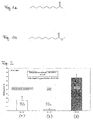
- Examples of active compounds of the substance class according to the invention are 2-undecanone (C 11 H 22 O; 2-endcanone, methyl n-nonyl ketone, methyl nonyl ketone, nonyl methyl ketone, NSC 4028) and methyl decanoate (C 11 H 22 O 2 ; caprylic acid, Estasol MD10, Metholene 2095, methyl caprate, methyl caprate, methyl decanoate, methyl n-caprate, methyl n-decanoate, NSC 3713, pastel M 10, Uniphat A 30).
- 2-undecanone C 11 H 22 O
- 2-endcanone 2-endcanone
- methyl n-nonyl ketone methyl nonyl ketone
- nonyl methyl ketone nonyl methyl ketone
- NSC 4028 methyl decanoate
- methyl decanoate C 11 H 22 O 2
- caprylic acid Estasol MD10, Metholene 2095,
- the attractive effect of the respective compounds or compositions was measured in a Y-olfactometer.
- the Y-olfactometer has a release chamber in which 20 mosquitoes of each species were released per trial.
- the release chamber is connected via a tube with a rectangular chamber.
- On the opposite side of this chamber protrude two arms that serve as a control chamber or as a test chamber.
- the control chamber is traversed either with pure air or with a reference substance or a comparison substance mixture, while the particular test substances to be dispensed are dispensed into the test chamber.
- the flow rates depend on the respective test substance. In the measurements shown, these were at 30 ml / min for 2-undecanone and at 100 ml / min for methyl decanoate (on presentation of the saturated gas space above the pure liquid, vapor pressure of 2-undecanone 1.3036 * 10 -2 Pa, vapor pressure of Decanoic acid methyl ester 1.3036 * 10 -2 Pa).
- Figure 2 shows the attractive effect of methyl decanoate on the yellow fever and dengue fever mosquito Aedes aegypti . 77.6% of the mosquitoes used left the release chamber, which serves as a measure of mosquito activity. 25.1% of the mosquitoes were caught in the test chamber, while only 3.1% of the mosquitoes were caught in the control chamber.
- decanoic acid methyl ester alone and not in combination with other fragrances, has a significant attractant effect on mosquitoes of the species Aedes aegypti.
- FIG. 3 illustrates in an analogous manner the attractive effect of 2-undecanone on Aedes aegypti.
- a total mosquito activity of 78.6% 28.3% of the mosquitoes were trapped in the test chamber and only 2.5% of the mosquitoes in the control chamber.
- a clear attractiveness of the substance is to be seen in unaided form.
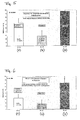
- Figure 4 shows the attractive effect of methyl decanoate in combination with an attractant composition of ammonia, lactic acid and caproic acid compared to the pure attractant composition on Aedes aegypti.
- the attractant composition is known (WO 03/103395 A1) and has been offered in its hitherto most effective combination and concentration in the form of a dispenser (fragrance). Identically built and filled dispensers were placed in the test chamber as well as in the control chamber.
- FIG. 5 shows, analogously to FIG. 4, the attractive effect of 2-undecanone in combination with an attractant composition of ammonia, lactic acid and caproic acid in comparison with the pure attractant composition on Aedes aegypti .
- 97.1% of the mosquitoes have left the release chamber.
- 63.2% of mosquitoes were trapped in the test chamber, compared to only 27.3% in the control chamber.
- FIG. 6 shows the cross-genre effect of the substance class according to the invention using the attractive effect of 2-undecanone in combination with an attractant composition of ammonia, lactic acid and caproic acid on Culex quinquefasciatus .
- the measurement was analogous to the measurements shown in FIG. 4 and FIG compared to the known attractant composition.
- aegypti Culex quinquefasciatus is a rather ornithophilic mosquito species, which can transmit, inter alia, filariae (Filariasis) and West Nile virus (encephalitis).
- 2-undecanone also has a luring effect on this mosquito species, which is similar to the attraction on Aedes aegypti. With total mosquito activity of 81.3%, 34.7% of mosquitoes were trapped in the test chamber and only 17.2% in the control chamber.
- the substances presented here are attractive for mosquitoes at delivery rates in the physiological range of 0.003-0.950 ⁇ mol / h.
- the class of substances described represents a novel attractant class that has hitherto been used as an insect repellent and has not yet been detected in a host fragrance. For the new class of attractants it was possible to detect a cross-species effect independently of the preferred blood host.
- the substances according to the invention are simple and inexpensive to produce.
- the class of substance described is suitable for a more effective and cost-effective way to more effective control of insects, in particular insect pests and this particular disease-transmitting, blood-sucking insects such as mosquitoes to allow.
- Substances or mixtures according to the invention can be used, for example, in trap systems in order to increase the catch rates.
Landscapes
- Life Sciences & Earth Sciences (AREA)
- Agronomy & Crop Science (AREA)
- Plant Pathology (AREA)
- Health & Medical Sciences (AREA)
- Engineering & Computer Science (AREA)
- Dentistry (AREA)
- General Health & Medical Sciences (AREA)
- Wood Science & Technology (AREA)
- Zoology (AREA)
- Environmental Sciences (AREA)
- Pest Control & Pesticides (AREA)
- Agricultural Chemicals And Associated Chemicals (AREA)
Applications Claiming Priority (1)
| Application Number | Priority Date | Filing Date | Title |
|---|---|---|---|
| DE102004037636 | 2004-08-02 |
Publications (1)
| Publication Number | Publication Date |
|---|---|
| EP1623625A2 true EP1623625A2 (fr) | 2006-02-08 |
Family
ID=35385369
Family Applications (1)
| Application Number | Title | Priority Date | Filing Date |
|---|---|---|---|
| EP05016755A Withdrawn EP1623625A2 (fr) | 2004-08-02 | 2005-08-02 | Agent pour attirer des insectes |
Country Status (1)
| Country | Link |
|---|---|
| EP (1) | EP1623625A2 (fr) |
Citations (4)
| Publication number | Priority date | Publication date | Assignee | Title |
|---|---|---|---|---|
| WO2000065910A1 (fr) | 1999-05-04 | 2000-11-09 | The United States Of America, As Represented By The Secretary Of Agriculture | Compositions chimiques attirant les arthropodes |
| US20030083387A1 (en) | 2001-03-14 | 2003-05-01 | Roe R. Michael | Method of repelling insects |
| WO2003103395A1 (fr) | 2002-06-07 | 2003-12-18 | Universitaet Regensburg | Composition pour attirer des arthropodes et des tephrites suceurs de sang |
| DE10259651A1 (de) | 2002-12-18 | 2004-07-01 | Universität Regensburg | Insektenfalle |
-
2005
- 2005-08-02 EP EP05016755A patent/EP1623625A2/fr not_active Withdrawn
Patent Citations (4)
| Publication number | Priority date | Publication date | Assignee | Title |
|---|---|---|---|---|
| WO2000065910A1 (fr) | 1999-05-04 | 2000-11-09 | The United States Of America, As Represented By The Secretary Of Agriculture | Compositions chimiques attirant les arthropodes |
| US20030083387A1 (en) | 2001-03-14 | 2003-05-01 | Roe R. Michael | Method of repelling insects |
| WO2003103395A1 (fr) | 2002-06-07 | 2003-12-18 | Universitaet Regensburg | Composition pour attirer des arthropodes et des tephrites suceurs de sang |
| DE10259651A1 (de) | 2002-12-18 | 2004-07-01 | Universität Regensburg | Insektenfalle |
Non-Patent Citations (1)
| Title |
|---|
| GEIER, CHEM. SENSES, vol. 24, 1999, pages 647 - 653 |
Similar Documents
| Publication | Publication Date | Title |
|---|---|---|
| DE69528581T2 (de) | Neue fallenvorrichtung für fruchtfliege | |
| DE69303317T2 (de) | Synergistische Fliegenlockmischung | |
| DE69324012T2 (de) | Schädlingsbekämpfung | |
| DE69920057T2 (de) | Vorrichtung zum Dispersieren einer flÜchtigen Zusammensetzung | |
| Hee et al. | Attraction of female and male Bactrocera papayae to conspecific males fed with methyl eugenol and attraction of females to male sex pheromone components | |
| DE2644217C3 (de) | Verfahren zur Früherkennung, Lokalisierung und Bekämpfung von Khaprakäfern und deren Larven und Geruchs-, Geschmacks- und/oder Tastreiz-Falle zur Durchführung des Verfahrens | |
| Lösel et al. | Laboratory and field experiments towards the development of an attract and kill strategy for the control of the codling moth, Cydia pomonella | |
| DE60316443T2 (de) | Zusammensetzung zur köderung von blutsaugenden arthropoden und fruchtfliegen | |
| EP1575355B1 (fr) | Piege a insectes | |
| US4820513A (en) | Insect attractant | |
| DE60219950T2 (de) | Verfahren zur überwachung/bekämpfung von thysanoptera | |
| DD155383A5 (de) | Lockstoffpraeparat | |
| Gunawardena et al. | Enhancement of the activity of ferrugineol by N-pentanol in an attractant baited trap for the coconut pest, Rhynchophorus ferrugineus F.(Coleoptera: Curculionidae) | |
| DE2753558C3 (de) | Verwendung von Z(ll)-Hexadecenylacetat zur Bekämpfung von Mamestra brassicae | |
| EP1623625A2 (fr) | Agent pour attirer des insectes | |
| DE69505124T2 (de) | Verwendung von dibutylmalat als insektenlockstoff | |
| DE3734657A1 (de) | Verfahren zur steuerung des verhaltens von schadinsekten unter verwendung von fluechtigen signalstoffen | |
| DE19812927C1 (de) | Verwendung von natürlicher und/oder synthetischer Chinasäure und/oder Shikimisäure als Schädlingsabwehrmittel | |
| DE69632682T2 (de) | Bekämpfung von schadinsekten | |
| Knight | Testing an attracticide hollow fibre formulation for control of codling moth, Cydia pomonella (Lepidoptera: Tortricidae) | |
| CH614349A5 (en) | Method for the early recognition, localisation and control of stored-product pests, and device for carrying out the method | |
| DE1196897B (de) | Rodentizide Mittel | |
| EP1956915A1 (fr) | Produits phytosanitaires et leur utilisation dans la protection contre les nuisibles | |
| EP1285580A1 (fr) | Composition chimique comprenant au moins un ingrédient d'une plante du genre Aesculus comme agent attractif pour les parasites de châtaignes | |
| EP0166683A2 (fr) | Pesticide |
Legal Events
| Date | Code | Title | Description |
|---|---|---|---|
| PUAI | Public reference made under article 153(3) epc to a published international application that has entered the european phase |
Free format text: ORIGINAL CODE: 0009012 |
|
| AK | Designated contracting states |
Kind code of ref document: A2 Designated state(s): AT BE BG CH CY CZ DE DK EE ES FI FR GB GR HU IE IS IT LI LT LU LV MC NL PL PT RO SE SI SK TR |
|
| AX | Request for extension of the european patent |
Extension state: AL BA HR MK YU |
|
| STAA | Information on the status of an ep patent application or granted ep patent |
Free format text: STATUS: THE APPLICATION IS DEEMED TO BE WITHDRAWN |
|
| 18D | Application deemed to be withdrawn |
Effective date: 20080304 |