EP1624681A1 - Un système maître-sclave - Google Patents
Un système maître-sclave Download PDFInfo
- Publication number
- EP1624681A1 EP1624681A1 EP05106226A EP05106226A EP1624681A1 EP 1624681 A1 EP1624681 A1 EP 1624681A1 EP 05106226 A EP05106226 A EP 05106226A EP 05106226 A EP05106226 A EP 05106226A EP 1624681 A1 EP1624681 A1 EP 1624681A1
- Authority
- EP
- European Patent Office
- Prior art keywords
- sorting
- slave devices
- criterion
- same
- manufacturer
- Prior art date
- Legal status (The legal status is an assumption and is not a legal conclusion. Google has not performed a legal analysis and makes no representation as to the accuracy of the status listed.)
- Granted
Links
Images


Classifications
-
- H—ELECTRICITY
- H04—ELECTRIC COMMUNICATION TECHNIQUE
- H04N—PICTORIAL COMMUNICATION, e.g. TELEVISION
- H04N21/00—Selective content distribution, e.g. interactive television or video on demand [VOD]
- H04N21/40—Client devices specifically adapted for the reception of or interaction with content, e.g. set-top-box [STB]; Operations thereof
- H04N21/43—Processing of content or additional data, e.g. demultiplexing additional data from a digital video stream; Elementary client operations, e.g. monitoring of home network or synchronising decoder's clock; Client middleware
- H04N21/436—Interfacing a local distribution network, e.g. communicating with another STB or one or more peripheral devices inside the home
- H04N21/4363—Adapting the video stream to a specific local network, e.g. a Bluetooth® network
-
- H—ELECTRICITY
- H04—ELECTRIC COMMUNICATION TECHNIQUE
- H04N—PICTORIAL COMMUNICATION, e.g. TELEVISION
- H04N5/00—Details of television systems
- H04N5/76—Television signal recording
- H04N5/765—Interface circuits between an apparatus for recording and another apparatus
-
- H—ELECTRICITY
- H04—ELECTRIC COMMUNICATION TECHNIQUE
- H04N—PICTORIAL COMMUNICATION, e.g. TELEVISION
- H04N21/00—Selective content distribution, e.g. interactive television or video on demand [VOD]
- H04N21/40—Client devices specifically adapted for the reception of or interaction with content, e.g. set-top-box [STB]; Operations thereof
- H04N21/43—Processing of content or additional data, e.g. demultiplexing additional data from a digital video stream; Elementary client operations, e.g. monitoring of home network or synchronising decoder's clock; Client middleware
- H04N21/436—Interfacing a local distribution network, e.g. communicating with another STB or one or more peripheral devices inside the home
- H04N21/4363—Adapting the video stream to a specific local network, e.g. a Bluetooth® network
- H04N21/43632—Adapting the video stream to a specific local network, e.g. a Bluetooth® network involving a wired protocol, e.g. IEEE 1394
-
- H—ELECTRICITY
- H04—ELECTRIC COMMUNICATION TECHNIQUE
- H04N—PICTORIAL COMMUNICATION, e.g. TELEVISION
- H04N21/00—Selective content distribution, e.g. interactive television or video on demand [VOD]
- H04N21/40—Client devices specifically adapted for the reception of or interaction with content, e.g. set-top-box [STB]; Operations thereof
- H04N21/45—Management operations performed by the client for facilitating the reception of or the interaction with the content or administrating data related to the end-user or to the client device itself, e.g. learning user preferences for recommending movies, resolving scheduling conflicts
- H04N21/462—Content or additional data management e.g. creating a master electronic programme guide from data received from the Internet and a Head-end or controlling the complexity of a video stream by scaling the resolution or bit-rate based on the client capabilities
-
- H—ELECTRICITY
- H04—ELECTRIC COMMUNICATION TECHNIQUE
- H04N—PICTORIAL COMMUNICATION, e.g. TELEVISION
- H04N21/00—Selective content distribution, e.g. interactive television or video on demand [VOD]
- H04N21/40—Client devices specifically adapted for the reception of or interaction with content, e.g. set-top-box [STB]; Operations thereof
- H04N21/47—End-user applications
-
- H—ELECTRICITY
- H04—ELECTRIC COMMUNICATION TECHNIQUE
- H04N—PICTORIAL COMMUNICATION, e.g. TELEVISION
- H04N7/00—Television systems
- H04N7/16—Analogue secrecy systems; Analogue subscription systems
- H04N7/162—Authorising the user terminal, e.g. by paying; Registering the use of a subscription channel, e.g. billing
- H04N7/163—Authorising the user terminal, e.g. by paying; Registering the use of a subscription channel, e.g. billing by receiver means only
-
- H—ELECTRICITY
- H04—ELECTRIC COMMUNICATION TECHNIQUE
- H04N—PICTORIAL COMMUNICATION, e.g. TELEVISION
- H04N21/00—Selective content distribution, e.g. interactive television or video on demand [VOD]
- H04N21/40—Client devices specifically adapted for the reception of or interaction with content, e.g. set-top-box [STB]; Operations thereof
- H04N21/47—End-user applications
- H04N21/485—End-user interface for client configuration
-
- H—ELECTRICITY
- H04—ELECTRIC COMMUNICATION TECHNIQUE
- H04N—PICTORIAL COMMUNICATION, e.g. TELEVISION
- H04N5/00—Details of television systems
- H04N5/76—Television signal recording
- H04N5/765—Interface circuits between an apparatus for recording and another apparatus
- H04N5/77—Interface circuits between an apparatus for recording and another apparatus between a recording apparatus and a television camera
- H04N5/772—Interface circuits between an apparatus for recording and another apparatus between a recording apparatus and a television camera the recording apparatus and the television camera being placed in the same enclosure
-
- H—ELECTRICITY
- H04—ELECTRIC COMMUNICATION TECHNIQUE
- H04N—PICTORIAL COMMUNICATION, e.g. TELEVISION
- H04N5/00—Details of television systems
- H04N5/76—Television signal recording
- H04N5/765—Interface circuits between an apparatus for recording and another apparatus
- H04N5/775—Interface circuits between an apparatus for recording and another apparatus between a recording apparatus and a television receiver
Definitions
- the present invention relates to systems including a master-slave device arrangement. Particularly but not exclusively, the invention relates to an IEEE 1394-adopted host device and a control method thereof, wherein the IEEE stands for the Institute of Electrical and Electronics Engineers.
- the IEEE 1394 standard particularly has drawn interest because it is recognized as the only specification for the transmission of a HD (High Definition) stream in the field of a digital television.
- the IEEE 1394 is a specification of a serial interface which is standardized by the IEEE.
- the IEEE 1394 was developed as an interface, which connects such devices as a computer peripheral, a video camera, an audio device, a television, a video cassette recorder (VCR), a cable set-top box, an AVHDD (Audio/Video Hard Disk Drive), a DVHS, a video camera, and an MPEG camcorder to a personal computer or a digital television (hereafter, referred as a host device).
- Three speeds of data transmission are specified, that is, 100MB, 200MB, and 400 MB per second.
- a hot plug-in method is supported to enable direct connections while a host device is operating, and up to 63 slave devices can be connected.
- the iso-synchronous transmission is real-time transmission, so it is suitable for an interface for transferring multi-media information, such as a moving picture or a voice, which requires iso-synchronization
- the asynchronous transmission is a method of dividing and transmitting data so that it can be used for data transmissions between a personal computer and a peripheral like a printer.
- a user may want to see a list which shows the names of the connected slave devices (hereafter, referred as a device list) through a host device.
- a device list which shows the names of the connected slave devices (hereafter, referred as a device list) through a host device.
- an additional memory area is conventionally required.
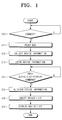
- Figure 1 is a flow chart for explaining a conventional method of displaying a device list of slave devices connected to a host.
- a user connects one slave device or multiple slave devices to a host device (S10). Then, the host device resets the IEEE 1394 bus (S11). Typically, the reset of an IEEE 1394 bus is performed when a slave device is connected to or disconnected from a host device.
- the host device collects device information assigned to each slave device (referred to as device information hereafter) (S12).
- device information are the Node ID (Node Identifier), the GUID (Global Unique Identifier), the device type, the model name, and the manufacturer's name.
- the Node ID changes whenever an IEEE bus is reset, and the GUID is a unique identifier assigned to each slave device.
- the host device stores the collected device information, including GUID, in a predefined memory (S13).
- a predefined memory S13
- an NVRAM Nonvolatile Random Access Memory
- device information is stored by applying a predetermined device name to each slave device. For example, STB is applied in case a slave device is a set-top box, and TV is applied to a television, respectively. Then the device information corresponding to the device names is stored.
- a slave device is identified by appending a serial number to the device name. For example, if there are two devices named DVHS, DVHS1 is assigned as one device name and DVHS2 is assigned as the other device name. Hereafter, this process is referred to as a numbering operation.
- the host device retrieves, based on the command, device information stored in a predetermined memory (S15). In this case, device information is retrieved based on the GUID of the connected slave device.
- the host device creates and displays a device list using the retrieved device information (S16 and S17).
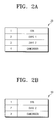
- Figure 2A shows one conventional device list
- Figure 2B depicts another conventional device list.
- STB, DVHS1, DVHS2, and CAMCORDER are displayed in the device list 20.
- the slave devices connected to the host device are one cable set-top box, two DVHS's, and one MPEG camcorder.
- STB, DVHS2, and CAMCORDER are displayed in the device list 30 of Figure 2B.
- the slave devices connected to the host device are one cable set-top box, one DVHS, and one MPEG camcorder respectively.
- DVHS2 is displayed in the actual device list.
- the device information of the slave device displays the device name at the time when it was stored in a predetermined memory. That is, the device name at the time when it was stored in a predetermined memory is retrieved through the GUID of a slave device, and the device list is created by use of the retrieved device name.
- DVHS1 and DVHS2 are displayed in the device list respectively (refer to Figure 2A), then, in case the slave device registered as DVHS1 is removed from the host device, the slave device stored as DVHS2 still remains as DVHS2 in the storage, so that, when creating a device list hereafter, the slave device stored as DVHS2 is unchanged and displayed as DVHS2. Accordingly, in this case, the device list is displayed inaccurately to a user, since it can confuse a user as to whether there are one or two DVHS devices.
- a predetermined memory area is required to store device information relating to slave devices, thereby increasing the unit costs of production.
- the present invention has been developed in order to address the above drawbacks and other problems associated with the conventional arrangement.
- a system comprising a master device and at least one slave device connected to the master device, wherein the master device comprises means for retrieving device information about the at least one slave device, means for sorting the device information in accordance with predetermined sort criteria and means for displaying the sorted device information.
- An aspect of the present invention is to provide a host device and a control method thereof, in which device information is not stored separately in order to create a device list, but a sorted device list of slave devices is provided according to sorting criteria which are predetermined by using at least one of the device type, the manufacturer's name, or the GUID information.
- a host device connected with at least one slave device through the IEEE 1394 bus having a display function, comprising an IEEE 1394 interface for connecting the slave devices, an input device for inputting a display-device-list command for the connected slave devices, a device list manager for sorting slave devices according to the criterion of the device type which is predetermined by using the device type from the device information of the slave devices and for creating a device list of the sorted slave devices, a display device, and a controller for controlling the device list manager to create the device list when a display-device-list command is input and displaying the created device list on the display device.
- the host device may further comprise an IEEE 1394 bus driver for collecting device information of the slave devices connected to the IEEE 1394 interface, and the controller, when a display-device-list command is inputted, may control the IEEE 1394 bus driver to collect and provide the device information of the slave devices to the device list manager.
- the device list manager when the slave devices are sorted by a predetermined criterion of device type, may check if there exist at least two devices of the same device type among the sorted slave devices, and, in case there exist at least two slave devices as a result of the check, sorts the slave devices of the same device type according to the predetermined sorting criterion of the same device type and updates the device list.
- the sorting criterion of the same device type is preferably, but not necessarily, a criterion for sorting at least two slave devices of the same device type in alphabetical order of the manufacturer's name of the device information.
- the sorting criterion of the same device type is preferably, but not necessarily, a criterion for sorting by the manufacturer's name of the device information, with a specific manufacturer's name as the foremost criterion.
- the device list manager when devices of the same type are sorted by the criterion of the same device type, may check if there exist at least two slave devices of the same manufacturer among the sorted devices of the same device type, and, in case there exist at least two slave devices as a result of the check, sorts the slave devices according to the predetermined sorting criterion of the same device type of the same manufacturer and updates the device list.
- the sorting criterion of the same device type of the same manufacturer is preferably, but not necessarily, a criterion for sorting at least two slave devices of the same device type of the same manufacturer in order of GUID of the device information.
- a control method for a host device connected with at least one slave device through the IEEE 1394 bus and having a display function comprising steps of collecting device information of the slave devices when a display-device-list command for the connected slave devices is input, sorting the slave devices according to the predetermined sorting criterion of the device type by using the device type from the device information of the collected slave devices, creating a device list of the sorted slave devices, and displaying the device list.
- a control method for a host device connected with at least one slave device through the IEEE 1394 bus and having a display function comprising steps of collecting device information of the slave devices when a display-device-list command for the connected slave devices is input, sorting the slave devices according to the predetermined sorting criteria by using at least one of the device type, the manufacturer's name, or the GUID from the device information of the collected slave devices, creating a device list of the sorted slave devices, and displaying the device list.
- a predetermined memory area can be saved so that the unit costs of production can be reduced.
- Figure 3 is a view for schematically showing a digital television and various slave devices connected thereto according to an exemplary embodiment of the invention.
- two DVHS devices 210 and 220, one cable set-top box 230, and one MPEG camcorder 240 are shown as various slave devices.
- the digital television 100 as a host device is connected with various slave devices 210, 220, 230 and 240 through the IEEE 1394 bus.
- device information of the connected various slave devices 210, 220, 230 and 240 is collected, and the device name assigned to each slave device according to the collected device information is sorted by the predetermined sorting criteria and displayed as a device list on the digital television 100.
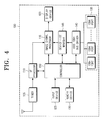
- Figure 4 is an internal block diagram of a digital television according to an embodiment of the present invention.
- the digital television 100 includes a tuner 105, an IF processor 110, an image signal processor 115, a display device 120, an input device 125, a memory device 130, an IEEE 1394 interface (hereafter, referred to as 1394 interface) 135, an IEEE 1394 bus driver (hereafter, referred to as 1394 driver) 140, a device list manager 145, and a controller 150.
- a tuner 105 an IF processor 110, an image signal processor 115, a display device 120, an input device 125, a memory device 130, an IEEE 1394 interface (hereafter, referred to as 1394 interface) 135, an IEEE 1394 bus driver (hereafter, referred to as 1394 driver) 140, a device list manager 145, and a controller 150.
- 1394 interface hereafter, referred to as 1394 interface
- 1394 driver IEEE 1394 bus driver
- the tuner 105 performs a channel selection operation for a predetermined channel from multiple channels received through an antenna, under the control of a controller 150 to be explained below.
- the IF processor 110 amplifies the broadcast signal of the channel selected by the tuner 105 to an IF signal (intermediate frequency signal), and converts the amplified IF signal into a composite video baseband signal (CVBS).
- the image signal processor 115 demodulates, detects, and processes the CVBS signal as a signal for display, and outputs the resulting signal. In other words, the image signal processor 115 separates the CBVS into a color signal and a luminance signal, combines the separated signals to restore an RGB image, and provides the image to the display device 120.
- the image signal output from the image signal processor 115 is provided to viewers as an image through the display device 120.
- the display device 120 can be implemented by using various image implementation elements such as a CRT (Cathode Ray Tube), an LCD (Liquid Crystal Display), and a PDP (Plasma Display Panel).
- CTR Cathode Ray Tube
- LCD Liquid Crystal Display
- PDP Plasma Display Panel
- the input device 125 is a user interface sending to the controller 150 a command for setting or processing functions supported by the digital television 100. To perform this function, the input device 125 has control keys (not shown) such as multiple numeric keys, arrow keys, confirmation keys, and the like. A control panel (not shown) located on the main body of the digital television 100, or a remote controller (not shown) can be used as the input device 125. According to the present embodiment, the display-device-list command is inputted through the input device 125.
- the display-device-list command is a request command for creating and displaying on the display device 120 a list of the device names of the slave devices connected to the host device.
- the memory device 130 stores a control program, various application programs, and data necessary for implementing the functions of the digital television 100, and temporarily stores the data created during the control and image process processing.
- sorting criteria are stored in the memory device 130.
- sorting criteria are the information applied when a device list of various slave devices connected to the digital television 100 is created, and is information about the method of sorting slave devices.
- a sorting criterion of device type, a sorting criterion of the same device type, and a sorting criterion of the same device type of the same manufacturer can be taken as examples of sorting criteria.
- the sorting criterion of device type is a criterion for sorting devices in a predetermined order; a sorting criterion of the same device type is a criterion that is applied when there exist at least two devices of the same device type; and a sorting criterion of the same device type of the same manufacturer is a criterion that is applied when there exist at least two devices of the same manufacturer.
- the 1394 interface 135 serves as an interface with various slave devices 210, 220, 230, and 240 through the IEEE 1394 bus, and has multiple 1394 ports for this purpose. Accordingly, multiple 1394 ports are connected with various slave devices through IEEE 1394 cables.
- the 1394 driver 140 operates and controls the 1394 interface 135, and controls the IEEE 1394 bus through the 1394 interface 135. Therefore, the 1394 driver 140 resets the IEEE 1394 bus, when various slave devices are connected to or disconnected from the digital television 100.
- the 1394 driver 140 collects device information of various slave devices 210, 220, 230, and 240 connected to the 1394 interface 135 under the control of the controller 150.
- the 1394 driver 140 provides the device list manager 145 with the collected device information of various slave devices 210, 220, 230, and 240.
- the device list manager 145 receives from the 1394 driver 140 the device information of various slave devices 210, 220, 230, and 240 currently connected to the 1394 interface. Also, the device list manager 145 creates a device list based on the provided device information. In this case, the device list is created as the sorting criteria stored in the memory device 130 are applied. To do so, the sorting criteria are retrieved from the memory device 130 and provided to device list manager 145.
- the controller 150 controls general operations of the digital television 100 according to the signal generated from the input device 125 by the key input or the key selection of a user, and the control program stored in the memory device 130. Consistent with the present invention, the controller 150, when a display-device-list command is inputted from the input device 125, controls the 1394 driver 140 to collect device information of the slave devices, and retrieve and send the sorting criteria from the memory device 130 to the device list manager 145.
- Figure 5 is a flow chart for explaining a method of controlling a digital television consistent with the present invention.
- the display-device-list command is inputted through the input device 125 by a user (S300).
- the 1394 driver 140 collects the device information of various slave devices 210, 220, 230, and 240 connected to the 1394 interface 135 (S305).
- a device type, a GUID, and a manufacturer can be presented as examples of device information.
- the collected device information is transferred to the device list manager 145 (S310).
- sorting criteria are retrieved from the memory device 130 and provided to the device list manager 145 under the control of the controller 150 (S315).
- a sorting criterion of device type, a sorting criterion of the same device type, and a sorting criterion of the same device type of the same manufacturer are presented as sorting criteria.
- the device list manager 145 sorts the device information on the basis of the provided sorting criteria, which will be explained in detail as follows.
- the device list manager 145 classifies slave devices 210, 220, 230, and 240 in order of the device type on the basis of the sorting criterion of the device type (S320).
- the device type For example, television -> cable set-top box -> AVHDD -> DVHS -> MPEG camcorder can be taken as an example of the order of slave devices 210, 220, 230, and 240.
- the device list manager 145 checks whether there exist at least two devices of the same device type as a classification result of the step S320 (S325).
- the device list is created by the device list manager 145 in order of the classified device type in the step S320, and displayed on the display device 120.
- devices of the same type are sorted on the basis of the predetermined sorting criterion of the same device type (S330).
- the method of sorting in alphabetical order of the manufacturer name is taken as an example.
- sorting may be done by specific character order, or by having a specific manufacturer's name as the foremost sorting criterion, or by other sorting criteria.
- the device list manager 145 checks whether there exist at least two devices of the same manufacturer as the result of the sort in the step S330 (S335). If the result of the check of the step S335 shows that there exist at least two devices of the same manufacturer, devices of the same manufacturer are sorted by the predetermined sorting criterion of the same device type of the same manufacturer (S340).
- the method of sorting in GUID order is taken as an example. However, the scope of the present invention is not restricted by the aforementioned disclosure.
- the numbering process is performed to add a serial number to each device of the same type (S345).
- the device list manager 145 creates a device list on the basis of the sorting of slave devices as described above, and the controller 150 processes the device list to be displayed. That is, the device list of the names of slave devices sorted from the step S320 to S345 is displayed on the display device 120 (S350).
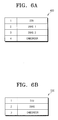
- STB As shown in the device list 400 of Figure 6A, STB, DVHS1, DVHS2, and CAMCORDER are displayed. This means that slave devices connected to the host device are one set-top box, two DVHS's, and one MPEG camcorder.
- STB In the device list 500 of Figure 6B, STB, DVHS, and CAMCORDER are displayed. This means that slave devices connected to the host device are one set-top box, one DVHS, and one MPEG camcorder.
- the same device list 400 as that of Figure 2A is depicted in Figure 6A.
- a device list 500 different from that of Figure 2B is shown in Figure 6B.
- the device list 30 is displayed as shown in Figure 2B.
- the device list 30 is displayed as shown in Figure 6B.
- a predefined memory area is required to store device information of slave devices, thereby increasing the unit costs of production.
- the host device and the control method thereof according to the present invention does not require a predefined memory area to store device information of slave devices, so a small amount of memory is used for the products, thereby decreasing the unit costs of products.
- the order of slave devices is sorted consistently.
- the names of slave devices are changed flexibly by current condition, so users are not confused.
Landscapes
- Engineering & Computer Science (AREA)
- Multimedia (AREA)
- Signal Processing (AREA)
- Databases & Information Systems (AREA)
- Computer Networks & Wireless Communication (AREA)
- Computer Security & Cryptography (AREA)
- User Interface Of Digital Computer (AREA)
- Small-Scale Networks (AREA)
- Computer And Data Communications (AREA)
Applications Claiming Priority (1)
| Application Number | Priority Date | Filing Date | Title |
|---|---|---|---|
| KR1020040061700A KR100574463B1 (ko) | 2004-08-05 | 2004-08-05 | Ieee 1394가 채용된 호스트장치 및 그의 제어방법 |
Publications (2)
| Publication Number | Publication Date |
|---|---|
| EP1624681A1 true EP1624681A1 (fr) | 2006-02-08 |
| EP1624681B1 EP1624681B1 (fr) | 2011-09-21 |
Family
ID=34940286
Family Applications (1)
| Application Number | Title | Priority Date | Filing Date |
|---|---|---|---|
| EP05106226A Expired - Lifetime EP1624681B1 (fr) | 2004-08-05 | 2005-07-07 | Un système maître-sclave |
Country Status (5)
| Country | Link |
|---|---|
| US (1) | US7305504B2 (fr) |
| EP (1) | EP1624681B1 (fr) |
| JP (1) | JP2006048705A (fr) |
| KR (1) | KR100574463B1 (fr) |
| CN (1) | CN100433685C (fr) |
Families Citing this family (6)
| Publication number | Priority date | Publication date | Assignee | Title |
|---|---|---|---|---|
| US7827578B2 (en) * | 2003-11-10 | 2010-11-02 | Thomson Licensing | Method and apparatus for providing simplified peer-to-peer recording |
| US8078298B2 (en) * | 2004-03-26 | 2011-12-13 | Harman International Industries, Incorporated | System for node structure discovery in an audio-related system |
| US20070162677A1 (en) * | 2006-01-06 | 2007-07-12 | Chuntex Electronic Co., Ltd. | Hot-plug extension device and a display having the hot-plug extension device |
| JP4376931B2 (ja) * | 2007-10-31 | 2009-12-02 | 株式会社東芝 | 表示装置及び表示方法 |
| US10515025B2 (en) * | 2016-08-08 | 2019-12-24 | Cirrus Logic, Inc. | Communication protocol adapter |
| US20210133310A1 (en) * | 2018-06-18 | 2021-05-06 | A7Technology Inc. | Systems and methods for computer security |
Citations (4)
| Publication number | Priority date | Publication date | Assignee | Title |
|---|---|---|---|---|
| US5793366A (en) * | 1996-11-12 | 1998-08-11 | Sony Corporation | Graphical display of an animated data stream between devices on a bus |
| US5883621A (en) * | 1996-06-21 | 1999-03-16 | Sony Corporation | Device control with topology map in a digital network |
| EP1014701A2 (fr) * | 1998-12-22 | 2000-06-28 | Sony Corporation | Systèmes, méthodes et dispositifs de réception pour la diffusion numérique |
| EP1271938A2 (fr) * | 2001-06-18 | 2003-01-02 | Matsushita Electric Industrial Co., Ltd. | Contrôle de dispositifs AV multiples par une seule unité centrale de commande en utilisant des commandes transmises par infra-rouge et des commandes transmises par bus |
Family Cites Families (12)
| Publication number | Priority date | Publication date | Assignee | Title |
|---|---|---|---|---|
| WO1997049057A2 (fr) * | 1996-06-21 | 1997-12-24 | Sony Electronics, Inc. | Dispositif d'interface utilisateur mettant en oeuvre une carte topologique |
| DE69838439T2 (de) * | 1997-06-25 | 2008-06-12 | Samsung Electronics Co., Ltd., Suwon | Verfahren und Vorrichtung zur Überwachung von Geräten in einem Hausnetzwerk |
| JP5036098B2 (ja) * | 1997-09-18 | 2012-09-26 | トムソン コンシユーマ エレクトロニクス インコーポレイテツド | ディジタルバスを介して周辺電子装置を制御するディジタルテレビジョン装置 |
| US6038625A (en) | 1998-01-06 | 2000-03-14 | Sony Corporation Of Japan | Method and system for providing a device identification mechanism within a consumer audio/video network |
| JP4424700B2 (ja) | 1999-03-12 | 2010-03-03 | キヤノン株式会社 | 情報処理装置およびその制御方法 |
| KR100275707B1 (ko) * | 1998-11-26 | 2000-12-15 | 윤종용 | 홈네트웍 시스템 및 그 노드 아이디 할당방법 |
| US6542474B1 (en) * | 1999-02-26 | 2003-04-01 | Sony Corporation | System and method for incrementally updating remote element lists in an electronic network |
| JP2001007824A (ja) * | 1999-06-22 | 2001-01-12 | Hitachi Ltd | 電子機器 |
| JP3449313B2 (ja) * | 1999-09-28 | 2003-09-22 | 日本電気株式会社 | 機器情報収集方法、機器制御装置およびブリッジ |
| KR100374820B1 (ko) * | 2000-06-08 | 2003-03-04 | 엘지전자 주식회사 | Ieee 인터페이스를 이용한 오디오/비디오기기의제어방법 |
| JP2002044096A (ja) * | 2000-07-26 | 2002-02-08 | Toshiba Corp | 表示装置及び表示方法 |
| CN100405838C (zh) | 2002-04-24 | 2008-07-23 | 汤姆森特许公司 | 用于指定数据总线网络上的设备连接的方法和装置 |
-
2004
- 2004-08-05 KR KR1020040061700A patent/KR100574463B1/ko not_active Expired - Fee Related
-
2005
- 2005-07-05 CN CNB200510082043XA patent/CN100433685C/zh not_active Expired - Fee Related
- 2005-07-07 EP EP05106226A patent/EP1624681B1/fr not_active Expired - Lifetime
- 2005-08-03 US US11/195,772 patent/US7305504B2/en not_active Expired - Lifetime
- 2005-08-04 JP JP2005226691A patent/JP2006048705A/ja active Pending
Patent Citations (4)
| Publication number | Priority date | Publication date | Assignee | Title |
|---|---|---|---|---|
| US5883621A (en) * | 1996-06-21 | 1999-03-16 | Sony Corporation | Device control with topology map in a digital network |
| US5793366A (en) * | 1996-11-12 | 1998-08-11 | Sony Corporation | Graphical display of an animated data stream between devices on a bus |
| EP1014701A2 (fr) * | 1998-12-22 | 2000-06-28 | Sony Corporation | Systèmes, méthodes et dispositifs de réception pour la diffusion numérique |
| EP1271938A2 (fr) * | 2001-06-18 | 2003-01-02 | Matsushita Electric Industrial Co., Ltd. | Contrôle de dispositifs AV multiples par une seule unité centrale de commande en utilisant des commandes transmises par infra-rouge et des commandes transmises par bus |
Non-Patent Citations (1)
| Title |
|---|
| MAURY WRIGHT: "Firewire unleashes the power of digital video", EDN, 3 July 1997 (1997-07-03), XP002345944, Retrieved from the Internet <URL:http://www.edn.com/archives/1997/070397/14cs.htm> [retrieved on 20050921] * |
Also Published As
| Publication number | Publication date |
|---|---|
| US7305504B2 (en) | 2007-12-04 |
| CN100433685C (zh) | 2008-11-12 |
| CN1731753A (zh) | 2006-02-08 |
| KR20060012963A (ko) | 2006-02-09 |
| JP2006048705A (ja) | 2006-02-16 |
| EP1624681B1 (fr) | 2011-09-21 |
| KR100574463B1 (ko) | 2006-04-27 |
| US20060031624A1 (en) | 2006-02-09 |
Similar Documents
| Publication | Publication Date | Title |
|---|---|---|
| US20080228963A1 (en) | Method and apparatus for transferring settings and other configuration information from one consumer electronics device to another | |
| US9706157B2 (en) | Controlled information processing apparatus | |
| CN1638455A (zh) | 用于标记音频视频信号输入源的显示装置和方法 | |
| US6801957B1 (en) | Information-outputting apparatus and connection-relation management method | |
| EP1624681B1 (fr) | Un système maître-sclave | |
| US20110032433A1 (en) | Connection state display controller, content processor, content processing system, connection state display control method, its program and recording medium recording the program | |
| JPH08237276A (ja) | 家庭用システムネットワーク内のscart形接続の検出方法 | |
| EP1497982B1 (fr) | Procede et appareil de specification de connexions pour des dispositifs sur un reseau de bus de donnees | |
| EP1497976B1 (fr) | Procede et appareil permettant de selectionner des dispositifs sur un bus de donnees | |
| JP2008084366A (ja) | 情報処理装置及び録画システム | |
| US20060233520A1 (en) | Method for transmitting and receiving graphic data between an image display apparatus and an external apparatus, and information frame structure including information on the graphic data | |
| CN1290451A (zh) | 用于dvd播放机的数字基带接口 | |
| JP2002305527A (ja) | 機器接続状態表示装置、並びに該装置における機器接続状態の表示方法 | |
| CN100585660C (zh) | 切换设备和数据传送方法 | |
| KR100677235B1 (ko) | DTVLink 기반의 캡션 데이터 디스플레이 방법 | |
| KR100690616B1 (ko) | 영상 기기의 분할화면 디스플레이 방법 | |
| JP3635215B2 (ja) | 機器制御方法およびプログラム記録媒体 | |
| JP2002044556A (ja) | 表示装置及び表示方法 | |
| JP2001148701A (ja) | 信号源検知方法、信号源設定方法、およびプログラム記録媒体 |
Legal Events
| Date | Code | Title | Description |
|---|---|---|---|
| PUAI | Public reference made under article 153(3) epc to a published international application that has entered the european phase |
Free format text: ORIGINAL CODE: 0009012 |
|
| AK | Designated contracting states |
Kind code of ref document: A1 Designated state(s): AT BE BG CH CY CZ DE DK EE ES FI FR GB GR HU IE IS IT LI LT LU LV MC NL PL PT RO SE SI SK TR |
|
| AX | Request for extension of the european patent |
Extension state: AL BA HR MK YU |
|
| AKX | Designation fees paid | ||
| 17P | Request for examination filed |
Effective date: 20060714 |
|
| RBV | Designated contracting states (corrected) |
Designated state(s): DE GB NL |
|
| 17Q | First examination report despatched |
Effective date: 20061005 |
|
| REG | Reference to a national code |
Ref country code: DE Ref legal event code: 8566 |
|
| GRAP | Despatch of communication of intention to grant a patent |
Free format text: ORIGINAL CODE: EPIDOSNIGR1 |
|
| GRAS | Grant fee paid |
Free format text: ORIGINAL CODE: EPIDOSNIGR3 |
|
| GRAA | (expected) grant |
Free format text: ORIGINAL CODE: 0009210 |
|
| AK | Designated contracting states |
Kind code of ref document: B1 Designated state(s): DE GB NL |
|
| REG | Reference to a national code |
Ref country code: GB Ref legal event code: FG4D |
|
| REG | Reference to a national code |
Ref country code: DE Ref legal event code: R096 Ref document number: 602005030106 Country of ref document: DE Effective date: 20111117 |
|
| REG | Reference to a national code |
Ref country code: NL Ref legal event code: T3 |
|
| PLBE | No opposition filed within time limit |
Free format text: ORIGINAL CODE: 0009261 |
|
| STAA | Information on the status of an ep patent application or granted ep patent |
Free format text: STATUS: NO OPPOSITION FILED WITHIN TIME LIMIT |
|
| 26N | No opposition filed |
Effective date: 20120622 |
|
| REG | Reference to a national code |
Ref country code: DE Ref legal event code: R097 Ref document number: 602005030106 Country of ref document: DE Effective date: 20120622 |
|
| PGFP | Annual fee paid to national office [announced via postgrant information from national office to epo] |
Ref country code: NL Payment date: 20180621 Year of fee payment: 14 |
|
| PGFP | Annual fee paid to national office [announced via postgrant information from national office to epo] |
Ref country code: DE Payment date: 20180620 Year of fee payment: 14 Ref country code: GB Payment date: 20180621 Year of fee payment: 14 |
|
| REG | Reference to a national code |
Ref country code: DE Ref legal event code: R119 Ref document number: 602005030106 Country of ref document: DE |
|
| GBPC | Gb: european patent ceased through non-payment of renewal fee |
Effective date: 20190707 |
|
| PG25 | Lapsed in a contracting state [announced via postgrant information from national office to epo] |
Ref country code: DE Free format text: LAPSE BECAUSE OF NON-PAYMENT OF DUE FEES Effective date: 20200201 Ref country code: GB Free format text: LAPSE BECAUSE OF NON-PAYMENT OF DUE FEES Effective date: 20190707 Ref country code: NL Free format text: LAPSE BECAUSE OF NON-PAYMENT OF DUE FEES Effective date: 20190801 |
|
| REG | Reference to a national code |
Ref country code: NL Ref legal event code: MM Effective date: 20190801 |