EP1624890B1 - Identifikation von vaccinia-virus-dominanten t-zell-epitopen - Google Patents
Identifikation von vaccinia-virus-dominanten t-zell-epitopen Download PDFInfo
- Publication number
- EP1624890B1 EP1624890B1 EP04705315A EP04705315A EP1624890B1 EP 1624890 B1 EP1624890 B1 EP 1624890B1 EP 04705315 A EP04705315 A EP 04705315A EP 04705315 A EP04705315 A EP 04705315A EP 1624890 B1 EP1624890 B1 EP 1624890B1
- Authority
- EP
- European Patent Office
- Prior art keywords
- peptide
- mutant
- vaccinia
- immunogenic
- cells
- Prior art date
- Legal status (The legal status is an assumption and is not a legal conclusion. Google has not performed a legal analysis and makes no representation as to the accuracy of the status listed.)
- Expired - Lifetime
Links
- 241000700618 Vaccinia virus Species 0.000 title claims abstract description 92
- 210000001744 T-lymphocyte Anatomy 0.000 claims abstract description 159
- 206010046865 Vaccinia virus infection Diseases 0.000 claims abstract description 95
- 208000007089 vaccinia Diseases 0.000 claims abstract description 95
- 241000700647 Variola virus Species 0.000 claims abstract description 72
- 229960005486 vaccine Drugs 0.000 claims abstract description 26
- 108090000765 processed proteins & peptides Proteins 0.000 claims description 381
- 230000002163 immunogen Effects 0.000 claims description 137
- 102000004196 processed proteins & peptides Human genes 0.000 claims description 98
- 239000012634 fragment Substances 0.000 claims description 75
- 229920001184 polypeptide Polymers 0.000 claims description 71
- 238000000034 method Methods 0.000 claims description 43
- 238000003556 assay Methods 0.000 claims description 40
- 150000001413 amino acids Chemical class 0.000 claims description 39
- 230000001900 immune effect Effects 0.000 claims description 34
- 230000003053 immunization Effects 0.000 claims description 27
- 102000039446 nucleic acids Human genes 0.000 claims description 25
- 108020004707 nucleic acids Proteins 0.000 claims description 25
- 150000007523 nucleic acids Chemical class 0.000 claims description 25
- 210000003819 peripheral blood mononuclear cell Anatomy 0.000 claims description 24
- 102000004127 Cytokines Human genes 0.000 claims description 21
- 108090000695 Cytokines Proteins 0.000 claims description 21
- 208000015181 infectious disease Diseases 0.000 claims description 20
- 238000010186 staining Methods 0.000 claims description 18
- 238000000684 flow cytometry Methods 0.000 claims description 14
- 210000004369 blood Anatomy 0.000 claims description 13
- 239000008280 blood Substances 0.000 claims description 13
- 238000010790 dilution Methods 0.000 claims description 11
- 239000012895 dilution Substances 0.000 claims description 11
- 238000011510 Elispot assay Methods 0.000 claims description 10
- 238000003114 enzyme-linked immunosorbent spot assay Methods 0.000 claims description 9
- DAZBILQQVFBVPE-XKKUQSFHSA-N (2s)-4-amino-2-[[(2s)-2-[[(2s)-2-[[(2s)-2-[[(2s)-1-[(2s)-4-amino-2-[[2-[[(2r)-2-[[(2s)-2-[[(2s)-1-[(2s)-6-amino-2-[[(2s)-2-[[(2s)-2-[[(2s,3r)-2-amino-3-hydroxybutanoyl]amino]-4-methylsulfanylbutanoyl]amino]-5-(diaminomethylideneamino)pentanoyl]amino]hexan Chemical compound C[C@@H](O)[C@H](N)C(=O)N[C@@H](CCSC)C(=O)N[C@@H](CCCN=C(N)N)C(=O)N[C@@H](CCCCN)C(=O)N1CCC[C@H]1C(=O)N[C@@H](CCCN=C(N)N)C(=O)N[C@@H](CS)C(=O)NCC(=O)N[C@@H](CC(N)=O)C(=O)N1[C@H](C(=O)N[C@@H](CC(O)=O)C(=O)N[C@@H](C(C)C)C(=O)N[C@@H](C)C(=O)N[C@@H](CC(N)=O)C(O)=O)CCC1 DAZBILQQVFBVPE-XKKUQSFHSA-N 0.000 claims description 7
- 210000002751 lymph Anatomy 0.000 claims description 7
- 108010011990 peptide 74 Proteins 0.000 claims description 7
- 210000001519 tissue Anatomy 0.000 claims description 7
- 239000013598 vector Substances 0.000 claims description 6
- 230000004913 activation Effects 0.000 claims description 5
- 238000009566 cancer vaccine Methods 0.000 claims description 4
- 229940022399 cancer vaccine Drugs 0.000 claims description 4
- 238000004519 manufacturing process Methods 0.000 claims description 4
- 238000012544 monitoring process Methods 0.000 claims description 4
- 239000003814 drug Substances 0.000 claims description 3
- 108090000623 proteins and genes Proteins 0.000 abstract description 48
- 102000004169 proteins and genes Human genes 0.000 abstract description 24
- 108010088729 HLA-A*02:01 antigen Proteins 0.000 abstract description 19
- 241000282414 Homo sapiens Species 0.000 abstract description 11
- 230000005867 T cell response Effects 0.000 abstract description 11
- 238000002255 vaccination Methods 0.000 abstract description 6
- 108700028369 Alleles Proteins 0.000 abstract description 4
- 238000004458 analytical method Methods 0.000 abstract description 3
- 230000005847 immunogenicity Effects 0.000 abstract description 3
- 210000001266 CD8-positive T-lymphocyte Anatomy 0.000 abstract description 2
- 102000043129 MHC class I family Human genes 0.000 abstract description 2
- 108091054437 MHC class I family Proteins 0.000 abstract description 2
- 238000013461 design Methods 0.000 abstract description 2
- 230000006698 induction Effects 0.000 abstract 1
- 210000004027 cell Anatomy 0.000 description 54
- 241000700605 Viruses Species 0.000 description 21
- 210000001151 cytotoxic T lymphocyte Anatomy 0.000 description 16
- 208000001203 Smallpox Diseases 0.000 description 14
- 238000002649 immunization Methods 0.000 description 14
- 241000870995 Variola Species 0.000 description 12
- 239000000427 antigen Substances 0.000 description 12
- 108091007433 antigens Proteins 0.000 description 12
- 102000036639 antigens Human genes 0.000 description 12
- 241001183012 Modified Vaccinia Ankara virus Species 0.000 description 10
- 210000003719 b-lymphocyte Anatomy 0.000 description 8
- 238000002784 cytotoxicity assay Methods 0.000 description 8
- 231100000263 cytotoxicity test Toxicity 0.000 description 8
- 102100037850 Interferon gamma Human genes 0.000 description 7
- 108010074328 Interferon-gamma Proteins 0.000 description 7
- 230000006870 function Effects 0.000 description 6
- 210000002443 helper t lymphocyte Anatomy 0.000 description 6
- 210000000612 antigen-presenting cell Anatomy 0.000 description 5
- 244000052769 pathogen Species 0.000 description 5
- 238000012216 screening Methods 0.000 description 5
- 229940083538 smallpox vaccine Drugs 0.000 description 5
- 241000282412 Homo Species 0.000 description 4
- 102000000588 Interleukin-2 Human genes 0.000 description 4
- 108010002350 Interleukin-2 Proteins 0.000 description 4
- 230000028993 immune response Effects 0.000 description 4
- 210000001165 lymph node Anatomy 0.000 description 4
- 230000001717 pathogenic effect Effects 0.000 description 4
- 210000000952 spleen Anatomy 0.000 description 4
- 108020004414 DNA Proteins 0.000 description 3
- PEDCQBHIVMGVHV-UHFFFAOYSA-N Glycerine Chemical compound OCC(O)CO PEDCQBHIVMGVHV-UHFFFAOYSA-N 0.000 description 3
- 241000699670 Mus sp. Species 0.000 description 3
- 230000006052 T cell proliferation Effects 0.000 description 3
- 108091008874 T cell receptors Proteins 0.000 description 3
- 102000016266 T-Cell Antigen Receptors Human genes 0.000 description 3
- 238000001516 cell proliferation assay Methods 0.000 description 3
- 238000010367 cloning Methods 0.000 description 3
- 230000001472 cytotoxic effect Effects 0.000 description 3
- 239000003937 drug carrier Substances 0.000 description 3
- 230000000694 effects Effects 0.000 description 3
- 238000002474 experimental method Methods 0.000 description 3
- 239000000203 mixture Substances 0.000 description 3
- 239000002773 nucleotide Substances 0.000 description 3
- 125000003729 nucleotide group Chemical group 0.000 description 3
- 238000002360 preparation method Methods 0.000 description 3
- 230000001681 protective effect Effects 0.000 description 3
- 230000004044 response Effects 0.000 description 3
- 230000004936 stimulating effect Effects 0.000 description 3
- 230000000638 stimulation Effects 0.000 description 3
- 241000894006 Bacteria Species 0.000 description 2
- 108010050904 Interferons Proteins 0.000 description 2
- 102000014150 Interferons Human genes 0.000 description 2
- 108010074338 Lymphokines Proteins 0.000 description 2
- 102000008072 Lymphokines Human genes 0.000 description 2
- 241001465754 Metazoa Species 0.000 description 2
- JRNVZBWKYDBUCA-UHFFFAOYSA-N N-chlorosuccinimide Chemical compound ClN1C(=O)CCC1=O JRNVZBWKYDBUCA-UHFFFAOYSA-N 0.000 description 2
- 206010028980 Neoplasm Diseases 0.000 description 2
- 102000007079 Peptide Fragments Human genes 0.000 description 2
- 108010033276 Peptide Fragments Proteins 0.000 description 2
- 239000004365 Protease Substances 0.000 description 2
- 210000000628 antibody-producing cell Anatomy 0.000 description 2
- 230000000890 antigenic effect Effects 0.000 description 2
- 230000002238 attenuated effect Effects 0.000 description 2
- 230000015572 biosynthetic process Effects 0.000 description 2
- 230000006037 cell lysis Effects 0.000 description 2
- 238000003776 cleavage reaction Methods 0.000 description 2
- 231100000433 cytotoxic Toxicity 0.000 description 2
- 230000004069 differentiation Effects 0.000 description 2
- 201000010099 disease Diseases 0.000 description 2
- 208000037265 diseases, disorders, signs and symptoms Diseases 0.000 description 2
- 231100000673 dose–response relationship Toxicity 0.000 description 2
- 238000001943 fluorescence-activated cell sorting Methods 0.000 description 2
- 230000036541 health Effects 0.000 description 2
- 210000000987 immune system Anatomy 0.000 description 2
- 238000003780 insertion Methods 0.000 description 2
- 230000037431 insertion Effects 0.000 description 2
- 230000003993 interaction Effects 0.000 description 2
- 229940079322 interferon Drugs 0.000 description 2
- 230000003834 intracellular effect Effects 0.000 description 2
- 230000001048 lympholytic effect Effects 0.000 description 2
- BDAGIHXWWSANSR-UHFFFAOYSA-N methanoic acid Natural products OC=O BDAGIHXWWSANSR-UHFFFAOYSA-N 0.000 description 2
- 244000000010 microbial pathogen Species 0.000 description 2
- 210000000056 organ Anatomy 0.000 description 2
- 230000002093 peripheral effect Effects 0.000 description 2
- 239000002243 precursor Substances 0.000 description 2
- 230000002062 proliferating effect Effects 0.000 description 2
- 230000000644 propagated effect Effects 0.000 description 2
- 108020003175 receptors Proteins 0.000 description 2
- 230000003362 replicative effect Effects 0.000 description 2
- 230000000284 resting effect Effects 0.000 description 2
- 230000007017 scission Effects 0.000 description 2
- 239000000725 suspension Substances 0.000 description 2
- 238000003786 synthesis reaction Methods 0.000 description 2
- 101150084750 1 gene Proteins 0.000 description 1
- OSWFIVFLDKOXQC-UHFFFAOYSA-N 4-(3-methoxyphenyl)aniline Chemical compound COC1=CC=CC(C=2C=CC(N)=CC=2)=C1 OSWFIVFLDKOXQC-UHFFFAOYSA-N 0.000 description 1
- FWMNVWWHGCHHJJ-SKKKGAJSSA-N 4-amino-1-[(2r)-6-amino-2-[[(2r)-2-[[(2r)-2-[[(2r)-2-amino-3-phenylpropanoyl]amino]-3-phenylpropanoyl]amino]-4-methylpentanoyl]amino]hexanoyl]piperidine-4-carboxylic acid Chemical compound C([C@H](C(=O)N[C@H](CC(C)C)C(=O)N[C@H](CCCCN)C(=O)N1CCC(N)(CC1)C(O)=O)NC(=O)[C@H](N)CC=1C=CC=CC=1)C1=CC=CC=C1 FWMNVWWHGCHHJJ-SKKKGAJSSA-N 0.000 description 1
- 241000283690 Bos taurus Species 0.000 description 1
- 208000023706 Bruton agammaglobulinaemia Diseases 0.000 description 1
- 101150109041 C16L gene Proteins 0.000 description 1
- OBMZMSLWNNWEJA-XNCRXQDQSA-N C1=CC=2C(C[C@@H]3NC(=O)[C@@H](NC(=O)[C@H](NC(=O)N(CC#CCN(CCCC[C@H](NC(=O)[C@@H](CC4=CC=CC=C4)NC3=O)C(=O)N)CC=C)NC(=O)[C@@H](N)C)CC3=CNC4=C3C=CC=C4)C)=CNC=2C=C1 Chemical compound C1=CC=2C(C[C@@H]3NC(=O)[C@@H](NC(=O)[C@H](NC(=O)N(CC#CCN(CCCC[C@H](NC(=O)[C@@H](CC4=CC=CC=C4)NC3=O)C(=O)N)CC=C)NC(=O)[C@@H](N)C)CC3=CNC4=C3C=CC=C4)C)=CNC=2C=C1 OBMZMSLWNNWEJA-XNCRXQDQSA-N 0.000 description 1
- 241000282465 Canis Species 0.000 description 1
- 108090000317 Chymotrypsin Proteins 0.000 description 1
- 208000035473 Communicable disease Diseases 0.000 description 1
- 206010010356 Congenital anomaly Diseases 0.000 description 1
- 241000557626 Corvus corax Species 0.000 description 1
- 241000701022 Cytomegalovirus Species 0.000 description 1
- 101150083809 D10L gene Proteins 0.000 description 1
- 108010041986 DNA Vaccines Proteins 0.000 description 1
- 108090000790 Enzymes Proteins 0.000 description 1
- 102000004190 Enzymes Human genes 0.000 description 1
- 101000686777 Escherichia phage T7 T7 RNA polymerase Proteins 0.000 description 1
- LFQSCWFLJHTTHZ-UHFFFAOYSA-N EtOH Substances CCO LFQSCWFLJHTTHZ-UHFFFAOYSA-N 0.000 description 1
- 241000282324 Felis Species 0.000 description 1
- 108090000270 Ficain Proteins 0.000 description 1
- 238000012413 Fluorescence activated cell sorting analysis Methods 0.000 description 1
- 108010075704 HLA-A Antigens Proteins 0.000 description 1
- 102000011786 HLA-A Antigens Human genes 0.000 description 1
- 108010088652 Histocompatibility Antigens Class I Proteins 0.000 description 1
- 102000008949 Histocompatibility Antigens Class I Human genes 0.000 description 1
- AVXURJPOCDRRFD-UHFFFAOYSA-N Hydroxylamine Chemical compound ON AVXURJPOCDRRFD-UHFFFAOYSA-N 0.000 description 1
- 102000015696 Interleukins Human genes 0.000 description 1
- 108010063738 Interleukins Proteins 0.000 description 1
- 108700005089 MHC Class I Genes Proteins 0.000 description 1
- 241000124008 Mammalia Species 0.000 description 1
- 241001529936 Murinae Species 0.000 description 1
- 241000699666 Mus <mouse, genus> Species 0.000 description 1
- 101150073111 NPH1 gene Proteins 0.000 description 1
- 102000015636 Oligopeptides Human genes 0.000 description 1
- 108010038807 Oligopeptides Proteins 0.000 description 1
- 108700026244 Open Reading Frames Proteins 0.000 description 1
- 241000700629 Orthopoxvirus Species 0.000 description 1
- 101100327163 Oryza sativa subsp. japonica CCD8A gene Proteins 0.000 description 1
- 108010067372 Pancreatic elastase Proteins 0.000 description 1
- 102000016387 Pancreatic elastase Human genes 0.000 description 1
- 108090000526 Papain Proteins 0.000 description 1
- 108090000284 Pepsin A Proteins 0.000 description 1
- 102000057297 Pepsin A Human genes 0.000 description 1
- 101710176384 Peptide 1 Proteins 0.000 description 1
- 201000001322 T cell deficiency Diseases 0.000 description 1
- 230000024932 T cell mediated immunity Effects 0.000 description 1
- 108090000631 Trypsin Proteins 0.000 description 1
- 102000004142 Trypsin Human genes 0.000 description 1
- 101100534077 Vaccinia virus (strain Western Reserve) SPI-1 gene Proteins 0.000 description 1
- 101100219276 Variola virus (isolate Human/India/Ind3/1967) C4L gene Proteins 0.000 description 1
- 108010067390 Viral Proteins Proteins 0.000 description 1
- 101100501801 Yaba monkey tumor virus (strain VR587) VETFL gene Proteins 0.000 description 1
- 230000009471 action Effects 0.000 description 1
- 230000001154 acute effect Effects 0.000 description 1
- 239000002671 adjuvant Substances 0.000 description 1
- 230000007815 allergy Effects 0.000 description 1
- 229940037003 alum Drugs 0.000 description 1
- 238000013459 approach Methods 0.000 description 1
- 230000001580 bacterial effect Effects 0.000 description 1
- 230000009286 beneficial effect Effects 0.000 description 1
- 230000008901 benefit Effects 0.000 description 1
- 239000011230 binding agent Substances 0.000 description 1
- 201000011510 cancer Diseases 0.000 description 1
- 230000001413 cellular effect Effects 0.000 description 1
- 230000007969 cellular immunity Effects 0.000 description 1
- 238000004182 chemical digestion Methods 0.000 description 1
- 229960002376 chymotrypsin Drugs 0.000 description 1
- 238000004440 column chromatography Methods 0.000 description 1
- 238000010835 comparative analysis Methods 0.000 description 1
- 150000001875 compounds Chemical class 0.000 description 1
- 208000029192 congenital agammaglobulinemia Diseases 0.000 description 1
- 201000003740 cowpox Diseases 0.000 description 1
- 230000009260 cross reactivity Effects 0.000 description 1
- ATDGTVJJHBUTRL-UHFFFAOYSA-N cyanogen bromide Chemical compound BrC#N ATDGTVJJHBUTRL-UHFFFAOYSA-N 0.000 description 1
- 230000009089 cytolysis Effects 0.000 description 1
- 230000000120 cytopathologic effect Effects 0.000 description 1
- 210000000172 cytosol Anatomy 0.000 description 1
- 230000001086 cytosolic effect Effects 0.000 description 1
- 231100000135 cytotoxicity Toxicity 0.000 description 1
- 230000002950 deficient Effects 0.000 description 1
- 238000012217 deletion Methods 0.000 description 1
- 230000037430 deletion Effects 0.000 description 1
- 230000001419 dependent effect Effects 0.000 description 1
- 238000011161 development Methods 0.000 description 1
- 230000003292 diminished effect Effects 0.000 description 1
- 230000002222 downregulating effect Effects 0.000 description 1
- 239000012636 effector Substances 0.000 description 1
- 230000012202 endocytosis Effects 0.000 description 1
- 230000002255 enzymatic effect Effects 0.000 description 1
- 229940088598 enzyme Drugs 0.000 description 1
- -1 ethanol polyols Chemical class 0.000 description 1
- POTUGHMKJGOKRI-UHFFFAOYSA-N ficin Chemical compound FI=CI=N POTUGHMKJGOKRI-UHFFFAOYSA-N 0.000 description 1
- 235000019836 ficin Nutrition 0.000 description 1
- MHMNJMPURVTYEJ-UHFFFAOYSA-N fluorescein-5-isothiocyanate Chemical compound O1C(=O)C2=CC(N=C=S)=CC=C2C21C1=CC=C(O)C=C1OC1=CC(O)=CC=C21 MHMNJMPURVTYEJ-UHFFFAOYSA-N 0.000 description 1
- 235000019253 formic acid Nutrition 0.000 description 1
- 238000001502 gel electrophoresis Methods 0.000 description 1
- 230000002068 genetic effect Effects 0.000 description 1
- 230000006658 host protein synthesis Effects 0.000 description 1
- 230000036039 immunity Effects 0.000 description 1
- 230000003308 immunostimulating effect Effects 0.000 description 1
- 238000000338 in vitro Methods 0.000 description 1
- 238000001727 in vivo Methods 0.000 description 1
- 230000001939 inductive effect Effects 0.000 description 1
- 239000012678 infectious agent Substances 0.000 description 1
- 230000010354 integration Effects 0.000 description 1
- 229940047122 interleukins Drugs 0.000 description 1
- 238000007918 intramuscular administration Methods 0.000 description 1
- 238000007912 intraperitoneal administration Methods 0.000 description 1
- 238000001990 intravenous administration Methods 0.000 description 1
- 238000002955 isolation Methods 0.000 description 1
- 239000007788 liquid Substances 0.000 description 1
- 230000005923 long-lasting effect Effects 0.000 description 1
- 210000004880 lymph fluid Anatomy 0.000 description 1
- 210000004698 lymphocyte Anatomy 0.000 description 1
- 239000006166 lysate Substances 0.000 description 1
- 230000002132 lysosomal effect Effects 0.000 description 1
- 210000004962 mammalian cell Anatomy 0.000 description 1
- 208000005871 monkeypox Diseases 0.000 description 1
- 210000001616 monocyte Anatomy 0.000 description 1
- 231100000219 mutagenic Toxicity 0.000 description 1
- 230000003505 mutagenic effect Effects 0.000 description 1
- 229940022007 naked DNA vaccine Drugs 0.000 description 1
- 229940055729 papain Drugs 0.000 description 1
- 235000019834 papain Nutrition 0.000 description 1
- 229940111202 pepsin Drugs 0.000 description 1
- 229940023041 peptide vaccine Drugs 0.000 description 1
- 239000002504 physiological saline solution Substances 0.000 description 1
- 229920005862 polyol Polymers 0.000 description 1
- 239000000843 powder Substances 0.000 description 1
- 229940024231 poxvirus vaccine Drugs 0.000 description 1
- 230000002265 prevention Effects 0.000 description 1
- 230000008569 process Effects 0.000 description 1
- 230000035755 proliferation Effects 0.000 description 1
- 229940023143 protein vaccine Drugs 0.000 description 1
- 229940074386 skatole Drugs 0.000 description 1
- 238000007920 subcutaneous administration Methods 0.000 description 1
- 238000006467 substitution reaction Methods 0.000 description 1
- 230000002194 synthesizing effect Effects 0.000 description 1
- 238000010189 synthetic method Methods 0.000 description 1
- 238000013518 transcription Methods 0.000 description 1
- 230000035897 transcription Effects 0.000 description 1
- 239000012588 trypsin Substances 0.000 description 1
- 229960001322 trypsin Drugs 0.000 description 1
- 201000006266 variola major Diseases 0.000 description 1
- 201000000627 variola minor Diseases 0.000 description 1
- 208000014016 variola minor infection Diseases 0.000 description 1
- 239000013603 viral vector Substances 0.000 description 1
- XLYOFNOQVPJJNP-UHFFFAOYSA-N water Substances O XLYOFNOQVPJJNP-UHFFFAOYSA-N 0.000 description 1
Images


Classifications
-
- C—CHEMISTRY; METALLURGY
- C07—ORGANIC CHEMISTRY
- C07K—PEPTIDES
- C07K14/00—Peptides having more than 20 amino acids; Gastrins; Somatostatins; Melanotropins; Derivatives thereof
- C07K14/005—Peptides having more than 20 amino acids; Gastrins; Somatostatins; Melanotropins; Derivatives thereof from viruses
-
- A—HUMAN NECESSITIES
- A61—MEDICAL OR VETERINARY SCIENCE; HYGIENE
- A61K—PREPARATIONS FOR MEDICAL, DENTAL OR TOILETRY PURPOSES
- A61K39/00—Medicinal preparations containing antigens or antibodies
- A61K39/12—Viral antigens
-
- A—HUMAN NECESSITIES
- A61—MEDICAL OR VETERINARY SCIENCE; HYGIENE
- A61K—PREPARATIONS FOR MEDICAL, DENTAL OR TOILETRY PURPOSES
- A61K39/00—Medicinal preparations containing antigens or antibodies
- A61K39/12—Viral antigens
- A61K39/275—Poxviridae, e.g. avipoxvirus
- A61K39/285—Vaccinia virus or variola virus
-
- A—HUMAN NECESSITIES
- A61—MEDICAL OR VETERINARY SCIENCE; HYGIENE
- A61P—SPECIFIC THERAPEUTIC ACTIVITY OF CHEMICAL COMPOUNDS OR MEDICINAL PREPARATIONS
- A61P31/00—Antiinfectives, i.e. antibiotics, antiseptics, chemotherapeutics
- A61P31/12—Antivirals
- A61P31/20—Antivirals for DNA viruses
-
- A—HUMAN NECESSITIES
- A61—MEDICAL OR VETERINARY SCIENCE; HYGIENE
- A61K—PREPARATIONS FOR MEDICAL, DENTAL OR TOILETRY PURPOSES
- A61K39/00—Medicinal preparations containing antigens or antibodies
- A61K2039/51—Medicinal preparations containing antigens or antibodies comprising whole cells, viruses or DNA/RNA
- A61K2039/525—Virus
- A61K2039/5256—Virus expressing foreign proteins
-
- A—HUMAN NECESSITIES
- A61—MEDICAL OR VETERINARY SCIENCE; HYGIENE
- A61K—PREPARATIONS FOR MEDICAL, DENTAL OR TOILETRY PURPOSES
- A61K39/00—Medicinal preparations containing antigens or antibodies
- A61K2039/57—Medicinal preparations containing antigens or antibodies characterised by the type of response, e.g. Th1, Th2
-
- A—HUMAN NECESSITIES
- A61—MEDICAL OR VETERINARY SCIENCE; HYGIENE
- A61K—PREPARATIONS FOR MEDICAL, DENTAL OR TOILETRY PURPOSES
- A61K39/00—Medicinal preparations containing antigens or antibodies
-
- C—CHEMISTRY; METALLURGY
- C12—BIOCHEMISTRY; BEER; SPIRITS; WINE; VINEGAR; MICROBIOLOGY; ENZYMOLOGY; MUTATION OR GENETIC ENGINEERING
- C12N—MICROORGANISMS OR ENZYMES; COMPOSITIONS THEREOF; PROPAGATING, PRESERVING, OR MAINTAINING MICROORGANISMS; MUTATION OR GENETIC ENGINEERING; CULTURE MEDIA
- C12N2710/00—MICROORGANISMS OR ENZYMES; COMPOSITIONS THEREOF; PROPAGATING, PRESERVING, OR MAINTAINING MICROORGANISMS; MUTATION OR GENETIC ENGINEERING; CULTURE MEDIA dsDNA viruses
- C12N2710/00011—Details
- C12N2710/24011—Poxviridae
- C12N2710/24111—Orthopoxvirus, e.g. vaccinia virus, variola
- C12N2710/24122—New viral proteins or individual genes, new structural or functional aspects of known viral proteins or genes
-
- C—CHEMISTRY; METALLURGY
- C12—BIOCHEMISTRY; BEER; SPIRITS; WINE; VINEGAR; MICROBIOLOGY; ENZYMOLOGY; MUTATION OR GENETIC ENGINEERING
- C12N—MICROORGANISMS OR ENZYMES; COMPOSITIONS THEREOF; PROPAGATING, PRESERVING, OR MAINTAINING MICROORGANISMS; MUTATION OR GENETIC ENGINEERING; CULTURE MEDIA
- C12N2710/00—MICROORGANISMS OR ENZYMES; COMPOSITIONS THEREOF; PROPAGATING, PRESERVING, OR MAINTAINING MICROORGANISMS; MUTATION OR GENETIC ENGINEERING; CULTURE MEDIA dsDNA viruses
- C12N2710/00011—Details
- C12N2710/24011—Poxviridae
- C12N2710/24111—Orthopoxvirus, e.g. vaccinia virus, variola
- C12N2710/24134—Use of virus or viral component as vaccine, e.g. live-attenuated or inactivated virus, VLP, viral protein
Definitions
- Drexler I et al discloses the "Identification of vaccinia virus epitope-specific HLA-A0201-restricted T cells and comparative analysis of smallpox vaccines" in the PNAS vol. 100, no. 1, 7 January 2003 (2003-01-07), pages 217-222 .
- EP 1398380 discloses orthopox virus and uses thereof.
- WO 02/068682 discloses a method for identifying biologically active structures of microbial pathogens.
- Vaccinia-specific CD4 + and CD8 + T cells have been detected in humans and the number of vaccinia virus-specific T cell responses to smallpox vaccine have been measured. Additionally, an intracellular cytokine staining assay was applied to quantitate and characterize vaccinia-specific T cells in mice. However, no T cell epitopes have been identified in humans or mice systems.
- One major obstacle is the size of the virus. Vaccinia is a large virus with an approximately 200-kbp DNA genome that has approximately 200 open reading frames.
- the present invention relates to the identification of gene sequences and proteins involved in vaccinia virus dominant T cell epitopes. As Recited in the claims
- the invention provides :
- T cells can be present in the original sample or can be added to the sample.
- the sample can be blood which contains T cells.
- whether the T cells become activated in the presence of the polypeptide is determined, wherein if the T cells become activated, then vaccinia, variola or other related poxvirus is present in the sample.
- the sample does not initially contain T cells.
- the sample is contacted with T cells that become activated in the presence of a vaccinia; variola or other related poxvirus. Then whether the T cells become activated in the presence of the polypeptide is determined, wherein if the T cells become activated, then vaccinia, variola and/or other related poxvirus is present in the sample.
- vaccines deliver to a host one or more antigens derived from a pathogen, thereby stimulating an immune response which protects against subsequent challenge with the pathogen.
- Such vaccines can take a variety of forms, including attenuated or killed pathogens, for example, viruses or bacteria; one or more proteins or peptides derived from a pathogen or synthetic or recombinant versions of such proteins or peptides; or one or more nucleic acid molecules encoding one or more proteins or peptides from the pathogen, such as a naked DNA vaccine or a nucleic acid molecule administered in a suitable vector, such as a recombinant virus or bacterium or an immunostimulating complex.
- Vaccines against cell proliferative diseases, such as cancers typically utilize proteins or fragments thereof, or nucleic acid molecules encoding proteins or fragments thereof, which are unique to diseased cells or generally more abundant in diseased cells compared to healthy cells.
- B cells produce antibodies targeted against extracellular antigens.
- T cells recognize antigen fragments (peptides) which are displayed at the surface of a host cell. Such antigen fragments result from uptake of the antigen by a host cell, or synthesis of the antigen within the host cell, followed by cleavage of the antigen within the cell.
- Foreign proteins which are synthesized within the host cell or are taken up by the host cell via specific receptors are fragmented within the cytosol of the cell.
- One or more of the resulting peptides can become associated with class I major histocompatibility molecules (MHC I), and the resulting complexes are then presented at the surface of the cell.
- MHC I major histocompatibility molecules
- a foreign protein can be taken up by a host cell nonspecifically via endocytosis and then fragmented into peptides in a cellular lysosomal or endosomal compartment.
- One or more of these peptides can then become associated with a class II major histocompatibility molecule (MHC II) to form a complex which is then presented at the surface of the host cell.
- MHC II/peptide complexes are recognized by CD4 + T cells expressing a specific receptor which recognizes the MHC II/peptide complex. These peptides are referred to as CD4 epitopes.
- Peripheral T cells in the blood and organs of the immune system exist in a quiescent or resting state.
- the T cells proliferate and differentiate into activated cells having a variety of functions.
- CD8 + T cells typically become cytotoxic upon activation and destroy antigen-presenting cells via direct contact.
- Activated CD4 + T cells provide a helper function to B cells, enabling B cells to differentiate into antibody-producing cells.
- Activated CD8 + T cells and CD4 + T cells release a variety of cytokines (lymphokines or interleukins), which can, for example, control differentiation of many classes of lympholytic precursor cells.
- vaccinia virus-specific CD8 + cytotoxic T lymphocyte (CTL) lines that were established by limiting dilution cloning from the peripheral blood mononuclear cells (PBMCs) of HLA-A0201-positive donors who received primary immunization with the licensed smallpox vaccine, Dryvax ® .
- PBMCs peripheral blood mononuclear cells
- HLA-A0201 was chosen to identify CD8 + T cell epitopes because of the commonality of this allele among most ethnic groups.
- HLA-A0201 peptide binding motif searches was performed on all of the protein sequences of the modified vaccinia virus Ankara (MVA) strain (GenBank accession number U94848), which is being proposed for use as an attenuated smallpox vaccine and as a vector for vaccination against other infectious agents.
- the computer algorithm "HLA Peptide Binding Predictions” was used to calculate the binding affinity (score) of 9mer peptides to the HLA-A0201 molecule.
- early gene products may be more likely to have CD8 + T cell epitopes, since in both humans and mice all of the known CD8 + T cell epitopes to cytomegalovirus are encoded by immediate-early phase proteins.
- the early, early and late, and late genes in vaccinia were categorized by nucleotide sequence motifs, such as a late promoter or an early termination motif. For initial screening all peptides with; (1) a binding score of more than a 1000 (70 peptides); or (2) a binding score of 100 to 999 and encoded by a gene expressed early or both early and late (125 peptides) were synthesized. A total of 195 peptides were screened using fifteen vaccinia virus-specific CTL lines. Two T cell epitopes were restricted by HLA-A0201. and cross-reactive to MVA.
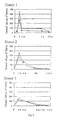
- Figure 1 demonstrates the high level of specific recognition by these CTL lines of their respective epitope peptides (i.e., peptide 74A or peptide 165) in a dose response CTL experiment.
- Epitope-specific T cell clones can be generated using methods which are generally known in the art (see, for example, Fathman, et al., in Paul, ed., Fundamental Immunology, second edition, Raven Press (1989), Chapter 30 , ).
- the isolation of epitope-specific T cell clones is based on T cell biology.
- an animal such as a mouse, is immunized with a preparation of antigens (a bacterial lysate, or a purified protein) or is infected with a virus, such as a wild type virus or a recombinant virus containing heterologous genes encoding one or more proteins from a pathogenic microorganism, such as a virus.
- PBMC peripheral blood mononuclear cells
- IL-2 essential T cell growth factor interleukin-2
- the only T cells which will proliferate are those which recognize MHC/epitope complex in which the epitope is derived from the antigenic preparation. These cells become activated and proliferate while the unactivated cells begin to die.
- the cultures are maintained for several weeks, with the media containing antigen and IL-2 being periodically replaced. Eventually, clusters of living and dividing cells (a T cell line) can be observed in some of the cultures.
- the proliferating cells are generally not clonal at this point and are of limited use for assaying epitope specific T cell responses.
- the T cell line is, preferably, cloned through a process referred to as limiting dilution.
- PBMC are isolated from, for example, the same strain as the original used to isolate the T cell line.
- antigen presenting cells will serve as a source of MHC proteins and will present the MHC:peptide complex to the T cell line.
- the T cell line is diluted to a concentration of about 1 to 5 T cells/mL in a suspension of APCs that contains the antigen of interest and IL-2.
- This suspension is then transferred into, for example, round or "v"-bottom 96 well microtitre plates, so that each well contains, on average, no more than 1 T cell.
- the cultures are maintained for several weeks and a clone can grow out of one or more cultures.
- the cells isolated by limiting dilution are the progeny of a single cell that expresses only one T cell receptor, and the clone is thus epitope-specific.
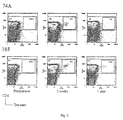
- CD8 + T cells specific to these epitopes were measured at several time points following primary immunization by peptide/HLA-A0201 tetramer staining using the PBMCs of three HLA-A0201-positive donors.
- Figure 2 shows representative FACS plots of donor 1 PBMC.
- preimmune means prior to primary first immunization
- two weeks means two weeks after the second immunization for donor 3 who failed to "take” after primary immunization, and twenty days after primary immunization was immunized for the second time.
- T Cell epitopes from vaccinia virus IFN- ⁇ -producing cells specific to these two epitopes represented 6 to 35% of total number of IFN- ⁇ -producing cells specific to vaccinia virus.
- the frequency of epitope-specific T cells was always higher by peptide/HLA tetramer staining than by IFN- ⁇ -BLISPOT assay, although post-vaccination kinetics for each epitope-specific T cell was similar using both methods.
- peptide 74A was the 15 th highest binding peptide to HLA-A0201 of the 195 peptides selected for screening and peptide 165 was the 95 th highest binder.
- One common characteristic of these two peptides is that they are both encoded by genes with a late promoter and an early termination motif, which means they may be expressed at both early and late phases of infection.
- the 189R gene of MVA strain encoding peptide 74A is a nonessential gene with unknown function.
- the 018L gene of MVA encoding peptide 165 is an orthologue of the host range protein, C7L, of the Copenhagen strain.
- the invention provides :
- More traditional methods such as enzymatic or chemical digestion of proteins provide peptide fragments which may be tested for T cell activity.
- enzymes such as chymotrypsin, elastase, ficin, papain, pepsin, or trypsin provide limited and predictable fragments by cleavage of specified amino acid linkages; similarly chemical compounds such as N-chloro-succinimide BPNS-skatole, cyanogen bromide, formic acid, or hydroxylamine, also produce definable fragments by their action on proteins.
- the presence of the desired T cell stimulating activity in any given fragment can be determined by subjecting purified fragments to a standard T cell proliferation assay, or by analyzing unpurified fragments with a T cell Western Assay. Young et al., Immunol. 59:167 (1986 ).
- Peptide 74A and peptide 165 of the invention are CD8 epitopes and the T cells specific for these peptides are CD8 + T cells.
- the effector functions of CD8 + T cells include lysis of antigen presenting cells and release of cytokines. Therefore, the extent of CD8 + T cell response to the antigen presenting cells can be determined using an assay for cell lysis or by measuring the production of one or more cytokines.
- the CD8 + T cell response can also be measured by measuring the extent of release of one or more cytokines. In general, greater cell lysis activity or cytokine release will correlate with greater immunogenicity.
- the invention described herein is particularly useful for human immunization, it is equally applicable to other mammals. In particular embodiement, the individual is positive for the HLA-A0201 gene.
- immunological fragment and mutant of peptide 74A and/or peptide 165 refer to polypeptides in which 1 to about 4 amino acids have been substituted without essentially detracting from the immunological properties thereof can be generated in a variety of ways.
- in vitro mutagenic techniques can be used to modify the cloned gene encoding peptide 74A and/or peptide 165.
- Such methods which are well known to one skilled in the art, can be used to delete, insert or substitute nucleotides in the gene resulting in the deletion, insertion or substitution of amino acids in the encoded product.
- immunogenic fragments or mutants of peptide 74A and peptide 165 include, but are not limited to, those shown in Table 2.
- the immunological properties of the mutagenized encoded product can be assayed using methods such as those which are well known to one skilled in the art. Table 2. Examples of imuuogenic fragments and mutants of peptide 74A and peptide 165.
- Effective dosages for inducing an immune response (also referred to as a virus protective response) against vaccinia and/or variola can be determined empirically with initial dosage ranges based upon historical data for peptide/protein vaccine compositions.
- induced immune response or "virus protective response” refers to an immunological response in the individual resulting in the successful control or limitation of infection by vaccinia and/or variola virus which is clinically observed.
- individuals can be administered dosages of peptide 74A and/or peptide 165 ranging from 0.5-500 micrograms. Whether a particular dosage is effective can be determined using well known T cell proliferation and cytotoxicity assays. For example, following administration of the protein to an individual blood is drawn. Cytotoxic T cells are identifiable by 51 Cr release assay (see e.g., Kuwano et al., J. Virol. 140:1264-1268 (1988 )). Helper T cells are identifiable by a standard T cell proliferation assay (see e.g., Kurane et al., J. Clin. Invest. 83:506-513 (1989 )). The results from these studies are compared with results from the same experiments conducted with T cells from the same individual prior to administration of the antigen. By comparing this data, effective dosage ranges can be determined.
- compositions include, for example, water, physiological saline, ethanol polyols (e.g., glycerol or administration is typically parenteral (i.e., intravenous, intramuscular, intraperitoneal or subcutaneous).
- An adjuvant e.g., alum
- alum can also be included in the vaccine fixture.
- the invention also pertains to an isolated polypeptide or a nucleic acid molecule encoding said isolated polypeptide for use in immunizing an individual against infection by vaccinia and/or variola virus by administering a vaccine composition comprising at least one essentially pure T cell epitope (i.e., peptide 74A or peptide 165) in combination with a pharmaceutically acceptable carrier. Due to genetic variability between individuals, a single T cell epitope may not stimulate a virus protective response in all individuals to whom it is administered. Therefore, by combining two or more distinct T cell epitopes (i.e., both peptide 74A and peptide 165), the vaccine is more broadly effective.
- a vaccine composition comprising at least one essentially pure T cell epitope (i.e., peptide 74A or peptide 165) in combination with a pharmaceutically acceptable carrier. Due to genetic variability between individuals, a single T cell epitope may not stimulate a virus protective response in all individuals to whom it is administered. Therefore, by
- helper T cell epitopes and cytotoxic T cell epitopes are thought to comprise distinct (albeit possibly overlapping) regions of proteins. Cytotoxic T cell epitopes can be distinguished from helper T cells epitopes experimentally using the cytoxicity and proliferation assays described above (helper T cells stimulate proliferation but do not posses cytotoxic activity).
- Peptide 74A and/or peptide 165 can be administered as an polypeptide. Such polypeptides can be synthesized chemically. Alternatively, a truncated portion of a gene encoding peptide 74A and/or peptide 165 can be expressed in a cell, and the encoded product can be isolated using know methods (e.g., column chromatography, gel electrophoresis, etc.).
- polypeptide means any amino acid sequence which is identical or substantially homologous to peptide 74A and/or peptide 165.
- substantially homologous refers to polypeptides having an amino acid sequence of peptide 74A or peptide 165 in which amino acids have been substituted without essentially detracting from the immunological properties thereof as a CD8 T cell epitope of the vaccinia and/or variola virus.
- This definition includes amino acid sequences of sufficient length to be classified as oligopeptides (these terms are not used consistently or with great precision in the literature).
- both a helper T cell epitope and a cytotoxic T cell epitope can be administered to the individual.
- the stimulation of cytotoxic T cells is desirable in that these cells will kill cells infected by vaccinia and/or variola virus.
- the stimulation of helper T cells is beneficial in that they secrete soluble factors which have a stimulatory effect on other T cells, as well as B cells.
- a gene encoding a peptide listed in Table 1, or a portion thereof which has the immunological properties of peptide 74A or peptide 165 as a CD8 T cell epitope of the vaccinia and/or variola virus can be cloned into a recombinant virus which expresses peptide 74A or peptide 165, or immunogenic fragment or mutant thereof as recited in the claims, in the individual to be immunized.
- An example of such a recombinant virus system is the vaccinia system described by Paoletti et al. (U.S. Patent No. 4,603,112 ).
- Other viruses have been described in the literature which have a genome which can accommodate the insertion of a foreign DNA such that a protein encoded by the DNA is expressed in vivo. Any such recombinant virus is useful for the practice of this invention.
- T cell epitopes will enable the analysis and quantitation of vaccinia virus-specific CD8 + T cells in the acute and memory phases and to compare CD8 + T cell responses specific to different epitopes. Additionally, expansion and subsequent shrinkage of epitope-specific CD8 + T cells at the T cell receptor level can be monitored. Definition of T cell epitopes will help us to better understand human T cell responses to vaccinia virus as a model of human infection, In addition, it will provide a quantitative measure of poxvirus T cell immunity when these viruses are used as viral vectors.
- the present invention also relates to a method of identifying the presence of vaccinia, variola virus and/or other related poxvirus in a sample comprising determining whether T cells present in the sample become activated in the presence of a polypeptide selected from the group consisting of: peptide 74A (SEQ ID NO: 1), peptide 165 (SEQ ID N O: 2), an immunogenic mutant and fragment thereof as recited in the claims and a combination thereof, wherein if the T cells become activated, then vaccinia, variola and/or other related poxvirus is present in the sample.
- the T cells are CD8+ T cells.
- sample for use in the methods of the present invention can be any type of sample that can be analyzed in the method and can be obtained from a variety of sources. T cells can be present in the original sample or can be added to the sample.
- the sample can be one which is found in any environment, such as an unknown powder or liquid.
- the sample can be obtained from a host, such as a mammalian host or individual ( e.g ., human, canine, feline, bovine, murine). Samples from a host include blood ( e.g ., whole blood, PMBCs), lymph ( e.g ., lymph fluid) and tissue ( e.g ., lymph nodes, spleen).
- the sample is from an individual that is positive for the HLA-A0201 1 gene.
- the sample can be a sample which does not initially contain T cells.
- the sample is contacted with T cells that become activated in the presence of a vaccinia, variola and/or other related poxvirus. Then whether the T cells become activated in the presence of the polypeptide is determined, wherein if the T cells become activated, then vaccinia, variola and/or other related poxvirus is present in the sample.
- the sample can be blood which contains T cells. In this embodiment, whether the T cells become activated in the presence of the polypeptide is determined, wherein if the T cells become activated, then vaccinia, variola and/or other related poxvirus is present in the sample.
- the present invention also relates to an ex vivo method of determining whether an individual has been infected with vaccinia, variola virus and/or other related pox virus comprising determining whether the individual's T cells become activated in the presence of polypeptide selected from the group consisting of peptide 74A (SEQ ID NO: 1), peptide 165 (SEQ ID N O:2), an immunogenic mutant or fragment thereof as recited in the claims and a combination thereof and wherein if the individual's T cells become activated in the presence of the peptide, then the individual has been infected with vaccinia, variola and/or other related poxvirus.
- polypeptide selected from the group consisting of peptide 74A (SEQ ID NO: 1), peptide 165 (SEQ ID N O:2), an immunogenic mutant or fragment thereof as recited in the claims and a combination thereof and wherein if the individual's T cells become activated in the presence of the peptide, then the individual has been in
- peripheral T cells in the blood and organs of the immune system exist in a quiescent or resting state.
- T cells proliferate and differentiate into activated cells having a variety of functions.
- CD8 + T cells typically become cytotoxic upon activation and destroy antigen-presenting cells via direct contact
- Activated CD4 + T cells provide a helper function to B cells, enabling B cells to differentiate into antibody-producing cells.
- Activated CD8 + T cells and CD4 + T cells release a variety of cytokines (lymphokines or interlenkins), which can, for example, control differentiation of many classes of lympholytic precursor cells.
- Whether the T cells present in the sample become activated can be determined using a variety of assays known to those of skill in the art.
- a cytokine assay e.g., ELISPOT
- a flow cytometry assay e.g. , tetramer staining assay
- intracellular cytokine staining assay ICS
- LDA limiting dilution assay
- Poxviruses such as vaccinia virus allow for simplified integration of multiple foreign genes with high levels of expression, and thus, are widely used for the cytoplasmic expression of recombinant genes in mammalian cells.
- Vaccinia virus mutants and other poxviruses are receiving special attention because of their diminished cytopathic effects and increased safety.
- replicating and non-replicating vectors encoding the bacteriophage T7 RNA polymerase for transcription of recombinant genes and numerous cancer antigens have been engineered ( Carroll, M.W. and Moss B., Curr. Opin. Biotechnol., 8(5):573-577 (1997 ); Carroll, M.W., et al., Vaccine, 15(4):387-394 (1997 ).
- the invention also relates to an ex vivo method of monitoring the effectiveness of a vaccinia, variola and/or other related pox virus vaccine in an individual who has been administered the vaccinia vaccine.
- the method comprises determining whether the individual's T cells become activated in the presence of a polypeptide selected from the group consisting of: peptide 74A (SEQ ID NO: 1), peptide 165 (SEQ ID N O:2), an immunogenic mutant or fragment thereof as recited in the claims and a combination thereof, wherein if the individual's T cells become activated, then the virus is effective in the individual.
- the vaccine is a vaccinia vaccine.
- the vaccine is vaccinia virus that is a cancer vaccine.
- Donors in this study were three HLA-A0201-positive laboratory workers received primary immunization by scarification with the licensed smallpox vaccine, Dryvax ® , as recommended by the Centers for Disease Control and Prevention for laboratory personnel working with vaccinia viruses.
- the HLA-A and B alleles of donor 1 were A2 (A0201), B15, B18; those of donor 2 were A2 (A0201), B15, B44; and those of donor 3 were A2 (A0201), A31, B40, B51.
- Vaccinia virus New York City Board of Health (NYCBH), the same strain used to produce Dryvaxâ, was provided by Gail Mazzara and Dennis Panicali of Applied Biotechnology, Inc, and propagated and titrated in CV-1 cells (ATCC # CCL-70) as previously described ( Littuau, R.A., et al., J. Virol., 66:2274-2280 (1992 ); Terajima, M. et al., Virus Res. 84:67-77 (2002 )). Modified vaccinia virus Ankara strain.
- MVA Middle-layer Virology 238:198-211 (1997 ) was kindly supplied by Bernard Moss of National Institute of Allergy and Infectious Diseases/National Institute of Health, and was propagated and titrated in BHK-21 cells (ATCC # CCL-10) following published methods ( Carroll, M.W., et al., Virology 238:198-211 (1997 )).
- Vaccinia virus-specific CTL lines were isolated from peripheral blood mononuclear cells (PBMCs) of immunized donors by limiting dilution cloning ( Demkowicz, W.E., et al., J. Virol. 67:1538-15544(1993 )).
- Vaccinia virus NYCBH strain was used to stimulate PBMCs for cloning and to infect target cells for cytotoxicity assays. Cytotoxicity assays were performed as previously described ( Frey, S.E., et al., J. Med. 346:1275-1280 (2002 )).
- Hmy C1R A2.1 cells gift from William E.
- Biddison of NIH/NINDS which express only HLA-A0201 at normal levels, were used as targets in cytotoxicity assay to confirm the HLA-A0201 restriction.
- Surface expression of CD4 and CD8 was determined by flow cytometry using FITC-conjugated antibodies (Becton Dickinson).
- Cross-reactivity of CTL lines was determined using autologous B-LCLs (B-lymphoblastoid cell lines), that were infected with MVA as target cells in cytotoxicity assays.
- Peptides were synthesized with a Symphony automated peptide synthesizer at the Protein Core Facility in the University of Massachusetts Medical School or purchased from Mimotopes Pty. Ltd. When predicted epitopes overlapped, we made them as a longer peptide fragment. For technical reasons some of these screening peptides were made as a 13mer instead of a 9mer. In screening cytotoxicity assays, mixtures of five peptides were used and the concentration of each peptide was 5mg/ml. When the peptide recognized was longer than 9 amino acids, truncated 9mer peptide epitopes were constructed and analyzed in cytotoxicity assays. All peptides recognized were tested in dose-response experiments ( Figure 1 ).
- Peptide/HLA-A0201 tetramers were made in the Tetramer Core Facility in the University of Massachusetts Medical School following the protocol published previously ( Catalina, M.D., et al., J. Immunol., 167:4450-4457 (2001 )). Each lot of tetramer was titrated using CTL lines specific to the peptide mixed with autologous PBMCs at a 1 to 10 (or 20) ratio to determine the optimal concentration for staining.
- IFN-g ELISPOT assays were performed as previously described ( Ennis, F., et al., J. Infect. Dis. 185:1657-1659 (2002 )).
- PBMCs were incubated with vaccinia virus NYCBH strain at an MOI of 1 or with peptide at a final concentration of 10 mg/ml for 16 hours.
Landscapes
- Health & Medical Sciences (AREA)
- Life Sciences & Earth Sciences (AREA)
- Virology (AREA)
- Chemical & Material Sciences (AREA)
- Medicinal Chemistry (AREA)
- General Health & Medical Sciences (AREA)
- Veterinary Medicine (AREA)
- Public Health (AREA)
- Animal Behavior & Ethology (AREA)
- Pharmacology & Pharmacy (AREA)
- Organic Chemistry (AREA)
- Mycology (AREA)
- Epidemiology (AREA)
- Microbiology (AREA)
- Immunology (AREA)
- Molecular Biology (AREA)
- Biochemistry (AREA)
- Genetics & Genomics (AREA)
- Proteomics, Peptides & Aminoacids (AREA)
- Biophysics (AREA)
- Gastroenterology & Hepatology (AREA)
- Engineering & Computer Science (AREA)
- General Chemical & Material Sciences (AREA)
- Chemical Kinetics & Catalysis (AREA)
- Nuclear Medicine, Radiotherapy & Molecular Imaging (AREA)
- Oncology (AREA)
- Communicable Diseases (AREA)
- Biotechnology (AREA)
- Medicines Containing Antibodies Or Antigens For Use As Internal Diagnostic Agents (AREA)
- Peptides Or Proteins (AREA)
- Micro-Organisms Or Cultivation Processes Thereof (AREA)
Claims (12)
- Isoliertes Polypeptid oder Nukleinsäuremolekül, das dieses isolierte Polypeptid codiert, zur Verwendung bei der Immunisierung eines Individuums gegen die Infektion mit dem Vacciniavirus und/oder Variolavirus, wobei das Polypeptid ist:(a) Peptid 74A der Sequenz CLTEYILWV, ein immunogenes Fragment von Peptid 74A oder eine immunogene Mutante von Peptid 74A, wobei die immunogene Mutante von Peptid 74A ein Polypeptid ist, in welchem 1 bis etwa 4 Aminosäuren von Peptid 74A der Sequenz CLTEYILWV substituiert wurden, und wobei weiterhin das immunogene Fragment oder die immunogene Mutante von Peptid 74A die immunologischen Eigenschaften von Peptid 74A als CD8-T-Zell-Epitop des Vacciniavirus und/oder Variolavirus aufweist;(b) Peptid 165 der Sequenz KVDDTFYYV, ein immunogenes Fragment von Peptid 165 oder eine immunogene Mutante von Peptid 165, wobei die immunogene Mutante von Peptid 165 ein Polypeptid ist, in welchem 1 bis etwa 4 Aminosäuren von Peptid 165 der Sequenz KVDDTFYYV substituiert wurden, und wobei weiterhin das immunogene Fragment oder die immunogene Mutante von Peptid 165 die immunologischen Eigenschaften von Peptid 165 als CD8-T-Zell-Epitop des Vacciniavirus und/oder Variolavirus aufweist; oder(c) eine Kombination von (a) und (b).
- Isoliertes Polypeptid oder Nukleinsäuremolekül nach Anspruch 1 zur Verwendung bei der Immunisierung eines Individuums gegen die Infektion mit dem Vacciniavirus und/oder Variolavirus, wobei das Nukleinsäuremolekül, das dieses isolierte Polypeptid codiert, ein nacktes Nukleinsäuremolekül oder ein Nukleinsäuremolekül in einem geeigneten Vektor ist.
- Isoliertes Polypeptid oder Nukleinsäuremolekül nach Anspruch 1 zur Verwendung bei der Immunisierung eines Individuums gegen die Infektion mit dem Vacciniavirus und/oder Variolavirus, wobei die immunogene Mutante von Peptid 74A ausgewählt ist aus der Gruppe bestehend aus ILTEYILWV, LLTEYILWV, FLTEYILWV, CLAEYILWV, CLYEYILWV, CLFEYILWV, CLTEIILWV, CLTEKILWV, CLTENILWV, CLTEYIAWV, CLTEYIYWV, CLTEYIHWV, ILAEYILWV, ILAEIILWV und ILAEIIAWV, und wobei die immunogene Mutante von Peptid 165 ausgewählt ist aus der Gruppe bestehend aus KVDYTLYYV, IVDDTFYYV, LVDDTFYYV, FVDDTFYYV, KVADTFYYV, KVYDTFYYV, KVFDTFYYV, KVDDIFYYV, KVDDKFYYV, KVDDYFYYV, KVDDTFAYV, KVDDTFHYV, IVADTFYYV, IVADIFYYV, IVADIFAYV und LVYDKFHYV.
- Verwendung eines isolierten Polypeptids oder eines Nukleinsäuremoleküls, das dieses isolierte Polypeptid codiert, zur Herstellung eines Medikaments zur Verwendung bei der Immunisierung eines Individuums gegen die Infektion mit dem Vacciniavirus und/oder Variolavirus, wobei das Polypeptid ist:(a) Peptid 74A der Sequenz CLTEYILWV, ein immunogenes Fragment von Peptid 74A oder eine immunogene Mutante von Peptid 74A, wobei die immunogene Mutante von Peptid 74A ein Polypeptid ist, in welchem 1 bis etwa 4 Aminosäuren von Peptid 74A der Sequenz CLTEYILWV substituiert wurden, und wobei weiterhin das immunogene Fragment oder die immunogene Mutante von Peptid 74A die immunologischen Eigenschaften von Peptid 74A als CD8-T-Zell-Epitop des Vacciniavirus und/oder Variolavirus aufweist;(b) Peptid 165 der Sequenz KVDDTFYYV, ein immunogenes Fragment von Peptid 165 oder eine immunogene Mutante von Peptid 165, wobei die immunogene Mutante von Peptid 165 ein Polypeptid ist, in welchem 1 bis etwa 4 Aminosäuren von Peptid 165 der Sequenz KVDDTFYYV substituiert wurden, und wobei weiterhin das immunogene Fragment oder die immunogene Mutante von Peptid 165 die immunologischen Eigenschaften von Peptid 165 als CD8-T-Zell-Epitop des Vacciniavirus und/oder Variolavirus aufweist; oder(c) eine Kombination von (a) und (b).
- Verfahren zur Bestimmung, ob die T-Zellen in einer Probe in Gegenwart eines Epitops des Vacciniavirus oder Variolavirus in einer Probe aktiviert werden, umfassend das Inkontaktbringen der T-Zellen mit:(a) Peptid 74A der Sequenz CLTEYILWV, einem immunogenen Fragment von Peptid 74A oder einer immunogenen Mutante von Peptid 74A, wobei die immunogene Mutante von Peptid 74A ein Polypeptid ist, in welchem 1 bis etwa 4 Aminosäuren von Peptid 74A der Sequenz CLTEYILWV substituiert wurden, und wobei weiterhin das immunogene Fragment oder die immunogene Mutante von Peptid 74A die immunologischen Eigenschaften von Peptid 74A als CD8-T-Zell-Epitop des Vacciniavirus und/oder Variolavirus aufweist;(b) Peptid 165 der Sequenz KVDDTFYYV, einer immunogenen Mutante von Peptid 165 oder einem immunogenen Fragment von Peptid 165, wobei die immunogene Mutante von Peptid 165 ein Polypeptid ist, in welchem 1 bis etwa 4 Aminosäuren von Peptid 165 der Sequenz KVDDTFYYV substituiert wurden, und wobei weiterhin das immunogene Fragment oder die immunogene Mutante von Peptid 165 die immunologischen Eigenschaften von Peptid 165 als CD8-T-Zell-Epitop des Vacciniavirus und/oder Variolavirus aufweist; oder(c) einer Kombination von (a) und (b);wobei die Aktivierung der T-Zellen durch (a), (b) oder (c) anzeigt, dass die T-Zellen in Gegenwart des Vacciniavirus oder Variolavirus aktiviert werden.
- Verfahren nach Anspruch 5, wobei:(a) bestimmt wird, ob die in der Probe vorhandenen T-Zellen aktiviert werden, unter Verwendung eines Assays, ausgewählt aus einem Zytokin-Assay, einem durchflusszytometrischen Assay und einem Grenzverdünnungsassay; und in welchem Falle gegebenenfalls der Zytokin-Assay ein ELISPOT-Assay ist und der durchflusszytometrische Assay ein Assay der Tetramerfärbung ist; und/oder(b) die Probe ausgewählt ist aus der Gruppe bestehend aus Blut, Lymphe und Gewebe und in welchem Falle die Probe gegebenenfalls eine Probe von peripheren mononukleären Blutzellen ist.
- Ex-vivo-Verfahren zur Bestimmung, ob ein Individuum mit dem Vacciniavirus und/oder Variolavirus infiziert wurde, umfassend die Bestimmung, ob die T-Zellen des Individuums aktiviert werden in Gegenwart von:(a) Peptid 74A der Sequenz CLTEYILWV, einem immunogenen Fragment von Peptid 74A oder einer immunogenen Mutante von Peptid 74A, wobei die immunogene Mutante von Peptid 74A ein Polypeptid ist, in welchem 1 bis etwa 4 Aminosäuren von Peptid 74A der Sequenz CLTEYILWV substituiert wurden, und wobei weiterhin das immunogene Fragment oder die immunogene Mutante von Peptid 74A die immunologischen Eigenschaften von Peptid 74A als CD8-T-Zell-Epitop des Vacciniavirus und/oder Variolavirus aufweist;(b) Peptid 165 der Sequenz KVDDTFYYV, einer immunogenen Mutante von Peptid 165 oder einem immunogenen Fragment von Peptid 165, wobei die immunogene Mutante von Peptid 165 ein Polypeptid ist, in welchem 1 bis etwa 4 Aminosäuren von Peptid 165 der Sequenz KVDDTFYYV substituiert wurden, und wobei weiterhin das immunogene Fragment oder die immunogene Mutante von Peptid 165 die immunologischen Eigenschaften von Peptid 165 als CD8-T-Zell-Epitop des Vacciniavirus und/oder Variolavirus aufweist; oder(c) einer Kombination von (a) und (b);wobei, wenn die T-Zellen des Individuums in Gegenwart von (a), (b) oder (c) aktiviert werden, das Individuum mit dem Vacciniavirus oder Variolavirus infiziert wurde.
- Ex-vivo-Verfahren zur Kontrolle der Wirksamkeit eines Vaccinia-Impfstoffes bei einem Individuum, dem der Vaccinia-Impfstoff verabreicht wurde, umfassend die Bestimmung, ob die T-Zellen des Individuums aktiviert werden in Gegenwart von:(a) Peptid 74A der Sequenz CLTEYILWV, einem immunogenen Fragment von Peptid 74A oder einer immunogenen Mutante von Peptid 74A, wobei die immunogene Mutante von Peptid 74A ein Polypeptid ist, in welchem 1 bis etwa 4 Aminosäuren von Peptid 74A der Sequenz CLTEYILWV substituiert wurden, und wobei weiterhin das immunogene Fragment oder die immunogene Mutante von Peptid 74A die immunologischen Eigenschaften von Peptid 74A als CD8-T-Zell-Epitop des Vacciniavirus und/oder Variolavirus aufweist;(b) Peptid 165 der Sequenz KVDDTFYYV, einer immunogenen Mutante von Peptid 165 oder einem immunogenen Fragment von Peptid 165, wobei die immunogene Mutante von Peptid 165 ein Polypeptid ist, in welchem 1 bis etwa 4 Aminosäuren von Peptid 165 der Sequenz KVDDTFYYV substituiert wurden, und wobei weiterhin das immunogene Fragment oder die immunogene Mutante von Peptid 165 die immunologischen Eigenschaften von Peptid 165 als CD8-T-Zell-Epitop des Vacciniavirus und/oder Variolavirus aufweist; oder(c) einer Kombination von (a) und (b);wobei, wenn die T-Zellen des Individuums in Gegenwart von (a), (b) oder (c) aktiviert werden, das Vacciniavirus in dem Individuum wirksam ist.
- Verfahren nach Anspruch 7 oder 8, wobei die T-Zellen des Individuums in einer Probe vorhanden sind und die Probe ausgewählt ist aus der Gruppe bestehend aus Blut, Lymphe und Gewebe und in welchem Falle die Probe gegebenenfalls eine Probe von peripheren mononukleären Blutzellen ist.
- Verfahren nach Anspruch 7 oder 8, wobei bestimmt wird, ob die T-Zellen des Individuums aktiviert werden, unter Verwendung eines Assays, ausgewählt aus einem Zytokin-Assay, einem durchflusszytometrischen Assay und einem Grenzverdünnungsassay; und in welchem Falle gegebenenfalls der Zytokin-Assay ein ELISPOT-Assay ist und der durchflusszytometrische Assay ein Assay der Tetramerfärbung ist.
- Verfahren nach Anspruch 8, wobei der Vaccinia-Impfstoff ein Impfstoff gegen Krebs ist.
- Verfahren nach Anspruch 5 bis 11, wobei die immunogene Mutante von Peptid 74A ausgewählt ist aus der Gruppe bestehend aus ILTEYILWV, LLTEYILWV, FLTEYILWV, CLAEYILWV, CLYEYILWV, CLFEYILWV, CLTEIILWV, CLTEKILWV, CLTENILWV, CLTEYIAWV, CLTEYIYWV, CLTEYIHWV, ILAEYILWV, ILAEIILWV und ILAEIIAWV, und wobei die immunogene Mutante von Peptid 165 ausgewählt ist aus der Gruppe bestehend aus KVDYTLYYV, IVDDTFYYV, LVDDTFYYV, FVDDTFYYV, KVADTFYYV, KVYDTFYYV, KVFDTFYYV, KVDDIFYYV, KVDDKFYYV, KVDDYFYYV, KVDDTFAYV, KVDDTFHYV, IVADTFYYV, IVADIFYYV, IVADIFAYV und LVYDKFHYV.
Applications Claiming Priority (2)
| Application Number | Priority Date | Filing Date | Title |
|---|---|---|---|
| US44284603P | 2003-01-24 | 2003-01-24 | |
| PCT/US2004/002141 WO2004067032A2 (en) | 2003-01-24 | 2004-01-26 | Identification of gene sequences and proteins involved in vaccinia virus dominant t cell epitopes |
Publications (2)
| Publication Number | Publication Date |
|---|---|
| EP1624890A2 EP1624890A2 (de) | 2006-02-15 |
| EP1624890B1 true EP1624890B1 (de) | 2011-07-13 |
Family
ID=32825265
Family Applications (1)
| Application Number | Title | Priority Date | Filing Date |
|---|---|---|---|
| EP04705315A Expired - Lifetime EP1624890B1 (de) | 2003-01-24 | 2004-01-26 | Identifikation von vaccinia-virus-dominanten t-zell-epitopen |
Country Status (4)
| Country | Link |
|---|---|
| US (2) | US7217526B2 (de) |
| EP (1) | EP1624890B1 (de) |
| AT (1) | ATE516045T1 (de) |
| WO (1) | WO2004067032A2 (de) |
Families Citing this family (9)
| Publication number | Priority date | Publication date | Assignee | Title |
|---|---|---|---|---|
| US7217526B2 (en) | 2003-01-24 | 2007-05-15 | University Of Massachusetts Medical School | Identification of gene sequences and proteins involved in vaccinia virus dominant T cell epitopes |
| US8067535B2 (en) | 2003-01-24 | 2011-11-29 | The University Of Massachusetts | Identification of gene sequences and proteins involved in vaccinia virus dominant T cell epitopes |
| ITRM20030386A1 (it) * | 2003-08-05 | 2005-02-06 | Istituto Naz Per Le Malattie Infettive Lazz | Metodo e test diagnostici basati sull'analisi citofluorimetrica dei linfociti t antigene-specifici. |
| US9216212B2 (en) * | 2005-08-05 | 2015-12-22 | University Of Massachusetts | Virus-like particles as vaccines for paramyxovirus |
| US7951384B2 (en) * | 2005-08-05 | 2011-05-31 | University Of Massachusetts | Virus-like particles as vaccines for paramyxovirus |
| US7807180B2 (en) | 2007-08-21 | 2010-10-05 | University Of Massachusetts | Poxvirus methods and compositions |
| WO2010039224A2 (en) | 2008-09-30 | 2010-04-08 | University Of Massachusetts Medical School | Respiratory syncytial virus (rsv) sequences for protein expression and vaccines |
| WO2012145509A2 (en) | 2011-04-19 | 2012-10-26 | The Research Foundation Of State University Of New York | Adeno-associated-virus rep sequences, vectors, and viruses |
| US10627411B2 (en) | 2014-03-27 | 2020-04-21 | British Columbia Cancer Agency Branch | T-cell epitope identification |
Family Cites Families (17)
| Publication number | Priority date | Publication date | Assignee | Title |
|---|---|---|---|---|
| US4603112A (en) | 1981-12-24 | 1986-07-29 | Health Research, Incorporated | Modified vaccinia virus |
| US5766601A (en) | 1990-08-08 | 1998-06-16 | University Of Massachusetts Medical Center | Cross-reactive influenza a immunization |
| US5480799A (en) * | 1993-12-10 | 1996-01-02 | The University Of North Carolina At Chapel Hill | Sperm antigen corresponding to a sperm zona binding protein autoantigenic epitope |
| AUPM446594A0 (en) | 1994-03-16 | 1994-04-14 | Csl Limited | Cytotoxic t-cell epitopes identified within epstein-barr virus |
| CA2195642A1 (en) | 1994-07-27 | 1996-02-08 | Andreas Suhrbier | Polyepitope vaccines |
| AUPO007396A0 (en) | 1996-05-24 | 1996-06-20 | Csl Limited | Ebv ctl epitopes |
| US5916872A (en) * | 1996-07-24 | 1999-06-29 | Intrabiotics Pharmaceuticals, Inc. | Cyclic peptides having broad spectrum antimicrobial activity |
| AUPO784197A0 (en) | 1997-07-10 | 1997-08-07 | Csl Limited | Treatment of nasopharyngeal carcinoma |
| IT1302026B1 (it) | 1997-08-22 | 2000-07-20 | Hoffmann La Roche | Materiali immunologici e metodi per la rivelazione di diidropirimidinadeidrogenasi. |
| US6962790B1 (en) | 1998-09-23 | 2005-11-08 | University Of Massachusetts Medical Center | Predictive assay for immune response |
| AU1598500A (en) | 1998-10-26 | 2000-05-15 | Government Of The United States Of America, As Represented By The Secretary Of The Department Of Health And Human Services, The | Hla-a2 and hla-dr specific peptide epitopes from the melanoma antigen trp2 |
| US7026443B1 (en) * | 1999-12-10 | 2006-04-11 | Epimmune Inc. | Inducing cellular immune responses to human Papillomavirus using peptide and nucleic acid compositions |
| DE10108626A1 (de) | 2001-02-22 | 2002-09-05 | Sahin Ugur | Verfahren zur Identifizierung biologisch aktiver Strukturen mikrobieller Erreger |
| US7645456B2 (en) | 2001-04-23 | 2010-01-12 | Sanofi Pasteur Biologics Co. | Vaccinia virus strains |
| DE10242318A1 (de) | 2002-09-12 | 2004-03-18 | GSF - Forschungszentrum für Umwelt und Gesundheit GmbH | Orthopoxvirusantigene und deren Verwendung |
| AU2003267361A1 (en) | 2002-09-12 | 2004-04-30 | Gsf-Forschungszentrum Fur Umwelt Und Gesundheit Gmbh | Orthopoxvirus antigens and use thereof |
| US7217526B2 (en) * | 2003-01-24 | 2007-05-15 | University Of Massachusetts Medical School | Identification of gene sequences and proteins involved in vaccinia virus dominant T cell epitopes |
-
2004
- 2004-01-26 US US10/764,985 patent/US7217526B2/en not_active Expired - Lifetime
- 2004-01-26 EP EP04705315A patent/EP1624890B1/de not_active Expired - Lifetime
- 2004-01-26 WO PCT/US2004/002141 patent/WO2004067032A2/en not_active Ceased
- 2004-01-26 AT AT04705315T patent/ATE516045T1/de not_active IP Right Cessation
-
2007
- 2007-03-30 US US11/731,784 patent/US7803566B2/en not_active Expired - Fee Related
Also Published As
| Publication number | Publication date |
|---|---|
| ATE516045T1 (de) | 2011-07-15 |
| US7217526B2 (en) | 2007-05-15 |
| WO2004067032A2 (en) | 2004-08-12 |
| WO2004067032A3 (en) | 2004-11-25 |
| US7803566B2 (en) | 2010-09-28 |
| US20070298046A1 (en) | 2007-12-27 |
| US20050129703A1 (en) | 2005-06-16 |
| EP1624890A2 (de) | 2006-02-15 |
Similar Documents
| Publication | Publication Date | Title |
|---|---|---|
| US7803566B2 (en) | Identification of gene sequences and proteins involved in vaccinia virus dominant T cell epitopes | |
| Tsung et al. | Gene expression and cytopathic effect of vaccinia virus inactivated by psoralen and long-wave UV light | |
| Del Val et al. | Molecular basis for cytolytic T-lymphocyte recognition of the murine cytomegalovirus immediate-early protein pp89 | |
| Terajima et al. | Quantitation of CD8+ T cell responses to newly identified HLA-A* 0201–restricted T cell epitopes conserved among vaccinia and variola (smallpox) viruses | |
| US10556929B2 (en) | Cytotoxic T lymphocyte inducing immunogens for prevention treatment and diagnosis of dengue virus infection | |
| AU2004271951B2 (en) | HPV CD8+ T-cell epitopes | |
| CA2407303A1 (en) | Improved immunogenicity using a combination of dna and vaccinia virus vector vaccines | |
| Chea et al. | Novel modified vaccinia virus Ankara vector expressing anti-apoptotic gene B13R delays apoptosis and enhances humoral responses | |
| CN117015609A (zh) | 免疫原性增强的经修饰的副痘病毒 | |
| AU779494B2 (en) | Immunotherapy in HIV infected persons using vaccines after multi-drug treatment | |
| US8067535B2 (en) | Identification of gene sequences and proteins involved in vaccinia virus dominant T cell epitopes | |
| Wang et al. | Characterization of an attenuated TE3L-deficient vaccinia virus Tian Tan strain | |
| Behboudi et al. | Dendritic cells infected by recombinant modified vaccinia virus Ankara retain immunogenicity in vivo despite in vitro dysfunction | |
| CN109172818B (zh) | 一种蛋白牛痘疫苗及其效力检测方法 | |
| CN120904300B (zh) | 一种猴痘病毒cd8+t细胞抗原表位肽、组合物及其应用 | |
| Fluet et al. | Effects of rapid antigen degradation and VEE glycoprotein specificity on immune responses induced by a VEE replicon vaccine | |
| EP1398380A1 (de) | Antigene des Orthopoxvirus und ihre Verwendung | |
| Handley et al. | Orthopoxvirus vaccines and vaccination | |
| CN121342933A (zh) | 冠状病毒s蛋白突变体及其应用 | |
| WO2011075806A2 (pt) | Vacina para lentivirus baseada no vírus recombinante vacinal da febre amarela |
Legal Events
| Date | Code | Title | Description |
|---|---|---|---|
| PUAI | Public reference made under article 153(3) epc to a published international application that has entered the european phase |
Free format text: ORIGINAL CODE: 0009012 |
|
| 17P | Request for examination filed |
Effective date: 20051130 |
|
| AK | Designated contracting states |
Kind code of ref document: A2 Designated state(s): AT BE BG CH CY CZ DE DK EE ES FI FR GB GR HU IE IT LI LU MC NL PT RO SE SI SK TR |
|
| AX | Request for extension of the european patent |
Extension state: AL LT LV MK |
|
| RIN1 | Information on inventor provided before grant (corrected) |
Inventor name: ENNIS, FRANCIS, A. Inventor name: TERAJIMA, MASANORI Inventor name: CRUZ, JOHN |
|
| 17Q | First examination report despatched |
Effective date: 20070820 |
|
| RTI1 | Title (correction) |
Free format text: IDENTIFICATION OF VACCINIA VIRUS DOMINANT T CELL EPITOPES |
|
| GRAP | Despatch of communication of intention to grant a patent |
Free format text: ORIGINAL CODE: EPIDOSNIGR1 |
|
| GRAS | Grant fee paid |
Free format text: ORIGINAL CODE: EPIDOSNIGR3 |
|
| GRAA | (expected) grant |
Free format text: ORIGINAL CODE: 0009210 |
|
| AK | Designated contracting states |
Kind code of ref document: B1 Designated state(s): AT BE BG CH CY CZ DE DK EE ES FI FR GB GR HU IE IT LI LU MC NL PT RO SE SI SK TR |
|
| AX | Request for extension of the european patent |
Extension state: AL LT LV MK |
|
| REG | Reference to a national code |
Ref country code: GB Ref legal event code: FG4D |
|
| REG | Reference to a national code |
Ref country code: CH Ref legal event code: EP |
|
| REG | Reference to a national code |
Ref country code: IE Ref legal event code: FG4D |
|
| REG | Reference to a national code |
Ref country code: DE Ref legal event code: R096 Ref document number: 602004033442 Country of ref document: DE Effective date: 20110901 |
|
| REG | Reference to a national code |
Ref country code: NL Ref legal event code: VDEP Effective date: 20110713 |
|
| REG | Reference to a national code |
Ref country code: DE Ref legal event code: R082 Ref document number: 602004033442 Country of ref document: DE Representative=s name: MUELLER SCHUPFNER & PARTNER PATENT- UND RECHTS, DE |
|
| LTIE | Lt: invalidation of european patent or patent extension |
Effective date: 20110713 |
|
| REG | Reference to a national code |
Ref country code: AT Ref legal event code: MK05 Ref document number: 516045 Country of ref document: AT Kind code of ref document: T Effective date: 20110713 |
|
| PG25 | Lapsed in a contracting state [announced via postgrant information from national office to epo] |
Ref country code: BE Free format text: LAPSE BECAUSE OF FAILURE TO SUBMIT A TRANSLATION OF THE DESCRIPTION OR TO PAY THE FEE WITHIN THE PRESCRIBED TIME-LIMIT Effective date: 20110713 Ref country code: NL Free format text: LAPSE BECAUSE OF FAILURE TO SUBMIT A TRANSLATION OF THE DESCRIPTION OR TO PAY THE FEE WITHIN THE PRESCRIBED TIME-LIMIT Effective date: 20110713 Ref country code: SE Free format text: LAPSE BECAUSE OF FAILURE TO SUBMIT A TRANSLATION OF THE DESCRIPTION OR TO PAY THE FEE WITHIN THE PRESCRIBED TIME-LIMIT Effective date: 20110713 Ref country code: PT Free format text: LAPSE BECAUSE OF FAILURE TO SUBMIT A TRANSLATION OF THE DESCRIPTION OR TO PAY THE FEE WITHIN THE PRESCRIBED TIME-LIMIT Effective date: 20111114 Ref country code: FI Free format text: LAPSE BECAUSE OF FAILURE TO SUBMIT A TRANSLATION OF THE DESCRIPTION OR TO PAY THE FEE WITHIN THE PRESCRIBED TIME-LIMIT Effective date: 20110713 |
|
| PG25 | Lapsed in a contracting state [announced via postgrant information from national office to epo] |
Ref country code: SI Free format text: LAPSE BECAUSE OF FAILURE TO SUBMIT A TRANSLATION OF THE DESCRIPTION OR TO PAY THE FEE WITHIN THE PRESCRIBED TIME-LIMIT Effective date: 20110713 Ref country code: CY Free format text: LAPSE BECAUSE OF FAILURE TO SUBMIT A TRANSLATION OF THE DESCRIPTION OR TO PAY THE FEE WITHIN THE PRESCRIBED TIME-LIMIT Effective date: 20110713 Ref country code: AT Free format text: LAPSE BECAUSE OF FAILURE TO SUBMIT A TRANSLATION OF THE DESCRIPTION OR TO PAY THE FEE WITHIN THE PRESCRIBED TIME-LIMIT Effective date: 20110713 Ref country code: GR Free format text: LAPSE BECAUSE OF FAILURE TO SUBMIT A TRANSLATION OF THE DESCRIPTION OR TO PAY THE FEE WITHIN THE PRESCRIBED TIME-LIMIT Effective date: 20111014 |
|
| PG25 | Lapsed in a contracting state [announced via postgrant information from national office to epo] |
Ref country code: CZ Free format text: LAPSE BECAUSE OF FAILURE TO SUBMIT A TRANSLATION OF THE DESCRIPTION OR TO PAY THE FEE WITHIN THE PRESCRIBED TIME-LIMIT Effective date: 20110713 Ref country code: SK Free format text: LAPSE BECAUSE OF FAILURE TO SUBMIT A TRANSLATION OF THE DESCRIPTION OR TO PAY THE FEE WITHIN THE PRESCRIBED TIME-LIMIT Effective date: 20110713 |
|
| PLBE | No opposition filed within time limit |
Free format text: ORIGINAL CODE: 0009261 |
|
| STAA | Information on the status of an ep patent application or granted ep patent |
Free format text: STATUS: NO OPPOSITION FILED WITHIN TIME LIMIT |
|
| PG25 | Lapsed in a contracting state [announced via postgrant information from national office to epo] |
Ref country code: IT Free format text: LAPSE BECAUSE OF FAILURE TO SUBMIT A TRANSLATION OF THE DESCRIPTION OR TO PAY THE FEE WITHIN THE PRESCRIBED TIME-LIMIT Effective date: 20110713 Ref country code: EE Free format text: LAPSE BECAUSE OF FAILURE TO SUBMIT A TRANSLATION OF THE DESCRIPTION OR TO PAY THE FEE WITHIN THE PRESCRIBED TIME-LIMIT Effective date: 20110713 Ref country code: RO Free format text: LAPSE BECAUSE OF FAILURE TO SUBMIT A TRANSLATION OF THE DESCRIPTION OR TO PAY THE FEE WITHIN THE PRESCRIBED TIME-LIMIT Effective date: 20110713 |
|
| 26N | No opposition filed |
Effective date: 20120416 |
|
| PG25 | Lapsed in a contracting state [announced via postgrant information from national office to epo] |
Ref country code: DK Free format text: LAPSE BECAUSE OF FAILURE TO SUBMIT A TRANSLATION OF THE DESCRIPTION OR TO PAY THE FEE WITHIN THE PRESCRIBED TIME-LIMIT Effective date: 20110713 |
|
| REG | Reference to a national code |
Ref country code: DE Ref legal event code: R097 Ref document number: 602004033442 Country of ref document: DE Effective date: 20120416 |
|
| PG25 | Lapsed in a contracting state [announced via postgrant information from national office to epo] |
Ref country code: MC Free format text: LAPSE BECAUSE OF NON-PAYMENT OF DUE FEES Effective date: 20120131 |
|
| REG | Reference to a national code |
Ref country code: CH Ref legal event code: PL |
|
| REG | Reference to a national code |
Ref country code: IE Ref legal event code: MM4A |
|
| PG25 | Lapsed in a contracting state [announced via postgrant information from national office to epo] |
Ref country code: CH Free format text: LAPSE BECAUSE OF NON-PAYMENT OF DUE FEES Effective date: 20120131 Ref country code: LI Free format text: LAPSE BECAUSE OF NON-PAYMENT OF DUE FEES Effective date: 20120131 |
|
| PG25 | Lapsed in a contracting state [announced via postgrant information from national office to epo] |
Ref country code: IE Free format text: LAPSE BECAUSE OF NON-PAYMENT OF DUE FEES Effective date: 20120126 |
|
| PG25 | Lapsed in a contracting state [announced via postgrant information from national office to epo] |
Ref country code: ES Free format text: LAPSE BECAUSE OF FAILURE TO SUBMIT A TRANSLATION OF THE DESCRIPTION OR TO PAY THE FEE WITHIN THE PRESCRIBED TIME-LIMIT Effective date: 20111024 |
|
| PG25 | Lapsed in a contracting state [announced via postgrant information from national office to epo] |
Ref country code: BG Free format text: LAPSE BECAUSE OF FAILURE TO SUBMIT A TRANSLATION OF THE DESCRIPTION OR TO PAY THE FEE WITHIN THE PRESCRIBED TIME-LIMIT Effective date: 20111013 |
|
| PG25 | Lapsed in a contracting state [announced via postgrant information from national office to epo] |
Ref country code: TR Free format text: LAPSE BECAUSE OF FAILURE TO SUBMIT A TRANSLATION OF THE DESCRIPTION OR TO PAY THE FEE WITHIN THE PRESCRIBED TIME-LIMIT Effective date: 20110713 |
|
| PGFP | Annual fee paid to national office [announced via postgrant information from national office to epo] |
Ref country code: DE Payment date: 20140129 Year of fee payment: 11 |
|
| PG25 | Lapsed in a contracting state [announced via postgrant information from national office to epo] |
Ref country code: LU Free format text: LAPSE BECAUSE OF NON-PAYMENT OF DUE FEES Effective date: 20120126 |
|
| PGFP | Annual fee paid to national office [announced via postgrant information from national office to epo] |
Ref country code: FR Payment date: 20140117 Year of fee payment: 11 |
|
| PGFP | Annual fee paid to national office [announced via postgrant information from national office to epo] |
Ref country code: GB Payment date: 20140127 Year of fee payment: 11 |
|
| PG25 | Lapsed in a contracting state [announced via postgrant information from national office to epo] |
Ref country code: HU Free format text: LAPSE BECAUSE OF FAILURE TO SUBMIT A TRANSLATION OF THE DESCRIPTION OR TO PAY THE FEE WITHIN THE PRESCRIBED TIME-LIMIT Effective date: 20040126 |
|
| REG | Reference to a national code |
Ref country code: DE Ref legal event code: R119 Ref document number: 602004033442 Country of ref document: DE |
|
| GBPC | Gb: european patent ceased through non-payment of renewal fee |
Effective date: 20150126 |
|
| PG25 | Lapsed in a contracting state [announced via postgrant information from national office to epo] |
Ref country code: DE Free format text: LAPSE BECAUSE OF NON-PAYMENT OF DUE FEES Effective date: 20150801 Ref country code: GB Free format text: LAPSE BECAUSE OF NON-PAYMENT OF DUE FEES Effective date: 20150126 |
|
| REG | Reference to a national code |
Ref country code: FR Ref legal event code: ST Effective date: 20150930 |
|
| PG25 | Lapsed in a contracting state [announced via postgrant information from national office to epo] |
Ref country code: FR Free format text: LAPSE BECAUSE OF NON-PAYMENT OF DUE FEES Effective date: 20150202 |