EP1626323A2 - Zugriffskontrolle und Kopierschutz - Google Patents
Zugriffskontrolle und Kopierschutz Download PDFInfo
- Publication number
- EP1626323A2 EP1626323A2 EP05014926A EP05014926A EP1626323A2 EP 1626323 A2 EP1626323 A2 EP 1626323A2 EP 05014926 A EP05014926 A EP 05014926A EP 05014926 A EP05014926 A EP 05014926A EP 1626323 A2 EP1626323 A2 EP 1626323A2
- Authority
- EP
- European Patent Office
- Prior art keywords
- access
- identifier
- storage medium
- computer
- identifiers
- Prior art date
- Legal status (The legal status is an assumption and is not a legal conclusion. Google has not performed a legal analysis and makes no representation as to the accuracy of the status listed.)
- Granted
Links
Images
Classifications
-
- G—PHYSICS
- G06—COMPUTING OR CALCULATING; COUNTING
- G06F—ELECTRIC DIGITAL DATA PROCESSING
- G06F21/00—Security arrangements for protecting computers, components thereof, programs or data against unauthorised activity
- G06F21/10—Protecting distributed programs or content, e.g. vending or licensing of copyrighted material ; Digital rights management [DRM]
- G06F21/12—Protecting executable software
- G06F21/121—Restricting unauthorised execution of programs
- G06F21/123—Restricting unauthorised execution of programs by using dedicated hardware, e.g. dongles, smart cards, cryptographic processors, global positioning systems [GPS] devices
Definitions
- the invention generally relates to a method for controlling access to software products.
- Software products in the sense of the invention can be on the one hand fixed programs on a computer and on the other hand online services that can be called up, for example, via the Internet.
- Access identifiers are strings that can be encrypted and unencrypted.
- the access identifiers may be protected by checksum digits.
- the storage media are interchangeable and can easily be connected to the computer when needed.
- the storage media can be accessed via various interfaces, such as USB, smart card readers, Firewire, Bluetooth, PS / 2 or others.
- first and second access identifiers can be read from the storage medium and access rights are checked with the aid of these two access identifiers, increased security against copies and unauthorized access to online content can be ensured.
- a first access identifier is uniquely associated with the software product. Through this unique assignment to the software product, the storage medium can be assigned to a very specific software product. The storage medium would be useless in such a case with a same software product but with a different serial number, and this software product would be not installable with this storage medium. It would also be possible for a software product without a corresponding access identifier to be able to be installed on a storage medium only as a test installation.
- the two access identifiers be stored on a USB flash drive or smart card. These two media are particularly preferred because they are manageable for the user in a very simple manner. Also, they are inexpensive to manufacture, resulting in no significant additional costs for the providers of software products by the proposed copy protection.
- the access identifiers be stored in a central database associated with each other.
- the assignment of the respective access identifiers can be stored in a table.
- the resulting tuples are unique and allow a check on whether the at least two access identifiers belong to each other and thus enable the release of the software product.
- the software product is a program installable on a computer. This can be any user software.
- At least one second access identifier is a user identifier uniquely assigned to a user.
- This unique user identifier assigned to the user can be stored on the storage medium, for example, when purchasing the software product.
- the unique User ID allows the unique assignment to the respective user.
- the storage medium is thus assembled in such a way that it has both the unique product identifier and the unique user identifier. This dome is unique and can only be used with the respective software product.
- a third access ID is a hardware identifier uniquely assigned to the storage medium.
- Microchips are preferably installed in the storage medium itself, from which unique numbers of digits can be read out. These are preferably only once and permanently wired to the storage medium. Thus, three different access identifiers can be "married" to each other. The dome consisting of the three access identifiers is unique and can not be copied.
- the access identifiers are read from the storage medium and that the access authorization is checked by means of an installation routine of the program on the basis of the access identifiers.
- the access authorization to the program is checked.
- the access identifiers are read from the storage medium and tested in the installation routine. This can be done, for example, by encoding check digits in the access identifiers, which can be used with the help of suitable programs are checked in the installation routine. Only if the check digits are correct and / or further possible test procedures have been carried out can the program be installed. In another case, it is possible that only a trial version is installed, which allows only a limited operation both in terms of time and possibly the scope of functions.
- At least the read user identifier is stored in the computer.
- the corresponding information can be stored in a "registry" entry.
- the hardware identifier can also be read from the storage medium. In this case, the presence of the storage medium is necessary for successful activation.
- the storage in the computer is not necessary because the access identifiers are readable from the storage medium.
- the access identifiers are transmitted via the data network to a central computer, which compares the access identifiers transmitted to the central computer with access identifiers stored in the central database and transmits a release via the data network to the computer only with a positive check.
- a check of the assignment of access identifiers in the Database itself with the received access identifiers is hereby made possible. Since there is a unique assignment of the at least two access identifiers in the database, it can be checked directly whether the received combination of access identifications corresponds to such a stored dome. Only in this case, a release of the program is possible.
- the inventive method can then be ensured by the fact that the second access identifier is changed by a provider such that when selling the program, a new user ID is assigned, that the new user ID is stored together with the product identifier on a storage medium and that the new User ID is assigned to the product ID in the central database.
- a new user may request a new storage medium from the provider of the program. This new storage medium encodes the unique user ID and product ID. For example, the provider can verify that the program has been lawfully sold.
- the assignment of the previous user ID to the product ID in the database can also be deleted. The previous user can no longer use his storage medium to install the program correctly.
- the software product is an online offer which can be called up via a central data network.
- This online offer may be, for example, an email service, a forum, an online shop, or any other online service.
- At least one second access identifier is a hardware identifier uniquely assigned to the storage medium.
- access to the online offer may be limited so that only users with the correct storage medium have access to it.
- the unique assignment of the second access identifier to the storage medium may be hard-wired therein.
- a query of the access identifiers stored on the storage medium is carried out, that the queried access identifiers are transmitted via the central data network to a computer or computer network operating the online offer that in the computer network the affiliation of the access identifiers to each other is checked and that a release takes place on a positive check.
- the user only has to have the storage medium ready for this purpose.
- the other data is stored on the storage medium. This facilitates access as the user does not need to keep any additional passwords.
- Protection against unauthorized access can be ensured by the fact that after a successful access to the online offer with the help of the computer at least the first access identifier is changed and that the association between at least the first and the second access identifier in the central database is changed accordingly.
- a new first access identifier can be created by the computer or the computer network and transmitted via the central data network to the computer on which the storage medium is operated.
- the outdated first access identifier is then exchanged by the new access identifier.
- access to the online offer can only be granted if the new first access ID is used with the previous second access ID.
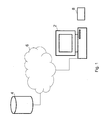
- a computer 2 which is connected to a central database 4 via the Internet 6. Also shown is a USB flash drive 8.
- USB stick 8 On the USB stick 8, according to a first alternative, when purchasing a program, a unique product identifier, which is assigned to exactly this program, is stored. Furthermore, a second access identifier is stored as a user ID on the USB stick 8. This user ID is uniquely assigned to the user. When purchasing the product, these two identifiers are also transmitted via the Internet 6 by a seller (not shown) to the central database 4. In the central database 4, the tuple consisting of user ID and product ID is then assigned to one another.
- the user can install on the computer 2 the program just purchased. During the installation routine, the user is prompted to connect the USB flash drive 8 to the computer 2.
- the installation routine reads the user ID and the product identifier from the USB stick 8 and checks these using suitable methods. This can be done for example by check digits. If the product identifier and the user ID match the required values, the installation routine releases the installation process and the program can be installed. For the creation of the user ID, it is possible that this is created depending on the product identifier. For example, algorithms may use the product identifier to generate a unique user identifier. As a result, it can be checked during installation whether the user ID stored on the USB stick 8 has actually been generated for the corresponding product or not.
- the computer 2 For the registration of the product can by the computer 2 via the Internet 6 connects to the Database 4 are recorded. At least user identification and product identifier are transmitted to the central database 4 via this connection. In the central database 4, it is checked whether these two values are stored in association with each other. If this is the case, the central database 4 can be used to register the product. Furthermore, a further release of the product installed on the computer 2 can take place.
- a product identifier and a hardware identifier can be stored on the USB stick 8.
- the access identifiers are read from the USB stick 8 when the corresponding Internet page is called up.
- This can also be password protected, so that only by a user input of a password the corresponding data can be read from the USB stick.
- the read identifiers are transmitted via the Internet 6 to the central database 4. There is checked whether the read access identifiers are assigned to each other. If this is the case, the access to the called-up Internet page is in turn released via the Internet 6.
- the first access identifier on the USB stick 8 is changed. This can be done in such a way that, in the event of a successful check of the dome of the access identifiers in the database 4, a new first Access identifier is calculated. This new first access identifier is stored in the database 4 together with the previous second access identifier associated with each other. The assignment of the previous first access identifier to the second access identifier is resolved.
- the new first access identifier is transmitted from the database 4 via the Internet 6 to the computer 2. After receiving the new first access identifier, it is stored in the USB stick 8. In the USB stick 8, the new first access identifier and the second access identifier are now stored. In a new call of the online offer now the new first access identifier and the second access identifier is transmitted to the database 4 and leads there to a successful comparison.
- this mechanism can prevent re-access with the old access identifier. This provides increased security for the user of the online offer.
Landscapes
- Engineering & Computer Science (AREA)
- Software Systems (AREA)
- Theoretical Computer Science (AREA)
- Computer Security & Cryptography (AREA)
- Technology Law (AREA)
- Multimedia (AREA)
- Remote Sensing (AREA)
- Computer Hardware Design (AREA)
- Physics & Mathematics (AREA)
- General Engineering & Computer Science (AREA)
- General Physics & Mathematics (AREA)
- Radar, Positioning & Navigation (AREA)
- Storage Device Security (AREA)
- Transition And Organic Metals Composition Catalysts For Addition Polymerization (AREA)
Abstract
Description
- Die Erfindung betrifft im allgemeinen ein Verfahren zur Kontrolle einer Zugriffsberechtigung auf Softwareprodukte.
- Bei herkömmlichen Softwareprodukte, insbesondere bei fest auf einem Computer installierbaren Programmen, ist das Problem des Kopierens der Programme bis heute nicht vollständig gelöst. Es ist beispielsweise bekannt, die Installation von Software mit Hilfe von Installationsschlüsseln zu schützen. Diese Installationsschlüssel werden als Ziffernfolge dem Produkt beigelegt und müssen vom Nutzer bei der Erstinstallation händisch eingegeben werden. Diese Ziffernfolge ist aber ohne weiteres zu kopieren und kann zum Vervielfältigen der Software führen.
- Auch ist bekannt, sogenannte "Dongel"-Technik zu verwenden. Hierbei wird an der parallelen Schnittstelle eines Computers ein Aufsatz angesteckt, auf dem eine Zeichenkette kodiert abgelegt ist. Die Software lässt sich nur ausführen, wenn der Dongel installiert ist. Dies wird durch die Software bei jedem Start überprüft. Dadurch, dass nur eine Zugriffskennung auf dem Dongel abgelegt ist, lässt dieser sich im Zweifel ebenfalls leicht kopieren.
- Es ist daher eine Aufgabe der Erfindung, eine Zugriffsberechtigung und einen Kopierschutz für Softwareprodukte zur Verfügung zu stellen, der sicher ist und durch den Nutzer einfach handhabbar ist.
- Die zuvor aufgezeigte Aufgabe wird durch den Gegenstand des Anspruchs 1 gelöst.
- Softwareprodukte im Sinne der Erfindung können einerseits auf einem Computer fest installierbare Programme und andererseits Onlineangebote, die beispielsweise über das Internet abgerufen werden können, sein.
- Zugriffskennungen sind Zeichenketten, die verschlüsselt und unverschlüsselt sein können. Die Zugriffskennungen können durch Prüfsummenziffern geschützt sein.
- Die Speichermedien sind austauschbar und können im Bedarfsfall leicht mit dem benutzten Computer verbunden werden. Der Zugriff auf die Speichermedien kann über verschiedene Schnittstellen, beispielsweise USB, Smart-Card Lesegeräte, Firewire, Bluetooth, PS/2 oder andere erfolgen.
- Dadurch, dass die erste und die zweite Zugriffskennung von dem Speichermedium ausgelesen werden können und mit Hilfe dieser beiden Zugriffskennungen eine Zugriffsberechtigung überprüft wird, kann eine erhöhte Sicherheit gegenüber Kopien und unberechtigten Zugriffen auf Onlineinhalte gewährleistet werden. Des weiteren ist eine erste Zugriffskennung eindeutig dem Softwareprodukt zugeordnet. Durch diese eindeutige Zuordnung zu dem Softwareprodukt kann das Speichermedium einem ganz bestimmten Softwareprodukt zugeordnet werden. Das Speichermedium wäre in einem solchen Fall mit einem gleichen Softwareprodukt aber mit einer anderen Seriennummer unbrauchbar, und dieses Softwareprodukt wäre mit diesem Speichermedium nicht installierbar. Auch wäre es möglich, dass ein Softwareprodukt ohne eine entsprechende Zugriffskennung auf einem Speichermedium nur als Testinstallation installierbar ist.
- Es wird vorgeschlagen, dass die zwei Zugriffskennungen auf einem USB-Speicherstick oder einer Smart-Card gespeichert werden. Diese beiden Medien sind besonders bevorzugt, da diese für den Benutzer in äußerst einfacher Art und Weise handhabbar sind. Auch sind sie kostengünstig in der Herstellung, wodurch sich für die Anbieter der Softwareprodukte durch den vorgeschlagenen Kopierschutz keine erheblichen Mehrkosten ergeben.
- Um die Zugriffskontrolle auf die Softwareprodukte weiter zu verbessern, wird vorgeschlagen, dass die Zugriffskennungen in einer zentralen Datenbank einander zugeordnet gespeichert werden. In dieser zentralen Datenbank kann in einer Tabelle die Zuordnung der jeweiligen Zugriffskennungen gespeichert werden. Die dadurch entstehenden Tuppel sind eindeutig und ermöglichen eine Kotrolle, ob die zumindest zwei Zugriffskennungen zueinander gehören und somit eine Freigabe des Softwareprodukts ermöglichen.
- Gemäß einer ersten Alternative ist das Softwareprodukt ein auf einem Computer installierbares Programm. Dies kann jede beliebige Anwendersoftware sein.
- In diesem Falle ist es bevorzugt, dass zumindest eine zweite Zugriffskennung eine eindeutig einem Benutzer zugeordnete Benutzerkennung ist. Diese eindeutig dem Benutzer zugeordnete Benutzerkennung kann auf dem Speichermedium beispielsweise beim Kauf des Softwareprodukts gespeichert werden. Die eindeutige Benutzerkennung ermöglicht die eindeutige Zuordnung zu dem jeweiligen Nutzer. Das Speichermedium wird somit in der Weise konfektioniert, dass es sowohl die eindeutige Produktkennung als auch die eindeutige Benutzerkennung aufweist. Dieses Tuppel ist einmalig und nur mit dem jeweiligen Softwareprodukt nutzbar.
- Um eine weiter Verbesserung zu gewährleisten, insbesondere um das Kopieren der ersten und zweiten Zugriffskennungen auf ein weiteres Speichermedium zu verhindern, wird auch vorgeschlagen, dass eine dritte Zugriffskennung eine eindeutig dem Speichermedium zugeordnete Hardwarekennung ist. In dem Speichermedium selbst sind vorzugsweise Mikrochips verbaut, aus denen eindeutige Ziffernfolgen ausgelesen werden können. Diese sind vorzugsweise nur einmalig und fest mit dem Speichermedium verdrahtet. Somit können drei unterschiedliche Zugriffskennungen miteinander "verheiratet" werden. Das Tuppel bestehend aus den drei Zugriffskennungen ist eindeutig und kann nicht kopiert werden.
- Gemäß eines vorteilhaften Ausführungsbeispiels wird vorgeschlagen, dass bei einer Installation des Programms auf dem Computer die Zugriffskennungen aus dem Speichermedium ausgelesen werden und dass mit Hilfe einer Installationsroutine des Programms anhand der Zugriffskennungen die Zugriffsberechtigung geprüft wird. Hierbei wird bei der Installation des Programms, beispielsweise beim Aufruf einer Installationsroutine, die Zugriffsberechtigung auf das Programm geprüft. Hierzu werden aus dem Speichermedium die Zugriffskennungen ausgelesen und in der Installationsroutine geprüft. Dies kann beispielsweise dadurch geschehen, dass in den Zugriffskennungen Prüfziffern kodiert sind, die mit Hilfe geeigneter Programme in der Installationsroutine überprüft werden. Nur wenn die Prüfziffern korrekt sind und/oder weitere mögliche Prüfverfahren durchgeführt worden sind, lässt sich das Programm installieren. In einem anderen Falle ist es möglich, dass lediglich eine Testversion installiert wird, die nur einen beschränkten Betrieb sowohl zeitlich als auch eventuell den Funktionsumfang betreffend ermöglicht.
- Um unabhängig von dem Speichermedium zu werden, wird gemäß vorteilhafter Ausgestaltungen vorgeschlagen, dass zumindest die ausgelesenen Benutzerkennung im Computer gespeichert wird. Hierzu kann beispielsweise in einem "Registry"-Eintrag die entsprechende Information abgelegt werden. Bei einer Aktivierung des Programms kann zusätzlich die Hardwarekennung vom Speichermedium gelesen werden. In diesem Fall ist das Vorhandensein des Speichermediums für eine erfolgreiche Aktivierung notwendig. Die Speicherung im Computer ist jedoch nicht notwendig, da die Zugriffskennungen vom Speichermedium auslesbar sind.
- Zur endgültigen Freischaltung des Programms oder zur Aktivierung weitere Funktionen sowie zur Registrierung der Nutzer wird vorgeschlagen, dass nach einer Installation des Programms eine Überprüfung der Zugangskennung über ein Datennetz durchgeführt wird. Hierzu werden, gemäß vorteilhafter Ausgestaltungen, die Zugriffskennungen über das Datennetz an einen zentralen Rechner übermittelt, die an den zentralen Rechner übermittelten Zugriffskennungen mit in der zentralen Datenbank gespeicherten Zugriffskennungen verglichen und eine Freigabe über das Datennetz an den Computer nur bei einer positiven Prüfung übermittelt. Insbesondere eine Prüfung der Zuordnung der Zugriffskennungen in der Datenbank selbst mit den empfangenen Zugriffskennungen wird hiermit ermöglicht. Da in der Datenbank eine eindeutige Zuordnung der zumindest zwei Zugriffskennungen vorliegt kann unmittelbar geprüft werden, ob die empfangene Kombination der Zugriffskennungen einem solchen gespeicherten Tuppel entspricht. Nur in diesem Falle ist eine Freigabe des Programms möglich.
- Auch ist es mit dem erfindungsgemäßen Verfahren möglich, geschützte Programme zu verkaufen oder anderweitig den Eigentümer wechseln. Die Benutzung des Programms kann dann dadurch gewährleistet werden, dass die zweite Zugriffskennung durch einen Anbieter derart geändert wird, dass bei einem Verkauf des Programms eine neue Benutzerkennung vergeben wird, dass die neue Benutzerkennung zusammen mit der Produktkennung auf einem Speichermedium gespeichert wird und dass die neue Benutzerkennung zu der Produktkennung in der zentralen Datenbank zugeordnet wird. Ein neuer Benutzer kann von dem Anbieter des Programms ein neues Speichermedium anfordern. Auf diesem neuen Speichermedium wird die eindeutige Benutzerkennung und die Produktkennung kodiert. Der Anbieter kann hierdurch beispielsweise überprüfen, ob das Programm rechtmäßig verkauft worden ist. Auch kann die Zuordnung der vorherigen Benutzerkennung zu der Produktkennung in der Datenbank gelöscht werden. Der bisherige Benutzer kann sein Speichermedium nicht mehr nutzen, um das Programm korrekt zu installieren. Durch die Speicherung der Benutzerkennung zusammen mit der Produktkennung in der zentralen Datenbank kann das Programm in der Folge nur noch durch den neuen Benutzer durch Bekanntgabe der Benutzerkennung und der Produktkennung an die zentrale Datenbank aktiviert werden.
- Gemäß einer weiteren Alternative ist das Softwareprodukt ein über ein zentrales Datennetz abrufbares Online-Angebot. Dieses Online-Angebot kann beispielsweise ein Email-Dienst, ein Forum, ein Online-Shop, oder eine sonstige Online-Dienstleistung sein.
- Hierbei wird bevorzugt, dass zumindest eine zweite Zugriffskennung eine eindeutig dem Speichermedium zugeordnete Hardwarekennung ist. In diesem Falle kann der Zugriff auf das Online-Angebot derart beschränkt sein, dass nur Nutzer mit dem richtigen Speichermedium hierauf Zugriff haben. Die eindeutige Zuordnung der zweiten Zugriffskennung zu dem Speichermedium kann in diesem fest verdrahtet sein.
- Es wird bevorzugt, dass bei einem Zugriff auf das Online-Angebot eine Abfrage der auf dem Speichermedium gespeicherten Zugriffskennungen durchgeführt wird, dass die abgefragten Zugriffskennungen über das zentrale Datennetz an einen das Online-Angebot betreibenden Rechner, oder Rechnerverbund übermittelt wird, dass in dem Rechnerverbund die Zugehörigkeit der Zugriffskennungen zueinander überprüft wird und dass eine Freigabe bei einer positiven Prüfung erfolgt. Der Benutzer muss hierfür lediglich das Speichermedium bereithalten. Die weiteren Daten sind auf dem Speichermedium gespeichert. Dies erleichtert den Zugriff, da der Benutzer keine weiteren Passwörter behalten muss.
- Ein Schutz vor unberechtigtem Zugriff kann dadurch gewährleistet werden, dass nach einem erfolgreichen Zugriff auf das Online-Angebot mit Hilfe des Rechners zumindest die erste Zugriffskennung verändert wird und dass die Zuordnung zwischen zumindest der ersten und der zweiten Zugriffskennung in der zentralen Datenbank entsprechend geändert wird. Hierbei kann durch den Rechner oder den Rechnerverbund eine neue erste Zugriffskennung erstellt werden und über das zentrale Datennetz an den Computer, an dem das Speichermedium betrieben wird, übertragen werden. In dem Speichermedium wird dann die veraltete erste Zugriffskennung durch die neue Zugriffskennung ausgetauscht. Das gleiche geschieht in der zentralen Datenbank, in der die Zuordnung der ersten und zweiten Zugriffskennung entsprechend geändert wird. Hiernach kann der Zugriff auf das Online-Angebot nur noch gewährt werden, wenn die neue erste Zugriffskennung mit der bisherigen zweiten Zugriffskennung verwendet wird. Bei Verwendung einer veralteten ersten Zugriffskennung kann der Zugriff verweigert werden. Um eine weitere Sicherheit zu gewährleisten, wird vorgeschlagen, dass die Abfrage der Zugriffskennungen vom Speichermedium passwortgeschützt ist. Hierdurch kann beim Zugriff auf das Online-Angebot mit Hilfe der Zugriffskennungen zunächst ein Benutzerpasswort abgefragt werden, so dass die Zugriffskennungen vom dem Speichermedium nur dann ausgelesen werden, wenn das Passwort korrekt ist.
- Die Erfindung wird nachfolgend anhand einer ein Ausführungsbeispiel zeigenden Zeichnung näher erläutert. In der Zeichnung zeigt die einzige Figur ein für die Zugriffskontrolle eingerichtetes System aus zentraler Datenbank und Computer.
- Gezeigt ist ein Computer 2 der mit einer zentralen Datenbank 4 über das Internet 6 verbunden ist. Ferner gezeigt ist ein USB-Stick 8.
- Auf dem USB-Stick 8 wird gemäß einer ersten Alternative beim Kauf eines Programms eine eindeutige Produktkennung, die genau diesem Programm zugeordnet ist, gespeichert. Ferner wird auf dem USB-Stick 8 eine zweite Zugriffskennung als Benutzerkennung gespeichert. Diese Benutzerkennung ist eindeutig dem Benutzer zugeordnet. Beim Kauf des Produktes werden diese beiden Kennungen ebenfalls über das Internet 6 von einem Verkäufer (nicht dargestellt) an die zentrale Datenbank 4 übermittelt. In der zentralen Datenbank 4 wird dann das Tuppel bestehend aus Benutzerkennung und Produktkennung einander zugeordnet gespeichert.
- Der Benutzer kann auf dem Computer 2 das soeben gekaufte Programm installieren. Während der Installationsroutine wird der Benutzer aufgefordert, den USB-Stick 8 an den Computer 2 anzuschließen. Die Installationsroutine liest aus dem USB-Stick 8 die Benutzerkennung und die Produktkennung aus und überprüft diese anhand geeigneter Methoden. Dies kann beispielsweise durch Prüfziffern erfolgen. Stimmen die Produktkennung und die Benutzerkennung mit den geforderten Werten überein, so gibt die Installationsroutine den Installationsprozess frei und das Programm kann installiert werden. Für die Erstellung der Benutzerkennung ist es möglich, dass diese in Abhängigkeit der Produktkennung erstellt wird. Beispielsweise können Algorithmen die Produktkennung benutzen, um eine eindeutige Benutzerkennung zu erzeugen. Hierdurch kann während der Installation überprüft werden, ob die auf dem USB-Stick 8 gespeicherte Benutzerkennung tatsächlich für das entsprechende Produkt erzeugt worden ist oder nicht.
- Für die Registrierung des Produktes kann durch den Computer 2 über das Internet 6 eine Verbindung mit der Datenbank 4 aufgenommen werden. Über diese Verbindung wird zumindest Benutzerkennung und Produktkennung an die zentrale Datenbank 4 übermittelt. In der zentralen Datenbank 4 wird überprüft, ob diese beiden Werte einander zugeordnet gespeichert sind. Ist dies der Fall, so kann durch die zentrale Datenbank 4 die Registrierung des Produkts erfolgen. Ferner kann eine weitere Freigabe des auf dem Computer 2 installierten Produkts erfolgen.
- Gemäß einer weiteren Alternative kann auf dem USB-Stick 8 eine Produktkennung und eine Hardwarekennung gespeichert sein.
- Möchte der Benutzer beispielsweise über den Computer 2 ein Online-Angebot über das Internet 6 von einem mit der zentralen Datenbank 4 verbundenen Rechner abrufen, so werden beim Aufrufen der entsprechenden Internetseite die Zugriffskennungen aus dem USB-Stick 8 ausgelesen. Dies kann auch passwortgeschützt erfolgen, so dass nur durch eine Benutzereingabe eines Passworts die entsprechenden Daten aus dem USB-Stick ausgelesen werden können.
- Die ausgelesenen Kennungen werden über das Internet 6 an die zentrale Datenbank 4 übermittelt. Dort wird überprüft, ob die ausgelesenen Zugriffskennungen einander zugeordnet sind. Ist dies der Fall, so wird wiederum über das Internet 6 der Zugriff auf die aufgerufene Internetseite freigegeben.
- Es ist auch möglich, dass nach einem einmaligen erfolgreichen Aufrufen des entsprechenden Online-Angebots die erste Zugriffskennung auf dem USB-Stick 8 geändert wird. Dies kann derart erfolgen, dass bei einer erfolgreichen Überprüfung des Tuppels der Zugriffskennungen in der Datenbank 4 eine neue erste Zugriffskennung errechnet wird. Diese neue erste Zugriffskennung wird in der Datenbank 4 zusammen mit der bisherigen zweiten Zugriffskennung einander zugeordnet gespeichert. Die Zuordnung der vorherigen ersten Zugriffskennung zu der zweiten Zugriffskennung wird aufgelöst.
- Danach wird von der Datenbank 4 über das Internet 6 die neue erste Zugriffskennung an den Computer 2 übermittelt. Nach Empfang der neuen ersten Zugriffskennung wird diese in dem USB-Stick 8 abgespeichert. In dem USB-Stick 8 sind nun die neue erste Zugriffskennung und die zweite Zugriffskennung gespeichert. Bei einem neuen Aufruf des Online-Angebots wird nun die neue erste Zugriffskennung und die zweite Zugriffskennung an die Datenbank 4 übermittelt und führt dort zu einem erfolgreichen Vergleich.
- Für den Fall, dass bei dem ersten Aufruf der Datenverkehr zwischen Computer 2 und Datenbank 4 im Internet 6 abgeführt worden ist, und beispielsweise die erste Zugriffskennung und die zweite Zugriffskennung abgehört wurde, kann durch diesen Mechanismus ein erneuter Zugriff mit der alten Zugriffskennung verhindert werden. Hierdurch besteht für den Benutzer des Online-Angebots eine erhöhte Sicherheit.
Claims (16)
- Verfahren zur Kontrolle einer Zugriffsberechtigung auf Softwareprodukte,- bei dem zumindest zwei Zugriffskennungen durch einen Anbieter der Softwareprodukte auf einem Speichermedium gespeichert werden,- bei dem zumindest eine erste Zugriffskennung eine eindeutig dem Softwareprodukt zugeordnete Produktkennung ist,- bei dem zumindest die beiden Zugriffskennungen bei einem Zugriff auf das Softwareprodukt aus dem Speichermedium gelesen werden, und- bei dem anhand der beiden aus dem Speichermedium ausgelesenen Zugriffskennungen eine Zugriffsberechtigung überprüft wird derart,- dass ein Zugriff auf das Softwareprodukt nur im Falle einer positiven Prüfung gewährt wird.
- Verfahren nach Anspruch 1, dadurch gekennzeichnet, dass die zumindest zwei Zugriffskennungen auf einem USB-Speicher oder einer Smart-Card gespeichert werden.
- Verfahren nach einem der Ansprüche 1 oder 2, dadurch gekennzeichnet, dass die Zugriffskennungen in einer zentralen Datenbank einander zugeordnet gespeichert werden.
- Verfahren nach einem der Ansprüche 1 bis 3, dadurch gekennzeichnet, dass das Softwareprodukt ein auf einem Computer installierbares Programm ist.
- Verfahren nach Anspruch 4, dadurch gekennzeichnet, dass zumindest eine zweite Zugriffskennung eine eindeutig einem Benutzer zugeordnete Benutzerkennung ist.
- Verfahren nach einem der Ansprüche 4 oder 5, dadurch gekennzeichnet, dass zumindest eine dritte Zugriffskennung eine eindeutig dem Speichermedium zugeordnete Hardwarekennung ist.
- Verfahren nach einem der Ansprüche 4 bis 6, dadurch gekennzeichnet, dass bei einer Installation des Programms auf dem Computer die Zugriffskennungen aus dem Speichermedium ausgelesen werden und dass mit Hilfe einer Installationsroutine des Programms anhand der Zugriffskennungen die Zugriffsberechtigung geprüft wird.
- Verfahren nach Anspruch 7, dadurch gekennzeichnet, dass zumindest die ausgelesenen Beutzerkennung im Computer gespeichert wird.
- Verfahren nach einem der Ansprüche 4 bis 8, dadurch gekennzeichnet, dass nach einer Installation des Programms eine Überprüfung der Zugangskennungen über ein Datennetz durchgeführt wird.
- Verfahren nach Anspruch 9, dadurch gekennzeichnet, dass bei der Überprüfung der Zugangskennungen über das Datennetz die Zugriffskennungen über das Datennetz an einen zentralen Rechner übermittelt werden, dass in der zentralen Datenbank die übertragenen Zugriffskennungen mit der gespeicherten Zuordnung der Zugriffskennungen überprüft wird und dass eine Freigabe über das Datennetz an den Computer bei einer positiven Prüfung übermittelt wird.
- Verfahren nach einem der Ansprüche 4 bis 10, dadurch gekennzeichnet, dass die zweite Zugriffskennung durch einen Anbieter derart geändert wird, dass bei einem Verkauf des Programm eine neue Benutzerkennung vergeben wird, dass die neue Benutzerkennung zusammen mit der Produktkennung auf einem Speichermedium gespeichert wird und dass die neue Benutzerkennung zu der Produktkennung in der zentralen Datenbank zugeordnet wird.
- Verfahren nach einem der Ansprüche 1 bis 3, dadurch gekennzeichnet, dass das Softwareprodukt ein über ein zentrales Datennetz abrufbares Online-Angebot ist.
- Verfahren nach Anspruch 12, dadurch gekennzeichnet, dass zumindest eine zweite Zugriffskennung eine eindeutig dem Speichermedium zugeordnete Hardwarekennung ist.
- Verfahren nach einem der Ansprüche 12 oder 13, dadurch gekennzeichnet, dass bei einem Zugriff auf das Online-Angebot eine Abfrage der auf dem Speichermedium gespeicherten Zugriffskennungen durchgeführt wird, dass die abgefragten Zugriffskennungen über das zentrale Datennetz an einen das Online-Angebot betreibenden Rechner oder Rechnerverbund übermittelt wird, dass in dem Rechner oder Rechnerverbund die Zugehörigkeit der Zugriffskennungen zueinander überprüft wird und dass eine Freigabe bei einer positiven Prüfung erfolgt.
- Verfahren nach einem der Ansprüche 12 bis 14, dadurch gekennzeichnet, dass nach einem erfolgreichen Zugriff auf das Online-Angebot mit Hilfe des Rechners zumindest die erste Zugriffskennung verändert wird und dass die Zuordnung zwischen zumindest der ersten und zweiten Zugriffskennung in der zentralen Datenbank entsprechend geändert wird.
- Verfahren nach einem der Ansprüche 12 bis 15, dadurch gekennzeichnet, dass die Abfrage der Zugriffskennungen vom Speichermedium Passwort geschützt ist.
Priority Applications (1)
| Application Number | Priority Date | Filing Date | Title |
|---|---|---|---|
| PL05014926T PL1626323T3 (pl) | 2004-08-11 | 2005-07-09 | Kontrola dostępu i zabezpieczenie przed kopiowaniem |
Applications Claiming Priority (1)
| Application Number | Priority Date | Filing Date | Title |
|---|---|---|---|
| DE102004039104A DE102004039104A1 (de) | 2004-08-11 | 2004-08-11 | Zugriffskontrolle und Kopierschutz |
Publications (3)
| Publication Number | Publication Date |
|---|---|
| EP1626323A2 true EP1626323A2 (de) | 2006-02-15 |
| EP1626323A3 EP1626323A3 (de) | 2006-05-31 |
| EP1626323B1 EP1626323B1 (de) | 2010-01-20 |
Family
ID=35427600
Family Applications (1)
| Application Number | Title | Priority Date | Filing Date |
|---|---|---|---|
| EP05014926A Expired - Lifetime EP1626323B1 (de) | 2004-08-11 | 2005-07-09 | Zugriffskontrolle und Kopierschutz |
Country Status (5)
| Country | Link |
|---|---|
| EP (1) | EP1626323B1 (de) |
| AT (1) | ATE456101T1 (de) |
| DE (2) | DE102004039104A1 (de) |
| ES (1) | ES2340043T3 (de) |
| PL (1) | PL1626323T3 (de) |
Cited By (1)
| Publication number | Priority date | Publication date | Assignee | Title |
|---|---|---|---|---|
| WO2010009896A1 (de) * | 2008-07-24 | 2010-01-28 | Fraunhofer-Gesellschaft zur Förderung der angewandten Forschung e. V. | Rechneranordnung mit automatisierter zugriffssteuerung von einer und zugriffskontrolle auf eine applikation sowie entsprechendes zugriffssteuerungs- und zugriffskontrollverfahren |
Citations (1)
| Publication number | Priority date | Publication date | Assignee | Title |
|---|---|---|---|---|
| US5940504A (en) | 1991-07-01 | 1999-08-17 | Infologic Software, Inc. | Licensing management system and method in which datagrams including an address of a licensee and indicative of use of a licensed product are sent from the licensee's site |
Family Cites Families (6)
| Publication number | Priority date | Publication date | Assignee | Title |
|---|---|---|---|---|
| GB2149944A (en) * | 1983-11-14 | 1985-06-19 | Softnet Inc | Software distribution |
| US5826011A (en) * | 1995-12-26 | 1998-10-20 | Rainbow Technologies, Inc. | Method of metering and protecting computer software |
| JP2001175468A (ja) * | 1999-12-20 | 2001-06-29 | Sony Corp | ソフトウエア使用制御方法とその装置 |
| DE10028500A1 (de) * | 2000-06-08 | 2002-01-03 | Deutsche Telekom Ag | Verfahren zur Installation von Software in einer Hardware |
| DE10057536A1 (de) * | 2000-10-20 | 2002-04-25 | Klaus Roth | Vorrichtung und Verfahren zum Vertrieb von Daten zur Wiedergabe in Schrift, Ton und/oder Bild |
| US6993664B2 (en) * | 2001-03-27 | 2006-01-31 | Microsoft Corporation | Method and system for licensing a software product |
-
2004
- 2004-08-11 DE DE102004039104A patent/DE102004039104A1/de not_active Withdrawn
-
2005
- 2005-07-09 EP EP05014926A patent/EP1626323B1/de not_active Expired - Lifetime
- 2005-07-09 ES ES05014926T patent/ES2340043T3/es not_active Expired - Lifetime
- 2005-07-09 PL PL05014926T patent/PL1626323T3/pl unknown
- 2005-07-09 AT AT05014926T patent/ATE456101T1/de active
- 2005-07-09 DE DE502005008899T patent/DE502005008899D1/de not_active Expired - Lifetime
Patent Citations (1)
| Publication number | Priority date | Publication date | Assignee | Title |
|---|---|---|---|---|
| US5940504A (en) | 1991-07-01 | 1999-08-17 | Infologic Software, Inc. | Licensing management system and method in which datagrams including an address of a licensee and indicative of use of a licensed product are sent from the licensee's site |
Cited By (1)
| Publication number | Priority date | Publication date | Assignee | Title |
|---|---|---|---|---|
| WO2010009896A1 (de) * | 2008-07-24 | 2010-01-28 | Fraunhofer-Gesellschaft zur Förderung der angewandten Forschung e. V. | Rechneranordnung mit automatisierter zugriffssteuerung von einer und zugriffskontrolle auf eine applikation sowie entsprechendes zugriffssteuerungs- und zugriffskontrollverfahren |
Also Published As
| Publication number | Publication date |
|---|---|
| ES2340043T3 (es) | 2010-05-28 |
| EP1626323B1 (de) | 2010-01-20 |
| EP1626323A3 (de) | 2006-05-31 |
| ATE456101T1 (de) | 2010-02-15 |
| DE102004039104A1 (de) | 2006-02-23 |
| DE502005008899D1 (de) | 2010-03-11 |
| PL1626323T3 (pl) | 2010-10-29 |
Similar Documents
| Publication | Publication Date | Title |
|---|---|---|
| DE69130175T2 (de) | Sicherheitssystem zur aktivierung von personalcomputerprogrammen an entfernten orten | |
| DE69433077T2 (de) | Software-Verteilungsschutzverfahren | |
| EP2140391B1 (de) | Verfahren und system zum authentifizieren eines benutzers | |
| DE69525577T2 (de) | Verfahren zum Handhaben der Sicherheit einer Speicherkarte und Speicherkarte | |
| DE102007027254B4 (de) | Verfahren und Vorrichtung zum Autorisieren eines Softwareproduktes und Verfahren und Vorrichtung zum Deaktivieren eines Softwareproduktes | |
| EP1184771B1 (de) | Verfahren zum Schutz von Computer-Software und/oder computerlesbaren Daten sowie Schutzgerät | |
| EP2515499B1 (de) | Verfahren zum Erzeugen eines kryptographischen Schlüssels für ein geschütztes digitales Datenobjekt auf Basis von aktuellen Komponenten eines Rechners | |
| EP1164456B1 (de) | Software-Schutzmechanismus | |
| EP1220075B1 (de) | System und Verfahren zum Erteilen der Laufberechtigung für ein auf einem Rechner installiertes Programm | |
| EP3078769B1 (de) | Verfahren zur freigabe von maschinenfunktionen an einer spinnereimaschine | |
| DE10028500A1 (de) | Verfahren zur Installation von Software in einer Hardware | |
| EP1626323B1 (de) | Zugriffskontrolle und Kopierschutz | |
| DE10218795A1 (de) | Verfahren zum Herstellen eines elektronischen Sicherheitsmoduls | |
| EP1652337B1 (de) | Verfahren zum signieren einer datenmenge in einem public-key-system sowie ein datenverarbeitungssystem zur durchführung des verfahrens | |
| EP2742495B1 (de) | Spülmaschine und verfahren zum verwalten von spülmaschinen | |
| EP2394232A2 (de) | Vorrichtung und verfahren zum verhindern von unautorisierter verwendung und/oder manipulation von software | |
| EP1700182B1 (de) | Verfahren zum wiederherstellen eines berechtigungscodes | |
| EP1035706A2 (de) | Verfahren zum Verbinden von mindestens zwei Netzwerkssegmenten eines Netzwerkes mit einer Zugangskontrolle durch eine Benutzerkennung | |
| DE4019652A1 (de) | Verfahren zum schutz von software gegen unzulaessiges kopieren | |
| DE602004011645T2 (de) | Vorrichtung zum Schutz einer Information | |
| WO2001082076A2 (de) | Verfahren zum beheben eines in einer datenverarbeitungseinheit auftretenden fehlers | |
| EP1288768A2 (de) | Intelligenter Dongle | |
| DE102006005177B4 (de) | Verfahren und Vorrichtung zum Nachweis der Verschlüsselung von digitalen Daten innerhalb eines DRM-Systems | |
| DE19846065C2 (de) | Verfahren zur kopiergeschützten Inbetriebnahme eines Anwenderprogramms | |
| DE102005030305A1 (de) | Verahren zur digitalen Authentifizierung unter Verwendung eines externen Speichermediums für einen Computer |
Legal Events
| Date | Code | Title | Description |
|---|---|---|---|
| PUAI | Public reference made under article 153(3) epc to a published international application that has entered the european phase |
Free format text: ORIGINAL CODE: 0009012 |
|
| AK | Designated contracting states |
Kind code of ref document: A2 Designated state(s): AT BE BG CH CY CZ DE DK EE ES FI FR GB GR HU IE IS IT LI LT LU LV MC NL PL PT RO SE SI SK TR |
|
| AX | Request for extension of the european patent |
Extension state: AL BA HR MK YU |
|
| PUAL | Search report despatched |
Free format text: ORIGINAL CODE: 0009013 |
|
| AK | Designated contracting states |
Kind code of ref document: A3 Designated state(s): AT BE BG CH CY CZ DE DK EE ES FI FR GB GR HU IE IS IT LI LT LU LV MC NL PL PT RO SE SI SK TR |
|
| AX | Request for extension of the european patent |
Extension state: AL BA HR MK YU |
|
| 17P | Request for examination filed |
Effective date: 20061116 |
|
| 17Q | First examination report despatched |
Effective date: 20061214 |
|
| RAP1 | Party data changed (applicant data changed or rights of an application transferred) |
Owner name: WIESKUS, AXEL Owner name: HOPP, ANDREAS Owner name: OSTROWSKI, GERHARD |
|
| RIN1 | Information on inventor provided before grant (corrected) |
Inventor name: WIESKUS, AXEL Inventor name: OSTROWSKI, GERHARD Inventor name: HOPP, ANDREAS |
|
| AKX | Designation fees paid |
Designated state(s): AT BE BG CH CY CZ DE DK EE ES FI FR GB GR HU IE IS IT LI LT LU LV MC NL PL PT RO SE SI SK TR |
|
| 17Q | First examination report despatched |
Effective date: 20061214 |
|
| RIC1 | Information provided on ipc code assigned before grant |
Ipc: G06F 21/00 20060101AFI20090209BHEP |
|
| GRAP | Despatch of communication of intention to grant a patent |
Free format text: ORIGINAL CODE: EPIDOSNIGR1 |
|
| RAP1 | Party data changed (applicant data changed or rights of an application transferred) |
Owner name: WIESKUS, AXEL Owner name: OSTROWSKI, GERHARD Owner name: HOPP, ANDREAS |
|
| RIN1 | Information on inventor provided before grant (corrected) |
Inventor name: HOPP ANDREAS Inventor name: OSTROWSKI GERHARD |
|
| GRAS | Grant fee paid |
Free format text: ORIGINAL CODE: EPIDOSNIGR3 |
|
| GRAA | (expected) grant |
Free format text: ORIGINAL CODE: 0009210 |
|
| AK | Designated contracting states |
Kind code of ref document: B1 Designated state(s): AT BE BG CH CY CZ DE DK EE ES FI FR GB GR HU IE IS IT LI LT LU LV MC NL PL PT RO SE SI SK TR |
|
| REG | Reference to a national code |
Ref country code: GB Ref legal event code: FG4D Free format text: NOT ENGLISH |
|
| REG | Reference to a national code |
Ref country code: CH Ref legal event code: EP |
|
| REG | Reference to a national code |
Ref country code: IE Ref legal event code: FG4D |
|
| REF | Corresponds to: |
Ref document number: 502005008899 Country of ref document: DE Date of ref document: 20100311 Kind code of ref document: P |
|
| REG | Reference to a national code |
Ref country code: NL Ref legal event code: T3 |
|
| REG | Reference to a national code |
Ref country code: ES Ref legal event code: FG2A Ref document number: 2340043 Country of ref document: ES Kind code of ref document: T3 |
|
| LTIE | Lt: invalidation of european patent or patent extension |
Effective date: 20100120 |
|
| REG | Reference to a national code |
Ref country code: CH Ref legal event code: NV Representative=s name: TROESCH SCHEIDEGGER WERNER AG |
|
| PG25 | Lapsed in a contracting state [announced via postgrant information from national office to epo] |
Ref country code: LT Free format text: LAPSE BECAUSE OF FAILURE TO SUBMIT A TRANSLATION OF THE DESCRIPTION OR TO PAY THE FEE WITHIN THE PRESCRIBED TIME-LIMIT Effective date: 20100120 Ref country code: IS Free format text: LAPSE BECAUSE OF FAILURE TO SUBMIT A TRANSLATION OF THE DESCRIPTION OR TO PAY THE FEE WITHIN THE PRESCRIBED TIME-LIMIT Effective date: 20100520 Ref country code: PT Free format text: LAPSE BECAUSE OF FAILURE TO SUBMIT A TRANSLATION OF THE DESCRIPTION OR TO PAY THE FEE WITHIN THE PRESCRIBED TIME-LIMIT Effective date: 20100520 |
|
| REG | Reference to a national code |
Ref country code: IE Ref legal event code: FD4D |
|
| PG25 | Lapsed in a contracting state [announced via postgrant information from national office to epo] |
Ref country code: LV Free format text: LAPSE BECAUSE OF FAILURE TO SUBMIT A TRANSLATION OF THE DESCRIPTION OR TO PAY THE FEE WITHIN THE PRESCRIBED TIME-LIMIT Effective date: 20100120 Ref country code: SI Free format text: LAPSE BECAUSE OF FAILURE TO SUBMIT A TRANSLATION OF THE DESCRIPTION OR TO PAY THE FEE WITHIN THE PRESCRIBED TIME-LIMIT Effective date: 20100120 Ref country code: FI Free format text: LAPSE BECAUSE OF FAILURE TO SUBMIT A TRANSLATION OF THE DESCRIPTION OR TO PAY THE FEE WITHIN THE PRESCRIBED TIME-LIMIT Effective date: 20100120 |
|
| PG25 | Lapsed in a contracting state [announced via postgrant information from national office to epo] |
Ref country code: CY Free format text: LAPSE BECAUSE OF FAILURE TO SUBMIT A TRANSLATION OF THE DESCRIPTION OR TO PAY THE FEE WITHIN THE PRESCRIBED TIME-LIMIT Effective date: 20100120 Ref country code: IE Free format text: LAPSE BECAUSE OF FAILURE TO SUBMIT A TRANSLATION OF THE DESCRIPTION OR TO PAY THE FEE WITHIN THE PRESCRIBED TIME-LIMIT Effective date: 20100120 Ref country code: RO Free format text: LAPSE BECAUSE OF FAILURE TO SUBMIT A TRANSLATION OF THE DESCRIPTION OR TO PAY THE FEE WITHIN THE PRESCRIBED TIME-LIMIT Effective date: 20100120 Ref country code: SE Free format text: LAPSE BECAUSE OF FAILURE TO SUBMIT A TRANSLATION OF THE DESCRIPTION OR TO PAY THE FEE WITHIN THE PRESCRIBED TIME-LIMIT Effective date: 20100120 Ref country code: GR Free format text: LAPSE BECAUSE OF FAILURE TO SUBMIT A TRANSLATION OF THE DESCRIPTION OR TO PAY THE FEE WITHIN THE PRESCRIBED TIME-LIMIT Effective date: 20100421 Ref country code: EE Free format text: LAPSE BECAUSE OF FAILURE TO SUBMIT A TRANSLATION OF THE DESCRIPTION OR TO PAY THE FEE WITHIN THE PRESCRIBED TIME-LIMIT Effective date: 20100120 |
|
| REG | Reference to a national code |
Ref country code: PL Ref legal event code: T3 |
|
| PLBE | No opposition filed within time limit |
Free format text: ORIGINAL CODE: 0009261 |
|
| STAA | Information on the status of an ep patent application or granted ep patent |
Free format text: STATUS: NO OPPOSITION FILED WITHIN TIME LIMIT |
|
| PG25 | Lapsed in a contracting state [announced via postgrant information from national office to epo] |
Ref country code: BG Free format text: LAPSE BECAUSE OF FAILURE TO SUBMIT A TRANSLATION OF THE DESCRIPTION OR TO PAY THE FEE WITHIN THE PRESCRIBED TIME-LIMIT Effective date: 20100420 Ref country code: CZ Free format text: LAPSE BECAUSE OF FAILURE TO SUBMIT A TRANSLATION OF THE DESCRIPTION OR TO PAY THE FEE WITHIN THE PRESCRIBED TIME-LIMIT Effective date: 20100120 Ref country code: SK Free format text: LAPSE BECAUSE OF FAILURE TO SUBMIT A TRANSLATION OF THE DESCRIPTION OR TO PAY THE FEE WITHIN THE PRESCRIBED TIME-LIMIT Effective date: 20100120 |
|
| 26N | No opposition filed |
Effective date: 20101021 |
|
| PG25 | Lapsed in a contracting state [announced via postgrant information from national office to epo] |
Ref country code: DK Free format text: LAPSE BECAUSE OF FAILURE TO SUBMIT A TRANSLATION OF THE DESCRIPTION OR TO PAY THE FEE WITHIN THE PRESCRIBED TIME-LIMIT Effective date: 20100120 |
|
| PG25 | Lapsed in a contracting state [announced via postgrant information from national office to epo] |
Ref country code: MC Free format text: LAPSE BECAUSE OF NON-PAYMENT OF DUE FEES Effective date: 20100731 |
|
| PG25 | Lapsed in a contracting state [announced via postgrant information from national office to epo] |
Ref country code: HU Free format text: LAPSE BECAUSE OF FAILURE TO SUBMIT A TRANSLATION OF THE DESCRIPTION OR TO PAY THE FEE WITHIN THE PRESCRIBED TIME-LIMIT Effective date: 20100721 |
|
| PG25 | Lapsed in a contracting state [announced via postgrant information from national office to epo] |
Ref country code: TR Free format text: LAPSE BECAUSE OF FAILURE TO SUBMIT A TRANSLATION OF THE DESCRIPTION OR TO PAY THE FEE WITHIN THE PRESCRIBED TIME-LIMIT Effective date: 20100120 |
|
| PGFP | Annual fee paid to national office [announced via postgrant information from national office to epo] |
Ref country code: LU Payment date: 20140709 Year of fee payment: 10 |
|
| PGFP | Annual fee paid to national office [announced via postgrant information from national office to epo] |
Ref country code: NL Payment date: 20140709 Year of fee payment: 10 Ref country code: DE Payment date: 20140709 Year of fee payment: 10 Ref country code: CH Payment date: 20140709 Year of fee payment: 10 |
|
| PGFP | Annual fee paid to national office [announced via postgrant information from national office to epo] |
Ref country code: FR Payment date: 20140709 Year of fee payment: 10 Ref country code: ES Payment date: 20140710 Year of fee payment: 10 Ref country code: GB Payment date: 20140709 Year of fee payment: 10 Ref country code: AT Payment date: 20140710 Year of fee payment: 10 |
|
| PGFP | Annual fee paid to national office [announced via postgrant information from national office to epo] |
Ref country code: IT Payment date: 20140714 Year of fee payment: 10 |
|
| PGFP | Annual fee paid to national office [announced via postgrant information from national office to epo] |
Ref country code: BE Payment date: 20140805 Year of fee payment: 10 |
|
| PGFP | Annual fee paid to national office [announced via postgrant information from national office to epo] |
Ref country code: PL Payment date: 20141218 Year of fee payment: 10 |
|
| REG | Reference to a national code |
Ref country code: DE Ref legal event code: R119 Ref document number: 502005008899 Country of ref document: DE |
|
| REG | Reference to a national code |
Ref country code: CH Ref legal event code: PL |
|
| REG | Reference to a national code |
Ref country code: AT Ref legal event code: MM01 Ref document number: 456101 Country of ref document: AT Kind code of ref document: T Effective date: 20150709 |
|
| GBPC | Gb: european patent ceased through non-payment of renewal fee |
Effective date: 20150709 |
|
| PG25 | Lapsed in a contracting state [announced via postgrant information from national office to epo] |
Ref country code: LU Free format text: LAPSE BECAUSE OF NON-PAYMENT OF DUE FEES Effective date: 20150709 |
|
| REG | Reference to a national code |
Ref country code: NL Ref legal event code: MM Effective date: 20150801 |
|
| PG25 | Lapsed in a contracting state [announced via postgrant information from national office to epo] |
Ref country code: CH Free format text: LAPSE BECAUSE OF NON-PAYMENT OF DUE FEES Effective date: 20150731 Ref country code: GB Free format text: LAPSE BECAUSE OF NON-PAYMENT OF DUE FEES Effective date: 20150709 Ref country code: IT Free format text: LAPSE BECAUSE OF NON-PAYMENT OF DUE FEES Effective date: 20150709 Ref country code: DE Free format text: LAPSE BECAUSE OF NON-PAYMENT OF DUE FEES Effective date: 20160202 Ref country code: LI Free format text: LAPSE BECAUSE OF NON-PAYMENT OF DUE FEES Effective date: 20150731 |
|
| REG | Reference to a national code |
Ref country code: FR Ref legal event code: ST Effective date: 20160331 |
|
| PG25 | Lapsed in a contracting state [announced via postgrant information from national office to epo] |
Ref country code: AT Free format text: LAPSE BECAUSE OF NON-PAYMENT OF DUE FEES Effective date: 20150709 Ref country code: FR Free format text: LAPSE BECAUSE OF NON-PAYMENT OF DUE FEES Effective date: 20150731 Ref country code: NL Free format text: LAPSE BECAUSE OF NON-PAYMENT OF DUE FEES Effective date: 20150801 |
|
| REG | Reference to a national code |
Ref country code: ES Ref legal event code: FD2A Effective date: 20160826 |
|
| PG25 | Lapsed in a contracting state [announced via postgrant information from national office to epo] |
Ref country code: PL Free format text: LAPSE BECAUSE OF NON-PAYMENT OF DUE FEES Effective date: 20150709 |
|
| PG25 | Lapsed in a contracting state [announced via postgrant information from national office to epo] |
Ref country code: ES Free format text: LAPSE BECAUSE OF NON-PAYMENT OF DUE FEES Effective date: 20150710 |
|
| PG25 | Lapsed in a contracting state [announced via postgrant information from national office to epo] |
Ref country code: BE Free format text: LAPSE BECAUSE OF NON-PAYMENT OF DUE FEES Effective date: 20150731 |