EP1629006B1 - Phl p 5a-derivate mit reduzierter allergenität und erhaltener t-zellreaktivität - Google Patents
Phl p 5a-derivate mit reduzierter allergenität und erhaltener t-zellreaktivität Download PDFInfo
- Publication number
- EP1629006B1 EP1629006B1 EP04739147A EP04739147A EP1629006B1 EP 1629006 B1 EP1629006 B1 EP 1629006B1 EP 04739147 A EP04739147 A EP 04739147A EP 04739147 A EP04739147 A EP 04739147A EP 1629006 B1 EP1629006 B1 EP 1629006B1
- Authority
- EP
- European Patent Office
- Prior art keywords
- phl
- allergen
- allergens
- allergies
- dna
- Prior art date
- Legal status (The legal status is an assumption and is not a legal conclusion. Google has not performed a legal analysis and makes no representation as to the accuracy of the status listed.)
- Expired - Lifetime
Links
Images




Classifications
-
- C—CHEMISTRY; METALLURGY
- C07—ORGANIC CHEMISTRY
- C07K—PEPTIDES
- C07K14/00—Peptides having more than 20 amino acids; Gastrins; Somatostatins; Melanotropins; Derivatives thereof
- C07K14/415—Peptides having more than 20 amino acids; Gastrins; Somatostatins; Melanotropins; Derivatives thereof from plants
-
- A—HUMAN NECESSITIES
- A61—MEDICAL OR VETERINARY SCIENCE; HYGIENE
- A61K—PREPARATIONS FOR MEDICAL, DENTAL OR TOILETRY PURPOSES
- A61K39/00—Medicinal preparations containing antigens or antibodies
- A61K39/35—Allergens
-
- A—HUMAN NECESSITIES
- A61—MEDICAL OR VETERINARY SCIENCE; HYGIENE
- A61P—SPECIFIC THERAPEUTIC ACTIVITY OF CHEMICAL COMPOUNDS OR MEDICINAL PREPARATIONS
- A61P37/00—Drugs for immunological or allergic disorders
-
- A—HUMAN NECESSITIES
- A61—MEDICAL OR VETERINARY SCIENCE; HYGIENE
- A61P—SPECIFIC THERAPEUTIC ACTIVITY OF CHEMICAL COMPOUNDS OR MEDICINAL PREPARATIONS
- A61P37/00—Drugs for immunological or allergic disorders
- A61P37/02—Immunomodulators
- A61P37/04—Immunostimulants
-
- A—HUMAN NECESSITIES
- A61—MEDICAL OR VETERINARY SCIENCE; HYGIENE
- A61P—SPECIFIC THERAPEUTIC ACTIVITY OF CHEMICAL COMPOUNDS OR MEDICINAL PREPARATIONS
- A61P37/00—Drugs for immunological or allergic disorders
- A61P37/08—Antiallergic agents
-
- A—HUMAN NECESSITIES
- A61—MEDICAL OR VETERINARY SCIENCE; HYGIENE
- A61K—PREPARATIONS FOR MEDICAL, DENTAL OR TOILETRY PURPOSES
- A61K39/00—Medicinal preparations containing antigens or antibodies
- A61K2039/555—Medicinal preparations containing antigens or antibodies characterised by a specific combination antigen/adjuvant
- A61K2039/55505—Inorganic adjuvants
-
- A—HUMAN NECESSITIES
- A61—MEDICAL OR VETERINARY SCIENCE; HYGIENE
- A61K—PREPARATIONS FOR MEDICAL, DENTAL OR TOILETRY PURPOSES
- A61K39/00—Medicinal preparations containing antigens or antibodies
- A61K2039/555—Medicinal preparations containing antigens or antibodies characterised by a specific combination antigen/adjuvant
- A61K2039/55511—Organic adjuvants
- A61K2039/55561—CpG containing adjuvants; Oligonucleotide containing adjuvants
Definitions
- the present invention relates to the production and use of variants of the major allergen Phl p 5a from the meadow grass ( Phleum pratense ) pollen, which have a reduced IgE reactivity compared to the known wild-type allergen and a largely retained reactivity with T lymphocytes, characterized in that a region corresponding to the amino acid sequence region 94-113 of the Phl p 5a or the regions corresponding to the amino acid sequence regions 94-113 and 175-198 of the Phl p 5a are absent compared to the known wild-type allergens ,
- hypoallergenic allergen variants can be used for the specific immunotherapy (hyposensitization) of patients with grass pollen allergy or for the preventive immunotherapy of grass pollen allergies.
- Allergies of type 1 have worldwide significance. Up to 20% of the population in industrialized countries suffer from conditions such as allergic rhinitis, conjunctivitis or bronchial asthma. These allergies are caused by airborne allergens (aeroallergens) released from sources of various origins such as plant pollen, mites, cats or dogs. Up to 40% of these type 1 allergy sufferers show specific IgE reactivity with grass pollen allergens ( Freidhoff et al., 1986, J. Allergy Clin. Immunol. 78, 1190-2002 ).
- the type 1 allergy-causing substances are proteins, glycoproteins or polypeptides. These allergens react after absorption via the mucous membranes with the sensitized persons at the Surface of mast cell-bound IgE molecules. If two IgE molecules are cross-linked by an allergen, this leads to the release of mediators (eg histamine, prostaglandins) and cytokines by the effector cell and thus to the corresponding clinical symptoms.
- mediators eg histamine, prostaglandins
- Phleum pratense so far Phl p 1 ( Petersen et al., 1993, J. Allergy Clin. Immunol. 92: 789-796 ), Phl p 5 (Matthiesen and Lowenstein, 1991, Clin. Exp. Allergy 21: 297-307 ; Petersen et al., 1992, Int. Arch. Allergy Immunol. 98: 105-109 ), Phl p 6 ( Petersen et al., 1995, Int. Arch. Allergy Immunol. 108, 49-54 ).
- Phl p 2/3 Dolecek et al., 1993, FEBS 335 (3), 299-304
- Phl p 4 Haavik et al., 1985, Int. Arch. Allergy Appl. Immunol. 78: 260-268 ; Valenta et al., 1992, Int. Arch. Allergy Immunol. 97: 287-294 . Fischer et al., 1996, J. Allergy Clin. Immunol. 98: 189-198
- Phl p 13 Suck et al., 2000, Clin. Exp. Allergy 30: 324-332 ; Suck et al., 2000, Clin. Exp. Allergy 30: 1395-1402
- Phl p 13 Suck et al., 2000, Clin. Exp. Allergy 30: 324-332 ; Suck et al., 2000, Clin. Exp. Allergy 30: 1395-1402
- Phleum pratense The dominant major allergens of meadowweed grass ( Phleum pratense ) are Phl p 1 and Phl p 5, with Phl p 5 occurring in two molecular masses different forms 5a and 5b, which are encoded by independent genes.
- the deduced amino acid sequences of both Phl p 5a and Phl p 5b could be determined by recombinant DNA technology.
- Phl p 5a is a protein of about 32 kDa and reacts with the IgE antibodies of 85-90% of grass pollen allergy sufferers.
- Phl p 5a exists in a series of homologous variants that differ in point mutations and probably correspond to different allelic forms.
- the pollen of the related grass species such. Lolium perenne, Poa pratensis and others contain allergens, which are homologous to Phl p 5a and collectively referred to as group 5 allergens.
- group 5 allergens The high structural homology of these group 5 allergens of the grass species causes a correspondingly high cross-reactivity of the molecules with the IgE antibodies of grass pollen allergy sufferers.
- the object underlying the present invention was now to provide new variants of the group 5 allergen Phl p 5a at the protein and DNA level, which are characterized by a reduced IgE activity, while substantially retaining the T cell reactivity therefore suitable for specific immunotherapy and immunotherapeutic DNA vaccination.
- the starting point for the - particularly preferred according to the invention - hypoallergenic Phl p 5a variants is the cDNA of an isoform of Phl p 5a wild-type, using specific primers by polymerase chain reaction (PCR) from the total cDNA of pollen grassy grassland ( Phleum pratense ) (NCBI (National Center for Biotechnology Information, Betesda, USA) GenBank number AJ555152) (SEQ ID NO 1). From the cDNA sequence, the amino acid sequence according to SEQ ID NO 2 could be deduced. The 284 amino acid Phl p 5a was cytosolic expressed as soluble protein in E. coli and subsequently purified.
- PCR polymerase chain reaction
- Phl p 5a This recombinant wild-type form of Phl p 5a (rPhl p 5a wt) reacts with monoclonal anti-Phl p 5 antibodies and with IgE antibodies from grass pollen allergy sufferers that have reactivity with natural purified Phl p 5a (nPhl p 5a).
- Phl p 5a The deletion variants of Phl p 5a were analyzed by immunoblot for their ability to bind to IgE antibodies of a representative serum pool of grass pollen allergy sufferers.
- Phl p 5a two deletion variants of Phl p 5a (Phl p 5a DM- ⁇ 4-113, deletion of amino acids 94-113 and Phl p 5a DM- ⁇ 175-198, deletion of amino acids 175-198 of rPhl p 5a wt), which show decreased binding of IgE antibodies (representative serum pool).
- Phl p 5a deletions served as a starting point for the construction of a double deletion mutant containing both effective deletions (Phl p 5a DM - ⁇ 94-113, 175-198).
- Phl p 5a DM- ⁇ 94-113 The genetic engineering of Phl p 5a DM- ⁇ 94-113, Phl p 5a DM- ⁇ 175-198 and Phl p 5a DM- ⁇ 94-113, 175-198 and their biochemical and immunological characterization are described below.
- fragments "F1-93” and “F114-284" were used in a further PCR using primers 1 and 4 as template, which resulted in the amplification of the complete cDNA coding for the deletion variant Phl p 5a DM- ⁇ 94-113.
- the basis of the connection of the fragments "F1-93” and “F114-284" by PCR was a common sequence portion of both fragments. This sequence region was formed by amplifying fragment "F114-284" by PCR using a special sense oligonucleotide which contained an additional DNA sequence coding for amino acids 88-93 in the 5 'region (Table 1).
- the cDNA sequence coding for the deletion variant Phl p 5a DM- ⁇ 175-198 was determined by restriction and subsequent ligation of two generated separately prepared cDNA fragments.
- the 5'-terminal Fragment "F1-174" was prepared by PCR using primers 1 and 2 and the 3'-terminal fragment "F199-284" using primers 3 and 4.
- the cDNA fragments were digested with the restriction enzyme Spel and subsequently ligated (see Table 1).
- the ligation product was amplified by PCR using primers 1 and 4.
- the cDNA of the deletion variant Phl p 5a DM- ⁇ 94-113, 175-198 was also prepared from two cDNA fragments .
- the 5'-terminal fragment was generated with primers 1 and 5 and with rPhl p 5a wt cDNA as template, and the 3'-terminal fragment with primers 4 and 6 with Phl p 5a DM- ⁇ 175-198 cDNA as template.
- the fragments were joined by a third PCR to primers 1 and 4, and the product was amplified.
- the cDNAs coding for the modified allergens were ligated via the restriction sites marriage I and Hind III into the expression vector pProExHT (Invitrogen, Carlsbad, USA), and then completely sequenced.
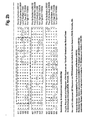
- the immunological cross-reactivity of the group 5 allergens of Pooideae is based on a very similar amino acid sequence. It is certain that the corresponding genes go back to a common progenitor gene. Both for the sequences of deletions ⁇ 94-113 and ⁇ 175-198 of the Phl p 5a wt protein sequence (reference: GenBank AJ555152) and for their flanking sequence regions, homologous sequence regions exist in the group 5 allergens of the Pooideae. The high homology of the respective sequence regions is detectable both at the level of the DNA and amino acid sequence ( Fig. 1 and Fig. 2 ).
- Recombinant proteins were expressed as histidine fusion proteins with an integrated protease cleavage site (expression vector pProExHT, Invitrogen, Carlsbad, USA) for the optional cleavage of the histidine fusion fraction (His) in Escherichia coli (strain JM109).
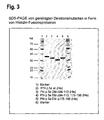
- rPhI p5a wt and the deletion mutants were first identified by the specific binding of the N-terminal histidine residues to a Ni2 + chelate matrix (Immobilized Metal Ion Affinity Chromatography, IMAC) and subsequently by preparative gel filtration (Size Exclusion Chromatography, SEC ) cleaned. The purity of the eluted proteins was monitored by SDS-PAGE and analytical SEC.
- Verification of IgE reactivity using IgE binding techniques was also performed on test substances lacking histidine fusion.
- the deletion variants were initially prepared in parallel with the comparative protein rPhl p 5a-wt as fusion proteins. Subsequently, however, the histidine fusion portion was enzymatically cleaved (TEV protease, Invitrogen, Carlsbad, USA), leaving only a glycine residue of the protease cleavage sequence at the N-terminus of the target protein.
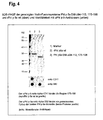
- the identity of the recombinant proteins was determined by the monoclonal anti-Phl p 5 antibodies (Allergopharma, Reinbek, Germany) Apha-1D11 or Apha-3B2 (s. Fig. 4 exemplified by Phl p 5a DM- ⁇ 94-113, 175-198) and N-terminal sequencing.
- a simple test method for determining the IgE reactivity of allergenic molecules is to study the binding of specific IgE from allergy sera to membrane-bound test proteins by the strip test.
- test substances are bound in the same concentration and amount side by side to a strip of nitrocellulose membrane under non-denaturing conditions.
- a number of such membrane strips can be incubated in parallel with different types of allergy sera.
- the specifically bound IgE antibodies are visualized on the membrane by a color reaction mediated by an anti-hlgE / alkaline phosphatase conjugate.
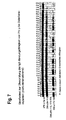
- Phl p 5a-specific IgE antibodies which strongly reacted with the natural Phl p 5a (nPhl p 5a, not shown here) and the recombinant equivalent rPhl p 5a wt (His).
- Phl p 5a-specific IgE antibodies of all 43 patient sera did not bind to the deletion variant Phl p 5a DM- ⁇ 94-113, 175-198 (His) at all or only to a very limited extent.
- the reduced IgE binding is due to both deletion ⁇ 94-113 and deletion ⁇ 175-198.
- deletion ⁇ 94-113 on IgE binding reactivity is less pronounced, but also clearly visible.
- the deletion variant Phl p 5a DM- ⁇ 94-113 (His) was bound by IgE of 19 of the 43 individual allergy sera significantly weaker than the reference rPhl p 5a wt (His) (Ex .: P31, P37, P42).
- the reduction of IgE binding was less pronounced in many individual tests than the reduction caused by ⁇ 175-198.
- the EAST inhibition test (Enzyme Allergosorbent Test) can be used to investigate allergen / IgE interactions in solution, which means that interfering masking of epitopes of the test substance by immobilization on the membrane can basically be ruled out.
- the EAST inhibition test is carried out as follows. Microtiter plates are coated with allergens, here natural Phl p 5 (nPhl p 5a / b, mixture of Phl p 5a and Phl p 5b). After removal of unbound allergen molecules by washing, the plate is blocked with bovine serum albumin to avoid later nonspecific binding.
- IgE antibody from allergic persons as a representative pool of single sera (serum pool) or as a single serum, is incubated in a suitable dilution with the allergen-coated microtiter plates.
- the amount of allergen-bound IgE antibodies is photometrically quantified via a second antibody-coupled enzyme (anti-hlgE / alkaline phosphatase conjugate) by the reaction of a substrate to a colored end product.
- the binding of the IgE antibodies is inhibited by a soluble allergen or the substance to be tested (recombinant modified allergen) depending on the concentration substance-specific. Immunochemically identical substances show identical inhibition curves.
- nPhl p 5, rPhl p 5a wt and the histidine fusion protein rPhl p 5a wt served as reference molecules.
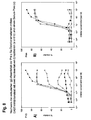
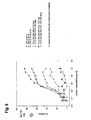
- Fig. 8 ac are representative represent the specific inhibition curves of test substances, which were collected with two individual serums and a serum pool of grass pollen allergy sufferers.
- nPhl p 5a / b showed the strongest inhibitory effect in all tests (approximately 80-95% inhibitory effect at 10 ⁇ g / ml concentration).
- the inhibitory effect of rPhl p 5a was significantly lower with 70-80% maximal inhibition. This effect is caused by the composition of nPhl p 5a / b, which in addition to the isoform Phl p 5a also contains the isoform Phl p 5b.
- the specific IgE antibodies to Phl p 5b can not be inhibited by rPhl p 5a wt.
- the histidine fusion fraction did not affect IgE binding. This is indicated by the identical inhibition curves of rPhl p 5a wt (His) and rPhl p 5a wt in all tests. Thus, the validity of tests with histidine fusion proteins is shown.
- the first group is represented by the individual serum P15 ( Fig. 8 a) , These allergy sera contained IgE antibodies whose binding to Phl p 5a was diminished by both deletions, ⁇ 94-113 and ⁇ 175-198.
- the deletion mutant Phl p 5a DM- ⁇ 94-113 (His) showed only a maximum inhibitory effect of approximately 50% and the deletion mutant Phl p 5a DM-175-198 (His) an inhibitory effect of only 20-30%.
- the double deletion mutant Phl p 5a DM- ⁇ 94-113, 175-198 was able to inhibit the binding of IgE antibodies at the highest concentration used even by 0-10%.
- the use of the non-fusion protein Phl p 5a DM- ⁇ 94-113, 175-198 confirmed this result (0-10% maximum IgE inhibition).
- the second group of allergy sera represented by individual serum P44 ( Fig. 8 b) , differed from the first group in that the IgE antibodies contained in the sera reacted as well with Phl p 5a DM- ⁇ 94-113 (His) as with the reference rPhl p 5a wt (His) (70-80% maximal Inhibition) while no or undetectable levels of IgE antibodies reacted with Phl p 5a DM- ⁇ 175-198 (His) (0-10% maximal inhibition).
- the sera of these allergy sufferers contained IgE antibodies directed mainly against epitopes of the C-terminal part of the molecule.
- heparinized whole blood from grass pollen allergy sufferers is incubated with various concentrations of the test substances. Allergenic substances are capable of binding specific IgE antibodies, which are associated with the high-affinity IgE receptors of basophilic granulocytes.
- the cross-linking of the IgE / receptor complexes triggered by the allergen molecules leads to a signal transduction, which results in the degranulation of the effector cells and thus the triggering of the allergic reactions in vivo.
- the allergen-induced activation of basophilic immunocytes can be detected by quantification of the expression of a surface protein (CD203c) coupled to signal transduction of IgE receptor crosslinking ( Kahlert et al., Clinical Immunology and Allergy in Medicine Proceedings of the EAACI 2002 (2003) Naples, Italy 739-744 ).
- CD203c surface protein
- IgE receptor crosslinking Kahlert et al., Clinical Immunology and Allergy in Medicine Proceedings of the EAACI 2002 (2003) Naples, Italy 739-744 .
- the number of expressed surface proteins on a cell and the percentage of activated cells of a cell pool is determined by the binding of a fluorescently labeled monoclonal antibody to the surface protein and subsequent analysis by fluorescence-activated flow cytometry highly sensitive measured.
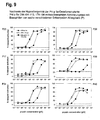
- the test results of the double deletion mutant Phl p 5a DM ⁇ 94-113, 175-198 with basophils from six subjects are described in US Pat Figure 9 shown as curves.
- the test results with basophils from a total of 10 clinically defined allergy sufferers are summarized in Table 2.
- the A50 values (A50: allergen concentration at 50% of the maximum activated basophils) of the reference molecules varied individually between ⁇ 1.3-15 pM for rPhl p 5a wt and ⁇ 0.3-10 pM for nPhl p 5a (Tab. 2).
- the A50 values of the deletion variant Phl p 5a DM ⁇ 94-113, 175-198 ranged between ⁇ 18-8400 pM.
- the relative allergenic efficacy (Pr, relative potency) of the deletion variant Phl p 5a DM ⁇ 94-113, 175-198 was between ⁇ 12-5000 times the reference rPhl p 5a wt and ⁇ 16-32,000 times the reference nPhl p 5a lowered (Table 2).
- T-helper lymphocytes react with peptide fragments of the allergens (about 12-25 amino acids) which are formed by enzymatic degradation in antigen-presenting cells (APC) and after incorporation of the appropriate peptides into the individual MHC class II molecules on the surface of the APC presented to the T cells.
- APC antigen-presenting cells
- This allergen-specific activation of T-helper lymphocytes is the prerequisite for subsequent reactions (proliferation, anergy, apoptosis) and for functional differentiation (TH1 and TH2). Influencing the allergen-specific T lymphocytes by treatment with an allergen or allergen variant in hyposensitization is considered to be the key to therapeutic efficacy.
- oligoclonal T cell lines (TCL) of Graminaen pollen allergies are established under stimulation with nPhl p5 or rPhl p 5 molecules by conventional methods.
- the different T cell lines were stimulated with the reference allergens nPhl p5a and rPhl p5a wt and the double deletion mutant Phl p 5a DM ⁇ 94-113, 175-198.
- the proliferation rate was determined by the incorporation of [ 3 H] thymidine by the usual methods.
- the present invention thus relates to variants of the group 5 allergen Phl p 5a which are characterized by a reduced IgE reactivity compared with the known wild-type allergens and a reactivity with T lymphocytes.
- Phl p 5a lacks or removes the amino acid sequence regions corresponding to the amino acid sequence regions 94-113 and 175-198, in particular those allergen variants are the subject of this invention. in which the former range alone or both are absent at the same time, with the latter embodiment being most preferred.
- allergen variants described above are derived from Phl p 5a or preferably correspond to the sequences according to SEQ ID NO 4 or 8.
- allergen variants according to the invention starting from the cloned DNA sequence by means of genetic engineering methods. In principle, however, these may also be chemical modifications of the native allergen extract ( Fiebig, 1995, Allergo J. 4 (7), 377-382 ).
- group 5 allergens as described in the present application also allow for other changes in other positions, such as to increase hypoallergenicity.
- modifications may be, for example, amino acid insertions, deletions, and exchanges, splitting the protein into fragments, and fusions of the protein or its fragments to other proteins or peptides.
- a His-tag was genetically engineered for the purpose of improved purification of the overexpressed proteins.
- the subject matter furthermore relates to a DNA molecule coding for a previously described allergen variant, in particular corresponding to a sequence according to SEQ ID NO 3 or 7, a recombinant expression vector containing this DNA molecule and a non-human host organism transformed with said DNA molecule or said DNA molecule expression vector.
- Suitable host organisms may be pro- or eukaryotic, mono- or multicellular organisms such as bacteria or yeasts.
- a preferred host organism according to the invention is E. coli.
- the invention relates to a method for producing an allergen variant according to the invention by cultivating the said host organism and obtaining the corresponding allergen variant from the culture.
- the present invention also relates to the previously described allergen variants, DNA molecules and expression vectors in their capacity as medicaments.
- the subject of the present invention are pharmaceutical preparations containing at least one of these allergen variants or a corresponding DNA molecule or a corresponding expression vector and optionally other active ingredients and / or Hüfsstoffe for the treatment of allergies in whose release group 5 allergens of the Pooideae are involved, or for the immunotherapeutic vaccination of patients with allergies at their release group -5 allergens of the Pooideae are involved and / or for the prevention of such allergies.
- these preparations preferably furthermore contain aluminum hydroxide, an immunostimulatory CpG-containing oligonucleotide or a combination of both as adjuvants.
- compositions according to this invention can be used as therapeutics in human or veterinary medicine.
- Suitable carriers are organic or inorganic substances which are suitable for parenteral administration and which do not react with group 5 allergen variants according to the invention.
- parenteral administration in particular solutions, preferably oily or aqueous solutions, furthermore suspensions, emulsions or implants are used.
- the allergen variants of the invention may also be lyophilized and the resulting lyophilisates e.g. be used for the preparation of injection preparations.
- the preparations indicated may be sterilized and / or contain adjuvants such as lubricants, preservatives, stabilizers and / or wetting agents, emulsifiers, salts for influencing the osmotic pressure, buffer substances and / or several further active ingredients.
- adjuvants such as lubricants, preservatives, stabilizers and / or wetting agents, emulsifiers, salts for influencing the osmotic pressure, buffer substances and / or several further active ingredients.
- depot preparations for example by adsorption on aluminum hydroxide, can be obtained by appropriate formulation of the allergen variants according to the invention.
- the subject matter of the present invention is the use of at least one allergen variant according to the invention or a DNA molecule according to the invention or an expression vector according to the invention for the manufacture of a medicament for the treatment of allergies in the induction of which Group 5 allergens of the Pooideae are involved, or for the immunotherapeutic vaccination of patients with allergies, in the induction of which Group 5 allergens of the Pooideae are involved and / or for the prevention of such allergies ,
Landscapes
- Health & Medical Sciences (AREA)
- Chemical & Material Sciences (AREA)
- Life Sciences & Earth Sciences (AREA)
- Organic Chemistry (AREA)
- Medicinal Chemistry (AREA)
- General Health & Medical Sciences (AREA)
- Immunology (AREA)
- Veterinary Medicine (AREA)
- Animal Behavior & Ethology (AREA)
- Public Health (AREA)
- Pharmacology & Pharmacy (AREA)
- Chemical Kinetics & Catalysis (AREA)
- Nuclear Medicine, Radiotherapy & Molecular Imaging (AREA)
- Bioinformatics & Cheminformatics (AREA)
- General Chemical & Material Sciences (AREA)
- Engineering & Computer Science (AREA)
- Proteomics, Peptides & Aminoacids (AREA)
- Botany (AREA)
- Gastroenterology & Hepatology (AREA)
- Biochemistry (AREA)
- Biophysics (AREA)
- Genetics & Genomics (AREA)
- Molecular Biology (AREA)
- Microbiology (AREA)
- Mycology (AREA)
- Epidemiology (AREA)
- Pulmonology (AREA)
- Peptides Or Proteins (AREA)
- Medicines Containing Antibodies Or Antigens For Use As Internal Diagnostic Agents (AREA)
- Medicines That Contain Protein Lipid Enzymes And Other Medicines (AREA)
- Micro-Organisms Or Cultivation Processes Thereof (AREA)
- Pharmaceuticals Containing Other Organic And Inorganic Compounds (AREA)
- Medicines Containing Material From Animals Or Micro-Organisms (AREA)
- Saccharide Compounds (AREA)
- Preparation Of Compounds By Using Micro-Organisms (AREA)
Priority Applications (4)
| Application Number | Priority Date | Filing Date | Title |
|---|---|---|---|
| PL10009856T PL2287180T3 (pl) | 2003-06-04 | 2004-05-06 | Pochodne Lol p 5 o zredukowanej alergeniczności i utrzymanej reaktywności dla komórek T |
| EP10009855A EP2272863B1 (de) | 2003-06-04 | 2004-05-06 | Poa p 5-Derivate mit reduzierter Allergenität und erhaltener T-Zellrealktivität |
| EP10009856.5A EP2287180B9 (de) | 2003-06-04 | 2004-05-06 | Lol p 5-Derivate mit reduzierter Allergenität und erhaltener T-Zellreaktivität |
| PL10009855T PL2272863T3 (pl) | 2003-06-04 | 2004-05-06 | Pochodne poa p 5 o zredukowanej alergeniczności i zakonserwowanej reaktywności komórek t |
Applications Claiming Priority (2)
| Application Number | Priority Date | Filing Date | Title |
|---|---|---|---|
| DE10325508 | 2003-06-04 | ||
| PCT/EP2004/004848 WO2004108758A1 (de) | 2003-06-04 | 2004-05-06 | Phl p 5a-derivate mit reduzierter allergenität und erhaltener t-zellreaktivität |
Related Child Applications (2)
| Application Number | Title | Priority Date | Filing Date |
|---|---|---|---|
| EP10009856.5 Division-Into | 2010-09-17 | ||
| EP10009855.7 Division-Into | 2010-09-17 |
Publications (2)
| Publication Number | Publication Date |
|---|---|
| EP1629006A1 EP1629006A1 (de) | 2006-03-01 |
| EP1629006B1 true EP1629006B1 (de) | 2011-06-22 |
Family
ID=33494849
Family Applications (3)
| Application Number | Title | Priority Date | Filing Date |
|---|---|---|---|
| EP10009856.5A Expired - Lifetime EP2287180B9 (de) | 2003-06-04 | 2004-05-06 | Lol p 5-Derivate mit reduzierter Allergenität und erhaltener T-Zellreaktivität |
| EP10009855A Expired - Lifetime EP2272863B1 (de) | 2003-06-04 | 2004-05-06 | Poa p 5-Derivate mit reduzierter Allergenität und erhaltener T-Zellrealktivität |
| EP04739147A Expired - Lifetime EP1629006B1 (de) | 2003-06-04 | 2004-05-06 | Phl p 5a-derivate mit reduzierter allergenität und erhaltener t-zellreaktivität |
Family Applications Before (2)
| Application Number | Title | Priority Date | Filing Date |
|---|---|---|---|
| EP10009856.5A Expired - Lifetime EP2287180B9 (de) | 2003-06-04 | 2004-05-06 | Lol p 5-Derivate mit reduzierter Allergenität und erhaltener T-Zellreaktivität |
| EP10009855A Expired - Lifetime EP2272863B1 (de) | 2003-06-04 | 2004-05-06 | Poa p 5-Derivate mit reduzierter Allergenität und erhaltener T-Zellrealktivität |
Country Status (13)
| Country | Link |
|---|---|
| US (3) | US8628946B2 (pt) |
| EP (3) | EP2287180B9 (pt) |
| JP (2) | JP4782671B2 (pt) |
| CN (1) | CN1798763B (pt) |
| AT (1) | ATE513848T1 (pt) |
| AU (1) | AU2004245184B2 (pt) |
| BR (1) | BRPI0410908A (pt) |
| CA (1) | CA2528053C (pt) |
| ES (3) | ES2434720T3 (pt) |
| PL (2) | PL2287180T3 (pt) |
| PT (3) | PT2272863E (pt) |
| RU (1) | RU2368620C2 (pt) |
| WO (1) | WO2004108758A1 (pt) |
Families Citing this family (5)
| Publication number | Priority date | Publication date | Assignee | Title |
|---|---|---|---|---|
| AUPR779201A0 (en) | 2001-09-20 | 2001-10-11 | University Of Melbourne, The | Immunotherapeutic and immunoprophylactic reagents |
| ATE513848T1 (de) * | 2003-06-04 | 2011-07-15 | Merck Patent Gmbh | Phl p 5a-derivate mit reduzierter allergenität und erhaltener t-zellreaktivität |
| AT503690A1 (de) * | 2006-06-09 | 2007-12-15 | Biomay Ag | Hypoallergene moleküle |
| JP5871819B2 (ja) * | 2010-01-14 | 2016-03-01 | メルク パテント ゲゼルシャフト ミット ベシュレンクテル ハフツングMerck Patent Gesellschaft mit beschraenkter Haftung | プロリン残基の突然変異誘発により低減したアレルゲン性を有するイネ科のグループ5アレルゲンの変異体 |
| WO2023039598A1 (en) | 2021-09-13 | 2023-03-16 | Life Technologies Corporation | Gene editing tools |
Family Cites Families (7)
| Publication number | Priority date | Publication date | Assignee | Title |
|---|---|---|---|---|
| US5736362A (en) * | 1990-10-26 | 1998-04-07 | The University Of Melbourne | Ryegrass pollen allergen |
| DE19713001A1 (de) * | 1997-03-27 | 1998-10-01 | Merck Patent Gmbh | Graminaenpollenallergenmutanten zur spezifischen Immuntherapie, deren Herstellung und Verwendung |
| DE19918682A1 (de) | 1999-04-23 | 2000-10-26 | Merck Patent Gmbh | DNA-Sequenz und rekombinante Herstellung eines Graminaen-Allergens |
| IT1318692B1 (it) | 2000-09-12 | 2003-08-27 | Consiglio Nazionale Ricerche | Varianti di proteine allergeniche di phleum pratense. |
| CN100577804C (zh) * | 2000-11-16 | 2010-01-06 | 阿尔克-阿贝洛有限公司 | 新型变态反应原突变体 |
| AUPR779201A0 (en) * | 2001-09-20 | 2001-10-11 | University Of Melbourne, The | Immunotherapeutic and immunoprophylactic reagents |
| ATE513848T1 (de) * | 2003-06-04 | 2011-07-15 | Merck Patent Gmbh | Phl p 5a-derivate mit reduzierter allergenität und erhaltener t-zellreaktivität |
-
2004
- 2004-05-06 AT AT04739147T patent/ATE513848T1/de active
- 2004-05-06 WO PCT/EP2004/004848 patent/WO2004108758A1/de not_active Ceased
- 2004-05-06 EP EP10009856.5A patent/EP2287180B9/de not_active Expired - Lifetime
- 2004-05-06 ES ES10009856T patent/ES2434720T3/es not_active Expired - Lifetime
- 2004-05-06 ES ES04739147T patent/ES2367633T3/es not_active Expired - Lifetime
- 2004-05-06 JP JP2006508164A patent/JP4782671B2/ja not_active Expired - Fee Related
- 2004-05-06 PL PL10009856T patent/PL2287180T3/pl unknown
- 2004-05-06 CN CN200480015311XA patent/CN1798763B/zh not_active Expired - Fee Related
- 2004-05-06 PL PL10009855T patent/PL2272863T3/pl unknown
- 2004-05-06 ES ES10009855T patent/ES2397778T3/es not_active Expired - Lifetime
- 2004-05-06 PT PT100098557T patent/PT2272863E/pt unknown
- 2004-05-06 AU AU2004245184A patent/AU2004245184B2/en not_active Ceased
- 2004-05-06 RU RU2005141524/13A patent/RU2368620C2/ru not_active IP Right Cessation
- 2004-05-06 CA CA2528053A patent/CA2528053C/en not_active Expired - Fee Related
- 2004-05-06 PT PT04739147T patent/PT1629006E/pt unknown
- 2004-05-06 EP EP10009855A patent/EP2272863B1/de not_active Expired - Lifetime
- 2004-05-06 US US10/559,272 patent/US8628946B2/en not_active Expired - Fee Related
- 2004-05-06 BR BRPI0410908-2A patent/BRPI0410908A/pt not_active IP Right Cessation
- 2004-05-06 EP EP04739147A patent/EP1629006B1/de not_active Expired - Lifetime
- 2004-05-06 PT PT100098565T patent/PT2287180E/pt unknown
-
2010
- 2010-09-16 JP JP2010207438A patent/JP5363441B2/ja not_active Expired - Fee Related
-
2014
- 2014-01-02 US US14/146,364 patent/US9522938B2/en not_active Expired - Fee Related
-
2016
- 2016-04-05 US US15/090,935 patent/US20160207967A1/en not_active Abandoned
Also Published As
Similar Documents
| Publication | Publication Date | Title |
|---|---|---|
| US20160207967A1 (en) | Phl p 5a derivatives having reduced allergeneity and retained t-cell reactivity | |
| EP1171604B1 (de) | Dna-sequenz und rekombinante herstellung eines graminaen-allergens | |
| EP1768996B1 (de) | Varianten der gruppe 1-allergene aus poaceae mit reduzierter allergenität und erhaltener t-zellreaktivität | |
| DE60115475T2 (de) | VARIANTEN DES DERMATOPHAGOIDES-ALLERGENS DER p 2 | |
| WO2005058936A2 (de) | Dna-sequenz und rekombinante herstellung des graspollen-allergens lol p 4 | |
| EP2392591B1 (de) | DNA-Sequenz und rekombinante Herstellung des Graspollen-Allergens Phl p 4 | |
| EP1532169B1 (de) | Varianten des majorallergens phl p 1 aus lieschgras | |
| EP2261337B1 (de) | DNA-Sequenz und rekombinante Herstellung von Gruppe-4 Majorallergenen aus Getreiden | |
| EP2523684A1 (de) | Varianten der gruppe 6-allergene der süssgräser mit reduzierter allergenität durch mutagenese von prolinresten | |
| EP2523685A1 (de) | VARIANTEN DER GRUPPE 5-ALLERGENE DER SÜßGRÄSER MIT REDUZIERTER ALLERGENITÄT DURCH MUTAGENESE VON PROLINRESTEN |
Legal Events
| Date | Code | Title | Description |
|---|---|---|---|
| PUAI | Public reference made under article 153(3) epc to a published international application that has entered the european phase |
Free format text: ORIGINAL CODE: 0009012 |
|
| 17P | Request for examination filed |
Effective date: 20051015 |
|
| AK | Designated contracting states |
Kind code of ref document: A1 Designated state(s): AT BE BG CH CY CZ DE DK EE ES FI FR GB GR HU IE IT LI LU MC NL PL PT RO SE SI SK TR |
|
| DAX | Request for extension of the european patent (deleted) | ||
| GRAP | Despatch of communication of intention to grant a patent |
Free format text: ORIGINAL CODE: EPIDOSNIGR1 |
|
| GRAS | Grant fee paid |
Free format text: ORIGINAL CODE: EPIDOSNIGR3 |
|
| GRAA | (expected) grant |
Free format text: ORIGINAL CODE: 0009210 |
|
| AK | Designated contracting states |
Kind code of ref document: B1 Designated state(s): AT BE BG CH CY CZ DE DK EE ES FI FR GB GR HU IE IT LI LU MC NL PL PT RO SE SI SK TR |
|
| REG | Reference to a national code |
Ref country code: GB Ref legal event code: FG4D Free format text: NOT ENGLISH |
|
| REG | Reference to a national code |
Ref country code: CH Ref legal event code: EP |
|
| REG | Reference to a national code |
Ref country code: IE Ref legal event code: FG4D Free format text: LANGUAGE OF EP DOCUMENT: GERMAN |
|
| REG | Reference to a national code |
Ref country code: DE Ref legal event code: R096 Ref document number: 502004012633 Country of ref document: DE Effective date: 20110804 |
|
| REG | Reference to a national code |
Ref country code: NL Ref legal event code: T3 |
|
| REG | Reference to a national code |
Ref country code: PT Ref legal event code: SC4A Free format text: AVAILABILITY OF NATIONAL TRANSLATION Effective date: 20110920 |
|
| REG | Reference to a national code |
Ref country code: SE Ref legal event code: TRGR |
|
| REG | Reference to a national code |
Ref country code: ES Ref legal event code: FG2A Ref document number: 2367633 Country of ref document: ES Kind code of ref document: T3 Effective date: 20111107 |
|
| REG | Reference to a national code |
Ref country code: GR Ref legal event code: EP Ref document number: 20110402063 Country of ref document: GR Effective date: 20111013 |
|
| PG25 | Lapsed in a contracting state [announced via postgrant information from national office to epo] |
Ref country code: CY Free format text: LAPSE BECAUSE OF FAILURE TO SUBMIT A TRANSLATION OF THE DESCRIPTION OR TO PAY THE FEE WITHIN THE PRESCRIBED TIME-LIMIT Effective date: 20110622 Ref country code: FI Free format text: LAPSE BECAUSE OF FAILURE TO SUBMIT A TRANSLATION OF THE DESCRIPTION OR TO PAY THE FEE WITHIN THE PRESCRIBED TIME-LIMIT Effective date: 20110622 Ref country code: SI Free format text: LAPSE BECAUSE OF FAILURE TO SUBMIT A TRANSLATION OF THE DESCRIPTION OR TO PAY THE FEE WITHIN THE PRESCRIBED TIME-LIMIT Effective date: 20110622 |
|
| REG | Reference to a national code |
Ref country code: IE Ref legal event code: FD4D |
|
| PG25 | Lapsed in a contracting state [announced via postgrant information from national office to epo] |
Ref country code: IE Free format text: LAPSE BECAUSE OF FAILURE TO SUBMIT A TRANSLATION OF THE DESCRIPTION OR TO PAY THE FEE WITHIN THE PRESCRIBED TIME-LIMIT Effective date: 20110622 Ref country code: CZ Free format text: LAPSE BECAUSE OF FAILURE TO SUBMIT A TRANSLATION OF THE DESCRIPTION OR TO PAY THE FEE WITHIN THE PRESCRIBED TIME-LIMIT Effective date: 20110622 Ref country code: EE Free format text: LAPSE BECAUSE OF FAILURE TO SUBMIT A TRANSLATION OF THE DESCRIPTION OR TO PAY THE FEE WITHIN THE PRESCRIBED TIME-LIMIT Effective date: 20110622 |
|
| PG25 | Lapsed in a contracting state [announced via postgrant information from national office to epo] |
Ref country code: PL Free format text: LAPSE BECAUSE OF FAILURE TO SUBMIT A TRANSLATION OF THE DESCRIPTION OR TO PAY THE FEE WITHIN THE PRESCRIBED TIME-LIMIT Effective date: 20110622 Ref country code: RO Free format text: LAPSE BECAUSE OF FAILURE TO SUBMIT A TRANSLATION OF THE DESCRIPTION OR TO PAY THE FEE WITHIN THE PRESCRIBED TIME-LIMIT Effective date: 20110622 Ref country code: SK Free format text: LAPSE BECAUSE OF FAILURE TO SUBMIT A TRANSLATION OF THE DESCRIPTION OR TO PAY THE FEE WITHIN THE PRESCRIBED TIME-LIMIT Effective date: 20110622 |
|
| PLBE | No opposition filed within time limit |
Free format text: ORIGINAL CODE: 0009261 |
|
| STAA | Information on the status of an ep patent application or granted ep patent |
Free format text: STATUS: NO OPPOSITION FILED WITHIN TIME LIMIT |
|
| 26N | No opposition filed |
Effective date: 20120323 |
|
| PG25 | Lapsed in a contracting state [announced via postgrant information from national office to epo] |
Ref country code: DK Free format text: LAPSE BECAUSE OF FAILURE TO SUBMIT A TRANSLATION OF THE DESCRIPTION OR TO PAY THE FEE WITHIN THE PRESCRIBED TIME-LIMIT Effective date: 20110622 |
|
| REG | Reference to a national code |
Ref country code: DE Ref legal event code: R097 Ref document number: 502004012633 Country of ref document: DE Effective date: 20120323 |
|
| BERE | Be: lapsed |
Owner name: MERCK PATENT G.M.B.H. Effective date: 20120531 |
|
| PG25 | Lapsed in a contracting state [announced via postgrant information from national office to epo] |
Ref country code: MC Free format text: LAPSE BECAUSE OF NON-PAYMENT OF DUE FEES Effective date: 20120531 |
|
| PG25 | Lapsed in a contracting state [announced via postgrant information from national office to epo] |
Ref country code: BE Free format text: LAPSE BECAUSE OF NON-PAYMENT OF DUE FEES Effective date: 20120531 |
|
| PG25 | Lapsed in a contracting state [announced via postgrant information from national office to epo] |
Ref country code: BG Free format text: LAPSE BECAUSE OF FAILURE TO SUBMIT A TRANSLATION OF THE DESCRIPTION OR TO PAY THE FEE WITHIN THE PRESCRIBED TIME-LIMIT Effective date: 20110922 |
|
| PG25 | Lapsed in a contracting state [announced via postgrant information from national office to epo] |
Ref country code: LU Free format text: LAPSE BECAUSE OF NON-PAYMENT OF DUE FEES Effective date: 20120506 |
|
| PG25 | Lapsed in a contracting state [announced via postgrant information from national office to epo] |
Ref country code: HU Free format text: LAPSE BECAUSE OF FAILURE TO SUBMIT A TRANSLATION OF THE DESCRIPTION OR TO PAY THE FEE WITHIN THE PRESCRIBED TIME-LIMIT Effective date: 20040506 |
|
| REG | Reference to a national code |
Ref country code: FR Ref legal event code: PLFP Year of fee payment: 13 |
|
| PGFP | Annual fee paid to national office [announced via postgrant information from national office to epo] |
Ref country code: DE Payment date: 20160504 Year of fee payment: 13 Ref country code: CH Payment date: 20160511 Year of fee payment: 13 Ref country code: GB Payment date: 20160504 Year of fee payment: 13 |
|
| PGFP | Annual fee paid to national office [announced via postgrant information from national office to epo] |
Ref country code: IT Payment date: 20160523 Year of fee payment: 13 Ref country code: SE Payment date: 20160511 Year of fee payment: 13 |
|
| REG | Reference to a national code |
Ref country code: FR Ref legal event code: PLFP Year of fee payment: 14 |
|
| PGFP | Annual fee paid to national office [announced via postgrant information from national office to epo] |
Ref country code: TR Payment date: 20170327 Year of fee payment: 14 Ref country code: NL Payment date: 20170412 Year of fee payment: 14 |
|
| PGFP | Annual fee paid to national office [announced via postgrant information from national office to epo] |
Ref country code: GR Payment date: 20170412 Year of fee payment: 14 Ref country code: FR Payment date: 20170413 Year of fee payment: 14 |
|
| PGFP | Annual fee paid to national office [announced via postgrant information from national office to epo] |
Ref country code: PT Payment date: 20170502 Year of fee payment: 14 Ref country code: AT Payment date: 20170425 Year of fee payment: 14 Ref country code: ES Payment date: 20170605 Year of fee payment: 14 |
|
| REG | Reference to a national code |
Ref country code: DE Ref legal event code: R119 Ref document number: 502004012633 Country of ref document: DE |
|
| REG | Reference to a national code |
Ref country code: CH Ref legal event code: PL |
|
| REG | Reference to a national code |
Ref country code: SE Ref legal event code: EUG |
|
| GBPC | Gb: european patent ceased through non-payment of renewal fee |
Effective date: 20170506 |
|
| PG25 | Lapsed in a contracting state [announced via postgrant information from national office to epo] |
Ref country code: CH Free format text: LAPSE BECAUSE OF NON-PAYMENT OF DUE FEES Effective date: 20170531 Ref country code: SE Free format text: LAPSE BECAUSE OF NON-PAYMENT OF DUE FEES Effective date: 20170507 Ref country code: LI Free format text: LAPSE BECAUSE OF NON-PAYMENT OF DUE FEES Effective date: 20170531 |
|
| PG25 | Lapsed in a contracting state [announced via postgrant information from national office to epo] |
Ref country code: DE Free format text: LAPSE BECAUSE OF NON-PAYMENT OF DUE FEES Effective date: 20171201 Ref country code: GB Free format text: LAPSE BECAUSE OF NON-PAYMENT OF DUE FEES Effective date: 20170506 |
|
| PG25 | Lapsed in a contracting state [announced via postgrant information from national office to epo] |
Ref country code: IT Free format text: LAPSE BECAUSE OF NON-PAYMENT OF DUE FEES Effective date: 20170506 |
|
| REG | Reference to a national code |
Ref country code: NL Ref legal event code: MM Effective date: 20180601 |
|
| REG | Reference to a national code |
Ref country code: AT Ref legal event code: MM01 Ref document number: 513848 Country of ref document: AT Kind code of ref document: T Effective date: 20180506 |
|
| PG25 | Lapsed in a contracting state [announced via postgrant information from national office to epo] |
Ref country code: AT Free format text: LAPSE BECAUSE OF NON-PAYMENT OF DUE FEES Effective date: 20180506 Ref country code: GR Free format text: LAPSE BECAUSE OF NON-PAYMENT OF DUE FEES Effective date: 20181204 Ref country code: PT Free format text: LAPSE BECAUSE OF NON-PAYMENT OF DUE FEES Effective date: 20181106 |
|
| PG25 | Lapsed in a contracting state [announced via postgrant information from national office to epo] |
Ref country code: NL Free format text: LAPSE BECAUSE OF NON-PAYMENT OF DUE FEES Effective date: 20180601 Ref country code: FR Free format text: LAPSE BECAUSE OF NON-PAYMENT OF DUE FEES Effective date: 20180531 |
|
| REG | Reference to a national code |
Ref country code: ES Ref legal event code: FD2A Effective date: 20190913 |
|
| PG25 | Lapsed in a contracting state [announced via postgrant information from national office to epo] |
Ref country code: ES Free format text: LAPSE BECAUSE OF NON-PAYMENT OF DUE FEES Effective date: 20180507 |
|
| PG25 | Lapsed in a contracting state [announced via postgrant information from national office to epo] |
Ref country code: TR Free format text: LAPSE BECAUSE OF NON-PAYMENT OF DUE FEES Effective date: 20180506 |