EP1629139B1 - Procede de peinture de parties metalliques - Google Patents
Procede de peinture de parties metalliques Download PDFInfo
- Publication number
- EP1629139B1 EP1629139B1 EP04759077A EP04759077A EP1629139B1 EP 1629139 B1 EP1629139 B1 EP 1629139B1 EP 04759077 A EP04759077 A EP 04759077A EP 04759077 A EP04759077 A EP 04759077A EP 1629139 B1 EP1629139 B1 EP 1629139B1
- Authority
- EP
- European Patent Office
- Prior art keywords
- layer
- sol gel
- fastener
- rivet
- coating
- Prior art date
- Legal status (The legal status is an assumption and is not a legal conclusion. Google has not performed a legal analysis and makes no representation as to the accuracy of the status listed.)
- Expired - Lifetime
Links
Images

Classifications
-
- C—CHEMISTRY; METALLURGY
- C23—COATING METALLIC MATERIAL; COATING MATERIAL WITH METALLIC MATERIAL; CHEMICAL SURFACE TREATMENT; DIFFUSION TREATMENT OF METALLIC MATERIAL; COATING BY VACUUM EVAPORATION, BY SPUTTERING, BY ION IMPLANTATION OR BY CHEMICAL VAPOUR DEPOSITION, IN GENERAL; INHIBITING CORROSION OF METALLIC MATERIAL OR INCRUSTATION IN GENERAL
- C23C—COATING METALLIC MATERIAL; COATING MATERIAL WITH METALLIC MATERIAL; SURFACE TREATMENT OF METALLIC MATERIAL BY DIFFUSION INTO THE SURFACE, BY CHEMICAL CONVERSION OR SUBSTITUTION; COATING BY VACUUM EVAPORATION, BY SPUTTERING, BY ION IMPLANTATION OR BY CHEMICAL VAPOUR DEPOSITION, IN GENERAL
- C23C28/00—Coating for obtaining at least two superposed coatings either by methods not provided for in a single one of groups C23C2/00 - C23C26/00 or by combinations of methods provided for in subclasses C23C and C25C or C25D
-
- B—PERFORMING OPERATIONS; TRANSPORTING
- B05—SPRAYING OR ATOMISING IN GENERAL; APPLYING FLUENT MATERIALS TO SURFACES, IN GENERAL
- B05D—PROCESSES FOR APPLYING FLUENT MATERIALS TO SURFACES, IN GENERAL
- B05D7/00—Processes, other than flocking, specially adapted for applying liquids or other fluent materials to particular surfaces or for applying particular liquids or other fluent materials
- B05D7/50—Multilayers
- B05D7/51—One specific pretreatment, e.g. phosphatation, chromatation, in combination with one specific coating
-
- B—PERFORMING OPERATIONS; TRANSPORTING
- B05—SPRAYING OR ATOMISING IN GENERAL; APPLYING FLUENT MATERIALS TO SURFACES, IN GENERAL
- B05D—PROCESSES FOR APPLYING FLUENT MATERIALS TO SURFACES, IN GENERAL
- B05D7/00—Processes, other than flocking, specially adapted for applying liquids or other fluent materials to particular surfaces or for applying particular liquids or other fluent materials
- B05D7/50—Multilayers
- B05D7/52—Two layers
- B05D7/54—No clear coat specified
-
- C—CHEMISTRY; METALLURGY
- C23—COATING METALLIC MATERIAL; COATING MATERIAL WITH METALLIC MATERIAL; CHEMICAL SURFACE TREATMENT; DIFFUSION TREATMENT OF METALLIC MATERIAL; COATING BY VACUUM EVAPORATION, BY SPUTTERING, BY ION IMPLANTATION OR BY CHEMICAL VAPOUR DEPOSITION, IN GENERAL; INHIBITING CORROSION OF METALLIC MATERIAL OR INCRUSTATION IN GENERAL
- C23C—COATING METALLIC MATERIAL; COATING MATERIAL WITH METALLIC MATERIAL; SURFACE TREATMENT OF METALLIC MATERIAL BY DIFFUSION INTO THE SURFACE, BY CHEMICAL CONVERSION OR SUBSTITUTION; COATING BY VACUUM EVAPORATION, BY SPUTTERING, BY ION IMPLANTATION OR BY CHEMICAL VAPOUR DEPOSITION, IN GENERAL
- C23C18/00—Chemical coating by decomposition of either liquid compounds or solutions of the coating forming compounds, without leaving reaction products of surface material in the coating; Contact plating
- C23C18/02—Chemical coating by decomposition of either liquid compounds or solutions of the coating forming compounds, without leaving reaction products of surface material in the coating; Contact plating by thermal decomposition
- C23C18/12—Chemical coating by decomposition of either liquid compounds or solutions of the coating forming compounds, without leaving reaction products of surface material in the coating; Contact plating by thermal decomposition characterised by the deposition of inorganic material other than metallic material
- C23C18/1204—Chemical coating by decomposition of either liquid compounds or solutions of the coating forming compounds, without leaving reaction products of surface material in the coating; Contact plating by thermal decomposition characterised by the deposition of inorganic material other than metallic material inorganic material, e.g. non-oxide and non-metallic such as sulfides, nitrides based compounds
- C23C18/1208—Oxides, e.g. ceramics
- C23C18/1216—Metal oxides
-
- C—CHEMISTRY; METALLURGY
- C23—COATING METALLIC MATERIAL; COATING MATERIAL WITH METALLIC MATERIAL; CHEMICAL SURFACE TREATMENT; DIFFUSION TREATMENT OF METALLIC MATERIAL; COATING BY VACUUM EVAPORATION, BY SPUTTERING, BY ION IMPLANTATION OR BY CHEMICAL VAPOUR DEPOSITION, IN GENERAL; INHIBITING CORROSION OF METALLIC MATERIAL OR INCRUSTATION IN GENERAL
- C23C—COATING METALLIC MATERIAL; COATING MATERIAL WITH METALLIC MATERIAL; SURFACE TREATMENT OF METALLIC MATERIAL BY DIFFUSION INTO THE SURFACE, BY CHEMICAL CONVERSION OR SUBSTITUTION; COATING BY VACUUM EVAPORATION, BY SPUTTERING, BY ION IMPLANTATION OR BY CHEMICAL VAPOUR DEPOSITION, IN GENERAL
- C23C18/00—Chemical coating by decomposition of either liquid compounds or solutions of the coating forming compounds, without leaving reaction products of surface material in the coating; Contact plating
- C23C18/02—Chemical coating by decomposition of either liquid compounds or solutions of the coating forming compounds, without leaving reaction products of surface material in the coating; Contact plating by thermal decomposition
- C23C18/12—Chemical coating by decomposition of either liquid compounds or solutions of the coating forming compounds, without leaving reaction products of surface material in the coating; Contact plating by thermal decomposition characterised by the deposition of inorganic material other than metallic material
- C23C18/1225—Deposition of multilayers of inorganic material
-
- C—CHEMISTRY; METALLURGY
- C23—COATING METALLIC MATERIAL; COATING MATERIAL WITH METALLIC MATERIAL; CHEMICAL SURFACE TREATMENT; DIFFUSION TREATMENT OF METALLIC MATERIAL; COATING BY VACUUM EVAPORATION, BY SPUTTERING, BY ION IMPLANTATION OR BY CHEMICAL VAPOUR DEPOSITION, IN GENERAL; INHIBITING CORROSION OF METALLIC MATERIAL OR INCRUSTATION IN GENERAL
- C23C—COATING METALLIC MATERIAL; COATING MATERIAL WITH METALLIC MATERIAL; SURFACE TREATMENT OF METALLIC MATERIAL BY DIFFUSION INTO THE SURFACE, BY CHEMICAL CONVERSION OR SUBSTITUTION; COATING BY VACUUM EVAPORATION, BY SPUTTERING, BY ION IMPLANTATION OR BY CHEMICAL VAPOUR DEPOSITION, IN GENERAL
- C23C18/00—Chemical coating by decomposition of either liquid compounds or solutions of the coating forming compounds, without leaving reaction products of surface material in the coating; Contact plating
- C23C18/02—Chemical coating by decomposition of either liquid compounds or solutions of the coating forming compounds, without leaving reaction products of surface material in the coating; Contact plating by thermal decomposition
- C23C18/12—Chemical coating by decomposition of either liquid compounds or solutions of the coating forming compounds, without leaving reaction products of surface material in the coating; Contact plating by thermal decomposition characterised by the deposition of inorganic material other than metallic material
- C23C18/1229—Composition of the substrate
- C23C18/1241—Metallic substrates
-
- C—CHEMISTRY; METALLURGY
- C23—COATING METALLIC MATERIAL; COATING MATERIAL WITH METALLIC MATERIAL; CHEMICAL SURFACE TREATMENT; DIFFUSION TREATMENT OF METALLIC MATERIAL; COATING BY VACUUM EVAPORATION, BY SPUTTERING, BY ION IMPLANTATION OR BY CHEMICAL VAPOUR DEPOSITION, IN GENERAL; INHIBITING CORROSION OF METALLIC MATERIAL OR INCRUSTATION IN GENERAL
- C23C—COATING METALLIC MATERIAL; COATING MATERIAL WITH METALLIC MATERIAL; SURFACE TREATMENT OF METALLIC MATERIAL BY DIFFUSION INTO THE SURFACE, BY CHEMICAL CONVERSION OR SUBSTITUTION; COATING BY VACUUM EVAPORATION, BY SPUTTERING, BY ION IMPLANTATION OR BY CHEMICAL VAPOUR DEPOSITION, IN GENERAL
- C23C18/00—Chemical coating by decomposition of either liquid compounds or solutions of the coating forming compounds, without leaving reaction products of surface material in the coating; Contact plating
- C23C18/02—Chemical coating by decomposition of either liquid compounds or solutions of the coating forming compounds, without leaving reaction products of surface material in the coating; Contact plating by thermal decomposition
- C23C18/12—Chemical coating by decomposition of either liquid compounds or solutions of the coating forming compounds, without leaving reaction products of surface material in the coating; Contact plating by thermal decomposition characterised by the deposition of inorganic material other than metallic material
- C23C18/125—Process of deposition of the inorganic material
- C23C18/1254—Sol or sol-gel processing
-
- B—PERFORMING OPERATIONS; TRANSPORTING
- B05—SPRAYING OR ATOMISING IN GENERAL; APPLYING FLUENT MATERIALS TO SURFACES, IN GENERAL
- B05D—PROCESSES FOR APPLYING FLUENT MATERIALS TO SURFACES, IN GENERAL
- B05D2202/00—Metallic substrate
- B05D2202/20—Metallic substrate based on light metals
- B05D2202/25—Metallic substrate based on light metals based on Al
-
- B—PERFORMING OPERATIONS; TRANSPORTING
- B05—SPRAYING OR ATOMISING IN GENERAL; APPLYING FLUENT MATERIALS TO SURFACES, IN GENERAL
- B05D—PROCESSES FOR APPLYING FLUENT MATERIALS TO SURFACES, IN GENERAL
- B05D2350/00—Pretreatment of the substrate
- B05D2350/20—Chromatation
-
- Y—GENERAL TAGGING OF NEW TECHNOLOGICAL DEVELOPMENTS; GENERAL TAGGING OF CROSS-SECTIONAL TECHNOLOGIES SPANNING OVER SEVERAL SECTIONS OF THE IPC; TECHNICAL SUBJECTS COVERED BY FORMER USPC CROSS-REFERENCE ART COLLECTIONS [XRACs] AND DIGESTS
- Y10—TECHNICAL SUBJECTS COVERED BY FORMER USPC
- Y10T—TECHNICAL SUBJECTS COVERED BY FORMER US CLASSIFICATION
- Y10T428/00—Stock material or miscellaneous articles
- Y10T428/12—All metal or with adjacent metals
- Y10T428/12493—Composite; i.e., plural, adjacent, spatially distinct metal components [e.g., layers, joint, etc.]
- Y10T428/12736—Al-base component
-
- Y—GENERAL TAGGING OF NEW TECHNOLOGICAL DEVELOPMENTS; GENERAL TAGGING OF CROSS-SECTIONAL TECHNOLOGIES SPANNING OVER SEVERAL SECTIONS OF THE IPC; TECHNICAL SUBJECTS COVERED BY FORMER USPC CROSS-REFERENCE ART COLLECTIONS [XRACs] AND DIGESTS
- Y10—TECHNICAL SUBJECTS COVERED BY FORMER USPC
- Y10T—TECHNICAL SUBJECTS COVERED BY FORMER US CLASSIFICATION
- Y10T428/00—Stock material or miscellaneous articles
- Y10T428/12—All metal or with adjacent metals
- Y10T428/12493—Composite; i.e., plural, adjacent, spatially distinct metal components [e.g., layers, joint, etc.]
- Y10T428/12771—Transition metal-base component
- Y10T428/12806—Refractory [Group IVB, VB, or VIB] metal-base component
- Y10T428/12826—Group VIB metal-base component
- Y10T428/12847—Cr-base component
Definitions
- Conversion coatings are generally electrolytic or chemical films that promote adhesion between the metal and adhesive resins.
- a common electrolytic process is anodization in which a metal material is placed in an immersing solution to form a porous, micro rough surface into which an adhesive can penetrate.
- Chemical films for treating titanium or aluminum include phosphate-fluoride coating films for titanium and chromate conversion films for aluminum.
- sol gel coatings such as those described in the above-referenced patents have been shown to improve adhesion of epoxy-based and polyurethane paints.
- fasteners e.g., metal panels
- fasteners particularly rivets.
- a coating such as a paint (e.g., epoxy-based, polyurethane, polyimide) that may be utilized on the panels that make up the aircraft.
- paint e.g., epoxy-based, polyurethane, polyimide
- One problem that has been identified is that paint that otherwise adheres acceptably to the exterior surfaces of aircraft panels, does not acceptably adhere to the fasteners (e.g., rivets) that join the panels.
- the condition where paint adherence failure occurs with fasteners in the aircraft industry is known as rivet rash.
- metal panels in the aircraft or airline industry must meet certain corrosion resistance standards.
- One corrosion resistance standard for conversion coatings of aluminum is a salt spray test in accordance with MIL-C-5441. According to this standard, the chemical conversion coated panels undergo salt spray exposure for a minimum of 168 hours and must show no indication of corrosion under examination of approximately 10X magnification.
- aircraft manufacturers often require that fasteners such as rivets meet certain corrosion resistance standards
- One aircraft manufacturer standard for rivets is a salt spray exposure for a minimum of 48 hours without indication of corrosion.
- US 5 585 133 describes a method of making an aluminium alloy article, such as a fastener.
- the process involves anodizing a fastener in chromic acid solution and applying a curable organic coating of a material such as phenolic resin mixed with one or more plasticizers, other organic compounds such as polytetrafluoroethylene, and inorganic additives, such as aluminium powder and/or strontium chromate.
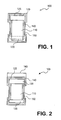
- Figure 1 shows a schematic side view of a rivet having the exposed surfaces thereof coated with a chemical conversion coating and a sol gel coating.
- Figure 2 shows the rivet of Figure 1 having a paint coating applied to one surface of the rivet.
- Figure 3 shows a flow chart of a method for coating a metal surface.
- a method includes forming a first layer including a chemical conversion coating on a metal surface and forming a second layer on the first layer through a sol gel process (e.g., a sol gel film).
- a sol gel process e.g., a sol gel film.
- the method is useful, for example, in treating metal surfaces, particularly surfaces of metal (e.g., aluminum, titanium) fasteners to improve the corrosion resistance and the adhesion properties of the fastener for further treatment, such as for painting.
- an apparatus includes a metal component, such as an aluminum or titanium fastener (e.g., rivet) having at least one surface.
- the at least one surface of the metal component includes a first layer comprising a chemical conversion coating and a second layer derived from a sol gel composition on the first layer.
- FIG. 1 shows a schematic side view of a fastener.
- Fastener 100 is, for example, a rivet suitable for use in fastening metal component panels of aircraft or other vehicles.
- fastener 100 is a metal material, such as aluminum or titanium.
- Fastener 100 includes shank 110, head 120, and upset head 130 (shown in dashed lines in Figure 1 as an upset head is formed on installation).
- shank 110, head 120, and upset head 130 are a unitary body of aluminum material.
- Suitable grades of aluminum for a rivet in the aircraft or airline industry include, but are not limited to, 2017 and 7050 aluminum. Representative diameters, in inches, for rivets for use in the aircraft industry to fasten panels range from 3/32 to 8/32 and larger, depending on the particular fastening or other application.
- fastener 100 includes first layer 140 of a chemical conversion coating, in this embodiment, directly disposed on or in direct contact with exterior and/or exposed surfaces of fastener 100.
- a suitable chemical conversion coating includes, but is not limited to, a chromate conversion coating.
- ALCHROME 2TM commercially available from Heatbath Corporation of Indian Orchard, Massachusetts. ALCHROM 2TM includes chromic acid, potassium ferricyanide, sodium nitrate, and sodium silicofluoride.
- a suitable thickness of first layer 140 of ALCHROM 2TM on a fastener that is an aluminum rivet is, for example, on the order of less thane one mil to pass the MIL-C-5541 salt spray standard for a fastener (e.g., 48 hour salt spray exposure).
- One suitable conversion coating for a titanium material is a phospho-fluoride coating.
- fastener 100 shown in Figure 1 also includes second layer 150 shown disposed on first layer 140.
- second layer 150 is formed by a sol gel process (e.g., a sol gel film).
- Representative sol gel films that may be suitable as second layer 150 are sol gel films that, in one embodiment, promote adhesion of an epoxy or a polyurethane coating (e.g., paint) to fastener 100.
- second layer 150 of a sol gel film is formed according to the teachings described in U.S. Patent Nos. 5,789,085 ; 5,814,137 ; 5,849,110 ; 5,866,652 ; 5,869,140 ; 5,869,141 ; and 5,939,197 .
- Suitable sols include solutions of zirconium organometallic salts, including alkoxyzirconium organometallic salts, such as tetra-i-propoxyzirconium or tetra-n-propoxyzirconium and an organosilane coupling agent, such as 3-glycidoxypropyl trimethoxysilane for epoxy or polyurethane systems.
- zirconium organometallic salts including alkoxyzirconium organometallic salts, such as tetra-i-propoxyzirconium or tetra-n-propoxyzirconium and an organosilane coupling agent, such as 3-glycidoxypropyl trimethoxysilane for epoxy or polyurethane systems.
- One suitable sol gel film for epoxy or polyurethane systems e.g., an epoxy-based or polyurethane-based coating
- AC TechTM Advanced Chemistry and Technology
- Such components include glacial acetic acid (AC TechTM-131 Part A); a sol of zirconium n-propoxide (greater than 65 percent by weight) and n-propanol (greater than 25 percent by weight) (AC TechTM-131 Part B); an organosilane coupling agent of 3-glycidoxypropyl trimethoxysilane (AC TechTM-131 Part C); and water (AC TechTM-131 Part D).
- the component parts are combined/mixed to form a sol gel solution.
- a sol gel film for second layer 150 may be applied by immersing, spraying, or drenching fastener 100 with a sol gel solution without rinsing.
- fastener 100 including the sol gel solution is dried at an ambient temperature or heated to a temperature between ambient of 140°F to form a sol gel film.
- a suitable thickness of second layer 150 on a fastener that is an aluminum rivet having a chemical conversion coating layer (e.g., first layer 140) is on the order of less than one mil.
- FIG 2 shows fastener 100 of Figure 1 following the introduction of coating 160, such as a paint.
- Fastener 100 is a rivet in this example and is an installed configuration with upset head 130 formed.
- Coating 160 includes an epoxy-based paint system, a polyurethane-based system, or a polyimide-based system.
- fastener 100 including first layer 140 of ALCHROME 2TM, and second layer 150 of a sol gel film produced from the AC TechTM components has been shown to meet the corrosion resistance standard of MIL-C-5541 (e.g., a 48 hour salt spray test).
- Fastener 100 of an aluminum material with first layer 140 of ALCHROME 2TM and second layer 150 of a sol gel film produced from AC TechTM components referenced above has also been shown to have acceptable adhesion properties for coating 160 of an epoxy-based or polyurethane-based coating (paint) than a fastener (e.g., rivet) coated with only a chemical conversion layer.
- a fastener e.g., rivet
- FIG 3 shows a flow chart of a process of forming multiple layers on a metal surface such as a metal fastener, for example, metal fastener 100 described with reference to Figure 1 and Figure 2 and the accompanying text.
- a metal fastener for example, metal fastener 100 described with reference to Figure 1 and Figure 2 and the accompanying text.
- the following process is described with respect to rivets as fasteners.
- Such rivets are suitable for use in the aircraft industry to fasten panels of the aircraft body to one another. In such instances, the head of the individual rivets will be exposed to the environment and therefore must meet the standards of the aircraft manufacturers (e.g., standard such as MIL-C-5541 for corrosion resistance and paint adhesion standard).
- a metal material such as an aluminum or titanium metal rivet or rivets
- metal such as aluminum and titanium oxidize in the presence of oxygen, such as atmospheric oxygen.
- the metal surface particularly metal surfaces that are to be exposed such as heads of fasteners (e.g., heads of rivets) that hold panels together are deoxidized by chemical or physical (e.g., sputtering) means to provide a predominantly oxide free surface.
- a conversion coating is introduced (block 320) to the metal surface or metal surface of the rivet(s).
- a chemical conversion coating such as ALCHROME 2TM
- Suitable techniques for introducing chemical conversion coating of ALCHROME 2TM include immersion, spraying, or drenching the metal surface in a solution of the chemical conversion coating material.
- a number of rivets may be placed in a basket, such as a perforated metal basket, and immersed in a chemical conversion coating solution for 1.5 minutes.
- the rivet(s) is/ are double rinsed in successive water baths and dried, such as by exposing the rivet to a centrifugal or other drying process, including a standing air dry process.
- the rivet(s) is/are then brought to room temperature if necessary.
- a sol gel film is introduced on an exterior surface of the rivet. Suitable ways for introducing a sol gel film include immersion coating, spraying, and drenching the rivet(s) in a sol gel solution (block 330).
- a sol gel coating is applied by immersing
- representatively the rivet(s) is/are immersed in a solution including a sol gel for a period of a few to several minutes.
- the rivet(s) is/ are immersed in a solution including a sol gel for two to three minutes. During immersion, the sol gel solution may be agitated to improve the coating uniformly. The rivet(s) is/are then removed from a sol gel coating solution and centrifuged to remove excess sol get solution (e.g., centrifuged in a DESCOTM centrifuge for 30 seconds).
- a curing process includes heating the rivet in a preheated oven to a cured temperature.
- a cure temperature for the sol gel coating solution described above commercially available from Advanced Chemistry and Technology includes exposing the rivet(s) including the sol gel coating to a preheated oven at a 130°F ⁇ 10°F for a sufficient time, typically on the order of 45 to 90 minutes.
- the following table illustrates curing times for curing a number of rivets at one time (e.g., a number of rivets as a layer in a perforated tray).
- the rivet(s) is/are cooled and a surface of the rivet(s) is/are ready for a coating.
- a layer formed by sol gel process e.g., a sol gel film
- an epoxy, polyurethane, or polyimide coating may be applied to the surface containing the sol gel film (block 350).
Landscapes
- Chemical & Material Sciences (AREA)
- Engineering & Computer Science (AREA)
- Chemical Kinetics & Catalysis (AREA)
- Organic Chemistry (AREA)
- Metallurgy (AREA)
- Mechanical Engineering (AREA)
- Materials Engineering (AREA)
- General Chemical & Material Sciences (AREA)
- Thermal Sciences (AREA)
- Physics & Mathematics (AREA)
- Inorganic Chemistry (AREA)
- Life Sciences & Earth Sciences (AREA)
- Wood Science & Technology (AREA)
- Ceramic Engineering (AREA)
- Dispersion Chemistry (AREA)
- Other Surface Treatments For Metallic Materials (AREA)
- Paints Or Removers (AREA)
- Chemical Treatment Of Metals (AREA)
Abstract
Claims (11)
- Procédé consistant à :former une première couche comportant un revêtement de conversion chimique sur une surface métallique d'un organe de fixation ; etformer une deuxième couche sur la première couche par un procédé sol-gel.
- Procédé selon la revendication 1 dans lequel la deuxième couche est formée sur la première couche de sorte que la seconde couche est séparée de la surface métallique par la première couche.
- Procédé selon la revendication 1, dans lequel la deuxième couche comprend l'immersion de la surface métallique dans une solution comprenant une composition sol-gel.
- Procédé selon la revendication 1, dans lequel la formation de la deuxième couche comprend l'introduction de la deuxième couche est puis le durcissement de la deuxième couche.
- Procédé selon la revendication 1, dans lequel la surface métallique comporte de l'aluminium, et la formation de la première couche comprend la réaction de l'aluminium avec une moitié de chrome.
- Appareil comportant :un organe de fixation ayant au moins une surfaceune première couche comportant un revêtement de conversion chimique sur la au moins une surface ; etune seconde couche provenant d'une composition gel-sol sur la première couche.
- Appareil de la revendication 6, dans lequel la deuxième couche est formée sur la première couche de sorte que la seconde couche est séparée de la au moins une surface de l'organe de fixation par la première couche.
- Appareil de la revendication 7, dans lequel la au moins une surface de l'organe de fixation comprend de l'aluminium.
- Appareil de la revendication 8, dans lequel la première couche comporte un produit de réaction de l'aluminium et d'une moitié de chrome.
- Appareil de la revendication 6, dans lequel la composition gel-sol comporte du zirconium.
- Appareil de la revendication 6, dans lequel le composant métallique comporte un rivet.
Applications Claiming Priority (2)
| Application Number | Priority Date | Filing Date | Title |
|---|---|---|---|
| US10/411,629 US6733837B1 (en) | 2003-04-11 | 2003-04-11 | Process for painting metal parts |
| PCT/US2004/009822 WO2004092446A1 (fr) | 2003-04-11 | 2004-03-31 | Procede de peinture de parties metalliques |
Publications (2)
| Publication Number | Publication Date |
|---|---|
| EP1629139A1 EP1629139A1 (fr) | 2006-03-01 |
| EP1629139B1 true EP1629139B1 (fr) | 2010-07-28 |
Family
ID=32230163
Family Applications (1)
| Application Number | Title | Priority Date | Filing Date |
|---|---|---|---|
| EP04759077A Expired - Lifetime EP1629139B1 (fr) | 2003-04-11 | 2004-03-31 | Procede de peinture de parties metalliques |
Country Status (4)
| Country | Link |
|---|---|
| US (2) | US6733837B1 (fr) |
| EP (1) | EP1629139B1 (fr) |
| DE (1) | DE602004028363D1 (fr) |
| WO (1) | WO2004092446A1 (fr) |
Families Citing this family (10)
| Publication number | Priority date | Publication date | Assignee | Title |
|---|---|---|---|---|
| US7413777B2 (en) * | 2004-06-12 | 2008-08-19 | Allfast Fastening Systems, Inc. | Coating composition and methods of coating |
| US8592042B2 (en) | 2006-11-09 | 2013-11-26 | The Boeing Company | Sol-gel coating method and composition |
| DE102008059014A1 (de) * | 2008-05-28 | 2009-12-03 | Basf Coatings Ag | Verfahren zur Beschichtung von Metallbändern |
| EP2206801A1 (fr) * | 2008-12-24 | 2010-07-14 | Seb Sa | Ustensiles de cuisson composites comprenant un revêtement de protection vitreux |
| WO2011153487A1 (fr) * | 2010-06-04 | 2011-12-08 | Allfast Fastening Systems, Inc. | Pièce métallique revêtue d'un premier revêtement de conversion chimique sans chrome hexavalent et d'un second revêtement sol-gel et son procédé de production |
| US20140322540A1 (en) * | 2013-04-26 | 2014-10-30 | The Boeing Company | Surface treatment for structural bonding to aluminum |
| US20160244882A1 (en) * | 2013-09-30 | 2016-08-25 | Basf Coatings Gmbh | Method for autophoretic coating of metallic substrates with aftertreatment of the coating with an aqueous sol-gel composition |
| WO2015070933A1 (fr) * | 2013-11-18 | 2015-05-21 | Basf Coatings Gmbh | Procédé permettant de revêtir des substrats métalliques d'une couche de conversion et d'une couche sol-gel |
| US9562000B2 (en) | 2014-02-14 | 2017-02-07 | Prc-Desoto International, Inc. | Amino alcohol treatment for sol-gel conversion coatings, substrates including the same, and methods of making the substrates |
| US20190032218A1 (en) * | 2017-07-28 | 2019-01-31 | The Boeing Company | Process for Adhering Solid Lubricant to Surface of Interference Fit Fastener |
Family Cites Families (20)
| Publication number | Priority date | Publication date | Assignee | Title |
|---|---|---|---|---|
| EP0706326B1 (fr) | 1993-06-28 | 1997-11-12 | Unilever N.V. | Produit a base de fromage empresure a teneur reduite en matiere grasse, et procede de fabrication |
| US5947187A (en) | 1994-01-21 | 1999-09-07 | The Boeing Company | Method for protecting a die |
| US5614037A (en) * | 1995-05-01 | 1997-03-25 | Mcdonnell Douglas Corporation | Method for preparing pre-coated aluminum articles and articles prepared thereby |
| US6171704B1 (en) * | 1995-12-29 | 2001-01-09 | Sermatech International, Inc. | Coating for aerospace aluminum parts |
| US5866652A (en) | 1996-02-27 | 1999-02-02 | The Boeing Company | Chromate-free protective coatings |
| US6207236B1 (en) * | 1996-06-19 | 2001-03-27 | Daikin Industries, Ltd. | Coating composition, coating film, and method for producing coating film |
| ES2176655T3 (es) | 1996-08-15 | 2002-12-01 | Alcan Tech & Man Ag | Reflector con superficie resistente. |
| US6037060A (en) | 1996-11-04 | 2000-03-14 | The Boeing Company | Sol for bonding expoxies to aluminum or titanium alloys |
| US5849110A (en) | 1996-11-04 | 1998-12-15 | The Boeing Company | Sol coating of metals |
| US5789085A (en) | 1996-11-04 | 1998-08-04 | Blohowiak; Kay Y. | Paint adhesion |
| US5958578A (en) | 1996-11-04 | 1999-09-28 | The Boeing Company | Hybrid laminate having improved metal-to-resin adhesion |
| US5814137A (en) | 1996-11-04 | 1998-09-29 | The Boeing Company | Sol for coating metals |
| US5869141A (en) | 1996-11-04 | 1999-02-09 | The Boeing Company | Surface pretreatment for sol coating of metals |
| US6506499B1 (en) | 1996-11-04 | 2003-01-14 | The Boeing Company | Silicon-yttrium sol coating of metals |
| US6046139A (en) | 1997-08-08 | 2000-04-04 | The Boeing Company | Making large, single crystal, 123 YBCO superconductors |
| DE19813709A1 (de) * | 1998-03-27 | 1999-09-30 | Inst Neue Mat Gemein Gmbh | Verfahren zum Schutz eines metallischen Substrats vor Korrosion |
| TWI221861B (en) * | 1998-04-22 | 2004-10-11 | Toyo Boseki | Agent for treating metallic surface, surface-treated metal material and coated metal material |
| US6086664A (en) | 1998-05-12 | 2000-07-11 | The Boeing Company | Efficient, environmentally acceptable method for waterproofing insulation material |
| AU2002242025A1 (en) | 2001-01-29 | 2002-08-12 | Olga Kachurina | Advanced composite ormosil coatings |
| US6579472B2 (en) * | 2001-07-27 | 2003-06-17 | The Boeing Company | Corrosion inhibiting sol-gel coatings for metal alloys |
-
2003
- 2003-04-11 US US10/411,629 patent/US6733837B1/en not_active Expired - Lifetime
-
2004
- 2004-01-30 US US10/768,218 patent/US7063898B2/en not_active Expired - Lifetime
- 2004-03-31 EP EP04759077A patent/EP1629139B1/fr not_active Expired - Lifetime
- 2004-03-31 WO PCT/US2004/009822 patent/WO2004092446A1/fr not_active Ceased
- 2004-03-31 DE DE602004028363T patent/DE602004028363D1/de not_active Expired - Lifetime
Also Published As
| Publication number | Publication date |
|---|---|
| US20040234795A1 (en) | 2004-11-25 |
| US6733837B1 (en) | 2004-05-11 |
| EP1629139A1 (fr) | 2006-03-01 |
| US7063898B2 (en) | 2006-06-20 |
| DE602004028363D1 (de) | 2010-09-09 |
| WO2004092446A1 (fr) | 2004-10-28 |
Similar Documents
| Publication | Publication Date | Title |
|---|---|---|
| US20110300406A1 (en) | Painted metal parts with non-hexavalent chromium chemical conversion coating and process | |
| US5614037A (en) | Method for preparing pre-coated aluminum articles and articles prepared thereby | |
| RU2503697C2 (ru) | Способ обработки и/или нанесения на подложку покрытия из материалов, не содержащих хрома | |
| EP1629139B1 (fr) | Procede de peinture de parties metalliques | |
| US4624752A (en) | Surface pretreatment of aluminium and aluminium alloys prior to adhesive bonding, electroplating or painting | |
| EP1693485A1 (fr) | Chromate trivalent liquide pour aluminium ou alliage d'aluminium et procede associe de formation de film resistant a la corrosion sur une surface d'aluminium ou d'alliage d'aluminium | |
| CA2147101A1 (fr) | Procede d'application d'un revetement sur un produit en alliage de magnesium | |
| US20030051772A1 (en) | Method for producing coated metal surfaces and the use of said metal surfaces | |
| US3907609A (en) | Conversion coating for titanium and titanium base alloys | |
| US20090311534A1 (en) | Methods and systems for improving an organic finish adhesion to aluminum components | |
| JP2003533368A (ja) | メタリックな表面印象を有するコーティング基板、腐食可能光学層を有する基板を付着性コーティングする方法ならびに腐食可能光学層を有する付着性コーティングする方法からなるコーティング基板および製品の使用 | |
| US6123782A (en) | Nonchromated, primer-free, surface preparation for painting, powder coating and adhesive bonding | |
| EP1475452A2 (fr) | Procédé pour le traitement d'une surface d'aluminium ou alliage d'aluminium | |
| US20090159158A1 (en) | Phosphating solution and method for conversion treating surface of magnesium alloy workpiece | |
| JPS62177182A (ja) | クロメ−ト処理方法 | |
| US3813303A (en) | Method of treating an aluminum surface | |
| JP2930590B2 (ja) | 亜鉛、亜鉛合金又は亜鉛めっき材の表面に弗素樹脂被膜を形成する方法 | |
| EP1705264A1 (fr) | Tôle d'acier revêtu d'une couche de conversion chimique et son procédé de réalisation | |
| JP2002249886A (ja) | アルミニウム基材又はアルミニウム合金基材の処理方法及び処理されてなるアルミニウム基材又はアルミニウム合金基材 | |
| EP1774058B1 (fr) | Coloration des rivets en aluminium chromatés | |
| JP2004035988A (ja) | 塗膜密着性に優れたノンクロム型アルミニウム下地処理材 | |
| JP4785225B2 (ja) | 自動車用アルミ合金ホイール塗装の前処理方法 | |
| KR20160084113A (ko) | 차량용 엠블렘 및 이의 제조 방법 | |
| CA1249494A (fr) | Preparation de la surface de pieces en aluminium | |
| JPH06316640A (ja) | 金属とゴム、プラスチックおよび塗料等の有機材料との接着方法 |
Legal Events
| Date | Code | Title | Description |
|---|---|---|---|
| PUAI | Public reference made under article 153(3) epc to a published international application that has entered the european phase |
Free format text: ORIGINAL CODE: 0009012 |
|
| 17P | Request for examination filed |
Effective date: 20051109 |
|
| AK | Designated contracting states |
Kind code of ref document: A1 Designated state(s): DE ES FR GB |
|
| DAX | Request for extension of the european patent (deleted) | ||
| RBV | Designated contracting states (corrected) |
Designated state(s): DE ES FR GB |
|
| 17Q | First examination report despatched |
Effective date: 20080318 |
|
| GRAP | Despatch of communication of intention to grant a patent |
Free format text: ORIGINAL CODE: EPIDOSNIGR1 |
|
| GRAS | Grant fee paid |
Free format text: ORIGINAL CODE: EPIDOSNIGR3 |
|
| GRAA | (expected) grant |
Free format text: ORIGINAL CODE: 0009210 |
|
| AK | Designated contracting states |
Kind code of ref document: B1 Designated state(s): DE ES FR GB |
|
| REG | Reference to a national code |
Ref country code: GB Ref legal event code: FG4D |
|
| REF | Corresponds to: |
Ref document number: 602004028363 Country of ref document: DE Date of ref document: 20100909 Kind code of ref document: P |
|
| PLBE | No opposition filed within time limit |
Free format text: ORIGINAL CODE: 0009261 |
|
| STAA | Information on the status of an ep patent application or granted ep patent |
Free format text: STATUS: NO OPPOSITION FILED WITHIN TIME LIMIT |
|
| PG25 | Lapsed in a contracting state [announced via postgrant information from national office to epo] |
Ref country code: ES Free format text: LAPSE BECAUSE OF FAILURE TO SUBMIT A TRANSLATION OF THE DESCRIPTION OR TO PAY THE FEE WITHIN THE PRESCRIBED TIME-LIMIT Effective date: 20101108 |
|
| 26N | No opposition filed |
Effective date: 20110429 |
|
| REG | Reference to a national code |
Ref country code: DE Ref legal event code: R097 Ref document number: 602004028363 Country of ref document: DE Effective date: 20110429 |
|
| GBPC | Gb: european patent ceased through non-payment of renewal fee |
Effective date: 20110331 |
|
| PG25 | Lapsed in a contracting state [announced via postgrant information from national office to epo] |
Ref country code: DE Free format text: LAPSE BECAUSE OF NON-PAYMENT OF DUE FEES Effective date: 20111001 |
|
| PG25 | Lapsed in a contracting state [announced via postgrant information from national office to epo] |
Ref country code: GB Free format text: LAPSE BECAUSE OF NON-PAYMENT OF DUE FEES Effective date: 20110331 |
|
| REG | Reference to a national code |
Ref country code: DE Ref legal event code: R119 Ref document number: 602004028363 Country of ref document: DE Effective date: 20111001 |
|
| REG | Reference to a national code |
Ref country code: FR Ref legal event code: PLFP Year of fee payment: 12 |
|
| REG | Reference to a national code |
Ref country code: FR Ref legal event code: PLFP Year of fee payment: 13 |
|
| REG | Reference to a national code |
Ref country code: FR Ref legal event code: PLFP Year of fee payment: 14 |
|
| REG | Reference to a national code |
Ref country code: FR Ref legal event code: PLFP Year of fee payment: 15 |
|
| PGFP | Annual fee paid to national office [announced via postgrant information from national office to epo] |
Ref country code: FR Payment date: 20230920 Year of fee payment: 20 |