EP1630148A2 - Céramique oxydée qui transporte d'oxygène - Google Patents
Céramique oxydée qui transporte d'oxygène Download PDFInfo
- Publication number
- EP1630148A2 EP1630148A2 EP05102708A EP05102708A EP1630148A2 EP 1630148 A2 EP1630148 A2 EP 1630148A2 EP 05102708 A EP05102708 A EP 05102708A EP 05102708 A EP05102708 A EP 05102708A EP 1630148 A2 EP1630148 A2 EP 1630148A2
- Authority
- EP
- European Patent Office
- Prior art keywords
- oxygen
- membrane
- oxide ceramic
- oxide
- perovskite
- Prior art date
- Legal status (The legal status is an assumption and is not a legal conclusion. Google has not performed a legal analysis and makes no representation as to the accuracy of the status listed.)
- Withdrawn
Links
Images



Classifications
-
- C—CHEMISTRY; METALLURGY
- C04—CEMENTS; CONCRETE; ARTIFICIAL STONE; CERAMICS; REFRACTORIES
- C04B—LIME, MAGNESIA; SLAG; CEMENTS; COMPOSITIONS THEREOF, e.g. MORTARS, CONCRETE OR LIKE BUILDING MATERIALS; ARTIFICIAL STONE; CERAMICS; REFRACTORIES; TREATMENT OF NATURAL STONE
- C04B35/00—Shaped ceramic products characterised by their composition; Ceramics compositions; Processing powders of inorganic compounds preparatory to the manufacturing of ceramic products
- C04B35/01—Shaped ceramic products characterised by their composition; Ceramics compositions; Processing powders of inorganic compounds preparatory to the manufacturing of ceramic products based on oxide ceramics
- C04B35/26—Shaped ceramic products characterised by their composition; Ceramics compositions; Processing powders of inorganic compounds preparatory to the manufacturing of ceramic products based on oxide ceramics based on ferrites
- C04B35/2608—Compositions containing one or more ferrites of the group comprising manganese, zinc, nickel, copper or cobalt and one or more ferrites of the group comprising rare earth metals, alkali metals, alkaline earth metals or lead
- C04B35/2633—Compositions containing one or more ferrites of the group comprising manganese, zinc, nickel, copper or cobalt and one or more ferrites of the group comprising rare earth metals, alkali metals, alkaline earth metals or lead containing barium, strontium or calcium
-
- B—PERFORMING OPERATIONS; TRANSPORTING
- B01—PHYSICAL OR CHEMICAL PROCESSES OR APPARATUS IN GENERAL
- B01D—SEPARATION
- B01D67/00—Processes specially adapted for manufacturing semi-permeable membranes for separation processes or apparatus
- B01D67/0039—Inorganic membrane manufacture
- B01D67/0041—Inorganic membrane manufacture by agglomeration of particles in the dry state
- B01D67/00411—Inorganic membrane manufacture by agglomeration of particles in the dry state by sintering
-
- B—PERFORMING OPERATIONS; TRANSPORTING
- B01—PHYSICAL OR CHEMICAL PROCESSES OR APPARATUS IN GENERAL
- B01D—SEPARATION
- B01D71/00—Semi-permeable membranes for separation processes or apparatus characterised by the material; Manufacturing processes specially adapted therefor
- B01D71/02—Inorganic material
- B01D71/024—Oxides
- B01D71/0271—Perovskites
-
- C—CHEMISTRY; METALLURGY
- C01—INORGANIC CHEMISTRY
- C01B—NON-METALLIC ELEMENTS; COMPOUNDS THEREOF; METALLOIDS OR COMPOUNDS THEREOF NOT COVERED BY SUBCLASS C01C
- C01B13/00—Oxygen; Ozone; Oxides or hydroxides in general
- C01B13/02—Preparation of oxygen
- C01B13/0229—Purification or separation processes
- C01B13/0248—Physical processing only
- C01B13/0251—Physical processing only by making use of membranes
- C01B13/0255—Physical processing only by making use of membranes characterised by the type of membrane
-
- C—CHEMISTRY; METALLURGY
- C01—INORGANIC CHEMISTRY
- C01B—NON-METALLIC ELEMENTS; COMPOUNDS THEREOF; METALLOIDS OR COMPOUNDS THEREOF NOT COVERED BY SUBCLASS C01C
- C01B3/00—Hydrogen; Gaseous mixtures containing hydrogen; Separation of hydrogen from mixtures containing it; Purification of hydrogen; Reversible storage of hydrogen
- C01B3/02—Production of hydrogen; Production of gaseous mixtures containing hydrogen
- C01B3/32—Production of hydrogen; Production of gaseous mixtures containing hydrogen by reaction of gaseous or liquid organic compounds with gasifying agents, e.g. water, carbon dioxide or air
- C01B3/34—Production of hydrogen; Production of gaseous mixtures containing hydrogen by reaction of gaseous or liquid organic compounds with gasifying agents, e.g. water, carbon dioxide or air by reaction of hydrocarbons with gasifying agents
- C01B3/38—Production of hydrogen; Production of gaseous mixtures containing hydrogen by reaction of gaseous or liquid organic compounds with gasifying agents, e.g. water, carbon dioxide or air by reaction of hydrocarbons with gasifying agents using catalysts
- C01B3/386—Catalytic partial combustion
-
- H—ELECTRICITY
- H01—ELECTRIC ELEMENTS
- H01M—PROCESSES OR MEANS, e.g. BATTERIES, FOR THE DIRECT CONVERSION OF CHEMICAL ENERGY INTO ELECTRICAL ENERGY
- H01M8/00—Fuel cells; Manufacture thereof
- H01M8/10—Fuel cells with solid electrolytes
- H01M8/12—Fuel cells with solid electrolytes operating at high temperature, e.g. with stabilised ZrO2 electrolyte
- H01M8/124—Fuel cells with solid electrolytes operating at high temperature, e.g. with stabilised ZrO2 electrolyte characterised by the process of manufacturing or by the material of the electrolyte
- H01M8/1246—Fuel cells with solid electrolytes operating at high temperature, e.g. with stabilised ZrO2 electrolyte characterised by the process of manufacturing or by the material of the electrolyte the electrolyte consisting of oxides
-
- B—PERFORMING OPERATIONS; TRANSPORTING
- B01—PHYSICAL OR CHEMICAL PROCESSES OR APPARATUS IN GENERAL
- B01D—SEPARATION
- B01D2323/00—Details relating to membrane preparation
- B01D2323/08—Specific temperatures applied
- B01D2323/081—Heating
-
- B—PERFORMING OPERATIONS; TRANSPORTING
- B01—PHYSICAL OR CHEMICAL PROCESSES OR APPARATUS IN GENERAL
- B01D—SEPARATION
- B01D2325/00—Details relating to properties of membranes
- B01D2325/22—Thermal or heat-resistance properties
-
- B—PERFORMING OPERATIONS; TRANSPORTING
- B01—PHYSICAL OR CHEMICAL PROCESSES OR APPARATUS IN GENERAL
- B01D—SEPARATION
- B01D2325/00—Details relating to properties of membranes
- B01D2325/26—Electrical properties
-
- C—CHEMISTRY; METALLURGY
- C01—INORGANIC CHEMISTRY
- C01B—NON-METALLIC ELEMENTS; COMPOUNDS THEREOF; METALLOIDS OR COMPOUNDS THEREOF NOT COVERED BY SUBCLASS C01C
- C01B2203/00—Integrated processes for the production of hydrogen or synthesis gas
- C01B2203/02—Processes for making hydrogen or synthesis gas
- C01B2203/0205—Processes for making hydrogen or synthesis gas containing a reforming step
- C01B2203/0227—Processes for making hydrogen or synthesis gas containing a reforming step containing a catalytic reforming step
- C01B2203/0233—Processes for making hydrogen or synthesis gas containing a reforming step containing a catalytic reforming step the reforming step being a steam reforming step
-
- C—CHEMISTRY; METALLURGY
- C01—INORGANIC CHEMISTRY
- C01B—NON-METALLIC ELEMENTS; COMPOUNDS THEREOF; METALLOIDS OR COMPOUNDS THEREOF NOT COVERED BY SUBCLASS C01C
- C01B2203/00—Integrated processes for the production of hydrogen or synthesis gas
- C01B2203/02—Processes for making hydrogen or synthesis gas
- C01B2203/025—Processes for making hydrogen or synthesis gas containing a partial oxidation step
- C01B2203/0261—Processes for making hydrogen or synthesis gas containing a partial oxidation step containing a catalytic partial oxidation step [CPO]
-
- C—CHEMISTRY; METALLURGY
- C01—INORGANIC CHEMISTRY
- C01B—NON-METALLIC ELEMENTS; COMPOUNDS THEREOF; METALLOIDS OR COMPOUNDS THEREOF NOT COVERED BY SUBCLASS C01C
- C01B2203/00—Integrated processes for the production of hydrogen or synthesis gas
- C01B2203/10—Catalysts for performing the hydrogen forming reactions
- C01B2203/1041—Composition of the catalyst
- C01B2203/1047—Group VIII metal catalysts
- C01B2203/1052—Nickel or cobalt catalysts
- C01B2203/1058—Nickel catalysts
-
- C—CHEMISTRY; METALLURGY
- C01—INORGANIC CHEMISTRY
- C01B—NON-METALLIC ELEMENTS; COMPOUNDS THEREOF; METALLOIDS OR COMPOUNDS THEREOF NOT COVERED BY SUBCLASS C01C
- C01B2203/00—Integrated processes for the production of hydrogen or synthesis gas
- C01B2203/12—Feeding the process for making hydrogen or synthesis gas
- C01B2203/1205—Composition of the feed
- C01B2203/1211—Organic compounds or organic mixtures used in the process for making hydrogen or synthesis gas
- C01B2203/1235—Hydrocarbons
- C01B2203/1241—Natural gas or methane
-
- C—CHEMISTRY; METALLURGY
- C01—INORGANIC CHEMISTRY
- C01B—NON-METALLIC ELEMENTS; COMPOUNDS THEREOF; METALLOIDS OR COMPOUNDS THEREOF NOT COVERED BY SUBCLASS C01C
- C01B2210/00—Purification or separation of specific gases
- C01B2210/0043—Impurity removed
- C01B2210/0046—Nitrogen
-
- C—CHEMISTRY; METALLURGY
- C04—CEMENTS; CONCRETE; ARTIFICIAL STONE; CERAMICS; REFRACTORIES
- C04B—LIME, MAGNESIA; SLAG; CEMENTS; COMPOSITIONS THEREOF, e.g. MORTARS, CONCRETE OR LIKE BUILDING MATERIALS; ARTIFICIAL STONE; CERAMICS; REFRACTORIES; TREATMENT OF NATURAL STONE
- C04B2235/00—Aspects relating to ceramic starting mixtures or sintered ceramic products
- C04B2235/02—Composition of constituents of the starting material or of secondary phases of the final product
- C04B2235/30—Constituents and secondary phases not being of a fibrous nature
- C04B2235/32—Metal oxides, mixed metal oxides, or oxide-forming salts thereof, e.g. carbonates, nitrates, (oxy)hydroxides, chlorides
- C04B2235/3205—Alkaline earth oxides or oxide forming salts thereof, e.g. beryllium oxide
- C04B2235/3213—Strontium oxides or oxide-forming salts thereof
-
- C—CHEMISTRY; METALLURGY
- C04—CEMENTS; CONCRETE; ARTIFICIAL STONE; CERAMICS; REFRACTORIES
- C04B—LIME, MAGNESIA; SLAG; CEMENTS; COMPOSITIONS THEREOF, e.g. MORTARS, CONCRETE OR LIKE BUILDING MATERIALS; ARTIFICIAL STONE; CERAMICS; REFRACTORIES; TREATMENT OF NATURAL STONE
- C04B2235/00—Aspects relating to ceramic starting mixtures or sintered ceramic products
- C04B2235/02—Composition of constituents of the starting material or of secondary phases of the final product
- C04B2235/30—Constituents and secondary phases not being of a fibrous nature
- C04B2235/32—Metal oxides, mixed metal oxides, or oxide-forming salts thereof, e.g. carbonates, nitrates, (oxy)hydroxides, chlorides
- C04B2235/3205—Alkaline earth oxides or oxide forming salts thereof, e.g. beryllium oxide
- C04B2235/3215—Barium oxides or oxide-forming salts thereof
-
- C—CHEMISTRY; METALLURGY
- C04—CEMENTS; CONCRETE; ARTIFICIAL STONE; CERAMICS; REFRACTORIES
- C04B—LIME, MAGNESIA; SLAG; CEMENTS; COMPOSITIONS THEREOF, e.g. MORTARS, CONCRETE OR LIKE BUILDING MATERIALS; ARTIFICIAL STONE; CERAMICS; REFRACTORIES; TREATMENT OF NATURAL STONE
- C04B2235/00—Aspects relating to ceramic starting mixtures or sintered ceramic products
- C04B2235/02—Composition of constituents of the starting material or of secondary phases of the final product
- C04B2235/30—Constituents and secondary phases not being of a fibrous nature
- C04B2235/32—Metal oxides, mixed metal oxides, or oxide-forming salts thereof, e.g. carbonates, nitrates, (oxy)hydroxides, chlorides
- C04B2235/3284—Zinc oxides, zincates, cadmium oxides, cadmiates, mercury oxides, mercurates or oxide forming salts thereof
-
- C—CHEMISTRY; METALLURGY
- C04—CEMENTS; CONCRETE; ARTIFICIAL STONE; CERAMICS; REFRACTORIES
- C04B—LIME, MAGNESIA; SLAG; CEMENTS; COMPOSITIONS THEREOF, e.g. MORTARS, CONCRETE OR LIKE BUILDING MATERIALS; ARTIFICIAL STONE; CERAMICS; REFRACTORIES; TREATMENT OF NATURAL STONE
- C04B2235/00—Aspects relating to ceramic starting mixtures or sintered ceramic products
- C04B2235/02—Composition of constituents of the starting material or of secondary phases of the final product
- C04B2235/30—Constituents and secondary phases not being of a fibrous nature
- C04B2235/44—Metal salt constituents or additives chosen for the nature of the anions, e.g. hydrides or acetylacetonate
- C04B2235/449—Organic acids, e.g. EDTA, citrate, acetate, oxalate
-
- C—CHEMISTRY; METALLURGY
- C04—CEMENTS; CONCRETE; ARTIFICIAL STONE; CERAMICS; REFRACTORIES
- C04B—LIME, MAGNESIA; SLAG; CEMENTS; COMPOSITIONS THEREOF, e.g. MORTARS, CONCRETE OR LIKE BUILDING MATERIALS; ARTIFICIAL STONE; CERAMICS; REFRACTORIES; TREATMENT OF NATURAL STONE
- C04B2235/00—Aspects relating to ceramic starting mixtures or sintered ceramic products
- C04B2235/70—Aspects relating to sintered or melt-casted ceramic products
- C04B2235/74—Physical characteristics
- C04B2235/76—Crystal structural characteristics, e.g. symmetry
- C04B2235/761—Unit-cell parameters, e.g. lattice constants
-
- C—CHEMISTRY; METALLURGY
- C04—CEMENTS; CONCRETE; ARTIFICIAL STONE; CERAMICS; REFRACTORIES
- C04B—LIME, MAGNESIA; SLAG; CEMENTS; COMPOSITIONS THEREOF, e.g. MORTARS, CONCRETE OR LIKE BUILDING MATERIALS; ARTIFICIAL STONE; CERAMICS; REFRACTORIES; TREATMENT OF NATURAL STONE
- C04B2235/00—Aspects relating to ceramic starting mixtures or sintered ceramic products
- C04B2235/70—Aspects relating to sintered or melt-casted ceramic products
- C04B2235/74—Physical characteristics
- C04B2235/76—Crystal structural characteristics, e.g. symmetry
- C04B2235/762—Cubic symmetry, e.g. beta-SiC
-
- C—CHEMISTRY; METALLURGY
- C04—CEMENTS; CONCRETE; ARTIFICIAL STONE; CERAMICS; REFRACTORIES
- C04B—LIME, MAGNESIA; SLAG; CEMENTS; COMPOSITIONS THEREOF, e.g. MORTARS, CONCRETE OR LIKE BUILDING MATERIALS; ARTIFICIAL STONE; CERAMICS; REFRACTORIES; TREATMENT OF NATURAL STONE
- C04B2235/00—Aspects relating to ceramic starting mixtures or sintered ceramic products
- C04B2235/70—Aspects relating to sintered or melt-casted ceramic products
- C04B2235/74—Physical characteristics
- C04B2235/76—Crystal structural characteristics, e.g. symmetry
- C04B2235/768—Perovskite structure ABO3
-
- H—ELECTRICITY
- H01—ELECTRIC ELEMENTS
- H01M—PROCESSES OR MEANS, e.g. BATTERIES, FOR THE DIRECT CONVERSION OF CHEMICAL ENERGY INTO ELECTRICAL ENERGY
- H01M8/00—Fuel cells; Manufacture thereof
- H01M8/10—Fuel cells with solid electrolytes
- H01M8/12—Fuel cells with solid electrolytes operating at high temperature, e.g. with stabilised ZrO2 electrolyte
- H01M2008/1293—Fuel cells with solid oxide electrolytes
-
- H—ELECTRICITY
- H01—ELECTRIC ELEMENTS
- H01M—PROCESSES OR MEANS, e.g. BATTERIES, FOR THE DIRECT CONVERSION OF CHEMICAL ENERGY INTO ELECTRICAL ENERGY
- H01M8/00—Fuel cells; Manufacture thereof
- H01M8/10—Fuel cells with solid electrolytes
- H01M8/12—Fuel cells with solid electrolytes operating at high temperature, e.g. with stabilised ZrO2 electrolyte
- H01M8/124—Fuel cells with solid electrolytes operating at high temperature, e.g. with stabilised ZrO2 electrolyte characterised by the process of manufacturing or by the material of the electrolyte
- H01M8/1246—Fuel cells with solid electrolytes operating at high temperature, e.g. with stabilised ZrO2 electrolyte characterised by the process of manufacturing or by the material of the electrolyte the electrolyte consisting of oxides
- H01M8/1253—Fuel cells with solid electrolytes operating at high temperature, e.g. with stabilised ZrO2 electrolyte characterised by the process of manufacturing or by the material of the electrolyte the electrolyte consisting of oxides the electrolyte containing zirconium oxide
-
- Y—GENERAL TAGGING OF NEW TECHNOLOGICAL DEVELOPMENTS; GENERAL TAGGING OF CROSS-SECTIONAL TECHNOLOGIES SPANNING OVER SEVERAL SECTIONS OF THE IPC; TECHNICAL SUBJECTS COVERED BY FORMER USPC CROSS-REFERENCE ART COLLECTIONS [XRACs] AND DIGESTS
- Y02—TECHNOLOGIES OR APPLICATIONS FOR MITIGATION OR ADAPTATION AGAINST CLIMATE CHANGE
- Y02E—REDUCTION OF GREENHOUSE GAS [GHG] EMISSIONS, RELATED TO ENERGY GENERATION, TRANSMISSION OR DISTRIBUTION
- Y02E60/00—Enabling technologies; Technologies with a potential or indirect contribution to GHG emissions mitigation
- Y02E60/30—Hydrogen technology
- Y02E60/50—Fuel cells
-
- Y—GENERAL TAGGING OF NEW TECHNOLOGICAL DEVELOPMENTS; GENERAL TAGGING OF CROSS-SECTIONAL TECHNOLOGIES SPANNING OVER SEVERAL SECTIONS OF THE IPC; TECHNICAL SUBJECTS COVERED BY FORMER USPC CROSS-REFERENCE ART COLLECTIONS [XRACs] AND DIGESTS
- Y02—TECHNOLOGIES OR APPLICATIONS FOR MITIGATION OR ADAPTATION AGAINST CLIMATE CHANGE
- Y02P—CLIMATE CHANGE MITIGATION TECHNOLOGIES IN THE PRODUCTION OR PROCESSING OF GOODS
- Y02P70/00—Climate change mitigation technologies in the production process for final industrial or consumer products
- Y02P70/50—Manufacturing or production processes characterised by the final manufactured product
Definitions
- the present invention relates to oxygen-transporting oxide ceramics, to processes for producing such oxide ceramics and to their use.
- the invention relates to oxygen-transporting oxygen-controlled oxide ceramics which are also conductive to electrons.
- Ceramics according to the invention have a cubic perovskite structure derived from the mineral perovskite Ca II Ti IV O 3 .
- the perovskite structure generally refers to crystalline oxides of the formula ABO 3 in which the ionic radius of A is greater than that of B.
- Such oxide ceramics are known to be capable, in the form of membranes in catalytic membrane reactors, of selectively conducting oxygen ions and electrons and separating oxygen from oxygen-containing gases, for example, air.
- the transport of oxygen ions through membranes having perovskite structure is made possible by vacancies of the perovskite, for example
- metal ions are replaced by ions of lower valence.
- Oxygen anions can pass through these ceramic gaps through the ceramic membrane.
- the electron conduction through a membrane containing oxide ceramics according to the invention may be interrupted by an additional layer which is impermeable to electrons but permeable to oxygen anions and passed outside of such a membrane.
- a perovskite having the structure ABO 3 which may be part of a biphasic oxide ceramic
- ABO 3 which may be part of a biphasic oxide ceramic
- US Pat. No. 6,214,757 discloses perovskite monophase doped oxide ceramics which conduct both oxygen ions and electrons.
- mixed metal oxide ceramics with oxygen and electron conducting properties can have perovskite structure and metals with atomic numbers of 4 (Be), 12 (Mg), 20 to 31 (Ca, Sc, Ti, V, Cr, Mn, Fe, Co, Ni, Cu, Zn, Ga), 38 to 41 (Sr, Y, Zr, Nb) and 56 to 71 (Ba, La, Ce, Pr, Nd, Pm, Sm, Eu, Gd, Tb, Dy, Ho, Er, Tm, Yb, Lu).
- the empirical formulas cited as examples each have cobalt and iron as constituents.
- membrane materials are preferred which have high conductivity for oxygen ions, i. have a high permeance for oxygen.
- the development of membrane ceramics in recent decades is based on finding the highest oxygen permeants for perovskite oxide ceramics when the element cobalt is in the B position of the perovskite structure.
- the content of cobalt in the form of cobalt (II) oxide as the B-ion of the perovskite enables a high oxygen permeance, it has the disadvantage that the cobalt (II) oxide reduces in a reducing atmosphere relatively easily to metallic cobalt is, whereby the membrane is at least partially destroyed.
- both cobalt oxide and the metallic cobalt are comparatively volatile at an operating temperature of the membranes between 800 and 900 ° C.
- the present invention has the object to provide an oxide ceramic with perovskite structure, which avoids the disadvantages of the prior art.
- the stability at high temperatures is to be shown, on the one hand, in the stability of the structure and nature of the membrane material and, on the other hand, in the property of the oxide ceramic to exhibit only slight or negligible changes in the oxygen permeance as a function of the temperature.
- the present invention provides perovskite oxide ceramics suitable for making membranes which accomplish the foregoing objects of the invention.
- the present invention provides oxide ceramics with perovskite structure which, in the form of membranes, even at temperatures above 900 ° C, for example in a range of 950 ° C to 1175 ° C, no significant structural changes and no significant changes in their composition.
- the oxide ceramic according to the invention with perovskite structure, or a membrane with a proportion thereof or completely thereof allows oxygen permeances which are sufficiently high for industrial use in membrane reactors.
- the rate of oxygen permeation as a function of the temperature in membranes is completely constant or substantially constant with a content of perovskite structure oxide ceramics according to the invention, ie. even when the temperature rises, the oxygen permeance does not increase significantly.
- the oxide ceramic according to the invention does not contain cobalt and has the general structure ⁇ B (B ') O 3 , where the ion B' is a divalent cation with stable and low oxidation state, B is an electron-conducting material, for example selected from Fe 3+ and Fe 4+ , Ti 3+ , Ti 4+ , Ce 3+ , Ce 4+ Mn 3+ , Mn 4+ , Nd 3+ , Nd 4+ , Gd 3+ , Gd 4+ , Sm 3+ , Sm 4+ , Dy 3+ and / or Dy 4+ , preferably iron, wherein their proportion as the sum of B and B 'is 0.9 to 1.1, preferably 1.
- the proportion of B 'in the sum of B and B' is 0.05 to 0.95, preferably 0.1 to 0.9, more preferably 0.15 to 0.85, particularly preferably 0.8.
- Metal ions for B ' are selected from Sn 2+ , Ni 2+ , Cu 2+ , Cd 2+ and / or Pd 2+ , preferably Zn 2+ and mixtures of these.
- Metals for A include the lanthanides (La, Ce, Pr, Nd, Pm, Sm, Eo, Gd, Tb, Dy, Ho, Er, Tm, Yb, Lu, yttrium) and alkaline earth metals, especially magnesium, calcium, strontium and barium , each individually or in combination.
- the perovskite structure of the oxide ceramic according to the invention preferably contains at the A position a mixture of barium and strontium, the proportion of which as a sum being 0.9 to 1.1, preferably 1.
- the preferred embodiment of the oxide ceramic according to the invention is Ba x Sr 1-x Fe y Zn 1-y O 3 - ⁇ , where x is between 0.1 and 0.9, preferably 0.5, y is between 0.01 and 0, 99, preferably between 0.1 and 0.9, more preferably between 0.75 and 0.85, and ⁇ denotes the oxygen non-stoichiometry. More preferably, the oxide ceramic according to the invention has the empirical formula Ba 0.4-0.6 Sr 0.4-0.6 Fe 0.7-0.9 Zn 0.1-0.3 O 3- ⁇ . Most preferably, the perovskite oxide oxide ceramic of the present invention has the formula Ba x Sr 1-x Fe 0.8 Zn 0.2 O 3 - ⁇ . Preferably, the oxygen non-stoichiometry ⁇ is independent of temperature.
- oxide ceramics according to the invention with perovskite structure can also be demonstrated on the basis of analysis by transmission electron microscopy, scanning electron microscopy and differential thermal analysis.
- the preparation of the oxide ceramics according to the invention can be achieved on the basis of known processes, for example by preparation from oxides, which form the steps of producing a perovskite powder with the composition according to the invention the mixture to a desired shape and heating the shaped mixture to a temperature sufficient to obtain a dense solid membrane having oxygen ions and electron conducting properties.
- the heating is usually carried out at a temperature above 500 ° C, preferably above 900 to 1000 ° C.
- the oxide ceramic according to the invention can be prepared by thermal decomposition of nitrate and / or acetate salts of the constituents of the perovskite structure according to the invention.
- This process comprises the steps of dissolving the nitrate and / or acetate salts of the desired elements in a solvent, for example, water, removing the solvent by heating, heating the resulting solid to the decomposition temperature of the nitrate and / or acetate salts, forming the resulting mixture, and Heating to obtain a dense solid membrane with electron and oxygen ion conducting properties.
- a solvent for example, water
- the temperature for forming the solid membrane is above 900 ° C, preferably above 1000 ° C.
- the oxide ceramic with perovskite structure according to the invention can be prepared by the citric acid process which comprises the steps of mixing the nitrate and / or acetate salts of the constituents of the perovskite structure according to the invention in a polar solvent containing citric acid, for example in aqueous citric acid solution, heating the mixture to form a solid, form the solid into a desired shape and heat the formed mixture to a temperature sufficient to obtain a dense solid membrane having oxygen ions and electron conducting properties.
- the temperatures for the individual steps correspond to those of the aforementioned decomposition method.
- binders may be added, for example, waxes or paraffins dispersed or dissolved in a suitable solvent.
- the molding can be done by applying high pressure, extruding or spinning.
- Membranes of oxide ceramics with perovskite structure according to the invention are applicable in processes involving the selective conduction of oxygen ions through the perovskite structure deploy.
- This concerns for example, the separation of air or the separation of oxygen from air at high temperature, in which one side of the membrane is in contact with air or another oxygen-containing gas, while on the opposite (permeate) side of the membrane is a very low Partial pressure for oxygen prevails, for example generated by pumping off oxygen or purging with inert gas, for example carbon dioxide.
- the oxide ceramic according to the invention in membrane form can serve for the reduction of oxygen-containing gases by separating off their oxygen, for example from gaseous water, nitrogen oxides (NO x ) and / or sulfur dioxide.
- the surface of the membrane that comes into contact with one of the aforementioned or another oxygen-containing gas is referred to in the context of this disclosure as the air side, the opposite side, on which the oxygen separated from the oxygen-containing gas escapes oxygen, as the permeate side.
- the oxygen is removed from the oxygen-containing gas by means of permeation through the membrane to the permeate side.
- the oxide ceramic according to the invention can also be used in oxidation reactions which use the selective passage of oxygen ions through the membrane material, for example in the oxidative coupling of alkanes or for the production of synthesis gas from methane or in the partial oxidation of alkanes to unsaturated compounds.
- the oxide ceramic with perovskite structure according to the invention may be part of a membrane which no longer has conductivity for electrons, but is conductive for oxygen ions.
- a membrane has, for example, a three-layer structure in which the outer layers have or contain a content of oxide ceramics according to the invention, and the intermediate layer does not permit electron conduction.
- Such, for electron-insulating membrane intermediate layer may for example consist of yttrium-stabilized zirconia (YSZ), on both sides of the inventive oxide ceramic as a thin film, for example, with a layer thickness between 1 .mu.m and 1 mm applied.
- YSZ yttrium-stabilized zirconia
- this membrane construction in three layers allows the flow of oxygen ions through the two oxide ceramic layers according to the invention and the intermediate electrical insulation layer from the air side, which is in contact with an oxygen-containing gas, to the permeate side, on which a reaction, such as complete or partial Oxidation of a hydrocarbon can take place.
- a reaction such as complete or partial Oxidation of a hydrocarbon can take place.
- a partial oxidation is, for example, the oxidation of methane to synthesis gas and / or the oxidation of hydrogen gas or another gaseous reducing agent.
- oxide ceramics according to the invention having a perovskite structure and their shaping is described below on the basis of a preferred perovskite (Ba 0.5 Sr 0.5 Fe 0.8 Zn 0.2 O 3 - ⁇ ), but likewise apply to the other materials according to the invention.
- an iron-based perovskite of the composition ⁇ FeO 3 - ⁇ can be used to produce the perovskite material according to the invention.
- the Fe 4+ ions at the B position of the perovskite structure are at least partially replaced by a divalent cation having a stable oxidation state, preferably by zinc 2+ according to the invention.
- the incorporation of zinc can be achieved by starting from the base material Sr II Fe IV O 3- ⁇ having the structure ABO 3 , in which at the same time barium 2+ cations are brought to the A sites and there the Sr 2 + replace at least partially and zinc 2+ ions are brought by a combined citrate-EDTA based on metal nitrates on the B-position and there replace the Fe 4+ at least partially.
- FIG. 1 shows the HR-TEM image in different resolutions, seen from (a) in plan view and (b) in a side view from 021-direction. The periodic lattice planes of the crystal structure are visible.
- SAED fine range diffraction pattern
- the result of the energy dispersive X-ray spectroscopy (ED-XS) of a crystal of powdery perovskite along [021] shown in FIG. 3 shows the presence of the elements barium, strontium, iron, zinc and oxygen; the copper signal comes from the TEM sample holder.
- the quantitative analysis by the Cliff-Lorimer evaluation technique gave the cation ratio of Ba: Sr: Zn: Fe of 5: 5: 2: 8, which was the stoichiometry of the perovskite to Ba 0.5 Sr 0.5 Fe 0.8 Zn 0 , 2 O 3 - ⁇ exactly confirmed.
- a membrane of inventive perovskite was prepared by sintering at 1175 ° C for 10 hours. With 96%, this sintered perovskite membrane has a comparatively high value of the theoretically possible density, which results mathematically from the size of the unit cell.
- the SEM images are reproduced in FIG. 4 and show that the perovskite grains are densely fused and have clear grain boundaries.
- SAED fine range diffraction patterns
- the X-ray diffraction pattern shown in Figure 7 shows for Ba 0.5 Sr 0.8 Fe 0.8 Zn 0.2 O 3 - ⁇ the perovskite structure for both the powder annealed at 950 ° C and that at 1175 ° C Sintered tablet with the cubic structure type ABO 3 .
- the pressed and sintered tablet produced in Example 1 is clamped in a high-temperature permeation apparatus.
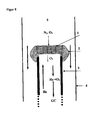
- This permeation apparatus is shown schematically in FIG. 8 and shows the membrane 1, which seals the inner volume of a quartz tube 3 in a gastight manner by means of a seal 2.
- the inner volume of the quartz tube 3 adjoins the surface of the membrane 1, through which oxygen ions selectively pass from the opposite so-called air side 5.
- the inner volume of the quartz tube 3 is purged with helium and / or neon gas, alternatively carbon dioxide, to keep the partial pressure of oxygen passed therethrough low.
- the jacket 4 surrounds the air side 5, on which an oxygen-containing gas, in this case air, comes into contact with the membrane 1.
- an oxygen-containing gas in this case air
- the purge gas is conducted from the inner volume of the quartz tube 3 to the gas chromatography.
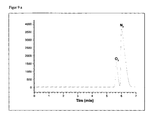
- the gas chromatograph (Agilent 6890) was also used to analyze the oxygen-containing gas on the air side. The separation of the oxygen was carried out at temperatures of 700 to 1000 ° C.
- the particular advantage of the membrane materials according to the invention becomes clear in that the oxygen permeance remains substantially constant above a certain temperature. From a temperature of about 925 ° C, therefore, the oxygen flux no longer increases significantly, which makes this oxide ceramic particularly suitable for use as a membrane ceramic for exothermic reactions on the permeate side, for example oxidation reactions.
- the increase in oxygen flux above 925 ° C is preferably below 5%, more preferably below 2%. Therefore, the oxide ceramic according to the invention reduces or avoids the unwanted runaway in the reactor discussed in connection with cobalt-containing perovskite materials in the event of temperature fluctuations, for example in the case of oxidation reactions on the permeate side.
- the stability of the oxide ceramic with perovskite structure according to the invention was investigated on the example of Ba 0.5 Sr 0.5 Fe 0.8 Zn 0.2 O 3 - ⁇ in a high-temperature flow cell by means of X-ray diffractometry.
- the holding times at the respectively indicated temperature amounted to 70 min, the heating rate and cooling rate were in each case 5 K / min.
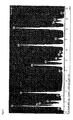
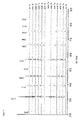
- the results are shown in Figure 5 and show that the perovskite structure is maintained at least up to a temperature of 1000 ° C in the presence of air.
- a degradation of the perovskite structure of the oxide ceramic according to the invention does not occur, so that a change, for example a decrease in the transport of oxygen ions through a membrane made therefrom, is not to be expected.
- Perovskite composed according to the invention can be produced by one of the described production processes with a particle size of about 1 ⁇ m. Tablets, monoliths, capillaries or fibers can be shaped, for example by Making pressing or spinning. For spinning, perovskite is formulated in an amount of 65% by weight with an organic processing agent, such as Carbowax, to a plastically deformable mass which can be spun. Fibers having an outer diameter of 0.8 mm, an inner diameter of 0.6 mm and a wall thickness of 100 ⁇ m were produced.
- an organic processing agent such as Carbowax
- perovskite according to the invention is formulated to a mass fraction of 75% with an organic processing agent to form a plastically deformable mass.
- the outer diameter was 3 mm
- the inner diameter 2.2 mm with a wall thickness of 0.4 mm.
- the fibers and capillaries thus produced were sintered by annealing in air at about 1210 ° C to a dense solid which is permeable to oxygen ions.
- the foreign gas flux determined for nitrogen is less than 10 -3 mL / cm 2 membrane area and minute.
- an oxygen flux of 4.5 mL / min and cm 2 fiber surface was determined for a wall thickness of 120 ⁇ m at 920 ° C.
- the preparation of Synthesis gas from methane shown in which the oxygen is separated from the oxidation of air and passes through the oxide ceramic according to the invention in membrane form on the permeate side at which the oxidation of the hydrocarbon proceeds.
- the membrane according to the invention can be introduced into a membrane reactor in the form of capillaries, fibers, plates or monoliths.
- the corresponding conversion of natural gas to so-called synthesis gas proceeds according to the equation CH 4 + 1 ⁇ 2 O 2 ⁇ CO + 2H 2 .
- the mechanical stability of the membrane in the reducing methane atmosphere with low oxygen partial pressure (10 -17 bar) with simultaneous high oxygen flux through the membrane is an important property.
- a membrane of inventive perovskite material, obtainable according to Example 1 in the form of a membrane in a membrane reactor for the partial oxidation of methane was used.
- the membrane had a thickness of 1.25 mm.
- the partial oxidation of methane was carried out, with a nickel-based catalyst present on the permeate side.
- the reaction conditions were a purge gas flow of 5 mL / min methane, 4.5 mL / min helium, 0.5 mL / min neon, on the air side an air flow of 150 mL / min at 900 ° C.
- the membrane according to the invention in combination with the nickel-based catalyst showed a CO selectivity of 98.3%.
- the methane conversion reached 60%
- the H 2 / CO ratio was 1.75
- the oxygen flux through the membrane was 2.55 mL / min / cm 2 .
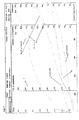
- the measured values are shown in Figure 6, in which the right ordinate indicates the oxygen flux, the left ordinate, the CO selectivity, the methane conversion and CO 2 selectivity.
- a saturated hydrocarbon may also be converted to an unsaturated by oxidative dehydrogenation, for example, ethane to ethylene according to the equation C 2 H 6 + 1 ⁇ 2O 2 ⁇ C 2 H 4 + H 2 O.
- oxidative dehydrogenation for example, ethane to ethylene
- the reaction was carried out at 650 ° C selectivities for ethylene of 90%, found at 800 ° C of 85%. At a temperature of 800 ° C, the yield of ethylene was 68%.
- natural gas can be converted by oxidative coupling according to the equation 2CH 4 + 1 ⁇ 2O 2 ⁇ C 2 H 4 + H 2 O to higher hydrocarbons.
- oxidative coupling of methane at a reaction temperature of 800 ° C a selectivity for C 2+ of about 70%, at 900 ° C, a selectivity for C 2+ of about 50% could be determined.
- the highest specific yields of C 2+ were about 30%.
- catalysts based on Li and La doped nickel on alumina are used, with which a methane conversion of 97% with a selectivity for CO of 98% can be achieved.
- catalysts based on noble metals may be used, e.g. Pt and / or Ru on alumina or titania supports.
- Example 7 Oxidation of hydrocarbon gas with oxygen from water.
- oxygen-containing gaseous compounds are at the operating temperatures of this oxide ceramic in addition to air and water and / or sulfur dioxide and / or nitrogen oxides.
- the oxygen-containing compound is represented here by water, which is present on the one (air) side of the oxide ceramic membrane according to the invention.
- a noticeable decomposition of the water takes place according to the equation H 2 O ⁇ H 2 + 1 ⁇ 2 O 2 , whereby the partial pressure of the hydrogen is approx. 2 x 10 -3 bar, that of the oxygen approx . 3 bar.
- the opposite side of the membrane is the permeate side where hydrocarbon is present, for example, methane. Methane is converted to synthesis gas, thereby reducing the partial pressure of the oxygen on the permeate side of the membrane adjacent to the reaction space of this oxidation reaction to about 10 -18 bar.
- This way will a gradient of the oxygen partial pressure between the air side contacting the oxygen-containing gas and the permeate side of the membrane of about 10 -15 bar, which is sufficient to accelerate the decomposition of the water as a source of the oxygen for the oxidation reaction of the hydrocarbon such that the resulting oxygen permeates continuously through the membrane and oxidizes the methane to synthesis gas on the reaction and permeate side.
- On the air side of the membrane, which is contacted by the oxygen-containing gas remains in mixture with gaseous water hydrogen gas, which may have a sufficiently high quality for operating fuel cells.
- Example 8 Oxidation of Hydrocarbon While Obtaining Electrical Energy
- oxide ceramics according to the invention are applied as a thin layer (50 ⁇ m) to yttrium-stabilized zirconium oxide with a layer thickness of 300 ⁇ m on both sides.
- the yttrium-stabilized zirconia is conductive to oxygen anions but not to electrons.
- the two applied on opposite surfaces of the YSZ layer layers of inventive oxide ceramic are contacted electrically.
- This three-layered membrane is impinged by air as an oxygen-containing gas, the opposite permeate side of the three-layer membrane by a hydrocarbon, for example methane.
- a hydrocarbon for example methane.
- This methane is oxidized to synthesis gas.
- the oxygen required for this oxidation is separated from the air, migrates in the form of oxygen anions through the three-layer membrane and forms an electrical potential.
- Example 9 Production of liquid hydrocarbons using the oxide ceramic of the invention.
- Synthesis gas produced according to Example 6 by partial oxidation of methane with oxygen separated from the air is catalytically using the inventive Oxide ceramics, for example, by oxidative coupling, converted to liquid fuels, such as methanol or sulfur-free liquid hydrocarbons such as gasoline or diesel.
- liquid fuels such as methanol or sulfur-free liquid hydrocarbons such as gasoline or diesel.
- Such diesel fuel is very high quality, since it has cetane numbers greater than 70, consists of 99% paraffins, is poor in aromatics and can be considered sulfur-free with sulfur below 1 ppm.
- the synthesis gas produced in the examples can be ideally implemented as a fuel in fuel cells, which operate in a temperature range of 650 ° C to 950 ° C or more with oxide ceramics according to the invention in the three-layer structure with electrically insulating intermediate layer according to Example 8.
- the synthesis gas has the advantage that deposits of carbon are avoided at the anode of such a fuel cell, which occur for example when using methane or longer-chain hydrocarbons.
Landscapes
- Chemical & Material Sciences (AREA)
- Engineering & Computer Science (AREA)
- Chemical Kinetics & Catalysis (AREA)
- Inorganic Chemistry (AREA)
- Organic Chemistry (AREA)
- Manufacturing & Machinery (AREA)
- Materials Engineering (AREA)
- Combustion & Propulsion (AREA)
- Ceramic Engineering (AREA)
- Structural Engineering (AREA)
- Sustainable Energy (AREA)
- Electrochemistry (AREA)
- General Chemical & Material Sciences (AREA)
- Sustainable Development (AREA)
- Life Sciences & Earth Sciences (AREA)
- Analytical Chemistry (AREA)
- Health & Medical Sciences (AREA)
- General Health & Medical Sciences (AREA)
- Separation Using Semi-Permeable Membranes (AREA)
- Compositions Of Oxide Ceramics (AREA)
- Inorganic Compounds Of Heavy Metals (AREA)
Priority Applications (1)
| Application Number | Priority Date | Filing Date | Title |
|---|---|---|---|
| EP05102708A EP1630148A3 (fr) | 2004-08-28 | 2005-04-06 | Céramique oxydée qui transporte d'oxygène |
Applications Claiming Priority (2)
| Application Number | Priority Date | Filing Date | Title |
|---|---|---|---|
| EP04020506 | 2004-08-28 | ||
| EP05102708A EP1630148A3 (fr) | 2004-08-28 | 2005-04-06 | Céramique oxydée qui transporte d'oxygène |
Publications (2)
| Publication Number | Publication Date |
|---|---|
| EP1630148A2 true EP1630148A2 (fr) | 2006-03-01 |
| EP1630148A3 EP1630148A3 (fr) | 2006-05-24 |
Family
ID=34939165
Family Applications (1)
| Application Number | Title | Priority Date | Filing Date |
|---|---|---|---|
| EP05102708A Withdrawn EP1630148A3 (fr) | 2004-08-28 | 2005-04-06 | Céramique oxydée qui transporte d'oxygène |
Country Status (1)
| Country | Link |
|---|---|
| EP (1) | EP1630148A3 (fr) |
Cited By (3)
| Publication number | Priority date | Publication date | Assignee | Title |
|---|---|---|---|---|
| EP1847311A1 (fr) * | 2006-04-19 | 2007-10-24 | Universität Hannover | Membrane composite |
| CN103304228A (zh) * | 2012-03-16 | 2013-09-18 | 西北师范大学 | 自蔓延燃烧合成钯铜铁氧体纳米粉体的方法 |
| CN111389242A (zh) * | 2020-03-19 | 2020-07-10 | 上海大学 | 无钴抗co2毒化的高透氧量双相透氧膜材料、其制备方法和应用 |
Family Cites Families (3)
| Publication number | Priority date | Publication date | Assignee | Title |
|---|---|---|---|---|
| JPH0644991A (ja) * | 1992-07-27 | 1994-02-18 | Ngk Insulators Ltd | 固体電解質型燃料電池用インターコネクターの製造方法 |
| US6605316B1 (en) * | 1999-07-31 | 2003-08-12 | The Regents Of The University Of California | Structures and fabrication techniques for solid state electrochemical devices |
| US20040214070A1 (en) * | 2003-04-28 | 2004-10-28 | Simner Steven P. | Low sintering lanthanum ferrite materials for use as solid oxide fuel cell cathodes and oxygen reduction electrodes and other electrochemical devices |
-
2005
- 2005-04-06 EP EP05102708A patent/EP1630148A3/fr not_active Withdrawn
Cited By (5)
| Publication number | Priority date | Publication date | Assignee | Title |
|---|---|---|---|---|
| EP1847311A1 (fr) * | 2006-04-19 | 2007-10-24 | Universität Hannover | Membrane composite |
| WO2007118902A3 (fr) * | 2006-04-19 | 2008-04-10 | Leibniz Uni Hannover | Membrane composite |
| CN103304228A (zh) * | 2012-03-16 | 2013-09-18 | 西北师范大学 | 自蔓延燃烧合成钯铜铁氧体纳米粉体的方法 |
| CN111389242A (zh) * | 2020-03-19 | 2020-07-10 | 上海大学 | 无钴抗co2毒化的高透氧量双相透氧膜材料、其制备方法和应用 |
| CN111389242B (zh) * | 2020-03-19 | 2022-08-05 | 上海大学 | 无钴抗co2毒化的高透氧量双相透氧膜材料、其制备方法和应用 |
Also Published As
| Publication number | Publication date |
|---|---|
| EP1630148A3 (fr) | 2006-05-24 |
Similar Documents
| Publication | Publication Date | Title |
|---|---|---|
| DE69033969T2 (de) | Komponenten für elektrochemische Zellen und ihre Verwendung in Sauerstofftrennung | |
| DE60024856T2 (de) | Keramische membranen für katalytische membranreaktoren mit hohen ionischen leitfähigkeiten und niedrigen ausdehnungseigenschaften | |
| DE69801053T3 (de) | Autothermer reaktor mit einer sauerstoffionen leitenden dichten keramischen membran und dessen verwendung in einem verfahren zur erzeugung von synthesegas | |
| DE69026752T2 (de) | Feste Mehrkomponenten-Membranen, elektrochemischer Reaktor und Anwendung dieser Membranen und dieses Reaktors für Oxidationsreaktionen | |
| EP1246696B1 (fr) | Reactions d'oxydation a l'aide de membranes a conduction selective des ions d'oxygene et a conduction simultanee des electrons | |
| DE69511787T2 (de) | Hohe Temperatur beständiger Oxydationskatalysator seine Herstellung und Anwendung für Verbrennungsverfahren | |
| DE69824620T2 (de) | Katalytischer membranreaktor mit einem drei-dimensionalen katalysator in der oxidationszone | |
| DE60103911T2 (de) | Zusammengesetzte leitende membranen für die synthesegas produktion | |
| DE60017780T2 (de) | Membrane und deren verwendung | |
| EP2049249B1 (fr) | Catalyseur pour transformation cryogène et procédé de transformation cryogène de monoxyde de carbone et d'eau en dioxyde de carbone et hydrogène | |
| DE60020772T2 (de) | Wasserstoffdurchlässigkeit durch protonen- und elektronenleitende Mischwerkstoffe | |
| EP3201126B1 (fr) | Ensemble d'électrode à membrane, réacteur pourvu de l'ensemble d'électrode à membrane et procede de séparation de l'hydrogene | |
| EP1968738B1 (fr) | Reacteur d'oxydation et procede d'oxydation | |
| EP2417084B1 (fr) | Procédé de transformation de gaz naturel en hydrocarbures aromatiques avec séparation électrochimique d'hydrogène, avec production concomitante de courant électrique et d'hydrogène | |
| DE10107331A1 (de) | Katalysatorzusammensetzung | |
| DE102009039149A1 (de) | Katalytische Membranmaterial-Beschichtung | |
| DE69918005T2 (de) | Verfahren und Vorrichtung zur selektiven Entfernung von Kohlenmonoxid | |
| WO2010115765A1 (fr) | Procédé de transformation de gaz naturel en hydrocarbures aromatiques, avec séparation électrochimique d'hydrogène | |
| DE69311832T2 (de) | Verfahren zur Reduktion von Stickoxiden | |
| EP2595729B1 (fr) | Oxyde mixte conducteur tolérant au co2 et son utilisation pour la séparation d'hydrogène | |
| DE69819210T2 (de) | Membrane und ihre anwendung | |
| DE69600851T3 (de) | Neue Zusammensetzungen mit der Fähigkeit zu funktionieren unter hohem Kohlendioxidpartialdrucken zur Verwendung in Feststoffvorrichtungen zur Herstellung von Sauerstoff | |
| EP2621855A2 (fr) | Procédé de retraitement d'un effluent gazeux provenant d'une installation de production d'hydroxylamine ou de sels d'hydroxylammonium | |
| DE10392987T5 (de) | Chemisches Reaktionssystem des galvanischen Zellentyps, Verfahren zur Aktivierung dieses und Verfahren zur Reaktion | |
| DE69603762T2 (de) | Elektrochemische Membrane auf Basis von Zusammensetzungen mit der Fähigkeit zu funktionieren unter hohen Sauerstoffpartialdrucken zur Verwendung in Feststoffvorrichtungen zur Herstellung von Sauerstoff |
Legal Events
| Date | Code | Title | Description |
|---|---|---|---|
| PUAI | Public reference made under article 153(3) epc to a published international application that has entered the european phase |
Free format text: ORIGINAL CODE: 0009012 |
|
| AK | Designated contracting states |
Kind code of ref document: A2 Designated state(s): AT BE BG CH CY CZ DE DK EE ES FI FR GB GR HU IE IS IT LI LT LU MC NL PL PT RO SE SI SK TR |
|
| AX | Request for extension of the european patent |
Extension state: AL BA HR LV MK YU |
|
| PUAL | Search report despatched |
Free format text: ORIGINAL CODE: 0009013 |
|
| AK | Designated contracting states |
Kind code of ref document: A3 Designated state(s): AT BE BG CH CY CZ DE DK EE ES FI FR GB GR HU IE IS IT LI LT LU MC NL PL PT RO SE SI SK TR |
|
| AX | Request for extension of the european patent |
Extension state: AL BA HR LV MK YU |
|
| RIC1 | Information provided on ipc code assigned before grant |
Ipc: H01M 8/12 20060101ALI20060401BHEP Ipc: B01D 71/02 20060101ALI20060401BHEP Ipc: C04B 35/26 20060101AFI20050429BHEP |
|
| 17P | Request for examination filed |
Effective date: 20061113 |
|
| AKX | Designation fees paid |
Designated state(s): AT BE BG CH CY CZ DE DK EE ES FI FR GB GR HU IE IS IT LI LT LU MC NL PL PT RO SE SI SK TR |
|
| 17Q | First examination report despatched |
Effective date: 20071128 |
|
| GRAP | Despatch of communication of intention to grant a patent |
Free format text: ORIGINAL CODE: EPIDOSNIGR1 |
|
| STAA | Information on the status of an ep patent application or granted ep patent |
Free format text: STATUS: THE APPLICATION IS DEEMED TO BE WITHDRAWN |
|
| 18D | Application deemed to be withdrawn |
Effective date: 20110812 |