EP1637613A1 - Formation de motifs électrochimique sur multicanal ensembles de microélectrodes destinés à des applications de biodétection. - Google Patents
Formation de motifs électrochimique sur multicanal ensembles de microélectrodes destinés à des applications de biodétection. Download PDFInfo
- Publication number
- EP1637613A1 EP1637613A1 EP04022317A EP04022317A EP1637613A1 EP 1637613 A1 EP1637613 A1 EP 1637613A1 EP 04022317 A EP04022317 A EP 04022317A EP 04022317 A EP04022317 A EP 04022317A EP 1637613 A1 EP1637613 A1 EP 1637613A1
- Authority
- EP
- European Patent Office
- Prior art keywords
- macromolecules
- anyone
- protein
- adlayer
- probes
- Prior art date
- Legal status (The legal status is an assumption and is not a legal conclusion. Google has not performed a legal analysis and makes no representation as to the accuracy of the status listed.)
- Withdrawn
Links
- 238000000059 patterning Methods 0.000 title claims abstract description 5
- 108090000623 proteins and genes Proteins 0.000 claims abstract description 55
- 102000004169 proteins and genes Human genes 0.000 claims abstract description 54
- 239000002099 adlayer Substances 0.000 claims abstract description 50
- 229920002521 macromolecule Polymers 0.000 claims abstract description 46
- 229920000642 polymer Polymers 0.000 claims abstract description 42
- 238000000034 method Methods 0.000 claims abstract description 35
- 238000003795 desorption Methods 0.000 claims abstract description 14
- 238000001179 sorption measurement Methods 0.000 claims abstract description 14
- 235000018102 proteins Nutrition 0.000 claims description 52
- 239000000523 sample Substances 0.000 claims description 35
- -1 poly(L-lysine) Polymers 0.000 claims description 28
- 238000002493 microarray Methods 0.000 claims description 20
- BQCADISMDOOEFD-UHFFFAOYSA-N Silver Chemical compound [Ag] BQCADISMDOOEFD-UHFFFAOYSA-N 0.000 claims description 19
- 229910052709 silver Inorganic materials 0.000 claims description 19
- 239000004332 silver Substances 0.000 claims description 19
- VYPSYNLAJGMNEJ-UHFFFAOYSA-N Silicium dioxide Chemical compound O=[Si]=O VYPSYNLAJGMNEJ-UHFFFAOYSA-N 0.000 claims description 14
- 235000014633 carbohydrates Nutrition 0.000 claims description 11
- 150000001720 carbohydrates Chemical class 0.000 claims description 11
- 125000000524 functional group Chemical group 0.000 claims description 11
- YBJHBAHKTGYVGT-ZKWXMUAHSA-N (+)-Biotin Chemical compound N1C(=O)N[C@@H]2[C@H](CCCCC(=O)O)SC[C@@H]21 YBJHBAHKTGYVGT-ZKWXMUAHSA-N 0.000 claims description 10
- BASFCYQUMIYNBI-UHFFFAOYSA-N platinum Chemical compound [Pt] BASFCYQUMIYNBI-UHFFFAOYSA-N 0.000 claims description 10
- 229910052814 silicon oxide Inorganic materials 0.000 claims description 10
- AMGQUBHHOARCQH-UHFFFAOYSA-N indium;oxotin Chemical compound [In].[Sn]=O AMGQUBHHOARCQH-UHFFFAOYSA-N 0.000 claims description 9
- 229920001223 polyethylene glycol Polymers 0.000 claims description 9
- 230000010287 polarization Effects 0.000 claims description 8
- 238000007306 functionalization reaction Methods 0.000 claims description 7
- PNEYBMLMFCGWSK-UHFFFAOYSA-N Alumina Chemical compound [O-2].[O-2].[O-2].[Al+3].[Al+3] PNEYBMLMFCGWSK-UHFFFAOYSA-N 0.000 claims description 6
- 125000003178 carboxy group Chemical group [H]OC(*)=O 0.000 claims description 6
- 229960002685 biotin Drugs 0.000 claims description 5
- 235000020958 biotin Nutrition 0.000 claims description 5
- 239000011616 biotin Substances 0.000 claims description 5
- 229910052697 platinum Inorganic materials 0.000 claims description 5
- 108090000765 processed proteins & peptides Proteins 0.000 claims description 5
- AFOSIXZFDONLBT-UHFFFAOYSA-N divinyl sulfone Chemical compound C=CS(=O)(=O)C=C AFOSIXZFDONLBT-UHFFFAOYSA-N 0.000 claims description 3
- 150000002148 esters Chemical class 0.000 claims description 3
- 125000004356 hydroxy functional group Chemical group O* 0.000 claims description 3
- 238000002955 isolation Methods 0.000 claims description 3
- 125000005439 maleimidyl group Chemical group C1(C=CC(N1*)=O)=O 0.000 claims description 3
- 238000005259 measurement Methods 0.000 claims description 3
- MGFYIUFZLHCRTH-UHFFFAOYSA-N nitrilotriacetic acid Chemical compound OC(=O)CN(CC(O)=O)CC(O)=O MGFYIUFZLHCRTH-UHFFFAOYSA-N 0.000 claims description 3
- 150000003573 thiols Chemical class 0.000 claims description 3
- 229910052581 Si3N4 Inorganic materials 0.000 claims description 2
- 229910021607 Silver chloride Inorganic materials 0.000 claims description 2
- GWEVSGVZZGPLCZ-UHFFFAOYSA-N Titan oxide Chemical compound O=[Ti]=O GWEVSGVZZGPLCZ-UHFFFAOYSA-N 0.000 claims description 2
- RTAQQCXQSZGOHL-UHFFFAOYSA-N Titanium Chemical compound [Ti] RTAQQCXQSZGOHL-UHFFFAOYSA-N 0.000 claims description 2
- NRTOMJZYCJJWKI-UHFFFAOYSA-N Titanium nitride Chemical compound [Ti]#N NRTOMJZYCJJWKI-UHFFFAOYSA-N 0.000 claims description 2
- 239000004411 aluminium Substances 0.000 claims description 2
- 229910052782 aluminium Inorganic materials 0.000 claims description 2
- XAGFODPZIPBFFR-UHFFFAOYSA-N aluminium Chemical compound [Al] XAGFODPZIPBFFR-UHFFFAOYSA-N 0.000 claims description 2
- 229920001940 conductive polymer Polymers 0.000 claims description 2
- 239000011521 glass Substances 0.000 claims description 2
- PCHJSUWPFVWCPO-UHFFFAOYSA-N gold Chemical compound [Au] PCHJSUWPFVWCPO-UHFFFAOYSA-N 0.000 claims description 2
- 229910052737 gold Inorganic materials 0.000 claims description 2
- 239000010931 gold Substances 0.000 claims description 2
- 238000010438 heat treatment Methods 0.000 claims description 2
- 229910003437 indium oxide Inorganic materials 0.000 claims description 2
- PJXISJQVUVHSOJ-UHFFFAOYSA-N indium(iii) oxide Chemical compound [O-2].[O-2].[O-2].[In+3].[In+3] PJXISJQVUVHSOJ-UHFFFAOYSA-N 0.000 claims description 2
- 229910052741 iridium Inorganic materials 0.000 claims description 2
- GKOZUEZYRPOHIO-UHFFFAOYSA-N iridium atom Chemical compound [Ir] GKOZUEZYRPOHIO-UHFFFAOYSA-N 0.000 claims description 2
- 229910052758 niobium Inorganic materials 0.000 claims description 2
- 239000010955 niobium Substances 0.000 claims description 2
- GUCVJGMIXFAOAE-UHFFFAOYSA-N niobium atom Chemical compound [Nb] GUCVJGMIXFAOAE-UHFFFAOYSA-N 0.000 claims description 2
- 229910000484 niobium oxide Inorganic materials 0.000 claims description 2
- URLJKFSTXLNXLG-UHFFFAOYSA-N niobium(5+);oxygen(2-) Chemical compound [O-2].[O-2].[O-2].[O-2].[O-2].[Nb+5].[Nb+5] URLJKFSTXLNXLG-UHFFFAOYSA-N 0.000 claims description 2
- 230000003287 optical effect Effects 0.000 claims description 2
- BPUBBGLMJRNUCC-UHFFFAOYSA-N oxygen(2-);tantalum(5+) Chemical compound [O-2].[O-2].[O-2].[O-2].[O-2].[Ta+5].[Ta+5] BPUBBGLMJRNUCC-UHFFFAOYSA-N 0.000 claims description 2
- RVTZCBVAJQQJTK-UHFFFAOYSA-N oxygen(2-);zirconium(4+) Chemical compound [O-2].[O-2].[Zr+4] RVTZCBVAJQQJTK-UHFFFAOYSA-N 0.000 claims description 2
- 229910052703 rhodium Inorganic materials 0.000 claims description 2
- 239000010948 rhodium Substances 0.000 claims description 2
- MHOVAHRLVXNVSD-UHFFFAOYSA-N rhodium atom Chemical compound [Rh] MHOVAHRLVXNVSD-UHFFFAOYSA-N 0.000 claims description 2
- HQVNEWCFYHHQES-UHFFFAOYSA-N silicon nitride Chemical compound N12[Si]34N5[Si]62N3[Si]51N64 HQVNEWCFYHHQES-UHFFFAOYSA-N 0.000 claims description 2
- HKZLPVFGJNLROG-UHFFFAOYSA-M silver monochloride Chemical compound [Cl-].[Ag+] HKZLPVFGJNLROG-UHFFFAOYSA-M 0.000 claims description 2
- 229910001220 stainless steel Inorganic materials 0.000 claims description 2
- 239000010935 stainless steel Substances 0.000 claims description 2
- 229910001936 tantalum oxide Inorganic materials 0.000 claims description 2
- XOLBLPGZBRYERU-UHFFFAOYSA-N tin dioxide Chemical compound O=[Sn]=O XOLBLPGZBRYERU-UHFFFAOYSA-N 0.000 claims description 2
- 229910001887 tin oxide Inorganic materials 0.000 claims description 2
- 239000010936 titanium Substances 0.000 claims description 2
- 229910052719 titanium Inorganic materials 0.000 claims description 2
- OGIDPMRJRNCKJF-UHFFFAOYSA-N titanium oxide Inorganic materials [Ti]=O OGIDPMRJRNCKJF-UHFFFAOYSA-N 0.000 claims description 2
- ZVWKZXLXHLZXLS-UHFFFAOYSA-N zirconium nitride Chemical compound [Zr]#N ZVWKZXLXHLZXLS-UHFFFAOYSA-N 0.000 claims description 2
- 229910001928 zirconium oxide Inorganic materials 0.000 claims description 2
- 239000000377 silicon dioxide Substances 0.000 claims 2
- 229910052681 coesite Inorganic materials 0.000 claims 1
- 229910052906 cristobalite Inorganic materials 0.000 claims 1
- 229910052682 stishovite Inorganic materials 0.000 claims 1
- 229910052905 tridymite Inorganic materials 0.000 claims 1
- 230000003993 interaction Effects 0.000 abstract description 10
- 238000003491 array Methods 0.000 abstract description 3
- 230000009141 biological interaction Effects 0.000 abstract 1
- 230000004850 protein–protein interaction Effects 0.000 abstract 1
- 108010090804 Streptavidin Proteins 0.000 description 11
- JKMHFZQWWAIEOD-UHFFFAOYSA-N 2-[4-(2-hydroxyethyl)piperazin-1-yl]ethanesulfonic acid Chemical compound OCC[NH+]1CCN(CCS([O-])(=O)=O)CC1 JKMHFZQWWAIEOD-UHFFFAOYSA-N 0.000 description 8
- 239000007995 HEPES buffer Substances 0.000 description 7
- 239000000243 solution Substances 0.000 description 7
- 108020004414 DNA Proteins 0.000 description 5
- 238000004519 manufacturing process Methods 0.000 description 5
- 238000006557 surface reaction Methods 0.000 description 5
- SNKAWJBJQDLSFF-NVKMUCNASA-N 1,2-dioleoyl-sn-glycero-3-phosphocholine Chemical compound CCCCCCCC\C=C/CCCCCCCC(=O)OC[C@H](COP([O-])(=O)OCC[N+](C)(C)C)OC(=O)CCCCCCC\C=C/CCCCCCCC SNKAWJBJQDLSFF-NVKMUCNASA-N 0.000 description 4
- ACNUVXZPCIABEX-UHFFFAOYSA-N 3',6'-diaminospiro[2-benzofuran-3,9'-xanthene]-1-one Chemical compound O1C(=O)C2=CC=CC=C2C21C1=CC=C(N)C=C1OC1=CC(N)=CC=C21 ACNUVXZPCIABEX-UHFFFAOYSA-N 0.000 description 4
- XEEYBQQBJWHFJM-UHFFFAOYSA-N Iron Chemical compound [Fe] XEEYBQQBJWHFJM-UHFFFAOYSA-N 0.000 description 4
- 238000000018 DNA microarray Methods 0.000 description 3
- HEMHJVSKTPXQMS-UHFFFAOYSA-M Sodium hydroxide Chemical compound [OH-].[Na+] HEMHJVSKTPXQMS-UHFFFAOYSA-M 0.000 description 3
- 239000007864 aqueous solution Substances 0.000 description 3
- 229940106780 human fibrinogen Drugs 0.000 description 3
- 238000011835 investigation Methods 0.000 description 3
- 239000000463 material Substances 0.000 description 3
- 229920000729 poly(L-lysine) polymer Polymers 0.000 description 3
- PXHVJJICTQNCMI-UHFFFAOYSA-N Nickel Chemical compound [Ni] PXHVJJICTQNCMI-UHFFFAOYSA-N 0.000 description 2
- KDLHZDBZIXYQEI-UHFFFAOYSA-N Palladium Chemical compound [Pd] KDLHZDBZIXYQEI-UHFFFAOYSA-N 0.000 description 2
- FAPWRFPIFSIZLT-UHFFFAOYSA-M Sodium chloride Chemical compound [Na+].[Cl-] FAPWRFPIFSIZLT-UHFFFAOYSA-M 0.000 description 2
- 230000004913 activation Effects 0.000 description 2
- 235000001014 amino acid Nutrition 0.000 description 2
- 150000001413 amino acids Chemical class 0.000 description 2
- 238000001218 confocal laser scanning microscopy Methods 0.000 description 2
- 238000000942 confocal micrograph Methods 0.000 description 2
- 229940079593 drug Drugs 0.000 description 2
- 239000003814 drug Substances 0.000 description 2
- 238000000799 fluorescence microscopy Methods 0.000 description 2
- 229910052742 iron Inorganic materials 0.000 description 2
- 125000005647 linker group Chemical group 0.000 description 2
- 238000003499 nucleic acid array Methods 0.000 description 2
- 108020004707 nucleic acids Proteins 0.000 description 2
- 102000039446 nucleic acids Human genes 0.000 description 2
- 150000007523 nucleic acids Chemical class 0.000 description 2
- 229920002530 polyetherether ketone Polymers 0.000 description 2
- 239000002243 precursor Substances 0.000 description 2
- 102000004196 processed proteins & peptides Human genes 0.000 description 2
- 239000012498 ultrapure water Substances 0.000 description 2
- BTBUEUYNUDRHOZ-UHFFFAOYSA-N Borate Chemical compound [O-]B([O-])[O-] BTBUEUYNUDRHOZ-UHFFFAOYSA-N 0.000 description 1
- RYGMFSIKBFXOCR-UHFFFAOYSA-N Copper Chemical compound [Cu] RYGMFSIKBFXOCR-UHFFFAOYSA-N 0.000 description 1
- LYCAIKOWRPUZTN-UHFFFAOYSA-N Ethylene glycol Chemical group OCCO LYCAIKOWRPUZTN-UHFFFAOYSA-N 0.000 description 1
- 102000008946 Fibrinogen Human genes 0.000 description 1
- 108010049003 Fibrinogen Proteins 0.000 description 1
- RAXXELZNTBOGNW-UHFFFAOYSA-O Imidazolium Chemical group C1=C[NH+]=CN1 RAXXELZNTBOGNW-UHFFFAOYSA-O 0.000 description 1
- 125000001176 L-lysyl group Chemical group [H]N([H])[C@]([H])(C(=O)[*])C([H])([H])C([H])([H])C([H])([H])C(N([H])[H])([H])[H] 0.000 description 1
- 108010052285 Membrane Proteins Proteins 0.000 description 1
- 102000018697 Membrane Proteins Human genes 0.000 description 1
- 206010028980 Neoplasm Diseases 0.000 description 1
- 108091028043 Nucleic acid sequence Proteins 0.000 description 1
- 229910019142 PO4 Inorganic materials 0.000 description 1
- 108020004518 RNA Probes Proteins 0.000 description 1
- 239000003391 RNA probe Substances 0.000 description 1
- 229910000831 Steel Inorganic materials 0.000 description 1
- QAOWNCQODCNURD-UHFFFAOYSA-L Sulfate Chemical group [O-]S([O-])(=O)=O QAOWNCQODCNURD-UHFFFAOYSA-L 0.000 description 1
- 229910045601 alloy Inorganic materials 0.000 description 1
- 239000000956 alloy Substances 0.000 description 1
- 150000001412 amines Chemical group 0.000 description 1
- 125000003277 amino group Chemical group 0.000 description 1
- 238000013459 approach Methods 0.000 description 1
- 238000004061 bleaching Methods 0.000 description 1
- ZADPBFCGQRWHPN-UHFFFAOYSA-N boronic acid Chemical compound OBO ZADPBFCGQRWHPN-UHFFFAOYSA-N 0.000 description 1
- 239000007853 buffer solution Substances 0.000 description 1
- 201000011510 cancer Diseases 0.000 description 1
- 150000007942 carboxylates Chemical group 0.000 description 1
- 238000006243 chemical reaction Methods 0.000 description 1
- 239000003795 chemical substances by application Substances 0.000 description 1
- 229910017052 cobalt Inorganic materials 0.000 description 1
- 239000010941 cobalt Substances 0.000 description 1
- GUTLYIVDDKVIGB-UHFFFAOYSA-N cobalt atom Chemical compound [Co] GUTLYIVDDKVIGB-UHFFFAOYSA-N 0.000 description 1
- 150000001875 compounds Chemical class 0.000 description 1
- 229910052802 copper Inorganic materials 0.000 description 1
- 239000010949 copper Substances 0.000 description 1
- 238000003851 corona treatment Methods 0.000 description 1
- 238000007405 data analysis Methods 0.000 description 1
- 230000001419 dependent effect Effects 0.000 description 1
- 238000007598 dipping method Methods 0.000 description 1
- 201000010099 disease Diseases 0.000 description 1
- 208000037265 diseases, disorders, signs and symptoms Diseases 0.000 description 1
- 230000000694 effects Effects 0.000 description 1
- 230000005684 electric field Effects 0.000 description 1
- 238000001962 electrophoresis Methods 0.000 description 1
- 230000005284 excitation Effects 0.000 description 1
- 238000002474 experimental method Methods 0.000 description 1
- 229940012952 fibrinogen Drugs 0.000 description 1
- 238000009396 hybridization Methods 0.000 description 1
- 150000002466 imines Chemical class 0.000 description 1
- 208000015181 infectious disease Diseases 0.000 description 1
- 239000012528 membrane Substances 0.000 description 1
- 229910044991 metal oxide Inorganic materials 0.000 description 1
- 150000004706 metal oxides Chemical class 0.000 description 1
- 239000003068 molecular probe Substances 0.000 description 1
- 229910052759 nickel Inorganic materials 0.000 description 1
- 150000004767 nitrides Chemical class 0.000 description 1
- 239000012811 non-conductive material Substances 0.000 description 1
- 229910052763 palladium Inorganic materials 0.000 description 1
- 238000002161 passivation Methods 0.000 description 1
- NBIIXXVUZAFLBC-UHFFFAOYSA-K phosphate Chemical compound [O-]P([O-])([O-])=O NBIIXXVUZAFLBC-UHFFFAOYSA-K 0.000 description 1
- 239000010452 phosphate Substances 0.000 description 1
- UEZVMMHDMIWARA-UHFFFAOYSA-M phosphonate Chemical compound [O-]P(=O)=O UEZVMMHDMIWARA-UHFFFAOYSA-M 0.000 description 1
- 239000004417 polycarbonate Substances 0.000 description 1
- 229920000515 polycarbonate Polymers 0.000 description 1
- JUJWROOIHBZHMG-UHFFFAOYSA-O pyridinium Chemical group C1=CC=[NH+]C=C1 JUJWROOIHBZHMG-UHFFFAOYSA-O 0.000 description 1
- 230000000171 quenching effect Effects 0.000 description 1
- 230000001105 regulatory effect Effects 0.000 description 1
- 125000000467 secondary amino group Chemical class [H]N([*:1])[*:2] 0.000 description 1
- 230000035945 sensitivity Effects 0.000 description 1
- 229910052710 silicon Inorganic materials 0.000 description 1
- 239000010703 silicon Substances 0.000 description 1
- 229920005573 silicon-containing polymer Polymers 0.000 description 1
- 239000011780 sodium chloride Substances 0.000 description 1
- 239000010959 steel Substances 0.000 description 1
- 239000000126 substance Substances 0.000 description 1
- BDHFUVZGWQCTTF-UHFFFAOYSA-M sulfonate Chemical group [O-]S(=O)=O BDHFUVZGWQCTTF-UHFFFAOYSA-M 0.000 description 1
- 238000004381 surface treatment Methods 0.000 description 1
- 229910052715 tantalum Inorganic materials 0.000 description 1
- GUVRBAGPIYLISA-UHFFFAOYSA-N tantalum atom Chemical compound [Ta] GUVRBAGPIYLISA-UHFFFAOYSA-N 0.000 description 1
- XLNZEKHULJKQBA-UHFFFAOYSA-N terbufos Chemical compound CCOP(=S)(OCC)SCSC(C)(C)C XLNZEKHULJKQBA-UHFFFAOYSA-N 0.000 description 1
- WFKWXMTUELFFGS-UHFFFAOYSA-N tungsten Chemical compound [W] WFKWXMTUELFFGS-UHFFFAOYSA-N 0.000 description 1
- 229910052721 tungsten Inorganic materials 0.000 description 1
- 239000010937 tungsten Substances 0.000 description 1
- 229910021642 ultra pure water Inorganic materials 0.000 description 1
- 229910052720 vanadium Inorganic materials 0.000 description 1
- GPPXJZIENCGNKB-UHFFFAOYSA-N vanadium Chemical compound [V]#[V] GPPXJZIENCGNKB-UHFFFAOYSA-N 0.000 description 1
- XLYOFNOQVPJJNP-UHFFFAOYSA-N water Substances O XLYOFNOQVPJJNP-UHFFFAOYSA-N 0.000 description 1
Images


Classifications
-
- B—PERFORMING OPERATIONS; TRANSPORTING
- B01—PHYSICAL OR CHEMICAL PROCESSES OR APPARATUS IN GENERAL
- B01J—CHEMICAL OR PHYSICAL PROCESSES, e.g. CATALYSIS OR COLLOID CHEMISTRY; THEIR RELEVANT APPARATUS
- B01J19/00—Chemical, physical or physico-chemical processes in general; Their relevant apparatus
- B01J19/0046—Sequential or parallel reactions, e.g. for the synthesis of polypeptides or polynucleotides; Apparatus and devices for combinatorial chemistry or for making molecular arrays
-
- B—PERFORMING OPERATIONS; TRANSPORTING
- B01—PHYSICAL OR CHEMICAL PROCESSES OR APPARATUS IN GENERAL
- B01J—CHEMICAL OR PHYSICAL PROCESSES, e.g. CATALYSIS OR COLLOID CHEMISTRY; THEIR RELEVANT APPARATUS
- B01J2219/00—Chemical, physical or physico-chemical processes in general; Their relevant apparatus
- B01J2219/00274—Sequential or parallel reactions; Apparatus and devices for combinatorial chemistry or for making arrays; Chemical library technology
- B01J2219/00277—Apparatus
- B01J2219/00279—Features relating to reactor vessels
- B01J2219/00281—Individual reactor vessels
- B01J2219/00286—Reactor vessels with top and bottom openings
-
- B—PERFORMING OPERATIONS; TRANSPORTING
- B01—PHYSICAL OR CHEMICAL PROCESSES OR APPARATUS IN GENERAL
- B01J—CHEMICAL OR PHYSICAL PROCESSES, e.g. CATALYSIS OR COLLOID CHEMISTRY; THEIR RELEVANT APPARATUS
- B01J2219/00—Chemical, physical or physico-chemical processes in general; Their relevant apparatus
- B01J2219/00274—Sequential or parallel reactions; Apparatus and devices for combinatorial chemistry or for making arrays; Chemical library technology
- B01J2219/00277—Apparatus
- B01J2219/00495—Means for heating or cooling the reaction vessels
-
- B—PERFORMING OPERATIONS; TRANSPORTING
- B01—PHYSICAL OR CHEMICAL PROCESSES OR APPARATUS IN GENERAL
- B01J—CHEMICAL OR PHYSICAL PROCESSES, e.g. CATALYSIS OR COLLOID CHEMISTRY; THEIR RELEVANT APPARATUS
- B01J2219/00—Chemical, physical or physico-chemical processes in general; Their relevant apparatus
- B01J2219/00274—Sequential or parallel reactions; Apparatus and devices for combinatorial chemistry or for making arrays; Chemical library technology
- B01J2219/00277—Apparatus
- B01J2219/00497—Features relating to the solid phase supports
- B01J2219/00527—Sheets
- B01J2219/00531—Sheets essentially square
-
- B—PERFORMING OPERATIONS; TRANSPORTING
- B01—PHYSICAL OR CHEMICAL PROCESSES OR APPARATUS IN GENERAL
- B01J—CHEMICAL OR PHYSICAL PROCESSES, e.g. CATALYSIS OR COLLOID CHEMISTRY; THEIR RELEVANT APPARATUS
- B01J2219/00—Chemical, physical or physico-chemical processes in general; Their relevant apparatus
- B01J2219/00274—Sequential or parallel reactions; Apparatus and devices for combinatorial chemistry or for making arrays; Chemical library technology
- B01J2219/00583—Features relative to the processes being carried out
- B01J2219/00596—Solid-phase processes
-
- B—PERFORMING OPERATIONS; TRANSPORTING
- B01—PHYSICAL OR CHEMICAL PROCESSES OR APPARATUS IN GENERAL
- B01J—CHEMICAL OR PHYSICAL PROCESSES, e.g. CATALYSIS OR COLLOID CHEMISTRY; THEIR RELEVANT APPARATUS
- B01J2219/00—Chemical, physical or physico-chemical processes in general; Their relevant apparatus
- B01J2219/00274—Sequential or parallel reactions; Apparatus and devices for combinatorial chemistry or for making arrays; Chemical library technology
- B01J2219/00583—Features relative to the processes being carried out
- B01J2219/00603—Making arrays on substantially continuous surfaces
- B01J2219/00605—Making arrays on substantially continuous surfaces the compounds being directly bound or immobilised to solid supports
- B01J2219/00608—DNA chips
-
- B—PERFORMING OPERATIONS; TRANSPORTING
- B01—PHYSICAL OR CHEMICAL PROCESSES OR APPARATUS IN GENERAL
- B01J—CHEMICAL OR PHYSICAL PROCESSES, e.g. CATALYSIS OR COLLOID CHEMISTRY; THEIR RELEVANT APPARATUS
- B01J2219/00—Chemical, physical or physico-chemical processes in general; Their relevant apparatus
- B01J2219/00274—Sequential or parallel reactions; Apparatus and devices for combinatorial chemistry or for making arrays; Chemical library technology
- B01J2219/00583—Features relative to the processes being carried out
- B01J2219/00603—Making arrays on substantially continuous surfaces
- B01J2219/00605—Making arrays on substantially continuous surfaces the compounds being directly bound or immobilised to solid supports
- B01J2219/00612—Making arrays on substantially continuous surfaces the compounds being directly bound or immobilised to solid supports the surface being inorganic
-
- B—PERFORMING OPERATIONS; TRANSPORTING
- B01—PHYSICAL OR CHEMICAL PROCESSES OR APPARATUS IN GENERAL
- B01J—CHEMICAL OR PHYSICAL PROCESSES, e.g. CATALYSIS OR COLLOID CHEMISTRY; THEIR RELEVANT APPARATUS
- B01J2219/00—Chemical, physical or physico-chemical processes in general; Their relevant apparatus
- B01J2219/00274—Sequential or parallel reactions; Apparatus and devices for combinatorial chemistry or for making arrays; Chemical library technology
- B01J2219/00583—Features relative to the processes being carried out
- B01J2219/00603—Making arrays on substantially continuous surfaces
- B01J2219/00605—Making arrays on substantially continuous surfaces the compounds being directly bound or immobilised to solid supports
- B01J2219/00614—Delimitation of the attachment areas
- B01J2219/00617—Delimitation of the attachment areas by chemical means
-
- B—PERFORMING OPERATIONS; TRANSPORTING
- B01—PHYSICAL OR CHEMICAL PROCESSES OR APPARATUS IN GENERAL
- B01J—CHEMICAL OR PHYSICAL PROCESSES, e.g. CATALYSIS OR COLLOID CHEMISTRY; THEIR RELEVANT APPARATUS
- B01J2219/00—Chemical, physical or physico-chemical processes in general; Their relevant apparatus
- B01J2219/00274—Sequential or parallel reactions; Apparatus and devices for combinatorial chemistry or for making arrays; Chemical library technology
- B01J2219/00583—Features relative to the processes being carried out
- B01J2219/00603—Making arrays on substantially continuous surfaces
- B01J2219/00605—Making arrays on substantially continuous surfaces the compounds being directly bound or immobilised to solid supports
- B01J2219/00632—Introduction of reactive groups to the surface
- B01J2219/00635—Introduction of reactive groups to the surface by reactive plasma treatment
-
- B—PERFORMING OPERATIONS; TRANSPORTING
- B01—PHYSICAL OR CHEMICAL PROCESSES OR APPARATUS IN GENERAL
- B01J—CHEMICAL OR PHYSICAL PROCESSES, e.g. CATALYSIS OR COLLOID CHEMISTRY; THEIR RELEVANT APPARATUS
- B01J2219/00—Chemical, physical or physico-chemical processes in general; Their relevant apparatus
- B01J2219/00274—Sequential or parallel reactions; Apparatus and devices for combinatorial chemistry or for making arrays; Chemical library technology
- B01J2219/00583—Features relative to the processes being carried out
- B01J2219/00603—Making arrays on substantially continuous surfaces
- B01J2219/00659—Two-dimensional arrays
-
- B—PERFORMING OPERATIONS; TRANSPORTING
- B01—PHYSICAL OR CHEMICAL PROCESSES OR APPARATUS IN GENERAL
- B01J—CHEMICAL OR PHYSICAL PROCESSES, e.g. CATALYSIS OR COLLOID CHEMISTRY; THEIR RELEVANT APPARATUS
- B01J2219/00—Chemical, physical or physico-chemical processes in general; Their relevant apparatus
- B01J2219/00274—Sequential or parallel reactions; Apparatus and devices for combinatorial chemistry or for making arrays; Chemical library technology
- B01J2219/00709—Type of synthesis
- B01J2219/00713—Electrochemical synthesis
-
- B—PERFORMING OPERATIONS; TRANSPORTING
- B01—PHYSICAL OR CHEMICAL PROCESSES OR APPARATUS IN GENERAL
- B01J—CHEMICAL OR PHYSICAL PROCESSES, e.g. CATALYSIS OR COLLOID CHEMISTRY; THEIR RELEVANT APPARATUS
- B01J2219/00—Chemical, physical or physico-chemical processes in general; Their relevant apparatus
- B01J2219/00274—Sequential or parallel reactions; Apparatus and devices for combinatorial chemistry or for making arrays; Chemical library technology
- B01J2219/00718—Type of compounds synthesised
- B01J2219/0072—Organic compounds
- B01J2219/00722—Nucleotides
-
- B—PERFORMING OPERATIONS; TRANSPORTING
- B01—PHYSICAL OR CHEMICAL PROCESSES OR APPARATUS IN GENERAL
- B01J—CHEMICAL OR PHYSICAL PROCESSES, e.g. CATALYSIS OR COLLOID CHEMISTRY; THEIR RELEVANT APPARATUS
- B01J2219/00—Chemical, physical or physico-chemical processes in general; Their relevant apparatus
- B01J2219/00274—Sequential or parallel reactions; Apparatus and devices for combinatorial chemistry or for making arrays; Chemical library technology
- B01J2219/00718—Type of compounds synthesised
- B01J2219/0072—Organic compounds
- B01J2219/00725—Peptides
-
- B—PERFORMING OPERATIONS; TRANSPORTING
- B01—PHYSICAL OR CHEMICAL PROCESSES OR APPARATUS IN GENERAL
- B01J—CHEMICAL OR PHYSICAL PROCESSES, e.g. CATALYSIS OR COLLOID CHEMISTRY; THEIR RELEVANT APPARATUS
- B01J2219/00—Chemical, physical or physico-chemical processes in general; Their relevant apparatus
- B01J2219/00274—Sequential or parallel reactions; Apparatus and devices for combinatorial chemistry or for making arrays; Chemical library technology
- B01J2219/00718—Type of compounds synthesised
- B01J2219/0072—Organic compounds
- B01J2219/0074—Biological products
Definitions
- the present invention concerns a novel technique to provide a biologic electrode array, in particular a chip array that includes an array of electrodes, in particular a microarray/biochip for measuring interactions of non-nucleic acid biological compounds/products with analytes and such chip as well as its use in analyt-ics.
- Electrochemical biosensing methods have attracted much attention and they have successfully been implemented, especially in electrophoresis and hybridization processes involving charged DNA molecules (Swanson et al. 2000).
- the hitherto known protein chips are mechanically produced, namely by adding the protein to the desired spot by means of micro-needles or spotting.
- This aim was achieved by a novel method to electrochemically pattern a microelectrode array (MEA) platform with different macromolecules, in particular proteins and vesicles according to the appended claims.
- This method is based on the finding that an adlayer of a below further described polymer can selectively be desorbed from a conductive microelectrode surface when it is subjected to a specific voltage.
- By providing a platform that is able to be selectively electrically polarized small spots wherefrom the adlayer has been desorbed can be selectively generated.
- a presently preferred adlayer is a passive adlayer of protein-resistant polymer, in particular poly(L-lysine)-grafted-poly(ethylene glycol) (PLL-g-PEG) that desorbs from an also presently preferred indium tin oxide (ITO) microelectrode suitable for selective electrical polarization at +1800 mV (reference to silver electrode).
- PLL-g-PEG poly(L-lysine)-grafted-poly(ethylene glycol)
- ITO indium tin oxide
- probes of interest may be immobilized on the adlayer-free (also termed "bare") microelectrode surfaces.
- Suitable probes comprise different macromolecules, whereby the term macromolecules as used herein e.g.
- Probes of interest are in particular probes selected from the group comprising proteins, carbohydrates, vesicles, cells and combinations thereof, more preferred proteins and/or vesicles.
- Said macromolecules may optionally be fluorescent-labeled. Usually one adlayer free area is provided with one type of macromolecules, however, for specific applications also combinations of different types of macromolecules can be adsorbed. Probes may interact with target molecules due to their structure, e.g. folding, or they may carry at least one functional group. Since a functional group may e.g.
- a preferred embodiment of the present invention is a patterned surface consisting of an array of electrically conductive indium tin oxide (ITO) microelectrodes, surrounded by an insulating silicon oxide (SiO 2 ) background.
- An adlayer of a passive protein-resistant polymer e.g. an optionally fluorescent-labeled polycationic protein-resistant polymer such as poly(L-lysine)-grafted-poly(ethylene glycol) (PLL-g-PEG) is used as a passive backfill by uniformly adsorbing it onto the surface of the array at open circuit potential.
- Selected ITO microelectrodes can then be individually electronically activated using a standard potentiostat via a multi-channel control unit.
- the electronically activated microelectrodes can be surface functionalized with different macromolecules such as optionally functionalized (in particular end-functionalized) polymers, optionally fluorescent-labeled proteins and/or optionally fluorescent-labeled vesicles.
- the electronically activated ITO microelectrodes are not destroyed at +1800 mV since they could be passivated again with another adlayer such as PLL-g-PEG/633. This repassivation allows for subsequent method steps involving similar electrochemical desorption and surface functionalization.
- the method of the present invention that is suitable for electrochemically patterning a microelectrode array (MEA) platform with at least two different kinds of macromolecules, comprises the steps of
- Steps c) and d) are repeated until all different kinds of final macromolecules are fixed to their specific areas, i.e. one area can be subjected to steps c) and d) more than once.
- adlayers In order to fix a broad variety of probes of interest, in particular a broad variety of proteins (including peptides) and/or vesicles, it may be necessary to use different types of adlayers. Different types of adlayers may also be necessary in case of mixed arrays comprising e.g. protein probes and DNA sequences (DNA-probes) and/or RNA sequences (RNA-probes).
- macromolecule as used herein also comprises such second or further area specifically applied adlayers that in subsequent steps c) and d) are replaced by a next adlayer or the final macromolecule, preferably a protein or vesicle. Said final macromolecules are also referred to as probes.
- the adlayers as well as the macromolecules may be fluorescent labeled thereby allowing to determine the surface area onto which the respective adlayer or macromolecule has been adsorbed and optionally also the density of the adsorbed layer.
- the adlayer of DNA-resistant and/or vesicles-resistant and/or carbohydrate-resistant and/or protein-resistant polymer is below referred to as "resistant polymer", in all embodiments, however, the resistant polymer preferably is a protein-resistant polymer; i.e. a polymer that is not released due to a protein added.
- the adlayer is a passive adlayer.
- the adlayer may be (end-)functionalized, be it to improve its (water) solubility, to "direct" the targets towards the probes and/or to provide information on a specific interaction.
- preferred functional groups are selected from hydroxy (-OH), carboxy (-COOH), ester (-COOR), thiol (-SH), N-hydroxy-succinimidyl, maleimidyl, vinylsulfone, biotin, nitrilo triacetic acid, peptide or other reactive groups that are suited for further functionalization with biospecific molecular moieties, and combinations thereof.
- hydroxy hydroxy
- carboxy -COOH
- ester -COOR
- thiol thiol
- N-hydroxy-succinimidyl maleimidyl
- vinylsulfone biotin
- biotin nitrilo triacetic acid
- peptide or other reactive groups that are suited for further functionalization with biospecific molecular moieties, and combinations thereof.
- end-functionalization with an end standing functional group only is much preferred.
- the method of the present invention is suitable for fixing quite different and/or similar macromolecules.
- conductive microelectrode surface is used synonymous to the designation "surface of an electronically conductive microelectrode” thereby including embodiments, wherein the surface of the conductive microelectrode itself is of a non-conductive material but not sufficiently isolating to (fully) suppress the effect on the surface of a potential applied to the electrode.
- the conductive surface is e.g. provided with an attachment improving layer are comprised.
- the adlayer of resistant polymer usually is an optionally fluorescent-marked polymer with a backbone provided with surface adsorbing groups on the one hand and hydrophilic groups on the other hand.
- a presently preferred protein-resistant adlayer polymer is poly(L-lysine)-grafted-poly(ethylene glycol) (PLL- g -PEG) .
- Other suitable surface adsorbing groups than the amino group of the poly(L-lysine) are any polar or charged groups such as carboxylate, sulfate, sulfonate phosphate, phosphonate, borate, boronate, protonated imine, primary, secondary amine and quaternary amine, pyridinium, imidazolium etc.
- a preferred platform comprises microelectrodes selected from the group comprising titanium, gold, niobium, stainless steel, vanadium, platinum, rhodium, iridium, aluminium, silver, indium oxide, tin oxide, doped silicon or conductive polymers and in particular indium tin oxide (ITO), said microelectrodes being separated by insulating layers selected from the group comprising metal oxides (e.g.titanium oxide, niobium oxide, aluminium oxide, zirconium oxide, tantalum oxide, glass etc.), nitrides (e.g. silicon nitride, titanium nitride, zirconium nitride etc.), insulating polymers (e.g.
- the microelectrodes are of indium tin oxide (ITO) and the isolations of SiO 2 .
- ITO indium tin oxide
- the advantage of such a platform is its transparency enabling not only investigation from the probe side but also from the platform side.
- microelectrode materials comprise copper, cobalt, iron and iron based alloys other than steel, nickel, palladium, tantalum and tungsten.
- the adherence of the macromolecules to the surface can be improved by surface treatment, e.g. corona treatment, or by adsorption of a linker molecule comprising a surface attaching group or area and a linking group or area for establishing an improved adherence of the macromolecule, in particular the probe, to the platform.
- surface treatment e.g. corona treatment
- linker molecule comprising a surface attaching group or area and a linking group or area for establishing an improved adherence of the macromolecule, in particular the probe, to the platform.
- the selective electrical polarization can be in the range of-2500mV to +2500mV, in particular of -100mV to +1800mV.
- the macromolecules adsorbed to the desorbed surface may be molecules forming a second (intermediate) adlayer with other desorption characteristics than the first adlayer, it is preferred that the macromolecules are probes of interest, in particular proteins and/or vesicles, i.e. that such intermediate adlayer is finally replaced by probes.
- probes of interest in particular proteins and/or vesicles, i.e. that such intermediate adlayer is finally replaced by probes.
- probes are labeled, in particular fluorescent labeled.
- the probes may be functionalized, in particular end-functionalized. While in general it will be easier to add a probe/adlayer with the desired final functionalization, it is within the scope of the present invention to attach a precursor of the final probe or adlayer, said precursor carrying a reactive group allowing selective reaction and thus functionalization.
- the present invention enables the easy manufacturing of a microarray comprising a platform surface that comprises at least two different kinds of areas each of said areas selectively comprising at least one and preferably one specific kind of probes of interest, in particular probes of interest selected from proteins and/or vesicles, but also carbohydrates, whole cells or cell parts. Also possible are mixed arrays comprising at least one of proteins vesicles, carbohydrates, whole cells and/or cell parts together with other macromolecules, e.g. proteins (including peptides) and DNA and/or RNA sequences. It is also possible to use this method for the production of a nucleic acid array. However, for pure nucleic acid arrays the use of an adlayer in general is not needed. However, by the method of the present invention, where usually the adlayer remains on parts of the chip, the chip may be provided with further features due to the use of a specific adlayer or a specific functionalization of such adlayer.
- each kind of areas corresponds to one set of commonly addressable conductive microelectrode surfaces.
- an adlayer is used in the scope of the production of the microarray, said adlayer will usually still be present at least on the isolating surface areas unless specific removal methods are applied. However, such removal in general is not necessary and thus a less desired further step.
- Preferred adlayers are as defined above.
- Adsorption of PLL- g -PEG can be performed using an aqueous solution with a concentration of 0.01mg/ml to 10mg/ml, in particular about 0.1mg/ml.
- Suitable adsorption parameters are a temperature in the range of 20°C to 90°C, in particular room temperature, a contact time of 10 to 120 minutes, in particular about 30 minutes, and an open circuit potential.
- Desorption of the PLL- g -PEG can be performed by an external electrical polarization of +500mV to +5000mV, in particular about +1800mV (reference to silver electrode) for a time of 1 to 3600 seconds, in particular about 60 seconds at a temperature of 20 to 90°C, in particular room temperature.
- a microarray of the present invention can comprise mounted electrodes, e.g. a mounted silver or silver chloride reference electrode and a platinum coun-ter electrode.
- a flow cell in particular a flow cell comprising a microarray of the present invention, said flow cell further comprising an inlet port for adding a sample and an outlet port for removing said sample.
- the flow cell may comprise a heating device and/or a fluorescence detecting system, and/or a detecting system suitable for the electronic, acoustic, mechanical or optical measurement of surface processes.
- reference and counter electrodes were 2 mm diameter 99.9% pure annealed silver and 0.5 mm diameter 99.95% pure platinum (Johnson Matthey & Brandenberger AG, Switzerland), respectively, while the working electrodes consisted of 60 indium tin oxide (ITO) microelectrodes with 40 ⁇ m diameter, i.e. a microelectrode array, obtained from Ayanda Biosystems S.A., Switzerland (see Fig. 1). All the microarrays were cleaned within an oxygen-plasma cleaner (PDC-32G, Harrick, USA) for 2 min.
- ITO indium tin oxide
- An electrochemical flow cell was fabricated from poly(ether ether ketone) (PEEK) with an inlet and outlet flow channel and a working chamber of 60 ⁇ l volume.
- PEEK poly(ether ether ketone)
- the multi-channel control unit was purchased from Multi Channel Systems GmbH, Germany and subsequently modified to fit the electrochemical flow cell.
- the protein-resistant polymer, PLL(20)-g[2.9]-PEG(2) was synthesized using a poly(L-lysine) backbone of 20 kDa molecular weight, a grafting ratio of lysine-mer/PEG side-chain of 2.9 and poly(ethylene glycol) side chains of 2 kDa molecular weight.
- the polymer is then fluorescent-labeled with Alexa 633 (Molecular Probes, USA).
- Alexa 633 Molecular Probes, USA.
- the fluorescence-labeled polymer, PLL- g- PEG/633 was subsequently assembled onto the surfaces by dipping in an aqueous solution at a polymer concentration of 1mg/ml.
- Fluorescence microscopy was conducted using a Zeiss Axiovert 100M, Germany inverted microscope stage fitted with a 20 X 0.6 NA LD-Acroplan objective, the LSM510 scanning module (488 nm and 633 nm excitation) and a potentiostat (Model 2053, Amel Instrument, Italy).
- the potentiostat was wired to an electronic multi-channel control unit and an electrochemical flowcell which was located on the confocal fluorescence microscope. The samples were kept hydrated at all times throughout the fluorescence microscopy measurements by means of an electrochemical flowcell. Data analysis was performed using Zeiss LSM Image Browser 3.0.
- Example 1 Passivation and electronic activation of microelectrode array
- FIG. 1 is a confocal image showing the uniform adsorption of the fluorescence-labeled PLL-g-PEG/633 onto the surface of the microelectrode array at open circuit potential.
- the microelectrodes are slightly darker in comparison to the surrounding silicon oxide region, primarily due to the quenching effects of the ITO.
- the loss of fluorescence signal on it(them) could be shown to be within less than 60 seconds ( Figures 2 to 5).
- the loss of the fluorescence signal is due to the electrochemical desorption of the protein-resistant polymer adlayer from the ITO microelectrodes.
- the surrounding background fluorescence signal is not affected.
- the loss of the fluorescence signal obtained by desorption is similar to that of a photo-bleached region indicating a complete removal of the polymeric adlayer.
- the microelectrode array is uniformly exposed to PLL-g-PEG/633 at open circuit potential for 60 min and rinsed with HEPES 2 solution (see Fig. 6). Then the protein-resistant adlayer is completely removed from the surface of selected ITO microelectrodes by an external electrical polarization at +1800 mV (reference to silver electrode) applied to them (see dark electrodes in Fig.7). Afterwards, the microelectrode array is exposed to PLL-g-PEG/488 for 60 min which covered the bare and electronically activated ITO (see clear electrodes in Fig. 8).
- the biotinylated polymer PLL-g-PEG/PEGbiotin was adsorbed on the microelectrode array as a backfill.
- a voltage of +1800 mV reference to silver electrode
- the protein resistant polymer could be removed from a selected region of microelectrodes.
- the microelectrode array was then exposed to fluorescent-labeled human fibrinogen which was found to adsorb specifically onto the electronically activated ITO microelectrodes (clear spots in the confocal microscopy images, Figures 9 and 10).
- the protein resistant backfill prevented non-specific adsorption of the fibrinogen onto the surrounding region.
- fluorescent-labeled streptavidin which has a strong binding affinity to biotin was introduced into the microelectrode array which resulted in adsorbance of fluorescent-labeled streptavidin over the whole surface still functionalized with PLL-g-PEG/PEGbiotin, i.e. the whole surface except for the fluorescent-labeled human fibrinogen covered spots( see also Figures 9 and 10).
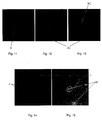
- PLL-g-PEG/633 was adsorbed onto a microelectrode array as described above for 60 min and then rinsed with HEPES 2 solutions. Photo bleaching was conducted near the tip border of a centre ITO microelectrode (see A in Fig. 11). In a next step two selected ITO microelectrodes were one after the other electronically activated at +1800 mV (reference to silver electrode) to desorb the protein resistant adlayer from the electrically conductive surfaces (see B1 and B2 in Fig. 12 and 13). Then fluorescence-labeled streptavidin Rhodamin (wavelength 633nm) was exposed to the microelectrode array for 20 min and then the flowcell was rinsed with HEPES 2 solutions.
- biotinylated fluorescence-labeled vesicles 1,2-Dioleoyl-sn-Glycero-3-Phosphocholine (DOPC) (wavelength 488nm) were introduced into the electrochemical flow cell for 40 min and then the flowcell was rinsed with HEPES 2 solutions. Since the biotinylated fluorescence-labeled vesicles have a strong binding affinity to streptavidin, the ITO regions that were adsorbed with streptavidin showed a green fluorescence signal (see D in Fig. 15).
- DOPC 1,2-Dioleoyl-sn-Glycero-3-Phosphocholine
- microarrays of the present invention are especially useful in the investigation of the following interactions: DNA-DNA, DNA-protein, protein-protein, membrane protein-ion, protein-drug, sugar-protein, cell-protein, bacteria-protein, cell-cell, membrane-protein, membrane-virus, protein-virus etc.
- microarrays of the present invention can be used as analytical tools for investigating diseases and/or infections such as cancer and/or for the discovery of novel drugs.
Landscapes
- Chemical & Material Sciences (AREA)
- Organic Chemistry (AREA)
- Chemical Kinetics & Catalysis (AREA)
- Investigating, Analyzing Materials By Fluorescence Or Luminescence (AREA)
- Apparatus Associated With Microorganisms And Enzymes (AREA)
Priority Applications (3)
| Application Number | Priority Date | Filing Date | Title |
|---|---|---|---|
| EP04022317A EP1637613A1 (fr) | 2004-09-20 | 2004-09-20 | Formation de motifs électrochimique sur multicanal ensembles de microélectrodes destinés à des applications de biodétection. |
| US11/663,310 US20080113352A1 (en) | 2004-09-20 | 2005-09-20 | Electrochemical Patterning on Multi-Channel Microelectrode Array for Biosensing Applications |
| PCT/CH2005/000550 WO2006032158A1 (fr) | 2004-09-20 | 2005-09-20 | Modelisation electrochimique sur reseau de micro-electrodes multicanaux pour applications de biodetection |
Applications Claiming Priority (1)
| Application Number | Priority Date | Filing Date | Title |
|---|---|---|---|
| EP04022317A EP1637613A1 (fr) | 2004-09-20 | 2004-09-20 | Formation de motifs électrochimique sur multicanal ensembles de microélectrodes destinés à des applications de biodétection. |
Publications (1)
| Publication Number | Publication Date |
|---|---|
| EP1637613A1 true EP1637613A1 (fr) | 2006-03-22 |
Family
ID=34926612
Family Applications (1)
| Application Number | Title | Priority Date | Filing Date |
|---|---|---|---|
| EP04022317A Withdrawn EP1637613A1 (fr) | 2004-09-20 | 2004-09-20 | Formation de motifs électrochimique sur multicanal ensembles de microélectrodes destinés à des applications de biodétection. |
Country Status (3)
| Country | Link |
|---|---|
| US (1) | US20080113352A1 (fr) |
| EP (1) | EP1637613A1 (fr) |
| WO (1) | WO2006032158A1 (fr) |
Cited By (5)
| Publication number | Priority date | Publication date | Assignee | Title |
|---|---|---|---|---|
| DE102007017268A1 (de) * | 2007-04-12 | 2008-10-16 | Siemens Ag | Kombinierte Anordnung und Verfahren zur einstufigen molekularen Analyse |
| US7928038B2 (en) | 2006-11-21 | 2011-04-19 | Applied Biosystems, Llc | Intermediates and methods for forming passivated surfaces on oxide layers and articles produced thereby |
| US8173198B2 (en) | 2008-07-23 | 2012-05-08 | Life Technologies Corporation | Deposition of metal oxides onto surfaces as an immobilization vehicle for carboxylated or phophated particles or polymers |
| CN102505041A (zh) * | 2011-10-08 | 2012-06-20 | 杨鹏 | 生物芯片制备方法 |
| CN101614729B (zh) * | 2008-06-27 | 2013-04-24 | 博奥生物有限公司 | 用于细胞操作及电生理信号检测的微电极阵列器件及专用装置 |
Families Citing this family (5)
| Publication number | Priority date | Publication date | Assignee | Title |
|---|---|---|---|---|
| US8562806B2 (en) * | 2007-07-31 | 2013-10-22 | Georgia Tech Research Corporation | Electrochemical biosensor arrays and instruments and methods of making and using same |
| EP2298367A1 (fr) | 2009-09-18 | 2011-03-23 | Max-Planck-Gesellschaft zur Förderung der Wissenschaften e.V. | Polymères de revêtements de surface |
| US10488390B2 (en) | 2013-07-03 | 2019-11-26 | The Trustees Of Columbia University In The City Of New York | System and method for high-throughput assessment of cellular cardiotoxicity, drug screening, and cardiogenic factors via online physiological measurements |
| WO2021216393A1 (fr) * | 2020-04-20 | 2021-10-28 | The Government Of The United States Of America, As Represented By The Secretary Of The Navy | Structure de cuve à circulation électrochimique pour évaluer des biofilms électroactifs |
| CN114354730A (zh) * | 2021-12-03 | 2022-04-15 | 江苏大学 | 一种基于多通道免标记电化学适配体传感器同时检测四种霉菌毒素的方法 |
Citations (1)
| Publication number | Priority date | Publication date | Assignee | Title |
|---|---|---|---|---|
| WO2003062456A1 (fr) * | 2002-01-22 | 2003-07-31 | Universitat Rovira I Virgili | Procede de fabrication de puces multicapteurs destinees a la detection d'analytes |
-
2004
- 2004-09-20 EP EP04022317A patent/EP1637613A1/fr not_active Withdrawn
-
2005
- 2005-09-20 US US11/663,310 patent/US20080113352A1/en not_active Abandoned
- 2005-09-20 WO PCT/CH2005/000550 patent/WO2006032158A1/fr not_active Ceased
Patent Citations (1)
| Publication number | Priority date | Publication date | Assignee | Title |
|---|---|---|---|---|
| WO2003062456A1 (fr) * | 2002-01-22 | 2003-07-31 | Universitat Rovira I Virgili | Procede de fabrication de puces multicapteurs destinees a la detection d'analytes |
Non-Patent Citations (8)
| Title |
|---|
| BASHIR R: "BioMEMS: state-of-the-art in detection, opportunities and prospects", ADVANCED DRUG DELIVERY REVIEWS, AMSTERDAM, NL, vol. 56, no. 11, 22 September 2004 (2004-09-22), pages 1565 - 1586, XP004550357, ISSN: 0169-409X * |
| DILL K ET AL: "Immunoassays based on electrochemical detection using microelectrode arrays", BIOSENSORS & BIOELECTRONICS, ELSEVIER SCIENCE PUBLISHERS, BARKING, GB, vol. 20, no. 4, 1 November 2004 (2004-11-01), pages 736 - 742, XP004633821, ISSN: 0956-5663 * |
| HUANG ET AL: "Biotin-Derivatized Ppoly(L-lysine)-g-poly(ethylene glycol): A Novel Polymeric Interface for Bioaffinity Sensing", LANGMUIR, vol. 18, 12 May 2001 (2001-05-12), pages 220 - 230, XP002319473 * |
| HUANG Y ET AL: "ELECTRIC MANIPULATION OF BIOPARTICLES AND MACROMOLECULES ON MICROFABRICATED ELECTRODES", ANALYTICAL CHEMISTRY, AMERICAN CHEMICAL SOCIETY. COLUMBUS, US, vol. 73, no. 7, 1 April 2001 (2001-04-01), pages 1549 - 1559, XP001030312, ISSN: 0003-2700 * |
| MICHEL ET AL: "Selective Molecular Assembly Patterning: A New Approach to Micro- and Nanochemical Patterning of Surfaces for Biological Applications", LANGMUIR, vol. 18, 3 September 2002 (2002-09-03), pages 3281 - 3287, XP002319474 * |
| OLEINIKOV ANDREW V ET AL: "Self-assembling protein arrays using electronic semiconductor microchips and in vitro translation.", JOURNAL OF PROTEOME RESEARCH, vol. 2, no. 3, 2003, pages 313 - 319, XP002319475, ISSN: 1535-3893 * |
| Retrieved from the Internet <URL:www.sciencedirect.com> * |
| RUIZ-TAYLOR L A ET AL: "Monolayers of derivatized poly(L-lysine)-grafted poly(ethylene glycol) on metal oxides as a class of biomolecular interfaces", PROCEEDINGS OF THE NATIONAL ACADEMY OF SCIENCES OF USA, NATIONAL ACADEMY OF SCIENCE. WASHINGTON, US, vol. 98, no. 3, 30 January 2001 (2001-01-30), pages 852 - 857, XP002251629, ISSN: 0027-8424 * |
Cited By (5)
| Publication number | Priority date | Publication date | Assignee | Title |
|---|---|---|---|---|
| US7928038B2 (en) | 2006-11-21 | 2011-04-19 | Applied Biosystems, Llc | Intermediates and methods for forming passivated surfaces on oxide layers and articles produced thereby |
| DE102007017268A1 (de) * | 2007-04-12 | 2008-10-16 | Siemens Ag | Kombinierte Anordnung und Verfahren zur einstufigen molekularen Analyse |
| CN101614729B (zh) * | 2008-06-27 | 2013-04-24 | 博奥生物有限公司 | 用于细胞操作及电生理信号检测的微电极阵列器件及专用装置 |
| US8173198B2 (en) | 2008-07-23 | 2012-05-08 | Life Technologies Corporation | Deposition of metal oxides onto surfaces as an immobilization vehicle for carboxylated or phophated particles or polymers |
| CN102505041A (zh) * | 2011-10-08 | 2012-06-20 | 杨鹏 | 生物芯片制备方法 |
Also Published As
| Publication number | Publication date |
|---|---|
| US20080113352A1 (en) | 2008-05-15 |
| WO2006032158A1 (fr) | 2006-03-30 |
Similar Documents
| Publication | Publication Date | Title |
|---|---|---|
| KR101642065B1 (ko) | 양쪽 친매성 분자들 층의 형성 | |
| JP7010911B2 (ja) | ハイブリッドナノポアセンサ | |
| US8901046B2 (en) | Oligonucleotides related to lipid membrane attachment | |
| EP1461619B1 (fr) | Matrice de liaison a structure fonctionnelle amelioree pour biomolecules | |
| DE69531667T2 (de) | Festphasen, spezifisch für biologische reaktionen, ihre herstellung und anwendung | |
| KR20070099597A (ko) | 삼차원 나노구조 및 마이크로구조의 지지체 | |
| Mamipour et al. | Molecularly imprinted polymer grafted on paper and flat sheet for selective sensing and diagnosis: a review | |
| US10539561B1 (en) | Enzyme-amplified redox microarray detection process | |
| EP1637613A1 (fr) | Formation de motifs électrochimique sur multicanal ensembles de microélectrodes destinés à des applications de biodétection. | |
| JP2007533983A (ja) | マイクロアレイ用の機能性多孔質支持体 | |
| US7175747B2 (en) | Method for electrophoretically separating membrane proteins | |
| Dugas et al. | Surface sensitization techniques and recognition receptors immobilization on biosensors and microarrays | |
| Tang et al. | Dynamic, electronically switchable surfaces for membrane protein microarrays | |
| US20030108922A1 (en) | Electrochemical method for detecting water born pathogens | |
| JP2007509733A (ja) | 試料中に存在するターゲットまたは対象物を結合/脱離させるためのデバイスおよび方法 | |
| Marquette et al. | Biochips: non-conventional strategies for biosensing elements immobilization | |
| HK40027813B (en) | Hybrid nanopore sensors | |
| HK40027813A (en) | Hybrid nanopore sensors | |
| Cropek et al. | Metal ion sensor with catalytic DNA in a nanofluidic intelligent processor | |
| Fritsch et al. | Electrochemical method for detecting water born pathogens | |
| HK40034507A (en) | Hybrid nanopore sensors | |
| HK40034507B (en) | Hybrid nanopore sensors | |
| Vetter | Synthesis and screening of bead-based | |
| Bally et al. | Heterogeneous Vesicle Arrays for Biosensing Applications | |
| AU2384999A (en) | Highly specific surfaces for biological reactions, method of preparation and utilization |
Legal Events
| Date | Code | Title | Description |
|---|---|---|---|
| PUAI | Public reference made under article 153(3) epc to a published international application that has entered the european phase |
Free format text: ORIGINAL CODE: 0009012 |
|
| AK | Designated contracting states |
Kind code of ref document: A1 Designated state(s): AT BE BG CH CY CZ DE DK EE ES FI FR GB GR HU IE IT LI LU MC NL PL PT RO SE SI SK TR |
|
| AX | Request for extension of the european patent |
Extension state: AL HR LT LV MK |
|
| AKX | Designation fees paid | ||
| REG | Reference to a national code |
Ref country code: DE Ref legal event code: 8566 |
|
| STAA | Information on the status of an ep patent application or granted ep patent |
Free format text: STATUS: THE APPLICATION IS DEEMED TO BE WITHDRAWN |
|
| 18D | Application deemed to be withdrawn |
Effective date: 20060923 |