EP1641175B1 - Empfänger und Verfahren zum Empfangen von verschlüsselter Kommunikation - Google Patents
Empfänger und Verfahren zum Empfangen von verschlüsselter Kommunikation Download PDFInfo
- Publication number
- EP1641175B1 EP1641175B1 EP05270050A EP05270050A EP1641175B1 EP 1641175 B1 EP1641175 B1 EP 1641175B1 EP 05270050 A EP05270050 A EP 05270050A EP 05270050 A EP05270050 A EP 05270050A EP 1641175 B1 EP1641175 B1 EP 1641175B1
- Authority
- EP
- European Patent Office
- Prior art keywords
- synchronisation
- value
- mode
- receiver
- message
- Prior art date
- Legal status (The legal status is an assumption and is not a legal conclusion. Google has not performed a legal analysis and makes no representation as to the accuracy of the status listed.)
- Expired - Lifetime
Links
Images
Classifications
-
- H—ELECTRICITY
- H04—ELECTRIC COMMUNICATION TECHNIQUE
- H04L—TRANSMISSION OF DIGITAL INFORMATION, e.g. TELEGRAPHIC COMMUNICATION
- H04L9/00—Cryptographic mechanisms or cryptographic arrangements for secret or secure communications; Network security protocols
- H04L9/12—Transmitting and receiving encryption devices synchronised or initially set up in a particular manner
-
- H—ELECTRICITY
- H04—ELECTRIC COMMUNICATION TECHNIQUE
- H04L—TRANSMISSION OF DIGITAL INFORMATION, e.g. TELEGRAPHIC COMMUNICATION
- H04L9/00—Cryptographic mechanisms or cryptographic arrangements for secret or secure communications; Network security protocols
- H04L9/32—Cryptographic mechanisms or cryptographic arrangements for secret or secure communications; Network security protocols including means for verifying the identity or authority of a user of the system or for message authentication, e.g. authorization, entity authentication, data integrity or data verification, non-repudiation, key authentication or verification of credentials
- H04L9/3236—Cryptographic mechanisms or cryptographic arrangements for secret or secure communications; Network security protocols including means for verifying the identity or authority of a user of the system or for message authentication, e.g. authorization, entity authentication, data integrity or data verification, non-repudiation, key authentication or verification of credentials using cryptographic hash functions
-
- H—ELECTRICITY
- H04—ELECTRIC COMMUNICATION TECHNIQUE
- H04L—TRANSMISSION OF DIGITAL INFORMATION, e.g. TELEGRAPHIC COMMUNICATION
- H04L9/00—Cryptographic mechanisms or cryptographic arrangements for secret or secure communications; Network security protocols
- H04L9/32—Cryptographic mechanisms or cryptographic arrangements for secret or secure communications; Network security protocols including means for verifying the identity or authority of a user of the system or for message authentication, e.g. authorization, entity authentication, data integrity or data verification, non-repudiation, key authentication or verification of credentials
- H04L9/3263—Cryptographic mechanisms or cryptographic arrangements for secret or secure communications; Network security protocols including means for verifying the identity or authority of a user of the system or for message authentication, e.g. authorization, entity authentication, data integrity or data verification, non-repudiation, key authentication or verification of credentials involving certificates, e.g. public key certificate [PKC] or attribute certificate [AC]; Public key infrastructure [PKI] arrangements
-
- H—ELECTRICITY
- H04—ELECTRIC COMMUNICATION TECHNIQUE
- H04L—TRANSMISSION OF DIGITAL INFORMATION, e.g. TELEGRAPHIC COMMUNICATION
- H04L9/00—Cryptographic mechanisms or cryptographic arrangements for secret or secure communications; Network security protocols
- H04L9/32—Cryptographic mechanisms or cryptographic arrangements for secret or secure communications; Network security protocols including means for verifying the identity or authority of a user of the system or for message authentication, e.g. authorization, entity authentication, data integrity or data verification, non-repudiation, key authentication or verification of credentials
- H04L9/3297—Cryptographic mechanisms or cryptographic arrangements for secret or secure communications; Network security protocols including means for verifying the identity or authority of a user of the system or for message authentication, e.g. authorization, entity authentication, data integrity or data verification, non-repudiation, key authentication or verification of credentials involving time stamps, e.g. generation of time stamps
Definitions
- the invention relates to a receiver and a method for receiving an encrypted communication and in particular, but not exclusively, to receiving an encrypted communication in a cellular communication system such as a TETRA (TErrestrial Trunked RAdio) cellular communication system.
- a cellular communication system such as a TETRA (TErrestrial Trunked RAdio) cellular communication system.
- a geographical region is divided into a number of cells each of which is served by base station.
- the base stations are interconnected by a fixed network which can communicate data between the base stations.
- a remote unit is served via a radio communication link by the base station of the cell within which the remote unit is situated.
- a remote unit may move from the coverage of one base station to the coverage of another, i.e. from one cell to another.
- the remote unit moves towards a new base station, it enters a region of overlapping coverage of two base stations and within this overlap region it changes to be supported by the new base station.
- the remote unit moves further into the new cell, it continues to be supported by the new base station. This is known as cell reselection or handover.
- Uplink Communication from a remote unit to a base station
- downlink communication from a base station to a remote unit
- the fixed network interconnecting the base stations is operable to route data between any two base stations, thereby enabling a remote unit in a cell to communicate with a mobile station in any other cell.
- the fixed network may comprise gateway functions for interconnecting to external networks such as the Public Switched Telephone Network (PSTN), thereby allowing remote units to communicate with landline telephones and other communication terminals connected by a landline.
- PSTN Public Switched Telephone Network
- the fixed network comprises much of the functionality required for managing a conventional cellular communication network including functionality for routing data, admission control, resource allocation, subscriber billing, mobile station authentication etc.
- Examples of cellular communication systems include both public cellular communication system such as the Global System for Mobile communication (GSM) and Professional Radio (PMR) systems such as TETRA (TErrestrial Trunked RAdio).
- GSM Global System for Mobile communication
- PMR Professional Radio
- TETRA TErrestrial Trunked RAdio
- TETRA may be used as a public cellular communication system, it is designed to provide a number of features and services which are particularly suitable for private organisations or groups such as the emergency services.
- TETRA provides a number of features and services for managing and controlling group calls as well as for managing the membership of these groups. Other features and services provided by TETRA include, push-to-talk channel allocation, broadcast calls etc. Also, in addition to trunked mode operation wherein remote units communicate via a base station, TETRA provides for the possibility of communication which is communicated directly between remote units. This is known as Direct Mode Operation (DMO) and allows remote units to set up and maintain direct communication between these.
- DMO Direct Mode Operation
- TETRA furthermore provides for a high level of security which may be optimised for specific purposes.
- calls in TETRA may be end-to-end encrypted in order to prevent eavesdropping or interception of the messages.
- Such encryption is invaluable for many public services including for example law enforcement organisations.
- Recommendation 02 End-to-End Encryption.
- This recommendation fully specifies all that is required for an end-to-end service other than the details of the cryptographic algorithms. These are treated as black-box functions.
- the Recommendation concludes with an appendix showing how these cryptographic functions can be realised using a well known algorithm.
- Recommendation 02 describes a system of end-to-end encryption management including systems for key management, key selection, key distribution, encryption mode selection, encryption control etc.
- the framework has been designed to be adaptable to a range of Security Policies, with the flexibility being achieved through a number of simple operational choices.
- ETSI EN 302 109 specifies a voice encryption and decryption mechanism wherein an encryption function of a transmitting unit generates encrypted data that is communicated to a receiving unit where the inverse operation is performed to regenerate the original data.
- the encryption and decryption functions are based on key streams generated by a key stream generator at the transmitting unit and receiving unit respectively. In order to have successful decoding, it is essential that the key stream of the receiving unit is synchronised with the key stream of the transmitting unit.
- ETSI EN 302 109 specifies the communication of synchronisation values from the transmitter to the receiver. Specifically, a number of synchronisation values are transmitted at the beginning of a call or following cell reselection thereby synchronising the key stream generators. In addition, synchronisation values are sent during the ongoing call in order to allow receiving units missing the initial transmissions of synchronisation values to enter the call later. This is known as late entry. Also, the transmission of synchronisation values during the call allows a receiving unit that looses synchronisation to re-acquire this during the call.
- the synchronisation values may be transmitted in synchronisation messages which may also comprise an encryption key identification and an algorithm identity. Furthermore, a cryptographic checksum may be included which allows the receiving mobile station to determine if the received synchronisation value is valid.
- a real-time clock may be used by the transmitter when calculating the cryptographic checksum.
- a remote unit may calculate a local checksum using data from a local real time clock. Accordingly, if the locally calculated checksum matches that of the synchronisation message, the synchronisation value is extracted and used to synchronise the decryption functionality. However, if the locally calculated checksum does not match that of the synchronisation message, the synchronisation message is rejected and not used further. This provides protection against replay attacks as the transmit and receive times for replay messages will differ resulting in a difference in the calculated checksum at the transmitter and receiver.
- a problem associated with this approach is that it requires all mobile stations to have a real time clock in order to validate the received synchronisation message. For example, in scenarios where a mixed fleet of remote units comprises some remote units which have real-time clocks and some which do not, a synchronisation message from a remote unit without real time clock will appear as a replay attack to a remote unit which does have a real time clock as the cryptographic checksum will fail.
- Recommendation 02 describes several security profiles of which some are using the real-time clock for protection against replay attack and others are not. Therefore, it is a likely scenario that there will either be interoperability between different forces using different security profiles or a force may upgrade its security profile to include protection against replay attacks thereby operating a mixed mobile station scenario for at least a temporary period.
- an improved system for encrypted communication would be advantageous and in particular a system providing an improved decryption synchronisation performance, increased flexibility and/or facilitating encryption for mixed remote unit scenarios would be advantageous.
- the Invention is concerned with the validity of the synchronisation verification checksum value rather than the synchronisation value.
- the Invention seeks to preferably mitigate, alleviate or eliminate one or more of the above mentioned disadvantages singly or in any combination in relation to the validity of the synchronisation verification checksum value.
- a method of receiving an encrypted communication in a receiver of a communication system the method being as defined in claim 1 of the accompanying claims.
- the invention allows improved encryption functionality in a communication system.
- the invention may allow an increased flexibility and/or improved operation in a communication system comprising both communication units with real time clocks and communication units without real time clocks.
- the time base of the receiver may be a real time clock value.
- the transmit time of the synchronisation message may be associated with a real time clock value of the transmitter of the synchronisation message.
- the encrypted communication may for example be an encrypted voice call.
- the encryption may be end-to-end encryption.
- the steps of the method may be performed in any order suitable for a specific embodiment. For example, the steps of decrypting the encrypted communication and outputting the decrypted signal may be performed after the steps of receiving a synchronisation message and determining a validity of the verification checksum value.
- the method of operation normally includes the decryption process being synchronised in response to the synchronisation value received being valid.
- the method may include the known step of synchronising of the decryption process in response to a synchronisation value received in a previous synchronisation message.
- Such synchronisation may improve encryption synchronisation performance in many scenarios.
- the method of operation may comprise the known step of comparing the synchronisation value to an expected synchronisation value and synchronising the decryption process in response to the comparison. This may improve encryption synchronisation performance in many scenarios.
- the method of operation may comprise the known step of synchronising the decryption process in response to a flywheel process of the synchronisation value.
- the method may comprise implementing a synchronisation process as specified in ETSI (European Telecommunication Standards Institute) Technical Specification EN 302 109.
- the fall back mode of operation comprises outputting a fall back mode indication to a user.
- the fall back mode indication may be an indication that the receiver is operating in the fall back mode.
- the indication may be an indication alerting the user of the receiver that the communication may not be secure and/or may specifically indicate that the communication may be a replay attack.
- the fall back mode indication comprises an audio warning signal. This may be particularly advantageous for audio communications such as voice calls.
- the fall back mode of operation comprises a first mode of operation and a second mode of operation
- the method further comprises the step of selecting between the first and second mode of operation. This may allow the operation in case of verification value check failures to be optimised for the current requirements.
- the first mode of operation comprises outputting the decrypted signal and the second mode of operation comprises suppressing the decrypted signal.
- the operation in case of verification value check failures may be optimised for the current requirements.
- the operation in the fall back mode may depend on the security level of the receiver and/or the communication. For example, in situations where security of the communication is critical, the receiver may suppress the signal whereas in situations where security of the communication is not critical, the receiver may not suppress the signal.
- the suppression of the signal may for example be an attenuation or a muting of an audio signal.
- the first mode of operation comprises outputting a synchronisation error indication and the second mode of operation comprises not outputting a synchronisation error indication. This may allow a selective provision of information of the uncertainty of the synchronisation and/or security of the communication to e.g. a user or external device.
- the first mode of operation comprises synchronising the decryption process in response to the synchronisation value and the second mode of operation comprises not synchronising the decryption process in response to the synchronisation value. This may allow for the synchronisation operation of the receiver to be optimised for the current conditions and/or preferences.
- the step of selecting comprises selecting between the first and second mode of operation in response to a characteristic of the encrypted communication. This may allow the operation in case of a verification value error to be dependent on the communication. For example, different operation may be achieved depending on the security level associated with the communication.
- the characteristic of the encrypted communication is an identity of a transmitter of the encrypted communication. This provides a suitable characteristic for selection of the mode of operation. For example, if the identity corresponds to a transmitter known to comprise a real time clock the operational mode suppressing the signal may be selected whereas if the identity corresponds to a transmitter known not to comprise a real time clock the operational mode not suppressing the signal may be selected.
- the characteristic of the encrypted communication is a call group associated with the encrypted communication.
- security and encryption communication characteristics are selected for a given talk group and this may provide for an efficient control of the fall back operation. For example, if the talk group is associated with a high level of security, the operational mode suppressing the signal may be selected whereas if the talk group is not associated with a high level of security, the operational mode not suppressing the signal may be selected.
- the synchronisation message further comprises a decryption key parameter and the fall back mode of operation comprises the step of determining a decryption key for the decryption process in response to a decryption key parameter received in a previous synchronisation message.
- the receiver may operate a flywheel process on the decryption key parameter.
- the synchronisation message further comprises a decryption algorithm parameter and the method comprises the step of determining a decryption algorithm for the decryption process in response to a decryption algorithm parameter received in a previous synchronisation message.
- the receiver may operate a flywheel process on the decryption algorithm parameter.
- the communication system may be a TETRA cellular communication system.
- a receiver for a communication system the receiver being as defined in claim 20 of the accompanying claims.
- the following description focuses on an embodiment of the invention applicable to a TETRA cellular communication system, i.e. one which operates in accordance with TETRA standards as defined by ETSI (European Telecommunications Standards Institute).
- ETSI European Telecommunications Standards Institute
- the invention is not limited to this application but may be applied to many other communication systems.
- the embodiments are described with reference to a voice call but in other embodiments other communication types may be supported such as for example a data call.
- the transmitter may specifically be part of a first remote unit (such as a mobile station or subscriber terminal) and the receiver may specifically be part of a second remote unit.
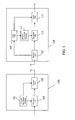
- FIG. 1 illustrates a system for communicating an encrypted call in accordance with an embodiment of the invention.
- a transmitter 100 comprises a transmit key stream generator 101 which generates a key stream used for encrypting a message.
- the transmit key stream generator 101 is initialised with an initialisation value that is time varying and not known externally to the transmitter.
- the transmit key stream generator 101 is coupled to an encryption unit 103 which receives voice data to be transmitted and encrypts this in accordance with a suitable encryption function.
- the encryption function combines the voice data with the key stream to generate encrypted audio data.
- the transmitter further comprises a transmit unit 105 coupled to the transmit key stream generator 101 and the encryption unit 103.
- the transmit unit 105 receives the encrypted data from the encryption unit 103 and transmits this over the air interface.
- the transmit unit 105 receives encryption synchronisation values from the transmit key stream generator 101 and includes these in the transmitted bit stream. The synchronisation values allow the receiver to synchronise the decryption to the received encrypted data stream.
- the synchronisation values are transmitted as encryption synchronisation messages by half-slot stealing wherein a user data transmission is partly or fully replaced by the encryption synchronisation message.
- the encryption synchronisation message is transmitted by replacing audio data in a full or a half time slot.
- the transmit unit 105 is operable to replace the encrypted user data by synchronisation value data from the transmit key stream generator 101.
- the synchronisation message of the embodiment of FIG. 1 also comprises an encryption key parameter and an encryption algorithm parameter indication of the used encryption key and encryption algorithm respectively. Furthermore, the synchronisation message comprises a verification value in the form of a checksum value which is calculated in response to the other data of the synchronisation message. If the transmitter 100 comprises a real time clock the checksum is furthermore calculated in response to the real time clock such that the value of the checksum depends on the time of transmission of the synchronisation message.
- a receiver 106 (e.g. of a fixed or mobile station) comprises a receive unit 107 which receives the data stream transmitted by the transmit unit 105.
- the transmitter 100 and receiver 106 further comprise the functionality required or desired for communicating over the TETRA air interface including modulators, amplifiers, control circuitry etc as is well known to the person skilled in the art.
- the receive unit 107 is coupled to a synchronisation unit 109 and is operable to extract the synchronisation values and to feed these to the synchronisation unit 109.
- the synchronisation unit 109 generates initialisation values for a receive key stream generator 111.
- the receive key stream generator 111 Based on the initialisation values, the receive key stream generator 111 generates a key stream which is synchronised with the key stream of the transmitter.
- the receive key stream generator 111 is coupled to a decryption unit 113 which is further coupled to the receiving unit 107.
- the decryption unit 113 receives the encrypted audio and the key stream which is synchronised with the encrypted audio. Accordingly, it performs the inverse function of the function of the encryption unit 103 thereby generating a decrypted signal.
- the decrypted signal is fed to an output unit which outputs the received signal.
- the output unit 115 performs audio decoding and feeds the decoder to a speaker (not shown).
- the transmitter transmits synchronisation values in connection with setting up of an encrypted call.
- synchronisation values are transmitted at intervals throughout the call. This ensures that a receiver that looses synchronisation may reestablish this thereby enabling it to continue the call. Furthermore, the continued transmission of synchronisation values allows a receiver to join the call after this has been setup. This is known as late entry.
- the synchronisation unit 109 determines a local checksum and compares this to the message checksum. If the checksums match, the synchronisation value is considered to be valid and is used to synchronise the receive key stream generator 111. However, if the checksums do not match, the entire synchronisation message is in conventional arrangements rejected, the synchronisation value is discarded and the output signal is muted.
- the checksums may depend on the real time clocks of the transmitter 100 and the receiver 106
- this approach requires that all remote units either comprise a real time clock and use this in the generation of the checksums or that all remote units generate the checksums without considering real time values.
- this approach is highly unsuitable for situations where a mix of remote stations may exist. This situation is highly likely and therefore the conventional approach results in serious disadvantages in some cases. For example, if a synchronisation message is received from a remote unit which does not comprise a real time clock, a receiving remote unit with a real time clock will calculate a checksum taking into account its local real time clock value. Accordingly, the received message will appear as a replay attack and the synchronisation message will be discarded.
- the synchronisation unit 109 calculates a local checksum for a received synchronisation message using a real time clock value.
- the local checksum is compared with the checksum of the received synchronisation message and if the checksums match, the synchronisation value is used to synchronise the receive key stream generator 111.
- the receiver does not stop decryption and mute the output signal. Rather, the receiver 106 enters a fall back mode of operation while continuing the decryption and outputting of the decrypted signal.
- the received signal is presented to a user thus allowing the communication to continue and allowing signals to be received from communication units not comprising a real time clock.
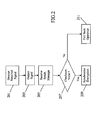
- FIG. 2 illustrates a flow chart of a method of receiving an encrypted call in accordance with an embodiment of the invention. The method is applicable to the system illustrated in FIG. 1 and will be described with reference to this.
- step 201 the receiver receives an encrypted voice call which is decrypted to generate a decrypted voice signal.
- Step 201 is followed by step 203 wherein the decrypted voice signal is output by the output unit 115.
- Step 203 is followed by step 205 wherein a synchronisation message is received.
- the synchronisation message is in the present embodiment received as a message transmitted by U-plane stealing, i.e. by replacing voice data in the transmitted signal.
- the received synchronisation message comprises a verification value in the form of a checksum. As described previously, the checksum may or may not be determined in response to a real time clock value of the transmitter.
- Step 205 is followed by step 207 wherein the validity of the checksum of the synchronisation message is determined by the synchronisation unit 109.
- the synchronisation unit 109 determines a local checksum in response to a real time clock of the receiver 106. If the checksums match the synchronisation message is considered valid and if the checksums do not match the synchronisation message is considered not to be valid.
- step 209 the decryption process continues to be synchronised in response to the synchronisation value.
- the synchronisation value of the synchronisation message is loaded into the receive key stream generator 111. The method may then continue in step 201 by receiving further encrypted voice data.
- step 207 is instead followed by step 211 wherein the receiver enters a fall back mode of operation.
- the operation of the receiver in the fall back mode of operation may depend on the preferences and requirements of the individual application and embodiment. However, in the fall back mode, the receiver continues to decrypt the received communication and to output the decrypted signal in contrast to the specific provision of Recommendation 02. Thus, the received voice call is still decrypted and outputted despite the synchronisation message being considered invalid.
- the receiver 106 may exit from the fall back mode (and for example return to step 201) in accordance with any suitable criterion such as for example when receiving a synchronisation message for which the checksums match.
- the described method allows the receiver to decrypt and output calls received both from transmitters comprising a real time clock and from transmitters not comprising a real time clock value.
- the embodiment improves performance in communication systems supporting a mixed population of remote units.
- the method of operation comprises synchronising the decryption process in response to the correct synchronisation value.
- the synchronisation value of a synchronisation message having an invalid checksum value is still loaded into the receive key stream generator 111. Accordingly, in situations where the checksum value failure is due to the absence of a real time clock at the transmitter, the decryption process may still be synchronised to the synchronisation values of the synchronisation messages.
- the method of operation comprises synchronising the decryption process in response to a synchronisation value received in a previous synchronisation message. For example, if a previous synchronisation message was considered to have a valid synchronisation value this may be used for synchronising the decryption. Hence, if the decryption process is already synchronised, the current synchronisation value, which may be received in error, will not be used for synchronisation. Hence, the encrypted communication is still decrypted and output in the fall back mode of operation but without the risk of an erroneously received synchronisation value causing a loss of synchronisation by being loaded into the receive key stream generator 111.
- the method of operation comprises comparing the synchronisation value to an expected synchronisation value and synchronising the decryption process in response to the comparison. For example, if the received synchronisation value is sufficiently close to an expected value (in accordance with any suitable criteria), it is likely that the synchronisation value is valid and it may be used to provide a fine adjustment of the synchronisation of the decryption process. However, if the received synchronisation value deviates substantially from the synchronisation value expected from the current decryption synchronisation, it is likely that the new synchronisation value is received in error and it may therefore be discarded.
- the method of operation comprises synchronising the decryption process in response to a flywheel process for the synchronisation value.
- various flywheel algorithms using one or more of the above described approaches may be used.
- the method of operation may comprise synchronising the decryption process in accordance with the synchronisation process of ETSI (European Telecommunication Standards Institute) Technical Specification EN 302 109 v1.1.1.
- ETSI European Telecommunication Standards Institute
- the flywheeling process of ETSI EN 302 109 v1.1.1 may be used to mitigate MAC falsing as the cryptographic checksum does not provide any additional protection.
- the decryption key and/or the decryption algorithm may also be determined in response to a decryption key parameter and/or decryption algorithm parameter of a previous synchronisation message.
- the receiver may apply a flywheel process on these parameters. This flywheel process may use the internally generated synchronisation value and the original key identity and algorithm identity.
- a fall back mode indication is generated by the receiver when operating in the fall back mode. For example, when the receiver enters the fall back mode, an icon may be presented on a display of the remote unit indicating that the receiver is now in the fall back mode. As another example particularly suited for an audio call, an audio warning signal may be generated. In this example, the decrypted audio signal may be output but combined with a warning signal that indicates that a checksum error has occurred, and thus that the received signal may possibly be a replay attack. This will allow a user to receive an encrypted call while alerting the user if the call is potentially not a genuine call.
- the receiver is operable to operate in different modes when in the fall back mode of operation.
- the receiver may in some such embodiments select one of the different modes as the current mode of operation.
- the operation may for example be selected manually by a user of the remote unit by configuring the remote unit for a given security profile or level.
- the different modes may allow a customisation of the fall back mode to suit the current conditions and preferences and in particular to suit the currently preferred security level.
- the fall back mode may comprise one mode wherein the decrypted signal is output and one mode where the decrypted signal is suppressed. For example, for a voice call, a selection may be made between a mode wherein the received signal is muted if a checksum error occurs and a mode wherein the received signal is still output if a checksum error occurs.
- the fall back mode may comprise one mode wherein a synchronisation error indication is output and one mode where no synchronisation error indication is output. For example, for a voice call, a selection may be made between a mode wherein the received signal is decrypted and output without informing the user that a checksum error has occurred and a mode wherein the received signal is still output but with an audio warning signal indicating that a checksum error has occurred.
- the fall back mode may comprise one mode wherein the decryption process is synchronised in response to the synchronisation value of a synchronisation message with checksum errors and a mode wherein the synchronisation process is not synchronised to a synchronisation value of a synchronisation message with checksum errors.
- the receiver may implement the following options for the operation in the fall back mode for a voice call:
- any suitable method or criterion for selecting between the different modes may be used.
- the selection may be made manually by a user either directly by selecting the preferred mode of operation or indirectly for example by selecting a desired security level.
- the selection of operation in the fall back mode may be in response to a characteristic of the signal being received.
- the operational mode may be selected depending on an identity of the transmitter.
- the identity may be an individual identity or may be a group identity.
- the decrypted signal may be output whether checksum failures occur or not.
- the decrypted signal may be output whether checksum failures occur or not, but with a clear warning signal if checksum errors have occurred.
- the operational mode may be selected in response to a call group or talk group associated with the communication.
- each talk group has an associated security profile. Therefore, for talk groups which have a high degree of security, a fall back mode of operation may be used which provides protection against replay attacks. However, if the communication is associated with a talk group having a low level of security, a fall back mode of operation may be used which simply outputs the signal regardless of any checksum failures.
- the invention can be implemented in any suitable form including hardware, software, firmware or any combination of these. However, preferably, the invention is implemented at least partly as computer software running on one or more data processors and/or digital signal processors.
- the elements and components of an embodiment of the invention may be physically, functionally and logically implemented in any suitable way. Indeed the functionality may be implemented in a single unit, in a plurality of units or as part of other functional units. As such, the invention may be implemented in a single unit or may be physically and functionally distributed between different units and processors.
Landscapes
- Engineering & Computer Science (AREA)
- Computer Security & Cryptography (AREA)
- Computer Networks & Wireless Communication (AREA)
- Signal Processing (AREA)
- Mobile Radio Communication Systems (AREA)
Claims (18)
- Verfahren zum Empfangen einer verschlüsselten Mitteilung in einem Empfänger eines Kommunikationssystems, wobei das Verfahren die folgenden Schritte aufweist:Empfangen einer zu entschlüsselnden verschlüsselten Mitteilung;Empfangen (205) einer Synchronisierungsnachricht mit einem Synchronisierungswert, um den Entschlüsselungsprozess zu befähigen, mit einem Verschlüsselungsprozess synchronisiert zu werden, der verwendet wurde, um die Mitteilung zu verschlüsseln, sowie eines Synchronisierungsverifizierungs-Prüfsummenwertes;Entschlüsseln (201) der verschlüsselten Mitteilung gemäß einem Entschlüsselungsprozess, wobei der Synchronisierungswert verwendet wird, um ein entschlüsseltes Signal zu erzeugen;Ausgeben (203) des entschlüsselten Signals;Erhalten des Synchronisierungsverifizierungs-Prüfsummenwertes von der Synchronisierungsnachricht, wobei der Prüfsummenwert von der Synchronisierungsnachricht abhängt und optional von einer Sendezeit der Synchronisierungsnachricht abhängt; undBerechnen eines lokalen Prüfsummenwertes für die empfangene Synchronisierungsnachricht unter Verwendung eines Echtzeittaktes des Empfängers und Vergleichen (207) dieses Wertes mit dem erhaltenen Synchronisierungsverifizierungs-Prüfsummenwertes, um festzustellen, ob eine Übereinstimmung vorliegt; gekennzeichnet durch:wenn keine Prüfsummenübereinstimmung erhalten wird, Eintreten (211) in eine Ersatzbetriebsart, wobei der Verschlüsselungsprozess fortgesetzt wird und das Ausgeben des entschlüsselten Signals im Wesentlichen ohne Unterbrechung fortgesetzt wird sowie eine Anzeige von dem Empfänger erzeugt und einem Nutzer zur Verfügung gestellt wird, wonach sich der Empfänger in der Ersatzbetriebsart befindet.
- Verfahren nach Anspruch 1, wobei die Anzeige den Nutzer des Empfängers darüber alarmiert, dass die Mitteilung möglicherweise nicht sicher ist oder anzeigen könnte, dass die Mitteilung ein Replay-Angriff sein könnte.
- Verfahren nach Anspruch 1, wobei der Synchronisationsverifizierungs-Prüfsummenwert durch Berechnung von Daten der Synchronisationsnachricht erhalten wird.
- Verfahren nach einem der Ansprüche 1 bis 3, wobei das Verfahren einen der folgenden Schritte aufweist: (i) Synchronisieren des Entschlüsselungsprozesses als Reaktion auf den in der Synchronisationsnachricht empfangenen Synchronisierungswert; (ii) Synchronisieren des Entschlüsselungsprozesses als Reaktion auf einen in einer früheren Synchronisationsnachricht empfangenen Synchronisierungswertes; (iii) Vergleichen des Synchronisierungswertes mit einem erwarteten Synchronisierungswert und Synchronisieren des Entschlüsselungsprozesses als Reaktion auf den Vergleich; und (iv) Synchronisieren des Entschlüsselungsprozesses als Reaktion auf einen Flywheel-Prozess des Synchronisierungswertes.
- Verfahren nach einem der vorhergehenden Ansprüche, wobei die Ersatzbetriebsartanzeige ein hörbares Warnsignal umfasst.
- Verfahren nach einem der vorhergehenden Ansprüche, wobei der Ersatzbetriebsartanzeiger auf einem Display der Kommunikationseinheit zur Verfügung gestellt wird, die den Empfänger beinhaltet.
- Verfahren nach einem der vorhergehenden Ansprüche, wobei die Ersatzbetriebsart eine erste Betriebsart und eine zweite Betriebsart umfasst, und wobei das Verfahren weiterhin den Schritt aufweist, dass ein Nutzer zwischen der ersten und der zweiten Betriebsart auswählt.
- Verfahren nach Anspruch 7, wobei die erste Betriebsart umfasst, das entschlüsselte Signal auszugeben, und die zweite Betriebsart umfasst, das entschlüsselte Signal zu unterdrücken.
- Verfahren nach Anspruch 7 oder 8, wobei die erste Betriebsart umfasst, einen Synchronisierungsfehleranzeige auszugeben und die zweite Betriebsart umfasst, keine Synchronisierungsfehleranzeige auszugeben.
- Verfahren nach einem der Ansprüche 7 bis 9, wobei die erste Betriebsart umfasst, den Entschlüsselungsprozess als Reaktion auf den Synchronisierungswert zu synchronisieren, und die zweite Betriebsart umfasst, den Entschlüsselungsprozess nicht in Reaktion auf den Synchronisierungswert zu synchronisieren.
- Verfahren nach einem der Ansprüche 7 bis 10, wobei der Schritt des Auswählens umfasst, zwischen der ersten und der zweiten Betriebsart als Reaktion auf ein Charakteristikum der verschlüsselten Nachricht auszuwählen.
- Verfahren nach Anspruch 11, wobei das Charakteristikum der verschlüsselten Mitteilung eine Identität des Senders der verschlüsselten Mitteilung ist.
- Verfahren nach Anspruch 11, wobei das Charakteristikum der verschlüsselten Mitteilung eine mit der verschlüsselten Mitteilung assoziierte Call-Group ist.
- Verfahren nach einem der vorhergehenden Ansprüche, wobei die Synchronisierungsnachricht weiterhin einen Entschlüsselungsschlüsselparameter aufweist und das Verfahren den Schritt zum Bestimmen eines Entschlüsselungsschlüssels für den Entschlüsselungsprozess als Reaktion auf einen Entschlüsselungsschlüsselparameter umfasst, der in einer früheren Synchronisationsnachricht empfangen wurde.
- Verfahren nach einem der vorhergehenden Ansprüche, wobei die Synchronisationsnachricht weiterhin einen Entschlüsselungsalgorithmusparameter aufweist und das Verfahren den Schritt zum Bestimmen eines Entschlüsselungsalgorithmus für den Entschlüsselungsprozess als Reaktion auf einen Entschlüsselungsalgorithmusparameter aufweist, der einer früheren Synchronisationsnachricht empfangen wurde.
- Verfahren nach einem der vorhergehenden Ansprüche, wobei das Kommunikationssystem ein zellulares Kommunikationssystem ist, das in Übereinstimmung mit TETRA-Standards arbeitet.
- Verfahren nach Anspruch 16, das die Synchronisierung des Entschlüsselungsprozesses in Übereinstimmung mit einem Synchronisierungsprozess von ETSI (European Telecommunication Standards Institute) Technical Specification EN 302 109 v1.1.1 aufweist.
- Empfänger (106) für ein Kommunikationssystem, wobei der Empfänger aufweist:Empfangsmittel (107) zum Empfangen einer verschlüsselten Mitteilung;Mittel zum Empfangen (107, 109) einer Synchronisierungsnachricht, die Daten mit einem Synchronisierungswert aufweist, und eines Synchronisierungsverifizierungs-Prüfsummenwertes;Mittel zum Entschlüsseln (113) der empfangenen verschlüsselten Mitteilung in Übereinstimmung mit einem Entschlüsselungsprozess unter Verwendung des Synchronisierungswertes zum Erzeugen eines entschlüsselten Signals;Mittel zum Ausgeben (115) des entschlüsselten Signals;Mittel zum Erhalten eines Synchronisierungsverifizierungs-Prüfsummenwertes aus der Synchronisierungsnachricht, wobei der Prüfsummenwert von der Synchronisierungsnachricht abhängt und optional von der Sendezeit der Übertragung der Synchronisierungsnachricht abhängt;Mittel zum Berechnen (106) einer lokalen Prüfsumme für die empfangene Synchronisierungsnachricht unter Verwendung eines Echtzeittaktes des Empfänger; undMittel zum Vergleichen (106) der lokalen Prüfsumme mit dem erhaltenen Synchronisierungsverifizierungs-Prüfsummenwert, um zu bestimmen, ob eine Übereinstimmung vorliegt;dadurch gekennzeichnet,dass der Empfänger (106) so betreibbar ist, dass, wenn keine Prüfsummenübereinstimmung vorliegt, er in eine Ersatzbetriebsart eintritt, wobei der Entschlüsselungsprozess fortgesetzt wird und die Ausgabe des entschlüsselten Signals im Wesentlichen ohne Unterbrechung fortgesetzt wird, um für einen Nutzer eine Anzeige zu erzeugen und zur Verfügung zu stellen, wonach sich der Empfänger in einer Ersatzbetriebsart befindet.
Applications Claiming Priority (1)
| Application Number | Priority Date | Filing Date | Title |
|---|---|---|---|
| GB0421006A GB2418575B (en) | 2004-09-22 | 2004-09-22 | Receiver and method of receiving an encrypted communication |
Publications (2)
| Publication Number | Publication Date |
|---|---|
| EP1641175A1 EP1641175A1 (de) | 2006-03-29 |
| EP1641175B1 true EP1641175B1 (de) | 2012-07-25 |
Family
ID=33306975
Family Applications (1)
| Application Number | Title | Priority Date | Filing Date |
|---|---|---|---|
| EP05270050A Expired - Lifetime EP1641175B1 (de) | 2004-09-22 | 2005-09-07 | Empfänger und Verfahren zum Empfangen von verschlüsselter Kommunikation |
Country Status (2)
| Country | Link |
|---|---|
| EP (1) | EP1641175B1 (de) |
| GB (1) | GB2418575B (de) |
Families Citing this family (1)
| Publication number | Priority date | Publication date | Assignee | Title |
|---|---|---|---|---|
| CN114293846B (zh) * | 2021-11-16 | 2024-08-06 | 武汉小安科技有限公司 | 电池仓锁的开锁控制方法、装置、电子设备及存储介质 |
Family Cites Families (5)
| Publication number | Priority date | Publication date | Assignee | Title |
|---|---|---|---|---|
| SE465797B (sv) * | 1990-03-07 | 1991-10-28 | Ericsson Telefon Ab L M | Foerfarande att oeverfoera synkroniseringsinformation vid krypterad oeverfoering i ett mobilradiosystem |
| US5243653A (en) * | 1992-05-22 | 1993-09-07 | Motorola, Inc. | Method and apparatus for maintaining continuous synchronous encryption and decryption in a wireless communication system throughout a hand-off |
| US6728880B1 (en) * | 1999-09-17 | 2004-04-27 | Adobe Systems Incorporated | Secure time on computers with insecure clocks |
| FI20002608L (fi) * | 2000-11-28 | 2002-05-29 | Nokia Corp | Päästä-päähän -tahdistksen ylläpitäminen tietoliikeneyhteydellä |
| US20030156715A1 (en) * | 2001-06-12 | 2003-08-21 | Reeds James Alexander | Apparatus, system and method for validating integrity of transmitted data |
-
2004
- 2004-09-22 GB GB0421006A patent/GB2418575B/en not_active Expired - Fee Related
-
2005
- 2005-09-07 EP EP05270050A patent/EP1641175B1/de not_active Expired - Lifetime
Also Published As
| Publication number | Publication date |
|---|---|
| GB2418575A (en) | 2006-03-29 |
| GB0421006D0 (en) | 2004-10-20 |
| GB2418575B (en) | 2007-01-24 |
| EP1641175A1 (de) | 2006-03-29 |
Similar Documents
| Publication | Publication Date | Title |
|---|---|---|
| KR100443781B1 (ko) | 공중회선교환전화망에서사설통신시스템을제공하는방법및장치 | |
| JP2750638B2 (ja) | 電気通信システムにおける加入者の真正証明及び保護のための方法 | |
| US6950521B1 (en) | Method for repeated authentication of a user subscription identity module | |
| US20110130119A1 (en) | Staging a mobile device to an enterprise network securely using voice channel of a wireless wide area network (wwan) | |
| KR20010080908A (ko) | 암호화된 그룹 방송 메시지를 통신하기 위한 시스템 및 방법 | |
| JPH11510668A (ja) | セキュリティ通信 | |
| EP1514444B1 (de) | Funkkommunikationssystem, gerät und verfahren | |
| AU2005246691B2 (en) | Method and apparatus for decrypting a communication | |
| US20060056635A1 (en) | Communication system and method of call group management therefor | |
| EP1641175B1 (de) | Empfänger und Verfahren zum Empfangen von verschlüsselter Kommunikation | |
| US7840008B2 (en) | Method and apparatus for decrypting a communication | |
| EP1428403B1 (de) | Kommunikationsverfahren, systeme und endgeräte | |
| ES2243615T3 (es) | Sistema de comunicacion, unidad de comunicacion y metodo para cambiar de modo dinamico una clave de cifrado. | |
| US8868057B2 (en) | Staging a mobile device to an enterprise network securely using voice channel of a wireless wide area network (WWAN) | |
| EP1437910A2 (de) | System und Verfahren zum weiterreichen oder zur wiederherstellung von verbindungen in einem zellularen Funkkommunikationssystem | |
| EP1583380B1 (de) | Anrufverschlüsselung in einem TETRA Netz | |
| WO2002017655A2 (en) | Method and apparatus for generating an unique encryption key stream for each data block in a frame | |
| EP2044782A2 (de) | Prozessor, verfahren und endgerät zur verwendung in kommunikationen | |
| GB2407000A (en) | Method of performing encrypted communication in a wireless communication system |
Legal Events
| Date | Code | Title | Description |
|---|---|---|---|
| PUAI | Public reference made under article 153(3) epc to a published international application that has entered the european phase |
Free format text: ORIGINAL CODE: 0009012 |
|
| AK | Designated contracting states |
Kind code of ref document: A1 Designated state(s): AT BE BG CH CY CZ DE DK EE ES FI FR GB GR HU IE IS IT LI LT LU LV MC NL PL PT RO SE SI SK TR |
|
| AX | Request for extension of the european patent |
Extension state: AL BA HR MK YU |
|
| 17P | Request for examination filed |
Effective date: 20060929 |
|
| 17Q | First examination report despatched |
Effective date: 20061025 |
|
| AKX | Designation fees paid |
Designated state(s): AT BE BG CH CY CZ DE DK EE ES FI FR GB GR HU IE IS IT LI LT LU LV MC NL PL PT RO SE SI SK TR |
|
| RAP1 | Party data changed (applicant data changed or rights of an application transferred) |
Owner name: MOTOROLA SOLUTIONS, INC. |
|
| REG | Reference to a national code |
Ref country code: DE Ref legal event code: R079 Ref document number: 602005035262 Country of ref document: DE Free format text: PREVIOUS MAIN CLASS: H04L0009000000 Ipc: H04L0009120000 |
|
| RIC1 | Information provided on ipc code assigned before grant |
Ipc: H04L 9/12 20060101AFI20111010BHEP Ipc: H04L 9/32 20060101ALI20111010BHEP |
|
| GRAP | Despatch of communication of intention to grant a patent |
Free format text: ORIGINAL CODE: EPIDOSNIGR1 |
|
| GRAS | Grant fee paid |
Free format text: ORIGINAL CODE: EPIDOSNIGR3 |
|
| GRAA | (expected) grant |
Free format text: ORIGINAL CODE: 0009210 |
|
| AK | Designated contracting states |
Kind code of ref document: B1 Designated state(s): AT BE BG CH CY CZ DE DK EE ES FI FR GB GR HU IE IS IT LI LT LU LV MC NL PL PT RO SE SI SK TR |
|
| REG | Reference to a national code |
Ref country code: GB Ref legal event code: FG4D |
|
| REG | Reference to a national code |
Ref country code: CH Ref legal event code: EP Ref country code: DE Ref legal event code: R081 Ref document number: 602005035262 Country of ref document: DE Owner name: MOTOROLA SOLUTIONS, INC., CHICAGO, US Free format text: FORMER OWNER: MOTOROLA INC., SCHAUMBURG, ILL., US |
|
| REG | Reference to a national code |
Ref country code: AT Ref legal event code: REF Ref document number: 568082 Country of ref document: AT Kind code of ref document: T Effective date: 20120815 Ref country code: IE Ref legal event code: FG4D |
|
| REG | Reference to a national code |
Ref country code: DE Ref legal event code: R096 Ref document number: 602005035262 Country of ref document: DE Effective date: 20120920 |
|
| REG | Reference to a national code |
Ref country code: NL Ref legal event code: T3 |
|
| REG | Reference to a national code |
Ref country code: AT Ref legal event code: MK05 Ref document number: 568082 Country of ref document: AT Kind code of ref document: T Effective date: 20120725 |
|
| REG | Reference to a national code |
Ref country code: LT Ref legal event code: MG4D Effective date: 20120725 |
|
| PG25 | Lapsed in a contracting state [announced via postgrant information from national office to epo] |
Ref country code: AT Free format text: LAPSE BECAUSE OF FAILURE TO SUBMIT A TRANSLATION OF THE DESCRIPTION OR TO PAY THE FEE WITHIN THE PRESCRIBED TIME-LIMIT Effective date: 20120725 Ref country code: CY Free format text: LAPSE BECAUSE OF FAILURE TO SUBMIT A TRANSLATION OF THE DESCRIPTION OR TO PAY THE FEE WITHIN THE PRESCRIBED TIME-LIMIT Effective date: 20120725 Ref country code: LT Free format text: LAPSE BECAUSE OF FAILURE TO SUBMIT A TRANSLATION OF THE DESCRIPTION OR TO PAY THE FEE WITHIN THE PRESCRIBED TIME-LIMIT Effective date: 20120725 Ref country code: IS Free format text: LAPSE BECAUSE OF FAILURE TO SUBMIT A TRANSLATION OF THE DESCRIPTION OR TO PAY THE FEE WITHIN THE PRESCRIBED TIME-LIMIT Effective date: 20121125 Ref country code: BE Free format text: LAPSE BECAUSE OF FAILURE TO SUBMIT A TRANSLATION OF THE DESCRIPTION OR TO PAY THE FEE WITHIN THE PRESCRIBED TIME-LIMIT Effective date: 20120725 Ref country code: FI Free format text: LAPSE BECAUSE OF FAILURE TO SUBMIT A TRANSLATION OF THE DESCRIPTION OR TO PAY THE FEE WITHIN THE PRESCRIBED TIME-LIMIT Effective date: 20120725 |
|
| PG25 | Lapsed in a contracting state [announced via postgrant information from national office to epo] |
Ref country code: SI Free format text: LAPSE BECAUSE OF FAILURE TO SUBMIT A TRANSLATION OF THE DESCRIPTION OR TO PAY THE FEE WITHIN THE PRESCRIBED TIME-LIMIT Effective date: 20120725 Ref country code: PL Free format text: LAPSE BECAUSE OF FAILURE TO SUBMIT A TRANSLATION OF THE DESCRIPTION OR TO PAY THE FEE WITHIN THE PRESCRIBED TIME-LIMIT Effective date: 20120725 Ref country code: GR Free format text: LAPSE BECAUSE OF FAILURE TO SUBMIT A TRANSLATION OF THE DESCRIPTION OR TO PAY THE FEE WITHIN THE PRESCRIBED TIME-LIMIT Effective date: 20121026 Ref country code: LV Free format text: LAPSE BECAUSE OF FAILURE TO SUBMIT A TRANSLATION OF THE DESCRIPTION OR TO PAY THE FEE WITHIN THE PRESCRIBED TIME-LIMIT Effective date: 20120725 Ref country code: SE Free format text: LAPSE BECAUSE OF FAILURE TO SUBMIT A TRANSLATION OF THE DESCRIPTION OR TO PAY THE FEE WITHIN THE PRESCRIBED TIME-LIMIT Effective date: 20120725 Ref country code: PT Free format text: LAPSE BECAUSE OF FAILURE TO SUBMIT A TRANSLATION OF THE DESCRIPTION OR TO PAY THE FEE WITHIN THE PRESCRIBED TIME-LIMIT Effective date: 20121126 |
|
| PG25 | Lapsed in a contracting state [announced via postgrant information from national office to epo] |
Ref country code: MC Free format text: LAPSE BECAUSE OF NON-PAYMENT OF DUE FEES Effective date: 20120930 Ref country code: CZ Free format text: LAPSE BECAUSE OF FAILURE TO SUBMIT A TRANSLATION OF THE DESCRIPTION OR TO PAY THE FEE WITHIN THE PRESCRIBED TIME-LIMIT Effective date: 20120725 Ref country code: RO Free format text: LAPSE BECAUSE OF FAILURE TO SUBMIT A TRANSLATION OF THE DESCRIPTION OR TO PAY THE FEE WITHIN THE PRESCRIBED TIME-LIMIT Effective date: 20120725 Ref country code: ES Free format text: LAPSE BECAUSE OF FAILURE TO SUBMIT A TRANSLATION OF THE DESCRIPTION OR TO PAY THE FEE WITHIN THE PRESCRIBED TIME-LIMIT Effective date: 20121105 Ref country code: DK Free format text: LAPSE BECAUSE OF FAILURE TO SUBMIT A TRANSLATION OF THE DESCRIPTION OR TO PAY THE FEE WITHIN THE PRESCRIBED TIME-LIMIT Effective date: 20120725 Ref country code: EE Free format text: LAPSE BECAUSE OF FAILURE TO SUBMIT A TRANSLATION OF THE DESCRIPTION OR TO PAY THE FEE WITHIN THE PRESCRIBED TIME-LIMIT Effective date: 20120725 |
|
| REG | Reference to a national code |
Ref country code: CH Ref legal event code: PL |
|
| PG25 | Lapsed in a contracting state [announced via postgrant information from national office to epo] |
Ref country code: SK Free format text: LAPSE BECAUSE OF FAILURE TO SUBMIT A TRANSLATION OF THE DESCRIPTION OR TO PAY THE FEE WITHIN THE PRESCRIBED TIME-LIMIT Effective date: 20120725 |
|
| PLBE | No opposition filed within time limit |
Free format text: ORIGINAL CODE: 0009261 |
|
| STAA | Information on the status of an ep patent application or granted ep patent |
Free format text: STATUS: NO OPPOSITION FILED WITHIN TIME LIMIT |
|
| REG | Reference to a national code |
Ref country code: IE Ref legal event code: MM4A |
|
| 26N | No opposition filed |
Effective date: 20130426 |
|
| PG25 | Lapsed in a contracting state [announced via postgrant information from national office to epo] |
Ref country code: CH Free format text: LAPSE BECAUSE OF NON-PAYMENT OF DUE FEES Effective date: 20120930 Ref country code: BG Free format text: LAPSE BECAUSE OF FAILURE TO SUBMIT A TRANSLATION OF THE DESCRIPTION OR TO PAY THE FEE WITHIN THE PRESCRIBED TIME-LIMIT Effective date: 20121025 Ref country code: LI Free format text: LAPSE BECAUSE OF NON-PAYMENT OF DUE FEES Effective date: 20120930 Ref country code: IE Free format text: LAPSE BECAUSE OF NON-PAYMENT OF DUE FEES Effective date: 20120907 |
|
| REG | Reference to a national code |
Ref country code: DE Ref legal event code: R097 Ref document number: 602005035262 Country of ref document: DE Effective date: 20130426 |
|
| PG25 | Lapsed in a contracting state [announced via postgrant information from national office to epo] |
Ref country code: TR Free format text: LAPSE BECAUSE OF FAILURE TO SUBMIT A TRANSLATION OF THE DESCRIPTION OR TO PAY THE FEE WITHIN THE PRESCRIBED TIME-LIMIT Effective date: 20120725 |
|
| PG25 | Lapsed in a contracting state [announced via postgrant information from national office to epo] |
Ref country code: LU Free format text: LAPSE BECAUSE OF NON-PAYMENT OF DUE FEES Effective date: 20120907 |
|
| PG25 | Lapsed in a contracting state [announced via postgrant information from national office to epo] |
Ref country code: HU Free format text: LAPSE BECAUSE OF FAILURE TO SUBMIT A TRANSLATION OF THE DESCRIPTION OR TO PAY THE FEE WITHIN THE PRESCRIBED TIME-LIMIT Effective date: 20050907 |
|
| REG | Reference to a national code |
Ref country code: FR Ref legal event code: PLFP Year of fee payment: 12 |
|
| REG | Reference to a national code |
Ref country code: DE Ref legal event code: R082 Ref document number: 602005035262 Country of ref document: DE Representative=s name: SCHUMACHER & WILLSAU PATENTANWALTSGESELLSCHAFT, DE Ref country code: DE Ref legal event code: R081 Ref document number: 602005035262 Country of ref document: DE Owner name: MOTOROLA SOLUTIONS, INC., CHICAGO, US Free format text: FORMER OWNER: MOTOROLA SOLUTIONS, INC., SCHAUMBURG, ILL., US |
|
| REG | Reference to a national code |
Ref country code: FR Ref legal event code: PLFP Year of fee payment: 13 |
|
| REG | Reference to a national code |
Ref country code: FR Ref legal event code: CA Effective date: 20180105 |
|
| REG | Reference to a national code |
Ref country code: FR Ref legal event code: PLFP Year of fee payment: 14 |
|
| P01 | Opt-out of the competence of the unified patent court (upc) registered |
Effective date: 20230523 |
|
| PGFP | Annual fee paid to national office [announced via postgrant information from national office to epo] |
Ref country code: NL Payment date: 20240820 Year of fee payment: 20 |
|
| PGFP | Annual fee paid to national office [announced via postgrant information from national office to epo] |
Ref country code: DE Payment date: 20240820 Year of fee payment: 20 |
|
| PGFP | Annual fee paid to national office [announced via postgrant information from national office to epo] |
Ref country code: GB Payment date: 20240822 Year of fee payment: 20 |
|
| PGFP | Annual fee paid to national office [announced via postgrant information from national office to epo] |
Ref country code: FR Payment date: 20240820 Year of fee payment: 20 |
|
| PGFP | Annual fee paid to national office [announced via postgrant information from national office to epo] |
Ref country code: IT Payment date: 20240820 Year of fee payment: 20 |
|
| REG | Reference to a national code |
Ref country code: DE Ref legal event code: R071 Ref document number: 602005035262 Country of ref document: DE |
|
| REG | Reference to a national code |
Ref country code: NL Ref legal event code: MK Effective date: 20250906 |
|
| REG | Reference to a national code |
Ref country code: GB Ref legal event code: PE20 Expiry date: 20250906 |