EP1643224A2 - Procédé et dispositif de colorimétrie améliorée - Google Patents
Procédé et dispositif de colorimétrie améliorée Download PDFInfo
- Publication number
- EP1643224A2 EP1643224A2 EP05021441A EP05021441A EP1643224A2 EP 1643224 A2 EP1643224 A2 EP 1643224A2 EP 05021441 A EP05021441 A EP 05021441A EP 05021441 A EP05021441 A EP 05021441A EP 1643224 A2 EP1643224 A2 EP 1643224A2
- Authority
- EP
- European Patent Office
- Prior art keywords
- light
- target surface
- chamber
- sensor
- sensing device
- Prior art date
- Legal status (The legal status is an assumption and is not a legal conclusion. Google has not performed a legal analysis and makes no representation as to the accuracy of the status listed.)
- Granted
Links
Images




Classifications
-
- G—PHYSICS
- G01—MEASURING; TESTING
- G01J—MEASUREMENT OF INTENSITY, VELOCITY, SPECTRAL CONTENT, POLARISATION, PHASE OR PULSE CHARACTERISTICS OF INFRARED, VISIBLE OR ULTRAVIOLET LIGHT; COLORIMETRY; RADIATION PYROMETRY
- G01J3/00—Spectrometry; Spectrophotometry; Monochromators; Measuring colours
- G01J3/46—Measurement of colour; Colour measuring devices, e.g. colorimeters
-
- G—PHYSICS
- G01—MEASURING; TESTING
- G01J—MEASUREMENT OF INTENSITY, VELOCITY, SPECTRAL CONTENT, POLARISATION, PHASE OR PULSE CHARACTERISTICS OF INFRARED, VISIBLE OR ULTRAVIOLET LIGHT; COLORIMETRY; RADIATION PYROMETRY
- G01J3/00—Spectrometry; Spectrophotometry; Monochromators; Measuring colours
- G01J3/02—Details
-
- G—PHYSICS
- G01—MEASURING; TESTING
- G01J—MEASUREMENT OF INTENSITY, VELOCITY, SPECTRAL CONTENT, POLARISATION, PHASE OR PULSE CHARACTERISTICS OF INFRARED, VISIBLE OR ULTRAVIOLET LIGHT; COLORIMETRY; RADIATION PYROMETRY
- G01J3/00—Spectrometry; Spectrophotometry; Monochromators; Measuring colours
- G01J3/02—Details
- G01J3/0291—Housings; Spectrometer accessories; Spatial arrangement of elements, e.g. folded path arrangements
Definitions
- the present disclosure relates to colorimeters, and more particularly, to a colorimeter with optical geometry and assembly that provides high a signal-to-noise ratio (SNR) and/or properly handles ambient light.
- SNR signal-to-noise ratio
- Colorimeters are accurate devices for measuring the spectral content of light emitted either directly or indirectly from a given source.
- Standards bodies such as the Video Electronics Standards Association (VESA) have been a driving force behind the development of colorimeter performance.
- the VESA 1.0 standard for example, is primarily directed to specifying measurement of contrast ratio, and is limited to a no greater than +/- 2 degree viewing angle from the source to the sensor.
- the position of the aperture plate is spaced from the target surface by a mounting distance that is typically defined by one to four relatively large suction cups (i.e., one at each corner of the colorimeter housing).
- a mounting distance typically defined by one to four relatively large suction cups (i.e., one at each corner of the colorimeter housing).
- This variation in conjunction with a fixed-distance between the aperture plate and the sensor, causes the field of view to vary as well, and adversely impacts the accuracy of color measurements taken.
- An attribute of a good colorimeter is the ability to anticipate the effects of ambient light on the source as perceived by the viewer and correct for such effects.
- Brightness controls on displays are notoriously non-linear. Uncalled for adjustment of brightness by the user can introduce severe degradation of contrast, linearity and perceived anomalies. Further image contrast and the ability to discern detail at different levels of image luminosity can be adversely affected by ambient illuminance of the area immediately adjacent to the image.
- Previously disclosed embodiments of a colorimeter by the assignee of the present application measured ambient light by removing the colorimeter body from the image source screen, placing a diffuser on the viewing surface of the colorimeter, and orienting the combination away from the screen to get a reading estimate of the ambient light.
- an improved colorimeter design is desired having optimal or otherwise increased SNR, that has a field of view that corresponds to that of the human eye and that has the ability to continually sense ambient light impinging on the source image.
- an improved colorimeter design is desired for accurately measuring color from the likes of displays, CRTs, LCDs, and printed or pictorial materials.
- the present disclosure provides advantageous to maximizing the signal-to-noise ratio of a colorimeter sensing light emitted from a target surface by matching the colorimeter' s field of view to that of the human eye for devices that measure target surfaces (e.g., displays, CRT's, LCD's, printed, and pictorial materials), commonly viewed by humans. Further, the present disclosure provides advantageous to accounting for the effects on perception resulting from ambient light impinging upon the target surface.
- target surfaces e.g., displays, CRT's, LCD's, printed, and pictorial materials
- the device includes a sensor locating element having three or more light passages and corresponding alignment features. Each alignment feature is adapted to receive a locating feature of a corresponding sensor, thereby aligning each sensor with a corresponding light passage.
- the device also includes a chamber block operatively coupled in alignment with the sensor locating element.
- the chamber block has three or more filter cavities and corresponding light passages. Each light passage is in alignment with a corresponding light passage of the sensor locating element.
- Each light passage is configured having an entry orifice, exit orifice and an intermediate chamber.
- the entry orifice faces the target surface and is defined with an entry wall defining an entrance for emitted light from the target surface into the light passage.
- the exit orifice faces the sensor and is defined with an exit wall defining an exit for the emitted light from the light passage.
- the chamber intermediate the entry and exits walls is defined by a chamber wall having a diameter larger than a diameter of the entry and exit walls.
- the device also includes three or more distinct light filter stacks including one or more filter elements. Each filter stack is placed in a corresponding one of the filter cavities, thereby providing three or more overlapping spectrally selective channels, with each spectrally selective channel designed to provide a pre-defined field of view between the target surface and a corresponding one of the light sensors.
- a color sensing device for sensing light emitting from a target surface includes a first housing; three or more light sensors disposed with the first housing and facing the target surface; a chamber block having at least three spectral light passages extending through the chamber block configured to select a preferred field of view between the target surface and a corresponding light sensor adapted to detect light from the target surface; and an ambient light sensor disposed at one of with and within the first housing facing ambient light impinging the target surface without the need to reorient the first housing relative to the target surface.
- the ambient sensor continuously reads the impinging light while the three or more light sensors simultaneously read the light attributes emanating from the target surface.
- a method for simultaneously measuring ambient light illumination impinging on a target surface and attributes of the luminance emanating from the target surface includes reading luminance from the target surface using three or more light sensors disposed with a first housing and facing the target surface, each sensor configured with a lens and adapted to detect light from the target surface; and reading ambient light impinging on the target surface using an ambient light sensor disposed at one of with and within the first housing facing ambient light impinging the target surface without the need to reorient the first housing relative to the target surface.
- the ambient sensor continuously reads the impinging light while the three or more light sensors simultaneously read the light attributes emanating from the target surface.
- Embodiments of the present invention provide colorimeters capable of measurement of emitted light from sources that are static such as LCD displays, illuminated printed or graphic matter, and/or temporally active such as CRT displays or strobed printed and graphic matter.
- the assembly and configuration of the device operates to maximize the signal-to-noise ratio (SNR), as well as to provide an optimal field of view that simulates the field of view of the human eye.
- SNR signal-to-noise ratio
- One particular embodiment of the device is configured with a viewing angle or field of view (FOV) in the range of +/- 5 to 7 degrees.
- This FOV is near optimum for achieving the desired performance for the low cost colorimeter, and effectively matches the human eye field of view.
- a chamber block element which can be sized to fit into the existing products, has a number of light passage chambers, the chamber being configured relative to entry and exit orifices of each light passage is positioned, configured and dimensioned to meet the +/- 5 to 7 degree requirement to achieve the desired FOV.
- the chamber block can be molded from a material that minimizes reflectance of the chamber walls, thereby preserving the selected FOV.
- the chamber block is configured with guide pins and a number of filter stack cavities which allow for alignment of the sensors and their respective molded lenses to the center of the optical field.
- the device components such as the sensors, filters, printed circuit board (PCB), molded chamber block, housing, and other system elements can be assembled prior to soldering the sensors to the PCB. These self-aligning and pre-solder assembly qualities enable a significantly improved SNR relative to conventional devices e.g., four to five times higher).
- Crushable ribs can be employed during assembly to provide a compliance that both preserves filter integrity, while simultaneously providing adequate clamping force to hold system elements in place.
- the device is not affected by mounting compliance or other variable factors.
- the design enables different filter sets to provide overlapping or non-overlapping spectrally selective channels.
- the colorimeter characterizes the measured target surface as the human eye would see it, including both the human eye's color response and field of view.
- the device can be configured to detect the type of display. Thus, a low cost high accuracy colorimeter is provided.
- FIG. 1 is an exploded view of a prior art colorimeter assembly configured in accordance with one disclosed in Application Serial No. 10/684,864, filed October 14, 2003, entitled “Colorimeter with High SNR", the contents of which are incorporated herein in their entirety.
- the assembly includes a sensor shield 5, a clamping screw 10, a clamping block 15, pin headers 20 and a corresponding PCB assembly 30, a number of sensors 25a-b, a sensor locating element 35, a number of filter stacks 40, and a tube block 45.
- Other components and features, such as a dust cover, cabling, and colorimeter circuitry, may also be included in the design as will be apparent in light of this disclosure.
- Three light-to-frequency sensors 25a and a light-to-voltage sensor 25b are placed in their respective positions, so that the lens of each sensor 25 is received into an lens alignment hole of the sensor locating element 35, thereby enabling filtered light to be received via the corresponding light passage.
- the clamping block 15 is placed over the sensors 25 via the guide pins of the tube block 45.
- the clamping screw 10 is torqued to secure the assembly.
- the sensor leads can then be soldered to the PCB assembly 30. Note that functional testing of the device can be performed before and/or after the soldering (assuming the unsoldered leads are in proper electrical contact).
- the sensor shield 5 can be installed over and/or around the clamping block 15 to prevent extraneous light from entering the back of the device, which reduces measurement accuracy.
- a removable dust cover 5 can be coupled with the target surface side of the tube block 45 to protect the device until its use.
- sensors 25a are each a Texas Instruments TSL235 light-to-frequency converter
- sensor 25b is a Texas Instruments TSL250R light-to-voltage converter. It will be appreciated in light of this disclosure that other sensors types, shapes, and configurations can be used here as well.
- clamping block 15 and the sensor locating element 35 can be fabricated in a similar fashion as the tube block 45 (e.g., a molded material having a low reflectance, such as black ABS/PC plastic).
- the overall assembly can be mated to a primary PCB which contains all ancillary circuits to accomplish colorimeter functions, such as spectral measurement, spectral translations to standard coordinate systems, integration of samples, determination of display type, timing, and other required functionality.
- FIG. 2 is a cross sectional view of the tube block assembly 45 of FIG. 1 illustrating a pair of light passages 520 extending therethrough having a cylindrical or tube shape and having substantially the same diameter along a length thereof.
- T he tube block disclosed in the prior application from the inventors included a tube block element (45), consisting of cylindrical tubes from the entry orifice to the sensor of each optical channel of the colorimeter.
- each tube is replaced with a chamber having recessed walls or larger diameter walls than the entry and exit orifices, with one chamber per sensing channel.
- An exemplary embodiment of the new chamber block is desirably molded as a two part chamber block consisting of a member with the chambers and respective front orifices and a member with respective rear orifices which also can be used to aid in the final positioning and alignment of the optical sensors.
- These two members constitute the chamber block cited herein as a significant improvement over the previously disclosed tube block while preserving all of the other features of the inventors prior art.
- baffles may be added to further improve the SNR ratio.
- the baffles can be disposed either within the chambers or, outside of the chamber (as in proximity to the entrance and exit or both).
- FIG. 3 a partial cross section view of a chamber block 145 is illustrated showing a light passage therethrough in accordance with an exemplary embodiment. It should be noted that chamber block 145 may be substituted for the tube block 45 of Figure 1. It will also be noted that referenced elements 110-119 represent the features of the improved geometry disclosed herein. Other elements referenced as elements 5-41 (with the exception of 110-119) are used to provide a description of the prior invention for which the new material disclosed herein pertains to the disclosed improvement.
- the invention disclosed herein represents a collection of geometric parts and certain key features associated with these parts to optimize the field of view (favoring approach to that of the human eye response), SNR ratio, selection of materials and geometry with respect to reflectance, clamping of the assembly without deforming the filters, free floating of the sensors during clamping followed by soldering in place after clamping, providing dust protection and securing parts in place for ease of assembly.
- clamping block 15 has bump features (not shown) to apply a clamping pressure on the back of the sensor 25.
- Sensor 25 fits between clamping block 15 and sensor locating element 35.
- Sensor locating element 35 mates to sensor 25 with semicircular referencing lens alignment feature (not shown) forcing intimated contact with the reference lens alignment feature to establish alignment of the lens with the center of the remainder of the optical path consisting of elements: light passage 520, filter stacks 40, filter stack cavity 41 of chamber block 145, field control orifices 115, 116 of chamber block 145, and a clear dust cover or sensor shield 5.
- a planar locating reference surface of sensor 25 mates with locating element planar reference surface of sensor locating element 35 to assure planar alignment of the sensor 25 parallel to the target surface or source image (not shown).
- Filter stack cavity 41 of chamber block 145 provides a means for accommodating a variety of filter combinations within filter stack 40 to characterize a measurement channel spectrally.
- Field control entry orifice 115 and exit or 116 of chamber block 145 have an optimally calculated and derived orifice diameter 114 and a length 113 that is determined by the respective orifice diameter 114 and calculations that derive the optimal field of view.
- the sensor 25 is free to float and locate as described in the clamping procedure description above with reference to Figure 1.
- Each of the sensors 25 becomes accurately aligned as a result of the design and the clamping action of tightening clamping screw 10.
- the sensor leads 42 are soldered to the lead frame/PCB assembly 30. Dust cover or sensor shield 5 fits over the exposed surface of the colorimeter to block entry of dust and other contaminants.
- the assembly discussed embodies all of the features of the invention. This assembly in turn mates to the system's primary PCB which contains all ancillary circuits to accomplish: spectral measurement, spectral translations to standard coordinate systems, integration of samples, determination of display type, timing, and other required elements.
- Chamber block 145 includes at least three overlapping spectral light passages 520 (only one shown) extending through the chamber block 145 configured to select a preferred field of view between the target surface and a corresponding sensor 25 adapted to detect light from the target surface.
- Each light passage 520 includes entry orifice 115 facing the target surface (not shown).
- the entry orifice 115 is defined with an entry wall 120 defining an entrance for emitted light from the target surface into the light passage 520.
- the exit orifice 116 facing a respective sensor 25 is defined with an exit wall 121defining an exit for the emitted light from the light passage 520.
- the chamber 119 is disposed intermediate the entry and exits walls 120, 121, respectively.
- the chamber 119 is defined by a chamber wall 122 having a diameter larger than a diameter of either of the entry and exit walls 120, 121, respectively.
- Figure 3 illustrates that both the entry and exit walls 120, 121 each form a frustoconical orifice. However, it is contemplated that one or the other may be cylindrical, or both be cylindrical, having a substantially constant diameter along a length thereof.
- the entry orifice 115 is defined with an entry opening 123 to the chamber block 145 having a diameter smaller than a first opening 125 to the chamber 119.
- the exit orifice 116 is defined with an exit opening 126 to the chamber block 145 having a diameter larger than a second opening 127 to the chamber 119.
- the first and second openings 125, 127 defining opposite openings of the chamber 119 connected to the entry and exit walls, respectively.
- the chamber block 145 may be a two part separable chamber block 145. More specifically, chamber block 145 is desirably molded as a two part chamber block comprising two separable members to aid in the final positioning and alignment of the optical sensors. Further, with reference to Figures 4 and 5, the chamber block may include a baffle 117, 118 having an aperture 130 aligned with the light passage 520 of the block 145. The baffle 117, 118 may be disposed inside the chamber 119 ( Figure 4) or outside the chamber 119 in proximity of the entry or exit orifices 115, 116, respectively, ( Figure 5) to eliminate or minimize extraneous light rays that might reach the sensor 25 and degrade the signal-to-noise ratio.
- Figure 4 depicts the baffle 117 disposed inside the chamber 119. Further, the corresponding aperture thereof is defined by a by countersink on opposite surfaces defining the baffle 117.
- Figure 5 depicts the baffle disposed outside the block 145 and spaced from a respective corresponding entry orifice 115.
- prior art colorimeters measure ambient light by removing the colorimeter body from the image source screen, placing a diffuser on the viewing surface of the colorimeter, and orienting the combination away from the screen to get a reading estimate of the ambient light.
- the present invention disclosed herein orients a rear facing ambient sensor on the main printed circuit board (PCB).
- the rear facing ambient sensor is capable of viewing the incoming ambient light while a set of forward facing color sensors simultaneously read the luminance emanating from the image screen.
- the ambient viewing path can be in the form of a chamber and orifice or can be fitted with a light-pipe, both means accomplish measurement of the ambient light in a manner that closely matches the incoming direction of most closely captures the effective characteristics of the ambient light.
- LEDs can be included to provide feedback information including but not limited to: 1) status such as when the colorimeter is calibrating, 2) when there has been a significant change in ambient light.
- FIG. 6 is a simplified schematic of a system 150 for simultaneously measuring ambient light illumination impinging on a source image 160 and the attributes of the luminance emanating from the source image 160.
- source image 150 is an image displayed on a monitor.
- System 150 includes a primary colorimeter PCB 162 with sensors 170, 172, and 174 facing the source image 160 to make component readings of the luminance emanating from the source image 160.
- An ambient sensor 180 faces rearward viewing ambient light impinging on the surface of the source image 160.
- An aperture or chamber 182 allows passage of the ambient light to the associated rear-facing sensor 180 operably coupled to PCB 162.
- Figure 7 is simplified schematic of a system 190 for simultaneously measuring ambient light illumination impinging on the source image 160 and the attributes of the luminance emanating from the source image 160 in accordance with an exemplary alternative embodiment.
- the primary colorimeter PCB 162 is operably connected to the sensors 170, 172 and 174 facing the source image 160 to make component readings of the luminance emanating from the source image 160.
- the ambient sensor 180 faces rearward viewing ambient light impinging on the source image surface 160.
- a light pipe 194 is disposed within aperture 182 and directs the ambient light to the associated rear-facing sensor 180 operably coupled to the PCB 162.
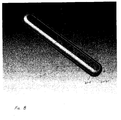
- Colorimeter 200 includes a front cover 202 and a rear cover 204 housing components associated with colorimeter 200.
- the front cover 202 faces the impinging ambient light while the back cover 204 faces the source image (not shown).
- the front cover 202 is configured to receive a light pipe 210 for receiving the impinging ambient light.
- the light pipe 210 includes a lens 206 for directing impinging light to an ambient light sensor aligned therewith.
- a major portion of the light pipe 210 is shown having an exposed surface that is substantially flush with front cover 202, however, other suitable configurations are contemplated.
- the front and rear covers 202 and 204 enclose a PCB 212 disposed intermediate the light pipe 210 and rear cover 204 as best seen in Figure 10.
- PCB 212 is a primary colorimeter PCB with sensors 220, 222, and 224 facing the source image (not shown) to make component readings of the luminance emanating from the source image.
- An ambient sensor 230 faces ambient light impinging on the surface of the source image.
- the ambient sensor 230 is a light tight package that receives the ambient light directed at the source image and impinging the lens 206 of light pipe 210.
- a pair of corresponding apertures 232 defined by PCB 212 allow corresponding light pipe cylinders 234 extending from light pipe 210 to extend therethrough to the rear cover 204.
- Each cylinder 234 is capped with a clear plastic lens 236
- Each lens 236 and cylinder 234 allows passage of the light emitted from the source image to pass through the PCB 212 and direct the same to the ambient sensor 230 located on an opposite surface side of the PCB 212 where the three sensors 220, 222 and 224 are disposed.
- a means to indicate the status of colorimeter 200 (e.g., calibration) or indicate a change in the ambient illumination may be disposed at an opposite end of the colorimeter from which the sensors 220, 222 and 224 are disposed.
- the indicating means 240 may include a plurality of LEDs or other display means known in the art to indicate a status or parameter. In an exemplary embodiment, four differently colored LEDs are indicated generally at 242. Depending on which of the differently colored LEDs are lit, one or more lit LEDs or a sequence thereof may indicate the status of calibration or re-calibration of colorimeter 200 and/or indicate that there has been a predetermined change in ambient illumination, for example. However, other parameters or status conditions may be indicated as well.
- rear cover 204 is configured to receive an external baffle 250 having three apertures 252, 254 and 256 aligned with a respective sensor 220, 222 and 224.
- the external baffle 250 is illustrated as being substantially flush with a rear surface defining the rear cover 204, but other suitable configurations (e.g., recessed or raised from rear cover 204) are contemplated.
- the external baffle 250 further defines the field of view for sensors 220, 222 and 224.
- an attachment means 262 is exposed for attaching the colorimeter 200 to a display monitor (not shown).
- Housing 300 for holding the colorimeter of Figures 8-12 is illustrated.
- Housing 300 is configured to be affixable to the source image, for example a display monitor other than the display screen, when the colorimeter 200 is not in use.
- Housing 300 includes a first member 302 and a second member 304 extending from the first member 302.
- the first member 302 is substantially planar for providing a surface to be affixed to a monitor, for example.
- the second member 304 extending from the first member 302 is configured to receive at one of the two longitudinal ends defining the colorimeter 300. More specifically, second member 304 is contoured having a similar contour to the end 260 defined by the either the front or rear covers 202, 204, respectively.
- the second member 304 includes a longitudinal groove 308 substantially bisecting the second member 304 into first and second portions 310 and 312, respectively.
- the first and second portions 310 and 312, respectively, then can be resiliently displaced relative to each other to releasably receive and secure the colorimeter 200 therewith when not in use.
- the plurality of serially aligned suction cups 264 disposed in the second member 304 may provide a tacky surface to provide releasable positive grip between the colorimeter 200 and housing 300.
Landscapes
- Physics & Mathematics (AREA)
- Spectroscopy & Molecular Physics (AREA)
- General Physics & Mathematics (AREA)
- Spectrometry And Color Measurement (AREA)
- Analysing Materials By The Use Of Radiation (AREA)
- Apparatus For Radiation Diagnosis (AREA)
Priority Applications (1)
| Application Number | Priority Date | Filing Date | Title |
|---|---|---|---|
| EP06005167A EP1681541B1 (fr) | 2004-09-30 | 2005-09-30 | Procédé et appareil de colorimétrie améliorée |
Applications Claiming Priority (2)
| Application Number | Priority Date | Filing Date | Title |
|---|---|---|---|
| US61425704P | 2004-09-30 | 2004-09-30 | |
| US65304805P | 2005-02-15 | 2005-02-15 |
Related Child Applications (1)
| Application Number | Title | Priority Date | Filing Date |
|---|---|---|---|
| EP06005167A Division EP1681541B1 (fr) | 2004-09-30 | 2005-09-30 | Procédé et appareil de colorimétrie améliorée |
Publications (4)
| Publication Number | Publication Date |
|---|---|
| EP1643224A2 true EP1643224A2 (fr) | 2006-04-05 |
| EP1643224A3 EP1643224A3 (fr) | 2006-06-07 |
| EP1643224B1 EP1643224B1 (fr) | 2008-10-29 |
| EP1643224B8 EP1643224B8 (fr) | 2009-02-18 |
Family
ID=35478664
Family Applications (1)
| Application Number | Title | Priority Date | Filing Date |
|---|---|---|---|
| EP20050021441 Expired - Lifetime EP1643224B8 (fr) | 2004-09-30 | 2005-09-30 | Procédé et dispositif de colorimétrie améliorée |
Country Status (2)
| Country | Link |
|---|---|
| EP (1) | EP1643224B8 (fr) |
| DE (2) | DE602005027803D1 (fr) |
Cited By (1)
| Publication number | Priority date | Publication date | Assignee | Title |
|---|---|---|---|---|
| EP2187188A1 (fr) * | 2008-11-13 | 2010-05-19 | X-Rite Europe GmbH | Dispositif de mesure de la lumière |
Family Cites Families (5)
| Publication number | Priority date | Publication date | Assignee | Title |
|---|---|---|---|---|
| FR2087647A5 (fr) * | 1970-05-27 | 1971-12-31 | Anvar | |
| US4632559A (en) * | 1982-11-29 | 1986-12-30 | Miles Laboratories, Inc. | Optical readhead |
| US5123740A (en) * | 1991-01-15 | 1992-06-23 | Beckman Instruments, Inc. | Stray light trap in a monochrometer |
| JP3284997B2 (ja) * | 1999-01-29 | 2002-05-27 | ミノルタ株式会社 | 測定用光学系 |
| US7030987B2 (en) * | 2002-12-11 | 2006-04-18 | Gretagmacbeth, Llc | Colorimeter with high SNR |
-
2005
- 2005-09-30 EP EP20050021441 patent/EP1643224B8/fr not_active Expired - Lifetime
- 2005-09-30 DE DE200560027803 patent/DE602005027803D1/de not_active Expired - Lifetime
- 2005-09-30 DE DE602005010644T patent/DE602005010644D1/de not_active Expired - Lifetime
Cited By (1)
| Publication number | Priority date | Publication date | Assignee | Title |
|---|---|---|---|---|
| EP2187188A1 (fr) * | 2008-11-13 | 2010-05-19 | X-Rite Europe GmbH | Dispositif de mesure de la lumière |
Also Published As
| Publication number | Publication date |
|---|---|
| EP1643224B8 (fr) | 2009-02-18 |
| DE602005027803D1 (de) | 2011-06-16 |
| DE602005010644D1 (de) | 2008-12-11 |
| EP1643224B1 (fr) | 2008-10-29 |
| EP1643224A3 (fr) | 2006-06-07 |
Similar Documents
| Publication | Publication Date | Title |
|---|---|---|
| EP0957643B1 (fr) | Appareil et procede de mesure des caracteristiques colorimetriques | |
| US7372571B2 (en) | Color sensing apparatus | |
| EP0616200B1 (fr) | Appareil pour évaluer l'état de combustion des flammes | |
| EP1365383B1 (fr) | Méthode et appareil de détermination de la luminosité environnante d'un écran LCD couleur pour correction de sa chrominance | |
| TWI626433B (zh) | 二維空間解析測量方法及用於進行該測量之成像色度計系統 | |
| US8441470B2 (en) | Color sensor unit for use in display device, color measuring device for use in display device, display system incorporated with color sensor unit, and display calibration method | |
| US20120250022A1 (en) | Hand-Held Color Measurement Device | |
| US20080266563A1 (en) | Measuring color using color filter arrays | |
| US6320652B1 (en) | Optical measuring apparatus | |
| US6459485B1 (en) | Optical system | |
| US6987571B2 (en) | Sensor head, luminance distribution measurement apparatus having the sensor head, and unevenness inspection/evaluation apparatus | |
| US7030987B2 (en) | Colorimeter with high SNR | |
| US7499163B2 (en) | System and method for applying correction factors related to ambient conditions | |
| US7317520B2 (en) | Method and apparatus for measuring brightness | |
| CA1319990C (fr) | Methode de conversion des donnees de couleur d'une source lumineuse et d'un objet non lumineux | |
| EP1643224B1 (fr) | Procédé et dispositif de colorimétrie améliorée | |
| EP1681541B1 (fr) | Procédé et appareil de colorimétrie améliorée | |
| US5117101A (en) | Tristimulus color recognition system with means for compensating for variations in light source color | |
| US20070063131A1 (en) | Optics assembly for color measurement system | |
| JP2002296115A (ja) | 発光体の色調測定方法、及びその測定装置、並びに発光体の光度測定装置 | |
| CN111141388A (zh) | 一种环带测色仪和颜色测量方法 | |
| US6661915B1 (en) | Illumination variable colorimetric method and colorimeter | |
| JPH08320273A (ja) | 光学的角度特性測定装置 | |
| JP2746196B2 (ja) | 表示光測定用センサ及び表示光測定システム | |
| Rood | Practical instrumentation for graphic arts color measurement |
Legal Events
| Date | Code | Title | Description |
|---|---|---|---|
| PUAI | Public reference made under article 153(3) epc to a published international application that has entered the european phase |
Free format text: ORIGINAL CODE: 0009012 |
|
| AK | Designated contracting states |
Kind code of ref document: A2 Designated state(s): AT BE BG CH CY CZ DE DK EE ES FI FR GB GR HU IE IS IT LI LT LU LV MC NL PL PT RO SE SI SK TR |
|
| AX | Request for extension of the european patent |
Extension state: AL BA HR MK YU |
|
| PUAL | Search report despatched |
Free format text: ORIGINAL CODE: 0009013 |
|
| AK | Designated contracting states |
Kind code of ref document: A3 Designated state(s): AT BE BG CH CY CZ DE DK EE ES FI FR GB GR HU IE IS IT LI LT LU LV MC NL PL PT RO SE SI SK TR |
|
| AX | Request for extension of the european patent |
Extension state: AL BA HR MK YU |
|
| 17P | Request for examination filed |
Effective date: 20061019 |
|
| AKX | Designation fees paid |
Designated state(s): CH DE FR GB IT LI |
|
| GRAP | Despatch of communication of intention to grant a patent |
Free format text: ORIGINAL CODE: EPIDOSNIGR1 |
|
| GRAS | Grant fee paid |
Free format text: ORIGINAL CODE: EPIDOSNIGR3 |
|
| GRAA | (expected) grant |
Free format text: ORIGINAL CODE: 0009210 |
|
| RAP1 | Party data changed (applicant data changed or rights of an application transferred) |
Owner name: X-RITE EUROPE GMBH |
|
| AK | Designated contracting states |
Kind code of ref document: B1 Designated state(s): CH DE FR GB IT LI |
|
| REG | Reference to a national code |
Ref country code: GB Ref legal event code: FG4D |
|
| REG | Reference to a national code |
Ref country code: CH Ref legal event code: EP |
|
| REF | Corresponds to: |
Ref document number: 602005010644 Country of ref document: DE Date of ref document: 20081211 Kind code of ref document: P |
|
| PG25 | Lapsed in a contracting state [announced via postgrant information from national office to epo] |
Ref country code: IT Free format text: LAPSE BECAUSE OF FAILURE TO SUBMIT A TRANSLATION OF THE DESCRIPTION OR TO PAY THE FEE WITHIN THE PRESCRIBED TIME-LIMIT Effective date: 20081029 |
|
| PLBE | No opposition filed within time limit |
Free format text: ORIGINAL CODE: 0009261 |
|
| STAA | Information on the status of an ep patent application or granted ep patent |
Free format text: STATUS: NO OPPOSITION FILED WITHIN TIME LIMIT |
|
| 26N | No opposition filed |
Effective date: 20090730 |
|
| REG | Reference to a national code |
Ref country code: FR Ref legal event code: ST Effective date: 20100531 |
|
| PG25 | Lapsed in a contracting state [announced via postgrant information from national office to epo] |
Ref country code: FR Free format text: LAPSE BECAUSE OF NON-PAYMENT OF DUE FEES Effective date: 20090930 |
|
| REG | Reference to a national code |
Ref country code: DE Ref legal event code: R082 Ref document number: 602005010644 Country of ref document: DE Representative=s name: SCHWABE SANDMAIR MARX, DE Ref country code: DE Ref legal event code: R081 Ref document number: 602005010644 Country of ref document: DE Owner name: X-RITE SWITZERLAND GMBH, CH Free format text: FORMER OWNER: X-RITE EUROPE GMBH, REGENSDORF, CH Ref country code: DE Ref legal event code: R082 Ref document number: 602005010644 Country of ref document: DE Representative=s name: SCHWABE SANDMAIR MARX PATENTANWAELTE RECHTSANW, DE |
|
| REG | Reference to a national code |
Ref country code: CH Ref legal event code: PFA Owner name: X-RITE SWITZERLAND GMBH, CH Free format text: FORMER OWNER: X-RITE EUROPE GMBH, DE |
|
| PGFP | Annual fee paid to national office [announced via postgrant information from national office to epo] |
Ref country code: DE Payment date: 20240918 Year of fee payment: 20 |
|
| PGFP | Annual fee paid to national office [announced via postgrant information from national office to epo] |
Ref country code: GB Payment date: 20240919 Year of fee payment: 20 |
|
| PGFP | Annual fee paid to national office [announced via postgrant information from national office to epo] |
Ref country code: CH Payment date: 20241001 Year of fee payment: 20 |
|
| REG | Reference to a national code |
Ref country code: DE Ref legal event code: R071 Ref document number: 602005010644 Country of ref document: DE Ref country code: CH Ref legal event code: PL |
|
| REG | Reference to a national code |
Ref country code: GB Ref legal event code: PE20 Expiry date: 20250929 |