EP1643252A2 - Peptide zur Unterscheidung von Prionen - Google Patents
Peptide zur Unterscheidung von Prionen Download PDFInfo
- Publication number
- EP1643252A2 EP1643252A2 EP05256113A EP05256113A EP1643252A2 EP 1643252 A2 EP1643252 A2 EP 1643252A2 EP 05256113 A EP05256113 A EP 05256113A EP 05256113 A EP05256113 A EP 05256113A EP 1643252 A2 EP1643252 A2 EP 1643252A2
- Authority
- EP
- European Patent Office
- Prior art keywords
- prp
- prion
- peptide
- disease
- protein
- Prior art date
- Legal status (The legal status is an assumption and is not a legal conclusion. Google has not performed a legal analysis and makes no representation as to the accuracy of the status listed.)
- Granted
Links
Images


Classifications
-
- C—CHEMISTRY; METALLURGY
- C07—ORGANIC CHEMISTRY
- C07K—PEPTIDES
- C07K7/00—Peptides having 5 to 20 amino acids in a fully defined sequence; Derivatives thereof
- C07K7/04—Linear peptides containing only normal peptide links
- C07K7/08—Linear peptides containing only normal peptide links having 12 to 20 amino acids
-
- C—CHEMISTRY; METALLURGY
- C07—ORGANIC CHEMISTRY
- C07K—PEPTIDES
- C07K7/00—Peptides having 5 to 20 amino acids in a fully defined sequence; Derivatives thereof
-
- C—CHEMISTRY; METALLURGY
- C07—ORGANIC CHEMISTRY
- C07K—PEPTIDES
- C07K14/00—Peptides having more than 20 amino acids; Gastrins; Somatostatins; Melanotropins; Derivatives thereof
- C07K14/435—Peptides having more than 20 amino acids; Gastrins; Somatostatins; Melanotropins; Derivatives thereof from animals; from humans
- C07K14/46—Peptides having more than 20 amino acids; Gastrins; Somatostatins; Melanotropins; Derivatives thereof from animals; from humans from vertebrates
- C07K14/47—Peptides having more than 20 amino acids; Gastrins; Somatostatins; Melanotropins; Derivatives thereof from animals; from humans from vertebrates from mammals
- C07K14/4701—Peptides having more than 20 amino acids; Gastrins; Somatostatins; Melanotropins; Derivatives thereof from animals; from humans from vertebrates from mammals not used
- C07K14/4711—Alzheimer's disease; Amyloid plaque core protein
-
- C—CHEMISTRY; METALLURGY
- C07—ORGANIC CHEMISTRY
- C07K—PEPTIDES
- C07K14/00—Peptides having more than 20 amino acids; Gastrins; Somatostatins; Melanotropins; Derivatives thereof
- C07K14/435—Peptides having more than 20 amino acids; Gastrins; Somatostatins; Melanotropins; Derivatives thereof from animals; from humans
- C07K14/475—Growth factors; Growth regulators
- C07K14/50—Fibroblast growth factor [FGF]
-
- C—CHEMISTRY; METALLURGY
- C07—ORGANIC CHEMISTRY
- C07K—PEPTIDES
- C07K14/00—Peptides having more than 20 amino acids; Gastrins; Somatostatins; Melanotropins; Derivatives thereof
- C07K14/435—Peptides having more than 20 amino acids; Gastrins; Somatostatins; Melanotropins; Derivatives thereof from animals; from humans
- C07K14/78—Connective tissue peptides, e.g. collagen, elastin, laminin, fibronectin, vitronectin or cold insoluble globulin [CIG]
-
- C—CHEMISTRY; METALLURGY
- C07—ORGANIC CHEMISTRY
- C07K—PEPTIDES
- C07K7/00—Peptides having 5 to 20 amino acids in a fully defined sequence; Derivatives thereof
- C07K7/04—Linear peptides containing only normal peptide links
- C07K7/06—Linear peptides containing only normal peptide links having 5 to 11 amino acids
-
- G—PHYSICS
- G01—MEASURING; TESTING
- G01N—INVESTIGATING OR ANALYSING MATERIALS BY DETERMINING THEIR CHEMICAL OR PHYSICAL PROPERTIES
- G01N33/00—Investigating or analysing materials by specific methods not covered by groups G01N1/00 - G01N31/00
- G01N33/48—Biological material, e.g. blood, urine; Haemocytometers
- G01N33/50—Chemical analysis of biological material, e.g. blood, urine; Testing involving biospecific ligand binding methods; Immunological testing
- G01N33/53—Immunoassay; Biospecific binding assay; Materials therefor
- G01N33/543—Immunoassay; Biospecific binding assay; Materials therefor with an insoluble carrier for immobilising immunochemicals
- G01N33/54313—Immunoassay; Biospecific binding assay; Materials therefor with an insoluble carrier for immobilising immunochemicals the carrier being characterised by its particulate form
-
- G—PHYSICS
- G01—MEASURING; TESTING
- G01N—INVESTIGATING OR ANALYSING MATERIALS BY DETERMINING THEIR CHEMICAL OR PHYSICAL PROPERTIES
- G01N33/00—Investigating or analysing materials by specific methods not covered by groups G01N1/00 - G01N31/00
- G01N33/48—Biological material, e.g. blood, urine; Haemocytometers
- G01N33/50—Chemical analysis of biological material, e.g. blood, urine; Testing involving biospecific ligand binding methods; Immunological testing
- G01N33/68—Chemical analysis of biological material, e.g. blood, urine; Testing involving biospecific ligand binding methods; Immunological testing involving proteins, peptides or amino acids
- G01N33/6893—Chemical analysis of biological material, e.g. blood, urine; Testing involving biospecific ligand binding methods; Immunological testing involving proteins, peptides or amino acids related to diseases not provided for elsewhere
- G01N33/6896—Neurological disorders, e.g. Alzheimer's disease
-
- G—PHYSICS
- G01—MEASURING; TESTING
- G01N—INVESTIGATING OR ANALYSING MATERIALS BY DETERMINING THEIR CHEMICAL OR PHYSICAL PROPERTIES
- G01N2333/00—Assays involving biological materials from specific organisms or of a specific nature
- G01N2333/90—Enzymes; Proenzymes
- G01N2333/914—Hydrolases (3)
- G01N2333/948—Hydrolases (3) acting on peptide bonds (3.4)
- G01N2333/968—Plasmin, i.e. fibrinolysin
-
- G—PHYSICS
- G01—MEASURING; TESTING
- G01N—INVESTIGATING OR ANALYSING MATERIALS BY DETERMINING THEIR CHEMICAL OR PHYSICAL PROPERTIES
- G01N2800/00—Detection or diagnosis of diseases
- G01N2800/28—Neurological disorders
- G01N2800/2814—Dementia; Cognitive disorders
- G01N2800/2828—Prion diseases
Definitions
- TSE transmissible spongiform encephalopathies
- TSEs Transmissible spongiform encephalopathies
- TSEs comprise a group of rapidly progressing, neurodegenerative fatal diseases that affect both humans and animals.
- TSEs have clinical and neuropathological characteristics which include devastating dementia, pyramidal and extrapyramidal signs with myoclonus, multifocal spongiform changes, astrogliosis, amyloid plaques, neuronal loss, absence of inflammatory reaction and are usually characterized by a long incubation period.
- Prion which stands for nucleic acid-free pro teinaceous infectious particle, is a glycoprotein present in humans and animals.
- the cellular form of this protein (PrP C ) has two N-link glycosylation sites and a GPI anchor at the C-terminus.
- PrP Sc The transmissible scrapie disease form of the prion protein (PrP Sc ) is a protease resistant isoform of its cellular precursor and is predominantly found in brain. At much lower level, it has also been found in tonsil, spleen, and lymph nodes in vCJD patients (Parizek 2001).
- CJD Creutzfeldt-Jakob disease
- sCJD sporadic
- fCJD familial CJD
- vCJD a new variant of CJD
- Prion diseases affect many species of domestic and wild animals, manifestations of which are often given unique names, for example, scrapie in sheep and goats (McGowan 1922), chronic wasting disease (CWD, Williams 1980) in cervids and bovine spongiform encephalopathy (BSE, or "mad cow” disease, Wells 1987) in cattle.
- PrP sc disease-specific, "scrapie” isoform
- PrP Sc normal PrP C , acting as a substrate, undergoes a conformational structure change, and becomes PrP Sc through an autocatalytic process and results in PrP Sc aggregation and amyloid rod formation, hence causing cell death (Hope 1986, Horwich 1997).
- PrP C normal PrP C
- PrP Sc normal PrP C
- the structural change from PrP C to PrP Sc is most supported by a crucial conformational change, involving a substantial increase in the amount of Beta-sheet structure of the protein, with possibly a small decrease in the amount of alpha-helix, indicated by circular dichroism and infrared spectroscopy (Pan 1993, Caughey 1991).
- Protease resistance is another characteristic that distinguishes PrP Sc from PrP C .
- PrP Sc In cultured cells and brain or in samples from many patients with GSS, PrP Sc is smaller than its cellular precursor PrP C . Even though cellular prion and scrapie prion are two isoform of same PRNP genomic product, PrP C is completely degraded by Proteinase K treatment while PrP Sc undergoes only limited digestion. The digestion yields a form of protein referred to as PrP 27-30 in which the N-terminus has been removed. PrP 27-30 has been postulated to be the PrP Sc core required for PrP C hosted PrP Sc replication. The protease treated prion molecule, PrP 27-30 or PrP res , is tightly linked to scrapie infectivity (Gabizon 1988), and provides additional evidence that PrP Sc is an infectious protein.
- PrP Sc is a soluble protein
- PrP Sc isoform is highly insoluble.
- PrP C is found attached to the surface of neurons through a GPI tail anchored into membrane (Shyng 1994) while PrP res is found in the cytoplasm of affected cells (Taraboulos 1990), most likely associated with late endosomal and lysosomal compartments (Arnold 1995), and PrP Sc is also localized in amorphous aggregates in enriched fractions from infected brain (Meyer 1986).
- Prion diseases are transmissible.
- the transmissibility of animal prion diseases has long been established experimentally by inoculation of brain homogenates from affected animals into healthy ones, such scrapie from sheep to sheep (Cuyer 1936) and across species to goat (Pattison 1957), kuru and CJD from humans to chimpanzees (Gajdusek 1966, Gibbs 1968), The significant breakthrough was the successful transmission of scrapie to mice (Chandler 1961) which greatly facilitated TSE research by providing an experimental model.
- vCJD The cause of recent BSE in cattle and new variant CJD in human (vCJD) was considered a consequence of dietary exposure to the mix of scrapie sheep carcasses rendered for animal feed in the case of BSE (Brown 1997) and to beef from cattle affected with BSE in the case of vCJD (Bruce 1997).
- the link between vCJD and BSE is further supported by the neuropathologic evidence obtained from BSE-adapted macaques, the nearest model to humans, and from the study on inbred mice inoculated with the agent causing BSE and vCJD (Lasmézas 1996).
- CWD like BSE
- CWD could be transmitted to humans who may be exposed to the disease through hunting, or handling and eating infected meat.
- Tragic, unintended transmission of prion disease in humans has been documented, such as the kuru epidemic caused by cannibalistic ingestion of brain tissue from the deceased, and the iatrogenic transmission of CJD through the use of hormones, tissue transplants, and contaminated medical devices.
- PrP res Such pretreatment cleaves the first 60 - 70 residues from PrP Sc to yield a PK-resistant PrP27kDa-30 kDa core called PrP res .
- Anti-PrP antibodies that recognize the remaining C-terminal region of the protein can then be used to detect the N-terminally truncated PrP Sc , or PrP res , present only in pathological samples.
- tissue sections are also pretreated, usually by acid hydrolysis to reduce the PrP C related background. Therefore, PrP res is a surrogate for the precursor PrP Sc in these immunoassays.
- All current manufactured prion diagnosis assays use brain tissue as a sample source.
- the European Commission in 1999 evaluated 4 BSE test kits from different manufacturers (Moynagh 1999). They all required a separate sample preparation procedure. Depending on the kit instructions, the brain tissue homogenate needed to be processed, including denaturation, PK digestion or PrP Sc enrichment.
- the assay detection systems employed in DELFA, immunoblot, or in plate ELISA formats used either chemiluminescent or a colorimetric substrate.
- PrP Sc -based antemortem assays An issue common to PrP Sc -based antemortem assays is whether PrP Sc is present in peripheral tissues or body fluids. Because of technical difficulties, little experimental data on the presence of PrP Sc or its associated infectivity in body fluids are available, and this subject remains controversial. In the hamster model of scrapie, a low level of infectivity can be detected in blood. Although the infectivity in lymphocyte-rich buffy-coat derived from diseased hamster blood is greater than in plasma, it only accounts for relatively a small portion when compared to whole blood inoculums. The molecular definition of this infectious agent present in the blood is not clear.
- PrP Sc isolated from diseased brain is also associated with a variety of glycans. Those include 1,4-linked glucose units in prion rods, sphingolipids, polysaccharides and other membrane components in PrP Sc aggregates (Appel 1999, Klein 1998), and sulfated proteoglygan in prion amyloid plaques (Snow 1990), a property that has been exploited in immunohistochemistry, where binding by heparan sulfate antibodies (anti-HS) and heparan sulfate proteoglycan antibodies (anti-HSPG), has been shown to correlate with abnormal PrP as early as 70 days post-infection and throughout the course of the disease (McBride 1998).
- anti-HS heparan sulfate antibodies
- anti-HSPG heparan sulfate proteoglycan antibodies
- glycan also convert cellular prion protein into Beta-sheet conformation.
- sulfate glycans have been shown either to facilitate the conversion or to escalate infectivity (Wong 2001, Shaked 2001a, Diaz-Nido 2002).
- GST::full-length prion and GST::prion fragment Warner recently demonstrated direct binding of recombinant prion to heparin and heparan sulfate (Warner 2002).
- the peptide region 23-52 in prion sequence was positive in all HS and HSPG binding tests. Since the peptide failed to compete with full-length prion for binding to heparin, the author suggested that there might be another major GAG-binding site in intact PrP C . Another interesting observation is that plasminogen has been reported to bind brain-derived PrP Sc , but not to PrP C . Although it has not been demonstrated that plasminogen has a direct interaction with PrP Sc , a binding site is suggested within the Kringle region of plasminogen, a region that has a known affinity for heparin.
- GAGs from different species (bovine and porcine) or from different organs (lung, kidney and intestine) have shown different affinities for prion binding.
- the difference in affinity may be due to prion sequence itself, or may depend on the presence of particular sugar unit in the tested GAGs.
- peptides were proposed that are designed to selectively capture PrP Sc but not PrP C through peptide affinity to unique PrP Sc conformation or to PrP Sc associated molecules. They were screened by the ability to identify and to capture PrP Sc from homogenates of diseased brains by immunoprecipitation without protease pretreatment.
- Glycans such as heparin and heparin sulfate were associated with PrP Sc amyloid aggregates. Because the association affinity was much higher in GAG::PrP Sc than in GAG::PrP C it is possible to use peptides characterized as glycan binding domain to selectively capture PrP Sc but not PrP C .
- peptides described as heparin or heparin sulfate binding domain were synthesized: (1) WQPPRARI of carboxy-terminal fibronectin (Woods 1993, Hines 1994) (2) NWCKRGRKNCKTH of amyloid protein precursor (Small 1994), (3) NYKKPKLG of N-terminal fibroblast growth factor (FGF)-1 (Lou 1996) and (4) KDFLSIELVRGRVK of the C-terminal G-domain of the laminin alpha1 chain (Yoshida 1999).
- Kringle region was involved in the selective binding of plasminogen to PrP Sc . It was also known that Kringle region had heparin/heparin sulfate binding activity (Mizuno 1994) for which positively charged amino acids (such as Arg and Lys) were involved (Soeda 1989). In a separate publication, two conserved tripeptides "YYR”, or rather three discontinued "YYX” in prion sequence as suggested, were found to interact with PrP sc but not interact with PrP C (Paramithiotis 2003, WO0078344A1).
- Nucleic acids are another category of molecules that associated with PrP sc aggregates. Anti-DNA antibodies have been used effectively to capture PrP sc .
- Histones are a group of proteins known to bind nuclear DNA. Therefore, three peptides (1) AQKKDGKKRKRSRKESYSIYV of H2B(21-41), (2) ARTKQTARKSTGGKAPRKQLA of H3(1-21), and (3) SGRGKGGKGLGKGGAKRHRKVLR of H4(2-24) were synthesized to evaluate their ability of the capture of PrP Sc .
- the aim of the present invention is to provide a non-intrusive way to isolate, concentrate and monitor the TSE disease-related pathogenic prion protein.
- the invention described eight peptides (peptide-1, peptide-2, peptide-3, peptide-5, peptide-6, peptide-7, peptide-8 and peptide-9) and their ability to capture PrP Sc from brain homogenate of prion disease infected animal and human. These eight peptides do not capture cellular prion protein from individual with no prion disease.
- PrP Sc is associated with high affinity to many other molecules such as nucleic acid and glycans as investigated.
- the evidence also demonstrated that the association was strong, resistant to PK digestion treatment, and that PrP Sc could be readily isolated by peptides through recognition of such associated binding partner.
- This invention relates to the use of described peptides to capture PrP Sc through glycans or nucleic acids associated with high affinity to PrP Sc , in combination with any prion sequence-specific antibody for the detection of PrP Sc .
- this invention relates to the peptides, as described above, that preferably binds to pathogenic prion protein but not to the normal cellular form of prion protein.
- this invention relates to the peptides, as described above, for the detection of PrP Sc through high affinity recognition of associated glycans or nucleic acids in combination of prion sequence specific antibodies.
- this invention relates to the peptides, as described above, for the isolation, purification, capture, elimination and monitoring PrP Sc in biological reagent production.
- this invention relates to compositions and kits for determining the presence of PrP Sc , comprising peptides, as described above, for either capture or for detection step in the assay procedure.
- this invention relates to compositions and kits for determining the presence of PrP Sc antibody produced in response to high affinity associated glycans or nucleic acids as a binding partner to pathogenic prion protein.
- this invention relates to anti-PrP Sc antibodies and their production using the said glycans or nucleic acids that can interact with and/or associate with PrP sc , and their use in detecting glycan::PrP Sc or nucleic acid::PrP Sc complex and prion disease infection.
- this invention relates to a non-harsh sample treatment procedure involving glycanase or nuclease digestion for the benefit of the use of described peptides as described above.
- Normal and scrapie hamster brain lysate were obtained from Baltimore Research and Education Foundation as 10% whole brain tissue homogenate in PBS (w/v).
- the lysate was further treated by adding 1/10 volume of 10X detergent homogenate buffer, composed of 5% sodium deoxycolate and 5% Igpal CA-630 (equivalent to NP-40) in PBS, incubating at 4C for 1hr., followed by centrifugation at 1000g for 10 minutes. The resulting supernatant was collected and used in the assay.
- VLA Veterinary Laboratories Agency
- NJDSU National CJD Surveillance Unit
- peptides were either synthesized by ResGen (currently a division of Invitrogen Corporation), or purchased from Upstate Group, Inc. Each peptide was labeled with biotin either on the C-terminal Lysine bearing an aminohexanoyl spacer (K(Lc)), or at the N-terminal through an aminohexanoyl spacer (AMCAP).
- ResGen currently a division of Invitrogen Corporation
- AMCAP aminohexanoyl spacer
- Biotinylated peptide was dissolved in PBS at 1mg/mL and stored at -20°C until use.
- the peptide -conjugated beads were then blocked for 2 hours, 37°C with 1 mM Biotin in 0.2 M Tris-HCl, pH 8.0, containing 0.1% BSA.
- the beads were subsequently washed 2 times with 1 ml PBS (0.1% BSA) and once with 1 ml PBS (0.1% BSA, 1% Tween 20) incubating each time for 10 minutes at room temp.
- the beads were then washed once with 1 ml PBS (0.1%BSA) and then stored in 1ml PBS (0.05% sodium azide) at 4°C.
- Brain homogenate was suspended in PBS buffer with or without non-ionic detergent. The total homogenate protein concentration was no more than 2.5 mg/mL.
- PK Roche Diagnostics, IN, USA, Cat.# 1373196
- Incubation was at 37C for 0.5 to 1 hour.
- Digestion was stopped by adding Pefabloc SC (Roche Diagnostics, IN, USA, Cat.# 1585916) to a final concentration of 4mM.
- IP Immunoprecipitation
- Peptide conjugated magnetic beads were used to capture PrP Sc from brain homogenate by immunoprecipitation.
- the IP procedure consists of the following protocol: mix 50uL peptide conjugated beads with PK treated or non-PK treated brain homogenate in a total of 1 mL IP buffer (3% Tween20 and 3% Igpal CA-630 in PBS) and incubate at 25C for 2.5 hours with rotation ⁇ Separate beads using MPC device and wash beads 3 times of 30 second vortexing with IP wash buffer (2% Tween20 and 2% Igpal CA-630 in PBS) ⁇ Elute captured PrP Sc by heating beads with NuPAGE sample buffer for 10-15 minutes.
- the eluted sample from IP capture were loaded onto a 4-12% NuPAGE® Bis-Tris Gel (Invitrogen, CA, USA, Cat.# NP0302) and subjected to non-reducing electrophoresis at 200V for 45 minutes.
- the immunoblot procedure was performed as follows: transfer separated proteins in the gel to a 0.2um PVDF membrane (Invitrogen, Cat# LC2002) at 30V for 60 minutes ⁇ Block the membrane with BlockerTM Casein in TBS (0.05% Tween20) (Pierce Chemical Corp., IL, USA, Cat.# 37532) either at 25C for 1 hour with shaking or at 4C overnight.
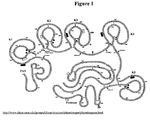
- Figure 1 Human Plasminogen Sequence and Kringle regions. There are 4 YRG sequence in 4 out of 5 Kringle regions (black rectangles). There are 6 YK, RY, RK sequences (white rectangles). There are lots of Y, R, or K around several Kringle loop disulphide bridges (black circles).
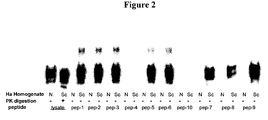
- FIG. 2 IP capture and immunoblot of hamster PrP Sc .
- Normal (4 ul) and scrapie (3 ul) hamster brain homogenate were either directly load on gel or subject to immunoprecipitation using streptavidin magmatic beads conjugated with biotinylated peptide.
- PrP was detected by immunoblot using 3F4.
- Scrapie lysate was PK digested for direct loading.
- Homogenate for IP capture was not PK treated.
- FIG. 3 IP capture and immunoblot of BSE PrP Sc .
- Brain homogenate from normal cattle (10ul) or from BSE (5ul) was added in 1mL IP buffer, subject to peptide-beads immunoprecipitation.
- the immunoprecipitated PrP was then treated with PK and analyzed by SDS-PAGE and immunoblot, detected by 6H4.
- Captured PrP from BSE brain homogenate was authentic PrP Sc since treatment with PK (50 ug/ml for 1 h at 37°C) generates the PK-resistant core PrP res fragments.
- the clarified brain homogenates from BSE and normal control were also incubated in the absence (-) or presence (+) of PK (50 ug/ml for 1 h at 37°C) and directly load onto SDS-gel as controls.
- FIG. 4 Immunocapture of PRP Sc from brains of vCJD by peptides.
- the peptide conjugated beads were used to immunoprecipitate PrP in 5 uL clarified brain homogenates from patients affected either by Lewy body dementia (LBD) or by vCJD (99/090).
- the immunoprecipitates were then analysed by SDS-PAGE (4-12% gel) and Western blotting using anti-PrP antibody 3F4. 5ul untreated LBD homogenate and 5 ul PK treated or untreated vCJD brain homogenate were loaded directly on SDS-gel to indicate the prion content.
- the present invention uses peptide to capture PrP Sc by recognition of high affinity associated molecules in PrP Sc complex such as glycans, nucleic acid. Because the tight association of these molecules only to PrP Sc but not to PrP C , the present invention provided a non-intrusive means for the detection of PrP Sc while no PK digestion or other protein modification procedure required. It is anticipated that the mild conditions will preserve the original structure and conformation of the pathogenic prion protein, thereby offering opportunity to determine the presence of true PrP Sc while minimizing the generation of PrP Sc due to harsh sample treatment.
- synthetic peptides offer advantages in that they display the binding specificity but can also be easily handled in direct coating to a solid phase as well as be conjugated to link to signal given reagents such as horseradish peroxidase (HRP), or to be adopted into other desired diagnosis assay format.
- HRP horseradish peroxidase
Landscapes
- Health & Medical Sciences (AREA)
- Chemical & Material Sciences (AREA)
- Life Sciences & Earth Sciences (AREA)
- Organic Chemistry (AREA)
- Molecular Biology (AREA)
- General Health & Medical Sciences (AREA)
- Engineering & Computer Science (AREA)
- Medicinal Chemistry (AREA)
- Biochemistry (AREA)
- Proteomics, Peptides & Aminoacids (AREA)
- Immunology (AREA)
- Genetics & Genomics (AREA)
- Biophysics (AREA)
- Biomedical Technology (AREA)
- Hematology (AREA)
- Urology & Nephrology (AREA)
- Gastroenterology & Hepatology (AREA)
- Zoology (AREA)
- Toxicology (AREA)
- Neurology (AREA)
- Cell Biology (AREA)
- Biotechnology (AREA)
- Microbiology (AREA)
- Food Science & Technology (AREA)
- Physics & Mathematics (AREA)
- Analytical Chemistry (AREA)
- General Physics & Mathematics (AREA)
- Pathology (AREA)
- Neurosurgery (AREA)
- Peptides Or Proteins (AREA)
- Investigating Or Analysing Biological Materials (AREA)
Priority Applications (1)
| Application Number | Priority Date | Filing Date | Title |
|---|---|---|---|
| EP09075234A EP2085404B1 (de) | 2004-09-30 | 2005-09-29 | Peptide zur Unterscheidung von Prionen |
Applications Claiming Priority (1)
| Application Number | Priority Date | Filing Date | Title |
|---|---|---|---|
| US61453304P | 2004-09-30 | 2004-09-30 |
Related Child Applications (1)
| Application Number | Title | Priority Date | Filing Date |
|---|---|---|---|
| EP09075234A Division EP2085404B1 (de) | 2004-09-30 | 2005-09-29 | Peptide zur Unterscheidung von Prionen |
Publications (3)
| Publication Number | Publication Date |
|---|---|
| EP1643252A2 true EP1643252A2 (de) | 2006-04-05 |
| EP1643252A3 EP1643252A3 (de) | 2006-05-31 |
| EP1643252B1 EP1643252B1 (de) | 2009-05-27 |
Family
ID=35432058
Family Applications (2)
| Application Number | Title | Priority Date | Filing Date |
|---|---|---|---|
| EP05256113A Expired - Lifetime EP1643252B1 (de) | 2004-09-30 | 2005-09-29 | Peptide zur Unterscheidung von Prionen |
| EP09075234A Expired - Lifetime EP2085404B1 (de) | 2004-09-30 | 2005-09-29 | Peptide zur Unterscheidung von Prionen |
Family Applications After (1)
| Application Number | Title | Priority Date | Filing Date |
|---|---|---|---|
| EP09075234A Expired - Lifetime EP2085404B1 (de) | 2004-09-30 | 2005-09-29 | Peptide zur Unterscheidung von Prionen |
Country Status (13)
| Country | Link |
|---|---|
| EP (2) | EP1643252B1 (de) |
| JP (1) | JP4837353B2 (de) |
| KR (1) | KR101355369B1 (de) |
| CN (1) | CN1804628B (de) |
| AR (1) | AR050965A1 (de) |
| AT (2) | ATE550666T1 (de) |
| AU (1) | AU2005209592B2 (de) |
| BR (1) | BRPI0504220A (de) |
| CA (1) | CA2518372C (de) |
| DE (1) | DE602005014597D1 (de) |
| ES (2) | ES2382935T3 (de) |
| NZ (1) | NZ542583A (de) |
| PT (2) | PT1643252E (de) |
Cited By (2)
| Publication number | Priority date | Publication date | Assignee | Title |
|---|---|---|---|---|
| EP1848830A4 (de) * | 2005-01-13 | 2009-05-06 | Novartis Vaccines & Diagnostic | Isolierung pathogener prione |
| US7834144B2 (en) | 2005-09-09 | 2010-11-16 | Novartis Ag | Prion-specific peptoid reagents |
Family Cites Families (15)
| Publication number | Priority date | Publication date | Assignee | Title |
|---|---|---|---|---|
| US4806627A (en) | 1987-05-29 | 1989-02-21 | Research Foundation Of Mental Hygiene Inc. | Hybrid cell lines producing monoclonal antibodies dircted against scrapie-associated fibril proteins |
| US5109464A (en) * | 1991-05-24 | 1992-04-28 | Amoco Corporation | Rib waveguide optimized for low loss coupling to optical fibers and method of determining same |
| US6617119B2 (en) | 1997-02-21 | 2003-09-09 | The Regents Of The University Of California | Assay for specific strains of multiple disease related conformations of a protein |
| EP0861900A1 (de) | 1997-02-21 | 1998-09-02 | Erziehungsdirektion Of The Canton Zurich | Immunologischer Nachweis von Prionen |
| US20010001061A1 (en) | 1997-02-21 | 2001-05-10 | Prusiner Stanley B. | Assay for disease related conformation of a protein |
| US6165784A (en) | 1997-10-14 | 2000-12-26 | The United States Of America As Represented By The Secretary Of Agriculture | Antibodies for the detection of prion protein as an indication of transmissible spongiform encephalopathies |
| MXPA01013186A (es) | 1999-06-23 | 2002-08-12 | Caprion Pharmaceuticals Inc | Peptidos de la proteina prion y sus usos. |
| US6261790B1 (en) | 1999-07-15 | 2001-07-17 | The United States Of America As Represented By The Secretary Of Agriculture | Monoclonal antibodies and antibody cocktail for detection of prion protein as an indication of transmissible spongiform encephalopathies |
| CA2385743A1 (en) | 1999-09-28 | 2001-04-05 | Universitat Zurich | Factors having prion-binding activity in serum and plasma and agents to detect transmissible spongiform encephalopathitis |
| GB0014870D0 (en) * | 2000-06-16 | 2000-08-09 | King S College London | Peptides |
| JP2004501626A (ja) | 2000-06-26 | 2004-01-22 | ウニヴェルジテート チューリッヒ | 血清および血漿中に見出されるプリオン結合活性を有する因子 |
| IL141950A0 (en) | 2000-10-22 | 2002-03-10 | Hadasit Med Res Service | Diagnosis of prion diseases |
| US20020137114A1 (en) | 2001-01-19 | 2002-09-26 | Dirk Voelkel | Method of detecting PrP protein and kits therefor |
| DE10107083C2 (de) * | 2001-02-13 | 2003-02-20 | Abdulgabar Salama | Pentosan Polysulfat als Ligand zum Nachweis von Prionen |
| AU2003266801B2 (en) * | 2002-12-19 | 2010-02-25 | Ortho-Clinical Diagnostics, Inc | Detection and diagnosis of transmissable spongiform encephalopathies |
-
2005
- 2005-09-07 AU AU2005209592A patent/AU2005209592B2/en not_active Ceased
- 2005-09-23 NZ NZ542583A patent/NZ542583A/en not_active IP Right Cessation
- 2005-09-29 KR KR1020050091413A patent/KR101355369B1/ko not_active Expired - Fee Related
- 2005-09-29 AT AT09075234T patent/ATE550666T1/de active
- 2005-09-29 AR ARP050104116A patent/AR050965A1/es unknown
- 2005-09-29 PT PT05256113T patent/PT1643252E/pt unknown
- 2005-09-29 JP JP2005284933A patent/JP4837353B2/ja not_active Expired - Fee Related
- 2005-09-29 AT AT05256113T patent/ATE432473T1/de not_active IP Right Cessation
- 2005-09-29 ES ES09075234T patent/ES2382935T3/es active Active
- 2005-09-29 EP EP05256113A patent/EP1643252B1/de not_active Expired - Lifetime
- 2005-09-29 DE DE602005014597T patent/DE602005014597D1/de not_active Expired - Lifetime
- 2005-09-29 PT PT09075234T patent/PT2085404E/pt unknown
- 2005-09-29 EP EP09075234A patent/EP2085404B1/de not_active Expired - Lifetime
- 2005-09-29 ES ES05256113T patent/ES2324919T3/es active Active
- 2005-09-30 BR BRPI0504220-8A patent/BRPI0504220A/pt not_active IP Right Cessation
- 2005-09-30 CN CN2005101064868A patent/CN1804628B/zh not_active Expired - Fee Related
- 2005-09-30 CA CA2518372A patent/CA2518372C/en not_active Expired - Fee Related
Cited By (2)
| Publication number | Priority date | Publication date | Assignee | Title |
|---|---|---|---|---|
| EP1848830A4 (de) * | 2005-01-13 | 2009-05-06 | Novartis Vaccines & Diagnostic | Isolierung pathogener prione |
| US7834144B2 (en) | 2005-09-09 | 2010-11-16 | Novartis Ag | Prion-specific peptoid reagents |
Also Published As
| Publication number | Publication date |
|---|---|
| PT1643252E (pt) | 2009-06-30 |
| JP4837353B2 (ja) | 2011-12-14 |
| KR101355369B1 (ko) | 2014-02-03 |
| PT2085404E (pt) | 2012-05-28 |
| CN1804628A (zh) | 2006-07-19 |
| ES2324919T3 (es) | 2009-08-19 |
| CN1804628B (zh) | 2012-03-14 |
| AR050965A1 (es) | 2006-12-06 |
| KR20060051862A (ko) | 2006-05-19 |
| HK1137764A1 (en) | 2010-08-06 |
| EP1643252A3 (de) | 2006-05-31 |
| EP1643252B1 (de) | 2009-05-27 |
| CA2518372C (en) | 2013-07-09 |
| AU2005209592B2 (en) | 2012-07-12 |
| EP2085404A1 (de) | 2009-08-05 |
| NZ542583A (en) | 2007-02-23 |
| ATE432473T1 (de) | 2009-06-15 |
| DE602005014597D1 (de) | 2009-07-09 |
| HK1088066A1 (en) | 2006-10-27 |
| EP2085404B1 (de) | 2012-03-21 |
| CA2518372A1 (en) | 2006-03-30 |
| ES2382935T3 (es) | 2012-06-14 |
| ATE550666T1 (de) | 2012-04-15 |
| AU2005209592A1 (en) | 2006-04-13 |
| BRPI0504220A (pt) | 2006-05-16 |
| JP2006105988A (ja) | 2006-04-20 |
Similar Documents
| Publication | Publication Date | Title |
|---|---|---|
| US7807386B2 (en) | Peptides for discrimination of prions | |
| CZ304365B6 (cs) | Způsob časné diagnostiky konformačních onemocnění | |
| MacGregor | Prion protein and developments in its detection | |
| EP1435521B1 (de) | Detektion und Diagnose von Übertragbaren Spongiformen Enzephalopathien | |
| EP2142934B1 (de) | Prionentest | |
| EP2085404B1 (de) | Peptide zur Unterscheidung von Prionen | |
| AU2001250406A1 (en) | Prion-binding activity in serum and plasma determined as plasminogen and fibrinogen | |
| US8663943B2 (en) | Antibodies for discrimination of prions | |
| HK1137764B (en) | Peptides for discrimination of prions | |
| HK1088066B (en) | Peptides for discrimination of prions | |
| Hatcher et al. | Cryptic peptides of the kringle domains preferentially bind to disease-associated prion protein | |
| EP1445615A1 (de) | Methode zur unterscheidung zwischen infektiösen und nicht-infektiösen prionen | |
| Morales et al. | Advances in prion detection | |
| WO2007067627A2 (en) | Isolating prions from blood via lipoproteins |
Legal Events
| Date | Code | Title | Description |
|---|---|---|---|
| PUAI | Public reference made under article 153(3) epc to a published international application that has entered the european phase |
Free format text: ORIGINAL CODE: 0009012 |
|
| AK | Designated contracting states |
Kind code of ref document: A2 Designated state(s): AT BE BG CH CY CZ DE DK EE ES FI FR GB GR HU IE IS IT LI LT LU LV MC NL PL PT RO SE SI SK TR |
|
| AX | Request for extension of the european patent |
Extension state: AL BA HR MK YU |
|
| PUAL | Search report despatched |
Free format text: ORIGINAL CODE: 0009013 |
|
| AK | Designated contracting states |
Kind code of ref document: A3 Designated state(s): AT BE BG CH CY CZ DE DK EE ES FI FR GB GR HU IE IS IT LI LT LU LV MC NL PL PT RO SE SI SK TR |
|
| AX | Request for extension of the european patent |
Extension state: AL BA HR MK YU |
|
| REG | Reference to a national code |
Ref country code: HK Ref legal event code: DE Ref document number: 1088066 Country of ref document: HK |
|
| 17P | Request for examination filed |
Effective date: 20061113 |
|
| 17Q | First examination report despatched |
Effective date: 20061218 |
|
| AKX | Designation fees paid |
Designated state(s): AT BE BG CH CY CZ DE DK EE ES FI FR GB GR HU IE IS IT LI LT LU LV MC NL PL PT RO SE SI SK TR |
|
| RIC1 | Information provided on ipc code assigned before grant |
Ipc: G01N 33/68 20060101AFI20080829BHEP Ipc: C07K 14/78 20060101ALI20080829BHEP |
|
| GRAP | Despatch of communication of intention to grant a patent |
Free format text: ORIGINAL CODE: EPIDOSNIGR1 |
|
| GRAS | Grant fee paid |
Free format text: ORIGINAL CODE: EPIDOSNIGR3 |
|
| GRAA | (expected) grant |
Free format text: ORIGINAL CODE: 0009210 |
|
| AK | Designated contracting states |
Kind code of ref document: B1 Designated state(s): AT BE BG CH CY CZ DE DK EE ES FI FR GB GR HU IE IS IT LI LT LU LV MC NL PL PT RO SE SI SK TR |
|
| REG | Reference to a national code |
Ref country code: GB Ref legal event code: FG4D |
|
| REG | Reference to a national code |
Ref country code: CH Ref legal event code: EP |
|
| REG | Reference to a national code |
Ref country code: IE Ref legal event code: FG4D |
|
| REG | Reference to a national code |
Ref country code: PT Ref legal event code: SC4A Free format text: AVAILABILITY OF NATIONAL TRANSLATION Effective date: 20090622 |
|
| REF | Corresponds to: |
Ref document number: 602005014597 Country of ref document: DE Date of ref document: 20090709 Kind code of ref document: P |
|
| REG | Reference to a national code |
Ref country code: CH Ref legal event code: NV Representative=s name: E. BLUM & CO. AG PATENT- UND MARKENANWAELTE VSP |
|
| REG | Reference to a national code |
Ref country code: ES Ref legal event code: FG2A Ref document number: 2324919 Country of ref document: ES Kind code of ref document: T3 |
|
| REG | Reference to a national code |
Ref country code: SE Ref legal event code: TRGR |
|
| PG25 | Lapsed in a contracting state [announced via postgrant information from national office to epo] |
Ref country code: LT Free format text: LAPSE BECAUSE OF FAILURE TO SUBMIT A TRANSLATION OF THE DESCRIPTION OR TO PAY THE FEE WITHIN THE PRESCRIBED TIME-LIMIT Effective date: 20090527 Ref country code: FI Free format text: LAPSE BECAUSE OF FAILURE TO SUBMIT A TRANSLATION OF THE DESCRIPTION OR TO PAY THE FEE WITHIN THE PRESCRIBED TIME-LIMIT Effective date: 20090527 Ref country code: AT Free format text: LAPSE BECAUSE OF FAILURE TO SUBMIT A TRANSLATION OF THE DESCRIPTION OR TO PAY THE FEE WITHIN THE PRESCRIBED TIME-LIMIT Effective date: 20090527 |
|
| NLV1 | Nl: lapsed or annulled due to failure to fulfill the requirements of art. 29p and 29m of the patents act | ||
| PG25 | Lapsed in a contracting state [announced via postgrant information from national office to epo] |
Ref country code: LV Free format text: LAPSE BECAUSE OF FAILURE TO SUBMIT A TRANSLATION OF THE DESCRIPTION OR TO PAY THE FEE WITHIN THE PRESCRIBED TIME-LIMIT Effective date: 20090527 Ref country code: IS Free format text: LAPSE BECAUSE OF FAILURE TO SUBMIT A TRANSLATION OF THE DESCRIPTION OR TO PAY THE FEE WITHIN THE PRESCRIBED TIME-LIMIT Effective date: 20090927 Ref country code: PL Free format text: LAPSE BECAUSE OF FAILURE TO SUBMIT A TRANSLATION OF THE DESCRIPTION OR TO PAY THE FEE WITHIN THE PRESCRIBED TIME-LIMIT Effective date: 20090527 Ref country code: SI Free format text: LAPSE BECAUSE OF FAILURE TO SUBMIT A TRANSLATION OF THE DESCRIPTION OR TO PAY THE FEE WITHIN THE PRESCRIBED TIME-LIMIT Effective date: 20090527 Ref country code: NL Free format text: LAPSE BECAUSE OF FAILURE TO SUBMIT A TRANSLATION OF THE DESCRIPTION OR TO PAY THE FEE WITHIN THE PRESCRIBED TIME-LIMIT Effective date: 20090527 |
|
| REG | Reference to a national code |
Ref country code: HK Ref legal event code: GR Ref document number: 1088066 Country of ref document: HK |
|
| PG25 | Lapsed in a contracting state [announced via postgrant information from national office to epo] |
Ref country code: RO Free format text: LAPSE BECAUSE OF FAILURE TO SUBMIT A TRANSLATION OF THE DESCRIPTION OR TO PAY THE FEE WITHIN THE PRESCRIBED TIME-LIMIT Effective date: 20090527 Ref country code: EE Free format text: LAPSE BECAUSE OF FAILURE TO SUBMIT A TRANSLATION OF THE DESCRIPTION OR TO PAY THE FEE WITHIN THE PRESCRIBED TIME-LIMIT Effective date: 20090527 Ref country code: CZ Free format text: LAPSE BECAUSE OF FAILURE TO SUBMIT A TRANSLATION OF THE DESCRIPTION OR TO PAY THE FEE WITHIN THE PRESCRIBED TIME-LIMIT Effective date: 20090527 Ref country code: DK Free format text: LAPSE BECAUSE OF FAILURE TO SUBMIT A TRANSLATION OF THE DESCRIPTION OR TO PAY THE FEE WITHIN THE PRESCRIBED TIME-LIMIT Effective date: 20090527 |
|
| PG25 | Lapsed in a contracting state [announced via postgrant information from national office to epo] |
Ref country code: SK Free format text: LAPSE BECAUSE OF FAILURE TO SUBMIT A TRANSLATION OF THE DESCRIPTION OR TO PAY THE FEE WITHIN THE PRESCRIBED TIME-LIMIT Effective date: 20090527 |
|
| PG25 | Lapsed in a contracting state [announced via postgrant information from national office to epo] |
Ref country code: BG Free format text: LAPSE BECAUSE OF FAILURE TO SUBMIT A TRANSLATION OF THE DESCRIPTION OR TO PAY THE FEE WITHIN THE PRESCRIBED TIME-LIMIT Effective date: 20090827 |
|
| PLBE | No opposition filed within time limit |
Free format text: ORIGINAL CODE: 0009261 |
|
| STAA | Information on the status of an ep patent application or granted ep patent |
Free format text: STATUS: NO OPPOSITION FILED WITHIN TIME LIMIT |
|
| PG25 | Lapsed in a contracting state [announced via postgrant information from national office to epo] |
Ref country code: MC Free format text: LAPSE BECAUSE OF NON-PAYMENT OF DUE FEES Effective date: 20090930 |
|
| 26N | No opposition filed |
Effective date: 20100302 |
|
| PG25 | Lapsed in a contracting state [announced via postgrant information from national office to epo] |
Ref country code: GR Free format text: LAPSE BECAUSE OF FAILURE TO SUBMIT A TRANSLATION OF THE DESCRIPTION OR TO PAY THE FEE WITHIN THE PRESCRIBED TIME-LIMIT Effective date: 20090828 |
|
| PG25 | Lapsed in a contracting state [announced via postgrant information from national office to epo] |
Ref country code: LU Free format text: LAPSE BECAUSE OF NON-PAYMENT OF DUE FEES Effective date: 20090929 |
|
| PG25 | Lapsed in a contracting state [announced via postgrant information from national office to epo] |
Ref country code: HU Free format text: LAPSE BECAUSE OF FAILURE TO SUBMIT A TRANSLATION OF THE DESCRIPTION OR TO PAY THE FEE WITHIN THE PRESCRIBED TIME-LIMIT Effective date: 20091128 |
|
| PG25 | Lapsed in a contracting state [announced via postgrant information from national office to epo] |
Ref country code: TR Free format text: LAPSE BECAUSE OF FAILURE TO SUBMIT A TRANSLATION OF THE DESCRIPTION OR TO PAY THE FEE WITHIN THE PRESCRIBED TIME-LIMIT Effective date: 20090527 |
|
| PG25 | Lapsed in a contracting state [announced via postgrant information from national office to epo] |
Ref country code: CY Free format text: LAPSE BECAUSE OF FAILURE TO SUBMIT A TRANSLATION OF THE DESCRIPTION OR TO PAY THE FEE WITHIN THE PRESCRIBED TIME-LIMIT Effective date: 20090527 |
|
| PGFP | Annual fee paid to national office [announced via postgrant information from national office to epo] |
Ref country code: CH Payment date: 20140915 Year of fee payment: 10 Ref country code: DE Payment date: 20140923 Year of fee payment: 10 Ref country code: IE Payment date: 20140909 Year of fee payment: 10 |
|
| PGFP | Annual fee paid to national office [announced via postgrant information from national office to epo] |
Ref country code: SE Payment date: 20140911 Year of fee payment: 10 Ref country code: GB Payment date: 20140924 Year of fee payment: 10 Ref country code: ES Payment date: 20140812 Year of fee payment: 10 |
|
| PGFP | Annual fee paid to national office [announced via postgrant information from national office to epo] |
Ref country code: PT Payment date: 20140331 Year of fee payment: 10 Ref country code: IT Payment date: 20140922 Year of fee payment: 10 |
|
| PGFP | Annual fee paid to national office [announced via postgrant information from national office to epo] |
Ref country code: FR Payment date: 20140906 Year of fee payment: 10 |
|
| PGFP | Annual fee paid to national office [announced via postgrant information from national office to epo] |
Ref country code: BE Payment date: 20140912 Year of fee payment: 10 |
|
| REG | Reference to a national code |
Ref country code: DE Ref legal event code: R119 Ref document number: 602005014597 Country of ref document: DE |
|
| REG | Reference to a national code |
Ref country code: PT Ref legal event code: MM4A Free format text: LAPSE DUE TO NON-PAYMENT OF FEES Effective date: 20160329 |
|
| PG25 | Lapsed in a contracting state [announced via postgrant information from national office to epo] |
Ref country code: IT Free format text: LAPSE BECAUSE OF NON-PAYMENT OF DUE FEES Effective date: 20150929 |
|
| REG | Reference to a national code |
Ref country code: CH Ref legal event code: PL |
|
| REG | Reference to a national code |
Ref country code: SE Ref legal event code: EUG |
|
| GBPC | Gb: european patent ceased through non-payment of renewal fee |
Effective date: 20150929 |
|
| PG25 | Lapsed in a contracting state [announced via postgrant information from national office to epo] |
Ref country code: SE Free format text: LAPSE BECAUSE OF NON-PAYMENT OF DUE FEES Effective date: 20150930 Ref country code: PT Free format text: LAPSE BECAUSE OF NON-PAYMENT OF DUE FEES Effective date: 20160329 |
|
| REG | Reference to a national code |
Ref country code: IE Ref legal event code: MM4A |
|
| REG | Reference to a national code |
Ref country code: FR Ref legal event code: ST Effective date: 20160531 |
|
| PG25 | Lapsed in a contracting state [announced via postgrant information from national office to epo] |
Ref country code: CH Free format text: LAPSE BECAUSE OF NON-PAYMENT OF DUE FEES Effective date: 20150930 Ref country code: DE Free format text: LAPSE BECAUSE OF NON-PAYMENT OF DUE FEES Effective date: 20160401 Ref country code: IE Free format text: LAPSE BECAUSE OF NON-PAYMENT OF DUE FEES Effective date: 20150929 Ref country code: LI Free format text: LAPSE BECAUSE OF NON-PAYMENT OF DUE FEES Effective date: 20150930 Ref country code: GB Free format text: LAPSE BECAUSE OF NON-PAYMENT OF DUE FEES Effective date: 20150929 |
|
| PG25 | Lapsed in a contracting state [announced via postgrant information from national office to epo] |
Ref country code: FR Free format text: LAPSE BECAUSE OF NON-PAYMENT OF DUE FEES Effective date: 20150930 |
|
| REG | Reference to a national code |
Ref country code: ES Ref legal event code: FD2A Effective date: 20161028 |
|
| PG25 | Lapsed in a contracting state [announced via postgrant information from national office to epo] |
Ref country code: ES Free format text: LAPSE BECAUSE OF NON-PAYMENT OF DUE FEES Effective date: 20150930 |
|
| PG25 | Lapsed in a contracting state [announced via postgrant information from national office to epo] |
Ref country code: BE Free format text: LAPSE BECAUSE OF NON-PAYMENT OF DUE FEES Effective date: 20150930 |