EP1643501A2 - Verfahren und Vorrichtung zur Erkennung von Freifall eines elektronischen Geräts - Google Patents
Verfahren und Vorrichtung zur Erkennung von Freifall eines elektronischen Geräts Download PDFInfo
- Publication number
- EP1643501A2 EP1643501A2 EP05254916A EP05254916A EP1643501A2 EP 1643501 A2 EP1643501 A2 EP 1643501A2 EP 05254916 A EP05254916 A EP 05254916A EP 05254916 A EP05254916 A EP 05254916A EP 1643501 A2 EP1643501 A2 EP 1643501A2
- Authority
- EP
- European Patent Office
- Prior art keywords
- acceleration
- electronic device
- sensed
- gravity
- error
- Prior art date
- Legal status (The legal status is an assumption and is not a legal conclusion. Google has not performed a legal analysis and makes no representation as to the accuracy of the status listed.)
- Granted
Links
Images



Classifications
-
- G—PHYSICS
- G01—MEASURING; TESTING
- G01P—MEASURING LINEAR OR ANGULAR SPEED, ACCELERATION, DECELERATION, OR SHOCK; INDICATING PRESENCE, ABSENCE, OR DIRECTION, OF MOVEMENT
- G01P15/00—Measuring acceleration; Measuring deceleration; Measuring shock, i.e. sudden change of acceleration
- G01P15/02—Measuring acceleration; Measuring deceleration; Measuring shock, i.e. sudden change of acceleration by making use of inertia forces using solid seismic masses
-
- G—PHYSICS
- G11—INFORMATION STORAGE
- G11B—INFORMATION STORAGE BASED ON RELATIVE MOVEMENT BETWEEN RECORD CARRIER AND TRANSDUCER
- G11B19/00—Driving, starting, stopping record carriers not specifically of filamentary or web form, or of supports therefor; Control thereof; Control of operating function ; Driving both disc and head
- G11B19/02—Control of operating function, e.g. switching from recording to reproducing
- G11B19/04—Arrangements for preventing, inhibiting, or warning against double recording on the same blank or against other recording or reproducing malfunctions
-
- G—PHYSICS
- G01—MEASURING; TESTING
- G01P—MEASURING LINEAR OR ANGULAR SPEED, ACCELERATION, DECELERATION, OR SHOCK; INDICATING PRESENCE, ABSENCE, OR DIRECTION, OF MOVEMENT
- G01P15/00—Measuring acceleration; Measuring deceleration; Measuring shock, i.e. sudden change of acceleration
-
- G—PHYSICS
- G01—MEASURING; TESTING
- G01P—MEASURING LINEAR OR ANGULAR SPEED, ACCELERATION, DECELERATION, OR SHOCK; INDICATING PRESENCE, ABSENCE, OR DIRECTION, OF MOVEMENT
- G01P15/00—Measuring acceleration; Measuring deceleration; Measuring shock, i.e. sudden change of acceleration
- G01P15/02—Measuring acceleration; Measuring deceleration; Measuring shock, i.e. sudden change of acceleration by making use of inertia forces using solid seismic masses
- G01P15/08—Measuring acceleration; Measuring deceleration; Measuring shock, i.e. sudden change of acceleration by making use of inertia forces using solid seismic masses with conversion into electric or magnetic values
- G01P15/0891—Measuring acceleration; Measuring deceleration; Measuring shock, i.e. sudden change of acceleration by making use of inertia forces using solid seismic masses with conversion into electric or magnetic values with indication of predetermined acceleration values
-
- G—PHYSICS
- G01—MEASURING; TESTING
- G01P—MEASURING LINEAR OR ANGULAR SPEED, ACCELERATION, DECELERATION, OR SHOCK; INDICATING PRESENCE, ABSENCE, OR DIRECTION, OF MOVEMENT
- G01P15/00—Measuring acceleration; Measuring deceleration; Measuring shock, i.e. sudden change of acceleration
- G01P15/18—Measuring acceleration; Measuring deceleration; Measuring shock, i.e. sudden change of acceleration in two or more dimensions
Definitions
- the present invention relates to a hand-held electronic device, such as a mobile phone, a personal digital assistant (PDA), and a digital camera, a household electronic device, or an office electronic device, and more particularly, to an apparatus and method for detecting the free fall of an electronic device to make an internal program (or circuit) of the electronic device enter a safe mode when the electronic device is falling to the ground, thereby preventing damage to the electronic device.
- a hand-held electronic device such as a mobile phone, a personal digital assistant (PDA), and a digital camera
- PDA personal digital assistant
- a protecting routine against shock is activated when the falling acceleration of the electronic device is sensed and the sensed falling acceleration, which is equal to the reference acceleration of gravity (9.8 m/s 2 ) when the falling begins, is gradually reduced to a positive threshold near 0 and is maintained under that threshold for a predetermined time.
- An acceleration sensor which senses the acceleration of an electronic device, may erroneously determine the reference acceleration of gravity to be greater than 9.8 m/s 2 due to a change in internal parameters of the acceleration sensor, or a drift caused by ambient conditions, e.g., a temperature change or a lapse of time. In this case, although the actual falling acceleration of the electronic device is maintained under the threshold for the predetermined time, the acceleration sensor erroneously determines that the falling acceleration is not reduced under the threshold and thus cannot detect the free fall of the electronic device.
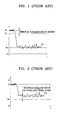
- FIG. 1 is a graph illustrating a problem of a conventional method of detecting the free fall of an electronic device.
- an acceleration sensor erroneously senses reference acceleration of gravity to be greater than 9.8 m/s 2 , an error between the reference acceleration of gravity and the sensed acceleration of gravity is generated, the acceleration sensor determines that the falling acceleration of the electronic device is not reduced to a predetermined threshold a th or less, and thus cannot sense the free fall of the electronic device.
- the acceleration sensor determines that the electronic device fall freely only when the falling acceleration is approximately equal to 0. Accordingly, the acceleration sensor cannot sense the free fall when the moving direction of the electronic device during a free fall is changed and the falling acceleration is not approximately equal to 0 due to the rotation acceleration of the electronic device.
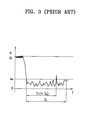
- FIG. 2 is a graph illustrating another problem of the conventional method of detecting the free fall of an electronic device.
- the electronic device falls freely while rotating and the rotation acceleration of the electronic device is equal to or greater than a predetermined value, the free fall of the electronic device is not sensed since a threshold a th is an approximately equal to 0.
- the length of time that the falling acceleration is maintained is less than the predetermined length of time.
- the free fall of the electronic device is not detected since the falling acceleration is considered as not being maintained for the predetermined length of time.
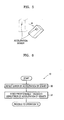
- FIG. 3 is a graph illustrating yet another problem of the conventional method of detecting the free fall of an electronic device.
- the length of time T f for which the falling acceleration is maintained smaller than the threshold a th is less than the predetermined length of time T th . Therefore, the length of time when the falling acceleration is maintained is initialized to 0, thereby preventing the free fall of the electronic device from being detected.
- a method of detecting a free fall of an electronic device including: sensing a falling acceleration of the electronic device using an acceleration sensor; determining whether the sensed falling acceleration is less than a predetermined threshold; when the sensed falling acceleration is less than the predetermined threshold, determining whether the falling acceleration is a statistical constant, which has a statistical significance, and is maintained for a predetermined time; and when the falling acceleration is a statistical constant and maintained for a predetermined time, determining that the electronic device falls freely.
- an apparatus of detecting a free fall of an electronic device including: an acceleration sensor sensing a falling acceleration of the electronic device; an acceleration comparator comparing whether the falling acceleration is less than a predetermined threshold; an acceleration change determining unit determining whether the falling acceleration is a statistical constant, which has a statistical significance, and is maintained for a predetermined time, according to the result of comparing transmitted from the acceleration comparator; and a free fall determining unit determining that the electronic device falls freely according to the result of determination transmitted from the acceleration change determining unit.
- the present invention thus provides an error-free method of detecting a free fall of an electronic device.
- the present invention also provides an error-free apparatus for detecting a free fall of an electronic device.
- FIG. 4 is a flowchart of a method of detecting a free fall of an electronic device according to an embodiment of the present invention.
- a predetermined threshold is reset in accordance with an error between the reference acceleration of gravity and the sensed acceleration of gravity (operation 10).
- the predetermined threshold has been computed before performing operation 10.
- the predetermined threshold is determined by compensating for the error between the reference acceleration of gravity and the sensed acceleration of gravity, and the rotation acceleration of the electronic device when the electronic device rotates. That is, the predetermined threshold is determined based on facts that the error between the reference acceleration of gravity and the sensed acceleration of gravity is caused when the sensed acceleration of gravity is greater than 9.8 M/S 2 due to a temperature change, a lapse of time, or a change in internal parameters of an acceleration sensor, and that the rotation acceleration is generated when the electronic device falls freely.
- the sensed acceleration of gravity may be 0.2 times greater than 9.8 m/s 2 due to a temperature change or a change in internal parameters of the acceleration sensor. That is, an error of the acceleration of gravity of 0.2*9.8 m/s 2 may be obtained.
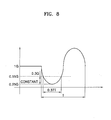
- FIG. 5 is a diagram illustrating the rotation acceleration of an electronic device generated when the electronic device rotates.
- the falling acceleration of the electronic device is increased, thereby preventing the free fall of the electronic device from not being detected.
- the acceleration sensor senses the rotation acceleration ⁇ of the electronic device.
- the rotation acceleration of 0.2415*9.8 m/s 2 is obtained by Equation (1).
- the present invention is not limited to the above description, that is, the rotation acceleration may be computed using values other than the number of times that the electronic device rotates and the rotation radius. In this embodiment, it is assumed that the rotation acceleration is roughly determined to be 0.3*9.8 m/s 2 .
- the predetermined threshold is preferably determined to be 0.5*9.8 m/s 2 so as to exactly sense the free fall of the electronic device irrespective of the error between the reference acceleration of gravity and the sensed acceleration of the electronic device and the rotation acceleration.
- the predetermined threshold has been computed in consideration of the error between the reference acceleration of gravity and the sensed acceleration of gravity and the rotation acceleration before operation 10.
- the predetermined threshold is reset every time when the error between the reference acceleration of gravity and the sensed acceleration of the electronic device is generated.
- an error between the reference acceleration of gravity and the sensed acceleration of gravity generated due to a temperature change or a change in internal parameters of the acceleration sensor is reflected in real time in resetting the predetermined threshold.
- an error between the reference acceleration of gravity and the sensed acceleration of gravity due to the rotation acceleration is not reflected.
- FIG. 6 is a detailed flowchart of operation 10 of FIG. 4.
- the error between the reference acceleration of gravity and the sensed acceleration of gravity is detected (operation 30). Specifically, when the reference acceleration of gravity, which corresponds to the acceleration of the electronic device that does not move, is erroneously measured to be greater than 9.8 m/s 2 a predetermined number of times, the difference between the sensed acceleration of gravity and the reference acceleration of gravity is determined to be the error between the reference acceleration of gravity and the sensed acceleration of the electronic device.
- the predetermined threshold is reset using the detected error of the acceleration of gravity (operation 32).
- the predetermined threshold is increased by the detected error. That is, the predetermined threshold is increased to be proportional to the detected error of the acceleration of gravity.
- FIGS. 7A and 7B are graphs explaining operations 30 and 32 of FIG. 6.
- FIG. 7A illustrates a first threshold a 1th determined when the reference acceleration of gravity is sensed to be 9.8 m/s 2 .
- FIG. 7B illustrates a second threshold a 2th determined when the reference acceleration of gravity is erroneously sensed to be greater than 9.8 m/s 2 .
- the first threshold a 1th is reset to the second threshold a 2th by increasing the first threshold a 1th by the error.
- the predetermined threshold a 1th is reduced by the error of the acceleration of gravity. That is, the predetermined threshold is reduced to be proportional to the error of the acceleration of gravity.
- the predetermined threshold a 1th which is a reference value used in determining whether the electronic device falls freely, by increasing or reducing the predetermined threshold a 1th by the error of the acceleration of gravity.
- the first predetermined threshold a 1th is maintained as illustrated in FIG. 7A.
- Operation 10 is optional to the method of FIG. 4.
- the free fall of the electronic device can be determined by performing operations 12 through 18 without operation 10.
- the predetermined threshold is used as the reference value in determining whether the electronic device falls freely without resetting the predetermined threshold.
- the falling acceleration of the electronic device is sensed using the acceleration sensor (operation 12).
- the acceleration sensor included in the electronic device continuously senses the falling acceleration of the electronic device to determine whether the electronic device falls freely.
- the predetermined threshold may be computed before operation 10 or be reset in operation 10. If the sensed falling acceleration is not less than the predetermined threshold, the method proceeds to operation 10 (or 12) and operations 10 (or 12) through 14 are repeated.
- the statistical constant is a value that is not a mathematical constant but changes within the range so that it can be regarded as a constant in a statistical sense.
- the predetermined threshold calculated before operation 10 or reset in operation 10 is a value, e.g., 0.3*9.8 m/s 2 or 0.5*9.8 m/s 2 , which is considerably greater than 0.
- the predetermined threshold is greater than 0.
- the acceleration of the electronic device which does not fall freely but makes acceleration or vibrates, is very likely to be maintained at a value less than the predetermined threshold for a predetermined time. In this case, it is highly probable that the acceleration sensor would determine that the electronic device falls freely.
- the present invention uses statistical constants based on a fact that the acceleration of the electronic device falling freely is a statistical constant which is maintained for a predetermined time.
- the falling accelerations are determined to be statistical constants. If the predetermined time is 300 msec, the predetermined range is from 0.2*9.8 m/s 2 to 0.6*9.8 m/s 2 , and the falling accelerations sensed for 300 msec are between 0.2*9.8 m/s 2 and 0.6*9.8 m/s 2 , the falling accelerations are considered as statistical constants.
- the falling accelerations are determined to be statistical constants.
- the variance is a statistical term that refers to the amount of dispersion or spread in a distribution. That is, the variance indicates the degree of the values of variable quantities that deviate from an average value.
- the statistical deviation refers to a square root of the degree of the values of variable quantities that deviate from an average value. If the predetermined value is 0.1*9.8 m/s 2 and the variance of he falling accelerations are approximate values to 0.1*9.8 m/s 2 , the falling accelerations are considered as the statistical constants.
- the falling accelerations may be determined to be statistical constants.
- the Chi-square test is used to determine whether observed frequency is significantly different from expected frequency.
- a Chi-square value is obtained by setting a null hypothesis of a statistical fact and computing the difference between the substantial frequency and the expected frequency according to the Chi-square test, and whether.
- the null hypothesis is accepted or discarded according to the obtained Chi-square value. If the Chi-square value is a large value, the reliability of the null hypothesis is low.
- the Chi-square value of the falling accelerations approximates the predetermined value, the Chi-square value is considered as a reliable, statistical constant of the falling accelerations.
- the electronic device falls freely (operation 18). Specifically, it is determined that the falling acceleration is maintained at the statistical constant for the predetermined time and the electronic device falls freely, when falling accelerations sensed for the predetermined time fall within a predetermined range, a variance or standard deviation of the falling accelerations is less than or equal to a predetermined value, or a Chi-square value of the falling accelerations obtained according to the Chi-square test is less than or equal to a predetermined value. In other words, even if the falling acceleration of the electronic device are not approximately equal to 0, when the falling accelerations are maintained at statistical constants for the predetermined time, the electronic device is considered as falling freely while rotating.
- FIG. 8 is a graph illustrating a method of distinguishing between an acceleration signal generated when an electronic device moves or vibrates and an acceleration signal generated when the electronic device falls freely, according to an embodiment of the present invention.
- a predetermined threshold is 0.55*9.8 m/s 2
- the range of predetermined threshold for testing statistical constants is from 0.25*9.8 m/s 2 to 0.55*9.8 m/s 2
- a warning sound rings and a shock protection routine is activated.
- FIG. 9 is a block diagram of an apparatus for detecting the free fall of an electronic device according to an embodiment of the present invention.
- the apparatus includes a threshold setting unit 100, an acceleration sensor 120, an acceleration comparator 140, an acceleration change determining unit 160, and a free fall determining unit 180.
- the threshold setting unit 100 resets a predetermined threshold to correspond to an error between the reference acceleration of gravity and sensed acceleration of an electronic device.
- the predetermined threshold has been computed by compensating for the error of the acceleration of gravity and rotation acceleration generated by the rotation movement of the electronic device.
- the predetermined threshold is preferably determined to be approximately 0.5*9.8 m/s 2 to prevent the free fall of the electronic device from not being sensed due to the error of the acceleration of gravity and the rotation acceleration.
- the threshold setting unit 100 resets the predetermined threshold to be proportional to the error of the acceleration of gravity sensed by the acceleration sensor 120.
- FIG. 10 is a detailed block diagram of the threshold setting unit 100 of FIG. 9.
- the threshold setting unit 100 includes a measured error detecting unit 200 and a setting unit 220.
- the measured error detecting unit 200 receives the reference acceleration of gravity sensed by the acceleration sensor 120, and determines whether the acceleration of gravity is greater or less than 9.8 m/s 2 . When the sensed acceleration of gravity is greater or less than 9.8 m/s 2 , the measured error detecting unit 200 computes the difference between the sensed acceleration of gravity and 9.8 m/s 2 and transmits the difference, as the error of the acceleration of gravity, to the setting unit 220.
- FIGS. 7A and 7B are graphs explaining the operation of the threshold determining unit 220 of FIG. 10. Specifically, FIG. 7A illustrates a predetermined threshold a 1th determined when the sensed acceleration of gravity is 9.8m/s 2 , and FIG.
- FIG. 7B illustrates a predetermined threshold a 2th determined when the sensed acceleration of gravity is greater than 9.8m/s 2 .
- a predetermined threshold a 2th determined when the sensed acceleration of gravity is greater than 9.8m/s 2 .
- an error between the sensed acceleration of gravity and the reference acceleration of gravity is generated, and the predetermined threshold a 1th is reset to the predetermined threshold a 2th to compensate for the error.
- the setting unit 220 reduces the predetermined threshold by the error of the acceleration of gravity.
- the threshold setting unit 100 is not an indispensable element of the apparatus of FIG. 9, that is, the threshold setting unit 100 is optional. If the threshold setting unit 100 is not included in the apparatus, the predetermined threshold is used in determining whether the electronic device falls freely without resetting the predetermined threshold.
- the acceleration sensor 120 periodically senses the acceleration of gravity or falling acceleration of the electronic device, and transmits the result of sensing to the threshold setting unit 100 and the acceleration comparator 140.
- the acceleration comparator 140 compares whether the falling acceleration of the electronic device is less than the predetermined threshold. Specifically, when receiving the falling acceleration of the electronic device from the acceleration sensor 120, the acceleration comparator 140 compares whether the falling acceleration is less than the predetermined threshold or the threshold reset. by the threshold setting unit 100, and transmits the result of comparison to the acceleration change determining unit 160.
- the acceleration change determining unit 160 determines whether the falling acceleration is a statistical constant that is maintained for a predetermined time and outputs the result of determination to the free fall determining unit 180.
- the statistical constant is a value changing within the range of statistical constants, which is not a mathematical constant that does not change.
- the acceleration change determining unit 160 determines the falling acceleration as a statistical constant when the falling acceleration changes within a predetermined range for the predetermined time.
- the acceleration change determining unit 160 senses that the falling accelerations sensed for 300 msec are between 0.2*9.8 m/s 2 and 0.6*9.8 m/s 2 on an assumption that the predetermined time is 300 msec and the predetermined range is from 0.2*9.8 m/s 2 to 0.6*9.8 m/s 2 .
- the acceleration change determining unit 160 determines the falling accelerations as statistical constants.
- the acceleration change determining unit 160 may determine the falling accelerations as the statistical constants when a variance of the falling accelerations sensed for a predetermined time is less than or equal to a predetermined value. For instance, when the predetermined value corresponds to 0.1*9.8 m/s 2 and the variance approximates 0.1*9.8 m/s 2 , the acceleration change determining unit 160 determines the falling accelerations as the statistical constants.
- the acceleration change determining unit 160 may determine the falling accelerates sensed for a predetermined time as the statistical constants when a Chi-square value of the falling accelerations obtained according to the Chi-square test is less than or equal to a predetermined number. That is, when the Chi-square value approximates the predetermined value, the acceleration change determining unit 160 considers the Chi-square value as a reliable statistical constant.
- a method of determining whether the fatting accelerations are statistical constants, using the acceleration change determining unit 160 is not limited to the above description, that is, various methods may be used according to the present invention.
- the free fall determining unit 180 determines whether the electronic device falls freely according to the result of determination transmitted from the acceleration change determining unit 160. Specifically, the free fall determining unit 180 determines that the electronic device falls freely while rotating when the falling accelerations, which are sensed by the acceleration change determining unit 160 for a predetermined time, fall within a predetermined range; the variance of the sensed falling accelerations is less than or equal to a predetermined value; or a Chi-square value of the sensed falling accelerations obtained according to the Chi-square test is less than or equal to a predetermined number.
- a warning sound rings and a shock protection routine is activated.
- the present invention uses statistical constants in determining whether falling accelerations of the electronic device are statistical constants, and thus, it is possible to exactly detect a free fall of an electronic device irrespective of an error of acceleration of gravity sensed by an acceleration sensor and distinguish between the free fall and a general (or vibration) movement of the electronic device.
Landscapes
- Physics & Mathematics (AREA)
- General Physics & Mathematics (AREA)
- Telephone Function (AREA)
- Emergency Alarm Devices (AREA)
- Measurement Of Mechanical Vibrations Or Ultrasonic Waves (AREA)
Applications Claiming Priority (1)
| Application Number | Priority Date | Filing Date | Title |
|---|---|---|---|
| KR20040078545A KR100618866B1 (ko) | 2004-10-02 | 2004-10-02 | 전자기기의 자유 낙하 검출방법 및 장치 |
Publications (3)
| Publication Number | Publication Date |
|---|---|
| EP1643501A2 true EP1643501A2 (de) | 2006-04-05 |
| EP1643501A3 EP1643501A3 (de) | 2006-10-04 |
| EP1643501B1 EP1643501B1 (de) | 2013-06-05 |
Family
ID=36124235
Family Applications (1)
| Application Number | Title | Priority Date | Filing Date |
|---|---|---|---|
| EP05254916.9A Expired - Lifetime EP1643501B1 (de) | 2004-10-02 | 2005-08-05 | Verfahren und Vorrichtung zur Freifall-Erkennung eines elektronischen Geräts |
Country Status (5)
| Country | Link |
|---|---|
| US (1) | US7328615B2 (de) |
| EP (1) | EP1643501B1 (de) |
| JP (1) | JP4856924B2 (de) |
| KR (1) | KR100618866B1 (de) |
| CN (1) | CN100417945C (de) |
Cited By (4)
| Publication number | Priority date | Publication date | Assignee | Title |
|---|---|---|---|---|
| WO2013184620A1 (en) * | 2012-06-06 | 2013-12-12 | Analog Devices, Inc. | Activity detection in mems accelerometers |
| JP2014215184A (ja) * | 2013-04-25 | 2014-11-17 | 富士通株式会社 | 電子機器および衝撃検知プログラム |
| US9008995B2 (en) | 2008-03-21 | 2015-04-14 | Analog Devices, Inc. | Activity detection in MEMS accelerometers |
| WO2021180454A1 (en) * | 2020-03-12 | 2021-09-16 | Widex A/S | Audio streaming device |
Families Citing this family (37)
| Publication number | Priority date | Publication date | Assignee | Title |
|---|---|---|---|---|
| US7191089B2 (en) * | 2004-12-01 | 2007-03-13 | Freescale Semiconductor, Inc. | System and method for fall detection |
| JP4364157B2 (ja) * | 2005-04-22 | 2009-11-11 | トレックス・セミコンダクター株式会社 | 落下検出装置 |
| WO2006122246A2 (en) * | 2005-05-09 | 2006-11-16 | Analog Devices, Inc. | Accelerometer-based differential free fall detection system, apparatus, and method and disk drive protection mechanism employing same |
| CN101060244A (zh) * | 2006-04-19 | 2007-10-24 | 鸿富锦精密工业(深圳)有限公司 | 具有自动关机保护功能的便携式电子装置 |
| US7752351B1 (en) | 2006-08-16 | 2010-07-06 | Nvidia Corporation | Media protection notification for serial interface mass storage devices |
| JP4471389B2 (ja) * | 2007-01-22 | 2010-06-02 | トレックス・セミコンダクター株式会社 | デュアル加速度センサシステム |
| US8408041B2 (en) * | 2007-04-19 | 2013-04-02 | Koninklijke Philips Electronics N.V. | Fall detection system |
| TW200918898A (en) * | 2007-06-05 | 2009-05-01 | Murata Manufacturing Co | Drop detector, magnetic disc drive and portable electronic apparatus |
| US20090021858A1 (en) * | 2007-07-17 | 2009-01-22 | Guoyi Fu | Hard Disk Drive Protection System Based on Adaptive Thresholding |
| KR101424106B1 (ko) * | 2007-12-27 | 2014-08-04 | 시게이트 테크놀로지 엘엘씨 | 자유낙하 검출 방법 및 그 방법을 이용하는 자유낙하 검출장치 |
| JP5067257B2 (ja) * | 2008-05-15 | 2012-11-07 | 富士通株式会社 | 落下を検知する情報機器 |
| CN101655507B (zh) * | 2008-08-22 | 2012-07-04 | 深圳富泰宏精密工业有限公司 | 侦测电子装置掉落的系统及方法 |
| CN101834921A (zh) * | 2009-03-13 | 2010-09-15 | 鸿富锦精密工业(深圳)有限公司 | 具有防摔保护功能的电子设备 |
| US8330305B2 (en) * | 2010-02-11 | 2012-12-11 | Amazon Technologies, Inc. | Protecting devices from impact damage |
| DE102010002656A1 (de) * | 2010-03-08 | 2011-09-08 | Robert Bosch Gmbh | Frei-Fall Erkennungssystem zum Schutz von Festplatten in mobilen Geräten |
| US8363344B2 (en) | 2010-10-04 | 2013-01-29 | Dell Products, Lp | System and method for improved free fall detection |
| US9047907B2 (en) * | 2011-06-23 | 2015-06-02 | Western Digital Technologies, Inc. | Electronic device avoiding false detection of free fall event based on detected operating modes |
| CN103891307B (zh) * | 2011-10-19 | 2018-04-24 | 索诺瓦公司 | 微音器组件以及相应的系统和方法 |
| CN103297593A (zh) * | 2012-02-24 | 2013-09-11 | 联想(北京)有限公司 | 一种降低跌落损害的移动终端及方法 |
| TW201342819A (zh) * | 2012-04-09 | 2013-10-16 | Motionstek Inc | 可攜式電子裝置遙控系統與遙控裝置、及行車安全裝置 |
| US8953274B1 (en) | 2013-06-06 | 2015-02-10 | Western Digital Technologies, Inc. | Deceleration of spindle motor in disk drive |
| US8885285B1 (en) | 2013-07-23 | 2014-11-11 | Western Digital Technologies, Inc. | Impact detection for data storage device |
| US9076471B1 (en) | 2013-07-31 | 2015-07-07 | Western Digital Technologies, Inc. | Fall detection scheme using FFS |
| KR101346209B1 (ko) | 2013-09-11 | 2014-02-07 | (주)아세아항측 | 공공측량용 중력측량을 위한 지하매설 구조물 기준 1등중력점 측량시스템 |
| KR101346193B1 (ko) | 2013-09-11 | 2014-01-13 | (주)아세아항측 | 중력점의 정밀 측량을 위한 지하시설물의 공공측량시스템 |
| CN103581852B (zh) * | 2013-09-30 | 2018-03-06 | 吴家宝 | 人体摔倒检测的方法、装置及移动终端系统 |
| GB2521200A (en) * | 2013-12-13 | 2015-06-17 | Here Global Bv | Method apparatus and computer program |
| CN105278218B (zh) * | 2014-07-10 | 2019-05-10 | 中兴通讯股份有限公司 | 一种实现保护投影设备的散热风扇的方法及装置 |
| CN106412247A (zh) * | 2016-09-06 | 2017-02-15 | 广东欧珀移动通信有限公司 | 一种跌落保护方法及装置 |
| US10982958B2 (en) | 2017-09-06 | 2021-04-20 | Stanley Black & Decker Inc. | Laser level pendulum arrest |
| CN108197006B (zh) * | 2018-01-23 | 2019-09-13 | Oppo广东移动通信有限公司 | 电子设备、跌落提示方法及相关产品 |
| KR102933772B1 (ko) * | 2018-11-28 | 2026-03-05 | 삼성전자주식회사 | 전자 장치 및 그의 상황을 감지하는 방법 |
| US11200656B2 (en) | 2019-01-11 | 2021-12-14 | Universal City Studios Llc | Drop detection systems and methods |
| US11585828B2 (en) * | 2019-02-01 | 2023-02-21 | Seiko Epson Corporation | Sensor system and sensor drop determination method |
| US11570539B2 (en) | 2021-03-20 | 2023-01-31 | International Business Machines Corporation | Safeguarding audio device based on detection of freefall or lost scenarios |
| EP4212123B1 (de) * | 2022-01-18 | 2025-04-23 | Stryker European Operations Limited | Technik zur bestimmung der notwendigkeit einer neuregistrierung eines von einem kamerasystem verfolgten patientenverfolgers |
| EP4527308B1 (de) | 2023-09-25 | 2025-12-17 | Samsung Medison Co., Ltd. | Drahtlose ultraschallsonde und steuerungsverfahren dafür |
Citations (3)
| Publication number | Priority date | Publication date | Assignee | Title |
|---|---|---|---|---|
| EP0658894A1 (de) | 1993-12-15 | 1995-06-21 | Hewlett-Packard Company | Plattengerät und Verfahren zur Verminderung von Beschädigungen durch Schlageinwirkung |
| JP2000241442A (ja) | 1999-02-22 | 2000-09-08 | Sharp Corp | 落下検出機構、磁気ディスク装置の保護機構および携帯型機器 |
| JP2002174641A (ja) | 2000-12-05 | 2002-06-21 | Ubukata Industries Co Ltd | 落下検出機構 |
Family Cites Families (23)
| Publication number | Priority date | Publication date | Assignee | Title |
|---|---|---|---|---|
| US4745564B2 (en) * | 1986-02-07 | 2000-07-04 | Us Agriculture | Impact detection apparatus |
| US5227929A (en) * | 1990-11-26 | 1993-07-13 | International Business Machines Corporation | Portable computer hard disk protective reflex system |
| US5777225A (en) * | 1993-11-02 | 1998-07-07 | Sensor Technology Co., Ltd. | Crash sensor |
| US5521772A (en) * | 1993-11-30 | 1996-05-28 | International Business Machines Corporation | Disk drive with accerleration rate sensing |
| US5777815A (en) * | 1996-06-13 | 1998-07-07 | International Business Machines Corporation | Disk drive with shock detection based on thermoresistive signal from magnetoresistive head |
| US6429990B2 (en) * | 1997-02-03 | 2002-08-06 | International Business Machines Corporation | Method and apparatus for controlling write operations of a data storage system subjected to a shock event |
| US6046871A (en) * | 1997-03-31 | 2000-04-04 | Seagate Technology, Inc. | Magnetic recording head slider with piezoelectric sensor for measuring slider to disc interference levels |
| US5923487A (en) * | 1997-06-05 | 1999-07-13 | Maxtor Corporation | Integrated shock sensing device |
| JPH1116259A (ja) * | 1997-06-24 | 1999-01-22 | Internatl Business Mach Corp <Ibm> | ヘッド機構制御装置および信号供給制御装置ならびにディスクドライブ装置 |
| US6415189B1 (en) * | 1999-07-23 | 2002-07-02 | International Business Machines Corporation | Method and system for predicting disk drive failures |
| CA2330512C (en) * | 2000-01-12 | 2003-12-30 | Ubukata Industries Co., Ltd. | Free fall sensor |
| JP2001273707A (ja) * | 2000-03-28 | 2001-10-05 | Internatl Business Mach Corp <Ibm> | 回転記憶装置および情報記録方法 |
| JP4491114B2 (ja) * | 2000-06-23 | 2010-06-30 | 株式会社日立グローバルストレージテクノロジーズ | 落下感知センサ及びこれを用いた情報処理装置 |
| JP2002074934A (ja) * | 2000-09-01 | 2002-03-15 | Hitachi Ltd | 外乱検出回路、これを用いた記憶装置及びその外乱検出方法 |
| JP2002100180A (ja) * | 2000-09-22 | 2002-04-05 | Toshiba Corp | 磁気ディスク装置 |
| US6520013B1 (en) * | 2000-10-02 | 2003-02-18 | Apple Computer, Inc. | Method and apparatus for detecting free fall |
| US6714371B1 (en) * | 2001-08-31 | 2004-03-30 | Western Digital Technologies, Inc. | Method and disk drive for shock estimation and write termination control |
| US6735033B1 (en) * | 2001-12-10 | 2004-05-11 | Western Digital Technologies, Inc. | Method for recovering from shock events occurring to a disk drive during data write operations to improve data reliability |
| CN100407155C (zh) * | 2002-07-31 | 2008-07-30 | 深圳易拓科技有限公司 | 便携式计算机硬盘驱动器的保护装置和方法 |
| US7042663B2 (en) * | 2002-10-03 | 2006-05-09 | Hitachi Global Storage Technologies Netherlands B.V. | Magnetic disk protection mechanism, computer system comprising protection mechanism, protection method for magnetic disk, and program for protection method |
| US7409295B2 (en) * | 2004-08-09 | 2008-08-05 | M/A-Com, Inc. | Imminent-collision detection system and process |
| US7191089B2 (en) * | 2004-12-01 | 2007-03-13 | Freescale Semiconductor, Inc. | System and method for fall detection |
| ITTO20040899A1 (it) * | 2004-12-23 | 2005-03-23 | St Microelectronics Srl | Apparecchio portatile dotato di un dispositivo accelerometrico per il rilevamento di caduta libera |
-
2004
- 2004-10-02 KR KR20040078545A patent/KR100618866B1/ko not_active Expired - Fee Related
-
2005
- 2005-08-05 EP EP05254916.9A patent/EP1643501B1/de not_active Expired - Lifetime
- 2005-09-09 CN CNB2005100986844A patent/CN100417945C/zh not_active Expired - Fee Related
- 2005-09-28 US US11/236,595 patent/US7328615B2/en not_active Expired - Fee Related
- 2005-10-03 JP JP2005290418A patent/JP4856924B2/ja not_active Expired - Fee Related
Patent Citations (3)
| Publication number | Priority date | Publication date | Assignee | Title |
|---|---|---|---|---|
| EP0658894A1 (de) | 1993-12-15 | 1995-06-21 | Hewlett-Packard Company | Plattengerät und Verfahren zur Verminderung von Beschädigungen durch Schlageinwirkung |
| JP2000241442A (ja) | 1999-02-22 | 2000-09-08 | Sharp Corp | 落下検出機構、磁気ディスク装置の保護機構および携帯型機器 |
| JP2002174641A (ja) | 2000-12-05 | 2002-06-21 | Ubukata Industries Co Ltd | 落下検出機構 |
Cited By (6)
| Publication number | Priority date | Publication date | Assignee | Title |
|---|---|---|---|---|
| US9008995B2 (en) | 2008-03-21 | 2015-04-14 | Analog Devices, Inc. | Activity detection in MEMS accelerometers |
| WO2013184620A1 (en) * | 2012-06-06 | 2013-12-12 | Analog Devices, Inc. | Activity detection in mems accelerometers |
| JP2014215184A (ja) * | 2013-04-25 | 2014-11-17 | 富士通株式会社 | 電子機器および衝撃検知プログラム |
| WO2021180454A1 (en) * | 2020-03-12 | 2021-09-16 | Widex A/S | Audio streaming device |
| US12225352B2 (en) | 2020-03-12 | 2025-02-11 | Widex A/S | Audio streaming device |
| EP4118842B1 (de) | 2020-03-12 | 2025-03-26 | Widex A/S | Vorrichtung für audiostreaming |
Also Published As
| Publication number | Publication date |
|---|---|
| EP1643501A3 (de) | 2006-10-04 |
| JP4856924B2 (ja) | 2012-01-18 |
| CN1755373A (zh) | 2006-04-05 |
| EP1643501B1 (de) | 2013-06-05 |
| US7328615B2 (en) | 2008-02-12 |
| US20060070439A1 (en) | 2006-04-06 |
| CN100417945C (zh) | 2008-09-10 |
| JP2006105994A (ja) | 2006-04-20 |
| KR100618866B1 (ko) | 2006-08-31 |
| KR20060029548A (ko) | 2006-04-06 |
Similar Documents
| Publication | Publication Date | Title |
|---|---|---|
| EP1643501A2 (de) | Verfahren und Vorrichtung zur Erkennung von Freifall eines elektronischen Geräts | |
| US20240255543A1 (en) | Mechanical shock resistant mems accelerometer arrangement, associated method, apparatus and system | |
| KR101234002B1 (ko) | 낙하 검출 시스템 및 방법 | |
| CN1773216B (zh) | 基于加速度计的倾斜传感器和使用该倾斜传感器的方法 | |
| US7451057B2 (en) | System and method for detection of freefall with spin using two tri-axis accelerometers | |
| US8654077B2 (en) | Apparatus and method for detecting tap | |
| EP3407157A1 (de) | Rechnersystem zur implementierung eines algorithmus zur fusion von daten aus trägheitssensoren sowie verfahren | |
| RU2584373C2 (ru) | Способ обнаружения ухудшения рабочих характеристик датчика аэродинамических углов с помощью мониторинга вибрации | |
| CA2462051A1 (en) | System and method for determining the inclination of a wellbore | |
| US10309983B2 (en) | Systems and methods for motion detection | |
| WO2017159076A1 (ja) | 感震センサ及び地震検知方法 | |
| KR20070024656A (ko) | 전자 나침반의 판독성을 개선하는 시스템, 방법, 장치 및컴퓨터 코드 생성물 | |
| US12055470B2 (en) | Correcting for gravitational force variation in measuring the melt flow index of a polymer | |
| CN102575944B (zh) | 一种检测寄生运动并调整惯性单元的方法 | |
| CN101470130B (zh) | 检测自由下落的方法以及利用该方法检测自由下落的装置 | |
| US20240412612A1 (en) | Electronic Component | |
| KR102113091B1 (ko) | 콘크리트 압송관을 타격하는 타격 장치를 위한 구동 제어 시스템 및 그 방법 | |
| US20230078898A1 (en) | Method for determining the bulk density of bulk material in a mobile crusher | |
| US20180283715A1 (en) | Remote controller | |
| US6708565B2 (en) | Ultrasonic wafer blade vibration detecting | |
| RU2856778C1 (ru) | Способ градуировки акселерометра | |
| US20250290947A1 (en) | Method and device for monitoring the state of a micromechanical sensor | |
| CN114645705B (zh) | 方位伽马测量方法及装置 | |
| US6502059B1 (en) | Method of determining waveform stability for pulse echo layer thickness transducer | |
| KR102560569B1 (ko) | 조선소 도크 내부와 외부 구별 가능 위치 인식 시스템 |
Legal Events
| Date | Code | Title | Description |
|---|---|---|---|
| PUAI | Public reference made under article 153(3) epc to a published international application that has entered the european phase |
Free format text: ORIGINAL CODE: 0009012 |
|
| 17P | Request for examination filed |
Effective date: 20050817 |
|
| AK | Designated contracting states |
Kind code of ref document: A2 Designated state(s): AT BE BG CH CY CZ DE DK EE ES FI FR GB GR HU IE IS IT LI LT LU LV MC NL PL PT RO SE SI SK TR |
|
| AX | Request for extension of the european patent |
Extension state: AL BA HR MK YU |
|
| PUAL | Search report despatched |
Free format text: ORIGINAL CODE: 0009013 |
|
| AK | Designated contracting states |
Kind code of ref document: A3 Designated state(s): AT BE BG CH CY CZ DE DK EE ES FI FR GB GR HU IE IS IT LI LT LU LV MC NL PL PT RO SE SI SK TR |
|
| AX | Request for extension of the european patent |
Extension state: AL BA HR MK YU |
|
| RIC1 | Information provided on ipc code assigned before grant |
Ipc: G01P 15/18 20060101ALI20060830BHEP Ipc: G01P 15/00 20060101ALI20060830BHEP Ipc: G11B 19/04 20060101AFI20060109BHEP |
|
| 17Q | First examination report despatched |
Effective date: 20070321 |
|
| AKX | Designation fees paid |
Designated state(s): DE GB |
|
| RAP1 | Party data changed (applicant data changed or rights of an application transferred) |
Owner name: SAMSUNG ELECTRONICS CO., LTD. |
|
| RAP1 | Party data changed (applicant data changed or rights of an application transferred) |
Owner name: SEAGATE TECHNOLOGY INTERNATIONAL |
|
| GRAP | Despatch of communication of intention to grant a patent |
Free format text: ORIGINAL CODE: EPIDOSNIGR1 |
|
| GRAS | Grant fee paid |
Free format text: ORIGINAL CODE: EPIDOSNIGR3 |
|
| GRAA | (expected) grant |
Free format text: ORIGINAL CODE: 0009210 |
|
| AK | Designated contracting states |
Kind code of ref document: B1 Designated state(s): DE GB |
|
| REG | Reference to a national code |
Ref country code: GB Ref legal event code: FG4D |
|
| REG | Reference to a national code |
Ref country code: DE Ref legal event code: R096 Ref document number: 602005039873 Country of ref document: DE Effective date: 20130801 |
|
| PLBE | No opposition filed within time limit |
Free format text: ORIGINAL CODE: 0009261 |
|
| STAA | Information on the status of an ep patent application or granted ep patent |
Free format text: STATUS: NO OPPOSITION FILED WITHIN TIME LIMIT |
|
| PG25 | Lapsed in a contracting state [announced via postgrant information from national office to epo] |
Ref country code: DE Free format text: LAPSE BECAUSE OF NON-PAYMENT OF DUE FEES Effective date: 20140301 |
|
| 26N | No opposition filed |
Effective date: 20140306 |
|
| REG | Reference to a national code |
Ref country code: DE Ref legal event code: R119 Ref document number: 602005039873 Country of ref document: DE Effective date: 20140301 |
|
| GBPC | Gb: european patent ceased through non-payment of renewal fee |
Effective date: 20130905 |
|
| PG25 | Lapsed in a contracting state [announced via postgrant information from national office to epo] |
Ref country code: GB Free format text: LAPSE BECAUSE OF NON-PAYMENT OF DUE FEES Effective date: 20130905 |