EP1647595A1 - Acides nucléiques contre des virus, en particulier contre le VIH - Google Patents
Acides nucléiques contre des virus, en particulier contre le VIH Download PDFInfo
- Publication number
- EP1647595A1 EP1647595A1 EP04077855A EP04077855A EP1647595A1 EP 1647595 A1 EP1647595 A1 EP 1647595A1 EP 04077855 A EP04077855 A EP 04077855A EP 04077855 A EP04077855 A EP 04077855A EP 1647595 A1 EP1647595 A1 EP 1647595A1
- Authority
- EP
- European Patent Office
- Prior art keywords
- nucleic acid
- organism
- sequence
- acid molecule
- complementary
- Prior art date
- Legal status (The legal status is an assumption and is not a legal conclusion. Google has not performed a legal analysis and makes no representation as to the accuracy of the status listed.)
- Withdrawn
Links
Images






Classifications
-
- C—CHEMISTRY; METALLURGY
- C12—BIOCHEMISTRY; BEER; SPIRITS; WINE; VINEGAR; MICROBIOLOGY; ENZYMOLOGY; MUTATION OR GENETIC ENGINEERING
- C12N—MICROORGANISMS OR ENZYMES; COMPOSITIONS THEREOF; PROPAGATING, PRESERVING, OR MAINTAINING MICROORGANISMS; MUTATION OR GENETIC ENGINEERING; CULTURE MEDIA
- C12N15/00—Mutation or genetic engineering; DNA or RNA concerning genetic engineering, vectors, e.g. plasmids, or their isolation, preparation or purification; Use of hosts therefor
- C12N15/09—Recombinant DNA-technology
- C12N15/11—DNA or RNA fragments; Modified forms thereof; Non-coding nucleic acids having a biological activity
- C12N15/113—Non-coding nucleic acids modulating the expression of genes, e.g. antisense oligonucleotides; Antisense DNA or RNA; Triplex- forming oligonucleotides; Catalytic nucleic acids, e.g. ribozymes; Nucleic acids used in co-suppression or gene silencing
- C12N15/1131—Non-coding nucleic acids modulating the expression of genes, e.g. antisense oligonucleotides; Antisense DNA or RNA; Triplex- forming oligonucleotides; Catalytic nucleic acids, e.g. ribozymes; Nucleic acids used in co-suppression or gene silencing against viruses
- C12N15/1132—Non-coding nucleic acids modulating the expression of genes, e.g. antisense oligonucleotides; Antisense DNA or RNA; Triplex- forming oligonucleotides; Catalytic nucleic acids, e.g. ribozymes; Nucleic acids used in co-suppression or gene silencing against viruses against retroviridae, e.g. HIV
-
- A—HUMAN NECESSITIES
- A61—MEDICAL OR VETERINARY SCIENCE; HYGIENE
- A61P—SPECIFIC THERAPEUTIC ACTIVITY OF CHEMICAL COMPOUNDS OR MEDICINAL PREPARATIONS
- A61P37/00—Drugs for immunological or allergic disorders
-
- C—CHEMISTRY; METALLURGY
- C12—BIOCHEMISTRY; BEER; SPIRITS; WINE; VINEGAR; MICROBIOLOGY; ENZYMOLOGY; MUTATION OR GENETIC ENGINEERING
- C12N—MICROORGANISMS OR ENZYMES; COMPOSITIONS THEREOF; PROPAGATING, PRESERVING, OR MAINTAINING MICROORGANISMS; MUTATION OR GENETIC ENGINEERING; CULTURE MEDIA
- C12N2310/00—Structure or type of the nucleic acid
- C12N2310/10—Type of nucleic acid
- C12N2310/14—Type of nucleic acid interfering nucleic acids [NA]
-
- C—CHEMISTRY; METALLURGY
- C12—BIOCHEMISTRY; BEER; SPIRITS; WINE; VINEGAR; MICROBIOLOGY; ENZYMOLOGY; MUTATION OR GENETIC ENGINEERING
- C12N—MICROORGANISMS OR ENZYMES; COMPOSITIONS THEREOF; PROPAGATING, PRESERVING, OR MAINTAINING MICROORGANISMS; MUTATION OR GENETIC ENGINEERING; CULTURE MEDIA
- C12N2310/00—Structure or type of the nucleic acid
- C12N2310/50—Physical structure
- C12N2310/53—Physical structure partially self-complementary or closed
Definitions
- the invention relates to biology. More specifically, the invention relates to counteracting an organism.
- Infectious diseases caused by (micro)organisms such as for instance bacteria and/or viruses are a common phenomenon worldwide.
- a problem involved with counteracting (pathogenic) organisms is their capability of developing resistance against a certain treatment.
- Evolvement of resistant organisms often involves alterations in the genome of such organisms. Escape mutants evolve during prolonged periods of treatment. For instance, bacteria become resistant to antibiotic treatment and escape mutant viruses evolve during antiviral therapy.
- therapy directed against pathogenic organisms capable of mutating their genomes often involves a combination of approaches. Despite of such combination therapy, escape mutants are still a major concern during treatment of a variety of infectious diseases.
- the invention provides a nucleic acid molecule comprising a sequence which is complementary to a mutant of a genomic nucleic acid sequence of an organism capable of mutating its genome.
- the invention furthermore provides a nucleic acid molecule or a binding molecule capable of specifically binding a mutant of a genomic nucleic acid sequence of an organism capable of mutating its genome, or an expression product thereof.
- the invention provides a different approach for avoiding and/or counteracting the occurrence of escape mutants during a certain treatment of (micro)organisms.
- attempts to avoid escape mutants involve a combination of several drugs/treatments which are directed towards different parts and/or different functions of a certain (micro)organism. For instance, different genomic sequences are targeted.
- the present invention provides the insight that a treatment is improved if a nucleic acid or any kind of binding molecule is administered which is capable of specifically binding (a gene product of) an escape mutant. Hence, escape mutants evolving during current therapies and resulting in loss of protection, are now counteracted by a nucleic acid molecule and/or binding molecule of the present invention. Therefore, protection is now maintained.
- An organism is capable of mutating its genome if at least one nucleic acid sequence of its genome alters over time. This alteration can already be present at the time of the infection, or one day after infection, or after some weeks/months or it can even take years (for example 10 years) after infection before such alterations are present.
- the frequency and the time point at which the mutations/alteration occur depend for example on the virus type and/or the type of medicine(s) and/or the way in which the medicines are used.
- said at least one nucleic acid sequence alters during treatment as a result of selective pressure. Escape mutants are favoured during a treatment targeting a wild type organism because such treatment does not affect escape mutants.
- a nucleic acid molecule or binding molecule of the present invention is preferably directed towards such escape mutant. Use of said nucleic acid molecule during treatment allows for avoiding and/or counteracting the appearance of said escape mutant.
- the invention provides a therapy based on at least one nucleic acid molecule or binding molecule that comprises a sequence which is complementary to a mutant of a genomic nucleic acid sequence of an organism capable of mutating its genome, which therapy (compared to other therapies) prolongs the time period before an escape emerges.
- therapy compared to other therapies
- the faster an organism is capable of mutating its genome the more important it is to avoid and/or counteract the occurrence of escape mutants with a nucleic acid molecule or binding molecule of the invention.
- Said organism preferably comprises a pathogenic organism.
- said organism comprises a microorganism.
- said organism comprises a virus or a bacterium.
- said organism comprises a DNA or RNA virus, since viruses are generally well capable of developing escape mutants. More preferably said organism comprises an RNA virus, most preferably a retrovirus.
- Antiviral treatment often involves occurrence of escape mutants caused by the error-prone nature of the reverse transcriptase enzyme.
- said organism comprises HIV, Hepatitis B, Hepatitis C, SARS, Ebola, Influenza, West Nile and/or polio virus. Escape mutants of these pathogens appear for example in case of prolonged culturing with an antiviral agent and upon prolonged therapy.
- a nucleic acid molecule or binding molecule of the invention is however suitable for inhibition of many other kinds of organisms capable of mutating their genome.
- inhibition of an organism is meant herein that at least one function of said organism is significantly impaired.
- at least one essential function of said organism is significantly impaired.
- said organism has lost its capability of replicating and/or spreading.
- a nucleic acid molecule comprises a sequence which is complementary to a mutant of a genomic nucleic acid sequence if said nucleic acid molecule comprises an anti-sense strand complementary to the sense strand of a mutant of said genomic nucleic acid sequence.
- Said mutant comprises at least one mutation as compared to the wild type genomic sequence. For instance, said mutant comprises at least one nucleotide alteration, substitution, deletion or addition. Said mutant has preferably retained all essential functions of said organism.
- a nucleic acid molecule of the invention preferably comprises DNA and/or RNA. More preferably, a nucleic acid molecule of the invention comprises double stranded RNA in order to use RNA interference to degrade RNA of an undesired organism, as explained below.
- a nucleic acid molecule of the invention comprises other kinds of nucleic acid structures such as for instance a DNA/RNA helix, peptide nucleic acid (PNA), locked nucleic acid (LNA) and/or a ribozyme.
- PNA peptide nucleic acid
- LNA locked nucleic acid
- Said genomic nucleic acid sequence for instance comprises an RNA sequence, such as an HIV genomic sequence.
- a mutant of said genomic RNA sequence comprises said RNA sequence with at least one mutation.
- a nucleic acid molecule of the present invention comprises a strand which is complementary to said mutant RNA sequence (an anti-sense strand of said mutant RNA sequence).
- a nucleic acid molecule of the invention preferably comprises a nucleic acid sequence which is complementary to the sense strand of said mutated DNA sequence.
- a nucleic acid molecule which is complementary to the sense strand of a mutated DNA sequence is capable of targeting said sense strand, as well as targeting an mRNA derived from said mutated DNA sequence.
- a nucleic acid molecule of the invention preferably comprises double stranded nucleic acid, more preferably double stranded RNA, comprising both the sense strand and the anti-sense strand of a mutant nucleic acid sequence.
- a nucleic acid molecule and/or a binding molecule of the present invention is particularly suitable for counteracting an escape mutant of an undesired organism.
- a (risk of) disease involving the presence of a pathogenic microorganism is counteracted by administration of a nucleic acid molecule and/or a binding molecule of the present invention.
- treatment of a (pathogenic) organism involves counteracting both a wild type microorganism and at least one escape mutant thereof.
- An escape mutant is defined as a mutant of an organism which is capable of proliferating during a treatment which counteracts other strains of said organism.
- a therapy counteracting a wild type microorganism is preferably combined with administration of a nucleic acid molecule or a binding molecule of the present invention. This way, a wild type microorganism and at least one escape mutant thereof are counteracted, allowing long term protection.
- a therapy targeting a certain wild type nucleic acid sequence of a microorganism is combined with administration of a nucleic acid molecule or binding molecule of the present invention capable of specifically binding a mutant of said wild type nucleic acid sequence.
- the same nucleic acid sequence of a (micro)organism, or gene product thereof remains targeted by a combined treatment of the present invention, even when alterations in said sequence occur.
- a treatment targeting at least two different wild type nucleic acid sequences of an organism is combined with administration of nucleic acid molecules or binding molecules of the invention capable of specifically binding a mutant of said at least two different wild type nucleic acid sequences.
- the sequence of a mutant of a genomic nucleic acid sequence of an organism is determined in various ways. Various kinds of mutations are predictable. A mutant organism for instance needs to remain its capability of performing essential functions. Therefore, mutations in an essential region are preferably avoided. If a treatment is specifically directed to such essential region, a so-called “silent mutation” will preferably arise in order to circumvent said treatment.
- a "silent mutation” is a mutation that does not, or to a low extent, interfere with any (multiple) function of a nucleic acid sequence. For instance, a coding region is preferably mutated such that the resulting codons still encode the same amino acid sequence.
- nucleotide substitution resulting in a conservative amino acid substitution is allowable.
- a conservative amino acid substitution is defined as a substitution of one amino acid with another with generally similar properties (size, hydrophobicity, etc), such that the overall functioning is not seriously affected. Mutations, such as nucleotide substitutions, resulting in conservative amino substitutions are readily calculated by a skilled person.
- An escape mutant is also predicted by computing overall structure of nucleic acid variants. For instance, a mutation outside a certain essential region sometimes results in a significantly altered structure of the resulting mutant nucleic acid sequence. Such structure alterations are computed, for instance using a modeling program known in the art, and a nucleic acid molecule and/or binding molecule of the invention is generated targeting a part of the resulting nucleic acid sequence which has become available and is capable of being exposed to drugs, preferably as a result of said structure alteration.
- the sequence of a mutant of a genomic nucleic acid sequence of an organism is determined by culturing said organism during a prolonged period in the presence of a certain (candidate) drug and determining what kind of mutations arise. Subsequently, a nucleic acid molecule or a binding molecule of the invention capable of specifically binding at least one of such mutant nucleic acids, or gene product thereof, is generated.
- a nucleic acid molecule of the invention is generated that comprises a sequence which is complementary to at least one of said mutants. More preferably, nucleic acid molecules of the invention are generated comprising sequences complementary to most, or all, of said mutants.
- said nucleic acid molecule (s) and/or binding molecule(s) of the invention is/are preferably administered together with said (candidate) drug.
- nucleic acid molecules and/or binding molecules of the invention are generated capable of specifically binding most, if not all, predicted and/or determined mutant nucleic acid sequences, or gene products thereof.
- a nucleic acid molecule of the invention is generated that comprises a sequence which is complementary to at least one of said mutants.
- said nucleic acid molecule and/or binding molecule is administered to a patient suffering from, or at risk of suffering from, infection by said organism.
- Said nucleic acid molecule and/or binding molecule is preferably administered together with a treatment against a wild type form of said organism. In that case, development of escape mutants is counteracted and/or avoided because such escape mutants are immediately targeted upon appearance.
- said nucleic acid molecule and/or binding molecule is administered once said escape mutant has evolved.
- an essential region of said organism's genome, or a gene product thereof is preferably targeted. If a non-essential region is targeted, escape mutants readily arise because mutations in a non-essential region mostly do not inhibit proliferation. An organism is often capable of deleting a large part of a non-essential region in order to escape from treatment, without impairing proliferation. Hence, an essential region is preferably targeted in order to significantly limit the organism's possibilities of forming escape mutants. Yet, escape mutants are reported to evolve, especially when highly mutating organisms such as RNA viruses are targeted.
- a nucleic acid molecule or binding molecule of the present invention is preferably capable of specifically binding a mutant of an essential nucleic acid region of an organism, or an expression product thereof. More preferably a nucleic acid molecule of the invention is complementary to a mutant of an essential nucleic acid region of an organism. Therapy targeting at least one essential region of a wild type organism, together with a nucleic acid molecule and/or binding molecule of the invention targeting a mutant of said at least one essential region, is capable of long time suppression of an organism.
- a nucleic acid molecule or binding molecule of the invention is preferably capable of specifically binding at least part of a conserved region.
- a conserved region is defined as a region which is at least 90% identical in at least 50% of the (known) genomes of various strains of the same kind of organism. Said conserved region is preferably at least 95%, more preferably at least 98%, most preferably 100% identical in at least 50% of the known genomes of various strains of the same kind of organism. Said conserved region is preferably at least 95%, more preferably at least 98%, most preferably 100% identical in at least 75% of the known genomes of various strains of the same kind of organism.
- a nucleic acid molecule of the invention which is complementary to a mutant of a genomic nucleic acid sequence of an organism, wherein said genomic nucleic acid sequence comprises at least part of a conserved region.
- Said part of a conserved region preferably comprises at least 5, more preferably at least 10, more preferably at least 15, more preferably at least 17, more preferably at least 18, more preferably at least 19, more preferably at least 20, more preferably at least 22 nucleotides, most preferably at least 23 nucleotides of said conserved region.
- the higher the amount of nucleotides of said part the higher the chance that a nucleic acid molecule of the invention specifically binds a mutant of any given strain of said organism.
- RNA interference is a sequence-specific RNA degradation process in the cytoplasm of eukaryotic cells that is induced by double stranded RNA. This RNA-silencing mechanism, which was first described in Caenorhabditis elegans and Drosophila melanogaster has many similarities with post-transcriptional gene silencing in plants.
- RNAi and related RNA silencing mechanisms are believed to act as a natural defence against incoming viruses and the expression of transposable elements. Besides the antiviral function of RNAi there is evidence that RNAi plays an important role in regulating cellular gene expression. These features have characterized RNAi both as an ancient and fundamentally important mechanism in eukaryotic cell biology.
- siRNAs small interfering RNAs
- bp base pairs
- DICER RNA-induced silencing complex
- RISC RNA-induced silencing complex
- the antisense strand of the siRNA guides the RISC to the complementary target RNA, and the nuclease component cleaves the target RNA in a sequence-specific manner.
- double stranded RNA is capable of inducing degradation of the homologous single stranded RNA in a host cell.
- Synthetic siRNAs of 21 bp are shown to efficiently induce RNAi-mediated gene silencing when transfected into mammalian cells.
- RNAi are induced in mammalian cells by intracellularly expressed short hairpin RNAs (shRNAs), preferably with a length of 19 bp, with a small loop.
- shRNAs short hairpin RNAs
- RNAi Viruses are both inducers and targets of RNA silencing in plants.
- RNAi has been shown to be induced by virus replication in animals.
- the antiviral capacity of RNA silencing has been used as a tool to generate virus resistance in plants.
- RNA-mediated virus resistance was obtained by expression of untranslatable viral coat-protein RNAs in transgenic plants. Expression of hairpin RNAs corresponding to viral sequences induced virus resistance in almost 100% of the transgenic plants.
- RNAi technology is currently being used to inhibit viral replication in animal cells. Promising results have been obtained with RNAi against several animal viruses both in in vitro and in vivo settings.
- the present invention provides a way of improving RNAi based treatment of an infection.
- a disease involving the presence of an organism is prevented and/or treated.
- a second generation of interfering RNAs is provided capable of counteracting escape mutants. Hence, long term suppression of a mutating organism has become possible.
- a nucleic acid molecule of the present invention therefore comprises small interfering RNA.
- a host cell is for instance provided with double stranded RNA by transfection of double stranded RNA molecules such as siRNA.
- siRNAs are for instance chemically or enzymatically synthesized. If long-term suppression of an organism is required, it is preferred to provide a cell with an expression cassette so that a double stranded RNA is produced by the host cell.
- Intracellular synthesis of an siRNA is for instance achieved by expression of separate sense and antisense RNA fragments, which together form a dsRNA.
- a short hairpin RNA (shRNA) is expressed.
- a short hairpin RNA comprises at least one base paired stem (also called a base paired duplex) comprising the sense and antisense strand of a siRNA, preferably with a length of between 15-40 nucleotides, more preferably with a length of between 15-30 nucleotides, more preferably with a length of between 19 and 25 nucleotides, most preferably with a length of between 21-23 nucleotides.
- the sense and antisense strand of an shRNA are linked with a small loop.
- a single short hairpin the sense and antisense strands are joined through a single-stranded loop of several nucleotides.
- multiple shRNA expression cassettes are inserted into a single vector. The units are clustered (parallel or antiparallel orientation) or inserted at different positions of the vector.
- multiple short hairpin RNAs are combined in a single expression construct. For instance, a stacked multiple shRNA structure is used wherein the dsRNA sequences are separated by bulges, or a branched, tRNA-like multiple shRNA structure is used wherein each branch is a separate shRNA.
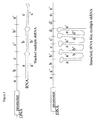
- a multi-shRNA transcript is preferably made from a polymerase II or a polymerase III promoter. Examples of multi-shRNA constructs are shown in figure 3 and in Anderson et al, Oligonucleotides 13:303-312(2003).
- FIG. 1 provides a schematic overview of RNAi interference with shRNA.
- Activation of the RNAi machinery by intracellular expression, preferably expression of a shRNA has the advantage over transfection of synthetic siRNA that there is a constitutive transcription ensuring a basal level of RNAi activity.
- One aspect of the invention therefore provides a nucleic acid molecule of the invention comprising short hairpin RNA.
- said shRNA comprises a single short hairpin.
- said shRNA comprises a multiple short hairpin structure.
- a single shRNA of the invention preferably comprises a loop with a length of about 2 to 15 nucleotides. More preferably said loop has a length of about 3 to 10 nucleotides, most preferably about 5 to 8 nucleotides. In one embodiment said loop comprises hairpin-stabilizing tetraloop sequences.
- the basepaired duplex of an extended shRNA of the invention is furthermore preferably destabilized. This is for instance performed by inclusion of weak G-U base pairs and/or mispairs, and/or by destabilizing bulge or internal loop elements by modification of the sense strand.
- the standard expression strategy for a shRNA transcript is the use of a Polymerase III (Pol III) promoter (e.g. H1 or U6)
- a Polymerase III (Pol II) promoter e.g. H1 or U6
- the expression of a longer transcript encoding multiple shRNAs is preferably optimized.
- This for instance includes the use of a Polymerase II (Pol II) promoter or the T7 expression system for cytoplasmic RNA expression.
- a promoter used in a short hairpin construct of the present invention is for instance constitutively expressed, either in all cell types/tissues or in a cell/tissue-specific manner.
- said promoter is inducibly active so that the amount of expression of double standed RNA is regulated.
- a variety of viral vector systems is suitable for providing a host cell with a nucleic acid molecule of the invention.
- a lentiviral and/or retroviral vector is used.
- a method of the invention preferably involves targeting of an essential, conserved region so that an organism is limited in its capacity of circumventing treatment via escape mutants.
- at least one genomic region of an organism is targeted that executes multiple functions. For instance, a region with an overlapping reading frame or even a triple overlap is targeted. An example of such region is the Tat-Rev-Env region in HIV.
- a region comprising both a coding sequence and a regulatory sequence is targeted.
- Such region for instance comprises a sequence encoding a protein and an RNA/DNA replication signal such as a splicing signal or a sequence motif that controls RNA packaging or reverse transcription. If such regions are targeted, escape mutants are more difficult to arise because all functions need to be retained.
- a mutation which maintains one function may impair another function to such extent that the mutant is not viable.
- the number of possible escape mutants is limited.
- a limited number of nucleic acid molecules or binding molecules of the invention is needed. Mutations that would result in an escape mutant retaining all essential functions are readily computed or determined experimentally, as for instance illustrated by example 2 and figures 8 and 9.
- One aspect of the invention therefore provides a nucleic acid molecule of the invention wherein said genomic nucleic acid sequence of said organism comprises at least one coding sequence and/or at least one DNA/RNA regulatory sequence.
- nucleic acid molecule of the invention comprising a sequence which is complementary to a mutant comprising a coding sequence of an organism wherein a nucleotide of a codon is substituted such that the resulting codon encodes the same amino acid residue.
- possible escape mutants are readily computed.
- a nucleic acid molecule of the invention comprising a genomic nucleic acid sequence of said organism with at least one mutation resulting in a significantly altered structure of said genomic nucleic acid sequence.
- the present inventors have identified a novel resistance mechanism through the formation of a stable nucleic acid structure by at least one mutation in or near the targeted sequence.
- Such mutants comprising an altered nucleic acid structure are computed using modelling programs known in the art such as computer-assisted RNA structure prediction programs. Alternatively, they are detected using long term cultures in the presence of a (candidate) drug, such as for instance an antiviral.
- a nucleic acid molecule or binding molecule of the present invention is capable of binding such altered nucleic acid structure.
- a nucleic acid molecule of the invention preferably comprises an inducible repressor and/or activator.
- the amount of expression, and therefore the degree of treatment is regulated.
- nucleic acid molecules complementary to all possible escape mutants are administrated. Expression is repressed until a certain escape mutant has evolved. Upon detection of such escape mutant, expression is enhanced by deactivating a repressor and/or activating an activator.
- expression of a nucleic acid molecule of the invention is activated during treatment in order to prevent viral escape.
- expression of a nucleic acid molecule of the invention is induced or repressed depending on possible side effects of a treatment and/or general health state of a patient.
- a nucleic acid molecule and/or a binding molecule of the present invention is suitable for treating or preventing a disease involving the presence of an organism.
- One aspect of the invention therefore provides a nucleic acid molecule and/or binding molecule of the invention for use as a medicament.
- a nucleic acid molecule and/or binding molecule of the invention is particularly suitable for the preparation of a medicament or a vaccine against a disease involving an organism capable of mutating its genome.
- Said organism preferably comprises HIV, Hepatitis B, Hepatitis C, SARS, Ebola, Influenza, West Nile and/or polio virus because these organisms have a high mutation rate.
- a pharmaceutical composition comprising a nucleic acid molecule and/or binding molecule of the invention and a suitable diluent or carrier is also herewith provided.
- said pharmaceutical composition comprises a vaccine.
- One aspect of the invention therefore provides a combination therapy wherein at least one compound capable of counteracting a wild type organism is combined with a nucleic acid molecule and/or binding molecule of the present invention.
- Many compounds capable of counteracting a wild type organism are known in the art. In this embodiment at least one of these compounds is combined with a nucleic acid molecule or a binding molecule of the invention.
- Said compound capable of counteracting a wild type organism preferably targets at least one wild type nucleic acid sequence of said organism.
- Said compound preferably comprises double stranded RNA, such as siRNA and/or shRNA, in order to use RNA interference.
- a compound capable of targeting a wild type sequence is preferably combined with a nucleic acid molecule or binding molecule of the invention capable of specifically binding a mutant of the same wild type sequence.
- a second generation shRNA of the invention is combined with a primary shRNA capable of targeting a wild type sequence.
- another kind of drug therapy is combined with a nucleic acid molecule or binding molecule of the invention.
- a currently used drug such as for instance an antiviral is combined with a nucleic acid molecule or binding molecule of the invention capable of specifically binding an escape mutant which is resistant to said drug.
- variants of an organism that are resistant to said drug are targeted by said nucleic acid molecule and/or binding molecule of the invention while variants resistant to said nucleic acid molecule and/or binding molecule of the invention are targeted by said drug.
- Various drug-resistance mutations are well known in the art. For instance, HIV drug-resistance mutations are included in the listing of the International AIDS Society (IAS) to help physicians classify the level of drugs-resistance.
- a nucleic acid molecule or binding molecule of the invention is preferably capable of specifically binding at least one of said drug-resistance mutants.
- CTL-escape or antibody escape routes of mutating organisms are blocked by a nucleic acid molecule and/or binding molecule of the invention anticipating such changes in the organism's genome.
- a compound capable of counteracting a wild type organism is preferably combined with a nucleic acid molecule and/or binding molecule of the invention in one pharmaceutical composition.
- said compound capable of counteracting a wild type organism and a nucleic acid molecule and/or binding molecule of the invention are administered at the same time.
- a compound capable of counteracting a wild type organism and a nucleic acid molecule and/or binding molecule of the invention are administered at different time points. For instance, a nucleic acid molecule and/or binding molecule of the invention is administered once an escape mutant has evolved.
- One aspect of the invention therefore provides a pharmaceutical composition
- a pharmaceutical composition comprising a nucleic acid molecule comprising a sequence which is complementary to a mutant of a genomic nucleic acid sequence of an organism capable of mutating its genome, and a nucleic acid molecule comprising a sequence which is complementary to a genomic nucleic acid sequence of said organism.
- said nucleic acid molecule of the invention and said second nucleic acid molecule complementary to a genomic nucleic acid sequence are both complementary to (a mutant of) the same nucleic acid region of said genome.
- a pharmaceutical composition of the invention comprising a nucleic acid molecule of the invention, or binding molecule of the invention, and another kind of drug capable of at least in part counteracting said disease is also herewith provided.
- Said other kind of drug for instance comprises a known antiviral drug.
- a preferred embodiment comprises a pharmaceutical composition comprising nucleic acid sequences which are complementary to mutants of at least two genomic nucleic acid sequences of said organism.
- said pharmaceutical composition comprises nucleic acid sequences which are complementary to mutants of at least four genomic nucleic acid sequences of said organism.
- a pharmaceutical composition is provided comprising nucleic acid sequences which are complementary to mutants of at least six genomic nucleic acid sequences of said organism. The higher the number of genomic nucleic acid sequences that, once they are mutated, are targeted by nucleic acid molecules and/or binding molecules of the invention, the higher the percentage of inhibition.
- a nucleic acid sequence of the invention is administered in various ways known in the art.
- siRNAs are orally administered or injected.
- Said siRNAs are preferably administered with a suitable diluent or carrier, such as for instance a physiologic salt solution.
- cells are transduced with an expression cassette, preferably a shRNA construct.
- a gene delivery vehicle such as a viral vector system, preferably a lentiviral and/or retroviral vector is particularly suitable. Methods of generating and using a gene delivery vehicle are well known in the art.
- vectors and protocols according to (Dull et al., Journal of Virology 72, 8463-8471, 1998 and/or Seppen et al., Journal of Hepatology, Apr;36(4); 459-65, 2002) are used.
- a gene delivery vehicle comprising a nucleic acid sequence of the invention is therefore also herewith provided. Said gene delivery vehicle is suitable for ex vivo and in vivo gene therapy.
- a method of the invention is particularly suitable for counteracting an organism.
- said organism is counteracted in vivo, comprising administration of a nucleic acid molecule or binding molecule of the invention to an individual suffering from, or at risk of suffering from, infection by said organism.
- In vitro applications comprise counteracting contaminants in (cell) culture.
- the invention thus provides a method for at least in part counteracting an organism, comprising providing said organism with a nucleic acid molecule or binding molecule of the invention.
- Said organism is preferably additionally provided with a nucleic acid molecule comprising a sequence which is complementary to a genomic nucleic acid sequence of said organism. In that case both wild type forms and escape mutants are targeted.
- a preferred embodiment therefore provides a method of the invention wherein said organism is provided with nucleic acid sequences which are complementary to mutants of at least two, more preferably at least four, most preferably at least six genomic nucleic acid sequences of said organism.
- a nucleic acid of the invention is suitable for interfering with a cell comprising an organism capable of mutating its genome, and/or with a cell comprising a nucleic acid sequence of an organism capable of mutating its genome.
- One embodiment of the invention therefore provides a method for interfering with a cell comprising an organism capable of mutating its genome and/or comprising a nucleic acid sequence of an organism capable of mutating its genome, comprising providing said cell with a nucleic acid sequence of the invention.
- a method of the invention is preferably used against an organism involved with disease.
- Administration of a nucleic acid molecule and/or a binding molecule of the invention is capable of at least in part treating or preventing said disease during prolonged periods.
- the invention thus provides a method for at least in part treating or preventing a disease involved with an organism capable of mutating its genome, comprising providing an individual suffering from, or at risk of suffering from, said disease with a pharmaceutical composition of the invention.
- Preferably said individual is additionally provided with another kind of drug capable of at least in part counteracting said organism.
- a kit of parts comprising a nucleic acid molecule and/or binding molecule of the invention and another kind of drug capable of at least in part counteracting an organism is also herewith provided.
- a method of the invention is particularly suitable for preventing and/or treating a virus-associated disease.
- Viruses such as HIV, polio, hepatitis, SARS, Ebola, Influenza and/or West Nile virus are capable of escaping antiviral therapy because of their high mutation rate.
- current therapy directed against such mutating viruses often involves a combination of approaches.
- current therapy against HIV sometimes called HAART (Highly Active Anti-Retroviral Therapy)
- HAART Highly Active Anti-Retroviral Therapy
- a method of the invention is used in order to counteract HIV.
- mature CD4+ T cells and/or CD34+ bone marrow precursor cells are preferably provided with a nucleic acid molecule or a binding molecule of the present invention.
- mature CD4+ T cells and/or CD34+ bone marrow precursor cells are provided with a shRNA of the present invention.
- a variety of viral vector systems is suitable for providing a host cell with a nucleic acid molecule of the invention.
- a lentiviral and/or retroviral vector is used.
- an inducible promoter is used.
- the Tet-system for doxycycline (dox) induced expression as disclosed in WO O1/20013 is preferred, or the HIV-1 LTR promoter that is activated only in HIV-infected cells by the viral Tat protein (Berkhout et al., Cell 1989; 59:273-282).
- cytoplasmic expression using the T7 polymerase system is used for expression of shRNA, preferably multiple shRNA constructs.
- a conditionally replicating HIV-based vector system is used as disclosed in WO 01/20013.
- This dox-dependent virus which has been developed as a safe live-attenuated vaccine strain is also suitable for use as a therapeutic virus by insertion of a nucleic acid molecule of the present invention, such as a shRNA expression cassette of the invention.
- Haematopoietic stem cells are preferably transduced with an RNAi expression cassette of the present invention. These stem cells proliferate into mature T cells that resist HIV-1 infection.
- the virus-resistant cell population becomes enriched in case the non-resistant cells are infected and killed, either directly by the virus or indirectly by the immune system.
- the preferential survival of even a minority of siRNA-expressing cells results in their dominance over time.
- RNAi RNA-binding protein
- these targets include the mRNAs encoding the CD4 receptor and the CCR5 or CXCR4 co-receptors. These receptors are essential for attachment of the HIV-1 particle to the cell and subsequent viral entry. RNAi against the viral RNA does not protect the cell against viral entry. By silencing the receptors, the HIV-1 particle will be unable to attach to and to enter the cell, yielding a form of HIV-1 resistance. In vivo suppression of CD4 or CXCR4 is not preferred because of their immunological function. Therefore, preferably expression of the co-receptor CCR5 is silenced. An inactivating mutation in the CCR5 gene is compatible with normal life, demonstrating that it plays no essential role in human physiology.
- the invention furthermore provides eleven conserved regions of HIV-1 which are especially suitable for targeting during anti HIV treatment.
- the HIV-1 genome comprises more conserved regions, it has been shown by the present inventors that the eleven conserved regions are particularly suitable for being targeted by nucleic acid silencing therapy. Silencing at least one region of said eleven conserved regions results in efficient virus inhibition. Furthermore, treatment is improved with a nucleic acid molecule or binding molecule of the invention capable of specifically binding a mutant of at least one of these eleven conserved regions.
- the eleven selected conserved regions are depicted in figure 5 and table 1B.
- the invention therefore provides a nucleic acid molecule comprising a sequence which is complementary to a conserved region as depicted in table 1B, or to a functional part or derivative of said conserved region. Furthermore a nucleic acid molecule is provided which is complementary to a mutant of a conserved region as depicted in table 1B, or to a functional part or derivative of said mutant. In yet another embodiment the invention provides a nucleic acid molecule comprising a sequence which is complementary to the conserved R/T 1-5 region as depicted in table 1A, or to a functional part or derivative of said conserved R/T 1-5 region.
- nucleic acid molecule is provided which is complementary to a mutant of the conserved R/T 1-5 region as depicted in table 1A, or to a functional part or derivative of said mutant.
- the conserved R/T 1-5 region is also suitable for being targeted by nucleic acid silencing therapy, said therapy preferably comprising a nucleic acid molecule and/or binding molecule of the present invention.
- a functional part of a nucleic acid sequence is defined herein as a part of said nucleic acid, at least 10 base pairs long, preferably at least 15 base pairs long, more preferably at least 19 base pairs long, comprising at least one characteristic (in kind not necessarily in amount) as said nucleic acid sequence.
- Targeting of a part of a conserved nucleic acid sequence of the invention by nucleic acid silencing therapy preferably results in inhibition of HIV.
- a derivative of a nucleic acid sequence is defined as a modified nucleic acid sequence comprising at least one characteristic (in kind, not necessarily in amount) as said nucleic acid sequence. Said derivative for instance comprises said nucleic acid sequence with at least one silent mutation.
- analogue of a nucleic acid sequence for instance comprises a peptide nucleic acid (PNA), locked nucleic acid (LNA) and/or a ribozyme.
- PNA peptide nucleic acid
- LNA locked nucleic acid
- ribozyme a ribozyme
- the invention furthermore provides a nucleic acid molecule comprising a sequence which is complementary to a sequence as depicted in table 2A, 2B or 2C, or a functional part, derivative and/or analogue thereof.
- nucleic acid molecules are capable of inhibiting HIV and are therefore suitable for therapy. If at least one of such nucleic acid molecules is used during a prolonged period, escape mutants comprising mutations within these sequences, which are still capable of performing most - if not all - essential functions, are likely to arise. These escape mutants are targeted with a nucleic acid molecule or binding molecule of the present invention which is capable of specifically binding such escape mutant.
- the invention therefore provides a nucleic acid molecule comprising a sequence which is complementary to a mutant of a sequence as depicted in table 2A, 2B and/or 2C, or a functional part, derivative and/or analogue thereof. Escape mutants retaining their essential functions are computed as discussed above, or detected using long term cultures in the presence of a nucleic acid sequence as depicted in table 2A, 2B and/or 2C.
- a sequence as depicted in table 2A, 2B or 2C, or a functional part, derivative and/or analogue thereof, is capable of inhibiting HIV.
- the percentage of HIV inhibition comprises at least 50 % reduction in virus titer.
- a preferred embodiment therefore provides a nucleic acid molecule comprising a sequence which is complementary to a sequence as depicted in table 2A or 2B, or a functional part, derivative and/or analogue thereof. These sequences are capable of inhibiting HIV with a percentage of inhibition of at least 50% and are therefore particularly suitable for therapy.
- Escape mutants arising as a result of selective pressure when treatment with a sequence as depicted in table 2A or 2B is used, are targeted with a nucleic acid molecule or binding molecule of the present invention which is capable of specifically binding such escape mutant.
- the invention therefore provides a nucleic acid molecule comprising a sequence which is complementary to a mutant of a sequence as depicted in table 2A or 2B, or a functional part, derivative and/or analogue thereof.
- nucleic acid molecule comprising a sequence which is complementary to a sequence as depicted in table 2A, or a functional part, derivative and/or analogue thereof. These sequences are capable of inhibiting HIV with a percentage of inhibition of at least 80% and are therefore particularly suitable for therapy. Escape mutants arising as a result of selective pressure when treatment with a sequence as depicted in table 2A is used, are targeted with a nucleic acid molecule or binding molecule of the present invention which is capable of specifically binding such escape mutant. In one embodiment the invention therefore provides a nucleic acid molecule comprising a sequence which is complementary to a mutant of a sequence as depicted in table 2A, or a functional part, derivative and/or analogue thereof.
- nucleic acid molecule comprising a sequence which is complementary to a sequence as depicted in table 2D, or a functional part, derivative and/or analogue thereof.
- a nucleic acid molecule comprising a sequence which is complementary to a mutant of a sequence as depicted in table 2D, or a functional part, derivative and/or analogue thereof, is also herewith provided.
- a nucleic acid sequence complementary to (a mutant of) a sequence as depicted in table 2D, or a functional part, derivative and/or analogue thereof, is also suitable for HIV therapy.
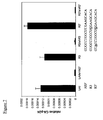
- R3 and R3' are shown in figure 7.
- One aspect of the invention therefore provides a nucleic acid molecule which is complementary to the sequence GUGCCUGGCUGGAAGCACA and/or GUACCUGGCUGGAAGCACA, or a functional part, derivative and/or analogue thereof.
- ShRNA's expressing plasmids were constructed as follows.
- the pSUPER vector a gift from T.R. Brummelkamp, the Netherlands Cancer Institute (Brummelkamp et al., 2002), that contains the H1 promoter, was linearized with BglII and HindIII. Forward and reverse strands of the oligo's, which contain the shRNA-expressing sequence targeting the conserved regions, were annealed and cloned into the vector.
- the sequence targeting the conserved region was 19 nt, that means for a stretch of 23 nucleotides, 5 different shRNA's were designed.
- the oligo sequences were as follows:
- the shRNA expressing plasmids targeting the conserved regions of HIV-1 were numbered from 1 to 86 and were also numbered according to the genomic region, as is shown in table 1A.
- CA-p24 is a measure of virus production. To correct for transfection variation, relative CA-24 values were determined by dividing the CA-p24 measurements by the Renilla values obtained. Negative controls that were included were pBS, pSUPER (without insert) and an empty control. Positive controls were shRNA's targeting the Nef gene (Das et al., 2003) and the Gag gene (Capodici et al., J.Immunol. 2002 Nov 1; 169(9): 5196-201).
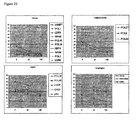
- shRNA's were divided into different groups; strong shRNA's with 80-100% inhibition, intermediate shRNA's with 50-80% inhibition and weak inhibitors with 0-50% inhibition. Of the 81 shRNA's tested, 21 were strong, 13 were intermediate and 47 were weak. To confirm the results from the 96-wells experiment, a selection was made of several shRNA's representing each group. These shRNA's were tested in a dilution series of 5, 25 and 100 ng respectively (figure 10). From the individual dose-response curves as well as from the average dose-response curves, it can be concluded that these shRNA's fall into the different functional groups, validating the data obtained from the screening of the 81 shRNA's.
- Table 1B conserveed regions of HIV that are particularly suitable for targeting during HIV treatment
- Table 2D The shRNA's targeting R/T1 to R/T5 which have not yet been tested.
- Table 2A Strong inhibition, 80%-100% 3 99% LDR3 GGAGAGAUGGGUGCGAG 5 98% LDR5 AGAGAGAUGGGUGCGAGAG 2 97% LDR2 AGGAGAGAUGGGUGCGA 18 97% POL1 ACAGGAGCAGAUGAUACAG 4 96% LDR4 GAGAGAGAUGGGUGCGAGA 64 96% POL47 GUGAAGGGGCAGUAGUAAU 62 94% POL45 AGGUGAAGGGGCAGUAGUA 19 92% POL2 CAGGAGCAGAUGAUACAGU 9 91% LDR9 AGAUGGGUGCGAGAGCGUC 6 91% LDR6 GAGAGAUGGGUGCGAGAGC 8 91% LDR8 GAGAUGGGUGCGAGAGCGU 7 91% LDR7 AGAGAUGGGUGCGAGAGCG 86 90% NEF9 GGGACUGGAAGGGCUAAUU 46 90% POL29 CAGUGCAGGG
- the number of escape routes is limited by selecting (conserved) regions of the viral genome that execute multiple functions. This includes overlapping reading frames, but also sequences that encode both a protein and an important RNA/DNA sequence (e.g. a splicing signal, or a sequence motif that controls RNA packaging or reverse transcription).
- RNA/DNA sequence e.g. a splicing signal, or a sequence motif that controls RNA packaging or reverse transcription.
- the shRNA R/T5 targets the Tat1 reading frame and also the Rev1 reading frame. If we make the assumption that for both Tat and Rev, the amino acid sequence is conserved, then only mutations are allowed that are silent in both reading frames. For the shRNA targeting R/T5 this is shown in figure 8. Two silent mutations can occur in the shRNA R/T5 target: A6C or A18C (NB nt 1 is start of target sequence). Therefore, in addition to the primary shRNA, also shRNA's that are complementary to the two possible silent escape variants are preferably included in anti-HIV treatment.
- P/V4 target which was shown to be effectively targeted by a shRNA.
- the P/V4 target sequence contains the Pol and the Vif reading frames, figure 9.
- the Pol and the Vif reading frames figure 9.
- amino-acid substitutions for each reading frame we predict what amino-acid substitutions for each reading frame are allowed. For these substitutions certain nucleic acid mutations are needed, again only the mutations that will result in both functional Pol and Vif proteins will be allowed, limiting the possibilities for escape.
- a second generation of shRNA's targeting these possible escape mutants are preferably combined with the primary shRNA.
Landscapes
- Health & Medical Sciences (AREA)
- Life Sciences & Earth Sciences (AREA)
- Engineering & Computer Science (AREA)
- Genetics & Genomics (AREA)
- Biomedical Technology (AREA)
- Organic Chemistry (AREA)
- Bioinformatics & Cheminformatics (AREA)
- Chemical & Material Sciences (AREA)
- Zoology (AREA)
- Molecular Biology (AREA)
- Biotechnology (AREA)
- General Engineering & Computer Science (AREA)
- Wood Science & Technology (AREA)
- Virology (AREA)
- General Health & Medical Sciences (AREA)
- AIDS & HIV (AREA)
- Physics & Mathematics (AREA)
- Biochemistry (AREA)
- Microbiology (AREA)
- Plant Pathology (AREA)
- Biophysics (AREA)
- General Chemical & Material Sciences (AREA)
- Nuclear Medicine, Radiotherapy & Molecular Imaging (AREA)
- Medicinal Chemistry (AREA)
- Veterinary Medicine (AREA)
- Pharmacology & Pharmacy (AREA)
- Animal Behavior & Ethology (AREA)
- Chemical Kinetics & Catalysis (AREA)
- Immunology (AREA)
- Public Health (AREA)
- Pharmaceuticals Containing Other Organic And Inorganic Compounds (AREA)
- Medicines That Contain Protein Lipid Enzymes And Other Medicines (AREA)
Priority Applications (4)
| Application Number | Priority Date | Filing Date | Title |
|---|---|---|---|
| EP04077855A EP1647595A1 (fr) | 2004-10-15 | 2004-10-15 | Acides nucléiques contre des virus, en particulier contre le VIH |
| EP05794169A EP1799824A2 (fr) | 2004-10-15 | 2005-10-14 | Acides nucleiques contre des virus, en particulier contre le vih |
| US11/665,510 US20080274991A1 (en) | 2004-10-15 | 2005-10-14 | Nucleic Acids Against Viruses, in Particular Hiv |
| PCT/NL2005/000739 WO2006041290A2 (fr) | 2004-10-15 | 2005-10-14 | Moyens et procedes permettant de contrer un organisme |
Applications Claiming Priority (1)
| Application Number | Priority Date | Filing Date | Title |
|---|---|---|---|
| EP04077855A EP1647595A1 (fr) | 2004-10-15 | 2004-10-15 | Acides nucléiques contre des virus, en particulier contre le VIH |
Publications (1)
| Publication Number | Publication Date |
|---|---|
| EP1647595A1 true EP1647595A1 (fr) | 2006-04-19 |
Family
ID=34928575
Family Applications (2)
| Application Number | Title | Priority Date | Filing Date |
|---|---|---|---|
| EP04077855A Withdrawn EP1647595A1 (fr) | 2004-10-15 | 2004-10-15 | Acides nucléiques contre des virus, en particulier contre le VIH |
| EP05794169A Withdrawn EP1799824A2 (fr) | 2004-10-15 | 2005-10-14 | Acides nucleiques contre des virus, en particulier contre le vih |
Family Applications After (1)
| Application Number | Title | Priority Date | Filing Date |
|---|---|---|---|
| EP05794169A Withdrawn EP1799824A2 (fr) | 2004-10-15 | 2005-10-14 | Acides nucleiques contre des virus, en particulier contre le vih |
Country Status (3)
| Country | Link |
|---|---|
| US (1) | US20080274991A1 (fr) |
| EP (2) | EP1647595A1 (fr) |
| WO (1) | WO2006041290A2 (fr) |
Cited By (13)
| Publication number | Priority date | Publication date | Assignee | Title |
|---|---|---|---|---|
| WO2010098667A1 (fr) * | 2009-02-27 | 2010-09-02 | Academisch Medisch Centrum Bij De Universiteit Van Amsterdam | Moyens et procédés d'inhibition durable des pathogènes |
| WO2014037712A3 (fr) * | 2012-09-04 | 2014-05-01 | Genome Research Limited | Détection du vih-1 |
| US20190201523A1 (en) * | 2016-07-08 | 2019-07-04 | American Gene Technologies International Inc. | Hiv pre-immunization and immunotherapy |
| US10767183B2 (en) | 2016-03-09 | 2020-09-08 | American Gene Technologies International Inc. | Combination vectors and methods for treating cancer |
| US10772905B2 (en) | 2016-01-15 | 2020-09-15 | American Gene Technologies International Inc. | Methods and compositions for the activation of gamma-delta T-cells |
| US10888613B2 (en) | 2016-02-08 | 2021-01-12 | American Gene Technologies International Inc. | Method of producing cells resistant to HIV infection |
| US11007209B2 (en) | 2008-10-17 | 2021-05-18 | American Gene Technologies International Inc. | Safe lentiviral vectors for targeted delivery of multiple therapeutic molecules |
| US11519006B2 (en) | 2016-01-15 | 2022-12-06 | American Gene Technologies International Inc. | Methods and compositions for the activation of gamma-delta T-cells |
| US11583562B2 (en) | 2016-07-21 | 2023-02-21 | American Gene Technologies International Inc. | Viral vectors for treating Parkinson's disease |
| US11820999B2 (en) | 2017-04-03 | 2023-11-21 | American Gene Technologies International Inc. | Compositions and methods for treating phenylketonuria |
| US11976292B2 (en) | 2016-06-08 | 2024-05-07 | American Gene Technologies International Inc. | Non-integrating viral delivery system and methods related thereto |
| US11980663B2 (en) | 2015-07-08 | 2024-05-14 | American Gene Technologies International Inc. | HIV pre-immunization and immunotherapy |
| US12559769B2 (en) | 2017-06-16 | 2026-02-24 | American Gene Technologies International Inc. | Methods and compositions for the activation of tumor cytotoxicity via human gamma-delta t-cells |
Families Citing this family (6)
| Publication number | Priority date | Publication date | Assignee | Title |
|---|---|---|---|---|
| DK1974017T4 (da) | 2005-12-09 | 2023-09-25 | Academisch Medisch Centrum Bij De Univ Van Amsterdam | Midler og fremgangsmåder til at påvirke stabiliteten af antistof producerende celler |
| WO2007067032A1 (fr) | 2005-12-09 | 2007-06-14 | Academisch Medisch Cemtrum Bij De Universiteit Van Amsterdam | Moyen et methodes permettant d'influencer la stabilite de cellules |
| SI2308514T1 (sl) | 2007-03-23 | 2013-09-30 | To-Bbb Holding B.V. | Konjugati za prenos zdravila preko krvno-moĹľganske pregrade |
| DK2454283T3 (en) | 2009-07-15 | 2018-05-07 | Aimm Therapeutics Bv | METHODS AND PROCEDURES FOR MANUFACTURING HIGH EFFICIENCY ANTIBODIES |
| ES2626671T3 (es) | 2010-12-02 | 2017-07-25 | Aimm Therapeutics B.V. | Medios y métodos para producir anticuerpos de alta afinidad |
| WO2015115892A1 (fr) | 2014-01-31 | 2015-08-06 | Aimm Therapeutics B.V. | Moyens et procédés de production d'anticorps stables |
Citations (2)
| Publication number | Priority date | Publication date | Assignee | Title |
|---|---|---|---|---|
| WO1989008146A1 (fr) * | 1988-02-26 | 1989-09-08 | Worcester Foundation For Experimental Biology | Inhibition du htlv-iii par des oligonucleotides exogenes |
| US5684147A (en) * | 1992-10-05 | 1997-11-04 | Hybridon, Inc. | Therapeutic anti-HIV anti-viral oligonucleotides and pharmaceutical formulations thereof |
Family Cites Families (3)
| Publication number | Priority date | Publication date | Assignee | Title |
|---|---|---|---|---|
| WO1994007367A1 (fr) * | 1992-09-29 | 1994-04-14 | Apollon, Inc. | Oligomeres antiviraux liant des voies de polypurine d'arn monocatenaire ou d'hybrides d'arn-adn |
| US6001558A (en) * | 1997-06-25 | 1999-12-14 | Ortho Clinical Diagnostics, Inc. | Amplification and detection of HIV-1 and/or HIV 2 |
| US7122180B2 (en) * | 2000-10-23 | 2006-10-17 | Children's Medical Center Corporation | DNA vectors containing mutated HIV proviruses |
-
2004
- 2004-10-15 EP EP04077855A patent/EP1647595A1/fr not_active Withdrawn
-
2005
- 2005-10-14 WO PCT/NL2005/000739 patent/WO2006041290A2/fr not_active Ceased
- 2005-10-14 US US11/665,510 patent/US20080274991A1/en not_active Abandoned
- 2005-10-14 EP EP05794169A patent/EP1799824A2/fr not_active Withdrawn
Patent Citations (2)
| Publication number | Priority date | Publication date | Assignee | Title |
|---|---|---|---|---|
| WO1989008146A1 (fr) * | 1988-02-26 | 1989-09-08 | Worcester Foundation For Experimental Biology | Inhibition du htlv-iii par des oligonucleotides exogenes |
| US5684147A (en) * | 1992-10-05 | 1997-11-04 | Hybridon, Inc. | Therapeutic anti-HIV anti-viral oligonucleotides and pharmaceutical formulations thereof |
Cited By (19)
| Publication number | Priority date | Publication date | Assignee | Title |
|---|---|---|---|---|
| US11007209B2 (en) | 2008-10-17 | 2021-05-18 | American Gene Technologies International Inc. | Safe lentiviral vectors for targeted delivery of multiple therapeutic molecules |
| WO2010098667A1 (fr) * | 2009-02-27 | 2010-09-02 | Academisch Medisch Centrum Bij De Universiteit Van Amsterdam | Moyens et procédés d'inhibition durable des pathogènes |
| WO2014037712A3 (fr) * | 2012-09-04 | 2014-05-01 | Genome Research Limited | Détection du vih-1 |
| US11980663B2 (en) | 2015-07-08 | 2024-05-14 | American Gene Technologies International Inc. | HIV pre-immunization and immunotherapy |
| US12410446B2 (en) | 2016-01-15 | 2025-09-09 | American Gene Technologies International Inc. | Methods and compositions for the activation of gamma-delta T-cells |
| US10772905B2 (en) | 2016-01-15 | 2020-09-15 | American Gene Technologies International Inc. | Methods and compositions for the activation of gamma-delta T-cells |
| US11519006B2 (en) | 2016-01-15 | 2022-12-06 | American Gene Technologies International Inc. | Methods and compositions for the activation of gamma-delta T-cells |
| US10888613B2 (en) | 2016-02-08 | 2021-01-12 | American Gene Technologies International Inc. | Method of producing cells resistant to HIV infection |
| US12090200B2 (en) | 2016-02-08 | 2024-09-17 | American Gene Technologies International Inc. | Methods of producing cells resistant to HIV infection |
| US10767183B2 (en) | 2016-03-09 | 2020-09-08 | American Gene Technologies International Inc. | Combination vectors and methods for treating cancer |
| US10975374B2 (en) | 2016-03-09 | 2021-04-13 | American Gene Technologies International Inc. | Combination vectors and methods for treating cancer |
| US11976292B2 (en) | 2016-06-08 | 2024-05-07 | American Gene Technologies International Inc. | Non-integrating viral delivery system and methods related thereto |
| US11090379B2 (en) | 2016-07-08 | 2021-08-17 | American Gene Technologies International Inc. | HIV pre-immunization and immunotherapy |
| US11911458B2 (en) * | 2016-07-08 | 2024-02-27 | American Gene Technologies International Inc. | HIV pre-immunization and immunotherapy |
| US12370253B2 (en) | 2016-07-08 | 2025-07-29 | American Gene Technologies International Inc. | Pre-immunization and immunotherapy |
| US20190201523A1 (en) * | 2016-07-08 | 2019-07-04 | American Gene Technologies International Inc. | Hiv pre-immunization and immunotherapy |
| US11583562B2 (en) | 2016-07-21 | 2023-02-21 | American Gene Technologies International Inc. | Viral vectors for treating Parkinson's disease |
| US11820999B2 (en) | 2017-04-03 | 2023-11-21 | American Gene Technologies International Inc. | Compositions and methods for treating phenylketonuria |
| US12559769B2 (en) | 2017-06-16 | 2026-02-24 | American Gene Technologies International Inc. | Methods and compositions for the activation of tumor cytotoxicity via human gamma-delta t-cells |
Also Published As
| Publication number | Publication date |
|---|---|
| WO2006041290A2 (fr) | 2006-04-20 |
| US20080274991A1 (en) | 2008-11-06 |
| EP1799824A2 (fr) | 2007-06-27 |
| WO2006041290A3 (fr) | 2007-01-18 |
Similar Documents
| Publication | Publication Date | Title |
|---|---|---|
| Bennasser et al. | Evidence that HIV-1 encodes an siRNA and a suppressor of RNA silencing | |
| Nan et al. | Antisense phosphorodiamidate morpholino oligomers as novel antiviral compounds | |
| Nishitsuji et al. | Effective suppression of human immunodeficiency virus type 1 through a combination of short-or long-hairpin RNAs targeting essential sequences for retroviral integration | |
| AU2005222084B2 (en) | Multiple promoter expression cassettes for simultaneous delivery of RNAI agents | |
| US20080274991A1 (en) | Nucleic Acids Against Viruses, in Particular Hiv | |
| Gitlin et al. | Poliovirus escape from RNA interference: short interfering RNA-target recognition and implications for therapeutic approaches | |
| Karlas et al. | Inhibition of porcine endogenous retroviruses by RNA interference: increasing the safety of xenotransplantation | |
| AU2002326906B2 (en) | Method for expression of small antiviral RNA molecules within a cell | |
| Choi et al. | Multiplexing seven miRNA-Based shRNAs to suppress HIV replication | |
| Christensen et al. | Small interfering RNAs against the TAR RNA binding protein, TRBP, a Dicer cofactor, inhibit human immunodeficiency virus type 1 long terminal repeat expression and viral production | |
| Yamagishi et al. | Retroviral delivery of promoter-targeted shRNA induces long-term silencing of HIV-1 transcription | |
| US20170283802A1 (en) | Design of nucleic acid binding molecules with non-watson crick and non-canonical pairing based on artificial mutation consensus sequences to counter escape mutations | |
| Wang et al. | Efficient RNA virus targeting via CRISPR/CasRx in fish | |
| Leonard et al. | HIV evades RNA interference directed at TAR by an indirect compensatory mechanism | |
| CN101314775B (zh) | 可用于艾滋病治疗的rna干扰靶点 | |
| Jordan-Paiz et al. | Impact of synonymous genome recoding on the HIV life cycle | |
| JP4545091B2 (ja) | C型肝炎ウイルスの働きを阻害するオリゴリボヌクレオチドまたはペプチド核酸 | |
| Manjunath et al. | Interfering antiviral immunity: application, subversion, hope? | |
| Lainé et al. | In vitro and in vivo cleavage of HIV-1 RNA by new SOFA-HDV ribozymes and their potential to inhibit viral replication | |
| Martínez | Progress in the therapeutic applications of siRNAs against HIV-1 | |
| Faburay et al. | Short interfering RNA inhibits rift valley fever virus replication and degradation of protein kinase R in human cells | |
| Waldron et al. | Under the hood: The molecular biology driving gene therapy for the treatment of sickle cell disease | |
| JP4536112B2 (ja) | RNAi耐性ウイルス株を克服する新手法 | |
| de Carvalho et al. | Multi-targeted gene silencing strategies inhibit replication of Canine morbillivirus | |
| CN113274510B (zh) | 抑制j亚群禽白血病病毒复制的组合物及其应用 |
Legal Events
| Date | Code | Title | Description |
|---|---|---|---|
| PUAI | Public reference made under article 153(3) epc to a published international application that has entered the european phase |
Free format text: ORIGINAL CODE: 0009012 |
|
| AK | Designated contracting states |
Kind code of ref document: A1 Designated state(s): AT BE BG CH CY CZ DE DK EE ES FI FR GB GR HU IE IT LI LU MC NL PL PT RO SE SI SK TR |
|
| AX | Request for extension of the european patent |
Extension state: AL HR LT LV MK |
|
| AKX | Designation fees paid | ||
| REG | Reference to a national code |
Ref country code: DE Ref legal event code: 8566 |
|
| STAA | Information on the status of an ep patent application or granted ep patent |
Free format text: STATUS: THE APPLICATION IS DEEMED TO BE WITHDRAWN |
|
| 18D | Application deemed to be withdrawn |
Effective date: 20061020 |