EP1651623B1 - Hexahydrodiazepinone als inhibitoren des dipeptidylpeptidase-iv zur behandlung bzw. prävention von diabetes - Google Patents
Hexahydrodiazepinone als inhibitoren des dipeptidylpeptidase-iv zur behandlung bzw. prävention von diabetes Download PDFInfo
- Publication number
- EP1651623B1 EP1651623B1 EP04779221A EP04779221A EP1651623B1 EP 1651623 B1 EP1651623 B1 EP 1651623B1 EP 04779221 A EP04779221 A EP 04779221A EP 04779221 A EP04779221 A EP 04779221A EP 1651623 B1 EP1651623 B1 EP 1651623B1
- Authority
- EP
- European Patent Office
- Prior art keywords
- substituted
- unsubstituted
- alkoxy
- alkyl
- hydroxy
- Prior art date
- Legal status (The legal status is an assumption and is not a legal conclusion. Google has not performed a legal analysis and makes no representation as to the accuracy of the status listed.)
- Expired - Lifetime
Links
- 0 *[C@@](C(N[C@@](CC1)[Re])=O)N1C(C[C@@](C[Al])N)=O Chemical compound *[C@@](C(N[C@@](CC1)[Re])=O)N1C(C[C@@](C[Al])N)=O 0.000 description 6
- WQEFMMCSAXKCIO-SECBINFHSA-N CC(C)(C)OC(N[C@@H](CC(O)=O)Cc(c(Br)c1)cc(F)c1F)=O Chemical compound CC(C)(C)OC(N[C@@H](CC(O)=O)Cc(c(Br)c1)cc(F)c1F)=O WQEFMMCSAXKCIO-SECBINFHSA-N 0.000 description 1
- DYAISPAQPPRCQC-LLVKDONJSA-N CC(C)(C)OC(N[C@@H](CC(O)=O)Cc1cc(F)ccc1F)=O Chemical compound CC(C)(C)OC(N[C@@H](CC(O)=O)Cc1cc(F)ccc1F)=O DYAISPAQPPRCQC-LLVKDONJSA-N 0.000 description 1
- AJFZZYIKQGNCFL-RXMQYKEDSA-N C[C@H](CNC1)CNC1=O Chemical compound C[C@H](CNC1)CNC1=O AJFZZYIKQGNCFL-RXMQYKEDSA-N 0.000 description 1
Classifications
-
- C—CHEMISTRY; METALLURGY
- C07—ORGANIC CHEMISTRY
- C07D—HETEROCYCLIC COMPOUNDS
- C07D243/00—Heterocyclic compounds containing seven-membered rings having two nitrogen atoms as the only ring hetero atoms
- C07D243/06—Heterocyclic compounds containing seven-membered rings having two nitrogen atoms as the only ring hetero atoms having the nitrogen atoms in positions 1 and 4
- C07D243/10—Heterocyclic compounds containing seven-membered rings having two nitrogen atoms as the only ring hetero atoms having the nitrogen atoms in positions 1 and 4 condensed with carbocyclic rings or ring systems
- C07D243/14—1,4-Benzodiazepines; Hydrogenated 1,4-benzodiazepines
-
- A—HUMAN NECESSITIES
- A61—MEDICAL OR VETERINARY SCIENCE; HYGIENE
- A61P—SPECIFIC THERAPEUTIC ACTIVITY OF CHEMICAL COMPOUNDS OR MEDICINAL PREPARATIONS
- A61P3/00—Drugs for disorders of the metabolism
- A61P3/04—Anorexiants; Antiobesity agents
-
- A—HUMAN NECESSITIES
- A61—MEDICAL OR VETERINARY SCIENCE; HYGIENE
- A61P—SPECIFIC THERAPEUTIC ACTIVITY OF CHEMICAL COMPOUNDS OR MEDICINAL PREPARATIONS
- A61P3/00—Drugs for disorders of the metabolism
- A61P3/06—Antihyperlipidemics
-
- A—HUMAN NECESSITIES
- A61—MEDICAL OR VETERINARY SCIENCE; HYGIENE
- A61P—SPECIFIC THERAPEUTIC ACTIVITY OF CHEMICAL COMPOUNDS OR MEDICINAL PREPARATIONS
- A61P3/00—Drugs for disorders of the metabolism
- A61P3/08—Drugs for disorders of the metabolism for glucose homeostasis
- A61P3/10—Drugs for disorders of the metabolism for glucose homeostasis for hyperglycaemia, e.g. antidiabetics
-
- A—HUMAN NECESSITIES
- A61—MEDICAL OR VETERINARY SCIENCE; HYGIENE
- A61P—SPECIFIC THERAPEUTIC ACTIVITY OF CHEMICAL COMPOUNDS OR MEDICINAL PREPARATIONS
- A61P43/00—Drugs for specific purposes, not provided for in groups A61P1/00-A61P41/00
-
- C—CHEMISTRY; METALLURGY
- C07—ORGANIC CHEMISTRY
- C07D—HETEROCYCLIC COMPOUNDS
- C07D401/00—Heterocyclic compounds containing two or more hetero rings, having nitrogen atoms as the only ring hetero atoms, at least one ring being a six-membered ring with only one nitrogen atom
- C07D401/02—Heterocyclic compounds containing two or more hetero rings, having nitrogen atoms as the only ring hetero atoms, at least one ring being a six-membered ring with only one nitrogen atom containing two hetero rings
- C07D401/06—Heterocyclic compounds containing two or more hetero rings, having nitrogen atoms as the only ring hetero atoms, at least one ring being a six-membered ring with only one nitrogen atom containing two hetero rings linked by a carbon chain containing only aliphatic carbon atoms
-
- C—CHEMISTRY; METALLURGY
- C07—ORGANIC CHEMISTRY
- C07D—HETEROCYCLIC COMPOUNDS
- C07D487/00—Heterocyclic compounds containing nitrogen atoms as the only ring hetero atoms in the condensed system, not provided for by groups C07D451/00 - C07D477/00
- C07D487/02—Heterocyclic compounds containing nitrogen atoms as the only ring hetero atoms in the condensed system, not provided for by groups C07D451/00 - C07D477/00 in which the condensed system contains two hetero rings
- C07D487/04—Ortho-condensed systems
Definitions
- the present invention relates to novel hexahydrodiazepinone compounds which are inhibitors of the dipeptidyl peptidase-IV enzyme ("DPP-IV inhibitors") and which are useful in the treatment or prevention of diseases in which the dipeptidyl peptidase-IV enzyme is involved, such as diabetes and particularly type 2 diabetes.
- DPP-IV inhibitors dipeptidyl peptidase-IV enzyme
- the invention is also directed to pharmaceutical compositions comprising these compounds and the use of these compounds and compositions in the prevention or treatment of such diseases in which the dipeptidyl peptidase-IV enzyme is involved.
- Diabetes refers to a disease process derived from multiple causative factors and characterized by elevated levels of plasma glucose or hyperglycemia in the fasting state or after administration of glucose during an oral glucose tolerance test. Persistent or uncontrolled hyperglycemia is associated with increased and premature morbidity and mortality. Often abnormal glucose homeostasis is associated both directly and indirectly with alterations of the lipid, lipoprotein and apolipoprotein metabolism and other metabolic and hemodynamic disease. Therefore patients with Type 2 diabetes mellitus are at especially increased risk of macrovascular and microvascular complications, including coronary heart disease, stroke, peripheral vascular disease, hypertension, nephropathy, neuropathy, and retinopathy. Therefore, therapeutical control of glucose homeostasis, lipid metabolism and hypertension are critically important in the clinical management and treatment of diabetes mellitus.
- type 1 diabetes or insulin-dependent diabetes mellitus (IDDM)
- IDDM insulin-dependent diabetes mellitus
- NIDDM noninsulin dependent diabetes mellitus
- Insulin resistance is not primarily due to a diminished number of insulin receptors but to a post-insulin receptor binding defect that is not yet understood. This resistance to insulin responsiveness results in insufficient insulin activation of glucose uptake, oxidation and storage in muscle and inadequate insulin repression of lipolysis in adipose tissue and of glucose production and secretion in the liver.
- sulfonylureas or meglitinide sulfonylureas or meglitinide
- the biguanides increase insulin sensitivity resulting in some correction of hyperglycemia.
- the two biguanides, phenformin and metformin can induce lactic acidosis and nausea/diarrhea.
- Metformin has fewer side effects than phenformin and is often prescribed for the treatment of Type 2 diabetes.
- the glitazones are a more recently described class of compounds with potential for ameliorating many symptoms of type 2 diabetes. These agents substantially increase insulin sensitivity in muscle, liver and adipose tissue in several animal models of type 2 diabetes resulting in partial or complete correction of the elevated plasma levels of glucose without occurrence of hypoglycemia.
- the glitazones that are currently marketed are agonists of the peroxisome proliferator activated receptor (PPAR), primarily the PPAR-gamma subtype.
- PPAR-gamma agonism is generally believed to be responsible for the improved insulin sensititization that is observed with the glitazones.
- Newer PPAR agonists that are being tested for treatment of Type II diabetes are agonists of the alpha, gamma or delta subtype, or a combination of these, and in many cases are chemically different from the glitazones (i.e., they are not thiazolidinediones). Serious side effects (e.g. liver toxicity) have occurred with some of the glitazones, such as troglitazone.
- New biochemical approaches that have been recently introduced or are still under development include treatment with alpha-glucosidase inhibitors (e.g. acarbose) and protein tyrosine phosphatase-1B (PTP-1B) inhibitors.
- alpha-glucosidase inhibitors e.g. acarbose
- PTP-1B protein tyrosine phosphatase-1B
- DPP-IV dipeptidyl peptidase-IV
- DP-IV dipeptidyl peptidase-IV
- DPP-IV inhibitors in the treatment of type 2 diabetes is based on the fact that DPP-IV in vivo readily inactivates glucagon like peptide-1 (GLP-1) and gastric inhibitory peptide (GIP).
- GLP-1 and GIP are incretins and are produced when food is consumed. The incretins stimulate production of insulin. Inhibition of DPP-IV leads to decreased inactivation of the incretins, and this in turn results in increased effectiveness of the incretins in stimulating production of insulin by the pancreas. DIP-IV inhibition therefore results in an increased level of serum insulin.
- DPP-IV inhibition is not expected to increase the level of insulin at inappropriate times, such as between meals, which can lead to excessively low blood sugar (hypoglycemia). Inhibition of DPP-IV is therefore expected to increase insulin without increasing the risk of hypoglycemia, which is a dangerous side effect associated with the use of insulin secretagogues.
- DPP-IV inhibitors also have other therapeutic utilities, as discussed herein.
- DPP-IV inhibitors have not been studied extensively to date, especially for utilities other than diabetes. New compounds are needed so that improved DPP-IV inhibitors can be found for the treatment of diabetes and potentially other diseases and conditions.
- the therapeutic potential of DPP-IV inhibitors for the treatment of type 2 diabetes is discussed by D.J. Drucker in Exp. Opin. Invest. Drugs, 12: 87-100 (2003 ) and by K. Augustyns, et al., in Exp. Opin. Ther. Patents, 13: 499-510 (2003 ).
- the present invention is directed to novel hexahydrodiazepinone compounds which are inhibitors of the dipeptidyl peptidase-IV enzyme ("DPP-IV inhibitors") and which are useful in the treatment or prevention of diseases in which the dipeptidyl peptidase-IV enzyme is involved, such as diabetes and particularly type 2 diabetes.
- DPP-IV inhibitors inhibitors of the dipeptidyl peptidase-IV enzyme
- the invention is also directed to pharmaceutical compositions comprising these compounds and the use of these compounds and compositions in the prevention or treatment of such diseases in which the dipeptidyl peptidase-IV enzyme is involved.
- the present invention relates to hexahydrodiazepinone compounds useful as inhibitors of dipeptidyl peptidase-IV.
- Compounds of the present invention are described by structural formula I: or a pharmaceutically acceptable salt thereof; wherein
- the carbon atom marked with an * has the R configuration as depicted in formula Ia wherein Ar, R 1 , R 4 , R 5 , R 6 , R 7 , R 8 , R 9 , R 10 , and R 11 are as defined herein.
- R 3 is selected from the group consisting of hydrogen, fluoro, chloro, bromo, trifluoromethyl, and methyl.
- R 3 is selected from the group consisting of hydrogen, fluoro, and chloro.
- R 3 is hydrogen or fluoro.
- R 1 is selected from the group consisting of:
- R 1 is selected from the group consisting of hydrogen, methyl, and cyclopropyl.
- R 1 is hydrogen
- R 4 is selected from the group consisting of:
- R 4 is selected from the group consisting of:
- R 6 is selected from the group consisting of:
- R 6 is selected from the group consisting of:
- R 6 is selected from the group consisting of:
- R 8 is selected from the group consisting of:
- R 8 is hydrogen
- R 10 is selected from the group consisting of:
- R 10 is hydrogen
- R 5 , R 7 and R 11 are each independently selected from hydrogen and methyl.
- R 5 , R 7 and R 11 are hydrogen.
- R 9 is selected from hydrogen, halogen and methyl.
- R 9 is hydrogen
- R 9 is methyl and R 5 , R 7 , R 8 , R 10 , and R 11 are hydrogen.
- R 4 is selected from the group consisting of:
- R 5 , R 7 , R 8 , R 9 , R 10 , and R 1 1 are hydrogen, with the proviso that R 6 is not hydrogen.
- R 4 is selected from the group consisting of:
- R 1 is hydrogen
- R 7 and R 1 together with the nitrogen atom to which R 1 is attached form a heterocyclic ring selected from azetidine, pyrrolidine and piperidine wherein said heterocyclic ring is unsubstituted or substituted with one to five substituents independently selected from halogen, hydroxy, C 1-6 alkyl, and C 1-6 alkoxy, wherein alkyl and alkoxy are unsubstituted or substituted with one to five halogens.
- R 7 and R 1 together with the nitrogen atom to which R 1 is attached form a pyrrolidine ring.
- R 4 is selected from the group consisting of:
- alkyl as well as other groups having the prefix “alk”, such as alkoxy and alkanoyl, means carbon chains which may be linear or branched, and combinations thereof, unless the carbon chain is defined otherwise.
- alkyl groups include methyl, ethyl, propyl, isopropyl, butyl, sec- and tert-butyl, pentyl, hexyl, heptyl, octyl, nonyl, and the like. Where the specified number of carbon atoms permits, e.g., from C 3-10 , the term alkyl also includes cycloalkyl groups, and combinations of linear or branched alkyl chains combined with cycloalkyl structures.
- cycloalkyl is a subset of alkyl and means a saturated carbocyclic ring having a specified number of carbon atoms. Examples of cycloalkyl include cyclopropyl, cyclobutyl, cyclopentyl, cyclohexyl, cycloheptyl, cyclooctyl, and the like. A cycloalkyl group generally is monocyclic unless stated otherwise. Cycloalkyl groups are saturated unless otherwise defined.
- alkoxy refers to straight or branched chain alkoxides of the number of carbon atoms specified (e.g., C 1-10 alkoxy), or any number within this range [i.e., methoxy (MeO-), ethoxy, isopropoxy, etc.].
- alkylthio refers to straight or branched chain alkylsulfides of the number of carbon atoms specified (e.g., C 1-10 alkylthio), or any number within this range [i.e., methylthio (MeS-), ethylthio, isopropylthio, etc.].
- alkylamino refers to straight or branched alkylamines of the number of carbon atoms specified (e.g., C 1-6 alkylamino), or any number within this range [i.e., methylamino, ethylamino, isopropylamino, t-butylamino, etc.].
- alkylsulfonyl refers to straight or branched chain alkylsulfones of the number of carbon atoms specified (e.g., C 1-6 alkylsulfonyl), or any number within this range [i.e., methylsulfonyl (MeSO 2 -), ethylsulfonyl, isopropylsulfonyl, etc.].
- alkyloxycarbonyl refers to straight or branched chain esters of a carboxylic acid derivative of the present invention of the number of carbon atoms specified (e.g., C 1-6 alkyloxycarbonyl), or any number within this range [i.e., methyloxycarbonyl (MeOCO-), ethyloxycarbonyl, or butyloxycarbonyl].
- Aryl means a mono- or polycyclic aromatic ring system containing carbon ring atoms.
- the preferred aryls are monocyclic or bicyclic 6-10 membered aromatic ring systems. Phenyl and naphthyl are preferred aryls. The most preferred aryl is phenyl.
- Heterocycle and “heterocyclyl” refer to saturated or unsaturated non-aromatic rings or ring systems containing at least one heteroatom selected from O, S and N, further including the oxidized forms of sulfur, namely SO and SO 2 .
- heterocycles include tetrahydrofuran (THF), dihydrofuran, 1,4-dioxane, morpholine, 1,4-dithiane, piperazine, piperidine, 1,3-dioxolane, imidazolidine, imidazoline, pyrroline, pyrrolidine, tetrahydropyran, dihydropyran, oxathiolane, dithiolane, 1,3-dioxane, 1,3-dithiane, oxathiane, thiomorpholine, and the like.
- THF tetrahydrofuran
- dihydrofuran 1,4-dioxane
- morpholine 1,4-dithiane
- 1,4-dithiane piperazine
- piperidine 1,3-dioxolane
- imidazolidine imidazoline
- pyrroline pyrrolidine
- tetrahydropyran dihydropyran
- Heteroaryl means an aromatic or partially aromatic heterocycle that contains at least one ring heteroatom selected from O, S and N. Heteroaryls also include heteroaryls fused to other kinds of rings, such as aryls, cycloalkyls and heterocycles that are not aromatic.
- heteroaryl groups include pyrrolyl, isoxazolyl, isothiazolyl, pyrazolyl, pyridinyl; 2-oxo-(1 H )-pyridinyl (2-hydroxy-pyridinyl), oxazolyl, 1,2,4-oxadiazolyl, 1,3,4-oxadiazolyl, thiadiazolyl, thiazolyl, imidazolyl, triazolyl, tetrazolyl, furyl, triazinyl, thienyl, pyrimidinyl, pyrazinyl, benzisoxazolyl, benzoxazolyl, benzothiazolyl, benzothiadiazolyl, dihydrobenzofuranyl, indolinyl, pyridazinyl, indazolyl, isoindolyl, dihydrobenzothienyl, indolizinyl, cinnolinyl, phthalaziny
- Halogen refers to fluorine, chlorine, bromine and iodine. Chlorine and fluorine are generally preferred. Fluorine is most preferred when the halogens are substituted on an alkyl or alkoxy group (e.g. CF 3 O and CF 3 CH 2 O).
- the compounds of the present invention may contain one or more asymmetric centers and can thus occur as racemates and racemic mixtures, single enantiomers, diastereomeric mixtures and individual diastereomers.
- the compounds of the present invention have an asymmetric center at the carbon atom marked with an * in formula Ia and at the carbon atoms marked with an *, **, and *** in formula Ib. Additional asymmetric centers may be present depending upon the nature of the various substituents on the molecule. Each such asymmetric center will independently produce two optical isomers and it is intended that all of the possible optical isomers and diastereomers in mixtures and as pure or partially purified compounds are included within the ambit of this invention. The present invention is meant to comprehend all such isomeric forms of these compounds.
- Some of the compounds described herein may exist as tautomers, which have different points of attachment of hydrogen accompanied by one or more double bond shifts.
- a ketone and its enol form are keto-enol tautomers.
- the individual tautomers as well as mixtures thereof are encompassed with compounds of the present invention.
- Formula I shows the structure of the class of compounds without preferred stereochemistry.
- Formula Ia shows the preferred sterochemistry at the carbon atom to which is attached the amino group of the beta-amino acid from which these compounds are prepared.
- Formula Ib shows the preferred sterochemistry at the carbon atom to which is attached the amino group of the beta-amino acid from which these compounds are prepared and at two of the stereogenic carbon atoms of the hexahydrodiazepinone ring.
- racemic mixtures of the compounds may be separated so that the individual enantiomers are isolated.
- the separation can be carried out by methods well known in the art, such as the coupling of a racemic mixture of compounds to an enantiomerically pure compound to form a diastereomeric mixture, followed by separation of the individual diastereomers by standard methods, such as fractional crystallization or chromatography.
- the coupling reaction is often the formation of salts using an enantiomerically pure acid or base.
- the diasteromeric derivatives may then be converted to the pure enantiomers by cleavage of the added chiral residue.
- the racemic mixture of the compounds can also be separated directly by chromatographic methods utilizing chiral stationary phases, which methods are well known in the art.
- any enantiomer of a compound may be obtained by stereoselective synthesis using optically pure starting materials or reagents of known configuration by methods well known in the art.
- references to the compounds of structural formula I are meant to also include the pharmaceutically acceptable salts, and also salts that are not pharmaceutically acceptable when they are used as precursors to the free compounds or their pharmaceutically acceptable salts or in other synthetic manipulations.
- the compounds of the present invention may be administered in the form of a pharmaceutically acceptable salt.
- pharmaceutically acceptable salt refers to salts prepared from pharmaceutically acceptable non-toxic bases or acids including inorganic or organic bases and inorganic or organic acids. Salts of basic compounds encompassed within the term “pharmaceutically acceptable salt” refer to non-toxic salts of the compounds of this invention which are generally prepared by reacting the free base with a suitable organic or inorganic acid.
- Representative salts of basic compounds of the present invention include, the following: acetate, benzenesulfonate, benzoate, bicarbonate, bisulfate, bitartrate, borate, bromide, camsylate, carbonate, chloride, clavulanate, citrate, dihydrochloride, edetate, edisylate, estolate, esylate, fumarate, gluceptate, gluconate, glutamate, glycollylarsanilate, hexylresorcinate, hydrabamine, hydrobromide, hydrochloride, hydroxynaphthoate, iodide, isothionate, lactate, lactobionate, laurate, malate, maleate, mandelate, mesylate, methylbromide, methylnitrate, methylsulfate, mucate, napsylate, nitrate, N-methylglucamine ammonium salt, oleate, o
- suitable pharmaceutically acceptable salts thereof include, but are not limited to, salts derived from inorganic bases including aluminum, ammonium, calcium, copper, ferric, ferrous, lithium, magnesium, manganic, mangamous, potassium, sodium, zinc, and the like. Particularly preferred are the ammonium, calcium, magnesium, potassium, and sodium salts.
- Salts derived from pharmaceutically acceptable organic non-toxic bases include salts of primary, secondary, and tertiary amines, cyclic amines, and basic ion-exchange resins, such as arginine, betaine, caffeine, choline, N,N-dibenzylethylenediamine, diethylamine, 2-diethylaminoethanol, 2-dimethylaminoethanol, ethanolamine, ethylenediamine, N-ethylmorpholine, N-ethylpiperidine, glucamine, glucosamine, histidine, hydrabamine, isopropylamine, lysine, methylglucamine, morpholine, piperazine, piperidine, polyamine resins, procaine, purines, theobromine, triethylamine, trimethylamine, tripropylamine, tromethamine, and the like.
- basic ion-exchange resins such as arginine, betaine, caffeine, cho
- esters of carboxylic acid derivatives such as methyl, ethyl, or pivaloyloxymethyl, or acyl derivatives of alcohols, such as acetate or maleate, can be employed. Included are those esters and acyl groups known in the art for modifying the solubility or hydrolysis characteristics for use as sustained-release or prodrug formulations.
- the subject compounds are useful in inhibiting the dipeptidyl peptidase-IV enzyme in a patient such as a mammal in need of such inhibition comprising the administration of an effective amount of the compound.
- the present invention is directed to the use of the compounds disclosed herein as inhibitors of dipeptidyl peptidase-IV enzyme activity.
- mammals including cows, sheep, goats, horses, dogs, cats, guinea pigs, rats or other bovine, ovine, equine, canine, feline, rodent or murine species can be treated.
- the treatment can also be practiced in other species, such as avian species (e.g., chickens).
- the present invention is further directed to a method for the manufacture of a medicament for inhibiting dipeptidyl peptidase-IV enzyme activity in humans and animals comprising combining a compound of the present invention with a pharmaceutically acceptable carrier or diluent.
- the subject treated in the present methods is generally a mammal, preferably a human being, male or female, in whom inhibition of dipeptidyl peptidase-IV enzyme activity is desired.
- therapeutically effective amount means the amount of the subject compound that will elicit the biological or medical response of a tissue, system, animal or human that is being sought by the researcher, veterinarian, medical doctor or other clinician.
- composition as used herein is intended to encompass a product comprising the specified ingredients in the specified amounts, as well as any product which results, directly or indirectly, from combination of the specified ingredients in the specified amounts.
- Such term in relation to pharmaceutical composition is intended to encompass a product comprising the active ingredient(s), and the inert ingredient(s) that make up the carrier, as well as any product which results, directly or indirectly, from combination, complexation or aggregation of any two or more of the ingredients, or from dissociation of one or more of the ingredients, or from other types of reactions or interactions of one or more of the ingredients.
- the pharmaceutical compositions of the present invention encompass any composition made by admixing a compound of the present invention and a pharmaceutically acceptable carrier.
- pharmaceutically acceptable it is meant the carrier, diluent or excipient must be compatible with the other ingredients of the formulation and not deleterious to the recipient thereof.
- administering should be understood to mean providing a compound of the invention to the individual in need of treatment.
- a typical reaction contains approximately 50 pM enzyme, 50 ⁇ M Gly-Pro-AMC, and buffer (100 mM HEPES, pH 7.5, 0.1 mg/ml BSA) in a total reaction volume of 100 ⁇ l.
- Liberation of AMC is monitored continuously in a 96-well plate fluorometer using an excitation wavelength of 360 nm and an emission wavelength of 460 nm. Under these conditions, approximately 0.8 ⁇ M AMC is produced in 30 minutes at 25 degrees C.
- the enzyme used in these studies was soluble (transmembrane domain and cytoplasmic extension excluded) human protein produced in a baculovirus expression system (Bac-To-Bac, Gibco BRL).
- the kinetic constants for hydrolysis of Gly-Pro-AMC and GLP-1 were found to be in accord with literature values for the native enzyme.
- solutions of inhibitor in DMSO were added to reactions containing enzyme and substrate (final DMSO concentration is 1%). All experiments were conducted at room temperature using the standard reaction conditions described above.
- dissociation constants (K i ) reaction rates were fit by non-linear regression to the Michaelis-Menton equation for competitive inhibition. The errors in reproducing the dissociation constants are typically less than two-fold.
- the compounds of the following examples had activity in inhibiting the dipeptidyl peptidase-IV enzyme in the aforementioned assays, generally with an IC 50 of less than about 1 ⁇ M. Such a result is indicative of the intrinsic activity of the compounds in use as inhibitors the dipeptidyl peptidase-IV enzyme activity.
- Dipeptidyl peptidase-IV enzyme is a cell surface protein that has been implicated in a wide range of biological functions. It has a broad tissue distribution (intestine, kidney, liver, pancreas, placenta, thymus, spleen, epithelial cells, vascular endothelium, lymphoid and myeloid cells, serum), and distinct tissue and cell-type expression levels. DPP-IV is identical to the T cell activation marker CD26, and it can cleave a number of immunoregulatory, endocrine, and neurological peptides in vitro. This has suggested a potential role for this peptidase in a variety of disease processes in humans or other species.
- the subject compounds are useful in the prevention or treatment of the following diseases, disorders and conditions.
- Type II Diabetes and Related Disorders It is well established that the incretins GLP-1 and GIP are rapidly inactivated in vivo by DPP-IV. Studies with DPP-IV (-/-) -deficient mice and preliminary clinical trials indicate that DPP-IV inhibition increases the steady state concentrations of GLP-1 and GIP, resulting in improved glucose tolerance. By analogy to GLP-1 and GIP, it is likely that other glucagon family peptides involved in glucose regulation are also inactivated by DPP-IV (eg. PACAP). Inactivation of these peptides by DPP-IV may also play a role in glucose homeostasis.
- DPP-IV eg. PACAP
- the DPP-IV inhibitors of the present invention therefore have utility in the treatment of type II diabetes and in the treatment and prevention of the numerous conditions that often accompany Type II diabetes, including Syndrome X (also known as Metabolic Syndrome), reactive hypoglycemia, and diabetic dyslipidemia.
- Syndrome X also known as Metabolic Syndrome
- Obesity is another condition that is often found with Type II diabetes that may respond to treatment with the compounds of this invention.
- the following diseases, disorders and conditions are related to Type 2 diabetes, and therefore may be treated, controlled or in some cases prevented, by treatment with the compounds of this invention: (1) hyperglycemia, (2) low glucose tolerance, (3) insulin resistance, (4) obesity, (5) lipid disorders, (6) dyslipidemia, (7) hyperlipidemia, (8) hypertriglyceridemia, (9) hypercholesterolemia, (10) low HDL levels, (11) high LDL levels, (12) atherosclerosis and its sequelae, (13) vascular restenosis, (14) irritable bowel syndrome, (15) inflammatory bowel disease, including Crohn's disease and ulcerative colitis, (16) other inflammatory conditions, (17) pancreatitis, (18) abdominal obesity, (19) neurodegenerative disease, (20) retinopathy, (21) nephropathy, (22) neuropathy, (23) Syndrome X, (24) ovarian hyperandrogenism (polycystic ovarian syndrome), and other disorders where insulin resistance is a component.
- Syndrome X also known as Metabolic Syndrome
- DPP-IV inhibitors may be useful for the treatment of obesity. This is based on the observed inhibitory effects on food intake and gastric emptying of GLP-1 and GLP-2. Exogenous administration of GLP-1 in humans significantly decreases food intake and slows gastric emptying ( Am. J. Physiol., 277: R910-R916 (1999 )). ICV administration of GLP-1 in rats and mice also has profound effects on food intake ( Nature Medicine, 2: 1254-1258 (1996 )). This inhibition of feeding is not observed in GLP-1R (-/-) mice, indicating that these effects are mediated through brain GLP-1 receptors. By analogy to GLP-1, it is likely that GLP-2 is also regulated by DPP-IV.
- GLP-2 also inhibits food intake, analogous to the effects observed with GLP-1 ( Nature Medicine, 6: 802-807 (2000 )).
- studies with DPP-IV deficient mice suggest that these animals are resistant to diet-induced obesity and associated pathology (e.g. hyperinsulinonemia).
- DPP-IV inhibition may be useful for the treatment of growth hormone deficiency, based on the hypothesis that growth-hormone releasing factor (GRF), a peptide that stimulates release of growth hormone from the anterior pituitary, is cleaved by the DPP-IV enzyme in vivo ( WO 00/56297 ).
- GRF growth-hormone releasing factor
- the following data provide evidence that GRF is an endogenous substrate: (1) GRF is efficiently cleaved in vitro to generate the inactive product GRF[3-44] ( BBA 1122: 147-153.
- DPP-IV inhibitors may be useful for the same spectrum of indications which have been considered for growth hormone secretagogues.
- GLP-2 glucagon-like peptide-2
- Regulatory Peptides, 90: 27-32 (2000 ) may exhibit trophic effects on the intestinal epithelium.
- Administration of GLP-2 results in increased small bowel mass in rodents and attenuates intestinal injury in rodent models of colitis and enteritis.
- DPP-IV inhibition may be useful for modulation of the immune response, based upon studies implicating the DPP-IV enzyme in T cell activation and in chemokine processing, and efficacy of DPP-IV inhibitors in in vivo models of disease.
- DPP-IV has been shown to be identical to CD26, a cell surface marker for activated immune cells.
- the expression of CD26 is regulated by the differentiation and activation status of immune cells. It is generally accepted that CD26 functions as a co-stimulatory molecule in in vitro models of T cell activation.
- a number of chemokines contain proline in the penultimate position, presumably to protect them from degradation by non-specific aminopeptidases.
- cleavage results in an altered activity in chemotaxis and signaling assays.
- Receptor selectivity also appears to be modified in some cases (RANTES).
- Multiple N-terminally truncated forms of a number of chemokines have been identified in in vitro cell culture systems, including the predicted products of DPP-IV hydrolysis.
- DPP-IV inhibitors have been shown to be efficacious immunosuppressants in animal models of transplantation and arthritis.
- Prodipine Pro-Pro-diphenyl-phosphonate
- DPP-IV inhibitors have been tested in collagen and alkyldiamine-induced arthritis in rats and showed a statistically significant attenuation of hind paw swelling in this model [ Int. J. Immunopharmacology, 19:15-24 (1997 ) and Immunopharmacology, 40: 21 26 (1998 )].
- DPP-IV is upregulated in a number of autoimmune diseases including rheumatoid arthritis, multiple sclerosis, Graves' disease, and Hashimoto's thyroiditis ( Immunology Today, 20: 367-375 (1999 )).
- HIV Infection DPP-IV inhibition may be useful for the treatment or prevention of HIV infection or AIDS because a number of chemokines which inhibit HIV cell entry are potential substrates for DPP-IV ( Immunology Today 20: 367-375 (1999 )).
- SDF-1alpha cleavage decreases antiviral activity ( PNAS, 95: 6331-6 (1998 )).
- stabilization of SDF-1alph through inhibition of DPP-IV would be expected to decrease HIV infectivity.
- DPP-IV inhibition may be useful for the treatment or prevention of hematopiesis because DPP-IV may be involved in hematopoiesis.
- a DPP-IV inhibitor, Val-Boro-Pro stimulated hematopoiesis in a mouse model of cyclophosphamide-induced neutropenia ( WO 99/56753 ).
- Neuronal Disorders DPP-IV inhibition may be useful for the treatment or prevention of various neuronal or psychiatric disorders because a number of peptides implicated in a variety of neuronal processes are cleaved in vitro by DPP-IV. A DPP-IV inhibitor thus may have a therapeutic benefit in the treatment of neuronal disorders.
- Endomorphin-2, beta-casomorphin, and substance P have all been shown to be in vitro substrates for DPP-IV.
- in vitro cleavage is highly efficient, with k cat /K m about 10 6 M -1 s -1 or greater.
- a DPP-IV inhibitor showed a significant effect that was independent of the presence of exogenous endomorphin-2 ( Brain Research, 815: 278-286 (1999 )).
- DPP-IV inhibitors were also evidenced by the inhibitors' ability to protect motor neurons from excitotoxic cell death, to protect striatal innervation of dopaminergic neurons when administered concurrently with MPTP, and to promote recovery of striatal innervation density when given in a therapeutic manner following MPTP treatment [see Yong-Q. Wu, et al., "Neuroprotective Effects of Inhibitors of Dipeptidyl Peptidase-IV In Vitro and In Vivo," Int. Conf. On Dipeptidyl Aminopeptidases: Basic Science and Clinical Applications, September 26-29, 2002 (Berlin, Germany )].
- GLP-1 has been shown to be beneficial when administered to patients following acute myocardial infarction, leading to improved left ventricular function and reduced mortality after primary angioplasty ( Circulation, 109: 962-965 (2004 )). GLP-1 administration is also useful for the treatment of left ventricular systolic dysfunction in dogs with dilated cardiomyopathy and ischemic induced left ventricular dysfunction, and thus may prove useful for the treatment of patients with heart failure ( US2004/0097411 ). DPP-IV inhibitors are expected to show similar effects through their ability to stabilize endogenous GLP-1.
- DPP-IV inhibition may be useful for the treatment or prevention of tumor invasion and metastasis because an increase or decrease in expression of several ectopeptidases including DPP-IV has been observed during the transformation of normal cells to a malignant phenotype ( J. Exp. Med., 190: 301-305 (1999 )). Up- or down-regulation of these proteins appears to be tissue and cell-type specific. For example, increased CD26/DPP-IV expression has been observed on T cell lymphoma, T cell acute lymphoblastic leukemia, cell-derived thyroid carcinomas, basal cell carcinomas, and breast carcinomas. Thus, DPP-IV inhibitors may have utility in the treatment of such carcinomas.
- Benign Prostatic Hypertrophy DPP-IV inhibition may be useful for the treatment of benign prostatic hypertrophy because increased DPP-IV activity was noted in prostate tissue from patients with BPH ( Eur. J. Clin. Chem. Clin. Biochem., 30: 333-338 (1992 )).
- Sperm motility/male contraception DPP-IV inhibition may be useful for the altering sperm motility and for male contraception because in seminal fluid, prostatosomes, prostate derived organelles important for sperm motility, possess very high levels of DPP-IV activity ( Eur. J. Clin. Chem Clin. Biochem., 30: 333-338 (1992 )).
- DPP-IV inhibition may be useful for the treatment of gingivitis because DPP-IV activity was found in gingival crevicular fluid and in some studies correlated with periodontal disease severity ( Arch. Oral Biol., 37: 167-173 (1992 )).
- Osteoporosis DPP-IV inhibition may be useful for the treatment or prevention of osteoporosis because GIP receptors are present in osteoblasts.
- the compounds of the present invention have utility in treating or preventing one or more of the following conditions or diseases: (1) hyperglycemia, (2) low glucose tolerance, (3) insulin resistance, (4) obesity, (5) lipid disorders, (6) dyslipidemia, (7) hyperlipidemia, (8) hypertriglyceridemia, (9) hypercholesterolemia, (10) low HDL levels, (11) high LDL levels, (12) atherosclerosis and its sequelae, (13) vascular restenosis, (14) irritable bowel syndrome, (15) inflammatory bowel disease, including Crohn's disease and ulcerative colitis, (16) other inflammatory conditions, (17) pancreatitis, (18) abdominal obesity, (19) neurodegenerative disease, (20) retinopathy, (21) nephropathy, (22) neuropathy, (23) Syndrome X, (24) ovarian hyperandrogenism (polycystic ovarian syndrome), (25) Type II diabetes, (26) growth hormone deficiency, (27) neutropenia, (28) neuronal disorders, (29) tumor metastasis,
- the subject compounds are further useful in the prevention or treatment of the aforementioned diseases, disorders and conditions in combination with other agents.
- the compounds of the present invention may be used in combination with one or more other drugs in the treatment, prevention, suppression or amelioration of diseases or conditions for which compounds of Formula I or the other drugs may have utility, where the combination of the drugs together are safer or more effective than either drug alone.
- Such other drug(s) may be administered, by a route and in an amount commonly used therefor, contemporaneously or sequentially with a compound of Formula I.
- a pharmaceutical composition in unit dosage form containing such other drugs and the compound of Formula I is preferred.
- the combination therapy may also include therapies in which the compound of Formula I and one or more other drugs are administered on different overlapping schedules.
- compositions of the present invention include those that contain one or more other active ingredients, in addition to a compound of Formula I.
- Examples of other active ingredients that may be administered in combination with a compound of Formula I, and either administered separately or in the same pharmaceutical composition include:
- Dipeptidyl peptidase-IV inhibitors that can be combined with compounds of structural formula I include those disclosed in WO 03/004498 ( 16 January 2003 ); WO 03/004496 (16 January 2003 ); EP 1 258 476 (20 November 2002 ); WO 02/083128 (24 October 2002 ); WO 02/062764 (15 August 2002 ); WO 03/000250 (3 January 2003 ); WO 03/002530 (9 January 2003 ); WO 03/002531 (9 January 2003 ); WO 03/002553 (9 January 2003 ); WO 03/002593 (9 January 2003 ); WO 03/000180 (3 January 2003 ); and WO 03/000181 (3 January 2003 ).
- Specific DPP-IV inhibitor compounds include isoleucine thiazolidide(P32/98); NVP-DPP-728; LAF 237; P93/01; and BMS 477118.
- Antiobesity compounds that can be combined with compounds of structural formula I include fenfluramine, dexfenfluramine, phentermine, sibutramine, orlistat, neuropeptide Y 1 or Y 5 antagonists, cannabinoid CB1 receptor antagonists or inverse agonists, melanocortin receptor agonists, in particular, melanocortin-4 receptor agonists, ghrelin antagonists, and melanin-concentrating hormone (MCH) receptor antagonists.
- MCH melanin-concentrating hormone
- Neuropeptide Y5 antagonists that can be combined with compounds of structural formula I include those disclosed in U.S. Patent No. 6,335,345 (1 January 2002 ) and WO 01/14376 (1 March 2001 ); and specific compounds identified as GW 59884A; GW 569180A; LY366377; and CGP-71683A.
- Cannabinoid CB1 receptor antagonists that can be combined with compounds of formula I include those disclosed in PCT Publication WO 03/007887 ; U.S. Patent No. 5,624,941 , such as rimonabant; PCT Publication WO 02/076949 , such as SLV-319; U.S. Patent No. 6,028,084 ; PCT Publication WO 98/41519 ; PCT Publication WO 00/10968 ; PCT Publication WO 99/02499 ; U.S. Patent No. 5,532,237 ; and U.S. Patent No. 5,292,736 .
- Melanocortin receptor agonists that can be combined with compounds of structural formula I include those disclosed in WO 03/009847 (6 February 2003 ); WO 02/068388 (6 September 2002 ); WO 99/64002 (16 December 1999 ); WO 00/74679 (14 December 2000 ); WO 01/70708 (27 September 2001 ); and WO 01/70337 (27 September 2001 ) as well as those disclosed in J.D. Speake et al., "Recent advances in the development of melanocortin-4 receptor agonists," Expert Opin. Ther. Patents, 12: 1631-1638 (2002 ).
- GKAs glucokinase
- compositions of the present invention include those that also contain one or more other active ingredients, in addition to a compound of the present invention.
- the weight ratio of the compound of the present invention to the second active ingredient may be varied and will depend upon the effective dose of each ingredient. Generally, an effective dose of each will be used. Thus, for example, when a compound of the present invention is combined with another agent, the weight ratio of the compound of the present invention to the other agent will generally range from about 1000:1 to about 1:1000, preferably about 200:1 to about 1:200. Combinations of a compound of the present invention and other active ingredients will generally also be within the aforementioned range, but in each case, an effective dose of each active ingredient should be used.
- the compound of the present invention and other active agents may be administered separately or in conjunction.
- the administration of one element may be prior to, concurrent to, or subsequent to the administration of other agent(s).
- the compounds of the present invention may be administered by oral, parenteral (e.g., intramuscular, intraperitoneal, intravenous, ICV, intracisternal injection or infusion, subcutaneous injection, or implant), by inhalation spray, nasal, vaginal, rectal, sublingual, or topical routes of administration and may be formulated, alone or together, in suitable dosage unit formulations containing conventional non-toxic pharmaceutically acceptable carriers, adjuvants and vehicles appropriate for each route of administration.
- parenteral e.g., intramuscular, intraperitoneal, intravenous, ICV, intracisternal injection or infusion, subcutaneous injection, or implant
- inhalation spray nasal, vaginal, rectal, sublingual, or topical routes of administration
- nasal, vaginal, rectal, sublingual, or topical routes of administration may be formulated, alone or together, in suitable dosage unit formulations containing conventional non-toxic pharmaceutically acceptable carriers, adjuvants and vehicles appropriate for each route of administration.
- the compounds of the invention are effective for
- compositions for the administration of the compounds of this invention may conveniently be presented in dosage unit form and may be prepared by any of the methods well known in the art of pharmacy. All methods include the step of bringing the active ingredient into association with the carrier which constitutes one or more accessory ingredients.
- the pharmaceutical compositions are prepared by uniformly and intimately bringing the active ingredient into association with a liquid carrier or a finely divided solid carrier or both, and then, if necessary, shaping the product into the desired formulation.
- the active object compound is included in an amount sufficient to produce the desired effect upon the process or condition of diseases.
- composition is intended to encompass a product comprising the specified ingredients in the specified amounts, as well as any product which results, directly or indirectly, from combination of the specified ingredients in the specified amounts.
- compositions containing the active ingredient may be in a form suitable for oral use, for example, as tablets, troches, lozenges, aqueous or oily suspensions, dispersible powders or granules, emulsions, hard or soft capsules, or syrups or elixirs.
- Compositions intended for oral use may be prepared according to any method known to the art for the manufacture of pharmaceutical compositions and such compositions may contain one or more agents selected from the group consisting of sweetening agents, flavoring agents, coloring agents and preserving agents in order to provide pharmaceutically elegant and palatable preparations. Tablets contain the active ingredient in admixture with non-toxic pharmaceutically acceptable excipients which are suitable for the manufacture of tablets.
- excipients may be for example, inert diluents, such as calcium carbonate, sodium carbonate, lactose, calcium phosphate or sodium phosphate; granulating and disintegrating agents, for example, corn starch, or alginic acid; binding agents, for example starch, gelatin or acacia, and lubricating agents, for example magnesium stearate, stearic acid or talc.
- the tablets may be uncoated or they may be coated by known techniques to delay disintegration and absorption in the gastrointestinal tract and thereby provide a sustained action over a longer period.
- a time delay material such as glyceryl monostearate or glyceryl distearate may be employed. They may also be coated by the techniques described in the U.S. Patents 4,256,108 ; 4,166,452 ; and 4,265,874 to form osmotic therapeutic tablets for control release.
- Formulations for oral use may also be presented as hard gelatin capsules wherein the active ingredient is mixed with an inert solid diluent, for example, calcium carbonate, calcium phosphate or kaolin, or as soft gelatin capsules wherein the active ingredient is mixed with water or an oil medium, for example peanut oil, liquid paraffin, or olive oil.
- an inert solid diluent for example, calcium carbonate, calcium phosphate or kaolin
- water or an oil medium for example peanut oil, liquid paraffin, or olive oil.
- Aqueous suspensions contain the active materials in admixture with excipients suitable for the manufacture of aqueous suspensions.
- excipients are suspending agents, for example sodium carboxymethylcellulose, methylcellulose, hydroxy- propylmethylcellulose, sodium alginate, polyvinylpyrrolidone, gum tragacanth and gum acacia; dispersing or wetting agents may be a naturally-occurring phosphatide, for example lecithin, or condensation products of an alkylene oxide with fatty acids, for example polyoxyethylene stearate, or condensation products of ethylene oxide with long chain aliphatic alcohols, for example heptadecaethyleneoxycetanol, or condensation products of ethylene oxide with partial esters derived from fatty acids and a hexitol such as polyoxyethylene sorbitol monooleate, or condensation products of ethylene oxide with partial esters derived from fatty acids and hexitol anhydrides, for example polyethylene sorbitan monoole
- the aqueous suspensions may also contain one or more preservatives, for example ethyl, or n-propyl, p-hydroxybenzoate, one or more coloring agents, one or more flavoring agents, and one or more sweetening agents, such as sucrose or saccharin.
- preservatives for example ethyl, or n-propyl, p-hydroxybenzoate
- coloring agents for example ethyl, or n-propyl, p-hydroxybenzoate
- coloring agents for example ethyl, or n-propyl, p-hydroxybenzoate
- flavoring agents for example ethyl, or n-propyl, p-hydroxybenzoate
- sweetening agents such as sucrose or saccharin.
- Oily suspensions may be formulated by suspending the active ingredient in a vegetable oil, for example arachis oil, olive oil, sesame oil or coconut oil, or in a mineral oil such as liquid paraffin.
- the oily suspensions may contain a thickening agent, for example beeswax, hard paraffin or cetyl alcohol. Sweetening agents such as those set forth above, and flavoring agents may be added to provide a palatable oral preparation. These compositions may be preserved by the addition of an anti-oxidant such as ascorbic acid.
- Dispersible powders and granules suitable for preparation of an aqueous suspension by the addition of water provide the active ingredient in admixture with a dispersing or wetting agent, suspending agent and one or more preservatives.
- a dispersing or wetting agent e.g., glycerol, glycerol, glycerol, glycerol, glycerol, glycerol, glycerin, glycerin, glycerin, glycerin, glycerin, sorbitol, sorbitol, sorbitol, sorbitol, sorbitol, sorbitol, sorbitol, sorbitol, sorbitol, sorbitol, glycerol, glycerol, glycerol, glycerol, glycerol, glycerol, glycerol, glycerol, glycerol
- the pharmaceutical compositions of the invention may also be in the form of oil-in-water emulsions.
- the oily phase may be a vegetable oil, for example olive oil or arachis oil, or a mineral oil, for example liquid paraffin or mixtures of these.
- Suitable emulsifying agents may be naturally-occurring gums, for example gum acacia or gum tragacanth, naturally-occurring phosphatides, for example soy bean, lecithin, and esters or partial esters derived from fatty acids and hexitol anhydrides, for example sorbitan monooleate, and condensation products of the said partial esters with ethylene oxide, for example polyoxyethylene sorbitan monooleate.
- the emulsions may also contain sweetening and flavoring agents.
- Syrups and elixirs may be formulated with sweetening agents, for example glycerol, propylene glycol, sorbitol or sucrose. Such formulations may also contain a demulcent, a preservative and flavoring and coloring agents.
- sweetening agents for example glycerol, propylene glycol, sorbitol or sucrose.
- Such formulations may also contain a demulcent, a preservative and flavoring and coloring agents.
- the pharmaceutical compositions may be in the form of a sterile injectable aqueous or oleagenous suspension.
- This suspension may be formulated according to the known art using those suitable dispersing or wetting agents and suspending agents which have been mentioned above.
- the sterile injectable preparation may also be a sterile injectable solution or suspension in a non-toxic parenterally-acceptable diluent or solvent, for example as a solution in 1,3-butane diol.
- the acceptable vehicles and solvents that may be employed are water, Ringer's solution and isotonic sodium chloride solution.
- sterile, fixed oils are conventionally employed as a solvent or suspending medium
- any bland fixed oil may be employed including synthetic mono- or diglycerides.
- fatty acids such as oleic acid find use in the preparation of injectables.
- the compounds of the present invention may also be administered in the form of suppositories for rectal administration of the drug.
- These compositions can be prepared by mixing the drug with a suitable non-irritating excipient which is solid at ordinary temperatures but liquid at the rectal temperature and will therefore melt in the rectum to release the drug.
- suitable non-irritating excipient which is solid at ordinary temperatures but liquid at the rectal temperature and will therefore melt in the rectum to release the drug.
- Such materials are cocoa butter and polyethylene glycols.
- creams, ointments, jellies, solutions or suspensions, etc., containing the compounds of the present invention are employed.
- topical application shall include mouthwashes and gargles.
- compositions and method of the present invention may further comprise other therapeutically active compounds as noted herein which are usually applied in the treatment of the above mentioned pathological conditions.
- an appropriate dosage level will generally be about 0.01 to 500 mg per kg patient body weight per day which can be administered in single or multiple doses.
- the dosage level will be about 0.1 to about 250 mg/kg per day; more preferably about 0.5 to about 100 mg/kg per day.
- a suitable dosage level may be about 0.01 to 250 mg/kg per day, about 0.05 to 100 mg/kg per day, or about 0.1 to 50 mg/kg per day. Within this range the dosage may be 0.05 to 0.5, 0.5 to 5 or 5 to 50 mg/kg per day.
- compositions are preferably provided in the form of tablets containing 1.0 to 1000 mg of the active ingredient, particularly 1.0, 5.0, 10.0, 15.0. 20.0, 25.0, 50.0, 75.0, 100.0, 150.0, 200.0, 250.0, 300.0, 400.0, 500.0, 600.0, 750.0, 800.0, 900.0, and 1000.0 mg of the active ingredient for the symptomatic adjustment of the dosage to the patient to be treated.
- the compounds may be administered on a regimen of 1 to 4 times per day, preferably once or twice per day.
- the compounds of the present invention are administered at a daily dosage of from about 0.1 mg to about 100 mg per kilogram of animal body weight, preferably given as a single daily dose or in divided doses two to six times a day, or in sustained release form.
- the total daily dosage is from about 1.0 mg to about 1000 mg, preferably from about 1 mg to about 50 mg. In the case of a 70 kg adult human, the total daily dose will generally be from about 7 mg to about 350 mg. This dosage regimen may be adjusted to provide the optimal therapeutic response.
- the compounds of the present invention can be prepared from beta amino acid intermediates such as those of formula II and substituted hexahydrodiazepinone intermediates such as those of formula III, using standard peptide coupling conditions followed by deprotection.
- the preparation of these intermediates is described in the following Schemes. wherein Ar, R 1 , R 4 , R 5 , R 6 , R 7 , R 8 , R 9 , R 10 , and R 11 are as defined above and P is a suitable nitrogen protecting group such as tert-butoxycarbonyl (BOC), benzyloxycarbonyl (Cbz), or 9-fluorenylmethoxycarbonyl (Fmoc).
- BOC tert-butoxycarbonyl
- Cbz benzyloxycarbonyl
- Fmoc 9-fluorenylmethoxycarbonyl
- the resultant diazoketone is then treated with silver benzoate in a solvent such as methanol or aqueous dioxane and may be subjected to sonication following the procedure of Sewald et al., Synthesis, 837 (1997 ) in order to provide the beta amino acid II.
- a solvent such as methanol or aqueous dioxane
- sonication following the procedure of Sewald et al., Synthesis, 837 (1997 ) in order to provide the beta amino acid II.
- enantiomerically pure alpha amino acids 1 may be used for the preparation of enantiomerically pure alpha amino acids 1 may be used.
- Alternate routes to the protected beta-amino acid intermediates II can be found in the following reviews: E.
- Amino esters 2 are known in the literature or may be conveniently prepared by a variety of methods familiar to those skilled in the art.
- One convenient method wherein R 1 , R 6 , R 7 , and R 9 are hydrogen and P is a Boc group is shown in Scheme 3.
- Amino ester 4 conveniently used as its hydrochloride salt, is condensed with acrylonitrile 5 and the amino group of the product formed is protected, for example, as its tert-butoxycarbonyl (Boc) derivative, to provide 6 .
- Reduction of the nitrile group for example, by treatment with hydrogen using a catalyst such as platinum oxide, provides amine 2a.
- Hexahydrodiazepinone intermediates III and intermediates for their synthesis can be modified in various ways.
- the amide nitrogen of intermediate 14 prepared as described for Intermediate 3 (Scheme 2) wherein R 1 is hydrogen, can be alkylated by deprotonation with a base such as sodium hydride followed by treatment with an alkyl halide as shown in Scheme 6. Deprotection of the resulting intermediate 15 provides intermediate III.
- Scheme 7 Another such example is illustrated in Scheme 7.
- Protected hexahydrodiazepinone 16 wherein R 4 and/or R 5 is hydrogen, which may be prepared as described for Intermediate 15 in Scheme 6 or by protection of intermediate III, can be alkylated by deprotonation with a strong base such as LDA followed by treatment with an alkyl halide. The process may be repeated to install a second alkyl group, R 5 . Deprotection provides Intermediate III.
- Intermediates II and III are coupled under standard peptide coupling conditions, for example, using 1-ethyl-3-(3-dimethylaminopropyl)carbodiimide and 1-hydroxybenzotriazole (EDC/HOBT) or O -(7-azabenzotriazol-1-yl)- N,N,N',N' -tetramethyluronium hexafluorophosphate and 1-hydroxy-7-azabenzotriazole (HATU/HOAT) in a solvent such as N,N-dimethylformamide (DMF) or dichloromethane for 3 to 48 hours at ambient temperature to provide Intermediate 17 as shown in Scheme 8.
- EDC/HOBT 1-hydroxybenzotriazole
- HATU/HOAT 1-hydroxy-7-azabenzotriazole
- Intermediate III may be a salt, such as a hydrochloride or trifluoroacetic acid salt, and in these cases it is convenient to add a base, generally N,N -diisopropylethylamine, to the coupling reaction.
- a base generally N,N -diisopropylethylamine
- the protecting group is then removed with, for example, trifluoroacetic acid or methanolic hydrogen chloride in the case of Boc to give the desired amine I.
- the product is purified, if necessary, by recrystallization, trituration, preparative thin layer chromatography, flash chromatography on silica gel, such as with a Biotage® apparatus, or HPLC. Compounds that are purified by HPLC may be isolated as the corresponding salt. Purification of intermediates is achieved in the same manner.
- the product I or synthetic intermediates illustrated in the above schemes may be further modified, for example, by manipulation of substituents on Ar, R 1 , R 4 , R 5 , R 6 , R 7 , R 8 , R 9 , R 10 , or R 11 .
- These manipulations may include reduction, oxidation, alkylation, acylation, and hydrolysis reactions that are commonly known to those skilled in the art.
- Step A ( R,S )- N -( tert -Butoxycarbonyl)-2,5-difluorophenylalanine
- StepB ( R,S )-3-[( tert -Butoxycarbonyl)amino]-1-diazo-4-(2,5-difluoro-phenyl)butan-2-one
- Step C ( 3R )-3-[( tert -Butoxycarbonyl)aminol-4-(2,5-difluorophenyl)butanoic acid
- Step A (2 R, 5 S )-2,5-Dihydro-3,6-dimethoxy-2-(2'-fluoro-4'-(trifluoromethyl)benzyl)-5-isopropylpyrazine
- Step B ( R )- N -( tert -Butoxycarbonyl)-2-fluoro-4-trifluoromethyl-phenylalanine methyl ester
- Step C ( R )- N -( tert -Butoxycarbonyl)-2-fluoro-4-trifluoromethyl)phenyl-alanine
- Step D (3 R )-3-[( tert -Butoxycarbonyl)amino]-4-[2-fluoro-4-(trifluoromethyl)-phenyl]butanoic acid
- the organic phase was dried over magnesium sulfate, concentrated in vacuo and dissolved in 50 mL of a mixture of tetrahydrofuran:methanol: 1N aqueous lithium hydroxide (3: 1: 1) and stirred at 50°C for 3 h.
- the reaction was cooled, acidified with 5% hydrochloric acid and extracted with ethyl acetate.
- the combined organic phases were washed with brine, dried over magnesium sulfate and concentrated in vacuo to give the title compound as a white foamy solid.
- Step A (2 S ,5 R )-2,5-Dihydro-3,6-dimethoxy-2-isopropyl-5-(2',4',5'trifluorobenzyl)-pyrazine
- Step B ( R )- N -( tert -Butoxycarbonyl)-2,4,5-trifluorophenylalanine methyl ester
- Step C ( R )- N -( tert -Butoxycarbonyl)-2,4,5-trifluorophenylalanine
- Step D (3 R )-3-[( tert -Butoxycarbonyl)amino]-4-(2,4,5-trifluorophenyl)-butanoic acid
- Step A tert -Butyl[(1 R )-3-[methoxy(methyl)amino]-1-methyl-3-oxopropyl]carbamate
- Step B tert -Butyl[(1 R )-1-methyl-3-oxopropyl]carbamate
- Lithium aluminum hydride (5mL, 1.0 M in THF) was added slowly to a stirred solution of tert -butyl[(1 R )-3-[methoxy(methyl)amino]-1-methyl-3-oxopropyl]carbamate in tetrahydrofuran (25 mL) at -40 °C under a nitrogen atmosphere. After 30 min, the reaction mixture was quenched with saturated aqueous ammonium chloride solution. The cooling bath was removed and stirring was continued for one hour. The mixture was filtered through a pad of Celite and washed with ether.
- Step C Methyl N -[(3 R )-3-[ tert -butoxycarbonyl)amino]butyl]-D-alaninate
- Step D Methyl N -[(benzyloxy)carbonyl]- N -[(3 R )-3-[ tert -butoxycarbonyl)amino]butyl]-D-alaninate
- Step E Methyl N -[(3 R )-3-aminobutyl]- N -[(benzyloxy)carbonyl]-D-alaninate
- Step F Benzyl (2 R ,S R )-2,5-dimethyl-3-oxo-1,4diazepane-1-carboxylate
- Step G (3 R ,7 R )-3,7-Dimethyl-1,4-diazepan-2-one
- Step A 3-[( tert -Butoxycarbonyl)amino]-2-methylpropanoic acid
- Step B tert -Butyl ⁇ 3-[methoxy(methyl)amino]-2-methyl-3-oxopropyl ⁇ carbamate
- Step C tert -Butyl (2-methyl-3-oxopropyl)carbamate
- Step D Methyl N - ⁇ 3-[( tert -butoxycarbonyl)amino]-2-methylpropyl ⁇ -D-alaninate
- Step E Methyl N -[(benzyloxylcarbonyl]- N - ⁇ 3-[( tert -butoxycarbonyl)amino]-2-methylpronyl ⁇ -D-alaninate
- Step F Methyl N -(3-amino-2-methylpropyl)- N -[(benzyloxy)carbonyl]-D-alaninate
- Methyl N -[(benzyloxy)carbonyl]- N - ⁇ 3-[( tert -butoxycarbonyl)amino]-2-methylpropyl ⁇ -D-alaninate (1.6 g, 3.9 mmol) was treated with 4 N hydrogen chloride in dioxane (10 mL) at room temperature for 2 hr.
- Step G Benzyl (2 R ,6 S )-hexahydro-2,6-dimethyl-3-oxo-1 H -1,4-diazepine-1-carboxylate and benzyl (2 R ,6 R )-hexahydro-2,6-dimethyl-3-oxo-1 H -1,4-diazepine-1-carboxylate
- Step H (3 R ,6 R )-Hexahydro-3,6-dimethyl-2 H -1,4-diazepin-2-one
- Step A [(2 R )-1-(carbo- tert -butyloxy)pyrrolidin-2-yl]acetonitrile
- the product obtained as such was taken up in N,N -dimethyl formamide (40 mL), stirred at room temperature with sodium cyanide for seven days, heated at 80 °C for 24 hr, and then partitioned between ethyl acetate and 1 N aqueous sodium bicarbonate solution. After the usual aqueous workup, the crude product was purified by flash chromatography on a Biotage® system (silica, gradient 5-60% ethyl acetate in hexanes) to yield [(2 R )-1-(carbo- tert -butyloxy)pyrrolidin-2-yl]acetonitrile as slightly yellowish oil.
- Step B [(2 R )-1-pyruvoylpyrrolidin-2-yl]acetonitrile
- Step C (9a R )-4-methyloctahydro-5 H -pyrrolo[1,2- d ][1,4]diazepin-5-one
- Step A (3 R ,7 R )-4-[(3 R )-3-[( tert -Butoxycarbonyl)amino]-4-(2,4,5-trifluorophenyl)butanoyl]-3,7-dimethyl-1,4-diazepan-2-one
- Step B (3 R ,7 R )-4-[(3 R )-3-Amino-4-(2,4,5-trifluorophenyl)butanoyl]-3,7-dimethyl-1,4-diazepan-2-one, hydrochloride
- Step A (3 R ,6 S )-4-[(3 R )-3-[( tert -Butoxycarbonyl)amino]-4-(2,4,5-trifluorophenyl)butanoyl]hexahydro-3,6-dimethyl-2 H -1,4-diazepin-2-one
- Step B (3 R ,6 S )-4-[(3 R )-3-Amino-4-(2,4,5-trifluorophenyl)butanoyl]hexahydro-3,6-dimethyl-2 H- 1,4-diazepin-2-one hydrochloride
- a 100 mg potency tablet is composed of 100 mg of any of the compounds of the present invention, 268 mg microcrystalline cellulose, 20 mg of croscarmellose sodium, and 4 mg of magnesium stearate.
- the active, microcrystalline cellulose, and croscarmellose are blended first.
- the mixture is then lubricated by magnesium stearate and pressed into tablets.
Landscapes
- Organic Chemistry (AREA)
- Chemical & Material Sciences (AREA)
- Health & Medical Sciences (AREA)
- Diabetes (AREA)
- Nuclear Medicine, Radiotherapy & Molecular Imaging (AREA)
- Animal Behavior & Ethology (AREA)
- Engineering & Computer Science (AREA)
- Veterinary Medicine (AREA)
- Public Health (AREA)
- Chemical Kinetics & Catalysis (AREA)
- General Chemical & Material Sciences (AREA)
- Medicinal Chemistry (AREA)
- General Health & Medical Sciences (AREA)
- Pharmacology & Pharmacy (AREA)
- Life Sciences & Earth Sciences (AREA)
- Bioinformatics & Cheminformatics (AREA)
- Obesity (AREA)
- Hematology (AREA)
- Child & Adolescent Psychology (AREA)
- Emergency Medicine (AREA)
- Endocrinology (AREA)
- Pharmaceuticals Containing Other Organic And Inorganic Compounds (AREA)
- Acyclic And Carbocyclic Compounds In Medicinal Compositions (AREA)
- Nitrogen Condensed Heterocyclic Rings (AREA)
- Plural Heterocyclic Compounds (AREA)
Claims (17)
- Verbindung der Formel I:

jedes n unabhängig 0, 1 oder 2 ist;
Ar Phenyl, substituiert mit einem bis fünf R3-Substituenten, ist;
R1 aus der Gruppe ausgewählt ist, bestehend aus
Wasserstoff,
C1-10-Alkyl, wobei Alkyl unsubstituiert oder mit einem bis fünf Substituenten, unabhängig ausgewählt aus Halogen, Hydroxy, C1-6-Alkoxy, Carboxy, C1-6-Alkyloxycarbonyl und Phenyl-C1-3-alkoxy, substituiert ist, wobei Alkoxy unsubstituiert oder mit einem bis fünf Halogenen substituiert ist,
(CH2)n-Aryl, wobei Aryl unsubstituiert oder mit einem bis fünf Substituenten, unabhängig ausgewählt aus Halogen, CN, Hydroxy, R2, OR2, NHSO2R2, NR2SO2R2, SO2R2, CO2H und C1-6-Alkyloxycarbonyl, substituiert ist,
(CH2)n-Heteroaryl, wobei Heteroaryl unsubstituiert oder mit einem bis drei Substituenten, unabhängig ausgewählt aus Hydroxy, Halogen, C1-6-Alkyl und C1-6-Alkoxy, substituiert ist, wobei Alkyl und Alkoxy unsubstituiert oder mit einem bis fünf Halogenen substituiert sind,
(CH2)n-Heterocyclyl, wobei Heterocyclyl unsubstituiert oder mit einem bis drei Substituenten, unabhängig ausgewählt aus Oxo, Hydroxy, Halogen, C1-6-Alkyl und C1-6-Alkoxy, substituiert ist, wobei Alkyl und Alkoxy unsubstituiert oder mit einem bis fünf Halogenen substituiert sind,
(CH2)n-C3-6-Cycloalkyl, wobei Cycloalkyl unsubstituiert oder mit einem bis drei Substituenten, unabhängig ausgewählt aus Halogen, Hydroxy, C1-6-Alkyl und C1-6-Alkoxy, substituiert ist, wobei Alkyl und Alkoxy unsubstituiert oder mit einem bis fünf Halogenen substituiert sind; und wobei ein Methylen-(CH2)-Kohlenstoffatom in (CH2)n unsubstituiert oder mit einer bis zwei Gruppen, unabhängig ausgewählt aus Halogen, Hydroxy und C1-4-Alkyl, unsubstituiert oder substituiert mit einem bis fünf Halogenen, substituiert ist;
jedes R3 unabhängig aus der Gruppe ausgewählt ist, bestehend aus
Wasserstoff,
Halogen,
Cyano,
Hydroxy,
C1-6-Alkyl, unsubstituiert oder substituiert mit einem bis fünf Halogenen,
C1-6-Alkoxy, unsubstituiert oder substituiert mit einem bis fünf Halogenen,
Carboxy,
Alkoxycarbonyl,
Amino,
NHR2,
NR2R2,
NHSO2R2,
NR2SO2R2,
NHCOR2,
NR2COR2,
NHCO2R2,
NR2CO2R2,
SO2R2,
SO2NH2,
§SO2NHR2, und
SO2NR2R2;
jedes R2 unabhängig C1-6-Alkyl, unsubstituiert oder substituiert mit einem bis fünf Substituenten, unabhängig ausgewählt aus Halogen, CO2H und C1-6-Alkyloxycarbonyl, ist;
R4, R6 und R10 jeweils unabhängig aus der Gruppe ausgewählt sind, bestehend aus:Wasserstoff,Cyano,Carboxy,C1-6-Alkyloxycarbonyl,C1-10-Alkyl, unsubstituiert oder mit einem bis fünf Substituenten, unabhängig ausgewählt aus Halogen, Hydroxy, C1-6-Alkoxy, Carboxy, C1-6-Alkyloxycarbonyl und Phenyl-C1-3-alkoxy, substituiert, wobei Alkoxy unsubstituiert oder mit einem bis fünf Halogenen substituiert ist,(CH2)n-Aryl, wobei Aryl unsubstituiert oder mit einem bis fünf Substituenten, unabhängig ausgewählt aus Halogen, Hydroxy, C1-6-Alkyl und C1-6-Alkoxy, substituiert ist, wobei Alkyl und Alkoxy unsubstituiert oder mit einem bis fünf Halogenen substituiert sind,(CH2)n-Heteroaryl, wobei Heteroaryl unsubstituiert oder mit einem bis drei Substituenten, unabhängig ausgewählt aus Hydroxy, Halogen, C1-6-Alkyl und C1-6-Alkoxy, substituiert ist, wobei Alkyl und Alkoxy unsubstituiert oder mit einem bis fünf Halogenen substituiert sind,(CH2)n-Heterocyclyl, wobei Heterocyclyl unsubstituiert oder mit einem bis drei Substituenten, unabhängig ausgewählt aus Oxo, Hydroxy, Halogen, C1-6-Alkyl und C1-6-Alkoxy, substituiert ist, wobei Alkyl und Alkoxy unsubstituiert oder mit einem bis fünf Halogenen substituiert sind,(CH2)n-C3-6-Cycloalkyl, wobei Cycloalkyl unsubstituiert oder mit einem bis drei Substituenten, unabhängig ausgewählt aus Halogen, Hydroxy, C1-6-Alkyl und C1-6-Alkoxy, substituiert ist, wobei Alkyl und Alkoxy unsubstituiert oder mit einem bis fünf Halogenen substituiert sind,(CH2)nCONR12R13, wobei R12 und R13 unabhängig aus der Gruppe, bestehend aus Wasserstoff, Tetrazolyl, Thiazolyl, (CH2)n-Phenyl, (CH2)n-C3-6-Cycloalkyl und C1-6-Alkyl, ausgewählt sind, wobei Alkyl unsubstituiert oder mit einem bis fünf Halogenen substituiert ist und wobei Phenyl und Cycloalkyl unsubstituiert oder mit einem bis fünf Substituenten, unabhängig ausgewählt aus Halogen, Hydroxy, C1-6-Alkyl und C1-6-Alkoxy, substituiert sind, wobei Alkyl und Alkoxy unsubstituiert oder mit einem bis fünf Halogenen substituiert sind; oder wobei R12 und R13 zusammen mit dem Stickstoffatom, an welches sie gebunden sind, einen heterocyclischen Ring, ausgewählt aus Azetidin, Pyrrolidin, Piperidin, Piperazin und Morpholin, bilden, wobei der heterocyclische Ring unsubstituiert oder mit einem bis fünf Substituenten, unabhängig ausgewählt aus Halogen, Hydroxy, C1-6-Alkyl und C1-6-Alkoxy, substituiert ist, wobei Alkyl und Alkoxy unsubstituiert oder mit einem bis fünf Halogenen substituiert sind;und wobei ein Methylen-(CH2)-Kohlenstoffatom in (CH2)n unsubstituiert oder mit einer bis zwei Gruppen, unabhängig ausgewählt aus Halogen, Hydroxy und C1-4-Alkyl, unsubstituiert oder substituiert mit einem bis fünf Halogenen, substituiert ist;R8 aus der Gruppe, bestehend aus Halogen, Hydroxy und R4, ausgewählt ist;R5, R7 und R11 jeweils unabhängig Wasserstoff oder C1-6-Alkyl sind; oder wobei R7 und R1 zusammen mit dem Stickstoffatom, an welches R1 gebunden ist, einen heterocyclischen Ring, ausgewählt aus Azetidin, Pyrrolidin und Piperidin, bilden, wobei der heterocyclische Ring unsubstituiert oder mit einem bis fünf Substituenten, unabhängig ausgewählt aus Halogen, Hydroxy, C1-6-Alkyl und C1-6-Alkoxy, substituiert ist, wobei Alkyl und Alkoxy unsubstituiert oder mit einem bis fünf Halogenen substituiert sind; undR9 aus der Gruppe, bestehend aus Wasserstoff, Hydroxy, Halogen oder C1-6-Alkyl, ausgewählt ist; mit der Maßgabe, daß mindestens eines von R6, R7, R8 und R9 nicht Wasserstoff ist. - Verbindung nach Anspruch 1 mit der Formel Ia:

- Verbindung nach Anspruch 1 oder Anspruch 2, wobei R3 aus der Gruppe, bestehend aus Wasserstoff, Fluor, Chlor, Brom, Trifluormethyl und Methyl, ausgewählt ist.
- Verbindung nach einem der Ansprüche 1 bis 3, wobei R1 aus der Gruppe ausgewählt ist, bestehend aus
Wasserstoff,
C1-6-Alkyl, wobei Alkyl unsubstituiert oder mit einem bis fünf Substituenten, unabhängig ausgewählt aus Halogen, Hydroxy, C1-6-Alkoxy, Carboxy, C1-6-Alkyloxycarbonyl und Phenyl-C1-3-alkoxy, substituiert ist, wobei Alkoxy unsubstituiert oder mit einem bis fünf Halogenen substituiert ist, und
(CH2)n-C3-6-Cycloalkyl, wobei Cycloalkyl unsubstituiert oder mit einem bis drei Substituenten, unabhängig ausgewählt aus Halogen, Hydroxy, C1-6-Alkyl und C1-6-Alkoxy, substituiert ist, wobei Alkyl und Alkoxy unsubstituiert oder mit einem bis fünf Halogenen substituiert sind; und
wobei ein Methylen-(CH2)-Kohlenstoffatom in (CH2)n unsubstituiert oder mit einer bis zwei Gruppen, unabhängig ausgewählt aus Halogen, Hydroxy und C1-4-Alkyl, unsubstituiert oder substituiert mit einem bis fünf Halogenen, substituiert ist. - Verbindung nach einem der Ansprüche 1 bis 4, wobei R4 aus der Gruppe ausgewählt ist, bestehend aus:
Wasserstoff,
C1-6-Alkyl, unsubstituiert oder substituiert mit einem bis fünf Substituenten, unabhängig ausgewählt aus Halogen, Hydroxy, C1-6-Alkoxy, Carboxy, C1-6-Alkyloxycarbonyl und Phenyl-C1-3-alkoxy, wobei Alkoxy unsubstituiert oder mit einem bis fünf Halogenen substituiert ist,
(CH2)n-Aryl, wobei Aryl unsubstituiert oder mit einem bis fünf Substituenten, unabhängig ausgewählt aus Halogen, Hydroxy, C1-6-Alkyl und C1-6-Alkoxy, substituiert ist, wobei Alkyl und Alkoxy unsubstituiert oder mit einem bis fünf Halogenen substituiert sind,
(CH2)n-Heteroaryl, wobei Heteroaryl unsubstituiert oder mit einem bis drei Substituenten, unabhängig ausgewählt aus Hydroxy, Halogen, C1-6-Alkyl und C1-6-Alkoxy, substituiert ist, wobei Alkyl und Alkoxy unsubstituiert oder mit einem bis fünf Halogenen substituiert sind,
(CH2)n-C3-6-Cycloalkyl, wobei Cycloalkyl unsubstituiert oder mit einem bis drei Substituenten, unabhängig ausgewählt aus Halogen, Hydroxy, C1-6-Alkyl und C1-6-Alkoxy, substituiert ist, wobei Alkyl und Alkoxy unsubstituiert oder mit einem bis fünf Halogenen substituiert sind; und
wobei ein Methylen-(CH2)-Kohlenstoffatom in (CH2)n unsubstituiert oder mit einer bis zwei Gruppen, unabhängig ausgewählt aus Halogen, Hydroxy und C1-4-Alkyl, unsubstituiert oder substituiert mit einem bis fünf Halogenen, substituiert ist. - Verbindung nach einem der Ansprüche 1 bis 5, wobei R6 aus der Gruppe ausgewählt ist, bestehend aus:
Wasserstoff,
C1-6-Alkyl, unsubstituiert oder substituiert mit einem bis fünf Substituenten, unabhängig ausgewählt aus Halogen, Hydroxy, C1-6-Alkoxy, Carboxy, C1-6-Alkyloxycarbonyl und Phenyl-C1-3-alkoxy, wobei Alkoxy unsubstituiert oder mit einem bis fünf Halogenen substituiert ist,
(CH2)n-Aryl, wobei Aryl unsubstituiert oder mit einem bis fünf Substituenten, unabhängig ausgewählt aus Halogen, Hydroxy, C1-6-Alkyl und C1-6-Alkoxy, substituiert ist, wobei Alkyl und Alkoxy unsubstituiert oder mit einem bis fünf Halogenen substituiert sind,
(CH2)n-Heteroaryl, wobei Heteroaryl unsubstituiert oder mit einem bis drei Substituenten, unabhängig ausgewählt aus Hydroxy, Halogen, C1-6-Alkyl und C1-6-Alkoxy, substituiert ist, wobei Alkyl und Alkoxy unsubstituiert oder mit einem bis fünf Halogenen substituiert sind,
(CH2)n-C3-6-Cycloalkyl, wobei Cycloalkyl unsubstituiert oder mit einem bis drei Substituenten, unabhängig ausgewählt aus Halogen, Hydroxy, C1-6-Alkyl und C1-6-Alkoxy, substituiert ist, wobei Alkyl und Alkoxy unsubstituiert oder mit einem bis fünf Halogenen substituiert sind; und
wobei ein Methylen-(CH2)-Kohlenstoffatom in (CH2)n unsubstituiert oder mit einer bis zwei Gruppen, unabhängig ausgewählt aus Halogen, Hydroxy und C1-4Alkyl, unsubstituiert oder substituiert mit einem bis fünf Halogenen, substituiert ist. - Verbindung nach einem der Ansprüche 1 bis 6, wobei R8 aus der Gruppe ausgewählt ist, bestehend aus:
Wasserstoff,
Hydroxy,
Halogen, und
C1-6-Alkyl, unsubstituiert oder substituiert mit einem bis fünf Substituenten, unabhängig ausgewählt aus Halogen, Hydroxy, C1-6-Alkoxy, Carboxy, C1-6-Alkyloxycarbonyl und Phenyl-C1-3-alkoxy, wobei Alkoxy unsubstituiert oder mit einem bis fünf Halogenen substituiert ist. - Verbindung nach einem der Ansprüche 1 bis 7, wobei R10 aus der Gruppe ausgewählt ist, bestehend aus:Wasserstoff, undC1-6-Alkyl, unsubstituiert oder substituiert mit einem bis fünf Substituenten, unabhängig ausgewählt aus Halogen, Hydroxy, C1-6-Alkoxy, Carboxy, C1-6-Alkyloxycarbonyl und Phenyl-C1-3-alkoxy, wobei Alkoxy unsubstituiert oder mit einem bis fünf Halogenen substituiert ist.
- Verbindung nach einem der Ansprüche 1 bis 8, wobei R5, R7 und R11 jeweils unabhängig aus Wasserstoff und Methyl ausgewählt sind.
- Verbindung nach einem der Ansprüche 1 bis 9, wobei R9 aus Wasserstoff, Halogen und Methyl ausgewählt ist.
- Verbindung nach Anspruch 1 oder Anspruch 2, wobei R7 und R1 zusammen mit dem Stickstoffatom, an welches R1 gebunden ist, einen heterocyclischen Ring, ausgewählt aus Azetidin, Pyrrolidin und Piperidin, bilden, wobei der heterocyclische Ring unsubstituiert oder mit einem bis fünf Substituenten, unabhängig ausgewählt aus Halogen, Hydroxy, C1-6-Alkyl und C1-6-Alkoxy, substituiert ist, wobei Alkyl und Alkoxy unsubstituiert oder mit einem bis fünf Halogenen substituiert sind.
- Verbindung nach Anspruch 1, ausgewählt aus der Gruppe, bestehend aus:
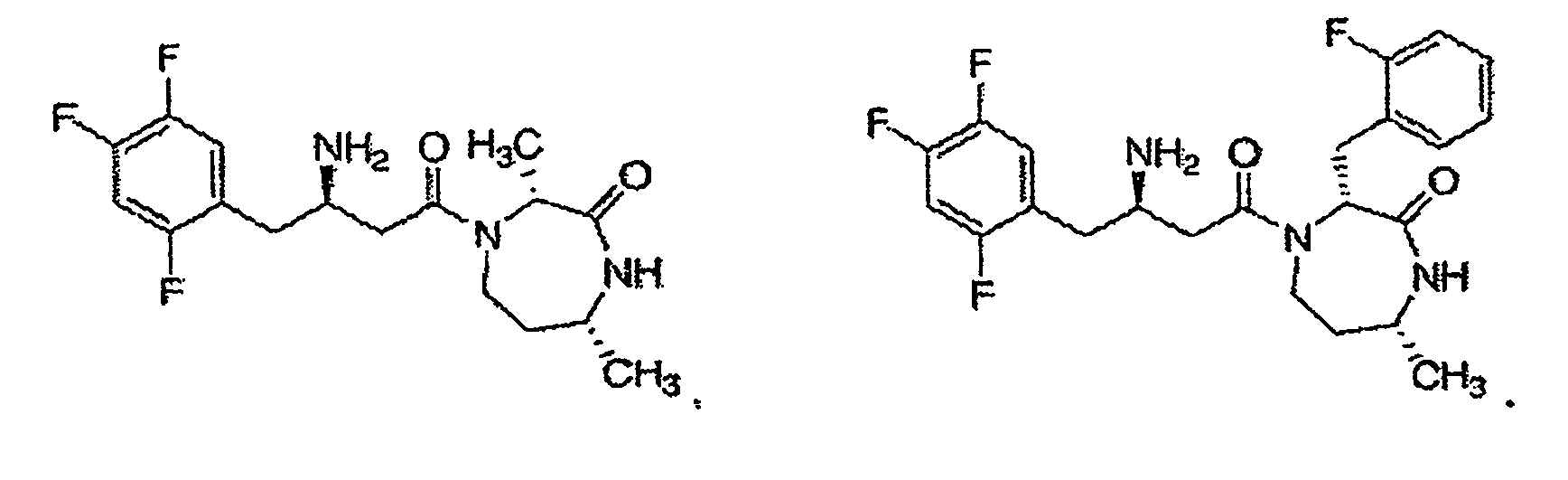


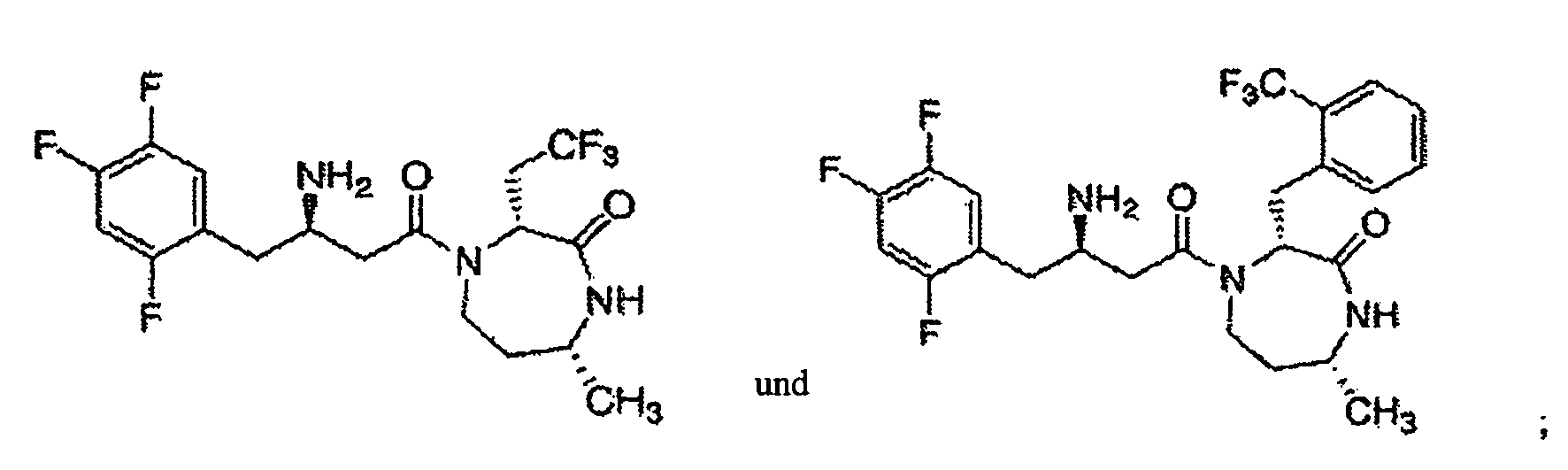
- Pharmazeutische Zusammensetzung, welche eine Verbindung nach einem der Ansprüche 1 bis 12 und einen pharmazeutisch verträglichen Träger umfaßt.
- Verbindung nach einem der Ansprüche 1 bis 12 zur Verwendung in der Therapie.
- Verwendung einer Verbindung gemäß einem der Ansprüche 1 bis 12 für die Herstellung eines Medikaments zum Behandeln eines Leidens, ausgewählt aus der Gruppe, bestehend aus Hyperglykämie, Typ-2-Diabetes, Fettleibigkeit und einer Lipidstörung, bei einem Säuger.
- Verwendung nach Anspruch 15, wobei die Lipidstörung aus der Gruppe, bestehend aus Dyslipidämie, Hyperlipidämie, Hypertriglyceridämie, Hypercholesterinämie, niedrigem HDL und hohem LDL, ausgewählt ist.
- Pharmazeutische Zusammensetzung nach Anspruch 13, zusätzlich umfassend Metformin.
Applications Claiming Priority (2)
| Application Number | Priority Date | Filing Date | Title |
|---|---|---|---|
| US49160603P | 2003-07-31 | 2003-07-31 | |
| PCT/US2004/024052 WO2005011581A2 (en) | 2003-07-31 | 2004-07-27 | Hexahydrodiazepinones as dipeptidyl peptidase-iv inhibitors for the treatment or prevention of diabetes |
Publications (3)
| Publication Number | Publication Date |
|---|---|
| EP1651623A2 EP1651623A2 (de) | 2006-05-03 |
| EP1651623A4 EP1651623A4 (de) | 2006-10-04 |
| EP1651623B1 true EP1651623B1 (de) | 2008-12-17 |
Family
ID=34115529
Family Applications (1)
| Application Number | Title | Priority Date | Filing Date |
|---|---|---|---|
| EP04779221A Expired - Lifetime EP1651623B1 (de) | 2003-07-31 | 2004-07-27 | Hexahydrodiazepinone als inhibitoren des dipeptidylpeptidase-iv zur behandlung bzw. prävention von diabetes |
Country Status (9)
| Country | Link |
|---|---|
| US (1) | US7259160B2 (de) |
| EP (1) | EP1651623B1 (de) |
| JP (1) | JP2007500704A (de) |
| CN (1) | CN1882551A (de) |
| AT (1) | ATE417832T1 (de) |
| AU (1) | AU2004261186A1 (de) |
| CA (1) | CA2533893A1 (de) |
| DE (1) | DE602004018503D1 (de) |
| WO (1) | WO2005011581A2 (de) |
Families Citing this family (63)
| Publication number | Priority date | Publication date | Assignee | Title |
|---|---|---|---|---|
| CN1723196A (zh) | 2001-06-27 | 2006-01-18 | 史密丝克莱恩比彻姆公司 | 作为二肽酶抑制剂的氟代吡咯烷 |
| JP4530852B2 (ja) | 2002-07-15 | 2010-08-25 | メルク・シャープ・エンド・ドーム・コーポレイション | 糖尿病治療のためのピペリジノピリミジンジペプチジルペプチダーゼ阻害剤 |
| ATE370141T1 (de) | 2002-10-07 | 2007-09-15 | Merck & Co Inc | Antidiabetische heterocyclische beta- aminoverbindungen als inhibitoren von dipeptidylpeptidase |
| WO2004064778A2 (en) | 2003-01-17 | 2004-08-05 | Merck & Co. Inc. | 3-amino-4-phenylbutanoic acid derivatives as dipeptidyl peptidase inhibitors for the treatment or prevention of diabetes |
| US7388019B2 (en) | 2003-01-31 | 2008-06-17 | Merck & Co., Inc. | 3-amino-4-phenylbutanoic acid derivatives as dipeptidyl peptidase inhibitors for the treatment or prevention of diabetes |
| CA2518465A1 (en) | 2003-03-25 | 2004-10-14 | Takeda San Diego, Inc. | Dipeptidyl peptidase inhibitors |
| ATE447574T1 (de) | 2003-05-14 | 2009-11-15 | Merck & Co Inc | 3-amino-4-phenylbutansäurederivate als dipeptidylpeptidase-hemmer zur behandlung oder vorbeugung von diabetes |
| US7638638B2 (en) | 2003-05-14 | 2009-12-29 | Takeda San Diego, Inc. | Dipeptidyl peptidase inhibitors |
| US7332520B2 (en) | 2003-06-06 | 2008-02-19 | Merck & Co., Inc. | Fused indoles as dipeptidyl peptidase inhibitors for the treatment or prevention of diabetes |
| AU2004249163A1 (en) | 2003-06-17 | 2004-12-29 | Merck & Co., Inc. | Cyclohexylglycine derivatives as dipeptidyl peptidase inhibitors for the treatment or prevention of diabetes |
| AU2004261186A1 (en) | 2003-07-31 | 2005-02-10 | Merck & Co., Inc. | Hexahydrodiazepinones as dipeptidyl peptidase-IV inhibitors for the treatment or prevention of diabetes |
| KR20060041309A (ko) | 2003-08-13 | 2006-05-11 | 다케다 야쿠힌 고교 가부시키가이샤 | 4-피리미돈 유도체 및 펩티딜 펩티다제 저해제로서의 그의용도 |
| CA2564264A1 (en) | 2004-05-04 | 2005-11-17 | Merck & Co., Inc. | 1,2,4-oxadiazole derivatives as dipeptidyl peptidase-iv inhibitors for the treatment or prevention of diabetes |
| JP2007538079A (ja) | 2004-05-18 | 2007-12-27 | メルク エンド カムパニー インコーポレーテッド | 糖尿病の治療又は予防のためのジペプチジルペプチダーゼ−iv阻害剤としてのシクロヘキシルアラニン誘導体 |
| CA2576465A1 (en) | 2004-08-23 | 2006-03-02 | Merck & Co., Inc. | Fused triazole derivatives as dipeptidyl peptidase-iv inhibitors for the treatment or prevention of diabetes |
| EP1796669B1 (de) | 2004-10-01 | 2010-09-22 | Merck Sharp & Dohme Corp. | Aminopiperidine als dipeptidylpeptidase-iv-inhibitoren zur behandlung oder prävention von diabetes |
| DOP2006000008A (es) | 2005-01-10 | 2006-08-31 | Arena Pharm Inc | Terapia combinada para el tratamiento de la diabetes y afecciones relacionadas y para el tratamiento de afecciones que mejoran mediante un incremento de la concentración sanguínea de glp-1 |
| US20090124601A1 (en) * | 2005-03-29 | 2009-05-14 | Song Zhiguo J | Tartaric Acid Salts of a Dipeptidyl Peptidase-IV Inhibitor |
| AU2006290205B2 (en) | 2005-09-14 | 2012-12-13 | Takeda Pharmaceutical Company Limited | Dipeptidyl peptidase inhibitors for treating diabetes |
| CA2622642C (en) | 2005-09-16 | 2013-12-31 | Takeda Pharmaceutical Company Limited | Dipeptidyl peptidase inhibitors |
| KR100792275B1 (ko) * | 2006-02-22 | 2008-01-08 | 영진약품공업주식회사 | 베타아미노기를 갖는 고리화된 히드라자이드 유도체, 이의 약학적으로 허용 가능한 염 및 이의 제조 방법 |
| WO2007112347A1 (en) | 2006-03-28 | 2007-10-04 | Takeda Pharmaceutical Company Limited | Dipeptidyl peptidase inhibitors |
| PE20071221A1 (es) | 2006-04-11 | 2007-12-14 | Arena Pharm Inc | Agonistas del receptor gpr119 en metodos para aumentar la masa osea y para tratar la osteoporosis y otras afecciones caracterizadas por masa osea baja, y la terapia combinada relacionada a estos agonistas |
| BRPI0709984A2 (pt) | 2006-04-12 | 2011-08-02 | Probiodrug Ag | inibidores de enzima |
| US8324383B2 (en) | 2006-09-13 | 2012-12-04 | Takeda Pharmaceutical Company Limited | Methods of making polymorphs of benzoate salt of 2-[[6-[(3R)-3-amino-1-piperidinyl]-3,4-dihydro-3-methyl-2,4-dioxo-1(2H)-pyrimidinyl]methyl]-benzonitrile |
| US8278345B2 (en) | 2006-11-09 | 2012-10-02 | Probiodrug Ag | Inhibitors of glutaminyl cyclase |
| TW200838536A (en) | 2006-11-29 | 2008-10-01 | Takeda Pharmaceutical | Polymorphs of succinate salt of 2-[6-(3-amino-piperidin-1-yl)-3-methyl-2,4-dioxo-3,4-dihydro-2H-pyrimidin-1-ylmethy]-4-fluor-benzonitrile and methods of use therefor |
| JP5523107B2 (ja) | 2006-11-30 | 2014-06-18 | プロビオドルグ エージー | グルタミニルシクラーゼの新規阻害剤 |
| US8093236B2 (en) | 2007-03-13 | 2012-01-10 | Takeda Pharmaceuticals Company Limited | Weekly administration of dipeptidyl peptidase inhibitors |
| WO2008128985A1 (en) | 2007-04-18 | 2008-10-30 | Probiodrug Ag | Thiourea derivatives as glutaminyl cyclase inhibitors |
| ES2526338T3 (es) | 2007-04-19 | 2015-01-09 | Dong-A Pharm.Co., Ltd. | Inhibidor de DPP-IV que incluye grupo beta-amino, método de preparación del mismo y composición farmacéutica que contiene el mismo para prevernir y tratar diabetes u obesidad |
| EA018612B1 (ru) * | 2008-01-24 | 2013-09-30 | Панацеа Биотек Лимитед | Новые гетероциклические соединения |
| EP2146210A1 (de) | 2008-04-07 | 2010-01-20 | Arena Pharmaceuticals, Inc. | Verfahren zur Verwendung eines AG-Protein-gekoppelten Rezeptors zur Identifikation von Peptid-YY (PPY)-Sekretagogen sowie Verbindungen zur Behandlung durch PYY modulierter Leiden |
| MX2011010205A (es) | 2009-03-30 | 2011-10-17 | Dong A Pharm Co Ltd | Procedimiento mejorado para la fabricacion de inhibidor de dipeptidil peptidasa-iv e intermediario. |
| EP2669265A3 (de) | 2009-03-30 | 2014-03-26 | Dong-A Pharmaceutical Co., Ltd. | Verbessertes Verfahren zur Herstellung eines Dipeptidyl-Peptidase-IV-Hemmers und eines Zwischenprodukts |
| AR077642A1 (es) | 2009-07-09 | 2011-09-14 | Arena Pharm Inc | Moduladores del metabolismo y el tratamiento de trastornos relacionados con el mismo |
| MX2012002993A (es) | 2009-09-11 | 2012-04-19 | Probiodrug Ag | Derivados heterociclicos como inhibidores de ciclasa glutaminilo. |
| JP6026284B2 (ja) | 2010-03-03 | 2016-11-16 | プロビオドルグ エージー | グルタミニルシクラーゼの阻害剤 |
| US8269019B2 (en) | 2010-03-10 | 2012-09-18 | Probiodrug Ag | Inhibitors |
| MX2012011631A (es) | 2010-04-06 | 2013-01-18 | Arena Pharm Inc | Moduladores del receptor gpr119 y el tratamiento de trastornos relacionados con el mismo. |
| WO2011131748A2 (en) | 2010-04-21 | 2011-10-27 | Probiodrug Ag | Novel inhibitors |
| US8980929B2 (en) | 2010-05-21 | 2015-03-17 | Merck Sharp & Dohme Corp. | Substituted seven-membered heterocyclic compounds as dipeptidyl peptidase-iv inhibitors for the treatment of diabetes |
| WO2012035549A2 (en) | 2010-09-13 | 2012-03-22 | Panacea Biotec Ltd | An improved process for the synthesis of beta amino acid derivatives |
| MX2013003184A (es) | 2010-09-22 | 2013-06-07 | Arena Pharm Inc | Moduladores del receptor gpr119 y el tratamiento de transtornos relacionados con el mismo. |
| EP2648517B1 (de) | 2010-12-06 | 2015-08-05 | Merck Sharp & Dohme Corp. | Trizyklische heterozyklen als dipeptidylpeptidase-iv-hemmer |
| ES2570167T3 (es) | 2011-03-16 | 2016-05-17 | Probiodrug Ag | Derivados de benzimidazol como inhibidores de glutaminil ciclasa |
| WO2012135570A1 (en) | 2011-04-01 | 2012-10-04 | Arena Pharmaceuticals, Inc. | Modulators of the gpr119 receptor and the treatment of disorders related thereto |
| WO2012145361A1 (en) | 2011-04-19 | 2012-10-26 | Arena Pharmaceuticals, Inc. | Modulators of the gpr119 receptor and the treatment of disorders related thereto |
| US20140038889A1 (en) | 2011-04-22 | 2014-02-06 | Arena Pharmaceuticals, Inc. | Modulators Of The GPR119 Receptor And The Treatment Of Disorders Related Thereto |
| US20140051714A1 (en) | 2011-04-22 | 2014-02-20 | Arena Pharmaceuticals, Inc. | Modulators Of The GPR119 Receptor And The Treatment Of Disorders Related Thereto |
| WO2012170702A1 (en) | 2011-06-08 | 2012-12-13 | Arena Pharmaceuticals, Inc. | Modulators of the gpr119 receptor and the treatment of disorders related thereto |
| EP2726075A4 (de) | 2011-06-29 | 2014-11-19 | Merck Sharp & Dohme | Neue kristalline formen eines dipeptidyl-peptidase-iv-hemmers |
| EP2729468A4 (de) | 2011-07-05 | 2015-03-18 | Merck Sharp & Dohme | Tricyclische heterozyklen als dipeptidylpeptidase-iv-hemmer |
| WO2013055910A1 (en) | 2011-10-12 | 2013-04-18 | Arena Pharmaceuticals, Inc. | Modulators of the gpr119 receptor and the treatment of disorders related thereto |
| US9073930B2 (en) | 2012-02-17 | 2015-07-07 | Merck Sharp & Dohme | Dipeptidyl peptidase-IV inhibitors for the treatment or prevention of diabetes |
| WO2014018355A1 (en) | 2012-07-23 | 2014-01-30 | Merck Sharp & Dohme Corp. | Treating diabetes with dipeptidyl peptidase-iv inhibitors |
| US9315508B2 (en) | 2012-07-23 | 2016-04-19 | Merck Sharp & Dohme Corp. | Treating diabetes with dipeptidyl peptidase-IV inhibitors |
| WO2014074668A1 (en) | 2012-11-08 | 2014-05-15 | Arena Pharmaceuticals, Inc. | Modulators of gpr119 and the treatment of disorders related thereto |
| CN105669682B (zh) * | 2013-02-22 | 2019-08-30 | 成都先导药物开发股份有限公司 | 一种dpp-iv抑制剂的中间体 |
| JP6574474B2 (ja) | 2014-07-21 | 2019-09-11 | メルク・シャープ・アンド・ドーム・コーポレーションMerck Sharp & Dohme Corp. | キラルジペプチジルペプチダーゼ−iv阻害剤の製造方法 |
| HK1249847A1 (zh) | 2015-03-09 | 2018-11-16 | Intekrin Therapeutics, Inc. | 用於治疗非酒精性脂肪肝疾病和/或脂肪营养不良的方法 |
| KR20200036808A (ko) | 2017-04-03 | 2020-04-07 | 코히러스 바이오사이언시스, 인크. | 진행성 핵상 마비 치료를 위한 PPARγ 작용제 |
| PL3461819T3 (pl) | 2017-09-29 | 2020-11-30 | Probiodrug Ag | Inhibitory cyklazy glutaminylowej |
Family Cites Families (36)
| Publication number | Priority date | Publication date | Assignee | Title |
|---|---|---|---|---|
| SE8107537L (sv) * | 1980-12-22 | 1982-06-23 | Delalande Sa | Nya derivat av heterocykliska aminoalcoyler, deras framstellningssett och deras terapeutiska anvendning |
| IL111785A0 (en) * | 1993-12-03 | 1995-01-24 | Ferring Bv | Dp-iv inhibitors and pharmaceutical compositions containing them |
| DE122010000020I1 (de) | 1996-04-25 | 2010-07-08 | Prosidion Ltd | Verfahren zur Senkung des Blutglukosespiegels in Säugern |
| US6011155A (en) * | 1996-11-07 | 2000-01-04 | Novartis Ag | N-(substituted glycyl)-2-cyanopyrrolidines, pharmaceutical compositions containing them and their use in inhibiting dipeptidyl peptidase-IV |
| TW492957B (en) | 1996-11-07 | 2002-07-01 | Novartis Ag | N-substituted 2-cyanopyrrolidnes |
| CO5150173A1 (es) | 1998-12-10 | 2002-04-29 | Novartis Ag | Compuestos n-(glicilo sustituido)-2-cianopirrolidinas inhibidores de peptidasa de dipeptidilo-iv (dpp-iv) los cuales son efectivos en el tratamiento de condiciones mediadas por la inhibicion de dpp-iv |
| AU1916401A (en) | 1999-11-12 | 2001-06-06 | Guilford Pharmaceuticals Inc. | Dipeptidyl peptidase iv inhibitors and methods of making and using dipeptidyl peptidase iv inhibitors |
| TWI289566B (en) | 1999-12-07 | 2007-11-11 | N.V.Organon | Antithrombotic compound |
| US6432969B1 (en) * | 2000-06-13 | 2002-08-13 | Novartis Ag | N-(substituted glycyl)-2 cyanopyrrolidines, pharmaceutical compositions containing them and their use in inhibiting dipeptidyl peptidase-IV |
| TW583185B (en) | 2000-06-13 | 2004-04-11 | Novartis Ag | N-(substituted glycyl)-2-cyanopyrrolidines and pharmaceutical composition for inhibiting dipeptidyl peptidase-IV (DPP-IV) or for the prevention or treatment of diseases or conditions associated with elevated levels of DPP-IV comprising the same |
| AU6895801A (en) | 2000-07-04 | 2002-01-14 | Novo Nordisk As | Heterocyclic compounds, which are inhibitors of the enzyme dpp-iv |
| EP1385508B1 (de) | 2001-03-27 | 2008-05-21 | Merck & Co., Inc. | Dipeptidylpeptidase-hemmer für die behandlung oder prävention von diabetes |
| EP1406872B1 (de) | 2001-06-20 | 2007-12-19 | Merck & Co., Inc. | Dipeptidylpeptidase-hemmer zur behandlung von diabetes |
| DE60209348T2 (de) | 2001-06-20 | 2006-10-12 | Merck & Co., Inc. | Dipeptidylpeptidase-hemmer zur behandlung von diabetes |
| UA74912C2 (en) * | 2001-07-06 | 2006-02-15 | Merck & Co Inc | Beta-aminotetrahydroimidazo-(1,2-a)-pyrazines and tetratriazolo-(4,3-a)-pyrazines as inhibitors of dipeptylpeptidase for the treatment or prevention of diabetes |
| EP1490335B1 (de) | 2002-03-25 | 2007-09-19 | Merck & Co., Inc. | Heterocyclische beta-aminoverbindungen als inhibitoren der dipeptidylpeptidase zur behandlung bzw. prävention von diabetes |
| JP4530852B2 (ja) | 2002-07-15 | 2010-08-25 | メルク・シャープ・エンド・ドーム・コーポレイション | 糖尿病治療のためのピペリジノピリミジンジペプチジルペプチダーゼ阻害剤 |
| ATE370141T1 (de) | 2002-10-07 | 2007-09-15 | Merck & Co Inc | Antidiabetische heterocyclische beta- aminoverbindungen als inhibitoren von dipeptidylpeptidase |
| DK1556362T3 (da) * | 2002-10-18 | 2008-06-09 | Merck & Co Inc | Heterocykliske beta-aminodipeptidylpeptidaseinhibitorer til behandling eller forebyggelse af diabetes |
| MXPA05004890A (es) | 2002-11-07 | 2005-07-22 | Merck & Co Inc | Derivados de fenilalanina como inhibidores de dipeptidilpeptidasa para el tratamiento o prevencion de diabetes. |
| AU2003297564A1 (en) | 2002-12-04 | 2004-06-23 | Merck & Co., Inc. | Phenylalanine derivatives as dipeptidyl peptidase inhibitors for the treatment or prevention of diabetes |
| CA2508947A1 (en) | 2002-12-20 | 2004-07-15 | Merck & Co., Inc. | 3-amino-4-phenylbutanoic acid derivatives as dipeptidyl peptidase inhibitors for the treatment or prevention of diabetes |
| WO2004064778A2 (en) | 2003-01-17 | 2004-08-05 | Merck & Co. Inc. | 3-amino-4-phenylbutanoic acid derivatives as dipeptidyl peptidase inhibitors for the treatment or prevention of diabetes |
| US7388019B2 (en) | 2003-01-31 | 2008-06-17 | Merck & Co., Inc. | 3-amino-4-phenylbutanoic acid derivatives as dipeptidyl peptidase inhibitors for the treatment or prevention of diabetes |
| US7332520B2 (en) | 2003-06-06 | 2008-02-19 | Merck & Co., Inc. | Fused indoles as dipeptidyl peptidase inhibitors for the treatment or prevention of diabetes |
| AU2004249163A1 (en) | 2003-06-17 | 2004-12-29 | Merck & Co., Inc. | Cyclohexylglycine derivatives as dipeptidyl peptidase inhibitors for the treatment or prevention of diabetes |
| EP1641425A1 (de) | 2003-07-04 | 2006-04-05 | Nanon A/S | Verfahren zur herstellung eines silanisierten verbundfüllstoffs und verfahren zur herstellung eines verbundstoffs |
| AU2004261186A1 (en) | 2003-07-31 | 2005-02-10 | Merck & Co., Inc. | Hexahydrodiazepinones as dipeptidyl peptidase-IV inhibitors for the treatment or prevention of diabetes |
| WO2005044195A2 (en) | 2003-11-04 | 2005-05-19 | Merck & Co., Inc. | Fused phenylalanine derivatives as dipeptidyl peptidase-iv inhibitors for the treatment or prevention of diabetes |
| EP1541148A1 (de) | 2003-12-09 | 2005-06-15 | Graffinity Pharmaceuticals Aktiengesellschaft | Dpp-iv inhibitoren |
| EP1541143A1 (de) | 2003-12-09 | 2005-06-15 | Graffinity Pharmaceuticals Aktiengesellschaft | Dpp-iv inhibitoren |
| CA2564264A1 (en) | 2004-05-04 | 2005-11-17 | Merck & Co., Inc. | 1,2,4-oxadiazole derivatives as dipeptidyl peptidase-iv inhibitors for the treatment or prevention of diabetes |
| JP2007538079A (ja) | 2004-05-18 | 2007-12-27 | メルク エンド カムパニー インコーポレーテッド | 糖尿病の治療又は予防のためのジペプチジルペプチダーゼ−iv阻害剤としてのシクロヘキシルアラニン誘導体 |
| GB0413389D0 (en) | 2004-06-16 | 2004-07-21 | Astrazeneca Ab | Chemical compounds |
| WO2006009886A1 (en) | 2004-06-21 | 2006-01-26 | Merck & Co., Inc. | Aminocyclohexanes as dipeptidyl peptidase-iv inhibitors for the treatment or prevention of diabetes |
| CA2576465A1 (en) | 2004-08-23 | 2006-03-02 | Merck & Co., Inc. | Fused triazole derivatives as dipeptidyl peptidase-iv inhibitors for the treatment or prevention of diabetes |
-
2004
- 2004-07-27 AU AU2004261186A patent/AU2004261186A1/en not_active Abandoned
- 2004-07-27 DE DE602004018503T patent/DE602004018503D1/de not_active Expired - Lifetime
- 2004-07-27 JP JP2006521974A patent/JP2007500704A/ja active Pending
- 2004-07-27 CN CNA2004800221846A patent/CN1882551A/zh active Pending
- 2004-07-27 US US10/566,235 patent/US7259160B2/en not_active Expired - Lifetime
- 2004-07-27 CA CA002533893A patent/CA2533893A1/en not_active Abandoned
- 2004-07-27 EP EP04779221A patent/EP1651623B1/de not_active Expired - Lifetime
- 2004-07-27 WO PCT/US2004/024052 patent/WO2005011581A2/en not_active Ceased
- 2004-07-27 AT AT04779221T patent/ATE417832T1/de not_active IP Right Cessation
Also Published As
| Publication number | Publication date |
|---|---|
| CN1882551A (zh) | 2006-12-20 |
| US20060211682A1 (en) | 2006-09-21 |
| AU2004261186A1 (en) | 2005-02-10 |
| DE602004018503D1 (de) | 2009-01-29 |
| ATE417832T1 (de) | 2009-01-15 |
| US7259160B2 (en) | 2007-08-21 |
| EP1651623A2 (de) | 2006-05-03 |
| WO2005011581A3 (en) | 2005-04-28 |
| WO2005011581A2 (en) | 2005-02-10 |
| JP2007500704A (ja) | 2007-01-18 |
| EP1651623A4 (de) | 2006-10-04 |
| CA2533893A1 (en) | 2005-02-10 |
Similar Documents
| Publication | Publication Date | Title |
|---|---|---|
| US7259160B2 (en) | Hexahydrodiazepinones as dipeptidyl peptidase-IV inhibitors for the treatment or prevention of diabetes | |
| EP1556362B1 (de) | Heterozyklische beta-aminoverbindungen als inhibitoren des dipeptidylpeptidase zur behandlung bzw. prevention von diabetes | |
| EP1554280B1 (de) | Antidiabetische heterocyclische beta-aminoverbindungen als inhibitoren von dipeptidylpeptidase | |
| EP1624874B1 (de) | 3-amino-4-phenylbutansäurederivate als dipeptidylpeptidase-hemmer zur behandlung oder vorbeugung von diabetes | |
| EP1562925B1 (de) | Phenylalaninderivate als hemmer der dipeptidyl peptidase zur behandlung oder prävention von diabetes | |
| EP1635818B1 (de) | Kondensierte indole als dipeptidyl-peptidase-hemmer zur behandlung oder prävention von diabetes | |
| EP1796669B1 (de) | Aminopiperidine als dipeptidylpeptidase-iv-inhibitoren zur behandlung oder prävention von diabetes | |
| EP1921917B1 (de) | Kondensierte aminopiperidine als dipeptidylpeptidase-iv-inhibitoren zur behandlung oder prävention von diabetes | |
| EP1986652B1 (de) | Aminotetrahydropyrane als dipeptidylpeptidase-iv-inhibitoren zur behandlung oder prävention von diabetes | |
| JP4504924B2 (ja) | 糖尿病の治療および予防のためのジペプチジルペプチダーゼ阻害薬としての3−アミノ−4−フェニルブタン酸誘導体 | |
| US20060281727A1 (en) | Fused phenylalanine derivatives as dipeptidyl peptidase-iv inhibitors for the treatment or prevention of diabetes | |
| WO2004112701A2 (en) | Cyclohexylglycine derivatives as dipeptidyl peptidase inhibitors for the treatment or prevention of diabetes |
Legal Events
| Date | Code | Title | Description |
|---|---|---|---|
| PUAI | Public reference made under article 153(3) epc to a published international application that has entered the european phase |
Free format text: ORIGINAL CODE: 0009012 |
|
| 17P | Request for examination filed |
Effective date: 20060228 |
|
| AK | Designated contracting states |
Kind code of ref document: A2 Designated state(s): AT BE BG CH CY CZ DE DK EE ES FI FR GB GR HU IE IT LI LU MC NL PL PT RO SE SI SK TR |
|
| AX | Request for extension of the european patent |
Extension state: LT LV |
|
| R17D | Deferred search report published (corrected) |
Effective date: 20060309 |
|
| A4 | Supplementary search report drawn up and despatched |
Effective date: 20060901 |
|
| RIC1 | Information provided on ipc code assigned before grant |
Ipc: A61K 31/551 20060101ALI20060828BHEP Ipc: C07D 243/08 20060101AFI20050520BHEP Ipc: A61P 3/10 20060101ALI20060828BHEP Ipc: C07K 5/06 20060101ALI20060828BHEP |
|
| RAX | Requested extension states of the european patent have changed |
Extension state: LT Payment date: 20060228 Extension state: LV Payment date: 20060228 |
|
| RIC1 | Information provided on ipc code assigned before grant |
Ipc: A61K 31/551 20060101ALI20071217BHEP Ipc: C07D 243/08 20060101AFI20071217BHEP Ipc: A61P 3/10 20060101ALI20071217BHEP |
|
| GRAP | Despatch of communication of intention to grant a patent |
Free format text: ORIGINAL CODE: EPIDOSNIGR1 |
|
| GRAS | Grant fee paid |
Free format text: ORIGINAL CODE: EPIDOSNIGR3 |
|
| GRAA | (expected) grant |
Free format text: ORIGINAL CODE: 0009210 |
|
| AK | Designated contracting states |
Kind code of ref document: B1 Designated state(s): AT BE BG CH CY CZ DE DK EE ES FI FR GB GR HU IE IT LI LU MC NL PL PT RO SE SI SK TR |
|
| AX | Request for extension of the european patent |
Extension state: LT LV |
|
| REG | Reference to a national code |
Ref country code: GB Ref legal event code: FG4D |
|
| REG | Reference to a national code |
Ref country code: CH Ref legal event code: EP |
|
| REG | Reference to a national code |
Ref country code: IE Ref legal event code: FG4D |
|
| REF | Corresponds to: |
Ref document number: 602004018503 Country of ref document: DE Date of ref document: 20090129 Kind code of ref document: P |
|
| LTIE | Lt: invalidation of european patent or patent extension |
Effective date: 20081217 |
|
| PG25 | Lapsed in a contracting state [announced via postgrant information from national office to epo] |
Ref country code: NL Free format text: LAPSE BECAUSE OF FAILURE TO SUBMIT A TRANSLATION OF THE DESCRIPTION OR TO PAY THE FEE WITHIN THE PRESCRIBED TIME-LIMIT Effective date: 20081217 Ref country code: PL Free format text: LAPSE BECAUSE OF FAILURE TO SUBMIT A TRANSLATION OF THE DESCRIPTION OR TO PAY THE FEE WITHIN THE PRESCRIBED TIME-LIMIT Effective date: 20081217 Ref country code: SI Free format text: LAPSE BECAUSE OF FAILURE TO SUBMIT A TRANSLATION OF THE DESCRIPTION OR TO PAY THE FEE WITHIN THE PRESCRIBED TIME-LIMIT Effective date: 20081217 Ref country code: FI Free format text: LAPSE BECAUSE OF FAILURE TO SUBMIT A TRANSLATION OF THE DESCRIPTION OR TO PAY THE FEE WITHIN THE PRESCRIBED TIME-LIMIT Effective date: 20081217 |
|
| NLV1 | Nl: lapsed or annulled due to failure to fulfill the requirements of art. 29p and 29m of the patents act | ||
| PG25 | Lapsed in a contracting state [announced via postgrant information from national office to epo] |
Ref country code: EE Free format text: LAPSE BECAUSE OF FAILURE TO SUBMIT A TRANSLATION OF THE DESCRIPTION OR TO PAY THE FEE WITHIN THE PRESCRIBED TIME-LIMIT Effective date: 20081217 Ref country code: ES Free format text: LAPSE BECAUSE OF FAILURE TO SUBMIT A TRANSLATION OF THE DESCRIPTION OR TO PAY THE FEE WITHIN THE PRESCRIBED TIME-LIMIT Effective date: 20090328 Ref country code: BE Free format text: LAPSE BECAUSE OF FAILURE TO SUBMIT A TRANSLATION OF THE DESCRIPTION OR TO PAY THE FEE WITHIN THE PRESCRIBED TIME-LIMIT Effective date: 20081217 Ref country code: BG Free format text: LAPSE BECAUSE OF FAILURE TO SUBMIT A TRANSLATION OF THE DESCRIPTION OR TO PAY THE FEE WITHIN THE PRESCRIBED TIME-LIMIT Effective date: 20090317 Ref country code: RO Free format text: LAPSE BECAUSE OF FAILURE TO SUBMIT A TRANSLATION OF THE DESCRIPTION OR TO PAY THE FEE WITHIN THE PRESCRIBED TIME-LIMIT Effective date: 20081217 |
|
| PG25 | Lapsed in a contracting state [announced via postgrant information from national office to epo] |
Ref country code: AT Free format text: LAPSE BECAUSE OF FAILURE TO SUBMIT A TRANSLATION OF THE DESCRIPTION OR TO PAY THE FEE WITHIN THE PRESCRIBED TIME-LIMIT Effective date: 20081217 Ref country code: CZ Free format text: LAPSE BECAUSE OF FAILURE TO SUBMIT A TRANSLATION OF THE DESCRIPTION OR TO PAY THE FEE WITHIN THE PRESCRIBED TIME-LIMIT Effective date: 20081217 Ref country code: SE Free format text: LAPSE BECAUSE OF FAILURE TO SUBMIT A TRANSLATION OF THE DESCRIPTION OR TO PAY THE FEE WITHIN THE PRESCRIBED TIME-LIMIT Effective date: 20090317 Ref country code: PT Free format text: LAPSE BECAUSE OF FAILURE TO SUBMIT A TRANSLATION OF THE DESCRIPTION OR TO PAY THE FEE WITHIN THE PRESCRIBED TIME-LIMIT Effective date: 20090518 |
|
| PG25 | Lapsed in a contracting state [announced via postgrant information from national office to epo] |
Ref country code: SK Free format text: LAPSE BECAUSE OF FAILURE TO SUBMIT A TRANSLATION OF THE DESCRIPTION OR TO PAY THE FEE WITHIN THE PRESCRIBED TIME-LIMIT Effective date: 20081217 |
|
| PLBE | No opposition filed within time limit |
Free format text: ORIGINAL CODE: 0009261 |
|
| STAA | Information on the status of an ep patent application or granted ep patent |
Free format text: STATUS: NO OPPOSITION FILED WITHIN TIME LIMIT |
|
| PG25 | Lapsed in a contracting state [announced via postgrant information from national office to epo] |
Ref country code: DK Free format text: LAPSE BECAUSE OF FAILURE TO SUBMIT A TRANSLATION OF THE DESCRIPTION OR TO PAY THE FEE WITHIN THE PRESCRIBED TIME-LIMIT Effective date: 20081217 |
|
| 26N | No opposition filed |
Effective date: 20090918 |
|
| PG25 | Lapsed in a contracting state [announced via postgrant information from national office to epo] |
Ref country code: MC Free format text: LAPSE BECAUSE OF NON-PAYMENT OF DUE FEES Effective date: 20090731 |
|
| REG | Reference to a national code |
Ref country code: CH Ref legal event code: PL |
|
| REG | Reference to a national code |
Ref country code: IE Ref legal event code: MM4A |
|
| PG25 | Lapsed in a contracting state [announced via postgrant information from national office to epo] |
Ref country code: CH Free format text: LAPSE BECAUSE OF NON-PAYMENT OF DUE FEES Effective date: 20090731 Ref country code: LI Free format text: LAPSE BECAUSE OF NON-PAYMENT OF DUE FEES Effective date: 20090731 |
|
| REG | Reference to a national code |
Ref country code: FR Ref legal event code: CD |
|
| PG25 | Lapsed in a contracting state [announced via postgrant information from national office to epo] |
Ref country code: IE Free format text: LAPSE BECAUSE OF NON-PAYMENT OF DUE FEES Effective date: 20090727 |
|
| PG25 | Lapsed in a contracting state [announced via postgrant information from national office to epo] |
Ref country code: GR Free format text: LAPSE BECAUSE OF FAILURE TO SUBMIT A TRANSLATION OF THE DESCRIPTION OR TO PAY THE FEE WITHIN THE PRESCRIBED TIME-LIMIT Effective date: 20090318 |
|
| PGFP | Annual fee paid to national office [announced via postgrant information from national office to epo] |
Ref country code: DE Payment date: 20100730 Year of fee payment: 7 Ref country code: FR Payment date: 20100813 Year of fee payment: 7 Ref country code: GB Payment date: 20100616 Year of fee payment: 7 |
|
| PG25 | Lapsed in a contracting state [announced via postgrant information from national office to epo] |
Ref country code: IT Free format text: LAPSE BECAUSE OF FAILURE TO SUBMIT A TRANSLATION OF THE DESCRIPTION OR TO PAY THE FEE WITHIN THE PRESCRIBED TIME-LIMIT Effective date: 20081217 |
|
| PG25 | Lapsed in a contracting state [announced via postgrant information from national office to epo] |
Ref country code: LU Free format text: LAPSE BECAUSE OF NON-PAYMENT OF DUE FEES Effective date: 20090727 |
|
| PG25 | Lapsed in a contracting state [announced via postgrant information from national office to epo] |
Ref country code: HU Free format text: LAPSE BECAUSE OF FAILURE TO SUBMIT A TRANSLATION OF THE DESCRIPTION OR TO PAY THE FEE WITHIN THE PRESCRIBED TIME-LIMIT Effective date: 20090618 |
|
| PG25 | Lapsed in a contracting state [announced via postgrant information from national office to epo] |
Ref country code: TR Free format text: LAPSE BECAUSE OF FAILURE TO SUBMIT A TRANSLATION OF THE DESCRIPTION OR TO PAY THE FEE WITHIN THE PRESCRIBED TIME-LIMIT Effective date: 20081217 |
|
| PG25 | Lapsed in a contracting state [announced via postgrant information from national office to epo] |
Ref country code: CY Free format text: LAPSE BECAUSE OF FAILURE TO SUBMIT A TRANSLATION OF THE DESCRIPTION OR TO PAY THE FEE WITHIN THE PRESCRIBED TIME-LIMIT Effective date: 20081217 |
|
| GBPC | Gb: european patent ceased through non-payment of renewal fee |
Effective date: 20110727 |
|
| REG | Reference to a national code |
Ref country code: FR Ref legal event code: ST Effective date: 20120330 |
|
| PG25 | Lapsed in a contracting state [announced via postgrant information from national office to epo] |
Ref country code: DE Free format text: LAPSE BECAUSE OF NON-PAYMENT OF DUE FEES Effective date: 20120201 Ref country code: FR Free format text: LAPSE BECAUSE OF NON-PAYMENT OF DUE FEES Effective date: 20110801 |
|
| REG | Reference to a national code |
Ref country code: DE Ref legal event code: R119 Ref document number: 602004018503 Country of ref document: DE Effective date: 20120201 |
|
| PG25 | Lapsed in a contracting state [announced via postgrant information from national office to epo] |
Ref country code: GB Free format text: LAPSE BECAUSE OF NON-PAYMENT OF DUE FEES Effective date: 20110727 |