EP1653318A2 - Manifeste antivirus d'estampage de document - Google Patents
Manifeste antivirus d'estampage de document Download PDFInfo
- Publication number
- EP1653318A2 EP1653318A2 EP05109680A EP05109680A EP1653318A2 EP 1653318 A2 EP1653318 A2 EP 1653318A2 EP 05109680 A EP05109680 A EP 05109680A EP 05109680 A EP05109680 A EP 05109680A EP 1653318 A2 EP1653318 A2 EP 1653318A2
- Authority
- EP
- European Patent Office
- Prior art keywords
- file
- computer
- stamp
- address locations
- data
- Prior art date
- Legal status (The legal status is an assumption and is not a legal conclusion. Google has not performed a legal analysis and makes no representation as to the accuracy of the status listed.)
- Granted
Links
Images


Classifications
-
- G—PHYSICS
- G06—COMPUTING OR CALCULATING; COUNTING
- G06F—ELECTRIC DIGITAL DATA PROCESSING
- G06F15/00—Digital computers in general; Data processing equipment in general
-
- G—PHYSICS
- G06—COMPUTING OR CALCULATING; COUNTING
- G06F—ELECTRIC DIGITAL DATA PROCESSING
- G06F21/00—Security arrangements for protecting computers, components thereof, programs or data against unauthorised activity
- G06F21/50—Monitoring users, programs or devices to maintain the integrity of platforms, e.g. of processors, firmware or operating systems
- G06F21/55—Detecting local intrusion or implementing counter-measures
- G06F21/56—Computer malware detection or handling, e.g. anti-virus arrangements
- G06F21/562—Static detection
-
- G—PHYSICS
- G06—COMPUTING OR CALCULATING; COUNTING
- G06F—ELECTRIC DIGITAL DATA PROCESSING
- G06F17/00—Digital computing or data processing equipment or methods, specially adapted for specific functions
-
- G—PHYSICS
- G06—COMPUTING OR CALCULATING; COUNTING
- G06F—ELECTRIC DIGITAL DATA PROCESSING
- G06F21/00—Security arrangements for protecting computers, components thereof, programs or data against unauthorised activity
- G06F21/50—Monitoring users, programs or devices to maintain the integrity of platforms, e.g. of processors, firmware or operating systems
- G06F21/55—Detecting local intrusion or implementing counter-measures
- G06F21/56—Computer malware detection or handling, e.g. anti-virus arrangements
Definitions
- the present invention generally relates to computer virus detection, and more particularly, to virus scanning.
- Anti-virus (AV) programs are designed to prevent computer viruses from infecting files that reside on a file system.
- AV programs sit between a user, or the user's applications, and a computer's file system, to ensure that files infected with computer viruses are not written to the file system. If infected files already reside on the file system, an AV program helps to ensure that they are not executed or copied to other computers.
- AV programs scan computer files for known viruses by comparing each file to a list of "virus signatures" that are stored in "virus signature files.”
- the scanning can be done upon request of a user, as files are accessed on a mass storage device, such as by an application, or on a scheduled basis. Therefore, virus scanning is a resource intensive (CPU and disk I/O) and time-consuming task, especially in the case of access/real-time scanning. Oftentimes, a user's file-open request must be delayed until the file can be scanned and possibly cleaned. This resource consumption can lead to a degradation of a computer's overall performance and slow response times for users.
- AV scanning techniques are currently used in the industry today.
- the techniques include the concept of saving a set of parameters, an "AV state," for each of the files as of the last virus scan so that once a file has been scanned and found free of infection, scanning should not be required again unless the file is modified.
- the parameters chosen for the AV state are those that may indicate the possibility of virus infiltration into a file, such as a file's length, a file checksum/flag, or the date of last file write operation.
- One common AV scanning technique is to create an in-memory or on-disk cache containing the AV state for files that have been scanned during recent executions of the AV program.
- the cache is checked whenever a file is accessed or when a scheduled scan is due. If the file's AV state is in the cache, the AV state parameters for the file in the scan information cache are checked against the current parameters of the file. If the parameters match, a virus scan is not necessary. If the parameters do not match, or if the AV state for the file is not cached, then the file is scanned and the cache information is updated.
- Another approach stores the AV state (often just a checksum/flag) in an external database that is then compared against the current values of the AV state parameters when the file is accessed. This technique is normally only effective if the AV state information is thoroughly secured against unauthorized changes.
- the AV scanning techniques discussed above generally require the designers of the AV programs to understand the fundamental format of the files that need to be scanned.
- the AV program designers evaluate the files generated by various software applications, so that the designed AV programs may successfully scan the "file formats" generated by the applications.
- the AV program designers have found that it is very difficult to stay abreast with the increasing number of file formats generated and used by software applications.
- the exemplary embodiments of the present invention provide technology that generally makes scanning of computer related files more efficient.
- the application creating the file will generate and associate a stamp with the file.
- a stamp may generated and associated with an existing file by way of an application designed to identify address areas that may be susceptible to computer related viruses.
- the stamp includes the address locations of data that may be infiltrated by computer related viruses and/or malware.
- an anti-virus program can quickly identify the specific parts of the file that should be scanned for virus infection. Other data in the file are ignored during the scanning process.
- An exemplary method in accordance with the present invention includes scanning a file for computer related viruses in accordance with a stamp associated with the file, the stamp identifying address locations of the file that are susceptible to infection by computer related viruses.
- Another exemplary method in accordance with the present invention includes creating a computer file having data associated therewith; evaluating the data associated with the computer file to determine data that may be corrupted by at least one computer related virus; and generating a stamp that includes at least one address location of the data that is determined as computer related virus corruptible.
- Another exemplary embodiment formed in accordance with the present invention is an article of manufacture for use in programming a processor.
- the article of manufacture includes at least one computer readable storage device including at least one computer program embedded therein that causes the processor to perform a method according to the present invention, including the above described exemplary methods.
- FIGURES 1 and 2 The following description of FIGURES 1 and 2 is intended to provide an overview of computer hardware and other operating components suitable for implementing the present invention, but it is not intended to limit the applicable environments in which the present invention may be practiced.
- One of ordinary skill in the art will immediately appreciate that the present invention may be practiced with other computer system configurations, including hand-held devices, multi-processor systems, microprocessor-based or programmable consumer electronics, network personal computers (PCs), mini computers, mainframe computers, and the like.
- the present invention may also be practiced in distributed computing environments where tasks are performed by remote processing devices that are linked through a communications network.
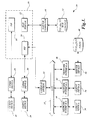
- FIGURE 1 illustrates several computer systems 10 that are coupled together through a network 16, such as a local area network (LAN) or the Internet.
- a network such as a local area network (LAN) or the Internet.
- the term "Internet” as used herein refers to a network of networks which uses certain protocols, such as the Transmission Control Protocol/Internet Protocol (TCP/IP), and possibly other protocols, such as the hypertext transfer protocol (HTTP) or hypertext markup language (HTML) documents that make up the World Wide Web (WW).
- TCP/IP Transmission Control Protocol/Internet Protocol
- HTTP hypertext transfer protocol
- HTTP hypertext markup language
- WWW World Wide Web
- Access to the network 16 is typically provided by Internet service providers (ISPs), such as ISPs 18 and 20.
- ISPs Internet service providers
- Users on client systems, such as client computer devices 24, 28, 36, and 38 obtain access to the Internet through the Internet service providers, such as ISPs 18 and 20.
- Access to the Internet allows the users of the client computer devices to exchange information, receive and send e-mails, and view documents, such as documents which have been prepared in the HTML format.
- These documents are often provided by Web servers, such as a Web server 22 which is considered to be "on" the Internet. Often, these Web servers are provided by ISPs, such as the ISP 18.
- the Web server 22 is typically at least one computer system which operates as a server computer system and is configured to operate with the protocols of the WWW.
- the Web server 22 may be part of an ISP that provides access to the Internet for client devices.
- the Web server 22 is shown coupled to a server computer 14, which is coupled to Web content 12.
- the Web content 12 may be considered a media database. It will be appreciated that while two computer systems 22 and 14 are shown in FIGURE 1, the Web server 22 and the server computer 14 may be one computer system having different software components providing Web server functionality and server functionality.
- the client computer devices 24, 28, 36 and 38 may each, with the appropriate Web browsing software, view HTML pages provided by the Web server 22.
- the ISP 18 provides Internet connectivity to the client device 24 through a communications device 26.
- the communications device 26 may be considered part of the client device 24.
- the client device 24 may be a PC, or other similar computer system.
- the ISP 20 provides Internet connectivity for client devices 28, 36, and 38.
- the client device 28 is coupled to the ISP 20 through a communications device 30, while the client devices 36 and 38 are part of a LAN.
- the client devices 36 and 38 are coupled to a LAN bus 34 through network interfaces 40 and 42, which can be Ethernet network interfaces or other network interfaces.
- the LAN bus 34 is also coupled to a gateway computer system 32, which provides firewall and other Internet related services for the LAN.
- the gateway computer system 32 is coupled to the ISP 20 to provide Internet connectivity to the client devices 36 and 38.
- the gateway computer system 32 may be a conventional server computer system.
- the Web server 22 may be a conventional server computer system.
- a server device 44 can be directly coupled to the LAN bus 34 through a network interface 46 to provide files 48 and other services to the client devices 36 and 38, without the need to connect to the Internet through the gateway system 32.
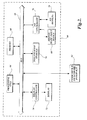
- FIGURE 2 illustrates an exemplary example of a computer system 60 that may be used as a client device, a server device, or Web server. It will also be appreciated that the computer system 60 may be used to perform many of the functions of an Internet service provider, such as the ISPs 18 and 107.
- the computer system 60 interfaces to external systems through a communications device or network interface 62. It is appreciated that the communications device or network interface 62 may be an integral part of the computer system 60.
- the interface 62 may be an analog modem, an ISDN modem, a cable modem, a token ring interface, or other such interfaces for coupling a computer system to other computer systems.
- the computer system 60 includes a processing unit 64, which may be a conventional microprocessor such as an Intel® Pentium® microprocessor or a Motorola PowerPC® microprocessor.
- a memory 68 is coupled to the processor 64 via a bus 66.
- the memory 68 may be a dynamic random access memory (DRAM) and may also include static RAM (SRAM).
- the bus 66 couples the processor 64 to the memory 68, and also to a non-volatile storage 74 and to a display controller 70 and to an input/output (I/O) controller 76.
- I/O input/output
- the display controller 70 controls in a conventional manner a display on a display device 72.
- the display of the display device 72 may be a cathode ray tube (CRT) or a liquid crystal display (LCD).
- Input/output devices 78 may include a keyboard, disk drives, printers, scanners, and other input and/or output devices, including a mouse or other pointing device.
- the display controller 70 and the I/O controller 76 may be implemented with conventional well-known technology.
- a digital image input device 80 may be a digital camera which is coupled to the I/O controller 76 in order to allow images from the digital camera to be input into the computer system 60.
- the non-volatile storage 74 is often a magnetic hard disk, an optical disk, or other form of storage for large amounts of data. Some of this data is written, by a direct memory access process, into the memory 68 during execution of software in the computer system 60.
- computer-readable medium includes any type of storage device accessible by the processing unit 64.
- the computer system 60 is just one example of many possible computer systems which may have different architectures.
- PCs often have multiple buses, one of which may be considered to be a peripheral bus.
- a typical computer system will usually include a processor, a memory, and a bus coupling the memory to the processor.
- the computer system 60 is controlled by operating system software that includes a file management system, such as a disk operating system, which is part of the operating system software.
- a file management system such as a disk operating system
- One example of an operating system software with its associated file management system software is the Windows® Operating System, including the workstation and server versions.
- the file management system of such an operating system is typically stored in the non-volatile storage 74 and causes the processor 64 to execute the various acts required by the operating system to input and output data and to store data in memory, including storing files on the non-volatile storage 74.
- an anti-virus program 302 may be incorporated in a computer, such as a server computer 14 of FIGURE 1, or a client device, such as the client devices 24, 28, 36 and 38.
- a file system included as part of the operating system as discussed previously in conjunction with FIGURE 2, controls access to the files stored in non-volatile storage, such as the non-volatile storage 74 illustrated in FIGURE 2.
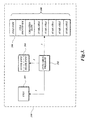
- FIGURE 3 illustrates a file system 300 that includes the use of an anti-virus program 302.
- the file system 300 maintains an entry data structure directory 306 for each file 301.
- the entry data structure directory 306 holds information about each file 301, such as file type, file identifier, creation date, etc. This information is stored in various fields 308 of the entry data structure directory 306.
- FIGURE 3 illustrates a file system 300 that includes the use of an anti-virus program 302.
- the file system 300 maintains an entry data structure directory 306 for each file 301.
- the entry data structure directory 306 holds information about each file 301, such as file type, file identifier, creation date, etc. This information is stored in various fields 308 of the entry data structure directory 306.
- FIGURE 3 illustrates a file system 300 that includes the use of an anti-virus program 302.
- the file system 300 maintains an entry data structure directory 306 for each file 301.
- the entry data structure directory 306 holds information about each file 301, such as file type, file
- the anti-virus program 302 When the file 301 is created by, used or otherwise accessed by the file system 300, the anti-virus program 302 will scan 1 the file 301 for known viruses. The anti-virus program 302 then stores 2 AV state information related to the file 301 in one or more database entries 304, which are associated with the anti-virus program 302. As is understood by those of ordinary skill in the art, this AV state information 304 may be in encrypted form to protect it from malicious modification by viruses or the like. The anti-virus program 302 simultaneously, in writing the state information 304, interfaces 3 with the entry data structure directory 306 to obtain information related to the file 301. This information may include the file type, the file identifier, the creation date, etc.
- This information is included with the state information 304 in order to aid the anti-virus program 302 in making a determination as to when and how often the file 301 should be scanned for viruses. For example, if the creation date of the file 301 has changed since the anti-virus program 302 last scanned the file 301, the anti-virus program 302 makes this determination by comparing the state information 315 with the creation date stored in the entry data structure directory 306. If this comparison shows a difference, then the anti-virus program 302 will scan the file 301 at the particular time this determination is made. As those of ordinary skill in the art are aware, the anti-virus program 302 may make a determination to scan the file 301 for other reasons other than the file's creation date. For example, a direct scan of the file 301, where the creation data is also stored, may be made to determine if the anti-virus program 302 should proceed with scanning the file 301 for viruses.
- FIGURE 4 illustrates the structure of the file 301 illustrated in FIGURE 3.
- the file 301 includes a stamp (discussed hereinafter) and additional information 402-418 that allows the file system 300 to access and use the file 301 as needed by operating system requirements and/or other software application requirements.
- a file name section 402 of the file 301 is designed to hold the file name of the file 301.
- the field 404 is an area designated to hold the creation date of the file 301.
- the additional fields 406-418 make up the actual data content of the file 301.
- Field sections 406 and 412 include executable code that may be infected by malware or other computer viruses.
- the field sections 410, 416 and 418 include macro entries that may also be infected by malware or other computer-related viruses.
- the field sections 408 and 414 include plain text, which is generally unaffected by malware and computer-related viruses.
- the structure of file 301 illustrated in FIGURE 4 is shown by way of example only. In particular, as those of ordinary skill in the art are aware, the structure of files may vary greatly. In particular, some files may not include the text or macro sections illustrated in the figure. Instead, files may be composed of the file identifiers (402 and 404) and the rest of the file may be made up of exclusively executable code. Multiple other file types and structures are similarly understood by those of ordinary skill in the art.
- FIGURE 5 illustrates the body of the stamp 400 illustrated in FIGURE 4.
- the stamp 400 includes an executable code section 500 and an executable macro section 502.
- the executable code section 500 includes the address locations of the executable code contained in the file 301. In this case, address 406 and address 412 are identified in the executable code section 500.
- the executable macro section 502 includes the address locations of the macros contained in the file 301. In this case, the addresses 410, 416 and 418 are identified in the executable macro section 502.
- conventional anti-virus programs are generally required to understand the structure of a particular file type before it can be scanned efficiently.
- the anti-virus program should understand the address locations of the executable code, the macros, and other file address locations that may be inundated with malware or other computer-related viruses.
- the developers of the anti-virus are required to reverse engineer the file type structure of the file to find the specific locations where malware or other computer-related viruses may reside. If the structure of a particular file is not understood, the anti-virus program may have to scan the entire file, including those address areas that are unaffected by malware and other computer-related viruses. Obviously, this is not an efficient way to scan any given file for computer-related viruses.
- the stamp 400 rectifies the problems discussed above. That is, an anti-virus program, such as the anti-virus program 302, simply has to review the contents of the stamp 400 before a file, such as the file 301, is scanned for the presence of computer-related viruses.
- an anti-virus program such as the anti-virus program 302 simply has to review the contents of the stamp 400 before a file, such as the file 301, is scanned for the presence of computer-related viruses.
- FIGURE 6 illustrates a flowchart for creating a file that includes a stamp 400 in accordance with an exemplary embodiment of the present invention. It should be clear that the process illustrated by way of the flowchart of FIGURE 6 may operate with any of the embodiments described in conjunction with FIGURES 1-5.
- a file system or other software application will scan the data structure for the prospective file (S602). The scan of the data structure is designed to determine those areas of the data structure that potentially may be invaded by computer-related viruses (S604). In particular, as was discussed in the prior sections, these areas generally include executable code and/or executable macros. However, other data contained in files may also be susceptible to computer-related viruses.
- a file is created that includes a stamp that is associated with the representative data structure (S606). This stamp will identify the portions of the data structure that are vulnerable to computer-related viruses and which should be analyzed by an anti-virus program if a scan of the file is deemed as necessary.
- FIGURE 7 illustrates a flowchart of a process that may be used to scan files that include the stamp 400 in accordance with an exemplary embodiment of the present invention.
- an anti-virus program is executed (S700), whether by user interaction or by way of a prescheduled event, at least one of a plurality of files may be identified as requiring scanning by the AV program (S702).
- the AV program briefly analyzes the file (S704). If the analyzed file includes a stamp (S706), the stamp is parsed to determine those sections of the file that have been identified as virus susceptible (S708). As discussed previously, sections of a file that are virus susceptible generally include executable code or macros.
- the AV program will scan the file in a conventional manner (S712).
- the scanning method in accordance with the conventional manner may include having to scan all contents contained within the identified file. Regardless of the manner by which the identified file is scanned, once the scan is complete, the AV state information related to the scanned file is updated within the file system in order to substantially prevent unnecessary scanning of files that have not been modified since the previous scan of the AV program (S714).
Landscapes
- Engineering & Computer Science (AREA)
- Computer Security & Cryptography (AREA)
- Theoretical Computer Science (AREA)
- General Engineering & Computer Science (AREA)
- Computer Hardware Design (AREA)
- Software Systems (AREA)
- Physics & Mathematics (AREA)
- General Physics & Mathematics (AREA)
- General Health & Medical Sciences (AREA)
- Virology (AREA)
- Health & Medical Sciences (AREA)
- Data Mining & Analysis (AREA)
- Databases & Information Systems (AREA)
- Mathematical Physics (AREA)
- Information Retrieval, Db Structures And Fs Structures Therefor (AREA)
- Storage Device Security (AREA)
- Measuring Or Testing Involving Enzymes Or Micro-Organisms (AREA)
- Pharmaceuticals Containing Other Organic And Inorganic Compounds (AREA)
- Glass Compositions (AREA)
- Coloring (AREA)
- Dental Preparations (AREA)
Applications Claiming Priority (1)
| Application Number | Priority Date | Filing Date | Title |
|---|---|---|---|
| US10/976,567 US20060095964A1 (en) | 2004-10-29 | 2004-10-29 | Document stamping antivirus manifest |
Publications (3)
| Publication Number | Publication Date |
|---|---|
| EP1653318A2 true EP1653318A2 (fr) | 2006-05-03 |
| EP1653318A3 EP1653318A3 (fr) | 2008-01-16 |
| EP1653318B1 EP1653318B1 (fr) | 2010-04-28 |
Family
ID=35809596
Family Applications (1)
| Application Number | Title | Priority Date | Filing Date |
|---|---|---|---|
| EP05109680A Expired - Lifetime EP1653318B1 (fr) | 2004-10-29 | 2005-10-18 | Manifeste antivirus d'estampage de document |
Country Status (7)
| Country | Link |
|---|---|
| US (1) | US20060095964A1 (fr) |
| EP (1) | EP1653318B1 (fr) |
| JP (1) | JP4828193B2 (fr) |
| KR (1) | KR20060051168A (fr) |
| CN (1) | CN100576135C (fr) |
| AT (1) | ATE466321T1 (fr) |
| DE (1) | DE602005020889D1 (fr) |
Families Citing this family (26)
| Publication number | Priority date | Publication date | Assignee | Title |
|---|---|---|---|---|
| US7917955B1 (en) * | 2005-01-14 | 2011-03-29 | Mcafee, Inc. | System, method and computer program product for context-driven behavioral heuristics |
| US8321910B1 (en) * | 2005-01-21 | 2012-11-27 | Trend Micro, Inc. | Determining the source of malware |
| GB0513375D0 (en) | 2005-06-30 | 2005-08-03 | Retento Ltd | Computer security |
| US20080134326A2 (en) * | 2005-09-13 | 2008-06-05 | Cloudmark, Inc. | Signature for Executable Code |
| US8161556B2 (en) * | 2008-12-17 | 2012-04-17 | Symantec Corporation | Context-aware real-time computer-protection systems and methods |
| US20100191784A1 (en) * | 2009-01-29 | 2010-07-29 | Sobel William E | Extending Secure Management of File Attribute Information to Virtual Hard Disks |
| US10210162B1 (en) | 2010-03-29 | 2019-02-19 | Carbonite, Inc. | Log file management |
| US8732473B2 (en) * | 2010-06-01 | 2014-05-20 | Microsoft Corporation | Claim based content reputation service |
| CN103425927A (zh) * | 2012-05-16 | 2013-12-04 | 腾讯科技(深圳)有限公司 | 计算机文档病毒清除装置及清除方法 |
| CN102694801B (zh) * | 2012-05-21 | 2015-08-05 | 华为技术有限公司 | 病毒检测方法、装置以及防火墙设备 |
| US9715325B1 (en) | 2012-06-21 | 2017-07-25 | Open Text Corporation | Activity stream based interaction |
| CN102984134B (zh) * | 2012-11-12 | 2015-11-25 | 北京奇虎科技有限公司 | 安全防御系统 |
| CN103034808B (zh) * | 2012-11-30 | 2015-10-14 | 北京奇虎科技有限公司 | 扫描方法、设备和系统以及云端管理方法和设备 |
| WO2014082599A1 (fr) * | 2012-11-30 | 2014-06-05 | 北京奇虎科技有限公司 | Dispositif de recherche, dispositif de gestion du nuage, procédé et système permettant de vérifier et de tuer les programmes malveillants |
| CN103092687B (zh) * | 2012-12-26 | 2017-10-20 | 上海斐讯数据通信技术有限公司 | 一种应用程序管理装置和方法 |
| US10686759B2 (en) | 2014-06-22 | 2020-06-16 | Webroot, Inc. | Network threat prediction and blocking |
| US10395133B1 (en) | 2015-05-08 | 2019-08-27 | Open Text Corporation | Image box filtering for optical character recognition |
| US10599844B2 (en) | 2015-05-12 | 2020-03-24 | Webroot, Inc. | Automatic threat detection of executable files based on static data analysis |
| US10289686B1 (en) | 2015-06-30 | 2019-05-14 | Open Text Corporation | Method and system for using dynamic content types |
| CN106570398A (zh) * | 2016-09-09 | 2017-04-19 | 哈尔滨安天科技股份有限公司 | 一种基于结构特性的恶意代码启发式检测方法及系统 |
| CN106709346B (zh) * | 2016-11-25 | 2019-08-06 | 腾讯科技(深圳)有限公司 | 文件处理方法及装置 |
| US10728034B2 (en) | 2018-02-23 | 2020-07-28 | Webroot Inc. | Security privilege escalation exploit detection and mitigation |
| US11159553B2 (en) | 2018-04-13 | 2021-10-26 | Webroot Inc. | Determining exploit prevention using machine learning |
| US11314863B2 (en) | 2019-03-27 | 2022-04-26 | Webroot, Inc. | Behavioral threat detection definition and compilation |
| CN111414615B (zh) * | 2020-03-27 | 2023-01-20 | 河南经贸职业学院 | 一种基于计算机网络的安全监控系统 |
| US11526609B1 (en) * | 2021-11-18 | 2022-12-13 | Uab 360 It | System and method for recent file malware scanning |
Family Cites Families (19)
| Publication number | Priority date | Publication date | Assignee | Title |
|---|---|---|---|---|
| US5649095A (en) * | 1992-03-30 | 1997-07-15 | Cozza; Paul D. | Method and apparatus for detecting computer viruses through the use of a scan information cache |
| US5572590A (en) * | 1994-04-12 | 1996-11-05 | International Business Machines Corporation | Discrimination of malicious changes to digital information using multiple signatures |
| US5809138A (en) * | 1994-07-25 | 1998-09-15 | Netz Computing Ltd. | Method for protecting storage media against computer virus infection |
| US5826013A (en) * | 1995-09-28 | 1998-10-20 | Symantec Corporation | Polymorphic virus detection module |
| US5951698A (en) * | 1996-10-02 | 1999-09-14 | Trend Micro, Incorporated | System, apparatus and method for the detection and removal of viruses in macros |
| JP3293760B2 (ja) * | 1997-05-27 | 2002-06-17 | 株式会社エヌイーシー情報システムズ | 改ざん検知機能付きコンピュータシステム |
| GB2353372B (en) * | 1999-12-24 | 2001-08-22 | F Secure Oyj | Remote computer virus scanning |
| US6735700B1 (en) * | 2000-01-11 | 2004-05-11 | Network Associates Technology, Inc. | Fast virus scanning using session stamping |
| US6763466B1 (en) * | 2000-01-11 | 2004-07-13 | Networks Associates Technology, Inc. | Fast virus scanning |
| US6973577B1 (en) * | 2000-05-26 | 2005-12-06 | Mcafee, Inc. | System and method for dynamically detecting computer viruses through associative behavioral analysis of runtime state |
| US7043757B2 (en) * | 2001-05-22 | 2006-05-09 | Mci, Llc | System and method for malicious code detection |
| US7363506B2 (en) * | 2002-01-30 | 2008-04-22 | Cybersoft, Inc. | Software virus detection methods, apparatus and articles of manufacture |
| US7290282B1 (en) * | 2002-04-08 | 2007-10-30 | Symantec Corporation | Reducing false positive computer virus detections |
| US7367056B1 (en) * | 2002-06-04 | 2008-04-29 | Symantec Corporation | Countering malicious code infections to computer files that have been infected more than once |
| GB0214943D0 (en) * | 2002-06-28 | 2002-08-07 | Bitarts Ltd | Computer program protection |
| US7478431B1 (en) * | 2002-08-02 | 2009-01-13 | Symantec Corporation | Heuristic detection of computer viruses |
| US7337471B2 (en) * | 2002-10-07 | 2008-02-26 | Symantec Corporation | Selective detection of malicious computer code |
| JP3979285B2 (ja) * | 2002-12-17 | 2007-09-19 | 株式会社日立製作所 | 情報処理システム |
| US7287281B1 (en) * | 2003-06-17 | 2007-10-23 | Symantec Corporation | Send blocking system and method |
-
2004
- 2004-10-29 US US10/976,567 patent/US20060095964A1/en not_active Abandoned
-
2005
- 2005-09-09 KR KR1020050084221A patent/KR20060051168A/ko not_active Abandoned
- 2005-09-29 JP JP2005284423A patent/JP4828193B2/ja not_active Expired - Fee Related
- 2005-09-29 CN CN200510108886A patent/CN100576135C/zh not_active Expired - Fee Related
- 2005-10-18 EP EP05109680A patent/EP1653318B1/fr not_active Expired - Lifetime
- 2005-10-18 AT AT05109680T patent/ATE466321T1/de not_active IP Right Cessation
- 2005-10-18 DE DE602005020889T patent/DE602005020889D1/de not_active Expired - Lifetime
Also Published As
| Publication number | Publication date |
|---|---|
| CN100576135C (zh) | 2009-12-30 |
| CN1766779A (zh) | 2006-05-03 |
| JP2006127498A (ja) | 2006-05-18 |
| EP1653318A3 (fr) | 2008-01-16 |
| JP4828193B2 (ja) | 2011-11-30 |
| EP1653318B1 (fr) | 2010-04-28 |
| US20060095964A1 (en) | 2006-05-04 |
| ATE466321T1 (de) | 2010-05-15 |
| KR20060051168A (ko) | 2006-05-19 |
| DE602005020889D1 (de) | 2010-06-10 |
Similar Documents
| Publication | Publication Date | Title |
|---|---|---|
| EP1653318A2 (fr) | Manifeste antivirus d'estampage de document | |
| US8225392B2 (en) | Immunizing HTML browsers and extensions from known vulnerabilities | |
| US6735700B1 (en) | Fast virus scanning using session stamping | |
| JP6304833B2 (ja) | マルウェア定義パッケージサイズを縮小するためのテレメトリの使用 | |
| AU2004218703B2 (en) | Security-related programming interface | |
| CN100369037C (zh) | 在线阻挡有害信息的系统和方法 | |
| KR101757697B1 (ko) | 실행 가능 텍스트를 갖는 문서의 표시 장치 및 방법 | |
| US6763466B1 (en) | Fast virus scanning | |
| EP1312195B1 (fr) | Procede et dispositif servant a gerer des demandes de communication au niveau d'un serveur sans commutation de contexte | |
| US20030037236A1 (en) | Automated generator of input-validation filters | |
| US9398030B2 (en) | Ascertaining domain contexts | |
| US8176413B2 (en) | Method and apparatus for processing a parseable document | |
| US20060259948A1 (en) | Integrated document handling in distributed collaborative applications | |
| US7086090B1 (en) | Method and system for protecting pervasive devices and servers from exchanging viruses | |
| CN101405705A (zh) | 用于外来代码检测的系统和方法 | |
| US20060015880A1 (en) | System and method for handling an event in a computer system | |
| US20040167961A1 (en) | Fragment response cache | |
| US7406457B2 (en) | Dynamic sample data switch | |
| KR20060111347A (ko) | 인라인 캐시를 공유하는 프로세스 및 장치 | |
| Schönwälder et al. | Script MIB Extensibility Protocol Version 1.1 | |
| US20060074979A1 (en) | Static sample data switch | |
| KR100379915B1 (ko) | 클라이언트 컴퓨터 분석 방법 및 그 시스템 | |
| Link | Server-based Virus-protection On Unix/Linux | |
| Schoenwaelder et al. | RFC2593: Script MIB Extensibility Protocol Version 1.0 | |
| Schoenwaelder et al. | RFC3179: Script MIB Extensibility Protocol Version 1.1 |
Legal Events
| Date | Code | Title | Description |
|---|---|---|---|
| PUAI | Public reference made under article 153(3) epc to a published international application that has entered the european phase |
Free format text: ORIGINAL CODE: 0009012 |
|
| AK | Designated contracting states |
Kind code of ref document: A2 Designated state(s): AT BE BG CH CY CZ DE DK EE ES FI FR GB GR HU IE IS IT LI LT LU LV MC NL PL PT RO SE SI SK TR |
|
| AX | Request for extension of the european patent |
Extension state: AL BA HR MK YU |
|
| PUAL | Search report despatched |
Free format text: ORIGINAL CODE: 0009013 |
|
| AK | Designated contracting states |
Kind code of ref document: A3 Designated state(s): AT BE BG CH CY CZ DE DK EE ES FI FR GB GR HU IE IS IT LI LT LU LV MC NL PL PT RO SE SI SK TR |
|
| AX | Request for extension of the european patent |
Extension state: AL BA HR MK YU |
|
| 17P | Request for examination filed |
Effective date: 20080218 |
|
| 17Q | First examination report despatched |
Effective date: 20080320 |
|
| AKX | Designation fees paid |
Designated state(s): AT BE BG CH CY CZ DE DK EE ES FI FR GB GR HU IE IS IT LI LT LU LV MC NL PL PT RO SE SI SK TR |
|
| GRAP | Despatch of communication of intention to grant a patent |
Free format text: ORIGINAL CODE: EPIDOSNIGR1 |
|
| GRAC | Information related to communication of intention to grant a patent modified |
Free format text: ORIGINAL CODE: EPIDOSCIGR1 |
|
| RIC1 | Information provided on ipc code assigned before grant |
Ipc: G06F 1/00 20060101AFI20091015BHEP |
|
| GRAS | Grant fee paid |
Free format text: ORIGINAL CODE: EPIDOSNIGR3 |
|
| GRAA | (expected) grant |
Free format text: ORIGINAL CODE: 0009210 |
|
| AK | Designated contracting states |
Kind code of ref document: B1 Designated state(s): AT BE BG CH CY CZ DE DK EE ES FI FR GB GR HU IE IS IT LI LT LU LV MC NL PL PT RO SE SI SK TR |
|
| REG | Reference to a national code |
Ref country code: GB Ref legal event code: FG4D |
|
| REG | Reference to a national code |
Ref country code: CH Ref legal event code: EP |
|
| REG | Reference to a national code |
Ref country code: IE Ref legal event code: FG4D |
|
| REF | Corresponds to: |
Ref document number: 602005020889 Country of ref document: DE Date of ref document: 20100610 Kind code of ref document: P |
|
| REG | Reference to a national code |
Ref country code: NL Ref legal event code: VDEP Effective date: 20100428 |
|
| LTIE | Lt: invalidation of european patent or patent extension |
Effective date: 20100428 |
|
| PG25 | Lapsed in a contracting state [announced via postgrant information from national office to epo] |
Ref country code: SE Free format text: LAPSE BECAUSE OF FAILURE TO SUBMIT A TRANSLATION OF THE DESCRIPTION OR TO PAY THE FEE WITHIN THE PRESCRIBED TIME-LIMIT Effective date: 20100428 Ref country code: NL Free format text: LAPSE BECAUSE OF FAILURE TO SUBMIT A TRANSLATION OF THE DESCRIPTION OR TO PAY THE FEE WITHIN THE PRESCRIBED TIME-LIMIT Effective date: 20100428 Ref country code: LT Free format text: LAPSE BECAUSE OF FAILURE TO SUBMIT A TRANSLATION OF THE DESCRIPTION OR TO PAY THE FEE WITHIN THE PRESCRIBED TIME-LIMIT Effective date: 20100428 Ref country code: ES Free format text: LAPSE BECAUSE OF FAILURE TO SUBMIT A TRANSLATION OF THE DESCRIPTION OR TO PAY THE FEE WITHIN THE PRESCRIBED TIME-LIMIT Effective date: 20100808 |
|
| PG25 | Lapsed in a contracting state [announced via postgrant information from national office to epo] |
Ref country code: AT Free format text: LAPSE BECAUSE OF FAILURE TO SUBMIT A TRANSLATION OF THE DESCRIPTION OR TO PAY THE FEE WITHIN THE PRESCRIBED TIME-LIMIT Effective date: 20100428 Ref country code: IS Free format text: LAPSE BECAUSE OF FAILURE TO SUBMIT A TRANSLATION OF THE DESCRIPTION OR TO PAY THE FEE WITHIN THE PRESCRIBED TIME-LIMIT Effective date: 20100828 Ref country code: LV Free format text: LAPSE BECAUSE OF FAILURE TO SUBMIT A TRANSLATION OF THE DESCRIPTION OR TO PAY THE FEE WITHIN THE PRESCRIBED TIME-LIMIT Effective date: 20100428 Ref country code: SI Free format text: LAPSE BECAUSE OF FAILURE TO SUBMIT A TRANSLATION OF THE DESCRIPTION OR TO PAY THE FEE WITHIN THE PRESCRIBED TIME-LIMIT Effective date: 20100428 Ref country code: FI Free format text: LAPSE BECAUSE OF FAILURE TO SUBMIT A TRANSLATION OF THE DESCRIPTION OR TO PAY THE FEE WITHIN THE PRESCRIBED TIME-LIMIT Effective date: 20100428 |
|
| PG25 | Lapsed in a contracting state [announced via postgrant information from national office to epo] |
Ref country code: GR Free format text: LAPSE BECAUSE OF FAILURE TO SUBMIT A TRANSLATION OF THE DESCRIPTION OR TO PAY THE FEE WITHIN THE PRESCRIBED TIME-LIMIT Effective date: 20100729 Ref country code: PL Free format text: LAPSE BECAUSE OF FAILURE TO SUBMIT A TRANSLATION OF THE DESCRIPTION OR TO PAY THE FEE WITHIN THE PRESCRIBED TIME-LIMIT Effective date: 20100428 Ref country code: CY Free format text: LAPSE BECAUSE OF FAILURE TO SUBMIT A TRANSLATION OF THE DESCRIPTION OR TO PAY THE FEE WITHIN THE PRESCRIBED TIME-LIMIT Effective date: 20100428 |
|
| PG25 | Lapsed in a contracting state [announced via postgrant information from national office to epo] |
Ref country code: DK Free format text: LAPSE BECAUSE OF FAILURE TO SUBMIT A TRANSLATION OF THE DESCRIPTION OR TO PAY THE FEE WITHIN THE PRESCRIBED TIME-LIMIT Effective date: 20100428 Ref country code: EE Free format text: LAPSE BECAUSE OF FAILURE TO SUBMIT A TRANSLATION OF THE DESCRIPTION OR TO PAY THE FEE WITHIN THE PRESCRIBED TIME-LIMIT Effective date: 20100428 Ref country code: PT Free format text: LAPSE BECAUSE OF FAILURE TO SUBMIT A TRANSLATION OF THE DESCRIPTION OR TO PAY THE FEE WITHIN THE PRESCRIBED TIME-LIMIT Effective date: 20100830 |
|
| PG25 | Lapsed in a contracting state [announced via postgrant information from national office to epo] |
Ref country code: BE Free format text: LAPSE BECAUSE OF FAILURE TO SUBMIT A TRANSLATION OF THE DESCRIPTION OR TO PAY THE FEE WITHIN THE PRESCRIBED TIME-LIMIT Effective date: 20100428 Ref country code: SK Free format text: LAPSE BECAUSE OF FAILURE TO SUBMIT A TRANSLATION OF THE DESCRIPTION OR TO PAY THE FEE WITHIN THE PRESCRIBED TIME-LIMIT Effective date: 20100428 Ref country code: RO Free format text: LAPSE BECAUSE OF FAILURE TO SUBMIT A TRANSLATION OF THE DESCRIPTION OR TO PAY THE FEE WITHIN THE PRESCRIBED TIME-LIMIT Effective date: 20100428 Ref country code: CZ Free format text: LAPSE BECAUSE OF FAILURE TO SUBMIT A TRANSLATION OF THE DESCRIPTION OR TO PAY THE FEE WITHIN THE PRESCRIBED TIME-LIMIT Effective date: 20100428 |
|
| PLBE | No opposition filed within time limit |
Free format text: ORIGINAL CODE: 0009261 |
|
| STAA | Information on the status of an ep patent application or granted ep patent |
Free format text: STATUS: NO OPPOSITION FILED WITHIN TIME LIMIT |
|
| 26N | No opposition filed |
Effective date: 20110131 |
|
| PG25 | Lapsed in a contracting state [announced via postgrant information from national office to epo] |
Ref country code: MC Free format text: LAPSE BECAUSE OF NON-PAYMENT OF DUE FEES Effective date: 20101031 |
|
| REG | Reference to a national code |
Ref country code: CH Ref legal event code: PL |
|
| PG25 | Lapsed in a contracting state [announced via postgrant information from national office to epo] |
Ref country code: CH Free format text: LAPSE BECAUSE OF NON-PAYMENT OF DUE FEES Effective date: 20101031 Ref country code: LI Free format text: LAPSE BECAUSE OF NON-PAYMENT OF DUE FEES Effective date: 20101031 |
|
| PG25 | Lapsed in a contracting state [announced via postgrant information from national office to epo] |
Ref country code: IE Free format text: LAPSE BECAUSE OF NON-PAYMENT OF DUE FEES Effective date: 20101018 |
|
| PG25 | Lapsed in a contracting state [announced via postgrant information from national office to epo] |
Ref country code: BG Free format text: LAPSE BECAUSE OF FAILURE TO SUBMIT A TRANSLATION OF THE DESCRIPTION OR TO PAY THE FEE WITHIN THE PRESCRIBED TIME-LIMIT Effective date: 20100428 Ref country code: HU Free format text: LAPSE BECAUSE OF FAILURE TO SUBMIT A TRANSLATION OF THE DESCRIPTION OR TO PAY THE FEE WITHIN THE PRESCRIBED TIME-LIMIT Effective date: 20101029 Ref country code: LU Free format text: LAPSE BECAUSE OF NON-PAYMENT OF DUE FEES Effective date: 20101018 |
|
| PG25 | Lapsed in a contracting state [announced via postgrant information from national office to epo] |
Ref country code: TR Free format text: LAPSE BECAUSE OF FAILURE TO SUBMIT A TRANSLATION OF THE DESCRIPTION OR TO PAY THE FEE WITHIN THE PRESCRIBED TIME-LIMIT Effective date: 20100428 |
|
| PG25 | Lapsed in a contracting state [announced via postgrant information from national office to epo] |
Ref country code: BG Free format text: LAPSE BECAUSE OF FAILURE TO SUBMIT A TRANSLATION OF THE DESCRIPTION OR TO PAY THE FEE WITHIN THE PRESCRIBED TIME-LIMIT Effective date: 20100728 |
|
| PGFP | Annual fee paid to national office [announced via postgrant information from national office to epo] |
Ref country code: GB Payment date: 20130925 Year of fee payment: 9 |
|
| PGFP | Annual fee paid to national office [announced via postgrant information from national office to epo] |
Ref country code: FR Payment date: 20130924 Year of fee payment: 9 |
|
| PGFP | Annual fee paid to national office [announced via postgrant information from national office to epo] |
Ref country code: IT Payment date: 20131021 Year of fee payment: 9 |
|
| REG | Reference to a national code |
Ref country code: DE Ref legal event code: R082 Ref document number: 602005020889 Country of ref document: DE Representative=s name: GRUENECKER, KINKELDEY, STOCKMAIR & SCHWANHAEUS, DE |
|
| REG | Reference to a national code |
Ref country code: GB Ref legal event code: 732E Free format text: REGISTERED BETWEEN 20150115 AND 20150121 |
|
| REG | Reference to a national code |
Ref country code: DE Ref legal event code: R081 Ref document number: 602005020889 Country of ref document: DE Owner name: MICROSOFT TECHNOLOGY LICENSING, LLC, REDMOND, US Free format text: FORMER OWNER: MICROSOFT CORP., REDMOND, WASH., US Effective date: 20150126 Ref country code: DE Ref legal event code: R082 Ref document number: 602005020889 Country of ref document: DE Representative=s name: GRUENECKER PATENT- UND RECHTSANWAELTE PARTG MB, DE Effective date: 20150126 |
|
| GBPC | Gb: european patent ceased through non-payment of renewal fee |
Effective date: 20141018 |
|
| PG25 | Lapsed in a contracting state [announced via postgrant information from national office to epo] |
Ref country code: GB Free format text: LAPSE BECAUSE OF NON-PAYMENT OF DUE FEES Effective date: 20141018 |
|
| REG | Reference to a national code |
Ref country code: FR Ref legal event code: ST Effective date: 20150630 |
|
| PG25 | Lapsed in a contracting state [announced via postgrant information from national office to epo] |
Ref country code: FR Free format text: LAPSE BECAUSE OF NON-PAYMENT OF DUE FEES Effective date: 20141031 Ref country code: IT Free format text: LAPSE BECAUSE OF NON-PAYMENT OF DUE FEES Effective date: 20141018 |
|
| REG | Reference to a national code |
Ref country code: FR Ref legal event code: TP Owner name: MICROSOFT TECHNOLOGY LICENSING, LLC, US Effective date: 20150724 |
|
| PGFP | Annual fee paid to national office [announced via postgrant information from national office to epo] |
Ref country code: DE Payment date: 20161011 Year of fee payment: 12 |
|
| REG | Reference to a national code |
Ref country code: DE Ref legal event code: R119 Ref document number: 602005020889 Country of ref document: DE |
|
| PG25 | Lapsed in a contracting state [announced via postgrant information from national office to epo] |
Ref country code: DE Free format text: LAPSE BECAUSE OF NON-PAYMENT OF DUE FEES Effective date: 20180501 |