EP1653761A1 - Minimierung der Sendeleistung für Rundsendeinformationsübertragung - Google Patents
Minimierung der Sendeleistung für Rundsendeinformationsübertragung Download PDFInfo
- Publication number
- EP1653761A1 EP1653761A1 EP20050023251 EP05023251A EP1653761A1 EP 1653761 A1 EP1653761 A1 EP 1653761A1 EP 20050023251 EP20050023251 EP 20050023251 EP 05023251 A EP05023251 A EP 05023251A EP 1653761 A1 EP1653761 A1 EP 1653761A1
- Authority
- EP
- European Patent Office
- Prior art keywords
- transmission
- data frames
- broadcast
- resending
- transmission power
- Prior art date
- Legal status (The legal status is an assumption and is not a legal conclusion. Google has not performed a legal analysis and makes no representation as to the accuracy of the status listed.)
- Granted
Links
- 230000005540 biological transmission Effects 0.000 title claims abstract description 223
- 238000000034 method Methods 0.000 claims abstract description 78
- 238000010295 mobile communication Methods 0.000 claims abstract description 11
- 238000004891 communication Methods 0.000 description 2
- 230000003247 decreasing effect Effects 0.000 description 2
- 230000006866 deterioration Effects 0.000 description 1
Images

Classifications
-
- H—ELECTRICITY
- H04—ELECTRIC COMMUNICATION TECHNIQUE
- H04W—WIRELESS COMMUNICATION NETWORKS
- H04W88/00—Devices specially adapted for wireless communication networks, e.g. terminals, base stations or access point devices
- H04W88/08—Access point devices
-
- H—ELECTRICITY
- H04—ELECTRIC COMMUNICATION TECHNIQUE
- H04W—WIRELESS COMMUNICATION NETWORKS
- H04W72/00—Local resource management
- H04W72/30—Resource management for broadcast services
-
- H—ELECTRICITY
- H04—ELECTRIC COMMUNICATION TECHNIQUE
- H04W—WIRELESS COMMUNICATION NETWORKS
- H04W48/00—Access restriction; Network selection; Access point selection
- H04W48/08—Access restriction or access information delivery, e.g. discovery data delivery
- H04W48/10—Access restriction or access information delivery, e.g. discovery data delivery using broadcasted information
-
- Y—GENERAL TAGGING OF NEW TECHNOLOGICAL DEVELOPMENTS; GENERAL TAGGING OF CROSS-SECTIONAL TECHNOLOGIES SPANNING OVER SEVERAL SECTIONS OF THE IPC; TECHNICAL SUBJECTS COVERED BY FORMER USPC CROSS-REFERENCE ART COLLECTIONS [XRACs] AND DIGESTS
- Y02—TECHNOLOGIES OR APPLICATIONS FOR MITIGATION OR ADAPTATION AGAINST CLIMATE CHANGE
- Y02D—CLIMATE CHANGE MITIGATION TECHNOLOGIES IN INFORMATION AND COMMUNICATION TECHNOLOGIES [ICT], I.E. INFORMATION AND COMMUNICATION TECHNOLOGIES AIMING AT THE REDUCTION OF THEIR OWN ENERGY USE
- Y02D30/00—Reducing energy consumption in communication networks
- Y02D30/70—Reducing energy consumption in communication networks in wireless communication networks
Definitions
- the present invention relates to a radio base station, a mobile communication system, and a broadcast information transmission method for performing packet communication by broadcasting.
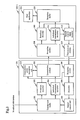
- Radio base station 601 includes transmission buffer 603, broadcast encoder 604, and transmission section 605.
- Mobile station 602 includes: reception section 606, broadcast decoder 607, reception buffer 608, and host application 609.
- Transmission buffer 603 temporarily stores broadcast information that has been transmitted from other nodes.
- Broadcast encoder 604 encodes broadcast information that has been temporarily stored in transmission buffer 603 for transmission to mobile station 602 by the broadcast transmission method.
- Transmission section 605 transmits to mobile station 602 while consuming the power necessary for transmitting the encoded broadcast information by the broadcast transmission method.
- Reception section 606 receives the broadcast information that has been transmitted to mobile station 602.
- Broadcast decoder 607 decodes the broadcast information that has been received by reception section 606.
- Reception buffer 608 temporarily stores the broadcast information that has been decoded.
- Host application 609 processes the broadcast information that has been temporarily stored in reception buffer 608.
- means are provided for transmitting broadcast information by the unicast transmission method that uses individual channels for each of the plurality of mobile stations that are the objects of transmission.
- the transmission method is then selected depending on which method has the lowest total transmission power: transmission by the broadcast transmission method or transmission by the unicast transmission method that uses individual channels.
- a method in which transmission is realized by using this transmission method to reduce the total transmission power is disclosed in JP-A-2004-193888.
- the total transmission power is the sum of the power for transmitting data to each of the plurality of mobile stations that are the objects of transmission.
- the transmission power for transmitting to a mobile station by the unicast transmission method the resending data frames for which a resend request has been submitted from the mobile station is calculated at the radio base station.
- the transmission power for transmitting broadcast information to the mobile station by the broadcast transmission method is then calculated so as to minimize the sum of the transmission power that has been calculated and the transmission power for transmitting broadcast information to the mobile station by the broadcast transmission method.
- the broadcast information is transmitted to the mobile station by the broadcast transmission method at this calculated transmission power.
- Radio base station 101 is connected to mobile stations 102-1-102-3 by radio links and transmits broadcast information to and from mobile stations 102-1-102-3.
- radio base station 101 is connected to an exchange (not shown) by way of a radio line control station (not shown) to enable the reception of broadcast information that has been transmitted from other nodes that are connected to the exchange.
- radio line control station not shown
- the number of radio base stations and the number of mobile stations that are connected to a radio base station are not limited to these numbers.
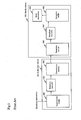
- radio base station 101 that is shown in FIG. 2 includes: transmission buffer 201, broadcast encoder 202, individual transmission encoder 204, transmission section 203, transmission power calculation unit 215, reception section 207, decoder 206, and resend control unit 205.
- Transmission buffer 201 temporarily stores broadcast information that has been transmitted from other nodes for transmission to mobile station 102-1.
- Broadcast encoder 202 encodes broadcast information that has been temporarily stored in transmission buffer 201 for transmission to mobile station 102-1 by the broadcast transmission method.
- Individual transmission encoder 204 encodes broadcast information that has been temporarily stored in transmission buffer 201 for transmission to mobile station 102-1 by a unicast transmission method that uses individual channels.
- Transmission section 203 transmits, to mobile station 102-1, the broadcast information that has been encoded by broadcast encoder 202 or by individual transmission encoder 204.
- Transmission power calculation unit 215 calculates the transmission power required to transmit broadcast information to mobile station 102-1 by transmission section 203.
- reception section 207 receives a resend request signal from mobile station 102-1 requesting the resending of data in which the error occurred.
- Decoder 206 decodes the resend request signal that has been received by reception section 207.
- Resend control unit 205 controls transmission buffer 201 based on the resend request signal that has been decoded by decoder 206.
- mobile station 102-1 that is shown in FIG. 2 includes: reception section 208, broadcast decoder 209, individual transmission decoder 211, resend request signal encoder 212, transmission section 213, reception buffer 210, and host application 214.
- Reception section 208 receives broadcast information that has been transmitted from radio base station 101.
- Broadcast decoder 209 decodes the information that has been transmitted by the broadcast transmission method from among the broadcast information that has been received by reception section 208.
- Individual transmission decoder 211 decodes the information that has been transmitted by the unicast transmission method that uses individual channels from among the broadcast information that has been received by reception section 208.
- resend request signal encoder 212 When an error has occurred in data that have been decoded by broadcast decoder 209 or by individual transmission decoder 211, resend request signal encoder 212 generates and encodes a resend request signal to submit a request to radio base station 101 for resending the data in which the error occurred.
- Transmission section 213 transmits the resend request signal that has been encoded by resend request signal encoder 212 to radio base station 101.
- Reception buffer 210 temporarily stores broadcast information that has been decoded by broadcast decoder 209 or by individual transmission decoder 211.
- Host application 214 processes the broadcast information that has been temporarily stored in reception buffer 210.
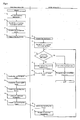
- Step 1 broadcast information that has been transmitted in from another node is first stored in transmission buffer 201 in radio base station 101. At this time, the broadcast information is divided into data frames of an appropriate size and stored in transmission buffer 201 as data frames.
- the data frames that have been stored in transmission buffer 201 are supplied as output to broadcast encoder 202, and in Step 2, broadcast encoder 202 encodes the data frames for use in the broadcast transmission method.
- the data frames that have been encoded by broadcast encoder 202 are supplied as output to transmission section 203.
- the transmission power for transmitting the data frames to mobile station 102-1 by the broadcast transmission method is calculated by transmission power calculation unit 215.
- the transmission power for transmitting resending data frames by the unicast transmission method using an individual channel is also calculated.
- the transmission power is then calculated for transmission by the broadcast transmission method such that the total transmission power, which is the sum of these two powers, is minimized.
- the transmission power for transmitting resending data frames by the unicast transmission method that uses individual channels may be set in advance in transmission power calculation unit 215.
- a position information signal or the resend request signal from mobile station 102-1 may be received by reception section 207, radiowave intensity information of the received signal may be supplied as output from reception section 207 to transmission power calculation unit 215, and the transmission power is then calculated based on the radiowave intensity information that has been received by transmission power calculation unit 215.
- the transmission power for transmitting data frames by the broadcast transmission method is calculated such that the transmission power does not fall below a reference value that depends on the dynamic range of the broadcast channels of radio base station 101.
- the data frames that have been encoded by broadcast encoder 202 are subsequently transmitted in Step 4 to mobile station 102-1 by the broadcast transmission method by means of the transmission power that has been calculated by transmission section 203.
- the data frames that have been transmitted from radio base station 101 are received by reception section 208 in mobile station 102-1 in Step 5.
- the data frames that have been received are supplied as output from reception section 208 to broadcast decoder 209.
- the data frames are then subjected to decoding for use by the broadcast transmission method by broadcast decoder 209 in Step 6.
- each data frame is checked in Step 7 to determine if errors exist. Data frames that are free of errors are supplied as output to reception buffer 210 and stored in Step 8.
- Step 7 If it is determined in Step 7 that a data frame contains an error, this finding is supplied as output from broadcast decoder 209 to resend request signal encoder 212.
- a resend request signal for requesting radio base station 101 to resend the data frame in which an error occurred is generated and encoded by resend request signal encoder 212 in Step 9.
- the encoded resend request signal is supplied as output from resend request signal encoder 212 to transmission section 213.
- the encoded resend request signal is then transmitted from transmission section 213 to radio base station 101 using an individual channel in Step 10.
- Step 11 the resend request signal that has been transmitted from mobile station 102-1 is subsequently received by reception section 207 in radio base station 101.
- the resend request signal that has been received is supplied as output from reception section 207 to decoder 206 and then decoded by decoder 206 in Step 12.
- the resend request signal that has been decoded by decoder 206 is next supplied to resend control unit 205.
- Resend control unit 205 determines the data frames that are to be resent based on the resend request signal and indicates these frames to transmission buffer 201. These data frames are then supplied as resending data frames from transmission buffer 201 to individual transmission encoder 204 in Step 13.
- the resending data frames are encoded by individual transmission encoder 204 for transmission by the unicast transmission method that uses individual channels in Step 14, then supplied as output to transmission section 203, and finally, transmitted from transmission section 203 to mobile station 102-1 in Step 15.
- Step 16 the resending data frames that have been transmitted from radio base station 101 are received by reception section 208 in mobile station 102-1.
- the resending data frames that have been received are supplied as output from reception section 208 to individual transmission decoder 211.
- Individual transmission decoder 211 then decodes the resending data frames for use by the unicast transmission method that uses individual channels in Step 17.
- Step 7 When decoding for the unicast transmission method that uses individual channels by means of individual transmission decoder 211 occurs, the resending data frames are checked to determine whether errors are present in Step 7. If an error occurs in the resending data frames, processing from Step 9 to Step 17 is moreover carried out.
- the maximum value of the number of repetitions can be set in advance, and a means can be provided for transmitting a warning signal to radio base station 101 when this maximum value has been exceeded.
- the frame number (hereinbelow abbreviated as "FN") of data frames that have been received by mobile station 102-1 without error can be reported from mobile station 102-1 to radio base station 101 at preset cycles, and a means can be provided for deleting data frames of the FN that has been reported from transmission buffer 201 in radio base station 101.
- the resending data frames are free of errors, the resending data frames that have been decoded in individual transmission decoder 211 are supplied to reception buffer 210.
- the resending data frames are then stored in Step 8 by inserting them in appropriate positions among the stored data frames that were free of errors at the time of reception of the first data frames.
- Data frames that have been stored in reception buffer 210 are processed as broadcast information by host application 214 in Step 18.
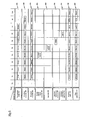
- Broadcast information that has been generated in another node is divided into, for example, data frames of an appropriate size, FNs are conferred sequentially to each data frame, and the data frames are then stored in transmission buffer 201 in radio base station 101.
- the data frames that have been received as input by broadcast encoder 202 are encoded for transmission by the broadcast transmission method, and transmitted to mobile station 102-1 by way of transmission section 203 by shifting one time slot at a time in Step 502.
- Data frames that have been received by reception section 208 in mobile station 102-1 are supplied as output from reception section 208 to broadcast decoder 209.
- the data frames are then decoded by broadcast decoder 209 and arranged in each time slot in Step 503.
- Step 504 the encoded resend request signal is transmitted to radio base station 101 by way of transmission section 213 in time slot T4 using an individual channel.
- the received resend request signal is supplied from reception section 207 to decoder 206 and the resend request signal is then decoded in decoder 206.
- the decoded resend request signal is supplied from decoder 206 to resend control unit 205 in Step 505.
- Resend control unit 205 requests that relevant data stored in transmission buffer 201 be resent, and this data frame is then supplied as a resending data frame from transmission buffer 201 to individual transmission encoder 204.
- Individual transmission encoder 204 then encodes the resending data frame for transmission by the unicast transmission method that uses an individual channel.
- the encoded resending data frame is then transmitted to mobile station 102-1 by way of transmission section 203 by the unicast transmission method that uses an individual channel in Step 506.
- this data frame is supplied as output from reception section 208 to individual transmission decoder 211.
- Individual transmission decoder 211 then subjects the resending data frame to decoding for use by the unicast transmission method that uses an individual channel in Step 507.
- the decoded resending data frame is supplied to reception buffer 210.
- the resending data frame is then stored in reception buffer 210 in Step 508 in accordance with the FN values by inserting it into the appropriate position among the stored data frames that were free of errors at the time of reception of the first data frames.
- the data frames that have been stored in reception buffer 210 are acquired in Step 509 by host application 214 at timing that is subsequent to time slot T9 and the broadcast information is processed by host protocol.
- the individual channels that are used in the resending process may be, for example, dedicated physical channels such as DCH (DPCH) in a W-CDMA system.
- the individual channels may be dedicated logical channels on common channels such as RACH (PRACH)/FACH (S-CCPCH).
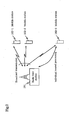
- Pcommon is the transmission power for transmitting broadcast information by the broadcast transmission method.
- the transmission power to mobile stations 102-1-102-3 is P1-P3, respectively.
- the average transmission power per unit of time of Pcommon, P1, P2, and P3 is ⁇ Pcommon, ⁇ P1, ⁇ P2, and ⁇ P3, respectively.
- transmission power calculation unit 215 calculates the total transmission power ( ⁇ Pcommon + ⁇ P1 + ⁇ P2 + ⁇ P3) for transmitting the broadcast information and controls ⁇ Pcommon such that this value is reduced.
- control is implemented such that Pcommon is increased until the amount of increase of ⁇ Pcommon is greater than the amount of decrease of ( ⁇ P1 + ⁇ P2 + ⁇ P3).
Landscapes
- Engineering & Computer Science (AREA)
- Computer Networks & Wireless Communication (AREA)
- Signal Processing (AREA)
- Computer Security & Cryptography (AREA)
- Mobile Radio Communication Systems (AREA)
- Data Exchanges In Wide-Area Networks (AREA)
- Small-Scale Networks (AREA)
Applications Claiming Priority (1)
| Application Number | Priority Date | Filing Date | Title |
|---|---|---|---|
| JP2004319238A JP4654663B2 (ja) | 2004-11-02 | 2004-11-02 | 無線基地局、移動通信システム及びブロードキャスト情報転送方法 |
Publications (2)
| Publication Number | Publication Date |
|---|---|
| EP1653761A1 true EP1653761A1 (de) | 2006-05-03 |
| EP1653761B1 EP1653761B1 (de) | 2010-09-01 |
Family
ID=35653014
Family Applications (1)
| Application Number | Title | Priority Date | Filing Date |
|---|---|---|---|
| EP20050023251 Expired - Lifetime EP1653761B1 (de) | 2004-11-02 | 2005-10-25 | Minimierung der Sendeleistung für Rundsendeinformationsübertragung |
Country Status (6)
| Country | Link |
|---|---|
| US (1) | US7787906B2 (de) |
| EP (1) | EP1653761B1 (de) |
| JP (1) | JP4654663B2 (de) |
| KR (1) | KR100839497B1 (de) |
| CN (1) | CN1770741B (de) |
| DE (1) | DE602005023253D1 (de) |
Families Citing this family (7)
| Publication number | Priority date | Publication date | Assignee | Title |
|---|---|---|---|---|
| US8155580B2 (en) * | 2006-06-23 | 2012-04-10 | Qualcomm Incorporated | Methods and apparatus for efficient data distribution to a group of users |
| CN101911765A (zh) | 2008-01-16 | 2010-12-08 | 日本电气株式会社 | 无线通信系统、数据分发方法、基站、基站控制装置以及程序 |
| KR100947099B1 (ko) * | 2008-02-12 | 2010-03-10 | 주식회사 케이티 | 단말기 전원을 절약하기 위하여 재전송 cbs 스케줄링메시지를 이용하는 장치와 단말기 및 그 방법 |
| CN101820306B (zh) * | 2009-02-26 | 2013-06-05 | 中国移动通信集团公司 | 一种信号中继方法、信号合并方法及装置 |
| CN101998510A (zh) * | 2009-08-21 | 2011-03-30 | 中兴通讯股份有限公司 | 一种存储系统信息码流的基站及方法 |
| KR101725345B1 (ko) * | 2010-12-09 | 2017-04-11 | 에스케이텔레콤 주식회사 | 무선 랜에서 브로드캐스팅/멀티캐스팅 전송과 유니캐스팅 전송을 혼용한 방송 패킷 재전송 시스템 및 방법 |
| KR101857019B1 (ko) * | 2011-08-29 | 2018-05-14 | 삼성전자주식회사 | 디바이스 간 직접 통신을 수행하는 시스템에서 브로드캐스트 방법 및 장치 |
Citations (3)
| Publication number | Priority date | Publication date | Assignee | Title |
|---|---|---|---|---|
| WO2003105353A2 (en) * | 2002-06-11 | 2003-12-18 | Meshnetworks, Inc. | System and method for multicast media access using broadcast transmissions with multiple acknowledgments in an ad-hoc communications network |
| EP1401152A2 (de) * | 2002-09-19 | 2004-03-24 | Samsung Electronics Co. Ltd. | Verfahren zur Bestimmung eines Übertragungsverfahrens für einen MBMS-Dienst in einem mobilen Kommunikationssystem |
| JP2004193888A (ja) * | 2002-12-10 | 2004-07-08 | Ntt Docomo Inc | 情報伝送装置および情報伝送方法 |
Family Cites Families (11)
| Publication number | Priority date | Publication date | Assignee | Title |
|---|---|---|---|---|
| KR100302263B1 (ko) * | 1997-03-25 | 2001-09-22 | 모리시타 요이찌 | 스트림 데이터 전송방법 및 시스템 |
| GB9821089D0 (en) | 1998-09-30 | 1998-11-18 | Koninkl Philips Electronics Nv | Method for the communication of information and apparatus employing the method |
| JP3987229B2 (ja) * | 1999-03-16 | 2007-10-03 | テレフオンアクチーボラゲット エル エム エリクソン(パブル) | 無線通信システム及びその基地局並びにその通信方法 |
| JP3657850B2 (ja) * | 2000-04-06 | 2005-06-08 | 株式会社エヌ・ティ・ティ・ドコモ | マルチキャスト伝送下り送信電力制御方法及び基地局 |
| SG109450A1 (en) | 2000-04-06 | 2005-03-30 | Ntt Docomo Inc | Multicast signal transmission power control method and base station using the same |
| JP3426194B2 (ja) | 2000-06-26 | 2003-07-14 | 松下電器産業株式会社 | 通信端末装置 |
| JP3643053B2 (ja) * | 2001-06-11 | 2005-04-27 | 三菱電機株式会社 | Cdma無線マルチキャスト再送制御方法および無線通信システム |
| JP2004128563A (ja) | 2002-09-30 | 2004-04-22 | Toshiba Corp | 無線システム、無線基地局及び無線端末 |
| KR100964670B1 (ko) * | 2003-05-12 | 2010-06-22 | 엘지전자 주식회사 | 이동통신 시스템에서 데이터 레이트 제어 정보를 생성하는방법 |
| US7245946B2 (en) * | 2003-07-07 | 2007-07-17 | Texas Instruments Incorporated | Optimal power saving scheduler for 802.11e APSD |
| US7430436B2 (en) * | 2004-03-17 | 2008-09-30 | Kyocera Corporation | Wireless communication device and transmission power control method of its connection request |
-
2004
- 2004-11-02 JP JP2004319238A patent/JP4654663B2/ja not_active Expired - Fee Related
-
2005
- 2005-10-25 DE DE200560023253 patent/DE602005023253D1/de not_active Expired - Lifetime
- 2005-10-25 EP EP20050023251 patent/EP1653761B1/de not_active Expired - Lifetime
- 2005-10-25 US US11/257,161 patent/US7787906B2/en not_active Expired - Fee Related
- 2005-10-31 KR KR20050102804A patent/KR100839497B1/ko not_active Expired - Fee Related
- 2005-11-01 CN CN2005101186352A patent/CN1770741B/zh not_active Expired - Fee Related
Patent Citations (3)
| Publication number | Priority date | Publication date | Assignee | Title |
|---|---|---|---|---|
| WO2003105353A2 (en) * | 2002-06-11 | 2003-12-18 | Meshnetworks, Inc. | System and method for multicast media access using broadcast transmissions with multiple acknowledgments in an ad-hoc communications network |
| EP1401152A2 (de) * | 2002-09-19 | 2004-03-24 | Samsung Electronics Co. Ltd. | Verfahren zur Bestimmung eines Übertragungsverfahrens für einen MBMS-Dienst in einem mobilen Kommunikationssystem |
| JP2004193888A (ja) * | 2002-12-10 | 2004-07-08 | Ntt Docomo Inc | 情報伝送装置および情報伝送方法 |
Also Published As
| Publication number | Publication date |
|---|---|
| KR20060052350A (ko) | 2006-05-19 |
| US20060094469A1 (en) | 2006-05-04 |
| CN1770741A (zh) | 2006-05-10 |
| JP2006135400A (ja) | 2006-05-25 |
| US7787906B2 (en) | 2010-08-31 |
| EP1653761B1 (de) | 2010-09-01 |
| CN1770741B (zh) | 2010-10-13 |
| KR100839497B1 (ko) | 2008-06-19 |
| JP4654663B2 (ja) | 2011-03-23 |
| DE602005023253D1 (de) | 2010-10-14 |
Similar Documents
| Publication | Publication Date | Title |
|---|---|---|
| US9967899B2 (en) | Method and apparatus for controlling an uplink transmission power ratio in a mobile communication system | |
| JP6077513B2 (ja) | 無線通信システムにおける高速共有チャネルを用いたポイントツーマルチポイントサービス | |
| US6952426B2 (en) | Method and apparatus for the transmission of short data bursts in CDMA/HDR networks | |
| US7903559B2 (en) | Apparatus and method for transmitting reverse packet data in mobile communication system | |
| US7359345B2 (en) | Signaling method between MAC entities in a packet communication system | |
| US9544918B2 (en) | Method and device for allocating common channel resources | |
| JP4966409B2 (ja) | 通信システムにおける方法および装置 | |
| CN101631007B (zh) | 一种数据传输方法、装置和系统 | |
| US20140211706A1 (en) | Method and apparatus for improved network coding in wireless communication system | |
| US20080212615A1 (en) | Method and Apparatus for Communicating Data in a Communications System | |
| US20050083880A1 (en) | Time scheduling with SAW ARQ process | |
| US7653027B2 (en) | Method for transmitting and receiving data | |
| CN1281321A (zh) | 用于无线系统中软越区切换的发射功率电平设置的同步 | |
| EP1653761B1 (de) | Minimierung der Sendeleistung für Rundsendeinformationsübertragung | |
| US8135003B2 (en) | Communications session management | |
| US20090046612A1 (en) | Method for transmitting and receiving packet in mobile communication system | |
| KR20050007980A (ko) | 복합 자동 재전송 방식 이동통신 시스템에서 트래픽데이터 재전송 장치 및 방법 | |
| HK1087575A (en) | Systems and methods for performing outer loop power control in wireless communication systems |
Legal Events
| Date | Code | Title | Description |
|---|---|---|---|
| PUAI | Public reference made under article 153(3) epc to a published international application that has entered the european phase |
Free format text: ORIGINAL CODE: 0009012 |
|
| AK | Designated contracting states |
Kind code of ref document: A1 Designated state(s): AT BE BG CH CY CZ DE DK EE ES FI FR GB GR HU IE IS IT LI LT LU LV MC NL PL PT RO SE SI SK TR |
|
| AX | Request for extension of the european patent |
Extension state: AL BA HR MK YU |
|
| 17P | Request for examination filed |
Effective date: 20060609 |
|
| 17Q | First examination report despatched |
Effective date: 20060713 |
|
| AKX | Designation fees paid |
Designated state(s): DE FI FR GB IT SE |
|
| RIC1 | Information provided on ipc code assigned before grant |
Ipc: H04W 4/06 20090101AFI20091124BHEP |
|
| GRAP | Despatch of communication of intention to grant a patent |
Free format text: ORIGINAL CODE: EPIDOSNIGR1 |
|
| GRAS | Grant fee paid |
Free format text: ORIGINAL CODE: EPIDOSNIGR3 |
|
| GRAA | (expected) grant |
Free format text: ORIGINAL CODE: 0009210 |
|
| AK | Designated contracting states |
Kind code of ref document: B1 Designated state(s): DE FI FR GB IT SE |
|
| REG | Reference to a national code |
Ref country code: GB Ref legal event code: FG4D |
|
| REF | Corresponds to: |
Ref document number: 602005023253 Country of ref document: DE Date of ref document: 20101014 Kind code of ref document: P |
|
| PG25 | Lapsed in a contracting state [announced via postgrant information from national office to epo] |
Ref country code: FI Free format text: LAPSE BECAUSE OF FAILURE TO SUBMIT A TRANSLATION OF THE DESCRIPTION OR TO PAY THE FEE WITHIN THE PRESCRIBED TIME-LIMIT Effective date: 20100901 |
|
| PG25 | Lapsed in a contracting state [announced via postgrant information from national office to epo] |
Ref country code: SE Free format text: LAPSE BECAUSE OF FAILURE TO SUBMIT A TRANSLATION OF THE DESCRIPTION OR TO PAY THE FEE WITHIN THE PRESCRIBED TIME-LIMIT Effective date: 20100901 |
|
| PLBE | No opposition filed within time limit |
Free format text: ORIGINAL CODE: 0009261 |
|
| STAA | Information on the status of an ep patent application or granted ep patent |
Free format text: STATUS: NO OPPOSITION FILED WITHIN TIME LIMIT |
|
| 26N | No opposition filed |
Effective date: 20110606 |
|
| REG | Reference to a national code |
Ref country code: DE Ref legal event code: R097 Ref document number: 602005023253 Country of ref document: DE Effective date: 20110606 |
|
| PGFP | Annual fee paid to national office [announced via postgrant information from national office to epo] |
Ref country code: FR Payment date: 20131009 Year of fee payment: 9 Ref country code: GB Payment date: 20131023 Year of fee payment: 9 |
|
| PGFP | Annual fee paid to national office [announced via postgrant information from national office to epo] |
Ref country code: IT Payment date: 20131028 Year of fee payment: 9 |
|
| GBPC | Gb: european patent ceased through non-payment of renewal fee |
Effective date: 20141025 |
|
| PG25 | Lapsed in a contracting state [announced via postgrant information from national office to epo] |
Ref country code: GB Free format text: LAPSE BECAUSE OF NON-PAYMENT OF DUE FEES Effective date: 20141025 |
|
| REG | Reference to a national code |
Ref country code: FR Ref legal event code: ST Effective date: 20150630 |
|
| PG25 | Lapsed in a contracting state [announced via postgrant information from national office to epo] |
Ref country code: FR Free format text: LAPSE BECAUSE OF NON-PAYMENT OF DUE FEES Effective date: 20141031 Ref country code: IT Free format text: LAPSE BECAUSE OF NON-PAYMENT OF DUE FEES Effective date: 20141025 |
|
| PGFP | Annual fee paid to national office [announced via postgrant information from national office to epo] |
Ref country code: DE Payment date: 20171018 Year of fee payment: 13 |
|
| REG | Reference to a national code |
Ref country code: DE Ref legal event code: R119 Ref document number: 602005023253 Country of ref document: DE |
|
| PG25 | Lapsed in a contracting state [announced via postgrant information from national office to epo] |
Ref country code: DE Free format text: LAPSE BECAUSE OF NON-PAYMENT OF DUE FEES Effective date: 20190501 |