EP1655942A1 - Dienstbereitstellungssystem - Google Patents
Dienstbereitstellungssystem Download PDFInfo
- Publication number
- EP1655942A1 EP1655942A1 EP05256868A EP05256868A EP1655942A1 EP 1655942 A1 EP1655942 A1 EP 1655942A1 EP 05256868 A EP05256868 A EP 05256868A EP 05256868 A EP05256868 A EP 05256868A EP 1655942 A1 EP1655942 A1 EP 1655942A1
- Authority
- EP
- European Patent Office
- Prior art keywords
- service
- function
- unit
- information
- mfp
- Prior art date
- Legal status (The legal status is an assumption and is not a legal conclusion. Google has not performed a legal analysis and makes no representation as to the accuracy of the status listed.)
- Granted
Links
- 230000006870 function Effects 0.000 claims abstract description 343
- 238000000034 method Methods 0.000 claims description 676
- 230000008569 process Effects 0.000 claims description 673
- 238000006243 chemical reaction Methods 0.000 claims description 270
- 238000004590 computer program Methods 0.000 claims description 6
- 230000003750 conditioning effect Effects 0.000 claims description 4
- 230000005540 biological transmission Effects 0.000 description 34
- 230000004913 activation Effects 0.000 description 33
- 238000004891 communication Methods 0.000 description 27
- 230000004044 response Effects 0.000 description 23
- 238000002360 preparation method Methods 0.000 description 18
- 238000013500 data storage Methods 0.000 description 17
- 238000010586 diagram Methods 0.000 description 16
- 238000013519 translation Methods 0.000 description 13
- 238000003825 pressing Methods 0.000 description 11
- 238000012545 processing Methods 0.000 description 11
- 239000000470 constituent Substances 0.000 description 5
- 238000012986 modification Methods 0.000 description 5
- 230000004048 modification Effects 0.000 description 5
- 238000012015 optical character recognition Methods 0.000 description 5
- 230000008859 change Effects 0.000 description 3
- 238000012790 confirmation Methods 0.000 description 2
- 230000005236 sound signal Effects 0.000 description 2
- 238000012546 transfer Methods 0.000 description 2
- 230000002159 abnormal effect Effects 0.000 description 1
- 230000003213 activating effect Effects 0.000 description 1
- 230000000694 effects Effects 0.000 description 1
- 238000007726 management method Methods 0.000 description 1
- 230000002093 peripheral effect Effects 0.000 description 1
Images














Classifications
-
- H—ELECTRICITY
- H04—ELECTRIC COMMUNICATION TECHNIQUE
- H04N—PICTORIAL COMMUNICATION, e.g. TELEVISION
- H04N1/00—Scanning, transmission or reproduction of documents or the like, e.g. facsimile transmission; Details thereof
- H04N1/00832—Recording use, e.g. counting number of pages copied
-
- H—ELECTRICITY
- H04—ELECTRIC COMMUNICATION TECHNIQUE
- H04N—PICTORIAL COMMUNICATION, e.g. TELEVISION
- H04N1/00—Scanning, transmission or reproduction of documents or the like, e.g. facsimile transmission; Details thereof
- H04N1/00127—Connection or combination of a still picture apparatus with another apparatus, e.g. for storage, processing or transmission of still picture signals or of information associated with a still picture
- H04N1/00204—Connection or combination of a still picture apparatus with another apparatus, e.g. for storage, processing or transmission of still picture signals or of information associated with a still picture with a digital computer or a digital computer system, e.g. an internet server
- H04N1/00209—Transmitting or receiving image data, e.g. facsimile data, via a computer, e.g. using e-mail, a computer network, the internet, I-fax
-
- H—ELECTRICITY
- H04—ELECTRIC COMMUNICATION TECHNIQUE
- H04N—PICTORIAL COMMUNICATION, e.g. TELEVISION
- H04N1/00—Scanning, transmission or reproduction of documents or the like, e.g. facsimile transmission; Details thereof
- H04N1/00127—Connection or combination of a still picture apparatus with another apparatus, e.g. for storage, processing or transmission of still picture signals or of information associated with a still picture
- H04N1/00204—Connection or combination of a still picture apparatus with another apparatus, e.g. for storage, processing or transmission of still picture signals or of information associated with a still picture with a digital computer or a digital computer system, e.g. an internet server
- H04N1/00244—Connection or combination of a still picture apparatus with another apparatus, e.g. for storage, processing or transmission of still picture signals or of information associated with a still picture with a digital computer or a digital computer system, e.g. an internet server with a server, e.g. an internet server
-
- H—ELECTRICITY
- H04—ELECTRIC COMMUNICATION TECHNIQUE
- H04N—PICTORIAL COMMUNICATION, e.g. TELEVISION
- H04N1/00—Scanning, transmission or reproduction of documents or the like, e.g. facsimile transmission; Details thereof
- H04N1/00127—Connection or combination of a still picture apparatus with another apparatus, e.g. for storage, processing or transmission of still picture signals or of information associated with a still picture
- H04N1/00281—Connection or combination of a still picture apparatus with another apparatus, e.g. for storage, processing or transmission of still picture signals or of information associated with a still picture with a telecommunication apparatus, e.g. a switched network of teleprinters for the distribution of text-based information, a selective call terminal
-
- H—ELECTRICITY
- H04—ELECTRIC COMMUNICATION TECHNIQUE
- H04N—PICTORIAL COMMUNICATION, e.g. TELEVISION
- H04N2201/00—Indexing scheme relating to scanning, transmission or reproduction of documents or the like, and to details thereof
- H04N2201/0008—Connection or combination of a still picture apparatus with another apparatus
- H04N2201/001—Sharing resources, e.g. processing power or memory, with a connected apparatus or enhancing the capability of the still picture apparatus
-
- H—ELECTRICITY
- H04—ELECTRIC COMMUNICATION TECHNIQUE
- H04N—PICTORIAL COMMUNICATION, e.g. TELEVISION
- H04N2201/00—Indexing scheme relating to scanning, transmission or reproduction of documents or the like, and to details thereof
- H04N2201/0077—Types of the still picture apparatus
- H04N2201/0094—Multifunctional device, i.e. a device capable of all of reading, reproducing, copying, facsimile transception, file transception
-
- H—ELECTRICITY
- H04—ELECTRIC COMMUNICATION TECHNIQUE
- H04N—PICTORIAL COMMUNICATION, e.g. TELEVISION
- H04N2201/00—Indexing scheme relating to scanning, transmission or reproduction of documents or the like, and to details thereof
- H04N2201/32—Circuits or arrangements for control or supervision between transmitter and receiver or between image input and image output device, e.g. between a still-image camera and its memory or between a still-image camera and a printer device
- H04N2201/3201—Display, printing, storage or transmission of additional information, e.g. ID code, date and time or title
- H04N2201/3212—Display, printing, storage or transmission of additional information, e.g. ID code, date and time or title of data relating to a job, e.g. communication, capture or filing of an image
- H04N2201/3222—Display, printing, storage or transmission of additional information, e.g. ID code, date and time or title of data relating to a job, e.g. communication, capture or filing of an image of processing required or performed, e.g. forwarding, urgent or confidential handling
-
- H—ELECTRICITY
- H04—ELECTRIC COMMUNICATION TECHNIQUE
- H04N—PICTORIAL COMMUNICATION, e.g. TELEVISION
- H04N2201/00—Indexing scheme relating to scanning, transmission or reproduction of documents or the like, and to details thereof
- H04N2201/32—Circuits or arrangements for control or supervision between transmitter and receiver or between image input and image output device, e.g. between a still-image camera and its memory or between a still-image camera and a printer device
- H04N2201/3201—Display, printing, storage or transmission of additional information, e.g. ID code, date and time or title
- H04N2201/3212—Display, printing, storage or transmission of additional information, e.g. ID code, date and time or title of data relating to a job, e.g. communication, capture or filing of an image
- H04N2201/3223—Display, printing, storage or transmission of additional information, e.g. ID code, date and time or title of data relating to a job, e.g. communication, capture or filing of an image of type information, e.g. reception or copy job
Definitions
- aspects of the present invention relate to a system providing services, a device and a server that can be employed in such a system.
- the terminal device receives the service provided by the host computer to process the image data so that the terminal device is capable of printing the image.
- the terminal device should be provided with a function to receive the service. That is, in the above example, the terminal device should be provided with a printing unit.
- the terminal device can receive the image data processing service provided by the host computer. According to the conventional system, if a user of the terminal device intends to receive another service requiring an un-equipped function of the terminal device, the terminal device cannot receive the service.
- a terminal device capable of receiving services through a network even if the terminal device is not equipped with functions that correspond to the services.
- a service providing system including a service providing device adapted to provide a service through a network and a device adapted to receive the service from the service providing device.
- the device includes a service request unit that is adapted to request the service providing device for the service, and a service implementation unit that is adapted to implement a function of the device after receiving the service from the service providing device.
- the service providing device is provided with a service provision executing unit that is adapted to provide the service to the device when the service providing device receives the request from the service request unit, and a function judging unit that is adapted to judge whether the device is equipped with a function to receive the service based on equipped function information that indicates functions for which the device is equipped.
- the service provision executing unit is configured to provide the service by executing a format conversion process, which implements the service by utilizing media corresponding to the function when the function judging unit judges that the device is not equipped with the function to receive the service.
- the service providing system can provide a service to the device by executing the format conversion process.
- the format conversion process enables the service to be provided through the media corresponding to the function for which the device is equipped, the service is allowed to be received by the device according to the processed results.
- the above service providing system may be, for example, a server on a network.
- the server may be configured with a single server or multiple servers.
- the media corresponding to the function for which the device is equipped refers to data for implementing the function.
- the image data is the media corresponding to the function for which the device is equipped for implementing the function.
- the sound data is the media corresponding to the function for implementing the function.
- the format conversion process executed by the service provision implementation system refers to a process in which data such as described above is obtained as a processed result from the service provision executing system. With this configuration, a function for which the device is equipped can be implemented according to the data obtained as the processed result of the service provision executing system.
- the device may be provided with at least one of a function that reads an image and generates image data that represents the image and a function to print an image that is represented by the image data.
- the service providing device may be adapted to provide a service concerning at least one of the image data generated by the function for which the device is equipped and the image data representing an image to be printed.
- the device can be provided with the service from the service providing system and can implement at least one of the function to read the image and generate image data representing the image and the function to print the image represented by the image data.
- the function judging system may be adapted to judge that the device is provided with the function to receive the service provided by the service provision executing unit when the equipped function information indicates that the device is equipped with the function.
- the service providing system is allowed to keep information on the functions, and the function judging system can judge whether the device is equipped with a function based on the information on the functions.
- the equipped function information which the function judging system uses for judging, may be registered in the service providing system by a user beforehand. However, this may not be preferable if the service providing systems is operated in a network that contains multiple devices, because the work load involving registration may be excessive depending on the number of devices.
- the device may be provided with an information notification unit, which is adapted to notify the service providing device of the equipped function information.
- the function judging unit may be adapted to judge whether the device is provided with a function based on the equipped function information notified by the information notification unit.
- the user does not need to register equipped function information in the service providing system, as the equipped function information of the device can be obtained by the device itself.
- a risk that the user may register incorrectly equipped function information may be prevented, as notification of the equipped function information of the device is provided by the device.
- the service providing system may be provided with a function determination unit, which is adapted to determine a function among multiple functions provided to the device based on a predetermined condition, when the device is judged by the function judging unit to not be provided with the function.
- the service provision executing unit may be adapted to provide the service by executing one format conversion process among multiple format conversion processes.
- the service provision executing unit may be adapted to provide the service by executing the format conversion process, which enables the service to be provided by utilizing the media corresponding to the function determined by the function determination unit.
- the service providing system is allowed to determine the media corresponding to the function among the functions for which the device is equipped, based on the predetermined condition when the service providing system executes the format conversion process.
- the device may be provided with a conditioning unit, when the function determination system determines the function, which is adapted to allow the user to specify conditions for the function determination unit, and a condition notifying unit, which is adapted to notify the service providing device of the conditions specified by the user through the conditioning unit.
- the function determination unit may be adapted to determine the function based on the conditions notified by the condition notifying unit.
- the user is allowed to specify the conditions for the function determination system on the device, and the function is allowed to determine the function on the service providing system, based on the specified conditions.
- the service providing system may be adapted to apply the format conversion process to data that is transmitted from the device to the service providing device and to data that is transmitted from the service providing device to the device.
- the device is allowed to receive the service that is transmitted bidirectionally between the device and the service providing system, as well as the service transmitted in one direction from the device to the service providing system, or vice versa.
- the service providing system may be provided with a specification request unit, which is adapted to request the device to specify a service to be provided among at least one service available from the service providing device, and a service specifying unit, which allows the user to specify the service to be provided among at least one service available from the service providing device when the device receives a request from the specification request unit for specification of the service.
- the service request unit may be adapted to request the service providing device to provide the service specified by the service specifying unit.
- the at least one service available from the service system may include all the services that may be provided by the service providing system, or it may be limited to some extent, for example, to only services corresponding to the functions for which the device is equipped.
- the specification request system may be adapted to request the device to specify a service among at least one service including a service provided by the service provision executing unit executing the format conversion process when the function judging unit determines that the device is not equipped with the function to receive the service.
- the service provision executing unit may be adapted to provide the service by executing the format conversion process when the service is requested from the service request unit.
- the service may be specified by selecting from the services corresponding to the functions for which the device is equipped, when a service specification request system requests the device to specify the service.
- the specification request system may be configured as, for example, a server on the network.
- the server may be a single server or may be configured with multiple servers. It may also be configured integrally with the service providing system as one server. If the server is configured to be independent separate from the service providing system, the server may be configured to obtain a result of the judgment by the function judging system of the service providing system, and request the specification of the service in accordance with the result.
- a device that is adapted to receive a service from a server.
- the device includes a service request unit that is adapted to request the server for the service concerning one of data being generated and data being output by a function for which the device is equipped, and a service implementation unit that is adapted to implement the function of the device after receiving the requested service provided by the server.
- a server which includes, a service providing unit adapted to provide a service to a device, a function judging unit that judges whether the device is equipped with a function to receive the service based on equipped function information that indicates functions for which the device is, and a service provision executing unit that is adapted to convert the service to be provided by the service providing unit into a format, in which the device is capable of providing the service with the function, when the function judging unit judges that the device is not equipped with the function required to receive the service.
- the service providing system includes a service providing device adapted to provide a service through a network, and a device adapted to receive the service from the service providing device.
- the device includes a service request unit that is adapted to request the service providing device for the service, and a service implementation unit.
- the service providing device includes a service provision executing unit that is adapted to provide the service to the device when the service providing device receives the request from the service request unit, and a function judging unit that is adapted to judge whether the device is equipped with a function to receive the service based on equipped function information that indicates functions for which the device is equipped.
- the service provision executing unit is configured to provide the service by executing a format conversion process, which implements the service by utilizing media corresponding to the function when the function judging unit judges that the device is not equipped with the function to receive the service.
- a computer program product having computer-readable instructions that cause a computer system to execute processes to function as a device.
- the device includes a service providing device adapted to provide a service through a network, and a device adapted to receive the service from the service providing device.
- the device includes a service request unit that is adapted to request the service providing device for the service, and a service implementation unit that is adapted to implement a function of the device after receiving the requested service provided by the service providing device.
- the service providing device includes a service provision executing unit that is adapted to provide the service to the device when the service providing device receives the request from the service request unit, and a function judging unit that is adapted to judge whether the device is equipped with a function to receive the service provided by the service provision executing unit based on equipped function information that indicates functions for which the device is equipped.
- the service provision executing unit is configured to provide the service by executing a format conversion process, which implements the service to be provided by utilizing media corresponding to the function when the function judging unit judges that the device is not equipped with the function to receive the service.
- a computer program product having computer-readable instructions that cause a computer system to execute processes to function as a server.
- the server includes a service providing device adapted to provide a service through a network, and a device adapted to receive the service from the service providing device.
- the device includes a service request unit that is adapted to request the service providing device for the service, and a service implementation unit that is adapted to implement a function of the device after receiving the service provided by the service providing device.
- the service providing device includes a service provision executing unit that is adapted to provide the service to the device when the service providing device receives the request from the service request unit, and a function judging unit that is adapted to judge whether the device is equipped with a function to receive the service based on equipped function information that indicates functions for which the device is equipped.
- the service provision executing unit is configured to provide the service by executing a format conversion process, which implements the service by utilizing media corresponding to the function when the function judging unit judges that the device is not equipped with the function to receive the service.
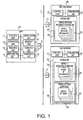
- a service providing system is provided with an MFP 10, a directory server 20, a function server 30, and the like, which are interconnected via a network 1 so as to perform data-communication.
- the network 1 may be a Wide Area Network (WAN) such as the Internet.
- WAN Wide Area Network
- the MFP 10, directory server 20 and function server 30 are connected to the network 1 via routers 2 to 4, respectively.
- the routers 2-4 are represented by R, which may be known broadband routers).
- the MFP 10 includes a control unit 11, an operation unit 12, a reading unit 13, a recording unit 14, a communication unit 15, a memory unit 16, a sound input unit 17, a sound output unit 18, and the like.
- the control unit 11 includes CPU, ROM, RAM, and the like, and the CPU controls overall operation of the MFP 10 in accordance with programs stored in the ROM.
- the operation unit 12 includes a copy key 41, a scanner key 42, a FAX key 43, a service key 44, a setting key 45, up/down/right/left direction keys 46 through 49, an OK key 50, a cancel key 51, and a user interface such as display 52.
- the reading unit 13 which is an input device for implementing the scanner function, reads an image recorded (e.g., printed) on a sheet-type recording medium such as paper and generates image data representing the image.
- the recording unit 14 which is an output device for implementing the printer function, prints out the image represented by the image data on a sheet-type recording medium such as paper.
- the communication unit 15 is configured to connect the MFP 10 to the network 1 and also performs processing necessary for enabling data transmission via the network 1.
- the memory unit 16 includes a nonvolatile RAM (not shown) in which data can be stored.
- the sound input unit 17 receives a sound signal from a microphone provided to a handset (not shown) provided to the MFP 10, and generates sound data (PCM data) representing the received sound signal.
- PCM data sound data
- the sound output unit 18 outputs sound in accordance with the sound data (PCM data) through a speaker provided to the handset (not shown) or a speaker (not shown) provided on a main body of the MFP 10.
- the directory server 20 includes a control unit 21, a communication unit 22 and a memory unit 23.
- the control unit 21 is provided with CPU, ROM, RAM, and the like, and the CPU controls the entire operation of the directory server 20 in accordance with programs stored in the ROM.
- the communication unit 22 is connected to the directory server 20 in the network 1 and performs a process to transmit/receive data via this network.
- Memory unit 23 includes a hard disk (not shown) wherein data is stored.
- the memory unit 23 is equipped with a service definition information memory unit 24 for recording service definition information 25.
- the service definition information 25 is XML (extensible Markup Language) data, which is described in XML, and is adapted to provide a list, including a type and a request destination address (URL; Uniform Resource Locator) of each service, of the service provided by a function server 30 by showing a service selection screen (see Fig. 8A), in accordance with the content of the XML data.
- Each tag definition in the service definition information 25 is shown in Fig. 3.
- the function server 30 is provided with multiple units including a control unit 31, a communication unit 32, a memory unit 33, and the like.
- the control unit 31 includes a CPU, ROM, and RAM.
- the CPU has control over the entire function server 30 in accordance with the program stored in the ROM.
- the control unit 31 is configured to be sufficiently high-performing compared to the control unit 11 of the MFP 10, and is capable of performing processes, which may be overload for the control unit 11 to perform.
- the communication unit 32 is connected to the function server 30 through the network 1, and performs processes for transmitting and receiving data through the network 1.
- the memory unit 33 is provided with a hard disk (not shown) wherein data is stored.
- the memory unit 33 includes a service I/F information memory unit 34 for storing service I/F information 36, and a service software memory unit 25 for storing service software 37, which performs processes for providing various services.
- the service I/F information 36 is XML data, which is described in XML, and is adapted to provide information (i.e., contents of the services and a request destination address) for requesting service to be provided by the function server 30 by showing a parameter input screen (see Figs. 14A - 14F) in accordance with the content of the XML data.
- Each tag definition in the service I/F information 36 is shown in Fig. 4.
- a process performed by the control unit 11 of MFP 10 will be explained below.
- transmission and reception of data, parameters, and the service I/F information 36 between the MFP 10 and the function server 30 is performed via a conversion process, which will be described later.
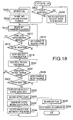
- an initialization process is performed (S102). Thereafter, if an instruction is received from an external source (S104), for example, an input operation to the operation unit 12 or an input of instruction signals via the network 1, the process judges whether the content of the input calls for changing the operation mode to a service mode (S106). In the present illustrative embodiment, an operation of pressing down a service key 44 of the operation unit 12 is judged to be a call for the change to the service mode.
- the service mode is one of multiple operation modes to perform a process requesting the function server 30 for a service.
- the user is required to select a method to specify the service to be requested from the function server 30 (S110).
- a method selection screen shown in Fig. 6 is displayed, and the user is asked to select the service from a list (i.e., "Select from list” in Fig. 6) or by directly entering the destination address of the request (i.e., "Direct input” in Fig. 6).
- the selection screen is displayed, the user can select one of the specification methods by providing an input to the operation unit 12.
- the service definition information 25 includes information necessary for displaying a service selection screen to prompt the user to select a service in categories such as "data storage service”, “printing service” and “copy services”, respectively, and information necessary for displaying the service selection screen to prompt the user to select a category.
- an HTTP request is sent to an address to access the service definition information 25 to display the service selection screen that prompts the user to select a category (hereinafter referred to as "top service definition information").
- the process proceeds to the S120 after the service selection screen is displayed in the display 52 based on the service definition information 25 (S116).
- the service selection screen After receiving the top service definition information 25, the service selection screen indicates the selectable categories (Link_Title), wherein the characters "Directory Service” are displayed on the upper part of the display 52 as a display title (Title) (see Fig. 8A), and characters “data storage service”, “printing service” and “copy services” are displayed on the lower part of the display 52 in accordance with the top service definition information 25 (XML description), shown in Fig. 7.
- an ID of different service definition information corresponding to the category is assigned as a link destination (see "Link_Location" in Fig. 7), and when one of the items is selected, a request for the service definition information 25 of the ID corresponding to the item is sent to the directory server 20.
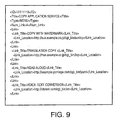
- the service selection screen indicates the selectable categories (Link_Title), wherein the characters “Copy Services” are displayed on the upper part of the display as a display title (Title), and characters “copy with watermark”, “translation copy”, “manuscript read out” and “voice-text conversion” are displayed on the lower part of the display (see Fig. 8B and Fig. 8C) in accordance with the service definition information 25 (XML description) such as that is shown in Fig. 9.
- Link_Title the selectable categories
- XML description service definition information 25
- Fig. 8B and Fig. 8C show the screen before and after such scrolling.
- the ID of different service definition information corresponding to the service is assigned as a link destination (see "Link_Location" in Fig. 9), and when one of the items is selected, a request for the service definition information 25 of the ID corresponding to the item is sent to the function server 30.
- the user can select any of the items (i.e., an address input operation) or terminate the service mode (i.e., a termination operation).
- an input operation by the user to the operation unit 12 is received, and the process judges whether the input operation is an operation selecting the link (S122).
- the process judges whether the input operation is an operation selecting the link (S122).
- the operation for selecting an item in the service selection screen shown in S116 or an operation for entering an address in the address input screen shown in S118 is performed as an input operation, it is determined to be an operation for selecting a link.
- S122 if the input operation is determined not to be an operation for selecting a link (S122: NO), but the operation is determined to be a termination operation (S124: YES), the process in the service mode is completed and returns to S104. If the input operation is not a termination operation (S124: NO), the process returns to S120 after generating a rejection sound, for example, a buzzer (S126).
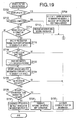
- the process judges whether the selected link is a link to the service, i.e., an ID for requesting the service to be provided from the function server 30 (S128).
- S128 if the selected link is not a link to the service, i.e., it is an ID for a different service definition information 25 (S128: NO), a service list for reference is requested from the directory server 20. After the relevant service definition information 25 is received (S130), the process returns to S116, and the service selection screen is shown on the display 52.
- the service to be used is selected, and the selected service is started with reference to Link_Location of the service definition information 25 (or the address, if it is directly entered) (S202).
- the service selected by the user can be started by the function server 30.
- a session ID is returned from the function server 30, which received the service start instruction as an HTTP response.
- the session ID returned from the function server 30 is received (S204) in accordance with the service start instruction in S202.
- the HTTP requests and the HTTP responses transmitted in the subsequent process are all sent with the session ID, unless stated otherwise.
- the function server 30, which received the HTTP request manages a device in communication based on the session ID (known session management).
- an "MFP instruction inquiry” to inquire about the existence of an instruction to the MFP 10 is transmitted to the function server 30 as an HTTP request (S206). If the instruction to the MFP 10 has been generated, the function server 30, which received the "MFP instruction inquiry” returns an instruction indicating the content of the instruction (an instruction indicating "no instruction", if no instruction has been generated) as an HTTP response.
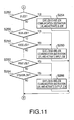
- the process judges whether the instruction is a job activation instruction (S210).
- This "job activation instruction” is generated on the function server 30 after the service start instruction has been transmitted in S202, and instructs the activation of one of "UI job”, “input job (scan job or voice job)", and “output job (i.e., print job or speaker job)", depending on the timing and the service content.
- a job ID of the job to be activated, a type of job (UI job, input job (i.e., scan job or voice job), or output job) and the destination address for communication are added to the job activation instruction.
- the process judges whether the job instructed by the job activation instruction is a UI job. If the instruction is determined to be a UI job (S252: YES), after the UI job is activated according to the job ID and the destination address for communication attached to the job activation instruction (S254), the process proceeds to S214 (see Fig. 10). The UI job is executed simultaneously with another process after being activated by the process in S254, and will be described in further detail hereinbelow.
- S252 if the job designated by the job activation instruction is determined not to be a UIjob (S252: NO), but the instruction is determined to be a scan job (S256: YES) or a voice job (S256: NO, S262: YES), the process proceeds to S214 (see Fig. 10) after the input job is activated according to the job ID and the destination address for communication attached to the job activation instruction (S260). The input job is executed simultaneously with another process after being activated by the process in S260, which will be described in further detail hereinbelow.
- the process judges whether the instruction received in S208 is a job termination instruction (S216).
- the "job termination instruction” is generated by the function server 30 after a job activated by each process in Fig. 11 is completed, which will be described hereinbelow.
- the job ID of the completed job is attached to this job termination instruction.
- S216 if the instruction is determined not to be a job termination instruction (S216: NO), the process judges whether "no instructions” is indicated (S220). If “no instructions” is indicated (S220: YES), the process proceeds to S214. If “no instruction” is not indicated, the process judges whether the instruction is a session termination instruction (S222). The "session termination instruction” is generated in the function server 30 when the service to the MFP 10 is completed.
- S222 if the instruction is determined to be a session termination instruction (S222: YES), the current session process is terminated. If the instruction received in S208 is not any one of the foregoing instructions, the current session process is terminated after the process for notifying an error (a process for instruction error) is executed (S224). In S224, an error is notified to a user by displaying an error message in the display 52.
- the MFP job instruction inquiry for making an inquiry regarding instructions to the MFP 10 is set in the transmission data storage area (S300).
- the MFP job instruction inquiry is set in the transmission data storage area by writing the MFP instruction inquiry to the storage area for transmission data provided to the RAM of the control unit 11.
- the MFP job instruction inquiry is sent to the function server 30 with a session ID and a job ID in S312, which will be explained hereinafter.
- the function server 30 which received the transmission data, sends an MFP instruction indicating the content of the instruction (an instruction indicating "no instruction", if no instruction has been generated) as an HTTP response.
- the process judges whether there has been a termination instruction from the foregoing session process.
- the termination instruction is received from the foregoing session process in S218.
- S302 if a completion instruction from the session process is issued (S302: YES), the current UI job is terminated after notifying the user of the termination of the UI job is completed by generating the session termination instruction to the session process (S304).
- the session termination instruction is received during the process in foregoing S218.
- the process judges whether the job has been completely terminated by receiving the session termination instruction and the subsequent procedures are implemented.
- the process judges whether the operation unit 12 is busy (S306).
- the operation unit 12 is determined to be busy if a busy flag Fu has a value "1" when a job is in process, and it is determined to be not busy when the flag Fu has no value (i.e., "0") when no job is in process.
- S306 if the operation unit 12 is determined to be busy (S306: YES), the process returns to S306 after waiting until the operation unit 12 is released from the busy state, in other words, until the busy flag Fu is released (S308). If the operation unit 12 is determined not to be busy (S306: NO), the busy flag Fu is set (S310), and the operation unit 12 becomes busy with the current UI job.
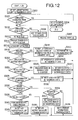
- the process judges whether the instruction is a parameter request (S316).
- the "parameter request” is generated by the function server 30, which has received the MFP job instruction inquiry, which will be described hereinbelow. Based on the service I/F information 36 added to this parameter request (see Fig. 13; with regards to translation copy), specification of the parameter is requested by the MFP 10.
- the parameter input screen display will be described with an example of the service I/F information 36 corresponding to the translation copy service.
- the translation copy service refers to a service that generates and provides text data by translating text data entered via an input unit (keyboard) of the MFP 10 to a designated language, and prints the document expressed by the text data with the recording unit 14 in the MFP 10.
- the function server 30 is allowed to recognize text by OCR (Optical Character Recognition) processing the image represented by the image data, perform text recognition by A-D conversion processing voice input via the sound input unit 17, or generate and provide image data representing the image of the text, which has been translated into the designated language, and print the image represented by the image data with the recording unit 14 in the MFP 10.
- OCR Optical Character Recognition
- a translation copy service is received in the MFP 10, which is not equipped with an input unit, and the MFP 10 receives the service with the image data inputted via the input unit 13 being converted through the foregoing conversion process.
- the service I/F information 36 in XML see Fig.
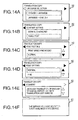
- a parameter input screen is displayed, wherein the characters “translation copy” are displayed on the upper part of the display region as the display title (Title), the characters “language selection” are displayed therebelow as an input item (Disp_Name), and further below, the characters “English -> Japanese” and “Japanese -> English”, which are items (Disp_Select) indicating the selectable parameters of the input items, "language selection”, are displayed (see Fig. 14A).
- the characters “translation copy” are displayed on the upper part of the display region as the display title (Title)
- the characters “language selection” are displayed therebelow as an input item (Disp_Name)
- Disposelect the characters “English -> Japanese” and "Japanese -> English”
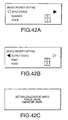
- switching operation This is merely due to a limitation in the size of the display 52, and the input items shown in the lower part of the display region can be switched between four types, including "scanner setting”, “print setting”, and “comments”, by pressing the left and right direction keys 48 and 49 (hereinafter referred to as switching operation) from this state.
- Normal font refers to the resolution (read resolution), which is a parameter of a reading unit 13 being set to 300 x 300 dpi
- small font refers to the resolution, which is set to 600 x 600 dpi.
- Printing speed prioritized refers to the resolution (print resolution), which is a parameter of the record unit 14 being set to 200 x 200 dpi
- "normal” refers to the resolution, which is set to 300 x 300 dpi
- "high-definition” refers to a resolution set to 600 x 600 dpi.
- An entry field is shown below the characters "comment”, and the set character string (Default_String) appears (see Fig. 14E).
- the character string appearing in the entry field as a comment is used as a header or a footer of an image to be printed.
- the user is allowed to select the parameters of each item by operating the keys to switch the displayed contents to other items, which are not shown due to limitation with the display region in the display 52 (switch to n-1 th and n+1 th item by pressing the right and the left arrow keys 48 and 49), specifying operations to specify the parameters (specify the parameter by pressing the up and the down arrow keys 46 and 47 (see the broken-line square in Figs. 14A - 14D)), scroll operations for showing other parameters, which could not be shown in the display 52 (the parameters that are not shown can be shown by continuing the specifying operation and specifying the parameter), and a complete operation for completing the parameter setting (i.e., pressing OK key 50).
- the service I/F information 36 with the content corresponding to the input/output device, equipped to the MFP 10 is sent with the parameter request, if the service from the function server 30 cannot be received by the input/output device, the process returns to S322 without executing S320 after showing an error message on the display 52 (see Fig. 14F).
- S316 if the MFP instruction returned in response to the inquiry in the foregoing S312 is not determined to be a parameter request (S316: NO), the process judges whether the MFP instruction received in S314 is a specification information request (S352).
- the "Specifications information request” is issued on the function server 30, which has received the MFP job instruction inquiry, in accordance with the setting of the function server 30. Furthermore, this is an instruction to request the MFP 10 to provide specification information including the registered parameter settings related to the input/output device in the MFP 10.
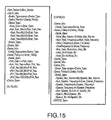
- This specification information is the contents of parameter setting related to the input/output device of the MFP 10 as XML data, which is stored in the memory unit 16 (see Fig. 15). Tag definitions in this specification information are shown in Fig. 16.
- S352 if the instruction is determined to be a specification information request (S352: YES), the process proceeds to S322 after specification information is stored in the transmission data storage area (S354).
- This specification information is subsequently sent to the function server 30 in S312, when no termination instruction from the session is issued (S302: NO), and the operation panel is not busy (S306: NO). Then, the function server 30, which received the specification information, returns a parameter request as an HTTP response after executing a predetermined process, which will be described hereinbelow.
- S352 if the instruction is determined not to be a specification information request (S352: NO), the process judges whether the MFP instruction received in S314 is service status information (S324).
- the "service status information" is generated from the function server 30, which receives an MFP job inquiry or MFP status information, transmitted in subsequent processes (S330 and S312).
- the service status information provides status of the service; whether the process related to the service is being executed successfully, or the service will be terminated due to a problem.
- S324 if the instruction is determined to be a service status information (S324: YES), the service status information is shown on the display 52 (S326), and the process proceeds to S322 after a service status information request for information on the service operation status is stored in the transmission data storage area (S327).
- S324 if the instruction is determined not to be a service status information (S324: NO), the process judges whether the MFP instruction received in S314 is a status information request (S328).
- the "status information request” requests for the transmission of information related to the status of the MFP 10, which will be described hereinbelow.
- the process proceeds to S322 after the MFP status information is stored in the transmission data storage area (S330).
- the status information request is an instruction to request status on the MFP 10 to be transmitted.
- the status information indicating "no paper”, “cover is open”, and the like is stored in the transmission data storage area as the MFP status information.
- S328 if the instruction is determined not to be a status information request (S328: NO), the process judges whether the MFP instruction received in S314 is the server reception status (S332).
- the "server reception status" is an instruction sent to indicate whether the function server 30 successfully received the information from the MFP 10.
- S332 if the instruction is determined to be a server reception status (S332: YES), and if the content of the server reception status indicates an error (S334: YES), the process proceeds to S322, after the information causing the transmission of this server reception status is stored again in the transmission data storage area (S336). If the content of the server reception status does not indicate a reception error (S334: NO), the process proceeds to S322 after service status information request for requesting the information on the service operation status is stored in the transmission data storage area (S337).
- S332 if the instruction is not determined to be a server reception status (S332: NO), the process judges whether the MFP instruction received in S314 indicates "no instructions" (S338). In S338, if the MFP instruction indicates "no instructions" (S338: YES), the process proceeds to S322, after the MFP job instruction inquiry is stored in the transmission data storage area (S339), similarly to S300. If the MFP instruction does not indicate "no instruction" (S338: NO), an error process (process for a specified error) is executed (S340), and the process proceeds to S322, after the MFP job instruction inquiry is stored in the transmission data storage area (S339), similarly to S300.
- the process judges whether the input device is busy (S402). If the input device is determined to be busy the busy flag Fi is set (set to "1"), and is determined to be not busy when the flag is off (set to "0").
- the "input device” refers to the reading unit 13, when the reading unit 13 receives the service related to the image data generated in the reading unit 13, and refers to the sound input unit 17, when the sound input unit 17 receives the service related to the sound data generated in the sound input unit 17.
- S402 if the input device is determined to be busy (S402: YES), the process returns to S402 after waiting until the input device is released from its busy state (S404). If the input device is determined to be not busy (S402: NO), the busy flag Fi is set (S406).
- the MFP status information related to the MFP 10 status is transmitted as an HTTP request to the function server 30 with a job ID assigned in S260 in the session process (S408).
- the function server 30, which received the MFP status information returns an MFP parameter, which is information based on the parameter transmitted to the function server 30 in S312 (see Fig. 12) after being stored in the transmission data storage area in S320, as an HTTP response.
- the process judges whether a termination instruction has been issued from the session process (S412). This termination instruction is issued from the session process to the current input job when the job to be terminated in S218 (see Fig. 10) is an input job.
- the MFP reception status for indicating that the information from the function server 30 was received normally is sent to the function server 30 as an HTTP request (S418), with a job ID assigned in S260 in the session process.
- the function server 30, which received the MFP reception status returns an input data request to request a transmission of data to be processed by the function server 30.
- the MFP reception status indicating a reception error is sent to the function server 30 (S426), similarly to S416, if the input data request returned in S420 is not received normally (S426: NO).
- the function server 30, which received the MFP reception status sends an input data request again, and the process returns to S420 after notifying the function server 30 of the reception error in S426.
- the input data to be processed by the function server 30 is transmitted as an HTTP request to the function server 30 (S428), with a job ID assigned in S260 in the session process.
- the user is prompted to enter the data into the MFP 10 by showing a data input screen for entering data to be processed by the function server 30.
- the data obtained from the user is transmitted to the function server 30 as an HTTP request, with a job ID assigned in S260 in the session process.
- messages for example, "Set original document and press OK key” and "Pick up receiver and speak” are shown in the display 52, and subsequently, data obtained from the reading unit 13 or the sound input unit 17 is transmitted to the function server 30 sequentially.
- the function server 30, which received the input data returns the service status information to indicate whether the data process based on this input data was completed normally.
- the method to obtain data in this process may be that the data is read from a memory card set in a memory card slot (not shown), or is read from a certain memory area within the memory unit 16. In this case, a message prompting the user to specify the memory area to be the data source is shown in the display 52.
- the setting of the input device modified by the process in S428 is returned to the original values (S430), and subsequently, the service status information returned from the function server 30 is received (S432).
- the output job process activated in S266 (see Fig. 11) is explained in detail.
- the output job is executed in parallel with the foregoing session process and the UI job.
- the process judges whether the output device is busy (S502). If the output device is determined to be busy the busy flag Fo is set (set to "1"), and is determined to be not busy when the flag is off (set to "0").
- the "output device” refers to the recording unit 14, when the recording unit 14 receives the service related to the image data printed by the recording unit 14, and refers to the sound output unit 18, when the sound output unit 18 receives the service related to the sound data output from the sound output unit 18.
- S502 if the output device is busy (S502: YES), the process returns to S502, after waiting until the output device is released from its busy state (S504). If the output device is determined to be not busy (S502: NO), the busy flag Fo is set (S506).
- the MFP status information is transmitted as an HTTP request to the function server 30, with a job ID assigned in S266 in the session process (S508).
- the process judges whether a termination instruction has been issued from the session process (S512). This termination instruction is issued from the session process to the current output job when the job to be terminated in S218 (see Fig. 10) is an output job.
- the session process has not received the termination instruction (S512: NO), and if the MFP parameter returned in S510 has not been received normally (S514: NO), the MFP reception status to indicate that the information from the function server 30 is not received normally (i.e., a reception error) is sent to the function server 30 as an HTTP request (S516), with a job ID assigned in S266 in the session process.
- the function server 30, which received the MFP reception status sends the MFP parameter again, and the process returns to S510 after notifying the function server 30 of the reception error in S516.
- the MFP reception status for indicating that the information from the function server 30 was received normally is sent to the function server 30 as an HTTP request (S518), with a job ID assigned in S266 in the session process.
- the function server 30, which received the MFP reception status returns output data generated by the process based on the input data transmitted in S428 (see Fig. 17).
- the MFP reception status indicates a reception error is sent to the function server 30 (S526), similarly to S516, if the output data returned in S520 is not received normally (S524: NO).
- the function server 30, which received the MFP reception status sends output data again, and the process returns to S520 after notifying the function server 30 of the reception error in S526.
- the output data is output through the output device (for example, printing of image represented by the image data, or voice represented by sound data).
- the setting of the output device modified by the process in S528 is returned to the original values (S530), and the MFP status information, which is information related to the MFP 10 status, is sent to the function server 30 as an HTTP request (S532), with a job ID assigned in S260 in the session process.
- the function server 30, which received the MFP status information, returns service status information.
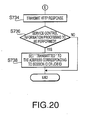
- the process judges whether the received HTTP request is a service activation instruction (S702).
- This "service activation instruction” is transmitted by the MFP 10 in S202 (see Fig. 10).
- S702 if the request is a service activation instruction (S702: YES), a session ID is generated, transmission data showing this session ID is generated, resources to execute the service are reserved, and the relevant process is activated (S708). Then, the process proceeds to S734.
- the process activated here refers to a session process (see Fig. 21), which will be described hereinbelow.
- S702 if the request is determined not to be a service activation instruction (S702: NO), the process judges whether the HTTP request is a service termination instruction (S710).
- This "service termination instruction” is transmitted from the MFP 10 by instructing the termination of the service operation by, for example, pressing the cancel key 51 on the MFP 10.
- S710 if the request is determined to be a service termination instruction (S710: YES), the session ID and the resources reserved in S708 are released and the process proceeds to S734 after creating transmission data indicating the service termination (S712). If the instruction is determined not to be a service termination instruction (S710: NO), the process judges whether the information related to the service (i.e., session or job) is included, or more specifically, whether it is an HTTP request transmitted by the MFP 10 during the session process or the job (any one of the UI job, the input job, and the output job) (S714).
- the information related to the service i.e., session or job
- the memory area for the information corresponding to the session ID or the job ID is specified (S724).
- S724 If the memory area is not specified in S724 (S726: NO), the process proceeds to S720, generates an error notification information, and proceeds to the S734. If the memory area can be specified (S726: YES), the process judges whether the information, which should be returned to the MFP 10, exists within the memory area (S728).
- the information generated through S708, S712, S720, S730, and S732 is returned to the MFP 10 as an HTTP response.
- the data generated in S708 as an HTP response is received by the MFP 10 in S208 (see Fig. 10).
- the data generated in S712 indicating a service termination is received by the MFP10 in S208 (see Fig. 10), and is to be determined as "YES” in S222.
- an error notification generated in S720 is received by the MFP 10 in S208, is determined as "NO” in S222, and the process in S224 is executed accordingly.
- "no instruction" information generated in S730 is received by the MFP 10 in S208, and is determined as "YES” in S220.
- the MFP control instruction generated in S732 will have different contents in each job, which will be described hereinbelow, and is received by the MFP 10 during a corresponding job, respectively.
- a service control information process which is from S714 to S732, is executed, or in other words, if it has been determined as "NO" in S710 (S736: YES), the current function server process is terminated, after the memory address corresponding to the session ID or the job ID (S738) is set as "transmission completed”. If the service control information process has not been executed (S736: NO), the current function server process is terminated without setting the memory address.
- This service control information process refers to an information transfer process in a session or a job between the MFP 10 and the function server 30, described in S714 to S732.
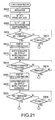
- a session process which is executed in parallel with the function server process will be explained.
- a session process regarding a translation copy service will be described as an example.
- a UI job activation instruction is output as an MFP instruction.
- a process is executed to write the UI job activation instruction in the memory area, in which return information is stored, as well as the job ID and the destination address for communication.
- the MFP control instruction is generated in S732 (see Fig. 19), and transmitted as an activation instruction to the MFP 10 in S734 (see Fig. 20).
- This activation instruction is received on the MFP 10 in S208 (see Fig. 10), and based on this, the UI job is activated on the MFP 10 (S254).
- the process judges whether a parameter input from the MFP 10 has been completed.
- the parameter is obtained from the MFP 10, and it is notified to the current session process. If there is no notification of the parameter acquisition from the UI job, it is determined that the parameter input from the MFP 10 has been completed.
- S808 if the parameter input is not completed (S808: NO), the process judges whether the UIjob was terminated (S810). As explained below, in the UIjob activated in S804, if acquisition of the parameter from the MFP 10 was not executed normally, the UI job itself is terminated (completed), and it is notified to the current session process. Therefore, if notification of termination is issued from the UI job in S810, it is determined that the UI job is terminated.
- a scan job which is a type of an input job on the service, is activated (S812). This scan job is a process executed in parallel with the current session process, which will be described in detail hereinbelow.
- the scan (input) job activation instruction is output as an MFP instruction (S814).
- a process is executed to write the scan job activation instruction in the memory area, in which return information is stored, as well as the job ID and the destination address for communication.
- the MFP control instruction is generated in S732 (see Fig. 19), and transmitted as an activation instruction to the MFP 10 in S734 (see Fig. 20).
- This activation instruction is received on the MFP 10 in S208 (see Fig. 10), and based on this, the input job is activated on the MFP 10.
- the process judges whether preparation of the scanner (i.e., the reading unit 13) on the MFP 10 is completed.
- a notification of the completion of the scanner preparation on the MFP 10 is received, and it is notified to the current session process. Therefore, in S816, if notification of the completion of the scanner preparation is issued from the scan job, it is determined that the scanner preparation on the MFP 10 has been completed.
- S816 if it has been determined that the scanner preparation is not completed on the MFP 10 (S816: NO), the process judges whether the scan job is terminated (S818).
- the scan job activated in S812 if notification that the scanner preparation has been completed on the MFP 10 cannot be received normally, the scan job itself is terminated (completed), and it is notified to the current session process. Therefore, in S818, if notification of termination is issued from the scan job, it is determined that the scan job is terminated.
- a print job which is a type of an output job of the service, is activated (S820). This print job is a process executed in parallel with the current session process, which will be described in detail hereinbelow.
- the print (output) job activation instruction is output as an MFP instruction (S822).
- a process is executed to write the print job activation instruction in the memory area, in which return information is stored, as well as the job ID and the destination address for communication.
- the MFP control instruction is generated in S732 (see Fig. 19), and transmitted as an activation instruction to the MFP 10 in S734 (see Fig. 20).
- This activation instruction is received on the MFP 10 in S208 (see Fig. 10), and based on this, the output job is activated on the MFP 10 in S266 (see Fig. 11).
- the process judges whether preparation of the printer (i.e., the reading unit 13) on the MFP 10 is completed.
- a notification of the completion of the print preparation on the MFP 10 is received, and it is notified to the current session process. Therefore, in S824, if notification of the completion of the print preparation is issued from the scan job, it is determined that the print preparation on the MFP 10 has been completed.
- S824 if it has been determined that the print preparation is not completed on the MFP 10 (S824: NO), the process judges whether the print job is terminated (S826).
- the print job activated in S820 if indication that the print preparation has been completed on the MFP 10 cannot be received normally, the print job itself is terminated (completed), and it is notified to the current session process. Therefore, in S826, if notification of termination is issued from the print job, it is determined that the print job is terminated.
- S824 if the print preparation is completed (S824: YES), input data acquired from the MFP 10 is read (S828). If the scan job activated in S812, as the image data read by the reading unit 13 in the MFP 10 is adapted to be acquired from the MFP 10, in S828, a data area equivalent to one page, out of the data (input data) reserved and stored within the predetermined memory area, is read.
- image data is generated through a process such as OCR, translation, and print layout based on the input data read in S828.
- the text part within the image in the input data is recognized by performing an OCR process on the input data scannd in S828.
- the text part is converted to text represented in a designated language by executing a translation process to this text part.
- This translation process is executed according to the parameter obtained in the UI job activated in S804, and data is converted to the language indicated in this parameter.
- image data for printing is generated by setting the designated print layout with regards to the text part recognized.
- the image data generated in S830 is output (S832).
- a process is executed to write the image data generated in S830 in the memory area, as well as the job ID and the destination address for communication.
- a print command adapted for the MFP 10 is created in S1120, in Fig. 25, and transmitted to the MFP 10.
- the process judges whether reading of all input data in S828 (data area for all pages) has been completed (S824). If it has not been completed (S834: NO), the process returns to S828. If it has been completed (S834: YES), the process judges whether output of the output data in S832 (writing in the memory area) has been completed (S836).
- a print (output) job termination instruction is output as an MFP instruction (S838).
- a process is executed to write the print job termination instruction in the memory area, in which return information is stored, as well as the job ID.
- the MFP control instruction is generated in S732, and is transmitted to the MFP 10 as a termination instruction in S734 (see Fig. 20). This termination instruction is received on the MFP 10 in S208 (see Fig. 10I, and based on this, the output job is terminated (completed) on the MFP 10 (S218).
- a scan (input) job termination instruction is output as an MFP instruction (S842).
- a process is executed to write the scan job termination instruction in the memory area, in which return information is stored, as well as the job ID.
- the MFP control instruction is generated in S732 (see Fig. 19), and transmitted to the MFP 10 as a termination instruction in S734 (see Fig. 20).
- This completion instruction is received on the MFP 10 in S208 (see Fig. 10), and based on this, the input job is terminated (completed) on the MFP 10 (S218).
- a UI job termination instruction is output as an MFP instruction (S846).
- a process is executed to write the scan job termination instruction in the memory area, in which return information is stored, as well as the job ID.
- the MFP control instruction is generated in S732 (see Fig. 19), and transmitted to the MFP 10 as a termination instruction in S734 (see Fig. 20).
- This termination instruction is received by the MFP 10 in S208 (see Fig. 10), and based on this, the UI job is terminated (completed) on the MFP 10 (S218).
- a process is executed to write the service termination instruction in the memory area, in which return information is stored.
- the MFP control instruction is generated in S732, (see Fig. 19), and transmitted to the MFP 10 as a termination instruction in S734 (see Fig. 20).
- This termination instruction is received by the MFP 10 in S208 (see Fig. 10), and based on this, the session process on the MFP 10 is terminated (S222).
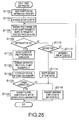
- the process waits until an MFP job instruction inquiry is received from the MFP 10 (S902). Then, a specification information request requesting information on the specifications of the MFP 10 is returned to MFP 10 as an HTTP response (S930).
- This specification information request is received from the MFP 10 by the process in S314 (see Fig. 12), and the MFP 10, which received this request, transmits the specification information through the process in S320.
- the process waits for transmission of the specification information from the MFP 10 as an HTTP request.
- a parameter request instruction requesting a parameter setting necessary to execute the service is returned to the MFP 10 as an MFP instruction (S904).
- the "MFP job instruction inquiry" received in S902 is an HTTP request transmitted from the MFP 10 in S312 (see Fig. 12).
- the MFP instruction transmitted in S904 is an HTTP response received by the MFP 10 in S314, to which the service I/F information 36 (for example, a translation copy service) is added.
- the MFP 10, which has received this MFP instruction stores the parameter in the transmission data storage area in S316 through S320 and transmits the parameter as an HTTP response in S312.
- the error count is initialized (S906).
- a counter for counting the occurrence when a parameter cannot be normally received is reset (set to "0").
- S910 if the parameter cannot be received normally (S910: NO), the process judges whether this has occurred consecutively for a predetermined number of times (e.g., twice), based on the counter value of the error count (S912). If the parameter has not been received normally for the predetermined number of times (S912: NO), a server reception status indicating that the parameter could not be received normally (server reception failed; i.e., a reception error) is output (S914), and after the error count is incremented (S916), the process returns to S908. In S914, a process is executed to write the server reception status in the memory area, in which return information is stored. Based on the written information, an MFP control instruction is generated in S732 (see Fig.
- S910 if the parameter can be received normally (S910: YES), the server reception status indicating that the parameter was received normally (server reception successful; a normal reception) is output (S920).
- server reception successful; a normal reception is output (S920).
- a process is executed to write the service reception instruction in the memory area, in which return information is stored.
- an MFP control instruction is generated in S732 (see Fig. 19), and is transmitted to the MFP 10 as a server reception status in S734 (see Fig. 20).
- This server reception status is received by the MFP 10 in S314 (see Fig. 12), and based on this, it is verified that the parameter does not have to be re-sent by the MFP 10 (S334).
- the session process is notified of the termination of the parameter input (parameter acquisition) (S922). This notification is received by the session process in S808 (see Fig. 21).
- the process waits until the MFP job instruction inquiry is received from the MFP 10.
- the service status information is output (S926) repeatedly until the current UI job is terminated (completed) by another process (for example, S846 in Fig. 22).
- a process is executed to write the service status information in the memory area, in which return information is stored. Based on the written information, an MFP control instruction is generated in S732 (see Fig. 19), and transmitted to the MFP 10 in S734 (see Fig. 20), as service status information. (3-4) Scan Job
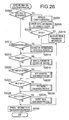
- the process waits until the MFP status information is received from the MFP 10.
- this MFP status information is received (S1002), after the error count has been initialized (S1004), the MFP parameter is output (S1006).
- the MFP status information received in S1002 is an HTTP request transmitted from the MFP 10 in S408 (see Fig. 17), and the MFP parameter is returned as an HTTP response in S1006.
- This MFP parameter has been received in S908 (see Fig. 23), and is the parameter corresponding to the MFP 10, which is the transmission source of the MFP status information received in S1002.
- the MFP reception status indicating whether the process judges that the MFP parameter was received normally is transmitted from the MFP 10, which received the MFP parameter (S1008). Specifically, if the MFP reception status indicates a reception error, it is determined that reception cannot be executed normally, and if normal reception is indicated, it is determined that the reception can be executed normally.
- S1008 if the MFP parameter cannot be received normally by the MFP 10 (S1008: NO), the process judges whether the reception failure has occurred consecutively for a predetermined number of times (e.g., twice), based on the counter value of the error count (S1010). If it has not occurred consecutively for the predetermined number of times (S1010: NO), the process returns to S1006 after the error count is incremented (S1012).
- a predetermined number of times e.g., twice
- a notification instruction is output as service status information to indicate the abnormal termination (S1016), after notifying the session process of the scan job termination (completion) (S1014).
- This notification in S1014 is received by the session process in S818 (see Fig. 21).
- a process is executed to write the notification instruction in the memory area, in which return information is stored.
- an MFP control instruction is generated in S732 (see Fig. 19), and transmitted as a notification instruction to the MFP 10 in S734 (see Fig. 20).
- This notification instruction is received by the MFP 10 in S410 (see Fig. 17).
- notification of information based on the instruction received by session in S1014 (see Fig. 29) passed from S818 (see Fig. 24) is passed by the function server 30, this instruction is determined to be completed in the MFP 10 in S412 (see Fig. 20) (S412: YES).
- S1008 if the MFP parameter has been received normally by the MFP 10 (S1008: YES), it is determined that scanner (i.e., the reading unit 13) preparation has been completed on the MFP 10 with the reception of the MFP parameter, and the session process is notified of the scanner preparation completion. This notification is received by the session process in S816 (see Fig. 21).
- an input data request requesting the transmission of data to be processed by the function server 30 is output (S1018).
- a process is executed to write the input data request in the memory area in which return information is stored (S1020).
- an MFP control instruction is generated in S732 (see Fig. 19), and transmitted to the MFP 10 as an input data request in S734 (see Fig. 20).
- This input data request is received by the MFP 10 in S420 (see Fig. 17), and with this input data request received, an operation by the user is received and input data is transmitted.
- the process waits until MFP status information is received from the MFP 10.
- MFP status information is received (S1102)
- the MFP parameter is output (S1106), after the error count is initialized (S1104).
- the MFP status information received in S1102 is an HTTP request transmitted from the MFP 10 in S508 (see Fig. 18), and the MFP parameter is returned as an HTTP response in S1106.
- This MFP parameter is received in S908 (see Fig. 23), and is the parameter corresponding to the MFP 10, which is the transmission source of the MFP status information received in S1102.
- the MFP reception status indicating whether the process judges that the MFP parameter was received normally is transmitted from the MFP 10 which received this MFP parameter (S1108), as in S1008 (see Fig. 24).
- the process judges whether this has occurred consecutively for a predetermined number of times (e.g., twice) based on the counter value of the error count (S1110). If it has not occurred consecutively for the predetermined number of times (S1110: NO), the process returns to S1106 after the error count is incremented (S1112).
- a predetermined number of times e.g., twice
- a notification instruction indicating an error termination is output as service status information (S1116) after notifying the session process of the print job termination (completion) (S1114).
- This notification in S1114 is received by the session process in S826 (see Fig. 21).
- a process is executed to write the notification instruction in the memory area, in which return information is stored.
- an MFP control instruction is generated in S732 (see Fig. 19) and transmitted as a notification instruction to the MFP 10 in S734 (see Fig. 20).
- This notification instruction is received by the MFP 10 in S510 (see Fig. 18).
- S1108 if the MFP parameter has been received normally by the MFP 10 (S1108: YES), it is determined that the print (i.e., the recording unit 14) preparation has been completed for the MFP 10 with the reception of the MFP parameter, and the session process is notified of the print preparation completion (S1118).
- This notification is received by the session process in S824 (see Fig. 21).
- S828 through S836 (see Fig. 22) is performed, and the print data is generated upon receiving this notification.
- a process is executed to write data generated in the session process to the memory area in which return information is stored (S1120), the data having been converted into print data (S832 in Fig. 22), to enable the process executed by the MFP 10.
- the process is executed to issue a print command, which can be output by the MFP 10, based on the image data written in the memory area in S832 (see Fig. 22), and to write the print command to the memory area, in which return information is stored, as well as the job ID and the destination address for communication.
- an MFP control instruction is generated in S732 (see Fig. 19), and transmitted to the MFP 10 as output data in S734 (see Fig. 20).
- This output data is received by the MFP 10 in S520 (see Fig. 18), and based on this, recording (i.e., printing) of the image represented by the output data is executed by the recording unit 14.
- the MFP 10 which has received the transmitted print data, transmits MFP status information as an HTTP request in S532 (see Fig. 18).
- This information conversion process is performed by the control unit 31 of the function server 30, functioning as a relay module for communication between each of the foregoing process (i.e., service) and the communication unit 15, and is started when information transfer is generated between both.
- the "generation of communication” refers to the transmission of information from the function server 30 to the MFP 10, or reception of information from the MFP 10.
- S2002 if the information is specification information (S2002: YES), a conversion module initialization process, which will be described hereinbelow, is executed (S2004). Although a process for loading a conversion module used in the media conversion of input/output data is executed, if an appropriate conversion module cannot be loaded, an error flag is set.
- the configuration of the conversion module is shown in Fig. 27.
- S2008 the process judges whether the error flag is set. If the error flag is set (S2008: YES), the process proceeds to S2032 after generating error transmission information (S2010). If the error flag is released (S2008: NO), the process proceeds to S2032 without generating error transmission information.
- the process judges whether the information received before the current conversion process is a parameter request (S2012).
- the parameter request is an HTTP response transmitted (returned) to the MFP 10, along with the service I/F information 36, in S904 (see Fig. 23).
- the process judges whether the information received before the current information conversion process is a parameter.
- the parameter is transmitted from the MFP 10 in S312 through S320 (see Fig. 12).
- S2016 if the process determines that the information is a parameter (S2016: YES), the process proceeds to S2020 after performing the service parameter conversion process (S2018). If the information is not a parameter (S2016: NO), the process proceeds to S2020 without performing service parameter conversion process.
- This service parameter conversion process converts the foregoing parameter in accordance with the conversion module loaded in S2004.
- the process judges whether the information received before the current information conversion process is parameter settings.
- the parameter settings refer to the MFP parameters transmitted from the MFP 10 in S1006 (see Fig. 24) and S1106 (see Fig. 25).
- S2020 if the process determines that the information is parameter settings (S2020: YES), the process proceeds to S2024 after performing the MFP parameter conversion process. If the information is not parameter settings (S2020: NO), the process proceeds to S2024 without performing the MFP parameter conversion process.
- This MFP parameter conversion process converts the foregoing parameter settings (the MFP parameters) in accordance with the conversion module loaded in S2004.
- the process judges whether information received before the current information conversion process is input data (S2024).
- the input data is transmitted from the MFP 10 in S428 (see Fig. 17).
- S2024 if the process determines that the information is input data (S2024: YES), the process proceeds to S2028 after performing an input media conversion process (S2026). If the information is not input data (S2024: NO), the process proceeds to S2028 without performing the input media conversion process. In this input media conversion process, media conversion is performed on the input data by the conversion module loaded as described above.
- the process judges whether the information received before the current conversion process is output data (S2028).
- This output data is transferred from the MFP 10, after being written in the memory area, in which return information is stored by the MFP 10, in S1102 (see Fig. 25).
- S2028 if the process determines that the information is output data (S2028: YES), the process proceeds to S2032 after performing an output media conversion process (S2030). If the information is not output data (S2028: NO), the process proceeds to S2032 without performing the output media conversion process.
- This media conversion process performs media conversion on the output data using the conversion module loaded as described above.
- specification information which is the information related to communication is generated before the foregoing information conversion process is read (S2102).
- service I/O (input and output) media information is read.
- This service I/O media information has been stored in the memory unit 16 of the function server 30 in advance, and serves as a data table, which indicates correspondence between service identification information of each service and I/O media, as shown in Fig. 29.
- the input media and the output media corresponding to the service identification information indicating the service that is to be provided to the MFP 10 is read.
- an input conversion module is loaded (S2106).
- a process is executed to select and load an appropriate conversion module in S2142 through S2168. Referring to Fig. 30, S2142 through S2168 will be described below.
- S2142 the input media of the service I/O media information read in S2104 (see Fig. 28) is referenced.
- This conversion correspondence information has been stored in the memory unit 16 of the function server 30 in advance and serves as a data table, which indicates correspondence between the service I/O media, I/O devices, conversion types, and conversion modules. Then, in S2144, information corresponding to the input media respectively referenced in S2142, among the information registered to the conversion correspondence information, is read.
- the conversion modules registered to the conversion correspondence information are not necessarily prepared to all of the I/O devices, and some I/O devices may have no module provided.
- the sections marked as "(blank)" in Fig. 31 indicate that no conversion is required (in other words, conversion modules that are not provided are not listed).
- S2154 the process judges whether at least one of the relevant conversion modules is read in S2142 through S2152. If the process determines that the module is not read (S2154: NO), the process proceeds to S2108 (see Fig. 28) after setting an error flag (S2156).
- the process judges whether at least one conversion module is selected (S2158). If there is a single module selected (S2158: NO), the process judges whether the selected module exists, which means the selected module is a module corresponding to I/O devices that are provided with conversion modules (S2160).
- S2160 if the process determines that the conversion module exists (S2160: YES), the process proceeds to S2108 (see Fig. 28) after loading the conversion module (S2162). If the process determines that the selected conversion module does not exist (S2160: NO), the process proceeds to S2108 (see Fig. 28) without loading the conversion module.
- the process judges whether a priority is provided in the specification information (S2164).
- the process judges whether the priority level is provided in the specification information in S2158.
- the input device with the highest priority level in accordance with the specification information i.e., the smallest value is selected from among the devices registered to the conversion correspondence information in correspondence to the selected conversion module (S2166).
- the conversion module at the highest position (registered in the uppermost part) in the conversion correspondence information is selected from among the input devices registered to the conversion correspondence information corresponding to the selected conversion module (S2168).
- the process proceeds to S2160. If no conversion module exists, the process proceeds to S2108 (see Fig. 28). If there is a conversion module, the process proceeds to S2162 and then to the next procedure (S2108 in Fig. 28) after loading the selected conversion module.
- the process returns to S2108 (see Fig. 28). Then, the process judges whether the error flag is set (S2108). If no conversion module has been selected in S2156, the error flag is set in S2156, therefore, the process substantially judges whether the input conversion module has been selected.
- the output conversion module is loaded (S2112).
- a process for loading the appropriate conversion module is performed similarly to the process in S2106 to S2110. Therefore, a detailed description is omitted. More specifically, however, in the process in S2112 to S2116, it is necessary to replace "input device” with “output device”, and “input media” with “output media, in the description of the process in S2106 to S2110.
- the process judges whether the error flag is set (S2114). In S2114, if the process determines that the error flag is set (S2114: YES), the current conversion module initialization process is completed, and the process proceeds to S2006 (see Fig. 26).
- specification information is read similarly to S2102 in Fig. 28 (S2174).
- S2176 the process judges whether process for all the information in the specification information has been completed (S2176). If it has not been completed (S2176: NO), the process judges whether the process object information is related to an input device (S2178).
- the process judges whether the process for all the information in the specification information has been completed in S2176 (S2176: YES), and the current specification information conversion process is completed.
- the specification information read in S2172 is converted to I/O specification information of the conversion module as required by the specification information conversion process. It is also converted to the specification information, input in S932 (see Fig. 23) if necessary.
- the configuration of the conversion module described below includes, for example, a memory area for input device service I/F information and output device service I/F information, and storage areas reserved for storing information in the process described below such as a process type storage area, a device specification information storage area, a service-end service I/F information storage area, an input parameter storage area, and output parameter storage area for predetermined parameters, as well as the main unit of the conversion process program.
- the input specification information which includes predetermined parameters is passed to the UI job, when used as an output conversion module, and becomes the input specification information in the conversion process executed by the conversion process program.
- the output specification information is passed to the UI job, when used as an input conversion module, and becomes the output specification information in the conversion process executed by the conversion process program.
- the input device service I/F information is transmitted to the MFP 10 when used as an input conversion module and defines the input device setting entries described in the same format as the foregoing service I/F information 36.
- the output device service I/F information is transmitted to the MFP 10 when used as an output conversion module and defines the output device setting entries described in the same format as the foregoing service I/F information 36.
- the process type storage area including a storage area reserved to store information, stores information indicating the direction of the conversion performed by the conversion process program. Based on the information stored therein, the conversion process program is determined whether the operation is executed as an input filter (in case "from MFP to Service") or the operation is executed as an output filter (in case "from Service to MFP").
- the device specification information storage area therein stores information defining the specifications regarding the device related to input and/or output, among the specification information received from the MFP 10.
- the service-end service I/F information storage area therein stores information defining the setting entries regarding parameters related to input and/or output, among the service I/F information 36 received from the service.
- the input parameter storage area therein stores the parameters of the input (virtual) device when performing the conversion process.
- the output parameter storage area therein stores the parameters of the output (virtual) device when performing the conversion process.
- the parameter request refers to information related to communication that has been generated before the information conversion process.
- the head setting entry in the service I/F information 36 read in S2202 becomes the process object (S2204). Then, the process judges whether the process for all the setting entries in the service I/F information 36 has been completed (S2206). If it has not been completed (S2206: NO), the process judges whether the process object setting entry is related to the input device (S2208).
- S2208 if the process determines that it is not a setting entry related to the input device (S2208: NO), the process proceeds to S2226. If the process determines that it is a setting entry related to the input device (S2208: YES), and if the input conversion module has not been loaded in S2162, in Fig. 30 (S2210: NO), the process returns to S2206, after the next setting entry becomes the process object (S2212).
- the alternative setting entry refers to a setting entry, wherein a character string "_alt_” is inserted into the head of the value of "value_Name”.
- S2216 if this "value_Name” with a value that has the character string "_alt_” inserted into the head is included, it is determined that there is an alternative setting entry.
- the definitions of devices, I/O (whether used for input or output) and values corresponding respectively to the value of "value_Name" are shown in Fig. 35.
- the process proceeds to S2226 after reading and switching the fixed setting entry corresponding to the device (S2224).
- the "fixed setting entry” is setting entry information corresponding to the I/O device stored in advance in a hard disk (not shown) within the function server 30.
- the process judges whether the process object setting entry is related to the output device (S2226).
- S2226 if the process determines that the setting entry is not related to the output device (S2226: NO), the process proceeds to S2212, and after the next setting entry becomes the process object, returns to S2206. If the process determines that the setting entry is related to the output device (S2226: YES), the process proceeds to S2212 if the output conversion module has not been loaded in S2162 in Fig. 30 (S2228: NO) and after the next setting entry becomes the process object, returns to S2206.
- the parameter in the process object setting entry is stored in the service-end service I/F information storage area of the output conversion module (S2230).
- the process judges whether the service I/F information 36 has an alternative setting entry similarly to S2216 (S2232).
- S2232 if the process determines that there is an alternative setting entry (S2232: YES), the process proceeds to S2212 after switching the setting entry to the alternative setting entry corresponding to the output device (S2234), and after the next setting entry becomes the process object, returns to S2206.
- S2234 the parameter of the process object setting entry is switched to the alternative setting entry corresponding to the output device, of which "_alt_" has been deleted.
- a parameter i.e., a service parameter
- the service parameter refers to information related to communication that is generated before the foregoing information conversion process.
- the setting entry at the head of the parameter read in S2302 becomes the process object to which the process described below is performed (S2304).
- the process judges whether the process described below for all the setting entries in the service parameter has been completed (S2306). If it is not completed (S2306: NO), the process judges whether the process object setting entry is related to the input device (S2308).
- the process judges whether the parameter in the process object setting entry has been replaced (S2316). In S2316, if the process determines that the replacement is completed (S2316: YES), the process proceeds to S2312, and after the next setting entry becomes the process object, the process returns to S2306.
- the process judges whether the parameter in the process object setting entry has been replaced (S2326).
- the process determines that the replacement is completed (S2326: YES)
- the process proceeds to S2312, and after the next setting entry becomes the process object, the process returns to S2306.
- the process proceeds to S2313, and after the next setting entry becomes the process object, returns to S2306. Subsequently, after a process through S2306 to S2328 has been performed for all the setting entries in the service parameter, it is determined in S2306 that the process for all the setting entries has been completed (S2306: YES), and the current service parameter conversion process is completed. Thus, the service parameter read in S2302 is converted by this service parameter conversion process to an I/O parameter of the conversion module or the parameter entered in S908 in Fig. 23 as required,.
- an MFP parameter i.e., a parameter setting
- S2402 an MFP parameter (i.e., a parameter setting)
- the setting entry at the head of the parameter read in S2402 becomes the process object to which the process below is performed (S2404).
- the process judges whether the process described below for all the setting entries in the MFP parameter has been completed (S2406). If it is not completed (S2406: NO), the process judges whether the process object setting entry is related to input device (S2408).
- the process judges whether the parameter in the process object setting entry has been replaced (S2416). In S2416, if the process determines that the replacement is completed (S2416: YES), the process proceeds to S2412, and after the next setting entry becomes the process object, the process returns to S2406.
- the process judges whether the parameter in the process object setting entry has been replaced (S2426). In S2426, if the process determines that the replacement is completed (S2426: YES), the process proceeds to S2412, and after the next setting entry becomes the process object, the process returns to S2406.
- the process through S2406 to S2428 is performed on all the setting entries in the service parameter, it is determined in S2405 that the process for all the setting entries has been completed (S2406: YES), and the current service parameter conversion process is completed.
- the MFP parameter read in S2402 is converted to I/O parameter in the conversion module as required, by this service parameter conversion process. It is also converted to the MFP parameter received by the MFP 10 in the process in S410 in Fig. 17 and S510 in Fig. 18, as required.
- the process judges whether the I/O conversion module is loaded (S2602, S2612).
- the conversion module is loaded in S2162 in Fig. 30 and the process judges whether the conversion module loaded is an input conversion module.
- the conversion module is loaded in S2162 in Fig. 30 and the process judges whether the conversion module loaded is an output conversion module.
- the media conversion process of the I/O data is performed by the conversion module (S2604 and S2614).
- the I/O data refers to information related to communication, which is generated before the foregoing information conversion process.
- the input data i.e., the data transmitted from the MFP 10 during the process in S428 in Fig. 17
- the input data is input as that is defined by the parameter of the input parameter storage area in the input conversion module.
- Media conversion is performed on the input data through the media conversion process, and the data obtained subsequent to the process is that defined by the parameters of the output parameter storage area in the input conversion module.
- the output data (the data output from the print job in the process in S112 in Fig. 25) is input is that defined by the parameter of the input parameter storage area in output conversion module.
- Media conversion is performed on the output data through the media conversion process, and the data obtained subsequent to the process is that defined by the parameters of the output parameter storage area in the output conversion module.
- image data representing an image composed of text can be converted to text data by performing an OCR process
- the text data can be converted to voice data by known text reading programs
- media conversion from voice data to text data can also be performed.
- a device priority setting process which is started when a predetermined operation is performed by the operation unit 12, will be described.
- priority information of an I/O device is shown in the display 52 (S2502), based on the specification information (Fig. 15) stored in the MFP 1.
- a priority selection screen for showing the priority information of the I/O device is displayed.
- the priority selection screen includes an input device selection screen, which can be switched by an operation to the operation unit 12 (see Fig. 42A), and an output device selection screen (see Fig. 42B), as well as an entry field to enter the priority level of each device, is provided for every device.
- the user can perform an input switching operation to switch to the input device selection screen (by pressing the left direction key 48), an output switching operation to switch to the output device selection screen (by pressing the right direction key 49), a specification operation to specify the I/O device (by pressing the up direction key 46 and the down direction key 47), a modification operation to modify the priority level of the specified I/O device, a confirmation operation to confirm the modified priority level (by pressing the OK key 50), a cancel operation to cancel the modification of the priority level (by pressing the cancel key 51), and the like, through the operation unit 12.
- the process returns to S2504 after the content specified by the specification operation is reflected on the priority selection screen by moving the input cursor (S2516).
- the cursor shown in the entry field in the priority selection screen is moved to another entry field located in the direction of the up direction key 46 and the down direction key 47.
- the function server 30 can provide a service to the MFP 10 by performing the I/O media conversion process illustrated in Fig. 40.
- the I/O media conversion process is performed by the I/O device adapted in the MFP 10, through the information conversion process illustrated in Fig. 26, in other words, the conversion module of which the process result (i.e., I/O data) can be obtained by the media corresponding to the function implemented to those I/O devices. Therefore, the functions for which the MFP 10 is equipped can be implemented based on the process results if the process results are obtained as described above.
- the service requiring the function, for which the MFP is not equipped per se can be received indirectly at the MFP 10, by the process results of the media corresponding to the MFP 10 (the media which can be handled by the function, which can be implemented).
- At least one function among the image data representing an image to be printed by the printer included in the MFP 10, and the image data generated by reading image through the scanner function, can be implemented by receiving the service from the function server 30.
- the function server 30 is allowed to determine whether the MFP 10 has the necessary functions (whether it is "relevant" in S2154 in Fig. 30) in S2142 through S2154 in Fig. 30, by judging based on the specification information obtained from the MFP 10 and the service I/O media information stored in the MFP 10.
- the function server 30 is not required to manage the parameter related to the I/O device in the MFP 10, and is released from the workload involved with the registration that is generated on the function server 30. As the workload increases when the amount of the MFP 10 included in the service providing system increases, the workload can be reduced drastically when the service providing system is configured as described above.
- the user must register the parameters, and if incorrect parameters are registered due to an erroneous entry by the user, for example, the entire system may cease to operate.
- a configuration such as the current service providing system where a notification of the parameter of the MFP 10 is issued by the MFP 10 itself and the subsequent process is performed based on the notification, the risk of the entire system not operating normally due to erroneous parameters is reduced .
- the function server 30 determines whether there are functions required by the MFP 10 (whether it is "relevant" in S2154 in Fig. 30) by judging based on the specification information obtained from the MFP 10 and the service I/O media information stored in the MFP 10, in S2142 to S2154 in Fig. 30.
- the function server 30 reads the conversion module corresponding to the function in subsequent process. Furthermore, if there are multiple conversion modules, which should be read at this time, selection of the conversion modules to be read can be narrowed down in S2164 in Fig. 30, based on the order of priority stipulated in the specification information.
- the user can designate the order of the priority by executing the device priority setting process shown in Fig. 41, on the function server 30, and subsequently, the function server 30 can select a conversion module based on the designated order of the priority.
- the conversion module used when performing the media conversion process in S2604 and S2614 in Fig. 40 can perform not only the media conversion process on the data transmitted to the function server 30 from the MFP 10, but also on the data transmitted to the MFP 10 from the function server 30, and the MFP 10 can receive not only the service, in which the data is transmitted in one direction between the two, but also that, in which the data is transferred in the both directions. Furthermore, as the data conversion is performed during after the I/O conversion module is loaded in S2602 and S2612 in Fig. 40, the data conversion can be implemented when conversion is needed for data in one direction.
- the user can designate the parameters in time with the reception of the parameter request from the function server 30 in S314 and S316 in Fig. 12, and the MFP 10 can receive subsequent service by transmitting the parameters to the function server 30.
- the service I/F information 36 transmitted from the function server 30 along with the parameter request, is that which has been converted into the content corresponding to the I/O device included in the MFP 10 by the function server 30, through the service I/F information conversion process in Fig. 33 and Fig. 34.
- the parameters for services which can be used by the I/O devices included in the MFP 10 can be specified in advance.
- the parameter that can be selected by the MFP 10 can be limited in advance, as in S2216 to S2224 in Fig. 33 and S2232 to S2240 in Fig. 34, by providing alternative setting entries to the service I/F information 36, when a performance required by the service for the I/O, for example, scanner resolution, is limited. Furthermore, even if there is no alternative setting entry in the service I/F information 36, as long as there is an alternative setting entry in the I/O conversion module, the parameters that can be selected by the MFP 10 can be determined by the setting entries.
- the MFP 10 is used as an image processing device in the foregoing embodiment, it can be a device other than the MFP, for example, a printer device, a scanner device, a facsimile device, and the like, so long as it is an image processing device that can receive a service provided by a function server, and can implement the function.
- the function server 30 transmits a parameter request instruction, along with the service I/F information 36.
- a process for transmitting a parameter request instruction and the service I/F information 36 can be implemented by a device independent from the function server 30 (i.e., a single device or multiple devices operating in association).
- the MFP 10 first receives the top service definition information 25, among other service definition information 25 stored in the service definition information memory unit 24 of the directory server, and selects a category, then receives service definition information 25 corresponding to the selected category and selects the service, it is not limited thereto. In other words, it can receive multiple (for example, all) pieces of the service definition information 25 stored in the service definition information memory unit 24 of the directory server 20 at once.
- the parameter, for which the setting is requested by the service I/F information 36 is not limited to that given as examples in the foregoing illustrative embodiment (resolution, and the like), and can be various things in accordance with the service content; for example, selection between black/white and color, toner concentration (printing density), and voice volume (sound volume).
- the service providing system in the foregoing illustrative embodiment includes one of each of the MFP 10, the directory server 20 and the function server 30, this configuration is merely an example to simplify the explanation, and the service providing system of the present invention can have various other configurations.
- multiple MFPs 10 can receive service definition information 25 from one common directory server 20, and can request one common function server 30 for a service.
- one directory server 20 for transmitting the top service definition information 25 and another directory server 20 for transmitting the service definition information 25 of each category can be provided by independent servers.
- a service can be received directly by the function server 30 without being transmitted through the directory server 20.
- multiple function servers 30 can be provided in the image system of the present invention. Specifically, for example, one function server 30 for transmitting the service I/F information 36 and another function server 30 for performing the service can be provided by separate servers. Furthermore, in regards to the function server 30 for performing a service, for example, one function server 30 for performing a session process and another function server 30 for performing a job process can be provided by separate servers. It should be noted that, for example, multiple function servers 30 can perform respective services, such as one function server 30 for performing service A, one function server 30 for performing service B to service D, another function server 30 for performing services E and F.
- the function server 30 that performs the service can transmit the service I/F information 36 corresponding to this service, or a function server 30 can be separate from the function server 30 performing the service. Furthermore, a conversion process can be performed by a device independent from the function server 30, and can also be performed by the directory server 20.
- a device priority setting process in Fig. 41 is performed on the MFP 10.
- this process can also be performed on the function server 30, and the priority levels can be set by the function server 30.
- the priority selection screen can be shown based on the specification information transmitted from the MFP 10, and in S2530 in Fig. 41, the priority levels specified at this time can be saved in the function server 30. Then, the order of the priority can be passed to the function server to be stored (managed).
- the directory server 20 or a part of the constituent elements of the directory server 20, and the function server 30 or a part of the constituent elements of the function server 30 can be a single device that operate in association with other devices including other constituent elements.
- the directory server 20 (or a part of the constituent elements of the directory server 20) and the function server 30 (or a part of the constituent elements of the function server 30) can be included in the MFP 10 of the service providing system.
Landscapes
- Engineering & Computer Science (AREA)
- Multimedia (AREA)
- Signal Processing (AREA)
- General Engineering & Computer Science (AREA)
- Computing Systems (AREA)
- Human Computer Interaction (AREA)
- Facsimiles In General (AREA)
- Control Or Security For Electrophotography (AREA)
- Accessory Devices And Overall Control Thereof (AREA)
- Information Transfer Between Computers (AREA)
Applications Claiming Priority (1)
| Application Number | Priority Date | Filing Date | Title |
|---|---|---|---|
| JP2004322938A JP4297034B2 (ja) | 2004-11-05 | 2004-11-05 | サービス提供システムおよびサーバ |
Publications (2)
| Publication Number | Publication Date |
|---|---|
| EP1655942A1 true EP1655942A1 (de) | 2006-05-10 |
| EP1655942B1 EP1655942B1 (de) | 2019-12-25 |
Family
ID=35784693
Family Applications (1)
| Application Number | Title | Priority Date | Filing Date |
|---|---|---|---|
| EP05256868.0A Expired - Lifetime EP1655942B1 (de) | 2004-11-05 | 2005-11-07 | Dienstbereitstellungssystem |
Country Status (4)
| Country | Link |
|---|---|
| US (1) | US7831691B2 (de) |
| EP (1) | EP1655942B1 (de) |
| JP (1) | JP4297034B2 (de) |
| CN (1) | CN1783930A (de) |
Families Citing this family (12)
| Publication number | Priority date | Publication date | Assignee | Title |
|---|---|---|---|---|
| US8169639B2 (en) | 2004-11-05 | 2012-05-01 | Brother Kogyo Kabushiki Kaisha | Communication system providing services from a server to a client device |
| JP5285069B2 (ja) | 2008-06-17 | 2013-09-11 | パナソニック株式会社 | サーバ装置、サーバ処理方法およびプログラム |
| JP2010079500A (ja) * | 2008-09-25 | 2010-04-08 | Fuji Xerox Co Ltd | 操作装置、処理システム及び操作制御プログラム |
| JP5017237B2 (ja) * | 2008-11-11 | 2012-09-05 | シャープ株式会社 | プリンタサーバ機能付画像形成装置 |
| JP5460145B2 (ja) * | 2009-07-01 | 2014-04-02 | キヤノン株式会社 | データ処理装置、データ処理装置の制御方法、及びプログラム |
| JP2011181063A (ja) * | 2010-02-02 | 2011-09-15 | Ricoh Co Ltd | 画像形成装置、入力制御方法、入力制御プログラム、及び記憶媒体 |
| JP5772435B2 (ja) * | 2011-09-21 | 2015-09-02 | ブラザー工業株式会社 | 画像処理装置 |
| JP5853655B2 (ja) | 2011-12-05 | 2016-02-09 | ブラザー工業株式会社 | 多機能機及び画面提供サーバ |
| JP6390093B2 (ja) * | 2013-12-05 | 2018-09-19 | 日本電気株式会社 | 動的デバイス配分装置、動的デバイス配分システム、動的デバイス配分方法、及び、動的デバイス配分プログラム |
| JP5974069B2 (ja) * | 2014-12-19 | 2016-08-23 | Hoya株式会社 | 内視鏡装置 |
| JP6555032B2 (ja) | 2015-09-10 | 2019-08-07 | ブラザー工業株式会社 | 印刷仲介サーバ及びプリンタシステム |
| GB201819321D0 (en) | 2018-11-27 | 2019-01-09 | Carbon Air Ltd | Cavities and active regions |
Citations (7)
| Publication number | Priority date | Publication date | Assignee | Title |
|---|---|---|---|---|
| EP1041808A2 (de) * | 1999-03-30 | 2000-10-04 | Matsushita Graphic Communication Systems, Inc. | Bildübertragungsgerät, Server, und Verfahren zum Austausch von Kommunikationsfähigkeiten |
| EP1229719A2 (de) * | 2001-01-31 | 2002-08-07 | Fuji Photo Film Co., Ltd. | Verfahren und System zur Übertragung von Bildern |
| US20020156923A1 (en) * | 2001-04-19 | 2002-10-24 | Murata Kikai Kabushiki Kaisha | Server device and network system |
| US20030117642A1 (en) * | 2001-12-20 | 2003-06-26 | Toshiba Tec Kabushiki Kaisha | Image processing service system |
| WO2003100575A2 (en) * | 2002-05-28 | 2003-12-04 | Mongonet | Method and system for facilitating paper to electronic communications |
| EP1455518A2 (de) * | 2003-03-04 | 2004-09-08 | Ricoh Company, Ltd. | Bilderzeugungsvorrichtung und Bildverarbeitungsvorrichtung |
| US20040205115A1 (en) * | 2001-03-19 | 2004-10-14 | Young Bruce M. | System and method providing an embedded web server facsimile service |
Family Cites Families (14)
| Publication number | Priority date | Publication date | Assignee | Title |
|---|---|---|---|---|
| EP0782326B1 (de) | 1995-12-25 | 2001-10-10 | Sharp Kabushiki Kaisha | Abbildungssystem |
| JP3441038B2 (ja) | 1995-12-25 | 2003-08-25 | シャープ株式会社 | 画像形成システム |
| JP3866793B2 (ja) | 1996-05-21 | 2007-01-10 | ヒューレット・パッカード・カンパニー | ネットワークシステム |
| US5909602A (en) | 1996-09-30 | 1999-06-01 | Sharp Kabushiki Kaisha | Image forming apparatus having a specimen image judging section and an image information suitability judging section |
| JPH11327717A (ja) | 1998-03-16 | 1999-11-30 | Digital Vision Laboratories:Kk | 情報出力装置および情報提供システム |
| JP2001357008A (ja) | 2000-06-14 | 2001-12-26 | Mitsubishi Electric Corp | コンテンツ検索配信装置およびコンテンツ検索配信方法 |
| JP3788731B2 (ja) | 2000-09-29 | 2006-06-21 | シャープ株式会社 | 番組配信代行システム |
| CA2431762C (en) * | 2000-12-18 | 2011-11-01 | Kargo, Inc. | A system and method for delivering content to mobile devices |
| JP2003283758A (ja) | 2002-03-27 | 2003-10-03 | Brother Ind Ltd | 端末装置、ネットワークサーバ、および通信方法 |
| JP2003288336A (ja) | 2002-03-28 | 2003-10-10 | Brother Ind Ltd | 特定機能代行システム、及び、電子機器、記憶媒体 |
| US20040160630A1 (en) * | 2003-01-20 | 2004-08-19 | Konica Minolta Holdings, Inc. | Image printing system |
| JP2004228686A (ja) | 2003-01-20 | 2004-08-12 | Konica Minolta Holdings Inc | 画像形成システム |
| JP2004252543A (ja) | 2003-02-18 | 2004-09-09 | Canon Inc | イメージスキャンシステム |
| US7933290B2 (en) * | 2004-03-30 | 2011-04-26 | Nokia Corporation | System and method for comprehensive service translation |
-
2004
- 2004-11-05 JP JP2004322938A patent/JP4297034B2/ja not_active Expired - Fee Related
-
2005
- 2005-11-07 US US11/267,597 patent/US7831691B2/en active Active
- 2005-11-07 CN CNA2005101176242A patent/CN1783930A/zh active Pending
- 2005-11-07 EP EP05256868.0A patent/EP1655942B1/de not_active Expired - Lifetime
Patent Citations (7)
| Publication number | Priority date | Publication date | Assignee | Title |
|---|---|---|---|---|
| EP1041808A2 (de) * | 1999-03-30 | 2000-10-04 | Matsushita Graphic Communication Systems, Inc. | Bildübertragungsgerät, Server, und Verfahren zum Austausch von Kommunikationsfähigkeiten |
| EP1229719A2 (de) * | 2001-01-31 | 2002-08-07 | Fuji Photo Film Co., Ltd. | Verfahren und System zur Übertragung von Bildern |
| US20040205115A1 (en) * | 2001-03-19 | 2004-10-14 | Young Bruce M. | System and method providing an embedded web server facsimile service |
| US20020156923A1 (en) * | 2001-04-19 | 2002-10-24 | Murata Kikai Kabushiki Kaisha | Server device and network system |
| US20030117642A1 (en) * | 2001-12-20 | 2003-06-26 | Toshiba Tec Kabushiki Kaisha | Image processing service system |
| WO2003100575A2 (en) * | 2002-05-28 | 2003-12-04 | Mongonet | Method and system for facilitating paper to electronic communications |
| EP1455518A2 (de) * | 2003-03-04 | 2004-09-08 | Ricoh Company, Ltd. | Bilderzeugungsvorrichtung und Bildverarbeitungsvorrichtung |
Also Published As
| Publication number | Publication date |
|---|---|
| US7831691B2 (en) | 2010-11-09 |
| JP4297034B2 (ja) | 2009-07-15 |
| US20060103875A1 (en) | 2006-05-18 |
| EP1655942B1 (de) | 2019-12-25 |
| CN1783930A (zh) | 2006-06-07 |
| JP2006135693A (ja) | 2006-05-25 |
Similar Documents
| Publication | Publication Date | Title |
|---|---|---|
| CN1182473C (zh) | 与可连接多个设备的一个网络相连接的数据处理设备 | |
| JP4270134B2 (ja) | サービス提供システム,クライアントデバイス,サーバおよびプログラム | |
| EP1655942B1 (de) | Dienstbereitstellungssystem | |
| EP1784000A1 (de) | Kommunikationssystem | |
| JP4241577B2 (ja) | サービス登録システム、サーバ、端末装置および周辺装置 | |
| US20090204411A1 (en) | Image processing apparatus, voice assistance method and recording medium | |
| EP1659770B1 (de) | Datenverarbeitungsvorrichtung, -system und -programm | |
| CN1770773B (zh) | 网络系统、目录服务器和终端装置 | |
| CN100440913C (zh) | 用于图像处理的系统、设备和服务器 | |
| JP3900176B2 (ja) | 画像データ処理装置 | |
| JP3778190B2 (ja) | 画像処理装置 | |
| JP4867196B2 (ja) | 画像処理システム,画像処理装置,サーバおよびプログラム | |
| JP4182973B2 (ja) | 情報端末装置、データ提供システム、及び、プログラム | |
| JP4297035B2 (ja) | サービス提供システム | |
| JP2006135695A (ja) | 画像処理システム,画像処理装置,サーバおよびプログラム | |
| JP4218638B2 (ja) | コンテンツ提供システム,クライアントデバイス,サーバおよびプログラム | |
| JP2007060425A (ja) | 画像処理装置、画像処理システム、及び画像処理装置の制御方法 | |
| JP4281774B2 (ja) | 通信装置 | |
| JP2006134108A (ja) | 通信システム、情報処理装置及びサーバ | |
| JP4513509B2 (ja) | ファイル取得システムおよび端末装置 | |
| JP2021170793A (ja) | 画像処理装置、ジョブ処理方法、およびプログラム | |
| JP2013223200A (ja) | データ処理装置、データ処理方法、及びプログラム | |
| JP2009271935A (ja) | 情報処理システムおよびサーバ | |
| JP2009225042A (ja) | 画像処理装置 | |
| JP2006060401A (ja) | 複合機 |
Legal Events
| Date | Code | Title | Description |
|---|---|---|---|
| PUAI | Public reference made under article 153(3) epc to a published international application that has entered the european phase |
Free format text: ORIGINAL CODE: 0009012 |
|
| AK | Designated contracting states |
Kind code of ref document: A1 Designated state(s): AT BE BG CH CY CZ DE DK EE ES FI FR GB GR HU IE IS IT LI LT LU LV MC NL PL PT RO SE SI SK TR |
|
| AX | Request for extension of the european patent |
Extension state: AL BA HR MK YU |
|
| 17P | Request for examination filed |
Effective date: 20061103 |
|
| AKX | Designation fees paid |
Designated state(s): DE FR GB |
|
| STAA | Information on the status of an ep patent application or granted ep patent |
Free format text: STATUS: EXAMINATION IS IN PROGRESS |
|
| 17Q | First examination report despatched |
Effective date: 20170215 |
|
| GRAP | Despatch of communication of intention to grant a patent |
Free format text: ORIGINAL CODE: EPIDOSNIGR1 |
|
| STAA | Information on the status of an ep patent application or granted ep patent |
Free format text: STATUS: GRANT OF PATENT IS INTENDED |
|
| INTG | Intention to grant announced |
Effective date: 20190912 |
|
| GRAS | Grant fee paid |
Free format text: ORIGINAL CODE: EPIDOSNIGR3 |
|
| GRAA | (expected) grant |
Free format text: ORIGINAL CODE: 0009210 |
|
| STAA | Information on the status of an ep patent application or granted ep patent |
Free format text: STATUS: THE PATENT HAS BEEN GRANTED |
|
| AK | Designated contracting states |
Kind code of ref document: B1 Designated state(s): DE FR GB |
|
| REG | Reference to a national code |
Ref country code: GB Ref legal event code: FG4D |
|
| REG | Reference to a national code |
Ref country code: DE Ref legal event code: R096 Ref document number: 602005056501 Country of ref document: DE |
|
| REG | Reference to a national code |
Ref country code: DE Ref legal event code: R097 Ref document number: 602005056501 Country of ref document: DE |
|
| PLBE | No opposition filed within time limit |
Free format text: ORIGINAL CODE: 0009261 |
|
| STAA | Information on the status of an ep patent application or granted ep patent |
Free format text: STATUS: NO OPPOSITION FILED WITHIN TIME LIMIT |
|
| 26N | No opposition filed |
Effective date: 20200928 |
|
| GBPC | Gb: european patent ceased through non-payment of renewal fee |
Effective date: 20201107 |
|
| PG25 | Lapsed in a contracting state [announced via postgrant information from national office to epo] |
Ref country code: FR Free format text: LAPSE BECAUSE OF NON-PAYMENT OF DUE FEES Effective date: 20201130 |
|
| PG25 | Lapsed in a contracting state [announced via postgrant information from national office to epo] |
Ref country code: GB Free format text: LAPSE BECAUSE OF NON-PAYMENT OF DUE FEES Effective date: 20201107 |
|
| PGFP | Annual fee paid to national office [announced via postgrant information from national office to epo] |
Ref country code: DE Payment date: 20211013 Year of fee payment: 17 |
|
| REG | Reference to a national code |
Ref country code: DE Ref legal event code: R119 Ref document number: 602005056501 Country of ref document: DE |
|
| PG25 | Lapsed in a contracting state [announced via postgrant information from national office to epo] |
Ref country code: DE Free format text: LAPSE BECAUSE OF NON-PAYMENT OF DUE FEES Effective date: 20230601 |