EP1656808B1 - Verfahren und vorrichtung zur auswahl eines mbms-funkträgertyps - Google Patents
Verfahren und vorrichtung zur auswahl eines mbms-funkträgertyps Download PDFInfo
- Publication number
- EP1656808B1 EP1656808B1 EP04748544A EP04748544A EP1656808B1 EP 1656808 B1 EP1656808 B1 EP 1656808B1 EP 04748544 A EP04748544 A EP 04748544A EP 04748544 A EP04748544 A EP 04748544A EP 1656808 B1 EP1656808 B1 EP 1656808B1
- Authority
- EP
- European Patent Office
- Prior art keywords
- combination
- transport channels
- common
- logical
- mobile terminal
- Prior art date
- Legal status (The legal status is an assumption and is not a legal conclusion. Google has not performed a legal analysis and makes no representation as to the accuracy of the status listed.)
- Expired - Lifetime
Links
Images




Classifications
-
- H—ELECTRICITY
- H04—ELECTRIC COMMUNICATION TECHNIQUE
- H04W—WIRELESS COMMUNICATION NETWORKS
- H04W4/00—Services specially adapted for wireless communication networks; Facilities therefor
- H04W4/06—Selective distribution of broadcast services, e.g. multimedia broadcast multicast service [MBMS]; Services to user groups; One-way selective calling services
-
- H—ELECTRICITY
- H04—ELECTRIC COMMUNICATION TECHNIQUE
- H04B—TRANSMISSION
- H04B7/00—Radio transmission systems, i.e. using radiation field
- H04B7/24—Radio transmission systems, i.e. using radiation field for communication between two or more posts
- H04B7/26—Radio transmission systems, i.e. using radiation field for communication between two or more posts at least one of which is mobile
-
- H—ELECTRICITY
- H04—ELECTRIC COMMUNICATION TECHNIQUE
- H04W—WIRELESS COMMUNICATION NETWORKS
- H04W72/00—Local resource management
- H04W72/30—Resource management for broadcast services
-
- H—ELECTRICITY
- H04—ELECTRIC COMMUNICATION TECHNIQUE
- H04W—WIRELESS COMMUNICATION NETWORKS
- H04W76/00—Connection management
- H04W76/20—Manipulation of established connections
- H04W76/27—Transitions between radio resource control [RRC] states
-
- H—ELECTRICITY
- H04—ELECTRIC COMMUNICATION TECHNIQUE
- H04W—WIRELESS COMMUNICATION NETWORKS
- H04W76/00—Connection management
- H04W76/40—Connection management for selective distribution or broadcast
-
- H—ELECTRICITY
- H04—ELECTRIC COMMUNICATION TECHNIQUE
- H04W—WIRELESS COMMUNICATION NETWORKS
- H04W88/00—Devices specially adapted for wireless communication networks, e.g. terminals, base stations or access point devices
- H04W88/12—Access point controller devices
-
- H—ELECTRICITY
- H04—ELECTRIC COMMUNICATION TECHNIQUE
- H04L—TRANSMISSION OF DIGITAL INFORMATION, e.g. TELEGRAPHIC COMMUNICATION
- H04L41/00—Arrangements for maintenance, administration or management of data switching networks, e.g. of packet switching networks
- H04L41/08—Configuration management of networks or network elements
Definitions
- the present invention relates to a method and apparatus for providing a service, such as a multimedia broadcast/multicast service (MBMS), in a universal mobile telecommunications system (UMTS), and more particularly, to a method and apparatus for selecting a radio bearer type according to a count of mobile terminals obtained through responses to a service response request message from a network.
- a service such as a multimedia broadcast/multicast service (MBMS)
- UMTS universal mobile telecommunications system
- the universal mobile telecommunications system is a third-generation mobile communications system evolving from the global system for mobile communications system, which is the European standard.
- the UMTS is aimed at providing enhanced mobile communications services based on the GSM core network and wideband code-division multiple-access technologies.
- FIG. 1 A conventional UMTS network structure 1 is illustrated in FIG. 1 .
- One mobile terminal 2, or user equipment (UE) is connected to a core network 4 through a UMTS terrestrial radio access network (UTRAN) 6.
- the UTRAN 6 configures, maintains, and manages a radio access bearer for communications between the UE 2 and core network 4 to meet end-to-end quality-of-service requirements.
- the UTRAN 6 consists of at least one radio network subsystem 8, including one RNC 10 acting as an access point to the core network, and at least one Node B 12 managed by a corresponding RNC.
- the RNCs 10 are logically classified as controlling RNCs, which allocate and manage common radio resources for a plurality of UEs 2 of a cell, and serving RNCs, which allocate and manage dedicated radio resources for a specific UE of a cell.
- Each Node B 12 manages at least one cell.
- the core 4 network may be divided according to the type of service provided, namely, a circuit-switched (CS) domain and a packet-switched (PS) domain.
- the CS domain includes a mobile switching center (MSC) 14 acting as an access point to the UTRAN 6 and a gateway mobile switching center (GMSC) 16 acting as an access point to an external network.
- the PS domain includes a serving GPRS support node (SGSN) 18 acting as an access point to the UTRAN 6 and a gateway GPRS support node (GGSN) 20 acting as an access point to the external network.
- SGSN serving GPRS support node
- GGSN gateway GPRS support node
- the core network's 4 access point is the MSC 14 via an lu-CS interface.
- the core network's 4 access point is the SGSN 18 via an lu-PS interface.
- a visitor location register (VLR) 22 and a home location register (HLR) 24 manage user registration information.
- the air interface (Uu) between the UE 2 and the UTRAN 6 includes a radio resource control (RRC) layer (not shown) for the establishment, reconfiguration, and release of radio bearers, for example a service providing data transfer between the UE and an RNC 10 of the UTRAN.
- RRC radio resource control
- a UE 2 is said to be in the RRC-connected mode when the RRC layer of a UE and the RRC layer of a corresponding RNC 10 are connected, thereby providing for bi-directional transfer of RRC messages. If there is no RRC connection, the UE 2 is said to be in the RRC-idle mode.
- the serving RNC 10 of an RRC-connected UE 2 recognizes and manages the UE by cells.
- An RRC-idle UE 2 on the other hand, cannot be recognized by cells and can be considered invisible to the RNC 10. Therefore, the MSC 14 or SGSN 18 of the core network 4 manages RRC-idle UEs 2 using larger areas, such as location units or routing area units.
- a UE 2 Upon power-up, a UE 2 is in the RRC-idle mode by default. When necessary, an RRC-idle UE 2 transitions to the RRC-connected mode through an RRC connection procedure.
- An RRC connection is established, for example, when uplink data transfer is needed to make a call or to respond to a paging message from the RNC 10.
- the RRC connection connects the UE 2 to the RNC 10 of the UTRAN 6.
- the UE in order to receive a service, for example MBMS, the UE must be connected to the core network 4 (MSC 14 or SGSN 18). Connection of the UE 2 to the core network 4 for control of the service is achieved by a "signaling connection," either a CS connection or PS connection according to the type of service.
- a CS connection which is established between the UE 2 and MSC 14, consists of an RRC connection and an lu-CS connection.
- the UE2 When there is a CS connection, the UE2 is said to be in the circuit mobility management (CMM) connected, or CMM-connected, mode.
- CMM circuit mobility management
- the UE 2 When there is no such connection, the UE 2 is said to be in the CMM-idle mode.
- a PS connection which is established between the UE 2 and SGSN 18, consists of an RRC connection and an lu-PS connection.
- the UE 2 When there is a PS connection, the UE 2 is said to be in the packet mobility management (PMM) connected, or PMM-connected, mode. When there is no such connection, the UE 2 is said to be in the PMM-idle mode.
- PMM packet mobility management
- One UE 2 may have two signaling connections, for example both a CS connection and a PS connection, but only one RRC connection.
- An RRC-connected UE 2 may have no signaling connection, whereby the UE is managed by the RNC 10 only and cannot receive services.
- both an RRC connection and an lu-PS connection, or a PS connection is required through which a UE 2 is connected to the SGSN 18.
- An MBMS-joined UE 2 remains in the RRC-connected mode by maintaining the PS connection.
- the UE 2 transitions to the RRC-idle mode by severing the PS connection.
- the SGSN 18 When MBMS data transfer is eminent and a UE2 is standing by, for example intending to receive data of the MBMS, the SGSN 18 sends a "session start" message to the RNC 10.
- the RNC 10 transmits an MBMS notification message to the UE 2 at least once before the MBMS data is transferred.
- the MBMS notification message is transmitted via a combination of common logical and transport channels.
- the RNC 10 recognizes, or counts, the number of UEs 2 joining the MBMS within a cell.
- the counted number of UEs 2 determines whether a radio bearer will be established for providing a specific MBMS, and if so, whether the established radio bearer will be a point-to-multipoint (p-t-m) type or a point-to-point (p-t-p) type.
- p-t-m point-to-multipoint
- p-t-p point-to-point
- FIG. 2 illustrates a conventional connection of a plurality of UEs 2 to a core network 4 providing an MBMS.
- the RNC 10 first receives information from the SGSN 18 to determine the number of UEs 2 intending to receive the MBMS. Recognizing the presence of UEs 2 that join the MBMS and remain in the RRC-connected mode due to another service, the SGSN 18 provides the RNC 10 with information regarding PMM-connected UEs 2.
- the SGSN 18 provides "initial" UE 2 identification information, such as an intrinsic identifier or ID assigned to each UE, and the MBMS identification, or service ID information, of the specific service that the UE is joining.
- the RNC 10 stores the initial UE IDs of the UEs 2 joining the MBMS and thereby counts the number of RRC-connected UEs among a plurality of UEs joining the MBMS.
- the initial UE ID enables the identification of a UE 2 regardless of its RRC connection status, thereby enabling identification of UEs by a core network 4 entity such as the MSC 14 or SGSN 18.
- the initial UE ID may be an international mobile subscriber identity (IMSI) enabling a subscriber's identification worldwide, a temporary mobile subscriber identity (TMSI) allocated by the MSC 14 to a UE 2 having a CS connection for security of the IMSI, or a packet TMSI allocated by the SGSN 18 to a UE having a PS connection.
- IMSI international mobile subscriber identity
- TMSI temporary mobile subscriber identity
- RRC-idle UEs 2 are invisible to the SGSN 18, a UE having transitioned to the RRC-idle mode after joining the MBMS cannot be counted by the RNC 10 in the same manner as an RRC-connected UE.
- the RNC 10 receives an RRC-connection request message from each RRC-idle UE receiving an MBMS response request message via a combination of common logical and transport channels.
- the RRC-connection request message is transmitted by a UE to inform the RNC 10 of its presence using a combination of common logical and transport channels.
- the RRC-connection request message includes the service ID of the MBMS that the UE 2 intends to receive.
- the RNC 10 adds the number of RRC-idle UEs 2 to the number of RRC-connected UEs, which is a number included in the PMM-connected UE information received from the SGSN 18, in order to determine the total number of UEs intending to receive the MBMS in each cell.
- the RNC 10 compares the total to a threshold. If the number of UEs 2 intending to receive the MBMS in a cell is less than the threshold, the RNC 10 establishes a p-t-p MBMS radio bearer. If the number of UEs 2 intending to receive the MBMS in a cell is greater than the threshold, the RNC 10 establishes a p-t-m MBMS radio bearer. No MBMS radio bearer is established for the cell if there is no UE 2 intending to receive the service.
- the RNC 10 After determining the appropriate MBMS radio bearer, the RNC 10 informs the UEs 2 accordingly. If a p-t-p MBMS radio bearer is established for a specific MBMS, each UE 2 intending to receive the service transitions to the RRC-connected mode. On the other hand, if a p-t-m MBMS radio bearer is established, it is unnecessary for all the UEs 2 to remain in the RRC-connected mode since MBMS data reception by RRC-idle UEs is enabled when a p-t-m radio bearer is established.
- the RNC 10 informs the SGSN 18 of the established MBMS radio bearer.
- the SGSN 18 In transmitting MBMS data via the established MBMS radio bearer, the SGSN 18 first transmits the session start message, followed after a time interval by the MBMS data. The time interval is sufficient for the RNC 10, in response to the session start message, to send an MBMS notification to the UEs 2, to count the UEs, and to determine the MBMS radio bearer.
- an RNC 10 In performing the MBMS counting function to determine the appropriate MBMS radio bearer, an RNC 10 adopting the conventional method receives information regarding RRC-connected UEs.
- the number of RRC-idle UEs 2 is determined by the number of UEs that respond to an MBMS response request message with an RRC-connection request message.
- a CS connection is established, for example for carrying out a voice communication function, by an MBMS-joined UE2 having transitioned to the RRC-idle mode to stand by for MBMS notification, an RRC connection exists but without a PS connection.
- the RRC-connected but PMM-idle UE 2 is omitted from the RNC's 10 count since the SGSN 18 is unable to inform the RNC of the UE's presence.
- An incorrect count of UEs 2 may be a serious problem if there are very few RRC-idle UEs among those joining an MBMS in a cell. A particular problem may occur if the number of RRC-idle UEs 2 is below the threshold for triggering a p-t-m radio bearer.
- the RNC 10 is unable to recognize the majority of UEs since they are in the RRC-connected and PMM-idle mode. Since the RNC 10 counts only one UE 2 intending to receive the MBMS with the conventional method, a p-t-p radio bearer is established. A p-t-p radio bearer is an insufficient resource for the majority of the UEs 2 in the cell to receive the MBMS.
- the RNC 10 would stop MBMS data transfer altogether since no UEs 2 intending to receive the MBMS would be counted using the conventional method.
- VODAFONE GROUP "Mechanism for counting and re-counting MBMS users in idle/URA_PCH-like states”. [Online] 16 January 2003, XP002996227 discloses a recounting of the number of idle mode MBMS users in a point-to-multipoint cell, whereby the MBMS Notification is sent periodically and responses are counted in order to periodically update the selected MBMS radio bearer type according to the actual count of MBMS users.
- NOKIA "MBMS signalling flows for UEs in idle mode" [Online] 15 November 2002;
- XP002996229 discloses a signaling flow for counting UEs in RCC IDLE mode.
- the UTRAN broadcasts a MBMS Notification Counting message which is received by all UEs in RCC IDLE mode.
- the UEs responsively return an MBMS Group Membership Report message to the UTRAN.
- the UTRAN selects the usage of point-to-multipoint or point-to-point channels and thereafter the UTRAN broadcasts an MBMS Notification "Counting Stopped” Message to said UEs in the given cell.
- 3GPP TS 25.346 V2.0.0 "3rd Generation partnership project, technical specification group” 3GPP TS 25.356 V2.0.0, [Online] June 2003, XP002996228 is a standard associated with the provision of Multimedia Broadcast Multicast Service (MBMS) in mobile communication systems. It defines a requirement that the radio access network (RAN) should have means to calculate the number of user equipment (UEs) joined to a specific MBMS service, so that a usage decision between a point-to-point (p-t-p) or a point-to-multipoint (p-t-m) channel over the radio interface can be made.
- RAN radio access network
- the present invention is directed to a method and apparatus for selecting a radio bearer type for providing a service to a plurality of mobile terminals according to a count of mobile terminals obtained through responses to a service response request message from a network.
- the invention is directed to a method and apparatus that facilitates selecting an MBMS radio bearer type according to a count that includes RRC-connected mobile terminals that still need to establish a connection in order to receive the service such that the radio bearer type established is sufficient to provide the service to all mobile terminals desiring to receive the service.
- the present invention is embodied in a method and apparatus that provides information to a network to facilitate determination of the appropriate radio bearer type to provide a service to a plurality of mobile terminals by counting those mobile terminals that either have no existing connection with the network or have an existing connection with the network that is not sufficient to receive a desired service, while excluding from the count those mobile terminals that have an existing connection with the network that is sufficient to receive the service.
- mobile terminals that are either in the RRC-idle state or in the RRC-connected state but the PMM-idle state provide a response to a response request message from a network that facilitates an accurate count of those mobile terminals desiring to receive a point-to-multipoint service in a mobile communication system.
- a method for receiving a service in a mobile terminal.
- the method includes receiving a response request message associated with the service from a network and transmitting to the network either a connection request message or a notification response message.
- a connection request message is transmitted if no connection for exchanging control data with the network already exists.
- a notification response message is transmitted if a connection for exchanging control data with the network already exists.
- the network counts the number of connection request messages and notification response messages received to determine the appropriate radio bearer to establish.
- a mobile terminal When determining whether to transmit a connection request message or a notification response message, a mobile terminal is considered to be in an RRC-idle state if no connection for exchanging control data with the network exists and considered to be in an RRC-connected state if a connection for exchanging control data with the network already exists, regardless of whether the connection is sufficient to receive the service. Therefore, mobile terminals desiring to receive the service that have no existing connection with the network will transmit a connection request message while mobile terminals desiring to receive the service that have an existing connection with the network will transmit a notification response message. Since all mobile terminals desiring to receive the service will provide a response, an accurate count of mobile terminals is facilitated.
- the service may be a point-to-multipoint service.
- the mobile terminal has joined the service in a mobile telecommunication system.
- the response request message is received via a combination of common logical and common transport channels, a combination of dedicated logical and common transport channels, or a combination of dedicated logical and dedicated transport channels. It is further contemplated that the combination of channels is based on an operational state of the mobile terminal.
- the response request message is received via a combination of common logical and common transport channels when the mobile terminal is in the CELL_PCH state or the URA_PCH state.
- the response request message is received via a combination of common logical and common transport channels or a combination of dedicated logical and common transport channels when the mobile terminal is in the CELL_FACH state.
- the response request message is received a combination of common logical and common transport channels, a combination of dedicated logical and common transport channels, or a combination of dedicated logical and dedicated transport channels when the mobile terminal is in the CELL_DCH state.
- the notification response message is transmitted via a combination of common logical and common transport channels, a combination of dedicated logical and common transport channels, or a combination of dedicated logical and dedicated transport channels. It is further contemplated that the combination of channels is based on an operational state of the mobile terminal.
- the notification response message is transmitted via a combination of common logical and common transport channels when the mobile terminal is in the CELL_PCH state or the URA_PCH state.
- the notification response message is transmitted via a combination of common logical and common transport channels or a combination of dedicated logical and common transport channels when the mobile terminal is in the CELL_FACH state.
- the notification response message is transmitted via a combination of common logical and common transport channels, a combination of dedicated logical and common transport channels, or a combination of dedicated logical and dedicated transport channels when the mobile terminal is in the CELL_DCH state.
- a notification response message is transmitted only if a connection for exchanging control data with the network already exists and no connection for exchanging packet-switched control data with the network exists. If a connection for exchanging packet-switched control data with the network already exists, no message is transmitted.
- the network counts the number of connection request messages and notification response messages received and utilizes additional information regarding the number of mobile terminals having an existing network connection that is sufficient to receive the service to determine the appropriate radio bearer to establish.
- a method for receiving a multimedia service in a mobile terminal that has joined the service in a telecommunication system.
- the method includes receiving a response request message from a network and transmitting a notification response message to the network if a connection for exchanging control data with the network already exists and it is desired to receive the service.
- the network utilizes the notification response message when determining which radio bearer to set.
- a mobile terminal When determining whether to transmit a notification response message, a mobile terminal is considered to be in an RRC-idle state if no connection for exchanging control data with the network exists and considered to be in an RRC-connected state if a connection for exchanging control data with the network already exists, regardless of whether the connection is sufficient to receive packet-switched control data. Therefore, mobile terminals desiring to receive the service that have an existing connection to the network will transmit a notification response message. Preferably, the mobile terminal has joined the service in a mobile telecommunication system.
- a method for providing a service to a plurality of mobile terminals having joined the service in a mobile telecommunication system.
- the method includes transmitting a response request message to at least one terminal, receiving a least one connection request message or notification response message from a mobile terminal, comparing the sum of the number of connection request messages received and the number of notification response messages received to a predetermined threshold value, and determining a type of radio bearer according to the comparison.
- a connection request message is received from a mobile terminal not yet having a connection for exchanging control data with a core network.
- a notification response message is received from a mobile terminal already having a connection for exchanging control data with a core network. It is contemplated that the service may be a point-to-multipoint service.
- a point-to-point radio bearer is determined if the sum of the number of connection request messages received and the number of notification response messages received is less than the threshold value.
- a point-to-multipoint radio bearer is determined if the sum of the number of connection request messages received and the number of notification response messages received is greater than or equal to the threshold value.
- a response request message is transmitted to each mobile terminal having no connection for exchanging control data with a core network via a combination of common logical and common transport channels. It is further contemplated that a response request message is transmitted to each mobile terminal having a connection for exchanging control data with a core network via one of a combination common logical and common transport channels, a combination of dedicated logical and common transport channels, and a combination of dedicated logical and dedicated transport channels. Moreover, it is contemplated that the combination of channels is based on an operational state of the mobile terminal to which the response request message is transmitted.
- the response request message is transmitted via a combination of common logical and common transport channels when the mobile terminal is in the CELL_PCH state or the URA_PCH state.
- the response request message is transmitted via a combination of common logical and common transport channels or a combination of dedicated logical and common transport channels when the mobile terminal is in the CELL_FACH state.
- the response request message is transmitted via a combination of common logical and common transport channels, a combination of dedicated logical and common transport channels, or a combination of dedicated logical and dedicated transport channels when the mobile terminal is in the CELL_DCH state.
- a method for providing a service to a plurality of mobile terminals having joined the service in a mobile telecommunication system.
- the method includes receiving an indication from a core network of the number of mobile terminals having connections for exchanging packet-switched control data with the core network, transmitting a response request message to at least one terminal, receiving at least one connection request message or notification response message from a mobile terminal, comparing the sum of the number of mobile terminals having connections for exchanging packet-switched control data with the core network, the number of connection request messages received and the number of notification response messages received to a predetermined threshold value, and determining a type of radio bearer according to the comparison.
- a connection request message is received from a mobile terminal not having a connection for exchanging control data with a core network.
- a notification response message is received from a mobile terminal having a connection for exchanging control data with a core network but no connection for exchanging packet-switched control data.
- No response is received from a mobile terminal having a connection for exchanging packet-switched control data with a core network.
- the service is a point-to-multipoint service.
- a point-to-point radio bearer is determined if the sum of the number of mobile terminals having connections for exchanging packet-switched control data with the core network, the number of connection request messages received and the number of notification response messages received is less than the threshold value.
- a point-to-multipoint radio bearer is determined if the sum of the number of mobile terminals having connections for exchanging packet-switched control data with the core network, the number of connection request messages received and the number of notification response messages received is greater than or equal to the threshold value.
- a mobile communication device for receiving a service from a network.
- the mobile communication device includes an RF module, an antenna, a keypad, a display, a storage unit, and a processing unit.
- the antenna and RF module receive a response request from the network and transmits a connection response to the network.
- the keypad allows a user to enter information.
- the display conveys information to a user.
- the storage unit stores a connection status for exchanging control data with the network.
- the processing unit performs the methods of the present invention to process the response request received from the network and generates the connection response based on the connection status.
- connection response includes a connection request message if the connection status indicates no connection for exchanging control data with the network exists.
- the connection response includes a notification response message if the connection status indicates a connection for exchanging control data with the network already exists.
- connection response includes a notification response message only if the connection status indicates a connection for exchanging control data with the network already exists and no connection for exchanging packet-switched control data with the network exists and no connection response is transmitted if the connection status indicates a connection for exchanging packet-switched control data with the network already exists.
- a network for providing a service to a plurality of mobile terminals having joined the service in a mobile telecommunication system.
- the network includes a transmitter, a receiver and a controller.
- the transmitter transmits a response request message to at least one mobile terminal.
- the receiver receives at least one connection request message or notification response message from a mobile terminal.
- the controller performs the methods of the present invention to compare the sum of the number of connection request messages received and the number of notification response messages received to a predetermined threshold value in order to determine a type of radio bearer according to the comparison.
- the controller performs the methods of the present invention to receive an indication from a core network of the number of mobile terminals having connections for exchanging packet-switched control data with the core network and compare the sum of the number of mobile terminals having connections for exchanging packet-switched control data with the core network, the number of connection request messages received and the number of notification response messages received to a predetermined threshold value in order to determine a type of radio bearer according to the comparison.
- the present invention relates to a method and apparatus for selecting a radio bearer type for providing a service to a plurality of mobile terminals according to a count of mobile terminals obtained through responses to a service response request message from a network, the count including network-connected mobile terminals that still need to establish a connection in order to receive the service.
- the present invention is illustrated with respect to a mobile terminal, it is contemplated that the present invention may be utilized anytime it is desired to select a radio bearer type for providing a service to a plurality of mobile communication devices by performing a counting operation that includes those devices that have an existing connection to a network.
- an RNC 10 Upon receiving a "session start" message from a core network 4 for a specific service, for example an MBMS, an RNC 10 transmits a service notification, for example an MBMS notification, to mobile terminals 2, for example UEs, in a cell desiring to receive the service.
- a service notification for example an MBMS notification
- mobile terminals 2 for example UEs
- an MBMS response request message is transmitted together with the MBMS notification and includes a service ID enabling the receiving UE 2 to ascertain to which MBMS the response request message corresponds.
- the MBMS response request message is transmitted to UEs 2 in the RRC-connected mode as well as to those in the RRC-idle mode.
- a combination of common logical and transport channels is used to transmit the MBMS response request message to RRC-idle UEs 2.
- a combination of dedicated logical and common transport channels and dedicated logical and dedicated transport channels is used to transmit the MBMS response request message to RRC-connected UEs 2.
- the transmission of the MBMS response request message to the RRC-connected UEs 2 may use the same common logical and transport channels used for transmission to the RRC-idle UEs or may use another combination of these channels.
- the combination of channels is based on an operational state of the UE 2 to which the transmission is made and the available channel differs according to the operational state.
- the possible logical channels include control channels BCCH, PCCH, CCCH, and DCCH, and traffic channels DTCH and CTCH.
- the possible transport channels include the common transport channels BCH, PCH, RACH, FACH, CPCH, and DSCH and the dedicated transport channel DCH.
- FIG. 3 illustrates operational transitions of a UE 2, between the RRC-idle mode and the RRC-connected mode.
- Four operational states of a UE 2 in the RRC-connected mode are illustrated, specifically the Cell_DCH state, the Cell_FACH state, the Cell_PCH state, and the URA_PCH state.
- curved arrows indicate potential transitions between states.
- the UE 2 transmits and receives data via a dedicated transport channel, for example DCH, using dedicated logical channels, for example DCCH and DTCH, to receive high-capacity PS services and most CS services.
- Transition to the Cell_DCH state occurs when a UE 2 in the RRC-idle mode establishes an RRC connection or when a dedicated transport channel is allocated to a UE in the Cell_FACH state.
- the UE 2 receiving an MBMS in the Cell_DCH state can make a transition to the Cell_FACH state if the data volume decreases and may transition to the Cell_PCH or URA_PCH state to reduce power consumption in the event of an extended absence of data transfer.
- An RRC-connected UE 2 transitions to the RRC-idle mode when there is no further service to be provided.
- the UE 2 transmits and receives data via common transport channels, for example RACH and FACH, using dedicated logical channels, for example DCCH and DTCH, and common logical channels, for example CCCH and CTCH, to receive low-capacity PS services.
- Transition to the Cell_FACH state takes place if a UE 2 in the RRC-idle mode establishes an RRC connection, if an RRC-connected UE in the Cell_DCH state needs to switch to a common transport channel due to a reduction in data volume, or if a UE in the Cell_PCH or URA_PCH state needs to transmit or receive data.
- the UE 2 receiving an MBMS in the Cell_FACH state may make a transition to the Cell_DCH state if the data volume increases and may transition to the Cell_PCH or URA_PCH state to reduce power consumption in the event of an extended absence of data transfer.
- the UE 2 While in the Cell_PCH or URA_PCH state, the UE 2 receives a paging channel, for example PCH, among dedicated channels while performing a discontinuous reception (DRX) function to reduce power consumption, whereby a logical channel, for example PCCH, among common logical channels is receivable.
- a paging channel for example PCH
- DRX discontinuous reception
- the same basic operation of standing by to receive the paging channel, for example PCH, is applicable to both the Cell_PCH and URA_PCH states.
- the Cell_PCH and URA_PCH states differ from each other, however, in terms of their update cycles.
- a UE 2 in the Cell_PCH state keeps looking for a better cell. Particularly applicable when the UE 2 is traveling at high speed, the UE performs a cell update by UTRAN registration areas (URAs). URAs are area units much larger than one cell. Transition to the Cell_PCH or URA_PCH state occurs if data transfer of a Cell_FACH or Cell_DCH UE 2 is temporarily interrupted. When data transfer restarts, the UE 2 makes a transition to the Cell_FACH or Cell_DCH state according to data volume.
- URAs UTRAN registration areas
- the MBMS response request message from the RNC 10 may be received by an RRC-connected mode UE 2 regardless of its operational state.
- the transmission of the MBMS response request message uses a combination of common logical or transport channels for UEs 10 in the Cell_PCH or URA_PCH state.
- the transmission of the MBMS response request message uses a combination of common logical or transport channels or a combination of dedicated logical channels or common transport channels for UEs 2 in the Cell_FACH state.
- the transmission of the MBMS response request message uses a combination of common logical or transport channels, a combination of dedicated logical channels or common transport channels, or a combination of dedicated logical channels or dedicated transport channels for UEs 2 in the Cell_DCH state. If two or more such channel combinations are possible, as in the case of the Cell_FACH or Cell_DCH state, the MBMS response request message to an RRC-connected UE 2 may be transmitted via the same channel combinations.
- an RRC-connected UE 2 having joined an MBMS, receives an MBMS response request message from the RNC 10 and responds by transmitting a notification response message to the RNC.
- the notification response can be selectively transmitted.
- the UE 2 may check to determine whether the MBMS is receivable and transmit a notification response message accordingly.
- the user may arbitrarily determine whether a notification response message is transmitted and whether the notification response message is transmitted immediately or after the RNC 10 determines the radio bearer type, in which case the notification response message would be transmitted only in the event of a point-to-point radio bearer.
- the notification response message includes MBMS ID information enabling the RNC 10 to ascertain to which MBMS the notification response message corresponds and includes RNC ID information enabling the RNC to ascertain which UE 2 transmitted the notification response message.
- the RNC 10 allocates RNC ID information for RRC-connected UEs 2 only.
- the RNC ID information which enables the RNC 10 to identify each UE 2, is based on a UE's radio network temporary identifier (RNTI) and uses the cell RNTI to identify the UE by cell or the UTRAN RNTI to identify the UE by RNC.
- RNTI radio network temporary identifier
- a UE 2 in RRC-connected mode transmits the notification response message-using channel combinations determined according to its operational state.
- the notification response message is transmitted using a combination of common logical and transport channels for UEs 2 in the Cell_PCH or URA_PCH state.
- the notification response message is transmitted using a combination of common logical and transport channels or a combination of dedicated logical channels and common transport channels for UEs 2 in the Cell_FACH state.
- the notification response message is transmitted using a combination of common logical and transport channels, a combination of dedicated logical channels and common transport channels, or a combination of dedicated logical channels and dedicated transport channels for UEs 2 in the Cell_DCH state. If two or more such channel combinations are possible, as in the case of the Cell_FACH or Cell_DCH state, the notification response message from an RRC-connected UE 2 may be transmitted via the same channel combinations.
- the RNC 10 For each session of a specific MBMS, the RNC 10 adds the number of notification response messages received from RRC-connected UEs 2 to the number of RRC connection request messages received from RRC-idle UEs and utilizes the total and a threshold to establish an MBMS radio bearer.
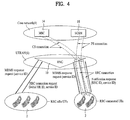
- FIG. 4 illustrates a connection of a plurality of UEs 2 to a core network 4 providing an MBMS according to a first embodiment of the invention.
- the RNC 10 counts RRC-connected UEs 2 joining the MBMS.
- a UE 2 in the RRC-connected mode may have a connection between either the MSC 14 and/or the SGSN 18 or neither one. If the UE 2 transmits a notification response message using a combination of dedicated logical channels and dedicated transport channels, the RNC ID can be omitted since the RNC 10 may identify the UE from which the message is transmitted.
- the method of the first embodiment illustrated in Fig. 4 counts UEs 2 in the RRC-connected mode for a specific MBMS according to notification response messages received regardless of whether the RRC-connected UEs also have a connection with the SGSN 18, that is regardless of whether the UEs are PMM-connected or PMM-idle. Since the RNC 10 counts the number of UEs 2 having a PS connection, or those that are PMM-connected, among a plurality of RRC-connected UEs, radio resources may be wasted by unnecessary transmissions of the MBMS response request and notification response messages. To conserve radio resources, the method illustrated in FIG. 5 is proposed.
- FIG. 5 illustrates a connection of a plurality of UEs 2 to a core network 4 providing an MBMS according to a second embodiment of the invention.
- the RNC 10 utilizes a method similar to that illustrated in FIG. 2 to count the number of UEs 2 in either the RRC-idle mode or both the RRC-connected and PMM-connected mode.
- the RNC 10 utilizes a method similar to that illustrated in FIG. 4 to count the number of UEs 2 in the RRC-connected and PMM-idle mode.
- the number of RRC connection request messages received determines the number of RRC-idle UEs 2.
- the number of UEs 2 in both the RRC-connected mode and PMM-connected mode is determined from information received from the SGSN 18.
- An MBMS response request message and notification response messages are utilized to count the number of UEs in the RRC-connected and PMM-idle mode.
- a UE2 in the RRC-connected and PMM-idle mode may or may not have a CS connection.
- the second embodiment of the invention differs from the first embodiment of the invention in that UEs 2 in the RRC-connected mode, having received the MBMS response request message, transmits a notification response message only if the UE is also in the PMM-idle mode.
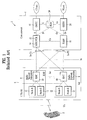
- the mobile communication device 100 includes a processing unit 110 such as a microprocessor or digital signal processor, an RF module 135, a power management module 105, an antenna 140, a battery 155, a display 115, a keypad 120, a storage unit 130 such as flash memory, ROM or SRAM, a speaker 145 and a microphone 150.
- a processing unit 110 such as a microprocessor or digital signal processor
- a user enters instructional information, such as a telephone number, for example, by pushing the buttons of the keypad 120 or by voice activation using the microphone 150.
- the processing unit 110 receives and processes the instructional information to perform the appropriate function, such as to dial the telephone number. Operational data may be retrieved from the memory unit 130 to perform the function. Furthermore, the processing unit 110 may display the instructional and operational information on the display 115 for the user's reference and convenience.
- the processing unit 110 issues instructional information to the RF module 135, to initiate communication, for example, by transmitting radio signals comprising voice communication data.
- the RF module 135 includes a receiver and a transmitter to receive and transmit radio signals.
- the antenna 140 facilitates the transmission and reception of radio signals.
- the RF module 135 may forward and convert the signals to baseband frequency for processing by the processing unit 110.
- the processed signals may be transformed into audible or readable information output, for example, via the speaker 145.
- the RF module 135 is adapted to receive a response request from a network 4 and to transmit a connection response to the network and the storage unit 130 is adapted to store a connection status for exchanging control data with the network.
- the processing unit 110 is adapted to process the response request and generate the connection response based on the connection status such the connection response includes a connection request message if the connection status indicates that the mobile terminal has no connection for exchanging control data with the network and the connection response includes a notification response message if the connection status indicates that the mobile terminal has a connection for exchanging control data with the network.
- the processing unit 110 is adapted to generate a connection response including a notification response message only if the connection status indicates that the mobile terminal has a connection for exchanging control data with the network and has no connection for exchanging packet-switched control data with the network and to generate no connection response if the connection status indicates the mobile terminal has a connection for exchanging packet-switched control data with the network.
- FIG. 7 illustrates a block diagram of a UTRAN 220 according to one embodiment of the present invention.
- the UTRAN 220 includes one or more radio network sub-systems (RNS) 225.
- Each RNS 225 includes a radio network controller (RNC) 223 and a plurality of Node-Bs 221, or base stations, managed by the RNC.
- the RNC 223 handles the assignment and management of radio resources and operates as an access point with respect to the core network 4. Furthermore, the RNC 223 is adapted to perform the methods of the present invention.
- the Node-Bs 221 receive information sent by the physical layer of the terminal 110 through an uplink and transmit data to the terminal through a downlink.
- the Node-Bs 221 operate as access points, or as a transmitter and receiver, of the UTRAN 220 for a mobile terminal 100.
- the Node-Bs 221 are adapted to transmit a response request message to at least one mobile terminal 100 and to receive at least one connection request message or notification response message from at least one mobile terminal.
- the RNC 223 is adapted to compare the sum of the number of connection request messages received and the number of notification response messages received to a predetermined threshold value in order to determine a type of radio bearer according to the comparison.
- the RNC 223 is adapted to receive an indication from a core network 4 of the number of mobile terminals 100 having connections for exchanging packet-switched control data with the core network and compare the sum of the number of mobile terminals having connections for exchanging packet-switched control data with the core network, the number of connection request messages received and the number of notification response messages received to a predetermined threshold value to determine a type of radio bearer according to the comparison.
- An RNC and network adopting the methods of the present invention can correctly count the number of UEs for a specific MBMS to select an appropriate MBMS radio bearer, thereby enabling increased radio resource efficiency.
- the present invention ensures that a UE joining an MBMS can be provided the service in all situations.
- the methods of the present invention enable the counting of RRC-connected UEs having no PS connection, which cannot be counted by the conventional method when the UTRAN counts UEs intending to receive an MBMS.
- the present invention is described in the context of mobile communication, the present invention may also be used in any wireless communication systems using mobile devices, such as PDAs and laptop computers equipped with wireless communication capabilities. Moreover, the use of certain terms to describe the present invention should not limit the scope of the present invention to certain type of wireless communication system, such as UMTS. The present invention is also applicable to other wireless communication systems using different air interfaces and/or physical layers, for example, TDMA, CDMA, FDMA, WCDMA, etc.
- the preferred embodiments may be implemented as a method, apparatus or article of manufacture using standard programming and/or engineering techniques to produce software, firmware, hardware, or any combination thereof.
- article of manufacture refers to code or logic implemented in hardware logic (e.g., an integrated circuit chip, Field Programmable Gate Array (FPGA), Application Specific Integrated Circuit (ASIC), etc.) or a computer readable medium (e.g., magnetic storage medium (e.g., hard disk drives, floppy disks, tape, etc.), optical storage (CD-ROMs, optical disks, etc.), volatile and non-volatile memory devices (e.g., EEPROMs, ROMs, PROMs, RAMs, DRAMs, SRAMs, firmware, programmable logic, etc.).
- FPGA Field Programmable Gate Array
- ASIC Application Specific Integrated Circuit
- Code in the computer readable medium is accessed and executed by a processor.
- the code in which preferred embodiments are implemented may further be accessible through a transmission media or from a file server over a network.
- the article of manufacture in which the code is implemented may comprise a transmission media, such as a network transmission line, wireless transmission media, signals propagating through space, radio waves, infrared signals, etc.
- the present invention can be applicable to a mobile communications system for providing MBMS services.
Landscapes
- Engineering & Computer Science (AREA)
- Computer Networks & Wireless Communication (AREA)
- Signal Processing (AREA)
- Multimedia (AREA)
- Mobile Radio Communication Systems (AREA)
- Input Circuits Of Receivers And Coupling Of Receivers And Audio Equipment (AREA)
- Circuits Of Receivers In General (AREA)
Claims (21)
- Verfahren zum Senden einer Nachricht von einem mobilen Endgerät zu einem Netz, um dem Netz zu ermöglichen, die Anzahl mobiler Endgeräte zu zählen, die in einem Mobiltelekommunikationssystem einen Punkt-zu-Mehrpunkt-Dienst empfangen möchten, wobei das Verfahren umfasst:Empfangen einer Antwortanforderungsnachricht von dem Netz, wobei die Antwortanforderungsnachricht dem Punkt-zu-Mehrpunkt-Dienst zugeordnet ist; undSenden einer Antwortnachricht, falls das mobile Endgerät in einer RRC-verbundenen, d. h. durch Funkbetriebsmittelsteuerung verbundenen, und PMM-Leerlauf-, d. h. Paketmobilitätsmanagement-Leerlauf-Betriebsart ist, in der das mobile Endgerät eine Verbindung zum Austauschen von Steuerdaten mit dem Netz, jedoch keine Paketvermittlungsverbindung, PS-Verbindung, mit einem Kernnetz hat.
- Verfahren nach Anspruch 1, wobei die Antwortanforderungsnachricht über eine Kombination aus gemeinsamen Logik- und gemeinsamen Transportkanälen oder eine Kombination aus dedizierten Logik- und gemeinsamen Transportkanälen oder eine Kombination aus dedizierten Logik- und dedizierten Transportkanälen empfangen wird.
- Verfahren nach Anspruch 2, wobei die Kombination von Kanälen auf einem Betriebszustand des mobilen Endgeräts beruht.
- Verfahren nach Anspruch 3, wobei die Antwortanforderungsnachricht über eine Kombination aus gemeinsamen Logik- und gemeinsamen Transportkanälen empfangen wird, wenn das mobile Endgerät in dem CELL_PCH-Zustand ist.
- Verfahren nach Anspruch 3, wobei die Antwortanforderungsnachricht über eine Kombination aus gemeinsamen Logik- und gemeinsamen Transportkanälen empfangen wird, wenn das mobile Endgerät in dem URA_PCH-Zustand ist.
- Verfahren nach Anspruch 3, wobei die Antwortanforderungsnachricht über eine Kombination aus gemeinsamen Logik- und gemeinsamen Transportkanälen oder eine Kombination aus dedizierten Logik- und gemeinsamen Transportkanälen empfangen wird, wenn das mobile Endgerät in dem CELL_FACH-Zustand ist.
- Verfahren nach Anspruch 3, wobei die Antwortanforderungsnachricht über eine Kombination aus gemeinsamen Logik- und gemeinsamen Transportkanälen oder eine Kombination aus dedizierten Logik- und gemeinsamen Transportkanälen oder eine Kombination aus dedizierten Logik- und dedizierten Transportkanälen empfangen wird, wenn das mobile Endgerät in dem CELL_DCH-Zustand ist.
- Verfahren nach Anspruch 1, wobei die Antwortnachricht über eine Kombination aus gemeinsamen Logik- und gemeinsamen Transportkanälen gesendet wird, wenn das mobile Endgerät in einem CELL_PCH-Zustand ist.
- Verfahren nach Anspruch 1, wobei die Antwortnachricht über eine Kombination aus gemeinsamen Logik- und gemeinsamen Transportkanälen gesendet wird, wenn das mobile Endgerät in dem URA_PCH-Zustand ist.
- Verfahren nach Anspruch 1, wobei die Antwortnachricht über eine Kombination aus gemeinsamen Logik- und gemeinsamen Transportkanälen oder eine Kombination aus dedizierten Logik- und gemeinsamen Transportkanälen gesendet wird, wenn das mobile Endgerät in einem CELL_FACH-Zustand ist.
- Verfahren nach Anspruch 1, wobei die Antwortnachricht über eine Kombination aus gemeinsamen Logik- und gemeinsamen Transportkanälen oder eine Kombination aus dedizierten Logik- und gemeinsamen Transportkanälen oder eine Kombination aus dedizierten Logik- und dedizierten Transportkanälen gesendet wird, wenn das mobile Endgerät in dem CELL_DCH-Zustand ist.
- Verfahren zum Austauschen von Nachrichten mit mehreren mobilen Endgeräten, um die Anzahl mobiler Endgeräte zu zählen, die in einem Netz eines Mobiltelekommunikationssystems einen Punkt-zu-Mehrpunkt-Dienst empfangen möchten, wobei das Verfahren umfasst:Senden einer Antwortanforderungsnachricht zu wenigstens einem der mehreren mobilen Endgeräte; undEmpfangen wenigstens einer Antwortnachricht, falls das wenigstens eine der mehreren mobilen Endgeräte in einer RRC-verbundenen, d. h. durch Funkbetriebsmittelsteuerung verbundenen, und PMM-Leerlauf-, d. h. Paketmobilitätsmanagement-Leerlauf-Betriebsart ist, in der das wenigstens eine der mehreren mobilen Endgeräte eine Verbindung zum Austauschen von Steuerdaten mit dem Netz, jedoch keine Paketvermittlungsverbindung, PS-Verbindung, mit einem Kernnetz hat.
- Verfahren nach Anspruch 12, wobei das Netz einen Funkträger des Punkt-zu-Punkt-Typs aufbaut, falls die Anzahl von Antwortnachrichten, die von dem wenigstens einen der mehreren mobilen Endgeräte empfangen werden, kleiner als ein Schwellenwert ist.
- Verfahren nach Anspruch 12, wobei das Netz einen Funkträger des Punkt-zu-Mehrpunkt-Typs aufbaut, falls die Anzahl von Antwortnachrichten, die von dem wenigstens einen der mehreren mobilen Endgeräte empfangen werden, einen Schwellenwert übersteigt.
- Verfahren nach Anspruch 12, wobei die Antwortanforderungsnachricht zu jedem der mobilen Endgeräte, die keine Verbindung zum Austauschen von Steuerdaten mit einem Kernnetz haben, über eine Kombination gemeinsamer Logik- und gemeinsamer Transportkanäle gesendet wird.
- Verfahren nach Anspruch 12, wobei die Antwortanforderungsnachricht zu jedem der mehreren mobilen Endgeräte, die eine Verbindung zum Austauschen von Steuerdaten mit einem Kernnetz haben, über eine Kombination gemeinsamer Logik- und gemeinsamer Transportkanäle oder eine Kombination dedizierter Logik- und gemeinsamer Transportkanäle oder eine Kombination dedizierter Logik- und dedizierter Transportkanäle gesendet wird.
- Verfahren nach Anspruch 16, wobei die Kombination von Kanälen auf einem Betriebszustand des mobilen Endgeräts, zu dem die Antwortanforderungsnachricht gesendet wird, beruht.
- Verfahren nach Anspruch 17, wobei die Antwortanforderungsnachricht über eine Kombination aus gemeinsamen Logik- und gemeinsamen Transportkanälen gesendet wird, wenn das mobile Endgerät in dem CELL_PCH-Zustand oder in dem URA_PCH-Zustand ist.
- Verfahren nach Anspruch 17, wobei die Antwortanforderungsnachricht über eine Kombination aus gemeinsamen Logik- und gemeinsamen Transportkanälen oder eine Kombination aus dedizierten Logik- und gemeinsamen Transportkanälen gesendet wird, wenn das mobile Endgerät in dem CELL_FACH-Zustand ist.
- Verfahren nach Anspruch 17, wobei die Antwortanforderungsnachricht über eine Kombination aus gemeinsamen Logik- und gemeinsamen Transportkanälen oder eine Kombination aus dedizierten Logik- und gemeinsamen Transportkanälen oder eine Kombination aus dedizierten Logik- und dedizierten Transportkanälen gesendet wird, wenn das mobile Endgerät in dem CELL_DCH-Zustand ist.
- Vorrichtung, die dazu ausgelegt ist, ein Verfahren nach einem der Ansprüche 1-20 auszuführen.
Applications Claiming Priority (2)
| Application Number | Priority Date | Filing Date | Title |
|---|---|---|---|
| KR1020030057388A KR100964679B1 (ko) | 2003-08-19 | 2003-08-19 | 멀티미디어 방송 멀티 캐스트서비스에서 무선자원제어연결 모드 단말을 집계하는 방법 |
| PCT/KR2004/002069 WO2005018268A1 (en) | 2003-08-19 | 2004-08-18 | Method and apparatus for selecting mbms radio bearer type |
Publications (2)
| Publication Number | Publication Date |
|---|---|
| EP1656808A1 EP1656808A1 (de) | 2006-05-17 |
| EP1656808B1 true EP1656808B1 (de) | 2010-06-30 |
Family
ID=36203874
Family Applications (1)
| Application Number | Title | Priority Date | Filing Date |
|---|---|---|---|
| EP04748544A Expired - Lifetime EP1656808B1 (de) | 2003-08-19 | 2004-08-18 | Verfahren und vorrichtung zur auswahl eines mbms-funkträgertyps |
Country Status (14)
| Country | Link |
|---|---|
| US (3) | US7477619B2 (de) |
| EP (1) | EP1656808B1 (de) |
| JP (1) | JP4531047B2 (de) |
| KR (1) | KR100964679B1 (de) |
| CN (1) | CN100471289C (de) |
| AT (1) | ATE472908T1 (de) |
| AU (1) | AU2004301057B2 (de) |
| BR (1) | BRPI0413224A (de) |
| DE (1) | DE602004027921D1 (de) |
| MX (1) | MXPA06001787A (de) |
| RU (1) | RU2369987C2 (de) |
| UA (1) | UA94020C2 (de) |
| WO (1) | WO2005018268A1 (de) |
| ZA (1) | ZA200600534B (de) |
Families Citing this family (71)
| Publication number | Priority date | Publication date | Assignee | Title |
|---|---|---|---|---|
| KR101055047B1 (ko) | 2004-01-09 | 2011-08-05 | 엘지전자 주식회사 | 무선 이동 단말의 이동단말과 무선네트워크 간의 무선 링크 설정 방법 및 장치 |
| SE0400339D0 (sv) * | 2004-02-11 | 2004-02-11 | Ericsson Telefon Ab L M | Mobility handling of user equipments in URA_PCH state for MBMS |
| TWI269968B (en) * | 2004-04-22 | 2007-01-01 | Mediatek Inc | Method for processing the noise in the SATA |
| EP1610492B1 (de) * | 2004-06-21 | 2007-04-11 | Matsushita Electric Industrial Co., Ltd. | Skalierbare und adaptive QoS-Architektur für Mehrkanal Multicast/Broadcast Dienste |
| CN1770913B (zh) * | 2004-11-02 | 2010-05-26 | 北京三星通信技术研究有限公司 | 接收多媒体广播与组播业务的方法 |
| US7769010B2 (en) * | 2005-01-07 | 2010-08-03 | Telefonaktiebolaget Lm Ericsson (Publ) | PTP/PTM transmission decisions |
| KR101189945B1 (ko) * | 2005-08-23 | 2012-10-12 | 엘지전자 주식회사 | 이동통신 시스템의 mbms서비스 전송방법 |
| CN100397921C (zh) * | 2005-08-23 | 2008-06-25 | 华为技术有限公司 | 响应mbms点到点连接建立请求的方法 |
| CN100426803C (zh) * | 2005-09-02 | 2008-10-15 | 华为技术有限公司 | 响应mbms点到点连接建立请求的方法 |
| US7912471B2 (en) * | 2006-01-04 | 2011-03-22 | Wireless Technology Solutions Llc | Initial connection establishment in a wireless communication system |
| US20070155390A1 (en) * | 2006-01-04 | 2007-07-05 | Ipwireless, Inc. | Initial connection establishment in a wireless communication system |
| US8682357B2 (en) | 2006-05-02 | 2014-03-25 | Intellectual Ventures Holding 81 Llc | Paging in a wireless network |
| KR100953591B1 (ko) | 2006-07-07 | 2010-04-21 | 삼성전자주식회사 | 광대역 무선 통신 시스템의 방송 서비스 제공 장치 및 방법 |
| WO2008004846A1 (en) * | 2006-07-07 | 2008-01-10 | Samsung Electronics Co., Ltd. | Apparatus and method for providing multicast/broadcast service in broadband wireless communication system |
| GB2441165B (en) | 2006-08-21 | 2011-02-09 | Ipwireless Inc | Cellular communication system, network controller and method for obtaining feedback from subscriber communication units |
| KR101265643B1 (ko) * | 2006-08-22 | 2013-05-22 | 엘지전자 주식회사 | 무선 통신 시스템에서의 핸드오버 수행 및 그 제어 방법 |
| KR101387500B1 (ko) * | 2006-08-22 | 2014-04-21 | 엘지전자 주식회사 | 무선 통신 시스템에서의 제어정보 전송 및 수신 방법 |
| KR100952629B1 (ko) * | 2006-09-06 | 2010-04-15 | 이노베이티브 소닉 리미티드 | 무선통신시스템에서 mbms 정보를 회신하는 방법 및장치 |
| CN101155379B (zh) * | 2006-09-30 | 2011-01-19 | 诺基亚西门子网络两合公司 | 一种计数方法及网络控制设备 |
| EP2070368B1 (de) * | 2006-10-02 | 2016-07-06 | LG Electronics Inc. | Verfahren zum senden und empfangen einer paging-nachricht in einem drahtlosen kommunikationssystem |
| CN101242293B (zh) * | 2006-10-13 | 2010-12-22 | 华为技术有限公司 | 多播广播业务用户数目统计方法及终端 |
| CN101163321B (zh) * | 2006-10-13 | 2012-04-18 | 华为技术有限公司 | 多播广播业务用户数目统计方法及基站 |
| CN100591043C (zh) * | 2006-10-25 | 2010-02-17 | 华为技术有限公司 | 在不同设备访问网络的系统、接入点、网关及其方法 |
| EP2084928B1 (de) * | 2006-10-30 | 2017-08-23 | LG Electronics Inc. | Verfahren zum durchführen von direktzugriff in einem drahtlosen kommunikationssystem |
| EP2057862B1 (de) * | 2006-10-30 | 2017-02-01 | LG Electronics Inc. | Redirektionsverfahren für den aufwärtszugriff |
| KR100938754B1 (ko) | 2006-10-30 | 2010-01-26 | 엘지전자 주식회사 | 비연속 수신을 이용한 데이터 수신 및 전송 방법 |
| KR101443618B1 (ko) * | 2006-10-30 | 2014-09-23 | 엘지전자 주식회사 | 랜덤 접속 채널 메시지 응답 방법, 랜덤 접속 채널 메시지전송 방법 및 이를 지원하는 이동통신 단말 |
| JP4729587B2 (ja) * | 2007-01-23 | 2011-07-20 | 三星電子株式会社 | 広帯域無線アクセスシステムにおけるサービスガイドの伝達装置及び方法 |
| KR100958191B1 (ko) * | 2007-02-06 | 2010-05-17 | 엘지전자 주식회사 | 멀티캐스트 가입 단말의 수를 고려한 데이터 전송 방법 및 이를 위한 무선 통신용 베이스 스테이션과 단말기 그리고 이들을 포함한 무선통신 시스템 |
| WO2008115037A1 (en) * | 2007-03-21 | 2008-09-25 | Electronics And Telecommunications Research Institute | Method for transmitting phasing information and phasing method in mobile communication system |
| KR101381475B1 (ko) | 2007-04-13 | 2014-04-04 | 삼성전자주식회사 | 유저 단말기의 무선 자원 제어 상태를 아이들 상태로천이하는 방법 및 이를 위한 시스템 및 그 단말기 |
| MX2009011602A (es) * | 2007-04-27 | 2010-01-14 | Interdigital Tech Corp | Metodo y aparato de administracion de recursos para servicios de multiemision de multimedios. |
| KR101469281B1 (ko) * | 2007-04-30 | 2014-12-04 | 엘지전자 주식회사 | 무선단말의 상태 전환 방식 |
| KR101464748B1 (ko) * | 2007-04-30 | 2014-11-24 | 엘지전자 주식회사 | 무선단말의 측정보고 기동방식 |
| KR101455999B1 (ko) | 2007-04-30 | 2014-11-03 | 엘지전자 주식회사 | 무선 통신 시스템에서의 데이터 블록 생성 방법 |
| EP2132910B1 (de) * | 2007-04-30 | 2016-01-06 | LG Electronics Inc. | Verfahren zur übertragung von daten in einem drahtlosen kommunikationssystem |
| US8218524B2 (en) * | 2007-04-30 | 2012-07-10 | Lg Electronics Inc. | Method for transmitting or receiving data unit using header field existence indicator |
| EP2145436B1 (de) * | 2007-04-30 | 2011-09-07 | LG Electronics Inc. | Verfahren zur erzeugung eines datenblocks in einem mobilen kommunikationssystem |
| KR101461236B1 (ko) * | 2007-04-30 | 2014-11-12 | 엘지전자 주식회사 | 무선 호를 연결 과정에서 엔티티의 인증을 수행하는 방법 |
| KR101458641B1 (ko) * | 2007-04-30 | 2014-11-05 | 엘지전자 주식회사 | Mbms를 지원하는 무선통신 시스템에서 데이터 전송방법 |
| KR20080097338A (ko) * | 2007-05-01 | 2008-11-05 | 엘지전자 주식회사 | 불연속 데이터 송수신 방법 |
| US20080273503A1 (en) * | 2007-05-02 | 2008-11-06 | Lg Electronics Inc. | Method and terminal for performing handover in mobile communications system of point-to-multipoint service |
| US20080273482A1 (en) * | 2007-05-02 | 2008-11-06 | Lg Electronics Inc. | Uplink access method for receiving a point-to-multipoint service |
| KR100917205B1 (ko) * | 2007-05-02 | 2009-09-15 | 엘지전자 주식회사 | 무선 통신 시스템에서의 데이터 블록 구성 방법 |
| EP2153597B1 (de) * | 2007-05-03 | 2013-04-03 | LG Electronics Inc. | Verfahren zur datenverarbeitung in einem drahtlosen kommunikationssystem |
| CN101304548B (zh) * | 2007-05-08 | 2012-11-28 | 中国移动通信集团公司 | 多媒体广播/组播业务数据传输系统、方法及终端 |
| KR101526971B1 (ko) * | 2007-06-18 | 2015-06-11 | 엘지전자 주식회사 | 방송 또는 멀티캐스트 서비스 송수신 방법 및 단말 |
| KR101470638B1 (ko) | 2007-06-18 | 2014-12-08 | 엘지전자 주식회사 | 이동통신 시스템에서의 무선자원 향상 방법, 상태정보 보고방법 및 수신장치 |
| ES2652668T3 (es) | 2007-06-18 | 2018-02-05 | Lg Electronics Inc. | Procedimiento y equipamiento de usuario para realizar una sincronización de enlace ascendente en un sistema de comunicación inalámbrica |
| EP2168263B1 (de) * | 2007-06-18 | 2018-04-18 | Lg Electronics Inc. | Verfahren zur übertragung von paging-informationen für effektiven rufaufbau |
| US8139524B2 (en) * | 2007-06-18 | 2012-03-20 | Lg Electronics Inc. | Control channel reception method for receiving broadcast or multicast service |
| CN101374255B (zh) * | 2007-08-21 | 2012-07-04 | 中兴通讯股份有限公司 | 组播广播多媒体业务无线承载建立方法 |
| CN101873200A (zh) | 2007-09-06 | 2010-10-27 | 夏普株式会社 | 通信设备和通信方法 |
| WO2009038312A2 (en) * | 2007-09-20 | 2009-03-26 | Lg Electronics Inc. | A method for handling correctly received but header compression failed packets |
| KR101387537B1 (ko) * | 2007-09-20 | 2014-04-21 | 엘지전자 주식회사 | 성공적으로 수신했으나 헤더 압축 복원에 실패한 패킷의 처리 방법 |
| US8565137B2 (en) | 2007-09-24 | 2013-10-22 | Qualcomm Incorporated | Tracking locations of multicast group members within a wireless communication system |
| FR2922403B1 (fr) * | 2007-10-16 | 2010-03-12 | Alcatel Lucent | Dispositif et procede de comptage de terminaux de communication effectivement connectes a des stations de base d'une zone mbs d'un reseau local de communication sans fil. |
| KR101478144B1 (ko) * | 2007-12-27 | 2015-01-02 | 삼성전자주식회사 | 알에프아이디 통신 방법 |
| KR101203713B1 (ko) | 2008-09-05 | 2012-11-21 | 한국전자통신연구원 | 멀티캐스트 및 브로드캐스트 서비스 관리 방법 및 관리 장치 |
| WO2010027215A2 (en) * | 2008-09-05 | 2010-03-11 | Electronics And Telecommunications Research Institute | Method and device for managing of multicast and broadcast service |
| EP2362705A4 (de) * | 2008-11-28 | 2014-04-09 | Fujitsu Ltd | Drahtlose kommunikationsvorrichtung, drahtloses kommunikationssystem und kommunikationsmodus-umschaltverfahren |
| JP5298062B2 (ja) * | 2010-04-26 | 2013-09-25 | シャープ株式会社 | 移動局装置、通信システム、セル再選択方法および集積回路 |
| EP2600539B1 (de) * | 2010-07-26 | 2019-01-16 | Electronics And Telecommunications Research Institute | Verfahren zur übertragung von steuersignalen über eine uplink-verbindung |
| JP5998383B2 (ja) * | 2010-07-28 | 2016-09-28 | 株式会社リコー | 伝送管理システム、伝送システム、伝送管理方法、及びプログラム |
| US8953556B2 (en) | 2010-10-18 | 2015-02-10 | Htc Corporation | Method of transmitting and handling CountingResponse message and related communication device |
| GB2485237A (en) | 2010-11-08 | 2012-05-09 | Nec Corp | MBMS provided by unicast or broadcast/multicast in dependence on the number of interested users. |
| WO2012138067A2 (en) | 2011-04-03 | 2012-10-11 | Lg Electronics Inc. | Method of transmitting message at user equipment in wireless communication system and apparatus thereof |
| WO2013014845A1 (ja) * | 2011-07-25 | 2013-01-31 | 日本電気株式会社 | 移動局装置、制御装置、基地局装置、これらに実装される方法、及びコンピュータ可読媒体 |
| CN105393470B (zh) * | 2013-08-08 | 2018-11-02 | 英特尔Ip公司 | 用于多输入多输出系统中的电子下倾角调节的方法、装置和系统 |
| CN106060783A (zh) * | 2015-04-10 | 2016-10-26 | 财团法人资讯工业策进会 | 单一基站节点对多点网络系统及其数据传输方法 |
| KR20180001334U (ko) | 2016-10-28 | 2018-05-09 | 대우조선해양 주식회사 | 컨테이너의 무게 측정 장치 |
Family Cites Families (23)
| Publication number | Priority date | Publication date | Assignee | Title |
|---|---|---|---|---|
| US5103459B1 (en) * | 1990-06-25 | 1999-07-06 | Qualcomm Inc | System and method for generating signal waveforms in a cdma cellular telephone system |
| EP0944275B1 (de) * | 1998-03-19 | 2005-09-14 | Hitachi, Ltd. | Rundfunk-Informationsversorgungssystem |
| JP3411907B2 (ja) * | 1998-10-06 | 2003-06-03 | ノキア ネットワークス オサケ ユキチュア | ページング制御方法及び装置 |
| CA2272020C (en) * | 1999-05-17 | 2003-04-29 | Ibm Canada Limited-Ibm Canada Limitee | Method and apparatus to enable enhanced services of an intelligent telephone network in a wireless environment |
| DE69936795D1 (de) * | 1999-09-09 | 2007-09-20 | Nokia Corp | Ein von einem intelligenten netzwerk gesteuertes multicast |
| CN1165132C (zh) * | 2000-01-17 | 2004-09-01 | Egc&C株式会社 | 基于分级结构的提供因特网广播数据的系统和方法 |
| WO2001080590A1 (en) * | 2000-04-14 | 2001-10-25 | Ntt Docomo, Inc. | Multicast service providing system, multicast service providing method, information distributor, radio terminal, and radio base station |
| JP3810991B2 (ja) | 2000-08-02 | 2006-08-16 | 株式会社エヌ・ティ・ティ・ドコモ | コンテンツ配信方法、サーバ及び無線回線制御装置 |
| DE10105093A1 (de) * | 2001-02-05 | 2002-08-08 | Nokia Corp | Paging-Verfahren und -System für ein Funkzugriffsnetz |
| WO2003036857A1 (en) * | 2001-10-24 | 2003-05-01 | Nokia Corporation | Ciphering as a part of the multicast cencept |
| GB0126516D0 (en) * | 2001-11-05 | 2002-01-02 | Nokia Corp | A method and system for providing a service |
| KR100958519B1 (ko) * | 2002-08-14 | 2010-05-17 | 엘지전자 주식회사 | 이동통신 시스템에서의 멀티미디어 서비스 수신 및 전송 방법 |
| CN1476259A (zh) * | 2002-08-16 | 2004-02-18 | ��������ͨ�ż����о�����˾ | 多媒体广播和组播业务寻呼的方法 |
| KR20040016540A (ko) * | 2002-08-17 | 2004-02-25 | 삼성전자주식회사 | 멀티캐스트 멀티미디어 방송 서비스를 제공하는 이동 통신시스템에서 핸드오버시 데이터 송수신 장치 및 방법 |
| US7733896B2 (en) * | 2002-08-19 | 2010-06-08 | Alcatel-Lucent Usa Inc. | Dynamic access priority scheme |
| EP1547404A1 (de) * | 2002-09-20 | 2005-06-29 | Nokia Corporation | Multicast-übertragung in einem zellularen netzwerk |
| US7649865B2 (en) * | 2002-11-08 | 2010-01-19 | Nokia Corporation | Service-activation based state switching |
| US20040157640A1 (en) * | 2003-02-11 | 2004-08-12 | Juho Pirskanen | System and method for counting user equipments (UEs) in idle mode in a multimedia broadcast multi-service (MBMS) |
| US7277706B2 (en) * | 2003-02-12 | 2007-10-02 | Nokia Corporation | Provision of service contexts in a communication system |
| WO2004073256A1 (en) * | 2003-02-12 | 2004-08-26 | Samsung Electronics Co., Ltd. | Method for managing service context for paging user equipment in a multimedia broadcast/multicast service |
| CN1536795A (zh) * | 2003-04-04 | 2004-10-13 | 北京三星通信技术研究有限公司 | 用户选择mbms业务的方法 |
| US7646762B2 (en) * | 2003-08-06 | 2010-01-12 | Motorola, Inc. | Method and apparatus for providing session data to a subscriber to a multimedia broadcast multicast service |
| US20050118992A1 (en) * | 2003-10-02 | 2005-06-02 | Samsung Electronics Co., Ltd. | Method of transmitting and receiving service availability information about a multimedia broadcast/multicast service |
-
2003
- 2003-08-19 KR KR1020030057388A patent/KR100964679B1/ko not_active Expired - Lifetime
-
2004
- 2004-08-18 JP JP2006523785A patent/JP4531047B2/ja not_active Expired - Lifetime
- 2004-08-18 UA UAA200602896A patent/UA94020C2/ru unknown
- 2004-08-18 AU AU2004301057A patent/AU2004301057B2/en not_active Expired
- 2004-08-18 RU RU2006108523/09A patent/RU2369987C2/ru active
- 2004-08-18 DE DE602004027921T patent/DE602004027921D1/de not_active Expired - Lifetime
- 2004-08-18 MX MXPA06001787A patent/MXPA06001787A/es active IP Right Grant
- 2004-08-18 AT AT04748544T patent/ATE472908T1/de not_active IP Right Cessation
- 2004-08-18 CN CNB2004800238480A patent/CN100471289C/zh not_active Expired - Lifetime
- 2004-08-18 WO PCT/KR2004/002069 patent/WO2005018268A1/en not_active Ceased
- 2004-08-18 BR BRPI0413224-6A patent/BRPI0413224A/pt not_active Application Discontinuation
- 2004-08-18 EP EP04748544A patent/EP1656808B1/de not_active Expired - Lifetime
- 2004-08-19 US US10/924,093 patent/US7477619B2/en not_active Expired - Fee Related
-
2006
- 2006-01-19 ZA ZA200600534A patent/ZA200600534B/xx unknown
-
2008
- 2008-12-16 US US12/336,383 patent/US8144648B2/en not_active Expired - Lifetime
-
2009
- 2009-04-03 US US12/418,437 patent/US8116266B2/en not_active Expired - Lifetime
Also Published As
| Publication number | Publication date |
|---|---|
| RU2006108523A (ru) | 2006-08-10 |
| BRPI0413224A (pt) | 2006-10-03 |
| US8116266B2 (en) | 2012-02-14 |
| US7477619B2 (en) | 2009-01-13 |
| UA94020C2 (ru) | 2011-04-11 |
| JP4531047B2 (ja) | 2010-08-25 |
| DE602004027921D1 (de) | 2010-08-12 |
| US20090097441A1 (en) | 2009-04-16 |
| ATE472908T1 (de) | 2010-07-15 |
| AU2004301057B2 (en) | 2009-04-30 |
| US20050041610A1 (en) | 2005-02-24 |
| ZA200600534B (en) | 2007-01-31 |
| WO2005018268A1 (en) | 2005-02-24 |
| EP1656808A1 (de) | 2006-05-17 |
| KR20050019561A (ko) | 2005-03-03 |
| RU2369987C2 (ru) | 2009-10-10 |
| HK1089325A1 (en) | 2006-11-24 |
| AU2004301057A1 (en) | 2005-02-24 |
| KR100964679B1 (ko) | 2010-06-22 |
| US8144648B2 (en) | 2012-03-27 |
| MXPA06001787A (es) | 2006-05-17 |
| CN1839651A (zh) | 2006-09-27 |
| CN100471289C (zh) | 2009-03-18 |
| US20090190519A1 (en) | 2009-07-30 |
| JP2007503153A (ja) | 2007-02-15 |
Similar Documents
| Publication | Publication Date | Title |
|---|---|---|
| AU2004301057B2 (en) | Method and apparatus for selecting MBMS radio bearer type | |
| EP1501328B1 (de) | Vorrichtung und Verfahren zur Übertragung und zum Empfang von MBMS Kontrollinformationen in einem Mobilkommunikationssystem | |
| US8311563B2 (en) | Communication of point to multipoint service information in wireless communication system | |
| EP1738496B1 (de) | Übertragung von punkt-zu-mehrpunkt-dienstinformationen in drahtlosen kommunikationssystemen | |
| EP2050209B1 (de) | Punkt-zu-punkt-funkträger für einen ausstrahlungsdienst | |
| AU2005301494B2 (en) | Mobile power handling method and apparatus | |
| EP1609330B1 (de) | Vorrichtung und verfahren zur regelung des zugriffs auf einnetzwerk in einem drahtlosen kommunikationssystem | |
| JP4898954B2 (ja) | ページングおよびセルブロードキャストサービスを使用して情報を提供するための方法とネットワークと装置 | |
| US20050186973A1 (en) | Method and apparatus for sending signaling for multicast and broadcast services | |
| WO2005101736A1 (en) | A method for mbms user quantity counting | |
| CN101099314A (zh) | 在无线通信系统中管理信道配置信息 | |
| KR20060123325A (ko) | 멀티미디어 브로드캐스트/멀티캐스트서비스(mbms)에 관한 메시지들 전송 방법, 기지국,가입자국 및 무선 통신 시스템 | |
| EP1847082B1 (de) | Übertragung von steuerungsdaten entsprechend der gruppierung von diensten in einem mobilen kommunikationssystem | |
| CN101171868B (zh) | 用于重新配置公共信道的方法和装置 | |
| HK1089325B (en) | Method and apparatus for selecting mbms radio bearer type |
Legal Events
| Date | Code | Title | Description |
|---|---|---|---|
| PUAI | Public reference made under article 153(3) epc to a published international application that has entered the european phase |
Free format text: ORIGINAL CODE: 0009012 |
|
| 17P | Request for examination filed |
Effective date: 20060215 |
|
| AK | Designated contracting states |
Kind code of ref document: A1 Designated state(s): AT BE BG CH CY CZ DE DK EE ES FI FR GB GR HU IE IT LI LU MC NL PL PT RO SE SI SK TR |
|
| RAP1 | Party data changed (applicant data changed or rights of an application transferred) |
Owner name: LG ELECTRONICS INC. |
|
| DAX | Request for extension of the european patent (deleted) | ||
| REG | Reference to a national code |
Ref country code: HK Ref legal event code: DE Ref document number: 1089325 Country of ref document: HK |
|
| 17Q | First examination report despatched |
Effective date: 20090819 |
|
| REG | Reference to a national code |
Ref country code: DE Ref legal event code: R079 Ref document number: 602004027921 Country of ref document: DE Free format text: PREVIOUS MAIN CLASS: H04Q0007380000 Ipc: H04W0004060000 |
|
| RIC1 | Information provided on ipc code assigned before grant |
Ipc: H04W 4/06 20090101AFI20100127BHEP Ipc: H04L 12/24 20060101ALI20100127BHEP |
|
| GRAP | Despatch of communication of intention to grant a patent |
Free format text: ORIGINAL CODE: EPIDOSNIGR1 |
|
| GRAS | Grant fee paid |
Free format text: ORIGINAL CODE: EPIDOSNIGR3 |
|
| GRAA | (expected) grant |
Free format text: ORIGINAL CODE: 0009210 |
|
| AK | Designated contracting states |
Kind code of ref document: B1 Designated state(s): AT BE BG CH CY CZ DE DK EE ES FI FR GB GR HU IE IT LI LU MC NL PL PT RO SE SI SK TR |
|
| REG | Reference to a national code |
Ref country code: GB Ref legal event code: FG4D Ref country code: CH Ref legal event code: EP |
|
| REG | Reference to a national code |
Ref country code: NL Ref legal event code: T3 Ref country code: IE Ref legal event code: FG4D |
|
| REF | Corresponds to: |
Ref document number: 602004027921 Country of ref document: DE Date of ref document: 20100812 Kind code of ref document: P |
|
| REG | Reference to a national code |
Ref country code: DE Ref legal event code: R096 Ref document number: 602004027921 Country of ref document: DE Effective date: 20100812 |
|
| PG25 | Lapsed in a contracting state [announced via postgrant information from national office to epo] |
Ref country code: SE Free format text: LAPSE BECAUSE OF FAILURE TO SUBMIT A TRANSLATION OF THE DESCRIPTION OR TO PAY THE FEE WITHIN THE PRESCRIBED TIME-LIMIT Effective date: 20100630 |
|
| PG25 | Lapsed in a contracting state [announced via postgrant information from national office to epo] |
Ref country code: AT Free format text: LAPSE BECAUSE OF FAILURE TO SUBMIT A TRANSLATION OF THE DESCRIPTION OR TO PAY THE FEE WITHIN THE PRESCRIBED TIME-LIMIT Effective date: 20100630 Ref country code: FI Free format text: LAPSE BECAUSE OF FAILURE TO SUBMIT A TRANSLATION OF THE DESCRIPTION OR TO PAY THE FEE WITHIN THE PRESCRIBED TIME-LIMIT Effective date: 20100630 Ref country code: SI Free format text: LAPSE BECAUSE OF FAILURE TO SUBMIT A TRANSLATION OF THE DESCRIPTION OR TO PAY THE FEE WITHIN THE PRESCRIBED TIME-LIMIT Effective date: 20100630 |
|
| REG | Reference to a national code |
Ref country code: HK Ref legal event code: GR Ref document number: 1089325 Country of ref document: HK |
|
| PG25 | Lapsed in a contracting state [announced via postgrant information from national office to epo] |
Ref country code: PL Free format text: LAPSE BECAUSE OF FAILURE TO SUBMIT A TRANSLATION OF THE DESCRIPTION OR TO PAY THE FEE WITHIN THE PRESCRIBED TIME-LIMIT Effective date: 20100630 Ref country code: GR Free format text: LAPSE BECAUSE OF FAILURE TO SUBMIT A TRANSLATION OF THE DESCRIPTION OR TO PAY THE FEE WITHIN THE PRESCRIBED TIME-LIMIT Effective date: 20101001 |
|
| PG25 | Lapsed in a contracting state [announced via postgrant information from national office to epo] |
Ref country code: EE Free format text: LAPSE BECAUSE OF FAILURE TO SUBMIT A TRANSLATION OF THE DESCRIPTION OR TO PAY THE FEE WITHIN THE PRESCRIBED TIME-LIMIT Effective date: 20100630 |
|
| PG25 | Lapsed in a contracting state [announced via postgrant information from national office to epo] |
Ref country code: RO Free format text: LAPSE BECAUSE OF FAILURE TO SUBMIT A TRANSLATION OF THE DESCRIPTION OR TO PAY THE FEE WITHIN THE PRESCRIBED TIME-LIMIT Effective date: 20100630 Ref country code: PT Free format text: LAPSE BECAUSE OF FAILURE TO SUBMIT A TRANSLATION OF THE DESCRIPTION OR TO PAY THE FEE WITHIN THE PRESCRIBED TIME-LIMIT Effective date: 20101102 Ref country code: CZ Free format text: LAPSE BECAUSE OF FAILURE TO SUBMIT A TRANSLATION OF THE DESCRIPTION OR TO PAY THE FEE WITHIN THE PRESCRIBED TIME-LIMIT Effective date: 20100630 Ref country code: BE Free format text: LAPSE BECAUSE OF FAILURE TO SUBMIT A TRANSLATION OF THE DESCRIPTION OR TO PAY THE FEE WITHIN THE PRESCRIBED TIME-LIMIT Effective date: 20100630 Ref country code: CY Free format text: LAPSE BECAUSE OF FAILURE TO SUBMIT A TRANSLATION OF THE DESCRIPTION OR TO PAY THE FEE WITHIN THE PRESCRIBED TIME-LIMIT Effective date: 20100630 Ref country code: SK Free format text: LAPSE BECAUSE OF FAILURE TO SUBMIT A TRANSLATION OF THE DESCRIPTION OR TO PAY THE FEE WITHIN THE PRESCRIBED TIME-LIMIT Effective date: 20100630 |
|
| PG25 | Lapsed in a contracting state [announced via postgrant information from national office to epo] |
Ref country code: IT Free format text: LAPSE BECAUSE OF FAILURE TO SUBMIT A TRANSLATION OF THE DESCRIPTION OR TO PAY THE FEE WITHIN THE PRESCRIBED TIME-LIMIT Effective date: 20100630 Ref country code: MC Free format text: LAPSE BECAUSE OF NON-PAYMENT OF DUE FEES Effective date: 20100831 |
|
| REG | Reference to a national code |
Ref country code: CH Ref legal event code: PL |
|
| PG25 | Lapsed in a contracting state [announced via postgrant information from national office to epo] |
Ref country code: CH Free format text: LAPSE BECAUSE OF NON-PAYMENT OF DUE FEES Effective date: 20100831 Ref country code: LI Free format text: LAPSE BECAUSE OF NON-PAYMENT OF DUE FEES Effective date: 20100831 Ref country code: DK Free format text: LAPSE BECAUSE OF FAILURE TO SUBMIT A TRANSLATION OF THE DESCRIPTION OR TO PAY THE FEE WITHIN THE PRESCRIBED TIME-LIMIT Effective date: 20100630 |
|
| PLBE | No opposition filed within time limit |
Free format text: ORIGINAL CODE: 0009261 |
|
| STAA | Information on the status of an ep patent application or granted ep patent |
Free format text: STATUS: NO OPPOSITION FILED WITHIN TIME LIMIT |
|
| 26N | No opposition filed |
Effective date: 20110331 |
|
| PG25 | Lapsed in a contracting state [announced via postgrant information from national office to epo] |
Ref country code: ES Free format text: LAPSE BECAUSE OF FAILURE TO SUBMIT A TRANSLATION OF THE DESCRIPTION OR TO PAY THE FEE WITHIN THE PRESCRIBED TIME-LIMIT Effective date: 20101011 |
|
| REG | Reference to a national code |
Ref country code: DE Ref legal event code: R097 Ref document number: 602004027921 Country of ref document: DE Effective date: 20110330 Ref country code: DE Ref legal event code: R097 Ref document number: 602004027921 Country of ref document: DE Effective date: 20110331 |
|
| PG25 | Lapsed in a contracting state [announced via postgrant information from national office to epo] |
Ref country code: IE Free format text: LAPSE BECAUSE OF NON-PAYMENT OF DUE FEES Effective date: 20100818 |
|
| PG25 | Lapsed in a contracting state [announced via postgrant information from national office to epo] |
Ref country code: LU Free format text: LAPSE BECAUSE OF NON-PAYMENT OF DUE FEES Effective date: 20100818 Ref country code: HU Free format text: LAPSE BECAUSE OF FAILURE TO SUBMIT A TRANSLATION OF THE DESCRIPTION OR TO PAY THE FEE WITHIN THE PRESCRIBED TIME-LIMIT Effective date: 20110101 Ref country code: BG Free format text: LAPSE BECAUSE OF FAILURE TO SUBMIT A TRANSLATION OF THE DESCRIPTION OR TO PAY THE FEE WITHIN THE PRESCRIBED TIME-LIMIT Effective date: 20100630 |
|
| PG25 | Lapsed in a contracting state [announced via postgrant information from national office to epo] |
Ref country code: TR Free format text: LAPSE BECAUSE OF FAILURE TO SUBMIT A TRANSLATION OF THE DESCRIPTION OR TO PAY THE FEE WITHIN THE PRESCRIBED TIME-LIMIT Effective date: 20100630 |
|
| PG25 | Lapsed in a contracting state [announced via postgrant information from national office to epo] |
Ref country code: BG Free format text: LAPSE BECAUSE OF FAILURE TO SUBMIT A TRANSLATION OF THE DESCRIPTION OR TO PAY THE FEE WITHIN THE PRESCRIBED TIME-LIMIT Effective date: 20100930 |
|
| REG | Reference to a national code |
Ref country code: FR Ref legal event code: PLFP Year of fee payment: 13 |
|
| REG | Reference to a national code |
Ref country code: FR Ref legal event code: PLFP Year of fee payment: 14 |
|
| REG | Reference to a national code |
Ref country code: FR Ref legal event code: PLFP Year of fee payment: 15 |
|
| P01 | Opt-out of the competence of the unified patent court (upc) registered |
Effective date: 20230524 |
|
| PGFP | Annual fee paid to national office [announced via postgrant information from national office to epo] |
Ref country code: NL Payment date: 20230706 Year of fee payment: 20 |
|
| PGFP | Annual fee paid to national office [announced via postgrant information from national office to epo] |
Ref country code: GB Payment date: 20230705 Year of fee payment: 20 |
|
| PGFP | Annual fee paid to national office [announced via postgrant information from national office to epo] |
Ref country code: FR Payment date: 20230705 Year of fee payment: 20 Ref country code: DE Payment date: 20230705 Year of fee payment: 20 |
|
| REG | Reference to a national code |
Ref country code: DE Ref legal event code: R071 Ref document number: 602004027921 Country of ref document: DE |
|
| REG | Reference to a national code |
Ref country code: NL Ref legal event code: MK Effective date: 20240817 |
|
| REG | Reference to a national code |
Ref country code: GB Ref legal event code: PE20 Expiry date: 20240817 |
|
| PG25 | Lapsed in a contracting state [announced via postgrant information from national office to epo] |
Ref country code: GB Free format text: LAPSE BECAUSE OF EXPIRATION OF PROTECTION Effective date: 20240817 |
|
| PG25 | Lapsed in a contracting state [announced via postgrant information from national office to epo] |
Ref country code: GB Free format text: LAPSE BECAUSE OF EXPIRATION OF PROTECTION Effective date: 20240817 |