EP1657210B2 - Kran mit Faserseile - Google Patents
Kran mit Faserseile Download PDFInfo
- Publication number
- EP1657210B2 EP1657210B2 EP05021048.3A EP05021048A EP1657210B2 EP 1657210 B2 EP1657210 B2 EP 1657210B2 EP 05021048 A EP05021048 A EP 05021048A EP 1657210 B2 EP1657210 B2 EP 1657210B2
- Authority
- EP
- European Patent Office
- Prior art keywords
- rope
- crane
- drive
- accordance
- ropes
- Prior art date
- Legal status (The legal status is an assumption and is not a legal conclusion. Google has not performed a legal analysis and makes no representation as to the accuracy of the status listed.)
- Expired - Lifetime
Links
Images


Classifications
-
- B—PERFORMING OPERATIONS; TRANSPORTING
- B66—HOISTING; LIFTING; HAULING
- B66C—CRANES; LOAD-ENGAGING ELEMENTS OR DEVICES FOR CRANES, CAPSTANS, WINCHES, OR TACKLES
- B66C23/00—Cranes comprising essentially a beam, boom, or triangular structure acting as a cantilever and mounted for translatory of swinging movements in vertical or horizontal planes or a combination of such movements, e.g. jib-cranes, derricks, tower cranes
- B66C23/18—Cranes comprising essentially a beam, boom, or triangular structure acting as a cantilever and mounted for translatory of swinging movements in vertical or horizontal planes or a combination of such movements, e.g. jib-cranes, derricks, tower cranes specially adapted for use in particular purposes
- B66C23/26—Cranes comprising essentially a beam, boom, or triangular structure acting as a cantilever and mounted for translatory of swinging movements in vertical or horizontal planes or a combination of such movements, e.g. jib-cranes, derricks, tower cranes specially adapted for use in particular purposes for use on building sites; constructed, e.g. with separable parts, to facilitate rapid assembly or dismantling, for operation at successively higher levels, for transport by road or rail
-
- B—PERFORMING OPERATIONS; TRANSPORTING
- B66—HOISTING; LIFTING; HAULING
- B66C—CRANES; LOAD-ENGAGING ELEMENTS OR DEVICES FOR CRANES, CAPSTANS, WINCHES, OR TACKLES
- B66C13/00—Other constructional features or details
- B66C13/04—Auxiliary devices for controlling movements of suspended loads, or preventing cable slack
- B66C13/08—Auxiliary devices for controlling movements of suspended loads, or preventing cable slack for depositing loads in desired attitudes or positions
-
- B—PERFORMING OPERATIONS; TRANSPORTING
- B66—HOISTING; LIFTING; HAULING
- B66C—CRANES; LOAD-ENGAGING ELEMENTS OR DEVICES FOR CRANES, CAPSTANS, WINCHES, OR TACKLES
- B66C23/00—Cranes comprising essentially a beam, boom, or triangular structure acting as a cantilever and mounted for translatory of swinging movements in vertical or horizontal planes or a combination of such movements, e.g. jib-cranes, derricks, tower cranes
Definitions
- the invention relates to a crane, with one or more cables, for example for lifting loads or for adjusting or unclamping a boom according to the preamble of claim 1.
- Hoists are known in numerous different embodiments. Especially in the field of cranes there is a variety of design variants that have to meet a wide variety of requirements.
- the ropes used in known hoists consist of a variety of steel wires, which are processed into strands.
- the ropes consist of a rope core, which consists of strands stranded together.
- the outer strands are beaten around the rope core.
- the steel cables used today are known in various designs. They are usually wound on cable drums, whereby due to the ability of steel cables to absorb shear forces, a multi-layer winding is possible and common.
- a major disadvantage of steel cables used today is their weight, which, depending on the cable design with a rope diameter of 22 mm, for. about 2.1 kg / m and at a rope diameter of 30 mm, e.g. about 4.5 kg / m.
- the relatively high rope weight naturally reduces the payload of the hoist or increases the total weight of the hoist or the transport weight of mobile hoists, such as e.g. mobile cranes.
- the present invention is therefore the object of developing a hoist to the effect that its weight is reduced or that its payload is increased.
- the ropes are at least partially fiber ropes. This applies to hoisting ropes for lifting the load or ropes for adjusting a boom.
- the rope weight plays an essential role in the hoists. It leads to an increase in the payload or to a reduction in the total weight or transport weight of mobile cranes.
- the fiber rope is preferably an aramid rope, i. around a rope has the aramid fibers or is composed of these.
- the material aramid is aromatic polyamide with high strength and low weight.
- the weight of an aramid rope at comparable breaking force is only about 45% of the weight of a Stahiseiles.
- Further advantages are a small D / d ratio, i. It can be small pulley diameter and thus smaller drives realize, as well as the long service life with respect.
- the flexural strength which is higher by a factor of 60 than that of steel cables.
- Another advantage is the high coefficient of friction of 0.3 to 0.6, which makes the ropes particularly suitable for a traction sheave drive. Furthermore, the low noise of the ropes can be mentioned.
- a cable drive and a storage drum for winding the rope is provided.
- the required cable traction is applied by the cable drive.
- the cable drive may e.g. be designed as a capstan drive or as a traction sheave drive.
- the pulling force required to lift the load or to move a boom is applied by the traction sheave or by the spreader head.
- the storage drum serves to accommodate the unneeded rope length, in which case a multi-layer winding is conceivable if the tensile force for winding the rope on the storage drum is selected to be correspondingly low.
- the cable drive may be e.g. to act a lifting drive or even a boom adjustment. Other applications are possible.
- the arrangement of the storage drum is carried out according to claim 1.
- the cable feed can be fed by deflections the respective traction sheaves or the spill head.
- the hoist is a tower crane, in which the storage drum is arranged on the counter-jib.
- the storage drum can be placed at a large distance to the pivot point of the counter-jib.
- the cable drive, ie preferably the spill drive or the traction sheave drive can be arranged for example on the spire. Thus, a sufficient distance between the two positions drive and drum would be available to run a drum with the necessary storage option.
- the storage drum is connected so that it always exerts a tensile force and thus the rope already with bias on the respective drive unit (for example traction sheave drive, spill drive) enters.
- the bias or the cable tensile force can be adjusted so that the storage drum can be wound in multiple layers. It is conceivable, e.g. a cable traction of a few hundred kilograms.
- the winding of the storage drum is preferably carried out by means of a winding device.
- the cable guide is such that the rope has a 2-fold, 4-fold or more than 4-fold reeving (x-fold reeving). Especially with mobile cranes are 6-, 8-, 10-fold, etc. Shearing is not a special feature.
- the cable guide has a significant influence on the necessary hook weight and on the payload, as will be explained in more detail below.
- a swirl compensator can be provided in a further embodiment of the invention, which opposes the rotation angle behavior of the rope counter rotation.
- the swirl compensator can be electrically operated and used manually or automatically. It serves to counteract the rotation angle behavior of the rope. If means for torque detection are available, it would be possible to counter-rotate automatically via this swirl compensator.
- the swirl compensator is provided in the region of the rope endpoint.
- FIG. 1 shows in a schematic representation of the upper portion of a tower crane with main boom 10 and counter-jib 20.
- the reference character g denotes the rope weight per meter of rope length (kg / m), f the rope sag, I the main boom length and the reference H the cable traction.
- the rope weight g and the boom length I are given.
- the maximum rope sag f is fixed, which is 5 to 6 m in the illustrated embodiment.
- the cable pull force and thus the hook weight can be determined. Since the cable traction and thus the hook weight is directly proportional to the rope weight, can be exercised by changing the weight of the rope a significant impact on the load hook weight and thus on the available payload, as exemplified in the Figures 2 and 3 evident.
- FIG. 1 further shows the storage drum 30, which is arranged in the spaced from the articulation point of the counter-jib 20 region of the counter jib 20, and by the reference numeral 40, the cable drive, which can be configured for example as a capstan drive or as a traction sheave drive.
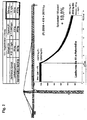
- FIG. 2 shows the load curves for a tower crane when using a steel rope (St) and when using an aramid rope (F) as a hoist rope.
- the values given are for a 2-strand reeving with a maximum load of 12 t (steel rope).
- the comparison involved the use of a steel rope weighing 2.1 kg / m and an aramid rope weighing 0.945 kg / m.
- FIG. 3 The values for a hook height of 200 m and 4-strand design for a steel cable with a cable weight of 4.52 kg / m and for an aramid rope with a cable weight of 2.03 kg / m. How out FIG. 3 As can be seen, the maximum load is increased by approximately 8% and the peak load torque by approximately 290%.
Landscapes
- Engineering & Computer Science (AREA)
- Mechanical Engineering (AREA)
- Structural Engineering (AREA)
- Transportation (AREA)
- Jib Cranes (AREA)
- Control And Safety Of Cranes (AREA)
- Load-Engaging Elements For Cranes (AREA)
- Ropes Or Cables (AREA)
Description
- Die Erfindung betrifft einen Kran, mit einem oder mehreren Seilen beispielsweise zum Heben von Lasten oder zum Verstellen oder Abspannen eines Auslegers gemäß dem Oberbegriff des Anspruchs 1. Hebezeuge sind in zahlreichen unterschiedlichen Ausführungsformen bekannt. Insbesondere im Bereich der Krane besteht eine Vielfalt von Ausführungsvarianten, die unterschiedlichsten Anforderungen gerecht werden müssen.
- Die bei bekannten Hebezeugen eingesetzten Seile bestehen aus einer Vielzahl von Stahldrähten, die zu Litzen verarbeitet sind. Üblicherweise bestehen die Seile aus einem Seilkern, der aus miteinander verseilten Litzen besteht. Um den Seilkern sind die Außenlitzen geschlagen. Die heute verwendeten Stahlseile sind in verschiedensten Ausführungen bekannt. Sie sind üblicherweise auf Seiltrommeln aufgewickelt, wobei aufgrund der Fähigkeit von Stahlseilen, Querkräfte aufzunehmen, eine Mehrlagenwicklung möglich und üblich ist.
- Ein wesentlicher Nachteil der heute eingesetzten Stahlseile ist jedoch deren Gewicht, das je nach Seilausführung bei einem Seildurchmesser von 22 mm z.B. ca. 2,1 kg/m und bei einem Seildurchmeser von 30 mm z.B. ca. 4,5 kg/m beträgt. Das verhältnismäßig hohe Seilgewicht reduziert naturgemäß die Nutzlast des Hebezeuges bzw. steigert das Gesamtgewicht des Hebezeuges bzw. das Transportgewicht mobiler Hebezeuge, wie z.B. mobiler Krane.
- Aus
EP 1 331 191 ist ein Kran gemäß dem Oberbegriff des Anspruchs 1 bekannt. Weitere Kräne sind aus derGB 2009077A DE 19854321 A bekannt. Faserseile für Kräne sind aus derDE 2455273 A1 bekannt. - Der vorliegenden Erfindung liegt daher die Aufgabe zugrunde, ein Hebezeug dahingehend weiterzubilden, daß dessen Gewicht verringert wird bzw. daß dessen Nutzlast gesteigert wird.
- Diese Aufgabe wird durch ein Hebezeug mit den Merkmalen des Anspruchs 1 gelöst. Danach ist vorgesehen, dass es sich bei den Seilen zumindest teilweise um Faserseile handelt. Dies gilt für Hubseile zum Heben der Last oder Seile zum Verstellen eines Auslegers. Bei den Hebezeugen spielt das Seilgewicht eine wesentliche Rolle. Es führt zu einem Anstieg der Nutzlast bzw. zu einer Veringerung des Gesamtgewichtes bzw. des Transportgewichtes mobiler Krane.
- Bei dem Faserseil handelt es sich vorzugsweise um ein Aramidseil, d.h. um ein Seil das Aramidfasern aufweist oder aus diesen aufgebaut ist. Bei dem Werkstoff Aramid handelt es sich um aromatisches Polyamid mit hoher Festigkeit und geringem Gewicht. Das Gewicht eines Aramidseils bei vergleichbarer Bruchkraft beträgt nur ca. 45 % des Gewichtes eines Stahiseiles. Weitere Vorteile sind ein kleines D/d-Verhältnis, d.h. es lassen sich kleine Seilrollen-Durchmesser und damit kleinere Antriebe realisieren, sowie die hohe Lebensdauer bzgl. der BiegewechselFestigkeit, die um den Faktor 60 höher als die von Stahlseilen liegt. Ein weiterer Vorteil besteht in dem hohen Reibwert von 0,3 bis 0,6, der die Seile besonders geeignet für einen Treibscheibenantrieb macht. Ferner ist die geringe Geräuschentwicklung der Seile zu nennen.
- Bei heute bekannten Aramidseilen ist eine Mehrlagenwicklung insofern problematisch, als diese im Gegensatz zu Stahlseilen keine Querkräfte übertragen und einen großen Ovalisierungsgrad zeigen. Daraus ergibt sich, daß es von Vorteil ist, wenn nur Trommeln mit einlagiger Bewicklung eingesetzt werden allerdings verbunden mit dem Nachteil, daß nur geringe Hakenhöhen realisierbar sind. Grundsätzlich ist die Erfindung nicht auf Einlagenwicklungen beschränkt. Sofern Faserseile mit geringem Ovalisierungsgrad eingesetzt werden, ist auch bei diesen wie bei Stahlseilen eine übliche Mehrlagenwicklung im Bereich des Seilantriebes denkbar.
- Gemäß der Erfindung ist ein Seilantrieb und eine Speichertrommel zur Aufwickelung des Seils vorgesehen. Die erforderliche Seilzugkraft wird durch den Seilantrieb aufgebracht. Der Seilantrieb kann z.B. als Spillantrieb oder als Treibscheibenantrieb ausgeführt sein. Die für das Heben der Last oder für das Bewegen eines Auslegers erforderliche Zugkraft wird durch die Treibscheibe oder durch den Spillkopf aufgebracht. Die Speichertrommel dient dazu, die nicht benötigte Seillänge aufzunehmen, wobei hier eine Mehrlagenwicklung denkbar ist, wenn die Zugkraft zum Aufwickeln des Seils auf die Speichertrommel entsprechend gering gewählt wird.
- Bei dem Seilantrieb kann es sich z.B. um einen Hubantrieb oder auch um einen Ausleger-Verstellantrieb handeln. Auch andere Anwendungen sind möglich.
- Die Anordnung der Speichertrommel erfolgt gemäß Anspruch 1. Die Seilzuführung kann durch Umlenkungen den jeweiligen Treibscheiben oder dem Spillkopf zugeführt werden. Bei dem Hebezeug handelt es sich um einen Turmdrehkran, bei dem die Speichertrommel am Gegenausleger angeordnet ist. Die Speichertrommel kann auf großem Abstand zum Anlenkpunkt des Gegenauslegers plaziert werden. Der Seilantrieb, d.h. vorzugsweise der Spillantrieb bzw. der Treibscheibenantrieb kann beispielsweise an der Turmspitze angeordnet sein. Somit wäre ein ausreichender Abstand zwischen den beiden Positionen Antrieb und Trommel vorhanden, um auch eine Trommel mit der notwendigen Speichermöglichkeit ausführen.
- Gemäß der Erfindung ist die Speichertrommel so geschaltet, daß diese stets eine Zugkraft ausübt und damit das Seil bereits mit Vorspannung auf die jeweilige Antriebseinheit (z.B. Treibscheibenantrieb, Spillantrieb) einläuft. Bei einer derartigen Ausführung der Erfindung ergibt sich der Vorteil, daß die Vorspannung bzw. die Seilzugkraft derart eingestellt werden kann, daß die Speichertrommel mehrlagig bewickelt werden kann. Denkbar ist z.B. eine Seilzugkraft von einigen hundert Kilogramm. Die Bewicklung der Speichertrommel erfolgt vorzugsweise mittels einer Wickelvorrichtung.
- In weiterer Ausgestaltung der Erfindung ist vorgesehen, daß die Seilführung derart erfolgt, daß das Seil eine 2-fache, 4-fache oder mehr als 4-fache Einscherung (x-fache Einscherung) aufweist. Speziell bei Autokranen sind 6-, 8-, 10-fache usw. Einscherungen keine Besonderheit. Die Seilführung hat einen erheblichen Einfluß auf das notwendige Hakengewicht und auf die Nutzlast, wie dies unten noch näher erläutert werden wird.
- Heute bekannte Aramidseile weisen die Eigenschaft eines Verdrehwinkeis im Bereich von 40° bis 120° bei voller Zugkraft auf. Um ein Eindrehen der Hakenflasche zu verhindern, kann in weiterer Ausgestaltung der Erfindung ein Drallkompensator vorgesehen sein, der dem Drehwinkelverhalten des Seils eine Gegendrehung entgegensetzt. Der Drallkompensator kann elektrisch betrieben sein und manuell oder automatisch eingesetzt werden. Er dient dazu, dem Drehwinkelverhalten des Seiles entgegenzuwirken. Sind Mittel zur Drehmomenterfassung vorhanden, könnte über diesen Drallkompensator automatisch gegengedreht werden. Vorzugsweise ist der Drallkompensator im Bereich des Seilendfestpunkts vorgesehen.
- Bei Turmdrehkranen ist von wesentlicher Bedeutung, daß das Seil immer von der Hubtrommel aus dem Bereich des Gegengewichtes quasi nach vorne bewegt wird. Dies bedeutet, bei großen Hakenhöhen werden mehrere Tonnen Seil vom Gegengewicht zur Position der Last transportiert. Bezogen auf das Lastmoment bedeutet dies eine Gegengewichtsabnahme und eine Eigengewichtszunahme. Ein geringeres Eigengewicht des Seils würde sich hinsichtlich der auftretenden Belastungen über die Stahlkonstruktion Turmspitze und Drehkranz positiv auswirken, da diese Plus-/Minusbelastung, sei es im Lastmoment oder Entlastung des Momentes wesentlich kleiner wird und dadurch auch Einfluß auf den Turm sowie auf den Drehkranz des Kranes bzw. Unterbau und Eckdrücke hat.
- Weitere Einzelheiten und Vorteile der Erfindung werden anhand eines in der Zeichnung dargestellten Ausführungsbeispiels näher erläutert.
- Figur 1:
- Darstellung zur Ermittlung des Lasthakengewichtes in Abhängigkeit verschiedener Parameter bei einem Turmdrehkran,
- Figur 2, 3:
- Darstellung zur Verdeutlichung der Steigerung der Nutzlast anhand zweier unterschiedlicher Turmdrehkrane.
-
Figur 1 zeigt in schematischer Darstellung den oberen Bereich eines Turmdrehkrans mit Hauptausleger 10 und Gegenausleger 20. Wie aus der Legende zuFigur 1 ersichtlich, kennzeichnet das Bezugszeichen g das Seilgewicht pro Meter Seillänge (kg/m), f den Seildurchhang, I die Haupauslegerlänge und das Bezugszeichen H die Seilzugkraft. Das Lasthakengewicht LAH kann bei einer zweisträngigen Seilführung über die Beziehung LAH = 2 * H bestimmt werden. Das Lasthakengewicht ist notwendig, um den Seildurchhang am Ausleger zu begrenzen und eine gute Seilspulung ohne Last sicherzustellen. - Das Seilgewicht g und die Auslegerlänge I sind gegeben. Ebenso steht der maximale Seildurchhang f fest, der im darstellten Ausführungsbeispiel 5 bis 6 m beträgt. Mittels der in
Figur 1 angegebenen Beziehung kann die Seilzug kraft und damit auch das Hakengewicht ermittelt werden. Da die Seilzugkraft und somit auch das Hakengewicht direkt proportional zum Seilgewicht ist, läßt sich durch eine Änderung des Seilgewichtes ein erheblicher Einfluß auf das Lasthakengewicht und damit auch auf die zur Verfügung stehende Nutzlast ausüben, wie dies exemplarisch aus denFiguren 2 und3 hervorgeht. -
Figur 1 zeigt weiter die Speichertrommel 30, die in dem vom Anlenkpunkt des Gegenauslegers 20 beabstandeten Bereich des Gegenauslegers 20 angeordnet ist, sowie mit dem Bezugszeichen 40 den Seilantrieb, der beispielsweise als Spillantrieb oder als Treibscheibenantrieb ausgeführt sein kann. -
Figur 2 zeigt die Lastkurven für einen Turmdrehkran bei der Verwendung eines Stahlseils (St) sowie bei der Verwendung eines Aramidseils (F) als Hubseil. Di angegebenen Werte gelten für eine 2-strängige Einscherung mit einer Maximallast von 12 t (Stahlseil). Verglichen wurden die Verwendung eines Stahlseils mit einem Gewicht von 2,1 kg/m und eines Aramidseils mit einem Gewicht von 0,945 kg/m. - Wie aus der Tabelle in
Figur 2 ersichtlich, ergibt sich durch die Verwendung des Faserseils bereits eine Verringerung des Lasthakengewichtes um 330 kg. Bei einer Seillänge von 60 m (einfach), d.h. bei 2-facher Einscherung bei einer Gesamtlänge von 120 m ergibt sich ein Gesamtgewicht (Lasthakengewicht und Seilgewicht) von 383 kg. Gegenüber dem Gesamtgewicht bei Verwendung eines Stahlseils ergibt sich eine Verringerung von 470 kg. Daraus ergibt sich, daß die Spitzenlast bei Verwendung eines Aramidseils gegenüber der bei Verwendung eines Stahlseils (2,5 t) um ca. 18,8 % gesteigert werden kann. Die maximale Nutzlast wird aufgrund des verringerten Gewichtes von Seil und Lasthaken um ca. 4 % gesteigert. - Diese erhebliche Steigerung der Spitzenlast fällt bei größeren Hakenhöhen und mehr als 2-facher Einscherung noch deutlicher aus.
- Legt man die oben genannten Daten des Stahlseils sowie des Aramidseils zugrunde, ergibt sich bei einer Hakenhöhe von 200 m bereits eine Spitzenlastanhebung von 41 % und eine Anhebung der maximalen Traglast um ca. 7 %.
- Bei Einsatz eines Stahlseils mit 20 t Maximallast (Seildurchmesser 30 mm, Seilgewicht 4,52 kg/m) ergibt sich im Vergleich zu einem Aramidseil mit einem Seilgewicht von 2,03 kg/m Folgendes: Bei einer Standard-Hakenhöhe von 60 m und 2-facher Einscherung ergibt sich bei Verwendung des Aramidseils eine Gewichtsersparnis (Lasthaken und Seil) von 850 kg, wodurch sich die Last an der Spitze von 5,4 t bei Einsatz eines Stahlseils auf 6,25 t, d.h. um ca. 16 % steigern läßt. Die Maximallast kann um ca. 4,3 % gesteigert werden. Bei einer Hakenhöhe von 200 m läßt sich eine Steigerung des Spitzenlastmomentes um ca. 37,4 % und der Maximallast um ca. 8,2 % erreichen.
- Der obige Effekt wirkt sich um so stärker aus, je größer der Kran ist. Bei Kranen, die mit 4-fach Einscherung arbeiten und auch über größere Höhen fahren, ergibt sich in dem oben genannten Beispiel (Hakenhöhe 60 m) mit einem Durchmesser des Stahlseils von 30 mm und einem Seilgewicht von 4,52 kg/m eine Spitzenlasterhöhung von ca. 47 % und eine Erhöhung der maximalen Traglast um ca. 4,25 %.
- Aus
Figur 3 ergeben sich die Werte für eine Hakenhöhe von 200 m und 4-Strang-Ausführung für ein Stahlseil mit einem Seilgewicht von 4,52 kg/m und für ein Aramidseil mit einem Seilgewicht von 2,03 kg/m. Wie ausFigur 3 ersichtlich, wird die maximale Traglast um ca. 8 % und das Spitzenlastmoment um ca. 290 % gesteigert. - Die genannten Beispiele zeigen, welchen erheblichen Einfluß das Seilgewicht auf das Lastmoment in Abhängigkeit von der Hubhöhe hat. Bei Kranen in der 20 t Ausführung sind entsprechend der obigen Beispiele bei freier Kranaufbauhöhe von ca. 60 m Spitzenlaststeigerungen von ca. 20 % und bei nicht seltenen Hubhöhen von 200 m bis nahezu 40 % möglich. Bei Großkranen mit großen Lasten, z.B. 40 t, die im 4-Strang-Betrieb arbeiten, ergeben sich Spitzenlaststeigerungen bei 60 m Aufbauhöhe von ca. 50 % und bei 200 m Hakenhöhe bis 290 %. Um mit heute üblichen Stahlseilen eine derartige Leistungssteigerung zu erzielen, müßten wesentlich größere, leistungsstärkere Hebezeuge, wie z.B. ein 400 mt-Kran anstelle eines 300 mt-Krans, mit höheren Kosten eingesetzt werden.
Claims (9)
- Kran, mit einem oder mehreren Seilen beispielsweise zum Heben von Lasten oder zum Verstellen oder Abspannen eines Auslegers, wobei es sich bei den Seilen zumindest teilweise um Faserseile handelt, dadurch gekennzeichnet, dass der Kran einen Seilantrieb und eine Speichertrommel zur Aufwickelung des Faserseils aufweist, wobei die Speichertrommel derart geschaltet ist, daß auf das Faserseil stets eine Zugkraft ausgeübt wird, so daß das Faserseil mit Vorspannung auf den Seilantrieb einläuft, wobei es sich bei dem Kran um einen Turmdrehkran handelt und die Speichertrommel am Gegenausleger angeordnet ist.
- Kran nach Anspruch 1, dadurch gekennzeichnet, daß es sich bei den Faserseilen um Aramidseile handelt.
- Kran nach einem der vorhergehenden Ansprüche, dadurch gekennzeichnet, daß der Seilantrieb als Spillantrieb oder als Treibscheibenantrieb ausgeführt ist.
- Kran nach einem der vorhergehenden Ansprüche, dadurch gekennzeichnet, daß es sich bei dem Seilantrieb um einen Hubantrieb oder einen Ausleger-Verstellantrieb handelt.
- Kran nach einem der vorhergehenden Ansprüche, dadurch gekennzeichnet, daß der Seilantrieb im Bereich der Turmspitze angeordnet ist.
- Kran nach einem der vorhergehenden Ansprüche, dadurch gekennzeichnet, daß eine Wickelvorrichtung vorgesehen ist, mittels derer die Speichertrommel mehrlagig bewickelbar ist.
- Kran nach einem der vorhergehenden Ansprüche, dadurch gekennzeichnet, daß das Seil eine 2-fache, 4-fache oder mehr als 4-fache Einscherung aufweist.
- Kran nach einem der vorhergehenden Ansprüche, dadurch gekennzeichnet, daß ein Drallkompensator vorgesehen ist, der dem Drehwinkelverhalten des Seils eine Gegendrehung entgegensetzt.
- Kran nach Anspruch 8, dadurch gekennzeichnet, daß der Drallkompensator elektrisch betrieben ist.
Applications Claiming Priority (2)
| Application Number | Priority Date | Filing Date | Title |
|---|---|---|---|
| DE102004055016 | 2004-11-15 | ||
| DE102005008087.1A DE102005008087B4 (de) | 2004-11-15 | 2005-02-22 | Kran |
Publications (3)
| Publication Number | Publication Date |
|---|---|
| EP1657210A1 EP1657210A1 (de) | 2006-05-17 |
| EP1657210B1 EP1657210B1 (de) | 2010-01-27 |
| EP1657210B2 true EP1657210B2 (de) | 2018-01-17 |
Family
ID=35696006
Family Applications (1)
| Application Number | Title | Priority Date | Filing Date |
|---|---|---|---|
| EP05021048.3A Expired - Lifetime EP1657210B2 (de) | 2004-11-15 | 2005-09-27 | Kran mit Faserseile |
Country Status (4)
| Country | Link |
|---|---|
| EP (1) | EP1657210B2 (de) |
| AT (1) | ATE456538T1 (de) |
| DE (2) | DE102005008087B4 (de) |
| ES (1) | ES2339459T5 (de) |
Cited By (1)
| Publication number | Priority date | Publication date | Assignee | Title |
|---|---|---|---|---|
| EP4114780A1 (de) * | 2020-04-01 | 2023-01-11 | Liebherr-Werk Biberach GmbH | Hebezeug wie kran |
Families Citing this family (5)
| Publication number | Priority date | Publication date | Assignee | Title |
|---|---|---|---|---|
| DE202009014031U1 (de) * | 2009-10-16 | 2009-12-24 | Manitowoc Crane Group France Sas | Synthetikseil als Tragemittel für Krane und andere Hebezeuge |
| DE202011001846U1 (de) * | 2011-01-24 | 2012-04-30 | Liebherr-Components Biberach Gmbh | Vorrichtung zur Erkennung der Ablegereife eines hochfesten Faserseils beim Einsatz an Hebezeugen |
| AT516444B1 (de) | 2014-11-05 | 2016-09-15 | Teufelberger Fiber Rope Gmbh | Seil aus textilem Fasermaterial |
| DE102015003981A1 (de) * | 2015-03-26 | 2016-09-29 | Liebherr-Werk Biberach Gmbh | Kranauslegervorrichtung |
| DE102015003982A1 (de) * | 2015-03-26 | 2016-09-29 | Liebherr-Werk Biberach Gmbh | Kranturm |
Citations (1)
| Publication number | Priority date | Publication date | Assignee | Title |
|---|---|---|---|---|
| GB2009077A (en) † | 1977-12-05 | 1979-06-13 | Pyramid Mfg Co | Winch Mechanism for Crane |
Family Cites Families (9)
| Publication number | Priority date | Publication date | Assignee | Title |
|---|---|---|---|---|
| DE2455273C3 (de) * | 1974-11-22 | 1978-01-19 | Feiten & Guilleaume Carlswerk AG, 5000 Köln | Kranseil aus Kunststoff |
| DE2853661C2 (de) | 1978-12-13 | 1983-12-01 | Drahtseilwerk Saar GmbH, 6654 Kirkel | Kunstfaserseil |
| DE3510116A1 (de) * | 1984-04-25 | 1985-10-31 | Liebherr-Werk Biberach Gmbh, 7950 Biberach | Oben drehender turmkran |
| DE3937631A1 (de) | 1989-11-11 | 1991-05-16 | Saar Gmbh Drahtseilwerk | Wirbel zur befestigung des festen endes eines ueber mindestens eine, die lastaufnahmevorrichtung haltende, lose rolle gefuehrten kranseiles |
| IL132299A (en) | 1998-10-23 | 2003-10-31 | Inventio Ag | Stranded synthetic fiber rope |
| PE20001199A1 (es) * | 1998-10-23 | 2000-11-09 | Inventio Ag | Cable de fibra sintetica |
| EP1004700B1 (de) * | 1998-11-25 | 2011-02-16 | Inventio AG | Mantelloses Kunstfaserseil und dessen Herstellungsverfahren |
| EP1331191A1 (de) * | 2002-01-25 | 2003-07-30 | IHC Gusto Engineering B.V. | Schwimmendehebevorrichtung |
| DE20202989U1 (de) | 2002-02-25 | 2002-06-13 | Müller, Wolfgang T., 78315 Radolfzell | Hybridseil für Hub- und Transporteinrichtungen insbesondere für Aufzüge |
-
2005
- 2005-02-22 DE DE102005008087.1A patent/DE102005008087B4/de not_active Expired - Lifetime
- 2005-09-27 DE DE502005008939T patent/DE502005008939D1/de active Active
- 2005-09-27 ES ES05021048.3T patent/ES2339459T5/es active Active
- 2005-09-27 AT AT05021048T patent/ATE456538T1/de not_active IP Right Cessation
- 2005-09-27 EP EP05021048.3A patent/EP1657210B2/de not_active Expired - Lifetime
Patent Citations (1)
| Publication number | Priority date | Publication date | Assignee | Title |
|---|---|---|---|---|
| GB2009077A (en) † | 1977-12-05 | 1979-06-13 | Pyramid Mfg Co | Winch Mechanism for Crane |
Cited By (2)
| Publication number | Priority date | Publication date | Assignee | Title |
|---|---|---|---|---|
| EP4114780A1 (de) * | 2020-04-01 | 2023-01-11 | Liebherr-Werk Biberach GmbH | Hebezeug wie kran |
| EP4114780B1 (de) * | 2020-04-01 | 2025-06-04 | Liebherr-Werk Biberach GmbH | Hebezeug wie kran |
Also Published As
| Publication number | Publication date |
|---|---|
| EP1657210B1 (de) | 2010-01-27 |
| ES2339459T3 (es) | 2010-05-20 |
| DE102005008087A1 (de) | 2006-05-24 |
| ES2339459T5 (es) | 2018-04-30 |
| DE102005008087B4 (de) | 2023-10-05 |
| DE502005008939D1 (de) | 2010-03-18 |
| ATE456538T1 (de) | 2010-02-15 |
| EP1657210A1 (de) | 2006-05-17 |
Similar Documents
| Publication | Publication Date | Title |
|---|---|---|
| EP3365492B1 (de) | Hochfestes faserseil für hebezeuge wie krane | |
| EP2435352B1 (de) | Laufkran mit laufkatze und seilwinde | |
| EP3359482B1 (de) | Seiltrommel sowie faserseiltrieb mit einer solchen seiltrommel | |
| DE102017117121B4 (de) | Kran | |
| EP3038968B1 (de) | Vorrichtung zur erkennung der ablegereife eines hochfesten faserseils beim einsatz an hebezeugen | |
| EP3038967B1 (de) | Vorrichtung zur erkennung der ablegereife eines hochfesten faserseils beim einsatz an hebezeugen | |
| EP1657210B2 (de) | Kran mit Faserseile | |
| EP2984020B1 (de) | Kran sowie verfahren zur prüfung der verseilung eines solchen krans | |
| CN202296903U (zh) | 一种卷扬锁止装置、拉紧装置及起重机 | |
| EP1924520B1 (de) | Kombinations-doppelunterflasche | |
| EP1780164B2 (de) | Hakenflasche für einen Kran | |
| DE60131442T2 (de) | Anordnung zum anordnen zusätzlicher seile für kranhubwerke | |
| DE19731049B4 (de) | Kran mit Brückenausleger | |
| DE202011001850U1 (de) | Kran | |
| DE102004054096B4 (de) | Derrickkran | |
| EP1460025B1 (de) | Hebezeug mit zwei Lastseilen | |
| DE8334660U1 (de) | Hebevorrichtung | |
| DE102018121556A1 (de) | Hakenflaschengrundkörper | |
| DE19933771B4 (de) | Kran | |
| EP1947051A3 (de) | Hubseilumscherung | |
| DE102004046130A1 (de) | Gleisloser Fahrzeugkran | |
| WO2019121990A1 (de) | Messeinrichtung zur lastmessung bei einem hebezeug | |
| DE202005009235U1 (de) | Seilwirbel | |
| DE102016011217A1 (de) | Gelenkauslegerkran mit Seiltrieb | |
| EP2628700B1 (de) | Liftvorrichtung mit Doppelwinde |
Legal Events
| Date | Code | Title | Description |
|---|---|---|---|
| PUAI | Public reference made under article 153(3) epc to a published international application that has entered the european phase |
Free format text: ORIGINAL CODE: 0009012 |
|
| AK | Designated contracting states |
Kind code of ref document: A1 Designated state(s): AT BE BG CH CY CZ DE DK EE ES FI FR GB GR HU IE IS IT LI LT LU LV MC NL PL PT RO SE SI SK TR |
|
| AX | Request for extension of the european patent |
Extension state: AL BA HR MK YU |
|
| 17P | Request for examination filed |
Effective date: 20060718 |
|
| 17Q | First examination report despatched |
Effective date: 20060914 |
|
| AKX | Designation fees paid |
Designated state(s): AT BE BG CH CY CZ DE DK EE ES FI FR GB GR HU IE IS IT LI LT LU LV MC NL PL PT RO SE SI SK TR |
|
| RTI1 | Title (correction) |
Free format text: CRANE WITH FIBRE CABLE |
|
| GRAP | Despatch of communication of intention to grant a patent |
Free format text: ORIGINAL CODE: EPIDOSNIGR1 |
|
| GRAS | Grant fee paid |
Free format text: ORIGINAL CODE: EPIDOSNIGR3 |
|
| GRAA | (expected) grant |
Free format text: ORIGINAL CODE: 0009210 |
|
| AK | Designated contracting states |
Kind code of ref document: B1 Designated state(s): AT BE BG CH CY CZ DE DK EE ES FI FR GB GR HU IE IS IT LI LT LU LV MC NL PL PT RO SE SI SK TR |
|
| REG | Reference to a national code |
Ref country code: GB Ref legal event code: FG4D Free format text: NOT ENGLISH |
|
| REG | Reference to a national code |
Ref country code: CH Ref legal event code: EP Ref country code: CH Ref legal event code: NV Representative=s name: BOVARD AG PATENTANWAELTE |
|
| REG | Reference to a national code |
Ref country code: IE Ref legal event code: FG4D |
|
| REF | Corresponds to: |
Ref document number: 502005008939 Country of ref document: DE Date of ref document: 20100318 Kind code of ref document: P |
|
| REG | Reference to a national code |
Ref country code: ES Ref legal event code: FG2A Ref document number: 2339459 Country of ref document: ES Kind code of ref document: T3 |
|
| REG | Reference to a national code |
Ref country code: NL Ref legal event code: VDEP Effective date: 20100127 |
|
| LTIE | Lt: invalidation of european patent or patent extension |
Effective date: 20100127 |
|
| PG25 | Lapsed in a contracting state [announced via postgrant information from national office to epo] |
Ref country code: IS Free format text: LAPSE BECAUSE OF FAILURE TO SUBMIT A TRANSLATION OF THE DESCRIPTION OR TO PAY THE FEE WITHIN THE PRESCRIBED TIME-LIMIT Effective date: 20100527 Ref country code: LT Free format text: LAPSE BECAUSE OF FAILURE TO SUBMIT A TRANSLATION OF THE DESCRIPTION OR TO PAY THE FEE WITHIN THE PRESCRIBED TIME-LIMIT Effective date: 20100127 Ref country code: PT Free format text: LAPSE BECAUSE OF FAILURE TO SUBMIT A TRANSLATION OF THE DESCRIPTION OR TO PAY THE FEE WITHIN THE PRESCRIBED TIME-LIMIT Effective date: 20100527 Ref country code: NL Free format text: LAPSE BECAUSE OF FAILURE TO SUBMIT A TRANSLATION OF THE DESCRIPTION OR TO PAY THE FEE WITHIN THE PRESCRIBED TIME-LIMIT Effective date: 20100127 |
|
| REG | Reference to a national code |
Ref country code: IE Ref legal event code: FD4D |
|
| PG25 | Lapsed in a contracting state [announced via postgrant information from national office to epo] |
Ref country code: PL Free format text: LAPSE BECAUSE OF FAILURE TO SUBMIT A TRANSLATION OF THE DESCRIPTION OR TO PAY THE FEE WITHIN THE PRESCRIBED TIME-LIMIT Effective date: 20100127 Ref country code: SI Free format text: LAPSE BECAUSE OF FAILURE TO SUBMIT A TRANSLATION OF THE DESCRIPTION OR TO PAY THE FEE WITHIN THE PRESCRIBED TIME-LIMIT Effective date: 20100127 Ref country code: LV Free format text: LAPSE BECAUSE OF FAILURE TO SUBMIT A TRANSLATION OF THE DESCRIPTION OR TO PAY THE FEE WITHIN THE PRESCRIBED TIME-LIMIT Effective date: 20100127 Ref country code: FI Free format text: LAPSE BECAUSE OF FAILURE TO SUBMIT A TRANSLATION OF THE DESCRIPTION OR TO PAY THE FEE WITHIN THE PRESCRIBED TIME-LIMIT Effective date: 20100127 |
|
| PLBI | Opposition filed |
Free format text: ORIGINAL CODE: 0009260 |
|
| PG25 | Lapsed in a contracting state [announced via postgrant information from national office to epo] |
Ref country code: RO Free format text: LAPSE BECAUSE OF FAILURE TO SUBMIT A TRANSLATION OF THE DESCRIPTION OR TO PAY THE FEE WITHIN THE PRESCRIBED TIME-LIMIT Effective date: 20100127 Ref country code: IE Free format text: LAPSE BECAUSE OF FAILURE TO SUBMIT A TRANSLATION OF THE DESCRIPTION OR TO PAY THE FEE WITHIN THE PRESCRIBED TIME-LIMIT Effective date: 20100127 Ref country code: GR Free format text: LAPSE BECAUSE OF FAILURE TO SUBMIT A TRANSLATION OF THE DESCRIPTION OR TO PAY THE FEE WITHIN THE PRESCRIBED TIME-LIMIT Effective date: 20100428 Ref country code: CY Free format text: LAPSE BECAUSE OF FAILURE TO SUBMIT A TRANSLATION OF THE DESCRIPTION OR TO PAY THE FEE WITHIN THE PRESCRIBED TIME-LIMIT Effective date: 20100127 Ref country code: EE Free format text: LAPSE BECAUSE OF FAILURE TO SUBMIT A TRANSLATION OF THE DESCRIPTION OR TO PAY THE FEE WITHIN THE PRESCRIBED TIME-LIMIT Effective date: 20100127 Ref country code: SE Free format text: LAPSE BECAUSE OF FAILURE TO SUBMIT A TRANSLATION OF THE DESCRIPTION OR TO PAY THE FEE WITHIN THE PRESCRIBED TIME-LIMIT Effective date: 20100127 |
|
| 26 | Opposition filed |
Opponent name: MANITOWOC CRANE GROUP GERMANY GMBH Effective date: 20101012 |
|
| PG25 | Lapsed in a contracting state [announced via postgrant information from national office to epo] |
Ref country code: BG Free format text: LAPSE BECAUSE OF FAILURE TO SUBMIT A TRANSLATION OF THE DESCRIPTION OR TO PAY THE FEE WITHIN THE PRESCRIBED TIME-LIMIT Effective date: 20100427 Ref country code: SK Free format text: LAPSE BECAUSE OF FAILURE TO SUBMIT A TRANSLATION OF THE DESCRIPTION OR TO PAY THE FEE WITHIN THE PRESCRIBED TIME-LIMIT Effective date: 20100127 Ref country code: CZ Free format text: LAPSE BECAUSE OF FAILURE TO SUBMIT A TRANSLATION OF THE DESCRIPTION OR TO PAY THE FEE WITHIN THE PRESCRIBED TIME-LIMIT Effective date: 20100127 |
|
| PG25 | Lapsed in a contracting state [announced via postgrant information from national office to epo] |
Ref country code: DK Free format text: LAPSE BECAUSE OF FAILURE TO SUBMIT A TRANSLATION OF THE DESCRIPTION OR TO PAY THE FEE WITHIN THE PRESCRIBED TIME-LIMIT Effective date: 20100127 |
|
| PLAX | Notice of opposition and request to file observation + time limit sent |
Free format text: ORIGINAL CODE: EPIDOSNOBS2 |
|
| BERE | Be: lapsed |
Owner name: LIEBHERR-WERK BIBERACH G.M.B.H. Effective date: 20100930 |
|
| REG | Reference to a national code |
Ref country code: CH Ref legal event code: PFA Owner name: LIEBHERR-WERK BIBERACH GMBH Free format text: LIEBHERR-WERK BIBERACH GMBH#HANS-LIEBHERR-STRASSE 45#88400 BIBERACH (DE) -TRANSFER TO- LIEBHERR-WERK BIBERACH GMBH#HANS-LIEBHERR-STRASSE 45#88400 BIBERACH (DE) |
|
| PG25 | Lapsed in a contracting state [announced via postgrant information from national office to epo] |
Ref country code: MC Free format text: LAPSE BECAUSE OF NON-PAYMENT OF DUE FEES Effective date: 20100930 |
|
| GBPC | Gb: european patent ceased through non-payment of renewal fee |
Effective date: 20100927 |
|
| PG25 | Lapsed in a contracting state [announced via postgrant information from national office to epo] |
Ref country code: BE Free format text: LAPSE BECAUSE OF NON-PAYMENT OF DUE FEES Effective date: 20100930 |
|
| PLAF | Information modified related to communication of a notice of opposition and request to file observations + time limit |
Free format text: ORIGINAL CODE: EPIDOSCOBS2 |
|
| PG25 | Lapsed in a contracting state [announced via postgrant information from national office to epo] |
Ref country code: GB Free format text: LAPSE BECAUSE OF NON-PAYMENT OF DUE FEES Effective date: 20100927 |
|
| PLBB | Reply of patent proprietor to notice(s) of opposition received |
Free format text: ORIGINAL CODE: EPIDOSNOBS3 |
|
| PG25 | Lapsed in a contracting state [announced via postgrant information from national office to epo] |
Ref country code: AT Free format text: LAPSE BECAUSE OF NON-PAYMENT OF DUE FEES Effective date: 20100927 |
|
| APAH | Appeal reference modified |
Free format text: ORIGINAL CODE: EPIDOSCREFNO |
|
| APBM | Appeal reference recorded |
Free format text: ORIGINAL CODE: EPIDOSNREFNO |
|
| APBP | Date of receipt of notice of appeal recorded |
Free format text: ORIGINAL CODE: EPIDOSNNOA2O |
|
| PG25 | Lapsed in a contracting state [announced via postgrant information from national office to epo] |
Ref country code: LU Free format text: LAPSE BECAUSE OF NON-PAYMENT OF DUE FEES Effective date: 20100927 Ref country code: HU Free format text: LAPSE BECAUSE OF FAILURE TO SUBMIT A TRANSLATION OF THE DESCRIPTION OR TO PAY THE FEE WITHIN THE PRESCRIBED TIME-LIMIT Effective date: 20100728 |
|
| PG25 | Lapsed in a contracting state [announced via postgrant information from national office to epo] |
Ref country code: TR Free format text: LAPSE BECAUSE OF FAILURE TO SUBMIT A TRANSLATION OF THE DESCRIPTION OR TO PAY THE FEE WITHIN THE PRESCRIBED TIME-LIMIT Effective date: 20100127 |
|
| APBQ | Date of receipt of statement of grounds of appeal recorded |
Free format text: ORIGINAL CODE: EPIDOSNNOA3O |
|
| REG | Reference to a national code |
Ref country code: FR Ref legal event code: PLFP Year of fee payment: 12 |
|
| APBU | Appeal procedure closed |
Free format text: ORIGINAL CODE: EPIDOSNNOA9O |
|
| REG | Reference to a national code |
Ref country code: FR Ref legal event code: PLFP Year of fee payment: 13 |
|
| PUAH | Patent maintained in amended form |
Free format text: ORIGINAL CODE: 0009272 |
|
| STAA | Information on the status of an ep patent application or granted ep patent |
Free format text: STATUS: PATENT MAINTAINED AS AMENDED |
|
| 27A | Patent maintained in amended form |
Effective date: 20180117 |
|
| AK | Designated contracting states |
Kind code of ref document: B2 Designated state(s): AT BE BG CH CY CZ DE DK EE ES FI FR GB GR HU IE IS IT LI LT LU LV MC NL PL PT RO SE SI SK TR |
|
| REG | Reference to a national code |
Ref country code: DE Ref legal event code: R102 Ref document number: 502005008939 Country of ref document: DE |
|
| REG | Reference to a national code |
Ref country code: CH Ref legal event code: AELC |
|
| REG | Reference to a national code |
Ref country code: ES Ref legal event code: DC2A Ref document number: 2339459 Country of ref document: ES Kind code of ref document: T5 Effective date: 20180430 |
|
| REG | Reference to a national code |
Ref country code: FR Ref legal event code: PLFP Year of fee payment: 14 |
|
| P01 | Opt-out of the competence of the unified patent court (upc) registered |
Effective date: 20230630 |
|
| PGFP | Annual fee paid to national office [announced via postgrant information from national office to epo] |
Ref country code: DE Payment date: 20240926 Year of fee payment: 20 |
|
| PGFP | Annual fee paid to national office [announced via postgrant information from national office to epo] |
Ref country code: FR Payment date: 20240924 Year of fee payment: 20 |
|
| PGFP | Annual fee paid to national office [announced via postgrant information from national office to epo] |
Ref country code: IT Payment date: 20240926 Year of fee payment: 20 |
|
| PGFP | Annual fee paid to national office [announced via postgrant information from national office to epo] |
Ref country code: ES Payment date: 20241001 Year of fee payment: 20 |
|
| PGFP | Annual fee paid to national office [announced via postgrant information from national office to epo] |
Ref country code: CH Payment date: 20241001 Year of fee payment: 20 |
|
| REG | Reference to a national code |
Ref country code: DE Ref legal event code: R071 Ref document number: 502005008939 Country of ref document: DE |
|
| REG | Reference to a national code |
Ref country code: CH Ref legal event code: PL |
|
| REG | Reference to a national code |
Ref country code: ES Ref legal event code: FD2A Effective date: 20251203 |
|
| PG25 | Lapsed in a contracting state [announced via postgrant information from national office to epo] |
Ref country code: ES Free format text: LAPSE BECAUSE OF EXPIRATION OF PROTECTION Effective date: 20250928 |