EP1660449B1 - Aminopropanolderivate - Google Patents
Aminopropanolderivate Download PDFInfo
- Publication number
- EP1660449B1 EP1660449B1 EP04764563A EP04764563A EP1660449B1 EP 1660449 B1 EP1660449 B1 EP 1660449B1 EP 04764563 A EP04764563 A EP 04764563A EP 04764563 A EP04764563 A EP 04764563A EP 1660449 B1 EP1660449 B1 EP 1660449B1
- Authority
- EP
- European Patent Office
- Prior art keywords
- compound
- formula
- phenyl
- enantiomer
- alkyl
- Prior art date
- Legal status (The legal status is an assumption and is not a legal conclusion. Google has not performed a legal analysis and makes no representation as to the accuracy of the status listed.)
- Expired - Lifetime
Links
- 0 C*1O*N(C)C1(C)* Chemical compound C*1O*N(C)C1(C)* 0.000 description 3
- CGECTQPELJVCDP-HXUWFJFHSA-N Cc1cccc(OCCOc2ccc(CC[C@@](CO)(COP(O)(O)=O)N)cc2)c1 Chemical compound Cc1cccc(OCCOc2ccc(CC[C@@](CO)(COP(O)(O)=O)N)cc2)c1 CGECTQPELJVCDP-HXUWFJFHSA-N 0.000 description 1
Classifications
-
- C—CHEMISTRY; METALLURGY
- C07—ORGANIC CHEMISTRY
- C07F—ACYCLIC, CARBOCYCLIC OR HETEROCYCLIC COMPOUNDS CONTAINING ELEMENTS OTHER THAN CARBON, HYDROGEN, HALOGEN, OXYGEN, NITROGEN, SULFUR, SELENIUM OR TELLURIUM
- C07F9/00—Compounds containing elements of Groups 5 or 15 of the Periodic Table
- C07F9/02—Phosphorus compounds
- C07F9/547—Heterocyclic compounds, e.g. containing phosphorus as a ring hetero atom
- C07F9/553—Heterocyclic compounds, e.g. containing phosphorus as a ring hetero atom having one nitrogen atom as the only ring hetero atom
- C07F9/572—Five-membered rings
- C07F9/5728—Five-membered rings condensed with carbocyclic rings or carbocyclic ring systems
-
- A—HUMAN NECESSITIES
- A61—MEDICAL OR VETERINARY SCIENCE; HYGIENE
- A61P—SPECIFIC THERAPEUTIC ACTIVITY OF CHEMICAL COMPOUNDS OR MEDICINAL PREPARATIONS
- A61P1/00—Drugs for disorders of the alimentary tract or the digestive system
- A61P1/04—Drugs for disorders of the alimentary tract or the digestive system for ulcers, gastritis or reflux esophagitis, e.g. antacids, inhibitors of acid secretion, mucosal protectants
-
- A—HUMAN NECESSITIES
- A61—MEDICAL OR VETERINARY SCIENCE; HYGIENE
- A61P—SPECIFIC THERAPEUTIC ACTIVITY OF CHEMICAL COMPOUNDS OR MEDICINAL PREPARATIONS
- A61P1/00—Drugs for disorders of the alimentary tract or the digestive system
- A61P1/16—Drugs for disorders of the alimentary tract or the digestive system for liver or gallbladder disorders, e.g. hepatoprotective agents, cholagogues, litholytics
-
- A—HUMAN NECESSITIES
- A61—MEDICAL OR VETERINARY SCIENCE; HYGIENE
- A61P—SPECIFIC THERAPEUTIC ACTIVITY OF CHEMICAL COMPOUNDS OR MEDICINAL PREPARATIONS
- A61P11/00—Drugs for disorders of the respiratory system
-
- A—HUMAN NECESSITIES
- A61—MEDICAL OR VETERINARY SCIENCE; HYGIENE
- A61P—SPECIFIC THERAPEUTIC ACTIVITY OF CHEMICAL COMPOUNDS OR MEDICINAL PREPARATIONS
- A61P11/00—Drugs for disorders of the respiratory system
- A61P11/02—Nasal agents, e.g. decongestants
-
- A—HUMAN NECESSITIES
- A61—MEDICAL OR VETERINARY SCIENCE; HYGIENE
- A61P—SPECIFIC THERAPEUTIC ACTIVITY OF CHEMICAL COMPOUNDS OR MEDICINAL PREPARATIONS
- A61P13/00—Drugs for disorders of the urinary system
- A61P13/12—Drugs for disorders of the urinary system of the kidneys
-
- A—HUMAN NECESSITIES
- A61—MEDICAL OR VETERINARY SCIENCE; HYGIENE
- A61P—SPECIFIC THERAPEUTIC ACTIVITY OF CHEMICAL COMPOUNDS OR MEDICINAL PREPARATIONS
- A61P17/00—Drugs for dermatological disorders
-
- A—HUMAN NECESSITIES
- A61—MEDICAL OR VETERINARY SCIENCE; HYGIENE
- A61P—SPECIFIC THERAPEUTIC ACTIVITY OF CHEMICAL COMPOUNDS OR MEDICINAL PREPARATIONS
- A61P17/00—Drugs for dermatological disorders
- A61P17/06—Antipsoriatics
-
- A—HUMAN NECESSITIES
- A61—MEDICAL OR VETERINARY SCIENCE; HYGIENE
- A61P—SPECIFIC THERAPEUTIC ACTIVITY OF CHEMICAL COMPOUNDS OR MEDICINAL PREPARATIONS
- A61P17/00—Drugs for dermatological disorders
- A61P17/14—Drugs for dermatological disorders for baldness or alopecia
-
- A—HUMAN NECESSITIES
- A61—MEDICAL OR VETERINARY SCIENCE; HYGIENE
- A61P—SPECIFIC THERAPEUTIC ACTIVITY OF CHEMICAL COMPOUNDS OR MEDICINAL PREPARATIONS
- A61P19/00—Drugs for skeletal disorders
- A61P19/02—Drugs for skeletal disorders for joint disorders, e.g. arthritis, arthrosis
-
- A—HUMAN NECESSITIES
- A61—MEDICAL OR VETERINARY SCIENCE; HYGIENE
- A61P—SPECIFIC THERAPEUTIC ACTIVITY OF CHEMICAL COMPOUNDS OR MEDICINAL PREPARATIONS
- A61P21/00—Drugs for disorders of the muscular or neuromuscular system
- A61P21/04—Drugs for disorders of the muscular or neuromuscular system for myasthenia gravis
-
- A—HUMAN NECESSITIES
- A61—MEDICAL OR VETERINARY SCIENCE; HYGIENE
- A61P—SPECIFIC THERAPEUTIC ACTIVITY OF CHEMICAL COMPOUNDS OR MEDICINAL PREPARATIONS
- A61P25/00—Drugs for disorders of the nervous system
-
- A—HUMAN NECESSITIES
- A61—MEDICAL OR VETERINARY SCIENCE; HYGIENE
- A61P—SPECIFIC THERAPEUTIC ACTIVITY OF CHEMICAL COMPOUNDS OR MEDICINAL PREPARATIONS
- A61P27/00—Drugs for disorders of the senses
- A61P27/02—Ophthalmic agents
-
- A—HUMAN NECESSITIES
- A61—MEDICAL OR VETERINARY SCIENCE; HYGIENE
- A61P—SPECIFIC THERAPEUTIC ACTIVITY OF CHEMICAL COMPOUNDS OR MEDICINAL PREPARATIONS
- A61P29/00—Non-central analgesic, antipyretic or antiinflammatory agents, e.g. antirheumatic agents; Non-steroidal antiinflammatory drugs [NSAID]
-
- A—HUMAN NECESSITIES
- A61—MEDICAL OR VETERINARY SCIENCE; HYGIENE
- A61P—SPECIFIC THERAPEUTIC ACTIVITY OF CHEMICAL COMPOUNDS OR MEDICINAL PREPARATIONS
- A61P3/00—Drugs for disorders of the metabolism
- A61P3/08—Drugs for disorders of the metabolism for glucose homeostasis
- A61P3/10—Drugs for disorders of the metabolism for glucose homeostasis for hyperglycaemia, e.g. antidiabetics
-
- A—HUMAN NECESSITIES
- A61—MEDICAL OR VETERINARY SCIENCE; HYGIENE
- A61P—SPECIFIC THERAPEUTIC ACTIVITY OF CHEMICAL COMPOUNDS OR MEDICINAL PREPARATIONS
- A61P31/00—Antiinfectives, i.e. antibiotics, antiseptics, chemotherapeutics
-
- A—HUMAN NECESSITIES
- A61—MEDICAL OR VETERINARY SCIENCE; HYGIENE
- A61P—SPECIFIC THERAPEUTIC ACTIVITY OF CHEMICAL COMPOUNDS OR MEDICINAL PREPARATIONS
- A61P31/00—Antiinfectives, i.e. antibiotics, antiseptics, chemotherapeutics
- A61P31/04—Antibacterial agents
-
- A—HUMAN NECESSITIES
- A61—MEDICAL OR VETERINARY SCIENCE; HYGIENE
- A61P—SPECIFIC THERAPEUTIC ACTIVITY OF CHEMICAL COMPOUNDS OR MEDICINAL PREPARATIONS
- A61P31/00—Antiinfectives, i.e. antibiotics, antiseptics, chemotherapeutics
- A61P31/12—Antivirals
-
- A—HUMAN NECESSITIES
- A61—MEDICAL OR VETERINARY SCIENCE; HYGIENE
- A61P—SPECIFIC THERAPEUTIC ACTIVITY OF CHEMICAL COMPOUNDS OR MEDICINAL PREPARATIONS
- A61P31/00—Antiinfectives, i.e. antibiotics, antiseptics, chemotherapeutics
- A61P31/12—Antivirals
- A61P31/14—Antivirals for RNA viruses
- A61P31/18—Antivirals for RNA viruses for HIV
-
- A—HUMAN NECESSITIES
- A61—MEDICAL OR VETERINARY SCIENCE; HYGIENE
- A61P—SPECIFIC THERAPEUTIC ACTIVITY OF CHEMICAL COMPOUNDS OR MEDICINAL PREPARATIONS
- A61P35/00—Antineoplastic agents
-
- A—HUMAN NECESSITIES
- A61—MEDICAL OR VETERINARY SCIENCE; HYGIENE
- A61P—SPECIFIC THERAPEUTIC ACTIVITY OF CHEMICAL COMPOUNDS OR MEDICINAL PREPARATIONS
- A61P35/00—Antineoplastic agents
- A61P35/02—Antineoplastic agents specific for leukemia
-
- A—HUMAN NECESSITIES
- A61—MEDICAL OR VETERINARY SCIENCE; HYGIENE
- A61P—SPECIFIC THERAPEUTIC ACTIVITY OF CHEMICAL COMPOUNDS OR MEDICINAL PREPARATIONS
- A61P37/00—Drugs for immunological or allergic disorders
-
- A—HUMAN NECESSITIES
- A61—MEDICAL OR VETERINARY SCIENCE; HYGIENE
- A61P—SPECIFIC THERAPEUTIC ACTIVITY OF CHEMICAL COMPOUNDS OR MEDICINAL PREPARATIONS
- A61P37/00—Drugs for immunological or allergic disorders
- A61P37/02—Immunomodulators
-
- A—HUMAN NECESSITIES
- A61—MEDICAL OR VETERINARY SCIENCE; HYGIENE
- A61P—SPECIFIC THERAPEUTIC ACTIVITY OF CHEMICAL COMPOUNDS OR MEDICINAL PREPARATIONS
- A61P37/00—Drugs for immunological or allergic disorders
- A61P37/02—Immunomodulators
- A61P37/04—Immunostimulants
-
- A—HUMAN NECESSITIES
- A61—MEDICAL OR VETERINARY SCIENCE; HYGIENE
- A61P—SPECIFIC THERAPEUTIC ACTIVITY OF CHEMICAL COMPOUNDS OR MEDICINAL PREPARATIONS
- A61P37/00—Drugs for immunological or allergic disorders
- A61P37/02—Immunomodulators
- A61P37/06—Immunosuppressants, e.g. drugs for graft rejection
-
- A—HUMAN NECESSITIES
- A61—MEDICAL OR VETERINARY SCIENCE; HYGIENE
- A61P—SPECIFIC THERAPEUTIC ACTIVITY OF CHEMICAL COMPOUNDS OR MEDICINAL PREPARATIONS
- A61P37/00—Drugs for immunological or allergic disorders
- A61P37/08—Antiallergic agents
-
- A—HUMAN NECESSITIES
- A61—MEDICAL OR VETERINARY SCIENCE; HYGIENE
- A61P—SPECIFIC THERAPEUTIC ACTIVITY OF CHEMICAL COMPOUNDS OR MEDICINAL PREPARATIONS
- A61P5/00—Drugs for disorders of the endocrine system
- A61P5/14—Drugs for disorders of the endocrine system of the thyroid hormones, e.g. T3, T4
-
- A—HUMAN NECESSITIES
- A61—MEDICAL OR VETERINARY SCIENCE; HYGIENE
- A61P—SPECIFIC THERAPEUTIC ACTIVITY OF CHEMICAL COMPOUNDS OR MEDICINAL PREPARATIONS
- A61P7/00—Drugs for disorders of the blood or the extracellular fluid
- A61P7/06—Antianaemics
-
- A—HUMAN NECESSITIES
- A61—MEDICAL OR VETERINARY SCIENCE; HYGIENE
- A61P—SPECIFIC THERAPEUTIC ACTIVITY OF CHEMICAL COMPOUNDS OR MEDICINAL PREPARATIONS
- A61P9/00—Drugs for disorders of the cardiovascular system
-
- A—HUMAN NECESSITIES
- A61—MEDICAL OR VETERINARY SCIENCE; HYGIENE
- A61P—SPECIFIC THERAPEUTIC ACTIVITY OF CHEMICAL COMPOUNDS OR MEDICINAL PREPARATIONS
- A61P9/00—Drugs for disorders of the cardiovascular system
- A61P9/08—Vasodilators for multiple indications
-
- A—HUMAN NECESSITIES
- A61—MEDICAL OR VETERINARY SCIENCE; HYGIENE
- A61P—SPECIFIC THERAPEUTIC ACTIVITY OF CHEMICAL COMPOUNDS OR MEDICINAL PREPARATIONS
- A61P9/00—Drugs for disorders of the cardiovascular system
- A61P9/10—Drugs for disorders of the cardiovascular system for treating ischaemic or atherosclerotic diseases, e.g. antianginal drugs, coronary vasodilators, drugs for myocardial infarction, retinopathy, cerebrovascula insufficiency, renal arteriosclerosis
-
- C—CHEMISTRY; METALLURGY
- C07—ORGANIC CHEMISTRY
- C07D—HETEROCYCLIC COMPOUNDS
- C07D209/00—Heterocyclic compounds containing five-membered rings, condensed with other rings, with one nitrogen atom as the only ring hetero atom
- C07D209/02—Heterocyclic compounds containing five-membered rings, condensed with other rings, with one nitrogen atom as the only ring hetero atom condensed with one carbocyclic ring
- C07D209/44—Iso-indoles; Hydrogenated iso-indoles
- C07D209/46—Iso-indoles; Hydrogenated iso-indoles with an oxygen atom in position 1
-
- C—CHEMISTRY; METALLURGY
- C07—ORGANIC CHEMISTRY
- C07D—HETEROCYCLIC COMPOUNDS
- C07D263/00—Heterocyclic compounds containing 1,3-oxazole or hydrogenated 1,3-oxazole rings
- C07D263/02—Heterocyclic compounds containing 1,3-oxazole or hydrogenated 1,3-oxazole rings not condensed with other rings
- C07D263/08—Heterocyclic compounds containing 1,3-oxazole or hydrogenated 1,3-oxazole rings not condensed with other rings having one double bond between ring members or between a ring member and a non-ring member
- C07D263/10—Heterocyclic compounds containing 1,3-oxazole or hydrogenated 1,3-oxazole rings not condensed with other rings having one double bond between ring members or between a ring member and a non-ring member with only hydrogen atoms, hydrocarbon or substituted hydrocarbon radicals, directly attached to ring carbon atoms
- C07D263/14—Heterocyclic compounds containing 1,3-oxazole or hydrogenated 1,3-oxazole rings not condensed with other rings having one double bond between ring members or between a ring member and a non-ring member with only hydrogen atoms, hydrocarbon or substituted hydrocarbon radicals, directly attached to ring carbon atoms with radicals substituted by oxygen atoms
-
- C—CHEMISTRY; METALLURGY
- C07—ORGANIC CHEMISTRY
- C07F—ACYCLIC, CARBOCYCLIC OR HETEROCYCLIC COMPOUNDS CONTAINING ELEMENTS OTHER THAN CARBON, HYDROGEN, HALOGEN, OXYGEN, NITROGEN, SULFUR, SELENIUM OR TELLURIUM
- C07F9/00—Compounds containing elements of Groups 5 or 15 of the Periodic Table
- C07F9/02—Phosphorus compounds
- C07F9/06—Phosphorus compounds without P—C bonds
- C07F9/08—Esters of oxyacids of phosphorus
- C07F9/09—Esters of phosphoric acids
- C07F9/094—Esters of phosphoric acids with arylalkanols
-
- C—CHEMISTRY; METALLURGY
- C07—ORGANIC CHEMISTRY
- C07F—ACYCLIC, CARBOCYCLIC OR HETEROCYCLIC COMPOUNDS CONTAINING ELEMENTS OTHER THAN CARBON, HYDROGEN, HALOGEN, OXYGEN, NITROGEN, SULFUR, SELENIUM OR TELLURIUM
- C07F9/00—Compounds containing elements of Groups 5 or 15 of the Periodic Table
- C07F9/02—Phosphorus compounds
- C07F9/547—Heterocyclic compounds, e.g. containing phosphorus as a ring hetero atom
- C07F9/6527—Heterocyclic compounds, e.g. containing phosphorus as a ring hetero atom having nitrogen and oxygen atoms as the only ring hetero atoms
- C07F9/653—Five-membered rings
-
- Y—GENERAL TAGGING OF NEW TECHNOLOGICAL DEVELOPMENTS; GENERAL TAGGING OF CROSS-SECTIONAL TECHNOLOGIES SPANNING OVER SEVERAL SECTIONS OF THE IPC; TECHNICAL SUBJECTS COVERED BY FORMER USPC CROSS-REFERENCE ART COLLECTIONS [XRACs] AND DIGESTS
- Y10—TECHNICAL SUBJECTS COVERED BY FORMER USPC
- Y10T—TECHNICAL SUBJECTS COVERED BY FORMER US CLASSIFICATION
- Y10T436/00—Chemistry: analytical and immunological testing
- Y10T436/16—Phosphorus containing
- Y10T436/163333—Organic [e.g., chemical warfare agents, insecticides, etc.]
Definitions
- the present invention relates to organic compounds, a process for their production and pharmaceutical compositions containing them.
- the carbon chain as R 1 is substituted, it is preferably substituted by halogen, nitro, amino, hydroxy or carboxy.
- the carbon chain is interrupted by an optionally substituted phenylene, the carbon chain is preferably unsubstituted.
- the phenylene moiety is substituted, it is preferably substituted by halogen, nitro, amino, methoxy, hydroxy or carboxy.
- a particularly preferred compound is phosphoric acid mono-[2-hydroxymethyl-4-(4-octylphenyl)-2-(1-oxo-1,3-dihydro-isoindol-2-yl)-butyl] ester.
- Compounds of formula I may exist in free form or in salt form, e.g. addition salts with e.g. inorganic acids, such as hydrochloride, hydrobromide or sulfate, salts with organic acids, such as acetate, fumarate, maleate, benzoate, citrate, malate, methanesulfonate or benzenesulfonate salts; when R 3 or R 4 is H, R 2 may also be present in salt form, e.g. an ammonium salt or salts with metals such as sodium, potassium, calcium, zinc or magnesium, or a mixture thereof.
- Compounds of formula I and their salts in hydrate or solvate forms are also part of the invention.
- the compounds of formula I have one or more asymmetric centers in the molecule, and thus various optical isomers may be obtained.
- the present invention also encompasses enantiomers, racemates, diastereoisomers and mixtures thereof.
- the central asymmetric carbon atom may have the R or S configuration.
- the compounds of formula I include geometric isomers, the present invention embraces cis-compounds, trans-compounds and mixtures thereof. Similar considerations apply in relation to starting materials exhibiting asymmetric carbon atoms or unsaturated bonds as mentioned above.
- a compound of formula I may be prepared by reacting a compound of formula II: wherein m, n, X 1 R 1 and R 2 are as defined in formula I; with an aromatic 1,2-dicarbaldehyde, e.g. benzene-1,2-dicarbaldehyde, and recovering the resulting compound of formula I in free or salt form.
- an aromatic 1,2-dicarbaldehyde e.g. benzene-1,2-dicarbaldehyde
- the process may be performed according to methods known in the art, e.g. as described in the examples.
- a compound of formula II (e.g. a racemic mixture thereof) may be obtained as described in WO 02/18395 or WO 02/076995 .
- WO 02/18395 describes the preparation of a racemic mixture of a compound of formula II, wherein one step of deprotection is perfomed on the intermediate compounds which are themselves in a racemic mixture. WO 02/18395 does not describe the separation of such intermediates into the corresponding enantiomers, e.g. before removing the protection residues.
- the present invention also provides a compound of formula I or formula II, wherein greater than 70% by weight of the compound is in the form of the S enantiomer, or greater than 70% by weight of the compound is in the form of the R enantiomer, e.g. greater than 90% is in the form of the R or S enantiomer. More preferably greater than 95% by weight, e.g. greater than 99% by weight of the compound is in the form of the R or S enantiomer.
- the invention may relate to the substantially pure R or S enantiomer (e.g. the S enantiomer substantially free of the R enantiomer or vice versa), preferably the S enantiomer, of a compound of formula I or formula II.
- R or S enantiomers especially the S enantiomers, of phosphoric acid mono-[2-amino-2-hydroxymethyl-4-(4-octyl-phenyl)-butyl] ester (FTY720-phosphate) and phosphoric acid mono-[2-hydroxymethyl-4-(4-octyl-phenyl)-2-(1-oxo-1,3-dihydro-isoindol-2-yl)-butyl] ester.
- FY720-phosphate phosphoric acid mono-[2-amino-2-hydroxymethyl-4-(4-octyl-phenyl)-butyl] ester
- phosphoric acid mono-[2-amino-2-hydroxymethyl-4-(4-octyl-phenyl)-butyl] ester phosphoric acid mono-[2-amino-2-hydroxymethyl-4-(4-octyl-phenyl)-butyl] ester (FTY720-phosphate)
- Enantiomers of the compounds of formula I and II cannot be satisfactorily separated by standard methods. According to the present invention, separation of the enantiomers is achieved by the use of novel separation techniques and synthesis strategies.
- a compound of formula I, wherein greater than 70% by weight of the compound is in the form of the R or S enantiomer, e.g. the substantially pure R or S enantiomer, may be obtained by:
- the chromatographic separation is preferably carried out using a chiral ion-exchange phase based on quinine carbamate or quinidine carbamate as chiral selector, e.g. a quinine carbamate phase (8S,9R) available commercially under the tradename-ProntoSIL-Ghiral AX QN-1:
- a compound of formula II, wherein greater than 70% by weight of the compound is in the form of the R or S enantiomer may be obtained by deprotecting a compound of formula III, wherein greater than 70% by weight of the compound of formula III is in the form of the R or S enantiomer: wherein m, n, X, R 1 and R 2 are as defined above and R 6 is an amino protecting group, and, where required, converting the compounds of formula I obtained in free form into the desired salt form, or vice versa.
- suitable amino protecting groups as R 6 are e.g. as disclosed in " Protective Groups in Organic Synthesis” T.W. Greene, J.Wiley & Sons NY, 2nd ed., chapter 7, 1991 , and references therein, e.g. acyl, e.g. tert.-butoxy-carbonyl, benzyloxycarbonyl, 9-fluorenyl methoxy carbonyl, trifluoroacetyl, trimethylsilylethanesulfonyl and the like.
- acyl e.g. tert.-butoxy-carbonyl
- benzyloxycarbonyl 9-fluorenyl methoxy carbonyl
- trifluoroacetyl trimethylsilylethanesulfonyl and the like.
- a compound of formula II wherein greater than 70% by weight of the compound is in the form of the R or S enantiomer, may be obtained by deprotecting a compound of formula IIIa or IIIb, wherein greater than 70% by weight of the compound of formula IIIa or IIIb is in the form of the R or S enantiomer: wherein n, m, X, R 1 and R 2 are as defined above and R 6 ' is a simultaneous OH and amino protecting group, e.g. such that R 6 ' together with the O and N atoms to which it is attached, the asymmetric carbon atom and 1 to 3 further carbon atoms forms a cyclic residue, e.g.
- a 5 to 7-membered heterocyclic ring e.g oxazolidin-2-one (in IIIa R 6 ' is -C(O)-) or 2-methyl-4,5-dihydro-oxazole (in IIIb R 6 ' is -C(CH 3 )-).
- the removal of the R 6 or R 6 ' protecting group in a compound of formula III, IIIa or IIIb may conveniently be performed according to methods known in the art, e.g. by hydrolysis, e.g. in a basic medium, for example using a hydroxide such as barium hydroxide. It may also be performed by hydrogenolysis, e.g. in the presence of Pearlman's catalyst, e.g. as disclosed in J.Org.Chem., 1998, 63, 2375-2377 .
- the present invention provides a compound of formula III, IIIa of IIIb as defined above, in free or salt form.
- the compounds of formula III, IIIa or IIIb have one or more asymmetric centers in the molecule, and thus various optical isomers may be obtained.
- the present invention also encompasses enantiomers, racemates, diastereoisomers and mixtures thereof.
- the removal of the R 6 or R 6 ' protecting group in a compound of formula III, IIIa or IIIb may conveniently be performed according to methods known in the art, e.g. by hydrolysis, e.g. in a basic medium, for example using a hydroxide such as barium hydroxide. It may also be performed by hydrogenolysis, e.g. in the presence of Pearlman's catalyst, e.g. as disclosed in J.Org.Chem., 1998, 63, 2375-2377 .
- a compound of formula III, IIIa or IIIb comprising greater than 70% by weight of the R or S enantiomer may be obtained by separating the S enantiomer from the R enantiomer in a racemic mixture of a compound of formula III, IIIa or IIIb, using chromatography (MPLC, HPLC, SFC) or simulated moving bed (multi-column) chromatography with a polysaccharide-based chiral stationary phase, preferably an amylose-type phase, e.g.
- a compound of formula III, IIIa or IIIb comprising greater than 70% by weight of the R or S enantiomer may alternatively be obtained by removing the hydrolysable groups present in R 2 ' in a compound of formula IV, IVa or IVb comprising greater than 70% by weight of the R or S enantiomer: wherein m, n, X, R 1 , R 6 and R 6 ' are as defined above and R 2 ' is wherein each of R 3 ' and R 4 ' is a hydrolysable group.
- R 3 and R 4 ' are identical and have the significance of e.g. phenyl or benzyl or form together a cyclic system such as in 1,5-dihydro-2,4,3-benzodioxaphos,phepin.
- a compound of formula IV, IVa or IVb comprising greater than 70% by weight of the R or S enantiomer may be obtained by separating the S enantiomer from the R enantiomer in a racemic mixture of a compound of formula IV, IVa or IVb, e.g. as described above for the separation of enantiomers of compounds of formula III, IIIa or IIIb.
- a compound of formula IV, IVa or IVb, e.g. a racemic mixture thereof, wherein X is O may be obtained by reacting a compound of formula V, Va or Vb: wherein m, n, R 1 , R 6 and R 6 ' are as defined above, with a phosphorylating agent, e.g. a phosphorochloridate, e.g.diphenylchlorophosphate or dibenzylchlorophosphate, cyanoethylphosphate, a phosphoramidate such as N-phenyl phosphoramidate, 3-(diethylamino)-1,5-dihydro-2,4,3-benzodioxaphosphepin and the like.
- a phosphorylating agent e.g. a phosphorochloridate, e.g.diphenylchlorophosphate or dibenzylchlorophosphate, cyanoethylphosphate, a phosphoramidate such
- reaction may be carried out according to methods known in the art, e.g. as disclosed in J.Org.Chem. supra .
- the amino group is preferably in protected form, as R' 4 when R 4 is other than acyl.
- a compound of formula IV, IVa or IVb, e.g. a racemic mixture thereof, wherein X is a direct bond may be obtained by reacting a compound of formula V', Va' or Vb': wherein m, n, R 1 , R 6 and R 6 ' are as defined above, and Y is a leaving group, e.g. Br, with a phosphorylating agent, e.g. diethyl phosphite under reducing conditions, e.g. in the presence of NaH.
- a phosphorylating agent e.g. diethyl phosphite under reducing conditions, e.g. in the presence of NaH.
- the reaction may be performed in accordance with methods known in the art.
- a compound of formula IV, IVa or IVb comprising greater than 70% by weight of the R or S enantiomer may be obtained by reacting a compound of formula V, Va, Vb, V', Va' or Vb' comprising greater than 70% by weight of the R or S enantiomer with a phophorylating agent.
- a compound of formula V, Va, Vb, V', Va' or Vb' comprising greater than 70% by weight of the R or S enantiomer may be obtained by separating the S enantiomer from the R enantiomer in a racemic mixture of a compound of formula V, Va, Vb, V', Va' or Vb', e.g. using HPLC or simulated moving bed (multi-column) chromatography with a polysaccharide-based chiral stationary phase as described above for separation of the enantiomers of a compound of formula IV, IVa or IVb.
- a compound of formula V or V' may be prepared by reacting a compound of formula VI: wherein m, n and R 1 are as defined above and R 9 is OH or a leaving group, e.g. Br, with an amino protecting group donor compound.
- a compound of formula Va, Va', Vb or Vb' may be prepared by reacting a compound of formula VI with an OH and amino protecting compound, e.g the OH and amino protection may be performed simultaneously by reacting the free aminoalcohol or aminodiol of formula VI in order to obtain a cyclic residue, e.g.
- a 5 to 7-membered heterocyclic ring e.g oxazolidin-2-one or 2-methyl-4,5-dihydro-oxazole, e.g. by reaction with Cbo-CI, Boc-anhydride, triethylortho acetate and acetonitrile, or phosgene under basic conditions.
- R 1 in any of the formulae above may optionally be converted to an alternative R 1 group using known methods.
- a compound of formula Vb wherein R 1 is (4-benzyloxy-phenyl)-ethyl may be converted to an alternative compound of formula Vb wherein R 1 is [4-(6-fluoro-hexyloxy)-phenyl]-ethyl by (a) removal of a benzyl group from R 1 by hydrogenation to leave a (4-hydroxy-phenyl)-ethyl residue, followed by (b) reaction with 1-bromo-6-fluorohexane.
- the alternative compound of formula Vb may then undergo chiral separation or be converted to a compound of formula IVb as described above.
- a compound of formula II wherein greater than 70% by weight of the compound is in the form of the R or S enantiomer may be obtained by deprotecting and hydrolyzing a compound of formula VII, wherein greater than 70% by weight of the compound is in the form of the R or S enantiomer: wherein m, n, X and R 1 are as defined above, and R 2 " is wherein each of R 3 ' and R 4 ' is a hydrolysable group, e.g. tert-butyl, and R 7 is an amino protecting group, e.g. benzyloxycarbonyl.
- a compound of formula VII, wherein greater than 70% by weight of the compound is in the form of the R or S enantiomer may be obtained by reacting a compound of formula VIII, wherein greater than 70% by weight of the compound is in the form of the R or S enantiomer, with a phosphorylating agent, e.g. as described above.
- Example 1 Phosphoric acid mono-[(R/S)-2-hydroxymethyl-4-(4-octyl-phenyl)-2-(l-oxo-1,3-dihydro-isoindol-2-yl)-butyl] ester
- Benzyl chloroformate (0.45 ml; 3.2 mmol) is added to a suspension of FTY720.HCI (1.03 g, 3 mmol) in 2N NaOH (20 ml). The reaction is kept at RT over night and in order to complete the reaction further benzyl chloroformate (0.9 ml; 6.4 mmol) is added. After 2 days at RT the reaction is acidified with 1 N HCI, extracted with methylenchloride and purified on a silica gel column using methylenchloride/methanol/acetic acid 50% (9/1/0.125) as mobile phase. [M+H] + : 334 (ESI-MS)
- step b) (1.03 g; 2 mmol) is hydrogenated at normal pressure (Pd/C 10% ; 50 mg) over a period of 90 minutes. After filtration the reaction is concentrated and used in step d) without further purification.
- step d) ((R/S)-FTY720-phosphate) (50 mg; 0.125 mmol) is suspended in a solution of EDTA (0.5 ml; 10 mM in water) and aqueous boric acid (0.5 ml; 3% in water; adjusted to pH 10.5 with aqueous KOH 10% ).
- OPA 33 mg, 0.25 mmol
- ethanol 0.5 ml
- the reaction is kept at RT for 1 hour (ultrasound).
- the pH is adjusted to 3.5 (aqueous HCI; 1 N) and extracted with ethylacetate (three times).
- the organic layer is dried over Na 2 SO 4 and the compound is purified on silica gel using methylenechloride/methanol (95/5 ⁇ 0/100) as mobile phase.
- Example 2 is obtained after separation of the final product of step b) by HPLC on CHIRALPAK AS column at a preparative scale (ethanol/n-hexane 40/60 as mobile phase), or by simulated moving bed chromatography on HPLC columns packed with immobilized amylose tris[(S)- ⁇ -methylbenzyl carbamate coated on silica gel (n-hexane/ethanol /chloroform 60/20/20 as the mobile phase; feed concentration, 1 %) and applying steps c), d) and e) as described for example 1.
- Example 3 is obtained after separation of the final product of step b) by HPLC on CHIRALPAK AS column at a preparative scale (ethanol/n-hexane 40/60 as mobile phase), or by simulated moving bed chromatography on HPLC columns packed with immobilized amylose tris[(S)- ⁇ -methylbenzyl carbamate coated on silica gel (n-hexane/ethanol /chloroform 60/20/20 as the mobile phase; feed concentration, 1 %) and applying steps c), d) and e) as described for example 1.
- the synthesis is performed applying the chemistry described for example 5.
- Example 7 Phosphoric acid mono-[(S)-4-[4-(6-fluoro-hexyloxy)-phenyl]-2-hydroxymethyl-2-(1-oxo-1,3-dihydro-isoindol-2-yl)-butyl] ester
- OPA-derivatization is performed according to the procedure given in example 1, step e.
- Example 8 Phosphoric acid mono-[(R)-4-[4-(6-fluoro-hexyloxy)-phenyl]-2-hydroxymethyl-2-(1-oxo-1,3-dihydro-isoindol-2-yl)-butyl] ester
- OPA-derivatization is performed according to the procedure given in example 1, step e.
- Example 9 Phosphoric acid mono-((R)-2-amino-4- ⁇ 4-[2-(3-fluoro-phenoxy)-ethoxy]-phenyl ⁇ -2-hydroxymethyl-butyl) ester.
- reaction mixture is quenched with few drops of methanol and concentrated almost to dryness under vacuum, then extracted with ethyl acetate and washed subsequently with 1N HCI (2 x 500ml), saturated solution of NaHCO 3 (2 x 500ml) and brine (2 x 500ml), dried with Na 2 SO 4 , filtered and concentrated under vacuum.
- 2-Acetylamino-2-[2-(4-benzyloxy-phenyl)-ethyl]-malonic acid diethyl ester is isolated after multiple crystallization using diethyl ether (47.3g, 80%).
- 2-Nitro-benzoic acid 4-(4-benzyloxy-phenyl)-2-tert-butoxycarbonylamino-2-hydroxymethyl-butyl ester is isolated as a white solid after flash chromatography (Ethyl acetate/Hexane (1/1)) and crystalization with diethyl ether (6.55mg, 76%). 1.40g of starting material could be isolated.
- H 2 O 2 (30%, 10 eq.) is slowly added at 0°C with vigorous stirring.
- the reaction mixture is stirred for further 30 min, followed by addition of saturated sodium thiosulfate solution (5 ml).
- the organic layer is separated and the aqueous phase is extracted with ether (3 x 20 ml).
- the combined organic extracts are washed with brine, dried over MgSO 4 , and evaporated to dryness.
- Example 10 Phosphoric acid mono-((S)-2-amino-4- ⁇ 4-[2-(3-fluoro-phenoxy)-ethoxy]-phenyl ⁇ -2-hydroxymethyl-butyl) ester.
- Phosphoric acid mono-((S)-2-amino-4- ⁇ 4-[2-(3-fluoro-phenoxy)-ethoxy]-phenyl ⁇ -2-hydroxymethyl-butyl) ester is prepared as described in example 9 using (R)-4-hydroxymethyl-4-[2-(4-hydroxy-phenyl)-ethyl]-2,2-dimethyl-oxazolidine-3-carboxylic acid tert-butyl ester instead of (S)-4-hydroxymethyl-4-[2-(4-hydroxy-phenyl)-ethyl]-2,2-dimethyl-oxazolidine-3-carboxylic acid tert-butyl ester.
- Phosphoric acid mono- ⁇ (R)-2-amino-2-hydroxymethyl-4-[4-(2-m-tolyloxy-ethoxy)-phenyl]-butyl ⁇ ester is prepared using an analogous method to that described in example 9.
- Example 12 Phosphoric acid mono-((R)-2-amino-2-hydroxymethyl-4- ⁇ 4-[2-(4-methoxyphenyl)-ethoxy]-phenyl ⁇ -butyl) ester
- Phosphoric acid mono-((R)-2-amino-2-hydroxymethyl-4- ⁇ 4-[2-(4-methoxy-phenyl)-ethoxy]-phenyl ⁇ -butyl) ester is prepared using an analogous method to that described in example 9.
- Phosphoric acid mono- ⁇ (R)-2-amino-2-hydroxymethyl-4-[4-(2-p-tolyl-ethoxy)-phenyl]-butyl ⁇ ester is prepared using an analogous method to that described in example 9.
- Example 14 Phosphoric acid mono-((R)-2-amino-2-hydroxymethyl-4- ⁇ 4-[2-(4-trifluoromethylphenyl)-ethoxy]-phenyl ⁇ -butyl) ester
- Phosphoric acid mono-((R)-2-amino-2-hydroxymethyl-4-- ⁇ 4-[2-(4-trifluoromethyl-phenyl)-ethoxy]-phenyl ⁇ -butyl) ester is prepared using an analogous method to that described in example 9.
- Example 15 Phosphoric acid diethyl ester 4-(2- ⁇ 4-[2-(3-fluoro-4-methoxy-phenyl)-ethoxy]-phenyl ⁇ -ethyl)-2-methyl-4,5-dihydro-oxazol-4-ylmethyl ester
- Phosphoric acid diethyl ester (S)-2-methyl-4-[2-(4-octyl-phenyl)-ethyl]-4,5-dihydro-oxazol-4-ylmethyl ester is prepared as described in example 15 using of phosphoric acid mono-(2-amino-4- ⁇ 4-[2-(3-fluoro-4-methoxy-phenyl)-ethoxy]-phenyl ⁇ -2-hydroxymethyl-butyl) ester.
- Phosphoric acid diethyl ester (R)-2-methyl-4-[2-(4-octyl-phenyl)-ethyl]-4,5-dihydro-oxazol-4-ylmethyl ester is prepared as described in example 15 using phosphoric acid mono-(2-amino-4- ⁇ 4-[2-(3-fluoro-4-methoxy-phenyl)-ethoxy]-phenyl ⁇ -2-hydroxymethyl-butyl) ester.
- Example 18 Chromatographic resolution of racemic 4-hydroxymethyl-4-[2-(4-hydroxyphenyl)-ethyl]-2,2-dimethyl-oxazolidine-3-carboxylic acid tert-butyl ester.
- Example 19 Chromatographic resolution of racemic Phosphoric acid diethyl ester 4-(2- ⁇ 4-[2-(3-fluoro-4-methoxy-phenyl)-ethoxy]-phenyl ⁇ -ethyl)-2-methyl-4,5-dihydro-oxazol-4-ylmethyl ester.
- Example 20 Chromatographic separation of the enantiomers phosphoric acid diethyl ester 4-(2- ⁇ 4-[2-(3-fluoro-4-methoxy-phenyl)-ethoxy]-phenyl ⁇ -ethyl)-2-methyl-4,5-dihydro-oxazol-4-ylmethyl ester
- Example 21 Chromatographic separation of the enantiomers phosphoric acid diethyl ester (S)-2-methyl-4-[2-(4-octyl-phenyl)-ethyl]-4,5-dihydro-oxazol-4-ylmethyl ester.
- the compounds of formula II comprising greater than 70% of the R or S enantiomer, especially the S enantiomer, in free form or in pharmaceutically acceptable salt form, (hereinafter referred to as the compounds of the invention) exhibit valuable pharmacological properties, e.g. lymphocyte recirculation modulating properties, e.g. as indicated in in vitro and in vivo tests and are therefore indicated for therapy.
- useful pharmacological properties e.g. lymphocyte recirculation modulating properties, e.g. as indicated in in vitro and in vivo tests and are therefore indicated for therapy.
- the compounds of the invention have binding affinity to individual human S1P receptors as determined in following assays:
- S1P receptors and G i proteins are cloned, and equal amounts of 4 cDNAs for the S1P receptor, G i - ⁇ , G i - ⁇ and G i - ⁇ are mixed and used to transfect monolayers of HEK293 cells using the calcium phosphate precipitate method ( M. Wigler et al., Cell. 1977,;11;223 and DS. lm et al., Mol. Pharmacol. 2000;57;753 ). Briefly, a DNA mixture containing 25 ⁇ g of DNA and 0.25 M CaCl is added to HEPES-buffered 2 mM Na 2 HPO 4 .
- Subconfluent monolayers of HEK293 cells are poisoned with 25 mM chloroquine, and the DNA precipitate is then applied to the cells. After 4 h, the monolayers are washed with phosphate-buffered saline and refed media (90% 1:1 Dulbecco's modified essential media (DMEM):F-12 + 10% fetal bovine serum). The cells are harvested 48-72 h after addition of the DNA by scraping in HME buffer (in mM: 20 HEPES, 5 MgCl 2 , 1 EDTA, pH 7.4) containing 10% sucrose on ice, and disrupted using a Dounce homogenizer.
- HME buffer in mM: 20 HEPES, 5 MgCl 2 , 1 EDTA, pH 7.4
- GTP ⁇ S binding experiments are performed as described by DS. Im et al., Mol. Pharmacol. 2000; 57:753 .
- Ligand-mediated GTP ⁇ S binding to G-proteins is measured in GTP binding buffer (in mM: 50 HEPES, 100 NaCl, 10 MgCl 2 , pH 7.5) using 25 ⁇ g of a membrane preparation from transiently transfected HEK293 cells.
- Ligand is added to membranes in the presence of 10 ⁇ M GDP and 0.1 nM [ 35 S]GTP ⁇ S (1200 Ci/mmol) and incubated at 30 °C for 30 min.
- Bound GTP ⁇ S is separated from unbound using the Brandel harvester (Gaithersburg, MD) and counted with a liquid scintillation counter.
- the compounds of the invention have binding affinities to S1P receptors in the sub-microM range.
- a compound of the invention or the vehicle is administered orally by gavage to rats.
- Tail blood for hematological monitoring is obtained on day -1 to give the baseline individual values, and at 2, 6, 24, 48 and 72 hours after drug application.
- the compounds of the invention deplete peripheral blood lymphocytes when administered at a dose of 0.03 to 3 mg/kg.
- the compounds of the invention are, therefore, useful in the treatment and/or prevention of diseases or disorders mediated by lymphocytes interactions, e.g. in transplantation, such as acute or chronic rejection of cell, tissue or organ allo- or xenografts or delayed graft function, graft versus host disease, autoimmune diseases, e.g.
- rheumatoid arthritis systemic lupus erythematosus, hashimoto's thyroidis, multiple sclerosis, myasthenia gravis, diabetes type I or II and the disorders associated therewith, vasculitis, pernicious anemia, Sjoegren syndrome, uveitis, psoriasis, Graves ophthalmopathy, alopecia areata and others, allergic diseases, e.g. allergic asthma, atopic dermatitis, allergic rhinitis/conjunctivitis, allergic contact dermatitis, inflammatory diseases optionally with underlying aberrant reactions, e.g.
- inflammatory bowel disease Crohn's disease or ulcerative colitis
- intrinsic asthma inflammatory lung injury, inflammatory liver injury, inflammatory glomerular injury, atherosclerosis, osteoarthritis, irritant contact dermatitis and further eczematous dermatitises, seborrhoeic dermatitis, cutaneous manifestations of immunologically-mediated disorders, inflammatory eye disease, keratoconjunctivitis, myocarditis or hepatitis, ischemia/reperfusion injury, e.g. myocardial infarction, stroke, gut ischemia, renal failure or hemorrhage shock, traumatic shock, others, cancer, e.g.
- T cell lymphomas or T cell leukemias infectious diseases, e.g. toxic shock (e.g. superantigen induced), septic shock, adult respiratory distress syndrome or viral infections, e.g. AIDS, viral hepatitis or chronic bacterial infection.
- infectious diseases e.g. toxic shock (e.g. superantigen induced), septic shock, adult respiratory distress syndrome or viral infections, e.g. AIDS, viral hepatitis or chronic bacterial infection.
- cell, tissue or solid organ transplants include e.g. pancreatic islets, stem cells, bone marrow, corneal tissue, neuronal tissue, heart, lung, combined heart-lung, kidney, liver, bowel, pancreas, trachea or oesophagus.
- the required dosage will of course vary depending on the mode of administration, the particular condition to be treated and the effect desired. In general, satisfactory results are indicated to be obtained systemically at daily dosages of from about 0.03 to 2.5 mg/kg per body weight.
- An indicated daily dosage in the larger mammal, e.g. humans, is in the range from about 0.5 mg to about 100 mg, conveniently administered, for example, in divided doses up to four times a day or in retard form.
- Suitable unit dosage forms for oral administration comprise from ca. 1 to 50 mg active ingredient.
- the compounds of the invention may be administered by any conventional route, in particular enterally, e.g. orally, e.g. in the form of tablets or capsules, or parenterally, e.g. in the form of injectable solutions or suspensions, topically, e.g. in the form of lotions, gels, ointments or creams, or in a nasal or a suppository form.
- Pharmaceutical compositions comprising a compound of the invention in free form or in pharmaceutically acceptable salt form in association with at least one pharmaceutical acceptable carrier or diluent may be manufactured in conventional manner by mixing with a pharmaceutically acceptable carrier or diluent.
- the compounds of the invention may be administered in free form or in pharmaceutically acceptable salt form e.g. as indicated above.
- Such salts may be prepared in conventional manner and exhibit the same order of activity as the free compounds.
- the compounds of the invention may be administered as the sole active ingredient or in conjunction with, e.g. as an adjuvant to, other drugs e.g. immunosuppressive or immunomodulating agents or other anti-inflammatory agents, e.g. for the treatment or prevention of allo- or xenograft acute or chronic rejection or inflammatory or autoimmune disorders, or a chemotherapeutic agent, e.g a malignant cell anti-proliferative agent.
- the compounds of the invention may be used in combination with a calcineurin inhibitor, e.g. cyclosporin A or FK 506; a mTOR inhibitor, e.g.
- rapamycin 40-O-(2-hydroxyethyl)-rapamycin, CCI779 or ABT578; an ascomycin having immunosuppressive properties, e.g. ABT-281, ASM981, etc.; corticosteroids; cyclophosphamide; azathioprene; methotrexate; leflunomide; mizoribine; mycophenolic acid; mycophenolate mofetil; 15-deoxyspergualine or an immunosuppressive homologue, analogue or derivative thereof; immunosuppressive monoclonal antibodies, e.g., monoclonal antibodies to leukocyte receptors, e.g., MHC, CD2, CD3, CD4, CD7, CD8, CD25, CD28, CD40.
- CD45, CD58, CD80, CD86 or their ligands other immunomodulatory compounds, e.g. a recombinant binding molecule having at least a portion of the extracellular domain of CTLA4 or a mutant thereof, e.g. an at least extracellular portion of CTLA4 or a mutant thereof joined to a non-CTLA4 protein sequence, e.g. CTLA4Ig (for ex. designated ATCC 68629) or a mutant thereof, e.g. LEA29Y ; adhesion molecule inhibitors, e.g. LFA-1 antagonists, ICAM-1 or -3 antagonists, VCAM-4 antagonists or VLA-4 antagonists; or a chemotherapeutic agent, e.g. paclitaxel, gemcitabine, cisplatinum, doxorubicin or 5-fluorouracil.
- a chemotherapeutic agent e.g. paclitaxel, gemcitabine, cisplatinum, doxorubicin or
- the co-administered immunosuppressant, immunomodulatory, anti-inflammatory or chemotherapeutic compound will of course vary depending on the type of co-drug employed, e.g. whether it is a steroid or a calcineurin inhibitor, on the specific drug employed, on the condition being treated and so forth.
- the present invention provides in a yet further aspect:
- co-administration or “combined administration” or the like as utilized herein are meant to encompass administration of the selected therapeutic agents to a single patient, and are intended to include treatment regimens in which the agents are not necessarily administered by the same route of administration or at the same time.
- pharmaceutical combination means a product that results from the mixing or combining of more than one active ingredient and includes both fixed and non-fixed combinations of the active ingredients.
- fixed combination means that the active ingredients, e.g. a compound of the invention and a co-agent, are both administered to a patient simultaneously in the form of a single entity or dosage.
- non-fixed combination means that the active ingredients, e.g. a compound of the invention and a co-agent, are both administered to a patient as separate entities either simultaneously, concurrently or sequentially with no specific time limits, wherein such administration provides therapeutically effective levels of the 2 compounds in the body of the patient.
- cocktail therapy e.g. the administration of 3 or more active ingredients.
- the present invention provides a method of separating the R and S enantiomers of a compound of formula I, comprising separating the enantiomers by high performance liquid chromatography (HPLC) using a chiral ion-exchange phase e.g. based on quinine carbamate or quinidine carbamate as described above.
- HPLC high performance liquid chromatography
- the present invention provides a method of determining the amount of the R and/or S isomers of a compound of formula II present in a sample, comprising (a) reacting the compound of formula II present in the sample with benzene-1,2-dicarbaldehyde to form a compound of formula I, and separating the R and S isomers of the compound of formula I by HPLC.
- HPLC is preferably performed as described above, using a chiral ion-exchange phase e.g. based on quinine carbamate or quinidine carbamate.
- the compounds of formula I are useful as intermediates in such a method.
- the sample may be e.g. a sample derived from a bodily fluid e.g.
- the method may be useful e.g. for monitoring the blood concentration of the active S enantiomer of a compound of formula II in a subject, following administration of a compound of formulae II (e.g. a racemic mixture thereof) or following administration of a precursor of a compound of formulae II (forming the compound of formula II as a metabolite in the body) to the subject.
- a compound of formulae II e.g. a racemic mixture thereof
- a precursor of a compound of formulae II forming the compound of formula II as a metabolite in the body
- achiral 14C-labeled FTY720 is administered to rats either orally (7.5 mg/kg) or by intravenous infusion (4 mg/kg).
- Chiral 14C-labeled FTY720-phosphate is formed in the body of the rat as a metabolite of 14C-labeled FTY720.
- Blood samples are taken at different times (e.g. 3 or 72 hours) after dosing. Each blood sample is extracted with methanol and [14C]FTY720 phosphate is isolated by non chiral HPLC. The isolated [14C]FTY720-phosphate is derivatized with OPA.
- the derivative is spiked with unlabelled OPA-derivatized R and S FTY720-phosphate as retention time markers (monitored by UV at 215 nm) and subjected to chiral HPLC separation using a ProntoSIL Chiral AX QN-1 column.
- the [14C]FTY720-phosphate in all blood samples represents exclusively the pharmacologically active S-enantiomer.
- the inactive R-enantiomer is not detectable.
Landscapes
- Health & Medical Sciences (AREA)
- Chemical & Material Sciences (AREA)
- Organic Chemistry (AREA)
- Life Sciences & Earth Sciences (AREA)
- General Health & Medical Sciences (AREA)
- Public Health (AREA)
- Nuclear Medicine, Radiotherapy & Molecular Imaging (AREA)
- Veterinary Medicine (AREA)
- Animal Behavior & Ethology (AREA)
- Chemical Kinetics & Catalysis (AREA)
- General Chemical & Material Sciences (AREA)
- Medicinal Chemistry (AREA)
- Pharmacology & Pharmacy (AREA)
- Bioinformatics & Cheminformatics (AREA)
- Engineering & Computer Science (AREA)
- Immunology (AREA)
- Molecular Biology (AREA)
- Biochemistry (AREA)
- Oncology (AREA)
- Diabetes (AREA)
- Communicable Diseases (AREA)
- Heart & Thoracic Surgery (AREA)
- Dermatology (AREA)
- Cardiology (AREA)
- Virology (AREA)
- Pulmonology (AREA)
- Hematology (AREA)
- Endocrinology (AREA)
- Urology & Nephrology (AREA)
- Orthopedic Medicine & Surgery (AREA)
- Rheumatology (AREA)
- Physical Education & Sports Medicine (AREA)
- Neurology (AREA)
- Neurosurgery (AREA)
- Tropical Medicine & Parasitology (AREA)
- Obesity (AREA)
- Otolaryngology (AREA)
- Gastroenterology & Hepatology (AREA)
- Pain & Pain Management (AREA)
- AIDS & HIV (AREA)
Claims (16)
- Verbindung der Formel I:

X für O oder eine direkte Bindung steht;
R1 für- ein Phenylalkyl, worin Alkyl für eine gerade oder verzweigte C6-C20-Kohlenstoffkette steht, oder- ein Phenylalkyl, worin Alkyl für eine gerade oder verzweigte C1-C30-Kohlenstoffkette steht, worin das Phenylalkyl am Phenylrest durch- eine gerade oder verzweigte C6-C20-Kohlenstoffkette, die optional durch Halogen substituiert ist,- eine gerade oder verzweigte C6-C20-Alkoxykette, die optional durch Halogen substituiert ist,- ein gerades oder verzweigtes C6-C20-Alkenyloxy,- Phenylalkoxy, Halogenphenylalkoxy, Phenylalkoxyalkyl, Phenoxyalkoxy oder Phenoxyalkyl substituiert ist,- ein Cycloalkylalkyl, das durch C6-C20-Alkyl substituiert ist,- ein Heteroarylalkyl, das durch C6-C20-Alkyl substituiert ist,- ein heterocyclisches C6-C20-Alkyl oder- ein heterocyclisches Alkyl, das durch C2-C20-Alkyl substituiert ist, steht,
und wobei die Alkyleinheit- in der Kohlenstoffkette eine Bindung oder ein Heteroatom, die aus einer Doppelbindung, einer Dreifachbindung, O, S, Sulfinyl, Sulfonyl oder NR5, worin R5 für H, Alkyl, Aralkyl, Acyl oder Alkoxycarbonyl steht, ausgewählt sind, und- als Substituenten Alkoxy, Alkenyloxy, Alkinyloxy, Aralkyloxy, Acyl, Alkylamino, Alkylthio, Acylamino, Alkoxycarbonyl, Alkoxycarbonylamino, Acyloxy, Alkylcarbamoyl, Nitro, Halogen, Amino, Hydroxy oder Carboxy aufweisen kann, undin freier Form oder in Salzform.
R2 für
- Verfahren zur Herstellung einer Verbindung der Formel I nach Anspruch 1 durch Umsetzen einer Verbindung der Formel II

mit einem aromatischen 1,2-Dicarbaldehyd und Gewinnen der erhaltenen Verbindung der Formel I in freier oder in Salzform. - Verfahren zur Herstellung einer Verbindung der Formel II gemäß Definition in Anspruch 2, worin mehr als 70 % der Verbindung, bezogen auf das Gewicht, in Form des R- oder S-Enantiomers vorliegen, das die folgenden Stufen umfasst:i) Gewinnen einer Verbindung der Formel III, IIIa oder IIIb, worin mehr als 70 % der Verbindung, bezogen auf das Gewicht, in Form des R- oder S-Enantiomers vorliegen,


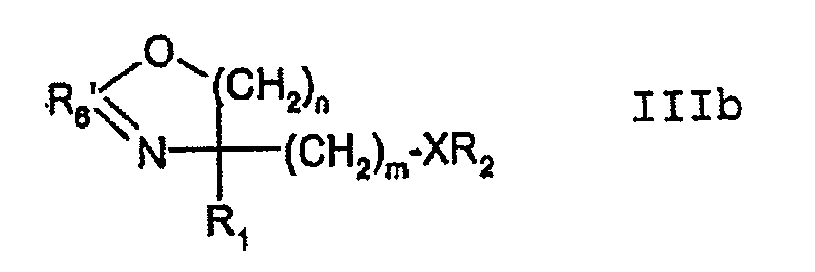 ii) Entschützen des R- oder S-Enantiomers der Formel III, IIIa oder IIIb, das in Stufe i) erhalten wurde, und, falls gewünscht, Umwandeln der in freier Form erhaltenen Verbindungen der Formel II in die gewünschte Salzform oder umgekehrt.
- Verfahren nach Anspruch 3, worin die Verbindung der Formel II Phosphorsäure-mono-[2-amino-2-hydroxymethyl-4-(4-octyl-phenyl)-butyl]-ester oder Phosphorsäure-mono-[2-hydroxymethyl-4-(4-octyl-phenyl)-2-(1-oxo-1,3-dihydro-isoindol-2-yl)-butyl]-ester ist.
- Verfahren zur Gewinnung einer Verbindung der Formel III, IIIa oder IIIb gemäß Definition in Anspruch 3, worin mehr als 70 % der Verbindung, bezogen auf das Gewicht, in Form des R- oder S-Enantiomers vorliegen, durch Trennen des S-Enantiomers von dem R-Enantiomer in einem racemischen Gemisch einer Verbindung der Formel III, IIIa oder IIIb unter Verwendung einer Chromatographie oder simulierten Bewegungsbettchromatographie mit einer chiralen stationären Phase auf Polysaccharidbasis.
- Verfahren nach Anspruch 5, wobei die stationäre Phase eine Phase vom Amylose-Typ ist.
- Verfahren zur Gewinnung einer Verbindung der Formel III, IIIa oder IIIb gemäß Definition in Anspruch 3, worin mehr als 70 % der Verbindung, bezogen auf das Gewicht, in Form des R- oder S-Enantiomers vorliegen, das die folgenden Stufen umfasst:i) Gewinnen einer Verbindung der Formel IV, IVa oder IVb, worin mehr als 70 % der Verbindung, bezogen auf das Gewicht, in Form des R- oder S-Enantiomers vorliegen,


R'2 für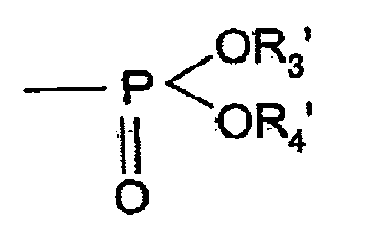 ii) Entfernen der in R'2 vorhandenen hydrolysierbaren Gruppen.
- Verfahren nach Anspruch 7, worin R3' und R4' zusammen ein cyclisches System bilden.
- Verfahren zur Trennung der R- und S-Enantiomere einer Verbindung der Formel I gemäß Definition in Anspruch 1 durch Trennen der Enantiomere durch Hochleistungsflüssigkeitschromatographie (HPLC) unter Verwendung einer chiralen lonenaustauschphase auf der Basis eines Chinincarbamats oder Chinidincarbamats.
- Verfahren zur Bestimmung der Menge der R- und/oder S-Isomere einer Verbindung der Formel II gemäß Definition in Anspruch 2, die in einer Probe vorhanden ist, durch (a) Umsetzen der Verbindung der Formel II, die in der Probe vorhanden ist, mit einem aromatischen 1,2-Dicarbaldehyd unter Bildung einer Verbindung der Formel I gemäß Definition in Anspruch 1 und Trennen der R- und S-Isomere der Verbindung der Formel I durch HPLC.
- Verfahren nach Anspruch 10, wobei die HPLC unter Verwendung einer chiralen lonenaustauschphase auf der Basis eines Chinincarbamats oder Chinidincarbamats durchgeführt wird.
- Verfahren nach Anspruch 10 oder 11, wobei die Verbindung der Formel II Phosphorsäure-mono-[2-amino-2-hydroxymethyl-4-(4-octyl-phenyl)-butyl]-ester ist.
- Verfahren nach einem der Ansprüche 10 bis 12 zur Überwachung der Blutkonzentration des S-Enantiomers.
- Verbindung gemäß Definition in Anspruch 1 in freier Form oder in pharmazeutisch akzeptabler Salzform zur Verwendung als Pharmazeutikum.
- Verwendung einer Verbindung nach Anspruch 1 zur Herstellung eines Medikaments zur Verhinderung oder Behandlung einer akuten oder chronischen Transplantatabstoßung oder T-Zellenvermittelten entzündlichen oder Autoimmunerkrankung bei einem Patienten, der eine solche Behandlung benötigt.
- Verbindung der Formel III, IIIa oder IIIb:


Priority Applications (1)
| Application Number | Priority Date | Filing Date | Title |
|---|---|---|---|
| PL04764563T PL1660449T3 (pl) | 2003-08-28 | 2004-08-27 | Pochodne aminopropanolu |
Applications Claiming Priority (3)
| Application Number | Priority Date | Filing Date | Title |
|---|---|---|---|
| GB0320196A GB0320196D0 (en) | 2003-08-28 | 2003-08-28 | Organic compounds |
| GB0324206A GB0324206D0 (en) | 2003-10-15 | 2003-10-15 | Organic compounds |
| PCT/EP2004/009589 WO2005021503A1 (en) | 2003-08-28 | 2004-08-27 | Aminopropanol derivatives |
Publications (2)
| Publication Number | Publication Date |
|---|---|
| EP1660449A1 EP1660449A1 (de) | 2006-05-31 |
| EP1660449B1 true EP1660449B1 (de) | 2009-11-18 |
Family
ID=34276809
Family Applications (1)
| Application Number | Title | Priority Date | Filing Date |
|---|---|---|---|
| EP04764563A Expired - Lifetime EP1660449B1 (de) | 2003-08-28 | 2004-08-27 | Aminopropanolderivate |
Country Status (14)
| Country | Link |
|---|---|
| US (4) | US7528120B2 (de) |
| EP (1) | EP1660449B1 (de) |
| JP (1) | JP5001653B2 (de) |
| CN (3) | CN1874996B (de) |
| AT (1) | ATE449069T1 (de) |
| AU (1) | AU2004268052B2 (de) |
| BR (1) | BRPI0413151A (de) |
| CA (1) | CA2535704C (de) |
| DE (1) | DE602004024213D1 (de) |
| ES (1) | ES2335410T3 (de) |
| MX (1) | MXPA06002349A (de) |
| PL (1) | PL1660449T3 (de) |
| PT (1) | PT1660449E (de) |
| WO (1) | WO2005021503A1 (de) |
Families Citing this family (25)
| Publication number | Priority date | Publication date | Assignee | Title |
|---|---|---|---|---|
| CN101905023B (zh) * | 2004-07-16 | 2012-07-11 | 杏林制药株式会社 | 有效的医药使用方法及与副作用发生的防御相关的方法 |
| PL1806338T3 (pl) | 2004-10-12 | 2016-07-29 | Kyorin Seiyaku Kk | Sposób wytwarzania chlorowodorku 2-amino-2-[2-[4-(3-benzyloksyfenylotio)-2-chlorofenyio]etylo]-1,3-propanodioiu i jego hydratów oraz produkty pośrednie w ich wytwarzaniu |
| NZ566137A (en) * | 2005-09-09 | 2011-05-27 | Novartis Ag | The use of diphenyl thioether derivatives to treat autoimmune diseases |
| SI1932522T1 (sl) * | 2005-10-07 | 2012-08-31 | Kyorin Seiyaku Kk | Terapevtsko sredstvo za jetrno bolezen, ki vsebuje 2-amino-1,3- propandiolni derivat kot aktivno sestavino |
| TWI389683B (zh) * | 2006-02-06 | 2013-03-21 | Kyorin Seiyaku Kk | A therapeutic agent for an inflammatory bowel disease or an inflammatory bowel disease treatment using a 2-amino-1,3-propanediol derivative as an active ingredient |
| CA2659599C (en) | 2006-08-08 | 2014-06-17 | Kyorin Pharmaceutical Co., Ltd. | Amino alcohol derivative and immunosuppressive agent having same as an active ingredient |
| RU2430925C2 (ru) | 2006-08-08 | 2011-10-10 | Киорин Фармасьютикал Ко., Лтд. | Производное аминофосфата и модулятор рецептора s1p, содержащий его в качестве активного ингредиента |
| WO2009048993A2 (en) | 2007-10-12 | 2009-04-16 | Novartis Ag | Compositions comprising sphingosine 1 phosphate (s1p) receptor modulators |
| JP5452237B2 (ja) | 2008-02-07 | 2014-03-26 | 杏林製薬株式会社 | アミノアルコール誘導体を有効成分とする炎症性腸疾患の治療剤又は予防剤 |
| CN104311472B9 (zh) | 2008-07-23 | 2020-03-17 | 艾尼纳制药公司 | 经取代的1,2,3,4-四氢环戊并[b]吲哚-3-基乙酸衍生物 |
| PL2342205T4 (pl) | 2008-08-27 | 2016-12-30 | Podstawione tricykliczne pochodne kwasowe jako antagoniści receptora S1P1 użyteczni w leczeniu zaburzeń autoimmunologicznych i zapalnych | |
| CA2780859A1 (en) * | 2009-12-10 | 2011-06-16 | Novartis Ag | Fty720 halogenated derivatives |
| EP2528894A1 (de) | 2010-01-27 | 2012-12-05 | Arena Pharmaceuticals, Inc. | Verfahren zur herstellung von (r)-2-(7-(4-cyclopentyl-3-(trifluoromethyl)benzyloxy)-1,2,3,4-tetrahydrocyclopenta[b]indol-3-yl)essigsäure und salzen daraus |
| CN105503882B (zh) | 2010-03-03 | 2019-07-05 | 艾尼纳制药公司 | 制备s1p1受体调节剂及其晶体形式的方法 |
| WO2011138398A1 (en) | 2010-05-06 | 2011-11-10 | Novartis Ag | Dosage regimen of diaryl sulfide derivatives |
| US20130172297A1 (en) | 2010-05-06 | 2013-07-04 | Novartis Ag | Treatment of Autoimmune Diseases |
| CN103415511B (zh) * | 2011-01-31 | 2016-01-20 | 国立大学法人长崎大学 | 光学活性化合物或其盐的制造方法 |
| CA3002540C (en) | 2015-01-06 | 2023-11-07 | Arena Pharmaceuticals, Inc. | Use of (r)-2-(7-(4-cyclopentyl-3-(trifluoromethyl)benzyloxy)-1,2,3,4-tetrahydrocyclopenta[b]indol-3-yl)acetic acid for treating conditions related to the s1p1 receptor |
| JP6838744B2 (ja) | 2015-06-22 | 2021-03-03 | アリーナ ファーマシューティカルズ, インコーポレイテッド | S1P1レセプター関連障害における使用のための(R)−2−(7−(4−シクロペンチル−3−(トリフルオロメチル)ベンジルオキシ)−1,2,3,4−テトラヒドロシクロペンタ[b]インドール−3−イル)酢酸(化合物1)の結晶性L−アルギニン塩 |
| CN110520124A (zh) | 2017-02-16 | 2019-11-29 | 艾尼纳制药公司 | 用于治疗原发性胆汁性胆管炎的化合物和方法 |
| KR20190113955A (ko) | 2017-02-16 | 2019-10-08 | 아레나 파마슈티칼스, 인크. | 장-외 증상을 갖는 염증성 장질환의 치료를 위한 화합물 및 방법 |
| GB201715786D0 (en) * | 2017-09-29 | 2017-11-15 | Univ College Cardiff Consultants Ltd | Compounds |
| JP7397011B2 (ja) | 2018-06-06 | 2023-12-12 | アリーナ ファーマシューティカルズ, インコーポレイテッド | S1p1受容体に関連する状態を治療する方法 |
| EP3847158B1 (de) | 2018-09-06 | 2026-06-24 | Arena Pharmaceuticals, Inc. | Verbindungen zur behandlung von autoimmun- und entzündungserkrankungen |
| CN111537635B (zh) * | 2020-05-11 | 2021-04-06 | 成都市科隆化学品有限公司 | 精确配制醋酸标准曲线溶液及保护氨基酸醋酸检测方法 |
Family Cites Families (6)
| Publication number | Priority date | Publication date | Assignee | Title |
|---|---|---|---|---|
| WO2002018395A1 (en) | 2000-08-31 | 2002-03-07 | Merck & Co., Inc. | Phosphate derivatives as immunoregulatory agents |
| MXPA03008755A (es) * | 2001-03-26 | 2004-02-18 | Novartis Ag | Derivados de 2-amino-propanol. |
| CN100516024C (zh) * | 2002-09-13 | 2009-07-22 | 诺瓦提斯公司 | 氨基-丙醇衍生物 |
| KR20050090435A (ko) * | 2002-12-30 | 2005-09-13 | 셀진 코포레이션 | 플루오로알콕시-치환된 1,3-디히드로-이소인돌릴 화합물 및그의 제약학적 용도 |
| AU2004234066B2 (en) * | 2003-04-30 | 2008-02-21 | Novartis Ag | Amino-propanol derivatives as sphingosine-1-phosphate receptor modulator |
| US7129260B2 (en) * | 2003-06-02 | 2006-10-31 | Abbott Laboratories | Isoindolinone kinase inhibitors |
-
2004
- 2004-08-27 EP EP04764563A patent/EP1660449B1/de not_active Expired - Lifetime
- 2004-08-27 JP JP2006524339A patent/JP5001653B2/ja not_active Expired - Fee Related
- 2004-08-27 CN CN2004800262367A patent/CN1874996B/zh not_active Expired - Fee Related
- 2004-08-27 DE DE602004024213T patent/DE602004024213D1/de not_active Expired - Lifetime
- 2004-08-27 PT PT04764563T patent/PT1660449E/pt unknown
- 2004-08-27 ES ES04764563T patent/ES2335410T3/es not_active Expired - Lifetime
- 2004-08-27 CN CN2011100601438A patent/CN102175786B/zh not_active Expired - Fee Related
- 2004-08-27 AT AT04764563T patent/ATE449069T1/de active
- 2004-08-27 MX MXPA06002349A patent/MXPA06002349A/es active IP Right Grant
- 2004-08-27 BR BRPI0413151-7A patent/BRPI0413151A/pt not_active IP Right Cessation
- 2004-08-27 WO PCT/EP2004/009589 patent/WO2005021503A1/en not_active Ceased
- 2004-08-27 PL PL04764563T patent/PL1660449T3/pl unknown
- 2004-08-27 CA CA2535704A patent/CA2535704C/en not_active Expired - Fee Related
- 2004-08-27 US US10/569,696 patent/US7528120B2/en not_active Expired - Fee Related
- 2004-08-27 CN CN2013100825423A patent/CN103193822A/zh active Pending
- 2004-08-27 AU AU2004268052A patent/AU2004268052B2/en not_active Ceased
-
2009
- 2009-02-24 US US12/391,298 patent/US7902175B2/en not_active Expired - Fee Related
-
2011
- 2011-01-28 US US13/015,825 patent/US20110118210A1/en not_active Abandoned
-
2012
- 2012-07-11 US US13/546,490 patent/US20120277194A1/en not_active Abandoned
Also Published As
| Publication number | Publication date |
|---|---|
| US20120277194A1 (en) | 2012-11-01 |
| CA2535704A1 (en) | 2005-03-10 |
| CN1874996B (zh) | 2011-05-18 |
| CN102175786A (zh) | 2011-09-07 |
| CN102175786B (zh) | 2013-07-17 |
| US7902175B2 (en) | 2011-03-08 |
| AU2004268052B2 (en) | 2009-11-19 |
| US20090156556A1 (en) | 2009-06-18 |
| US7528120B2 (en) | 2009-05-05 |
| CA2535704C (en) | 2012-12-11 |
| MXPA06002349A (es) | 2006-05-22 |
| AU2004268052A1 (en) | 2005-03-10 |
| US20110118210A1 (en) | 2011-05-19 |
| PL1660449T3 (pl) | 2010-05-31 |
| WO2005021503A1 (en) | 2005-03-10 |
| PT1660449E (pt) | 2010-01-21 |
| BRPI0413151A (pt) | 2006-10-03 |
| CN1874996A (zh) | 2006-12-06 |
| JP2007504111A (ja) | 2007-03-01 |
| DE602004024213D1 (en) | 2009-12-31 |
| ES2335410T3 (es) | 2010-03-26 |
| JP5001653B2 (ja) | 2012-08-15 |
| ES2335410T8 (es) | 2011-07-01 |
| CN103193822A (zh) | 2013-07-10 |
| US20060264403A1 (en) | 2006-11-23 |
| ATE449069T1 (de) | 2009-12-15 |
| EP1660449A1 (de) | 2006-05-31 |
Similar Documents
| Publication | Publication Date | Title |
|---|---|---|
| US7902175B2 (en) | Aminopropanol derivatives | |
| EP1377593B1 (de) | 2-amino-propanol derivate | |
| JP4166218B2 (ja) | アミノ−プロパノール誘導体 | |
| JP4603531B2 (ja) | スフィンゴシン−1−ホスフェートレセプターモジュレーターとしての、アミノプロパノール誘導体 | |
| EP1622866B1 (de) | Aminopropanol-derivate als modulatoren des sphingosin-1-phosphat-rezeptors | |
| AU2002257719A1 (en) | 2-amino-propanol derivatives | |
| KR100879831B1 (ko) | 아미노산 유도체 | |
| HUP0303601A2 (hu) | 2-Amino-propanol-származékok |
Legal Events
| Date | Code | Title | Description |
|---|---|---|---|
| PUAI | Public reference made under article 153(3) epc to a published international application that has entered the european phase |
Free format text: ORIGINAL CODE: 0009012 |
|
| 17P | Request for examination filed |
Effective date: 20060328 |
|
| AK | Designated contracting states |
Kind code of ref document: A1 Designated state(s): AT BE BG CH CY CZ DE DK EE ES FI FR GB GR HU IE IT LI LU MC NL PL PT RO SE SI SK TR |
|
| RIN1 | Information on inventor provided before grant (corrected) |
Inventor name: FRANCOTTE, ERIC Inventor name: ALBERT, RAINER Inventor name: ZOLLINGER, MARKUS Inventor name: ZECRI, FREDERIC |
|
| RAP1 | Party data changed (applicant data changed or rights of an application transferred) |
Owner name: NOVARTIS PHARMA GMBH Owner name: NOVARTIS AG |
|
| 17Q | First examination report despatched |
Effective date: 20061006 |
|
| DAX | Request for extension of the european patent (deleted) | ||
| GRAP | Despatch of communication of intention to grant a patent |
Free format text: ORIGINAL CODE: EPIDOSNIGR1 |
|
| GRAS | Grant fee paid |
Free format text: ORIGINAL CODE: EPIDOSNIGR3 |
|
| GRAA | (expected) grant |
Free format text: ORIGINAL CODE: 0009210 |
|
| AK | Designated contracting states |
Kind code of ref document: B1 Designated state(s): AT BE BG CH CY CZ DE DK EE ES FI FR GB GR HU IE IT LI LU MC NL PL PT RO SE SI SK TR |
|
| REG | Reference to a national code |
Ref country code: GB Ref legal event code: FG4D |
|
| REG | Reference to a national code |
Ref country code: CH Ref legal event code: EP |
|
| REG | Reference to a national code |
Ref country code: IE Ref legal event code: FG4D |
|
| REF | Corresponds to: |
Ref document number: 602004024213 Country of ref document: DE Date of ref document: 20091231 Kind code of ref document: P |
|
| REG | Reference to a national code |
Ref country code: PT Ref legal event code: SC4A Free format text: AVAILABILITY OF NATIONAL TRANSLATION Effective date: 20100115 |
|
| REG | Reference to a national code |
Ref country code: GR Ref legal event code: EP Ref document number: 20100400206 Country of ref document: GR |
|
| REG | Reference to a national code |
Ref country code: ES Ref legal event code: FG2A Ref document number: 2335410 Country of ref document: ES Kind code of ref document: T3 |
|
| PG25 | Lapsed in a contracting state [announced via postgrant information from national office to epo] |
Ref country code: FI Free format text: LAPSE BECAUSE OF FAILURE TO SUBMIT A TRANSLATION OF THE DESCRIPTION OR TO PAY THE FEE WITHIN THE PRESCRIBED TIME-LIMIT Effective date: 20091118 Ref country code: SE Free format text: LAPSE BECAUSE OF FAILURE TO SUBMIT A TRANSLATION OF THE DESCRIPTION OR TO PAY THE FEE WITHIN THE PRESCRIBED TIME-LIMIT Effective date: 20091118 |
|
| PG25 | Lapsed in a contracting state [announced via postgrant information from national office to epo] |
Ref country code: SI Free format text: LAPSE BECAUSE OF FAILURE TO SUBMIT A TRANSLATION OF THE DESCRIPTION OR TO PAY THE FEE WITHIN THE PRESCRIBED TIME-LIMIT Effective date: 20091118 Ref country code: PL Free format text: LAPSE BECAUSE OF FAILURE TO SUBMIT A TRANSLATION OF THE DESCRIPTION OR TO PAY THE FEE WITHIN THE PRESCRIBED TIME-LIMIT Effective date: 20091118 Ref country code: CY Free format text: LAPSE BECAUSE OF FAILURE TO SUBMIT A TRANSLATION OF THE DESCRIPTION OR TO PAY THE FEE WITHIN THE PRESCRIBED TIME-LIMIT Effective date: 20091118 |
|
| REG | Reference to a national code |
Ref country code: PL Ref legal event code: T3 |
|
| PG25 | Lapsed in a contracting state [announced via postgrant information from national office to epo] |
Ref country code: DK Free format text: LAPSE BECAUSE OF FAILURE TO SUBMIT A TRANSLATION OF THE DESCRIPTION OR TO PAY THE FEE WITHIN THE PRESCRIBED TIME-LIMIT Effective date: 20091118 Ref country code: EE Free format text: LAPSE BECAUSE OF FAILURE TO SUBMIT A TRANSLATION OF THE DESCRIPTION OR TO PAY THE FEE WITHIN THE PRESCRIBED TIME-LIMIT Effective date: 20091118 Ref country code: BG Free format text: LAPSE BECAUSE OF FAILURE TO SUBMIT A TRANSLATION OF THE DESCRIPTION OR TO PAY THE FEE WITHIN THE PRESCRIBED TIME-LIMIT Effective date: 20100218 Ref country code: RO Free format text: LAPSE BECAUSE OF FAILURE TO SUBMIT A TRANSLATION OF THE DESCRIPTION OR TO PAY THE FEE WITHIN THE PRESCRIBED TIME-LIMIT Effective date: 20091118 |
|
| PG25 | Lapsed in a contracting state [announced via postgrant information from national office to epo] |
Ref country code: CZ Free format text: LAPSE BECAUSE OF FAILURE TO SUBMIT A TRANSLATION OF THE DESCRIPTION OR TO PAY THE FEE WITHIN THE PRESCRIBED TIME-LIMIT Effective date: 20091118 Ref country code: SK Free format text: LAPSE BECAUSE OF FAILURE TO SUBMIT A TRANSLATION OF THE DESCRIPTION OR TO PAY THE FEE WITHIN THE PRESCRIBED TIME-LIMIT Effective date: 20091118 |
|
| PLBE | No opposition filed within time limit |
Free format text: ORIGINAL CODE: 0009261 |
|
| STAA | Information on the status of an ep patent application or granted ep patent |
Free format text: STATUS: NO OPPOSITION FILED WITHIN TIME LIMIT |
|
| 26N | No opposition filed |
Effective date: 20100819 |
|
| PG25 | Lapsed in a contracting state [announced via postgrant information from national office to epo] |
Ref country code: MC Free format text: LAPSE BECAUSE OF NON-PAYMENT OF DUE FEES Effective date: 20100831 |
|
| PG25 | Lapsed in a contracting state [announced via postgrant information from national office to epo] |
Ref country code: IE Free format text: LAPSE BECAUSE OF NON-PAYMENT OF DUE FEES Effective date: 20100827 |
|
| PG25 | Lapsed in a contracting state [announced via postgrant information from national office to epo] |
Ref country code: LU Free format text: LAPSE BECAUSE OF NON-PAYMENT OF DUE FEES Effective date: 20100827 Ref country code: HU Free format text: LAPSE BECAUSE OF FAILURE TO SUBMIT A TRANSLATION OF THE DESCRIPTION OR TO PAY THE FEE WITHIN THE PRESCRIBED TIME-LIMIT Effective date: 20100519 |
|
| PGFP | Annual fee paid to national office [announced via postgrant information from national office to epo] |
Ref country code: ES Payment date: 20130711 Year of fee payment: 10 Ref country code: NL Payment date: 20130810 Year of fee payment: 10 Ref country code: PT Payment date: 20130228 Year of fee payment: 10 Ref country code: CH Payment date: 20130813 Year of fee payment: 10 Ref country code: AT Payment date: 20130726 Year of fee payment: 10 Ref country code: DE Payment date: 20130821 Year of fee payment: 10 Ref country code: GR Payment date: 20130723 Year of fee payment: 10 |
|
| PGFP | Annual fee paid to national office [announced via postgrant information from national office to epo] |
Ref country code: FR Payment date: 20130808 Year of fee payment: 10 Ref country code: TR Payment date: 20130722 Year of fee payment: 10 Ref country code: PL Payment date: 20130823 Year of fee payment: 10 Ref country code: GB Payment date: 20130821 Year of fee payment: 10 |
|
| PGFP | Annual fee paid to national office [announced via postgrant information from national office to epo] |
Ref country code: IT Payment date: 20130819 Year of fee payment: 10 |
|
| PGFP | Annual fee paid to national office [announced via postgrant information from national office to epo] |
Ref country code: BE Payment date: 20130819 Year of fee payment: 10 |
|
| REG | Reference to a national code |
Ref country code: DE Ref legal event code: R119 Ref document number: 602004024213 Country of ref document: DE |
|
| REG | Reference to a national code |
Ref country code: PT Ref legal event code: MM4A Free format text: LAPSE DUE TO NON-PAYMENT OF FEES Effective date: 20150227 |
|
| REG | Reference to a national code |
Ref country code: NL Ref legal event code: V1 Effective date: 20150301 |
|
| REG | Reference to a national code |
Ref country code: CH Ref legal event code: PL |
|
| REG | Reference to a national code |
Ref country code: AT Ref legal event code: MM01 Ref document number: 449069 Country of ref document: AT Kind code of ref document: T Effective date: 20140827 |
|
| REG | Reference to a national code |
Ref country code: GR Ref legal event code: ML Ref document number: 20100400206 Country of ref document: GR Effective date: 20150304 |
|
| GBPC | Gb: european patent ceased through non-payment of renewal fee |
Effective date: 20140827 |
|
| PG25 | Lapsed in a contracting state [announced via postgrant information from national office to epo] |
Ref country code: CH Free format text: LAPSE BECAUSE OF NON-PAYMENT OF DUE FEES Effective date: 20140831 Ref country code: PT Free format text: LAPSE BECAUSE OF NON-PAYMENT OF DUE FEES Effective date: 20150227 Ref country code: NL Free format text: LAPSE BECAUSE OF NON-PAYMENT OF DUE FEES Effective date: 20150301 Ref country code: LI Free format text: LAPSE BECAUSE OF NON-PAYMENT OF DUE FEES Effective date: 20140831 Ref country code: BE Free format text: LAPSE BECAUSE OF NON-PAYMENT OF DUE FEES Effective date: 20140831 Ref country code: IT Free format text: LAPSE BECAUSE OF NON-PAYMENT OF DUE FEES Effective date: 20140827 |
|
| PG25 | Lapsed in a contracting state [announced via postgrant information from national office to epo] |
Ref country code: GR Free format text: LAPSE BECAUSE OF NON-PAYMENT OF DUE FEES Effective date: 20150304 Ref country code: AT Free format text: LAPSE BECAUSE OF NON-PAYMENT OF DUE FEES Effective date: 20140827 |
|
| REG | Reference to a national code |
Ref country code: FR Ref legal event code: ST Effective date: 20150430 |
|
| REG | Reference to a national code |
Ref country code: DE Ref legal event code: R119 Ref document number: 602004024213 Country of ref document: DE Effective date: 20150303 |
|
| PG25 | Lapsed in a contracting state [announced via postgrant information from national office to epo] |
Ref country code: GB Free format text: LAPSE BECAUSE OF NON-PAYMENT OF DUE FEES Effective date: 20140827 Ref country code: DE Free format text: LAPSE BECAUSE OF NON-PAYMENT OF DUE FEES Effective date: 20150303 |
|
| PG25 | Lapsed in a contracting state [announced via postgrant information from national office to epo] |
Ref country code: FR Free format text: LAPSE BECAUSE OF NON-PAYMENT OF DUE FEES Effective date: 20140901 |
|
| PG25 | Lapsed in a contracting state [announced via postgrant information from national office to epo] |
Ref country code: PL Free format text: LAPSE BECAUSE OF NON-PAYMENT OF DUE FEES Effective date: 20140827 |
|
| REG | Reference to a national code |
Ref country code: PL Ref legal event code: LAPE |
|
| REG | Reference to a national code |
Ref country code: ES Ref legal event code: FD2A Effective date: 20151203 |
|
| PG25 | Lapsed in a contracting state [announced via postgrant information from national office to epo] |
Ref country code: ES Free format text: LAPSE BECAUSE OF NON-PAYMENT OF DUE FEES Effective date: 20140828 |
|
| PG25 | Lapsed in a contracting state [announced via postgrant information from national office to epo] |
Ref country code: TR Free format text: LAPSE BECAUSE OF NON-PAYMENT OF DUE FEES Effective date: 20140827 |