EP1662435A2 - Methode et système pour diriger une change dynamique - Google Patents
Methode et système pour diriger une change dynamique Download PDFInfo
- Publication number
- EP1662435A2 EP1662435A2 EP05077664A EP05077664A EP1662435A2 EP 1662435 A2 EP1662435 A2 EP 1662435A2 EP 05077664 A EP05077664 A EP 05077664A EP 05077664 A EP05077664 A EP 05077664A EP 1662435 A2 EP1662435 A2 EP 1662435A2
- Authority
- EP
- European Patent Office
- Prior art keywords
- bid
- exchange
- item
- allocation
- rule
- Prior art date
- Legal status (The legal status is an assumption and is not a legal conclusion. Google has not performed a legal analysis and makes no representation as to the accuracy of the status listed.)
- Withdrawn
Links
Images













Classifications
-
- G—PHYSICS
- G06—COMPUTING OR CALCULATING; COUNTING
- G06Q—INFORMATION AND COMMUNICATION TECHNOLOGY [ICT] SPECIALLY ADAPTED FOR ADMINISTRATIVE, COMMERCIAL, FINANCIAL, MANAGERIAL OR SUPERVISORY PURPOSES; SYSTEMS OR METHODS SPECIALLY ADAPTED FOR ADMINISTRATIVE, COMMERCIAL, FINANCIAL, MANAGERIAL OR SUPERVISORY PURPOSES, NOT OTHERWISE PROVIDED FOR
- G06Q40/00—Finance; Insurance; Tax strategies; Processing of corporate or income taxes
- G06Q40/04—Trading; Exchange, e.g. stocks, commodities, derivatives or currency exchange
-
- G—PHYSICS
- G06—COMPUTING OR CALCULATING; COUNTING
- G06Q—INFORMATION AND COMMUNICATION TECHNOLOGY [ICT] SPECIALLY ADAPTED FOR ADMINISTRATIVE, COMMERCIAL, FINANCIAL, MANAGERIAL OR SUPERVISORY PURPOSES; SYSTEMS OR METHODS SPECIALLY ADAPTED FOR ADMINISTRATIVE, COMMERCIAL, FINANCIAL, MANAGERIAL OR SUPERVISORY PURPOSES, NOT OTHERWISE PROVIDED FOR
- G06Q30/00—Commerce
- G06Q30/02—Marketing; Price estimation or determination; Fundraising
- G06Q30/0207—Discounts or incentives, e.g. coupons or rebates
- G06Q30/0222—During e-commerce, i.e. online transactions
-
- G—PHYSICS
- G06—COMPUTING OR CALCULATING; COUNTING
- G06Q—INFORMATION AND COMMUNICATION TECHNOLOGY [ICT] SPECIALLY ADAPTED FOR ADMINISTRATIVE, COMMERCIAL, FINANCIAL, MANAGERIAL OR SUPERVISORY PURPOSES; SYSTEMS OR METHODS SPECIALLY ADAPTED FOR ADMINISTRATIVE, COMMERCIAL, FINANCIAL, MANAGERIAL OR SUPERVISORY PURPOSES, NOT OTHERWISE PROVIDED FOR
- G06Q30/00—Commerce
- G06Q30/06—Buying, selling or leasing transactions
- G06Q30/0601—Electronic shopping [e-shopping]
-
- G—PHYSICS
- G06—COMPUTING OR CALCULATING; COUNTING
- G06Q—INFORMATION AND COMMUNICATION TECHNOLOGY [ICT] SPECIALLY ADAPTED FOR ADMINISTRATIVE, COMMERCIAL, FINANCIAL, MANAGERIAL OR SUPERVISORY PURPOSES; SYSTEMS OR METHODS SPECIALLY ADAPTED FOR ADMINISTRATIVE, COMMERCIAL, FINANCIAL, MANAGERIAL OR SUPERVISORY PURPOSES, NOT OTHERWISE PROVIDED FOR
- G06Q30/00—Commerce
- G06Q30/06—Buying, selling or leasing transactions
- G06Q30/08—Auctions
Definitions
- the present invention relates to combinatorial exchanges and, more particularly, to a method of conducting a dynamic combinatorial exchange, and computer instructions which, when executed by a processor, cause the processor to perform one or more steps of the method.
- a forward auction is a special case of an exchange with a single seller.
- a reverse auction is a special case of an exchange with a single buyer.
- Combinatorial exchanges support advanced exchange designs and expressive bidding. These features permit the exchange to be designed to achieve best economic efficiency.
- Combinatorial bids allow bidders to bid on multiple items with a single bid.
- the combination, or bundle of items is determined by the bidder. This is advantageous when the items exhibit complementarity, i.e., when the value of the bundle of items is worth more to the bidder than the sum of the separate item values, or substitutability, i.e., where different items are interchangeable to the bidder.
- Combinatorial bids allow bidders to express their true preference, resulting in the best economic allocation.
- the invention is a method of conducting a combinatorial exchange.
- the method includes (a) receiving a set of rules for processing of bids received in connection with the exchange; (b) receiving from each of a plurality of exchange participants at least one bid of (1) a first bid type comprised of at least one item, a quantity for each item and a price for all the quantities of all of the items or (2) a second bid type comprised of a first item, a quantity or a range of quantities for said first item and a unit price for said first item; (c) defining a desired exchange objective; (d) determining as a function of a subset of the rules if an allocation of the bids exists that is optimal for the type of exchange being conducted, wherein, if said allocation exists, it includes a subset of the bids, with each first bid type of said subset including all of the items of the bid and at least part of the quantity of each item and with each second bid type of said subset including the quantity or a quantity within the range of quantities for the first item; and
- the method can also include providing at least a portion of each bid of an allocation to each exchange participant of a first subset of the exchange participants and receiving from each exchange participant of a second subset of the exchange participants at least one of a new bid, a new rule, an amendment to an existing rule or an amendment to an existing bid of said exchange participant.
- At least one subset of the rules can include at least one rule that was input or amended by an exchange participant of the second subset of exchange participants.
- Each exchange participant can submit a request to be provided with the at least portion of each bid.
- Each subset of exchange participants can include one or more exchange participants that has at least one bid that is not included in the allocation.
- Each subset of exchange participants can include all or a portion of the plurality of exchange participants and each subset of exchange participants is desirably distinct or unique.
- the desired exchange objective can include one or more of elapse of a predetermined period of time from commencement of the exchange; reaching a predetermined time for terminating the exchange; a predetermined maximum or minimum number of winners overall; a predetermined maximum or minimum number of winners in a geographic region; and a predetermined maximum or minimum allocation value.
- said bid is formed from data entered in one of the following formats: price; price and a non-price attribute; cost-plus; list price minus a discount off of the list price; cost and a non-price attribute; and list price minus a discount off of the list price and a non-price attribute.
- said bid is formed from data entered in one of the following formats: price and quantity; and price, quantity and a non-price attribute.
- Each subset of the rules can be determined by at least one exchange participant.
- the subset of rules utilized in each iteration of step (d) can maintain, enlarge, or reduce a feasible allocation space over the feasible allocation space in the immediately preceding iteration of step (d).
- Each feasible allocation space includes the set of all possible allocations where each rule of the subset of rules utilized for determining each allocation of said set of allocations is satisfied.
- Each subset of rules can be distinct or unique.
- the number of rules comprising the subset of rules can either increase or decrease with each iteration of step (d), with said increase or decrease based on a predetermined condition, such as, without limitation, a predetermined time during the exchange event.
- Each amendment to an existing bid can include an unconditional amendment; an amendment conditioned upon the bid not being included in the immediately preceding allocation; an amendment condition upon said amendment not worsening the bid taker's allocation value or the feasibility of the allocation; an amendment improving the allocation value or volume of items traded; unconditional deletion of the bid; deletion of the bid conditioned upon said bid not being included in the allocation, or deletion of the bid conditioned upon said deletion not worsening the bid taker's value or volume of items traded.
- Each amendment to an existing bid can include an amendment to at least one of: a bid price or value; a quantity of at least one item; of at least one item attribute; at least one bid attribute; a discount; and a constraint.
- Each exchange participant can be a bidder or a bid taker.
- a price of a bid received from a bid taker can act as a reserved price for the entire quantity of each item of the bid.
- the method can further include notifying at least one exchange participant when an allocation moves away from the desired exchange objective.
- the at least one exchange participant can be a bidder or a bid taker.
- Step (e) can include amending the subset of rules utilized to determine the allocation in the immediately preceding iteration of step (d) to obtain the different subset of rules that is utilized for determining the allocation in the next iteration of step (d).
- Amending the subset of rules can include (1) adding at least one rule to the subset of rules, (2) deleting at least one rule from the subset of rules and/or (3) amending at least one rule of the subset of rules.
- the value of M can be rounded up to the next whole number.
- the value of the maximum volume percentage rule having the largest value is less than or equal to the #items.
- the currently available set of rules includes the set of rules input in step (a) and any amendments, additions or deletions to said set of rules.
- At least one of the bids received in step (b) can have associated therewith: a reference ratio; a discount; a price associated with a quantity Q1 of a first item; a price associated with a quantity Q2 of a second item; and a rule that causes said discount to be applied to an average price of Q1 and an average price of Q2 for the allocated quantity Q1 over the allocated quantity Q2 that equals the reference ratio.
- the discount can be a percent discount.
- the quantity of the third item included in each allocation can be the quantity of either the first item or the second item included in the allocation multiplied by the second ratio.
- the second ratio can be selected from a range of second ratios between a minimum second ratio value and a maximum second ratio value, inclusive.
- the method can further include defining a first trigger bid group, a second trigger bid group, a logical operator connecting the first and second bid groups and a modification.
- a total associated with allocated bid(s) of the first trigger bid group is greater than or equal to a first predetermined value
- the truth value "true” is associated with the first trigger bid group, otherwise the truth value "false” is associated with the first trigger bid group.
- a total associated with allocated bid(s) of the second trigger bid group is greater than or equal to a second predetermined value
- the truth value "true” is associated with the second trigger bid group, otherwise the truth value "false” is associated with the second trigger bid group.
- a logical combination of the truth values associated with the first and second trigger bid groups can be determined subject to the logical operator.
- the modification is applied to the bids of at least one of the first trigger bid group and the second trigger bid group.
- the first predetermined value can be is a cost trigger value
- the second predetermined value can be a unit volume trigger value
- the modification can be a discount value.
- the logical combination can be one of AND, OR or XOR.
- the method can further include defining at least one of (i) a first rule that has associated therewith at least one bid and at least one trigger value ⁇ first discount value pair and (ii) a second rule that has associated therewith a first pair of trigger bid groups, a first logical operator connecting the pair of trigger bid groups and a second discount value.
- the bid associated with the first rule is allocated and said bid includes a value that equals or exceeds the trigger value
- the first discount value is applied to the price of each bid associated with the first rule.
- a total associated with allocated bid(s) of each trigger bid group is greater than or equal to a predetermined value for said bid group, the truth value "true” is associated with the trigger bid group, otherwise the truth value "false” is associated with the trigger bid group.
- the second discount value is applied to the price of each bid associated with the second rule.
- the price of said bid can equal an initial price of said bid adjusted by at least one of the first and second discount values.
- the method can further include defining at least one of (i) a third rule that has associated therewith at least one bid and at least one trigger value ⁇ third discount value pair and (ii) a fourth rule that has associated therewith a second pair of trigger bid groups, a logical operator connecting the pair of trigger bid groups and a fourth discount value.
- the bid associated with the third rule is allocated and said bid includes a value that equals or exceeds the trigger value
- the third discount value is applied to the price of each bid associated with the third rule.
- the price of said bid can equal the initial price of said bid adjusted by the at least one of the first and second discount values and further adjusted by at least one of the third and fourth discount values.
- the trigger value can be a cost trigger value or a volume trigger value.
- Each logical operation can be AND, OR or XOR.
- the method can further include dividing a subset of the items into a plurality of item groups based on a unique first criterion associated with the items of each item group and dividing a subset of the bids into a plurality of bid groups based on a unique second criterion associated with the bids of each bid group.
- the at least one allocation that satisfies the desired exchange objective can include a subset of the total quantity of the items of a first item group divided between the plurality of bid groups, with said subset including all or less than all of the total quantity of the items of the first item group.
- the at least one allocation that satisfies the desired exchange objective can further include a subset of the total quantity of the items of a second item group divided between the plurality of bid groups, with said subset including all or less than all of the total quantity of the items of the second item group.
- the quantity or percent quantity of the items of each item group allocated to each bid group can either be equal to or is within range of a predetermined quantity or percent quantity of said items available for allocation that have a unique period of time associated therewith.
- Any one or combination of the foregoing steps can be embodied on computer readable medium as instructions which, when executed by a processor, cause the processor to perform one or more of said steps.
- Fig. 3 is block diagram of exemplary bid having bidder exchange description data (EDD) associated therewith;
- EDD bidder exchange description data
- Fig. 4 is a block diagram of bid taker EDD
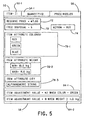
- Fig. 5 is a block diagram of a bid having associated therewith bidder EDD that has rules associated therewith related to free disposal, reserve price, action, item attribute and item adjustment;
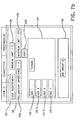
- Figs. 6a and 6b are a block diagram of a bid and an associated bidder EDD that has rules associated therewith related to bid attributes and bid adjustments;
- Fig. 7a is a block diagram of a bid and an associated bidder EDD that has a cost constraint rule associated therewith;
- Fig. 7b is a block diagram of a bid and an associated bidder EDD that has a cost requirement rule associated therewith;
- Fig. 8a is a block diagram of a bid and an associated bidder EDD that has a unit constraint rule associated therewith;
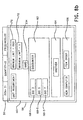
- Fig. 8b is a block diagram of a bid and an associated bidder EDD that has a unit requirement rule associated therewith;
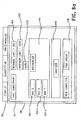
- Fig. 9a is a block diagram of a bid and an associated bidder EDD that has a counting constraint rule associated therewith;
- Fig. 9b is a block diagram of a bid and an associated bidder EDD that has a counting requirement rule associated therewith;
- Fig. 10 is a block diagram of a bid and an associated bidder EDD that has a homogeneity rule associated therewith;
- Fig. 11 is a block diagram of a bid and an associated bidder EDD that has a mixture constraint rule associated therewith;
- Fig. 12 is a block diagram of a bid and an associated bidder EDD that has a cost conditional pricing rule associated therewith;
- Fig. 13 is a block diagram of a bid and an associated bidder EDD that has a unit conditional pricing rule associated therewith;
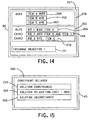
- Fig. 14 is a block diagram of a bid taker EDD that has an objective rule associated therewith;
- Fig. 15 is a block diagram of a bid taker EDD that has a constraint relaxer rule associated therewith;
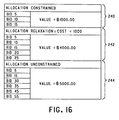
- Fig. 16 illustrates the various allocations resulting from the selection of corresponding desired solutions of the constraint relaxer rule of Fig. 15;
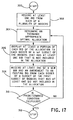
- Fig. 17 is a flowchart of a method of conducting a live, expressive combinatorial exchange
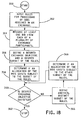
- Fig. 18 is a flowchart of another method of conducting a live combinatorial exchange
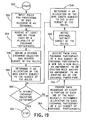
- Fig. 19 is a flowchart of yet another method of conducting a live combinatorial exchange
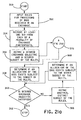
- Fig. 21b is a flowchart of the method associated with the connector A of Fig. 21a;
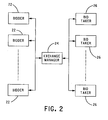
- Each bidder EDD 58 can include data that a preprocessor of computer 2 of exchange manager 24 converts into one or more rules for processing by the optimization software to determine the optimal allocation of bids. Also or alternatively, each bidder EDD 58 can have associated therewith one or more rules for processing by the optimization software to determine the optimal allocation of bids.
- Each rule associated with a bidder EDD 58 is typically derived from data entered into fields displayed on a display of the computer 2 of the bidder 22 submitting the bid. However, this is not to be construed as limiting the invention since the rules associated with a bidder EDD 58 may also be derived from data entered into the computer 2 of exchange manager 24 and/or data entered into the computer 2 of one or more bid takers 26.
- a bidder EDD 58 associated with a bid 50 of bidder 22 can have associated therewith a free disposal rule 70 that enables the optimizing software to sell less than the specified quantity 54-1 of item 52-1 without affecting bid price 56.
- the free disposal rule 70 enables the optimizing software to accept more than the specified quantity 54-1 of item 52-1 without affecting the bid price 56.
- the free disposal rule 70 may be used on both the supply side and demand side of all exchange formats, including forward auctions and reverse auctions. In the example of bid 50 shown in Fig.
- bidder 22 acting as a seller offering a quantity 54-1 of 10 units of item 52-1 for sale causes the free disposal rule 70 to be associated with bidder EDD 58 of bid 50, and causes a quantity of 5 to be associated with the free disposal rule 70.
- the association of this quantity with the free disposal rule 70 informs the optimizing software that bidder 22 acting as a seller is willing to sell between 5 and 10 units of item I1 52-1 for bid price 56.
- free disposal rule 70 can be associated with a bid taker EDD 60 of a bid taker 26.
- the association of the quantity of 5 with the free disposal rule 70 associated with a bid taker EDD 60 informs the optimizing software that the bid taker acting as a seller or buyer is willing to sell or buy between 5 and 10 units of item I1 52-1 for bid price 56.
- a bid taker EDD 60 can have associated therewith a reserve price rule that causes the optimizing software to set the maximum or minimum price the corresponding bid taker 26 is willing to receive or pay, respectively, for a quantity of an item of a bid.
- Bidder EDD 58 can also or alternatively have associated therewith an action rule 74 that the bidder 22 of the corresponding bid 50 can set either to buy or sell.
- setting action rule 74 to "sell” informs the optimizing software that bidder 22 is acting as a seller and item I1 52-1 is being sold.
- setting action rule 74 to "buy” informs the optimizing software that bidder 22 is acting as a buyer and item I1 52-1 is being bought.
- action rule 74 is set to buy, indicating that bidder 22 wishes to purchase the quantity 54-1 of ten of item 11 52-1.
- action rule 74 is set to sell, the quantity 54-1 of ten associated with bid 50 specifies the total number of units of item I1 52-1 that bidder 22 wishes to sell.
- a bid taker EDD 60 can also or alternatively have associated therewith an action rule, like action rule 74, that informs the optimizing software that the bid taker 26 is acting as a buyer or a seller.
- an action rule like action rule 74, that informs the optimizing software that the bid taker 26 is acting as a buyer or a seller.
- item attribute rule 78-1 informs the optimizing software that the only acceptable colors for each unit of item I1 52-1 are red, green and blue.
- Item attribute weight rule 78-2 informs the optimizing software that the minimum and maximum acceptable weights for each unit of item I1 52-1 are 10 kg and 14 kg, respectively.
- Item attribute city rule 78-3 informs the optimizing software the name of the city where item I1 52-1 is to be shipped from.
- Other item attribute rules associated with bidder EDD 58 can include, without limitation, width, height, purity, concentration, pH, brand, hue, intensity, saturation, shade, reflectance, origin, destination, volume, earliest pickup time, latest pickup time, earliest drop-off time, latest drop-off time, production facility, packaging and flexibility.
- bidder EDD 58 with action rule 74 is set to "buy"
- the optimizing software will not include the sell bid in the allocation. Otherwise, the sell bid will be processed by the optimizing software when determining the allocation.
- Bidder EDD 58 can also or alternatively have associated therewith one or more item adjustment value rules 84 that the optimizing software utilizes to process bid 50.
- Each item adjustment value rule 84 includes a condition and value whereupon, if the condition is valid, then the value is applied to the bid.
- bidder EDD 58 can have associated therewith item adjustment value rules 84-1 and 84-2.
- Item adjustment value rule 84-1 informs the optimizing software that a value of $2 should be applied, e.g., added, to the price a bid e.g., a sell bid responsive to buy bid 50 in Fig. 5, for each unit of a green colored item I1 52-1 included in the bid.
- Item adjustment value field 84-2 informs the optimizing software that a value of $1 should be applied to a bid for each unit of item 54-1 that has a weight greater than or equal to 11.0 kg.
- Bid taker EDD 60 can also or alternatively have associated therewith one or more item adjustment value rules, like item adjustment value rule 84, that inform the optimizing software that the corresponding bid taker is willing to adjust a value paid for or received by the bid taker if a condition associated with each item adjustment value rule is satisfied.
- item adjustment value rule 84 that inform the optimizing software that the corresponding bid taker is willing to adjust a value paid for or received by the bid taker if a condition associated with each item adjustment value rule is satisfied.
- the free disposal, reserve price, action, item attribute(s) and item adjustment(s) rules of bidder EDD 58 and/or bid taker EDD 60 operate on one or more items of a bid 50.
- bidder EDD 58 and/or bid taker EDD 60 it may also or alternatively be desirable for bidder EDD 58 and/or bid taker EDD 60 to have associated therewith rules that operate on a bid 50 as a whole versus one or more items of bid 50.
- Two types of rules that operate on a bid as a whole are bid attribute rule(s), which are used with bidder EDD 50, and bid adjustment rule(s), which can be used with bidder EDD 58 and/or bid taker EDD 60.
- Location rule 92-2 can have associated therewith data, in the form of an alphanumeric string, that informs the optimizing software where the bidder of bid 50 resides.
- Shipping cost rule 92-3 can have associated therewith data, in the form of a decimal number, that informs the optimizing software the shipping cost of the items of bid 50. If a bid taker 26 or exchange manager 24 desires to award a certain percentage of the allocated bids to bidders living in a particular location, e.g., city, county, state, region, etc., the optimizing software can be configured to determine the allocation of the bids based on the data associated with the bid attribute bidder location rule 92-2. Similarly, the optimizing software can be configured to determine the allocation based upon the data associated with shipping cost rule 92-3.
- Other bid attributes that can be associated with a bid attribute rule 92 include bidder reliability, bidder reputation, bidder timeliness, freight terms and conditions, insurance terms and conditions, bidder distance and bidder flexibility.
- Bidder EDD 58 can also or alternatively have associated therewith one or more bid adjustment rules 100 that are similar syntactically to the item adjustment rules previously described.
- Data associated with a bid adjustment value rule 100-1 in Fig. 6b causes the optimizing software to increase the price of bid 50 by $50 when "Excellent" 104-3 associated with credit worthiness rule 92-1 is selected. If "Poor” 104-1 or “Good” 104-2 associated with credit worthiness rule 92-1 is selected, however, the optimizing software will not change the price of bid 50.
- Bid adjustment value rule 100-2 can have associated therewith expressions and data that informs the optimizing software to increase the price of a bid 50 by $25 when the data associated with shipping cost rule 92-3 has a value between $50 and $100.
- Bid adjustment value rule 100-2 can also have associated therewith a logical operator AND as a connector between expressions. In addition to AND, the logical operators OR and NOT can also be utilized as connectors. Moreover, logical operators may be nested within other logical operators.
- each bid adjustment value rule 100-1 - 100-3 are formatted as a conditional test. Namely, IF the condition holds THEN the specified adjustment is applied. It is envisioned that more complex expressions can be created that allow for dependence of whether the adjustment is applied based on multiple expressions.
- Bid adjustment value rule 100-3 has a "contains item” expression associated therewith that can be utilized for two purposes. First, it tests whether or not a bid contains an item, e.g., item I3. It should be appreciated that the "contains item” expression can only be used in connection with a bid adjustment rule. In the example shown in Fig. 6b, bid adjustment value rule 100-3 informs the optimizing software to increase the price of bid 50 by $10 when bid 50 contains item I3. Second, the "contains item” expression can be utilized for specifying item attributes inside of a bid adjustment. In the example shown in Fig. 6b, bid adjustment value rule 100-3 informs the optimizing software to increase the price of bid 50 by $10 when bid 50 contains item I3 and the color of item I3 is blue. If bid 50 does not include item I3, or if item I3 is not blue, the optimizing software will not adjust the price of bid 50 based on the expressions and data associated with bid adjustment value rule 100-3.
- Each bid adjustment value rule 100 is typically one of two exemplary types: additive or multiplicative.
- An additive bid adjustment value rule applies a positive (or negative) value to a bid if the corresponding condition holds for the bid.
- An additive bid adjustment value rule can either be absolute or per unit.
- An absolute additive adjustment is applied to a bid if the corresponding condition holds.
- a per unit additive bid adjustment rule is multiplied by the number of units of the item in the bid before application to the bid.
- a multiplicative adjustment is only used with bid adjustments, not with item adjustments.
- a multiplicative adjustment applies a specified percentage correction to a value of a bid if the corresponding condition holds. If the percentage is positive, the correction increases the value of the bid. If the percentage is negative, the correction decreases the value of the bid.
- Bid taker EDD 60 can also or alternatively have associated therewith one or more bid adjustment rules 100 that inform the optimizing software that the bid taker 26 is willing to adjust, for example, a value the bid taker 26 pays or receives for one or more items if one or more conditions included in the bid taker EDD 60 are valid.
- bidder EDD 58 and/or bid taker EDD 60 can also or alternatively have associated therewith one or more rules that impose one or more limits on some aspect of the outcome of an allocation.
- a rule can have data associated therewith for limiting the maximum number of winning buyers in a forward auction or the maximum number of winning sellers in a reverse auction.
- Another rule can have data associated therewith for limiting the currency volume sold to any one bidder.
- another rule can have data associated therewith for limiting the quantity of an item that a single supplier can supply. The purpose of these rules is to enable the optimizing software to determine one or more feasible allocations that meet the objectives of the market.
- such rules are typically associated with a bid or bid group by exchange manager 24. However, this is not to be construed as limiting the invention. These rules cause the optimizing software to determine the allocation in a manner that conforms to desired minimum and/or maximum limits. Examples of such rules include a cost constraint rule, a unit constraint rule, a counting constraint rule, a homogeneity constraint rule and a mixture constraint rule, each of which will now be described.
- bidder EDD 58 can also or alternatively have associated therewith a cost constraint rule 110 that causes the optimizing software to restrict the winning allocation by establishing a limit that is based on winning bid prices and quantities.
- cost constraint rule 110 can have associated therewith two bid groups 112 and 114.
- Bid group 112 is a constrained group while bid group 114 is a control group.
- Bid group 114 is shown in Fig. 7a for illustration purposes, but it is assumed to be an empty group.
- an exchange may have a need to limit the sum of the prices all of the bids from bidders in a first city. Accordingly, a bid group is established with all of the bidders from the first city. It may also be desirable to limit the number of bidders from the first city as compared to a second city.
- Cost constraint rule 110 of bidder EDD 58 causes the optimizing software to compare the bid groups 112 and 114 with respect to the sum of the prices of their winning bids. If the comparison is based on percentage, then the sum of the prices of the winning bids associated with bid group 112 divided by that of the bid group 114 must be less than a value of a maximum limit 118 associated with cost constraint rule 110 and greater than a value of a minimum limit 120 associated with cost constraint rule 110. For a comparison based on percentage, to avoid division by zero (0) when no bids are associated with bid group 114 or if bid group 114 does not exist, an imaginary second bid group (not shown) can be created that contains all of the winning bids. The comparison based on percentage is then determined by dividing the sum of the quantity of items of the bids allocated to bid group 112 by that of the imaginary second bid group and comparing the solution to the maximum limit value and/or the minimum limit value.
- the sum of the prices of the bids associated with bid group 112 must be at least the minimum limit value more than that of the bids associated with bid group 114, and at most the maximum limit value less than that of the bids associated with bid group 112.
- cost constraint rule 110 can also or alternatively have associated therewith a minimum limit 120 which causes the optimizing software to establish a lower limit on the total allocation value.
- Each cost constraint rule is strict a constraint in the sense that it must be satisfied or the allocation is infeasible.
- a cost constraint rule can limit a bidder to receive a minimum of at least 50% of the total allocation value.
- the value of the cost constraint rule is $11/$21 or 52.38%. Since 52.38% is greater than the cost minimum limit of 50%, the allocation is feasible.
- the cost constraint minimum is raised to 60%, the allocation is infeasible because 52.38% is less than 60%. In some situations, it may be desirable for the bidder to be required to be awarded at least 50% of the allocation, or else be awarded no allocation.
- Bid taker EDD 60 can also or alternatively have associated therewith a cost constraint rule, like cost constraint rule 110, that informs the optimizing software that the corresponding bid taker 26 is only willing to buy or sell items subject one or more constraints associated with the cost constraint rule.
- a cost constraint rule like cost constraint rule 110
- bidder EDD 58 can also or alternatively have associated therewith a cost requirement rule 130 that causes the optimizing software to withhold a bid or bid group from an allocation if a condition is not satisfied.
- Cost requirement rule 130 is syntactically similar to cost constraint rule 110.
- cost constraint rule 110 can make a solution infeasible
- cost requirement rule 130 enables the optimizing software to construct an allocation where a bid or bid group that otherwise would be allocated is withheld from the allocation because a constraint on the bid or bid group is not satisfied. Stated differently, if a cost constraint rule is not satisfied, the whole allocation is infeasible. In contrast, if a cost requirement rule is not satisfied, the bidder receives nothing, but the allocation is not necessarily infeasible.
- a forward auction includes a plurality of bids where four bids 132-1 - 132-4 are made by bidders who fall into a group of interest, e.g., bidders from Arlington, where it is desired to limit, based on cost, the value of the bids of the particular bidders.
- cost requirement rule 130 has associated therewith a percent maximum limit 136 value of 25%.
- bids 132-1 - 132-4 are associated with bid group 134. If the sum of the values of bids 132-1 - 132-4 exceeds 25% of the total allocation value, the Arlington bidders receive nothing in the allocation.
- cost requirement rule 130 can also or alternatively have associated therewith a minimum limit field 138 which causes the optimizing software to set a lower limit on the percent of the total allocation value.
- Bid taker EDD 60 can also or alternatively include a cost requirement rule, like cost requirement rule 130, that informs the optimizing software that the corresponding bid taker 26 is only willing to buy or sell one or more items if one or more constraints of bidder EDD 60 are satisfied. If the one or more constraints of bidder EDD are not satisfied, the bid taker 26 receives nothing, but the allocation is not necessarily infeasible.
- a cost requirement rule like cost requirement rule 130
- bidder EDD 58 can also or alternatively have associated therewith a unit constraint rule 142 that causes the optimizing software to restrict the winning allocation by setting a limit which is based on a quantity of items that are bought and/or sold in winning bids.
- unit constraint rule 142 can have bid groups 144 and 146 and an item group 148 associated therewith.
- a forward auction includes a plurality of bids where three bids 150-1 - 150-3 are made by one bidder where it is desired to limit the quantity of items awarded to that bidder.
- the bidder is a buyer for a large computer discounter and that each of the three bids is for as many units as are available of a new computer.
- bids 150-1 - 150-3 are included in bid group 144 and the item associated with bids 150-1 - 150-3, i.e., a new computer, is included in item group 148.
- a suitable value, in this example 1000, is associated with a maximum limit 152 of unit constraint rule 142 to limit the maximum quantity of computers the bids included in bid group 144 are awarded.
- a virtual second bid group (not shown) can be created that contains all of the winning bids.
- the comparison based on percentage is then determined by dividing the sum of the quantity of items of the winning bids of bid group 144 by that of the virtual second bid group and comparing the solution to the value associated with the maximum percentage and/or the minimum percentage.
- bidder EDD 58 can also or alternatively have associated therewith a unit requirement rule 160 that enables the optimizing software to allocate a quantity of zero to a bidder to provide a winning allocation.
- Unit requirement rule 160 is syntactically similar to a unit constraint rule 142. However, where unit constraint rule 142 makes the solution infeasible, unit requirement rule 160 enables a quantity of zero to be allocated.
- Bid taker EDD 60 can also or alternatively include a unit requirement rule, like unit requirement rule 160, that informs the optimizing software that the corresponding bid taker 26 is willing to buy or sell a maximum and/or minimum quantity of units of one or more items.
- a unit requirement rule like unit requirement rule 160, that informs the optimizing software that the corresponding bid taker 26 is willing to buy or sell a maximum and/or minimum quantity of units of one or more items.
- counting constraint rule 180 can have a value of four associated with a maximum limit 182 for controlling the maximum number of winning bidders.
- each of six bidders has placed a number of bids in the auction.
- the bids of each bidder are inserted into bid group 184-1 - 184-6, with bid group 184-1 including all the bids placed by bidder 1, with bid group 184-2 including all the bids placed by bidder 2, and so forth.
- the value of four associated with the maximum limit 182 constrains the allocation made by the optimizing software to the bids included in four of the six bid group 184-1 - 184-6. Since each bid group 184 in this example represents one bidder, counting constraint rule 180 limits the number of winning bidders.
- both the maximum limit 182 and the minimum limit 186 may include values wherein the desired number of winning bidders falls within the range of values.
- Bid taker EDD 60 can also or alternatively include a counting constraint rule, like counting constraint rule 180, that informs the optimizing software that the corresponding bid taker 26 is willing to buy or sell bids subject to one or more constraints included in the counting constraint rule.
- a counting constraint rule like counting constraint rule 180, that informs the optimizing software that the corresponding bid taker 26 is willing to buy or sell bids subject to one or more constraints included in the counting constraint rule.
- Bid taker EDD 60 can also or alternatively include a counting requirement rule, like counting requirement rule 190, that informs the optimizing software that the corresponding bid taker 26 is willing to buy or sell bids subject to one or more constraints included in the counting requirement rule.
- a counting requirement rule like counting requirement rule 190
- the value associated with item weight maximum 212 causes the optimizing software to limit the weight of all units of Item 1 associated with item attribute weight 214 to an average of no more than twelve kg.
- Mixture constraint rule 210 allows heterogeneity in an allocation providing the average is within specified limits. Therefore, in this example, suppose it is desired to have a mixture of weights, providing the average weight is no more than twelve kg. With mixture constraint rule 210, it does not matter how the various weights are mixed.
- the average value, which is constrained by the optimizing software in response to mixture constraint rule 210, may be determined from any one or a combination of items.
- Mixture constraint rule 210 may also be price weighted, i.e., the prices of each bid will weight the average. For example, an attribute, e.g., item weight, on a $2 bid will have twice the effect the same attribute has on a $1 bid.
- Bid taker EDD 60 can also or alternatively have associated therewith a mixture constraint rule, like mixture constraint rule 210, that enables the optimizing software to mix attributes of interest to the bid taker.
- a mixture constraint rule like mixture constraint rule 210, that enables the optimizing software to mix attributes of interest to the bid taker.
- bidder EDD 58 can also or alternatively have associated therewith a cost conditional pricing rule 272 that causes the optimizing software to modify an outcome of a forward auction, a reverse auction or an exchange based on value limit(s).
- a cost conditional pricing rule 272 that causes the optimizing software to modify an outcome of a forward auction, a reverse auction or an exchange based on value limit(s).
- two bid groups 274 and 276 can be associated with cost conditional pricing rule 272.
- Bid group 274 is a constrained bid group while bid group 276 is a control bid group.
- Bid group 276 is created for illustration purposes, but it is assumed that it is empty.
- Cost conditional pricing rule 272 is similar to cost constraint rule 110, except that cost conditional pricing rule 272 causes the optimizing software to utilize one or more cost constraints associated with a modifications group 278 of cost conditional pricing rule 272 to adjust the solution rather than forcing the solution to obey other established constraints.
- Advantages of changing a price outcome of an exchange include, for example, the optimizing software giving a discount of $20 to a buyer in a forward auction if the buyer spends more than $1000 or a discount of $50 if the buyer spends more than $2000.
- Bid taker EDD 60 can also or alternatively have associated therewith a cost conditional pricing rule, like cost conditional pricing rule 272, that includes one or more cost constraints that the optimizing software utilizes to modify the allocation in a forward auction, a reverse auction or an exchange based on value limit(s).
- a cost conditional pricing rule like cost conditional pricing rule 272 that includes one or more cost constraints that the optimizing software utilizes to modify the allocation in a forward auction, a reverse auction or an exchange based on value limit(s).
- bidder EDD 58 can also or alternatively have associated therewith a unit conditional pricing rule 280 that causes the optimizing software to modify the value outcome of a forward auction, a reverse auction or an exchange based on a difference in unit volume of two or more bids or bid groups of two or more bidders.
- unit conditional pricing rule 280 causes the optimizing software to operate in a manner similar to unit constraint rule 142 in Fig.
- unit conditional pricing rule 280 adjusts the solution rather than forcing the solution to obey other constraint(s). For example, suppose bid group 282 includes all of the bids associated with buyer A and constraints or condition modifiers 286 and 288 are associated with unit conditional price rule 280.
- the optimizing software determines a difference in unit volume between the item(s) associated with an item A associated with a modifications group 290, traded by buyer A, associated with bid group 282, and the item(s) included in a modifications group 292 traded by the bidder(s), if any, associated with bid group 284.
- Unit conditional pricing rule 280 uses the difference in the unit volumes included in bid groups 282 and 284.
- bid group 284 since bid group 284 includes no bids, its unit volume defaults to empty and the difference is simply the unit volume of the bids of bid group 282 for buyer A. If the unit volume of the bids of bid group 282 is 1000 units or more than the unit volume of the bids of bid group 284, the optimizing software determines that condition modifier 286 is satisfied and a discount of $20.00 is given. If the unit volume included in bid group 282 is 2000 units or more than the unit volume included in bid group 284, the optimizing software determines that condition modifier 288 is satisfied and a discount of $50.00 is given.
- Bid taker EDD 60 can also or alternatively have associated therewith a unit conditional pricing rule, like unit conditional pricing rule 280, that includes one or more conditions that the optimizing software utilizes to modify the value outcome of a forward, a reverse auction or an exchange based on a difference in unit volume of two or bids or bid groups of two or more bidders.
- unit conditional pricing rule 280 that includes one or more conditions that the optimizing software utilizes to modify the value outcome of a forward, a reverse auction or an exchange based on a difference in unit volume of two or bids or bid groups of two or more bidders.
- Bidder EDD 58 can also or alternatively have associated therewith a quote request rule (not shown) that causes the optimizing software to treat the corresponding bid 50 as a "quote request", whereupon the optimizing software returns to the bidder of the bid a price where the bid would just be included in an allocation, i.e., the least competitive price. Thereafter, if the bidder wishes to place one or more bids or associate one or more bids with a bid group that the optimizing software considers for inclusion in an allocation, such bid can be made or such bid group can be formed separately from the quote request rule. Thus, the optimizing software treats a quote request rule like a bid.
- bidder EDD 58 and/or bid taker EDD 60 can include one or more of the foregoing rules that the optimizing software can utilize to determine an allocation.
- rules that are typically associated uniquely with bid taker EDD 60 will be described. These rules include an objective rule, a constraint relaxer rule and a feasibility obtainer rule.
- bid taker EDD 60 can have associated therewith an objective rule 257 that establishes a maximization or minimization goal that the optimizing software utilizes to determine an allocation value for an exchange.
- Each maximization goal has one specific meaning for forward auctions, reverse auctions, and exchanges.
- Each minimization goal has one specific meaning for a reverse auction.
- Objective rule 257 can comprise one or more rules related to one or more objectives of an exchange. These exchange objectives include surplus, traded bid volume, traded ask volume or traded average volume. Each of these rules expresses a maximization goal for a forward auction or exchange, or a minimization goal for a reverse auction.
- the following table shows the rule(s) associated with objective rule 257 for the foregoing objectives of the exchange.
- Objective Forward Auction Reverse Auction Exchange Surplus sum of accepted bids less the sum of their item reserve prices N/A sum of accepted bids less sum of accepted asks Traded bid sum of accepted bids N/A sum of accepted bids Traded ask sum of item reserve prices of accepted bids sum of accepted asks sum of accepted asks Traded average average of the sum of accepted bids and sum of their item reserve prices N/A average of the sum of accepted bids and sum of accepted asks
- the rules associated with each of the foregoing objectives enables the optimizing software to perform a specific optimization.
- Each objective is useful because it enables specification of exactly what is wanted in a forward auction, reverse auction or exchange. For example, suppose one unit of three items, namely, item A 260, item B 262 and item C 264, for sale at prices of $100, $45 and $45, respectively, are included in an ask group 258 associated with objective rule 257 of bid taker EDD 60. These are ask bids since the three items are being sold. Moreover, suppose that a buy group 265 associated with objective rule 257 includes three buy bids: Bid 1 266 for Item A for $100; Bid 2 268 for Items B and C for $105; and Bid 3 270 for Item C for $70. Furthermore, suppose that these three buy bids are logically connected by XOR (exclusive OR) logical operators whereupon only one of Bids 266, 268 and 270 will be allocated by the optimizing software.
- XOR exclusive OR
- Bid 1 266 is allocated by the optimizing software since Item 1 has the maximum ask value, i.e., $100.
- Bid 2 268 is allocated by the optimizing software since it has the maximum bid value, i.e., $105.
- exchange objective 271 is set to "maximize traded average", either Bid 1 for Item A 260 at $100, or Bid 2 for Items B and C 262 and 264 at $105 is allocated by the optimizing software.
- Exchange objective 271 can also be set to "maximize the number of winning bidders” or “maximize the number of losing bidders” in an allocation.
- the word “maximize” can be replaced with “minimize” whereupon the optimizing software will be provided with the corresponding rule.
- bid taker EDD 60 can also or alternatively have associated therewith a constraint relaxer rule 220.
- the ability to relax a rule has two purposes, namely, to obtain candidate allocations when the original problem does not have a feasible allocation, and to search for alternative allocations when there is a feasible allocation. Such alternative allocations can illustrate the impact on the allocation solution as more important rules are relaxed.
- the importance of each rule can depend on the relative relaxation importance weight assigned thereto. These weights are dependent on the weights and types of each rule in an exchange.
- Fig. 15 illustrates a constraint relaxer rule 220 that includes one or more possible desired solutions 222, 224 and 226 that can be applied by the optimizing software to determine an exchange allocation.
- selecting constrained solution 222 causes the optimizing software to search for an allocation with all the constraints in place.
- Selecting unconstrained solution 226 causes the optimizing software to search for an allocation with no constraints in place.
- relaxation solution 224 there is relaxation solution 224.
- Selecting relaxation solution 224 causes the optimizing software to search for one or more allocations as a function of "soft" and/or "hard” properties. For example, in Figs.
- "soft" properties 228 and 236 are associated with cost constraint rule 110 and counting constraint rule 180, respectively, while in Fig. 8a, a "hard” property 232 is associated with unit constraint rule 142.
- relaxation solution 224 is selected in constraint relaxation rule 220, the optimizing software obtains a feasible solution by relaxing cost constraint rule 110 and counting constraint rule 180 while maintaining unit constraint rule 142.
- "hard" property 232 in Fig. 8a assumes that unit constraint rule 142 is so important that to relax it will create a useless allocation.
- Selecting constrained solution 222 causes the optimizing software to create the exemplary constrained allocation 240 shown in Fig. 16. Namely, a fully constrained allocation for which either a feasible, market desirable solution or an infeasible solution exists.
- constrained allocation 240 shows the bids that should be awarded given all of the bids and all of the rules associated with bidder EDDs 58 and/or bid taker EDDs 60. In the example shown in Fig. 16, constrained allocation 240 shows three winning bids with an allocation value of $1,000.
- Relaxation solution 222 can also have an associated cost, e.g., 1000, which specifies the weight of the relaxation to be applied by the optimizing software.
- the relaxation cost is calculated by aggregating, over all relaxed rules, the amount by which the rule(s) are violated multiplied by the value included in the corresponding relaxation importance.
- the value associated with a relaxation importance causes the optimizing software to maximize or minimize one or more rules minus the relaxation cost associated with relaxation solution 224.
- the optimizing software will relax the rule(s) associated with the latter relaxation solution before relaxing the rules of the former relaxation solution.
- the optimizing software would determine an optimal allocation based on the relaxation solution having the greater cost.
- Bid taker EDD 60 can also or alternatively have associated therewith a feasibility obtainer rule (not shown) which causes the optimizing software to minimize the relaxation cost, instead of minimizing or maximizing objective rule(s), discussed above in connection with Fig. 14, minus a relaxation cost. More specifically, a feasibility obtainer rule causes the optimizing software to generate feasible allocations when a winning allocation with all of the rules active is unavailable. For example, suppose that constrained solution 222 of constraint relaxation rule 220 is selected. In response to this selection, the optimizing software will only attempt to generate a winning allocation. However, if bid taker EDD 60 includes a feasibility obtainer rule and the optimizing software determines that a feasible, constrained allocation cannot be found, it relaxes one or more rules in an attempt to find a feasible allocation.
- a live, expressive combinatorial exchange e.g., a pure exchange, a forward auction or a reverse auction
- a method of conducting a live, expressive combinatorial exchange will now be described with reference to Fig. 17, and with reference back to Fig. 3.
- step 308 each bidder of a subset of the first subset of bidders submits to exchange manager 24 a new bid and/or an amendment to an existing bid for processing by the optimizing software.
- steps 304-308 are repeated at suitable times during the course of the exchange event, e.g., periodically, after a predetermined number of bid(s) have been received, after each new or amended bid is received, etc., until the predetermined condition is satisfied whereupon the method advances to stop step 312 and the exchange event terminates.
- each bidder not having a bid included in an allocation is provided with data regarding the bids that were included in the allocation. Based on this data, the bidder can do nothing, or, as shown in step 308, the bidder can amend an existing bid to make it more competitive whereupon it may be included in the allocation the next time step 304 is executed, or place a new bid that may be included in the next allocation the next time step 304 is executed.
- the process of determining an allocation based on received bids, providing feedback regarding the bids included in the allocation to bidders whose bids are not included in the allocation, receiving new or amended bids from at least some of the bidders provided with said feedback, and determining another allocation based on the new or amended bids and any other previously received bids continues until the predetermined condition is satisfied.
- the predetermined condition can include, among other things, (i) a lapse of a predetermined time interval from commencement of the exchange, (ii) a manual abort, or (iii) a sum of prices of the bids of the allocation reaching a predetermined value.
- each bid included in the allocation is displayed to each bidder that has at least one bid that is not included in the allocation.
- the purpose of causing at least a portion of each bid included in the allocation to be displayed to each bidder that has at least one bid that is not included in the allocation is to enable the bidder to more effectively compete by facilitating the bidder's formulation of a new bid or an amendment to an existing bid that may result in the new bid or amended bid being included in the next allocation the next time step 304 is executed.
- Supplying information regarding only one of the bids included in the allocation to bidders having at least one bid not included in the allocation is of little or no value in a combinatorial exchange since doing so does not provide sufficient information from which the bidders of bids not included in the allocation can formulate new bids or amendments to existing bids that will improve their chance of having a bid included in the next allocation.
- the optimizing software desirably determines the allocation based on the bids received up to that time, i.e., new bids, amended bids and/or any other received bids, along with any bidder EDD associated with said bids.
- the optimizing software determines the allocation based on all of the received bidder EDDs along with all of the received bids.
- the portion of each bid of the allocation that is displayed to each bidder of a first subset of bidders that has at least one bid that is not included in the allocation can include at least one item of the bid included in the allocation, the quantity of the at least one item of the bid, the price for all the item(s) and their quantities and/or at least a portion of the received bidder EDD 58 associated with the bid.
- the exchange manager 24 desirably sets the at least portion of each bid of the allocation that is displayed. However, this is not to be construed as limiting the invention.
- Amending an existing bid in step 308 can include adding at least one new rule to bidder EDD 58 associated with the bid, deleting at least one rule from the bidder EDD 58 associated with the bid, amending a value associated with at least one rule of the bidder EDD 58 associated with the bid, amending a value of the quantity of at least one item of the bid, and/or amending the price for all of the items and their quantities.
- each bid taker EDD 60 comprises at least one rule (or constraint) for processing at least one of a bid, at least one item of a bid, and a subset of the plurality of the bids.
- Amendments to an existing bid taker EDD can include adding at least one new rule to the existing bid taker EDD, deleting at least one rule from the existing bid taker EDD, and/or amending a value associated with at least one rule of the existing bid taker EDD.
- step 308 can include receiving from each bid taker of a subset of the bid takers at least one of a new bid taker EDD and an amendment to an existing bid taker EDD of the bid taker.
- the amendment to the existing bid taker EDD of the bid taker can include adding at least one new rule to the existing bid taker EDD, deleting at least one rule from the existing bid taker EDD, and amending a value associated with at least one value of the existing bid taker EDD.
- Bidder EDDs 58 and bid taker EDDs 60 can be utilized by the optimizing software either alone or in combination to determine the allocation.
- a portion of at least one bid included in the allocation can also be provided to each bidder of a second subset of bidders that has at least one bid that is part of the allocation, i.e., winning bidders, for display on the display 18 of the computer system 2 of said bidder.
- the purpose of displaying the at least portion of each bid included in the winning allocation to bidders having bids included in the winning allocation is to facilitate the formulation by each said bidder of a new bid or an amended bid that may result in said new bid or amendment bid being included in the allocation the next time step 304 is executed.
- the portion of the at least one bid included in the allocation that is displayed on the display 18 of the computer system 2 of a winning bidder can include at least one item of the bid, the initial or allocated quantity of the at least one item of the bid, the price for all of the item(s) and/or quantities, and/or at least a portion of the bidder EDD associated with the bid.
- each subset of bidders includes all or less than all of the plurality of bidders. Moreover, each subset of bids includes all or less than all of the received bids.
- each rule of a subset of the rules can also or alternatively have an exchange manager controllable supervisory constraint imposed thereon.
- each supervisory constraint can impose one or more limits on at least one of (1) the addition of the corresponding rule to an EDD, (2) the deletion of the corresponding rule from an EDD, (3) the relaxation of the corresponding rule of an EDD, and/or (4) the tightening of the corresponding rule of an EDD.
- Examples of the use of a supervisory constraint include: allowing or forbidding bidders and/or bid takers from adding or deleting the corresponding rule to or from an EDD; forcibly adding or deleting the corresponding rule to or from an EDD; allowing or forbidding bidders and/or bid takers to relax or tighten the corresponding rule, e.g., relaxing or tightening the maximum (or minimum) number of winners permitted in an allocation; and forcibly relaxing or tightening the corresponding rule.
- the listing of the foregoing examples is not be construed as limiting the invention since other uses of a supervisory constraint are envisioned.
- exchange manager 24 can selected when each supervisory constraint is active or inactive during an exchange event. If a supervisory constraint is inactive there are no limits on the use of the corresponding rule. However, if a supervisory constraint is active, the one or more limits associated with the supervisory constraint are imposed on the corresponding rule. For example, a supervisory constraint can be activated on or before an exchange event commences and can remain active throughout the exchange event whereupon the limit(s) associated with the supervisory constraint are imposed on the corresponding rule.
- step 306 of the flowchart shown in Fig. 17 when at least a portion of each bid of the allocation is caused to be displayed to a first subset of bidders that has at least one bid that is not included in the allocation, an identification of the bidder of the bid can also be caused to be displayed. If desired, the displayed bidder identification can be obscured in the sense that the identity of the actual bidder is not clear from the displayed bidder identification.
- a live, combinatorial exchange also known as a dynamic combinatorial exchange
- a first method of finding an allocation that satisfies a desired exchange objective commences at start step 350 with exchange manager 24 initiating the exchange event.
- the method then advances to step 352 where the rules for use by the optimizing software for processing of bids to be received in the exchange are input.
- These rules can be input by one or more exchange participants, e.g., bidders 22, bid takers 26 and/or exchange manager 24.
- step 354 at least one bid 50 is received from each of a plurality of exchange participants acting as bidders 22.
- step 358 the optimizing software determines if an allocation of bids exists that is optimal for the type of exchange being conducted, i.e., a pure exchange, a forward auction or a reverse auction, subject to the subset of the rules defined in step 356.
- allocations include: maximizing the value of the allocation of bids in a forward auction; minimizing the value of the allocation of bids in a reverse auction; and maximizing an exchange of goods and/or services in a pure exchange.
- an allocation includes a second type bid having a quantity Q1 or a range of quantities Q1a-Q1b of an item I1 and a quantity Q2 or a range of quantities Q2a-Q2b of an item I2, the quantity of item I1 included in the allocation with either be quantity Q1 or a quantity within the range of quantities Q1a-Q1b and the quantity of item I2 included in the allocation with either be quantity Q2 or a quantity within the range of quantities Q2a-Q2b.
- step 360 a determination is made whether the desired exchange objective is satisfied. If so, the method advances to stop step 362 and the exchange event terminates. However, if the desired exchange objective is not satisfied, the method advances to step 366 where another, desirably distinct or unique, subset of rules is defined.
- step 366 the method advances to step 368 where the optimizing software determines if another allocation of the bids exists subject to the other subset of the rules defined in step 366.
- the method then returns to step 360 where another determination is made whether the desired exchange objective is satisfied. If so, the method advances to stop step 362 and the exchange event terminates. If not, steps 366, 368 and 360 are repeated as necessary, during the course of the exchange event until the desired exchange objective is satisfied whereupon the method advances to stop step 362 and the exchange event terminates.
- Changing the subset of rules utilized by the optimizing software to determine if another allocation of the bids exists in each iteration of step 368 changes the space of feasible allocations, i.e., the set of all allocations of bids that will satisfy all the currently available rules, whereupon the optimal allocation within this space of feasible allocations will typically be distinct or unique over the optimal allocation of another space of feasible allocations.
- simply changing the subset of rules that the optimizing software utilizes to determine if an allocation of the bids exists in each repetition of step 368 causes the optimizing software to determine an allocation of the bids that will typically be distinct or unique over any other allocation of the bids determined in another iteration of step 368 or in step 358.
- the rules of step 352 can be associated with bidder EDD 58 and/or bid taker EDD 60 in the manner described above. However, this is not to be construed as limiting the invention since any manner for inputting the rules in step 352 is envisioned.
- step 364 data comprising at least a portion of each bid of the most recently determined allocation is provided to each exchange participant of a first subset of exchange participants.
- step 365 the optimizing software receives from each exchange participant of a second subset of the exchange participants a new bid, a new rule, an amendment to an existing rule and/or an amendment to an existing bid of said exchange participant.
- each subset of exchange participants can include all or a portion of the exchange participants
- the first and second subsets of exchange participants should typically be different since it is believed that not all of the exchange participants of the first subset of exchange participants will respond to the data provided in step 364. Therefore, it is believed that the second subset of exchange participants will only include a portion of the exchange participants of the first subset of exchange participants. However, this is not to be construed as limiting the invention since it is envisioned that the first and second subsets of exchange participants can be the same.
- step 360 a determination is made whether the desired exchange objective is satisfied. Thereafter, providing the desired exchange objective is not satisfied, steps 364, 365, 366, 368 and 360 are repeated, as necessary, during the course of the exchange event until the desired exchange objective is satisfied whereupon the method advances to stop step 362 and the exchange event terminates.
- the first subset of exchange participants in step 364 can include all of the exchange participants or a select subset of the exchange participants, e.g., exchange participants not having a bid included in the allocation, exchange participants having at least one bid included in the allocation, and/or any other subset of identifiable and desirable exchange participants.
- this is not to be construed as limiting the invention.
- the optimizing software can be configured to respond to a suitable request for such data by said exchange participant. In response to receiving such request, the optimizing software can then provide the data to the exchange participant when step 364 is executed.
- the receipt of a suitable request to be provided with data in step 364 can be a preconditioned for each exchange participant to be included in the first subset of exchange participants. Also or alternatively, if the first subset of exchange participants is determined in another manner, the receipt of a suitable request to be provided with data in step 364 can be a condition for including the requesting exchange participant in the first subset of exchange participants.
- Each request to be provided with at least a portion of each bid of the allocation can be submitted to the optimizing software in any suitable and desirable manner.
- amendments to existing bids, new bids, amendments to existing rules and/or new rules can be submitted to the optimizing software in any suitable and desirable manner. Accordingly, details regarding how a request to be provided with data in step 364 is submitted to the optimizing software, how an amendment to an existing bid or rule and/or how a new bid or rule is submitted to the optimizing software will not be described herein in detail for purpose of simplicity.
- each subset of rules utilized in steps 358 and 368 is desirably distinct or unique from each other subset of rules.
- the number of rules comprising each subset of rules can either increase or decrease with each iteration of step 318 based on a predetermined condition, such as, without limitation, a predetermined time during the exchange.
- the optimizing software can be configured to permit unconditional amendments to or deletions of existing bids, or conditional amendments to or deletions of existing bids.
- An unconditional amendment to or deletion of an existing bid is one where the optimizing software places no conditions upon the amendment or deletion whereupon the amendment or deletion is fully implemented when the next allocation is determined.
- a conditional amendment to or deletion of an existing bid can be one of two types. Namely, one that the optimizing software permits based on a rule that the bid not being included in the immediately preceding allocation or one that is based on a rule that one or more conditions be satisfied when the optimizing software determines an allocation that includes the proposed amendment to or deletion of the bid.
- Examples of the latter include a proposed amendment or deletion of a bid based on said amendment or deletion not worsening the bid taker's allocation value or the feasibility of the allocation, and a proposed amendment or deletion of a bid based on said amendment or deletion improving the allocation value or volume of items traded.
- a proposed amendment or deletion of a bid based on said amendment or deletion not worsening the bid taker's allocation value or the feasibility of the allocation
- a proposed amendment or deletion of a bid based on said amendment or deletion improving the allocation value or volume of items traded.
- said bid can be formed from data entered in one of the following formats: price and quantity; and price-quantity in combination with a non-price attribute of the type described above.
- the optimizing software can notify one or more exchange participants that the allocation is on the edge of the desired exchange objective. If the minimum number of winners in two or more allocation drops from 3 to 2, the optimizing software can notify one or more exchange participants that the allocation is outside the desired allocation outcome.
- steps associated with connector 370 determine that an allocation exists for at least one of the M ideal bids, the method returns to step 368 in Fig. 22. Thereafter, steps 368, 360, 364, 365 and 366 and connector 370 are repeated, as necessary, until the method advances to stop step 362. However, if the steps associated with connector 370 determine that an allocation does not exist for at least one of the M ideal bids, the exchange event is designated as being overconstrained whereupon the method advances directly to step 360 in Fig. 22. If the desired exchange objective is not satisfied in step 360, steps 364, 365, 366, connector 370 and steps 368 and 360 are repeated, as necessary, until the method advances to stop step 362.
- the desired quantity of the item to be sourced is decreased to be less than or equal to the volume threshold of said one volume threshold-average cost threshold pair for said item.
- Increasing the desired quantity of item I1 to be sold in a forward auction avoids buyers from maintaining the average cost of each unit of item I1 at an artificially low value.
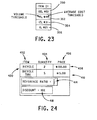
- one of the desired exchange objectives can be the average cost for each item allocated being equal to or greater than a maximum average cost threshold for said item. For example, in Fig. 23, the maximum average cost threshold for item I1 is $5.00. If, in a reverse auction, the average cost of each allocated unit of item I1 is greater than or equal to $5.00 and the average cost of each other allocated item is greater than or equal to its maximum average cost threshold, the one desired exchange objective is satisfied and the exchange event terminates.
- one of the desired exchange objectives can be the average revenue or cost for each allocated unit of item I1 being less than or equal to a minimum average cost threshold for a said item. For example, in Fig. 23 the minimum average cost threshold for item I1 is $2.00. If, in a forward auction, the average cost of each allocated unit of item I1 is less than or equal to $2.00 and the average cost for each other allocated item is less than or equal to its minimum average cost threshold, the one desired exchange of objective is satisfied and the exchange event terminates.
- the plurality of volume threshold-average cost threshold pairs can be stored in any suitable form.
- suitable forms include a curve of volume threshold versus average cost threshold, an algorithm where the volume threshold is expressed as a function of the average cost threshold, or vice versa, or, as shown in Fig. 23, a set of discrete volume threshold-average cost threshold pairs.
- the optimizing software can be configured to process the bid 400 shown in Fig. 24.
- Bid 400 includes columns 402-406 entitled Item, Quantity and Price, respectively.
- Row 408 of bid 400 includes a Quantity of two for the Item bicycle at a Price of $100.00, i.e., an average price of $50.00 each.
- Row 410 of bid 400 includes a Quantity of 5 for the Item bicycle tire at a Price of $15.00, i.e., an average price of $3.00 each.
- Bid 400 also includes a field 414 entitled Reference Ratio that the bidder 22 of bid 400 can enter in a desired reference ratio. In the example shown in Fig. 24, the value of desired reference ratio equals 1 ⁇ 2.
- package bid 440 is valid. This is because the allocated quantity of 10 of item I2 falls within the acceptable range of quantities; the allocated quantity of 20 of item I1 is within the range of acceptable allocations therefor, i.e., 2 x 10 (the allocated quantity of I2); the allocated quantity of item I3 is within the acceptable range therefor, i.e., 5 x 10 (the allocated quantity of item I2); and the allocated quantity of item I4 equals the acceptable quantity therefor.
- package bid 440 is not valid because an acceptable quantity of neither item I1 or item I3 has been allocated.
- conditional pricing with logical expression rule 450 can be associated with one or more bids of an exchange in any suitable and/or desirable manner.
- Conditional pricing with logical expression rule 450 causes the optimizing software to modify the cost outcome of a forward auction, reverse auction or exchange based on a value of a logical expression.
- conditional pricing with logical expression rule 450 can have three bid groups 452, 454 and 456 associated therewith.
- Bid groups 452 and 454 are trigger bid groups.
- Bid group 456 is a modifications bid group.
- conditional pricing with logical expressions rule 450 causes the optimizing software to operate in a manner similar to cost/unit condition pricing rules 131 and 134 by adjusting the value of the solution when the logical expression on bid groups 452 and 454 is TRUE. For example, suppose that each bid group 452, 454 and 456 includes bids 1, 2 and 3 associated with a specific bid taker 26. If a sum of the costs of all the accepted bids in trigger bid group 452 are greater than a predetermined trigger cost 458 associated with that bid group, AND if the unit volume of all the items in the accepted bids in trigger group 454 is greater than a predetermined trigger volume 460 associated with that bid group, then the modification included in modifications group 456 is applied to bids 1, 2 and 3.
- the modification included modifications group 456 is a predetermined discount value 462 of 3% that is applied to the total cost of bids 1, 2 and 3.
- Other implementations of the conditional pricing with logical expression rule 450 are envisioned. For example, these other implementations may use different costs or unit volume trigger groups, item attributes, bid attributes and logical operators between them.
- the logical operator AND 464 is utilized to logically connect cost conditional trigger bid group 452 AND unit volume conditional trigger bid group 454. The use of logical operator 464 will now be described.
- trigger bid group 452 is considered to be logically TRUE and trigger bid group 454 is considered to be logically TRUE. Because logical operator 464 in this example is AND, and because the logical values of trigger bid groups 452 and 454 are TRUE, the logical AND combination of the logical values of trigger bid groups 452 and 454 is TRUE whereupon the modifications group is applied. However, if the logical value of one or both of trigger bid groups 452 and 454 is FALSE, the logical AND combination of these logical values is FALSE whereupon the modifications group is not applied.
- conditional pricing sequence with fixed price levels rule 470 can be associated with one or more bids of an exchange in any suitable and/or desirable manner.
- the conditional pricing sequence with fixed price levels rule 470 causes the optimizing software to modify the cost outcome of a forward auction, reverse auction or exchange based on bid price reconciliation(s), value limit(s) and/or evaluation of logical expression(s).
- Cost conditional pricing rules 476 and 482, unit volume conditional pricing rules 478 and 484 and conditional pricing with logical expression rules 480 and 486 associated with conditional pricing levels 474 and 474, respectively, may share bids whose prices are fixed at the same level in all references to the same bids throughout the level. If, in conditional pricing level 472, any cost volume level in cost conditional pricing rule 476, unit volume level in unit volume conditional pricing rule 478, or logical condition in conditional pricing with logical expression rules 480 is satisfied, the discount in the corresponding modifications bid group 477, 479 or 481, respectively, is applied and utilized to determined the value for conditional pricing level 474 thus forming the conditional pricing sequence with fixed price levels rule 470.
- conditional pricing sequence with fixed price levels rule 470 has two levels 472 and 474, with each level comprised of a cost conditional pricing rule 476 and 482, a unit volume conditional pricing rule 478 and 484 and a conditional pricing with logical expression rule 480 and 486, respectively. If it is assumed that bid 1 473 is included in an allocation and bid 2 475 is not, then evaluation of cost conditional pricing rule 476 satisfies the second trigger cost level 490 of $7.00 thus awarding the corresponding 7% discount to bid 1 and bid 2; evaluation of unit volume conditional pricing rule 478 satisfies the second trigger volume level 492 of ten units thus awarding the corresponding 10% discount to bid 1 and bid 2.
- cost conditional pricing rule 476 is satisfied, a logical truth value of TRUE is associated therewith. However, if cost conditional pricing rule 476 is not satisfied, a logical value of FALSE is associated therewith. Similarly, if unit volume conditional pricing rule 478 is satisfied, a logical truth value of TRUE is associated therewith. However, if unit volume conditional pricing rule 478 is not satisfied, a logical value of FALSE is associated therewith.
- conditional pricing with logical expression rule 480 satisfies the logical expression 494 (OR) thus awarding a 10% discount to bid 1 and bid 2.
- the determination of the logical value of rules 476, 478 and 480 are processed with the original prices of bid 1 and bid 2 without applying awarded discounts at conditional pricing level 472.
- Evaluation of rules 482, 484 and 486 of conditional pricing level 474 are performed with recalculated prices for all bids referenced in conditional pricing level 472 subject to the discounts therein. Recalculation of the bid prices is performed after determining which of rules 476, 478 and 480 are applicable. This recalculation is shown schematically as a price reconciliation block 496 in Fig. 27. Once the prices of bid 1 and bid 2 have been recalculated, the recalculated bid prices are utilized throughout conditional pricing level 474 for the purpose of evaluating rules 482, 484 and 486.
- Fig. 28 shows a demand for two item groups, item group 1 and item group 2.
- Item group 1 includes item I1 (a first truck lane), a first criterion, i.e., the month of December, and a quantity of 600 (trips) associated therewith.
- the quantity of 600 (trips) associated with item group 1 reflects the demand for trips in the first trucking lane in the month of December.
- Item group 2 includes item I1 (the first truck lane), the first criterion, i.e., the month of January, and a quantity of 120 (trips).
- the quantity of 120 (trips) associated with item group 2 reflects the demand for trips in the first trucking lane in the month of January following the month of December associated with item group 1.
- Fig. 28 also shows the allocation of a quantity of each item group subject to the smoothing rule(s) or constraint(s) 500.
- the divisional allocation of the quantity of item group 2 either be the same as or within a predetermined amount or percentage of the divisional allocation of the quantity of item group 1.
- the total available quantity of item I1 of item group 1, i.e., 600 (trips) define a first ratio, i.e., 300/600 or 1/2.
- the allocation of the total quantity of item group 1 to bid groups 1, 2 and 3 is not to be construed as limiting the invention since the optimizing software can allocate the total quantity of item I1 of item group 1 to one bid group based on the rule(s) or constraint(s) in effect when the allocation is determined. For each bid group that includes the bids of two or more bidders, the quantity of item group 1 allocated to each bid group can be further divided among the bids of the bid group.
- a pre-defined plurality of variables (EDD) for a combinatorial exchange is provided.
- the predefined plurality of variables form a protocol associating bids with rules for allocation. At least one variable is associated with at least one rule for the allocation of bids in the exchange.
- the pre-defined bidder protocol is available preferably in a memory on a device of the network, preferably the exchange manager computer. However the protocol can also be available on the bidder computers.
- the bidder computer can receive a message from the exchange manager computer comprising data with respect to the exchange event.
- the message contain a form for entering bid variables. It can also contain a reference for a particular bidder protocol.
- On the bidder computer the message is interpreted and displayed to the bidder.
- the bidder preferably sees a form to enter a bid.
- the message indicates a format or protocol for inputting a bid for a certain exchange event.
- the solving can be repeated using different sets of rules once or as often as necessary or possible.
- the different set of rules includes preferably rules based on at least one new bid from at least one exchange participant from the second subset of exchange participants, preferably exchange participants that had a least one bid not allocated when the solving was performed the first time.
Landscapes
- Business, Economics & Management (AREA)
- Accounting & Taxation (AREA)
- Finance (AREA)
- Engineering & Computer Science (AREA)
- Strategic Management (AREA)
- Development Economics (AREA)
- Physics & Mathematics (AREA)
- Marketing (AREA)
- Economics (AREA)
- General Business, Economics & Management (AREA)
- General Physics & Mathematics (AREA)
- Theoretical Computer Science (AREA)
- Entrepreneurship & Innovation (AREA)
- Technology Law (AREA)
- Game Theory and Decision Science (AREA)
- Management, Administration, Business Operations System, And Electronic Commerce (AREA)
- Exchange Systems With Centralized Control (AREA)
Applications Claiming Priority (1)
| Application Number | Priority Date | Filing Date | Title |
|---|---|---|---|
| US10/997,765 US7577589B2 (en) | 2002-09-25 | 2004-11-24 | Method and apparatus for conducting a dynamic exchange |
Publications (2)
| Publication Number | Publication Date |
|---|---|
| EP1662435A2 true EP1662435A2 (fr) | 2006-05-31 |
| EP1662435A3 EP1662435A3 (fr) | 2007-02-07 |
Family
ID=36013232
Family Applications (1)
| Application Number | Title | Priority Date | Filing Date |
|---|---|---|---|
| EP05077664A Withdrawn EP1662435A3 (fr) | 2004-11-24 | 2005-11-24 | Méthode et système pour diriger une change dynamique |
Country Status (2)
| Country | Link |
|---|---|
| US (4) | US7577589B2 (fr) |
| EP (1) | EP1662435A3 (fr) |
Families Citing this family (69)
| Publication number | Priority date | Publication date | Assignee | Title |
|---|---|---|---|---|
| US6850907B2 (en) * | 1996-12-13 | 2005-02-01 | Cantor Fitzgerald, L.P. | Automated price improvement protocol processor |
| US5905974A (en) * | 1996-12-13 | 1999-05-18 | Cantor Fitzgerald Securities | Automated auction protocol processor |
| US7392214B1 (en) * | 1999-04-30 | 2008-06-24 | Bgc Partners, Inc. | Systems and methods for trading |
| US7392217B2 (en) | 2001-05-09 | 2008-06-24 | Bgc Partners, Inc. | Systems and methods for controlling traders from manipulating electronic trading markets |
| US8566212B2 (en) | 2002-10-31 | 2013-10-22 | Bgc Partners, Inc. | Electronic systems and methods for providing a trading interface with advanced features |
| EP1416363A3 (fr) | 2002-10-31 | 2006-07-26 | eSpeed, Inc. | Clavier pour système de transactions |
| US8131626B2 (en) | 2003-11-17 | 2012-03-06 | Bgc Partners, Inc. | Customizable trading display of market data |
| US8131625B2 (en) * | 2003-11-17 | 2012-03-06 | Bgc Partners, Inc. | Customizable trading display of market data |
| US20050171887A1 (en) * | 2004-01-29 | 2005-08-04 | Daley Thomas J. | System and method for avoiding transaction costs associated with trading orders |
| US7835987B2 (en) * | 2004-01-29 | 2010-11-16 | Bgc Partners, Inc. | System and method for routing a trading order according to price |
| US8738498B2 (en) * | 2004-01-29 | 2014-05-27 | Bgc Partners, Inc. | System and method for routing a trading order |
| US10304097B2 (en) * | 2004-01-29 | 2019-05-28 | Bgc Partners, Inc. | System and method for controlling the disclosure of a trading order |
| US7966244B1 (en) * | 2004-06-25 | 2011-06-21 | Trading Technologies International, Inc. | System and method for computing and displaying effective bid and ask information |
| US7509262B2 (en) * | 2004-11-04 | 2009-03-24 | International Business Machines Corporation | Weight based upselling |
| US7430551B2 (en) * | 2005-01-20 | 2008-09-30 | International Business Machines Corporation | Method to enforce domain strong typing |
| US8219480B2 (en) | 2005-03-24 | 2012-07-10 | Bgc Partners, Inc. | Systems and methods for protecting against erroneous price entries in the electronic trading of financial and other instruments |
| US8645242B1 (en) * | 2005-05-11 | 2014-02-04 | Morgan Stanley | Systems and methods for compiling and analyzing bids in an auction of securities |
| US7840477B2 (en) | 2005-06-07 | 2010-11-23 | Bgc Partners, Inc. | System and method for routing a trading order based upon quantity |
| US8484122B2 (en) | 2005-08-04 | 2013-07-09 | Bgc Partners, Inc. | System and method for apportioning trading orders based on size of displayed quantities |
| US8494951B2 (en) * | 2005-08-05 | 2013-07-23 | Bgc Partners, Inc. | Matching of trading orders based on priority |
| US20070130045A1 (en) * | 2005-12-06 | 2007-06-07 | Auction Answers, Llc | Method and apparatus for tracking the progress of an auction |
| US8229832B2 (en) * | 2006-01-09 | 2012-07-24 | Bgc Partners, Inc. | Systems and methods for establishing first on the follow trading priority in electronic trading systems |
| US7979339B2 (en) | 2006-04-04 | 2011-07-12 | Bgc Partners, Inc. | System and method for optimizing execution of trading orders |
| WO2008083383A2 (fr) * | 2006-12-30 | 2008-07-10 | Cfph, Llc | Procédés et systèmes pour gérer et vendre en utilisant un carnet de commande partagé comme échange interne |
| US8060433B2 (en) * | 2007-01-03 | 2011-11-15 | Combinenet, Inc. | Method of determining an exchange allocation that promotes truthful bidding and improves the obtainment of exchange objectives |
| US8296191B1 (en) | 2007-01-10 | 2012-10-23 | Stte, Llc | Electronic open-market commerce system and method |
| US20080228621A1 (en) * | 2007-03-16 | 2008-09-18 | Johnson James C | System And Method For Transfer Of Dispute Data In A Distributed Electronic Trading System |
| US8055583B2 (en) * | 2007-03-23 | 2011-11-08 | International Business Machines Corporation | Shared online auction provisioning |
| US20080275790A1 (en) * | 2007-05-03 | 2008-11-06 | Tom Campbell | Bid groups for online auctions |
| US20100250306A1 (en) * | 2008-10-10 | 2010-09-30 | Deepak Sanghi | System and method to determine root cause constraints and resolution options to solve order promising exceptions |
| US20100332281A1 (en) * | 2009-06-26 | 2010-12-30 | Microsoft Corporation | Task allocation mechanisms and markets for acquiring and harnessing sets of human and computational resources for sensing, effecting, and problem solving |
| EP2676228A4 (fr) | 2011-02-18 | 2014-11-19 | Skinnyprices Inc | Systèmes et procédés pour des marchés à prix diminuant sur la base de tâches |
| US8311878B2 (en) * | 2011-03-11 | 2012-11-13 | Oracle International Corporation | Optimized pricing solver with prioritized constraints |
| WO2013021886A1 (fr) * | 2011-08-08 | 2013-02-14 | 株式会社購買戦略研究所 | Système d'enchères inversées, dispositif d'aide aux enchères inversées et programme |
| AU2011101461A4 (en) * | 2011-10-06 | 2011-12-15 | Group Property Holdings Pty Ltd | Method, system and tool to enable a group purchase of a high value asset |
| US20130173412A1 (en) * | 2011-12-30 | 2013-07-04 | Log-Net, Inc. | Method And System For Controlling Freight Bidding |
| US20140136295A1 (en) | 2012-11-13 | 2014-05-15 | Apptio, Inc. | Dynamic recommendations taken over time for reservations of information technology resources |
| US20140222586A1 (en) * | 2013-02-05 | 2014-08-07 | Goodle Inc. | Bid adjustment suggestions based on device type |
| US20140278807A1 (en) * | 2013-03-15 | 2014-09-18 | Cloudamize, Inc. | Cloud service optimization for cost, performance and configuration |
| US9904954B2 (en) | 2013-03-15 | 2018-02-27 | Ten-X, Llc | Flexible commercial loan pool |
| US20140279159A1 (en) * | 2013-03-15 | 2014-09-18 | Auction.Com, Llc | Progressive lot bidding for online auctions |
| US9626691B2 (en) | 2013-05-02 | 2017-04-18 | Google Inc. | Determining a bid modifier value to maximize a return on investment in a hybrid campaign |
| US9436754B1 (en) * | 2013-07-03 | 2016-09-06 | Pinterest, Inc. | Unit group generation and relationship establishment |
| US10417591B2 (en) | 2013-07-03 | 2019-09-17 | Apptio, Inc. | Recursive processing of object allocation rules |
| US10325232B2 (en) | 2013-09-20 | 2019-06-18 | Apptio, Inc. | Allocating heritage information in data models |
| US9489692B1 (en) | 2013-10-16 | 2016-11-08 | Google Inc. | Location-based bid modifiers |
| US8935247B1 (en) | 2013-10-21 | 2015-01-13 | Googel Inc. | Methods and systems for hierarchically partitioning a data set including a plurality of offerings |
| US10614491B2 (en) | 2013-11-06 | 2020-04-07 | Google Llc | Content rate display adjustment between different categories of online documents in a computer network environment |
| CN106471534A (zh) * | 2014-02-04 | 2017-03-01 | 德克·海尔宾 | 交互支持处理器 |
| US11244364B2 (en) | 2014-02-13 | 2022-02-08 | Apptio, Inc. | Unified modeling of technology towers |
| WO2015143057A1 (fr) | 2014-03-18 | 2015-09-24 | Mcguire Daniel Owen | Système et procédé permettant de fournir de manière dynamique des remises basées sur des tâches d'après la géolocalisation et l'activité d'un utilisateur |
| US20160148139A1 (en) * | 2014-11-24 | 2016-05-26 | Trade Extensions Tradeext Ab | Infeasibility Management in E-Sourcing Systems |
| US11151493B2 (en) | 2015-06-30 | 2021-10-19 | Apptio, Inc. | Infrastructure benchmarking based on dynamic cost modeling |
| US10268979B2 (en) | 2015-09-28 | 2019-04-23 | Apptio, Inc. | Intermediate resource allocation tracking in data models |
| US10387815B2 (en) | 2015-09-29 | 2019-08-20 | Apptio, Inc. | Continuously variable resolution of resource allocation |
| US10129107B2 (en) * | 2015-11-16 | 2018-11-13 | Hipmunk, Inc. | Interactive sharing of sharable item |
| US9965149B2 (en) | 2015-11-16 | 2018-05-08 | Hipmunk Inc. | Linking allocable region of graphical user interface |
| US10726367B2 (en) | 2015-12-28 | 2020-07-28 | Apptio, Inc. | Resource allocation forecasting |
| US10430881B2 (en) * | 2016-01-19 | 2019-10-01 | Chicago Mercantile Exchange Inc. | Systems and methods for iterative optimization of related objects |
| US10474974B2 (en) | 2016-09-08 | 2019-11-12 | Apptio, Inc. | Reciprocal models for resource allocation |
| US10936978B2 (en) * | 2016-09-20 | 2021-03-02 | Apptio, Inc. | Models for visualizing resource allocation |
| US10482407B2 (en) | 2016-11-14 | 2019-11-19 | Apptio, Inc. | Identifying resource allocation discrepancies |
| US10157356B2 (en) | 2016-12-14 | 2018-12-18 | Apptio, Inc. | Activity based resource allocation modeling |
| US10268980B1 (en) | 2017-12-29 | 2019-04-23 | Apptio, Inc. | Report generation based on user responsibility |
| US11775552B2 (en) | 2017-12-29 | 2023-10-03 | Apptio, Inc. | Binding annotations to data objects |
| US10324951B1 (en) | 2017-12-29 | 2019-06-18 | Apptio, Inc. | Tracking and viewing model changes based on time |
| WO2020102711A1 (fr) * | 2018-11-15 | 2020-05-22 | Barn2Door, Inc. | Système et procédé de gestion de dépôts et de paiements pour produits agricoles pondérés variables et à prix variables |
| US20210304299A1 (en) * | 2020-03-26 | 2021-09-30 | Zycus Infotech Pvt. Ltd. | Complex sourcing system with infeasibility check |
| KR20210147672A (ko) * | 2020-05-29 | 2021-12-07 | 삼성전자주식회사 | 전자장치 및 그 제어방법 |
Citations (1)
| Publication number | Priority date | Publication date | Assignee | Title |
|---|---|---|---|---|
| US6272473B1 (en) | 1998-10-27 | 2001-08-07 | Tuomas Sandholm | Method, apparatus, and embodied data structures for optimal anytime winner determination in combinatorial auction-type problems |
Family Cites Families (24)
| Publication number | Priority date | Publication date | Assignee | Title |
|---|---|---|---|---|
| US5905975A (en) | 1996-01-04 | 1999-05-18 | Ausubel; Lawrence M. | Computer implemented methods and apparatus for auctions |
| US6026383A (en) | 1996-01-04 | 2000-02-15 | Ausubel; Lawrence M. | System and method for an efficient dynamic auction for multiple objects |
| US6055519A (en) | 1997-10-11 | 2000-04-25 | I2 Technologies, Inc. | Framework for negotiation and tracking of sale of goods |
| US6035287A (en) | 1997-12-17 | 2000-03-07 | Omega Consulting, Inc. | Method and apparatus for bundled asset trading |
| US7165046B2 (en) * | 2000-05-18 | 2007-01-16 | Efficient Auctions Llc | System and method for an efficient dynamic multi-unit auction |
| US6064981A (en) | 1999-06-17 | 2000-05-16 | Barni; Neil A. | Method for online display and negotiation of cargo rates |
| US6415270B1 (en) | 1999-09-03 | 2002-07-02 | Omnihub, Inc. | Multiple auction coordination method and system |
| US6718312B1 (en) | 1999-10-12 | 2004-04-06 | Market Design Group, Inc. | Method and system for combinatorial auctions with bid composition restrictions |
| CA2389285A1 (fr) | 1999-10-26 | 2001-05-03 | Adaptive Trade, Inc. | Systeme et procede pour des specifications commerciales adaptatives et une optimisation des correspondances |
| US20020046157A1 (en) | 1999-11-01 | 2002-04-18 | Neal Solomon | System, method and apparatus for demand-initiated intelligent negotiation agents in a distributed network |
| AU1248501A (en) | 1999-11-03 | 2001-05-14 | Adaptive Trade, Inc. | Electronic malls and auctions based on adaptive trade specifications |
| EP1226516A2 (fr) | 1999-11-03 | 2002-07-31 | Adaptive Trade, Inc. | Procedes automatises destines a la creation de specifications de marche adaptatif |
| US8145555B2 (en) | 1999-12-21 | 2012-03-27 | Ausubel Lawrence M | System and method for the efficient clearing of spectrum encumbrances |
| US20010049650A1 (en) | 2000-03-28 | 2001-12-06 | Moshal David Clive | Universal system for conducting exchanges over a network |
| JP2001290968A (ja) | 2000-04-07 | 2001-10-19 | Nec Corp | 入札システムとその入札制御方法、及び入札管理プログラムを記録した記録媒体 |
| US7133841B1 (en) | 2000-04-17 | 2006-11-07 | The Regents Of The University Of Michigan | Method and computer system for conducting a progressive, price-driven combinatorial auction |
| JP3866489B2 (ja) | 2000-06-02 | 2007-01-10 | 株式会社Cskホールディングス | オークションシステム、オークション方法、および、そのためのプログラムを記録した記録媒体 |
| US7043446B1 (en) * | 2000-07-27 | 2006-05-09 | International Business Machines Corporation | Method for determining the set of winning bids in a combinatorial auction |
| US7058602B1 (en) | 2000-08-18 | 2006-06-06 | Luckysurf.Com, Inc. | Enhanced auction mechanism for online transactions |
| US6704716B1 (en) | 2000-09-08 | 2004-03-09 | Mindepper, Llc | Method and system for conducting an online transaction that allows the seller and bidder to negotiate |
| US20030004850A1 (en) | 2000-09-18 | 2003-01-02 | Emptoris, Inc. | Auction management |
| JP2002099777A (ja) | 2000-09-22 | 2002-04-05 | Hitachi Information Systems Ltd | オークション管理サーバー及びその動作プログラム |
| US8543483B2 (en) * | 2001-05-07 | 2013-09-24 | International Business Machines Corporation | Auctions for multiple items with constraints specified by the bidders |
| WO2005048058A2 (fr) * | 2003-11-06 | 2005-05-26 | Efficient Auctions Llc | Systeme et procede pour une vente hybride au cadran et par procuration |
-
2004
- 2004-11-24 US US10/997,765 patent/US7577589B2/en not_active Expired - Lifetime
-
2005
- 2005-11-24 EP EP05077664A patent/EP1662435A3/fr not_active Withdrawn
-
2009
- 2009-07-16 US US12/504,262 patent/US8190489B2/en not_active Expired - Fee Related
- 2009-07-23 US US12/508,129 patent/US8190490B2/en not_active Expired - Fee Related
- 2009-07-27 US US12/509,715 patent/US8195524B2/en not_active Expired - Fee Related
Patent Citations (1)
| Publication number | Priority date | Publication date | Assignee | Title |
|---|---|---|---|---|
| US6272473B1 (en) | 1998-10-27 | 2001-08-07 | Tuomas Sandholm | Method, apparatus, and embodied data structures for optimal anytime winner determination in combinatorial auction-type problems |
Also Published As
| Publication number | Publication date |
|---|---|
| US20090276329A1 (en) | 2009-11-05 |
| US8190490B2 (en) | 2012-05-29 |
| US20090281920A1 (en) | 2009-11-12 |
| US20050119966A1 (en) | 2005-06-02 |
| EP1662435A3 (fr) | 2007-02-07 |
| US8195524B2 (en) | 2012-06-05 |
| US20090287560A1 (en) | 2009-11-19 |
| US8190489B2 (en) | 2012-05-29 |
| US7577589B2 (en) | 2009-08-18 |
Similar Documents
| Publication | Publication Date | Title |
|---|---|---|
| US7577589B2 (en) | Method and apparatus for conducting a dynamic exchange | |
| US8165921B1 (en) | Dynamic exchange method and apparatus | |
| US7225152B2 (en) | Method, apparatus, and system for varying an award volume in an auction | |
| US8095451B2 (en) | Method and system for conducting electronic auctions with aggregate lotting for transformation bidding | |
| US7870034B2 (en) | Method and apparatus for multiple variable bidding in an online auction | |
| US7680696B1 (en) | Computer processing system for facilitating the order, purchase, and delivery of products | |
| US20040117290A1 (en) | Automated method and system to perform a supply-side evaluation of a transaction request | |
| US20100312662A1 (en) | System and Method for Conducting Online Auctions | |
| US20090099933A1 (en) | Total value bidding | |
| JP2003521032A (ja) | オンラインオークションにおいて一部の量で評価されたランク入札のための方法とシステム | |
| US7610236B2 (en) | Method and apparatus for forming expressive combinatorial auctions and exchanges | |
| JP2003530611A (ja) | 純現在価値入札値による電子オークション実行方法およびシステム | |
| US20180025418A1 (en) | Systems and Methods for Setting Up Sale Transactions for an Online Auction | |
| US8086518B1 (en) | Allotting an award volume in an auction | |
| KR100471371B1 (ko) | 인터넷상에서 누적분포를 이용한 거래가 결정 방법 및시스템 | |
| US20020077959A1 (en) | Method and system for using line item bid limits in electonic auctions | |
| US20030135444A1 (en) | Multiple award optimization | |
| US7634439B1 (en) | Method and apparatus to perform buy versus leasing transformational bidding | |
| CN111415232A (zh) | 竞标云平台及其使用方法 | |
| US8060433B2 (en) | Method of determining an exchange allocation that promotes truthful bidding and improves the obtainment of exchange objectives | |
| CN107194748A (zh) | 产品销售策略优化系统 | |
| Teich et al. | Emerging Multiple e-Auctions |
Legal Events
| Date | Code | Title | Description |
|---|---|---|---|
| PUAI | Public reference made under article 153(3) epc to a published international application that has entered the european phase |
Free format text: ORIGINAL CODE: 0009012 |
|
| AK | Designated contracting states |
Kind code of ref document: A2 Designated state(s): AT BE BG CH CY CZ DE DK EE ES FI FR GB GR HU IE IS IT LI LT LU LV MC NL PL PT RO SE SI SK TR |
|
| AX | Request for extension of the european patent |
Extension state: AL BA HR MK YU |
|
| PUAL | Search report despatched |
Free format text: ORIGINAL CODE: 0009013 |
|
| AK | Designated contracting states |
Kind code of ref document: A3 Designated state(s): AT BE BG CH CY CZ DE DK EE ES FI FR GB GR HU IE IS IT LI LT LU LV MC NL PL PT RO SE SI SK TR |
|
| AX | Request for extension of the european patent |
Extension state: AL BA HR MK YU |
|
| AKX | Designation fees paid | ||
| REG | Reference to a national code |
Ref country code: DE Ref legal event code: 8566 |
|
| STAA | Information on the status of an ep patent application or granted ep patent |
Free format text: STATUS: THE APPLICATION IS DEEMED TO BE WITHDRAWN |
|
| 18D | Application deemed to be withdrawn |
Effective date: 20070808 |