EP1664360B2 - Kobalt-nickel-chrom-molybdän-legierungen mit verringertem gehalt an titannitrideinschlüssen - Google Patents
Kobalt-nickel-chrom-molybdän-legierungen mit verringertem gehalt an titannitrideinschlüssen Download PDFInfo
- Publication number
- EP1664360B2 EP1664360B2 EP04752617.3A EP04752617A EP1664360B2 EP 1664360 B2 EP1664360 B2 EP 1664360B2 EP 04752617 A EP04752617 A EP 04752617A EP 1664360 B2 EP1664360 B2 EP 1664360B2
- Authority
- EP
- European Patent Office
- Prior art keywords
- alloy
- mp35n
- wire
- titanium
- inclusions
- Prior art date
- Legal status (The legal status is an assumption and is not a legal conclusion. Google has not performed a legal analysis and makes no representation as to the accuracy of the status listed.)
- Expired - Lifetime
Links
Images







Classifications
-
- C—CHEMISTRY; METALLURGY
- C22—METALLURGY; FERROUS OR NON-FERROUS ALLOYS; TREATMENT OF ALLOYS OR NON-FERROUS METALS
- C22C—ALLOYS
- C22C19/00—Alloys based on nickel or cobalt
- C22C19/07—Alloys based on nickel or cobalt based on cobalt
-
- A—HUMAN NECESSITIES
- A61—MEDICAL OR VETERINARY SCIENCE; HYGIENE
- A61L—METHODS OR APPARATUS FOR STERILISING MATERIALS OR OBJECTS IN GENERAL; DISINFECTION, STERILISATION OR DEODORISATION OF AIR; CHEMICAL ASPECTS OF BANDAGES, DRESSINGS, ABSORBENT PADS OR SURGICAL ARTICLES; MATERIALS FOR BANDAGES, DRESSINGS, ABSORBENT PADS OR SURGICAL ARTICLES
- A61L31/00—Materials for other surgical articles, e.g. stents, stent-grafts, shunts, surgical drapes, guide wires, materials for adhesion prevention, occluding devices, surgical gloves, tissue fixation devices
- A61L31/02—Inorganic materials
- A61L31/022—Metals or alloys
Definitions
- the present disclosure is directed to alloys including cobalt, nickel, chromium and molybdenum, wherein the alloys exhibit favorable fatigue strength and may be processed to bar, wire and other forms without exhibiting an unacceptable tendency to develop surface defects or to fracture or crack during cold drawing or forging.
- the present disclosure also is directed to methods of making the alloys described in the present disclosure, and to articles of manufacture made from or including such alloys.
- Such articles of manufacture include, for example, bar and wire, including small-diameter wire intended for use in stents, pacing leads for implantable defibrillators or pacemakers, and other surgical implant applications.
- MP35N MP35N alloy
- ASTM specification F 562-02 ASTM specification F 562-02
- MP35N alloy refers to a cobalt-nickel-chromium-molybdenum alloy having a chemical composition as described in Table 1 below and in ASTM specification F 562-02.
- Certain technical problems may be encountered during the manufacture of MP35N alloy for use in pacing leads and other surgical implant applications.
- problematic surface defects may appear when cold drawing the alloy to wire.
- surface defects are most likely to develop during the late stages of the drawing process, when the wire approaches the 0 ⁇ 018 cm (0.007 inch) diameter final size typically used for such applications.
- Drawing-related surface defects are particularly problematic because they may appear after significant time and money is invested in the product.
- the surface defects may cause the wire to fracture during cold drawing. This results in lower process yields during wire production, which can significantly increase the cost of the wire.
- Pacing leads and other surgical implants formed from MP35N alloy wire having surface defects also may have reduced fatigue resistance and may be susceptible to fracture. The resultant reduced service life may require premature replacement of the implant.
- Co-Ni-Cr-Mo alloys are known from US 3 356 542 or US 3 562 024 or US 4 099 992 .
- the present disclosure is directed to an alloy including, in weight percent based on total alloy weight: 32.7 to 37.3 nickel; 18.75 to 21.25 chromium; 8.85 to 10.65 molybdenum; less than 30 ppm nitrogen no greater than 0.035 carbon; no greater than 0.18 manganese; no greater than 0.17 silicon; no greater than 0.020 phosphorus; no greater than 0.7 titanium; no greater than 0.015 sulfur; no greater than 1.05 iron; and no greater than 0.020 boron and at least one of Al 0.05-0.15%; Ca 5-20 ppm; Mg 5-50 ppm and Ce 5-50 ppm, the balance Co and incidental impurities.
- the alloy is wholly or substantially free of titanium nitride and mixed metal carbonitride inclusions.
- the present disclosure is further directed to articles of manufacture including any of the novel alloys described herein.
- article of manufacture include a bar, a wire, a tube, a surgical implant device, a component for a surgical implant device, an implantable defibrillator, a component for an implantable defibrillator, an implantable pacemaker, a component for an implantable pacemaker, a pacing lead, and a cardiac stent.
- the article of manufacture is a bar or a wire
- the article also may be one qualified for use in surgical implant applications under ASTM standard specification F 562.
- the present disclosure is additionally directed to a method of making an alloy, wherein the method includes preparing a VAR ingot having a composition in accordance with any one of claims 1 to 11 of the appended claims.
- the ingot is wholly or substantially free of titanium nitride and mixed metal carbonitride inclusions.
- the method may also include processing the ingot into one of a bar, a wire, and a tube, which may be further processed into one of a surgical implant device, a component for a surgical implant device, a component for an implantable defibrillator, a component for an implantable pacemaker, a pacing lead, and a cardiac stent.
- the novel alloy of the present disclosure is a cobalt-nickel-chromium-molybdenum alloy that, in certain embodiments, exhibits significantly improved surface finish when drawn to wire relative to the surface finish commonly exhibited by drawn wire produced from MP35N alloy having a conventional chemistry.
- Embodiments of the alloy of the present disclosure also exhibit improved fatigue resistance relative to conventional MP35N alloy and benefit from a significantly lower fracture rate compared to conventional MP35N alloy when drawn to small diameter as required for use in pacing leads and certain other surgical implant applications.
- the hard TiN and mixed metal carbonitride particles damage the drawing die during cold drawing of conventional MP35N material.
- Wire drawn through a damaged die may have surface defects in the form of scratches on the wire surface. Die damage and resulting wire surface defects significantly reduce yield.
- the nitride and carbonitride particles take up a larger portion of the wire cross-section and, therefore, weaken the material, thus creating fractures during drawing.
- the particles also act as stress raisers during fatigue loading and contribute to the initiation of fatigue cracks, which can result in the premature failure of the material and the associated device.
- Embodiments of the cobalt-nickel-chromium-molybdenum alloy of the present disclosure have chemistries within the ranges listed above in Table 1 and in ASTM specification F 562.
- the embodiments however, have a chemistry that differs from the conventional chemistry of MP35N alloy. These chemistry differences provide an alloy that, although falling within the broad chemistry for MP35N alloy included in ASTM specification F 562, includes levels of nitrogen and/or titanium that are substantially lower than in conventional MP35N alloy.
- conventional MP35N alloy produced under ASTM specification F 562 typically includes at least about 50 ppm nitrogen and about 0.95 weight percent titanium.
- embodiments of the cobalt-nickel-chromium-molybdenum alloy of the present disclosure do not include significant levels of TiN and mixed metal carbonitride particulate inclusion, and the alloys may be free or substantially free of such particles.
- the absence of significant levels of the hard particles inhibits damage to drawing dies, and thereby significantly improves the surface finish of drawn wire relative to conventional MP35N alloy drawn through damaged dies.
- the reduction in levels of TiN and mixed metal carbonitride particles also significantly improves fatigue resistance of the modified MP35N alloys described herein relative to wire and other articles formed from conventional MP35N alloys using conventional processing. Also, because significant levels of TiN and mixed metal carbonitride particles are absent, a lower incidence of wire breakage is experienced wire drawing.
- the forgoing improvements in performance and character of the modified MP35N alloys described herein are obtained by significantly reducing or eliminating the presence of certain particulate inclusions in the alloys. This may be accomplished, for example, by reducing the level of nitrogen and/or titanium in the raw materials used to produce the melt charge. Reduction in nitrogen and/or titanium may also be accomplished by suitably processing the materials prior to cold working or forging the materials. Those having ordinary skill in the art, upon reading the present disclosure, may comprehend additional methods for reducing nitrogen and/or titanium levels in MP35N alloys, and it is intended that all such methods, although not expressly mentioned herein, are encompassed by the present disclosure.
- Embodiments of the cobalt-nickel-chromium-molybdenum alloys of the present disclosure also may be formulated or processed to limit oxygen to levels that are significantly lower than in conventional MP35N alloys. Such reduction aids in the ability to hot work the modified MP35N alloys of the present disclosure without fracturing the material.
- steps may be taken to inhibit the occurrence of oxygen embrittlement at grain boundaries in the alloy. This may be accomplished by, for example, certain deoxidation techniques described in the examples below.
- the standard production melting route for conventional MP35N alloy for use in pacing leads and other surgical implant applications under ASTM specification F 562 is a combination of vacuum induction melting (VIM) and vacuum arc remelting (VAR).
- VIM vacuum induction melting
- VAR vacuum arc remelting
- Typical ladle and ingot chemistries of conventional MP35N alloy are provided in Table 2 below (levels of nitrogen and certain other elements were not determined).
- the average particle size observed in the conventional MP35N material was a cuboidal 6 micrometer TiN precipitate with a 1-2 micrometer spherical Al 2 O 3 core, and one such particle is shown in Figure 2 .
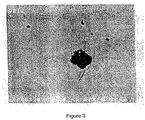
- Aluminum oxides without a TiN shell also were observed in the conventional material, as shown in Figure 3 .
- one route is to judiciously select higher quality raw materials including suitably reduced levels of nitrogen and/or titanium.
- nitrogen levels in the alloy will inhibits the formation of TiN and mixed metal carbonitrides, solubility of nitrogen in MP35N alloy is unknown, so elimination of nitride formers such as titanium in the present melt practice for MP35N alloy also was considered.
- Reduction or elimination of titanium, for example was considered possible in applications such as, for example, pacing leads, which are not strength limited and because the ASTM specification for such applications does not include a minimum strength limit.
- one preferred embodiment of the modified MP35N alloy includes no more than ppm levels of nitrogen, and may also include levels of titanium that are lower than in conventional MP35N material. Based on the results, the modified MP35N alloy includes less than 30 ppm of nitrogen to inhibit any significant formation of TiN and mixed metal carbonitride. A more preferred level is less than 20 ppm nitrogen, which would better ensure that the problematic particulate inclusions are not present in the material. Such levels of nitrogen are significantly lower than in conventional MP35N material formulated to ASTM specification F 562.
- the alloy of the present disclosure optionally may include less than 0.7 weight percent titanium, and more preferably less than 0.03 weight percent titanium, in order to better ensure the absence of any significant levels of TiN and mixed metal carbonitride particles.
- the modified MP35N alloys of the present disclosure include a sufficient level of deoxidization so as to inhibit grain boundary oxygen embrittlement and allow suitable hot workability. This is accomplished, for example, by including 0.05 to 0.15 weight percent aluminum in the alloy to sufficiently reduce the oxygen level in the processed alloy. It is expected that the aluminum would promote formation of small ( i.e. , less than 3 mictrometer), generally spherical aluminum oxide particles that are significantly less detrimental to fatigue life properties than the cuboidal TiN particles typically present in conventional MP35N.
- a reliable method for wholly or substantially eliminating TiN and mixed metal carbonitride inclusions is by wholly or substantially eliminating one or both of nitrogen and titanium from the charged raw materials. Wholly or substantially eliminating both nitrogen and titanium from the raw materials is preferred inasmuch as doing so provides a margin of safety if significant levels of either element are inadvertently introduced into the charge.
- eliminating all or substantially all of the titanium from the MP35N alloy results in only marginal deoxidation of the alloy during processing and produces an alloy having relatively low forgeability.
- one solution is to increase aluminum content, to 0.05 to 0.15 weight percent, for example, to provide sufficient deoxidation and inhibit breakage during forging.
- Other strategies for providing a sufficient level of deoxidation to ensure suitable hot workability in modified MP35N alloy including reduced levels of titanium are discussed in Example 3 below.
- alloys were produced with a standard MP35N alloy chemistry and with a modified MP35N chemistry including reduced levels of titanium.
- the experimental modified alloy chemistry is provided in Table 5 and included a significantly reduced level of titanium relative to the typical chemistry of conventional MP35N alloy (about 0.95 weight percent).
- Table 5 Element Content (weight percent) Carbon 0.006 Manganese 0.01 Silicon 0.01 Phosphorus Less than 0.003 Sulfur 0.0006 Chromium 20.06 Nickel 36.75 Molybdenum 10.32 Iron 0.12 Titanium 0.01 Boron 0.008 Cobalt Balance
- the alloys were provided as (3,000 lb) VIM electrodes, which were VAR remelted into 43 cm (17-inch) diameter ingots. Each VAR ingot was homogenized to reduce microsegregation, and then rotary forged on a GFM machine to produce a 10 cm (4-inch) thick billet. Each billet was hot rolled on a continuous rolling mill to 0 ⁇ 556 cm (0.219-inch) thick coil. The coil was annealed, shaved to 0 ⁇ 549 cm (0.216 inch) thick and pickled in preparation for drawing. Drawing was conducted using carbide dies and powder lubricants to 0 ⁇ 163 cm (0.064 inch).
- the final wire diameter was to be 0 ⁇ 018 cm (0.007 inch), with an allowable variation of +/- 0 ⁇ 0005 cm (0.0002 inch), and a goal was to maintain an ultimate tensile strength of 2068-2206 MPa (300-320 ksi) in the final wire.
- a series eight ASTM F 562 standard samples were cut from 0.25 cm (0.100-inch) diameter wire hard drawn from MP35N alloy.
- the eight samples represented five separate melted master heats of conventional MP35N alloy.
- Two samples of a modified reduced-titanium MP35N alloy also were cut from 2 ⁇ 54 cm (1.0-inch) and 0 ⁇ 549 cm (0.216-inch) diameter hard drawn material produced from the same melted master heat. All samples were mounted in a thermosetting compound to provide a longitudinal section through the entire length of each segment. The mounted specimens were ground and polished metallographically to obtain a polished plane near the longitudinal center of the samples.
- the prepared sections were examined in a scanning electron microscope (SEM) using backscattered electron imaging (BEI). For each sample section, 160 images showing a representative area of the prepared section were acquired at a magnification of 1000X for a total examined area of 1.77 mm 2 . Analysis of features appearing darker or brighter than the background was conducted using image analysis software. Contrast was adjusted so that features having a higher mean atomic number than the matrix would appear brighter compared with those features having a lower mean atomic number. The largest dimension was recorded for each individual feature in each of the images. The imaged inclusions were categorized by largest dimension into 1 micrometer groups up to the largest inclusion detected. It was believed that some largest dimension measurements could be the result of discrete inclusions occurring in a "stringer" formation, but not discernable as an individual inclusion. Features smaller than 0.2 micrometer were not counted.
- Grain size analysis was performed against samples of the conventional MP35M alloy to confirm that grain size of the modified MP35N alloy is similar. Grain size was determined using the Abrams three circle intercept procedure described n ASTM testing specification E112. Samples were taken at the process anneal size 0 ⁇ 025 cm (.010 inch)) for the 0 ⁇ 018 cm (.007-inch) finished wire.
- a cut length of material was positioned around a specified radius. Seven samples of each heat of the conventional MP35N alloy and the modified alloy were tested at various stress levels. Failure was considered to occur if a wire sample broke. The testing equipment sensed wire breakage and recorded test length to breakage in minutes.
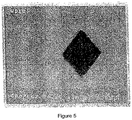
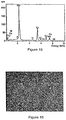
- Figure 9 is an example of features brighter than the background found in the modified MP35N alloy. These features were of a generally rounded morphology and existed randomly and in stringers. Many of the largest features were adjoining bright inclusions. A typical EDS spectrum for the bright inclusions in the low-titanium alloy is shown in Figure 10 . Due to the small size of the inclusions, the analysis is a composite of the inclusions and the surrounding base metal.
- Figures 11 and 12 are micrographs of typical over median size inclusions present in the conventional MP35N alloy. It is noted that Figures 11 and 12 depict images taken at 10 to 20 times less magnification than the images in Figures 6 and 7 , and, therefore, the inclusions shown in Figures 11 and 12 are substantially larger in size.
- Figures 13 and 14 show typical EDS spectra of dark inclusions found in the conventional MP35N alloy.
- Figure 13 depicts an overall spectrum of an inclusion
- Figure 14 depicts a spectrum of the darker center region of a dark inclusion in the material.
- the features brighter than the background in wire samples made from the conventional MP35N alloy were generally rounded.
- the features were in stringers and randomly scattered. Some clusters of bright features were also observed. Many of the largest features were adjoining bright inclusions.
- EDS analysis of the bright features indicated high concentrations of molybdenum and boron.
- An EDS spectrum of a typical bright inclusion is shown in Figure 15 . Due to the generally small size of such bright inclusions, the analysis underlying Figure 15 is a composite of the inclusions and the surrounding base metal.
- Results indicate that the experimental modified MP35N alloy maintains desirable grain size properties that are similar to conventional MP35N alloy meeting ASTM specification F 562.
- Table 7 summarizes the grain size results.
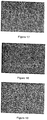
- Figures 16 through 18 are photomicrographs showing sample grain sizes.
- Figures 16 and 17 are longitudinal and transverse sections, respectively, of the conventional MP35N material that was evaluated.
- Figures 18 and 19 are longitudinal and transverse sections, respectively, of the experimental modified MP35N alloy.
- Table 7 Grain Size Conventional MP35N Alloy (meets ASTM F 562) Modified (Reduced Ti) MP35N Alloy Longitudinal 14.6 14.3 Transverse 14.5 14.4
- interpretation of the average visual per foot data indicated a 46% improvement in surface performance of the experimental MP35N material as compared to the conventional MP35N material.
- Interpretation of the average standard deviation in rating between 30 cm (one-foot) sections indicated a 54% improvement in surface consistency of the experimental material as compared to the conventional MP35N material.
- the range for over threshold signals between 305 m (1000-foot) sections indicated a 65% improvement in surface consistency of the experimental material as compared to the conventional MP35N material.
- interpretation of the average over threshold signals per 305 m (1000-foot) data indicated a 69% improvement in surface and subsurface performance of the experimental modified MP35N alloy as compared to the evaluated conventional MP35N alloy.
- Interpretation of the average range for over threshold signals between 305 m (1000-foot) sections indicated a 65% improvement in surface consistency of the experimental alloy as compared to the conventional MP35N alloy that was evaluated.
- tensile properties of the experimental modified MP35N material were comparable with the sample of conventional MP35N material.
- the test results were obtained using a 91 kg (200 lb) load cell, 25 ⁇ 4 cm (10-inch) gauge length, 0 ⁇ 21 cm/sec (5-inch/min) cross head speed on an Instron testing apparatus.
- Fatigue testing was performed on monofilament wire produced from the experimental and standard alloys using a Valley Instruments Rotary Beam Tester, Model 10040, which has a single drive chuck. Testing was performed in air at 18-24°C (65-75°F). A "runout" (i.e, an infinite number of cycles) was considered to be 54 million cycles (about 15,000 minutes) without wire breakage. Test results on the average number of cycles completed for the sample types at several stress value levels are presented in Table 9.
- the endurance limit of an alloy is the limiting stress below which the metal will theoretically withstand an infinite number of cycles without fracture.
- the endurance limit of the conventional MP35N alloy is less than 621 MPa (90 ksi) in the testing conducted.
- the experimental modified MP35N alloy withstood a runout at 690 MPa (100 ksi) This suggests that the endurance limit of the modified material is somewhere between 690 (100) and 758 MPa (110 ksi) while that of the standard MP35N material is significantly less.
- the greater service life for surgical implants suggested by the significantly higher endurance limit of the modified MP35N alloys described herein offers an additional safety margin and confidence level for the medical device design engineer.
- two major factors contributing to the stress applied to the wire in a pacing coil are the coil diameter and the wire diameter.
- the higher endurance limit of the modified material may allow the use of smaller diameter coils and/or smaller diameter wire, while providing the same safety margin.
- Heats WF64, WF65 and WF66 were prepared having the ladle chemistries shown in Table 10. Heat WF64 included a VIM addition of nickel magnesium to provide about 156 ppm magnesium in the alloy. Heat WF 65 included a VIM addition of nickel calcium to provide about 141 ppm calcium in the alloy. Heat WF66 include VIM addition of cerium to provide about 0.01 weight percent cerium on the alloy. Each of these additions was intended to produce oxides and thereby remove oxygen from the alloy that otherwise may contribute to oxygen embrittlement at grain boundaries and promote fracturing during hot working.
- the tables included in Figure 21 characterize the inclusions found using SEM to analyze as-rolled 3 ⁇ 8 cm (1.5-inch) RD micros of the alloys of heats WF64, WF65 and WF66.
- the inclusions found in the alloys were almost exclusively oxides of the particular deoxidizing species used (calcium oxide, magnesium oxide, or cerium oxide).
- No appreciable level of TiN or mixed metal carbonitride particles was found in the microstructures of the alloys produced from the three heats. The alloys produced from these heats were found to be readily hot workable.
- modified MP35N alloy of the present disclosure including low levels of titanium may be modified by VIM addition to provide acceptable hot workability without promoting formation of TiN or mixed metal carbonitride particles.
- Table 10 Element Heat WF64 Heat WF65 Heat WF66 Ni 36.33 36.30 36.10 Co 33.48 33.52 33.66 Cr 20.02 20.00 20.04 Mo 10.04 10.02 10.07 Fe 0.03 0.03 0.03 Al 0.01 0.04 0.01 Ti 0.01 0.01 0.01 0.01 V 0.01 0.01 0.01 Zr 0.01 0.01 0.01 Nb 0.01 0.01 0.01 W 0.01 0.01 0.01 0.01 0.01 0.01 0.01 0.01 Si 0.01 0.01 0.01 0.01 Mn 0.01 0.01 0.01 0.01 0.01 P 0.005 0.005 S less than 0.0003 less than 0.0003 less than 0.0003 C 0.001 0.002 0.002 B 0.005 0.004 0.007 N 0.0007 0.0009 0.0008 O 0.0018 0.0038 0.0019 Ca less than 10
Landscapes
- Health & Medical Sciences (AREA)
- Chemical & Material Sciences (AREA)
- Vascular Medicine (AREA)
- Epidemiology (AREA)
- Metallurgy (AREA)
- Organic Chemistry (AREA)
- Inorganic Chemistry (AREA)
- Materials Engineering (AREA)
- Heart & Thoracic Surgery (AREA)
- Surgery (AREA)
- Engineering & Computer Science (AREA)
- Mechanical Engineering (AREA)
- Life Sciences & Earth Sciences (AREA)
- Animal Behavior & Ethology (AREA)
- General Health & Medical Sciences (AREA)
- Public Health (AREA)
- Veterinary Medicine (AREA)
- Materials For Medical Uses (AREA)
- Manufacture And Refinement Of Metals (AREA)
- Treatment Of Steel In Its Molten State (AREA)
Claims (18)
- Legierung, umfassend, in Gewichtsprozent (Gew.-%) bezogen auf das Gesamtlegierungsgewicht: 32,7 bis 37,3 Nickel;18,75 bis 21,25 Chrom;8,85 bis 10,65 Molybdän;nicht mehr als 0,035 Kohlenstoff;nicht mehr als 0,18 Mangan;nicht mehr als 0,17 Silicium;nicht mehr als 0,020 Phosphor;nicht mehr als 0,015 Schwefel;nicht mehr als 1,05 Eisen;nicht mehr als 0,020 Bor;weniger als 30 ppm Stickstoff;weniger als 0,7 Gew.-% Titan;mindestens eines von: 0,05 bis 0,15 Gew.-% Aluminium; 5 bis 20 ppm Calcium; 5 bis 50 ppm Magnesium und 5 bis 50 ppm Cer; undder Rest Cobalt und beiläufige Verunreinigungen.
- Legierung nach Anspruch 1, umfassend: 33,0 bis 37,0 Nickel;19,0 bis 21,0 Chrom;9,0 bis 10,5 Molybdän.
- Legierung nach Anspruch 2, umfassend:nicht mehr als 0,025 Kohlenstoff;nicht mehr als 0,15 Mangan;nicht mehr als 0,15 Silicium;nicht mehr als 0,015 Phosphor;nicht mehr als 0,010 Schwefel;nicht mehr als 1,0 Eisen; undnicht mehr als 0,015 Bor.
- Legierung nach einem der vorhergehenden Ansprüche, wobei die Legierung keine Titannitrid- und gemischte Metallcarbonitrideinschlüsse aufweist.
- Legierung nach einem der vorhergehenden Ansprüche, umfassend weniger als 0,03 Gew.-% Titan.
- Legierung nach einem der vorhergehenden Ansprüche, wobei die Legierung kein Titan enthält.
- Legierung nach einem der vorhergehenden Ansprüche, umfassend weniger als 20 ppm Stickstoff.
- Legierung nach einem der vorhergehenden Ansprüche, wobei die Legierung keinen Stickstoff enthält.
- Legierung nach einem der vorhergehenden Ansprüche, wobei die Legierung keine Sauerstoffsprödigkeit an den Korngrenzen zeigt.
- Legierung nach einem der vorhergehenden Ansprüche, wobei die Legierung eine Dauerfestigkeitsgrenze von größer als 689,5 MPa (100 ksi) aufweist.
- Legierung nach einem der vorhergehenden Ansprüche, wobei die Legierung sich eignet für die Verwendung bei Anwendungen als chirurgisches Implantat gemäß der ASTM-Standardspezifikation F 562.
- Herstellungserzeugnis, umfassend die Legierung gemäß einem der vorhergehenden Ansprüche.
- Herstellungserzeugnis nach Anspruch 12, wobei das Herstellungserzeugnis aus einem Stab, einem Draht, einer Röhre, einem chirurgischen Implantatgerät, einem Bestandteil für ein chirurgisches Implantatgerät, einem implantierbaren Defibrillator, einem Bestandteil für einen implantierbaren Defibrillator, einem implantierbaren Schrittmacher, einem Bestandteil für einen implantierbaren Schrittmacher, einer Schrittmacherelektrode und einem kardialen Stent ausgewählt ist.
- Herstellungserzeugnis nach Anspruch 13, wobei das Herstellungserzeugnis ein Stab oder ein Draht ist und sich eignet für die Verwendung bei Anwendungen als chirurgisches Implantat gemäß der ASTM-Standardspezifikation F 562.
- Verfahren zur Herstellung einer Legierung, wobei das Verfahren das Herstellen eines VAR-Rohblocks mit einer Zusammensetzung gemäß einem der Ansprüche 1 bis 11 umfasst.
- Verfahren nach Anspruch 15, wobei der Rohblock durch eine Abfolge einschließlich VIM hergestellt wird.
- Verfahren nach einem der Ansprüche 15 oder 16, wobei das Verfahren ferner das Bearbeiten des Rohblocks in einen Stab, einen Draht oder eine Röhre umfasst.
- Verfahren nach Anspruch 17, wobei der Stab oder Draht weiter bearbeitet wird in ein chirurgisches Implantatgerät, einen Bestandteil für ein chirurgisches Implantatgerät, einen Bestandteil für einen implantierbaren Defibrillator, einen Bestandteil für einen implantierbaren Schrittmacher, eine Schrittmacherelektrode oder einen kardialen Stent.
Applications Claiming Priority (2)
| Application Number | Priority Date | Filing Date | Title |
|---|---|---|---|
| US10/656,918 US8048369B2 (en) | 2003-09-05 | 2003-09-05 | Cobalt-nickel-chromium-molybdenum alloys with reduced level of titanium nitride inclusions |
| PCT/US2004/015628 WO2005026399A1 (en) | 2003-09-05 | 2004-05-19 | Cobalt-nickel-chromium-molybdenum alloys with reduced level of titanium nitride inclusions |
Publications (3)
| Publication Number | Publication Date |
|---|---|
| EP1664360A1 EP1664360A1 (de) | 2006-06-07 |
| EP1664360B1 EP1664360B1 (de) | 2012-04-18 |
| EP1664360B2 true EP1664360B2 (de) | 2021-09-15 |
Family
ID=34226460
Family Applications (1)
| Application Number | Title | Priority Date | Filing Date |
|---|---|---|---|
| EP04752617.3A Expired - Lifetime EP1664360B2 (de) | 2003-09-05 | 2004-05-19 | Kobalt-nickel-chrom-molybdän-legierungen mit verringertem gehalt an titannitrideinschlüssen |
Country Status (7)
| Country | Link |
|---|---|
| US (1) | US8048369B2 (de) |
| EP (1) | EP1664360B2 (de) |
| JP (1) | JP5165241B2 (de) |
| CN (1) | CN1867687B (de) |
| AT (1) | ATE554192T1 (de) |
| DK (1) | DK1664360T4 (de) |
| WO (1) | WO2005026399A1 (de) |
Families Citing this family (48)
| Publication number | Priority date | Publication date | Assignee | Title |
|---|---|---|---|---|
| US7329383B2 (en) * | 2003-10-22 | 2008-02-12 | Boston Scientific Scimed, Inc. | Alloy compositions and devices including the compositions |
| WO2005115118A2 (en) | 2004-05-25 | 2005-12-08 | Chestnut Medical Technologies, Inc. | Flexible vascular occluding device |
| US8623067B2 (en) * | 2004-05-25 | 2014-01-07 | Covidien Lp | Methods and apparatus for luminal stenting |
| US20060206200A1 (en) | 2004-05-25 | 2006-09-14 | Chestnut Medical Technologies, Inc. | Flexible vascular occluding device |
| SG175723A1 (en) | 2004-05-25 | 2011-12-29 | Tyco Healthcare | Vascular stenting for aneurysms |
| US20060096672A1 (en) * | 2004-11-09 | 2006-05-11 | Robert Burgermeister | Quaternary cobalt-nickel-chromium-molybdenum fatigue resistant alloy for intravascular medical devices |
| US20070073374A1 (en) * | 2005-09-29 | 2007-03-29 | Anderl Steven F | Endoprostheses including nickel-titanium alloys |
| US7848823B2 (en) | 2005-12-09 | 2010-12-07 | Boston Scientific Scimed, Inc. | Cardiac stimulation system |
| US8050774B2 (en) * | 2005-12-22 | 2011-11-01 | Boston Scientific Scimed, Inc. | Electrode apparatus, systems and methods |
| WO2007100556A1 (en) | 2006-02-22 | 2007-09-07 | Ev3 Inc. | Embolic protection systems having radiopaque filter mesh |
| US7937161B2 (en) * | 2006-03-31 | 2011-05-03 | Boston Scientific Scimed, Inc. | Cardiac stimulation electrodes, delivery devices, and implantation configurations |
| US7955383B2 (en) | 2006-04-25 | 2011-06-07 | Medtronics Vascular, Inc. | Laminated implantable medical device having a metallic coating |
| US7691400B2 (en) | 2006-05-05 | 2010-04-06 | Medtronic Vascular, Inc. | Medical device having coating with zeolite drug reservoirs |
| US7840281B2 (en) | 2006-07-21 | 2010-11-23 | Boston Scientific Scimed, Inc. | Delivery of cardiac stimulation devices |
| US7780798B2 (en) * | 2006-10-13 | 2010-08-24 | Boston Scientific Scimed, Inc. | Medical devices including hardened alloys |
| US7972375B2 (en) * | 2007-02-05 | 2011-07-05 | Boston Scientific Scimed, Inc. | Endoprostheses including metal matrix composite structures |
| EP2072629B1 (de) * | 2007-08-20 | 2010-10-06 | DePuy Products, Inc. | Ultrapassivierung von Chromlegierungen |
| WO2010033873A1 (en) * | 2008-09-19 | 2010-03-25 | Fort Wayne Metals Research Products Corporation | Fatigue damage resistant wire and method of production thereof |
| US8430075B2 (en) * | 2008-12-16 | 2013-04-30 | L.E. Jones Company | Superaustenitic stainless steel and method of making and use thereof |
| BRPI1014915A2 (pt) * | 2009-04-17 | 2016-04-26 | Tyco Healthcare | implantação de stent vascular para aneurismas |
| JP2011208210A (ja) * | 2010-03-29 | 2011-10-20 | Seiko Instruments Inc | ステント用合金及びステント |
| US9061088B2 (en) * | 2012-02-02 | 2015-06-23 | Abbott Cardiovascular Systems, Inc. | Guide wire core wire made from a substantially titanium-free alloy for enhanced guide wire steering response |
| JP5956205B2 (ja) * | 2012-03-15 | 2016-07-27 | 日立金属Mmcスーパーアロイ株式会社 | Ni基合金の製造方法 |
| US8430981B1 (en) | 2012-07-30 | 2013-04-30 | Saes Smart Materials | Nickel-titanium Alloys, related products and methods |
| DE102012109522B4 (de) | 2012-10-08 | 2019-07-04 | Vacuumschmelze Gmbh & Co. Kg | Verfahren zur Herstellung einer Feder aus einer CoNiCrMo-Legierung für ein mechanisches Uhrwerk |
| US9114001B2 (en) | 2012-10-30 | 2015-08-25 | Covidien Lp | Systems for attaining a predetermined porosity of a vascular device |
| US9452070B2 (en) | 2012-10-31 | 2016-09-27 | Covidien Lp | Methods and systems for increasing a density of a region of a vascular device |
| US9943427B2 (en) | 2012-11-06 | 2018-04-17 | Covidien Lp | Shaped occluding devices and methods of using the same |
| CN103184383B (zh) * | 2012-12-30 | 2015-11-04 | 重庆愚吉机械制造有限公司 | 一种抗菌钴镍铬钼合金及其制备方法 |
| US9636485B2 (en) | 2013-01-17 | 2017-05-02 | Abbott Cardiovascular Systems, Inc. | Methods for counteracting rebounding effects during solid state resistance welding of dissimilar materials |
| US9157174B2 (en) | 2013-02-05 | 2015-10-13 | Covidien Lp | Vascular device for aneurysm treatment and providing blood flow into a perforator vessel |
| DE102015002430A1 (de) | 2015-02-26 | 2016-09-01 | Gernot Hausch | CoNiCrMo-Legierung für Aufzugsfedern in einem mechanischen Uhrwerk |
| US9765416B2 (en) * | 2015-06-24 | 2017-09-19 | Ati Properties Llc | Alloy melting and refining method |
| EP3181710A1 (de) | 2015-12-18 | 2017-06-21 | Heraeus Deutschland GmbH & Co. KG | Legierung mit cr, ni, mo und co zur verwendung in medizinischen vorrichtungen |
| US10487377B2 (en) | 2015-12-18 | 2019-11-26 | Heraeus Deutschland GmbH & Co. KG | Cr, Ni, Mo and Co alloy for use in medical devices |
| CN107299253B (zh) * | 2017-04-14 | 2019-06-28 | 涿州新卓立航空精密科技有限公司 | 人工关节合金及其熔炼工艺 |
| EP3415651A1 (de) * | 2017-06-14 | 2018-12-19 | Heraeus Deutschland GmbH & Co. KG | Verfahren zur herstellung eines passivierten produkts |
| EP3415649B1 (de) | 2017-06-14 | 2022-08-03 | Heraeus Deutschland GmbH & Co. KG | Verbunddraht |
| EP3415650A1 (de) | 2017-06-14 | 2018-12-19 | Heraeus Deutschland GmbH & Co. KG | Verfahren zur herstellung eines verbunddrahtes |
| EP3415195A1 (de) | 2017-06-14 | 2018-12-19 | Heraeus Deutschland GmbH & Co. KG | Verfahren zur herstellung eines kabels |
| JP6999934B2 (ja) * | 2018-02-27 | 2022-02-04 | 国立研究開発法人物質・材料研究機構 | ステント用合金及びステント |
| US11324944B1 (en) * | 2019-07-23 | 2022-05-10 | Verily Life Sciences Llc | Flexible cable assembly for medical implantation |
| US12043915B2 (en) | 2019-10-08 | 2024-07-23 | Lake Region Manufacturing, Inc. | Electropolishing of MP35N wire for fatigue life improvement of an implantable lead |
| US11697869B2 (en) | 2020-01-22 | 2023-07-11 | Heraeus Deutschland GmbH & Co. KG | Method for manufacturing a biocompatible wire |
| WO2021248260A1 (zh) * | 2020-06-08 | 2021-12-16 | 南京江东工贸有限公司 | 一种金属材料及其制备方法与应用 |
| KR102322596B1 (ko) | 2020-07-17 | 2021-11-05 | 두산중공업 주식회사 | 연소기용 노즐 어셈블리 및 이를 포함하는 가스터빈 연소기 |
| KR102322597B1 (ko) | 2020-07-17 | 2021-11-05 | 두산중공업 주식회사 | 연소기용 노즐 어셈블리 및 이를 포함하는 가스터빈 연소기 |
| KR102322598B1 (ko) | 2020-07-17 | 2021-11-05 | 두산중공업 주식회사 | 연소기용 노즐 어셈블리 및 이를 포함하는 가스터빈 연소기 |
Family Cites Families (35)
| Publication number | Priority date | Publication date | Assignee | Title |
|---|---|---|---|---|
| US2103500A (en) | 1936-01-08 | 1937-12-28 | Cons Car Heating Co Inc | Alloy |
| US3241954A (en) * | 1963-08-29 | 1966-03-22 | Martin Metals Company | Cobalt-base alloy |
| US3356542A (en) | 1967-04-10 | 1967-12-05 | Du Pont | Cobalt-nickel base alloys containing chromium and molybdenum |
| US3562024A (en) | 1967-12-04 | 1971-02-09 | Standard Pressed Steel Co | Cobalt-nickel base alloys containing chromium and molybdenum |
| US3787202A (en) * | 1970-11-18 | 1974-01-22 | Cyclops Corp | High temperature chromium-nickel alloy |
| US3816106A (en) * | 1972-08-25 | 1974-06-11 | Int Nickel Co | Strong, corrosion resistant alloy |
| US4591393A (en) | 1977-02-10 | 1986-05-27 | Exxon Production Research Co. | Alloys having improved resistance to hydrogen embrittlement |
| US4151012A (en) | 1977-04-11 | 1979-04-24 | Latrobe Steel Company | High strength, corrosion resistant tubular products and methods of making the same |
| US4099992A (en) | 1977-04-11 | 1978-07-11 | Latrobe Steel Company | Tubular products and methods of making the same |
| EP0009881B2 (de) * | 1978-10-03 | 1987-07-08 | Deloro Stellite Limited | Kobalt enthaltende Legierungen |
| US4355646A (en) | 1980-11-26 | 1982-10-26 | Medtronic, Inc. | Transvenous defibrillating lead |
| JPS57143462A (en) * | 1981-03-02 | 1982-09-04 | Mitsubishi Heavy Ind Ltd | Heat resistant ni alloy |
| GB2174716B (en) * | 1985-04-26 | 1989-11-15 | Mitsui Shipbuilding Eng | Method of producing an iron-cobalt-and nickel-base alloy having low contents of sulphur, oxygen and nitrogen |
| US5246014A (en) | 1991-11-08 | 1993-09-21 | Medtronic, Inc. | Implantable lead system |
| US5476555A (en) | 1992-08-31 | 1995-12-19 | Sps Technologies, Inc. | Nickel-cobalt based alloys |
| US5423881A (en) | 1994-03-14 | 1995-06-13 | Medtronic, Inc. | Medical electrical lead |
| US5433744A (en) | 1994-03-14 | 1995-07-18 | Medtronic, Inc. | Medical electrical lead with super austentic stainless steel conductor |
| US5411545A (en) | 1994-03-14 | 1995-05-02 | Medtronic, Inc. | Medical electrical lead |
| US5483022A (en) | 1994-04-12 | 1996-01-09 | Ventritex, Inc. | Implantable conductor coil formed from cabled composite wire |
| US5692899A (en) | 1994-06-24 | 1997-12-02 | Seiko Instruments Inc. | Wire for orthodontic treatment and its manufacturing method |
| US5718159A (en) * | 1996-04-30 | 1998-02-17 | Schneider (Usa) Inc. | Process for manufacturing three-dimensional braided covered stent |
| US5760341A (en) | 1996-09-10 | 1998-06-02 | Medtronic, Inc. | Conductor cable for biomedical lead |
| SE9603318D0 (sv) | 1996-09-12 | 1996-09-12 | Pacesetter Ab | Elektrodkabel för elektrisk stimulering |
| JPH10140279A (ja) | 1996-09-13 | 1998-05-26 | Seiko Instr Inc | Co−Ni基合金 |
| US6285910B1 (en) | 1997-04-21 | 2001-09-04 | Medtronic, Inc. | Medical electrical lead |
| US5994647A (en) | 1997-05-02 | 1999-11-30 | General Science And Technology Corp. | Electrical cables having low resistance and methods of making same |
| US6187045B1 (en) | 1999-02-10 | 2001-02-13 | Thomas K. Fehring | Enhanced biocompatible implants and alloys |
| US6374141B1 (en) * | 1999-10-08 | 2002-04-16 | Microhelix, Inc. | Multi-lead bioelectrical stimulus cable |
| JP2001348635A (ja) * | 2000-06-05 | 2001-12-18 | Nikkin Material:Kk | 冷間加工性と加工硬化に優れたチタン合金 |
| US6766203B2 (en) | 2001-04-05 | 2004-07-20 | Pacesetter, Inc. | Body implantable lead with improved tip electrode assembly |
| JP2003049249A (ja) | 2001-08-09 | 2003-02-21 | Hitachi Metals Ltd | ガイドワイヤ用材料及びその製造方法 |
| US7783365B2 (en) | 2002-04-11 | 2010-08-24 | Medtronic, Inc. | Implantable medical device conductor insulation and process for forming |
| US7015392B1 (en) | 2003-05-28 | 2006-03-21 | Accellent, Inc. | High torsional ductility wire and methods of making the same |
| US7138582B2 (en) | 2003-06-24 | 2006-11-21 | Medtronic, Inc. | Medical electrical lead conductor formed from modified MP35N alloy |
| US7289846B2 (en) | 2003-07-30 | 2007-10-30 | Medtronic, Inc. | Multi-lumen medical electrical lead body |
-
2003
- 2003-09-05 US US10/656,918 patent/US8048369B2/en not_active Expired - Lifetime
-
2004
- 2004-05-19 AT AT04752617T patent/ATE554192T1/de active
- 2004-05-19 JP JP2006525315A patent/JP5165241B2/ja not_active Expired - Lifetime
- 2004-05-19 DK DK04752617.3T patent/DK1664360T4/da active
- 2004-05-19 CN CN2004800303297A patent/CN1867687B/zh not_active Expired - Lifetime
- 2004-05-19 WO PCT/US2004/015628 patent/WO2005026399A1/en not_active Ceased
- 2004-05-19 EP EP04752617.3A patent/EP1664360B2/de not_active Expired - Lifetime
Also Published As
| Publication number | Publication date |
|---|---|
| EP1664360B1 (de) | 2012-04-18 |
| CN1867687B (zh) | 2010-05-26 |
| HK1092842A1 (en) | 2007-02-16 |
| JP2007504362A (ja) | 2007-03-01 |
| ATE554192T1 (de) | 2012-05-15 |
| EP1664360A1 (de) | 2006-06-07 |
| CN1867687A (zh) | 2006-11-22 |
| US8048369B2 (en) | 2011-11-01 |
| DK1664360T4 (da) | 2021-12-20 |
| DK1664360T3 (da) | 2012-05-14 |
| WO2005026399A1 (en) | 2005-03-24 |
| US20050051243A1 (en) | 2005-03-10 |
| JP5165241B2 (ja) | 2013-03-21 |
Similar Documents
| Publication | Publication Date | Title |
|---|---|---|
| EP1664360B2 (de) | Kobalt-nickel-chrom-molybdän-legierungen mit verringertem gehalt an titannitrideinschlüssen | |
| US10125411B2 (en) | β-type titanium alloy | |
| EP1698708B1 (de) | Verfahren zur Herstellung einer nichtmagnetischen Legierung mit hoher Härte | |
| EP3023508B1 (de) | Expandiertes element mit einem cu-al-mn-legierungsmaterial und hervorragenden belastungskorrosionshemmungseigenschaften und verwendung davon | |
| EP3587606A1 (de) | N-basierte superwärmebeständige legierung und verfahren zur herstellung davon | |
| EP3290539B1 (de) | Nichtorientiertes magnetisches stahlblech | |
| RU2695852C2 (ru) | α-β ТИТАНОВЫЙ СПЛАВ | |
| US10487377B2 (en) | Cr, Ni, Mo and Co alloy for use in medical devices | |
| EP2677052A1 (de) | Titanlegierungsprodukt mit hoher Festigkeit und hervorragender Kaltwalzeigenschaft | |
| EP3907306A1 (de) | Stange | |
| Chiba et al. | Microstructure and mechanical properties of biomedical Co–29Cr–8Mo alloy wire fabricated by a modified melt-spinning process | |
| EP2028285A1 (de) | Stahl für hochreine feder mit hervorragenden ermüdungseigenschaften und hochreine feder | |
| US20180363115A1 (en) | Method for manufacturing a composite wire | |
| Bradley et al. | Optimization of melt chemistry and properties of 35cobalt-35nickel-20chromium-10molybdenum alloy medical grade wire | |
| Mishra et al. | Metallurgy, microstructure, chemistry and mechanical properties of a new grade of cobalt-chromium alloy before and after porous-coating | |
| HK1092842B (en) | Cobalt-nickel-chromium-molybdenum alloys with reduced level of titanium nitride inclusions | |
| US20180366239A1 (en) | Method for manufacturing a cable | |
| JP6794585B1 (ja) | 熱間圧延用チタン材の製造方法 | |
| Krook et al. | Material properties affecting the machinability of Inconel 718 | |
| US20180363146A1 (en) | Method for manufacturing a passivated product | |
| Kay et al. | Optimization of Melt Chemistry and Properties of Drawn Filled Tube (DFT) composite materials of 35Cobalt-35Nickel-20Chromium-10Molybdenum alloy (UNS R30035) Medical Grade Wire with Silver core | |
| JP4987640B2 (ja) | 冷間加工部品の製造に適した機械部品用または装飾部品用チタン合金棒線およびその製造方法 | |
| Chabbi et al. | Hot and Cold Forming Behaviour of Magnesium Alloys AZ31 and AZ61 | |
| JPH11222655A (ja) | 粉末高速度工具鋼およびその製造方法 | |
| EP3181710A1 (de) | Legierung mit cr, ni, mo und co zur verwendung in medizinischen vorrichtungen |
Legal Events
| Date | Code | Title | Description |
|---|---|---|---|
| PUAI | Public reference made under article 153(3) epc to a published international application that has entered the european phase |
Free format text: ORIGINAL CODE: 0009012 |
|
| 17P | Request for examination filed |
Effective date: 20060405 |
|
| AK | Designated contracting states |
Kind code of ref document: A1 Designated state(s): AT BE BG CH CY CZ DE DK EE ES FI FR GB GR HU IE IT LI LU MC NL PL PT RO SE SI SK TR |
|
| DAX | Request for extension of the european patent (deleted) | ||
| REG | Reference to a national code |
Ref country code: HK Ref legal event code: DE Ref document number: 1092842 Country of ref document: HK |
|
| RIN1 | Information on inventor provided before grant (corrected) |
Inventor name: MYERS, ROBERT, J. Inventor name: FORBES JONES, ROBIN, M. Inventor name: STEPHENSON, TIMOTHY, A. Inventor name: LIPPARD, HENRY, E. Inventor name: BRADLEY, DAVID, J. |
|
| 17Q | First examination report despatched |
Effective date: 20100503 |
|
| TPAC | Observations filed by third parties |
Free format text: ORIGINAL CODE: EPIDOSNTIPA |
|
| GRAP | Despatch of communication of intention to grant a patent |
Free format text: ORIGINAL CODE: EPIDOSNIGR1 |
|
| GRAS | Grant fee paid |
Free format text: ORIGINAL CODE: EPIDOSNIGR3 |
|
| GRAA | (expected) grant |
Free format text: ORIGINAL CODE: 0009210 |
|
| AK | Designated contracting states |
Kind code of ref document: B1 Designated state(s): AT BE BG CH CY CZ DE DK EE ES FI FR GB GR HU IE IT LI LU MC NL PL PT RO SE SI SK TR |
|
| REG | Reference to a national code |
Ref country code: GB Ref legal event code: FG4D |
|
| REG | Reference to a national code |
Ref country code: CH Ref legal event code: EP |
|
| REG | Reference to a national code |
Ref country code: IE Ref legal event code: FG4D |
|
| REG | Reference to a national code |
Ref country code: DK Ref legal event code: T3 |
|
| REG | Reference to a national code |
Ref country code: AT Ref legal event code: REF Ref document number: 554192 Country of ref document: AT Kind code of ref document: T Effective date: 20120515 |
|
| REG | Reference to a national code |
Ref country code: SE Ref legal event code: TRGR |
|
| REG | Reference to a national code |
Ref country code: DE Ref legal event code: R096 Ref document number: 602004037428 Country of ref document: DE Effective date: 20120614 |
|
| REG | Reference to a national code |
Ref country code: CH Ref legal event code: NV Representative=s name: R. A. EGLI & CO. PATENTANWAELTE |
|
| REG | Reference to a national code |
Ref country code: NL Ref legal event code: T3 |
|
| REG | Reference to a national code |
Ref country code: AT Ref legal event code: MK05 Ref document number: 554192 Country of ref document: AT Kind code of ref document: T Effective date: 20120418 |
|
| PG25 | Lapsed in a contracting state [announced via postgrant information from national office to epo] |
Ref country code: CY Free format text: LAPSE BECAUSE OF FAILURE TO SUBMIT A TRANSLATION OF THE DESCRIPTION OR TO PAY THE FEE WITHIN THE PRESCRIBED TIME-LIMIT Effective date: 20120418 Ref country code: FI Free format text: LAPSE BECAUSE OF FAILURE TO SUBMIT A TRANSLATION OF THE DESCRIPTION OR TO PAY THE FEE WITHIN THE PRESCRIBED TIME-LIMIT Effective date: 20120418 Ref country code: PL Free format text: LAPSE BECAUSE OF FAILURE TO SUBMIT A TRANSLATION OF THE DESCRIPTION OR TO PAY THE FEE WITHIN THE PRESCRIBED TIME-LIMIT Effective date: 20120418 |
|
| PG25 | Lapsed in a contracting state [announced via postgrant information from national office to epo] |
Ref country code: PT Free format text: LAPSE BECAUSE OF FAILURE TO SUBMIT A TRANSLATION OF THE DESCRIPTION OR TO PAY THE FEE WITHIN THE PRESCRIBED TIME-LIMIT Effective date: 20120820 Ref country code: GR Free format text: LAPSE BECAUSE OF FAILURE TO SUBMIT A TRANSLATION OF THE DESCRIPTION OR TO PAY THE FEE WITHIN THE PRESCRIBED TIME-LIMIT Effective date: 20120719 Ref country code: SI Free format text: LAPSE BECAUSE OF FAILURE TO SUBMIT A TRANSLATION OF THE DESCRIPTION OR TO PAY THE FEE WITHIN THE PRESCRIBED TIME-LIMIT Effective date: 20120418 |
|
| PG25 | Lapsed in a contracting state [announced via postgrant information from national office to epo] |
Ref country code: BE Free format text: LAPSE BECAUSE OF FAILURE TO SUBMIT A TRANSLATION OF THE DESCRIPTION OR TO PAY THE FEE WITHIN THE PRESCRIBED TIME-LIMIT Effective date: 20120418 Ref country code: MC Free format text: LAPSE BECAUSE OF NON-PAYMENT OF DUE FEES Effective date: 20120531 |
|
| REG | Reference to a national code |
Ref country code: HK Ref legal event code: GR Ref document number: 1092842 Country of ref document: HK |
|
| PLBI | Opposition filed |
Free format text: ORIGINAL CODE: 0009260 |
|
| PG25 | Lapsed in a contracting state [announced via postgrant information from national office to epo] |
Ref country code: RO Free format text: LAPSE BECAUSE OF FAILURE TO SUBMIT A TRANSLATION OF THE DESCRIPTION OR TO PAY THE FEE WITHIN THE PRESCRIBED TIME-LIMIT Effective date: 20120418 Ref country code: SK Free format text: LAPSE BECAUSE OF FAILURE TO SUBMIT A TRANSLATION OF THE DESCRIPTION OR TO PAY THE FEE WITHIN THE PRESCRIBED TIME-LIMIT Effective date: 20120418 Ref country code: EE Free format text: LAPSE BECAUSE OF FAILURE TO SUBMIT A TRANSLATION OF THE DESCRIPTION OR TO PAY THE FEE WITHIN THE PRESCRIBED TIME-LIMIT Effective date: 20120418 Ref country code: AT Free format text: LAPSE BECAUSE OF FAILURE TO SUBMIT A TRANSLATION OF THE DESCRIPTION OR TO PAY THE FEE WITHIN THE PRESCRIBED TIME-LIMIT Effective date: 20120418 |
|
| PLAX | Notice of opposition and request to file observation + time limit sent |
Free format text: ORIGINAL CODE: EPIDOSNOBS2 |
|
| 26 | Opposition filed |
Opponent name: KAMEKE, ALLARD VON Effective date: 20130118 |
|
| PLAF | Information modified related to communication of a notice of opposition and request to file observations + time limit |
Free format text: ORIGINAL CODE: EPIDOSCOBS2 |
|
| REG | Reference to a national code |
Ref country code: DE Ref legal event code: R026 Ref document number: 602004037428 Country of ref document: DE Effective date: 20130118 |
|
| PG25 | Lapsed in a contracting state [announced via postgrant information from national office to epo] |
Ref country code: BG Free format text: LAPSE BECAUSE OF FAILURE TO SUBMIT A TRANSLATION OF THE DESCRIPTION OR TO PAY THE FEE WITHIN THE PRESCRIBED TIME-LIMIT Effective date: 20120718 |
|
| PLBB | Reply of patent proprietor to notice(s) of opposition received |
Free format text: ORIGINAL CODE: EPIDOSNOBS3 |
|
| PG25 | Lapsed in a contracting state [announced via postgrant information from national office to epo] |
Ref country code: ES Free format text: LAPSE BECAUSE OF FAILURE TO SUBMIT A TRANSLATION OF THE DESCRIPTION OR TO PAY THE FEE WITHIN THE PRESCRIBED TIME-LIMIT Effective date: 20120729 |
|
| PG25 | Lapsed in a contracting state [announced via postgrant information from national office to epo] |
Ref country code: TR Free format text: LAPSE BECAUSE OF FAILURE TO SUBMIT A TRANSLATION OF THE DESCRIPTION OR TO PAY THE FEE WITHIN THE PRESCRIBED TIME-LIMIT Effective date: 20120418 |
|
| PG25 | Lapsed in a contracting state [announced via postgrant information from national office to epo] |
Ref country code: LU Free format text: LAPSE BECAUSE OF NON-PAYMENT OF DUE FEES Effective date: 20120519 |
|
| PG25 | Lapsed in a contracting state [announced via postgrant information from national office to epo] |
Ref country code: HU Free format text: LAPSE BECAUSE OF FAILURE TO SUBMIT A TRANSLATION OF THE DESCRIPTION OR TO PAY THE FEE WITHIN THE PRESCRIBED TIME-LIMIT Effective date: 20040519 |
|
| PLCK | Communication despatched that opposition was rejected |
Free format text: ORIGINAL CODE: EPIDOSNREJ1 |
|
| APAH | Appeal reference modified |
Free format text: ORIGINAL CODE: EPIDOSCREFNO |
|
| APBM | Appeal reference recorded |
Free format text: ORIGINAL CODE: EPIDOSNREFNO |
|
| APBP | Date of receipt of notice of appeal recorded |
Free format text: ORIGINAL CODE: EPIDOSNNOA2O |
|
| REG | Reference to a national code |
Ref country code: FR Ref legal event code: PLFP Year of fee payment: 13 |
|
| APBQ | Date of receipt of statement of grounds of appeal recorded |
Free format text: ORIGINAL CODE: EPIDOSNNOA3O |
|
| REG | Reference to a national code |
Ref country code: FR Ref legal event code: PLFP Year of fee payment: 14 |
|
| PLAB | Opposition data, opponent's data or that of the opponent's representative modified |
Free format text: ORIGINAL CODE: 0009299OPPO |
|
| R26 | Opposition filed (corrected) |
Opponent name: KAMEKE, ALLARD VON Effective date: 20130118 |
|
| RAP2 | Party data changed (patent owner data changed or rights of a patent transferred) |
Owner name: FORT WAYNE METALS RESEARCH PRODUCTS CORPORATION Owner name: ATI PROPERTIES LLC |
|
| REG | Reference to a national code |
Ref country code: FR Ref legal event code: PLFP Year of fee payment: 15 |
|
| APAH | Appeal reference modified |
Free format text: ORIGINAL CODE: EPIDOSCREFNO |
|
| APBU | Appeal procedure closed |
Free format text: ORIGINAL CODE: EPIDOSNNOA9O |
|
| PLAY | Examination report in opposition despatched + time limit |
Free format text: ORIGINAL CODE: EPIDOSNORE2 |
|
| PLBC | Reply to examination report in opposition received |
Free format text: ORIGINAL CODE: EPIDOSNORE3 |
|
| PLAY | Examination report in opposition despatched + time limit |
Free format text: ORIGINAL CODE: EPIDOSNORE2 |
|
| PUAH | Patent maintained in amended form |
Free format text: ORIGINAL CODE: 0009272 |
|
| STAA | Information on the status of an ep patent application or granted ep patent |
Free format text: STATUS: PATENT MAINTAINED AS AMENDED |
|
| 27A | Patent maintained in amended form |
Effective date: 20210915 |
|
| AK | Designated contracting states |
Kind code of ref document: B2 Designated state(s): AT BE BG CH CY CZ DE DK EE ES FI FR GB GR HU IE IT LI LU MC NL PL PT RO SE SI SK TR |
|
| REG | Reference to a national code |
Ref country code: DE Ref legal event code: R102 Ref document number: 602004037428 Country of ref document: DE |
|
| REG | Reference to a national code |
Ref country code: NL Ref legal event code: MP Effective date: 20120418 |
|
| REG | Reference to a national code |
Ref country code: DK Ref legal event code: T4 Effective date: 20211214 |
|
| REG | Reference to a national code |
Ref country code: SE Ref legal event code: RPEO |
|
| PG25 | Lapsed in a contracting state [announced via postgrant information from national office to epo] |
Ref country code: NL Free format text: LAPSE BECAUSE OF FAILURE TO SUBMIT A TRANSLATION OF THE DESCRIPTION OR TO PAY THE FEE WITHIN THE PRESCRIBED TIME-LIMIT Effective date: 20120418 |
|
| REG | Reference to a national code |
Ref country code: NL Ref legal event code: MP Effective date: 20120418 |
|
| REG | Reference to a national code |
Ref country code: NL Ref legal event code: FP |
|
| PGFP | Annual fee paid to national office [announced via postgrant information from national office to epo] |
Ref country code: NL Payment date: 20230526 Year of fee payment: 20 Ref country code: IT Payment date: 20230519 Year of fee payment: 20 Ref country code: IE Payment date: 20230529 Year of fee payment: 20 Ref country code: FR Payment date: 20230525 Year of fee payment: 20 Ref country code: DK Payment date: 20230530 Year of fee payment: 20 Ref country code: DE Payment date: 20230530 Year of fee payment: 20 Ref country code: CZ Payment date: 20230509 Year of fee payment: 20 Ref country code: CH Payment date: 20230610 Year of fee payment: 20 |
|
| PGFP | Annual fee paid to national office [announced via postgrant information from national office to epo] |
Ref country code: SE Payment date: 20230527 Year of fee payment: 20 |
|
| PGFP | Annual fee paid to national office [announced via postgrant information from national office to epo] |
Ref country code: GB Payment date: 20230529 Year of fee payment: 20 |
|
| REG | Reference to a national code |
Ref country code: DE Ref legal event code: R071 Ref document number: 602004037428 Country of ref document: DE |
|
| REG | Reference to a national code |
Ref country code: DK Ref legal event code: EUP Expiry date: 20240519 |
|
| REG | Reference to a national code |
Ref country code: NL Ref legal event code: MK Effective date: 20240518 |
|
| REG | Reference to a national code |
Ref country code: CH Ref legal event code: PL |
|
| REG | Reference to a national code |
Ref country code: GB Ref legal event code: PE20 Expiry date: 20240518 |
|
| REG | Reference to a national code |
Ref country code: SE Ref legal event code: EUG |
|
| REG | Reference to a national code |
Ref country code: IE Ref legal event code: MK9A |
|
| PG25 | Lapsed in a contracting state [announced via postgrant information from national office to epo] |
Ref country code: IE Free format text: LAPSE BECAUSE OF EXPIRATION OF PROTECTION Effective date: 20240519 |
|
| PG25 | Lapsed in a contracting state [announced via postgrant information from national office to epo] |
Ref country code: GB Free format text: LAPSE BECAUSE OF EXPIRATION OF PROTECTION Effective date: 20240518 |
|
| PG25 | Lapsed in a contracting state [announced via postgrant information from national office to epo] |
Ref country code: CZ Free format text: LAPSE BECAUSE OF EXPIRATION OF PROTECTION Effective date: 20240519 |
|
| PG25 | Lapsed in a contracting state [announced via postgrant information from national office to epo] |
Ref country code: IE Free format text: LAPSE BECAUSE OF EXPIRATION OF PROTECTION Effective date: 20240519 Ref country code: GB Free format text: LAPSE BECAUSE OF EXPIRATION OF PROTECTION Effective date: 20240518 Ref country code: CZ Free format text: LAPSE BECAUSE OF EXPIRATION OF PROTECTION Effective date: 20240519 |