EP1665626B1 - System und verfahren zum sichern drahtloser daten - Google Patents
System und verfahren zum sichern drahtloser daten Download PDFInfo
- Publication number
- EP1665626B1 EP1665626B1 EP04761725.3A EP04761725A EP1665626B1 EP 1665626 B1 EP1665626 B1 EP 1665626B1 EP 04761725 A EP04761725 A EP 04761725A EP 1665626 B1 EP1665626 B1 EP 1665626B1
- Authority
- EP
- European Patent Office
- Prior art keywords
- data
- user
- card
- identification information
- security credentials
- Prior art date
- Legal status (The legal status is an assumption and is not a legal conclusion. Google has not performed a legal analysis and makes no representation as to the accuracy of the status listed.)
- Expired - Lifetime
Links
Images







Classifications
-
- H—ELECTRICITY
- H04—ELECTRIC COMMUNICATION TECHNIQUE
- H04L—TRANSMISSION OF DIGITAL INFORMATION, e.g. TELEGRAPHIC COMMUNICATION
- H04L63/00—Network architectures or network communication protocols for network security
- H04L63/08—Network architectures or network communication protocols for network security for authentication of entities
- H04L63/0853—Network architectures or network communication protocols for network security for authentication of entities using an additional device, e.g. smartcard, SIM or a different communication terminal
-
- G—PHYSICS
- G06—COMPUTING OR CALCULATING; COUNTING
- G06F—ELECTRIC DIGITAL DATA PROCESSING
- G06F21/00—Security arrangements for protecting computers, components thereof, programs or data against unauthorised activity
- G06F21/60—Protecting data
- G06F21/62—Protecting access to data via a platform, e.g. using keys or access control rules
- G06F21/6209—Protecting access to data via a platform, e.g. using keys or access control rules to a single file or object, e.g. in a secure envelope, encrypted and accessed using a key, or with access control rules appended to the object itself
-
- G—PHYSICS
- G06—COMPUTING OR CALCULATING; COUNTING
- G06F—ELECTRIC DIGITAL DATA PROCESSING
- G06F21/00—Security arrangements for protecting computers, components thereof, programs or data against unauthorised activity
- G06F21/60—Protecting data
- G06F21/62—Protecting access to data via a platform, e.g. using keys or access control rules
- G06F21/6218—Protecting access to data via a platform, e.g. using keys or access control rules to a system of files or objects, e.g. local or distributed file system or database
- G06F21/6227—Protecting access to data via a platform, e.g. using keys or access control rules to a system of files or objects, e.g. local or distributed file system or database where protection concerns the structure of data, e.g. records, types, queries
-
- G—PHYSICS
- G06—COMPUTING OR CALCULATING; COUNTING
- G06F—ELECTRIC DIGITAL DATA PROCESSING
- G06F21/00—Security arrangements for protecting computers, components thereof, programs or data against unauthorised activity
- G06F21/70—Protecting specific internal or peripheral components, in which the protection of a component leads to protection of the entire computer
- G06F21/78—Protecting specific internal or peripheral components, in which the protection of a component leads to protection of the entire computer to assure secure storage of data
-
- H—ELECTRICITY
- H04—ELECTRIC COMMUNICATION TECHNIQUE
- H04L—TRANSMISSION OF DIGITAL INFORMATION, e.g. TELEGRAPHIC COMMUNICATION
- H04L51/00—User-to-user messaging in packet-switching networks, transmitted according to store-and-forward or real-time protocols, e.g. e-mail
- H04L51/21—Monitoring or handling of messages
- H04L51/214—Monitoring or handling of messages using selective forwarding
-
- H—ELECTRICITY
- H04—ELECTRIC COMMUNICATION TECHNIQUE
- H04L—TRANSMISSION OF DIGITAL INFORMATION, e.g. TELEGRAPHIC COMMUNICATION
- H04L9/00—Cryptographic mechanisms or cryptographic arrangements for secret or secure communications; Network security protocols
- H04L9/32—Cryptographic mechanisms or cryptographic arrangements for secret or secure communications; Network security protocols including means for verifying the identity or authority of a user of the system or for message authentication, e.g. authorization, entity authentication, data integrity or data verification, non-repudiation, key authentication or verification of credentials
- H04L9/3271—Cryptographic mechanisms or cryptographic arrangements for secret or secure communications; Network security protocols including means for verifying the identity or authority of a user of the system or for message authentication, e.g. authorization, entity authentication, data integrity or data verification, non-repudiation, key authentication or verification of credentials using challenge-response
-
- H—ELECTRICITY
- H04—ELECTRIC COMMUNICATION TECHNIQUE
- H04W—WIRELESS COMMUNICATION NETWORKS
- H04W12/00—Security arrangements; Authentication; Protecting privacy or anonymity
- H04W12/03—Protecting confidentiality, e.g. by encryption
- H04W12/033—Protecting confidentiality, e.g. by encryption of the user plane, e.g. user's traffic
-
- H—ELECTRICITY
- H04—ELECTRIC COMMUNICATION TECHNIQUE
- H04W—WIRELESS COMMUNICATION NETWORKS
- H04W12/00—Security arrangements; Authentication; Protecting privacy or anonymity
- H04W12/06—Authentication
-
- G—PHYSICS
- G06—COMPUTING OR CALCULATING; COUNTING
- G06F—ELECTRIC DIGITAL DATA PROCESSING
- G06F2221/00—Indexing scheme relating to security arrangements for protecting computers, components thereof, programs or data against unauthorised activity
- G06F2221/21—Indexing scheme relating to G06F21/00 and subgroups addressing additional information or applications relating to security arrangements for protecting computers, components thereof, programs or data against unauthorised activity
- G06F2221/2117—User registration
-
- G—PHYSICS
- G06—COMPUTING OR CALCULATING; COUNTING
- G06F—ELECTRIC DIGITAL DATA PROCESSING
- G06F2221/00—Indexing scheme relating to security arrangements for protecting computers, components thereof, programs or data against unauthorised activity
- G06F2221/21—Indexing scheme relating to G06F21/00 and subgroups addressing additional information or applications relating to security arrangements for protecting computers, components thereof, programs or data against unauthorised activity
- G06F2221/2129—Authenticate client device independently of the user
-
- G—PHYSICS
- G06—COMPUTING OR CALCULATING; COUNTING
- G06F—ELECTRIC DIGITAL DATA PROCESSING
- G06F2221/00—Indexing scheme relating to security arrangements for protecting computers, components thereof, programs or data against unauthorised activity
- G06F2221/21—Indexing scheme relating to G06F21/00 and subgroups addressing additional information or applications relating to security arrangements for protecting computers, components thereof, programs or data against unauthorised activity
- G06F2221/2141—Access rights, e.g. capability lists, access control lists, access tables, access matrices
-
- G—PHYSICS
- G06—COMPUTING OR CALCULATING; COUNTING
- G06F—ELECTRIC DIGITAL DATA PROCESSING
- G06F2221/00—Indexing scheme relating to security arrangements for protecting computers, components thereof, programs or data against unauthorised activity
- G06F2221/21—Indexing scheme relating to G06F21/00 and subgroups addressing additional information or applications relating to security arrangements for protecting computers, components thereof, programs or data against unauthorised activity
- G06F2221/2153—Using hardware token as a secondary aspect
-
- H—ELECTRICITY
- H04—ELECTRIC COMMUNICATION TECHNIQUE
- H04L—TRANSMISSION OF DIGITAL INFORMATION, e.g. TELEGRAPHIC COMMUNICATION
- H04L2209/00—Additional information or applications relating to cryptographic mechanisms or cryptographic arrangements for secret or secure communication H04L9/00
- H04L2209/80—Wireless
-
- H—ELECTRICITY
- H04—ELECTRIC COMMUNICATION TECHNIQUE
- H04L—TRANSMISSION OF DIGITAL INFORMATION, e.g. TELEGRAPHIC COMMUNICATION
- H04L51/00—User-to-user messaging in packet-switching networks, transmitted according to store-and-forward or real-time protocols, e.g. e-mail
- H04L51/58—Message adaptation for wireless communication
-
- H—ELECTRICITY
- H04—ELECTRIC COMMUNICATION TECHNIQUE
- H04L—TRANSMISSION OF DIGITAL INFORMATION, e.g. TELEGRAPHIC COMMUNICATION
- H04L63/00—Network architectures or network communication protocols for network security
- H04L63/04—Network architectures or network communication protocols for network security for providing a confidential data exchange among entities communicating through data packet networks
- H04L63/0428—Network architectures or network communication protocols for network security for providing a confidential data exchange among entities communicating through data packet networks wherein the data content is protected, e.g. by encrypting or encapsulating the payload
Definitions
- a user could loan their wireless device to a friend or co-worker.
- the device is not lost or stolen however that new individual is able to access emails or files on that device or behind the firewall without the other person's knowledge.
- this third party also has access to new data that is transmitted to the device where the sender believes the intended recipient to have the wireless device.
- Document EP 1 320 011 A2 discloses a method and a system for securing data stored in a computer network, such as a company network, against unauthorized access.
- a list of users and corresponding access privileges is stored on a plurality of local servers which are each connected to a group of computers at a single business location.
- a user enters a username and password at his computer and this information is sent on to the local server for authentication of the user. Additionally, information regarding the computer is sent to the local server which further determines whether the computer is valid and whether the combination of the computer and the user is valid. Access to secured documents is granted if the user and/or the computer have been verified.
- Document WO 99/05814 discloses a system, wherein an e-mail firewall applies policies to e-mail messages between a first site and a plurality of second sites in accordance with a plurality of administrator selectable policies.
- Document WO 03/049471 A1 discloses a method for storing and accessing user and configuration data in a mobile device connected to a subscriber identity module (SIM) via an interface, wherein a password must be entered to transfer configuration data relating to user authorization to the mobile device in order to get permission to execute application programs.
- SIM subscriber identity module
- An example of a system and method includes a device being configurable to communicate over a data channel with an external security information source.
- User identification information is received from the external security information source that identifies a user.
- the device based upon the received user identification information, determines whether the secure data stored on the device is to be accessed by a user of the device.
- a system and method can be configured to handle encrypted email messages stored on a device (e. g., a mobile wireless communications device).
- the device receives email messages over a wireless communications network.
- the device also can communicate over a data channel with an external security credentials information source.
- the external security credentials information source has a location proximate relative to the device such that the external security credentials information source can communicate with the device.
- the external security credentials information source includes a security credentials tag or card which communicates with the device over a wireless data link or through an external data port of the device.
- User identification information is provided to the device from the external security credentials information source which identifies a user of the device. The device determines, based upon the received user identification information, whether a secure email message stored on the device can be accessed and viewed by a user of the device.
- a first user of the device is an intended recipient of a message sent to the device, then another user (who is not the intended recipient or is unauthorized) is not able to access the sent message since the device has not received proper user identification information from the external security credentials information source.
- FIG. 1 is an overview of an example communication system in which a wireless communication device may be used.
- a wireless communication device may be used.
- the system shown in FIG. 1 helps demonstrate the operation of the encoded message processing systems and methods described in the present application.
- the system shown in FIG. 1 is for illustrative purposes only, and shows perhaps the most prevalent Internet e-mail environment where security is not generally used.
- FIG. 1 shows an e-mail sender 10, the Internet 20, a message server system 40, a wireless gateway 85, wireless infrastructure 90, a wireless network 105 and a mobile communication device 100.
- An e-mail sender system 10 may, for example, be connected to an SP (Internet Service Provider) on which a user of the system 10 has an account, located within a company, possibly connected to a local area network (LAN), and connected to the Internet 20, or connected to the Internet 20 through a large ASP (application service provider) such as America Online (AOL).
- SP Internet Service Provider
- ASP application service provider
- FIG. 1 may instead be connected to a wide area network (WAN) other than the Internet, although e-mail transfers are commonly accomplished through Internet-connected arrangements as shown in FIG. 1 .
- the message server 40 may be implemented, for example, on a network computer within the firewall of a corporation, a computer within an ISP or ASP system or the like, and acts as the main interface for e-mail exchange over the Internet 20.
- a mobile device 100 configured for receiving and possibly sending e-mail will normally be associated with an account on a message server.
- the two most common message servers are Microsoft ExchangeTM and Lotus DominoTM. These products are often used in conjunction with Internet mail routers that route and deliver mail. These intermediate components are not shown in FIG. 1 , as they do not directly play a role in the secure message processing described below.
- Message servers such as server 40 typically extend beyond just e-mail sending and receiving; they also include dynamic database storage engines that have predefined database formats for data like calendars, to-do lists, task lists, e-mail and documentation.
- the wireless gateway 85 and infrastructure 90 provide a link between the Internet 20 and wireless network 105.
- the wireless infrastructure 90 determines the most likely network for locating a given user and tracks the user as they roam between countries or networks.A message is then delivered to the mobile device 100 via wireless transmission, typically at a radio frequency (RF), from a base station in the wireless network 105 to the mobile device 100.
- RF radio frequency
- the particular network 105 may be virtually any wireless network over which messages may be exchanged with a mobile communication device.
- a composed e-mail message 15 is sent by the e-mail sender 10, located somewhere on the Internet 20.
- This message 15 is normally fully in the clear and uses traditional Simple Mail Transfer Protocol (SMTP), RFC822 headers and Multipurpose Internet Mail Extension (MIME) body parts to define the format of the mail message.These techniques are all well known to those skilled in the art.
- the message 15 arrives at the message server 40 and is normally stored in a message store.
- Most known messaging systems support a so-called "pull" message access scheme, wherein the mobile device 100 must request that stored messages be forwarded by the message server to the mobile device 100.
- Some systems provide for automatic routing of such messages which are addressed using a specific e-mail address associated with the mobile device 100.
- messages addressed to a message server account associated with a host system such as a home computer or office computer which belongs to the user of a mobile device 100 are redirected from the message server 40 to the mobile device 100 as they are received.
- the wireless gateway 85 Regardless of the specific mechanism controlling the forwarding of messages to the mobile device 100, the message 15, or possibly a translated or reformatted version thereof, is sent to the wireless gateway 85.
- the wireless infrastructure 90 includes a series of connections to wireless network 105. These connections could be Integrated Services Digital Network (ISDN), Frame Relay or T1 connections using the TCP/IP protocol used throughout the Internet.
- ISDN Integrated Services Digital Network
- Frame Relay or T1 connections using the TCP/IP protocol used throughout the Internet.
- the term "wireless network” is intended to include three different types of networks, those being (1) data-centric wireless networks, (2) voice-centric wireless networks and (3) dual-mode networks that can support both voice and data communications over the same physical base stations.
- Combined dual-mode networks include, but are not limited to, (1) Code Division Multiple Access (CDMA) networks, (2) the Groupe Special Mobile or the Global System for Mobile Communications (GSM) and the General Packet Radio Service (GPRS) networks, and (3) future third-generation (3G) networks like Enhanced Data-rates for Global Evolution (EDGE) and Universal Mobile Telecommunications Systems (UMTS).
- CDMA Code Division Multiple Access
- GSM Global System for Mobile Communications
- GPRS General Packet Radio Service
- 3G networks like Enhanced Data-rates for Global Evolution (EDGE) and Universal Mobile Telecommunications Systems (UMTS).
- Some older examples of data-centric network include the MobitexTM Radio Network and the DataTACTM Radio Network.
- Examples of older voice-centric data networks include Personal Communication Systems (PCS) networks like GSM, and TDMA systems.
- PCS Personal Communication Systems
- FIG. 2 is a block diagram of a further example communication system including multiple networks and multiple mobile communication devices.
- the system of FIG. 2 is substantially similar to the FIG. 1 system, but includes a host system 30, a redirection program 45, a mobile device cradle 65, a wireless virtual private network (VPN) router 75, an additional wireless network 110 and multiple mobile communication devices 100.
- FIG. 2 represents an overview of a sample network topology. Although the encoded message processing systems and methods described herein may be applied to networks having many different topologies, the network of FIG. 2 is useful in understanding an automatic e-mail redirection system mentioned briefly above.
- the central host system 30 will typically be a corporate office or other LAN, but may instead be a home office computer or some other private system where mail messages are being exchanged.
- the message server 40 running on some computer within the firewall of the host system, that acts as the main interface for the host system to exchange e-mail with the Internet 20.
- the redirection program 45 enables redirection of data items from the server 40 to a mobile communication device 100.
- the redirection program 45 is shown to reside on the same machine as the message server 40 for ease of presentation, there is no requirement that it must reside on the message server.
- the redirection program 45 and the message server 40 are designed to co-operate and interact to allow the pushing of information to mobile devices 100.
- the redirection program 45 takes confidential and non-confidential corporate information for a specific user and redirects it out through the corporate firewall to mobile devices 100.
- a more detailed description of the redirection software 45 may be found in the commonly assigned United States Patent 6, 219,694 ("the'694 Patent"), entitled “System and Method for Pushing Information From A Host System To A Mobile Data Communication Device Having A Shared Electronic Address,” and issued to the assignee of the instant application on April 17,2001.
- This push technique may use a wireless friendly encoding, compression and encryption technique to deliver all information to a mobile device, thus effectively extending the security firewall to include each mobile device 100 associated with the host system 30.
- FIG. 2 there may be many alternative paths for getting information to the mobile device 100.
- One method for loading information onto the mobile device 100 is through a port designated 50, using a device cradle 65. This method tends to be useful for bulk information updates often performed at initialization of a mobile device 100 with the host system 30 or a computer 35 within the system 30.
- the other main method for data exchange is over-the-air using wireless networks to deliver the information. As shown in FIG. 2 , this may be accomplished through a wireless VPN router 75 or through a traditional Internet connection 95 to a wireless gateway 85 and a wireless infrastructure 90, as described above.
- the concept of a wireless VPN router 75 is new in the wireless industry and implies that a VPN connection could be established directly through a specific wireless network 110 to a mobile device 100.
- the possibility of using a wireless VPN router 75 has only recently been available and could be used when the new Internet Protocol (IP) Version 6 (IPV6) arrives into IP-based wireless networks.
- IP Internet Protocol
- IPV6 Internet Protocol Version 6
- This new protocol will provide enough IP addresses to dedicate an IP address to every mobile device 100 and thus make it possible to push information to a mobile device 100 at anytime.
- a principal advantage of using this wireless VPN router 75 is that it could be an off-the-shelf VPN component, thus it would not require a separate wireless gateway 85 and wireless infrastructure 90 to be used.
- a VPN connection would preferably be a Transmission Control Protocol (TCP)/IP or User Datagram Protocol (UDP)/IP connection to deliver the messages directly to the mobile device 100. If a wireless VPN 75 is not available then a link 95 to the Internet 20 is the most common connection mechanism available and has been described above.
- TCP Transmission Control Protocol
- UDP User Datagram Protocol
- a composed e-mail message 15 leaving the e-mail sender 10 arrives at the message server 40 and is redirected by the redirection program 45 to the mobile device 100.
- the message 15 is re-enveloped, as indicated at 80, and a possibly proprietary compression and encryption algorithm can then be applied to the original message 15.
- a possibly proprietary compression and encryption algorithm can then be applied to the original message 15.
- messages being read on the mobile device 100 are no less secure than if they were read on a desktop workstation such as 35 within the firewall. All messages exchanged between the redirection program 45 and the mobile device 100 preferably use this message repackaging technique.
- Another goal of this outer envelope is to maintain the addressing information of the original message except the sender's and the receiver's address.
- Using the user's e-mail address from the mobile device 100 allows the received message to appear as though the message originated from the user's desktop system 35 rather than the mobile device 100.
- this connection path offers many advantages for enabling one-time data exchange of large items.
- PIM Personal Information Management
- This serial link may also be used for other purposes, including setting up a private security key 111 such as an S/MIME or PGP specific private key, the Certificate (Cert) of the user and their Certificate Revocation Lists (CRLs) 60.
- the private key is preferably exchanged so that the desktop 35 and mobile device 100 share one personality and one method for accessing all mail.
- the Cert and CRLs are normally exchanged over such a link because they represent a large amount of the data that is required by the device for S/MIME, PGP and other public key security methods.
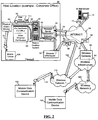
- FIG. 3 illustrates at 200 a system that determines whether access should be provided to secure data 202 on a data processing device.
- the system 200 is depicted as operating with a mobile wireless communications device 204.
- the device 204 can receive and store messages received over a wireless communications network 206. Whether a user 212 of the device 204 can access the stored data 202 depends upon information supplied by an external encryption information source 208.
- the external security information source 208 communicates with the device 204 over a external data channel in order to provide user identification information to the device 204.
- the user identification information identifies a specific user (e.g., the intended recipient of the secure data 202). Based upon the received user identification information, the device 204 determines whether the secure data 202 located in storage 210 of the device 204 is to be accessed by a user 212 of the device 204.
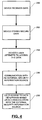
- FIG. 4 depicts an operational scenario wherein an external security information source is used in handling secure data stored on a device.
- a device receives at step 250 data which is stored on the device at step 252. The data may have been encrypted before being sent to the device.
- the device communicates at step 256 with an external security information source so that user identification information can be provided from the external security information source.
- the external security information source can be an external tag, smart card, etc. that has security credentials which identify a specific user.
- the external security credentials information source has a location proximate relative to the device such that the external security credentials information source can communicate with the device, such as over a wireless data link.
- the device at step 258 determines based upon the communication with the external security information source whether the secure data stored on the device is to be accessed by the device's user. Accordingly, if a particular user of the device is an intended recipient of a message sent to the device, then another unauthorized/unintended user of the device is not able to access the sent message since the device does not receive proper user identification information from the external security information source.
- security credentials can also be stored in the device that encrypts the data as well.
- a method can secure data on a per email/file basis that is sent to the device or configured to secure data on a different basis for storage on the device.
- a method can be configured to also identify a mechanism that the email/data is to be encrypted while stored on the wireless device. This may be achieved by the recipient and/or IT (information technology) administrator being able to setup rules as to what data is to be encrypted through use of a rules database.
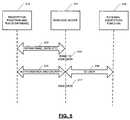
- FIG. 5 depicts a system that includes a rules database 310 and an external encryption function 312.
- the system allows a wireless device 311 to obtain cryptographic key information on a file-by-file basis such that each time an item of data is to be accessed authorization is obtained by communicating with such sources.
- the rules database 310 can be configured to check incoming email if it is to be encrypted for a specific recipient or not. In addition it keeps ID information for each specific user (with the ID being static or changing), keys for encryption and encryption algorithm.
- Wireless device 311 stores the email and/or data. It also has functions to request a subscriber's ID from an external encryption function 312 and a public key from the database 310. It uses this ID with the public key in conjunction with a decrypting algorithm to decrypt stored data.
- An external encryption function 312 contains the subscriber's ID. This ID may be static or changing but is the same as the one in the database 310.
- email or data is transferred between the database 310 and the wireless device 311 where it is stored.
- the wireless device obtains (as shown at 316) the subscriber's ID from the external encryption function 312 and obtains (as shown at 315) the key from the database 310 so the subscriber can view the data (as shown at 317).
- an email sent to a wireless device 311 can be handled in different ways, such as all emails are encrypted, or encryption can be done on a per email basis. This determination can be performed by the email being compared to handling rules within database 310. If the email/data 321 is to be encrypted, it is then encrypted at 322 using a master key 320. This master key can be generated using techniques available in the industry. The email is then sent to the wireless device at 323 and stored on the wireless device 311 in a secure form 324.
- the wireless device 311 communicates (as shown at 330) with an external security function 312 (e. g., tag or smart card) to obtain an ID 332 that identifies the user.
- the external security function 312 provides this ID 332 to the wireless device 311.
- the wireless device 311 also requests the public key at 331 in order to decrypt the data from the encryption function 310.
- the database 310 also keeps a copy of how the ID 332 from the external security function 312 was generated.
- the database 310 also generates a copy of this ID 332 and combines it with the master key 320 that was used to encrypt the data.
- a public key 334 is generated (as shown at 345) and is sent (as shown at 335) to the wireless device 311.
- the wireless device 311 combines (as shown at 336) the public key 334 with the ID 332 to obtain the private master key 320 that it then uses to decrypt (as shown at 337) the data. The user is then allowed to view or otherwise access the data.
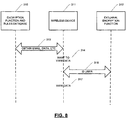
- FIG. 8 illustrates a system that includes a database 310 and an external encryption function 312.
- the system checks incoming files/messages if they are to be encrypted for a specific recipient and device combination. In addition it keeps ID information for each specific user (with the ID being static or changing), keys for encryption and an encryption algorithm.
- Wireless device 311 stores the received data. It also has functions (e. g., data processing instructions) to request a decryption key from an external encryption function 312 and subsequently decrypt the file for access.
- functions e. g., data processing instructions
- the external encryption function 312 contains the subscriber's ID as well as other keys. This subscriber ID maybe static or changing but can be the same as the one in the database 310. The others keys stored in the external encryption function are the same as those stored in the database 310. It can also be responsible for ensuring that the device requesting the key is authorized to do so.
- Email or data is transferred at 313 between the database 310 and the wireless device 311 where it is stored.
- the wireless device obtains the decryption key at 316 from the external encryption function 312 so that the subscriber can view the data (as shown at 317).
- FIG. 9 shows how data can be secured and delivered to a user as well as when that may occur.
- the encryption of the data may be secured on the device to prevent it from being removed.
- the data can be secured to a specific user as well, thereby preventing other users from accessing that information should the device be loaned, stolen or lost.
- the key 321 generated by an external encryption function can be secured to the device to which it is intended to be sent. Because the external encryption function may have no knowledge of the device ID 320 that the user is using, this information may be needed to secure decryption key 321.
- the device ID 320 is encrypted at 328A and sent in its encrypted format 329 to the device for subsequent transmission to the external encryption function.
- the external encryption function can be configured to determine whether the request to provide a decryption key 321 is valid. Therefore when the encrypted data 325 is sent to the wireless device 311, a challenge 330 and response 333 (as computed at 328C) are also sent.
- the response 333 is the response that the external encryption function generates when external encryption function uses: the challenge 330 it has been provided, the external encryption function's unique ID 331 and the ID of the system that performed the encryption of that data, which in this example is termed the global ID 335.
- the database 310 computes at 328B an encryption key 321 that is coupled to the user to whom the data is being sent to via random challenge number 330. This key 321 is then coupled with the device ID 320 to which the data is being sent and is used to encrypt at 324 the data 322 which is to be sent to the device 311. Encrypted data 325, encrypted device ID 329, challenge 330 and response 333 are sent to the wireless device.
- the wireless device 311 receives encrypted data 325, encrypted device ID 329, challenge 330 and response 333.
- the wireless device 311 sends the encrypted device ID 329, challenge 330 and response 333 to the external encryption function 312 and waits to receive an encrypted decryption key 336.
- the wireless device On receipt of the encrypted decryption key 336, the wireless device uses its ID 320 that is known to itself in order to decrypt (as shown at 340A) and create the crypt key 321. This key can be used with the encrypted data 325 and the device ID 320 to decrypt the data 322 at 340B.
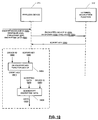
- FIG. 11 illustrates an operational scenario from the perspective of an external encryption function 312.
- an external encryption function 312 determines if the request for a key is from a valid source. It uses the received challenge 330 and combines this with its unique ID 326 and the global ID 335 it has stored to compute at 350 response 352. If the computed response 352 is the same as the received response 333, it is then known that the request is valid.
- the external encryption function 312 then computes at 360 the crypt key 321 using the challenge 330, unique ID 326 and global ID 335.
- the key 321 to be sent to the wireless device 311 is encrypted at 370. This can be achieved by taking the encrypted device ID 329 and decrypting it at 380. This device ID 320 is then used to encrypt the crypt key 321 to create a secure key 336 to be sent back to the wireless device 311.
- the mobile device 100 is a dual-mode mobile device and includes a transceiver 411, a microprocessor 438, a display 422, non-volatile memory 424, random access memory (RAM) 426, one or more auxiliary input/output (I/O) devices 428, a serial port 430, a keyboard 432, a speaker 434, a microphone 436, a short-range wireless communications sub-system 440, and other device sub-systems 442.
- a transceiver 411 includes a transceiver 411, a microprocessor 438, a display 422, non-volatile memory 424, random access memory (RAM) 426, one or more auxiliary input/output (I/O) devices 428, a serial port 430, a keyboard 432, a speaker 434, a microphone 436, a short-range wireless communications sub-system 440, and other device sub-systems 442.
- RAM random access memory
- I/O auxiliary input/output
- the transceiver 411 includes a receiver 412, a transmitter 414, antennas 416 and 418, one or more local oscillators 413, and a digital signal processor (DSP) 420.
- the antennas 416 and 418 may be antenna elements of a multiple-element antenna, and are preferably embedded antennas. However, the systems and methods described herein are in no way restricted to a particular type of antenna, or even to wireless communication devices.
- the mobile device 100 is preferably a two-way communication device having voice and data communication capabilities.
- the mobile device 100 may communicate over a voice network, such as any of the analog or digital cellular networks, and may also communicate over a data network.
- the voice and data networks are depicted in FIG. 12 by the communication tower 419. These voice and data networks may be separate communication networks using separate infrastructure, such as base stations, network controllers, etc., or they may be integrated into a single wireless network.
- the transceiver 411 is used to communicate with the network 419, and includes the receiver 412, the transmitter 414, the one or more local oscillators 413 and the DSP 420.
- transceiver 411 such as frequency band, component selection, power level, etc.
- the detailed design of the transceiver 411 will be dependent upon the communication network 419 in which the mobile device 100 is intended to operate.
- a mobile device 100 intended to operate in a North American market may include a transceiver 411 designed to operate with any of a variety of voice communication networks, such as the MobitexTM or DataTACTM mobile data communication networks, AMPS, TDMA, CDMA, PCS, etc.
- a mobile device 100 intended for use in Europe may be configured to operate with the GPRS data communication network and the GSM voice communication network.
- Other types of data and voice networks, both separate and integrated, may also be utilized with a mobile device 100.
- the access requirements for the mobile device 100 may also vary.
- mobile devices are registered on the network using a unique identification number associated with each mobile device.
- network access is associated with a subscriber or user of a mobile device.
- a GPRS device typically requires a subscriber identity module (“SIM”), which is required in order to operate a mobile device on a GPRS network.
- SIM subscriber identity module
- Local or non-network communication functions may be operable, without the SIM device, but a mobile device will be unable to carry out any functions involving communications over the data network 419, other than any legally required operations, such as ⁇ 911' emergency calling.
- the mobile device 100 may then send and receive communication signals, including both voice and data signals, over the networks 419.
- Signals received by the antenna 416 from the communication network 419 are routed to the receiver 412, which provides for signal amplification, frequency down conversion, filtering, channel selection, etc., and may also provide analog to digital conversion. Analog to digital conversion of the received signal allows more complex communication functions, such as digital demodulation and decoding to be performed using the DSP 420.
- signals to be transmitted to the network 419 are processed, including modulation and encoding, for example, by the DSP 420 and are then provided to the transmitter 414 for digital to analog conversion, frequency up conversion, filtering, amplification and transmission to the communication network 419 via the antenna 418.
- the DSP 420 also provides for transceiver control.
- the gain levels applied to the communication signals in the receiver 412 and the transmitter 414 may be adaptively controlled through automatic gain control algorithms implemented in the DSP 420.
- Other transceiver control algorithms could also be implemented in the DSP 420 in order to provide more sophisticated control of the transceiver 411.
- the microprocessor 438 preferably manages and controls the overall operation of the mobile device 100. Many types of microprocessors or microcontrollers could be used here, or, alternatively, a single DSP 420 could be used to carry out the functions of the microprocessor 438. Low-level communications functions, including at least data and voice communications, are performed through the DSP 420 in the transceiver 411. Other, high-level communication applications, such as a voice communication application 424A, and a data communication application 424B may be stored in the non-volatile memory 424 for execution by the microprocessor 438.
- the voice communication module 424A may provide a high-level user interface operable to transmit and receive voice calls between the mobile device 100 and the plurality of other voice or dual-mode devices via the network 419.
- the data communication module 424B may provide a high-level user interface operable for sending an receiving data, such as e-mail messages, files, organizer information, short text messages, etc., between the mobile device 100 and a plurality of other data devices via the networks 419.
- the microprocessor 438 also interacts with other device subsystems, such as the display 422, the RAM 426, the auxiliary input/output(I/O) subsystems 428, the serial port 430, the keyboard 432, the speaker 434, the microphone 436, the short-range communications subsystem 440 and any other device subsystems generally designated as 442.
- other device subsystems such as the display 422, the RAM 426, the auxiliary input/output(I/O) subsystems 428, the serial port 430, the keyboard 432, the speaker 434, the microphone 436, the short-range communications subsystem 440 and any other device subsystems generally designated as 442.
- Some of the subsystems shown in FIG. 12 perform communication-related functions, whereas other subsystems may provide "resident" or on-device functions.
- some subsystems, such as the keyboard 432 and the display 422 may be used for both communication-related functions, such as entering a text message for transmission over a data communication network, and device-resident functions such as a calculator or task list or other PDA type functions.
- Non-volatile memory 424 Operating system software used by the microprocessor 438 is preferably stored in a persistent store such as non-volatile memory 424.
- the non-volatile memory 424 may be implemented, for example, as a Flash memory component, or as battery backed-up RAM.
- the non-volatile memory 424 includes a plurality of software modules 424A-424N that can be executed by the microprocessor 438 (and/or the DSP 420), including a voice communication module 424A, a data communication module 424B, and a plurality of other operational modules 424N for carrying out a plurality of other functions.
- These modules are executed by the microprocessor 438 and provide a high-level interface between a user and the mobile device 100.
- This interface typically includes a graphical component provided through the display 422, and an input/output component provided through the auxiliary)/0 428, keyboard 432, speaker 434, and microphone 436.
- the operating system, specific device applications or modules, or parts thereof, may be temporarily loaded into a volatile store, such as RAM 426 for faster operation.
- received communication signals may also be temporarily stored to RAM 426, before permanently writing them to a file system located in a persistent store such as the Flash memory 424.
- An exemplary application module 424N that may be loaded onto the mobile device 100 is a personal information manager (PIM) application providing PDA functionality, such as calendar events, appointments, and task items.
- PIM personal information manager
- This module 424N may also interact with the voice communication module 424A for managing phone calls, voice mails, etc., and may also interact with the data communication module for managing e-mail communications and other data transmissions.
- Aitemativeiy, aii of the functionality of the voice communication module 424A and the data communication module 424B may be integrated into the PIM module.
- the non-volatile memory 424 preferably also provides a file system to facilitate storage of PIM data items on the device.
- the PIM application preferably includes the ability to send and receive data items, either by itself, or in conjunction with the voice and data communication modules 424A, 424B, via the wireless networks 419.
- the PIM data items are preferably seamlessly integrated, synchronized and updated, via the wireless networks 419, with a corresponding set of data items stored or associated with a host computer system, thereby creating a mirrored system for data items associated with a particular user.
- Context objects representing at least partially decoded data items, as well as fully decoded data items, are preferably stored on the mobile device 100 in a volatile and non-persistent store such as the RAM 426.
- a volatile and non-persistent store such as the RAM 426.
- Such information may instead be stored in the non-volatile memory 424, for example, when storage intervals are relatively short, such that the information is removed from memory soon after it is stored.
- storage of this information in the RAM 426 or another volatile and non-persistent store is preferred, in order to ensure that the information is erased from memory when the mobile device 100 loses power. This prevents an unauthorized party from obtaining any stored decoded or partially decoded information by removing a memory chip from the mobile device 100, for example.
- the mobile device 100 may be manually synchronized with a host system by placing the device 100 in an interface cradle, which couples the serial port 430 of the mobile device 100 to the serial port of a computer system or device.
- the serial port 430 may also be used to enable a user to set preferences through an external device or software application, or to download other application modules 424N for installation.
- This wired download path may be used to load an encryption key onto the device, which is a more secure method than exchanging encryption information via the wireless network 419.
- Interfaces for other wired download paths may be provided in the mobile device 100, in addition to or instead of the serial port 430. For example, a USB port would provide an interface to a similarly equipped personal computer.
- Additional application modules 424N may be loaded onto the mobile device 100 through the networks 419, through an auxiliary I/O subsystem 428, through the serial port 430, through the short-range communications subsystem 440, or through any other suitable subsystem 442, and installed by a user in the non-volatile memory 424 or RAM 426.
- Such flexibility in application installation increases the functionality of the mobile device 100 and may provide enhanced on-device functions, communication-related functions, or both.
- secure communication applications may enable electronic commerce functions and other such financial transactions to be performed using the mobile device 100.
- a received signal such as a text message or a web page download
- the transceiver module 411 When the mobile device 100 is operating in a data communication mode, a received signal, such as a text message or a web page download, is processed by the transceiver module 411 and provided to the microprocessor 438, which preferably further processes the received signal in multiple stages as described above, for eventual output to the display 422, or, alternatively, to an auxiliary I/O device 428.
- a user of mobile device 100 may also compose data items, such as e-mail messages, using the keyboard 432, which is preferably a complete alphanumeric keyboard laid out in the QWERTY style, although other styles of complete alphanumeric keyboards such as the known DVORAK style may also be used.
- auxiliary I/O devices 428 may include a thumbwheel input device, a touchpad, a variety of switches, a rocker input switch, etc.
- the composed data items input by the user may then be transmitted over the communication networks 419 via the transceiver module 411.
- the overall operation of the mobile device is substantially similar to the data mode, except that received signals are preferably be output to the speaker 434 and voice signals for transmission are generated by a microphone 436.
- Alternative voice or audio I/O subsystems such as a voice message recording subsystem, may also be implemented on the mobile device 100.
- voice or audio signal output is preferably accomplished primarily through the speaker 434, the display 422 may also be used to provide an indication of the identity of a calling party, the duration of a voice call, or other voice call related information.
- the microprocessor 438 in conjunction with the voice communication module and the operating system software, may detect the caller identification information of an incoming voice call and display it on the display 422.
- a short-range communications subsystem 440 is also included in the mobile device 100.
- the subsystem 440 may include an infrared device and associated circuits and components, or a short-range RF communication module such as a BluetoothTM module or an 802.11 module, for example, to provide for communication with similarly-enabled systems and devices.
- a short-range RF communication module such as a BluetoothTM module or an 802.11 module, for example, to provide for communication with similarly-enabled systems and devices.
- BluetoothTM and 802.11 refer to sets of specifications, available from the Institute of Electrical and Electronics Engineers, relating to wireless personal area networks and wireless local area networks, respectively.
- the systems' and methods' data may be stored in one or more data stores.
- the data stores can be of many different types of storage devices and programming constructs, such as RAM, ROM, Flash memory, programming data structures, programming variables, etc. lt is noted that data structures describe formats for use in organizing and storing data in databases, programs, memory, or other computer-readable media for use by a computer program.
- the systems and methods may be provided on many different types of computer-readable media including computer storage mechanisms (e.g., CD-ROM, diskette, RAM, flash memory, computer's hard drive, etc.) that contain instructions for use in execution by a processor to perform the methods' operations and implement the systems described herein. It is further noted that the systems and methods may include data signals conveyed via networks (e.g., local area network, wide area network, internet, etc.), fiber optic medium, carrier waves, wireless networks, etc. for communication with one or more data processing devices. The data signals can carry any or all of the data disclosed herein that is provided to or from a device.
- networks e.g., local area network, wide area network, internet, etc.
- the data signals can carry any or all of the data disclosed herein that is provided to or from a device.
Landscapes
- Engineering & Computer Science (AREA)
- Computer Security & Cryptography (AREA)
- Theoretical Computer Science (AREA)
- Computer Networks & Wireless Communication (AREA)
- Signal Processing (AREA)
- Computer Hardware Design (AREA)
- General Engineering & Computer Science (AREA)
- Physics & Mathematics (AREA)
- Software Systems (AREA)
- General Physics & Mathematics (AREA)
- Health & Medical Sciences (AREA)
- Bioethics (AREA)
- General Health & Medical Sciences (AREA)
- Databases & Information Systems (AREA)
- Computing Systems (AREA)
- Mobile Radio Communication Systems (AREA)
Claims (23)
- Verfahren für einen Betrieb auf einer drahtlosen mobilen Kommunikationsvorrichtung (204) zur Handhabung von sicheren Daten, die auf der Vorrichtung (204) in verschlüsselter Form gespeichert sind, wobei die Daten eine Email-Nachricht umfassen, die über ein drahtloses Kommunikationsnetzwerk (206) empfangen werden, und wobei die Vorrichtung (204) konfigurierbar ist zum Kommunizieren über einen Datenkanal mit einem/einer externen Sicherheitsberechtigungs-Tag oder -Karte (208), wobei das Verfahren aufweist:Empfangen von Benutzeridentifikationsinformation von dem/der Sicherheitsberechtigungs-Tag oder -Karte (208);wobei die Benutzeridentifikationsinformation einen vorgegebenen Benutzer identifiziert;Bestimmen (258), basierend auf der empfangenen Benutzeridentifikationsinformation, ob auf die sicheren Daten, die auf der Vorrichtung (204) gespeichert sind, durch einen Benutzer der Vorrichtung (204) zugegriffen werden darf,wobei der Benutzer oder Administrator Regeln in einer Regeldatenbank speichert zum Bestimmen, welche Daten für die Vorrichtung (204) zu verschlüsseln sind,wobei die Regeldatenbank konfiguriert ist zum Prüfen von Email, das über das drahtlose Kommunikationsnetzwerk (206) empfangen wird, um zu bestimmen, ob empfangene Email für einen spezifischen Empfänger zu verschlüsseln ist,wobei, wenn der Benutzer der Vorrichtung die Daten sehen möchte, die verschlüsselt sind, die Vorrichtung (204) eine Anforderung für einen Schlüssel, einschließlich eines verschlüsselten Vorrichtungsidentifizierers, einer Aufforderung und einer Antwort, an das/die externe Sicherheitsberechtigungs-Tag oder-Karte (208) sendet, undwobei das/die externe Sicherheitsberechtigungs-Tag oder -Karte (208) bestimmt, ob die Anforderung für einen Schlüssel von einer gültigen Quelle ist, basierend auf der empfangenen Aufforderung und dem verschlüsselten Vorrichtungsidentifizierer.
- Das Verfahren gemäß Anspruch 1, wobei das/die externe Sicherheitsberechtigungs-Tag oder-Karte (208) die Position derart hat, dass das/die externe Sicherheitsberechtigungs-Tag oder -Karte (208) mit der Vorrichtung (204) kommunizieren kann; wobei der Datenkanal eine drahtlose Datenverbindung umfasst.
- Das Verfahren gemäß Anspruch 1, wobei das Bestimmen (258), basierend auf der empfangenen Benutzeridentifikationsinformation, ob auf die sicheren Daten, die auf der Vorrichtung (204) gespeichert sind, durch einen Benutzer der Vorrichtung (204) zugegriffen werden darf, aufweist Bestimmen (258), ob die Vorrichtung keine korrekte Benutzeridentifikationsinformation von dem/der externen Sicherheitsberechtigungs-Tag oder-Karte empfängt, dass auf die sicheren Daten, die auf der Vorrichtung (204) gespeichert sind, nicht durch einen zweiten Benutzer der Vorrichtung (204) zugegriffen werden darf, wobei ein erster Benutzer der Vorrichtung der vorgegebene Benutzer und ein beabsichtigter Empfänger einer Nachricht ist, die an die Vorrichtung gesendet wird, und der zweite Benutzer nicht der vorgegebene Benutzer ist.
- Das Verfahren gemäß Anspruch 3, wobei das Nicht-Empfangen von korrekter Benutzeridentifikationsinformation ein Nicht-Empfangen von Benutzeridentifikationsinformation von dem/der externen Sicherheitsberechtigungs-Tag oder -Karte (208) umfasst.
- Das Verfahren gemäß Anspruch 1, wobei Sicherheitsberechtigungen in der Vorrichtung gespeichert sind, die die Daten verschlüsselt.
- Das Verfahren gemäß Anspruch 1, wobei das/die externe Sicherheitsberechtigungs-Tag oder -Karte (208) über einen drahtlosen Kommunikationskanal an die Vorrichtung (204) kommuniziert.
- Das Verfahren gemäß Anspruch 1, wobei das/die externe Sicherheitsberechtigungs-Tag oder -Karte (208) über eine externe Datenverbindung an die Vorrichtung (204) kommuniziert.
- Das Verfahren gemäß Anspruch 1, wobei die Daten auf einer pro-Email-oder -Datei-Basis gesichert werden, bevor die Daten an die Vorrichtung gesendet werden, um sicherzustellen, dass ein vorgesehener Empfänger nur Zugriff auf die gesicherten Daten hat.
- Das Verfahren gemäß Anspruch 1, wobei die Daten durch die Vorrichtung (204) verschlüsselt werden.
- Das Verfahren gemäß Anspruch 1, wobei die Regeldatenbank Benutzeridentifikationsinformation für jeden Benutzer, Schlüssel zur Verschlüsselung und einen Verschlüsselungsalgorithmus speichert.
- Das Verfahren gemäß Anspruch 1, wobei der Benutzer ein. Teilnehmer ist und wobei die Vorrichtung eine Identifikationsinformation eines Teilnehmers von dem/der externen Sicherheitsberechtigungs-Tag oder -Karte und einen öffentlichen Schlüssel von der Regeldatenbank empfängt.
- Das Verfahren gemäß Anspruch 11, wobei die Vorrichtung die empfangene Identifikationsinformation und den empfangenen öffentlichen Schlüssel in Verbindung mit einem Entschlüsselungsalgorithmus verwendet, um die gespeicherten Daten zu entschlüsseln, die auf der Vorrichtung (204) gesichert sind.
- Das Verfahren gemäß Anspruch 12, wobei ein versuchter Zugriff auf die sicheren Daten dazu führt, dass die Vorrichtung (204) die Identifikationsinformation des Teilnehmers von dem/der externen Sicherheitsberechtigungs-Tag oder -Karte (208) anfordert, und zu einem Anfordern des öffentlichen Schlüssels von der Regeldatenbank führt.
- Das Verfahren gemäß Anspruch 13, wobei der Benutzer die sicheren Daten sehen kann, wenn die Vorrichtung (204) bestimmt, basierend auf der empfangenen Benutzeridentifikationsinformation, ob auf die auf der Vorrichtung (204) gespeicherten sicheren Daten durch einen Benutzer der Vorrichtung (204) zugegriffen werden darf.
- Das Verfahren gemäß Anspruch 11, wobei das/die externe Sicherheitsberechtigungs-Tag oder-Karte (208) die Identifikationsinformation des Teilnehmers enthält; wobei die Identifikationsinformation des Teilnehmers auch in der Regeldatenbank enthalten ist.
- Das Verfahren gemäß Anspruch 1, wobei der Benutzer ein Teilnehmer ist und wobei, wenn ein Teilnehmer wünscht, die Daten auf der Vorrichtung (204) zu sehen, die drahtlose Vorrichtung die Identifikationsinformation des Teilnehmers von dem/der externen Sicherheitsberechtigungs-Tag oder -Karte (208) erlangt und einen öffentlichen Schlüssel von der Regeldatenbank erlangt zur Verwendung durch die Vorrichtung (204) bei einem Bestimmen, ob dem Teilnehmer zu erlauben ist, die Daten zu sehen.
- Das Verfahren gemäß Anspruch 16, wobei die Vorrichtung (204) den öffentlichen Schlüssel mit der Identifikationsinformation kombiniert, um einen privaten Masterschlüssel zu erlangen; wobei der private Masterschlüssel zum Entschlüsseln der Daten für einen Zugriff durch den Benutzer der Vorrichtung verwendet wird.
- Das Verfahren gemäß Anspruch 1, wobei eine Verschlüsselung der Daten durchgeführt wird, um die Daten auf der Vorrichtung (204) zu sichern, um zu verhindern, dass sie entfernt werden; wobei die Daten auf der Vorrichtung (204) in Bezug auf einen spezifischen Benutzer gesichert werden, um zu verhindern, dass andere Benutzer auf die Vorrichtung (204) zugreifen, wenn die Vorrichtung (204) einem anderen Benutzer geliehen wird oder gestohlen wird oder verloren geht.
- Das Verfahren gemäß Anspruch 1, wobei ankommende Daten, die von einem Server über ein drahtloses Kommunikationsnetzwerk (206) empfangen werden, von einer Regeldatenbank geprüft werden, um zu bestimmen, ob die empfangenen Daten für eine spezifische Datenempfänger- und Vorrichtungs-Kombination zu verschlüsseln sind.
- Das Verfahren gemäß Anspruch 1, wobei, wenn ein Benutzer der Vorrichtung (204) wünscht, die Daten zu sehen, die Vorrichtung (204) einen Entschlüsselungsschlüssel von der externen Sicherheitsinformationsquelle erlangt, so dass der Benutzer die Daten sehen kann.
- Das Verfahren gemäß Anspruch 1, wobei ein kryptographischer Schlüssel, der von der externen Sicherheitsinformationsquelle erzeugt wird, für die Vorrichtung (204) gesichert ist.
- Das Verfahren gemäß Anspruch 1, wobei, basierend auf der Güttigkeitsbestimmung des/der externen Sicherheitsberechtigungs-Tags oder -Karte, das/die externe Sicherheitsberechtigungs-Tag oder -Karte (208) den Schlüssel unter Verwendung der Aufforderung berechnet; wobei der Schlüssel an die Vorrichtung (204) gesendet wird und von der Vorrichtung (204) verwendet wird, um die Daten zu sehen.
- Ein System (200) für einen Betrieb auf einer drahtlosen mobilen Kommunikationsvorrichtung (204) zur Handhabung von verschlüsselten Email-Nachrichten, die auf der Vorrichtung (204) gespeichert sind, wobei die Vorrichtung konfigurierbar ist zum Kommunizieren über einen Datenkanal mit einem/einer externen Sicherheitsberechtigungs-Tag oder -Karte (208), wobei die Vorrichtung (204) konfiguriert ist zum Empfangen von Email-Nachrichten über ein drahtloses Kommunikationsnetzwerk (206); wobei das System aufweist:Mittel zum Empfangen von Benutzeridentifikationsinformation von dem/der externen Sicherheitsberechtigungs-Tag oder -Karte (208);wobei die Benutzeridentifikationsinformation konfiguriert ist zum Identifizieren eines spezifischen Benutzers;Mittel zum Bestimmen, basierend auf der empfangenen Benutzeridentifikationsinformation, ob auf eine sichere Email-Nachricht, die auf der Vorrichtung (204) in einer verschlüsselten Form gespeichert ist, durch einen Benutzer der Vorrichtung (204) zugegriffen werden darf und diese gesehen werden darf;wobei das/die externe Sicherheitsberechtigungs-Tag oder -Karte (208) konfiguriert ist zum Kommunizieren mit der Vorrichtung (204) über eine drahtlose Datenverbindung;wobei das Mittel zum Bestimmen, basierend auf der empfangenen Benutzeridentifikationsinformation, ob auf eine sichere Email-Nachricht, die auf der Vorrichtung (204) in einer verschlüsselten Form gespeichert ist, durch einen Benutzer der Vorrichtung zugegriffen werden darf und diese gesehen werden darf, konfiguriert ist zum Bestimmen, ob die Vorrichtung (204) keine korrekte Benutzeridentifikationsinformation von dem/der externen Sicherheitsberechtigungs-Tag oder -Karte (208) empfängt, dass auf die sichere Email-Nachricht, die auf der Vorrichtung (204) in einer verschlüsselten Form gespeichert ist, nicht durch einen zweiten Benutzer der Vorrichtung (204) zugegriffen werden darf, wobei ein erster Benutzer der Vorrichtung der vorgegebene Benutzer und ein beabsichtigter Empfänger einer Nachricht ist, die an die Vorrichtung gesendet wird, und der zweite Benutzer nicht der vorgegebene Benutzer ist;wobei die Daten basierend auf den Sicherheitsregeln verschlüsselt werden, die in einer Regeldatenbank gespeichert sind, wobei die Regeldatenbank konfiguriert ist zum Prüfen von Email, das über das drahtlose Kommunikationsnetzwerk (206) empfangen wird, um zu bestimmen, ob das empfangene Email für einen spezifischen Empfänger zu verschlüsseln ist, wobei, wenn der Benutzer der Vorrichtung die Daten sehen möchte, die verschlüsselt sind, die Vorrichtung (204) eine Anforderung für einen Schlüssel, einschließlich eines verschlüsselten Vorrichtungsidentifizierers, einer Aufforderung und einer Antwort, an das/die externe Sicherheitsberechtigungs-Tag oder -Karte (208) sendet, undwobei das/die externe Sicherheitsberechtigungs-Tag oder-Karte (208) bestimmt, ob die Anforderung für einen Schlüssel von einer gültigen Quelle ist, basierend auf der empfangenen Aufforderung und dem verschlüsselten Vorrichtungsidentifizierer.
Applications Claiming Priority (2)
| Application Number | Priority Date | Filing Date | Title |
|---|---|---|---|
| US49754503P | 2003-08-25 | 2003-08-25 | |
| PCT/CA2004/001561 WO2005020503A1 (en) | 2003-08-25 | 2004-08-25 | System and method for securing wireless data |
Publications (3)
| Publication Number | Publication Date |
|---|---|
| EP1665626A1 EP1665626A1 (de) | 2006-06-07 |
| EP1665626A4 EP1665626A4 (de) | 2010-03-24 |
| EP1665626B1 true EP1665626B1 (de) | 2016-11-16 |
Family
ID=34216131
Family Applications (1)
| Application Number | Title | Priority Date | Filing Date |
|---|---|---|---|
| EP04761725.3A Expired - Lifetime EP1665626B1 (de) | 2003-08-25 | 2004-08-25 | System und verfahren zum sichern drahtloser daten |
Country Status (5)
| Country | Link |
|---|---|
| US (2) | US8205091B2 (de) |
| EP (1) | EP1665626B1 (de) |
| CN (1) | CN1856957B (de) |
| CA (1) | CA2536865C (de) |
| WO (1) | WO2005020503A1 (de) |
Families Citing this family (19)
| Publication number | Priority date | Publication date | Assignee | Title |
|---|---|---|---|---|
| US7647024B2 (en) | 2005-10-03 | 2010-01-12 | Sellerbid, Inc. | Method and system for improving client server transmission over fading channel with wireless location and authentication technology via electromagnetic radiation |
| JP2006224550A (ja) * | 2005-02-18 | 2006-08-31 | Canon Inc | 画像形成装置、情報処理装置及び画像形成システム |
| IL171774A (en) | 2005-11-03 | 2012-09-24 | Emoze Ltd | Method and system for an uncompromising connection from a computing device having information storage like e-mail server to a wireless mobile device |
| US8719397B2 (en) | 2005-11-03 | 2014-05-06 | Emoze Ltd. | Method and system for email and PIM synchronization and updating |
| US7890084B1 (en) * | 2006-10-30 | 2011-02-15 | Cellco Partnership | Enterprise instant message aggregator |
| US8051297B2 (en) * | 2006-11-28 | 2011-11-01 | Diversinet Corp. | Method for binding a security element to a mobile device |
| US8116454B2 (en) * | 2007-07-23 | 2012-02-14 | Savi Technology, Inc. | Method and apparatus for providing security in a radio frequency identification system |
| US9391997B2 (en) * | 2007-08-23 | 2016-07-12 | Intel Deutschland Gmbh | Message processing apparatus, wireless device and method of storing a message in a wireless device |
| US20090296926A1 (en) * | 2008-06-02 | 2009-12-03 | Sun Microsystems, Inc. | Key management using derived keys |
| US8645687B2 (en) * | 2008-12-23 | 2014-02-04 | Nbcuniversal Media, Llc | Electronic file access control system and method |
| US20110153668A1 (en) * | 2009-12-18 | 2011-06-23 | Research In Motion Limited | Accessing a data item stored in an unavailable mobile communication device |
| US9454648B1 (en) * | 2011-12-23 | 2016-09-27 | Emc Corporation | Distributing token records in a market environment |
| US9860059B1 (en) * | 2011-12-23 | 2018-01-02 | EMC IP Holding Company LLC | Distributing token records |
| CN105389319A (zh) * | 2014-09-09 | 2016-03-09 | 中兴通讯股份有限公司 | 数据库的操作方法及装置 |
| US10623384B2 (en) * | 2017-06-12 | 2020-04-14 | Daniel Maurice Lerner | Combined hidden dynamic random-access devices utilizing selectable keys and key locators for communicating randomized data together with sub-channels and coded encryption keys |
| WO2018231697A1 (en) * | 2017-06-12 | 2018-12-20 | Daniel Maurice Lerner | Securitization of temporal digital communications with authentication and validation of user and access devices |
| US10158613B1 (en) * | 2017-06-12 | 2018-12-18 | Ironclad Encryption Corporation | Combined hidden dynamic random-access devices utilizing selectable keys and key locators for communicating randomized data together with sub-channels and coded encryption keys |
| US10154031B1 (en) * | 2017-06-12 | 2018-12-11 | Ironclad Encryption Corporation | User-wearable secured devices provided assuring authentication and validation of data storage and transmission |
| US10764282B2 (en) * | 2017-06-12 | 2020-09-01 | Daniel Maurice Lerner | Protected and secured user-wearable devices for assured authentication and validation of data storage and transmission that utilize securitized containers |
Citations (2)
| Publication number | Priority date | Publication date | Assignee | Title |
|---|---|---|---|---|
| WO1999005814A2 (en) * | 1997-07-24 | 1999-02-04 | Worldtalk Corporation | E-mail firewall with stored key encryption/decryption |
| WO2003049471A1 (de) * | 2001-12-04 | 2003-06-12 | Giesecke & Devrient Gmbh | Speichern von und zugreifen auf daten in einem mobilgerät und einem benutzermodul |
Family Cites Families (11)
| Publication number | Priority date | Publication date | Assignee | Title |
|---|---|---|---|---|
| US5612682A (en) * | 1995-05-30 | 1997-03-18 | Motorola, Inc. | Method and apparatus for controlling utilization of a process added to a portable communication device |
| WO1998012670A1 (en) | 1996-09-18 | 1998-03-26 | Dew Engineering And Development Limited | Biometric identification system for providing secure access |
| US7107246B2 (en) * | 1998-04-27 | 2006-09-12 | Esignx Corporation | Methods of exchanging secure messages |
| US6219694B1 (en) * | 1998-05-29 | 2001-04-17 | Research In Motion Limited | System and method for pushing information from a host system to a mobile data communication device having a shared electronic address |
| JP4051510B2 (ja) * | 1998-07-16 | 2008-02-27 | ソニー株式会社 | データ記憶装置およびデータ記憶方法 |
| JP3389186B2 (ja) * | 1999-04-27 | 2003-03-24 | 松下電器産業株式会社 | 半導体メモリカード及び読み出し装置 |
| DE19925910B4 (de) * | 1999-06-07 | 2005-04-28 | Siemens Ag | Verfahren zum Be- oder Verarbeiten von Daten |
| US7260555B2 (en) | 2001-12-12 | 2007-08-21 | Guardian Data Storage, Llc | Method and architecture for providing pervasive security to digital assets |
| US6987948B2 (en) * | 2002-10-03 | 2006-01-17 | Wildseed Ltd. | Identification based operational modification of a portable electronic device |
| CN1288933C (zh) * | 2002-12-28 | 2006-12-06 | 海尔集团公司 | 短信息、通话记录和电话簿菜单加密的手机 |
| US7215778B2 (en) * | 2003-03-31 | 2007-05-08 | Intel Corporation | Encrypted content recovery |
-
2004
- 2004-08-25 CA CA2536865A patent/CA2536865C/en not_active Expired - Lifetime
- 2004-08-25 EP EP04761725.3A patent/EP1665626B1/de not_active Expired - Lifetime
- 2004-08-25 WO PCT/CA2004/001561 patent/WO2005020503A1/en not_active Ceased
- 2004-08-25 US US10/925,534 patent/US8205091B2/en active Active
- 2004-08-25 CN CN2004800279387A patent/CN1856957B/zh not_active Expired - Lifetime
-
2012
- 2012-06-07 US US13/491,094 patent/US8533452B2/en not_active Expired - Fee Related
Patent Citations (2)
| Publication number | Priority date | Publication date | Assignee | Title |
|---|---|---|---|---|
| WO1999005814A2 (en) * | 1997-07-24 | 1999-02-04 | Worldtalk Corporation | E-mail firewall with stored key encryption/decryption |
| WO2003049471A1 (de) * | 2001-12-04 | 2003-06-12 | Giesecke & Devrient Gmbh | Speichern von und zugreifen auf daten in einem mobilgerät und einem benutzermodul |
Also Published As
| Publication number | Publication date |
|---|---|
| EP1665626A1 (de) | 2006-06-07 |
| US8533452B2 (en) | 2013-09-10 |
| CN1856957B (zh) | 2010-05-05 |
| EP1665626A4 (de) | 2010-03-24 |
| CN1856957A (zh) | 2006-11-01 |
| CA2536865A1 (en) | 2005-03-03 |
| HK1091680A1 (en) | 2007-01-26 |
| US20050154876A1 (en) | 2005-07-14 |
| WO2005020503A1 (en) | 2005-03-03 |
| US20120246461A1 (en) | 2012-09-27 |
| CA2536865C (en) | 2011-05-03 |
| US8205091B2 (en) | 2012-06-19 |
Similar Documents
| Publication | Publication Date | Title |
|---|---|---|
| US8533452B2 (en) | System and method for securing wireless data | |
| US8515068B2 (en) | Challenge response-based device authentication system and method | |
| AU2005238993B2 (en) | System and method for sending secure messages | |
| US20100284536A1 (en) | System and method for obtaining certificate status of subkeys | |
| EP1754157B1 (de) | Inhaltsschutz-ticket-verfahren und gerät | |
| CA2564904C (en) | System and method for handling certificate revocation lists | |
| EP1761870A1 (de) | System und verfahren zum durchsuchen von sicheren elektronischen nachrichten | |
| HK1091680B (en) | System and method for securing wireless data | |
| HK1089595B (en) | System and method for sending secure messages | |
| HK1089595A (en) | System and method for sending secure messages | |
| HK1100711B (en) | Content protection ticket method and device | |
| HK1100247B (en) | System and method for obtaining certificate status of subkeys |
Legal Events
| Date | Code | Title | Description |
|---|---|---|---|
| PUAI | Public reference made under article 153(3) epc to a published international application that has entered the european phase |
Free format text: ORIGINAL CODE: 0009012 |
|
| 17P | Request for examination filed |
Effective date: 20060321 |
|
| AK | Designated contracting states |
Kind code of ref document: A1 Designated state(s): AT BE BG CH CY CZ DE DK EE ES FI FR GB GR HU IE IT LI LU MC NL PL PT RO SE SI SK TR |
|
| AX | Request for extension of the european patent |
Extension state: AL HR LT LV MK |
|
| REG | Reference to a national code |
Ref country code: HK Ref legal event code: DE Ref document number: 1091680 Country of ref document: HK |
|
| A4 | Supplementary search report drawn up and despatched |
Effective date: 20100223 |
|
| RIC1 | Information provided on ipc code assigned before grant |
Ipc: H04L 29/06 20060101ALI20100218BHEP Ipc: H04L 9/32 20060101AFI20050310BHEP |
|
| 17Q | First examination report despatched |
Effective date: 20100604 |
|
| RAP1 | Party data changed (applicant data changed or rights of an application transferred) |
Owner name: BLACKBERRY LIMITED |
|
| RAP1 | Party data changed (applicant data changed or rights of an application transferred) |
Owner name: BLACKBERRY LIMITED |
|
| REG | Reference to a national code |
Ref country code: DE Ref legal event code: R079 Ref document number: 602004050311 Country of ref document: DE Free format text: PREVIOUS MAIN CLASS: H04L0009320000 Ipc: G06F0021620000 |
|
| GRAP | Despatch of communication of intention to grant a patent |
Free format text: ORIGINAL CODE: EPIDOSNIGR1 |
|
| RIC1 | Information provided on ipc code assigned before grant |
Ipc: H04W 12/02 20090101ALI20160502BHEP Ipc: H04L 29/06 20060101ALI20160502BHEP Ipc: G06F 21/78 20130101ALI20160502BHEP Ipc: H04L 9/32 20060101ALI20160502BHEP Ipc: H04L 12/58 20060101ALI20160502BHEP Ipc: H04W 12/06 20090101ALI20160502BHEP Ipc: G06F 21/62 20130101AFI20160502BHEP |
|
| INTG | Intention to grant announced |
Effective date: 20160601 |
|
| GRAS | Grant fee paid |
Free format text: ORIGINAL CODE: EPIDOSNIGR3 |
|
| GRAA | (expected) grant |
Free format text: ORIGINAL CODE: 0009210 |
|
| AK | Designated contracting states |
Kind code of ref document: B1 Designated state(s): AT BE BG CH CY CZ DE DK EE ES FI FR GB GR HU IE IT LI LU MC NL PL PT RO SE SI SK TR |
|
| AX | Request for extension of the european patent |
Extension state: AL HR LT LV MK |
|
| REG | Reference to a national code |
Ref country code: GB Ref legal event code: FG4D |
|
| REG | Reference to a national code |
Ref country code: CH Ref legal event code: EP |
|
| REG | Reference to a national code |
Ref country code: IE Ref legal event code: FG4D |
|
| REG | Reference to a national code |
Ref country code: AT Ref legal event code: REF Ref document number: 846538 Country of ref document: AT Kind code of ref document: T Effective date: 20161215 |
|
| REG | Reference to a national code |
Ref country code: DE Ref legal event code: R096 Ref document number: 602004050311 Country of ref document: DE |
|
| REG | Reference to a national code |
Ref country code: NL Ref legal event code: MP Effective date: 20161116 |
|
| REG | Reference to a national code |
Ref country code: LT Ref legal event code: MG9D |
|
| REG | Reference to a national code |
Ref country code: AT Ref legal event code: MK05 Ref document number: 846538 Country of ref document: AT Kind code of ref document: T Effective date: 20161116 |
|
| PG25 | Lapsed in a contracting state [announced via postgrant information from national office to epo] |
Ref country code: GR Free format text: LAPSE BECAUSE OF FAILURE TO SUBMIT A TRANSLATION OF THE DESCRIPTION OR TO PAY THE FEE WITHIN THE PRESCRIBED TIME-LIMIT Effective date: 20170217 Ref country code: NL Free format text: LAPSE BECAUSE OF FAILURE TO SUBMIT A TRANSLATION OF THE DESCRIPTION OR TO PAY THE FEE WITHIN THE PRESCRIBED TIME-LIMIT Effective date: 20161116 Ref country code: SE Free format text: LAPSE BECAUSE OF FAILURE TO SUBMIT A TRANSLATION OF THE DESCRIPTION OR TO PAY THE FEE WITHIN THE PRESCRIBED TIME-LIMIT Effective date: 20161116 |
|
| PG25 | Lapsed in a contracting state [announced via postgrant information from national office to epo] |
Ref country code: ES Free format text: LAPSE BECAUSE OF FAILURE TO SUBMIT A TRANSLATION OF THE DESCRIPTION OR TO PAY THE FEE WITHIN THE PRESCRIBED TIME-LIMIT Effective date: 20161116 Ref country code: PT Free format text: LAPSE BECAUSE OF FAILURE TO SUBMIT A TRANSLATION OF THE DESCRIPTION OR TO PAY THE FEE WITHIN THE PRESCRIBED TIME-LIMIT Effective date: 20170316 Ref country code: FI Free format text: LAPSE BECAUSE OF FAILURE TO SUBMIT A TRANSLATION OF THE DESCRIPTION OR TO PAY THE FEE WITHIN THE PRESCRIBED TIME-LIMIT Effective date: 20161116 Ref country code: PL Free format text: LAPSE BECAUSE OF FAILURE TO SUBMIT A TRANSLATION OF THE DESCRIPTION OR TO PAY THE FEE WITHIN THE PRESCRIBED TIME-LIMIT Effective date: 20161116 Ref country code: AT Free format text: LAPSE BECAUSE OF FAILURE TO SUBMIT A TRANSLATION OF THE DESCRIPTION OR TO PAY THE FEE WITHIN THE PRESCRIBED TIME-LIMIT Effective date: 20161116 |
|
| PG25 | Lapsed in a contracting state [announced via postgrant information from national office to epo] |
Ref country code: CZ Free format text: LAPSE BECAUSE OF FAILURE TO SUBMIT A TRANSLATION OF THE DESCRIPTION OR TO PAY THE FEE WITHIN THE PRESCRIBED TIME-LIMIT Effective date: 20161116 Ref country code: SK Free format text: LAPSE BECAUSE OF FAILURE TO SUBMIT A TRANSLATION OF THE DESCRIPTION OR TO PAY THE FEE WITHIN THE PRESCRIBED TIME-LIMIT Effective date: 20161116 Ref country code: EE Free format text: LAPSE BECAUSE OF FAILURE TO SUBMIT A TRANSLATION OF THE DESCRIPTION OR TO PAY THE FEE WITHIN THE PRESCRIBED TIME-LIMIT Effective date: 20161116 Ref country code: RO Free format text: LAPSE BECAUSE OF FAILURE TO SUBMIT A TRANSLATION OF THE DESCRIPTION OR TO PAY THE FEE WITHIN THE PRESCRIBED TIME-LIMIT Effective date: 20161116 Ref country code: DK Free format text: LAPSE BECAUSE OF FAILURE TO SUBMIT A TRANSLATION OF THE DESCRIPTION OR TO PAY THE FEE WITHIN THE PRESCRIBED TIME-LIMIT Effective date: 20161116 |
|
| REG | Reference to a national code |
Ref country code: DE Ref legal event code: R097 Ref document number: 602004050311 Country of ref document: DE |
|
| REG | Reference to a national code |
Ref country code: FR Ref legal event code: PLFP Year of fee payment: 14 |
|
| PG25 | Lapsed in a contracting state [announced via postgrant information from national office to epo] |
Ref country code: BE Free format text: LAPSE BECAUSE OF FAILURE TO SUBMIT A TRANSLATION OF THE DESCRIPTION OR TO PAY THE FEE WITHIN THE PRESCRIBED TIME-LIMIT Effective date: 20161116 Ref country code: BG Free format text: LAPSE BECAUSE OF FAILURE TO SUBMIT A TRANSLATION OF THE DESCRIPTION OR TO PAY THE FEE WITHIN THE PRESCRIBED TIME-LIMIT Effective date: 20170216 Ref country code: IT Free format text: LAPSE BECAUSE OF FAILURE TO SUBMIT A TRANSLATION OF THE DESCRIPTION OR TO PAY THE FEE WITHIN THE PRESCRIBED TIME-LIMIT Effective date: 20161116 |
|
| PLBE | No opposition filed within time limit |
Free format text: ORIGINAL CODE: 0009261 |
|
| STAA | Information on the status of an ep patent application or granted ep patent |
Free format text: STATUS: NO OPPOSITION FILED WITHIN TIME LIMIT |
|
| 26N | No opposition filed |
Effective date: 20170817 |
|
| PG25 | Lapsed in a contracting state [announced via postgrant information from national office to epo] |
Ref country code: SI Free format text: LAPSE BECAUSE OF FAILURE TO SUBMIT A TRANSLATION OF THE DESCRIPTION OR TO PAY THE FEE WITHIN THE PRESCRIBED TIME-LIMIT Effective date: 20161116 |
|
| REG | Reference to a national code |
Ref country code: HK Ref legal event code: GR Ref document number: 1091680 Country of ref document: HK |
|
| REG | Reference to a national code |
Ref country code: CH Ref legal event code: PL |
|
| PG25 | Lapsed in a contracting state [announced via postgrant information from national office to epo] |
Ref country code: MC Free format text: LAPSE BECAUSE OF FAILURE TO SUBMIT A TRANSLATION OF THE DESCRIPTION OR TO PAY THE FEE WITHIN THE PRESCRIBED TIME-LIMIT Effective date: 20161116 |
|
| PG25 | Lapsed in a contracting state [announced via postgrant information from national office to epo] |
Ref country code: CH Free format text: LAPSE BECAUSE OF NON-PAYMENT OF DUE FEES Effective date: 20170831 Ref country code: LI Free format text: LAPSE BECAUSE OF NON-PAYMENT OF DUE FEES Effective date: 20170831 |
|
| REG | Reference to a national code |
Ref country code: IE Ref legal event code: MM4A |
|
| PG25 | Lapsed in a contracting state [announced via postgrant information from national office to epo] |
Ref country code: LU Free format text: LAPSE BECAUSE OF NON-PAYMENT OF DUE FEES Effective date: 20170825 |
|
| PG25 | Lapsed in a contracting state [announced via postgrant information from national office to epo] |
Ref country code: IE Free format text: LAPSE BECAUSE OF NON-PAYMENT OF DUE FEES Effective date: 20170825 |
|
| REG | Reference to a national code |
Ref country code: FR Ref legal event code: PLFP Year of fee payment: 15 |
|
| PG25 | Lapsed in a contracting state [announced via postgrant information from national office to epo] |
Ref country code: HU Free format text: LAPSE BECAUSE OF FAILURE TO SUBMIT A TRANSLATION OF THE DESCRIPTION OR TO PAY THE FEE WITHIN THE PRESCRIBED TIME-LIMIT; INVALID AB INITIO Effective date: 20040825 |
|
| PG25 | Lapsed in a contracting state [announced via postgrant information from national office to epo] |
Ref country code: CY Free format text: LAPSE BECAUSE OF NON-PAYMENT OF DUE FEES Effective date: 20161116 |
|
| PG25 | Lapsed in a contracting state [announced via postgrant information from national office to epo] |
Ref country code: TR Free format text: LAPSE BECAUSE OF FAILURE TO SUBMIT A TRANSLATION OF THE DESCRIPTION OR TO PAY THE FEE WITHIN THE PRESCRIBED TIME-LIMIT Effective date: 20161116 |
|
| PGFP | Annual fee paid to national office [announced via postgrant information from national office to epo] |
Ref country code: GB Payment date: 20230828 Year of fee payment: 20 |
|
| PGFP | Annual fee paid to national office [announced via postgrant information from national office to epo] |
Ref country code: FR Payment date: 20230825 Year of fee payment: 20 Ref country code: DE Payment date: 20230829 Year of fee payment: 20 |
|
| REG | Reference to a national code |
Ref country code: DE Ref legal event code: R082 Ref document number: 602004050311 Country of ref document: DE Ref country code: DE Ref legal event code: R081 Ref document number: 602004050311 Country of ref document: DE Owner name: MALIKIE INNOVATIONS LTD., IE Free format text: FORMER OWNER: BLACKBERRY LIMITED, WATERLOO, ONTARIO, CA |
|
| REG | Reference to a national code |
Ref country code: DE Ref legal event code: R071 Ref document number: 602004050311 Country of ref document: DE |
|
| REG | Reference to a national code |
Ref country code: GB Ref legal event code: PE20 Expiry date: 20240824 |
|
| PG25 | Lapsed in a contracting state [announced via postgrant information from national office to epo] |
Ref country code: GB Free format text: LAPSE BECAUSE OF EXPIRATION OF PROTECTION Effective date: 20240824 |
|
| PG25 | Lapsed in a contracting state [announced via postgrant information from national office to epo] |
Ref country code: GB Free format text: LAPSE BECAUSE OF EXPIRATION OF PROTECTION Effective date: 20240824 |