EP1667414A2 - Gesetzliche Überwachung von komprimierten Sprachanrufen - Google Patents
Gesetzliche Überwachung von komprimierten Sprachanrufen Download PDFInfo
- Publication number
- EP1667414A2 EP1667414A2 EP06004053A EP06004053A EP1667414A2 EP 1667414 A2 EP1667414 A2 EP 1667414A2 EP 06004053 A EP06004053 A EP 06004053A EP 06004053 A EP06004053 A EP 06004053A EP 1667414 A2 EP1667414 A2 EP 1667414A2
- Authority
- EP
- European Patent Office
- Prior art keywords
- codec
- monitoring apparatus
- payload data
- codec types
- list
- Prior art date
- Legal status (The legal status is an assumption and is not a legal conclusion. Google has not performed a legal analysis and makes no representation as to the accuracy of the status listed.)
- Withdrawn
Links
Images

Classifications
-
- H—ELECTRICITY
- H04—ELECTRIC COMMUNICATION TECHNIQUE
- H04M—TELEPHONIC COMMUNICATION
- H04M3/00—Automatic or semi-automatic exchanges
- H04M3/22—Arrangements for supervision, monitoring or testing
- H04M3/2281—Call monitoring, e.g. for law enforcement purposes; Call tracing; Detection or prevention of malicious calls
-
- H—ELECTRICITY
- H04—ELECTRIC COMMUNICATION TECHNIQUE
- H04L—TRANSMISSION OF DIGITAL INFORMATION, e.g. TELEGRAPHIC COMMUNICATION
- H04L63/00—Network architectures or network communication protocols for network security
- H04L63/30—Network architectures or network communication protocols for network security for supporting lawful interception, monitoring or retaining of communications or communication related information
- H04L63/304—Network architectures or network communication protocols for network security for supporting lawful interception, monitoring or retaining of communications or communication related information intercepting circuit switched data communications
-
- H—ELECTRICITY
- H04—ELECTRIC COMMUNICATION TECHNIQUE
- H04W—WIRELESS COMMUNICATION NETWORKS
- H04W12/00—Security arrangements; Authentication; Protecting privacy or anonymity
- H04W12/02—Protecting privacy or anonymity, e.g. protecting personally identifiable information [PII]
-
- H—ELECTRICITY
- H04—ELECTRIC COMMUNICATION TECHNIQUE
- H04W—WIRELESS COMMUNICATION NETWORKS
- H04W12/00—Security arrangements; Authentication; Protecting privacy or anonymity
- H04W12/80—Arrangements enabling lawful interception [LI]
Definitions
- the present invention relates generally to intercepting communications in a telephone network, and more, specifically to intercepting communications of tandem free or transcoder free established telephone calls.
- the known system allows under all circumstances to monitor the acoustic content of a speech channel as the law enforcement authorities get PCM encoded speech.
- Tandem Free Operation compressed voice frames are overlaid on a PCM stream by stealing the two least significant bits of each frame. If the Tandem Free Operation is kept during the monitoring operation the law enforcement authorities are provided with the six most significant bits of the PCM stream. As this PCM stream is not a true copy of the originally encoded voice data the subscribers could transmit data in the compressed mode that is not included in the remaining PCM frame of six bits and therefore will be missed by the law enforcement authorities.
- Tandem Free Operation is cancelled for each monitored call in order to provide the law enforcement authorities with the originally encoded voice then the two subscribers could detect the drop of Tandem Free Operation due to the different speech quality. They can take this as an indication that their call is monitored. If Transcoder Free Operation is supported a similar scenario could occur of the law enforcement authorities always get transcoded voice ascertain data could be transmitted by the terminals that is filtered off by the PCM encoding algorithms.
- a network node compares a list of codec type that are supported by at least one of the subscribers with a list of codecs that are supported from a monitoring apparatus generating an updated list of codecs in which all codecs are removed that are not supported by the monitoring apparatus and the network node uses for call setup the updated codec list instead of the list associated to the first subscriber.
- the updated codec type list is used for call setup it is thereby ensured that only calls will be established between a first subscriber and a second subscriber that can be decoded by the equipment of the law enforcement authorities.
- This solution has the advantage that the law enforcement equipment must not be equipped with all up-to-date codec types. A subset of all codec types will be sufficient. As usually the codec type with the best speech quality that is available to both subscribers is chosen a significant drop of speech quality may be prevented. In order not to jeopardize the purpose of the invention the monitoring equipment should support at least one codec type the speech quality of which is hard to distinguish from up-to-date codecs.
- the network node that receives and updates the list of codecs is the so called mobile switching center.
- the person skilled in the art will readily appreciate that the invention is not restricted to 3GPP systems.
- the invention is applicable to any network entity the function of which is to support monitoring of calls between subscribers whatever it is called and wherever it is located in a communication system. Therefore the list of codecs supported by a monitoring equipment may be requested by the network node for each monitored call.
- the network node itself may locally administrate such a list of one or more monitoring equipment.
- the general idea of this embodiment is that between a first and a second subscriber only calls of a certain speech codec type are established for which a corresponding codec type is available in the monitoring equipment.
- the subscriber initiating a call sends the list of its available codecs.
- the teaching of the invention also covers cases in which a list of all available codec types of the called subscriber is used to decide which codec type should be used.
- This list may be kept up-to-date by regulary polling the different monitoring equipments and collecting information about which codec types are supported by each individual monitoring equipment. For this purpose the monitoring equipment on request must send a list of the codecs that are supported by the monitoring equipment.
- Another possibility is that the list of codecs is updated by service personal which edits the list when new codecs have been added or codecs have been removed from a monitoring equipment.
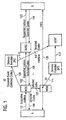
- a first embodiment is shown in Figure 1 for the case a subscriber A wants to call a subscriber B.
- the mobile terminal of subscriber A sends a list of the codec types it supports via a message Supported_Codecs to the network node that handles the call (signaling step 101).
- 3GPP Third Generation Partnership Project
- the function of controlling the establishment, maintaining and releasing a call is located in so called mobile switching centers MSC.
- the mobile switching center MSC to which the first subscriber is assigned to forwards the message Supported_Codecs to the GMSC (signaling step 102) to which the called subscriber is assigned to.
- the GMSC forwards the message Supported_Codecs to the second subscriber B (signaling step 103).
- the subscriber B compares the received list of codec types of subscriber A with the list of codec types that is supported of the second subcriber B. Normally that codec type that is common to both subscribers that provides the best quality is selected. The selected codec type is transmitted back via the GMSC (signaling step 104), from there to the MSC (signaling step 105) and from there to the subscriber A (signaling step 106).
- the media gate way MGW that handles the payload data exchange of the established call is informed by the MSC about the selected codec type in signaling step 107.
- the Media Gateway MGW switches to a transparent mode and just forwards the payload data, e.g. the speech data from one subscriber of the call to the other subscriber of the call and vice versa (data exchange 108).
- the MSC - in case the call should be monitored - informs the legal enforcement monitoring function LEMF about the codec type that has been agreed on by the two subscribers.
- the law enforcement monitoring functions (LEMF) are national specific and not defined by 3GPP. Delivery functions adopt the standardized interfaces X1_1, X2, X3 of the 3G call control servers to the national interfaces HI1, HI2, HI3 of the law enforcement monitoring functions LEMF. Call related events are sent to the LEMF by Delivery Function 2. These are non-real time events and thus could not be used for resolving bearer issues.
- the solutions proposed by the invention add new protocol signaling but do not require a change in the existing hardware.
- Call Related Events are used to indicate the selected codec types and possibly the available codec types. These events are categorized.
- the first event, called Call Establishment is send from the MSC to the Delivery Function F2 (signaling step 109) which informs via the interface H12 the law enforcement monitoring function LEMF (signaling step 110).
- the Media Gateway MGW copies the data received from each subscriber A, B and sends them via the X3 interface (in data exchange step 111) and the Delivery Function DF3 to the law enforcement monitoring function LEMF (via data exchange step 112).
- the LEMF is provided with all up-to-date codec types it is able to decode the received data as it also has been informed about the selected codec type.
- a specific signaling interface is introduced towards the delivering function.
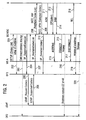
- the signaling between the delivery function DF2, the law enforcement monitoring function LEMF, the delivery function DF3, a calling subscriber MS A (the mobile subscriber that is intended to be monitored), a mobile switching center MSC, a called subscriber B (that can be another mobile subscriber or a subscriber in the public telephone net) is shown.
- the mobile terminal of the calling subscriber A sends during set-up to the associated mobile switching center MSC of the cell from where the calling subscriber is calling a list of its build-in codecs (signaling step 201).
- the mobile switching center MSC In the mobile switching center MSC all calls that are set up are checked if the calling subscriber or the called subscriber are to be intercepted. If this is the case the stublines are set up towards the delivery function DF3 (signaling step 202). Further a Call Establishment Attempt is made towards delivery function DF2 (signaling step 203). The next step, that is new with respect to prior art technology the mobile switching center sends the codec list, that it has received from the calling subscriber MS A to the delivery function DF3 (signaling step 204) in a message called DF_SupportedCodecList.
- the delivery function DF3 requests from the law enforcement monitoring function LEMF a list of the codes that are available in the law enforcement monitoring function LEMF (signaling step 205). In response to that request the law enforcement monitoring function LEMF sends back to the delivery function DF3 in a message called LEMF_SupportedCodecs the list of its available codec types (signaling step 206). It should be noted that the last two signaling steps 205, 206 need not to be executed in real time. The delivery function DF3 now compares the list received from the calling subscriber MS A and the list received from the law enforcement monitoring function LEMF and removes from the list of the calling subscriber MS A all codec types those are not common.
- the updated codec type list contains only codecs types which can be decoded by the law enforcement monitoring function LEMF.
- this updated codec type list is send to the mobile switching center MSC (signaling step 207).
- the updated codec type list is send from the mobile switching center to the second subscriber B in a BICC: IAM message (signaling step 208).
- the codec type selected by the second subscriber B is send back to the mobile switching center MSC in a BICC: APM message (signaling step 209).
- the selected codec type is send to the Delivery Function DF3 in a message called DF_SelectedCodec (signaling step 210). Then ACM and CPG(alert) are send from subscriber B to the mobile switching center MSC (signaling steps 211, 212).ALERTING is send from mobile switching center MSC to the first subscriber A (signaling step 213). In reaction to the ANM send from the second subscriber B to the mobile switching center MSC (signaling step 214) the mobile switching center MSC sends a CONNECT message to the first subscriber A (signaling steps 215).
- the stublines from the mobile switching center MSC to the Delivery Function DF2 contain a copy of the data exchanged by the first and second subscriber A, B (data exchange 216).
- the codec type used between the subscribers A, B is known to the law enforcement monitoring function LEMF the LEMF can decode the speech data. As full transparancy is ensured the LEMF is also able to check if any other data is hidden in the data exchanged by the two subscribers A,B.
- a DISCONNECT message is exchanged (signaling step 217 and the connection is released by a release message REL (signaling step 218).
- a release message send to the delivery function DF2 the stub lines are released (220) too.
- Codec modification would also need to be indicated to the DF2.
- Codec modification could be time stamped and included in its own Call Related Event. This could be also achieved via additional parameter to existing call related events (e.g. Handover or Supplementary Service) or a new call related event could be defined.
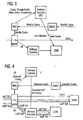
- Figure 4 shows the modification.
- the delivery function and or the LEMF has the receive inband information such as framing protocol control procedures that would normally be sent end-to-end between the call nodes. For Legal Interception these control procedures (e.g. rate control changes) are also needed.
- framing protocol control procedures e.g. rate control changes
- One solution to this would be to generate copies of the control procedures and forward them to the LEMF; this would be the effect of sending all data packets to the LEMF.
- An alternative solution would be to implement a user plane independent protocol to inform the LEMF of the control information that it would need. This would enable the LEMF to understand the payload without having to support all framing protocols that could be deployed in a network.
- IuFP 3GPP TS 25.415
- AAL2 type 2 service specific convergence sublayer for narrow-band services ITU-T 1.366.2
- RTP Payload format for AMR and AMR-WB audio IETF draft-ietf-avt-rtp-amr-10.txt
- the MGW shall always provide the LEMF with all data sent and received between the two points of interception. This may then include copies of the TFO protocol to initiate Tandem Free Operation. This means the equipment in the LEMF will know when TFO is active or not.
- the bearer delivery is shown in Figure 5.
- TFO is a subset of TFOs in the network during call establishment if it supports theTFO package and is requesting Transcoders to support the TFO function.
- This H.248 package also supports the ability to turn TFO off.
Landscapes
- Engineering & Computer Science (AREA)
- Computer Security & Cryptography (AREA)
- Signal Processing (AREA)
- Computer Networks & Wireless Communication (AREA)
- Technology Law (AREA)
- Computing Systems (AREA)
- Computer Hardware Design (AREA)
- General Engineering & Computer Science (AREA)
- Mobile Radio Communication Systems (AREA)
- Telephonic Communication Services (AREA)
- Monitoring And Testing Of Exchanges (AREA)
- Monitoring And Testing Of Transmission In General (AREA)
- Alarm Systems (AREA)
Applications Claiming Priority (1)
| Application Number | Priority Date | Filing Date | Title |
|---|---|---|---|
| EP01125822A EP1307036B1 (de) | 2001-10-29 | 2001-10-29 | Anrufüberwachung in einem Kommunikationssystem |
Related Parent Applications (1)
| Application Number | Title | Priority Date | Filing Date |
|---|---|---|---|
| EP01125822A Division EP1307036B1 (de) | 2001-10-29 | 2001-10-29 | Anrufüberwachung in einem Kommunikationssystem |
Publications (2)
| Publication Number | Publication Date |
|---|---|
| EP1667414A2 true EP1667414A2 (de) | 2006-06-07 |
| EP1667414A3 EP1667414A3 (de) | 2006-06-14 |
Family
ID=8179110
Family Applications (2)
| Application Number | Title | Priority Date | Filing Date |
|---|---|---|---|
| EP01125822A Expired - Lifetime EP1307036B1 (de) | 2001-10-29 | 2001-10-29 | Anrufüberwachung in einem Kommunikationssystem |
| EP06004053A Withdrawn EP1667414A3 (de) | 2001-10-29 | 2001-10-29 | Gesetzliche Überwachung von komprimierten Sprachanrufen |
Family Applications Before (1)
| Application Number | Title | Priority Date | Filing Date |
|---|---|---|---|
| EP01125822A Expired - Lifetime EP1307036B1 (de) | 2001-10-29 | 2001-10-29 | Anrufüberwachung in einem Kommunikationssystem |
Country Status (4)
| Country | Link |
|---|---|
| EP (2) | EP1307036B1 (de) |
| AT (1) | ATE319261T1 (de) |
| DE (1) | DE60117452T2 (de) |
| ES (1) | ES2259306T3 (de) |
Cited By (1)
| Publication number | Priority date | Publication date | Assignee | Title |
|---|---|---|---|---|
| US20180013880A1 (en) * | 2015-02-04 | 2018-01-11 | Nokia Solutions And Networks Oy | Interception for encrypted, transcoded media |
Families Citing this family (7)
| Publication number | Priority date | Publication date | Assignee | Title |
|---|---|---|---|---|
| US20070019620A1 (en) * | 2005-07-21 | 2007-01-25 | Nokia Corporation | Monitoring of coded data |
| DE102005036298B3 (de) | 2005-08-02 | 2006-12-14 | Siemens Ag | Verfahren und Kommunikationssystem zur Auswahl eines Übertragungsmodus' für eine Übermittlung von Nutzdaten |
| EP2005693B1 (de) * | 2006-03-02 | 2015-09-02 | Telefonaktiebolaget LM Ericsson (publ) | Breitband-codec-aushandlung |
| CN101406029B (zh) * | 2006-12-30 | 2011-04-20 | 华为技术有限公司 | 多媒体网络中对视频电话业务进行语音监听的系统与方法 |
| CN102045844B (zh) * | 2009-10-12 | 2013-04-17 | 华为技术有限公司 | 能力信息上报方法和装置 |
| IN2012DN05102A (de) * | 2010-01-29 | 2015-10-09 | Ericsson Telefon Ab L M | |
| CN102572886A (zh) * | 2010-12-21 | 2012-07-11 | 中兴通讯股份有限公司 | 一种自动多速率监控方法及装置 |
Family Cites Families (4)
| Publication number | Priority date | Publication date | Assignee | Title |
|---|---|---|---|---|
| EP1159817B1 (de) * | 1999-03-12 | 2011-11-16 | Nokia Corporation | Auffangsystem und -verfahren |
| ES2317837T3 (es) * | 1999-05-17 | 2009-05-01 | Telefonaktiebolaget Lm Ericsson (Publ) | Negociacion de capacidad en una red de telecomunicaciones. |
| GB2350257A (en) * | 1999-05-17 | 2000-11-22 | Ericsson Telefon Ab L M | Capability negotiation in a telecommunications network |
| CA2326246C (en) * | 1999-12-23 | 2005-04-05 | Nortel Networks Limited | Methods and systems for internet protocol (ip) network surveillance |
-
2001
- 2001-10-29 AT AT01125822T patent/ATE319261T1/de not_active IP Right Cessation
- 2001-10-29 ES ES01125822T patent/ES2259306T3/es not_active Expired - Lifetime
- 2001-10-29 DE DE60117452T patent/DE60117452T2/de not_active Expired - Lifetime
- 2001-10-29 EP EP01125822A patent/EP1307036B1/de not_active Expired - Lifetime
- 2001-10-29 EP EP06004053A patent/EP1667414A3/de not_active Withdrawn
Cited By (2)
| Publication number | Priority date | Publication date | Assignee | Title |
|---|---|---|---|---|
| US20180013880A1 (en) * | 2015-02-04 | 2018-01-11 | Nokia Solutions And Networks Oy | Interception for encrypted, transcoded media |
| US10630834B2 (en) * | 2015-02-04 | 2020-04-21 | Nokia Solutions And Networks Oy | Interception for encrypted, transcoded media |
Also Published As
| Publication number | Publication date |
|---|---|
| ES2259306T3 (es) | 2006-10-01 |
| DE60117452T2 (de) | 2006-11-02 |
| ATE319261T1 (de) | 2006-03-15 |
| DE60117452D1 (de) | 2006-04-27 |
| EP1307036A1 (de) | 2003-05-02 |
| EP1667414A3 (de) | 2006-06-14 |
| EP1307036B1 (de) | 2006-03-01 |
Similar Documents
| Publication | Publication Date | Title |
|---|---|---|
| EP1611768B1 (de) | Legales abfangen von multimediaverbindungen | |
| AU761839B2 (en) | End-to-end coder/decoder (codec) | |
| US6868080B1 (en) | Voice over internet protocol call fallback for quality of service degradation | |
| CN1361994B (zh) | 用于电信网络中的能力协商的系统、设备和方法 | |
| US6108560A (en) | Wireless communications system | |
| US8116335B2 (en) | Methods and apparatus for data communication | |
| US7076064B2 (en) | Maintaining end-to-end synchronization on telecommunications connection | |
| EP1819097B1 (de) | System zum überwachen eines videorufs | |
| AU2008201282A1 (en) | Congestion control system, service edge node, guidance server, congestion control method, program therefor, and recording medium recorded therewith | |
| JP2004088532A (ja) | 移動通信システム、その動作制御方法及びそれに用いるノード並びに無線制御装置 | |
| WO2009033344A1 (fr) | Méthode et système de réalisation de transmissions sans pertes de flux de média suite à une commutation entre un appel ouvert et un appel secret | |
| JP3411561B2 (ja) | デジタルテレコミュニケーションシステム | |
| EP1307036B1 (de) | Anrufüberwachung in einem Kommunikationssystem | |
| CN101189849B (zh) | 合法侦听方法以及用于侦听信息的透明传送的体系结构 | |
| CN101917745B (zh) | 用于电信网络中的能力协商的系统、设备和方法 | |
| WO2009028928A1 (en) | Using wlan for media transport in cellular mobile networks | |
| US20070019620A1 (en) | Monitoring of coded data | |
| WO2001047222A2 (en) | Transparent communication interception in a core transport network | |
| EP2529564B1 (de) | Methode zur erkennung von anrufen in einem amr-wb unterstützenden netzwerk | |
| CN101406029B (zh) | 多媒体网络中对视频电话业务进行语音监听的系统与方法 | |
| CN101437249B (zh) | 视频呼叫的监听方法及其应用 | |
| GB2352127A (en) | Speech coding in a telecommunication system | |
| CN100466831C (zh) | 一种检测业务类型的方法及装置 | |
| RU2677851C2 (ru) | Способ уведомления об отмененном вызове | |
| KR100385218B1 (ko) | 발신 호 처리 시스템 및 방법 |
Legal Events
| Date | Code | Title | Description |
|---|---|---|---|
| PUAI | Public reference made under article 153(3) epc to a published international application that has entered the european phase |
Free format text: ORIGINAL CODE: 0009012 |
|
| PUAL | Search report despatched |
Free format text: ORIGINAL CODE: 0009013 |
|
| AC | Divisional application: reference to earlier application |
Ref document number: 1307036 Country of ref document: EP Kind code of ref document: P |
|
| AK | Designated contracting states |
Kind code of ref document: A2 Designated state(s): AT BE CH CY DE DK ES FI FR GB GR IE IT LI LU MC NL PT SE TR |
|
| AX | Request for extension of the european patent |
Extension state: AL LT LV MK RO SI |
|
| AK | Designated contracting states |
Kind code of ref document: A3 Designated state(s): AT BE CH CY DE DK ES FI FR GB GR IE IT LI LU MC NL PT SE TR |
|
| AX | Request for extension of the european patent |
Extension state: AL LT LV MK RO SI |
|
| 17P | Request for examination filed |
Effective date: 20061221 |
|
| AKX | Designation fees paid |
Designated state(s): AT BE CH CY DE DK ES FI FR GB GR IE IT LI LU MC NL PT SE TR |
|
| R17C | First examination report despatched (corrected) |
Effective date: 20070129 |
|
| STAA | Information on the status of an ep patent application or granted ep patent |
Free format text: STATUS: THE APPLICATION IS DEEMED TO BE WITHDRAWN |
|
| 18D | Application deemed to be withdrawn |
Effective date: 20070809 |