EP1668979B1 - Resistenz gegen durch den Pilz Peronospora destructor verursachten Mehltau der Zwiebel - Google Patents
Resistenz gegen durch den Pilz Peronospora destructor verursachten Mehltau der Zwiebel Download PDFInfo
- Publication number
- EP1668979B1 EP1668979B1 EP04078320A EP04078320A EP1668979B1 EP 1668979 B1 EP1668979 B1 EP 1668979B1 EP 04078320 A EP04078320 A EP 04078320A EP 04078320 A EP04078320 A EP 04078320A EP 1668979 B1 EP1668979 B1 EP 1668979B1
- Authority
- EP
- European Patent Office
- Prior art keywords
- plant
- plants
- resistant
- allium
- downy mildew
- Prior art date
- Legal status (The legal status is an assumption and is not a legal conclusion. Google has not performed a legal analysis and makes no representation as to the accuracy of the status listed.)
- Expired - Lifetime
Links
Images



Classifications
-
- C—CHEMISTRY; METALLURGY
- C12—BIOCHEMISTRY; BEER; SPIRITS; WINE; VINEGAR; MICROBIOLOGY; ENZYMOLOGY; MUTATION OR GENETIC ENGINEERING
- C12Q—MEASURING OR TESTING PROCESSES INVOLVING ENZYMES, NUCLEIC ACIDS OR MICROORGANISMS; COMPOSITIONS OR TEST PAPERS THEREFOR; PROCESSES OF PREPARING SUCH COMPOSITIONS; CONDITION-RESPONSIVE CONTROL IN MICROBIOLOGICAL OR ENZYMOLOGICAL PROCESSES
- C12Q1/00—Measuring or testing processes involving enzymes, nucleic acids or microorganisms; Compositions therefor; Processes of preparing such compositions
- C12Q1/68—Measuring or testing processes involving enzymes, nucleic acids or microorganisms; Compositions therefor; Processes of preparing such compositions involving nucleic acids
- C12Q1/6876—Nucleic acid products used in the analysis of nucleic acids, e.g. primers or probes
- C12Q1/6888—Nucleic acid products used in the analysis of nucleic acids, e.g. primers or probes for detection or identification of organisms
- C12Q1/6895—Nucleic acid products used in the analysis of nucleic acids, e.g. primers or probes for detection or identification of organisms for plants, fungi or algae
-
- A—HUMAN NECESSITIES
- A01—AGRICULTURE; FORESTRY; ANIMAL HUSBANDRY; HUNTING; TRAPPING; FISHING
- A01H—NEW PLANTS OR NON-TRANSGENIC PROCESSES FOR OBTAINING THEM; PLANT REPRODUCTION BY TISSUE CULTURE TECHNIQUES
- A01H1/00—Processes for modifying genotypes ; Plants characterised by associated natural traits
-
- A—HUMAN NECESSITIES
- A01—AGRICULTURE; FORESTRY; ANIMAL HUSBANDRY; HUNTING; TRAPPING; FISHING
- A01H—NEW PLANTS OR NON-TRANSGENIC PROCESSES FOR OBTAINING THEM; PLANT REPRODUCTION BY TISSUE CULTURE TECHNIQUES
- A01H6/00—Angiosperms, i.e. flowering plants, characterised by their botanic taxonomy
- A01H6/04—Amaryllidaceae, e.g. onion
- A01H6/045—Allium cepa [onion]
-
- C—CHEMISTRY; METALLURGY
- C12—BIOCHEMISTRY; BEER; SPIRITS; WINE; VINEGAR; MICROBIOLOGY; ENZYMOLOGY; MUTATION OR GENETIC ENGINEERING
- C12Q—MEASURING OR TESTING PROCESSES INVOLVING ENZYMES, NUCLEIC ACIDS OR MICROORGANISMS; COMPOSITIONS OR TEST PAPERS THEREFOR; PROCESSES OF PREPARING SUCH COMPOSITIONS; CONDITION-RESPONSIVE CONTROL IN MICROBIOLOGICAL OR ENZYMOLOGICAL PROCESSES
- C12Q2600/00—Oligonucleotides characterized by their use
- C12Q2600/13—Plant traits
-
- C—CHEMISTRY; METALLURGY
- C12—BIOCHEMISTRY; BEER; SPIRITS; WINE; VINEGAR; MICROBIOLOGY; ENZYMOLOGY; MUTATION OR GENETIC ENGINEERING
- C12Q—MEASURING OR TESTING PROCESSES INVOLVING ENZYMES, NUCLEIC ACIDS OR MICROORGANISMS; COMPOSITIONS OR TEST PAPERS THEREFOR; PROCESSES OF PREPARING SUCH COMPOSITIONS; CONDITION-RESPONSIVE CONTROL IN MICROBIOLOGICAL OR ENZYMOLOGICAL PROCESSES
- C12Q2600/00—Oligonucleotides characterized by their use
- C12Q2600/156—Polymorphic or mutational markers
Definitions
- the present invention relates to plants of the genus Allium which are resistant to the downy mildew of onion caused by the fungus Peronospora destructor (Pd) (Berk.) Cas., specifically plants of the Allium cepa species.
- the resistance is provided by a resistance locus, which can be present homozygously or heterozygously in the genome of the plant, and which is sufficient to provide resistance to plants bearing this locus.
- Disclosed are processes for obtaining said plants resistant to downy mildew of onion, said processes being suitable for obtaining cultivated onions and shallots.
- interspecific hybrid is male and female fertile (Kofoet et al, ref 2). It has also been reported that a downy mildew resistance can be dominantly inherited in the BC1 (first backcross) progeny of this hybrid to onion.
- Pd resistance locus The locus in the cepa genome, where the introgressed sequences responsible for the resistance are found, has been termed "Pd resistance locus”. By extension, "Pd resistance locus” also designates the sequences themselves.
- the invention lies first in the observation that all available resistant material of the Allium cepa and Allium fistulosum species was in fact heterozygous for the Pd resistance sequences and that no homozygous resistant plants have been obtained or disclosed in a reproducible manner up to now.
- the present inventors elucidated the reason for which no homozygously resistant plant could be obtained and then succeeded in obtaining such Allium plants, which gives rise to progeny after self-pollination which is also 100% resistant (i.e. a homozygously resistant plant).
- the introgression fragment of Allium roylei which is present in the cepa hybrid and confers resistance to downy mildew comprises also a sequence designated "lethal factor", whose presence on both homologues of chromosome in cepa is lethal to the plant.
- lethal factor a sequence designated "lethal factor”
- the introgression fragment, conferring resistance and containing the lethal factor is thus necessarily present on a single chromosome homologue, explaining the absence of obtained homozygously resistant plants by the predecessors.
- This sequence responsible for lethality is present in the vicinity of the Pd resistance locus.
- the present inventors Having identified that the sequence conferring resistance is linked to a lethal sequence, the present inventors have succeeded, for the first time, in physically separating the sequence conferring resistance from the sequence responsible for lethality when present on both chromosomes.
- This step of separation which can be brought about by a recombination event, is the key point of the present invention. Indeed it could not be foreseen that the sequences conferring resistance could be separated from the lethal factor.
- said factor was a sequence which in itself was lethal or whether lethality arose as a result of the replacement, by sequences present on an introgression fragment, of endogenous essential sequences. Indeed, it is possible that the lethality is in fact a knock out of essential gene(s) on the corresponding cepa-fragment, which are not compensated by the fragment introduced from A. roylei. Therefore, different scenarios were possible to explain lethality:
- the present inventors have unexpectedly succeeded in separating the sequences conferring the resistance phenotype from the sequence whose presence on both homologues is lethal.
- the inventors have also found that the already released resistant A. cepa possess both the Pd resistance locus (which is dominant) and the lethal factor (which is recessively inherited) on the same introgression fragment. As the Pd resistance locus is dominant, the phenotype of the plant is "resistant” and the recessive lethal factor is not observed. However, progeny of such plants when crossed with susceptible plants will segregate and thus cannot be used commercially. Indeed, commercial onions and shallots are generally varieties, thus plant material, whether lines or hybrids, with a phenotype which has to be uniform; segregating traits of interest cannot be envisaged for commercial plants.
- the present invention thus provides plants of the Allium cepa species which are resistant to downy mildew of onion caused by Peronospora destructor (Pd) due to the presence in their genome of a Pd resistance locus, and said plants are homozygously resistant plants, i.e. plants which give a progeny after selfing which is also 100% resistant.
- Pd Peronospora destructor
- the present invention also provides resistant plants which can be obtained by crossing the above-mentioned resistant plants of the Allium cepa species with a plant also of the Allium cepa species which is susceptible to downy mildew.
- susceptibility is the inability of a plant variety to restrict the growth and development of a specified pest or pathogen. It must however be noted that the term “sensitive” has also been widely used in the past decades for describing the same property.
- Resistant plants include plants which are tolerant, i.e. remain infected but survive, and plants which are totally resistant. Although being resistant to a pest or pathogen, a resistant plant attacked by said pest or pathogen may display symptoms characteristic of the infections, like reduced growth, earlier death, loss of leaves...
- Inbred line nearly homozygous line (for all characters) produced by continued inbreeding and selection.
- Homozygously resistant plant to a pathogen plant which gives a progeny after selfing (self-pollination) which is also 100% resistant to said pathogen.
- self-pollination self-pollination
- the resistance is due to the presence of a DNA sequence in a chromosome of the plant, said sequence is present on all the homologues of the chromosome.
- Lethal factor factor, for example a genetic factor, which hinders the survival of a plant exposed to this factor. The presence of a lethal factor may prevent the plant from existing ab initio or may cause its death at a later stage.
- Allium cepa Species of the Allium genus, comprising bulbous plants having hollow leaves cultivated worldwide for its rounded edible bulb. Cultivar onions and shallots are Allium cepa species.
- a first type of plant that is a plant of the Allium cepa species which is resistant to downy mildew of onion caused by the fungus Peronospora destructor (Pd).
- the resistance to downy mildew is due to a Pd resistance locus in the genome of the plant, characterized in that the resistance locus is present homozygously in the genome, that is the sequences responsible for the resistance are present in two copies in the genome of a plant according to the invention, i.e. present on both chromosomal homologues.
- the present inventors have succeeded in separating the sequences responsible for the resistance to downy mildew from the linked lethal sequences, which were identified by the inventors as being lethal if present on both chromosome homologues. By separating these two types of sequences, the inventors have thus been able to obtain a plant homozygous for the sequences of interest (Pd resistance locus), without being homozygous for the deleterious sequences (lethal factor).
- the invention concerns these viable plants homozygous for the sequences conferring resistance. These plants are necessarily not homozygous for the lethal sequences, which may however be present, but at only a single copy.
- any progeny of a plant of the invention will lead to a plant also resistant to downy mildew, without segregation of this feature. Indeed, any plant in the progeny will have in its genome the Pd resistance locus, which is known to be dominant over the susceptible phenotype.
- a plant is considered to be resistant if it is able to restrict the growth and development of Peronospora destructor, by hindering the infection or combating the growth of the fungus after infection.
- a plant which is unable to restrict the growth and development of Peronospora destructor is said to be susceptible to Peronospora destructor.
- Said resistance according to the invention comprises resistance to natural infection by Peronospora destructor and also resistance to artificial inoculation by Peronospora destructor. Artificial tests can be carried out in greenhouses or climate rooms under more controlled environments. Both young plants and sprouting bulbs can be tested.
- Resistance may also be tested genetically with molecular markers, by assaying the presence of the Pd resistance locus in the genome of a plant.
- the techniques which can be used are well known to the skilled man in the domain and are generally based on genic amplification.
- RFLP restriction fragment length polymorphism
- RAPD random amplified polymorphic DNA
- This technique consists in a first step of digestion of the genomic DNA with suitable restriction enzymes, simultaneously with ligation with specifically designed oligonucleotide adapters.
- the adapters have sequences corresponding to the restriction site, linked to an additional defined sequence.
- PCR amplification of the obtained tagged restriction fragments is then carried out with primers, whose sequence comprises a sequence complementary to the adapters and 1, 2 or 3 additional nucleotides allowing discrimination between the tagged restriction fragments.
- primers whose sequence comprises a sequence complementary to the adapters and 1, 2 or 3 additional nucleotides allowing discrimination between the tagged restriction fragments.
- resistant plants according to the invention are resistant to infection by Peronospora destructor.
- Plants according to this first type according to the invention are for example plants from the line 3591-1 which has been deposited at the NCIMB under accession number 41249. The process by which the inventors have obtained this plant is reported in example 1.
- the present invention also concerns a second type of plants, which are hybrid plants possessing said Pd resistance locus heterozygously, i.e. on only one of the chromosome homologue.
- said plants can be obtained by crossing the homozygous plant mentioned above with a second parental line of the Allium cepa species, the parental line being susceptible to downy mildew of onion.
- the invention thus is directed to plants of the Allium cepa species.
- the resistance trait segregates when further to self-pollinations or crossing them with other plants.
- a plant according to this embodiment of the invention can be obtained by crossing a plant from the line 3591-1 which has been deposited at the NCIMB under accession number 41249, with a downy mildew-susceptible Allium cepa parental line.
- This parental line is preferably a cytoplasmic male sterile Allium cepa inbred line.
- the second type of plant according to the invention can of course be obtained by other processes.
- they can also be obtained by self-pollinating plants already of this type, although, as explained above, progeny of such a self-pollination is not 100% resistant to downy mildew.
- the Pd resistance locus is present in the long arm of chromosome 3, homozygously or heterozygously, in the genome of plants according to the first or second type of the present invention.
- the description also discloses plants of the Allium cepa or Allium fistulosum species, which are resistant to downy mildew of onion caused by the fungus Peronospora destructor (Pd) due to a Pd resistance locus, wherein any fragment of the chromosome comprising the Pd resistance locus, can be present homozygously in progeny without causing lethality.
- Pd Peronospora destructor
- sequences causing lethality may generally be found.
- the portion of the chromosome comprising the Pd resistance locus and said lethal sequences may generally not be present on both chromosome homologues, because it prevents the plant from existing.
- the inventors have been able to obtain plants which contain the Pd resistance locus and wherein any portion of the chromosome comprising the Pd resistance locus is or may be present on both chromosome homologues, because the lethal sequences are not present.
- the description also discloses a plant of the Allium cepa or Allium fistulosum species, which is resistant to downy mildew of onion caused by the fungus Peronospora destructor (Pd), wherein at least one of the homologues of chromosome 3 comprises a Pd resistance locus and any fragment of said chromosome, comprising the Pd resistance locus, can be present homozygously in progeny without causing lethality.
- Pd Peronospora destructor
- a plant being homozygous for the Pd resistance locus and heterozygous for the lethal sequences, i.e. the lethal sequences are present on only one homologue of chromosome 3, is also part of the present invention. Indeed, any fragment of at least one of the homologue of chromosome 3, the homologue comprising the Pd resistance locus without the lethal sequences, can be present homozygously in progeny without causing lethality.
- Such a plant is for example plants 3591-3, 3591-4, 3591-5, 3591-6 or 3591-8 exemplified in example 3 of the experimental section of the present application.
- Example 5 gives details about the analysis to be carried out for such a determination.
- the main criterion to be evaluated is the percentage of progeny which is resistant. Any resistant plant is a plant according to the invention if at least 75% (+/- 5% due to variability of the measures) of the progeny is also resistant.
- Figure 1 exemplifies the different situations at the genomic level, leading to this percentage.
- a plant having a Pd resistance linked to lethal sequences on only one chromosome homologue is not part of the present invention.
- Such a plant after self-pollination, will give a progeny which is, according to the genetic law, 66,7% resistant, i.e. less than 75%.
- Such a plant can thus be discriminated from plants according to the present invention.
- Such a plant is for example plant of line 2348 exemplified in example 2 of the experimental section of the present application.
- the Pd resistance locus is present homozygously in a plant according to the invention.
- the Pd resistance locus which confers resistance to infection by Peronospora destructor, is present on an introgression fragment; it originates from a plant which is naturally resistant to downy mildew of onion, from Allium roylei.
- the presence of an introgression fragment in the genome of a plant of Allium cepa species can be obtained by crossing said plants with an introgression partner, thus obtaining a hybrid.
- Said hybrid is preferably crossed back with plant of Allium cepa species in order to minimize the introgression fragments, and then selected on the capacity to show resistance to downy mildew.
- the introgression fragments in a plant of Allium cepa species according to the invention are preferably limited in order to have plants which share all the characteristics of interest of the parental plant but the resistance trait.
- Introgression fragments in the genome of a plant according to the present invention are present in one or both homologues of chromosome 3 in the long arm of the chromosome 3. It is preferred that the introgression fragment comprising the Pd resistance locus is less than 50% of the length of the long arm of chromosome 3, preferably less than 44%, more preferably less than 35, 30, 25 or 20% of the length of the long arm of chromosome 3. As mentioned above, the introgression fragment originates from Allium roylei genome.
- Plants according to this type are plants from the line 3591-1 which has been deposited at the NCIMB under accession number 41249.
- one, two or more introgression fragments can be present, for example in the long arm of chromosome 3, however each fragment being distinct and disjoined from the others. There is preferably only one introgression fragment.
- the introgression fragment present in a plant according to the invention is only the sequences strictly necessary to the resistance to downy mildew.
- Plants according to the invention can be used to transfer the Pd resistance into other agronomical valuable plants, provided the plants can be crossed together. This may be done by obtaining a hybrid and then backcrossing the hybrid with the second plants, followed by self-pollinations of the obtained plants; at each step, resistant progeny is selected.
- plants according to the invention are stable for the characteristic of interest, i.e. resistance to downy mildew of onion, however not necessarily for other traits.
- a plant according to the present invention may be obtained from an initial interspecific cross between a wild Allium genitor resistant to downy mildew of onion and Allium cepa . According to this situation, the introgression fragment originates from the wild Allium genitor.
- a plant according to the invention can be obtained after the initial interspecific cross mentioned above followed by several backcrosses with plant of the parental species and optionally one or several self-pollinations.
- the steps of backcrosses and self-pollinations allow to reduce the proportion of introgression fragments in the resulting plant.
- the number of backcrosses which is recommended is at least 2, preferably 3, 4, 5 or 6, 7, 8 to 10 successive backcrosses may also be envisaged.
- the number of self-pollinations which are to be performed is between 1 and 8, preferably 2, 3, 4 or 5.
- the initial interspecific cross is between wild Allium genitor resistant to downy mildew of onion and Allium cepa and the mentioned backcrosses are carried out with plants of the Allium cepa species.
- the wild Allium genitor is a plant of the Allium roylei species.
- the presence of the Pd resistance locus can be tested according to well known protocols for detecting the resistance to infections by Peronospora destructor. These protocols however are time-consuming. The presence of the Pd resistance locus may thus also be tested by other genetic techniques, based on genic amplification, which are well known to the skilled man in the domain.
- Techniques which can be used for molecular typing include restriction fragment length polymorphism (RFLP), multilocus enzyme electrophoresis and random amplified polymorphic DNA (RAPD).
- RFLP restriction fragment length polymorphism
- RAPD random amplified polymorphic DNA
- this technique called AFLP TM is used for assaying the presence of the Pd resistance locus in the genome of a plant of Allium genus.
- the restriction of the genomic DNA of the plant is preferably performed with the restriction enzymes PstI and MseI; and the ligation is performed with the following adapters: alpha 5' - CTCGTAGACTGCGTACATGCA CATCTGACGCATGT - 5', and beta 5' - GACGATGAGTCCTGAG TACTCAGGACTCAT - 5'.
- the PCR amplification is then carried out on the restriction fragments ligated to the adapters with the following primers: (A) 5' - GACTGCGTACATGCAGAAC and 5' - GATGAGTCCTGAGTAACTT.
- the presence of a Pd resistance locus in the tested plant can be deduced from the presence of an amplified fragment of 61 nucleotides. Indeed, if such a fragment results from the preceding steps, it is indicative of the presence of a Pd resistance locus according to the invention, as can be deduced from the results reported in the example 4.
- the method can be carried out according to the following alternative protocol: - the restriction of the genomic DNA of the plant is performed with the restriction enzymes PstI and MseI ; and - the ligation is performed with the following adapters: alpha 5' - CTCGTAGACTGCGTACATGCA CATCTGACGCATGT - 5', and beta 5' - GACGATGAGTCCTGAG TACTCAGGACTCAT - 5'; - the PCR amplification is amplification is then carried out on the restriction fragments ligated to the adapters with the following primers: (B) 5' - GACTGCGTACATGCAGAAG and 5' - GATGAGTCCTGAGTAAAAC.
- the method can be carried out according to the following protocol: - the restriction of the genomic DNA of the plant is performed with the restriction enzymes PstI and MseI ; and - the ligation is performed with the following adapters: alpha 5' - CTCGTAGACTGCGTACATGCA CATCTGACGCATGT - 5', and beta 5' - GACGATGAGTCCTGAG TACTCAGGACTCAT - 5'; - the PCR amplification is amplification is then carried out on the restriction fragments ligated to the adapters with the following primers: (C) 5' - GACTGCGTACATGCAGACA and 5' - GATGAGTCCTGAGTAACCA.
- Example 4 of the present invention describes the use of such a method.
- the present invention also discloses a plant of the Allium cepa species, homozygously resistant to the downy mildew of onion, i.e. the progeny of said plant after self-pollination is 100% resistant to downy mildew, which can be obtained by carrying out the following process:
- the step a) has been proven to give viable interspecific hybrids which are male and female fertile.
- the interspecific cross can be made between Allium roylei as the male and Allium cepa as the female parent or on the contrary with Allium roylei as the female and Allium cepa as the male parent.
- the step b) is a step of selection of plants resistant to downy mildew of onion caused by the fungus Peronospora destructor.
- the resistance may be tested by natural or artificial inoculations with known protocols described in the literature or in the experimental section of the present application.
- the selection may also be achieved by taking advantage of the AFLP TM method described above.
- Useful restriction enzymes, adapters and PCR primers are described above, along with the length of the expected amplified fragment indicative of the presence of Pd resistance locus.
- the plants selected at the step b) not only are resistant to downy mildew of onion, but they share also advantageously as many as possible morphological characteristics with the Allium cepa parent.
- Step c) is concerned with backcross of the interspecific hybrid selected at step b) for its resistance to downy mildew of onion with plants of the Allium cepa species.
- Allium cepa plants used for the backcross step may be from the same subspecies, variety or form than the plant used in step a) as parent for the interspecific hybrid, but not necessarily.
- plants resulting from the backcross are obtained, plants are selected which are resistant to downy mildew of onion.
- this selection may be achieved by testing the capacity to resist an infection by Peronospora destructor, or by achieving molecular typing, for example by the AFLP TM technique.
- this step c) followed by step d) are advantageously repeated at least once, that is there are at least two successive backcrosses.
- the number of backcrosses may vary between 2 to 10, preferably 3, 4, 5 or 6.
- the step e) is a step of self-pollination or selfing, which is well known by one skilled in the art.
- This step of self-pollination is followed by selection of plants resistant to downy mildew of onion, which share all the traits characteristic of a plant of the Allium cepa species.
- these steps of self-pollination and selection are repeated at least once, i.e. at lest two series of self-pollination and selection are achieved. These steps are preferably carried out 2, 3, 4, 5 or 8 times, i.e. they are repeated 1, 2, 3, 4 or 7 times.
- the last step of the process concerns the selection of a plant which is homozygously resistant to downy mildew of onion caused by Peronospora destructor. This homozygosity may be tested by achieving step e) and checking that 100% of the progeny is resistant to downy mildew.
- this last step of selection may be achieved preferably by using a molecular typing technique, for example the AFLP TM technique as described in the preceding sections and preferably with the restriction enzymes, adapters and primers recited before.
- a molecular typing technique for example the AFLP TM technique as described in the preceding sections and preferably with the restriction enzymes, adapters and primers recited before.
- the present description also discloses a method for the production of a plant of the Allium cepa species which is resistant to downy mildew of onion caused by the fungus Peronospora destructor (Pd) which comprises the following steps:
- molecular markers are used in steps c), e) and/or g) for selecting plants resistant to downy mildew of onion.
- the different steps of the method are as explained in the preceding paragraphs.
- the preferred embodiments of the process were also mentioned previously, in particular, the repetition of the steps d) and e) and of the steps f) and g).
- the steps of selection may also be achieved as explained previously. They are preferably achieved using a molecular typing method making use of molecular markers.
- a particularly preferred method is AFLP TM which is described in the preceding sections.
- molecular markers may be used in the selection step c) only, or in the step e) only, or in step g) only, or in each of these steps, or in two of three.
- the selected plants are preferably plants sharing the highest number of traits characteristic for Allium cepa . According to this procedure, the introgression fragments originating from the first Allium roylei genitor are minimized at each step.
- the traits characteristic for Allium cepa are as disclosed in the Guidelines for the Conducts of Tests for Distinctness, Uniformity and Stability (reference TG/46/6), in connection with the treaty UPOV.
- the method may also comprise an additional step of crossing the plant obtained at the end of step g) with a plant of Allium cepa species which is susceptible to downy mildew of onion.
- the resulting plant is resistant to downy mildew, as the plant obtained at the end of step g) is homozygously resistant to downy mildew.
- the selection step c), e) and/or g) may be carried out using the AFLP TM technique.
- the restriction enzymes used in this technique are preferably enzymes PstI and MseI.
- Suitable pair of adapters for the ligation step is: alpha 5' - CTCGTAGACTGCGTACATGCA CATCTGACGCATGT - 5', and beta 5' - GACGATGAGTCCTGAG TACTCAGGACTCAT - 5'.
- primers for the PCR amplification step, suitable pairs of primers which can be used are:
- fragments are amplified and can be detected on an agar gel after this PCR amplification.
- the presence of a fragment having 61 nucleotides when the pair of primers (A) is used is indicative of the presence of a Pd resistance locus in the genome of the tested plant.
- the length of the indicative amplified fragment is 151 nucleotides, and 330 when the pair of primers (C) is used.
- additional PCR amplifications may also be carried out, in order to detect false positives.
- amplifications are carried out with at least one pair of primers chosen amongst the following pairs of primers:
- the amplified fragments resulting from these additional amplifications are used as negative controls. No fragment of the length expected when using pair of primers (A), (B) or (C) must be detected when using pair of primers (A'), (B') or (C').
- the present description also discloses plants of the Allium genus which can be obtained by the methods as described, in particular by the method according to the preferred embodiments.
- the invention also concerns a hybrid Allium cepa plant obtainable by crossing a downy mildew-susceptible Allium cepa parental line with a plant homozygously resistant to downy mildew of onion according to the invention. Said plant is for example obtainable by carrying out the method of the invention as disclosed above.
- the Allium cepa parental line may be any line of the species Allium cepa, it is preferably a line well described and known for characteristics of interest. For example it is a cultivar line known for its taste, fast growing or other agronomical important traits.
- the parental line is a cytoplasmic male sterile Allium cepa inbred line.
- Any plant of the invention which has been described is, according to a preferred embodiment of the invention, a cultivated onion or shallot.
- Example 1 Obtaining of a homozygously resistant line of Allium cepa .
- Tests on disease resistance can be carried out in various ways, see for example de Vries et al (ref 3). Spontaneous epidemics may occur in the field, if conditions are favourable for the disease. Artificial tests can be carried out in greenhouses or climate rooms under more controlled environments. Both young plants and sprouting bulbs can be tested. The symptoms are yellowing of the leaves and grey sporulation.
- F 1 BC 2 disclosed in de Vries et al (ref 3).
- This plant has been obtained by a first interspecific cross between Allium cepa and Allium roylei (F1), followed by two successive backcrosses to Allium cepa (BC2).
- the present inventors have continued to carry out backcrosses of said plant material to their breeding lines and they have carried out selfings of the BC5 generation in order to obtain homozygous lines.
- S1, S2 and S3 indicates respectively that 1, 2 or 3 successive selfing (self-pollination) steps have been carried out.
- a first field test was carried out with F3 lines (F 1 BC 5 S 2 ), derived from selfing resistant plants of different F2 populations (F 1 BC 5 S 1 ). Plants were sown out on the main breeding field of the inventors.
- Inoculum was made by suspending conidiospores in demi-water. Leaves with spores were washed off with demi-water over two layers of cheese cloth. The suspension was diluted to 5.0 x 10 4 spores/ml. The spores were inoculated into bulbs, from the bulb equator to the basal plate, with a syringe with needle. The bulbs were placed in plastic bags with some humid paper during 24h at 10°C. After that the temperature was raised to 15°C in order to stimulate the growth of mycelium. Then the bulbs were planted out in the field.
- the first field test resulted in heavy infection of the onion plants. As long as the symptoms could be scored reliably, counts were made of the susceptible plants. Some early lines fell over in an early stage and no distinction could be made between dying of the leaves and downy mildew symptoms. For these lines only the susceptible plants were scored and not the resistant ones, because the resistant class would in these early lines contain many escapes. In total there were 20 lines. 34 lines were counted for both susceptible and resistant plants and these lines were falling over much later and the scoring on resistance could be done reliably. Data are given in table 1.
- Example 2 Genomic In situ Hybridization (GISH) with the breeding line 2348, generation F 1 BC 5 S 3 (breeding line 2348 from sample number 4008191 of plot 2348 gave a 66% resistance in the field).
- GISH Genomic In situ Hybridization
- GISH Genomic In situ Hybridization
- GISH is a powerful technique for detection of the introgression of chromatin material from one species onto another species.
- the advantage of GISH is that the introgression process is visualized by means of 'pictures of the introgressed genome'. With this technique, it is also possible to establish if a particular region of the genome is homozygous or heterozygous, thanks to the use of molecular cytogenetic markers which are co-dominant. By this technique, it is also possible to determine in which chromosome an introgressed gene of interest is present.
- the starting material is the breeding line 2348, generation F 1 BC 5 S 3 .
- Young root tips are collected and up to 100 slides are made for metaphase spread analysis (for method description, see Khrustaleva and Kik, (ref 9 and 10)).
- Genomic DNA is extracted from young leaves of A. cepa and A. roylei using the CTAB method of Rogers and Bendich (ref 13).
- Genomic DNA of A. roylei is labeled with Dig-11-dUTP (Digoxigenin-11-2'-deoxy-uridine-5'-triphosphate) by a standard nick-translation protocol (Boehringer, Manheim, Germany). Genomic DNA of A. cepa is used as a block DNA. In situ hybridization, immunological detection and microscopy procedure are as previously described by Khrustaleva and Kik, (ref 9 and 10). Karyotype analyses are carried out according to the standard onion nomenclature system proposed by Kalkman (ref 12) and confirmed by the Fourth Eucarpia Allium Symposium by de Vries (ref 8). The chromosome measurements from 3-5 metaphases per each accession are performed with a free software programme for Windows from Colorado State University: ( htto://www.colostate.edu/Depts/biolog/MicroMeasure ).
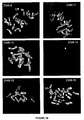
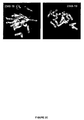
- GISH analysis of 14 resistant plants from the breeding line 2348, generation F 1 BC 5 S 3 showed that all plants possess the A . roylei segment harbouring the gene(s) for downy mildew resistance ( figures 2A , 2B and 2C ).
- Karyotype analysis revealed that the recombinant chromosome which carried the A. roylei segment is chromosome 3 (centromere index: 41,7; relative chromosome length: 13,8). Thirteen plants did possess only one A. roylei segment on chromosome 3, the other homologous chromosomes proved to be composed of only A. cepa chromatin.
- GISH analysis allows also the size determination of the introgressed segment on the long arm of chromosome 3 from A. roylei into the A. cepa chromosome.
- the segment on average is 25,2% of the entire chromosome length and 43,9% of the long arm length.
- cepa gene by the corresponding A. roylei gene during introgression leads to a severe disturbance of the plant development, for example seed development, when placed in an A. cepa cytoplasm background.
- a viable homozygous resistant onion can be obtained only if recombination occurs between the downy mildew resistance gene(s) and the lethality factor, should this be possible.
- breeding line 3591, generation F 1 BC 5 S 3 , young root tips are collected and up to 50 slides are made for metaphase spread analysis (for method description, see Khrustaleva and Kik, ref 9).
- roylei introgressed segments is the same on both homologues and averages: 17,9 ⁇ 0,78% of the length of the long arm.
- the size of the larger segment averages 42,8 ⁇ 1,09% of the length of the long arm and the size of smaller one averages 17,9 ⁇ 0,78%.
- the A. roylei introgression segment possesses also the corresponding gene that does not function in an exclusive A. cepa cytoplasm (i.e. nucleo-cytoplasmic interaction).
- the essential A. cepa gene will be fully replaced by the corresponding A. roylei gene, consequently it will give no viable seeds. Only if recombination occurs between the downy mildew resistance gene(s) and the essential gene (or lethality factor), a viable homozygous resistant plant will be obtained.
- GISH analysis of breeding line 3591 proves that a homozygous resistant plant (3591-1) can be obtained due to a recombination event between the resistance gene and the lethality factor.
- the five other accessions possess both small and large A . roylei introgression segments, which means that these plants are homozygous for the resistance gene(s) and heterozygous for the A. roylei lethality factor.
- Example 4 Identification of markers linked to the Peronospora destructor resistance locus (derived form A. roylei ).
- Plant material (number of individuals):
- the aim of this example is to identify AFLP TM markers linked to the Peronospora destructor resistance locus in onion.
- the resistance locus is derived from Allium roylei.
- a large introgression fragment has been identified in some individuals (individuals 2348-*). Besides these individuals, also two individuals were obtained which possess a smaller introgression fragment (3591-1; small fragment, and 3591-3; small and large fragments).
- BSA Bulked Segregant Analysis
- DNA was extracted from leaf material of 31 individuals (28X Allium cepa and individuals 3591-1, 3591-3 and Allium roylei ) and DNA of the 14x '2348' individuals and for all individuals PstI / MseI templates were generated. No reliable AFLP TM fingerprints could be generated for the individuals 2348-4, 2348-5, 2348-11 and 3591-3, therefore these individuals were excluded from further analysis.
- the BSA was carried out using 96 primer combinations in the Pstl+3/Msel+3 matrix, an overview of the primer combinations used is given in table 3 and table 6 gives the nomenclature of AFLP TM primer enzyme combinations.
- the BSA resulted in the identifications of 34 candidate markers of which eight candidate markers are possibly linked to the small introgression fragment. From these 34 candidate markers, a selection was made of 13 markers including the eight markers that are possibly linked to the small introgression fragment. This selection of 13 markers was used for verification on more individuals. For the verification four Allium cepa individuals, the 13 remaining '2348' individuals and individual 3591-3 were used. Table 3: Primer combination used for the BSA approach.
- Markers P32/M62-061, P33/M32-151, P35/M51-330 and P43/M35-190 are found to be linked to the small introgression fragment.
- BSA Bulked Segregant Analysis
- the BSA resulted in the identification of 34 candidate markers of which 8 candidate markers were possibly positioned in the small introgression fragment. After verification, a total of four markers were identified which are located in the small introgression fragment (on which also the Peronospora destructor resistance locus is located).
- the four candidate markers (P32/M62-061, P33/M32-151, P35/M51-330 and P43/M35-190) linked to the small introgression fragment were checked on 24 extra Allium cepa individuals.
- the obtained marker scores are in accordance with the expected score. Therefore, these markers are found to be linked to the small introgression fragment of interest and can be used for further selection procedures.
- Example 5 determination of the presence, in a plant of Allium genus, of an introgression fragment of A. roylei conferring resistance to downy mildew of onion, which can be present homozygously without causing lethality.
- a first step the presence of Pd resistance locus to downy mildew of onion is assayed in the plant under examination.
- the presence of said locus can be assayed using AFLP TM technique, as exemplified in the preceding example or by assaying the resistance of the plant to natural or artificial inoculations by Peronospora destructor.
- the homologues of chromosome 3 of said plant necessarily correspond to one of the 4 possibilities depicted in figure 1 (with and without linkage to lethal sequences).
Landscapes
- Life Sciences & Earth Sciences (AREA)
- Chemical & Material Sciences (AREA)
- Health & Medical Sciences (AREA)
- Engineering & Computer Science (AREA)
- Botany (AREA)
- Organic Chemistry (AREA)
- Analytical Chemistry (AREA)
- Proteomics, Peptides & Aminoacids (AREA)
- Developmental Biology & Embryology (AREA)
- Environmental Sciences (AREA)
- Zoology (AREA)
- Wood Science & Technology (AREA)
- Genetics & Genomics (AREA)
- Biotechnology (AREA)
- General Health & Medical Sciences (AREA)
- Biophysics (AREA)
- Bioinformatics & Cheminformatics (AREA)
- Immunology (AREA)
- Microbiology (AREA)
- Molecular Biology (AREA)
- Mycology (AREA)
- Physiology (AREA)
- Natural Medicines & Medicinal Plants (AREA)
- Biochemistry (AREA)
- Physics & Mathematics (AREA)
- General Engineering & Computer Science (AREA)
- Breeding Of Plants And Reproduction By Means Of Culturing (AREA)
- Agricultural Chemicals And Associated Chemicals (AREA)
- Measuring Or Testing Involving Enzymes Or Micro-Organisms (AREA)
- Pretreatment Of Seeds And Plants (AREA)
- Information Retrieval, Db Structures And Fs Structures Therefor (AREA)
- Digital Computer Display Output (AREA)
- Position Input By Displaying (AREA)
Claims (11)
- Pflanze der Spezies Allium cepa, welche Resistenz gegen Mehltau von Zwiebeln ist, verursacht durch den Pilz Peronospora destructor (Pd), in Folge einer Pd-Resistenzstelle, die homozygot im langen Arm des Chromosoms-3 im Genom dieser Pflanze vorliegt, worin die Pd-Resistenzstelle das Introgressionsfragment von Allium roylei in dem Genom einer Pflanze der Linie 3591-1 NCIMB, Zugangsnummer 41249 ist, und durch Ausführen des folgenden Verfahrens:a) Restriktion der genomen DNA aus dieser Pflanze mit den Restriktionsenzymen Pstl und Msel;b) Ligation mit den folgenden Oligonukleotidadaptern:
alpha 5'-CTCGTAGACTGCGTACATGCA, und CATCTGACGCATGT-5' beta 5'-GACGATGAGTCCTGAG; TACTCAGGACTCAT-5' c) selektives Amplifizieren von Sätzen von Restriktionsfragmenten, wobei die Gegenwart der Pd-Resistenzstelle gekennzeichnet ist durch• ein 61-Nukleotidamplifizierungsprodukt, wenn die folgenden Primer im Schritt c) verwendet werden:(A) 5'-GACTGCGTACATGCAGAAC und 5'-GATGAGTCCTGAGTAACTT,• ein 151-Nukleotidamplifizierungsprodukt, wenn die folgenden Primer im Schritt c) verwendet werden:(B) 5'-GACTGCGTACATGCAGAAG und 5'-GATGAGTCCTGAGTAAAAC und• ein 330-Nukleotidamplifizierungsprodukt, wenn die folgenden Primer im Schritt c) verwendet werden:(C) 5'-GACTGCGTACATGCAGACA und 5'-GATGAGTCCTGAGTAACCA. - Pflanze gemäß Anspruch 1, worin kein Introgressionssegment aus Allium roylei vorhanden ist, mit Ausnahme in dem langen Arm der beiden Homologen von Chromosom-3.
- Pflanze gemäß Anspruch 1, worin das Introgressionsfragment weniger als 20% der Länge des langen Armes von Chromosom-3 ausmacht.
- Pflanze gemäß einem jeden der Ansprüche 1 bis 3, erhältlich aus einer interspezifischen Kreuzung zwischen Allium roylei, resistent gegen Mehltau von Zwiebeln, verursacht durch den Pilz Peronospora destructor (Pd) und Allium cepa nach verschiedenen Rückkreuzungen mit einer Pflanze der Spezies Allium cepa und dann Selbstbefruchtung.
- Pflanze in der Spezies Allium cepa gemäß Anspruch 1 oder 4, erhältlich durch folgendes Verfahren:a) interspezifische Kreuzung zwischen Allium roylei und Allium cepa;b) Auswahl eines interspezifischen Hybrids, das resistent gegen Mehltau von Zwiebeln ist, verursacht durch den Pilz Peronospora destructor (Pd);c) Rückkreuzung dieses Hybrids mit Pflanzen von Allium cepa;d) Auswahl von Pflanzen, welche Resistenz auf Mehltau von Zwiebeln sind, verursacht durch den Pilz Peronospora destructor (Pd),e) Selbstbefruchtung der so erhaltenen Pflanzen;f) Auswahl von Pflanzen, welche homozygot resistent gegen Mehltau von Zwiebeln sind, verursacht durch den Pilz Peronospora destructor (Pd).
- Pflanze gemäß Anspruch 5, worin die Schritte c) und d) wenigstens einmal wiederholt werden.
- Pflanze gemäß Anspruch 5 oder 6, worin die Schritte e) und f) wenigstens einmal wiederholt werden.
- Pflanze gemäß Anspruch 5, worin die Auswahl in Schritt b), d) oder f) durchgeführt wird, indem die AFLP™ Technik in dem in Anspruch 1 offenbarten Verfahren und Primern verwendet wird.
- Hybride Allium cepa-Pflanze, erhältlich durch Kreuzen einer Elternlinie von Allium cepa, welche empfänglich für Mehltau, verursacht durch den Pilz Peronospora destructor (Pd) ist, mit einer Pflanze gemäß Anspruch 1, worin die Hybridpflanze resistent auf Mehltau von Zwiebeln, verursacht durch den Pilz Peronospora destructor (Pd) ist, in Folge der Pd-Resistenzstelle, die heterozygot im langen Arm von Chromosom-3 im Genom der Pflanze vorliegt, worin die Pd-Resistenzstelle das Introgressionsfragment von Allium roylei in dem Genom einer Pflanze der Linie 3591-1 NCIMB, Zugangsnummer 41249 ist und durch Ausführen des folgenden Verfahrens:a) Restriktion einer genomen DNA aus der Pflanze mit Restriktionsenzymen Pstl und Msel;b) Ligation mit den folgenden Oligonukleotidadaptern:
alpha 5'-CTCGTAGACTGCGTACATGCA, und CATCTGACGCATGT-5' beta 5'-GACGATGAGTCCTGAG TACTCAGGACTCAT-5'; c) selektives Amplifizieren von Sätzen von Restriktionsfragmenten, wobei die Gegenwart der Pd-Resistenzstelle gekennzeichnet ist, durch• ein 61-Nukleotidamplifizierungsprodukt, wenn die folgenden Primer im Schritt c) verwendet werden:(A) 5'-GACTGCGTACATGCAGAAC und 5'-GATGAGTCCTGAGTAACTT,• ein 151-Nukleotidamplifizierungsprodukt, wenn die folgenden Primer im Schritt c) verwendet werden:(B) 5'-GACTGCGTACATGCAGAAG und 5'-GATGAGTCCTGAGTAAAAC und• ein 330-Nukleotidamplifizierungsprodukt, wenn die folgenden Primer im Schritt c) verwendet werden:(C) 5'-GACTGCGTACATGCAGACA und 5'-GATGAGTCCTGAGTAACCA. - Hybride Allium cepa-Pflanze gemäß Anspruch 9, worin die Elternlinie eine zytoplasmatische, männliche sterile Allium cepa-Inzuchtlinie ist.
- Pflanze gemäß einem jeden der Ansprüche 1 bis 10, worin die Pflanze eine kultivierte Zwiebel oder Schalotte ist.
Priority Applications (18)
| Application Number | Priority Date | Filing Date | Title |
|---|---|---|---|
| DE602004029063T DE602004029063D1 (de) | 2004-12-08 | 2004-12-08 | Resistenz gegen durch den Pilz Peronospora destructor verursachten Mehltau der Zwiebel |
| ES04078320T ES2352333T3 (es) | 2004-12-08 | 2004-12-08 | Resistencia a mildiú velloso de cebolla provocado por el hongo peronospora. |
| EP04078320A EP1668979B1 (de) | 2004-12-08 | 2004-12-08 | Resistenz gegen durch den Pilz Peronospora destructor verursachten Mehltau der Zwiebel |
| PL04078320T PL1668979T3 (pl) | 2004-12-08 | 2004-12-08 | Oporność na mączniaka rzekomego cebuli wywoływanego przez grzyb peronospora destructor |
| AT04078320T ATE480141T1 (de) | 2004-12-08 | 2004-12-08 | Resistenz gegen durch den pilz peronospora destructor verursachten mehltau der zwiebel |
| CN2005800420083A CN101094589B (zh) | 2004-12-08 | 2005-11-25 | 对霜霉病菌引起的洋葱霜霉病的抗性 |
| ES05821586T ES2572393T3 (es) | 2004-12-08 | 2005-11-25 | Resistencia al mildiú velloso de la cebolla que provoca el hongo Peronospora destructor |
| EP05821586.4A EP1819217B1 (de) | 2004-12-08 | 2005-11-25 | Resistenz gegen durch den pilz peronospora destructor verursachten mehltau der zwiebel |
| PCT/EP2005/013537 WO2006061256A1 (en) | 2004-12-08 | 2005-11-25 | Resistance to downy mildew of onion caused by the fungus peronospora destructor |
| JP2007544846A JP5065905B2 (ja) | 2004-12-08 | 2005-11-25 | 真菌ペロノスポラ・デストラクター(Peronospora destructor)により生じるタマネギのべと病に対する耐性 |
| PL05821586.4T PL1819217T3 (pl) | 2004-12-08 | 2005-11-25 | Odporność na mączniaka rzekomego cebuli wywoływanego przez grzyb Peronospora destructor |
| NZ555724A NZ555724A (en) | 2004-12-08 | 2005-11-25 | Resistance to downy mildew of onion caused by the fungus peronospora destructor |
| AU2005313442A AU2005313442B2 (en) | 2004-12-08 | 2005-11-25 | Resistance to downy mildew of onion caused by the fungus Peronospora destructor |
| ZA200704505A ZA200704505B (en) | 2004-12-08 | 2007-05-31 | Resistance to downy mildew of onion caused by the fungus Peronospora destructor |
| US11/811,120 US8119856B2 (en) | 2004-12-08 | 2007-06-07 | Resistance to downy mildew of onion caused by the fungus peronospora destructor |
| IL183759A IL183759A0 (en) | 2004-12-08 | 2007-06-07 | Resistance to downy mildew of onion caused by the fungus peronospora destructor |
| US13/240,493 US8779234B2 (en) | 2004-12-08 | 2011-09-22 | Resistance to downy mildew of onion caused by the fungus Peronospora destructor |
| JP2012118741A JP5628866B2 (ja) | 2004-12-08 | 2012-05-24 | 真菌ペロノスポラ・デストラクター(Peronosporadestructor)により生じるタマネギのべと病に対する耐性 |
Applications Claiming Priority (1)
| Application Number | Priority Date | Filing Date | Title |
|---|---|---|---|
| EP04078320A EP1668979B1 (de) | 2004-12-08 | 2004-12-08 | Resistenz gegen durch den Pilz Peronospora destructor verursachten Mehltau der Zwiebel |
Publications (2)
| Publication Number | Publication Date |
|---|---|
| EP1668979A1 EP1668979A1 (de) | 2006-06-14 |
| EP1668979B1 true EP1668979B1 (de) | 2010-09-08 |
Family
ID=34928713
Family Applications (2)
| Application Number | Title | Priority Date | Filing Date |
|---|---|---|---|
| EP04078320A Expired - Lifetime EP1668979B1 (de) | 2004-12-08 | 2004-12-08 | Resistenz gegen durch den Pilz Peronospora destructor verursachten Mehltau der Zwiebel |
| EP05821586.4A Expired - Lifetime EP1819217B1 (de) | 2004-12-08 | 2005-11-25 | Resistenz gegen durch den pilz peronospora destructor verursachten mehltau der zwiebel |
Family Applications After (1)
| Application Number | Title | Priority Date | Filing Date |
|---|---|---|---|
| EP05821586.4A Expired - Lifetime EP1819217B1 (de) | 2004-12-08 | 2005-11-25 | Resistenz gegen durch den pilz peronospora destructor verursachten mehltau der zwiebel |
Country Status (13)
| Country | Link |
|---|---|
| US (2) | US8119856B2 (de) |
| EP (2) | EP1668979B1 (de) |
| JP (2) | JP5065905B2 (de) |
| CN (1) | CN101094589B (de) |
| AT (1) | ATE480141T1 (de) |
| AU (1) | AU2005313442B2 (de) |
| DE (1) | DE602004029063D1 (de) |
| ES (2) | ES2352333T3 (de) |
| IL (1) | IL183759A0 (de) |
| NZ (1) | NZ555724A (de) |
| PL (2) | PL1668979T3 (de) |
| WO (1) | WO2006061256A1 (de) |
| ZA (1) | ZA200704505B (de) |
Families Citing this family (10)
| Publication number | Priority date | Publication date | Assignee | Title |
|---|---|---|---|---|
| PL1668979T3 (pl) | 2004-12-08 | 2011-05-31 | Hazera Seeds B V | Oporność na mączniaka rzekomego cebuli wywoływanego przez grzyb peronospora destructor |
| US11685926B2 (en) * | 2007-02-01 | 2023-06-27 | Enza Zaden Beheer B.V. | Disease resistant onion plants |
| JP5419196B2 (ja) * | 2008-02-07 | 2014-02-19 | 国立大学法人山口大学 | 雄性不稔ネギ属植物及びそれに由来する細胞ならびにその作製方法 |
| NZ718164A (en) * | 2013-11-27 | 2017-04-28 | Seminis Vegetable Seeds Inc | Disease resistance loci in onion |
| CN105337704B (zh) * | 2014-08-04 | 2019-01-08 | 华为技术有限公司 | 报文处理方法及装置 |
| KR101785084B1 (ko) * | 2016-04-01 | 2017-10-17 | 전남대학교 산학협력단 | 노균병 저항성 양파 선별용 마커 |
| KR101746413B1 (ko) | 2016-08-31 | 2017-06-13 | 경상남도 | 양파 노균병 진단용 프라이머 세트, 이를 포함하는 진단용 조성물, 및 진단용 키트 |
| WO2018059718A1 (en) * | 2016-09-30 | 2018-04-05 | Rijk Zwaan Zaadteelt En Zaadhandel B.V. | Peronospora resistance in spinacia oleracea |
| US20210045409A1 (en) * | 2019-08-13 | 2021-02-18 | Givaudan S.A. | Fat delivery system, fat delivery method and food product containing the fat delivery system |
| US12402582B2 (en) * | 2021-12-09 | 2025-09-02 | Bejo Zaden B.V. | Shallot plant named ‘Innovator’ |
Family Cites Families (4)
| Publication number | Priority date | Publication date | Assignee | Title |
|---|---|---|---|---|
| CN1085039C (zh) * | 1998-05-06 | 2002-05-22 | 南京农业大学 | 不结球白菜杂交种的选育方法 |
| CN1081889C (zh) * | 1998-07-28 | 2002-04-03 | 南京农业大学 | 一种不结球白菜的选育方法 |
| CN1500379A (zh) * | 2002-11-14 | 2004-06-02 | 东北农业大学 | 光皮、少刺型黄瓜品种的培育方法 |
| PL1668979T3 (pl) | 2004-12-08 | 2011-05-31 | Hazera Seeds B V | Oporność na mączniaka rzekomego cebuli wywoływanego przez grzyb peronospora destructor |
-
2004
- 2004-12-08 PL PL04078320T patent/PL1668979T3/pl unknown
- 2004-12-08 AT AT04078320T patent/ATE480141T1/de not_active IP Right Cessation
- 2004-12-08 EP EP04078320A patent/EP1668979B1/de not_active Expired - Lifetime
- 2004-12-08 ES ES04078320T patent/ES2352333T3/es not_active Expired - Lifetime
- 2004-12-08 DE DE602004029063T patent/DE602004029063D1/de not_active Expired - Lifetime
-
2005
- 2005-11-25 CN CN2005800420083A patent/CN101094589B/zh not_active Expired - Fee Related
- 2005-11-25 EP EP05821586.4A patent/EP1819217B1/de not_active Expired - Lifetime
- 2005-11-25 ES ES05821586T patent/ES2572393T3/es not_active Expired - Lifetime
- 2005-11-25 JP JP2007544846A patent/JP5065905B2/ja not_active Expired - Fee Related
- 2005-11-25 PL PL05821586.4T patent/PL1819217T3/pl unknown
- 2005-11-25 WO PCT/EP2005/013537 patent/WO2006061256A1/en not_active Ceased
- 2005-11-25 AU AU2005313442A patent/AU2005313442B2/en not_active Ceased
- 2005-11-25 NZ NZ555724A patent/NZ555724A/en not_active IP Right Cessation
-
2007
- 2007-05-31 ZA ZA200704505A patent/ZA200704505B/en unknown
- 2007-06-07 IL IL183759A patent/IL183759A0/en active IP Right Grant
- 2007-06-07 US US11/811,120 patent/US8119856B2/en active Active
-
2011
- 2011-09-22 US US13/240,493 patent/US8779234B2/en not_active Expired - Lifetime
-
2012
- 2012-05-24 JP JP2012118741A patent/JP5628866B2/ja not_active Expired - Fee Related
Also Published As
| Publication number | Publication date |
|---|---|
| EP1819217B1 (de) | 2016-03-09 |
| ES2352333T3 (es) | 2011-02-17 |
| JP5065905B2 (ja) | 2012-11-07 |
| ATE480141T1 (de) | 2010-09-15 |
| PL1668979T3 (pl) | 2011-05-31 |
| ZA200704505B (en) | 2008-07-30 |
| AU2005313442B2 (en) | 2011-01-27 |
| JP5628866B2 (ja) | 2014-11-19 |
| EP1819217A1 (de) | 2007-08-22 |
| US20110296550A1 (en) | 2011-12-01 |
| CN101094589A (zh) | 2007-12-26 |
| EP1668979A1 (de) | 2006-06-14 |
| DE602004029063D1 (de) | 2010-10-21 |
| CN101094589B (zh) | 2011-01-05 |
| NZ555724A (en) | 2011-03-31 |
| IL183759A0 (en) | 2007-10-31 |
| JP2012205591A (ja) | 2012-10-25 |
| PL1819217T3 (pl) | 2016-09-30 |
| US20120017331A1 (en) | 2012-01-19 |
| JP2008522602A (ja) | 2008-07-03 |
| WO2006061256A1 (en) | 2006-06-15 |
| AU2005313442A1 (en) | 2006-06-15 |
| ES2572393T3 (es) | 2016-05-31 |
| US8779234B2 (en) | 2014-07-15 |
| US8119856B2 (en) | 2012-02-21 |
Similar Documents
| Publication | Publication Date | Title |
|---|---|---|
| US8779234B2 (en) | Resistance to downy mildew of onion caused by the fungus Peronospora destructor | |
| Ho et al. | The root‐knot nematode resistance gene (Mi) in tomato: construction of a molecular linkage map and identification of dominant cDNA markers in resistant genotypes | |
| US8680364B2 (en) | Soybean genes for resistance to Aphis glycines | |
| Hui et al. | Pyramiding of Pi46 and Pita to improve blast resistance and to evaluate the resistance effect of the two R genes | |
| EP4021166A2 (de) | Genetische loci in zusammenhang mit krankheitsresistenz in sojabohnen | |
| WO1997012059A1 (en) | Brown stem rot resistance in soybeans | |
| CA2695610A1 (en) | Methods to identify soybean aphid resistant quantitative trait loci in soybean and compositions thereof | |
| EP3897106B1 (de) | Peronospora-resistenz bei spinacia oleracea | |
| US9006521B2 (en) | Plant resistant to a pathogen | |
| McGrath et al. | Segregation and recombination of Solanum brevidens synteny groups in progeny of somatic hybrids with S. tuberosum: intragenomic equals or exceeds intergenomic recombination | |
| US9161501B2 (en) | Genetic markers for Orobanche resistance in sunflower | |
| JP7799630B2 (ja) | 瘡痂病、アブラムシ及びうどん粉病に抵抗性のあるメロン植物 | |
| WO2014169004A2 (en) | Methods for producing soybean plants with improved fungi resistance and compositions thereof |
Legal Events
| Date | Code | Title | Description |
|---|---|---|---|
| PUAI | Public reference made under article 153(3) epc to a published international application that has entered the european phase |
Free format text: ORIGINAL CODE: 0009012 |
|
| AK | Designated contracting states |
Kind code of ref document: A1 Designated state(s): AT BE BG CH CY CZ DE DK EE ES FI FR GB GR HU IE IS IT LI LT LU MC NL PL PT RO SE SI SK TR |
|
| AX | Request for extension of the european patent |
Extension state: AL BA HR LV MK YU |
|
| 17P | Request for examination filed |
Effective date: 20061028 |
|
| AKX | Designation fees paid |
Designated state(s): AT BE BG CH CY CZ DE DK EE ES FI FR GB GR HU IE IS IT LI LT LU MC NL PL PT RO SE SI SK TR |
|
| 17Q | First examination report despatched |
Effective date: 20070403 |
|
| GRAP | Despatch of communication of intention to grant a patent |
Free format text: ORIGINAL CODE: EPIDOSNIGR1 |
|
| GRAS | Grant fee paid |
Free format text: ORIGINAL CODE: EPIDOSNIGR3 |
|
| GRAA | (expected) grant |
Free format text: ORIGINAL CODE: 0009210 |
|
| AK | Designated contracting states |
Kind code of ref document: B1 Designated state(s): AT BE BG CH CY CZ DE DK EE ES FI FR GB GR HU IE IS IT LI LT LU MC NL PL PT RO SE SI SK TR |
|
| REG | Reference to a national code |
Ref country code: GB Ref legal event code: FG4D |
|
| REG | Reference to a national code |
Ref country code: CH Ref legal event code: EP |
|
| REG | Reference to a national code |
Ref country code: IE Ref legal event code: FG4D |
|
| REG | Reference to a national code |
Ref country code: NL Ref legal event code: T3 |
|
| REF | Corresponds to: |
Ref document number: 602004029063 Country of ref document: DE Date of ref document: 20101021 Kind code of ref document: P |
|
| PG25 | Lapsed in a contracting state [announced via postgrant information from national office to epo] |
Ref country code: LT Free format text: LAPSE BECAUSE OF FAILURE TO SUBMIT A TRANSLATION OF THE DESCRIPTION OR TO PAY THE FEE WITHIN THE PRESCRIBED TIME-LIMIT Effective date: 20100908 Ref country code: FI Free format text: LAPSE BECAUSE OF FAILURE TO SUBMIT A TRANSLATION OF THE DESCRIPTION OR TO PAY THE FEE WITHIN THE PRESCRIBED TIME-LIMIT Effective date: 20100908 Ref country code: AT Free format text: LAPSE BECAUSE OF FAILURE TO SUBMIT A TRANSLATION OF THE DESCRIPTION OR TO PAY THE FEE WITHIN THE PRESCRIBED TIME-LIMIT Effective date: 20100908 |
|
| REG | Reference to a national code |
Ref country code: ES Ref legal event code: FG2A Effective date: 20110207 |
|
| LTIE | Lt: invalidation of european patent or patent extension |
Effective date: 20100908 |
|
| PG25 | Lapsed in a contracting state [announced via postgrant information from national office to epo] |
Ref country code: SI Free format text: LAPSE BECAUSE OF FAILURE TO SUBMIT A TRANSLATION OF THE DESCRIPTION OR TO PAY THE FEE WITHIN THE PRESCRIBED TIME-LIMIT Effective date: 20100908 Ref country code: CY Free format text: LAPSE BECAUSE OF FAILURE TO SUBMIT A TRANSLATION OF THE DESCRIPTION OR TO PAY THE FEE WITHIN THE PRESCRIBED TIME-LIMIT Effective date: 20100908 |
|
| PG25 | Lapsed in a contracting state [announced via postgrant information from national office to epo] |
Ref country code: SE Free format text: LAPSE BECAUSE OF FAILURE TO SUBMIT A TRANSLATION OF THE DESCRIPTION OR TO PAY THE FEE WITHIN THE PRESCRIBED TIME-LIMIT Effective date: 20100908 Ref country code: GR Free format text: LAPSE BECAUSE OF FAILURE TO SUBMIT A TRANSLATION OF THE DESCRIPTION OR TO PAY THE FEE WITHIN THE PRESCRIBED TIME-LIMIT Effective date: 20101209 |
|
| PG25 | Lapsed in a contracting state [announced via postgrant information from national office to epo] |
Ref country code: SK Free format text: LAPSE BECAUSE OF FAILURE TO SUBMIT A TRANSLATION OF THE DESCRIPTION OR TO PAY THE FEE WITHIN THE PRESCRIBED TIME-LIMIT Effective date: 20100908 Ref country code: EE Free format text: LAPSE BECAUSE OF FAILURE TO SUBMIT A TRANSLATION OF THE DESCRIPTION OR TO PAY THE FEE WITHIN THE PRESCRIBED TIME-LIMIT Effective date: 20100908 Ref country code: CZ Free format text: LAPSE BECAUSE OF FAILURE TO SUBMIT A TRANSLATION OF THE DESCRIPTION OR TO PAY THE FEE WITHIN THE PRESCRIBED TIME-LIMIT Effective date: 20100908 Ref country code: IS Free format text: LAPSE BECAUSE OF FAILURE TO SUBMIT A TRANSLATION OF THE DESCRIPTION OR TO PAY THE FEE WITHIN THE PRESCRIBED TIME-LIMIT Effective date: 20110108 Ref country code: IT Free format text: LAPSE BECAUSE OF FAILURE TO SUBMIT A TRANSLATION OF THE DESCRIPTION OR TO PAY THE FEE WITHIN THE PRESCRIBED TIME-LIMIT Effective date: 20100908 Ref country code: RO Free format text: LAPSE BECAUSE OF FAILURE TO SUBMIT A TRANSLATION OF THE DESCRIPTION OR TO PAY THE FEE WITHIN THE PRESCRIBED TIME-LIMIT Effective date: 20100908 |
|
| PG25 | Lapsed in a contracting state [announced via postgrant information from national office to epo] |
Ref country code: BE Free format text: LAPSE BECAUSE OF FAILURE TO SUBMIT A TRANSLATION OF THE DESCRIPTION OR TO PAY THE FEE WITHIN THE PRESCRIBED TIME-LIMIT Effective date: 20100908 |
|
| PLBE | No opposition filed within time limit |
Free format text: ORIGINAL CODE: 0009261 |
|
| STAA | Information on the status of an ep patent application or granted ep patent |
Free format text: STATUS: NO OPPOSITION FILED WITHIN TIME LIMIT |
|
| PG25 | Lapsed in a contracting state [announced via postgrant information from national office to epo] |
Ref country code: MC Free format text: LAPSE BECAUSE OF NON-PAYMENT OF DUE FEES Effective date: 20101231 |
|
| REG | Reference to a national code |
Ref country code: CH Ref legal event code: PL |
|
| REG | Reference to a national code |
Ref country code: CH Ref legal event code: AEN Free format text: DAS PATENT IST AUFGRUND DES WEITERBEHANDLUNGSANTRAGS VOM 11.08.2011 REAKTIVIERT WORDEN. Ref country code: CH Ref legal event code: NV Representative=s name: PATENTANWAELTE SCHAAD, BALASS, MENZL & PARTNER AG |
|
| 26N | No opposition filed |
Effective date: 20110609 |
|
| PG25 | Lapsed in a contracting state [announced via postgrant information from national office to epo] |
Ref country code: DK Free format text: LAPSE BECAUSE OF FAILURE TO SUBMIT A TRANSLATION OF THE DESCRIPTION OR TO PAY THE FEE WITHIN THE PRESCRIBED TIME-LIMIT Effective date: 20100908 |
|
| REG | Reference to a national code |
Ref country code: DE Ref legal event code: R097 Ref document number: 602004029063 Country of ref document: DE Effective date: 20110609 |
|
| PG25 | Lapsed in a contracting state [announced via postgrant information from national office to epo] |
Ref country code: IE Free format text: LAPSE BECAUSE OF NON-PAYMENT OF DUE FEES Effective date: 20101208 |
|
| PG25 | Lapsed in a contracting state [announced via postgrant information from national office to epo] |
Ref country code: BG Free format text: LAPSE BECAUSE OF FAILURE TO SUBMIT A TRANSLATION OF THE DESCRIPTION OR TO PAY THE FEE WITHIN THE PRESCRIBED TIME-LIMIT Effective date: 20100908 Ref country code: HU Free format text: LAPSE BECAUSE OF FAILURE TO SUBMIT A TRANSLATION OF THE DESCRIPTION OR TO PAY THE FEE WITHIN THE PRESCRIBED TIME-LIMIT Effective date: 20110309 Ref country code: LU Free format text: LAPSE BECAUSE OF NON-PAYMENT OF DUE FEES Effective date: 20101208 |
|
| PG25 | Lapsed in a contracting state [announced via postgrant information from national office to epo] |
Ref country code: PT Free format text: LAPSE BECAUSE OF NON-PAYMENT OF DUE FEES Effective date: 20100908 |
|
| PG25 | Lapsed in a contracting state [announced via postgrant information from national office to epo] |
Ref country code: BG Free format text: LAPSE BECAUSE OF FAILURE TO SUBMIT A TRANSLATION OF THE DESCRIPTION OR TO PAY THE FEE WITHIN THE PRESCRIBED TIME-LIMIT Effective date: 20101208 |
|
| REG | Reference to a national code |
Ref country code: DE Ref legal event code: R082 Ref document number: 602004029063 Country of ref document: DE Representative=s name: GRAPE & SCHWARZENSTEINER, DE |
|
| REG | Reference to a national code |
Ref country code: CH Ref legal event code: PFA Owner name: HAZERA SEEDS B.V., NL Free format text: FORMER OWNER: NICKERSON ZWAAN B.V., NL |
|
| REG | Reference to a national code |
Ref country code: CH Ref legal event code: PFA Owner name: HAZERA SEEDS B.V., NL Free format text: FORMER OWNER: HAZERA SEEDS B.V., NL |
|
| REG | Reference to a national code |
Ref country code: DE Ref legal event code: R082 Ref document number: 602004029063 Country of ref document: DE Representative=s name: GRAPE & SCHWARZENSTEINER, DE Effective date: 20150121 Ref country code: DE Ref legal event code: R081 Ref document number: 602004029063 Country of ref document: DE Owner name: HAZERA SEEDS B.V., NL Free format text: FORMER OWNER: NICKERSON ZWAAN B.V., MADE, NL Effective date: 20150121 |
|
| REG | Reference to a national code |
Ref country code: FR Ref legal event code: CD Owner name: HAZERA SEEDS B.V., NL Effective date: 20150129 |
|
| REG | Reference to a national code |
Ref country code: ES Ref legal event code: PC2A Owner name: HAZERA SEEDS B.V. Effective date: 20150330 |
|
| REG | Reference to a national code |
Ref country code: FR Ref legal event code: PLFP Year of fee payment: 12 |
|
| REG | Reference to a national code |
Ref country code: FR Ref legal event code: PLFP Year of fee payment: 13 |
|
| REG | Reference to a national code |
Ref country code: FR Ref legal event code: PLFP Year of fee payment: 14 |
|
| PGFP | Annual fee paid to national office [announced via postgrant information from national office to epo] |
Ref country code: TR Payment date: 20221125 Year of fee payment: 19 Ref country code: NL Payment date: 20221123 Year of fee payment: 19 Ref country code: GB Payment date: 20221116 Year of fee payment: 19 Ref country code: FR Payment date: 20221123 Year of fee payment: 19 Ref country code: DE Payment date: 20221122 Year of fee payment: 19 |
|
| PGFP | Annual fee paid to national office [announced via postgrant information from national office to epo] |
Ref country code: PL Payment date: 20221124 Year of fee payment: 19 |
|
| PGFP | Annual fee paid to national office [announced via postgrant information from national office to epo] |
Ref country code: ES Payment date: 20230102 Year of fee payment: 19 Ref country code: CH Payment date: 20230101 Year of fee payment: 19 |
|
| REG | Reference to a national code |
Ref country code: DE Ref legal event code: R119 Ref document number: 602004029063 Country of ref document: DE |
|
| REG | Reference to a national code |
Ref country code: CH Ref legal event code: PL |
|
| REG | Reference to a national code |
Ref country code: NL Ref legal event code: MM Effective date: 20240101 |
|
| GBPC | Gb: european patent ceased through non-payment of renewal fee |
Effective date: 20231208 |
|
| PG25 | Lapsed in a contracting state [announced via postgrant information from national office to epo] |
Ref country code: NL Free format text: LAPSE BECAUSE OF NON-PAYMENT OF DUE FEES Effective date: 20240101 |
|
| PG25 | Lapsed in a contracting state [announced via postgrant information from national office to epo] |
Ref country code: NL Free format text: LAPSE BECAUSE OF NON-PAYMENT OF DUE FEES Effective date: 20240101 |
|
| PG25 | Lapsed in a contracting state [announced via postgrant information from national office to epo] |
Ref country code: DE Free format text: LAPSE BECAUSE OF NON-PAYMENT OF DUE FEES Effective date: 20240702 |
|
| PG25 | Lapsed in a contracting state [announced via postgrant information from national office to epo] |
Ref country code: GB Free format text: LAPSE BECAUSE OF NON-PAYMENT OF DUE FEES Effective date: 20231208 |
|
| PG25 | Lapsed in a contracting state [announced via postgrant information from national office to epo] |
Ref country code: FR Free format text: LAPSE BECAUSE OF NON-PAYMENT OF DUE FEES Effective date: 20231231 |
|
| PG25 | Lapsed in a contracting state [announced via postgrant information from national office to epo] |
Ref country code: CH Free format text: LAPSE BECAUSE OF NON-PAYMENT OF DUE FEES Effective date: 20231231 |
|
| PG25 | Lapsed in a contracting state [announced via postgrant information from national office to epo] |
Ref country code: GB Free format text: LAPSE BECAUSE OF NON-PAYMENT OF DUE FEES Effective date: 20231208 Ref country code: FR Free format text: LAPSE BECAUSE OF NON-PAYMENT OF DUE FEES Effective date: 20231231 Ref country code: DE Free format text: LAPSE BECAUSE OF NON-PAYMENT OF DUE FEES Effective date: 20240702 Ref country code: CH Free format text: LAPSE BECAUSE OF NON-PAYMENT OF DUE FEES Effective date: 20231231 |
|
| REG | Reference to a national code |
Ref country code: ES Ref legal event code: FD2A Effective date: 20250128 |
|
| PG25 | Lapsed in a contracting state [announced via postgrant information from national office to epo] |
Ref country code: ES Free format text: LAPSE BECAUSE OF NON-PAYMENT OF DUE FEES Effective date: 20231209 |
|
| PG25 | Lapsed in a contracting state [announced via postgrant information from national office to epo] |
Ref country code: PL Free format text: LAPSE BECAUSE OF NON-PAYMENT OF DUE FEES Effective date: 20231208 |