EP1671630A2 - Formulierungen auf der Basis von L-Arginin zur Behandlung von Erkrankungen und Verfahren zu deren Verwendung - Google Patents
Formulierungen auf der Basis von L-Arginin zur Behandlung von Erkrankungen und Verfahren zu deren Verwendung Download PDFInfo
- Publication number
- EP1671630A2 EP1671630A2 EP06007096A EP06007096A EP1671630A2 EP 1671630 A2 EP1671630 A2 EP 1671630A2 EP 06007096 A EP06007096 A EP 06007096A EP 06007096 A EP06007096 A EP 06007096A EP 1671630 A2 EP1671630 A2 EP 1671630A2
- Authority
- EP
- European Patent Office
- Prior art keywords
- arginine
- nos
- agonist
- nitric oxide
- mixture
- Prior art date
- Legal status (The legal status is an assumption and is not a legal conclusion. Google has not performed a legal analysis and makes no representation as to the accuracy of the status listed.)
- Ceased
Links
Images





Classifications
-
- A—HUMAN NECESSITIES
- A61—MEDICAL OR VETERINARY SCIENCE; HYGIENE
- A61K—PREPARATIONS FOR MEDICAL, DENTAL OR TOILETRY PURPOSES
- A61K31/00—Medicinal preparations containing organic active ingredients
- A61K31/185—Acids; Anhydrides, halides or salts thereof, e.g. sulfur acids, imidic, hydrazonic or hydroximic acids
- A61K31/19—Carboxylic acids, e.g. valproic acid
- A61K31/195—Carboxylic acids, e.g. valproic acid having an amino group
- A61K31/197—Carboxylic acids, e.g. valproic acid having an amino group the amino and the carboxyl groups being attached to the same acyclic carbon chain, e.g. gamma-aminobutyric acid [GABA], beta-alanine, epsilon-aminocaproic acid or pantothenic acid
- A61K31/198—Alpha-amino acids, e.g. alanine or edetic acid [EDTA]
-
- A—HUMAN NECESSITIES
- A61—MEDICAL OR VETERINARY SCIENCE; HYGIENE
- A61K—PREPARATIONS FOR MEDICAL, DENTAL OR TOILETRY PURPOSES
- A61K31/00—Medicinal preparations containing organic active ingredients
- A61K31/33—Heterocyclic compounds
- A61K31/395—Heterocyclic compounds having nitrogen as a ring hetero atom, e.g. guanethidine or rifamycins
- A61K31/495—Heterocyclic compounds having nitrogen as a ring hetero atom, e.g. guanethidine or rifamycins having six-membered rings with two or more nitrogen atoms as the only ring heteroatoms, e.g. piperazine or tetrazines
- A61K31/505—Pyrimidines; Hydrogenated pyrimidines, e.g. trimethoprim
Definitions
- the present invention relates generally to the impact of arginine supplementation on various diseased states.
- unpredictably L-arginine supplementation alone may positively impact the diseased states (i.e., hyperhomocysteinemia).
- the present invention is directed to a combination of arginine and other agents which have been found to deplete the bioavailability of arginine.
- nitric oxide has been shown to be formed enzymatically as a normal metabolite from arginine in the vascular endothelium and provides an important component to the formation of Endothelium-Derived Relaxing Factor (EDRF).
- EDRF appears to be equivalent to Endothelium Derived Nitric Oxide (EDNO) and as used herein EDRF and EDNO are used interchangeably unless otherwise indicated.
- Nitric Oxide Synthase a family of enzymes called Nitric Oxide Synthase (“NOS”) form nitric oxide from L-arginine, and the nitric oxide produced is responsible for the endothelium dependent relaxation and activation of soluble guanylate cyclase, neurotransmission in the central and peripheral nervous systems, and activated macrophage cytotoxicity.
- Nitric Oxide Synthase occurs in many distinct isoforms which include a constitutive form (“cNOS”) and an inducible form (iNOS). The constitutive form is present in normal endothelial cells, brain, neurons and some other tissues.
- nitric oxide by the constitutive form in endothelial cells is thought to play an important role in normal blood pressure regulation, prevention of endothelial dysfunction such as hyperlipodemia, arteriosclerosis, thrombosis, and restenosis.
- a by-product of the conversion of L-arginine is L-citrulline.
- Brain, endothelium, and macrophage isoforms of NOS appear to be products of a variety of genes that have approximately 50% amino acid identity. NOS in brain and in endothelium have very similar properties, the major differences being that brain NOS is cytosolic and the endothelial enzyme is mainly a membrane-associated protein.
- Nitric Oxide Synthase which is the predominant synthase present in brain and endothelium, may be active under basal conditions and can be further stimulated by increases in intracellular calcium that occur in response to receptor-mediated agonists or calcium ionophores.
- cNOS appears to be the "physiological" form of the enzyme and plays a role in a diverse group of biologic processes. In vitro studies suggest that the activity of NOS can be regulated in a negative feedback manner by nitric oxide itself. In cardiocerebrorenovascular circulation, the primary target for constitutively produced nitric oxide is believed to be soluble guanylate cyclase located in vascular smooth muscle, the myocardium (myocytes) and coronary vascular smooth muscle.
- iNOS inducible, calcium-independent form
- iNOS inducible, calcium-independent form
- iNOS inducible, calcium-independent form
- macrophages In contrast to the cNOS, the inducible, calcium-independent form, iNOS was initially only described in macrophages. It is now known that induction of Nitric Oxide Synthase can occur in response to appropriate stimuli in many other cell types. This includes both cells that normally do not express a constitutive form of nitric oxide synthase, such as vascular smooth muscle cells, as well as cells such as those of the myocardium that express considerable levels of the constitutive isoform.
- the inducible form of nitric oxide synthase has been found to be induced in vascular smooth muscle cells, for example, by various cytokines and/or microbial products.
- iNOS exhibits negligible activity under basal conditions, but in response to factors such as lipopolysaccharide and certain cytokines, expression occurs over a period of hours.
- the induced form of the enzyme produces much greater amounts of NO than the constitutive form, and induced NOS appears to be the "pathophysiological" form of the enzyme because high concentrations of NO produced by iNOS can be toxic to cells. Induction of iNOS can be inhibited-by glucocorticoids and some cytokines.
- eNOS endothelial cell NOS
- L-arginine a substrate that has important vasoprotective mechanisms in addition to their role in maintaining normal blood pressure.
- treatment with L-arginine or with other agents that increase eNOS activity and NO production have been found to protect against ischemia-reperfusion injury in various experimental models. Since these treatments also stimulate tPA (tissue plasminogen activator) production and/or inhibit production of plasminogen activator inhibitor-1, it is likely that their protective effects are due at least in part to effects in increasing tPA activity.
- tPA tissue plasminogen activator
- subject is used herein to mean any mammal, including humans, where nitric oxide formation from arginine occurs.
- the methods herein for use on subjects contemplate prophylactic use as well as curative use.
- endpoints refers to clinical events encountered in the course of treating cardiovascular disease, up to and including death (mortality).
- the term "pharmaceutically acceptable carrier” refers to a carrier medium which does not interfere with the effectiveness of the biological activity of the active ingredients and which is not toxic to the hosts to which it is administered.
- prophylactic or therapeutic treatment refers to administration to the host of the biologically active agent(s) either before or after onset of the biological damage to the host. If the biological agent(s) are administered prior to exposure to the agent causing the biological damage, the treatment is prophylactic (i.e., it protects the host against the damage), whereas if it is administered after exposure to the agent causing the damage, the treatment is therapeutic (i.e., it alleviates the existing damage).
- L-arginine as used herein includes all biochemical equivalents (i.e. salts, precursors, and its basic form).
- “To mix”, “mixing”, or “mixture(s)” as used herein means mixing a substrate (i.e. L-arginine) and an agonist (e.g. , Doxazosin or DOX): 1) prior to administration ("in vitro mixing”); 2) mixing by simultaneous and/or consecutive, but separate (i.e. separate intravenous lines) administration of substrate (i.e.
- L-arginine and agonist of NOS or an agent which depletes natural levels of L-arginine (e.g ., DOX) to cause "in vivo mixing”); and 3) the administration of a NOS agonist after saturation with a NOS substrate (i.e. L-arginine is administered to build up a supply in the body prior to administering the NOS agonist (again, e.g ., nitroglycerin or DOX)); or any combination of the above which results in the delivery of therapeutic amounts of a NOS agonist and a NOS substrate in an additive or synergistic way with regard to the treatment of disease, preferably cardiocerebrorenovascular disease.
- a NOS agonist e.g ., nitroglycerin or DOX
- Agonist refers to an agent which increases NO production by increasing the bio-transformation of L-arginine either through enzymatic activation or increasing gene expression ( e.g ., by increasing total tissue content of NOS). Of course, either or both of these mechanisms may be acting simultaneously. Although this may not be direct stimulation of NOS, for purposes herein, the term "agonist" is meant to include any agent which depletes the bioavailability of L-arginine in a mammal. NOS agonists may include those described in U.S. Patent No. 5,543,430, U.S. Patent No. 5,767,160, U.S. Patent Appln. No. 08/833,842 and Kaesemeyer et al., JACC, Vol. 33, No. 1, ppgs. 234-41, each of which are hereby incorporated by reference in their entirety.
- the present invention is preferably useful in preventing, treating, arresting, or ameliorating disease conditions which are benefited by the bio-transformation of a substrate into nitric oxide or "native" nitric oxide.
- the present invention may also be useful in preventing, treating, arresting, or ameliorating disease conditions which are benefited by the bio-transformation of L-arginine into "native" nitric oxide through enzyme activation of NOS.
- the present invention may also be useful in achieving a beneficial effect when treating disease conditions by increasing or maximizing the production of EDRF or EDNO, and reducing clinical endpoints to include mortality.
- the present invention may also be useful in preventing, treating, or avoiding tachycardia and ischemia.
- the present invention may also be useful in preventing, treating, or avoiding diseases associated with free radical production, specifically superoxide anion (O 2 •- ).
- the present invention may also be useful in preventing, treating, arresting, or ameliorating reperfusion injury in subjects who have had abrupt restoration of blood flow.
- One embodiment of the present invention is directed to the administration of a biological equivalent of arginine and an agonist of NOS (e.g ., DOX) to produce a beneficial effect.
- NOS e.g ., DOX
- the mixture of L-arginine and DOX may be particularly useful for the treatment of hypertension, hypertensive heart disease, coronary heart disease, including arteriosclerosis, angina, myocardial infarction, coronary thrombosis, restenosis post angioplasty, and sudden death, as well as a wide range of cardiovascular disease (heart failure, stroke, hypercholesterolemia, and peripheral vascular diseases), and renovascular ischemia/hypertension.
- therapeutically effective amounts of a precursor of EDNO and an agonist of NOS are combined prior to administration to a patient.
- therapeutically effective amounts of L-arginine and therapeutically effective amounts of DOX are mixed at a physiologically acceptable pH.
- Another embodiment of the present invention is a method for treating hypertension in a subject by vasodilation or vasorelaxation comprising: selecting a hypertensive subject; administering L-arginine and a NOS agonist (e.g ., DOX) to the subject; obtaining periodic blood pressure measurements of the subject; and continuing administration of the formulation until a desirable blood pressure or therapeutic effect is detected in the subject.
- a hypertensive subject comprising: selecting a hypertensive subject; administering L-arginine and a NOS agonist (e.g ., DOX) to the subject; obtaining periodic blood pressure measurements of the subject; and continuing administration of the formulation until a desirable blood pressure or therapeutic effect is detected in the subject.
- a NOS agonist e.g ., DOX
- a desirable blood pressure in a hypertensive subject should ultimately be within the following ranges: systolic preferably in the range of 95-180 mmHg, more preferably in the range of 105-165 mmHg, and even more preferably in the range of 120 to 140 mmHg; and diastolic preferably in the range of 55-115 mmHg, more preferably in the range of 65-100 mmHg, and even more preferably in the range of 70 to 90 mmHg, and most preferably 75-85 mmHg. Under no circumstances should the systolic be permitted to go below 95 mmHg.
- Another embodiment of the present invention is a method for preventing or treating cardiovascular disease in a non-hypertensive subject by vasodilation or vasorelaxation comprising: selecting a subject; administering to said subject a formulation comprising a mixture of DOX and an endothelium dependent source or precursor of nitric oxide (e.g ., L-arginine); obtaining periodic measurements of vasorelaxation on the subject and; continuing administration of the formulation until a desirable state of vasorelaxation or desirable therapeutic effect is detected in the subject.
- a formulation comprising a mixture of DOX and an endothelium dependent source or precursor of nitric oxide (e.g ., L-arginine)
- obtaining periodic measurements of vasorelaxation on the subject and; continuing administration of the formulation until a desirable state of vasorelaxation or desirable therapeutic effect is detected in the subject.
- Another embodiment of the present invention is a method for stimulating cNOS in a subject which comprises: selecting a subject; administering to said subject a formulation comprising a mixture of L-arginine and DOX so as to increase "native" NO production and reduce endpoints to include mortality.
- the present invention resides broadly in a therapeutic mixture of Doxazosin and a substrate of NOS.
- the substrate of NOS can be a biological equivalent of L-arginine or L-arginine.
- Another feature of the invention resides broadly in a method of treating a disease condition in a subject by vasodilation or vasorelaxation comprising: selecting a subject; administering a mixture of L-arginine and Doxazosin; obtaining periodic indicators of vasorelaxations for the subject; and continuing administration of the mixture until a desirable state of vasorelaxation is obtained.
- the mixture can be administered intravenously, buccal, intracoronary, intraarterially, intramuscularly, topically, intranasally, rectally, sublingually, orally, subcutaneously, by patch or inhalation.
- the disease can be hypertension, hypercholesterolemia, hypertensive heart disease, coronary heart disease, cardiovascular disease, cerebrovascular disease, and renovascular disease.
- the coronary heart disease can be restenosis post angioplasty.
- the L-arginine and Doxazosin can be mixed in vivo.
- the L-arginine and Doxazosin can be administered at a therapeutic concentration.
- the therapeutic concentration of L-arginine can be from 7.5% to about 30% w/v (g/ml).
- a further feature of the present invention is a method of stimulating nitric oxide synthase to produce nitric oxide, said method comprising: administering L-arginine and an agonist of nitric oxide synthase to a subject have a nitric oxide synthase receptor site, said agonist being Doxazosin; and stimulating said nitric oxide synthase to a desirable level with said agonist of nitric oxide synthase.
- the L-arginine is preferably in excess of Doxazosin.
- the therapeutically effective amount of L-arginine is preferably combined with a therapeutically effective amount of Doxazosin prior to administration to the patient.
- a further feature of the invention resides in a formulation comprised of a non-pharmaceutical or nutraceutical agonist of NOS and a biological equivalent of L-arginine, said agonist being selected from the group consisting of hawthorne extract, gingko biloba, allicin (garlic), melatonin, folic acid, elderberry extract, grape pip riboflavin, phytoestrogens, soy isoflavones, resveraterol and quercetin.
- the mixture is preferably comprised of L-arginine and a NOS agonist, the NOS agonist being a selective alpha-1 blocker.
- a further feature of the invention resides broadly in a method of treating a diseased state comprised of administering a mixture of L-arginine and an agonist of NOS; preferably further comprising the administration of a selective alpha-1 blocker.
- the selective alpha-1 blocker is preferably prazosin or terazosin.
- nitroglycerin the statins (pravastatin, lovastatin, fluvastatin), aspirin, pycrogenol, L-sepiaterin•H 2 O, n-acetyl cysteine, reduced glutathione, amiodarone, nifedipine, felodipine, and Doxazosin, and certain nutraceuticals (e.g., hawthorne extract, gingko biloba, allicin (garlic), melatonin, folic acid, elderberry extract, grape pip sensing riboflavin, phytoestrogens, soy isoflavones, resveraterol and quercetin (red wine phenolics or polyphenols)).
- statins e.g., hawthorne extract, gingko biloba, allicin (garlic), melatonin, folic acid, elderberry extract, grape pip sensing riboflavin, phytoestrogen
- Doxazosin a selective alpha-1 blocker
- Doxazosin is pharmacologically similar to prazosin and terazosin. It has been shown that selective alpha-1 blockers lower total and LDL cholesterol. Thus, these selective alpha-1 blockers may be useful in treating both hypertension and hypercholesterolemia.
- Doxazosin (DOX) an effective antihypertensive agent and ⁇ - adrenoreceptor antagonist, has been found to increase serum levels of tissue plasminogen activator (tPA).
- tPA tissue plasminogen activator
- vasoactive agents e.g. bradykinin, muscarinic agonists and growth factors
- NOS nitric oxide synthase
- DOX activity as a NOS agonist was investigated in cultured bovine aortic EC using two methods to assess NO production: conversion of oxyhemoglobin to methamoglobin and a NO sensitive electrode. It was found that DOX (10 -7 - 10 -5 M) produced a dose-related increase (64-145%) in NO production. This increase in NO to DOX (10 -6 M) was blocked by 72% by prior administration of the NOS inhibitor, L-NAME (5 x 10 -4 M). In addition, the NO responses were accentuated by the presence of supplemental L-arginine (5 x 10 -4 M) by 65%. Acetylcholine also produced a dose-related increase in NO production.
- human coronary artery endothelial cells (passage 3-5 - Clonetics) were maintained at 37°, 95% O 2 and 5% CO 2 in Medium 199 (M199) supplemented with 5% fetal bovine serum (FBS, Hyclone), 10% iron supplemented FBS (Hyclone), thymidine (100mg mL -1 ), penicillin G (100U mL -1 ) and streptomycin (100 ⁇ g mL -1 ).
- M199 Medium 199
- FBS fetal bovine serum
- Hyclone iron supplemented FBS
- thymidine 100mg mL -1
- penicillin G 100U mL -1
- streptomycin 100 ⁇ g mL -1
- Methemoglobin - The effect of DOX on NO production in EC was determined using a photometric assay for conversion of oxyhemoglobin to methemoglobin.
- EC grown to confluency on microcarrier beads are placed into a water-jacketed chromatography column and superfused with a Kreb's-Ringer buffer containing 3 ⁇ M oxyhemoglobin and 50 ⁇ M LA (L-arginine).
- Perfusate is then directed into a flow-through cuvette in a dual wavelength spectrophotometer and change in absorbancy (415/405 nm) is measured.
- Experimental stimulation was carried out by 3 min infusion periods of DOX added to buffer perfusion to yield final concentrations of 10 -7 and 10 -6 M.
- tPA assay EC was grown to confluency in 24-well plates and on experimental days, the medium was discarded and replaced with 0.5ml serum-free M199 containing 1% BSA and 50 ⁇ M LA and incubated at 37% for 48 hrs in the presence of DOX (10 -7 to 10 -5 M) or acetylcholine (10 -7 and 10 -6 M) with and without L-NAME and excess LA. After incubation, the medium was harvested for determination of tPA content by an ELISA kit.
- DOX like nitroglycerin, substance P and bradykinin, acts as a NOS agonist. It appears that the responses to DOX can be magnified significantly with L-arginine supplementation. It appears the overall therapeutic result with DOX is augmented to the extent they act as agonists of NOS. The fact that DOX is an agonist or a stimulator of nitric oxide synthase has important implications.
- DOX "in vitro” or “in vivo” with L-arginine may have an unforeseen beneficial effect that is associated with excess L-arginine providing additional substrate for NOS and the NOS being catalyzed to enzymatically increase the bio-transformation of L-arginine into nitric oxide (EDRF or EDNO) which would in turn amplify the overall therapeutic effect.
- EDRF nitric oxide
- Stimulation of NOS by DOX in the presence of excess L-arginine or other substrate precursor of native NO may be used to prevent, treat, arrest, or ameliorate any disease or condition which is positively affected by NO production.
- Such conditions include hypertensive cardiocerebrorenovascular diseases and their symptoms as well as non-hypertensive cardiocerebrorenovascular diseases.
- the mixture is particularly useful for subjects in need of native NO production for therapeutic angiogenesis.
- vascular smooth muscle cells are located mainly in veins, arteries, and coronary arteries. The following discussion focuses on smooth muscle and myocyte relaxation stimulated by vasodilators but should not be so limited. The present invention is useful when NO regulation is beneficial.
- the Nitric Oxide Synthase in the cells is normally cNOS, the constitutive form of Nitric Oxide Synthase, and the generator cells are endothelial cells and the target cells are vascular smooth muscle cells.
- Fig. 1A and Fig. 1B are schematic illustrations of a proposed mechanism of action of preferred substances (e.g., DOX) and arginine and are not intended to imply any cellular relationship or geography of the various sites of action, but rather meant to illustrate their functional relationship.
- Fig. 1 lists certain preferred agents, it is meant as a representative sampling of DOX.
- the abbreviation SP represents Substance P
- the abbreviation GF represents select Growth Factors.
- a preferred combination to be employed is a mixture that involves therapeutic concentrations of L-arginine and therapeutic concentrations of DOX.
- Any pharmaceutical grade L-arginine will be sufficient and should be diluted preferably to 2.5-60% w/v (g/ml), more preferably to 5-45% w/v (g/ml), even more preferably between 7.5-30% w/v (g/ml), even more preferably to 10-15% w/v (g/ml), and most preferably 10% w/v (g/ml) L-arginine.
- the typical doses anticipated will be 30 grams of L-arginine in sterile water (Total Volume 300 cc).
- L-arginine is anticipated eventually to be approximately 10:1 to about 25:1 of the hydrochloride salt to L-arginine as a base, and even more preferably 15:1 to about 20:1 hydrochloride salt to base, and most preferably 15:1 hydrochloride salt to base. In this example 28 to 29 grams will be the hydrochloride salt and 1 to 2 grams of L-arginine will be base.
- L-arginine is used in conjunction with DOX.
- DOX is included together with L-arginine at clinically effective weight ratios of between 1:2 to 1:150. Even more particularly, the ratio of DOX to L-arginine in the formulation is between 1:5 to 1:100.
- the most preferred embodiment of the "mixture” is the ratio of DOX to L-arginine at 1:50.
- the ratio of DOX to L-arginine is preferably within the range 1:2 to 1:50, Wt/Wt.
- DOX/L-arginine at a ratio of 1:2 would include 40 mg/day DOX with 80 mg/day L-arginine.
- the ratio of DOX/ L-arginine is at a ratio of 1:20, for example, 20 mg/day DOX would be administered with 400 mg/day L-arginine.
- each route of administration i.e. IV, oral, transdermal, intracoronary, intra-arterial, etc.
- each route of administration i.e. IV, oral, transdermal, intracoronary, intra-arterial, etc.
- the presently disclosed "mixtures” may be described in terms of their relative concentrations (grams) administered as part of a continuous intracoronary, intra-arterial, intravenous and intrapericardial infusions.
- the formulation is administered as a mixture of DOX with L-arginine encased in liposomes so as to provide maximum retention time of the mixture in any given vascular bed being perfused by a catheter delivering the DOX/ L-arginine mixture.
- the liposomes containing the mixture of DOX and L-arginine may also contain genetic material which will code for the synthesis of the growth factor following transfection of the genetic material into the surrounding tissue of the vascular bed.
- pellets containing the aforementioned mixtures may be directly implanted into the myocardium at the time of coronary bypass graft surgery.
- a therapeutic mixture of L-arginine and DOX may be repeatedly infused into the pericardial space via an indwelling infusion catheter.
- DOX has a stimulating effect on cNOS, and furthermore, that this action to stimulate cNOS is involved in the angiogenic response seen with DOX.
- the stimulation of cNOS may be a result of cNOS having a unique receptor site for DOX or DOX may initiate a cascade of events which stimulate NOS. Administering the two also provides adequate substrate for cNOS processing of L-arginine since the L-arginine is added in excess while at the same time stimulating the enzymatic activity of NOS.
- a synergistic effect or additive effect what is clear is that "mixing" a precursor substrate of "native" nitric oxide with DOX results in a heretofore unexpected increase in NO production.
- a therapeutic mixture as previously described, of L-arginine and DOX may be infused into the coronary arteries of a patient with chest pain at the time of a coronary arteriogram which reveals multiple diffuse arthrosclerotic obstructive lesions which are amenable to treatment with bypass surgery or angioplasty.
- the treatment is expected to result in improvement in collateral blood flow and a decrease in the severity and frequency of angina attacks over the next 6 to 12 months.
- the methods of the present invention involve administering to a mammalian host, preferably a human host, pharmacologically effective amounts of arginine and a NOS agonist such as DOX.
- a mammalian host preferably a human host
- pharmacologically effective amounts of arginine and a NOS agonist such as DOX.
- the agents may be combined in vitro before administration or separately administered, either concurrently or simultaneously, with administration generally taking place up to 24 hours before or after the administration of the other biological active agent(s).
- the administration(s) may take place by any suitable technique, including oral, subcutaneous and parenteral administration, preferably parenteral or oral.
- parenteral administration include intravenous, intra-arterial, intramuscular, and intraperitoneal.
- the dose and dosage regimen will depend mainly on whether the inhibitors are being administered for therapeutic or prophylactic purposes, separately or as a mixture, the type of biological damage and host, the history of the host, and the type of inhibitors or biologically active agent. The amount must be effective to achieve an enhanced therapeutic index. It is noted that humans are generally treated longer than the mice and rats with a length proportional to the length of the disease process and drug effectiveness.
- the doses may be single doses or multiple doses over a period of several days.
- Therapeutic purpose is achieved as defined herein when the treated hosts exhibit improvement against disease or infection, including but not limited to improved survival rate, more rapid recovery, or improvement or elimination of symptoms. If multiple doses are employed, as preferred, the frequency of administration will depend, for example, on the type of host and type of disease, dosage amounts, etc. The practitioner may need to ascertain upon routine experimentation which route of administration and frequency of administration are most effective in any particular case.
- compositions may be in the form of an agent(s) in combination with at least one other agent, such as stabilizing compound, which may be administered in any sterile, bio-compatible pharmaceutical carrier, including, but not limited to, saline, buffered saline, dextrose, and water.
- agent such as stabilizing compound
- the compositions may be administered to a patient alone, or in combination with other agents, drugs or hormones.
- Pharmaceutically-acceptable carriers may also be comprised of excipients and auxiliaries which facilitate processing of the active compounds into preparations which can be used pharmaceutically. Further details on techniques for formulation and administration may be found in the latest edition of Remington's Pharmaceutical Sciences (Maack Publishing Co., Easton, PA) hereby incorporated herein by reference in its entirety.
- compositions for oral administration can be formulated using pharmaceutically acceptable carriers well known in the art in dosages suitable for oral administration.
- Such carriers enable the pharmaceutical compositions to be formulated as tablets, pills, dragees, capsules, liquids, gels, syrups, slurries, suspensions, and the like, for ingestion by the patient.
- compositions for oral use can be obtained through combination of active compounds with solid excipient, optionally grinding a resulting mixture, and processing the mixture of granules, after adding suitable auxiliaries, if desired, to obtain tablets or dragee cores.
- Suitable excipients are carbohydrate or protein fillers, such as sugars, including lactose, sucrose, mannitol, or sorbitol; starch from corn, wheat, rice, potato, or other plants; cellulose, such as methyl cellulose, hydroxypropylmethyl-cellulose, or sodium carboxymethylcellulose; gums including arabic and tragacanth; and proteins such as gelatin and collagen.
- disintegrating or solubilizing agents may be added, such as the cross-linked polyvinyl pyrrolidone, agar, alginic acid, or a salt thereof, such as sodium alginate.
- Dragee cores may be used in conjunction with suitable coatings, such as concentrated sugar solutions, which may also contain gum arabic, talc, polyvinylpyrrolidone, carbopol gel, polyethylene glycol, and/or titanium dioxide, lacquer solutions, and suitable organic solvents or solvent mixtures.
- suitable coatings such as concentrated sugar solutions, which may also contain gum arabic, talc, polyvinylpyrrolidone, carbopol gel, polyethylene glycol, and/or titanium dioxide, lacquer solutions, and suitable organic solvents or solvent mixtures.
- Dyestuffs or pigments may be added to the tablets or dragee coatings for product identification or to characterize the quantity of active compound. i.e., dosage.
- compositions which can be used orally include push-fit capsules made of gelatin, as well as soft, sealed capsules made of gelatin and a coating, such as glycerol or sorbitol.
- Push-fit capsules can contain active ingredients mixed with a filler or binders, such as lactose or starches, lubricants, such as talc or magnesium stearate, and, optionally, stabilizers.
- the active compounds may be dissolved or suspended in suitable liquids, such as fatty oils, liquid, or liquid polyethylene glycol with or without stabilizers.
- compositions suitable for parenteral administration may be formulated in aqueous solutions, preferably in physiologically compatible buffers such as Hanks's solution, Ringer's solution, or physiologically buffered saline.
- Aqueous injection suspensions may contain substances which increase the viscosity of the suspension, such as sodium carboxyrnethyl cellulose, sorbitol, or dextran.
- suspensions of the active compounds may be prepared as appropriate oily injection suspensions.
- Suitable lipophilic solvents or vehicles include fatty oils such as sesame oil, or synthetic fatty acid esters, such as ethyl oleate or triglycerides, or liposomes.
- the suspension may also contain suitable stabilizers or agents which increase the solubility of the compounds to allow for the preparation of highly concentrated solutions.
- penetrants appropriate to the particular barrier to be permeated are used in the formulation.
- penetrants are generally known in the art.
- compositions of the present invention may be manufactured in a manner that is known in the art, e.g., by means of conventional mixing, dissolving, granulating, dragee-making, levigating, emulsifying, encapsulating, entrapping, or lyophilizing processes.
- the pharmaceutical composition may be provided as a salt and can be formed with many acids, including but not limited to, hydrochloric, sulfuric, acetic, lactic, tartaric, malic, succinic, etc. Salts tend to be more soluble in aqueous or other protonic solvents than are the corresponding free base forms.
- the preferred preparation may be a lyophilized powder which may contain any or all of the following: 1-50 mM histidine, 0.1%-2% sucrose, and 2-7% mannitol, at a pH range of 4.5 to 5.5, that is combined with buffer prior to use.
- compositions After pharmaceutical compositions have been prepared, they can be placed in an appropriate container and labeled for treatment of an indicated condition. Such labeling would include amount, frequency, and method of administration.
- the therapeutically effective dose of DOX can be estimated initially either in cell culture assays, e.g., of neoplastic cells, or in animal models, usually mice, rabbits, dogs, or pigs.
- the animal model may also be used to determine the appropriate concentration range and route of administration. Such information can then be used to determine useful doses and routes for administration in humans.
- the exact dosage will be determined by the practitioner, in light of factors related to the subject that requires treatment. Dosage and administration are adjusted to provide sufficient levels of the active moiety or to maintain the desired effect. Factors which may be taken into account include the severity of the disease state, general health of the subject, age, weight, and gender of the subject, diet, time and frequency of administration, drug combination(s), reaction sensitivities, and tolerance/response to therapy. Long-acting pharmaceutical compositions may be administered every 3 to 4 days, every week, or once every two weeks depending on half-life and clearance rate of the particular formulation.
- a second aspect of the present invention is based on a beneficial affect of L-arginine.
- L-arginine is the substrate required by nitric oxide synthase (NOS) to liberate nitric oxide (NO).
- NOS nitric oxide synthase
- NOS utilizes molecular oxygen as a lone substrate producing superoxide anion (O 2 •- ) and other reactive free radicals which can lead to cardiovascular dysfunction and the pathogenesis of disease.
- LA may become limiting and reduce formation of NO in normal and pathological states.
- Treatment of guinea pigs with LA has been shown to increase the duration of the vasodilatory response to acetylcholine under normal physiological conditions; prior stress with norepinephrine infusion accentuates this enhancement process. It has been demonstrated that acetylcholine and a Ca ++ -ionophore which release NO can induce tolerance in isolated arterial rings. Tolerance was associated with depletion of LA and was reversed with LA repletion. LA may also become limiting under pathologic conditions. Endothelial dysfunction in cardiomyopathic hamsters can be reversed by LA .
- Intracellular LA is derived from several sources including the transport of LA into cells, amount of intracellular L-citrulline recycled back to LA, rate of degradation of LA (arginase), incorporation of LA into proteins (compartmentalization) and the amount of LA utilized upon activation of intracellular NOS.
- Uptake of LA into EC occurs through two carrier-mediated transporters and passive diffusion.
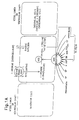
- the saturable carrier-mediated transporters include a sodium-dependent active transporter, system B ⁇ + and a sodium-dependent transporter, system y + (Fig. 2).
- the majority (80%) of LA delivered into most cells is through the y + transporter. Regulation of LA transport appears to involve cellular membrane potential.
- the NO donor dipropylenetriamine NONOate was purchased from Calbiochem (LaJolla, CA), L-[2,3,4,5- 3 H]-arginine monohydrochloride (specific activity 2.26 Tbq/mmol; 61.0 Ci/mmol) from Amersham (Arlington Heights, IL) and Ecoscint-A scintillation fluid from National Diagnostics (Atlanta, GA).
- DPTA dipropylenetriamine NONOate
- SNAP s-nitroso-acetyl-penicillamide
- SP NOS agonists substance P
- BK bradykinin
- Ach acetylcholine
- Bovine aortic endothelial cells (BAEC, passages 2-6) were maintained in 100 mm dishes using medium M-199 supplemented with 5% fetal bovine serum, 15% iron supplemented bovine calf serum and penicillin-streptomycin. Prior to experiments, cells were split 1:4, transferred into 24 well plates, and allowed to grow to confluency.
- BAEC were incubated in an uptake buffer (HEPES, 25 mM; CaCl 2 , 1.8 mM; KCl 5.4 mM, choline 140 mM; MgSO 4 , 0.8 mM and glucose, 5mM) containing 20nM [ 3 H]-LA for periods of 1, 2.5, 5, 15, 30 and 60 minutes.
- Uptake of LA was terminated by addition of ice cold buffer and cells were washed three times with 1 ml of buffer. After final washing, cells were lysed by adding 1 ml 0.5% sodium dodecyl sulfate in 0.1 N NaOH.
- BAEC were pre-incubated with NO agonists bradykinin (BK, ⁇ M), substance P (SP, 1 ⁇ M) and acetylcholine (Ach, 5 ⁇ M) or NO donors, S-nitroso-acetyl-penicillamine (SNAP, 200 ⁇ M; equivalent to 0.4 ⁇ M NO) and dipropylenetriamine NONOate (DPTA, 10-0.01 ⁇ M; equivalent to 20-0.02 ⁇ M NO) for 1, 2 or 4 hours.
- BK bradykinin
- SP substance P
- Ach acetylcholine
- DPTA dipropylenetriamine NONOate
- uptake buffer containing [ 3 H]-LA.
- Other cells that were not pre-incubated, but rather acutely exposed to treatments for 2, 15, 30 or 60 minutes, were incubated with uptake buffer containing both triatiated LA and treatments for the duration of acute periods. Uptake of LA was terminated and total cellular transport of LA determined as described above.
- BAEC Cellular superoxide anion formation in the presence of NOS agonists .
- the production of 0 2 •- by BAEC was determined by spectrophotometrically measuring the superoxide dismutase-inhibitable reduction of ferricytochrome C according to Pritchard et al., 1995.
- BAEC were plated in 50 mm dishes containing 10.5 x 20 mm fibronectin-coated Thermanox coverslips. After reaching confluency, cells were washed 3 times (3 ml) with Dulbecco's phosphate buffered saline (DPBS) and 2 coverslips were placed in a disposable plastic cuvette facing each other.
- DPBS Dulbecco's phosphate buffered saline
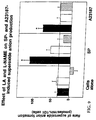
- DPBS (1.8 ml) was gently placed in cuvette in addition to ferricytochrome C (final concentration, 50 ⁇ mol/L). The cuvette was inverted to mix the reagents and the absorbance was recorded for 60 minutes using a spectophotometer at 550 nm wavelength for cells alone (basal O 2 •- production) and cells stimulated with SP (1 ⁇ M) or A-23187 (1 ⁇ M).
- experiments were performed in which LA (5 x 10 -4 M) and L-NANIE (5 x 10 -4 M) were added prior to treatments. Change in absorbance over time was determined and the amount of superoxide anion [ ⁇ 2100cm -1 •(mol/L) -1 ] generated was determined over time and reported as pmoles O 2 •- /min./10 6 cells.
- Data analysis Data are expressed as means ⁇ S.E.M. Comparisons of data between experimental groups with their appropriate controls were made using ANOVA or paired Student's t-test. Ap value of 0.05 or less was considered to represent a significant difference.
- Fig. 2 is a schematic representation of the dynamics of LA supply to NOS.
- LA levels are maintained primarily through the activity of the carrier-mediated Na + -independent transporter, y + , while the Na + -dependent transporter, B ⁇ + , and passive diffusion account for less than 15%.
- Concurrent transport of LA to NOS may control NO production.
- LA supply to NOS can be limiting due to compartmentalization within EC, arginase activity or utilization of LA by NOS.
- NO and superoxide anion reduce the activity of the y + transporter and also reduce LA available for NOS.
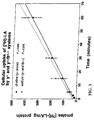
- Fig. 3 indicates the effect of B ⁇ + and y + transporters on cellular uptake of [ 3 H]-L-arginine.
- Bovine aortic endothelial cells were incubated with uptake buffer containing tritiated L-arginine and the amount of [ 3 H]-L-arginine delivered to cells over time was determined as described in "Methods.” Dashed line, uptake of [ 3 H]-LA by both B ⁇ + and y + transporters; solid line, uptake of [ 3 H]-LA by y + transporter.
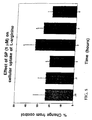
- FIG. 4 indicates the effect of bradykinin (BK, 1 ⁇ M) on y + transport of [ 3 H]-LA in bovine aortic endothelial cells.
- BK, 1 ⁇ M bradykinin
- bradykinin (BK) enhanced cellular transport of LA with maximum increase of 42% observed after 15 minute exposure and slightly less but still marked increases of 39 and 16% occurring after treatment for 30 and 60 minutes, respectively.
- Prolonged exposure of BAEC to BK enhanced cellular uptake of LA by 38% after 2 hour exposure.
- a similar magnitude of increase was also observed after 3 and 5 hour exposure, with increases in transport of 19 and 22%, respectively.
- Fig. 5 indicates the effect substance P (SP, 1 ⁇ M) on y + transport of [ 3 H]-LA in bovine aortic endothelial cells.
- Cells were exposed to SP and incubated with sodium-free uptake buffer containing tritiated LA and the amount of [ 3 H]-LA delivered to cells was determined as described in "Methods.” Data are presented as mean S.E.M; p ⁇ 0.05 from control values.
- substance P (SP) was also effective in augmenting cellular uptake of LA into cells. SP increased y + transport of LA into cells by 24% after only 15 minutes exposure. This elevated LA uptake was maintained for exposures of 30 and 60 minutes with 24 and 21% increases, respectively.
- Fig. 6 indicates the effect of acetylcholine (Ach, 5 ⁇ M) on y + transport of [ 3 H]-LA in bovine aortic endothelial cells.
- Cells were exposed to Ach and incubated with sodium-free uptake buffer containing tritiated LA and the amount of [ 3 H]-LA delivered to cells was determined as described in "Methods.” Data are presented as mean S.E.M; p ⁇ 0.05 from control values. Incubation with Ach increased LA transport over all time periods.
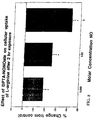
- Fig. 7 indicates the effect of s-nitroso-acetyl-penicillamin (SNAP, 200 ⁇ M; equivalent to 0.4 ⁇ M NO) on y + transport of [ 3 H]-LA in bovine aortic endothelial cells.
- SNAP s-nitroso-acetyl-penicillamin
- DPTA-NONOate In order to confirm whether the reduction in cellular uptake of [ 3 H]-LA was due to NO released from SNAP, experiments were performed using another NO donor, DPTA-NONOate. Unlike SNAP, which donates large amounts of NO over a short time period (t 1/2 ⁇ 10 minutes), the use of DPTA-NONOate allows for a slower (t 1/2 ⁇ 5 hours), more sustained release of NO that is constant over time.
- Fig. 8 indicates the effect of dipropylenetriamine NONOate (DPTA, 10-0.01 ⁇ M; equivalent to 20-0.02 ⁇ M NO) on y + transport of [ 3 H]-LA in bovine aortic endothelial cells.
- LA L-arginine
- L-NAME n- ⁇ -nitro-L-arginine methyl ester
- BAEC bovine aortic endothelial cells
- LA endothelial NOS
- eNOS endothelial NOS
- factors affecting the y + transporter system have the potential to limit the production of NO.
- eNOS will solely utilize O 2 to form O 2 •- that may contribute to the pathogenesis of disease.
- controlling LA supply and other factors affecting superoxide production would be beneficial in normal as well as pathological circumstances.
- the cellular LA transport system in BAEC is characterized here.
- the data presented herein confirms that the primary source of LA supply is through activity of the system y + transporter and that delivery of LA into cells occurs linearly over two hours.
- system B ⁇ + transport activity and passive diffusion contribute minimally to the delivery of LA into BAEC under basal conditions.
- Our experimental results were similar to those observed using human umbilical EC and porcine aortic EC. These experiments were important to perform in order to determine which transport mechanism should be studied.
- Hyperpolarization associated with stimulation of y + system is thought to occur by first increasing intracellular Ca ++ . This increase in Ca ++ -dependent potassium channels (K ca ) resulting in K+ efflux and hyperpolarization. Since BK, SP and Ach have also been shown to induce cellular hyperpolarization, these data suggest the increase in y + transporter activity observed occurred by a similar mechanism.
- LA transport with NOS agonist Another possibility to explain the lack of inhibition of LA transport with NOS agonist is the fact that upon stimulation with NOS, LA is converted to the intermediate NG-hydroxyl-L-arginine (1-HOArg) prior to forming L-citrulline and NO.
- L-HOArg is known to be an antioxidant and an inhibitor of arginase. Therefore, the L-HOArg intermediate may provide protection from oxidation by newly formed NO.
- the net amount of LA available for eNOS may increase and lead to a reduction in O 2 •- formation. Both of these actions should protect the system y + transporter from inactivation.
- the transport of LA into cells via y + transport system may be unfavorably altered with elevated levels of NO.
- High concentrations of NO could occur during circumstances in which NOS is constantly stimulated.
- Pathophysiological conditions associated with increased NOS activity include hypoxia, hyperglycemia and hypertensive states mediated by elevations in angiotensin II (high renin essential and renovascular hypertension).
- LA demand increased NOS activity
- LA supply decreased arginine uptake
- LA deficiency LA deficiency
- Increased O 2 •- production and NOS activity have also been shown to be associated with hyperglycemia.
- LA supply could immediately become limiting and may be the basis for endothelial dysfunction.
- this eNOS/y + transporter-caveolae complex may explain why endothelial dysfunction is quickly reversed with increasing extracellular LA.
- Gingko biloba has been reported in scientific journals to enhance blood circulation and to increase the supply of oxygen to the heart, brain and other body parts. This ability to enhance blood circulation and increase oxygen supplies is believed to make it useful for improving memory and relieving muscle pain. It also acts as an antioxidant, has anti-aging effects, reduces blood pressure, inhibits blood clotting, and is helpful for tinnitus, vertigo, hearing loss, impotence, and Raynod's Disease. Gingko biloba has even been shown to slow the early progression of Alzheimer's Disease in some individuals.
- Hawthorne extract is a nutraceutical that has been shown to dilate the coronary blood vessels, lower cholesterol levels, and restore heart muscle. It is also known to increase intracellular vitamin C levels. Hawthorne extract is therefore thought to be useful for anemia, cardiovascular and circulatory disorders, hypercholesterolemia and for enhancing immunity status.
- a third aspect of the present invention is the treatment, prevention, or amelioration of homocysteinemia with L-arginine alone.
- Hyperhomocysteinemia is associated with vascular EC dysfunction and increased risk for atherosclerosis and atherothrombosis. Free radical formation during homocyst(e)ine auto-oxidation has been implicated in its vascular toxicity.
- Long-term EC exposure to homocyst(e)ine limits nitric oxide synthase (NOS) activity, increasing EC vulnerability to oxidative injury (Stamler et al., 1993).
- NOS nitric oxide synthase
- DLH produced biphasic effects on LA transport over time.
- Initial increases in LA transport (6 hr) may be due to enhanced eNOS activity, since short-term DLH treatment has been found to induce a dose-dependent increase in NO production to NOS agonists (Upchurch et al., 1997).
- longer DLH exposure and exposure to the oxidation product LHT for 6 and 24 hr suppress LA transport function.
- This reduction in LA availability can exacerbate EC dysfunction by shifting NOS activity from NO production to superoxide formation.
- This aspect of the invention supports a method of treating hyperhomocysteinemia with L-arginine alone or in combination with other therapeutic agents.
Landscapes
- Health & Medical Sciences (AREA)
- Chemical & Material Sciences (AREA)
- Medicinal Chemistry (AREA)
- Pharmacology & Pharmacy (AREA)
- Epidemiology (AREA)
- Life Sciences & Earth Sciences (AREA)
- Animal Behavior & Ethology (AREA)
- General Health & Medical Sciences (AREA)
- Public Health (AREA)
- Veterinary Medicine (AREA)
- Medicines That Contain Protein Lipid Enzymes And Other Medicines (AREA)
- Acyclic And Carbocyclic Compounds In Medicinal Compositions (AREA)
Applications Claiming Priority (2)
| Application Number | Priority Date | Filing Date | Title |
|---|---|---|---|
| US11890399P | 1999-02-05 | 1999-02-05 | |
| EP00911701A EP1150669A4 (de) | 1999-02-05 | 2000-02-04 | Formulierungen auf l-argininbasis zur krankheitsbehandlung und deren verwendungsmethoden |
Related Parent Applications (1)
| Application Number | Title | Priority Date | Filing Date |
|---|---|---|---|
| EP00911701A Division EP1150669A4 (de) | 1999-02-05 | 2000-02-04 | Formulierungen auf l-argininbasis zur krankheitsbehandlung und deren verwendungsmethoden |
Publications (2)
| Publication Number | Publication Date |
|---|---|
| EP1671630A2 true EP1671630A2 (de) | 2006-06-21 |
| EP1671630A3 EP1671630A3 (de) | 2007-05-09 |
Family
ID=36353935
Family Applications (1)
| Application Number | Title | Priority Date | Filing Date |
|---|---|---|---|
| EP06007096A Ceased EP1671630A3 (de) | 1999-02-05 | 2000-02-04 | Formulierungen auf der Basis von L-Arginin zur Behandlung von Erkrankungen und Verfahren zu deren Verwendung |
Country Status (1)
| Country | Link |
|---|---|
| EP (1) | EP1671630A3 (de) |
Cited By (1)
| Publication number | Priority date | Publication date | Assignee | Title |
|---|---|---|---|---|
| CN112007163A (zh) * | 2019-08-06 | 2020-12-01 | 连云港金康和信药业有限公司 | 用于治疗非洲猪瘟的药物组合物及其用途 |
Family Cites Families (5)
| Publication number | Priority date | Publication date | Assignee | Title |
|---|---|---|---|---|
| NL99376C (de) * | 1957-06-24 | |||
| US5254331A (en) * | 1991-09-12 | 1993-10-19 | Chanel, Inc. | Skin cream composition |
| GB9214247D0 (en) * | 1992-07-04 | 1992-08-19 | Stephan Peter M | Composition for use as a food or food supplement |
| ES2224114T3 (es) * | 1995-06-01 | 2005-03-01 | N.V. Nutricia | Composicion clinica nutricional. |
| EP1021177A4 (de) * | 1997-02-04 | 2002-05-15 | John V Kosbab | Zusammensetzungen und verfahren zur verhütung und behandlung von vaskulär-degeneratieve krankheiten |
-
2000
- 2000-02-04 EP EP06007096A patent/EP1671630A3/de not_active Ceased
Cited By (2)
| Publication number | Priority date | Publication date | Assignee | Title |
|---|---|---|---|---|
| CN112007163A (zh) * | 2019-08-06 | 2020-12-01 | 连云港金康和信药业有限公司 | 用于治疗非洲猪瘟的药物组合物及其用途 |
| CN112007163B (zh) * | 2019-08-06 | 2023-07-28 | 连云港金康和信药业有限公司 | 用于治疗非洲猪瘟的药物组合物及其用途 |
Also Published As
| Publication number | Publication date |
|---|---|
| EP1671630A3 (de) | 2007-05-09 |
Similar Documents
| Publication | Publication Date | Title |
|---|---|---|
| US6465516B1 (en) | Method of stimulating nitric oxide synthase | |
| US5767160A (en) | Method and formulation of stimulating nitric oxide synthesis | |
| US7381731B2 (en) | Pharmaceutical composition comprising citrulline | |
| EP1139753B1 (de) | Formulierungen zur behandlung von krankheiten und verfahren unter deren verwendung | |
| CA2380072C (en) | Nicotine in therapeutic angiogenesis and vasculogenesis | |
| Settergren et al. | L-arginine and tetrahydrobiopterin protects against ischemia/reperfusion-induced endothelial dysfunction in patients with type 2 diabetes mellitus and coronary artery disease | |
| WO1996010910A9 (en) | Method and formulation of stimulating nitric oxide synthesis | |
| Boesgaard et al. | N-acetylcysteine inhibits angiotensin converting enzyme in vivo. | |
| WO2002017898A2 (en) | Compositions and methods for inducing vasorelaxation | |
| CA2361575A1 (en) | L-arginine based formulations for treating diseases and methods of using same | |
| US20030114515A1 (en) | Therapeutic mixture of HMG-COA reductase inhibitors | |
| Kiowski et al. | Effects of angiotensin converting enzyme inhibition on endothelial vasodilator function in primary human hypertension | |
| CA2388530A1 (en) | Therapeutic mixture of hmg-coa reductase inhibitors | |
| Thai et al. | AT1 receptor blockade improves vasorelaxation in heart failure by up-regulation of endothelial nitric oxide synthase via activation of the AT2 receptor | |
| EP4487698A1 (de) | Mikronährstoffzusammensetzung zur vorbeugung und umkehrung der proteinglykierung während oxidativem stress bei menschen | |
| JP6199579B2 (ja) | ミトコンドリア機能回復促進剤 | |
| US7989420B2 (en) | Smooth muscle relaxation | |
| KR100356374B1 (ko) | 안지오텐신 전환효소 억제제의 부작용으로 발생하는마른기침을 저해하기 위한 철분을 포함하는 기침 저해조성물 | |
| MXPA99009243A (en) | Method and formulation for treating vascular disease | |
| Chaturvedi et al. | O25. Arginine availability is critical to the innate immune response to Helicobacter pylori by regulation of iNOS translation | |
| Piatti et al. | L-Arginine in the Prevention and Treatment of Cardiovascular Disease: From Basic to Clinical Research Studies | |
| Bagi et al. | frontiers in REVIEW ARTICLE IMMUNOLOGY published: 26 September 2013 | |
| Pope et al. | O26. Loss of DDAH activity is involved in eNOS dysfunction following vascular injury | |
| Schneider et al. | Concentration-Dependent Relaxation of Isolated Human Venous Vessel Strips by Isosorbide Dinitrate and Isosorbide-5-Mononitrate | |
| JP2018123068A (ja) | NOおよびNO−pathway刺激によるエリスロポエチン受容体を標的とした腎性貧血に対する新規治療薬 |
Legal Events
| Date | Code | Title | Description |
|---|---|---|---|
| PUAI | Public reference made under article 153(3) epc to a published international application that has entered the european phase |
Free format text: ORIGINAL CODE: 0009012 |
|
| AC | Divisional application: reference to earlier application |
Ref document number: 1150669 Country of ref document: EP Kind code of ref document: P |
|
| AK | Designated contracting states |
Kind code of ref document: A2 Designated state(s): AT BE CH CY DE DK ES FI FR GB GR IE IT LI LU MC NL PT SE |
|
| RIN1 | Information on inventor provided before grant (corrected) |
Inventor name: KAESEMEYER, WAYNE H. |
|
| PUAL | Search report despatched |
Free format text: ORIGINAL CODE: 0009013 |
|
| AK | Designated contracting states |
Kind code of ref document: A3 Designated state(s): AT BE CH CY DE DK ES FI FR GB GR IE IT LI LU MC NL PT SE |
|
| 17P | Request for examination filed |
Effective date: 20071008 |
|
| 17Q | First examination report despatched |
Effective date: 20071122 |
|
| AKX | Designation fees paid |
Designated state(s): AT BE CH CY DE DK ES FI FR GB GR IE IT LI LU MC NL PT SE |
|
| STAA | Information on the status of an ep patent application or granted ep patent |
Free format text: STATUS: THE APPLICATION HAS BEEN REFUSED |
|
| 18R | Application refused |
Effective date: 20100228 |