EP1675603B9 - Use of probiotic bacteria in the treatment of infection - Google Patents
Use of probiotic bacteria in the treatment of infection Download PDFInfo
- Publication number
- EP1675603B9 EP1675603B9 EP04770417A EP04770417A EP1675603B9 EP 1675603 B9 EP1675603 B9 EP 1675603B9 EP 04770417 A EP04770417 A EP 04770417A EP 04770417 A EP04770417 A EP 04770417A EP 1675603 B9 EP1675603 B9 EP 1675603B9
- Authority
- EP
- European Patent Office
- Prior art keywords
- lactis
- treatment
- cow
- culture
- quarters
- Prior art date
- Legal status (The legal status is an assumption and is not a legal conclusion. Google has not performed a legal analysis and makes no representation as to the accuracy of the status listed.)
- Expired - Lifetime
Links
Images








Classifications
-
- A—HUMAN NECESSITIES
- A61—MEDICAL OR VETERINARY SCIENCE; HYGIENE
- A61K—PREPARATIONS FOR MEDICAL, DENTAL OR TOILETRY PURPOSES
- A61K35/00—Medicinal preparations containing materials or reaction products thereof with undetermined constitution
- A61K35/66—Microorganisms or materials therefrom
- A61K35/74—Bacteria
- A61K35/741—Probiotics
- A61K35/744—Lactic acid bacteria, e.g. enterococci, pediococci, lactococci, streptococci or leuconostocs
-
- A—HUMAN NECESSITIES
- A61—MEDICAL OR VETERINARY SCIENCE; HYGIENE
- A61P—SPECIFIC THERAPEUTIC ACTIVITY OF CHEMICAL COMPOUNDS OR MEDICINAL PREPARATIONS
- A61P13/00—Drugs for disorders of the urinary system
-
- A—HUMAN NECESSITIES
- A61—MEDICAL OR VETERINARY SCIENCE; HYGIENE
- A61P—SPECIFIC THERAPEUTIC ACTIVITY OF CHEMICAL COMPOUNDS OR MEDICINAL PREPARATIONS
- A61P15/00—Drugs for genital or sexual disorders; Contraceptives
- A61P15/14—Drugs for genital or sexual disorders; Contraceptives for lactation disorders, e.g. galactorrhoea
-
- A—HUMAN NECESSITIES
- A61—MEDICAL OR VETERINARY SCIENCE; HYGIENE
- A61P—SPECIFIC THERAPEUTIC ACTIVITY OF CHEMICAL COMPOUNDS OR MEDICINAL PREPARATIONS
- A61P17/00—Drugs for dermatological disorders
-
- A—HUMAN NECESSITIES
- A61—MEDICAL OR VETERINARY SCIENCE; HYGIENE
- A61P—SPECIFIC THERAPEUTIC ACTIVITY OF CHEMICAL COMPOUNDS OR MEDICINAL PREPARATIONS
- A61P17/00—Drugs for dermatological disorders
- A61P17/02—Drugs for dermatological disorders for treating wounds, ulcers, burns, scars, keloids, or the like
-
- A—HUMAN NECESSITIES
- A61—MEDICAL OR VETERINARY SCIENCE; HYGIENE
- A61P—SPECIFIC THERAPEUTIC ACTIVITY OF CHEMICAL COMPOUNDS OR MEDICINAL PREPARATIONS
- A61P31/00—Antiinfectives, i.e. antibiotics, antiseptics, chemotherapeutics
-
- A—HUMAN NECESSITIES
- A61—MEDICAL OR VETERINARY SCIENCE; HYGIENE
- A61P—SPECIFIC THERAPEUTIC ACTIVITY OF CHEMICAL COMPOUNDS OR MEDICINAL PREPARATIONS
- A61P43/00—Drugs for specific purposes, not provided for in groups A61P1/00-A61P41/00
Definitions
- the present invention relates to the use of live culture of non-pathogenic, probiotic bacteria or supernatants of such cultures in the manufacture of a composition the treatment of bacterial infections, which are mastitis infections.
- the invention as defined above relates to the use of live cultures of Lactococcus lactis or the supernatant from such cultures.
- This invention as defined above concerns the exploitation of food-grade "harmless" probiotic bacteria for the treatment of infectious diseases (or localised infections) in humans and animals.
- the treatment involves the application of a non-pathogenic lactic acid bacterium to the infected animal/human which results in relief in clinical symptoms of the infection/disease.
- probiotic therapy has mainly been exploited in the treatment of gastrointestinal problems. While initially based on hearsay and tradition, the peer-approved scientific evidence now supporting the protective role of probiotics and in particular the LAB lactobacilli, in the GI tract is immense. Multiple antimicrobial properties of probiotics have been suggested as potential protective factors in the human digestive system against microorganisms such as Escherichia coli, Helicobacter pylori, Salmonella and Listeria species (Alvarez-Olmos and Oberhelman, 2001). For instance, mice which were fed Lactobacillus acidophilus, Lb.
- Lb. casei against S. typhimurium, E. coli and Shigella sonnei has also been investigated in mice. Increased protection from oral challenge with the aforementioned pathogens was observed when mice were pre-fed Lb. casei. Additionally, increased IgA levels were observed, and probiotic-fed mice challenged with Shigella had increased anti- Shigella antibody titres in the serum and GI tract compared to the control group (Perdigon et al., 1990b; 1991).
- mice pre-fed Lb. casei were subjected to an aerosolised challenge of Pseudomonas aeruginosa (Alvarez et al., 2001).
- lactobacilli and streptococci has the added advantage that the cell wall of Gram-positive bacteria has been shown to act as an immune-response activator.
- Another major attraction of using lactic acid bacteria as therapeutic agents stems from their ability to produce bacteriocins, potent anti-microbial peptides (Ross et al., 1999). These peptides kill other microorganisms rapidly by destroying or permeating the microbial membrane and impairing the ability to carry out metabolic processes. Because of their mode of action, these peptides are unlikely to face the same antimicrobial resistance mechanisms that limit current antibiotic use.
- Nisin was the first identified bacteriocin derived from fermentation of a lactic acid bacterium, Lactococcus lactis. It is approved for use as a food preservative in the United States, and was awarded GRAS status in the U.S. Federal Register in 1988. It is also approved as a natural food preservative by more than 40 other countries as well as the World Health Organisation and the European Union. In addition to its use as a food additive to inhibit spoilage organisms and pathogens, several studies have investigated its use as a therapeutic agent, in the treatment of such diverse diseases as acne, human gastrointestinal infections and bovine mastitis (Blackburn et al., 1994; Sears et al., 1995). It is currently used as a component of a commercial teat-dip product (CONSEPT ® , Babson Bros.).
- Lacticin 3147 is a broad-host range bacteriocin also produced from a lactococcal strain, L. lactis DPC3147. It was first identified in an isolate obtained from an Irish kefir-like grain that had been used domestically for the production of buttermilk. It kills all Gram-positive bacteria tested to date, including high profile antibiotic resistant pathogens such as methicillin resistant staphylococci, vancomycin resistant enterococci, and penicillin resistant pneumococci (Galvin et al., 1999) in addition to food poisoning organisms such as Listeria monocytogenes and Clostridium botulinum (Ross et al., 1999).
- nisin Similar to nisin, it is a member of the family of bacteriocins termed lantibiotics. It is a two-component bacteriocin, with both components required for full activity. Its mode of action involves the formation of pores which, by damaging the membrane of sensitive cells, leak potassium and phosphate ions. Importantly, lacticin 3147 has advantages over nisin as a choice of therapeutic agent, including its effectiveness over a broad pH range (nisin is most effective at acid pH), which suggests additional possibilities in non-acid foods and in biomedical applications (Ross et al., 1999).
- Lacticin 3147 has already been exploited for a wide range of applications, including use as a powdered biopreservative (Morgan et al., 1999) and in the treatment of bovine mastitis (Ryan et al., 1999; Twomey et al., 2000).
- Nutritional competition is established as an important mechanism by which probiotics exert their effect. Suppressive factors such as bacteriocins and toxicity of end metabolic products have also been implicated (Alvarez-Olmos and Oberhelman, 2001; Cross, 2002).
- Mastitis is defined as inflammation of the udder and is indicated by increases in Somatic Cell Count (SCC).
- SCC Somatic Cell Count
- the SCC is an indication of the levels of neutrophils in the milk, which in turn is an indication of the presence of infection.
- a normal udder quarter is free from pathogenic bacteria, has very few neutrophils in the milk, and thus, a low SCC ( ⁇ 0.2 x 10 6 /ml SCC).
- a rise in SCC usually indicates the presence of an infection.
- the affected quarter When a cow has clinical mastitis, the affected quarter may have obvious signs of inflammation- heat, pain and swelling, and the cow may have an elevated body temperature.
- the SCC is raised above 0.2 x 10 6 /ml and pathogens may (specific clinical) or may not (non-specific clinical) be detectable.
- Quarters are also considered clinical, if the milk is visibly abnormal- e.g. clots present, even though there may be no clinical signs on palpation.
- Clinical mastitis can be classified on the basis of the appearance of the milk from affected quarters.
- a clinical or subclinical infection is referred to as "Chronic" if it has persisted over a long period and does not respond to antibiotic treatment. Clinical chronic cases are easily identified by the milker.
- Acute and chronic cases are treated routinely with antibiotics. There are cases, however, that do not respond to antibiotic treatment, or cases which respond briefly, and then re-occur, even following repeat administration of antibiotic. Repeated antibiotic administration results in milk loss, as milk must be withheld from the creamery until the milk is free of antibiotic residues.
- L. lactis is GRAS, and was isolated from a food source.
- the use of the live culture for the treatment of mastitis can be viewed as a prolonged assault on the pathogen - not only is bacteriocin produced in a natural and stable manner, but the culture should also compete with pathogens for colonisation of the teat.
- other antimicrobial substances such as organic acids, free fatty acids, ammonia, and hydrogen peroxide may also be produced as end products of metabolism.
- the infusion of L is a live culture of L. lactis 3147 in the treatment of bovine mastitis.
- lactis 3147 into the teat duct resulted in an immunomodulatory effect, characterised by a short-lived rise in SCC, with a concomitant reduction or elimination of pathogens; followed by a dramatic improvement in both the clinical outcome and the appearance and the quality of the milk.
- the probiotic bacterium is a non-pathogenic lactic acid bacterium.
- the lactic acid bacterium may be a Lactococcus strain.
- One suitable Lactococcus strain is Lactococcus lactis DPC3147.
- the invention also provides the use of the supernatant of a live culture of a non-pathogenic food-grade probiotic bacterium as defined above.
- the invention provides a pharmaceutical composition
- a pharmaceutical composition comprising a pharmaceutically effective amount of a non-pathogenic live culture of a food-grade probiotic bacterium or a pharmaceutically effective amount of the supernatant of a live culture of a non-pathogenic food-grade probiotic bacterium as defined in the claims together with a pharmaceutically acceptable carrier or diluent.
- the invention provides use of a live culture of a non-pathogenic food-grade probiotic bacterium or the supernatant of a live culture of a non-pathogenic food-grade probiotic bacterium as defined in the claims for stimulation of the immune system for these applications.
- Lactococcus lactis DPC3147 was isolated previously from a kefir grain. It was routinely propagated at 30°C in M17 broth (Difco Laboratories, Detroit, USA) supplemented with 0.5% glucose or lactose. This culture (3ml, ⁇ 10 9 cfu ml -1 ) was either used directly, or an infusion mixture was prepared in the following way: 2ml of an overnight culture of L. lactis DPC3147 were mixed with 3ml sterile water for injection (Antigen Pharmaceuticals) to produce a working culture concentration of approximately 10 9 cfu ml -1 . Control infusion mixtures included uninoculated broth, incubated overnight at 30°C and then diluted in a similar fashion to the culture.
- the diluted L. lactis DPC3147 cultures were infused directly into the teat sinus via the streak canal.
- the culture was inoculated to a depth of 17mm using a syringe with a blunted smoothed tip to prevent injury to the teat. Infusion of the mixture was usually performed after the evening milking. For the six chronic disease cases, a single application of 3 mls of undiluted culture was performed.
- infusion was performed twice at a 24h interval for seven quarters (Cow 1163RH, 14LH, 717RF, 1154LF, 1850RF, 1184RF, 1176LH), twice with a 72h interval for one quarter (1178LH) and four times for Cow 264LF, with 24h between and first and second infusions, 84h between the second and third infusion and 48h between the third and fourth infusions (Appendix 1-9). 5ml of the infusion mixture prepared as described above were used when infusing the quarters with clinical mastitis.
- L. lactis colonies were assessed against L. lactis HP, using the agar well diffusion assay described previously (Parente and Hill, 1992). Additionally, colonies isolated on GM17 or LM17 from milk were selected randomly, purified and assayed to confirm isolation of L. lactis DPC3147 from udder quarters.
- lactis DPC3147 a third quarter (LF) was infused with the contents of one intra-mammary antibiotic syringe containing 250mg of Neomycin Sulphate, 100mg of Procaine Penicillin, 10mg of Oxytetracycline Hydrochloride and 10mg of Prednisolone (Multimast L.C., Bimeda Ltd., Dublin) and one quarter (RF) was left untreated.
- Milk samples were taken just prior to intra-mammary injections (Day 0) and also at 24 and 48 hours following treatment. All samples from both trials were stored at room temperature following milking and were analysed within three hours of collection.
- Neutrophils and lymphocytes were identified using a combination of bovine-specific antibodies (BN15.6 and CD3 respectively) and precise gating techniques in flow cytometry. Superoxide anion production assays were performed to assess the functional activity of neutrophils. In the second trial, milk samples were also taken every 24h for up to 7 days to monitor the Somatic Cell Count (SCC).
- SCC Somatic Cell Count
- the dead culture was mixed with sterile water for injection in a ratio of 2:3, and this mixture was used for infusion as described above.
- sterile saline was also mixed with sterile water for injection and infused as a control.
- a fourth quarter was left untreated in each cow as a negative control. Milk samples were taken just prior to intra-mammary injections (Day 0) and on Days 1, 3, 6, 7 and 10 following treatment. All samples were then analysed for immunological activity as described above.
- Lactobacillus plantarum DPC4922 was grown anaerobically at 37°C in MRS medium.
- L. lactis DPC5329 a derivative of L. lactis DPC3147, which is incapable of producing bacteriocin (Bac-), was grown in an identical manner to L. lactis DPC3147 (as described above).
- Three cows (Cow 1163, Cow 1171 and Cow 1181) were selected to investigate the effects of infusing potential probiotic bacterial strains on the immune response of the mammary gland of cows with low somatic cell counts.
- Three cows were used to monitor the immune responses amongst different animals. Each quarter received a different treatment, with the treatments randomised amongst teats.
- Milk samples were taken just prior to intramammary injections (Day 0), to determine baseline levels of leukocyte subpopulations. Milk samples were also collected 1, 2, 3, 7 and 10 days following treatment. All samples were stored at room temperature following milking and were analysed within three hours of collection. Neutrophils and lymphocytes were identified using a combination of bovine-specific antibodies and flow cytometry.
- LM17 (200ml) was inoculated with 1%(v/v) L. lactis DPC3147 and incubated overnight at 30°C. The cells were then harvested by centrifugation at 4°C and 4500rpm in a Sorvall RC 3Cplus centrifuge. The supernatant was removed and the cells were resuspended in ⁇ 150ml sterile distilled water. The cells were then harvested again by centrifugation and the pellet was resuspended in ⁇ 100ml sterile distilled water. The resuspended cells were then freeze-dried to a powder preparation overnight using a Modulyo Freeze Dryer (Edwards).
- a sample of the resulting powder was then resuspended in sterile distilled water as a 10% solution and bacteria were enumerated by plating dilutions on LM17 agar and incubating overnight at 30°C. Appropriate amounts of powder were then added to 5ml of sterile water for injection such that the final concentration was equivalent to 10 9 cfu ml -1 approximately. Powder resuspended in this way was then used as an infusion mixture.
- infusion mixture containing resuspended freeze-dried L. lactis DPC3147 cells was prepared as described above. This mixture, and a standard infusion mixture (diluted broth culture) were then infused randomly into teats of three different cows. Three different cows were used to allow for variation between different cows in immunological response. One quarter in each cow was left untreated as a negative control. Milk samples were taken just prior to intramammary injections (Day 0), to determine baseline levels of leukocyte subpopulations. Milk samples were also collected at 24h and 48h following treatment. All samples were stored at room temperature following milking and were analysed within three hours of collection. Neutrophils and lymphocytes were identified as outlined above.
- lactis DPC3147 (285LH, 370RH, 400LH, 598LF, 1157LF, 1170LF, 1183LH, 1658RF, 1807LF, 1827RH, 1867LH, 1868LF) or Synulox (285RF, 370RF, 400RH, 598RF, 1157RF, 1157LH, 1170LH, 1183LF, 1807RH, 1807LH, 1867RH, 1868RF).
- the antibiotic was administered three times, at 12 hour intervals, as per the manufacturer's instructions.
- the L. lactis DPC3147 infusion mixture was administered twice, with a 24h interval between infusions. SCC and standard microbiological analysis were performed before and after infusion, and samples were also taken 7 days post-infusion and 12 days post-infusion.
- Infusions of the culture or the antibiotic were administered three times, with a 24h interval between each infusion.
- Milk samples were taken on Day 1 prior to treatment and on Day 7 and Day 14 post-treatment.
- Pathogens were enumerated and the SCC or CMT was determined for all samples as described previously.
- Quarters were also assessed at every milking during the 14-Day trial period to detect any adverse effects of treatment. Analysis of the Day 14 sample allowed quarters to be classified as a "cure" or "no cure”. Cured quarters were defined as having a "clinical cure” if the milk had no visible clots or flakes, and the SCC was ⁇ 9x10 6 cells ml -1 .
- lactis DPC3147 was followed by a sharp rise in SCC, and a concomitant reduction/elimination of the pathogen (staphylococci) ( Fig. 1A ).
- the infection persisted despite infusion of the lactococcal culture ( Fig. 1B ).
- the lactococcal culture did not appear to colonise the udder quarter ( Fig. 1B ), whereas in the "cured" quarters, the presence of L. lactis DPC 3147 was evident ( Fig. 1A ).
- the lactococcal culture did not survive long-term in any of the udder quarters. Somatic cell counts returned rapidly to, and remained at acceptable levels in all quarters.
- the effect of the probiotic L. lactis DPC3147 on the immune systems of cows was investigated by analysing leukocyte levels and phenotypes in milk.
- L. lactis the effect of L. lactis on the immune response of two cows was investigated. Both an infected animal and an infection-free cow were used.
- the results indicated that infusion of the L. lactis DPC3147, but not the infusion of sterile broth, resulted in a massive recruitment of PMN to the udder, indicating the L . lactis may be a specific trigger of the mammary immune response and elicits PMN migration and accumulation.
- Superoxide anion production assays were also performed and indicated that the newly recruited neutrophils had a higher respiratory burst capacity than resident neutrophils, thus providing the mammary gland with an effective mechanism for the elimination of mastitis pathogens.
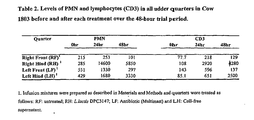
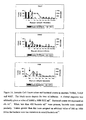
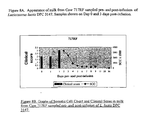
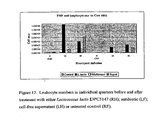
- Figure 11 presents neutrophil (PMN) and lymphocyte (CD3) proportions in milk samples before treatment (0 hour) and after treatment (24 and 48 hours). Actual values were calculated using the percentage of positive cells from live/dead flow cytometry analysis and results from the Bentley Somacount Somatic Cell Counter. PMN levels in the control quarter (RF) remained unchanged during the trial period. The probiotic-injected quarter (RH) experienced a dramatic increase in neutrophils over the first 24h period from 2.85x10 2 cells/ml before treatment to 1.46x10 4 cells/ml at 24h after treatment ( Fig. 11 and Table 2).
- the culture supernatant also induced a recruitment of PMN to the udder and this was a more sustained induction increasing over 24 hours and continuing to rise, up to 48 hours after treatment.
- the antibiotic Multimast generated a weaker transient recruitment of PMN to the udder.
- the functional activity of PMNs in the quarter milk samples was investigated for all samples before and after injection.
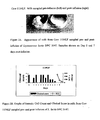
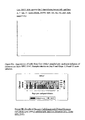
- the results of the superoxide anion production assays are presented in Figure 12A and 12B .
- the fold increase refers to the proportional increase in superoxide anion production by PMN, from a resting state (T0) to an activated state following activation by phorbol myristate acetate (PMA; incubation for 10 minutes, ⁇ T10 ⁇ ).
- PMA phorbol myristate acetate
- the most obvious activation occurred in the LH quarter which was treated with cell-free supernatant, with a massive activation of neutrophils at 24 hours.
- treatment with the L. lactis culture did not result in a huge fold activation of neutrophils ( Fig. 12A ).
- the Multimast treatment did not alter superoxide anion production in the treated quarter and the control quarter did not change significantly over the trial period ( Figure 12A and 12B ).
- the PMNs recruited in response to culture supernatant treatment also possessed an elevated superoxide anion production capacity, which appeared to peak over the first 24-hour period following treatment.
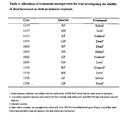
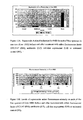
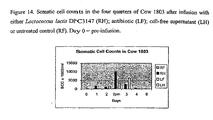
- infusion mixtures containing either live or dead cells were prepared and infused randomly into the teats of three cows as outlined in Table 4. Both live and dead cells generated a rise in SCC (data not shown), and, as can be seen from Fig. 14 , the dead cells elicited a weak influx of both PMN in each of the cows. An increase in lymphocyte numbers was also observed (data not shown). This recruitment of PMN and lymphocytes in the quarters treated with the dead culture, however, was insignificant compared to the influx in response to the live culture. Thus, it would appear that viable L. lactis, but not a killed culture, can specifically elicit recruitment of PMN and lymphocytes to the mammary gland.
- L. lactis DPC3147 itself, or if other bacterial strains could also exert this effect. It was decided, therefore, to examine the effect of infusing other food-grade, non-pathogenic bacteria into the udder of lactating cows.
- a bacterial strain, Lb. plantarum DPC4922 was selected on the basis of its evolutionary divergence from L. lactis (quite distantly related) as well as the fact that as it was originally isolated from a food source, it can, like L. lactis DPC3147, be regarded as a GRAS organism.
- a third strain, L. lactis 5329 (a Bac- derivative of L.
- lactis DPC3147 was also used because of its close similarity to L. lactis DPC3147.
- the infusion mixtures were prepared as described in the Materials and Methods and the mixtures were then infused randomly into the teats of three cows as outlined in Table 5.
- Figures 15 and 16 present neutrophil (PMN) proportions in milk samples from the three cows over the 10 day trial period. Actual values were calculated using the percentage of positive cells from live/dead flow cytometry analysis and the Somacount readings. The response in the three cows was variable but a similar trend was observed in each case. PMN levels in all the untreated quarters remained relatively unchanged over the trial period ( Figure 15). Treatment with Lb.
- lactis DPC3147 lactis DPC3147, and these quarters achieved a clinical cure rate of 76.9% and a bacteriological cure rate of 30.8%.
- 10 out of 13 cases treated with the antibiotic had a clinical cure (76.9%). Of these, 5 cases had a "bacteriological cure" (38.5%). Of the twelve quarters with C3/C4 mastitis that were treated with L. lactis DPC3147, 6 achieved a clinical cure (50%) and 3 were defined as having a bacteriological cure (25%).
Landscapes
- Health & Medical Sciences (AREA)
- Life Sciences & Earth Sciences (AREA)
- Pharmacology & Pharmacy (AREA)
- Veterinary Medicine (AREA)
- Public Health (AREA)
- Chemical & Material Sciences (AREA)
- General Health & Medical Sciences (AREA)
- Animal Behavior & Ethology (AREA)
- Medicinal Chemistry (AREA)
- Nuclear Medicine, Radiotherapy & Molecular Imaging (AREA)
- General Chemical & Material Sciences (AREA)
- Chemical Kinetics & Catalysis (AREA)
- Organic Chemistry (AREA)
- Engineering & Computer Science (AREA)
- Bioinformatics & Cheminformatics (AREA)
- Microbiology (AREA)
- Mycology (AREA)
- Epidemiology (AREA)
- Molecular Biology (AREA)
- Dermatology (AREA)
- Gynecology & Obstetrics (AREA)
- Reproductive Health (AREA)
- Urology & Nephrology (AREA)
- Endocrinology (AREA)
- Pregnancy & Childbirth (AREA)
- Communicable Diseases (AREA)
- Oncology (AREA)
- Medicines Containing Material From Animals Or Micro-Organisms (AREA)
Applications Claiming Priority (2)
| Application Number | Priority Date | Filing Date | Title |
|---|---|---|---|
| IE20030773A IE20030773A1 (en) | 2003-10-17 | 2003-10-17 | Use of probiotic bacteria in the treatment of infection |
| PCT/IE2004/000143 WO2005034970A1 (en) | 2003-10-17 | 2004-10-15 | Use of probiotic bacteria in the treatment of infection |
Publications (3)
| Publication Number | Publication Date |
|---|---|
| EP1675603A1 EP1675603A1 (en) | 2006-07-05 |
| EP1675603B1 EP1675603B1 (en) | 2009-08-19 |
| EP1675603B9 true EP1675603B9 (en) | 2010-02-17 |
Family
ID=34401258
Family Applications (1)
| Application Number | Title | Priority Date | Filing Date |
|---|---|---|---|
| EP04770417A Expired - Lifetime EP1675603B9 (en) | 2003-10-17 | 2004-10-15 | Use of probiotic bacteria in the treatment of infection |
Country Status (8)
| Country | Link |
|---|---|
| US (1) | US9597362B2 (da) |
| EP (1) | EP1675603B9 (da) |
| AT (1) | ATE439851T1 (da) |
| DE (1) | DE602004022689D1 (da) |
| DK (1) | DK1675603T3 (da) |
| ES (1) | ES2331650T3 (da) |
| IE (1) | IE20030773A1 (da) |
| WO (1) | WO2005034970A1 (da) |
Families Citing this family (18)
| Publication number | Priority date | Publication date | Assignee | Title |
|---|---|---|---|---|
| CA2824121C (en) * | 2004-02-02 | 2016-11-22 | Zoetis Broomhill Ip Limited | Method and device for treating a teat canal of an animal |
| WO2006076780A1 (en) * | 2004-12-17 | 2006-07-27 | Gielen Cornelis | Use of non-pathogenic bacterial strains in cleaning and milking an animal |
| EP2081606B1 (en) | 2006-11-17 | 2015-03-18 | SCA Hygiene Products AB | Sanitary article comprising a microbe-inhibiting composition |
| AU2006350772C1 (en) * | 2006-11-17 | 2013-05-23 | Essity Hygiene And Health Aktiebolag | Hygiene tissue comprising a microbe-inhibiting composition |
| EP1997499A1 (en) * | 2007-05-31 | 2008-12-03 | Puleva Biotech, S.A. | Mammalian milk microorganisms, compositions containing them and their use for the treatment of mastitis |
| US20090280099A1 (en) * | 2008-05-07 | 2009-11-12 | Bachman Stephen E | Nasopharyngeal inoculate of probiotics and prebiotics for treatment of respiratory infections |
| UA66800U (ru) * | 2011-02-08 | 2012-01-25 | Ольга Александровна Беляева | Комплексный сорбционно-пробиотический препарат линесил для лечения гнойных ран |
| RU2528862C1 (ru) * | 2013-04-19 | 2014-09-20 | Вячеслав Михайлович Абрамов | ШТАММ Lactobacillus fermentum, ОБЛАДАЮЩИЙ ШИРОКИМ СПЕКТРОМ АНТАГОНИСТИЧЕСКОЙ АКТИВНОСТИ И ПРОБИОТИЧЕСКИЙ КОНСОРЦИУМ ЛАКТОБАКТЕРИЙ ДЛЯ ИЗГОТОВЛЕНИЯ БАКТЕРИАЛЬНЫХ ПРЕПАРАТОВ |
| DE102013105666A1 (de) * | 2013-06-03 | 2014-12-04 | Hochschule Hannover | Probiotische Stämme, Zusammensetzungen enthaltend probiotische Stämme sowie pharmazeutische Mittel |
| ES2615808T3 (es) * | 2013-10-16 | 2017-06-08 | Casen Recordati, S.L. | Microorganismos y composiciones que los comprenden para su uso en el tratamiento o prevención de mastitis |
| EP3196644B1 (en) * | 2016-01-22 | 2019-11-27 | Mastatix, Ltd. | Method for diagnosing mastitis in a lactating animal |
| JP2019510037A (ja) | 2016-03-31 | 2019-04-11 | ゴジョ・インダストリーズ・インコーポレイテッド | 抗菌ペプチド刺激性洗浄組成物 |
| AU2017240069B2 (en) | 2016-03-31 | 2024-03-07 | Gojo Industries, Inc. | Sanitizer composition with probiotic/prebiotic active ingredient |
| AU2017240064B8 (en) | 2016-03-31 | 2021-11-11 | Gojo Industries, Inc. | Antimicrobial peptide stimulating sanitizing composition |
| JP6652648B2 (ja) * | 2016-09-15 | 2020-02-26 | キリンホールディングス株式会社 | 乳酸菌を有効成分として含む、皮膚における特定細菌の異常増殖に起因する皮膚の状態の悪化を防止又は改善するための組成物 |
| WO2018098152A1 (en) | 2016-11-23 | 2018-05-31 | Gojo Industries, Inc. | Sanitizer composition with probiotic/prebiotic active ingredient |
| US11883445B2 (en) | 2018-03-14 | 2024-01-30 | Emory University | Lactococcus bacteria and uses thereof |
| RU2709970C1 (ru) * | 2019-07-05 | 2019-12-23 | Илья Владимирович Кукес | Способ лечения и профилактики острых и хронических форм мастита у животных |
Family Cites Families (10)
| Publication number | Priority date | Publication date | Assignee | Title |
|---|---|---|---|---|
| US5804179A (en) * | 1985-12-31 | 1998-09-08 | Research Corporation Technologies, Inc. | Lactobacillus compositions and methods for treating urinary tract infections |
| US5733568A (en) | 1993-12-03 | 1998-03-31 | Lafor Laboratories Limited | Micro-encapsulated lactobacilli for medical applications |
| IES70514B2 (en) * | 1995-04-12 | 1996-12-11 | Teagasc Agric Food Dev Authori | Bacteriocins |
| DE69529982T2 (de) * | 1995-08-07 | 2003-09-04 | Societe Des Produits Nestle S.A., Vevey | Bakteriozin |
| US5965128A (en) * | 1997-08-13 | 1999-10-12 | University Of Georgia Research Foundation Inc. | Control of enterohemorrhagic E. coli 0157:H7 in cattle by probiotic bacteria and specific strains of E. coli |
| EP0940303B1 (en) * | 1997-09-19 | 2008-01-02 | Nissan Motor Company, Limited | Apparatus for protecting crew member of automobile when collision of side portion thereof occurs |
| AU2001284558B2 (en) * | 2000-08-08 | 2007-01-04 | Genesis Research And Development Corporation Limited | Lactobacillus rhamnosus polynucleotides, polypeptides and methods for using them |
| GB0124580D0 (en) * | 2001-10-12 | 2001-12-05 | Univ Reading | New composition |
| SE520670C2 (sv) * | 2001-12-18 | 2003-08-12 | Sca Hygiene Prod Ab | Andningsbart absorberande alster med konformade hålrum och metod för framställning |
| KR100467068B1 (ko) | 2002-03-06 | 2005-01-24 | 정명준 | 락토코쿠스 락티스 씨비티-19, 이를 이용한 항균 배양액분리 농축물의 제조 방법 및 이를 포함하는 화장료 조성물 |
-
2003
- 2003-10-17 IE IE20030773A patent/IE20030773A1/en not_active Application Discontinuation
-
2004
- 2004-10-15 US US10/576,010 patent/US9597362B2/en not_active Expired - Fee Related
- 2004-10-15 AT AT04770417T patent/ATE439851T1/de not_active IP Right Cessation
- 2004-10-15 WO PCT/IE2004/000143 patent/WO2005034970A1/en not_active Ceased
- 2004-10-15 EP EP04770417A patent/EP1675603B9/en not_active Expired - Lifetime
- 2004-10-15 DK DK04770417T patent/DK1675603T3/da active
- 2004-10-15 DE DE602004022689T patent/DE602004022689D1/de not_active Expired - Lifetime
- 2004-10-15 ES ES04770417T patent/ES2331650T3/es not_active Expired - Lifetime
Also Published As
| Publication number | Publication date |
|---|---|
| US9597362B2 (en) | 2017-03-21 |
| WO2005034970A1 (en) | 2005-04-21 |
| DE602004022689D1 (de) | 2009-10-01 |
| EP1675603A1 (en) | 2006-07-05 |
| US20080233091A1 (en) | 2008-09-25 |
| EP1675603B1 (en) | 2009-08-19 |
| IE20030773A1 (en) | 2005-04-20 |
| DK1675603T3 (da) | 2009-11-30 |
| ATE439851T1 (de) | 2009-09-15 |
| ES2331650T3 (es) | 2010-01-12 |
Similar Documents
| Publication | Publication Date | Title |
|---|---|---|
| EP1675603B1 (en) | Use of probiotic bacteria in the treatment of infection | |
| Crispie et al. | Intramammary infusion of a live culture for treatment of bovine mastitis: effect of live lactococci on the mammary immune response | |
| Pieterse et al. | Bacteriocins: exploring alternatives to antibiotics in mastitis treatment | |
| Poppi et al. | Effect of Lactobacillus sp. isolates supernatant on Escherichia coli O157: H7 enhances the role of organic acids production as a factor for pathogen control | |
| Jamaly et al. | Probiotic potential of Lactobacillus strains isolated from known popular traditional Moroccan dairy products. | |
| DK2349295T3 (da) | Farmaceutisk præparat omfattende en kombination af Streptococcus-stammer og Lactobacillus-stammer | |
| Wiest et al. | Effect of Lactobacillus-fermented diets on bacterial translocation and intestinal flora in experimental prehepatic portal hypertension | |
| Lim | Purification and characterization of two bacteriocins from Lactobacillus brevis BK11 and Enterococcus faecalis BK61 showing anti-Helicobacter pylori activity | |
| Kebary et al. | Improving viability of bifidobacteria by microentrapment and their effect on some pathogenic bacteria in stirred yoghurt | |
| Crispie et al. | The lantibiotic lacticin 3147 produced in a milk-based medium improves the efficacy of a bismuth-based teat seal in cattle deliberately infected with Staphylococcus aureus | |
| Nadi et al. | Lactoferrin's potential application in enhancing yoghurt's microbial and sensory qualities, with emphasis on the starter culture activity | |
| Zbar et al. | Saccharomyces boulardii as effective probiotic against Shiegella flexneri in mice | |
| Borges et al. | Characterization of a bacteriocin of Pediococcus pentosaceus SB83 and its potential for vaginal application | |
| Wagner et al. | Potential hazards of probiotic bacteria for immunodeficient patients | |
| RS20150852A1 (sr) | Nova probiotička starter kultura za humanu i animalnu primenu | |
| WO2020178733A1 (en) | Method of preservation of human milk and human milk preserved with this method | |
| Crispie et al. | Update on the development of a novel dry cow therapy using a bismuth-based intramammary teat seal in combination with the bacteriocin lacticin 3147 | |
| Al-Mathkhury et al. | Probiotic effect of lactobacilli on mice incisional wound infections | |
| Both et al. | Beneficial effects of probiotic microorganisms. A review. | |
| Shaaban et al. | Studies on the antibacterial effect of probiotics and prebiotics against Staphylococcus aureus and Pseudomonas aeruginosa | |
| Andalia et al. | Immunomodulators-A Review on Bovine Colostrum | |
| Detha et al. | Potential antimicrobial in whey and lactic acid bacteria in sumba Mare's milk. | |
| Rumjuankiat et al. | Study for probiotic properties of Lactobacillus salivarius KL-D4 isolated from duck intestine | |
| JP2003199531A (ja) | 発酵食品と腸内有用菌物質 | |
| A ELBARBARY | Using of Some Bifidobacteria Species as Biopreservative Cultures in Some Dairy Products |
Legal Events
| Date | Code | Title | Description |
|---|---|---|---|
| PUAI | Public reference made under article 153(3) epc to a published international application that has entered the european phase |
Free format text: ORIGINAL CODE: 0009012 |
|
| 17P | Request for examination filed |
Effective date: 20060511 |
|
| AK | Designated contracting states |
Kind code of ref document: A1 Designated state(s): AT BE BG CH CY CZ DE DK EE ES FI FR GB GR HU IE IT LI LU MC NL PL PT RO SE SI SK TR |
|
| 17Q | First examination report despatched |
Effective date: 20061227 |
|
| DAX | Request for extension of the european patent (deleted) | ||
| GRAP | Despatch of communication of intention to grant a patent |
Free format text: ORIGINAL CODE: EPIDOSNIGR1 |
|
| GRAS | Grant fee paid |
Free format text: ORIGINAL CODE: EPIDOSNIGR3 |
|
| GRAA | (expected) grant |
Free format text: ORIGINAL CODE: 0009210 |
|
| AK | Designated contracting states |
Kind code of ref document: B1 Designated state(s): AT BE BG CH CY CZ DE DK EE ES FI FR GB GR HU IE IT LI LU MC NL PL PT RO SE SI SK TR |
|
| REG | Reference to a national code |
Ref country code: GB Ref legal event code: FG4D |
|
| REG | Reference to a national code |
Ref country code: CH Ref legal event code: EP |
|
| REG | Reference to a national code |
Ref country code: IE Ref legal event code: FG4D |
|
| REF | Corresponds to: |
Ref document number: 602004022689 Country of ref document: DE Date of ref document: 20091001 Kind code of ref document: P |
|
| REG | Reference to a national code |
Ref country code: DK Ref legal event code: T3 |
|
| REG | Reference to a national code |
Ref country code: ES Ref legal event code: FG2A Ref document number: 2331650 Country of ref document: ES Kind code of ref document: T3 |
|
| PG25 | Lapsed in a contracting state [announced via postgrant information from national office to epo] |
Ref country code: FI Free format text: LAPSE BECAUSE OF FAILURE TO SUBMIT A TRANSLATION OF THE DESCRIPTION OR TO PAY THE FEE WITHIN THE PRESCRIBED TIME-LIMIT Effective date: 20090819 Ref country code: AT Free format text: LAPSE BECAUSE OF FAILURE TO SUBMIT A TRANSLATION OF THE DESCRIPTION OR TO PAY THE FEE WITHIN THE PRESCRIBED TIME-LIMIT Effective date: 20090819 Ref country code: SE Free format text: LAPSE BECAUSE OF FAILURE TO SUBMIT A TRANSLATION OF THE DESCRIPTION OR TO PAY THE FEE WITHIN THE PRESCRIBED TIME-LIMIT Effective date: 20090819 |
|
| PG25 | Lapsed in a contracting state [announced via postgrant information from national office to epo] |
Ref country code: SI Free format text: LAPSE BECAUSE OF FAILURE TO SUBMIT A TRANSLATION OF THE DESCRIPTION OR TO PAY THE FEE WITHIN THE PRESCRIBED TIME-LIMIT Effective date: 20090819 Ref country code: PL Free format text: LAPSE BECAUSE OF FAILURE TO SUBMIT A TRANSLATION OF THE DESCRIPTION OR TO PAY THE FEE WITHIN THE PRESCRIBED TIME-LIMIT Effective date: 20090819 |
|
| PG25 | Lapsed in a contracting state [announced via postgrant information from national office to epo] |
Ref country code: BG Free format text: LAPSE BECAUSE OF FAILURE TO SUBMIT A TRANSLATION OF THE DESCRIPTION OR TO PAY THE FEE WITHIN THE PRESCRIBED TIME-LIMIT Effective date: 20091119 Ref country code: PT Free format text: LAPSE BECAUSE OF FAILURE TO SUBMIT A TRANSLATION OF THE DESCRIPTION OR TO PAY THE FEE WITHIN THE PRESCRIBED TIME-LIMIT Effective date: 20091221 Ref country code: CY Free format text: LAPSE BECAUSE OF FAILURE TO SUBMIT A TRANSLATION OF THE DESCRIPTION OR TO PAY THE FEE WITHIN THE PRESCRIBED TIME-LIMIT Effective date: 20090819 |
|
| PG25 | Lapsed in a contracting state [announced via postgrant information from national office to epo] |
Ref country code: EE Free format text: LAPSE BECAUSE OF FAILURE TO SUBMIT A TRANSLATION OF THE DESCRIPTION OR TO PAY THE FEE WITHIN THE PRESCRIBED TIME-LIMIT Effective date: 20090819 Ref country code: CZ Free format text: LAPSE BECAUSE OF FAILURE TO SUBMIT A TRANSLATION OF THE DESCRIPTION OR TO PAY THE FEE WITHIN THE PRESCRIBED TIME-LIMIT Effective date: 20090819 Ref country code: RO Free format text: LAPSE BECAUSE OF FAILURE TO SUBMIT A TRANSLATION OF THE DESCRIPTION OR TO PAY THE FEE WITHIN THE PRESCRIBED TIME-LIMIT Effective date: 20090819 |
|
| PG25 | Lapsed in a contracting state [announced via postgrant information from national office to epo] |
Ref country code: SK Free format text: LAPSE BECAUSE OF FAILURE TO SUBMIT A TRANSLATION OF THE DESCRIPTION OR TO PAY THE FEE WITHIN THE PRESCRIBED TIME-LIMIT Effective date: 20090819 Ref country code: MC Free format text: LAPSE BECAUSE OF NON-PAYMENT OF DUE FEES Effective date: 20091031 |
|
| REG | Reference to a national code |
Ref country code: CH Ref legal event code: PL |
|
| PLBE | No opposition filed within time limit |
Free format text: ORIGINAL CODE: 0009261 |
|
| STAA | Information on the status of an ep patent application or granted ep patent |
Free format text: STATUS: NO OPPOSITION FILED WITHIN TIME LIMIT |
|
| PG25 | Lapsed in a contracting state [announced via postgrant information from national office to epo] |
Ref country code: BE Free format text: LAPSE BECAUSE OF FAILURE TO SUBMIT A TRANSLATION OF THE DESCRIPTION OR TO PAY THE FEE WITHIN THE PRESCRIBED TIME-LIMIT Effective date: 20090819 |
|
| 26N | No opposition filed |
Effective date: 20100520 |
|
| PG25 | Lapsed in a contracting state [announced via postgrant information from national office to epo] |
Ref country code: CH Free format text: LAPSE BECAUSE OF NON-PAYMENT OF DUE FEES Effective date: 20091031 Ref country code: GR Free format text: LAPSE BECAUSE OF FAILURE TO SUBMIT A TRANSLATION OF THE DESCRIPTION OR TO PAY THE FEE WITHIN THE PRESCRIBED TIME-LIMIT Effective date: 20091120 Ref country code: LI Free format text: LAPSE BECAUSE OF NON-PAYMENT OF DUE FEES Effective date: 20091031 |
|
| PG25 | Lapsed in a contracting state [announced via postgrant information from national office to epo] |
Ref country code: IT Free format text: LAPSE BECAUSE OF FAILURE TO SUBMIT A TRANSLATION OF THE DESCRIPTION OR TO PAY THE FEE WITHIN THE PRESCRIBED TIME-LIMIT Effective date: 20090819 |
|
| PG25 | Lapsed in a contracting state [announced via postgrant information from national office to epo] |
Ref country code: LU Free format text: LAPSE BECAUSE OF NON-PAYMENT OF DUE FEES Effective date: 20091015 |
|
| PG25 | Lapsed in a contracting state [announced via postgrant information from national office to epo] |
Ref country code: HU Free format text: LAPSE BECAUSE OF FAILURE TO SUBMIT A TRANSLATION OF THE DESCRIPTION OR TO PAY THE FEE WITHIN THE PRESCRIBED TIME-LIMIT Effective date: 20100220 |
|
| PG25 | Lapsed in a contracting state [announced via postgrant information from national office to epo] |
Ref country code: TR Free format text: LAPSE BECAUSE OF FAILURE TO SUBMIT A TRANSLATION OF THE DESCRIPTION OR TO PAY THE FEE WITHIN THE PRESCRIBED TIME-LIMIT Effective date: 20090819 |
|
| PGFP | Annual fee paid to national office [announced via postgrant information from national office to epo] |
Ref country code: ES Payment date: 20121018 Year of fee payment: 9 |
|
| PGFP | Annual fee paid to national office [announced via postgrant information from national office to epo] |
Ref country code: NL Payment date: 20121030 Year of fee payment: 9 |
|
| REG | Reference to a national code |
Ref country code: NL Ref legal event code: V1 Effective date: 20140501 |
|
| PG25 | Lapsed in a contracting state [announced via postgrant information from national office to epo] |
Ref country code: NL Free format text: LAPSE BECAUSE OF NON-PAYMENT OF DUE FEES Effective date: 20140501 |
|
| REG | Reference to a national code |
Ref country code: ES Ref legal event code: FD2A Effective date: 20150429 |
|
| PG25 | Lapsed in a contracting state [announced via postgrant information from national office to epo] |
Ref country code: ES Free format text: LAPSE BECAUSE OF NON-PAYMENT OF DUE FEES Effective date: 20131016 |
|
| REG | Reference to a national code |
Ref country code: FR Ref legal event code: PLFP Year of fee payment: 13 |
|
| REG | Reference to a national code |
Ref country code: FR Ref legal event code: PLFP Year of fee payment: 14 |
|
| PGFP | Annual fee paid to national office [announced via postgrant information from national office to epo] |
Ref country code: DK Payment date: 20180321 Year of fee payment: 14 Ref country code: GB Payment date: 20180329 Year of fee payment: 14 Ref country code: DE Payment date: 20180329 Year of fee payment: 14 |
|
| PGFP | Annual fee paid to national office [announced via postgrant information from national office to epo] |
Ref country code: FR Payment date: 20180329 Year of fee payment: 14 Ref country code: IE Payment date: 20180329 Year of fee payment: 14 |
|
| REG | Reference to a national code |
Ref country code: DE Ref legal event code: R119 Ref document number: 602004022689 Country of ref document: DE |
|
| REG | Reference to a national code |
Ref country code: DK Ref legal event code: EBP Effective date: 20181031 |
|
| GBPC | Gb: european patent ceased through non-payment of renewal fee |
Effective date: 20181015 |
|
| REG | Reference to a national code |
Ref country code: IE Ref legal event code: MM4A |
|
| PG25 | Lapsed in a contracting state [announced via postgrant information from national office to epo] |
Ref country code: DE Free format text: LAPSE BECAUSE OF NON-PAYMENT OF DUE FEES Effective date: 20190501 |
|
| PG25 | Lapsed in a contracting state [announced via postgrant information from national office to epo] |
Ref country code: FR Free format text: LAPSE BECAUSE OF NON-PAYMENT OF DUE FEES Effective date: 20181031 |
|
| PG25 | Lapsed in a contracting state [announced via postgrant information from national office to epo] |
Ref country code: IE Free format text: LAPSE BECAUSE OF NON-PAYMENT OF DUE FEES Effective date: 20181015 Ref country code: GB Free format text: LAPSE BECAUSE OF NON-PAYMENT OF DUE FEES Effective date: 20181015 Ref country code: DK Free format text: LAPSE BECAUSE OF NON-PAYMENT OF DUE FEES Effective date: 20181031 |