EP1676455B1 - Verfahren und System zur Handhabung von an mehrere Mobilknoten adressierten Nachrichten - Google Patents
Verfahren und System zur Handhabung von an mehrere Mobilknoten adressierten Nachrichten Download PDFInfo
- Publication number
- EP1676455B1 EP1676455B1 EP04795215A EP04795215A EP1676455B1 EP 1676455 B1 EP1676455 B1 EP 1676455B1 EP 04795215 A EP04795215 A EP 04795215A EP 04795215 A EP04795215 A EP 04795215A EP 1676455 B1 EP1676455 B1 EP 1676455B1
- Authority
- EP
- European Patent Office
- Prior art keywords
- message
- mobile nodes
- agent
- messages
- foreign
- Prior art date
- Legal status (The legal status is an assumption and is not a legal conclusion. Google has not performed a legal analysis and makes no representation as to the accuracy of the status listed.)
- Expired - Lifetime
Links
- 238000000034 method Methods 0.000 title claims description 17
- 238000004891 communication Methods 0.000 claims abstract description 56
- 238000005538 encapsulation Methods 0.000 claims description 5
- 230000004044 response Effects 0.000 claims description 4
- 238000012544 monitoring process Methods 0.000 claims 2
- 238000010586 diagram Methods 0.000 description 5
- 238000012545 processing Methods 0.000 description 4
- 230000009471 action Effects 0.000 description 2
- 238000012986 modification Methods 0.000 description 2
- 230000004048 modification Effects 0.000 description 2
- 230000009286 beneficial effect Effects 0.000 description 1
- 238000013461 design Methods 0.000 description 1
- 238000005516 engineering process Methods 0.000 description 1
- 230000007246 mechanism Effects 0.000 description 1
- 239000002699 waste material Substances 0.000 description 1
Images
Classifications
-
- H—ELECTRICITY
- H04—ELECTRIC COMMUNICATION TECHNIQUE
- H04L—TRANSMISSION OF DIGITAL INFORMATION, e.g. TELEGRAPHIC COMMUNICATION
- H04L12/00—Data switching networks
- H04L12/02—Details
- H04L12/16—Arrangements for providing special services to substations
- H04L12/18—Arrangements for providing special services to substations for broadcast or conference, e.g. multicast
-
- H—ELECTRICITY
- H04—ELECTRIC COMMUNICATION TECHNIQUE
- H04W—WIRELESS COMMUNICATION NETWORKS
- H04W4/00—Services specially adapted for wireless communication networks; Facilities therefor
- H04W4/06—Selective distribution of broadcast services, e.g. multimedia broadcast multicast service [MBMS]; Services to user groups; One-way selective calling services
-
- H—ELECTRICITY
- H04—ELECTRIC COMMUNICATION TECHNIQUE
- H04W—WIRELESS COMMUNICATION NETWORKS
- H04W60/00—Affiliation to network, e.g. registration; Terminating affiliation with the network, e.g. de-registration
-
- H—ELECTRICITY
- H04—ELECTRIC COMMUNICATION TECHNIQUE
- H04W—WIRELESS COMMUNICATION NETWORKS
- H04W76/00—Connection management
- H04W76/40—Connection management for selective distribution or broadcast
-
- H—ELECTRICITY
- H04—ELECTRIC COMMUNICATION TECHNIQUE
- H04W—WIRELESS COMMUNICATION NETWORKS
- H04W8/00—Network data management
- H04W8/02—Processing of mobility data, e.g. registration information at HLR [Home Location Register] or VLR [Visitor Location Register]; Transfer of mobility data, e.g. between HLR, VLR or external networks
- H04W8/08—Mobility data transfer
- H04W8/12—Mobility data transfer between location registers or mobility servers
-
- H—ELECTRICITY
- H04—ELECTRIC COMMUNICATION TECHNIQUE
- H04W—WIRELESS COMMUNICATION NETWORKS
- H04W76/00—Connection management
- H04W76/20—Manipulation of established connections
-
- H—ELECTRICITY
- H04—ELECTRIC COMMUNICATION TECHNIQUE
- H04W—WIRELESS COMMUNICATION NETWORKS
- H04W80/00—Wireless network protocols or protocol adaptations to wireless operation
- H04W80/04—Network layer protocols, e.g. mobile IP [Internet Protocol]
-
- H—ELECTRICITY
- H04—ELECTRIC COMMUNICATION TECHNIQUE
- H04W—WIRELESS COMMUNICATION NETWORKS
- H04W92/00—Interfaces specially adapted for wireless communication networks
- H04W92/16—Interfaces between hierarchically similar devices
- H04W92/24—Interfaces between hierarchically similar devices between backbone network devices
Definitions
- This invention relates in general to wireless communication systems, and more specifically to a method and system for handling messages addressed to multiple mobile nodes.
- IP Internet Protocol
- a home agent i.e., software that acts on behalf of mobile nodes assigned to the home agent to facilitate the communication of messages to and from the mobile nodes
- receives a Broadcast or Multicast packet it tunnels the packet down each and every unicast tunnel for all the mobile nodes that it is serving.
- This solution works well when there are not many mobile nodes, or when the mobile nodes are mostly in their home subnet, but when the number of mobile nodes increases and some are in foreign subnets served by foreign agents, this solution becomes clearly inefficient and causes an unnecessary waste of the network bandwidth.
- the foreign agent will receive multiple copies of the Broadcast or Multicast packet over multiple unicast tunnels and will send multiple copies out on its subnet to the mobile nodes.
- the mobile nodes will thus end up receiving multiple copies of the same packet, and will need to deal with the copies.
- An example can be found on US patent application US 2002/0026482 A1 . This is again inefficient use of the network bandwidth and of the processing resources of the mobile nodes.
- the method and system in some embodiments can reduce the network bandwidth and processing resources required to handle such messages.
- the present disclosure concerns wireless communications systems that utilize Internet Protocol (IP) to provide service for mobile nodes or more specifically for users thereof operating therein. More particularly, various inventive concepts and principles embodied as a method and system for specially handling messages addressed to multiple mobile nodes for use in equipment with such communications systems will be discussed and disclosed.
- IP Internet Protocol
- inventive concepts and principles embodied as a method and system for specially handling messages addressed to multiple mobile nodes for use in equipment with such communications systems will be discussed and disclosed.
- the communications systems of particular interest are those being deployed and developed such as CDMA (Code Division Multiple Access), W-CDMA (Wideband-CDMA), CDMA2000, 2.5G (Generation), 3G, UMTS (Universal Mobile Telecommunications Services), OFDM (orthogonal frequency division multiplexing), IDENTM systems and evolutions thereof that utilize mobile IP or an equivalent, although the concepts and principles have application in other systems and devices.
- the invention is carried out by the method of claim 1, the system of claim 9 and the software program of claim 15.
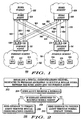
- an electrical block diagram of an exemplary wireless communication system 100 includes first and second home agents 104, 108 coupled to first and second home subnets 102, 106 providing wireless communications.
- the system 100 further comprises first and second foreign agents 110, 114 coupled to first and second foreign subnets 112, 116 providing wireless communications.
- the first and second home subnets 102, 106 and the first and second foreign subnets 112, 116 preferably are similar to the Wireless Local Area Network (WLAN) products, using protocols such as IEEE 802.11 that are available from various manufacturers.
- WLAN Wireless Local Area Network
- the first and second home agents 104, 108 preferably utilize well-known unicast tunnels 160-170 for sending messages directly addressed to one of the mobile nodes 121-126 assigned to the first and second home agents 104, 108 and visiting the first and second foreign subnets 112,116.
- the first and second foreign agents 110, 114 each preferably open two separate ports 130, 132 and 134, 136, where they will receive all Broadcast and Multicast traffic.
- the first and second home agents 104, 108 each then establish two special communications channels 140-154 between themselves and the ports 130-136.
- the first and second home agents 104, 108 will differentiate the traffic depending on the destination address, and if the destination address is a Broadcast address, e.g., 255.255.255.255, they will send the packet to the Broadcast ports 130, 134 of the foreign agents 110, 114.
- the destination address is a Multicast address, e.g., 224.2.127.254
- the first and second home agents 104, 108 will send the packet to the Multicast ports 132, 136.
- IP-in-IP encapsulation to tunnel all our IP traffic.
- the first and second foreign agents 110, 114 would then establish two separate IP-in-IP tunnels, one for Broadcast and the second for Multicast with the first and second home agents 104, 108.
- the broadcast and multicast packets are encapsulated inside another IP packet.
- the destination address of the encapsulating IP packet will contain the IP address of the receiving foreign agent.
- the destination address of encapsulated IP packet will contain the broadcast or multicast address.
- GRE Generic Routing Encapsulation
- MN 121, MN 122 and MN 124 are served by the first home agent 104, and that MN 123, MN 125 and MN 126 are served by the second home agent 108. Also let us assume that MN 121-MN 123 are under the coverage of the first foreign agent 110 and MN 124-MN 126 are under the coverage of the second foreign agent 116.
- the first home agent 104 receives a Broadcast packet it needs to tunnel this packet to the first foreign agent 110 (for MN 121 and MN 122), and to the second foreign agent 114 (for MN 124). If the first home agent 104 were only using unicast tunnels (as in the prior art), it would need to send the Broadcast packet down the two unicast tunnels 160, 162 to MN 121 and MN 122 on the first foreign agent 110 and the unicast tunnel 164 to MN 124 on the second foreign agent 114. But with the use of the Broadcast channel in accordance with the present invention, it only needs to send one copy each to the first and second foreign agents 110, 114, which would then send that as Broadcast packets on their subnets 112, 116. The same principles and concepts apply for Multicast. The advantages are magnified substantially when supporting, for example, thousands of mobile nodes across hundreds of foreign agents.
- a single special communications channel can be established instead to send both Broadcast messages and Multicast messages from the home agent to the foreign agent.
- the foreign agent can monitor Multicast Join messages sent from some of the plurality of mobile nodes; and then send Multicast traffic only to ones of the plurality of mobile nodes that have sent one of the Multicast Join messages.
- the home agent can monitor Multicast Join messages sent from some of the plurality of mobile nodes, and can send Multicast traffic only to ones of the plurality of foreign agents that serve a mobile node that has sent one of the Multicast Join messages.
- some embodiments of the foreign agent negotiate with the home agent to determine whether the home agent is able to support the special communications channel.
- the foreign agent appends an extension, e.g., a few extra bytes containing a special data sequence not used in the legacy systems, to the Registration message to create an appended Registration message, the extension advertising support for the special communications channel.
- the foreign agent then forwards the appended Registration message to the home agent.
- the home agent in accordance with the present invention responds to the foreign agent with an indication, e.g., the special data sequence, that the home agent supports the special communications channel.
- the home and foreign agents can then proceed to establish one or more of the special communications channels 140-154 for handling the Broadcast/Multicast traffic.
- the home agent when the home agent is a legacy device that cannot support the special communications channel, the home agent will not understand the extension and thus will not respond with the indication that it supports the special communications channel.
- a flow diagram 200 depicting operation of the exemplary wireless communication system 100 begins with establishing 202 a special communications channel, dedicated to messages addressed to multiple mobile nodes, between a home agent and a foreign agent. Later, the home agent receives 204 a message for one of its mobile nodes visiting a foreign subnet. In response, the home agent detects 206 whether the message is addressed to multiple mobile nodes. If so, the home agent sends 208 the message to the foreign agent through the special communications channel. If not, the home agent sends 210 the message to the foreign agent through a standard unicast tunnel. Note that the order of events is not fixed here, as the message may be received and then the special communications channel can be established, for example.
- the wireless communication system 100 can take the form of a software program comprising executable instructions for specially handling messages addressed to multiple mobile nodes in the wireless communication system 100.
- the software program when executed in the home agent or in the foreign agent, programs the home agent or the foreign agent to operate in accordance with the present invention, as disclosed herein above.
- the present invention provides a method and system for specially handling messages addressed to multiple mobile nodes.
- the method and apparatus advantageously reduces the network bandwidth and processing resources required to handle such messages.
Landscapes
- Engineering & Computer Science (AREA)
- Computer Networks & Wireless Communication (AREA)
- Signal Processing (AREA)
- Databases & Information Systems (AREA)
- Multimedia (AREA)
- Mobile Radio Communication Systems (AREA)
Claims (15)
- Verfahren zum Abwickeln speziell von Nachrichten, die an vielfache Mobilknoten in einem Drahtloskommunikationssystem adressiert sind, umfassend einen Home-Agent (104,108), welcher einem Heimatsubnetz dient, und einen Foreign-Agent (102,106), welcher einem Fremdsubnetz (112,116) dient, wobei der Home-Agent mit dem Foreign-Agent vermittels einer Vielzahl an Unicast-Tunneln kommuniziert, welche einer Vielzahl an Mobilknoten entsprechen, denen der Foreign-Agent (160,162,168,170) dient, gekennzeichnet durch:Einrichten von mindestens einem speziellen Kommunikationskanal, getrennt von den Unicast-Tunneln zwischen dem Home-Agent und dem Foreign-Agent, wobei der spezielle Kommunikationskanal für Nachrichten bestimmt ist, die an vielfache Mobilknoten (140-154) adressiert sind;Feststellen, ob eine von dem Home-Agent empfangene Nachricht an vielfache Mobilknoten adressiert ist; undsofern die Nachricht an vielfache Mobilknoten adressiert ist, Senden der Nachricht an den Foreign-Agent durch den speziellen Kommunikationskanal (140-154).
- Verfahren nach Anspruch 1,
wobei die an vielfache Mobilknoten adressierten Nachrichten Broadcast-Nachrichten und Multicast-Nachrichten einschließen können, und
wobei das Feststellen, ob die von dem Home-Agent empfangene Nachricht an vielfache Mobilknoten adressiert ist, das Feststellen, ob die Nachricht entweder als eine Broadcast-Nachricht oder als eine Multicast-Nachricht adressiert ist, umfasst. - Verfahren nach Anspruch 1,
wobei das Einrichten des speziellen Kommunikationskanals das Einrichten eines ersten Kanals für Broadcast-Nachrichten und eines zweiten Kanals für Multicast-Nachrichten umfasst, und
wobei das Senden der Nachricht an den Foreign-Agent das Senden einer Broadcast-Nachricht vermittels des ersten Kanals und das Senden einer Multicast-Nachricht vermittels des zweiten Kanals umfasst. - Verfahren nach Anspruch 1,
wobei das Einrichten des speziellen Kommunikationskanals das Einrichten eines einzigen Kanals zum Senden sowohl von Broadcast-Nachrichten als auch Multicast-Nachrichten umfasst, und wobei das Senden der Nachricht an den Foreign-Agent das Senden der Nachricht durch den einzigen Kanal umfasst, sofern es sich bei der Nachricht entweder um eine Broadcast-Nachricht oder um eine Multicast-Nachricht handelt. - Verfahren nach Anspruch 1, wobei das Einrichten des speziellen Kommunikationskanals das Öffnen eines IP-in-IP-Tunnels zwischen dem Foreign-Agent und dem Home-Agent zum Empfangen der an vielfache Mobilknoten adressierten Nachrichten, das Öffnen eines minimalen Kapselungstunnels zwischen dem Foreign-Agent und dem Home-Agent zum Empfangen der an vielfache Mobilknoten adressierten Nachrichten, und das Öffnen eines Generic-Routing-Encapsulation-, GRE, -Tunnels zwischen dem Foreign-Agent und dem Home-Agent zum Empfangen der an die vielfachen Mobilknoten adressierten Nachrichten umfasst.
- Verfahren nach Anspruch 1,
wobei das Drahtloskommunikationssystem eine Vielzahl an Foreign-Agents umfasst, die an den Home-Agent gekoppelt sind, und
wobei das Verfahren ferner das Überwachen, durch den Home-Agent, von Multicast-Join-Nachrichten, die von irgendwelchen aus der Vielzahl an Mobilknoten gesendet wurden, umfasst, und
wobei das Senden der Nachricht an den Foreign-Agent das Senden von Multicast-Verkehr nur an diejenigen aus der Vielzahl an Foreign-Agents, die einem Mobilknoten dienen, welcher eine der Multicast-Join-Nachrichten gesendet hat, umfasst. - Verfahren nach Anspruch 1, ferner umfassend in dem Foreign-Agent:Überwachen von Multicast-Join-Nachrichten, die von irgendwelchen aus der Vielzahl an Mobilknoten gesendet wurden; undSenden von Multicast-Verkehr nur an diejenigen aus der Vielzahl an Mobilknoten, die eine der Multicast-Join-Nachrichten gesendet haben.
- Verfahren nach Anspruch 1, wobei das Einrichten des speziellen Kommunikationskanals Folgendes umfasst:
Senden einer Registrierungsnachricht von einem aus der Vielzahl an Mobilknoten an den Foreign-Agent;
Anhängen, durch den Foreign-Agent als Antwort auf die Registrierungsnachricht, einer Erweiterung zur Registrierungsnachricht, um eine angehängte Registrierungsnachricht zu erzeugen, wobei die Erweiterung ankündigt, dass der spezielle Kommunikationskanal unterstützt wird; und
Weiterleiten der angehängten Registrierungsnachricht von dem Foreign-Agent an den Home-Agent. - Drahtloskommunikationssystem, geeignet zur Abwicklung von Nachrichten, die an vielfache Mobilknoten adressiert sind, wobei das Drahtloskommunikationssystem Folgendes umfasst:einen Homo-Agent (104,108) zum Kommunizieren mit einem Foreign-Agent (110,114) vermittels einer Vielzahl an Unicast-Tunneln, die einer Vielzahl an Mobilknoten entsprechen, denen der Foreign-Agent (160,162,168,170) dient, wobei das System dadurch gekennzeichnet ist, dass der Home-Agent angeordnet und programmiert ist zum:Einrichten von mindestens einem speziellen Kommunikationskanal (140-154) zwischen dem Home-Agent und dem Foreign-Agent, wobei der spezielle Kommunikationskanal für Nachrichten, die an vielfache Mobilknoten adressiert sind, bestimmt ist, und wobei der spezielle Kommunikationskanal von den Unicast-Tunneln getrennt ist;Feststellen, ob eine von dem Home-Agent empfangene Nachricht an vielfache Mobilknoten adressiert ist; und,sofern die Nachricht an vielfache Mobilknoten adressiert ist, Senden der Nachricht vermittels des speziellen Kommunikationskanals an den Foreign-Agent.
- Drahtloskommunikationssystem nach Anspruch 9, wobei der Home-Agent ferner angeordnet und programmiert ist zum:Einrichten eines ersten Kanals für Broadcast-Nachrichten und eines zweiten Kanals für Multicast-Nachrichten, undSenden einer Broadcast-Nachricht durch den ersten Kanal und einer Multicast-Nachricht durch den zweiten Kanal.
- Drahtloskommunikationssystem nach Anspruch 9, wobei der Home-Agent ferner angeordnet und programmiert ist zum:Einrichten eines einzigen Kanals sowohl zum Senden von Broadcast-Nachrichten als auch Multicast-Nachrichten, undSenden der von dem Home-Agent empfangenen Nachricht vermittels des einzigen Kanals, sofern es sich bei der Nachricht entweder um eine Broadcast-Nachricht oder um eine Multicast-Nachricht handelt.
- Drahtloskommunikationssystem nach Anspruch 9,
ferner umfassend eine Vielzahl an Foreign-Agents, die an den Home-Agent gekoppelt sind, und
wobei der Home-Agent ferner angeordnet und programmiert ist zum:Überwachen von Multicast-Join-Nachrichten, die von irgendwelchen aus der Vielzahl an Mobilknoten gesendet wurden, undSenden von Multicast-Verkehr nur an diejenigen aus der Vielzahl an Foreign-Agents, die einem Mobilknoten dienen, welcher eine der Multicast-Join-Nachrichten gesendet hat. - Drahtloskommunikationssystem nach Anspruch 9, ferner umfassend den Foreign-Agent, wobei der Foreign-Agent ferner angeordnet und programmiert ist zum:Überwachen von Multicast-Join-Nachrichten, die von irgendwelchen aus der Vielzahl an Mobilknoten gesendet wurden; undSenden von Multicast-Verkehr nur an diejenigen aus der Vielzahl an Mobilknoten, die eine der Multicast-Join-Nachrichten gesendet haben.
- Drahtloskommunikationssystem nach Anspruch 9, ferner umfassend den Foreign-Agent, wobei der Foreign-Agent ferner angeordnet und programmiert ist zum:Empfangen einer Registrierungsnachricht von einem aus der Vielzahl an Mobilknoten;Anhängen, als Antwort auf die Registrierungsnachricht, einer Erweiterung zur Registrierungsnachricht zum Erzeugen einer angehängten Registrierungsnachricht, wobei die Erweiterung die Unterstützung für den speziellen Kommunikationskanals ankündigt; undWeiterleiten der angehängten Registrierungsnachricht an den Home-Agent.
- Softwareprogramm, umfassend ausführbare Anweisungen speziell zum Abwickeln von Nachrichten, die an vielfache Mobilknoten in einem Drahtloskommunikationssystem adressiert sind, einschließend einen Home-Agent (104,108), der einem Heimatsubnetz (102,106) dient, und einen Foreign-Agent (110,114), der einem Fremdsubnetz (112,116) dient, wobei der Home-Agent mit dem Foreign-Agent vermittels einer Vielzahl an Unicast-Tunneln kommuniziert, die einer Vielzahl an Mobilknoten entsprechen, denen der Foreign-Agent (160,162,168,170) dient,
dadurch gekennzeichnet, dass
das Softwareprogramm, sofern es in dem Home-Agent ausgeführt wird, den Home-Agent programmiert zum:Einrichten eines speziellen Kommunikationskanals (140-154) zwischen dem Home-Agent und dem Foreign-Agent, wobei der spezielle Kommunikationskanal für Nachrichten bestimmt ist, die an vielfache Mobilknoten adressiert sind, wobei der spezielle xommunikationskanal von dem Unicast-Tunnel getrennt ist;Feststellen, ob eine von dem Home-Agent empfangene Nachricht an vielfache Mobilknoten adressiert ist; und,sofern die Nachricht an vielfache Mobilknoten adressiert ist, Senden der Nachricht vermittels des speziellen Kommunikationskanals an den Foreign-Agent.
Applications Claiming Priority (2)
| Application Number | Priority Date | Filing Date | Title |
|---|---|---|---|
| US10/687,398 US6999774B2 (en) | 2003-10-15 | 2003-10-15 | Method and system for handling messages addressed to multiple mobile nodes |
| PCT/US2004/034023 WO2005039206A1 (en) | 2003-10-15 | 2004-10-14 | Method and system for handling messages addressed to multiple mobile nodes |
Publications (3)
| Publication Number | Publication Date |
|---|---|
| EP1676455A1 EP1676455A1 (de) | 2006-07-05 |
| EP1676455A4 EP1676455A4 (de) | 2008-11-26 |
| EP1676455B1 true EP1676455B1 (de) | 2009-07-08 |
Family
ID=34465540
Family Applications (1)
| Application Number | Title | Priority Date | Filing Date |
|---|---|---|---|
| EP04795215A Expired - Lifetime EP1676455B1 (de) | 2003-10-15 | 2004-10-14 | Verfahren und System zur Handhabung von an mehrere Mobilknoten adressierten Nachrichten |
Country Status (7)
| Country | Link |
|---|---|
| US (1) | US6999774B2 (de) |
| EP (1) | EP1676455B1 (de) |
| KR (1) | KR100740450B1 (de) |
| CN (1) | CN100556159C (de) |
| AT (1) | ATE436160T1 (de) |
| DE (1) | DE602004021953D1 (de) |
| WO (1) | WO2005039206A1 (de) |
Families Citing this family (10)
| Publication number | Priority date | Publication date | Assignee | Title |
|---|---|---|---|---|
| US20040264402A9 (en) * | 1995-06-01 | 2004-12-30 | Padcom. Inc. | Port routing functionality |
| US6418324B1 (en) * | 1995-06-01 | 2002-07-09 | Padcom, Incorporated | Apparatus and method for transparent wireless communication between a remote device and host system |
| EP1334587A1 (de) * | 2000-08-31 | 2003-08-13 | Padcom Inc. | Verfahren und vorrichtung zum routen von daten über mehrere drahtlose netzwerke |
| US20040170181A1 (en) * | 2003-02-27 | 2004-09-02 | Padcom, Inc. | Prioritized alternate port routing |
| US20060083240A1 (en) * | 2004-10-19 | 2006-04-20 | Padcom, Inc. | Broadcasting data over multiple dissimilar wireless networks |
| US7660582B2 (en) * | 2005-01-13 | 2010-02-09 | Utstarcom, Inc. | Method and apparatus to facilitate broadcast packet handling |
| JP4993202B2 (ja) * | 2007-12-10 | 2012-08-08 | 横河電機株式会社 | フィールドネットワークシステム |
| US8311014B2 (en) * | 2009-11-06 | 2012-11-13 | Telefonaktiebolaget L M Ericsson (Publ) | Virtual care-of address for mobile IP (internet protocol) |
| US9215128B2 (en) | 2013-03-14 | 2015-12-15 | International Business Machines Corporation | Port membership table partitioning |
| US12096511B2 (en) * | 2021-11-01 | 2024-09-17 | Hewlett Packard Enterprise Development Lp | Service discovery for wired hosts |
Family Cites Families (12)
| Publication number | Priority date | Publication date | Assignee | Title |
|---|---|---|---|---|
| US6445922B1 (en) | 1999-12-15 | 2002-09-03 | Lucent Technologies Inc. | Method and system for support of overlapping IP addresses between an interworking function and a mobile IP foreign agent |
| JP3667586B2 (ja) * | 2000-02-28 | 2005-07-06 | 日本電気株式会社 | マルチキャストパケット転送装置、マルチキャストパケット転送システム及び記憶媒体 |
| US7327683B2 (en) * | 2000-03-16 | 2008-02-05 | Sri International | Method and apparatus for disseminating topology information and for discovering new neighboring nodes |
| US6967941B2 (en) * | 2000-05-02 | 2005-11-22 | At&T Corp. | System and method for inter-domain mobility management |
| JP3636637B2 (ja) * | 2000-05-30 | 2005-04-06 | 三菱電機株式会社 | 経路最適化方法 |
| JP3739260B2 (ja) | 2000-08-24 | 2006-01-25 | 株式会社日立製作所 | 情報配信システムおよびゲートウェイ装置 |
| JP4501310B2 (ja) * | 2001-05-28 | 2010-07-14 | 株式会社日立製作所 | パケット転送装置 |
| GB0122743D0 (en) * | 2001-09-21 | 2001-11-14 | Elsey Stephen J | Cold water supply apparatus |
| US7061880B2 (en) * | 2001-10-11 | 2006-06-13 | Telefonaktiebolaget Lm Ericsson (Publ) | Systems and methods for multicast communications |
| US7289463B2 (en) * | 2002-04-30 | 2007-10-30 | Alcatel Lucent | Hierarchical wireless network and an associated method for delivering IP packets to mobile stations |
| CN1181655C (zh) * | 2002-10-17 | 2004-12-22 | 武汉邮电科学研究院 | 移动ip中一种数据包传输的方法 |
| US7245917B2 (en) * | 2003-09-08 | 2007-07-17 | Research Foundation Of The State University Of New York | System and method for IP handoff |
-
2003
- 2003-10-15 US US10/687,398 patent/US6999774B2/en not_active Expired - Lifetime
-
2004
- 2004-10-14 CN CNB2004800302561A patent/CN100556159C/zh not_active Expired - Fee Related
- 2004-10-14 DE DE602004021953T patent/DE602004021953D1/de not_active Expired - Fee Related
- 2004-10-14 AT AT04795215T patent/ATE436160T1/de not_active IP Right Cessation
- 2004-10-14 EP EP04795215A patent/EP1676455B1/de not_active Expired - Lifetime
- 2004-10-14 KR KR1020067007401A patent/KR100740450B1/ko not_active Expired - Fee Related
- 2004-10-14 WO PCT/US2004/034023 patent/WO2005039206A1/en not_active Ceased
Also Published As
| Publication number | Publication date |
|---|---|
| EP1676455A1 (de) | 2006-07-05 |
| CN100556159C (zh) | 2009-10-28 |
| CN1868221A (zh) | 2006-11-22 |
| KR20060063988A (ko) | 2006-06-12 |
| KR100740450B1 (ko) | 2007-07-19 |
| EP1676455A4 (de) | 2008-11-26 |
| DE602004021953D1 (de) | 2009-08-20 |
| US6999774B2 (en) | 2006-02-14 |
| WO2005039206A1 (en) | 2005-04-28 |
| ATE436160T1 (de) | 2009-07-15 |
| US20050083868A1 (en) | 2005-04-21 |
Similar Documents
| Publication | Publication Date | Title |
|---|---|---|
| RU2455767C2 (ru) | Возможность множественных соединений сети пакетной передачи данных с одним именем точки доступа | |
| JP5421392B2 (ja) | 宅内ネットワーク内におけるプロキシモバイルIPv6のサポート | |
| JP5059913B2 (ja) | モバイルipに対するネットワークの支援の早期判断 | |
| CN101395952B (zh) | 用于移动性管理的伪线 | |
| CN101822080B (zh) | 用于提供对多个移动性管理协议的支持的技术 | |
| US7190687B1 (en) | Method and apparatus for requesting point-to-point protocol (PPP) instances from a packet data services network | |
| EP2987380B1 (de) | Mbms-sitzungswiederherstellung in eps für wegausfall | |
| GB2422515A (en) | Operation of a wireless mobile terminal in a multi-network environment | |
| JP4496733B2 (ja) | 移動通信システム及びそれに用いるハンドオーバ方法 | |
| US6999774B2 (en) | Method and system for handling messages addressed to multiple mobile nodes | |
| US7292855B2 (en) | Apparatus, and associated method, for facilitating formation of multiple mobile IP data sessions at a mobile node | |
| EP1252745B1 (de) | Verfahren und vorrichtung zur optimierung von kanälen während sitzungsanträge des point-to-point (ppp) protokolls | |
| US7599345B2 (en) | Method, network elements, a terminal, a network infrastructure, and a communication system for triggering events | |
| WO2007040697A1 (en) | Method and apparatus for providing seamless mobility across multicast domains | |
| Tsao | Enhanced gtp: an efficient packet tunneling protocol for general packet radio service | |
| EP2063575A1 (de) | Zugangs-gateway-vorrichtung, basisstationsvorrichtung, kommunikationssteuersystem und kommunikationssteuerverfahren | |
| Zhang et al. | Alternate tunnel encapsulation for data frames in control and provisioning of wireless access points (CAPWAP) | |
| JP4169036B2 (ja) | 移動支援装置 | |
| JP2004200820A (ja) | 移動通信端末装置及びデータ通信方法 | |
| Cao et al. | Internet Engineering Task Force (IETF) R. Zhang Request for Comments: 8350 China Telecom Category: Experimental R. Pazhyannur | |
| KR20040075184A (ko) | 인터넷 프로토콜 버전 4 어드레스를 사용하는 통신시스템에서 코-로케이티드 씨오에이 방식을 지원하는시스템 및 방법 |
Legal Events
| Date | Code | Title | Description |
|---|---|---|---|
| PUAI | Public reference made under article 153(3) epc to a published international application that has entered the european phase |
Free format text: ORIGINAL CODE: 0009012 |
|
| 17P | Request for examination filed |
Effective date: 20060515 |
|
| AK | Designated contracting states |
Kind code of ref document: A1 Designated state(s): AT BE BG CH CY CZ DE DK EE ES FI FR GB GR HU IE IT LI LU MC NL PL PT RO SE SI SK TR |
|
| DAX | Request for extension of the european patent (deleted) | ||
| RIN1 | Information on inventor provided before grant (corrected) |
Inventor name: WILSON, TIMOTHY J., Inventor name: IDNANI, AJAYKUMAR R., Inventor name: SINGH, AJOY KUMAR, |
|
| A4 | Supplementary search report drawn up and despatched |
Effective date: 20081024 |
|
| GRAP | Despatch of communication of intention to grant a patent |
Free format text: ORIGINAL CODE: EPIDOSNIGR1 |
|
| RIC1 | Information provided on ipc code assigned before grant |
Ipc: H04W 8/12 20090101AFI20090310BHEP |
|
| RTI1 | Title (correction) |
Free format text: METHOD AND SYSTEM FOR HANDLING MESSAGES ADDRESSED TO MULTIPLE MOBILE NODES |
|
| GRAS | Grant fee paid |
Free format text: ORIGINAL CODE: EPIDOSNIGR3 |
|
| GRAA | (expected) grant |
Free format text: ORIGINAL CODE: 0009210 |
|
| AK | Designated contracting states |
Kind code of ref document: B1 Designated state(s): AT BE BG CH CY CZ DE DK EE ES FI FR GB GR HU IE IT LI LU MC NL PL PT RO SE SI SK TR |
|
| REG | Reference to a national code |
Ref country code: GB Ref legal event code: FG4D |
|
| REG | Reference to a national code |
Ref country code: CH Ref legal event code: EP |
|
| REG | Reference to a national code |
Ref country code: IE Ref legal event code: FG4D |
|
| REF | Corresponds to: |
Ref document number: 602004021953 Country of ref document: DE Date of ref document: 20090820 Kind code of ref document: P |
|
| PG25 | Lapsed in a contracting state [announced via postgrant information from national office to epo] |
Ref country code: SI Free format text: LAPSE BECAUSE OF FAILURE TO SUBMIT A TRANSLATION OF THE DESCRIPTION OR TO PAY THE FEE WITHIN THE PRESCRIBED TIME-LIMIT Effective date: 20090708 |
|
| NLV1 | Nl: lapsed or annulled due to failure to fulfill the requirements of art. 29p and 29m of the patents act | ||
| PG25 | Lapsed in a contracting state [announced via postgrant information from national office to epo] |
Ref country code: AT Free format text: LAPSE BECAUSE OF FAILURE TO SUBMIT A TRANSLATION OF THE DESCRIPTION OR TO PAY THE FEE WITHIN THE PRESCRIBED TIME-LIMIT Effective date: 20090708 Ref country code: FI Free format text: LAPSE BECAUSE OF FAILURE TO SUBMIT A TRANSLATION OF THE DESCRIPTION OR TO PAY THE FEE WITHIN THE PRESCRIBED TIME-LIMIT Effective date: 20090708 Ref country code: ES Free format text: LAPSE BECAUSE OF FAILURE TO SUBMIT A TRANSLATION OF THE DESCRIPTION OR TO PAY THE FEE WITHIN THE PRESCRIBED TIME-LIMIT Effective date: 20091019 |
|
| PG25 | Lapsed in a contracting state [announced via postgrant information from national office to epo] |
Ref country code: PL Free format text: LAPSE BECAUSE OF FAILURE TO SUBMIT A TRANSLATION OF THE DESCRIPTION OR TO PAY THE FEE WITHIN THE PRESCRIBED TIME-LIMIT Effective date: 20090708 Ref country code: NL Free format text: LAPSE BECAUSE OF FAILURE TO SUBMIT A TRANSLATION OF THE DESCRIPTION OR TO PAY THE FEE WITHIN THE PRESCRIBED TIME-LIMIT Effective date: 20090708 |
|
| PG25 | Lapsed in a contracting state [announced via postgrant information from national office to epo] |
Ref country code: BG Free format text: LAPSE BECAUSE OF FAILURE TO SUBMIT A TRANSLATION OF THE DESCRIPTION OR TO PAY THE FEE WITHIN THE PRESCRIBED TIME-LIMIT Effective date: 20091008 Ref country code: PT Free format text: LAPSE BECAUSE OF FAILURE TO SUBMIT A TRANSLATION OF THE DESCRIPTION OR TO PAY THE FEE WITHIN THE PRESCRIBED TIME-LIMIT Effective date: 20091109 |
|
| PG25 | Lapsed in a contracting state [announced via postgrant information from national office to epo] |
Ref country code: EE Free format text: LAPSE BECAUSE OF FAILURE TO SUBMIT A TRANSLATION OF THE DESCRIPTION OR TO PAY THE FEE WITHIN THE PRESCRIBED TIME-LIMIT Effective date: 20090708 Ref country code: CZ Free format text: LAPSE BECAUSE OF FAILURE TO SUBMIT A TRANSLATION OF THE DESCRIPTION OR TO PAY THE FEE WITHIN THE PRESCRIBED TIME-LIMIT Effective date: 20090708 Ref country code: DK Free format text: LAPSE BECAUSE OF FAILURE TO SUBMIT A TRANSLATION OF THE DESCRIPTION OR TO PAY THE FEE WITHIN THE PRESCRIBED TIME-LIMIT Effective date: 20090708 Ref country code: RO Free format text: LAPSE BECAUSE OF FAILURE TO SUBMIT A TRANSLATION OF THE DESCRIPTION OR TO PAY THE FEE WITHIN THE PRESCRIBED TIME-LIMIT Effective date: 20090708 |
|
| PLBE | No opposition filed within time limit |
Free format text: ORIGINAL CODE: 0009261 |
|
| STAA | Information on the status of an ep patent application or granted ep patent |
Free format text: STATUS: NO OPPOSITION FILED WITHIN TIME LIMIT |
|
| PG25 | Lapsed in a contracting state [announced via postgrant information from national office to epo] |
Ref country code: BE Free format text: LAPSE BECAUSE OF FAILURE TO SUBMIT A TRANSLATION OF THE DESCRIPTION OR TO PAY THE FEE WITHIN THE PRESCRIBED TIME-LIMIT Effective date: 20090708 Ref country code: SK Free format text: LAPSE BECAUSE OF FAILURE TO SUBMIT A TRANSLATION OF THE DESCRIPTION OR TO PAY THE FEE WITHIN THE PRESCRIBED TIME-LIMIT Effective date: 20090708 Ref country code: MC Free format text: LAPSE BECAUSE OF NON-PAYMENT OF DUE FEES Effective date: 20091031 |
|
| REG | Reference to a national code |
Ref country code: CH Ref legal event code: PL |
|
| 26N | No opposition filed |
Effective date: 20100409 |
|
| REG | Reference to a national code |
Ref country code: FR Ref legal event code: ST Effective date: 20100630 |
|
| PG25 | Lapsed in a contracting state [announced via postgrant information from national office to epo] |
Ref country code: DE Free format text: LAPSE BECAUSE OF NON-PAYMENT OF DUE FEES Effective date: 20100501 Ref country code: FR Free format text: LAPSE BECAUSE OF NON-PAYMENT OF DUE FEES Effective date: 20091102 |
|
| PG25 | Lapsed in a contracting state [announced via postgrant information from national office to epo] |
Ref country code: CH Free format text: LAPSE BECAUSE OF NON-PAYMENT OF DUE FEES Effective date: 20091031 Ref country code: GR Free format text: LAPSE BECAUSE OF FAILURE TO SUBMIT A TRANSLATION OF THE DESCRIPTION OR TO PAY THE FEE WITHIN THE PRESCRIBED TIME-LIMIT Effective date: 20091009 Ref country code: LI Free format text: LAPSE BECAUSE OF NON-PAYMENT OF DUE FEES Effective date: 20091031 Ref country code: IE Free format text: LAPSE BECAUSE OF NON-PAYMENT OF DUE FEES Effective date: 20091014 |
|
| PG25 | Lapsed in a contracting state [announced via postgrant information from national office to epo] |
Ref country code: IT Free format text: LAPSE BECAUSE OF FAILURE TO SUBMIT A TRANSLATION OF THE DESCRIPTION OR TO PAY THE FEE WITHIN THE PRESCRIBED TIME-LIMIT Effective date: 20090708 |
|
| PG25 | Lapsed in a contracting state [announced via postgrant information from national office to epo] |
Ref country code: LU Free format text: LAPSE BECAUSE OF NON-PAYMENT OF DUE FEES Effective date: 20091014 |
|
| PG25 | Lapsed in a contracting state [announced via postgrant information from national office to epo] |
Ref country code: HU Free format text: LAPSE BECAUSE OF FAILURE TO SUBMIT A TRANSLATION OF THE DESCRIPTION OR TO PAY THE FEE WITHIN THE PRESCRIBED TIME-LIMIT Effective date: 20100109 |
|
| PG25 | Lapsed in a contracting state [announced via postgrant information from national office to epo] |
Ref country code: TR Free format text: LAPSE BECAUSE OF FAILURE TO SUBMIT A TRANSLATION OF THE DESCRIPTION OR TO PAY THE FEE WITHIN THE PRESCRIBED TIME-LIMIT Effective date: 20090708 |
|
| PG25 | Lapsed in a contracting state [announced via postgrant information from national office to epo] |
Ref country code: CY Free format text: LAPSE BECAUSE OF FAILURE TO SUBMIT A TRANSLATION OF THE DESCRIPTION OR TO PAY THE FEE WITHIN THE PRESCRIBED TIME-LIMIT Effective date: 20090708 |
|
| PG25 | Lapsed in a contracting state [announced via postgrant information from national office to epo] |
Ref country code: SE Free format text: LAPSE BECAUSE OF FAILURE TO SUBMIT A TRANSLATION OF THE DESCRIPTION OR TO PAY THE FEE WITHIN THE PRESCRIBED TIME-LIMIT Effective date: 20090708 |
|
| PGFP | Annual fee paid to national office [announced via postgrant information from national office to epo] |
Ref country code: GB Payment date: 20201027 Year of fee payment: 17 |
|
| GBPC | Gb: european patent ceased through non-payment of renewal fee |
Effective date: 20211014 |
|
| PG25 | Lapsed in a contracting state [announced via postgrant information from national office to epo] |
Ref country code: GB Free format text: LAPSE BECAUSE OF NON-PAYMENT OF DUE FEES Effective date: 20211014 |