EP1677218A2 - Procedé pour l'interaction avec des agents automatisés d'information en utilisant des interrogations conversationnelles - Google Patents
Procedé pour l'interaction avec des agents automatisés d'information en utilisant des interrogations conversationnelles Download PDFInfo
- Publication number
- EP1677218A2 EP1677218A2 EP05292799A EP05292799A EP1677218A2 EP 1677218 A2 EP1677218 A2 EP 1677218A2 EP 05292799 A EP05292799 A EP 05292799A EP 05292799 A EP05292799 A EP 05292799A EP 1677218 A2 EP1677218 A2 EP 1677218A2
- Authority
- EP
- European Patent Office
- Prior art keywords
- agent
- query
- user
- agents
- text
- Prior art date
- Legal status (The legal status is an assumption and is not a legal conclusion. Google has not performed a legal analysis and makes no representation as to the accuracy of the status listed.)
- Withdrawn
Links
Images







Classifications
-
- H—ELECTRICITY
- H04—ELECTRIC COMMUNICATION TECHNIQUE
- H04L—TRANSMISSION OF DIGITAL INFORMATION, e.g. TELEGRAPHIC COMMUNICATION
- H04L51/00—User-to-user messaging in packet-switching networks, transmitted according to store-and-forward or real-time protocols, e.g. e-mail
- H04L51/04—Real-time or near real-time messaging, e.g. instant messaging [IM]
-
- G—PHYSICS
- G06—COMPUTING OR CALCULATING; COUNTING
- G06F—ELECTRIC DIGITAL DATA PROCESSING
- G06F16/00—Information retrieval; Database structures therefor; File system structures therefor
- G06F16/20—Information retrieval; Database structures therefor; File system structures therefor of structured data, e.g. relational data
- G06F16/24—Querying
- G06F16/242—Query formulation
- G06F16/243—Natural language query formulation
-
- H—ELECTRICITY
- H04—ELECTRIC COMMUNICATION TECHNIQUE
- H04L—TRANSMISSION OF DIGITAL INFORMATION, e.g. TELEGRAPHIC COMMUNICATION
- H04L51/00—User-to-user messaging in packet-switching networks, transmitted according to store-and-forward or real-time protocols, e.g. e-mail
- H04L51/21—Monitoring or handling of messages
- H04L51/222—Monitoring or handling of messages using geographical location information, e.g. messages transmitted or received in proximity of a certain spot or area
Definitions
- the invention relates generally to communication networks and, more specifically, to mechanisms for selecting and interacting with automated information agents over a text-based messaging network by means of a conversational interface that responds to queries in accordance with the location of the device.
- agent On the Internet, an automated information agent (“agent” hereinafter) is a program that gathers information or performs a service without user intervention. Agents are equipped to receive a query from a user, extract one or more search parameters from the query, perform a search throughout all or selected portions of the Internet, gather information related to the search parameters from one or more databases, and present the gathered information to the user on a daily, periodic, repeated, or one-time basis. Agents are sometimes called “bots”, derived from the word "robot”, reflecting the autonomous aspect of the agent.
- Agents are frequently employed to gather user-specific information from an individual accessing an Internet web site, and to utilize this information to deliver a personalized presentation of information on the web site.
- User-specific information is gathered in response to an individual filling out an online registration form accessible from the web site, and also from web site usage history records.
- agents are used to handle tasks such as reporting the weather, providing postal zip code information, providing sports scores, and converting currency from one unit to another.
- Agents are also commonly utilized in conjunction with multi-user Internet chat rooms and Instant Messaging (IM) software.
- agents can respond to a user's log-in status.
- IM software is equipped to determine whether a specified Internet account assigned to a remotely-situated individual, such as a friend, coworker, or business contact, is currently logged onto the Internet.
- the specified Internet account is identified by: (a) a user name, (b) an email address, or (c) a user name combined with a domain name, any of which are referred to herein using the term "messaging address".
- IM software at the first Internet-enabled device is equipped to determine whether or not the specified Internet account is logged onto the Internet using a second Internet-enabled device.
- This IM software is also equipped to process incoming electronic text messages (such as Instant Messages) received from the second Internet-enabled device, and to process outgoing electronic text messages (such as Instant Messages) directed from the first Internet-enabled device to the second Internet-enabled device.
- IM software at the second Internet-enabled device is similarly equipped to process electronic text messages to and from the first Internet-enabled device.
- Some IM software such as AOL Instant Messaging (AIM), provides for the reception and transmission of electronic text messages, voice messages and electronic files.
- AIM AOL Instant Messaging
- IM differs from ordinary e-mail in that IM provides a more immediate form of message exchange, as well as a degree of simplification in situations where an ongoing exchange would otherwise require a long chain of e-mail messages going back and forth.
- IM is often used to implement real-time online conversations between friends, family, and business colleagues.
- agents are capable of delivering commercial messages to users in an IM system, this capability has not been widely exploited.
- One relevant concern among potential advertisers is that an important user-to-user communication could be interrupted by a commercial message, thereby annoying or frustrating some users.
- agents have been advantageously exploited in appropriate commercial settings to provide users with useful and relevant information.
- At least two presently-existing applications use agents to provide commercially-sponsored interactive information that is accessible over an IM interface. These applications include AOL's deployment of Yellow Page information through AOL's IM network (hereinafter referred to as AOL Yellow Pages), and Comcast's use of technology from Conversagent to provide customer service information to its customers.
- AOL Yellow Pages is an agent that provides information about services or businesses within a specified category, such as restaurants.
- the agent is accessible from virtually any Internet-enabled desktop or laptop computer equipped with IM software.
- Most existing Internet service provider (ISP) software packages contain integrated IM software, including AOL Versions 7.0- 9.0.
- ISP Internet service provider
- AOL Yellow Pages was not specifically intended for use with mobile devices, this service is nonetheless accessible through any of a wide variety of cellular telephones that are capable of downloading and executing AOL IM software. Accordingly, AOL Yellow Pages is an exemplary prior art system that serves to illustrate the shortcomings and limitations of interacting with an IM agent while using a mobile device.
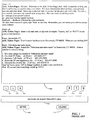
- FIG. 1 is a screen capture showing user interaction with a prior art automated information agent referred to as "AOL Yellow Pages".
- AOL Yellow Pages a prior art automated information agent
- the interaction includes a step-by-step dialogue, led by the AOL Yellow Pages agent, that guides the user in responding to various queries.
- the dialogue is displayed on a display window 102 of an electronic display screen.
- Users initiate access to the AOL Yellow Pages agent via the AOL Instant Messaging system by sending a message to a specified screen name, "AOL Yellow Pages", designated for use by the agent.
- AOL Yellow Pages a specified screen name
- users need only send an instant message to the agent, following the same sequence of steps that would be required when initiating IM communication with a personal or business contact.
- Users may place frequently-used IM screen names, including "AOL Yellow Pages", into a "buddy list” that is accessible from AOL's main screen via a single click of the mouse.
- the user may enter one or more search queries using names of geographic locations and specified keyword commands.
- commands, location names, and other characters are entered by the user, they appear in a keyword or search term input area 104 of the electronic display screen.
- the agent is not equipped to process commands that use English words, such as "change location”, "show more listings", or "search for repair shops”. Geographic locations (i.e., Greenwich, CT) must be spelled out.
- the user enters a mouse click over a send button 106, thereby initiating transmission of an instant message to the agent that includes the command or character sequence shown in keyword or search term input area 104.
- the entered command or character sequence then appears in display window 102, immediately following the user's assigned AOL screen name.
- the agent responds to the user's entered command or character sequence, the agent response appears below the user's entered command or character sequence after the heading "AOL Yellow Pages". If the user desires to change the font size of entered commands or character sequences, the user enters a mouse click over font size buttons 105, 107, 109.
- the user desires to enter commands or character sequences that include bold characters, italicized characters, or underlined characters, the user enters a mouse click over, respectively, bold button 111, italics button 113, or underline button 115. If the user desires to terminate the application, the user enters a mouse click over a close button 108.
- AOL Yellow pages provides an inflexible and specialized command interface. As shown in FIG. 1, users interact with the agent using short, cryptic keyword commands, such as "gl” (get location), “cl” (change location), and "m” (more). AOL's short keyword commands are idiosyncratic to the AOL Yellow Pages application and must be learned by the user. Other software programs may use the short keyword commands to implement a totally different set of functionalities, thereby confusing the user. What is needed is an improved technique for interacting with agents over a mobile device.
- GUIs Graphical user interfaces
- AOL's IM software were developed for desktop and laptop computers, and are not always appropriate or desirable for use in mobile applications.
- IM GUIs provide the complete dialogue history of an agent interaction on a scrollable screen display, but this feature is unnecessary and confusing in a mobile environment.
- Long conversations are displayed as a multiplicity of lines filling the screen, with the effect that it becomes difficult for users to manipulate the small controls on a mobile device to browse through these conversations. What is needed is an improved technique for displaying agent interaction dialogues on the display screen of a mobile device.
- AOL Yellow Pages agent Users may access other intelligent agents in addition to the AOL Yellow Pages agent, but these agents must be addressed in a separate chat window. Accordingly, if a user accesses a plurality of agents from a desktop environment, a corresponding plurality of windows will be opened. In a mobile environment, such windows cannot be adequately displayed on the relatively small screen of a handheld mobile device, nor may the GUI of the mobile device be equipped to display multiple windows. What is needed is an improved technique for accessing multiple agents from a mobile device.
- Mobile devices are capable of automatically determining a user's geographic area of interest. For example, a user's location may be captured from an on-board GPS receiver, or from the identity of a cell (Cell-ID) that is currently engaged in communication with the mobile device. This geographic area of interest can the be used to automatically refine the scope of a user query. Yet, the AOL Yellow Pages agent requires the user to enter a specific geographic location, which is an unnecessary step in a mobile environment. Once the agent determines the response to a user query, the agent provides query results in the form of hyperlinks displayed as an overlay against a map. By automatically acquiring the user's geographic area of interest, the agent could automatically streamline and tailor dialogue interaction, so as to provide query results more closely tailored to the user's geographic area of interest. Accordingly, what is needed is an improved technique for automatically communicating the location of a mobile device user to an agent.
- Cell-ID Cell-ID
- IM software presents additional drawbacks. There is no mechanism by which users can search to locate other AOL agents that may be accessed by means of an AOL Instant Message. As additional commercial automated agents are developed by third parties, finding and accessing appropriate bots becomes more complicated. Likewise, the capabilities of bots are undergoing substantial expansion and development, with the result that a single content provider could be used to deliver yellow page information, as well as weather information, from an agent accessible from a single AOL screen name.
- What is needed is a mechanism by which users are able to search for publicly accessible agents that are potentially useful in responding to a predefined query.
- Such a mechanism should be capable of organizing and selecting agents, browsing one or more functionalities provided by the agent, supporting substantially simultaneous interaction with a plurality of agents in a unified graphical user interface, and providing a framework for flexible and unified command interaction with shared dialog files.
- One aspect of the invention is directed to a system for reducing or eliminating ergonomic inefficiencies arising when an automated information agent is accessed from a device having a text-based graphical user interface and an input mechanism, wherein the graphical user interface is capable of displaying at least textual information and the input mechanism is capable of accepting a user's selection of a specified agent from a menu of agents and a user-entered, text-based, plain language query.
- the system comprises a message server for receiving the plain language query from the device, and for routing the plain language query to the specified agent.
- a conversational interpretation mechanism in communication with the specified agent, formulates an agent-readable query from the plain language query to which the specified agent is capable of responding.
- Another aspect of the invention is directed to a device for accessing any one from among a plurality of automated information agents, the device being usable with a system comprising: (i) a message server for receiving a text-based, plain language query from the device, and for routing the plain language query to a user-selected agent from among the plurality of agents; and (ii) a conversational interpretation mechanism, in communication with the user-selected agent, for formulating an agent-readable query from the plain language query to which the specified agent is capable of responding.
- the device comprises a communication mechanism for transmitting at least one of a user's selection of an agent or a text-based, plain language query to the message server, a text-based graphical user interface capable of displaying textual information and a hierarchical menu of agents, and an input mechanism, capable of accepting a user's selection of a specified agent from the hierarchical menu of agents, and capable of accepting a text-based, plain language query.
- Another aspect of the invention is directed to a method for reducing or eliminating ergonomic inefficiencies arising when an automated information agent is accessed from a device having a text-based graphical user interface.
- the method comprises the steps of generating a list of agents that are accessible to the device, transmitting the list of agents to the device, receiving from the device a user's selection of an agent included in the list of agents, receiving a plain language query from the device, routing the plain language query to the user-selected agent, the user-selected agent routing the plain language query to a conversational interpretation mechanism, the conversational interpretation mechanism transforming the plain language query into an agent-readable query to which the user-selected agent is capable of responding and then routing the agent-readable query to the user-selected agent, and the user-selected agent formulating a response to the agent-readable query.
- Another aspect of the invention is directed a method for using a device to access any of a plurality of automated information agents.
- the method comprises the following steps performed by the device: receiving a list of agents that are accessible to the device, displaying the list of agents in the form of a hierarchical menu, accepting a user's selection of an agent from the hierarchical menu, accepting a plain language query entered by a user, transmitting the plain language query to the agent selected from the hierarchical menu, and receiving a response to the plain language query from the agent.
- Another aspect of the invention is directed to a device for accessing any of a plurality of automated information agents, the device being usable with a system comprising a messaging transport mechanism for receiving a query from the device, and for routing the query to a user-selected agent from among the plurality of agents.
- the device comprises a communication mechanism for transmitting at least one of a user's selection of an agent or a query to the messaging transport mechanism, a text-based graphical user interface capable of displaying a hierarchical menu of agents and a template for a user to complete, an input mechanism, capable of accepting a user's selection of a specified agent from the hierarchical menu of agents, and capable of accepting user input for completing the template to thereby generate a user-completed template, and a processing mechanism capable of transforming the user-completed template into a query.
- Another aspect of the invention is directed to a device for accessing a plurality of automated information agents, the device being usable with a system comprising a messaging transport mechanism for receiving a query from the device, and for routing the query to a user-selected agent from among the plurality of agents.
- the device comprises a communication mechanism for transmitting a user's selection of at least a first agent and a second agent to the messaging transport mechanism, a text-based graphical user interface capable of displaying a hierarchical menu of agents including at least the first agent and the second agent, an input mechanism, capable of accepting a user's selection of at least the first agent and the second agent from the hierarchical menu of agents, the text-based graphical user interface being capable of displaying a first icon corresponding to the first agent, and a second icon corresponding to the second agent, the input mechanism being responsive to a user clicking on the first icon to display a first agent interaction screen corresponding to the first agent, and being responsive to a user clicking on the second icon to display a second agent interaction screen corresponding to the second agent; wherein the first and second agent interaction screens are each capable of accepting a user-entered query from the input mechanism, thereby permitting substantially instantaneous access to each of a plurality of agents.
- Another aspect of the invention is directed to a system for providing access to a specified agent selected from a plurality of automated information agents, the system being usable with a device having a streamlined graphical user interface and an input mechanism, wherein the streamlined graphical user interface is capable of displaying at least textual information and the input mechanism is capable of accepting a user's selection of a specified agent from a menu of agents and a user-entered, text-based, plain language query.
- the system comprises a messaging transport mechanism for receiving the plain language query from the device and for routing the plain language query to the specified agent, and a conversational interpretation mechanism, in communication with the specified agent, for formulating an agent-readable query to which the specified agent is capable of responding, and wherein the conversational interpretation mechanism comprises one or more dialog files for utilization by any of the plurality of agents.
- Another aspect of the present invention is directed to a system for providing access to a specified automated information agent selected from a plurality of automated information agents, the system being usable with a device having a streamlined graphical user interface and an input mechanism, wherein the streamlined graphical user interface is capable of displaying at least textual information and the input mechanism is capable of accepting a user's selection of a specified agent from a menu of agents and a user-entered, text-based, plain language query.
- the system comprises a messaging transport mechanism for receiving the plain language query from the device, and for routing the plain language query to the specified agent, and a conversational interpretation mechanism, in communication with the specified agent, for formulating an agent-readable query to which the specified agent is capable of responding, and wherein the conversational interpretation mechanism comprises a shared conversational grammar database from which one or more textual terms associated with a previous plain language query received from the user are retrieved.
- Another aspect of the invention is directed to a method for communicating with an automated information agent in the course of a group chat among a plurality of users over the Internet, wherein the agent is capable of responding to a query from any of the users to perform a search for information desired by the user.
- the method comprises joining a specified agent to the group chat in response to a message from any one of the users, monitoring subsequent messages from the users during the group chat for any message that includes an agent identifier and, if an agent identifier is detected which has been assigned to the specified agent, processing the message as a query to perform an information search responsive to said query.
- Another aspect of the present invention is directed to a method for using an automated information agent to conduct a search over the Internet in response to a query from a user, comprising communicating a query from a user to an automated information agent, processing the query with the agent, determining whether (i) the user requested human intervention in connection with processing of said query, and/or (ii) a human intervention signal has been automatically generated responsive to processing of said query and, if so, communicating with a human operator to continue processing said query.
- the present invention provides a mechanism for selecting and interacting with automated information agents over a text-based messaging network by means of a conversational interface that responds to queries in accordance with the location of the device.
- a message server sends an electronic message identifying each of a plurality of agents to the device.
- the graphical user interface displays an agent selection screen showing identity information for each of the plurality of agents identified in the electronic message.
- the device includes an input mechanism capable of accepting a user's selection of an agent. Upon receiving a first input specifying a first selected agent, the device displays an agent interaction screen for the first selected agent. At least a portion of the agent interaction screen is capable of displaying a query entered into the input mechanism.
- the first selected agent Upon receipt of a query, the first selected agent automatically receives information about the location of the device from an external database and uses the received information to perform a location-based search in response to the query.
- the agent is capable of responding to queries formulated by completing an electronic template displayed in the agent interaction screen, queries formulated using one or more plain language words or phrases, and text-based queries comprising one or more keyword commands.
- the agent is capable of responding to text-based queries formulated using any of a variety of communication protocols, such as Instant Messaging (IM), short messaging service (SMS), text messaging, and others.
- IM Instant Messaging
- SMS short messaging service
- the input mechanism is capable of accepting a second input for replacing any displayed agent interaction screen, such as the agent interaction screen for the first selected agent, with the agent selection screen.
- the input mechanism is capable of receiving a third input specifying a second selected agent, whereupon the device displays an agent interaction screen for the second selected agent.
- the agent interaction screens for the first and second selected agents show the most recent query entered into the device, but do not include queries entered prior to the most recently entered query.
- the input mechanism is capable of accepting a fourth input for replacing any displayed agent interaction screen, such as the agent interaction screen for the first selected agent, with another agent interaction screen, such as the agent interaction screen for the second selected agent.
- the device is capable of sequentially cycling through a plurality of agent interaction screens displayed on the graphical user interface.
- the agent is capable of escalating a query to a human for personalized assistance. More specifically, the server stores a dialogue between a user and an agent by storing at least one query received from a device, at least one response to the query received from an agent, and the location of the device at the time that the query was received. The stored dialogue is accessible by a human assistant who may issue a response to the at least one query.
- the device is capable of substantially simultaneous interaction with the plurality of agents on a display mechanism comprising a single user interface device.
- the plurality of agents utilize one or more shared dialog files for communicating with the device.
- the agent formulates a response to a user query using a shared conversational grammar that reuses one or more textual terms associated with a previous query received from the user.
- the agent provides a user help menu to the device wherein the menu is determined, at least in part, by the location of the device.
- the agent of the present invention uses a conversational interpretation mechanism that responds to a received query, and can do so based upon the location of the device.
- the received query may take the form of textual input, voice data, menu choices, a template completed by a user, or any combination thereof. If a query is presented as if the user were engaged in a plain-language interchange or Instant Messaging session with another person, such a query is said to be conversational.
- Conversational queries are converted to agent-readable queries by the conversational interpretation mechanism, as will be described in greater detail hereinafter.
- the device converts all non-textual received queries into textual form.
- a response to the textual query can be formulated in accordance with the location of the device. More specifically, the agent can automatically receive information about the location of the device from an external database server, and uses this information to perform a location-based search.
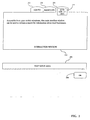
- FIG. 2 A graphical user interface for receiving and responding to queries is shown in FIG. 2, wherein it is assumed that the device having a text-based interface is implemented using a mobile device. However, it is to be understood that FIG. 2 is also applicable to virtually any device that provides a text-based graphical user interface. More specifically, FIG. 2 sets forth a screen capture of a main interface window which, when displayed on a mobile device, enables access to one or more agents according to a preferred embodiment of the present invention.
- the main interface window includes an interaction window 212, a text input area 208, and an OK button 210.
- a plurality of command tabs are accessible from interaction window 212, including an Agents tab 202 and a Shortcuts tab 204.
- An agent cycling tab 206 includes an icon display area 214 for displaying any of a plurality of graphical objects one at a time, wherein each graphical object corresponds to one or more agents.
- Selection of Agents tab 202 initiates display of an agent selection screen on interaction window 212.
- Selection of Shortcuts tab 204 leads to a list of frequently-asked questions that may be posed to one or more automated information agents.
- Agent cycling tab 206 is used to sequentially select each of a plurality of graphical objects for display in icon display area 214, wherein each graphical object corresponds to at least one agent. When a graphical object displayed in icon display area 214 is selected, this initiates an automatic selection of one or more agents associated with the graphical object. Any interaction with the selected agent is displayed in interaction window 212. If agent cycling tab 206 selects a first agent, icon display area 214 displays a graphical object corresponding to the first agent. Next, if agent cycling tab 206 selects a second agent, icon display area 214 displays a graphical object corresponding to the second agent.
- Text input area 208 accepts user-entered input representing at least one of a query for an agent or a screen display command for controlling interaction window 212. Queries for agents are sent across a communications network to a remote server, but screen display commands are handled locally on the mobile device. A finite set of screen display commands are stored on the mobile device. The user enters an input into text area 208 and presses OK button 210. If the input entered into text input area 208 is a screen display command included in the finite set of stored screen display commands, then the entered input is matched to one of the stored screen display commands and the command is executed by the mobile device. Otherwise, the input entered into text area 208 is considered to be a query.
- the query is transmitted from the mobile device to the agent selected by agent cycling tab 206 and identified by a corresponding graphical object in icon display area 214. If the agent responds to the query, the response is received by the mobile device and displayed in interaction window 212.
- a query for an agent may be formulated as an Instant Message including one or more keyword commands, an Instant Message including one or more plain language words or phrases, or an Instant Message including a combination of keyword commands and plain language words or phrases.
- a query for an agent may be formulated using any of a variety of wireless communication protocols, such as short messaging service (SMS), text messaging, and others.
- SMS short messaging service
- Illustrative examples of queries are "Where is the nearest grocery store?", "Give me a list of Mexican restaurants", and “gl” (get location).
- the "gl" command instructs the agent to ascertain the location of the mobile device using, for example, caller identification (Call-ID) information, cell identification (Cell ID), or global positioning system (GPS) information received from the mobile device.
- Call-ID caller identification
- Cell ID cell identification
- GPS global positioning system
- a screen display command the user enters a display command phrase into text input area 208, and activates OK button 210.
- OK button 210 initiates transmission of the entered display command phrase to a graphical processing mechanism for interaction window 212.
- the graphical processing mechanism is programmed to execute the display command phrase entered by the user, thereby causing information to be displayed on interaction window 212 in accordance with the display command phrase. For example, if the user enters a display command phrase "what agents are active" into text input area 208 and presses OK button 210, the graphical processing mechanism causes interaction window 212 to display an agent selection screen, described in greater detail with reference to FIG. 3.
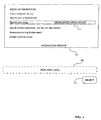
- FIG. 3 shows an illustrative agent selection screen.
- the agent selection screen is accessible from Agents tab 202 of the main interface window displayed in interaction window 212 of FIG. 2, and is also accessible using the "what agents are active" command described above.
- Interaction window 212 is either blank (as shown), or contains a descriptive user prompt, such as "Welcome to the restaurant assistant. How may we help you?"
- Agents tab 202 or enters the "what agents are active” command
- available agents are listed on interaction window 212.
- an agent is selected from interaction window 212 using a cursor or pointing device to highlight and click on the desired agent.
- the available agents may be arranged hierarchically according to topical categories.
- Topical categories refer to the category or categories of subject matter for which the agent is capable of formulating an answer in response to a query.
- a given agent may be listed in one or more than one topical category.
- interaction window 212 of FIG. 3 several topical categories are shown: News & Information, Attractions, Dining, Service Stations, Cinema, Shops, and Display Previous Screen.
- the topical category "Dining" has been highlighted in a highlighted menu option 215 field. Once a topical category is selected by pressing a select button 211 to select the highlighted menu option in highlighted menu option 215 field, interaction window 212 displays a menu of topical subcategories for the highlighted menu option if such subcategories exist. Note that select button 211 (as well as OK button 210, FIG.
- agents may be accessed by entering a keyword into text input area 208, whereupon a keyword search is performed to locate a topical category related to the entered keyword.
- Topical categories and subcategories may be preprogrammed into the mobile device.
- a topical category or a topical subcategory may be provided by a human operator logging on to an instant messaging network and identifying a topical category or subcategory which, upon selection by a mobile device, will initiate a communications link between the mobile device and the agent or between the mobile device and the human operator.
- FIG. 4 is a screen capture of a shortcuts menu accessible from the main interface window of FIG. 2 by clicking on Shortcuts tab 204.
- Users interacting with an agent for the first time must learn about the functionality which the agent provides.
- AOL Yellow Pages for example, an ongoing dialogue provides the user with suggestions, and also provides help accessible through a "help" command. Since AOL Yellow Pages is typically utilized in operational environments where a user is not simultaneously accessing other agents, a "help" command may suffice. Yet, in operational environments where access to a multiplicity of agents is provided, the user may be confused if each agent has a unique interface for accepting queries formulated in an agent-specific manner. Accordingly, the shortcuts menu of FIG. 4 provides a user interface that is consistent from agent to agent.
- the shortcuts menu of FIG. 4 provides a mechanism for conveniently and efficiently issuing a query to an agent by selecting a preformulated query from a displayed query menu.
- the query menu displayed in interaction window 212, includes preformulated queries that are related to the selected agent.
- the query menu of FIG. 4 shows a menu of shortcuts pertaining to the Dining agent highlighted and selected in FIG. 3. These shortcuts initiate queries such as "Find a restaurant”, “Specify type of food or cuisine”, Specify price range”, “Specify dietary constraints”, “Restaurants serving Kosher meals”, and "Display previous screen".
- a shortcut is selected by positioning highlighted menu option 215 field to overlay the desired shortcut and activating select button 211.
- some shortcuts will elicit an agent response without the necessity of the user entering further information into text input area 208. For example, upon selection of "Restaurants serving Kosher meals", the agent will respond with a list of such restaurants.
- Other shortcuts require the user to enter information into text input area 208 relating to the selected shortcut, and these shortcuts will elicit a request for further information if the required information is not entered into text input area 208. For instance, "Specify type of food or cuisine” will elicit an agent response "Enter type of food or cuisine desired” if the user does not enter this information into text input area 208 prior to activating select button 211.
- FIG. 5 shows an agent interaction screen accessible from interaction window 212 of FIG. 3.
- Prior art agents including AOL Yellow Pages, use short keyword commands to direct interaction, such as "cl” for "change location".
- Short keyword commands are suited for certain applications, but are disadvantageous in that they are difficult for many users to remember.
- different agent designers are free to choose the same short keyword command (i.e., "cl") to implement totally different functions (i.e., "change location” as contrasted with “change library”).
- AIML Agent Interaction Markup Language
- FIG. 6 is a screen capture of a search results window generated in response to the query "Find a pub" being entered into text input area 208 of FIG. 5.
- the list of pubs shown in interaction window 212 of FIG. 6 is displayed.
- the pubs are all within the user's current geographic area of interest.
- the list is generated by the agent, which is equipped to automatically ascertain the geographic location of the user.
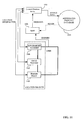
- An external database server 1103 (described hereinafter with reference to FIG.
- the agent 11 collects available information regarding a user's location - from GPS-enabled handset 1105, Cell Identity (Cell-ID) parameter 1107, or Bluetooth beacon 1109 where the location of the beacon is known, and sends latitude and longitude coordinates corresponding to the current location of mobile device 401 (FIG. 7, to be described hereinafter) to the agent. The agent then performs a location-based search based upon the location of mobile device 401 in response to user-entered queries.
- Cell-ID Cell Identity
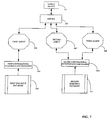
- FIG. 7 is a hardware block diagram setting forth a system for communicating with one or more agents using a mobile device 401.
- Mobile device 401 may be implemented using a mobile telephonic device, a laptop computer, or any microprocessor-based portable device equipped to accept and display text-based information.
- Mobile device 401 is equipped with a local data cache for receiving and storing data in connection with an agent interface program described hereinafter with reference to FIGs. 8A-8D.
- agent interface program data such as location information related to the current location of mobile device 401 are stored in the local data cache, since location information is often re-used across a plurality of agent queries.
- agent-specific information including menu hierarchies and frequently asked questions may also be stored locally.
- Mobile device 401 is equipped to communicate with a server 403 capable of routing text-based messages from mobile device 401 to any of a plurality of agents, such as a first agent 405, a second agent 407, and a third agent 409.
- Server 403 is also capable of routing text-based messages from any of the first, second and third agents 405, 407, 409, respectively, to mobile device 401.
- server 403 may be implemented using a wireless server or a wireless telecommunications network coupled to a server.
- First agent 405 is equipped to generate responses to conversational text-based queries by forwarding such queries to a first conversational interpretation mechanism 411.
- First conversational interpretation mechanism 411 uses a first dialogue database 415 to transform these conversational text-based queries into computer-readable queries.
- the computer-readable queries are sent to first agent 405 which prepares a response to the query.
- the response is received by server 403 which then forwards the response to mobile device 401.
- Second and third agents 407, 409 are equipped to generate responses to conversational text-based queries by forwarding such queries to a second conversational interpretation mechanism 413.
- Second conversational interpretation mechanism 413 uses a second dialogue database 417 to transform these conversational text-based queries into computer-readable queries.
- the computer-readable queries are sent to second agent 407 or third agent 409 which prepares a response to the query.
- the response is received by server 403 which then forwards the response to mobile device 401.
- second agent 407 and third agent 409 share a single conversational interpretation mechanism (second conversational interpretation mechanism 413) and a single dialogue database (second dialogue database 417).
- Such sharing advantageously avoids the additional expense and effort that would be involved in creating and maintaining two separate dialogue databases and two separate conversational interpretation mechanisms.
- first and second conversational interpretation mechanisms 411, 413 are each implemented using an Agent Interaction Markup Language (AIML) dialog interpreter.
- AIML dialog interpreter employs AIML for establishing a plain language dialogue with the user, and for interpreting one or more user queries. If the agent requires further information in order to formulate a response to a user query, or if the agent is not able to interpret a user query, the AIML dialog interpreter provides plain language prompts asking the user to supply further information about their query.
- AIML stores dialog in one or more XML files.
- a set of dialog rules, stored in AIML format and activated by the AIML dialog interpreter, are used to implement an interactive dialog with the user, further details of which are described in FIGs. 8A-8D.
- FIGs. 8A-8D together comprise an operational sequence for implementing communications between one or more agents and a mobile device, using the system of FIG. 7.
- the program commences at block 801 (FIG. 8A) where a mobile device accepts a user's selection of a specified agent, such as first agent 405, second agent 407, or third agent 409 (FIG. 7).
- a mobile device accepts a user's selection of a specified agent, such as first agent 405, second agent 407, or third agent 409 (FIG. 7).
- the mobile device sends an Instant Message indicative of the user's selection of a specified agent to server 403 (FIG. 7), whereupon the Instant Message is then used to activate the selected agent as outlined below.
- the selected agent is first agent 405.
- the program proceeds to block 805 (FIG. 8A) where server 403 (FIG. 7) routes the Instant Message sent at block 803 to the specified agent which, in the present example, is first agent 405.
- the Instant Message activates the specified agent (first agent 405) to accept subsequent Instant Messages from mobile device 401 (FIG. 7) setting forth one or more user queries. These one or more user queries may be conversational text-based queries, or these queries may include one or more keyword commands.
- mobile device 401 (FIG. 7) accepts a user-entered query. Mobile device 401 then incorporates the user-entered query into an Instant Message (FIG. 8A, block 811).
- the program proceeds to block 813 where mobile device 401 (FIG. 7) sends the Instant Message containing the user-entered query to server 403.
- server 403 routes the Instant Message to the activated agent (first agent 405).
- the activated agent receives the Instant Message (FIG. 8B, block 817).
- the activated agent transmits the Instant Message to a conversational interpretation mechanism which, in the present example, is first conversational interpretation mechanism 411 (FIG. 7).
- the program proceeds to block 821 (FIG. 8B) where a test is performed to ascertain whether or not the user-entered query contained in the Instant Message includes a keyword command. If so, the step of block 823 is performed wherein the conversational interpretation mechanism (in this case, first conversational interpretation mechanism 411 of FIG.
- first conversational interpretation mechanism 411 of FIG. 7 uses a dialogue database (in the present example, first dialogue database 415) to generate an agent-readable query from the user-entered query. Note that the contents of first dialogue database 415 (FIG.
- each dialogue database may be customized to meet the intended application of each agent (such as first agent 405, second agent 407, or third agent 409) so that with use of, for example, the same conversational text for a query, the agent-readable query will be appropriate for the particular agent being used.
- agent such as first agent 405, second agent 407, or third agent 409
- the program advances to block 827 where a decision is performed as to whether or not the activated agent (first agent 405, FIG. 7) is capable of parsing the agent-readable query. If so, the program advances to block 835. If the activated agent is not capable of parsing the agent-readable query, the program advances to block 829 (to be described in greater detail hereinafter).
- the activated agent performs a test to ascertain whether or not the agent-readable query contains location information. If so, the program progresses to block 843. If the agent-readable query does not contain location information, the program progresses to block 837, to be described in greater detail hereinafter.
- the agent executes the agent-readable query to perform a search using the location information contained within the query.
- the program continues to block 845 (FIG. 8D) where a test is performed to ascertain whether or not execution of the agent-readable query generates any search results. If so, the program advances to block 847 where the agent incorporates the search results into an Instant Message. If no search results are generated, the program advances to block 849 where the agent incorporates a message indicative of "no search results found" into an Instant Message.
- the program advances to block 851 where the agent sends the Instant Message to server 403 (FIG. 7).
- server 403 (FIG. 7) routes the Instant Message to mobile device 401.
- Mobile device 401 receives and displays the Instant Message (FIG. 8D, block 855).
- the program then loops back to block 801 (FIG. 8A).
- the negative branch from block 827 leads to block 829 where server 403 (FIG. 7) performs a test to determine whether or not the Instant Message can be routed to another agent (such as second agent 407 or third agent 409) that is capable of parsing the agent-readable query.
- server 403 performs a test to determine whether or not the Instant Message can be routed to another agent (such as second agent 407 or third agent 409) that is capable of parsing the agent-readable query.
- the decision is made by programming server 403 to implement a meta-agent program, or by equipping server 403 to access an external meta-agent program.
- the meta-agent program is capable of matching the incoming Instant Message to an agent that is equipped to respond to the query.
- the meta-agent program is equipped with a conversational interpretation mechanism which may be substantially similar to first conversational interpretation mechanism 411 and/or second conversational interpretation mechanism 413 of FIG. 7.
- the conversational interpretation mechanism used by the meta-agent program includes functional AIML conversational grammar associated with one or more agents, such as first agent 405, second agent 407, and third agent 409.
- the meta-agent uses the AIML conversational grammar to extract one or more terms from the agent-readable query that are potentially indicative of the subject matter of the user-entered query. The extracted terms are used to index an agent database for retrieving the IM addresses of one or more agents suitable for responding to the agent-readable query.
- block 829 also includes the step of the meta-agent sending the retrieved IM addresses to mobile device 401 (FIG. 7), whereupon a user selects the IM address of a desired agent from among the retrieved IM addresses and sends a query directly to the selected agent.
- Using a meta-agent reduces the number of wireless Instant Messages (i.e., calls) that mobile device 401 must send out in cases where a user does not know the identity of an agent suitable for responding to a given query.
- mobile device 401 need only select from among a plurality of n agents, requiring a total of two calls.
- an average of n/2 calls must be placed from mobile device 401.
- An average of n/2 calls are required because a query may be forwarded to an agent (i.e., first agent 405, FIG. 7) that is not capable of responding to a given query, whereupon the user will need to send the query to another agent.
- the meta-agent is equipped to return the IM address(es) of one or more agent(s) that are appropriate for handling this type of query.
- the meta-agent matches the user-entered query to an agent identified by an IM address in the form of "Chinese-restaurant-finder".
- block 829 In cases where a fewer number of agents are available, a meta-agent need not be employed, whereupon the decision of block 829 is performed by server 403 (FIG. 7) as before, only without the aid of a meta-agent program.
- block 829 also includes the steps of passing the user query in sequence directly from server 403 (FIG. 7) to each active agent in turn. The response received from each active agent indicates whether or not the query was parseable by that agent. This approach is most appropriate if there are only a small number of agents that will handle a query.
- block 831 (FIG. 8C) where the agent that is capable of parsing the agent-readable query is activated.
- second agent 407 is capable of parsing the agent-readable query. Accordingly, second agent 407 would be activated in block 831 (FIG. 8C).
- block 831 the activated agent that was previously activated in FIG. 8A, block 807 (i.e., first agent 405, FIG. 7) is now deactivated.
- the program then advances to block 835 (FIG. 8C), described above.
- the negative branch from block 829 leads to block 833 (FIG. 8C) where server 403 (FIG. 7) sends an Instant Message to mobile device 401 indicative of an error in parsing the agent-readable query.
- the program then loops back to block 801 (FIG. 8A).
- the negative branch from block 835 leads to block 837 where a test is performed to ascertain whether or not location information about mobile device 401 (FIG. 7) is available from server 403. If not, the program advances to block 843 (FIG. 8C), described above.
- the affirmative branch from block 837 leads to block 839 where the server transmits location information to the activated agent.
- the activated agent incorporates the location information into the agent-readable query (block 841), and the program advances to block 843 (described above).
- an illustrative implementation of the agent interface program of FIGs. 8A-8D for programming mobile device 401 has been developed using Java.
- This interface program provides mobile device access to one or more agents over an instant messaging network.
- Java presently one of the most popular object-oriented languages, is designed for use in distributed applications on corporate networks and the Internet.
- Some objectives of the Java implementation are to provide modularity among the various components of the program, as well as to provide for subsequent addition of features and changes in mobile device interfaces.
- the program provides integration with various messaging protocols, such as Jabber, XMLRPC, and REST.
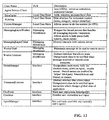
- FIG. 12 describes a plurality of classes for an exemplary implementation of the agent interface program.
- the agent interface program is designed for interfacing with an agent capable of performing an automated search for restaurants.
- classes refers to an object-oriented programming (OOP) language model organized on the basis of objects rather than actions, and data rather than logic. More specifically, object-oriented programming focuses upon one or more objects that are to be manipulated, and not upon the logic required to manipulate the objects.
- objects are names, addresses, and telephone numbers of individuals and businesses, names of buildings, floors within a specified building, buttons on a computer keyboard, and scroll bars displayed on a computer screen.
- the initial procedure in developing software using an object-oriented programming approach is to identify all the objects that need to be manipulated, and to define how these objects relate to each other.
- This procedure is referred to as data modeling.
- the object is generalized into a class of objects having one or more known characteristics. This generalization process may be conceptualized with reference to Plato's concept of the "ideal" chair that stands for all chairs in existence throughout the world.
- the class of objects is defined by defining the type of data that the class contains, as well as any logical sequences that are capable of manipulating the class.
- Each distinct logic sequence capable of manipulating a given class is known as a method. This method is used to provide instructions to a processing mechanism, while the class characteristics are used to provide relevant data to the method. Users communicate with objects - and objects communicate with each other - using well-defined interfaces called messages.
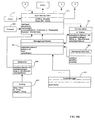
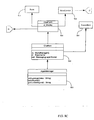
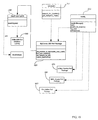
- FIGs. 9A-9C together comprise a class diagram illustrating relationships among exemplary object classes described in FIG. 12 and which may be utilized to implement the operational sequence of FIGs. 8A-8D.
- the class diagram set forth in Unified Modeling Language (UML), depicts connections between classes, as well as class characteristics and methods.
- UML is a standard notation for the modeling of real-world objects as a first step in developing an object-oriented design methodology.
- UML is an accepted standard of the Object Management Group (OMG), and it has been endorsed by virtually all software development companies, including IBM and Microsoft.
- OMG Object Management Group
- FIG. 12 The classes set forth in FIG. 12 and FIGs. 9A-9C are described as follows:
- AListing 937 (Agent Listing) is a subclass used to encapsulate application-specific query results. This subclass includes restaurant listings used by a restaurant search application executed by an automated information agent. AListing 937 is local on the mobile device, and is used at block 855 (FIG. 8D). One implementation of AListing 937 is to subclass a query result superclass. The term "superclass" is best understood in the context of object-oriented languages. Pursuant to many object-oriented languages, a new object can be created from a preexisting object, such that the new object inherits one or more properties of the preexisting object. In this manner, preexisting code may be adapted for use in new operational settings with little or no modification required.
- New objects can be formed using pre-defined objects where new classes take over defined methods of the old objects.
- the term "superclass” refers to a parent class which defines methods that would be common to all query results.
- a subclass such as AListing, is used to augment the general query result superclass with methods relevant to a particular agent listing domain.
- ContextManager 935 encapsulates access to device-resident geographic area of interest information.
- Context information is used in block 811 (FIG. 8A) to encapsulate context information for a user query.
- MessageLayerWorker 931 handles a messaging request using a separate thread.
- MessageLayerWorker 931 is a client class used in block 813 of Fig 8A to send instant messages to the server. Description: Handles access to a task queue and notifies listeners when a task is completed.
- WorkerTask encapsulates a messaging job. This corresponds to blocks 811 and 855 (FIGs. 8A and 8D) on the client (i.e., mobile device) side.
- Description An abstract interface used for notifying completion of WorkerTask.
- WorkerListener 927 notifies MessageLayerWorker 931 when messaging job has finished. WorkerListener 927 is used to implement block 855 of FIG. 8D. Description: An abstract interface used for notifying completion of WorkerTask. Methods: abstract WorkerTask finished( ) - returns WorkerTask object that has finished processing.
- MenuManager 911 sets up user menus that are available in an application. Illustratively, MenuManager 911 is used to implement blocks 801 and 803 of FIG. 8A. Description: Implements java Mdisplayable interface.
- CommandListener 901 mediates between user interaction classes and main Java executables.
- CommandListener 901 is a helper class used by other classes pursuant to standard Java programming practices.
- ChatForm 945 is the main object employed to implement user interaction. ChatForm 945 provides for the display of dialogue between a mobile device user and an agent on interaction window 212 of FIG. 2.
- Chatltem 949 connects dialogue interaction with MenuManager 911, DataCache 933, and MessagingLayerClient 929. Chatltem provides for the display of entered dialogue on text input area 208 of FIG. 2.
- AgentManager 951 handles selection of agents, as well as cycling of available agents. Illustratively, AgentManager 951 is used to implement block 801 of FIG. 8A. Description: Provides access to Agents tab 202 (FIG. 2).
- Agent Service Client 921 is used to create an automated Instant Messaging client, or "bot".
- client refers to a requesting program or user in a client/server relationship.
- client refers to a requesting program or user in a client/server relationship.
- client refers to a requesting program or user in a client/server relationship.
- the browser itself is a client in its relationship with the computer that is obtaining and returning the requested HTML files.
- the computer handling the request and sending back the HTML file is a server.
- the user of a mobile device (FIG. 7, 401) issues client requests for information to a server implemented by server 403.
- Server 403 then routes the client requests to Agent Service Client 921 (FIG. 9B).
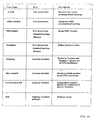
- FIG. 10 is a UML class diagram setting forth illustrative relationships among exemplary object classes which may be utilized to implement the Agent Service Client 921 shown in FIG. 9B. These exemplary object classes are explained further in FIG. 13, which is a table setting forth a plurality of classes for the class diagram shown in FIG. 10.
- Agent Service Client 921 will be described in the context of Jabber instant messaging, but it is to be clearly understood that Agent Service Client 921 may implement other types of instant messaging in lieu of, or in addition to, Jabber.
- Agent Service Client 921 is equipped to utilize Extensible Messaging and Presence Protocol (XMPP).
- XMPP Extensible Messaging and Presence Protocol
- XMPP is a protocol intended for instant messaging and online presence detection. XMPP functions between or among servers to facilitate near-real-time operation. The protocol may eventually allow Internet users to send instant messages to anyone else on the Internet, regardless of differences in operating systems and browsers. XMPP is sometimes called the Jabber protocol, but there are many applications besides Jabber that are supported by XMPP. With reference to FIGs. 10 and 13, Agent Service Client 921 implements several operations using XMPP as follows. AAIML 1013 (FIG. 10) runs as a Perl script, managing user interaction, location lookup, and connection to external location databases.
- AAIML 1013 (FIG. 10) runs as a Perl script, managing user interaction, location lookup, and connection to external location databases.
- the Perl script uses an open-source XML::Simple 1021 Perl Package and a Net::Jabber Perl Package 1017 to manage XMPP connections to a Jabber server.
- the script encapsulates an AIML::ChatBot Perl Package 1031 to interface with the AIML dialogue interpreter of first conversational interpretation mechanism 411 or second conversational interpretation mechanism 413 (FIG. 7).
- Agent Service Client 921 (FIG. 9B) start-up actions:
- the search handler function of agent 1101 is passed a location keyword (a unique substring of nearby locations) and a search domain keyword (restaurant categories in an illustrative implementation).
- the function searches aggregated presence database 1111 with those keywords and returns a list of matching results. For example, a location keyword of "galleria” would match "Galleria Mall". Domain keywords would include "chinese" or "thai” for a restaurant-finder application. Searches are performed using the domain keyword within a subset of geographic locations. If the search locates a list of possible geographic location matches that are not unique, AIML dialogue is used to ask the user to be more specific. If the location is unique, the keyword is transformed into a unique location ("landmark”) identifier.
- URI Uniform Resource Locators
- the URI scheme is utilized herein to identify landmarks and hotspots within the location database (aggregated presence database 1111 of FIG. 11).
- the location-naming scheme utilized herein refers to a unique identifier for all landmarks and hotspots. All landmarks and hotspots in the system can be uniquely identified using URIs.
- the URI scheme is a hash of a location name and address.
- SHA1 is a secure hash algorithm specified in RFC 3174 and Federal Information Processing Standard 180-1. The purpose of a hash algorithm is to compute a condensed representation, or digest, of a message or data file. When a message of any length less than 2 to the 64th power of bits is input, the SHA1 produces a 160-bit output called a message digest.
- This digest is used as a convenience to uniquely identify locations stored in the location database. While the hashing scheme used herein destroys some of SHA1's power by cropping its hash algorithm, the resultant data is unique enough to avoid collisions while still remaining visually identifiable.
- street address and zip codes are concatenated, removing any non-alphanumeric characters.
- the SHA1 of the resultant string is determined. Up to 7 characters of the location's 'city' are concatenated, and up to 7 characters of the 'state/locality' are concatenated, up to 12 characters of the location name and a hex encoding of the above SHA1. All characters that are not valid in the user name part of a URI are stripped (see RFC#1630, "URIs in WWW"). The string is cropped at 30 characters.
- Agent 1101 allows users to search for all locations within a given geometric area about a geographically defined point. This geographically defined point constitutes a search reference point.
- the following algorithm may be employed:
Landscapes
- Engineering & Computer Science (AREA)
- Physics & Mathematics (AREA)
- Mathematical Physics (AREA)
- Theoretical Computer Science (AREA)
- Computational Linguistics (AREA)
- Artificial Intelligence (AREA)
- Signal Processing (AREA)
- Data Mining & Analysis (AREA)
- Databases & Information Systems (AREA)
- General Engineering & Computer Science (AREA)
- General Physics & Mathematics (AREA)
- Computer Networks & Wireless Communication (AREA)
- User Interface Of Digital Computer (AREA)
- Input From Keyboards Or The Like (AREA)
Applications Claiming Priority (1)
| Application Number | Priority Date | Filing Date | Title |
|---|---|---|---|
| US11/026,421 US20060150119A1 (en) | 2004-12-31 | 2004-12-31 | Method for interacting with automated information agents using conversational queries |
Publications (2)
| Publication Number | Publication Date |
|---|---|
| EP1677218A2 true EP1677218A2 (fr) | 2006-07-05 |
| EP1677218A3 EP1677218A3 (fr) | 2007-06-13 |
Family
ID=36250909
Family Applications (1)
| Application Number | Title | Priority Date | Filing Date |
|---|---|---|---|
| EP05292799A Withdrawn EP1677218A3 (fr) | 2004-12-31 | 2005-12-27 | Procedé pour l'interaction avec des agents automatisés d'information en utilisant des interrogations conversationnelles |
Country Status (2)
| Country | Link |
|---|---|
| US (1) | US20060150119A1 (fr) |
| EP (1) | EP1677218A3 (fr) |
Cited By (10)
| Publication number | Priority date | Publication date | Assignee | Title |
|---|---|---|---|---|
| RU2445694C2 (ru) * | 2006-11-10 | 2012-03-20 | Майкрософт Корпорейшн | Онлайновый виртуальный робот (бот) агента безопасности |
| EP2859690A4 (fr) * | 2012-03-29 | 2016-03-30 | Getabl Inc | Appareil et procédé de gestion d'expériences de dialogue en ligne d'utilisateurs avec des entreprises |
| EP3122001A1 (fr) * | 2015-07-24 | 2017-01-25 | Facebook, Inc. | Fourniture de service d'assistance personnelle par messagerie |
| WO2017058962A1 (fr) * | 2015-09-28 | 2017-04-06 | Wand Labs, Inc. | Assistant d'utilisateur pour plate-forme de messagerie unifiée |
| USD804493S1 (en) | 2015-07-24 | 2017-12-05 | Facebook, Inc. | Display screen or portion thereof with a transitional graphical user interface |
| WO2018039092A1 (fr) * | 2016-08-26 | 2018-03-01 | Microsoft Technology Licensing, Llc | Commande d'accès basée sur la localisation pour des entités conversationnelles artificielles |
| WO2018187098A1 (fr) * | 2017-04-03 | 2018-10-11 | Microsoft Technology Licensing, Llc | Découverte de robot de conversation et fusion de réponses |
| US10205685B2 (en) | 2013-03-13 | 2019-02-12 | Getabl Inc. | Apparatus and method for managing user chat experiences with businesses |
| US10353474B2 (en) | 2015-09-28 | 2019-07-16 | Microsoft Technology Licensing, Llc | Unified virtual reality platform |
| CN111405323A (zh) * | 2020-03-12 | 2020-07-10 | 北京字节跳动网络技术有限公司 | 拉取消息记录的采样方法、装置、电子设备及介质 |
Families Citing this family (112)
| Publication number | Priority date | Publication date | Assignee | Title |
|---|---|---|---|---|
| US7353034B2 (en) | 2005-04-04 | 2008-04-01 | X One, Inc. | Location sharing and tracking using mobile phones or other wireless devices |
| US7603413B1 (en) | 2005-04-07 | 2009-10-13 | Aol Llc | Using automated agents to facilitate chat communications |
| US20070027842A1 (en) * | 2005-07-27 | 2007-02-01 | Sbc Knowledge Ventures L.P. | Information-paging delivery |
| US8073700B2 (en) | 2005-09-12 | 2011-12-06 | Nuance Communications, Inc. | Retrieval and presentation of network service results for mobile device using a multimodal browser |
| US7477909B2 (en) * | 2005-10-31 | 2009-01-13 | Nuance Communications, Inc. | System and method for conducting a search using a wireless mobile device |
| US7620404B2 (en) * | 2005-12-22 | 2009-11-17 | Pascal Chesnais | Methods and apparatus for organizing and presenting contact information in a mobile communication system |
| US20070162578A1 (en) * | 2006-01-09 | 2007-07-12 | International Business Machines Corporation | System and method for application initiated user interaction |
| US20070168480A1 (en) * | 2006-01-13 | 2007-07-19 | Microsoft Corporation | Interactive Robot Creation |
| US8117196B2 (en) * | 2006-01-23 | 2012-02-14 | Chacha Search, Inc. | Search tool providing optional use of human search guides |
| US7729948B1 (en) * | 2006-03-24 | 2010-06-01 | Sprint Communications Company L.P. | Systems and methods for enabling customer care assistance with self-service transactions |
| US7793226B2 (en) * | 2006-08-14 | 2010-09-07 | International Business Machines Corporation | Method and system for grouping and stacking tab user interface objects with icon status indicators |
| US8732016B2 (en) * | 2006-09-18 | 2014-05-20 | Poynt Inc. | System, methods, and apparatus for interactive advertising |
| US8341221B2 (en) * | 2006-10-05 | 2012-12-25 | Verizon Patent And Licensing Inc. | Instant messenger location buddy |
| US7840636B2 (en) * | 2006-12-04 | 2010-11-23 | Intel Corporation | Provider presence information |
| US8843376B2 (en) | 2007-03-13 | 2014-09-23 | Nuance Communications, Inc. | Speech-enabled web content searching using a multimodal browser |
| US20080227440A1 (en) | 2007-03-16 | 2008-09-18 | Vinay Kumar Chowdary Settepalli | Methods and apparatus for discovering and updating a mobile device via user behavior |
| EP2158540A4 (fr) * | 2007-06-18 | 2010-10-20 | Geographic Services Inc | Système de recherche de nom de caractéristiques géographiques |
| US9109904B2 (en) | 2007-06-28 | 2015-08-18 | Apple Inc. | Integration of map services and user applications in a mobile device |
| US8311526B2 (en) | 2007-06-28 | 2012-11-13 | Apple Inc. | Location-based categorical information services |
| US8108144B2 (en) | 2007-06-28 | 2012-01-31 | Apple Inc. | Location based tracking |
| US8762056B2 (en) | 2007-06-28 | 2014-06-24 | Apple Inc. | Route reference |
| US8275352B2 (en) | 2007-06-28 | 2012-09-25 | Apple Inc. | Location-based emergency information |
| US8239461B2 (en) | 2007-06-28 | 2012-08-07 | Chacha Search, Inc. | Method and system for accessing search services via messaging services |
| US8175802B2 (en) | 2007-06-28 | 2012-05-08 | Apple Inc. | Adaptive route guidance based on preferences |
| US8290513B2 (en) | 2007-06-28 | 2012-10-16 | Apple Inc. | Location-based services |
| US8332402B2 (en) * | 2007-06-28 | 2012-12-11 | Apple Inc. | Location based media items |
| US8385946B2 (en) | 2007-06-28 | 2013-02-26 | Apple Inc. | Disfavored route progressions or locations |
| US8774825B2 (en) | 2007-06-28 | 2014-07-08 | Apple Inc. | Integration of map services with user applications in a mobile device |
| US8180379B2 (en) | 2007-06-28 | 2012-05-15 | Apple Inc. | Synchronizing mobile and vehicle devices |
| US9066199B2 (en) | 2007-06-28 | 2015-06-23 | Apple Inc. | Location-aware mobile device |
| US8204684B2 (en) | 2007-06-28 | 2012-06-19 | Apple Inc. | Adaptive mobile device navigation |
| US8250192B2 (en) * | 2007-10-12 | 2012-08-21 | International Business Machines Corporation | Data server administration using a chatbot |
| WO2009061820A1 (fr) * | 2007-11-05 | 2009-05-14 | Chacha Search, Inc | Procédé et système d'accès à l'information |
| US20090132573A1 (en) * | 2007-11-16 | 2009-05-21 | Iac Search & Media, Inc. | User interface and method in a local search system with search results restricted by drawn figure elements |
| US8355862B2 (en) | 2008-01-06 | 2013-01-15 | Apple Inc. | Graphical user interface for presenting location information |
| US9250092B2 (en) | 2008-05-12 | 2016-02-02 | Apple Inc. | Map service with network-based query for search |
| US8644843B2 (en) | 2008-05-16 | 2014-02-04 | Apple Inc. | Location determination |
| US8949377B2 (en) * | 2008-05-21 | 2015-02-03 | The Delfin Project, Inc. | Management system for a conversational system |
| US10203861B2 (en) | 2008-05-21 | 2019-02-12 | Please Don't Go, LLC. | Messaging window overlay for a browser |
| US8738739B2 (en) | 2008-05-21 | 2014-05-27 | The Delfin Project, Inc. | Automatic message selection with a chatbot |
| US8369867B2 (en) | 2008-06-30 | 2013-02-05 | Apple Inc. | Location sharing |
| US20100010912A1 (en) * | 2008-07-10 | 2010-01-14 | Chacha Search, Inc. | Method and system of facilitating a purchase |
| US9077699B1 (en) | 2008-09-11 | 2015-07-07 | Bank Of America Corporation | Text chat |
| US8359643B2 (en) | 2008-09-18 | 2013-01-22 | Apple Inc. | Group formation using anonymous broadcast information |
| US8260320B2 (en) | 2008-11-13 | 2012-09-04 | Apple Inc. | Location specific content |
| US8271509B2 (en) * | 2008-11-20 | 2012-09-18 | Bank Of America Corporation | Search and chat integration system |
| WO2010078614A1 (fr) * | 2009-01-08 | 2010-07-15 | Relevancenow Pty Limited | Agents conversationnels |
| US9621561B2 (en) * | 2009-02-27 | 2017-04-11 | Microsoft Technology Licensing, Llc | Enabling trusted conferencing services |
| US8670748B2 (en) | 2009-05-01 | 2014-03-11 | Apple Inc. | Remotely locating and commanding a mobile device |
| US8660530B2 (en) | 2009-05-01 | 2014-02-25 | Apple Inc. | Remotely receiving and communicating commands to a mobile device for execution by the mobile device |
| US8666367B2 (en) | 2009-05-01 | 2014-03-04 | Apple Inc. | Remotely locating and commanding a mobile device |
| US8670597B2 (en) * | 2009-08-07 | 2014-03-11 | Google Inc. | Facial recognition with social network aiding |
| US9135277B2 (en) * | 2009-08-07 | 2015-09-15 | Google Inc. | Architecture for responding to a visual query |
| US9087059B2 (en) * | 2009-08-07 | 2015-07-21 | Google Inc. | User interface for presenting search results for multiple regions of a visual query |
| US7994044B2 (en) * | 2009-09-03 | 2011-08-09 | Ati Technologies Ulc | Semiconductor chip with contoured solder structure opening |
| US20110106783A1 (en) * | 2009-11-03 | 2011-05-05 | Kalbhavi Srinivas | Mobile search with a landmark |
| US9129263B2 (en) * | 2009-12-01 | 2015-09-08 | Yahoo! Inc. | System and method for automatically building up topic-specific messaging identities |
| US9405772B2 (en) * | 2009-12-02 | 2016-08-02 | Google Inc. | Actionable search results for street view visual queries |
| US9183224B2 (en) * | 2009-12-02 | 2015-11-10 | Google Inc. | Identifying matching canonical documents in response to a visual query |
| US8805079B2 (en) | 2009-12-02 | 2014-08-12 | Google Inc. | Identifying matching canonical documents in response to a visual query and in accordance with geographic information |
| US8977639B2 (en) * | 2009-12-02 | 2015-03-10 | Google Inc. | Actionable search results for visual queries |
| US9176986B2 (en) | 2009-12-02 | 2015-11-03 | Google Inc. | Generating a combination of a visual query and matching canonical document |
| US8811742B2 (en) | 2009-12-02 | 2014-08-19 | Google Inc. | Identifying matching canonical documents consistent with visual query structural information |
| US9852156B2 (en) | 2009-12-03 | 2017-12-26 | Google Inc. | Hybrid use of location sensor data and visual query to return local listings for visual query |
| US9929982B2 (en) * | 2010-04-08 | 2018-03-27 | Microsoft Technology Licensing, Llc | Designating automated agents as friends in a social network service |
| US10904178B1 (en) | 2010-07-09 | 2021-01-26 | Gummarus, Llc | Methods, systems, and computer program products for processing a request for a resource in a communication |
| US8713117B2 (en) * | 2011-05-18 | 2014-04-29 | Air2Web, Inc. | Systems and methods for performing live chat functionality via a mobile device |
| US9335885B1 (en) | 2011-10-01 | 2016-05-10 | BioFortis, Inc. | Generating user interface for viewing data records |
| EP2683181A1 (fr) * | 2012-07-06 | 2014-01-08 | Samsung Electronics Co., Ltd | Fourniture de communication à distance pour un dispositif mobile dans un réseau de communication |
| US8935246B2 (en) | 2012-08-08 | 2015-01-13 | Google Inc. | Identifying textual terms in response to a visual query |
| US10021052B1 (en) | 2012-09-22 | 2018-07-10 | Sitting Man, Llc | Methods, systems, and computer program products for processing a data object identification request in a communication |
| US10033672B1 (en) | 2012-10-18 | 2018-07-24 | Sitting Man, Llc | Methods and computer program products for browsing using a communicant identifier |
| US10019135B1 (en) | 2012-10-18 | 2018-07-10 | Sitting Man, Llc | Methods, and computer program products for constraining a communication exchange |
| US20140324995A1 (en) * | 2013-04-27 | 2014-10-30 | Xiaolong ZHANG | Notifying a public user in instant messaging |
| US9247066B1 (en) * | 2013-08-22 | 2016-01-26 | West Corporation | User input drivent short message service (SMS) applications |
| US20150100381A1 (en) * | 2013-10-03 | 2015-04-09 | Douglas Petrie | Method and System for Increasing the Percentage of Customers Realized from Smart Phone Advertising |
| CN104796313B (zh) * | 2014-01-20 | 2020-10-16 | 腾讯科技(深圳)有限公司 | 自动对话工具接入第三方的方法和装置 |
| US10839432B1 (en) | 2014-03-07 | 2020-11-17 | Genesys Telecommunications Laboratories, Inc. | Systems and methods for automating customer interactions with enterprises |
| US20150331853A1 (en) * | 2014-05-15 | 2015-11-19 | Marco Palmonari | Automated multi-grammar language processing system to optimize request handling in contact centers |
| US11436618B2 (en) * | 2014-05-20 | 2022-09-06 | [24]7.ai, Inc. | Method and apparatus for providing customer notifications |
| US9608950B2 (en) * | 2015-08-18 | 2017-03-28 | Blend Systems, Inc. | Systems and methods for sharing videos and images in a texting environment |
| CN108476164B (zh) | 2015-12-21 | 2021-10-08 | 谷歌有限责任公司 | 在消息传送应用中自动地提供机器人服务的方法 |
| US10530723B2 (en) | 2015-12-21 | 2020-01-07 | Google Llc | Automatic suggestions for message exchange threads |
| US20170289069A1 (en) * | 2016-03-30 | 2017-10-05 | Microsoft Technology Licensing, Llc | Selecting an Autonomous Software Agent |
| US11494206B2 (en) * | 2016-05-17 | 2022-11-08 | Google Llc | Automated initiation and adaptation of a dialog with a user via user interface devices of a computing device of the user |
| US10015124B2 (en) | 2016-09-20 | 2018-07-03 | Google Llc | Automatic response suggestions based on images received in messaging applications |
| CN117634495A (zh) | 2016-09-20 | 2024-03-01 | 谷歌有限责任公司 | 基于消息贴纸的建议响应 |
| DE112017003594B4 (de) | 2016-09-20 | 2026-03-26 | Google Llc | Bot, der Genehmigung zum Zugriff auf Daten anfordert |
| US11671383B2 (en) | 2016-09-26 | 2023-06-06 | Microsoft Technology Licensing, Llc | Natural language service interaction through an inbox |
| US10645052B2 (en) | 2016-09-26 | 2020-05-05 | Microsoft Technology Licensing, Llc | Service integration into electronic mail inbox |
| US10013980B2 (en) | 2016-10-04 | 2018-07-03 | Microsoft Technology Licensing, Llc | Combined menu-based and natural-language-based communication with chatbots |
| US10476988B2 (en) * | 2017-02-21 | 2019-11-12 | Dell Products L.P. | Automated configuration support system |
| US10963493B1 (en) | 2017-04-06 | 2021-03-30 | AIBrain Corporation | Interactive game with robot system |
| US11151992B2 (en) | 2017-04-06 | 2021-10-19 | AIBrain Corporation | Context aware interactive robot |
| US10929759B2 (en) | 2017-04-06 | 2021-02-23 | AIBrain Corporation | Intelligent robot software platform |
| US10839017B2 (en) | 2017-04-06 | 2020-11-17 | AIBrain Corporation | Adaptive, interactive, and cognitive reasoner of an autonomous robotic system utilizing an advanced memory graph structure |
| US11695711B2 (en) | 2017-04-06 | 2023-07-04 | International Business Machines Corporation | Adaptive communications display window |
| US10810371B2 (en) | 2017-04-06 | 2020-10-20 | AIBrain Corporation | Adaptive, interactive, and cognitive reasoner of an autonomous robotic system |
| WO2018212822A1 (fr) | 2017-05-16 | 2018-11-22 | Google Inc. | Actions suggérées pour des images |
| US10348658B2 (en) | 2017-06-15 | 2019-07-09 | Google Llc | Suggested items for use with embedded applications in chat conversations |
| US10404636B2 (en) | 2017-06-15 | 2019-09-03 | Google Llc | Embedded programs and interfaces for chat conversations |
| US10176808B1 (en) * | 2017-06-20 | 2019-01-08 | Microsoft Technology Licensing, Llc | Utilizing spoken cues to influence response rendering for virtual assistants |
| EP3451175A1 (fr) * | 2017-08-31 | 2019-03-06 | Entit Software LLC | Comparaison de version chatbot |
| US10691764B2 (en) | 2017-10-23 | 2020-06-23 | International Business Machines Corporation | Search engine optimization techniques |
| US10891526B2 (en) | 2017-12-22 | 2021-01-12 | Google Llc | Functional image archiving |
| EP3785213A4 (fr) * | 2018-04-25 | 2022-01-12 | Mavenir Networks, Inc. | Communication ciblée basée sur un emplacement et un contexte sur des canaux mobiles et basés sur internet par le biais de services de communication riches |
| DE102019116705A1 (de) * | 2019-06-19 | 2020-12-24 | adviqo GmbH | Verfahren zur Kommunikation mittels Messenger-Nachrichten und System zur Durchführung des Verfahrens |
| US11095577B2 (en) * | 2019-07-01 | 2021-08-17 | Open Text Corporation | Conversation-enabled document system and method |
| WO2022159080A1 (fr) | 2021-01-19 | 2022-07-28 | Slack Technologies, Inc. | Appel de fonction modulaire distribuée asynchrone |
| US20220245489A1 (en) * | 2021-01-29 | 2022-08-04 | Salesforce.Com, Inc. | Automatic intent generation within a virtual agent platform |
| US12235889B2 (en) | 2022-08-26 | 2025-02-25 | Google Llc | Device messages provided in displayed image compilations based on user content |
| CN117556026B (zh) * | 2024-01-11 | 2024-06-25 | 阿里云计算有限公司 | 数据生成方法、电子设备及存储介质 |
Family Cites Families (4)
| Publication number | Priority date | Publication date | Assignee | Title |
|---|---|---|---|---|
| US5974447A (en) * | 1996-07-17 | 1999-10-26 | Motorola, Inc. | Method and system for coupling a selective call receiver to widely distributed information sources |
| US6430602B1 (en) * | 2000-08-22 | 2002-08-06 | Active Buddy, Inc. | Method and system for interactively responding to instant messaging requests |
| US20020052913A1 (en) * | 2000-09-06 | 2002-05-02 | Teruhiro Yamada | User support apparatus and system using agents |
| US20030182391A1 (en) * | 2002-03-19 | 2003-09-25 | Mike Leber | Internet based personal information manager |
-
2004
- 2004-12-31 US US11/026,421 patent/US20060150119A1/en not_active Abandoned
-
2005
- 2005-12-27 EP EP05292799A patent/EP1677218A3/fr not_active Withdrawn
Cited By (17)
| Publication number | Priority date | Publication date | Assignee | Title |
|---|---|---|---|---|
| US8145708B2 (en) | 2006-11-10 | 2012-03-27 | Microsoft Corporation | On-line virtual robot (bot) security agent |
| RU2445694C2 (ru) * | 2006-11-10 | 2012-03-20 | Майкрософт Корпорейшн | Онлайновый виртуальный робот (бот) агента безопасности |
| EP2859690A4 (fr) * | 2012-03-29 | 2016-03-30 | Getabl Inc | Appareil et procédé de gestion d'expériences de dialogue en ligne d'utilisateurs avec des entreprises |
| US10205685B2 (en) | 2013-03-13 | 2019-02-12 | Getabl Inc. | Apparatus and method for managing user chat experiences with businesses |
| US10205687B2 (en) | 2013-03-13 | 2019-02-12 | Getabl Inc. | Apparatus and method for managing user chat experiences with businesses |
| EP3122001A1 (fr) * | 2015-07-24 | 2017-01-25 | Facebook, Inc. | Fourniture de service d'assistance personnelle par messagerie |
| US10686738B2 (en) | 2015-07-24 | 2020-06-16 | Facebook, Inc. | Providing personal assistant service via messaging |
| USD804493S1 (en) | 2015-07-24 | 2017-12-05 | Facebook, Inc. | Display screen or portion thereof with a transitional graphical user interface |
| US10353474B2 (en) | 2015-09-28 | 2019-07-16 | Microsoft Technology Licensing, Llc | Unified virtual reality platform |
| WO2017058962A1 (fr) * | 2015-09-28 | 2017-04-06 | Wand Labs, Inc. | Assistant d'utilisateur pour plate-forme de messagerie unifiée |
| US10992625B2 (en) | 2015-09-28 | 2021-04-27 | Microsoft Technology Licensing, Llc | Unified messaging platform |
| US10064006B2 (en) | 2016-08-26 | 2018-08-28 | Microsoft Technology Licensing, Llc | Location based access control for artificial conversational entities |
| CN109644154A (zh) * | 2016-08-26 | 2019-04-16 | 微软技术许可有限责任公司 | 针对人工对话实体的基于位置的访问控制 |
| WO2018039092A1 (fr) * | 2016-08-26 | 2018-03-01 | Microsoft Technology Licensing, Llc | Commande d'accès basée sur la localisation pour des entités conversationnelles artificielles |
| WO2018187098A1 (fr) * | 2017-04-03 | 2018-10-11 | Microsoft Technology Licensing, Llc | Découverte de robot de conversation et fusion de réponses |
| US10581765B2 (en) | 2017-04-03 | 2020-03-03 | Microsoft Technology Licensing, Llc | Conversation bot discovery and response fusion |
| CN111405323A (zh) * | 2020-03-12 | 2020-07-10 | 北京字节跳动网络技术有限公司 | 拉取消息记录的采样方法、装置、电子设备及介质 |
Also Published As
| Publication number | Publication date |
|---|---|
| EP1677218A3 (fr) | 2007-06-13 |
| US20060150119A1 (en) | 2006-07-06 |
Similar Documents
| Publication | Publication Date | Title |
|---|---|---|
| EP1677218A2 (fr) | Procedé pour l'interaction avec des agents automatisés d'information en utilisant des interrogations conversationnelles | |
| US20240119936A1 (en) | Location-based responses to telephone requests | |
| US8184783B2 (en) | User interface for integrating diverse methods of communication | |
| US8572181B1 (en) | Methods and systems for developing an instant messaging network | |
| CN100478923C (zh) | 用于并行多模通信会话持续的系统和方法 | |
| EP1449345B1 (fr) | Service de demandes émises dans un protocole différent de celui attendu par le service | |
| US10394577B2 (en) | Method and apparatus for automatic processing of service requests on an electronic device | |
| US20100287226A1 (en) | Bridging Communications Between Communication Services Using Different Protocols | |
| WO2001022259A2 (fr) | Transfert de fichiers rattaches a des courriers electroniques vers des dispositifs de restitution | |
| TW201640925A (zh) | 即時通訊方法及用戶端 | |
| CA2460896A1 (fr) | Messagerie et rappel multimodaux avec autorisation de service et base de donnees client virtuelle | |
| US8504644B2 (en) | Configurable continuous web service invocation on pervasive device | |
| US20160135004A1 (en) | Systems and methods for facilitating media connections | |
| TW200536351A (en) | Mobile telephone and network connection system thereof | |
| JP6221042B1 (ja) | ユーザデータを伴う位置通知方法、サーバ及びプログラム | |
| US12591735B1 (en) | Transaction data conversion to dynamic transaction transcript | |
| JP2003131791A (ja) | 車両用表示装置及び表示制御方法、車両用表示データ作成装置及び方法、車両用表示システム、電子メールサーバ及び電子メール転送方法、車両用電子メール表示装置及び方法、電子メール送信装置及び方法、車両用電子メール表示システム及び方法 | |
| JP2007096570A (ja) | 電話接続方法 | |
| JP2002073623A (ja) | 情報提供装置、情報提供方法およびその方法を実現するプログラムを記録した機械読取可能な記録媒体 | |
| US8914411B1 (en) | Method, system and computer program product for controlling data access through question and answer mechanism | |
| JP2003044419A (ja) | チャットサーバ装置、チャットプログラムおよびチャット方法 | |
| JP2002082974A (ja) | 通信ネットワークを利用した地域情報の利用方法および装置と記憶媒体 | |
| JP2003281353A (ja) | 情報提供システム | |
| JPH11168426A (ja) | 情報応答システム | |
| HK1233068B (zh) | 即时通讯方法及客户端 |
Legal Events
| Date | Code | Title | Description |
|---|---|---|---|
| PUAI | Public reference made under article 153(3) epc to a published international application that has entered the european phase |
Free format text: ORIGINAL CODE: 0009012 |
|
| AK | Designated contracting states |
Kind code of ref document: A2 Designated state(s): AT BE BG CH CY CZ DE DK EE ES FI FR GB GR HU IE IS IT LI LT LU LV MC NL PL PT RO SE SI SK TR |
|
| AX | Request for extension of the european patent |
Extension state: AL BA HR MK YU |
|
| PUAL | Search report despatched |
Free format text: ORIGINAL CODE: 0009013 |
|
| AK | Designated contracting states |
Kind code of ref document: A3 Designated state(s): AT BE BG CH CY CZ DE DK EE ES FI FR GB GR HU IE IS IT LI LT LU LV MC NL PL PT RO SE SI SK TR |
|
| AX | Request for extension of the european patent |
Extension state: AL BA HR MK YU |
|
| 17P | Request for examination filed |
Effective date: 20071213 |
|
| AKX | Designation fees paid |
Designated state(s): AT BE BG CH CY CZ DE DK EE ES FI FR GB GR HU IE IS IT LI LT LU LV MC NL PL PT RO SE SI SK TR |
|
| 17Q | First examination report despatched |
Effective date: 20080201 |
|
| STAA | Information on the status of an ep patent application or granted ep patent |
Free format text: STATUS: THE APPLICATION IS DEEMED TO BE WITHDRAWN |
|
| 18D | Application deemed to be withdrawn |
Effective date: 20080812 |