EP1677285A1 - Procédé destiné à la détermination des variantes de prononciation d'un mot provenant d'un vocabulaire préréglé d'un système de reconnaissance vocale - Google Patents
Procédé destiné à la détermination des variantes de prononciation d'un mot provenant d'un vocabulaire préréglé d'un système de reconnaissance vocale Download PDFInfo
- Publication number
- EP1677285A1 EP1677285A1 EP05111603A EP05111603A EP1677285A1 EP 1677285 A1 EP1677285 A1 EP 1677285A1 EP 05111603 A EP05111603 A EP 05111603A EP 05111603 A EP05111603 A EP 05111603A EP 1677285 A1 EP1677285 A1 EP 1677285A1
- Authority
- EP
- European Patent Office
- Prior art keywords
- word
- determined
- group
- sequence
- signal state
- Prior art date
- Legal status (The legal status is an assumption and is not a legal conclusion. Google has not performed a legal analysis and makes no representation as to the accuracy of the status listed.)
- Granted
Links
- 238000000034 method Methods 0.000 title claims abstract description 32
- 108010076504 Protein Sorting Signals Proteins 0.000 claims abstract description 10
- 238000004590 computer program Methods 0.000 claims abstract description 6
- 238000004422 calculation algorithm Methods 0.000 claims description 14
- 239000013598 vector Substances 0.000 claims description 10
- 238000013139 quantization Methods 0.000 claims description 4
- 230000002068 genetic effect Effects 0.000 claims description 3
- 230000003936 working memory Effects 0.000 claims 1
- 230000007704 transition Effects 0.000 description 6
- 230000008569 process Effects 0.000 description 5
- 238000013518 transcription Methods 0.000 description 5
- 230000035897 transcription Effects 0.000 description 5
- 230000008901 benefit Effects 0.000 description 3
- 230000001419 dependent effect Effects 0.000 description 3
- 230000035772 mutation Effects 0.000 description 3
- 230000006798 recombination Effects 0.000 description 3
- 238000005215 recombination Methods 0.000 description 3
- 230000006978 adaptation Effects 0.000 description 2
- 238000011161 development Methods 0.000 description 2
- 230000018109 developmental process Effects 0.000 description 2
- 230000006870 function Effects 0.000 description 2
- 230000008821 health effect Effects 0.000 description 2
- 238000005259 measurement Methods 0.000 description 2
- 238000012549 training Methods 0.000 description 2
- 238000007476 Maximum Likelihood Methods 0.000 description 1
- 238000004364 calculation method Methods 0.000 description 1
- 239000000470 constituent Substances 0.000 description 1
- 238000007796 conventional method Methods 0.000 description 1
- 230000000694 effects Effects 0.000 description 1
- 238000011156 evaluation Methods 0.000 description 1
- 230000006872 improvement Effects 0.000 description 1
- 238000003064 k means clustering Methods 0.000 description 1
- 238000012417 linear regression Methods 0.000 description 1
- 230000007246 mechanism Effects 0.000 description 1
- 230000002085 persistent effect Effects 0.000 description 1
- 238000010845 search algorithm Methods 0.000 description 1
- 230000009747 swallowing Effects 0.000 description 1
- 230000009466 transformation Effects 0.000 description 1
- 230000001755 vocal effect Effects 0.000 description 1
Images
Classifications
-
- G—PHYSICS
- G10—MUSICAL INSTRUMENTS; ACOUSTICS
- G10L—SPEECH ANALYSIS TECHNIQUES OR SPEECH SYNTHESIS; SPEECH RECOGNITION; SPEECH OR VOICE PROCESSING TECHNIQUES; SPEECH OR AUDIO CODING OR DECODING
- G10L15/00—Speech recognition
- G10L15/06—Creation of reference templates; Training of speech recognition systems, e.g. adaptation to the characteristics of the speaker's voice
- G10L15/063—Training
-
- G—PHYSICS
- G10—MUSICAL INSTRUMENTS; ACOUSTICS
- G10L—SPEECH ANALYSIS TECHNIQUES OR SPEECH SYNTHESIS; SPEECH RECOGNITION; SPEECH OR VOICE PROCESSING TECHNIQUES; SPEECH OR AUDIO CODING OR DECODING
- G10L15/00—Speech recognition
- G10L15/02—Feature extraction for speech recognition; Selection of recognition unit
- G10L2015/025—Phonemes, fenemes or fenones being the recognition units
Definitions
- the present invention relates to a method and a computer program product for determining pronunciation variants of a word from a predefinable vocabulary of a speech recognition system.
- each desired word of the speech recognition system vocabulary is associated with the associated phoneme sequence. For the number "thirteen" this is in the so-called SAMPA notation the phoneme sequence / ⁇ d r aI t s e: n> /.
- each phoneme is assigned a state sequence of a hidden Markov model. In triphone modeling, this can also be dependent on the predecessor and successor phoneme.
- Each word thus corresponds to a sequence of states, which in principle is uniquely determined by the phonetic transcription of the word.
- the speaker must speak the wrong or unrecognized word one or more times into the speech recognition system. From the words spoken in, the associated state sequences are then determined either by modeling the recognized phonemes as HMM state sequences or by assigning HMM states to segments of the speech signal. Subsequently, the newly determined state sequence for the word in question is added to the vocabulary of the speech recognition system.
- the entire acoustic model can be adapted to the specific speaker.
- speaker adaptation the speaker first addresses several sentences in the speech recognition system. Based on the speaker data thus obtained, the acoustic model of the speech recognition system is adapted to the respective speaker by means of a linear transformation.
- a common speaker adaptation algorithm for example, is a Maximum Likelihood Linear Regression (MLLR) algorithm.
- a disadvantage of these methods is that they are either applicable only to increase the recognition accuracy for a specific speaker or are bound to the phonetic representation. This is particularly problematic in systems with limited computational and storage capacities, since the individual phonemes can be imaged qualitatively poorly by the necessarily smaller HMM models.
- the object of the present invention is therefore to specify a method for determining pronunciation variants of a word from a predefinable vocabulary of a speech recognition system which, on the one hand, guarantees a speaker-independent increase in the recognition accuracy and, on the other hand, makes it possible to determine the pronunciation variants independently of the phonetic representation.
- At least one signal sequence representing a pronunciation variant of a word is subdivided into segments.
- HMM hidden Markov model
- a signal state sequence is determined.
- a classification of the signal state sequences into groups takes place on the basis of distance measurements determined between the individual signal state sequences of a word.
- At least one representative entry is determined for the groups and the representations are assigned to the respective associated word as pronunciation variants.
- HMM Hidden Markov Model
- HMM Hidden Markov Model
- the signal state sequences according to a preferred embodiment of the present invention are not derived from phoneme sequences, but similar As are freely selectable in the presented SayIn method, there is a significant advantage of the present invention.
- the poor-quality representation of the phonemes is effectively counteracted in small hidden Markov models, which are established in many applications because of the limited computational and storage capacity.
- the distance measure is determined using a Viterbi algorithm.
- a Viterbi algorithm based on an observation and a hidden Markov model, finds the most probable path sequence through a hidden Markov model.
- a distance measure between each signal state sequence and the hidden Markov model of the corresponding word can be determined from the vocabulary.
- the classification of the signal state sequences into groups takes place with the aid of a vector quantization algorithm.
- a vector quantization algorithm By a vector quantization algorithm, a number of high-dimensional data vectors are assigned to a few discrete representatives called codebook vectors.
- An example of a vector quantization algorithm is so-called k-means clustering in which one data vector is assigned to each one of k codebook vectors, provided that the sum of the quadratic distances of the data vector to the associated codebook vector is minimal.
- One way to determine a representative entry of a group is to obtain an average of members of the group.
- Another option is to find a centroid of members of the group.
- that signal state sequence is selected for which the sum of the distance measures to the respectively other group of signal status sequences associated with the group is the lowest.
- a representative entry of a group can be determined by means of a genetic algorithm.
- a genetic algorithm is a probabilistic search method that mimics the process of natural biological evolution. Starting from a population of individuals, individuals evolve in a collective learning process. This development is carried out by the simulated evolutionary mechanisms recombination, mutation and selection.
- the quality of each individual is first evaluated by means of a so-called fitness function. Based on this value, each individual of the population can be assigned a fitness index. In the subsequent selection, this index value is used to select which individual is to be reproduced at what frequency. The next generation is then created by recombination of the selected individuals. Random mutation of individual individuals prevents the search algorithm from converging to a local optimum. Thereafter, the algorithm begins again in the evaluation of the fitness function for the new population.
- a subset of signal state sequences is first selected from a group of signal state sequences. Their respective fitness results from the sum of the distance measures to the entire group.
- a new generation of the population arises when those signal health effects with poor fitness in favor of those signal health effects with better Fitness to be replaced.
- mutations such as the replacement of individual states, but in particular by crossover operations, such as the cutting apart of signal state sequences with subsequent recombination of constituents from different output signal state sequences, the signal state sequences can be varied. After a few cycles, the best signal state sequence from the population can be selected as the representative entry.
- At least one signal sequence which represents a pronunciation variant of a word, is subdivided into segments by the program sequence control device.
- HMM hidden Markov model
- a signal state sequence is determined.
- a classification of the signal state sequences into groups takes place on the basis of distance measurements determined between the individual signal state sequences of a word.
- At least one representative entry is determined for the groups and the representations are assigned to the respective associated word as pronunciation variants.
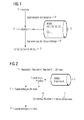
- FIG. 1 shows a procedure for determining a vocabulary entry for a speech recognition system for the Word "thirteen” 1.
- the grapheme sequence "thirteen” is phonetically transcribed 4, so that the phoneme sequence / ⁇ dr aItse: n> / 2 results.
- HMM hidden Markov model
- the associated state sequence is generated 6.
- the HMM states with the indices 52, 52, 53, ... identified. Behind each index hides a fully written HMM state.
- FIG. 2 shows a method sequence according to the invention for determining pronunciation variants of a word from a vocabulary of a speech recognition system.
- N different utterances of the word "thirteen" 1.
- a signal state sequence is determined with the aid of an HMM database 5 for each of the N signal sequences 1 of the word "thirteen".
- the HMM states are assigned directly to the individual segments of the signal state sequences without first performing a phonetic recognition or transcription.
- N-signal state sequences 2 are obtained, which are then divided into groups in a clustering process 6 by means of distance measures 7. This gives n groups, where n can be less than or equal to N.
- Each group is assigned a representative entry, which in this embodiment is the centroid of the respective group.
- These n-representing entries or n signal state sequences are then assigned to the word "thirteen" as pronunciation variants.
- the method according to the invention is particularly suitable when there is a risk for words in the vocabulary that there is a strong deviation from the canonical pronunciation. For example this applies to longer number words, such as "forty-seven” with the corresponding phoneme sequence / ⁇ zi: b @ n U ntf I rts I C> /. In fast speech, both the second syllable of "seven” and the “d” of "and” are swallowed here. A phonetic transcription can not do justice to this variability, since the changes take place in the subphonic area and because it is not always possible for reasons of resources that all pronunciation variants are added to the vocabulary.
- a significant advantage of the present invention is therefore the meaningful summary of many training utterances to very few and in extreme cases a single pronunciation variant and thus entry in the vocabulary.
Landscapes
- Engineering & Computer Science (AREA)
- Artificial Intelligence (AREA)
- Computational Linguistics (AREA)
- Health & Medical Sciences (AREA)
- Audiology, Speech & Language Pathology (AREA)
- Human Computer Interaction (AREA)
- Physics & Mathematics (AREA)
- Acoustics & Sound (AREA)
- Multimedia (AREA)
- Machine Translation (AREA)
- Electrically Operated Instructional Devices (AREA)
Applications Claiming Priority (1)
| Application Number | Priority Date | Filing Date | Title |
|---|---|---|---|
| DE102004063552A DE102004063552A1 (de) | 2004-12-30 | 2004-12-30 | Verfahren zur Ermittlung von Aussprachevarianten eines Wortes aus einem vorgebbaren Vokabular eines Spracherkennungssystems |
Publications (2)
| Publication Number | Publication Date |
|---|---|
| EP1677285A1 true EP1677285A1 (fr) | 2006-07-05 |
| EP1677285B1 EP1677285B1 (fr) | 2008-08-06 |
Family
ID=35985206
Family Applications (1)
| Application Number | Title | Priority Date | Filing Date |
|---|---|---|---|
| EP05111603A Expired - Lifetime EP1677285B1 (fr) | 2004-12-30 | 2005-12-02 | Procédé destiné à la détermination de variantes de prononciation d'un mot provenant d'un vocabulaire préréglé d'un système de reconnaissance vocale |
Country Status (2)
| Country | Link |
|---|---|
| EP (1) | EP1677285B1 (fr) |
| DE (2) | DE102004063552A1 (fr) |
Citations (2)
| Publication number | Priority date | Publication date | Assignee | Title |
|---|---|---|---|---|
| EP0321410A2 (fr) * | 1987-12-16 | 1989-06-21 | International Business Machines Corporation | Procédé et dispositif pour fabriquer des mots de référence utilisant le modèle de Markov |
| EP1126438A1 (fr) * | 1998-09-09 | 2001-08-22 | Asahi Kasei Kabushiki Kaisha | Dispositif de reconnaissance de la parole |
Family Cites Families (2)
| Publication number | Priority date | Publication date | Assignee | Title |
|---|---|---|---|---|
| DE4024890A1 (de) * | 1990-08-06 | 1992-02-13 | Standard Elektrik Lorenz Ag | Anpassung von referenzsprachmustern an umgebungsbedingte aussprachevarianten |
| DE10308611A1 (de) * | 2003-02-27 | 2004-09-16 | Siemens Ag | Ermittlung der Verwechslungsgefahr von Vokabulareinträgen bei der phonembasierten Spracherkennung |
-
2004
- 2004-12-30 DE DE102004063552A patent/DE102004063552A1/de not_active Withdrawn
-
2005
- 2005-12-02 DE DE502005004934T patent/DE502005004934D1/de not_active Expired - Fee Related
- 2005-12-02 EP EP05111603A patent/EP1677285B1/fr not_active Expired - Lifetime
Patent Citations (2)
| Publication number | Priority date | Publication date | Assignee | Title |
|---|---|---|---|---|
| EP0321410A2 (fr) * | 1987-12-16 | 1989-06-21 | International Business Machines Corporation | Procédé et dispositif pour fabriquer des mots de référence utilisant le modèle de Markov |
| EP1126438A1 (fr) * | 1998-09-09 | 2001-08-22 | Asahi Kasei Kabushiki Kaisha | Dispositif de reconnaissance de la parole |
Non-Patent Citations (1)
| Title |
|---|
| DE VOS L ET AL: "Algorithm and DSP-implementation for a speaker-independent single-word speech recognizer with additional speaker-dependent say-in facility", INTERACTIVE VOICE TECHNOLOGY FOR TELECOMMUNICATIONS APPLICATIONS, 1996. PROCEEDINGS., THIRD IEEE WORKSHOP ON BASKING RIDGE, NJ, USA 30 SEPT.-1 OCT. 1996, NEW YORK, NY, USA,IEEE, US, 30 September 1996 (1996-09-30), pages 53 - 56, XP010198864, ISBN: 0-7803-3238-5 * |
Also Published As
| Publication number | Publication date |
|---|---|
| DE502005004934D1 (de) | 2008-09-18 |
| EP1677285B1 (fr) | 2008-08-06 |
| DE102004063552A1 (de) | 2006-07-13 |
Similar Documents
| Publication | Publication Date | Title |
|---|---|---|
| DE69707876T2 (de) | Verfahren und vorrichtung fuer dynamisch eingestelltes training zur spracherkennung | |
| DE69818231T2 (de) | Verfahren zum diskriminativen training von spracherkennungsmodellen | |
| DE69315374T2 (de) | Spracherkennungssystem zur naturgetreuen Sprachübersetzung | |
| DE69519297T2 (de) | Verfahren und vorrichtung zur spracherkennung mittels optimierter partieller buendelung von wahrscheinlichkeitsmischungen | |
| DE69324428T2 (de) | Verfahren zur Sprachformung und Gerät zur Spracherkennung | |
| DE602005002706T2 (de) | Verfahren und System für die Umsetzung von Text-zu-Sprache | |
| DE69832393T2 (de) | Spracherkennungssystem für die erkennung von kontinuierlicher und isolierter sprache | |
| DE60026637T2 (de) | Verfahren zur Erweiterung des Wortschatzes eines Spracherkennungssystems | |
| DE602004012909T2 (de) | Verfahren und Vorrichtung zur Modellierung eines Spracherkennungssystems und zur Schätzung einer Wort-Fehlerrate basierend auf einem Text | |
| DE69712277T2 (de) | Verfahren und vorrichtung zur automatischen sprachsegmentierung in phonemartigen einheiten | |
| DE69719236T2 (de) | Verfahren und System zur Spracherkennung mittels verborgener Markoff-Modelle mit kontinuierlichen Ausgangswahrscheinlichkeiten | |
| DE602005001125T2 (de) | Erlernen der Aussprache neuer Worte unter Verwendung eines Aussprachegraphen | |
| DE112021000959T5 (de) | Synthetische Sprachverarbeitung | |
| WO1998010413A1 (fr) | Systeme et procede de traitement de la parole | |
| DE69613293T2 (de) | Vorrichtung zur Musteranpassung für Sprach- oder Mustererkennung | |
| DE60318385T2 (de) | Sprachverarbeitungseinrichtung und -verfahren, aufzeichnungsmedium und programm | |
| WO1999059135A2 (fr) | Dispositif et procede de reconnaissance d'un vocabulaire predetermine dans une parole au moyen d'un ordinateur | |
| EP1251489A2 (fr) | Entraínement des paramètres d'un système de reconnaissance de la parole pour la reconnaissance des variations de prononciation | |
| DE10304460B3 (de) | Generieren und Löschen von Aussprachevarianten zur Verringerung der Wortfehlerrate in der Spracherkennung | |
| EP3010014A1 (fr) | Procede d'interpretation de reconnaissance vocale automatique | |
| DE60018696T2 (de) | Robuste sprachverarbeitung von verrauschten sprachmodellen | |
| EP1182646A2 (fr) | Méthode de classification des phonèmes | |
| WO2000054254A1 (fr) | Procede et dispositif pour la determination d'un phoneme representatif | |
| EP2034472B1 (fr) | Procédé de reconnaissance vocale et dispositif de reconnaissance vocale | |
| DE60029456T2 (de) | Verfahren zur Online-Anpassung von Aussprachewörterbüchern |
Legal Events
| Date | Code | Title | Description |
|---|---|---|---|
| PUAI | Public reference made under article 153(3) epc to a published international application that has entered the european phase |
Free format text: ORIGINAL CODE: 0009012 |
|
| AK | Designated contracting states |
Kind code of ref document: A1 Designated state(s): AT BE BG CH CY CZ DE DK EE ES FI FR GB GR HU IE IS IT LI LT LU LV MC NL PL PT RO SE SI SK TR |
|
| AX | Request for extension of the european patent |
Extension state: AL BA HR MK YU |
|
| 17P | Request for examination filed |
Effective date: 20070104 |
|
| 17Q | First examination report despatched |
Effective date: 20070209 |
|
| AKX | Designation fees paid |
Designated state(s): DE FR GB IT |
|
| GRAP | Despatch of communication of intention to grant a patent |
Free format text: ORIGINAL CODE: EPIDOSNIGR1 |
|
| RTI1 | Title (correction) |
Free format text: METHOD FOR DETERMINING PRONUNCIATION VARIANTS OF A WORD FROM A PREDETERMINABLE VOCABULARY OF A SPEECH RECOGNITION SYSTEM |
|
| GRAS | Grant fee paid |
Free format text: ORIGINAL CODE: EPIDOSNIGR3 |
|
| GRAA | (expected) grant |
Free format text: ORIGINAL CODE: 0009210 |
|
| AK | Designated contracting states |
Kind code of ref document: B1 Designated state(s): DE FR GB IT |
|
| REG | Reference to a national code |
Ref country code: GB Ref legal event code: FG4D Free format text: NOT ENGLISH |
|
| REF | Corresponds to: |
Ref document number: 502005004934 Country of ref document: DE Date of ref document: 20080918 Kind code of ref document: P |
|
| PGFP | Annual fee paid to national office [announced via postgrant information from national office to epo] |
Ref country code: DE Payment date: 20090220 Year of fee payment: 4 |
|
| PLBE | No opposition filed within time limit |
Free format text: ORIGINAL CODE: 0009261 |
|
| STAA | Information on the status of an ep patent application or granted ep patent |
Free format text: STATUS: NO OPPOSITION FILED WITHIN TIME LIMIT |
|
| 26N | No opposition filed |
Effective date: 20090507 |
|
| PGFP | Annual fee paid to national office [announced via postgrant information from national office to epo] |
Ref country code: FR Payment date: 20081219 Year of fee payment: 4 Ref country code: IT Payment date: 20081231 Year of fee payment: 4 |
|
| GBPC | Gb: european patent ceased through non-payment of renewal fee |
Effective date: 20091202 |
|
| REG | Reference to a national code |
Ref country code: FR Ref legal event code: ST Effective date: 20100831 |
|
| PG25 | Lapsed in a contracting state [announced via postgrant information from national office to epo] |
Ref country code: FR Free format text: LAPSE BECAUSE OF NON-PAYMENT OF DUE FEES Effective date: 20091231 |
|
| PG25 | Lapsed in a contracting state [announced via postgrant information from national office to epo] |
Ref country code: DE Free format text: LAPSE BECAUSE OF NON-PAYMENT OF DUE FEES Effective date: 20100701 |
|
| PG25 | Lapsed in a contracting state [announced via postgrant information from national office to epo] |
Ref country code: GB Free format text: LAPSE BECAUSE OF NON-PAYMENT OF DUE FEES Effective date: 20091202 |
|
| PG25 | Lapsed in a contracting state [announced via postgrant information from national office to epo] |
Ref country code: IT Free format text: LAPSE BECAUSE OF NON-PAYMENT OF DUE FEES Effective date: 20091202 |