EP1679588A2 - Vorgegebene Navigation unter Verwendung topologischer Metadaten und Navigationspfad - Google Patents
Vorgegebene Navigation unter Verwendung topologischer Metadaten und Navigationspfad Download PDFInfo
- Publication number
- EP1679588A2 EP1679588A2 EP05112238A EP05112238A EP1679588A2 EP 1679588 A2 EP1679588 A2 EP 1679588A2 EP 05112238 A EP05112238 A EP 05112238A EP 05112238 A EP05112238 A EP 05112238A EP 1679588 A2 EP1679588 A2 EP 1679588A2
- Authority
- EP
- European Patent Office
- Prior art keywords
- navigation
- topology
- navigation path
- application
- path
- Prior art date
- Legal status (The legal status is an assumption and is not a legal conclusion. Google has not performed a legal analysis and makes no representation as to the accuracy of the status listed.)
- Granted
Links
Images






Classifications
-
- G—PHYSICS
- G06—COMPUTING OR CALCULATING; COUNTING
- G06F—ELECTRIC DIGITAL DATA PROCESSING
- G06F8/00—Arrangements for software engineering
- G06F8/20—Software design
Definitions
- the subject invention generally relates to computer programming, and more particularly to systems and methods that facilitate developing an application.
- Business application software provides navigation and/or exploration across heterogeneous business data, which can be related explicitly and/or implicitly.
- Business applications typically are assorted with an overwhelming amount of information, wherein an essentially endless amount of this information contains inter-relationships.
- a typical middle market application can contain forms, tables, inventory, charts, graphs, etc., wherein a majority of data is intertwined explicitly and implicitly.
- data e.g., billing forms, employee tables, order forms, etc.
- business applications involving, for example, payroll applications, sales analysis, shipping applications, bonus reports, cost analysis, etc.
- hypermedia systems are utilized to discover and/or navigate through the enormous quantities of information within a business application.
- Such hypermedia systems are information systems in which data access and exploration is accomplished through navigation rather than traditional context querying.
- Such systems create and maintain links within an application or to external applications and resources. These links provide users with the ability to retrieve additional information related to the query results. For instance, a query for a list of customer names can also provide a link to another query that retrieves a list of orders for a particular customer.
- Querying within navigation can be defined as a query for data access and a query for correlation.
- a query for data access can be utilized to provide data access to certain type of node where resources are data.
- a query for correlation provides the correlation of the data based upon, for example, metadata and/or keywords.
- query refers to getting data (e.g ., projects data)
- vigation refers to getting related data (e.g ., projects relationships and data).
- This navigational projection of relationships between data can also be referred to as a "non-linear" exploration of data.
- the subject invention relates to systems and/or methods that facilitate developing an application by utilizing a prescribed navigation.
- the prescribed navigation utilizes a topology that is based upon received metadata, wherein a navigation path is employed to represent a sub-graph of the topology.
- a prescribing component can receive data during design time, wherein such data can be metadata (e.g ., metadata related to a business framework).
- the prescribing component can create a topology with an associated navigation path based upon the received data.
- the topology and the navigation path e.g ., NPath
- the prescribing component can provide navigation such as linear, star, and/or tree.
- the prescribing component utilizes a navigation path provider infrastructure including at least one navigation path provider that can provide services to an application and/or navigation path client.
- the navigation path provider infrastructure manages communication between client applications and various navigation path providers.
- the navigation path provider(s) can be a variety of resource providers that access a context node either through transformation and/or information retrieval mechanism.
- the creation of the topology can be automatic, manual, or a combination thereof
- the prescribing component receives data (e.g ., entity graph, business intelligence metadata, business intelligence journal, ...) that is utilized automatically in topology creation.
- the topology can be created manual by utilizing a user interface tool that adds a link to represent a logical association between two entities.
- the topology can also be created using a combination of automatic and manual techniques.
- a navigation path expression can be created based upon the topology, wherein the navigation path expression is an object model. Elements and filters can be added to the navigation path expression, wherein such filters provide exclusion or inclusion for various sub-trees. Furthermore, navigation path expressions can be added to an element to programmatically prune the navigation path. In addition, code can be generated such that the navigation path is persisted as a set of metadata describing navigation route(s). The set of metadata can be utilized to generate code, wherein the navigation path expression can be composed in a strong typed manner.
- the prescribing component interacts with a navigation path client application programmable interface (API) that can provide communications between computer software.
- the navigation path API can utilize user interface (UI) binding that enables a binding between an NPath element, or called Node, and user interface components, managed by metadata.
- UI user interface
- navigation path client API can utilize a journal that records a history of navigation for an application.
- the journal records the history of navigation regardless of the navigation path utilized.
- a complex history of navigation within a topology can provide various details and insight into navigation (e.g ., discovery) of data within an application.
- the journal can be utilized as bases for a topology in order to provide a prescribed navigation for an application.
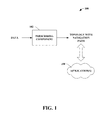
- Fig. 1 illustrates a block diagram of an exemplary system that facilitates developing an application utilizing prescribed navigation.
- Fig. 2 illustrates a block diagram of an exemplary system that facilitates developing an application utilizing prescribed navigation.
- Fig. 3 illustrates a block diagram of an exemplary architecture that facilitates developing an application utilizing prescribed navigation.
- Fig. 4 illustrates a block diagram of an exemplary system that facilitates developing an application utilizing prescribed navigation.
- Fig. 5 illustrates a block diagram of an exemplary system that facilitates prescribing navigation within an application.
- Fig. 6 illustrates diagram containing a starting node and associated links.
- Fig. 7 illustrates a block diagram of customer forms with nodes that facilitates developing an application utilizing prescribed navigation.
- Fig. 8 illustrates a block diagram of an object model that facilitates developing an application utilizing prescribed navigation.
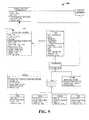
- Fig. 9 illustrates a block diagram of an object model that facilitates developing an application utilizing prescribed navigation.
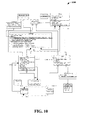
- Fig. 10 illustrates a block diagram of an object model that facilitates developing an application utilizing prescribed navigation.
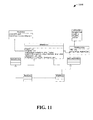
- Fig. 11 illustrates a block diagram of an object model that facilitates developing an application utilizing prescribed navigation.
- Fig. 12 illustrates a flow chart of an exemplary methodology that facilitates developing an application utilizing prescribed navigation.
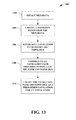
- Fig. 13 illustrates a flow chart of an exemplary methodology that facilitates developing an application utilizing prescribed navigation.
- Fig. 14 illustrates a flow chart of an exemplary methodology that facilitates developing an application utilizing prescribed navigation.
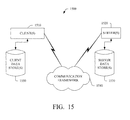
- Fig. 15 illustrates an exemplary networking environment, wherein the novel aspects of the subject invention can be employed.
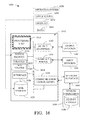
- Fig. 16 illustrates an exemplary operating environment, wherein the novel aspects of the subject invention can be employed.
- ком ⁇ онент can be a process running on a processor, a processor, an object, an executable, a program, and/or a computer.
- a component can be a process running on a processor, a processor, an object, an executable, a program, and/or a computer.
- an application running on a server and the server can be a component.
- One or more components can reside within a process and a component can be localized on one computer and/or distributed between two or more computers.
- Fig. 1 illustrates a system 100 that facilitates developing an application during design time by utilizing prescribed navigation.
- a prescribing component 102 can receive data during design time, wherein such data can be metadata (e.g ., metadata related to a business framework).
- the prescribing component 102 can create a topology with an associated navigation path based upon the received data.
- the topology and the navigation path e.g ., NPath
- the topology can for example be a metadata instance of a uniquely named collection of links, which is a network of node and link objects - this network represents a subset of traversable objects in paths in the metadata model. Such node or link can reference back to the original metadata.
- the navigation path which is a collection of acts to navigate the information topology for a specific application(s) 104 purpose.
- the navigation path is a sequential list of links over the topology that represents a sub-graph of a general topology created from the received data.
- the content of the navigation path defines a graph, while the physical sequence of link objects in the list represents a linear navigation path. It is to be appreciated that the applications 104 can utilize navigation paths by filtering nodes within the topology with an expression.
- navigation paths typically include a root node, a sequence to support a next functionality (e.g ., exploring the next node within a navigation path), a user interface (UI) presentation binding, and a notion of navigation type (e.g ., linear, star, or tree).
- a next functionality e.g ., exploring the next node within a navigation path
- UI user interface
- notion of navigation type e.g ., linear, star, or tree
- a topology with a navigation path contains various nodes with associated links.
- a node is an object that represents a state of navigation, wherein a list of links to other nodes and data contents during navigation is contained. It is to be appreciated that the node within the topology and navigation path can be associated to a model element such as, but not limited to, Entity or EntityCube (discussed infra) where contents are provided.
- Each node contains node content, which is data bound to a specific node.
- the data bound to a node is not limited to a particular node. For instance, data "A" can be bound to node "A", and node "B".
- the node content can be an entity, EntityCube, and/or query that returns a collection of data or simply a resource upon access.
- the node content further provides a value and type information, wherein the type content is dynamically assigned at run time when the node value is retrieved.
- the links between nodes inter-relate one another.
- a link can contain a unified resource identifier (URI) and references to source and destination nodes.
- URI unified resource identifier
- a link object is instantiated, similarly to associated end nodes.
- the topology and navigation path created facilitate use of prescriptive navigation within the application(s) 104.
- the prescribed navigation during design time shifts the discovery process from run time to design time.
- application developers can prescribe navigation paths for an end user such that the user would likely navigate through the content of the application(s) 104.
- the topology and navigation paths created by the prescribing component 102 facilitate developing the application(s) 104 by prescribing data exploration/discovery/search into specific paths rather than allowing a user to roam aimlessly.
- the applications 104 can be, but not limited to, a business application, an application on a computer-readable medium, an application within a business framework, etc.
- Fig. 2 illustrates a system 200 that facilitates developing an application by prescribing a navigation and/or data exploration within related data.
- a prescribing component 202 can receive data such as metadata (e.g ., metadata related to an application, metadata related to a business framework, ...) that facilitates creating a prescribed navigation for an application.
- Prescribed navigation based upon metadata in design time provides application developers a streamlined development effort using a navigational view.
- by utilizing a prescribed navigation path within the topology provides that re-usability of modules for a plurality of applications.
- the prescribing component 202 creates the topology and the navigation path such that the discovery of relationships between data and traversing such data points are done in design time. Traditional navigation technique provide a run time discovery of such relationships and traversing of such data points.
- the novelty of the subject invention provides application developers an architecture in which a prescribed navigation facilitates developing an application.
- the prescribing component 202 further includes a topology component 204 that creates a topology based upon data such as metadata related to an application.
- a topology is a metadata instance on uniquely labeled link collection, which is a network of at least one node and at least one link object.
- the topology component 204 creates the topology such that the network of node and link objects represents a subset of traversable objects and paths. It is to be appreciated that the topology created is a reflection of a conceptual model for a specific application component.
- the topology can be re-usable.
- the topology component 204 can create a topology based on data, wherein such topology is re-usable by an application and/or a plurality of applications.
- the topology can be reused by various parts and/or components of an application ( e.g ., by utilizing a different path for the navigation logic in the application).
- the topology component 204 can create a topology such that an application "Salary" and an application "Bonus Report" utilize the substantially similar topology.
- the topology contains nodes and associated links.
- a node is an object to represent a state of navigation containing a list of links to at least another node with data contents.
- the nodes can be entities, entity cubes, queries, tasks, and other resources.
- a link contains a uniform resource identifier (URI) that references to a source and destination node.
- URI uniform resource identifier
- the topology component 204 can create a topology manually and/or automatically.
- the topology component can create a topology based on a user interface (UI) (e.g ., manually) or based on a provider(s) (e.g ., automatically) or a combination thereof.
- UI user interface
- provider(s) e.g ., automatically
- the topology component 204 creates a topology allowing a navigation path to be created thereupon that provides the prescribed navigation for an application.
- the navigation path is created by an npath component 206, wherein the navigation path is a sequential list of links over the topology ( e.g ., created by the topology component 204) to represent a sub-graph of such topology.
- a topology can consist of a plurality of nodes and links, wherein an exploration through a series of related nodes via links can be a navigation path.
- the content of the navigation path defines the sub-graph while a physical sequence of link object in the list represents a linear navigation path.
- a topology can be created wherein the topology is a transportation network containing stops (e.g ., nodes) and connecting roads/streets ( e.g ., links).
- a navigation path within the topology can be a specific route from point "A" to point "B.” The creation of such prescribed navigation provides a "guided tour" of the transportation network that facilitates moving people from one location to another.
- the npath component 206 creates the navigation path such that a sub-set of the topology is utilized. It is to be appreciated that although a sub-set of the topology is prescribed, the sub-set can include the entire topology. Furthermore, the npath component 206 creates the navigation path such that the composition is at least one link and at least one node.
- the navigation path also contains a root node, a sequence to support next, a user interface (UI) presentation binding, and a user interface (UI) binding metadata (e.g ., inherited from the source topology but can be overridden).
- the navigation path supports a plurality of navigation and/or exploration types (e.g ., linear, star, tree traversal, ).
- the various navigation types drive navigation path application programmable interfaces (API's) behavior in the runtime for the application.
- API's application programmable interfaces
- linear navigation can be utilized, wherein the links to nodes are sequential in a linear path.
- a star navigation type can be utilized.
- Star navigation also known as hub and spoke, consists of a number of links jutting outward from a central node. The distribution is routed through the central node ( e.g ., hub) before reaching the final destination via links to other nodes.
- Another navigation type supported by the navigation path is, for example, tree traversal. Tree traversal is the process of visiting each node in a tree data structure, wherein a sequential procession of each node is provided. It is to be appreciated that the traversals can be characterized by the order in which the nodes are visited.
- the npath component 206 creates the navigation path during design time providing a prescribed navigation within the topology.
- the npath component can utilized to create a navigation path out of the topology by identifying a root node and pruning (e.g ., deleting) the associated graph (e.g., links and/or nodes).
- applications can create additional navigation path(s) and/or utilize the design time created navigation path.
- filters are utilized in order to filter node(s) yielding a runtime created navigation path.
- the prescribing component 202 provides prescribed navigation utilizing a topology and a navigation path that facilitates developing an application.
- the navigation path (e.g. , sub-graph of the topology) can be populated ( e.g ., populate nodes and/or links) by a navigation path (e.g ., npath) provider infrastructure 208 which includes at least one provider to an Nth provider where N is an integer.
- the navigation path provider can be a resource provider that accesses a context node via, for example, a transformation and/or information retrieval mechanism (e.g ., a meta-model provider for entities, a drill up/down/through/across for Business Intelligence (BI), a task operation or workflow, .
- a transformation and/or information retrieval mechanism e.g ., a meta-model provider for entities, a drill up/down/through/across for Business Intelligence (BI), a task operation or workflow, .
- the navigation path providers (e.g ., Provider 1 to Provider N ) have basic capabilities that provide appropriate functionality to the overall navigation path provider infrastructure 208.
- the navigation path provider responds to a request with a data context providing node(s) with data ( e.g ., populated the metadata).
- the navigation path provider also implements the ability to respond with a set of return types (e.g ., DataSets, Objects, XMLs, etc.).
- linking capabilities are provided such as link context (e.g ., wherein the provider produces links with a context) and link type (e.g ., wherein identity is given to a specific type of providers).
- the navigation providers can provide additional capabilities such as, for example, security token and/or filters (discussed infra).
- the security token provided can be employed in order to verify and/or authenticate navigation path providers within the navigation path provider infrastructure 208.
- a topology can be created based on a metadata, wherein a navigation path is representative of a sub-set of the topology.
- a navigation path provider can access a context node with a transformation and/or information retrieval mechanism.
- the navigation path provider can utilize a security token.
- the navigation path provider infrastructure 208 can include at least one navigation provider, wherein the infrastructure 208 manages communication between client application and at least one navigation path provider. It is to be appreciated that the navigation path provider infrastructure 208 can manage communication between a plurality of client applications and a plurality of navigation path providers.
- the navigation path provider infrastructure 208 provides plug-ability, extensibility, and/or delegation capabilities wherein navigation requests are delegated to specific set of providers when the type information is provided. However, when type information is not provided, the infrastructure 208 requests responses by broadcasting requests to Provider 1 to Provider N . Furthermore, the navigation path provider infrastructure 208 can provide instantiation for the topology and the navigation path.
- the instantiation for the topology is for resolving navigation path expression and navigation path are in run time.
- code can be generated such that the navigation path is persisted as a set of metadata describing navigation route(s).
- the set of metadata can be utilized to generate code, wherein the navigation path expression can be composed in a strong typed manner.
- an architecture 300 that facilitates developing an application during design time by utilizing a prescribed navigation.
- a prescribed navigation can be implemented allowing streamlined development of an application.
- the architecture 300 establishes design points such as, but not limited to, enabling high degree of plug-ability and extensibility, focusing on developer and application needs, long-term stability of application programmable interfaces (API's), providing a high level of prescriptive-ness for a business framework navigation, and maximizing business intelligence (BI) and entity metadata values.
- API application programmable interfaces
- the architecture 300 includes a workspace tier 302 and a service layer 304.
- an npath core 306 is included that facilitates creating a prescribed navigation for an application.
- the npath core 306 further includes a topology 308, a session 310, and an instantiation 312.
- the npath core 306 instantiates a topology 308 based upon received data.
- the topology 308 can be created based on metadata contained in a metadata store (not shown). As will be discussed in more detail infra the topology 308 can also be created manually or automatically or a combination thereof.
- the npath core 306 instantiates a navigation path 314 (e.g., also referred to as the NPath) from the topology instance by utilizing the instantiation 312.
- the instantiation 312 can instantiate the topology 308 and/or the navigation path 314 ( e.g ., also referred to as the NPath).
- the navigation path can be instantiated from the topology instance utilizing a navigation path expression, also referred to as an NPath expression.
- code can be generated such that the navigation path is persisted as a set of metadata describing navigation route(s).
- the set of metadata can be utilized to generate code, wherein the navigation path expression can be composed in a strong typed manner. Also, it is to be appreciated that the navigation path created has a client side and a service side, wherein the navigation path 314 represents the client side, and the navigation path is on the service side (not shown).
- the npath core 306 can create a service session for an npath client allowing for a prescriptive navigation within the workspace tier. It is to be appreciated the npath core 306 represents a service layer for the npath client to delegate requests to a provider infrastructure 324. It is to be appreciated the provider infrastructure 324 is the service layer that manages communication between client applications and navigation path providers as discussed supra (e.g., request/response, delegation/broadcasting, registration, ).
- the npath 314 resides in the workspace tier, wherein the NPath 314 (e.g., navigation path 314) can utilize a journal 316, a path 318, an expression 320, and a user interface (UI) binding 322.
- the navigation path client side 314 provides functionality for client applications, such as, for instance: expression 320 contains a strong typed expression to compose an NPath expression to create an instance of a path out of the topology instance in the service; UI binding 322 enables a navigation context sensitive binding between a node and UI components, which is persisted as part of metadata; path 318 contains a programming model that enables navigation on links in the navigation path; and journal 316 provides a journaling functionality to track user navigation and/or the history associated thereto.
- expression 320 contains a strong typed expression to compose an NPath expression to create an instance of a path out of the topology instance in the service
- UI binding 322 enables a navigation context sensitive binding between a node and UI
- the journal 316 provides a log and/or record to track user navigation within an application.
- the journal 316 can be utilized in order to prescribe navigation within an application and to facilitate developing a topology with navigation path(s) to better discover relationships and traverse data points.
- the journal 316 can track a particular user's navigation within a topology, or possibly outside of the topology due to run time ad hoc exploration, during a session such that a log and/or record are created wherein such record and/or log can facilitate developing an application.
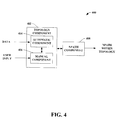
- Fig. 4 illustrates a system 400 that facilitates developing an application by utilizing a prescribed navigation including a topology and a navigation path.
- the topology component 402 creates the topology either by utilizing an automatic component 404 or a manual component 406 or a combination thereof.
- the automatic component 404 receives data, wherein a topology can be created.
- the shape and collection of links and nodes can be determined by a provider and/or a plurality of providers.
- the topology can be created from an entity graph (e.g. , topology created directly from metadata).
- the topology can be created from an entity model by examining entity metadata in information management system (IMS).
- IMS information management system
- the topology can be automatically created from business intelligence (BI) data.
- BI business intelligence
- cubes, dimensions, and measures are nodes, with the addition of a business criteria instance (e.g ., a multidimensional expression (MDX) statement) is also a node.
- the links among the above nodes can be, for instance, drill-up, drill-down, drill-across, etc. as implemented by at least one business intelligence (BI) provider.
- BI business intelligence
- the topology automatically created also covers the relationship between business intelligence (BI) metadata and entity metadata.
- the automatic component 404 can create the topology based on a business intelligence (BI) journal.
- the journal can be, but not limited to, submitted to the navigation service wherein a topology can be created by converting the journal by removing duplicate entries.
- the manual component 406 can receive a user input via user interface tools allowing the topology to be created and/or modified manually.
- a link can be added to represent a logical associated between two entities with the following code: The code above creates a topology with the name "myTopologyName,” with a root node having the type Order. Throughout the code, various links are added between nodes, and then the topology is saved back to a server side. It is to be appreciated that the code above is commented, wherein such comments are prefaced with "//.”
- the manual component 406 and the automatic component 404 can be utilized in conjunction in order to create a topology.
- the topology can be provided automatically based on the techniques described above, yet a user can utilize a user interface to edit the automatically provided topology.
- customization of a topology is possible and available to specifically tailor to an individual.
- the topology created can then be utilized to create a navigation path by the npath component 408.
- the navigation path created is a sequential list of links over the topology to represent a sub-graph of the topology (e.g ., created automatically by the automatic component 404, created manually by the manual component 406, or a combination thereof). It is to be appreciated that a navigation path can be created utilizing a persisted journal, wherein the journal is automatically utilized and/or manually utilized.
- the content of the npath defines a graph while the physical sequence of link object in list represents a linear navigation path.
- the navigation path and the topology path facilitate developing an application by utilizing prescriptive navigation within such application.
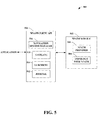
- Fig. 5 illustrates a system 500 that facilitates prescribing navigation within an application.
- An npath service 502 can include a topology with a navigation path(s) 504 wherein a prescribed navigation path is determined. However, before initialization, a navigational path contains only metadata (e.g ., from which the topology is based upon) and no data. The root of the node must have data instances in order to be traversed.
- An application must utilize an npath client application programmable interface (API) 506 to get a data instance, wherein the application provides the context and submits such context to the npath service 502.
- the npath service 502 can provide a root node data value to the npath client API 506 which provides the application with such value.
- API application programmable interface
- the root node value is the initial context for the navigation path to be navigated.
- the typed context can be obtained by an npath provider 508.
- the root node can be initialized with a data view in a variety of techniques. For example, an injection of a link to the root node can provide the initial context as seen in the following code: It is to be appreciated that the notion of injecting links is beneficial when views of the context node in an application are dynamically changing. Moreover, the links can transform the view from one to the other using the same context node.
- the npath client API 506 provides a variety of functionality to the system 500 in order to facilitate prescribing navigation within an application.
- the npath client API 506 includes a navigate 510 that provides a plurality of navigation.
- the navigate 510 can provide an npath sequential navigation, wherein the npath sequential navigation allows the application to sequentially travel down the navigation path with minimal path discovery. It is to be appreciated that the interaction with the npath service 502 is to obtain node contents by calling a TraverseLink(). For instance, once a connection can be established allowing a client to connect to the npath service 502.
- the navigation path is then instantiated by calling the npath service 502 with a topology name, a starting node, an npath expression, and a traversal strategy to get the instance of the navigation path.
- the application can then navigate utilizing "Next" on the navigation path from the starting node.
- the sample code below is a typical example of an application:
- navigate 510 can provide an npath sub-tree navigation, wherein the application navigates within the links of direct children in the given npath context node.
- npath sub-tree navigation wherein the application navigates within the links of direct children in the given npath context node.
- the client connects to the npath service 502, wherein an npath is instantiated that allows navigation when the application calls Traverse().
- typical examples are form-based applications with hot-links on displayed data and/or button controls. Hot-links, for instance, are dynamically activated when a path exists from a starting node to a link destination node.
- an online order application can include the forms: customer, sales report, order, orderline, and product.
- the navigation path for an application can be [ ⁇ customer, report>, ⁇ customer, order>, ⁇ order, orderline>, ⁇ orderline, product>].
- the navigation path is depicted in Fig. 6, containing the forms.
- the npath service 502 can return the navigation path based on the topology and expression specified by the application.
- the application can utilize a set of disconnected user interface (UI) elements (e.g ., Winform) at a client side, wherein the elements are bound to at least one node in a navigation path individually.
- UI user interface
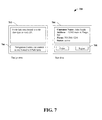
- the user interface (UI) elements 700 can be a design time illustration of a customer order form 702 and a run time illustration of a customer order form 704.
- a Customer form UI can be bound to the Customer node in the navigation path independent of a specific application but specific to a navigation context, such as, data source type, the navigation link type, or user inputs of any form.
- UI controls are dynamically generated based on the npath in metadata.
- the two navigation path button controls in the customer order forms can be prescribed to bind the node data to UI controls such as report chart, order form, orderline datagrid, etc.
- traversing a customer node activates the form that matches the given navigation context, wherein the node data is presented and links that are traverse-able form the source are populated in the navigation control area 706.
- a report button 708 can be created by an application developer and/or by an npath client API automatically.
- the link ⁇ customer, report> link is traversed.
- the npath can then load report data and display the report chart user interface (UI).
- the report chart can be, for instance, a modal dialog box, a modeless form, and/or an in-place docked control.
- the order form can have various controls to display order detail collections (e.g ., derivatives of data grid controls).
- the order detail control can be a child of the order form so that the link ⁇ order, orderline> is traversed automatically as order is traversed.
- the existence of link ⁇ orderline, product> enables a hypertext link on the product column of order lines.
- the navigate 510 can provide topology navigation, wherein an application explicitly requests discovery of links outside a navigation path but within the given topology.
- the navigate 510 can utilizing GetPath() on a known node.
- the application can call GetPath() on a node to obtain the links that are in scope of the topology without the accessing an npath provider 508.
- the links returned are in a form of a new npath instance.
- the application can add returned links into a journal 512 selectively (discussed infra).
- An ad-hoc navigation is substantially similar to topology navigation, yet the discovery scope is at a npath provider level.
- the ad-hoc navigation can be implemented by the navigate 510 by the following code sample:
- the npath client API 506 can further include a journal 512 that allows the recordation of history of navigation.
- the journal 512 can record the history of a navigation regardless of the navigation path used.
- the journal 512 can be opened to allow the recording of the navigations which proceed until the journal 512 is closed.
- the journal 512 can be saved in, for instance, a local file upon closing.
- an application upon activation can determine whether a journal file is located in a configuration file in order to load the journal history. When such application is deactivated, the journal 512 can be saved in the substantially similar file.
- journal 512 contents can be uploaded into a topology, wherein such journal contents can append, replace, or override the topology.
- connection can have right to write onto metadata.
- a journal 512 can create a history of navigation for a user wherein such history can be the basis of the topology and navigation path creation allowing the prescribed navigation to facilitate developing an application.
- the journal 512 can be updated by navigation activity upon activation; thus all navigation activity is recorded.
- the main functions for a journal 512 are "Back" and "Forward.”
- journal object model 800 encapsulates the pages navigated/visited by a user.
- the journal object model 800 contains a Journal object which provides a variety of attributes and operations.
- a back attribute provides the links the user can navigate backwards to and can be implemented as an array rather than a stack for flexibility.
- a forward attribute allows the links the user can navigate forward to, which also can be implemented as an array instead of a stack for flexibility.
- Another attribute, current provides the current link or page that is currently being visited ( e.g ., it does not belong to either the forward or back list of links).
- the journal object further provides operations such as, for instance, journal (e.g ., construct a journal object), journal (e.g ., copy constructor), traverse ( e.g ., navigate to a new link or page where the current page is pushed onto the back stack and the current page is set to the new page), back ( e.g ., go backwards one page), back ( e.g ., go backwards the number of pages specified), forward (e.g., go forward one page), forward (e.g., go forward the number of pages specified), serialize ( e.g ., save the journal to an XML stream), deserialize ( e.g ., load the journal form an XML stream), backstack ( e.g ., return the array of pages in the back array, which does not include the current page), and forwardstack (return the array of pages in the forward array, which does not include the current page).
- journal e.g ., construct a journal object
- the journal object model 800 contains a JournalLink obect that encapsulates the information needed to recreate a page visited by the user.
- the JournalLink object contains a name (e.g ., the name of the page which can be used to display the journal nodes to a user) and a URI attribute ( e.g ., the URI that describes the link the user traversed to get to this page, wherein the URI contains the context data).
- the JournalLink object provides operations such as, for example, name ( e.g ., return the name of the page) and URI ( e.g ., return the URI that created the page, wherein the UR page type together with the URI can recreate the page).
- the npath client API 506 can further include a UI binding 514.
- the graphic user interface (GUI) application can be based on the navigation path substantiated; yet displaying the user interface (UI) for a node upon navigation is done with the npath client API 506.
- GUI graphic user interface
- a developer can write a user interface control (e.g ., a page) in a client component over npath client API 506 can bind it to a type described in the business framework metadata.
- the page can implement an interface to communicate to the npath client API 506. It is to be appreciated the traversal of the navigation path occurs from the data instance of the root node.
- application(s) need to provide the context data, which is done by a construct data search criteria of the types specified by the navigation path.
- a binding determines the particular page run-time behavior, such as how it is activated or the relationship with other controls on display. For example, a binding determines if the user interface (UI) control is modal or modeless, or in-place control. It is to be appreciated that the page can have other in-place pages as child pages ( e.g ., provided the nodes of child page are reachable from the parent page node). The traversal can take place when the parent page is loaded.
- UI user interface
- the UI binding 514 provides the registration of pages (e.g ., registration with, for instance, a navigation manager), default UI binding (e.g ., one for single data instance that is property page-like and one for collections that is a data grid), type based UI binding (e.g ., registering a page as a type based binding that overrides the default binding), node based UI binding ( e.g ., page matching to the type and node id when there is more than one page available), link based UI binding ( e.g ., page matching to the type, node id, and link when there are multiple pages available), binding context (e.g ., registration of pages and providing a binding context allowing multiple pages to be registered for one type or one node).
- default UI binding e.g ., one for single data instance that is property page-like and one for collections that is a data grid
- type based UI binding e.g registering a page as a type
- the npath client API 506 can include a navigation session manager 516 that facilitates navigating services.
- the navigation session manager 516 is a singleton object in npath client API 506 that can manage navigation path(s), journal 512, pages, and UI binding 514 at a presentation tier.
- the npath client API 506 can connect to a navigation service (not shown) for the application, wherein the connection requires input parameters such as, for instance, business framework account name, password, etc.
- the connection handle/object for the session is returned. It is to be appreciated that the authentication can be provided by the business framework.
- the navigation session manager 516 can call the npath service 502 to get a navigation path instance returned.
- the application provides, for example, the following parameters: a topology name, a starting node instance, a navigation strategy, and an expression string or object model (OM).
- the topology name is a unique name of a topology.
- a nameless topology is simply a returned navigation path containing only the starting node and the first level child nodes as a result of discovery.
- a starting node instance provides the starting point for a node. The starting node instance is not necessary if criterion can uniquely identify the starting node of an absolute path from the root.
- an application may not contain information regarding the topology nor the absolute path to a node, in which can the node is identified first.
- the navigation strategy is the technique utilized in navigation. With a list of links, the connectivity of a graph is fixed, yet traversing from the starting node is different. In other words, two or more navigation paths utilize the substantially similar links yet different navigation sequence provided by the application. For instance, possible sequences are depth first (linear on a sequentially connected links), breadth first, or star ( e.g ., use connectivity rather than sequence).
- the expression string or object model (OM) is an XPath-like expression with object model support to identify the path over a topology.
- Fig. 9 illustrates an object model 900 that facilitates developing an application by utilizing prescribed navigation.
- the object model contains an NPathExpression class which implements an ISerializable interface to support serialization to XML.
- the NPathExpression class contains a chain or tree of element objects with various attributes and operations. For instance, attributes associated to NPathExpression is name ( e.g. , the name for the path which is unique), start (e.g., the first element of the path which can refer to a relative path or absolute path depending on the element properties).
- the NPathExpression can utilize operations such as, but not limited to, NPathExpression ( e.g. , constructor), start ( e.g ., property, sets or returns the first element of path), and ToString ( e.g ., returns an XPath-like expression string representation of the NPathExpression).
- the object model 900 further includes an Element class wherein, the Element class implements the ISerializable interface to support serialization to XML.
- the element class encapsulates an XPath's element and contains a filter and a chain or tree of other element objects.
- Element contains attributes such as, but not limited to, entity (e.g. , the business intelligence entity, where if null and first element in the path it is a relative path; if null and the element is not the first node it is a parent node), children ( e.g ., the next element in the path), parent ( e.g ., the parent to this element), and filter ( e.g ., the filter expression to filter subsequent sub-trees).
- entity e.g. , the business intelligence entity, where if null and first element in the path it is a relative path; if null and the element is not the first node it is a parent node), children ( e.g ., the next element
- the Element class can provide operations such as, for instance, element (e.g ., constructor), filter (e.g ., return the filter), add (e.g., append an element to the path, wherein the element is added to the children attribute of the current element), add ( e.g ., append an array of elements to the path, thus to create union of sub-trees), include ( e.g ., help function to include an element and its sub-tree to the path), exclude ( e.g ., help function to exclude an element and its sub-tree to the path), children ( e.g ., read-only property that returns the children array), parent ( e.g ., read only property that returns the parent of the element), and ToString ( e.g ., returns an XPath-like expression representation of the element and can be called recursively by NPathExpression).
- element e.g ., constructor
- filter e.g ., return the filter
- the object model 900 contains a filter class which implements the ISerializable interface to support serialization to XML.
- a filter contains a stack of terms, operators and functions that make up the filter expression.
- the filter calls can contain the stack attribute which provides a stack representative of the post-fix order of the filter expression.
- the filter class can also provide operations such as, for example, filter (e.g ., constructor), equalsto (e.g ., helper method), notequalsto (e.g ., helper method), push ( e.g ., internal use that pushes the term or operator onto the post-fix stack), pop (e.g., inter use that removes the top term or operator from the post-fix stack), isempty ( e.g ., returns true if the stack is empty), and tostring ( e.g ., return an XPath-like expression representation of this filter and can be called recursively by element).
- filter e.g ., constructor
- equalsto e.g ., helper method
- notequalsto e.g ., helper method
- push e.g ., internal use that pushes the term or operator onto the post-fix stack
- pop e.g., inter use that removes the top term or operator from the post-fix stack
- Fig. 10 and 11 illustrate object models 1000 and 1100 that facilitate developing an application by employing a prescribed navigation, wherein topology generation services are utilized.
- the object model 1000 contains a topology class that is derived from MarshalByRefObject based in part upon the topology residing on the server and client-reference accessibility.
- a navigation path is derived from ISerializable, wherein value can be passed around. It is to be appreciated that if navigation path resided on server, navigation path's MoveNext 0 function call would be remote and performance would be lacking causing a plurality of issues.
- a topology can be created from an entity cube wizard.
- a topology can be created, stored, and then loaded by a client.
- the following code illustrates the creation, storing and loading by a client:
- a navigation path can be created, wherein a navigation instance can be created from, for example, a model viewer.
- the topology can be created, a root node can be located, and a navigation path expression can be created utilizing the navigation path and navigation type.
- the navigation path can be obtained, and saved back to the store.
- code can be generated such that the navigation path is persisted as a set of metadata describing navigation route(s).
- the set of metadata can be utilized to generate code, wherein the navigation path expression can be composed in a strong typed manner.
- the navigation path can be loaded by the client.
- the above can be illustrated by the following code:
- Figs. 12-14 illustrate methodologies in accordance with the subject invention.
- the methodologies are depicted and described as a series of acts. It is to be understood and appreciated that the subject invention is not limited by the acts illustrated and/or by the order of acts, for example acts can occur in various orders and/or concurrently, and with other acts not presented and described herein. Furthermore, not all illustrated acts may be required to implement the methodologies in accordance with the subject invention.
- the methodologies could alternatively be represented as a series of interrelated states via a state diagram or events.
- Fig. 12 illustrates a methodology 1000 that facilitates prescribing navigation by utilizing a topology and a navigation path.
- the topology is a metadata instance of uniquely named collection of links (e.g ., a network of node and link objects).
- a topology can be created automatically (e.g ., from an entity graph, business intelligence metadata, business intelligence journal, ...) or manually ( e.g ., with the assistance of user interface tools, ...) or a combination thereof.
- a navigation path is established within the topology.
- a navigation path is a sequential list of links over the topology created at 1204 to represent a sub-graph of such topology.
- the content of the navigation path defines a graph while the sequence of link objects in the list represents a linear navigation path.
- the navigation path and topology is utilized for prescribed navigation for an application.
- the navigation path and topology can be utilized by, for instance, a navigation path service including a navigation path provider further including a provider infrastructure.
- the navigation path contains a root node that is populated with data instances by the navigation service.
- the application can utilize the navigation path and topology for navigation (e.g ., wherein the navigation is based on the prescribed navigation).
- Such navigation can be, for example, sequential navigation, navigation sub-tree navigation, ad-hoc navigation, topology navigation, journal navigation, etc .
- the navigation path and topology can be utilized in conjunction with a navigation path expression (e.g ., object model created during design time).
- the navigation path expression contains elements and filters, wherein sub-trees can be added or excluded from the path. It is to be appreciated that expressions can be added to each element to programmatically prune the path.
- code can be generated such that the navigation path is persisted as a set of metadata describing navigation route(s). The set of metadata can be utilized to generate code, wherein the navigation path expression can be composed in a strong typed manner.
- Fig. 13 illustrates a methodology 1300 that facilitates prescribing navigation by utilizing a topology and a navigation path.
- metadata is obtained, for instance, during a design time.
- a topology is created based at least upon the metadata obtained.
- the topology is a metadata instance of uniquely named collection of links (e.g ., a network of node and link objects).
- a topology can be created automatically (e.g ., from an entity graph, business intelligence metadata, business intelligence journal, ...) or manually ( e.g ., with the assistance of user interface tools, ...) or a combination thereof.
- a navigation path is established within the topology.
- a navigation path is a sequential list of links over the topology created at 1304 to represent a sub-graph of such topology.
- the content of the navigation path defines a graph while the sequence of link objects in the list represents a linear navigation path.
- a connection to a navigation path service (e.g ., a navigation path provider having a navigation path provider infrastructure) is provided wherein a variety of services can be offered to an application.
- the application can connect to the navigation path service that verifies, and provides contextual data to the navigation path and topology (e.g ., a root node is populated with data instances by the navigation service).
- the navigation path and/or topology is utilized as a prescribed navigation for an application at 1310.
- Such navigation can be, for example, sequential navigation, navigation sub-tree navigation, ad-hoc navigation, topology navigation, journal navigation, etc .
- the navigation path and topology can be utilized in conjunction with a navigation path expression (e.g ., object model created during design time).
- the navigation path expression contains elements and filters, wherein sub-trees can be added or excluded from the path. It is to be appreciated that expressions can be added to each element to programmatically prune the path.
- code can be generated such that the navigation path is persisted as a set of metadata describing navigation route(s).
- the set of metadata can be utilized to generate code, wherein the navigation path expression can be composed in a strong typed manner.
- Fig. 14 illustrates a methodology 1400 that that facilitates prescribing navigation by utilizing a topology and a navigation path.
- metadata is obtained, wherein a topology can be based.
- a determination is made whether the topology is created automatically. If automatic creation of the topology is determined, the method proceeds to 1406, where topology is obtained from a secured provider. If automatic topology is not determined, the topology is manually created at 1408. It is to be appreciated that the methodology can provide a combination of a manual created topology with an automatic created topology.
- a navigation path is established within the topology created (e.g ., automatically, manually, or a combination thereof).
- navigation path providers e.g ., navigation path services
- the navigation path and topology is utilized as a prescribed navigation for an application at 1416.
- Such navigation can be, for example, sequential navigation, navigation sub-tree navigation, ad-hoc navigation, topology navigation, journal navigation, etc .
- the navigation path and topology can be utilized in conjunction with a navigation path expression (e.g ., object model created during design time).
- code can be generated such that the navigation path is persisted as a set of metadata describing navigation route(s).
- the set of metadata can be utilized to generate code, wherein the navigation path expression can be composed in a strong typed manner.
- the navigation path expression contains elements and filters, wherein sub-trees can be added or excluded from the path. It is to be appreciated that expressions can be added to each element to programmatically prune the path.
- Figs. 15-16 and the following discussion is intended to provide a brief, general description of a suitable computing environment in which the various aspects of the subject invention may be implemented. While the invention has been described above in the general context of computer-executable instructions of a computer program that runs on a local computer and/or remote computer, those skilled in the art will recognize that the invention also may be implemented in combination with other program modules. Generally, program modules include routines, programs, components, data structures, etc., that perform particular tasks and/or implement particular abstract data types.
- inventive methods may be practiced with other computer system configurations, including single-processor or multi-processor computer systems, minicomputers, mainframe computers, as well as personal computers, hand-held computing devices, microprocessor-based and/or programmable consumer electronics, and the like, each of which may operatively communicate with one or more associated devices.
- the illustrated aspects of the invention may also be practiced in distributed computing environments where certain tasks are performed by remote processing devices that are linked through a communications network. However, some, if not all, aspects of the invention may be practiced on stand-alone computers.
- program modules may be located in local and/or remote memory storage devices.
- Fig. 15 is a schematic block diagram of a sample-computing environment 1500 with which the subject invention can interact.
- the system 1500 includes one or more client(s) 1510.
- the client(s) 1510 can be hardware and/or software (e.g ., threads, processes, computing devices).
- the system 1500 also includes one or more server(s) 1520.
- the server(s) 1520 can be hardware and/or software (e.g ., threads, processes, computing devices).
- the servers 1520 can house threads to perform transformations by employing the subject invention, for example.
- the system 1500 includes a communication framework 1540 that can be employed to facilitate communications between the client(s) 1510 and the server(s) 1520.
- the client(s) 1510 are operably connected to one or more client data store(s) 1550 that can be employed to store information local to the client(s) 1510.
- the server(s) 1520 are operably connected to one or more server data store(s) 1530 that can be employed to store information local to the servers 1540.
- an exemplary environment 1600 for implementing various aspects of the invention includes a computer 1612.
- the computer 1612 includes a processing unit 1614, a system memory 1616, and a system bus 1618.
- the system bus 1618 couples system components including, but not limited to, the system memory 1616 to the processing unit 1614.
- the processing unit 1614 can be any of various available processors. Dual microprocessors and other multiprocessor architectures also can be employed as the processing unit 1614.
- the system bus 1618 can be any of several types of bus structure(s) including the memory bus or memory controller, a peripheral bus or external bus, and/or a local bus using any variety of available bus architectures including, but not limited to, Industrial Standard Architecture (ISA), Micro-Channel Architecture (MSA), Extended ISA (EISA), Intelligent Drive Electronics (IDE), VESA Local Bus (VLB), Peripheral Component Interconnect (PCI), Card Bus, Universal Serial Bus (USB), Advanced Graphics Port (AGP), Personal Computer Memory Card International Association bus (PCMCIA), Firewire (IEEE 1394), and Small Computer Systems Interface (SCSI).
- ISA Industrial Standard Architecture
- MSA Micro-Channel Architecture
- EISA Extended ISA
- IDE Intelligent Drive Electronics
- VLB VESA Local Bus
- PCI Peripheral Component Interconnect
- Card Bus Universal Serial Bus
- USB Universal Serial Bus
- AGP Advanced Graphics Port
- PCMCIA Personal Computer Memory Card International Association bus
- Firewire IEEE 1394
- SCSI Small Computer Systems Interface
- the system memory 1616 includes volatile memory 1620 and nonvolatile memory 1622.
- the basic input/output system (BIOS) containing the basic routines to transfer information between elements within the computer 1612, such as during start-up, is stored in nonvolatile memory 1622.
- nonvolatile memory 1622 can include read only memory (ROM), programmable ROM (PROM), electrically programmable ROM (EPROM), electrically erasable ROM (EEPROM), or flash memory.
- Volatile memory 1620 includes random access memory (RAM), which acts as external cache memory.
- RAM is available in many forms such as synchronous RAM (SRAM), dynamic RAM (DRAM), synchronous DRAM (SDRAM), double data rate SDRAM (DDR SDRAM), enhanced SDRAM (ESDRAM), Synchlink DRAM (SLDRAM), and direct Rambus RAM (DRRAM).
- SRAM synchronous RAM
- DRAM dynamic RAM
- SDRAM synchronous DRAM
- DDR SDRAM double data rate SDRAM
- ESDRAM enhanced SDRAM
- SLDRAM Synchlink DRAM
- DRRAM direct Rambus RAM
- Disk storage 1624 includes, but is not limited to, devices like a magnetic disk drive, floppy disk drive, tape drive, Jaz drive, Zip drive, LS-100 drive, flash memory card, or memory stick.
- disk storage 1624 can include storage media separately or in combination with other storage media including, but not limited to, an optical disk drive such as a compact disk ROM device (CD-ROM), CD recordable drive (CD-R Drive), CD rewritable drive (CD-RW Drive) or a digital versatile disk ROM drive (DVD-ROM).
- an optical disk drive such as a compact disk ROM device (CD-ROM), CD recordable drive (CD-R Drive), CD rewritable drive (CD-RW Drive) or a digital versatile disk ROM drive (DVD-ROM).
- a removable or non-removable interface is typically used such as interface 1626.
- Fig. 16 describes software that acts as an intermediary between users and the basic computer resources described in the suitable operating environment 1600.
- Such software includes an operating system 1628.
- Operating system 1628 which can be stored on disk storage 1624, acts to control and allocate resources of the computer system 1612.
- System applications 1630 take advantage of the management of resources by operating system 1628 through program modules 1632 and program data 1634 stored either in system memory 1616 or on disk storage 1624. It is to be appreciated that the subject invention can be implemented with various operating systems or combinations of operating systems.
- Input devices 1636 include, but are not limited to, a pointing device such as a mouse, trackball, stylus, touch pad, keyboard, microphone, joystick, game pad, satellite dish, scanner, TV tuner card, digital camera, digital video camera, web camera, and the like. These and other input devices connect to the processing unit 1614 through the system bus 1618 via interface port(s) 1638.
- Interface port(s) 1638 include, for example, a serial port, a parallel port, a game port, and a universal serial bus (USB).
- Output device(s) 1640 use some of the same type of ports as input device(s) 1636.
- a USB port may be used to provide input to computer 1612, and to output information from computer 1612 to an output device 1640.
- Output adapter 1642 is provided to illustrate that there are some output devices 1640 like monitors, speakers, and printers, among other output devices 1640, which require special adapters.
- the output adapters 1642 include, by way of illustration and not limitation, video and sound cards that provide a means of connection between the output device 1640 and the system bus 1618. It should be noted that other devices and/or systems of devices provide both input and output capabilities such as remote computer(s) 1644.
- Computer 1612 can operate in a networked environment using logical connections to one or more remote computers, such as remote computer(s) 1644.
- the remote computer(s) 1644 can be a personal computer, a server, a router, a network PC, a workstation, a microprocessor based appliance, a peer device or other common network node and the like, and typically includes many or all of the elements described relative to computer 1612. For purposes of brevity, only a memory storage device 1646 is illustrated with remote computer(s) 1644.
- Remote computer(s) 1644 is logically connected to computer 1612 through a network interface 1648 and then physically connected via communication connection 1650.
- Network interface 1648 encompasses wire and/or wireless communication networks such as local-area networks (LAN) and wide-area networks (WAN).
- LAN technologies include Fiber Distributed Data Interface (FDDI), Copper Distributed Data Interface (CDDI), Ethernet, Token Ring and the like.
- WAN technologies include, but are not limited to, point-to-point links, circuit switching networks like Integrated Services Digital Networks (ISDN) and variations thereon, packet switching networks, and Digital Subscriber Lines (DSL).
- ISDN Integrated Services Digital Networks
- DSL Digital Subscriber Lines
- Communication connection(s) 1650 refers to the hardware/software employed to connect the network interface 1648 to the bus 1618. While communication connection 1650 is shown for illustrative clarity inside computer 1612, it can also be external to computer 1612.
- the hardware/software necessary for connection to the network interface 1648 includes, for exemplary purposes only, internal and external technologies such as, modems including regular telephone grade modems, cable modems and DSL modems, ISDN adapters, and Ethernet cards.
- the terms (including a reference to a "means") used to describe such components are intended to correspond, unless otherwise indicated, to any component which performs the specified function of the described component (e.g ., a functional equivalent), even though not structurally equivalent to the disclosed structure, which performs the function in the herein illustrated exemplary aspects of the invention.
- the invention includes a system as well as a computer-readable medium having computer-executable instructions for performing the acts and/or events of the various methods of the invention.
Landscapes
- Engineering & Computer Science (AREA)
- Software Systems (AREA)
- General Engineering & Computer Science (AREA)
- Theoretical Computer Science (AREA)
- Physics & Mathematics (AREA)
- General Physics & Mathematics (AREA)
- Stored Programmes (AREA)
- Information Retrieval, Db Structures And Fs Structures Therefor (AREA)
Applications Claiming Priority (1)
| Application Number | Priority Date | Filing Date | Title |
|---|---|---|---|
| US11/029,953 US7650349B2 (en) | 2005-01-05 | 2005-01-05 | Prescribed navigation using topology metadata and navigation path |
Publications (3)
| Publication Number | Publication Date |
|---|---|
| EP1679588A2 true EP1679588A2 (de) | 2006-07-12 |
| EP1679588A3 EP1679588A3 (de) | 2008-01-23 |
| EP1679588B1 EP1679588B1 (de) | 2013-05-22 |
Family
ID=35852135
Family Applications (1)
| Application Number | Title | Priority Date | Filing Date |
|---|---|---|---|
| EP05112238.0A Expired - Lifetime EP1679588B1 (de) | 2005-01-05 | 2005-12-15 | Vorgegebene Navigation unter Verwendung topologischer Metadaten und Navigationspfad |
Country Status (5)
| Country | Link |
|---|---|
| US (1) | US7650349B2 (de) |
| EP (1) | EP1679588B1 (de) |
| JP (1) | JP5174320B2 (de) |
| KR (1) | KR101169091B1 (de) |
| CN (1) | CN1801150B (de) |
Cited By (1)
| Publication number | Priority date | Publication date | Assignee | Title |
|---|---|---|---|---|
| US11683360B2 (en) | 2020-04-30 | 2023-06-20 | Software Ag | Systems and/or methods for dynamically configuring and evaluating rules with dynamic and/or user inputs at runtime |
Families Citing this family (29)
| Publication number | Priority date | Publication date | Assignee | Title |
|---|---|---|---|---|
| US7492716B1 (en) * | 2005-10-26 | 2009-02-17 | Sanmina-Sci | Method for efficiently retrieving topology-specific data for point-to-point networks |
| FR2906382B1 (fr) * | 2006-09-25 | 2008-11-14 | Canon Kk | Procedes et dispositifs pour optimiser le traitement xml |
| US20090319955A1 (en) * | 2008-06-20 | 2009-12-24 | Microsoft Corporation | Techniques for a navigation based design tool |
| US8565075B2 (en) | 2008-10-30 | 2013-10-22 | Verizon Patent And Licensing Inc. | Method and system for determining alternate paths |
| CN102239468B (zh) | 2008-12-02 | 2017-06-06 | 起元技术有限责任公司 | 可视化数据元素之间的关系以及数据元数据属性的图形表示 |
| US8384776B2 (en) * | 2009-04-22 | 2013-02-26 | Toyota Motor Engineering And Manufacturing North America, Inc. | Detection of topological structure from sensor data with application to autonomous driving in semi-structured environments |
| KR101615707B1 (ko) * | 2009-09-17 | 2016-04-26 | 삼성전자주식회사 | 데이터 처리 장치 및 방법 |
| US20120030612A1 (en) * | 2010-07-30 | 2012-02-02 | Sap Ag | Dynamic property attributes |
| US8307277B2 (en) * | 2010-09-10 | 2012-11-06 | Facebook, Inc. | Efficient event delegation in browser scripts |
| US9537736B2 (en) | 2011-01-31 | 2017-01-03 | Hewlett Packard Enterprise Development Lp | Methods and systems to generate reports including report references for navigation |
| US9189220B2 (en) * | 2012-07-02 | 2015-11-17 | Amazon Technologies, Inc. | Evaluating application compatibility |
| WO2014120225A1 (en) * | 2013-01-31 | 2014-08-07 | Hewlett-Packard Development Company, L.P. | Defining a design plan |
| US10331686B2 (en) * | 2013-03-14 | 2019-06-25 | Microsoft Corporation | Conducting search sessions utilizing navigation patterns |
| US9558047B1 (en) * | 2013-09-19 | 2017-01-31 | EMC IP Holding Company LLC | Navigation payload detection |
| US9626471B2 (en) * | 2014-02-21 | 2017-04-18 | Dassault Systemes Americas Corp. | Methods and systems for filtering components in hierarchically-referenced data |
| US9846703B2 (en) * | 2014-09-30 | 2017-12-19 | Vivint, Inc. | Page-based metadata system for distributed filesystem |
| CA3045810A1 (en) * | 2016-12-01 | 2018-06-07 | Ab Initio Technology Llc | Generating, accessing, and displaying lineage metadata |
| US11693832B2 (en) * | 2018-03-15 | 2023-07-04 | Vmware, Inc. | Flattening of hierarchical data into a relational schema in a computing system |
| CN110347752B (zh) * | 2018-04-11 | 2023-07-11 | 腾讯科技(深圳)有限公司 | 数据处理方法、装置、计算机可读存储介质和计算机设备 |
| US12333065B1 (en) | 2018-10-08 | 2025-06-17 | Floreo, Inc. | Customizing virtual and augmented reality experiences for neurodevelopmental therapies and education |
| JP7487494B2 (ja) * | 2020-03-02 | 2024-05-21 | 富士フイルムビジネスイノベーション株式会社 | 情報処理装置及び情報処理プログラム |
| CN111581444A (zh) * | 2020-04-29 | 2020-08-25 | 北京同创永益科技发展有限公司 | 一种编辑和展示拓扑图的方法及装置 |
| US10992540B1 (en) | 2020-05-19 | 2021-04-27 | Cisco Technology, Inc. | Determining formal models using weighting factors for computing elements in multi-cloud environments |
| US11283688B2 (en) | 2020-05-19 | 2022-03-22 | Cisco Technology, Inc. | Delayed recomputation of formal network topology models based on modifications to deployed network topologies |
| US11424989B2 (en) | 2020-06-15 | 2022-08-23 | Cisco Technology, Inc. | Machine-learning infused network topology generation and deployment |
| US11398948B2 (en) * | 2020-06-29 | 2022-07-26 | Cisco Technology, Inc. | Generation and deployment of inherited network topology models |
| EP4589448A1 (de) * | 2023-12-20 | 2025-07-23 | Citibank, N.A. | Automatisierung des effizienten einsatzes von modellen der künstlichen intelligenz |
| US12204565B1 (en) | 2023-12-20 | 2025-01-21 | Citibank, N.A. | Artificial intelligence sandbox for automating development of AI models |
| US12519699B1 (en) | 2024-05-21 | 2026-01-06 | Cyberspatial Inc. | Time-based computer network topology for network security |
Family Cites Families (20)
| Publication number | Priority date | Publication date | Assignee | Title |
|---|---|---|---|---|
| US6236907B1 (en) * | 1995-05-30 | 2001-05-22 | Ag-Chem Equipment Co., Inc. | System and method for creating agricultural decision and application maps for automated agricultural machines |
| US5878431A (en) * | 1996-10-04 | 1999-03-02 | Hewlett-Packard Company | Method and apparatus for providing topology based enterprise management services |
| US6131098A (en) * | 1997-03-04 | 2000-10-10 | Zellweger; Paul | Method and apparatus for a database management system content menu |
| US5835905A (en) * | 1997-04-09 | 1998-11-10 | Xerox Corporation | System for predicting documents relevant to focus documents by spreading activation through network representations of a linked collection of documents |
| US6393386B1 (en) * | 1998-03-26 | 2002-05-21 | Visual Networks Technologies, Inc. | Dynamic modeling of complex networks and prediction of impacts of faults therein |
| US6633878B1 (en) * | 1999-07-30 | 2003-10-14 | Accenture Llp | Initializing an ecommerce database framework |
| US6718535B1 (en) * | 1999-07-30 | 2004-04-06 | Accenture Llp | System, method and article of manufacture for an activity framework design in an e-commerce based environment |
| US20020198994A1 (en) * | 2001-05-15 | 2002-12-26 | Charles Patton | Method and system for enabling and controlling communication topology, access to resources, and document flow in a distributed networking environment |
| US7099885B2 (en) * | 2001-05-25 | 2006-08-29 | Unicorn Solutions | Method and system for collaborative ontology modeling |
| GB2376094A (en) | 2001-05-30 | 2002-12-04 | Ibm | Flexible navigation of a workflow graph in a data processing system |
| US20030009552A1 (en) * | 2001-06-29 | 2003-01-09 | International Business Machines Corporation | Method and system for network management with topology system providing historical topological views |
| US8413205B2 (en) * | 2001-09-19 | 2013-04-02 | Tvworks, Llc | System and method for construction, delivery and display of iTV content |
| US20030131097A1 (en) * | 2002-01-09 | 2003-07-10 | Stephane Kasriel | Interactive path analysis |
| US7512932B2 (en) * | 2002-03-22 | 2009-03-31 | Sun Microsystems, Inc. | Language and object model for describing MIDlets |
| US20030225778A1 (en) * | 2002-05-28 | 2003-12-04 | Craig Fisher | System and methods for generating a customer specific catalog from a base catalog |
| US7319906B2 (en) * | 2002-09-19 | 2008-01-15 | Advanced Bionics Corporation | Cochlear implant electrode and method of making same |
| US7739223B2 (en) * | 2003-08-29 | 2010-06-15 | Microsoft Corporation | Mapping architecture for arbitrary data models |
| US7454701B2 (en) * | 2003-10-30 | 2008-11-18 | Sap Ag | Systems and methods for implementing formulas |
| US7313565B2 (en) * | 2004-02-19 | 2007-12-25 | Microsoft Corporation | Data overlay, self-organized metadata overlay, and associated methods |
| DE602004006224T2 (de) * | 2004-03-18 | 2008-01-10 | Alcatel Lucent | Verfahren und Vorrichtung zur Datensynchronisierung eines verteilten Datenbanksystems |
-
2005
- 2005-01-05 US US11/029,953 patent/US7650349B2/en not_active Expired - Fee Related
- 2005-11-16 KR KR1020050109748A patent/KR101169091B1/ko not_active Expired - Fee Related
- 2005-12-05 CN CN2005101288869A patent/CN1801150B/zh not_active Expired - Fee Related
- 2005-12-05 JP JP2005351274A patent/JP5174320B2/ja not_active Expired - Fee Related
- 2005-12-15 EP EP05112238.0A patent/EP1679588B1/de not_active Expired - Lifetime
Cited By (1)
| Publication number | Priority date | Publication date | Assignee | Title |
|---|---|---|---|---|
| US11683360B2 (en) | 2020-04-30 | 2023-06-20 | Software Ag | Systems and/or methods for dynamically configuring and evaluating rules with dynamic and/or user inputs at runtime |
Also Published As
| Publication number | Publication date |
|---|---|
| EP1679588A3 (de) | 2008-01-23 |
| KR101169091B1 (ko) | 2012-07-26 |
| US7650349B2 (en) | 2010-01-19 |
| CN1801150A (zh) | 2006-07-12 |
| US20060149782A1 (en) | 2006-07-06 |
| KR20060080527A (ko) | 2006-07-10 |
| CN1801150B (zh) | 2011-05-18 |
| EP1679588B1 (de) | 2013-05-22 |
| JP2006190261A (ja) | 2006-07-20 |
| JP5174320B2 (ja) | 2013-04-03 |
Similar Documents
| Publication | Publication Date | Title |
|---|---|---|
| US7650349B2 (en) | Prescribed navigation using topology metadata and navigation path | |
| JP4847689B2 (ja) | 任意のデータモデル用のマッピングアーキテクチャ | |
| US8612397B2 (en) | System and method for a computer based forms language | |
| Rudolf et al. | The graph story of the SAP HANA database | |
| US7844570B2 (en) | Database generation systems and methods | |
| CN111190924A (zh) | 跨域的数据查询方法及装置 | |
| Bergel et al. | Deep Into Pharo | |
| US7802230B1 (en) | Heterogeneous software integration systems and methods | |
| US7421699B2 (en) | Service meta model for an enterprise service architecture | |
| US20190188308A1 (en) | Computing data lineage across a network of heterogeneous systems | |
| US20080306986A1 (en) | Migration of Legacy Applications | |
| US20060235838A1 (en) | System and method for managing complex relationships over distributed heterogeneous data sources | |
| WO2000075849A2 (en) | Method and apparatus for data access to heterogeneous data sources | |
| JP2005327232A6 (ja) | 任意のデータモデル用のマッピングアーキテクチャ | |
| Nagel | Professional C# 7 and. Net Core 2.0 | |
| Pollack et al. | Spring Data: modern data access for enterprise Java | |
| US7383234B2 (en) | Extensible data mining framework | |
| US11734309B2 (en) | Nested group hierarchies for analytics applications | |
| Alonso et al. | Towards a polyglot data access layer for a low-code application development platform | |
| US20120096057A1 (en) | Default object fragments | |
| Jordan | Practical Neo4j | |
| Biehl | GraphQL API Design | |
| Tuyishime | Supporting Domain-Independent Model Management through Automated REST APIs Generation | |
| Chang et al. | Prototyping an integrated information gathering system on CORBA | |
| Virolainen | Migrating microservices to graph database |
Legal Events
| Date | Code | Title | Description |
|---|---|---|---|
| PUAI | Public reference made under article 153(3) epc to a published international application that has entered the european phase |
Free format text: ORIGINAL CODE: 0009012 |
|
| AK | Designated contracting states |
Kind code of ref document: A2 Designated state(s): AT BE BG CH CY CZ DE DK EE ES FI FR GB GR HU IE IS IT LI LT LU LV MC NL PL PT RO SE SI SK TR |
|
| AX | Request for extension of the european patent |
Extension state: AL BA HR MK YU |
|
| PUAL | Search report despatched |
Free format text: ORIGINAL CODE: 0009013 |
|
| AK | Designated contracting states |
Kind code of ref document: A3 Designated state(s): AT BE BG CH CY CZ DE DK EE ES FI FR GB GR HU IE IS IT LI LT LU LV MC NL PL PT RO SE SI SK TR |
|
| AX | Request for extension of the european patent |
Extension state: AL BA HR MK YU |
|
| 17P | Request for examination filed |
Effective date: 20080212 |
|
| 17Q | First examination report despatched |
Effective date: 20080317 |
|
| AKX | Designation fees paid |
Designated state(s): AT BE BG CH CY CZ DE DK EE ES FI FR GB GR HU IE IS IT LI LT LU LV MC NL PL PT RO SE SI SK TR |
|
| GRAP | Despatch of communication of intention to grant a patent |
Free format text: ORIGINAL CODE: EPIDOSNIGR1 |
|
| GRAS | Grant fee paid |
Free format text: ORIGINAL CODE: EPIDOSNIGR3 |
|
| GRAA | (expected) grant |
Free format text: ORIGINAL CODE: 0009210 |
|
| AK | Designated contracting states |
Kind code of ref document: B1 Designated state(s): AT BE BG CH CY CZ DE DK EE ES FI FR GB GR HU IE IS IT LI LT LU LV MC NL PL PT RO SE SI SK TR |
|
| REG | Reference to a national code |
Ref country code: GB Ref legal event code: FG4D |
|
| REG | Reference to a national code |
Ref country code: CH Ref legal event code: EP |
|
| REG | Reference to a national code |
Ref country code: AT Ref legal event code: REF Ref document number: 613554 Country of ref document: AT Kind code of ref document: T Effective date: 20130615 |
|
| REG | Reference to a national code |
Ref country code: IE Ref legal event code: FG4D |
|
| REG | Reference to a national code |
Ref country code: DE Ref legal event code: R096 Ref document number: 602005039662 Country of ref document: DE Effective date: 20130718 |
|
| REG | Reference to a national code |
Ref country code: AT Ref legal event code: MK05 Ref document number: 613554 Country of ref document: AT Kind code of ref document: T Effective date: 20130522 |
|
| REG | Reference to a national code |
Ref country code: LT Ref legal event code: MG4D |
|
| PG25 | Lapsed in a contracting state [announced via postgrant information from national office to epo] |
Ref country code: SI Free format text: LAPSE BECAUSE OF FAILURE TO SUBMIT A TRANSLATION OF THE DESCRIPTION OR TO PAY THE FEE WITHIN THE PRESCRIBED TIME-LIMIT Effective date: 20130522 Ref country code: PT Free format text: LAPSE BECAUSE OF FAILURE TO SUBMIT A TRANSLATION OF THE DESCRIPTION OR TO PAY THE FEE WITHIN THE PRESCRIBED TIME-LIMIT Effective date: 20130923 Ref country code: IS Free format text: LAPSE BECAUSE OF FAILURE TO SUBMIT A TRANSLATION OF THE DESCRIPTION OR TO PAY THE FEE WITHIN THE PRESCRIBED TIME-LIMIT Effective date: 20130922 Ref country code: SE Free format text: LAPSE BECAUSE OF FAILURE TO SUBMIT A TRANSLATION OF THE DESCRIPTION OR TO PAY THE FEE WITHIN THE PRESCRIBED TIME-LIMIT Effective date: 20130522 Ref country code: LT Free format text: LAPSE BECAUSE OF FAILURE TO SUBMIT A TRANSLATION OF THE DESCRIPTION OR TO PAY THE FEE WITHIN THE PRESCRIBED TIME-LIMIT Effective date: 20130522 Ref country code: GR Free format text: LAPSE BECAUSE OF FAILURE TO SUBMIT A TRANSLATION OF THE DESCRIPTION OR TO PAY THE FEE WITHIN THE PRESCRIBED TIME-LIMIT Effective date: 20130823 Ref country code: ES Free format text: LAPSE BECAUSE OF FAILURE TO SUBMIT A TRANSLATION OF THE DESCRIPTION OR TO PAY THE FEE WITHIN THE PRESCRIBED TIME-LIMIT Effective date: 20130902 Ref country code: AT Free format text: LAPSE BECAUSE OF FAILURE TO SUBMIT A TRANSLATION OF THE DESCRIPTION OR TO PAY THE FEE WITHIN THE PRESCRIBED TIME-LIMIT Effective date: 20130522 Ref country code: FI Free format text: LAPSE BECAUSE OF FAILURE TO SUBMIT A TRANSLATION OF THE DESCRIPTION OR TO PAY THE FEE WITHIN THE PRESCRIBED TIME-LIMIT Effective date: 20130522 |
|
| REG | Reference to a national code |
Ref country code: NL Ref legal event code: VDEP Effective date: 20130522 |
|
| PG25 | Lapsed in a contracting state [announced via postgrant information from national office to epo] |
Ref country code: PL Free format text: LAPSE BECAUSE OF FAILURE TO SUBMIT A TRANSLATION OF THE DESCRIPTION OR TO PAY THE FEE WITHIN THE PRESCRIBED TIME-LIMIT Effective date: 20130522 Ref country code: BG Free format text: LAPSE BECAUSE OF FAILURE TO SUBMIT A TRANSLATION OF THE DESCRIPTION OR TO PAY THE FEE WITHIN THE PRESCRIBED TIME-LIMIT Effective date: 20130822 |
|
| PG25 | Lapsed in a contracting state [announced via postgrant information from national office to epo] |
Ref country code: LV Free format text: LAPSE BECAUSE OF FAILURE TO SUBMIT A TRANSLATION OF THE DESCRIPTION OR TO PAY THE FEE WITHIN THE PRESCRIBED TIME-LIMIT Effective date: 20130522 |
|
| PG25 | Lapsed in a contracting state [announced via postgrant information from national office to epo] |
Ref country code: BE Free format text: LAPSE BECAUSE OF FAILURE TO SUBMIT A TRANSLATION OF THE DESCRIPTION OR TO PAY THE FEE WITHIN THE PRESCRIBED TIME-LIMIT Effective date: 20130522 Ref country code: EE Free format text: LAPSE BECAUSE OF FAILURE TO SUBMIT A TRANSLATION OF THE DESCRIPTION OR TO PAY THE FEE WITHIN THE PRESCRIBED TIME-LIMIT Effective date: 20130522 Ref country code: SK Free format text: LAPSE BECAUSE OF FAILURE TO SUBMIT A TRANSLATION OF THE DESCRIPTION OR TO PAY THE FEE WITHIN THE PRESCRIBED TIME-LIMIT Effective date: 20130522 Ref country code: DK Free format text: LAPSE BECAUSE OF FAILURE TO SUBMIT A TRANSLATION OF THE DESCRIPTION OR TO PAY THE FEE WITHIN THE PRESCRIBED TIME-LIMIT Effective date: 20130522 Ref country code: CZ Free format text: LAPSE BECAUSE OF FAILURE TO SUBMIT A TRANSLATION OF THE DESCRIPTION OR TO PAY THE FEE WITHIN THE PRESCRIBED TIME-LIMIT Effective date: 20130522 |
|
| PG25 | Lapsed in a contracting state [announced via postgrant information from national office to epo] |
Ref country code: NL Free format text: LAPSE BECAUSE OF FAILURE TO SUBMIT A TRANSLATION OF THE DESCRIPTION OR TO PAY THE FEE WITHIN THE PRESCRIBED TIME-LIMIT Effective date: 20130522 Ref country code: IT Free format text: LAPSE BECAUSE OF FAILURE TO SUBMIT A TRANSLATION OF THE DESCRIPTION OR TO PAY THE FEE WITHIN THE PRESCRIBED TIME-LIMIT Effective date: 20130522 Ref country code: RO Free format text: LAPSE BECAUSE OF FAILURE TO SUBMIT A TRANSLATION OF THE DESCRIPTION OR TO PAY THE FEE WITHIN THE PRESCRIBED TIME-LIMIT Effective date: 20130522 |
|
| PLBE | No opposition filed within time limit |
Free format text: ORIGINAL CODE: 0009261 |
|
| STAA | Information on the status of an ep patent application or granted ep patent |
Free format text: STATUS: NO OPPOSITION FILED WITHIN TIME LIMIT |
|
| 26N | No opposition filed |
Effective date: 20140225 |
|
| REG | Reference to a national code |
Ref country code: DE Ref legal event code: R097 Ref document number: 602005039662 Country of ref document: DE Effective date: 20140225 |
|
| REG | Reference to a national code |
Ref country code: CH Ref legal event code: PL |
|
| PG25 | Lapsed in a contracting state [announced via postgrant information from national office to epo] |
Ref country code: LU Free format text: LAPSE BECAUSE OF FAILURE TO SUBMIT A TRANSLATION OF THE DESCRIPTION OR TO PAY THE FEE WITHIN THE PRESCRIBED TIME-LIMIT Effective date: 20131215 Ref country code: MC Free format text: LAPSE BECAUSE OF FAILURE TO SUBMIT A TRANSLATION OF THE DESCRIPTION OR TO PAY THE FEE WITHIN THE PRESCRIBED TIME-LIMIT Effective date: 20130522 |
|
| REG | Reference to a national code |
Ref country code: IE Ref legal event code: MM4A |
|
| PG25 | Lapsed in a contracting state [announced via postgrant information from national office to epo] |
Ref country code: CH Free format text: LAPSE BECAUSE OF NON-PAYMENT OF DUE FEES Effective date: 20131231 Ref country code: LI Free format text: LAPSE BECAUSE OF NON-PAYMENT OF DUE FEES Effective date: 20131231 Ref country code: IE Free format text: LAPSE BECAUSE OF NON-PAYMENT OF DUE FEES Effective date: 20131215 |
|
| REG | Reference to a national code |
Ref country code: DE Ref legal event code: R082 Ref document number: 602005039662 Country of ref document: DE Representative=s name: GRUENECKER, KINKELDEY, STOCKMAIR & SCHWANHAEUS, DE |
|
| REG | Reference to a national code |
Ref country code: GB Ref legal event code: 732E Free format text: REGISTERED BETWEEN 20150115 AND 20150121 |
|
| REG | Reference to a national code |
Ref country code: DE Ref legal event code: R082 Ref document number: 602005039662 Country of ref document: DE Representative=s name: GRUENECKER PATENT- UND RECHTSANWAELTE PARTG MB, DE Effective date: 20150126 Ref country code: DE Ref legal event code: R081 Ref document number: 602005039662 Country of ref document: DE Owner name: MICROSOFT TECHNOLOGY LICENSING, LLC, REDMOND, US Free format text: FORMER OWNER: MICROSOFT CORP., REDMOND, WASH., US Effective date: 20150126 |
|
| PG25 | Lapsed in a contracting state [announced via postgrant information from national office to epo] |
Ref country code: TR Free format text: LAPSE BECAUSE OF FAILURE TO SUBMIT A TRANSLATION OF THE DESCRIPTION OR TO PAY THE FEE WITHIN THE PRESCRIBED TIME-LIMIT Effective date: 20130522 Ref country code: CY Free format text: LAPSE BECAUSE OF FAILURE TO SUBMIT A TRANSLATION OF THE DESCRIPTION OR TO PAY THE FEE WITHIN THE PRESCRIBED TIME-LIMIT Effective date: 20130522 |
|
| PG25 | Lapsed in a contracting state [announced via postgrant information from national office to epo] |
Ref country code: HU Free format text: LAPSE BECAUSE OF FAILURE TO SUBMIT A TRANSLATION OF THE DESCRIPTION OR TO PAY THE FEE WITHIN THE PRESCRIBED TIME-LIMIT; INVALID AB INITIO Effective date: 20051215 |
|
| REG | Reference to a national code |
Ref country code: FR Ref legal event code: TP Owner name: MICROSOFT TECHNOLOGY LICENSING, LLC, US Effective date: 20150724 |
|
| REG | Reference to a national code |
Ref country code: FR Ref legal event code: PLFP Year of fee payment: 11 |
|
| REG | Reference to a national code |
Ref country code: FR Ref legal event code: PLFP Year of fee payment: 12 |
|
| REG | Reference to a national code |
Ref country code: FR Ref legal event code: PLFP Year of fee payment: 13 |
|
| PGFP | Annual fee paid to national office [announced via postgrant information from national office to epo] |
Ref country code: DE Payment date: 20181204 Year of fee payment: 14 |
|
| PGFP | Annual fee paid to national office [announced via postgrant information from national office to epo] |
Ref country code: FR Payment date: 20181120 Year of fee payment: 14 Ref country code: GB Payment date: 20181212 Year of fee payment: 14 |
|
| REG | Reference to a national code |
Ref country code: DE Ref legal event code: R119 Ref document number: 602005039662 Country of ref document: DE |
|
| GBPC | Gb: european patent ceased through non-payment of renewal fee |
Effective date: 20191215 |
|
| PG25 | Lapsed in a contracting state [announced via postgrant information from national office to epo] |
Ref country code: DE Free format text: LAPSE BECAUSE OF NON-PAYMENT OF DUE FEES Effective date: 20200701 Ref country code: GB Free format text: LAPSE BECAUSE OF NON-PAYMENT OF DUE FEES Effective date: 20191215 Ref country code: FR Free format text: LAPSE BECAUSE OF NON-PAYMENT OF DUE FEES Effective date: 20191231 |