EP1680903B1 - Procede pour transferer des objets de donnees utiles cryptees - Google Patents
Procede pour transferer des objets de donnees utiles cryptees Download PDFInfo
- Publication number
- EP1680903B1 EP1680903B1 EP04791191.2A EP04791191A EP1680903B1 EP 1680903 B1 EP1680903 B1 EP 1680903B1 EP 04791191 A EP04791191 A EP 04791191A EP 1680903 B1 EP1680903 B1 EP 1680903B1
- Authority
- EP
- European Patent Office
- Prior art keywords
- mms
- telecommunication terminal
- useful data
- data object
- telecommunication
- Prior art date
- Legal status (The legal status is an assumption and is not a legal conclusion. Google has not performed a legal analysis and makes no representation as to the accuracy of the status listed.)
- Expired - Lifetime
Links
- 238000000034 method Methods 0.000 title claims description 61
- 238000004891 communication Methods 0.000 claims description 15
- 230000008569 process Effects 0.000 claims description 11
- 238000007726 management method Methods 0.000 claims description 9
- 238000012546 transfer Methods 0.000 claims description 9
- 238000012545 processing Methods 0.000 claims description 5
- 230000003213 activating effect Effects 0.000 claims 1
- 239000003795 chemical substances by application Substances 0.000 description 36
- 230000005540 biological transmission Effects 0.000 description 21
- 230000011664 signaling Effects 0.000 description 8
- 230000006399 behavior Effects 0.000 description 4
- 230000010354 integration Effects 0.000 description 4
- 238000010586 diagram Methods 0.000 description 3
- 238000011156 evaluation Methods 0.000 description 3
- 230000008901 benefit Effects 0.000 description 2
- 238000012790 confirmation Methods 0.000 description 2
- 238000010295 mobile communication Methods 0.000 description 2
- 230000004044 response Effects 0.000 description 2
- 230000001360 synchronised effect Effects 0.000 description 2
- 241001136792 Alle Species 0.000 description 1
- 206010012335 Dependence Diseases 0.000 description 1
- 230000004913 activation Effects 0.000 description 1
- 230000001413 cellular effect Effects 0.000 description 1
- 238000010276 construction Methods 0.000 description 1
- 230000003111 delayed effect Effects 0.000 description 1
- 230000001419 dependent effect Effects 0.000 description 1
- 239000000284 extract Substances 0.000 description 1
- 230000006870 function Effects 0.000 description 1
- 239000003999 initiator Substances 0.000 description 1
- 230000008520 organization Effects 0.000 description 1
- 238000010200 validation analysis Methods 0.000 description 1
Images
Classifications
-
- H—ELECTRICITY
- H04—ELECTRIC COMMUNICATION TECHNIQUE
- H04L—TRANSMISSION OF DIGITAL INFORMATION, e.g. TELEGRAPHIC COMMUNICATION
- H04L12/00—Data switching networks
- H04L12/02—Details
- H04L12/16—Arrangements for providing special services to substations
- H04L12/18—Arrangements for providing special services to substations for broadcast or conference, e.g. multicast
- H04L12/189—Arrangements for providing special services to substations for broadcast or conference, e.g. multicast in combination with wireless systems
-
- H—ELECTRICITY
- H04—ELECTRIC COMMUNICATION TECHNIQUE
- H04L—TRANSMISSION OF DIGITAL INFORMATION, e.g. TELEGRAPHIC COMMUNICATION
- H04L63/00—Network architectures or network communication protocols for network security
- H04L63/04—Network architectures or network communication protocols for network security for providing a confidential data exchange among entities communicating through data packet networks
- H04L63/0428—Network architectures or network communication protocols for network security for providing a confidential data exchange among entities communicating through data packet networks wherein the data content is protected, e.g. by encrypting or encapsulating the payload
-
- H—ELECTRICITY
- H04—ELECTRIC COMMUNICATION TECHNIQUE
- H04L—TRANSMISSION OF DIGITAL INFORMATION, e.g. TELEGRAPHIC COMMUNICATION
- H04L63/00—Network architectures or network communication protocols for network security
- H04L63/18—Network architectures or network communication protocols for network security using different networks or channels, e.g. using out of band channels
-
- H—ELECTRICITY
- H04—ELECTRIC COMMUNICATION TECHNIQUE
- H04W—WIRELESS COMMUNICATION NETWORKS
- H04W12/00—Security arrangements; Authentication; Protecting privacy or anonymity
- H04W12/03—Protecting confidentiality, e.g. by encryption
-
- H—ELECTRICITY
- H04—ELECTRIC COMMUNICATION TECHNIQUE
- H04W—WIRELESS COMMUNICATION NETWORKS
- H04W12/00—Security arrangements; Authentication; Protecting privacy or anonymity
- H04W12/03—Protecting confidentiality, e.g. by encryption
- H04W12/033—Protecting confidentiality, e.g. by encryption of the user plane, e.g. user's traffic
-
- H—ELECTRICITY
- H04—ELECTRIC COMMUNICATION TECHNIQUE
- H04W—WIRELESS COMMUNICATION NETWORKS
- H04W4/00—Services specially adapted for wireless communication networks; Facilities therefor
- H04W4/12—Messaging; Mailboxes; Announcements
-
- H—ELECTRICITY
- H04—ELECTRIC COMMUNICATION TECHNIQUE
- H04L—TRANSMISSION OF DIGITAL INFORMATION, e.g. TELEGRAPHIC COMMUNICATION
- H04L2463/00—Additional details relating to network architectures or network communication protocols for network security covered by H04L63/00
- H04L2463/101—Additional details relating to network architectures or network communication protocols for network security covered by H04L63/00 applying security measures for digital rights management
-
- H—ELECTRICITY
- H04—ELECTRIC COMMUNICATION TECHNIQUE
- H04W—WIRELESS COMMUNICATION NETWORKS
- H04W80/00—Wireless network protocols or protocol adaptations to wireless operation
- H04W80/08—Upper layer protocols
- H04W80/12—Application layer protocols, e.g. WAP [Wireless Application Protocol]
Definitions
- the present invention relates to a method for transmitting encrypted user data objects to a telecommunication terminal, such as a mobile telephone.
- the present invention relates to a method in which the arrival and the utilization of the encrypted user data object is displayed in a user-friendly manner on the telecommunication terminal.
- a method or service for the reliable and billable transfer of user data objects to a telecommunication terminal, in particular in the embodiment of a mobile device or mobile telephone, in a telecommunication network is currently being discussed.
- the transmission or downloading of the user data objects to the mobile device is to take place by means of a protocol specified by the Open Mobile Alliance (OMA) or an Internet protocol (for example Hypertext Transfer Protocol: http).
- OMA Open Mobile Alliance
- a transmission service can be specified such that a user with an application program available on the mobile radio device, which can be referred to as a transmission client or in the case of a pure download of data as a download client, is to be allowed to transmit any user data objects which are offered by one or more data delivery components, in particular servers of service providers or content providers, in the data communications network.
- OMA Open Mobile Alliance
- the practical implementation is accomplished by describing the restrictions with an appropriate language, such as the Open Digital Rights Language (ODRL) or the OMA DRM Rights Expression Language (REL) specified by the OMA, where the transmission client or other specific application, a so-called DRM agent, for managing the rights associated with a (digital) user data object (DRM: Digital Rights Management), receives the rights description, evaluates it, stores it in a protected area of memory inaccessible to the user and stores the rights in a request from the User granted to use the object according to the rights description or not.
- DRM Digital Rights Management
- receives the rights description evaluates it, stores it in a protected area of memory inaccessible to the user and stores the rights in a request from the User granted to use the object according to the rights description or not.
- DRM Digital Rights Management
- a payload data object provided by a data provisioning component is encrypted and transported for storage and storage on a telecommunications terminal, such as a Mobile device, packed in a so-called container file or a so-called container object (for example, the data type or content type "Application / VND.OMA.DRM.Content” has been assigned).
- a service for reliable transmission content of a data delivery component content download
- the encrypted user data object in the container object packaged by WAP protocols (such as the WSP: Wireless Session Protocol) or Internet protocols (such as the http) transmitted to the telecommunications terminal.
- a so-called rights object is transmitted via a secure channel to the telecommunication terminal, for example automatically by means of WAP push.
- the rights object contains a description of the rights granted to the user for using the encrypted user data object, a reference to the container object, which allows the rights object to be assigned to the corresponding container object, and a key, which decrypts the encrypted user data object can to use it afterwards.
- a special device or application is necessary to use the combination of the encrypted user data object packed in the container object and the rights object, which may be the above-mentioned DRM agent.
- the rights object After the rights object has been transferred to the telecommunication device, the rights object is transferred directly to the DRM agent, which is responsible for managing and maintaining the secret, namely the key for decrypting the encrypted user data object.
- the DRM agent stores the rights object protected from unauthorized access by other applications or users on the telecommunications terminal. If an encrypted user data object is to be used, the DRM agent is activated first.
- the value of digital data is no longer transmitted by the (encrypted) user data object or the container object itself, but rather by the rights object and the object contained therein Key represented, without which yes the encrypted user data object is not usable.
- the encrypted user data objects packed in the container objects can be stored freely accessible on the telecommunication terminal.
- the (encrypted) user data objects to be transmitted can be data objects with multimedia contents and thus data with a large volume
- a service with a large transmission capacity is required for a corresponding transmission of such data.
- the 3GPP (3rd Generation Partnership Project) and OMA-specified Multimedia Messaging Service (MMS) is capable of performing switching and transmission of multimedia messages to and from mobile communication subscribers.
- a combination of both DRM and MMS techniques makes sense. With MMS valuable digital content can be transferred to other participants, whereby the concrete rights of use for the content can be defined and also transmitted.
- the contents are packed in the DRM container objects and optionally encrypted (depending on the DRM method selected).
- the use of the content can be limited to the addressed recipient of the MMS message and, for example, prevent unwanted retransmission by simply forwarding a message by the first recipient.
- subscription-type services can be considered.
- a user orders to a provider of such a service, the delivery of user data objects (with picture content, audio content, text content or other information content) of any kind when available, ie, for example, regularly when certain events occur (at a goal in a football match a video sequence with the course of the gate, current weather forecast with a picture of a weather map and audio information to explain the map, etc.).
- user data objects with picture content, audio content, text content or other information content
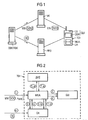
- the provider sends by his data provision component DBK (for example, a data server on the Internet) to the user to his telecommunication terminal TG1 the desired information in the form of encrypted user data objects NDO via MMS, ie the / the user data objects NDO integrated into a multimedia message MM reach the telecommunication terminal TG1 via a switching component VK, for example in the form of an MMS switching unit, in push mode at times that the user generally can not predict and without the user to explicitly download a download, which is a significant difference to the so-called pull Mode in which the user must always send an explicit request to the provider in order to obtain a desired user data object.
- DBK for example, a data server on the Internet
- the rights provider which may be identical to the service provider mentioned above, sends the rights object (s) RO assigned to the encrypted user data object NDO by the data provision component DBK via WAP push via a WAP push proxy gateway PPG to the telecommunication terminal TG1 of the user.
- the MMS user application MUA and the DRM agent DA may be software applications executed by a processing unit (not shown), such as a microprocessor, in the telecommunication terminal TG1.
- the encrypted user data objects and the corresponding binary rights objects are transmitted on separate independent transport channels.
- the transmission is traditionally time-unsynchronized. Only when both objects are present on the receiving terminal is it possible to use the protected contents of a user data object on the terminal.
- OMA Download the special variant of the Open Mobile Alliance for downloading user data objects to mobile devices
- the user actively requests a concrete user data object with a so-called "http Get Request”. which is subsequently sent to him in the so-called "http response message”.
- the provider can automatically deliver a rights object by short message service (SMS) or via WAP push in addition to the user data object.
- SMS short message service
- the behavior of the telecommunication terminal can be unsynchronized in time Reception of DRM-protected user data objects via MMS and corresponding rights objects so far not specifically tailored to the needs of DRM.
- An incoming MMS message MM with contained DRM-protected user data objects NDO is the user directly in a first receive message via a user interface GUI (see FIG. FIG. 1 ), which has, for example, a display DSP and a loudspeaker LS. If the user opens the message and the necessary rights objects are not yet available, the use of the user data object (s) is initially denied by the terminal.
- the user After the arrival of the / the corresponding rights objects, the user is additionally signaled in a second receive message that a use of the user data object in the multimedia message is now possible.
- this type of information display by his terminal is relatively unsatisfactory, since he is first informed about the arrival of the multimedia message, but this can not use because the required rights objects have not been received in the rule (by the temporally asynchronous reception of user data object and rights object (s) as described above). Only when the user is informed a second time that the required rights objects have now arrived, he can really use the message. The user is thus unnecessarily informed twice and additionally reminded the first time that the user data objects are subject to protection, ie certain restrictions.
- US2002138435 discloses a method for content distribution control wherein a user, after receiving a transaction mark via a first network, sends back a validation report over a second network and finally receives the desired content
- a method for transmitting encrypted user data objects to a first telecommunication terminal comprises the following steps. First, at least one encrypted user data object is transmitted from a switching component of a telecommunication network to the first telecommunication terminal. Furthermore, a time information is transmitted from the switching component to the first telecommunication terminal, indicating the time until which the at least one encrypted user data object associated rights object containing the key and the usage rights for the associated user data object, also arrives at the first telecommunication terminal. On the one hand, the time can be determined or specified such that a specific absolute time and / or a specific absolute date is indicated in the time information until when an assigned rights object should arrive, or on the other hand can be determined by a subsequent time interval.
- a rights object assigned to the at least one user data object is then received by the first telecommunication terminal.
- the first telecommunication terminal now checks whether the time specified in the time information has already elapsed and, in the event that it has not yet elapsed, outputs via a user interface a signal (for example, optically or acoustically) relating to the receipt of a usable payload data object. This means that only when both the user data object and the associated matching rights object for utilization of the user data object at the telecommunication terminal have arrived (within the predetermined time), then a signaling by the telecommunication terminal to the user.
- the first telecommunication terminal determines during the check that the time specified in the time information has already elapsed, then according to an embodiment via the user interface, there is a (simple) signal that an encrypted user data object was received, but not (yet) any rights or no rights object is available for utilization.
- a predetermined in the first telecommunication terminal time or a predetermined period of time (after receiving the Nutz Schemes) can be used, which is set for example by the user of the telecommunication terminal .
- a minimum value or maximum value of the two points in time (specified in the time information or preset by the user) can be used as the final last point in time, ie. either the nearer or farther time from reception of the (encrypted) user data object, be used.
- the illustrated method for transmitting encrypted user data objects to the first telecommunication terminal takes place according to an advantageous embodiment according to the Multimedia Messaging Service (MMS).
- MMS Multimedia Messaging Service
- the at least one encrypted user data object is transmitted together with the time information by means of a delivery message to the first telecommunication terminal.
- the encrypted user data object and the time information can be integrated here in an MMS delivery message.
- the time information is transmitted separately by means of a notification message (in the case of the MMS by means of an MMS receiver notification), which indicates that a user data object is ready for delivery to the first telecommunication terminal at the switching component, to the first telecommunication terminal.
- the time information is first transmitted in a first message and the useful data object is transmitted to the first telecommunication terminal only later in a second message.
- the respective notification message and / or delivery message can have a separate header field, to which the time information is assigned as field value.
- the at least one encrypted user data object can be sent by a data provision component, for example a data server of a provider of content or user data objects (in the telecommunication network) to the switching component for forwarding to the first telecommunication terminal.
- a data provision component for example a data server of a provider of content or user data objects (in the telecommunication network) to the switching component for forwarding to the first telecommunication terminal.
- the user data objects can be transmitted as part of a subscription or another information service.
- the first telecommunication terminal has a time measuring device or a timer, which it instructs after receiving the time information to measure the time up to the time specified in the time information.
- the telecommunication arrangement comprises a data provision component DBK of a provider of content or user data objects, wherein the data provision component can also serve as a "rights provisioning component" RBK of a provider of rights objects to the respective user data objects (the provider of rights objects and the provider of user data object can be identical)
- the switching component VK, the data provision component DBK or rights provision component RBK can be provided in the mobile radio network assigned to the mobile telephone TG1 or can be provided, for example, on the Internet, which is connected to the mobile radio network of the mobile telephone TG1 via corresponding WAP gateways.
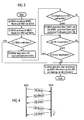
- the mobile telephone TG1 comprises an MMS user application or MMS user application MUA for carrying out the communication in particular in accordance with the MMS with the switching component and a DRM application or a DRM agent DA for managing the encrypted user data objects. Furthermore, the mobile telephone TG1 comprises a user interface GUI which, for example, includes a loudspeaker LS and a display DSP for displaying text and / or graphic contents.
- the user interface GUI then outputs the just mentioned positive (case 6. And 7. B)) or negative (case 7. A)) information suitably, for example, via the display DSP in the form of a text message or a corresponding icon and the user can speak in the positive Case to access the message or the user data object.
- an essential point in the method just described for transmitting user data objects to a telecommunications terminal or mobile telephone in the controlled output of information about received multimedia messages or user data objects and associated rights objects by the telecommunication terminal is the transmission of content or user data objects and rights objects via two logically separate transport channels to two logically separate functional units (MMS user application and DRM agent), wherein the transmission is not synchronized in time.
- MMS user application and DRM agent two logically separate functional units
- the transmission of encrypted or DRM protected user data objects from the switching component VK to the telecommunication terminal TG1 can be done by MMS.
- the detailed message flow for this purpose between the switching component VK, in particular in the execution of an MMS switching unit or a MMS relay server MRS in a telecommunication network, and the MMS user application MUA on the telecommunication terminal or mobile phone TG1 is in FIG. 4 shown.
- an MMS recipient notification M-Nind is sent by WAP push from the MRS to the MUA.
- the MUA first answers the message M-Nind with a confirmation M-NRind for the notification.
- the MUA sends a download request W-Greq to the MRS.
- the MUA also confirms the delivery of the multimedia message with the delivery confirmation M-Aind.
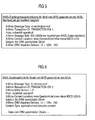
- an additional information element for the time information in a receiver notification takes place in this example as an additional header field, which receives the name "X-MmS-DRM-Separate-Delivery" by way of example.
- X-Mms-Transaction-ID Transaction-id-value Mandatory. Transaction ID for identifying the recipient notification (M-Notification.ind or M-Nind) and the corresponding acknowledgment by the recipient (M-NotifyResp.ind or M-NRind).
- X-Mms-MMS-Version MMS-version-value Mandatory. The MMS version number. from From-value Optional. Address of the last MMS user application that handled the multimedia message, ie that either sent or forwarded the multimedia message. Subject Subject value Optional. Subject of the multimedia message.
- X-Mms-Content-Location Content-location-value Mandatory. Reference to download the multimedia message.
- X-Mms-DRM Separate Delivery DRM separate delivery value Optional. Indicates that one or more DRM-protected objects will be included in the MMS delivery message and that, in addition, DRM rights objects will be transmitted to the telecommunications terminal via WAP push, optionally also describing the maximum delivery delay or describing a date / time will be up to which the delivery will be made.
- an MMS receiver notification can now in principle the in FIG. 5 have shown construction, the header fields are shown for the sake of clarity as text.
- binary codes are used.
- the presented variant has the advantage that already after the delivery of the MMS receiver notification for the MMS user application it is obvious that the MMS message will contain DRM-protected objects and from this a recipient-specific behavior can be derived, according to which all messages with DRM protected user data objects are downloaded immediately to the telecommunication terminal or similar.
- MMS user applications should simply ignore unknown headers and discard their contents.
- FIG. 6 illustrated example of a text-coded MMS delivery message is analogous to the MMS recipient notification shown above and in turn contains the inventive new header field "X-Mms-DRM-Separate-Delivery" - this time due to the somewhat later delivery, however, with a reduced “delta-seconds -value ".
- a method for transmitting encrypted user data objects NDO to a first telecommunication terminal TG1 with the following steps. First, at least one encrypted user data object is transmitted from a switching component of a telecommunication network to the first telecommunication terminal. Furthermore, a time information s ABS is transmitted from the switching component to the first telecommunication terminal, indicating at which time a rights object RO assigned to the at least one encrypted user data object containing the key and the usage rights for the assigned user data object arrives at the first telecommunication terminal as well , Subsequently, a rights object assigned to the at least one user data object is then received by the first telecommunication terminal.
- the first telecommunication terminal now checks whether the time specified in the time information has already elapsed and, in the event that it has not yet elapsed, does not yet output a signal concerning the reception of a user data object via a user interface. Only when either the specified time has elapsed or the at least one necessary rights object (before the lapse of the given time) has been received by the first telecommunication terminal, the MMS user application forwards the information about the presence of a multimedia message with included user data object to the user interface for output.
Landscapes
- Engineering & Computer Science (AREA)
- Computer Security & Cryptography (AREA)
- Computer Networks & Wireless Communication (AREA)
- Signal Processing (AREA)
- Computer Hardware Design (AREA)
- Computing Systems (AREA)
- General Engineering & Computer Science (AREA)
- Mobile Radio Communication Systems (AREA)
Claims (23)
- Procédé pour transmettre des objets de données utiles cryptés (NDO) à un premier terminal de télécommunication (TG1), selon lequel :- au moins un objet de données utiles crypté est transmis par une composante de commutation (VK) d'un réseau de télécommunications au premier terminal de télécommunication (TG1) ;- une information temporelle (SABS) est transmise par la composante de commutation (VK) au premier terminal de télécommunication (TG1), laquelle information indique jusqu'à quel instant un objet de droits (RO) qui est associé à l'au moins un objet de données utiles crypté (NDO) et qui contient la clé ainsi que les droits d'utilisation pour l'objet de données utiles associé parvient également au premier terminal de télécommunication ;- le premier terminal de télécommunication (TG1) reçoit un objet de droits (RO) associé à l'au moins un objet de données utiles (NDO) ;- le premier terminal de télécommunication (TG1) n'émet, via une interface utilisateur (GUI) qui lui est associée, un signal concernant la réception d'un objet de données utiles que lorsque l'instant indiqué dans l'information temporelle ou un instant prédéterminé dans le premier terminal de télécommunication s'est écoulé après la réception de l'objet de données utiles ou que l'au moins un objet de droits reçu pour rendre utilisable l'objet de données utiles a été reçu.
- Procédé selon la revendication 1, selon lequel l'interface utilisateur, à la réception d'un objet de droits (RO) avant l'instant indiqué dans l'information temporelle ou un instant prédéterminé dans le terminal de télécommunication, émet un signal concernant la réception d'un objet de données utiles utilisable.
- Procédé selon la revendication 1 ou 2, selon lequel, après que l'instant indiqué dans l'information temporelle ou l'instant prédéterminé dans le terminal de télécommunication s'est écoulé sans réception préalable d'un objet de droits, seul est émis, via l'interface utilisateur (GUI), un signal concernant la réception d'un objet de données utiles crypté.
- Procédé selon l'une quelconque des revendications 1 à 3, selon lequel l'au moins un objet de données utiles crypté (NDO) est transmis avec l'information temporelle au premier terminal de télécommunication (TG1) au moyen d'un message de livraison (M-Rconf).
- Procédé selon l'une des revendications 1 à 3, selon lequel l'information temporelle est transmise au premier terminal de télécommunication au moyen d'un message d'information (M-Nind) qui indique qu'un objet de données utiles (NDO) est disponible au niveau de la composante de commutation (VK) pour être délivré au premier terminal de télécommunication (TG1).
- Procédé selon l'une des revendications 1 à 5, selon lequel l'au moins un objet de données utiles crypté (NDO) est envoyé par une composante de mise à disposition de données (DBK) du réseau de télécommunications ou par un deuxième terminal de télécommunication à la composante de commutation (VK) pour retransmission au premier terminal de télécommunication (TG1).
- Procédé selon l'une des revendications 1 à 6, selon lequel le premier terminal de télécommunication (TG1), après la réception de l'information temporelle (SABS), ordonne à un dispositif de mesure du temps (ZME) qui lui est associé de mesurer le temps jusqu'à l'instant indiqué dans l'information temporelle ou l'instant prédéterminé dans le terminal de télécommunication.
- Procédé selon l'une des revendications 1 à 7, selon lequel le premier terminal de télécommunication (TG1) comporte un dispositif de communication (MUA) pour effectuer la communication avec la composante de commutation (VK) et un dispositif de gestion (DA) pour gérer les objets de données utiles cryptés (NDO), lequel est relié au dispositif de communication.
- Procédé selon la revendication 7 et 8, selon lequel le dispositif de communication (MUA), après la réception de l'au moins un objet de données utiles crypté, demande au dispositif de gestion (DA) s'il y a déjà un objet de droits (RO) pour l'au moins un objet de données utiles crypté (NDO) et, en l'absence d'un tel objet, ordonne au dispositif de mesure de temps de mesurer le temps.
- Procédé selon l'une des revendications 1 à 9, selon lequel l'au moins un objet de données utiles crypté (NDO) et l'objet de droits respectivement associé (RO) sont transmis au premier terminal de télécommunication (TG1) sur deux canaux de transport différents.
- Procédé selon l'une des revendications précédentes, selon lequel les messages et les données sont transmis entre la composante de commutation (VK) et le premier terminal de télécommunication (TG1) dans le cadre du Multimedia Messaging Service.
- Procédé selon l'une des revendications 4 ou 5 en combinaison avec la revendication 11, selon lequel le message de livraison est un message de livraison MMS et/ou le message d'information est une information MMS au destinataire, le message de livraison MMS et/ou l'information MMS au destinataire comportant un champ d'en-tête distinct (x-Mms-DRM-Separate-Delivery) auquel l'information temporelle est associée en tant que valeur de champ.
- Procédé selon l'une des revendications 1 à 12, selon lequel des données sont envoyées vers et émises par le premier (TG1) et/ou le deuxième terminal de télécommunication via une interface aérienne.
- Procédé selon la revendication 13, selon lequel le premier et/ou le deuxième terminal de télécommunication (TG1) comprennent un module radio, qui se présente plus particulièrement sous la forme d'un téléphone mobile, d'un téléphone sans fil ou d'un ordinateur portable.
- Procédé selon la revendication 13 ou 14, selon lequel la transmission de messages vers et à partir du premier et/ou du deuxième terminal de télécommunication (TG1) s'effectue au moyen de protocoles WAP ou du protocole de transfert hypertexte (http).
- Procédé selon l'une des revendications 1 à 15, selon lequel le premier terminal de télécommunication (TG1) fait partie d'un premier réseau de télécommunications.
- Procédé selon la revendication 16, selon lequel le premier réseau de télécommunications est réalisé en tant que réseau de téléphonie mobile qui fonctionne plus particulièrement selon la norme GSM ou UMTS.
- Procédé selon l'une des revendications 16 ou 17, selon lequel la composante de commutation (VK) est réalisée en tant que partie d'un deuxième réseau de télécommunications qui est relié au premier réseau de télécommunications et qui est réalisé plus particulièrement en tant que réseau de télécommunications basé sur des protocoles internet, tels que le protocole de transfert hypertexte.
- Procédé selon la revendication 18, selon lequel le premier et le deuxième réseau de télécommunications sont reliés entre eux par une composante de liaison qui est réalisée en particulier en tant que passerelle WAP.
- Procédé selon l'une des revendications 1 à 19, selon lequel la composante de mise à disposition de données (DBK) est réalisée en tant que serveur d'un fournisseur de contenus.
- Procédé selon l'une des revendications 1 à 19, selon lequel l'objet de données utiles (NDO) contient une information de type texte, une information audio, une information vidéo, un programme exécutable, un module logiciel ou une combinaison de ces informations.
- Dispositif de télécommunication, comprenant une composante de commutation (VK) ainsi qu'au moins un premier terminal de télécommunication (TG1), le dispositif de télécommunication étant conçu pour exécuter un procédé selon l'une des revendications 1 à 19.
- Terminal de télécommunication (TG1) pour traiter des objets de données utiles cryptés (NDO), présentant les caractéristiques suivantes :- un dispositif de communication (MUA) pour recevoir au moins un objet de données utiles crypté ;- un dispositif de gestion (DA) pour recevoir et gérer des objets de droits qui sont associés à des objets de données utiles cryptés et qui contiennent la clé ainsi que les droits d'utilisation pour un objet de données utiles associé ;- une interface utilisateur (GUI) pour envoyer des informations à un utilisateur ;- le dispositif de communication (MUA) étant en outre conçu pour traiter une information temporelle (SABS) reçue en rapport avec la réception de l'au moins un objet de données utiles crypté, laquelle indique jusqu'à quel instant un objet de droits (RO) associé à l'au moins un objet de données utiles crypté (NDO) arrive au dispositif de gestion (DA), et pour n'émettre via l'interface utilisateur (GUI) un signal concernant la réception d'un objet de données utiles utilisable que lorsque le dispositif de gestion (DA) reçoit encore un objet de droits (RO) avant l'instant indiqué.
Applications Claiming Priority (2)
| Application Number | Priority Date | Filing Date | Title |
|---|---|---|---|
| DE10351961A DE10351961B4 (de) | 2003-11-07 | 2003-11-07 | Verfahren zum Übertragen von verschlüsselten Nutzdatenobjekten |
| PCT/EP2004/052494 WO2005046160A1 (fr) | 2003-11-07 | 2004-10-11 | Procede pour transferer des objets de donnees utiles cryptees |
Publications (2)
| Publication Number | Publication Date |
|---|---|
| EP1680903A1 EP1680903A1 (fr) | 2006-07-19 |
| EP1680903B1 true EP1680903B1 (fr) | 2014-01-01 |
Family
ID=34559439
Family Applications (1)
| Application Number | Title | Priority Date | Filing Date |
|---|---|---|---|
| EP04791191.2A Expired - Lifetime EP1680903B1 (fr) | 2003-11-07 | 2004-10-11 | Procede pour transferer des objets de donnees utiles cryptees |
Country Status (6)
| Country | Link |
|---|---|
| US (2) | US7835992B2 (fr) |
| EP (1) | EP1680903B1 (fr) |
| KR (1) | KR101124121B1 (fr) |
| CN (1) | CN1875600B (fr) |
| DE (1) | DE10351961B4 (fr) |
| WO (1) | WO2005046160A1 (fr) |
Families Citing this family (14)
| Publication number | Priority date | Publication date | Assignee | Title |
|---|---|---|---|---|
| DE10351961B4 (de) * | 2003-11-07 | 2008-01-10 | Siemens Ag | Verfahren zum Übertragen von verschlüsselten Nutzdatenobjekten |
| JP2009521742A (ja) | 2005-12-26 | 2009-06-04 | コーニンクレッカ フィリップス エレクトロニクス エヌ ヴィ | 権利管理のための方法および装置 |
| US8832466B1 (en) | 2006-01-27 | 2014-09-09 | Trustwave Holdings, Inc. | Methods for augmentation and interpretation of data objects |
| KR100834752B1 (ko) * | 2006-02-17 | 2008-06-05 | 삼성전자주식회사 | 컨텐츠의 라이센스를 전달하기 위한 장치 및 방법 |
| US11201868B2 (en) * | 2006-10-23 | 2021-12-14 | Nokia Technologies Oy | System and method for adjusting the behavior of an application based on the DRM status of the application |
| KR20080063601A (ko) * | 2007-01-02 | 2008-07-07 | 삼성전자주식회사 | 이동통신 시스템에서 멀티미디어 메시지를 통해 컨텐트권리를 송신하는 장치 및 방법 |
| KR100988374B1 (ko) * | 2007-12-14 | 2010-10-18 | 엘지전자 주식회사 | 사용권리 이동 방법, 사용권리의 발급권한 관리 방법 및시스템 |
| US8819838B2 (en) * | 2008-01-25 | 2014-08-26 | Google Technology Holdings LLC | Piracy prevention in digital rights management systems |
| KR101000693B1 (ko) * | 2008-10-21 | 2010-12-10 | 엘지전자 주식회사 | 디지털 저작권 관리에서 사용권리 이동 방법 |
| US20100106610A1 (en) * | 2008-10-23 | 2010-04-29 | Nokia Corporation | Method and apparatus for transferring media |
| US8869235B2 (en) * | 2011-10-11 | 2014-10-21 | Citrix Systems, Inc. | Secure mobile browser for protecting enterprise data |
| CN104509139B (zh) * | 2012-08-06 | 2018-07-20 | 华为技术有限公司 | 用于提供彩信服务的方法 |
| US20190132437A1 (en) * | 2017-10-30 | 2019-05-02 | Harrison R. Fenoglio | Time delayed messaging system |
| US11681781B2 (en) * | 2018-02-21 | 2023-06-20 | Comcast Cable Communications, Llc | Systems and methods for content security |
Family Cites Families (10)
| Publication number | Priority date | Publication date | Assignee | Title |
|---|---|---|---|---|
| WO1996017313A1 (fr) * | 1994-11-18 | 1996-06-06 | Oracle Corporation | Procede et appareil d'indexation de flux d'informations multimedia |
| NO971605L (no) * | 1997-04-08 | 1998-10-09 | Ericsson Telefon Ab L M | Anordning for forbedring av tilgjengelighet av tjenester i et kommunikasjonssystem |
| US6128387A (en) * | 1997-05-19 | 2000-10-03 | Industrial Technology Research Institute | Method and system for using a non-inversible transform and dynamic keys to protect firmware |
| JP2000232423A (ja) * | 1999-02-09 | 2000-08-22 | Sony Corp | 通信装置、通信システムおよびその方法 |
| MY123388A (en) * | 1999-03-15 | 2006-05-31 | Sony Corp | Processing method and apparatus for encrypted data transfer |
| US6977909B2 (en) * | 2000-01-19 | 2005-12-20 | Phonepages Of Sweden, Inc. | Method and apparatus for exchange of information in a communication network |
| US6915425B2 (en) | 2000-12-13 | 2005-07-05 | Aladdin Knowledge Systems, Ltd. | System for permitting off-line playback of digital content, and for managing content rights |
| US20020138435A1 (en) * | 2001-03-26 | 2002-09-26 | Williams L. Lloyd | Method and system for content delivery control using a parallel network |
| EP1384383B1 (fr) * | 2001-04-30 | 2004-09-15 | Siemens Aktiengesellschaft | Procede de regulation d'une liaison dans un reseau de telecommunication |
| DE10351961B4 (de) * | 2003-11-07 | 2008-01-10 | Siemens Ag | Verfahren zum Übertragen von verschlüsselten Nutzdatenobjekten |
-
2003
- 2003-11-07 DE DE10351961A patent/DE10351961B4/de not_active Expired - Fee Related
-
2004
- 2004-10-11 US US10/595,713 patent/US7835992B2/en not_active Expired - Fee Related
- 2004-10-11 KR KR1020067010345A patent/KR101124121B1/ko not_active Expired - Fee Related
- 2004-10-11 WO PCT/EP2004/052494 patent/WO2005046160A1/fr not_active Ceased
- 2004-10-11 CN CN2004800323962A patent/CN1875600B/zh not_active Expired - Fee Related
- 2004-10-11 EP EP04791191.2A patent/EP1680903B1/fr not_active Expired - Lifetime
-
2010
- 2010-09-17 US US12/885,131 patent/US8762282B2/en not_active Expired - Fee Related
Also Published As
| Publication number | Publication date |
|---|---|
| KR20060120158A (ko) | 2006-11-24 |
| DE10351961B4 (de) | 2008-01-10 |
| CN1875600A (zh) | 2006-12-06 |
| US20070038571A1 (en) | 2007-02-15 |
| EP1680903A1 (fr) | 2006-07-19 |
| CN1875600B (zh) | 2010-04-28 |
| KR101124121B1 (ko) | 2012-03-21 |
| US20110007898A1 (en) | 2011-01-13 |
| WO2005046160A1 (fr) | 2005-05-19 |
| US7835992B2 (en) | 2010-11-16 |
| DE10351961A1 (de) | 2005-06-23 |
| US8762282B2 (en) | 2014-06-24 |
Similar Documents
| Publication | Publication Date | Title |
|---|---|---|
| DE602004005319T2 (de) | Nachrichtenverwaltung | |
| EP1680903B1 (fr) | Procede pour transferer des objets de donnees utiles cryptees | |
| EP1678962B1 (fr) | Procede de transmission d'objets de donnees utiles cryptes | |
| EP1632065B1 (fr) | Procede pour transmettre des messages dans un systeme de communication base sur mms | |
| WO2002058359A1 (fr) | Procede et dispositif de telecommunication mobile permettant la transmission de donnees dans un reseau de telephonie mobile | |
| DE102005033667A1 (de) | Kommunikationssitzungs-Server-Einheit, Kommunikations-Endgerät, Broadcast-Server-Einheit, Netzwerkeinheit, Verfahren zum Steuern einer Kommunikationssitzung mit mehreren Kommunikations-Endgeräten, Verfahren zum Aufbauen einer Kommunikationssitzung, Verfahren zum Übertragen von Daten im Rahmen einer Kommunikationssitzung mittels einer Broadcast-Server-Einheit und Computerprogrammelemente | |
| WO2004068878A1 (fr) | Procede et systeme d'integration d'un element multiple de message multimedia dans un message multimedia | |
| EP1555786A1 (fr) | Procédé permettant d'établir une connection de données entre un premier et un deuxième dispositif mobile | |
| DE102004037338B4 (de) | Kommunikationssystem, Verfahren zum Steuern eines Kommunikationssystems, Server, Verfahren zum Betreiben eines Servers, Kommunikationsendgerät und Verfahren zum Betreiben eines Kommunikationsendgeräts | |
| EP2030348B1 (fr) | Procede de signalisation d'une invitation a etablir une liaison | |
| EP1647153A1 (fr) | Transmission d'un objet de donnees utiles d'une composante de transmission a une station mobile | |
| EP3304957A1 (fr) | Procédé permettant de transmettre des paramètres entre un réseau de télécommunication et un terminal de télécommunication et permettant d'activer et/ou de modifier et/ou de désactiver un profil de communication défini ou désigné par des paramètres sur le terminal de télécommunication, système permettant de transmettre des paramètres, terminal permettant de transmettre des paramètres, programme informatique et produit-programme informatique | |
| WO2004021663A1 (fr) | Procede et dispositif pour identifier des donnees utiles push de façon specifique aux sources de donnees | |
| DE10215567A1 (de) | Verfahren zur Übertragung von Daten, insbesondere mit multimedialen Inhalten, in einem Mobilfunknetz | |
| EP1618722B1 (fr) | Procede et dispositifs pour transmettre des donnees utiles avec des droits d'utilisation, depuis une station d'abonne, par voie hertzienne | |
| WO2004043033A1 (fr) | Procede et dispositif de transmission d'objets de donnees utiles codes | |
| WO2004086675A1 (fr) | Procede de transmission de donnees utiles y compris des informations de prise en charge de couts dans un reseau de communication | |
| EP1520438A1 (fr) | Procede et systeme de transmission de messages mms | |
| EP1564966B1 (fr) | Système, dispositif et procédé pour le traitement des messages échangés entre un réseau mobile et un réseau fixe poste à poste | |
| EP2059003B1 (fr) | Procédé de préparation d'informations de présence | |
| EP1878181B1 (fr) | Procede et dispositif de communication permettant de gerer un conflit de version mms | |
| EP1352500A1 (fr) | Procede et dispositif de telecommunication mobile permettant la transmission de donnees dans un reseau de telephonie mobile | |
| DE10308932B4 (de) | Verfahren zum Signalisieren von Steueranweisungen an ein Telekommunikationsgerät | |
| DE102004058747A1 (de) | Teilnehmergerät und Verfahren zum Betreiben eines Teilnehmergeräts |
Legal Events
| Date | Code | Title | Description |
|---|---|---|---|
| PUAI | Public reference made under article 153(3) epc to a published international application that has entered the european phase |
Free format text: ORIGINAL CODE: 0009012 |
|
| 17P | Request for examination filed |
Effective date: 20060405 |
|
| AK | Designated contracting states |
Kind code of ref document: A1 Designated state(s): AT BE BG CH CY CZ DE DK EE ES FI FR GB GR HU IE IT LI LU MC NL PL PT RO SE SI SK TR |
|
| DAX | Request for extension of the european patent (deleted) | ||
| RAP1 | Party data changed (applicant data changed or rights of an application transferred) |
Owner name: SIEMENS AKTIENGESELLSCHAFT |
|
| REG | Reference to a national code |
Ref country code: DE Ref legal event code: R079 Ref document number: 502004014485 Country of ref document: DE Free format text: PREVIOUS MAIN CLASS: H04L0029060000 Ipc: H04L0012180000 |
|
| GRAP | Despatch of communication of intention to grant a patent |
Free format text: ORIGINAL CODE: EPIDOSNIGR1 |
|
| RIC1 | Information provided on ipc code assigned before grant |
Ipc: H04W 80/12 20090101ALI20130704BHEP Ipc: H04L 29/06 20060101ALI20130704BHEP Ipc: H04L 12/18 20060101AFI20130704BHEP Ipc: H04W 12/02 20090101ALI20130704BHEP Ipc: H04W 4/12 20090101ALI20130704BHEP |
|
| INTG | Intention to grant announced |
Effective date: 20130724 |
|
| GRAS | Grant fee paid |
Free format text: ORIGINAL CODE: EPIDOSNIGR3 |
|
| GRAA | (expected) grant |
Free format text: ORIGINAL CODE: 0009210 |
|
| AK | Designated contracting states |
Kind code of ref document: B1 Designated state(s): AT BE BG CH CY CZ DE DK EE ES FI FR GB GR HU IE IT LI LU MC NL PL PT RO SE SI SK TR |
|
| REG | Reference to a national code |
Ref country code: GB Ref legal event code: FG4D Free format text: NOT ENGLISH |
|
| REG | Reference to a national code |
Ref country code: CH Ref legal event code: EP |
|
| REG | Reference to a national code |
Ref country code: IE Ref legal event code: FG4D Free format text: LANGUAGE OF EP DOCUMENT: GERMAN |
|
| REG | Reference to a national code |
Ref country code: AT Ref legal event code: REF Ref document number: 648001 Country of ref document: AT Kind code of ref document: T Effective date: 20140215 |
|
| REG | Reference to a national code |
Ref country code: DE Ref legal event code: R096 Ref document number: 502004014485 Country of ref document: DE Effective date: 20140220 |
|
| REG | Reference to a national code |
Ref country code: NL Ref legal event code: VDEP Effective date: 20140101 |
|
| RAP2 | Party data changed (patent owner data changed or rights of a patent transferred) |
Owner name: SIEMENS AKTIENGESELLSCHAFT |
|
| PG25 | Lapsed in a contracting state [announced via postgrant information from national office to epo] |
Ref country code: CY Free format text: LAPSE BECAUSE OF FAILURE TO SUBMIT A TRANSLATION OF THE DESCRIPTION OR TO PAY THE FEE WITHIN THE PRESCRIBED TIME-LIMIT Effective date: 20140101 Ref country code: PT Free format text: LAPSE BECAUSE OF FAILURE TO SUBMIT A TRANSLATION OF THE DESCRIPTION OR TO PAY THE FEE WITHIN THE PRESCRIBED TIME-LIMIT Effective date: 20140502 Ref country code: SE Free format text: LAPSE BECAUSE OF FAILURE TO SUBMIT A TRANSLATION OF THE DESCRIPTION OR TO PAY THE FEE WITHIN THE PRESCRIBED TIME-LIMIT Effective date: 20140101 Ref country code: FI Free format text: LAPSE BECAUSE OF FAILURE TO SUBMIT A TRANSLATION OF THE DESCRIPTION OR TO PAY THE FEE WITHIN THE PRESCRIBED TIME-LIMIT Effective date: 20140101 Ref country code: ES Free format text: LAPSE BECAUSE OF FAILURE TO SUBMIT A TRANSLATION OF THE DESCRIPTION OR TO PAY THE FEE WITHIN THE PRESCRIBED TIME-LIMIT Effective date: 20140101 Ref country code: NL Free format text: LAPSE BECAUSE OF FAILURE TO SUBMIT A TRANSLATION OF THE DESCRIPTION OR TO PAY THE FEE WITHIN THE PRESCRIBED TIME-LIMIT Effective date: 20140101 |
|
| REG | Reference to a national code |
Ref country code: DE Ref legal event code: R097 Ref document number: 502004014485 Country of ref document: DE |
|
| PG25 | Lapsed in a contracting state [announced via postgrant information from national office to epo] |
Ref country code: RO Free format text: LAPSE BECAUSE OF FAILURE TO SUBMIT A TRANSLATION OF THE DESCRIPTION OR TO PAY THE FEE WITHIN THE PRESCRIBED TIME-LIMIT Effective date: 20140101 Ref country code: EE Free format text: LAPSE BECAUSE OF FAILURE TO SUBMIT A TRANSLATION OF THE DESCRIPTION OR TO PAY THE FEE WITHIN THE PRESCRIBED TIME-LIMIT Effective date: 20140101 Ref country code: DK Free format text: LAPSE BECAUSE OF FAILURE TO SUBMIT A TRANSLATION OF THE DESCRIPTION OR TO PAY THE FEE WITHIN THE PRESCRIBED TIME-LIMIT Effective date: 20140101 Ref country code: CZ Free format text: LAPSE BECAUSE OF FAILURE TO SUBMIT A TRANSLATION OF THE DESCRIPTION OR TO PAY THE FEE WITHIN THE PRESCRIBED TIME-LIMIT Effective date: 20140101 |
|
| PLBE | No opposition filed within time limit |
Free format text: ORIGINAL CODE: 0009261 |
|
| STAA | Information on the status of an ep patent application or granted ep patent |
Free format text: STATUS: NO OPPOSITION FILED WITHIN TIME LIMIT |
|
| PG25 | Lapsed in a contracting state [announced via postgrant information from national office to epo] |
Ref country code: SK Free format text: LAPSE BECAUSE OF FAILURE TO SUBMIT A TRANSLATION OF THE DESCRIPTION OR TO PAY THE FEE WITHIN THE PRESCRIBED TIME-LIMIT Effective date: 20140101 Ref country code: PL Free format text: LAPSE BECAUSE OF FAILURE TO SUBMIT A TRANSLATION OF THE DESCRIPTION OR TO PAY THE FEE WITHIN THE PRESCRIBED TIME-LIMIT Effective date: 20140101 |
|
| 26N | No opposition filed |
Effective date: 20141002 |
|
| REG | Reference to a national code |
Ref country code: DE Ref legal event code: R097 Ref document number: 502004014485 Country of ref document: DE Effective date: 20141002 |
|
| PG25 | Lapsed in a contracting state [announced via postgrant information from national office to epo] |
Ref country code: MC Free format text: LAPSE BECAUSE OF FAILURE TO SUBMIT A TRANSLATION OF THE DESCRIPTION OR TO PAY THE FEE WITHIN THE PRESCRIBED TIME-LIMIT Effective date: 20140101 Ref country code: SI Free format text: LAPSE BECAUSE OF FAILURE TO SUBMIT A TRANSLATION OF THE DESCRIPTION OR TO PAY THE FEE WITHIN THE PRESCRIBED TIME-LIMIT Effective date: 20140101 Ref country code: LU Free format text: LAPSE BECAUSE OF FAILURE TO SUBMIT A TRANSLATION OF THE DESCRIPTION OR TO PAY THE FEE WITHIN THE PRESCRIBED TIME-LIMIT Effective date: 20141011 |
|
| REG | Reference to a national code |
Ref country code: CH Ref legal event code: PL |
|
| PG25 | Lapsed in a contracting state [announced via postgrant information from national office to epo] |
Ref country code: BE Free format text: LAPSE BECAUSE OF NON-PAYMENT OF DUE FEES Effective date: 20141031 |
|
| REG | Reference to a national code |
Ref country code: IE Ref legal event code: MM4A |
|
| PG25 | Lapsed in a contracting state [announced via postgrant information from national office to epo] |
Ref country code: LI Free format text: LAPSE BECAUSE OF NON-PAYMENT OF DUE FEES Effective date: 20141031 Ref country code: CH Free format text: LAPSE BECAUSE OF NON-PAYMENT OF DUE FEES Effective date: 20141031 |
|
| REG | Reference to a national code |
Ref country code: FR Ref legal event code: PLFP Year of fee payment: 12 |
|
| PG25 | Lapsed in a contracting state [announced via postgrant information from national office to epo] |
Ref country code: IE Free format text: LAPSE BECAUSE OF NON-PAYMENT OF DUE FEES Effective date: 20141011 |
|
| REG | Reference to a national code |
Ref country code: AT Ref legal event code: MM01 Ref document number: 648001 Country of ref document: AT Kind code of ref document: T Effective date: 20141011 |
|
| PG25 | Lapsed in a contracting state [announced via postgrant information from national office to epo] |
Ref country code: AT Free format text: LAPSE BECAUSE OF NON-PAYMENT OF DUE FEES Effective date: 20141011 |
|
| PG25 | Lapsed in a contracting state [announced via postgrant information from national office to epo] |
Ref country code: BG Free format text: LAPSE BECAUSE OF FAILURE TO SUBMIT A TRANSLATION OF THE DESCRIPTION OR TO PAY THE FEE WITHIN THE PRESCRIBED TIME-LIMIT Effective date: 20140101 |
|
| PG25 | Lapsed in a contracting state [announced via postgrant information from national office to epo] |
Ref country code: GR Free format text: LAPSE BECAUSE OF FAILURE TO SUBMIT A TRANSLATION OF THE DESCRIPTION OR TO PAY THE FEE WITHIN THE PRESCRIBED TIME-LIMIT Effective date: 20140402 |
|
| PG25 | Lapsed in a contracting state [announced via postgrant information from national office to epo] |
Ref country code: TR Free format text: LAPSE BECAUSE OF FAILURE TO SUBMIT A TRANSLATION OF THE DESCRIPTION OR TO PAY THE FEE WITHIN THE PRESCRIBED TIME-LIMIT Effective date: 20140101 Ref country code: HU Free format text: LAPSE BECAUSE OF FAILURE TO SUBMIT A TRANSLATION OF THE DESCRIPTION OR TO PAY THE FEE WITHIN THE PRESCRIBED TIME-LIMIT; INVALID AB INITIO Effective date: 20041011 |
|
| REG | Reference to a national code |
Ref country code: FR Ref legal event code: PLFP Year of fee payment: 13 |
|
| REG | Reference to a national code |
Ref country code: FR Ref legal event code: PLFP Year of fee payment: 14 |
|
| PGFP | Annual fee paid to national office [announced via postgrant information from national office to epo] |
Ref country code: DE Payment date: 20171219 Year of fee payment: 14 Ref country code: FR Payment date: 20171019 Year of fee payment: 14 |
|
| PGFP | Annual fee paid to national office [announced via postgrant information from national office to epo] |
Ref country code: IT Payment date: 20171025 Year of fee payment: 14 Ref country code: GB Payment date: 20171017 Year of fee payment: 14 |
|
| REG | Reference to a national code |
Ref country code: DE Ref legal event code: R119 Ref document number: 502004014485 Country of ref document: DE |
|
| GBPC | Gb: european patent ceased through non-payment of renewal fee |
Effective date: 20181011 |
|
| PG25 | Lapsed in a contracting state [announced via postgrant information from national office to epo] |
Ref country code: DE Free format text: LAPSE BECAUSE OF NON-PAYMENT OF DUE FEES Effective date: 20190501 |
|
| PG25 | Lapsed in a contracting state [announced via postgrant information from national office to epo] |
Ref country code: FR Free format text: LAPSE BECAUSE OF NON-PAYMENT OF DUE FEES Effective date: 20181031 |
|
| PG25 | Lapsed in a contracting state [announced via postgrant information from national office to epo] |
Ref country code: GB Free format text: LAPSE BECAUSE OF NON-PAYMENT OF DUE FEES Effective date: 20181011 Ref country code: IT Free format text: LAPSE BECAUSE OF NON-PAYMENT OF DUE FEES Effective date: 20181011 |