EP1683347B1 - Affichage automatique d'informations relatives a une nouvelle emission pendant la visualisation d'une emission - Google Patents
Affichage automatique d'informations relatives a une nouvelle emission pendant la visualisation d'une emission Download PDFInfo
- Publication number
- EP1683347B1 EP1683347B1 EP04800526.8A EP04800526A EP1683347B1 EP 1683347 B1 EP1683347 B1 EP 1683347B1 EP 04800526 A EP04800526 A EP 04800526A EP 1683347 B1 EP1683347 B1 EP 1683347B1
- Authority
- EP
- European Patent Office
- Prior art keywords
- program
- information
- television
- channel
- future
- Prior art date
- Legal status (The legal status is an assumption and is not a legal conclusion. Google has not performed a legal analysis and makes no representation as to the accuracy of the status listed.)
- Expired - Lifetime
Links
Images




Classifications
-
- H—ELECTRICITY
- H04—ELECTRIC COMMUNICATION TECHNIQUE
- H04N—PICTORIAL COMMUNICATION, e.g. TELEVISION
- H04N21/00—Selective content distribution, e.g. interactive television or video on demand [VOD]
- H04N21/40—Client devices specifically adapted for the reception of or interaction with content, e.g. set-top-box [STB]; Operations thereof
- H04N21/43—Processing of content or additional data, e.g. demultiplexing additional data from a digital video stream; Elementary client operations, e.g. monitoring of home network or synchronising decoder's clock; Client middleware
-
- H—ELECTRICITY
- H04—ELECTRIC COMMUNICATION TECHNIQUE
- H04N—PICTORIAL COMMUNICATION, e.g. TELEVISION
- H04N21/00—Selective content distribution, e.g. interactive television or video on demand [VOD]
- H04N21/40—Client devices specifically adapted for the reception of or interaction with content, e.g. set-top-box [STB]; Operations thereof
- H04N21/43—Processing of content or additional data, e.g. demultiplexing additional data from a digital video stream; Elementary client operations, e.g. monitoring of home network or synchronising decoder's clock; Client middleware
- H04N21/431—Generation of visual interfaces for content selection or interaction; Content or additional data rendering
- H04N21/4312—Generation of visual interfaces for content selection or interaction; Content or additional data rendering involving specific graphical features, e.g. screen layout, special fonts or colors, blinking icons, highlights or animations
- H04N21/4316—Generation of visual interfaces for content selection or interaction; Content or additional data rendering involving specific graphical features, e.g. screen layout, special fonts or colors, blinking icons, highlights or animations for displaying supplemental content in a region of the screen, e.g. an advertisement in a separate window
-
- H—ELECTRICITY
- H04—ELECTRIC COMMUNICATION TECHNIQUE
- H04N—PICTORIAL COMMUNICATION, e.g. TELEVISION
- H04N21/00—Selective content distribution, e.g. interactive television or video on demand [VOD]
- H04N21/40—Client devices specifically adapted for the reception of or interaction with content, e.g. set-top-box [STB]; Operations thereof
- H04N21/43—Processing of content or additional data, e.g. demultiplexing additional data from a digital video stream; Elementary client operations, e.g. monitoring of home network or synchronising decoder's clock; Client middleware
- H04N21/434—Disassembling of a multiplex stream, e.g. demultiplexing audio and video streams, extraction of additional data from a video stream; Remultiplexing of multiplex streams; Extraction or processing of SI; Disassembling of packetised elementary stream
- H04N21/4345—Extraction or processing of SI, e.g. extracting service information from an MPEG stream
-
- H—ELECTRICITY
- H04—ELECTRIC COMMUNICATION TECHNIQUE
- H04N—PICTORIAL COMMUNICATION, e.g. TELEVISION
- H04N21/00—Selective content distribution, e.g. interactive television or video on demand [VOD]
- H04N21/40—Client devices specifically adapted for the reception of or interaction with content, e.g. set-top-box [STB]; Operations thereof
- H04N21/45—Management operations performed by the client for facilitating the reception of or the interaction with the content or administrating data related to the end-user or to the client device itself, e.g. learning user preferences for recommending movies, resolving scheduling conflicts
-
- H—ELECTRICITY
- H04—ELECTRIC COMMUNICATION TECHNIQUE
- H04N—PICTORIAL COMMUNICATION, e.g. TELEVISION
- H04N21/00—Selective content distribution, e.g. interactive television or video on demand [VOD]
- H04N21/40—Client devices specifically adapted for the reception of or interaction with content, e.g. set-top-box [STB]; Operations thereof
- H04N21/47—End-user applications
-
- H—ELECTRICITY
- H04—ELECTRIC COMMUNICATION TECHNIQUE
- H04N—PICTORIAL COMMUNICATION, e.g. TELEVISION
- H04N21/00—Selective content distribution, e.g. interactive television or video on demand [VOD]
- H04N21/40—Client devices specifically adapted for the reception of or interaction with content, e.g. set-top-box [STB]; Operations thereof
- H04N21/47—End-user applications
- H04N21/482—End-user interface for programme selection
- H04N21/4823—End-user interface for programme selection using a channel name
-
- H—ELECTRICITY
- H04—ELECTRIC COMMUNICATION TECHNIQUE
- H04N—PICTORIAL COMMUNICATION, e.g. TELEVISION
- H04N21/00—Selective content distribution, e.g. interactive television or video on demand [VOD]
- H04N21/40—Client devices specifically adapted for the reception of or interaction with content, e.g. set-top-box [STB]; Operations thereof
- H04N21/47—End-user applications
- H04N21/488—Data services, e.g. news ticker
Definitions
- the present invention relates to the field of television and, more particularly, to the automatic display of information regarding a next or future program on a currently tuned television channel.
- Television programming information is typically provided along with a television program signal. This information may be assembled by the television into a program guide. Television programming information may alternatively be provided through program guide data provided on one or more of the television channel signals either as a single guide or separate pieces thereof.
- the program guide is displayable on the television in response to user actuation of a command button or key, typically on a remote control of the television. Also, when a channel change is effected, program information for the channel being tuned is also typically displayed for a given amount of time. After the given amount of time, however, display of the program information ceases. The same or additional program information may again be displayed but only upon user actuation of a command button. Program information is thus provided automatically only when changing channels and only for the current program.
- a command key e.g. the INFO key
- bring up the program information such as channel banner or manually entering a program guide to obtain the information.
- a method and apparatus for display of next or future program information for a television channel when tuned to the television channel. Display of next or future program information is automatic when such program information is pushed to the program receiving apparatus.
- the method and apparatus acquires or receives program information for a currently tuned television channel, the program information may or may not be automatically displayed during and/or after tuning of the particular television channel. Acquired or received program information for a television program to be shown next or later on the currently tuned television channel is automatically displayed on the currently tuned channel. In this manner, a viewer is provided with information regarding a next or future television program on the television channel currently being watched without active intervention by the viewer.
- the television apparatus automatically updates the display of program information according to the information included in the newly received program guide.
- the television apparatus when a television apparatus detects that a current television program is going to end within a particular time period, the television apparatus automatically acquires and displays program information for a next or future television program on the currently tuned television channel.
- the invention is a method for displaying information of a next or future program by a television apparatus.
- the method includes the steps of: (a) receiving, by the television apparatus, program information; (b) determining, by the television apparatus, a next or future program of a currently tuned television channel from the received program information in response to receiving the program information; and (c) displaying information of the determined next or future program from the program information.
- the invention is a television apparatus.
- the television apparatus includes storage configured for storing program information for television programs, and a controller configured for displaying program information of a next or future television program of a currently tuned television channel in response to the television apparatus receiving an update of the stored program information.
- the invention is a television apparatus.
- the television apparatus includes means for storing program information for a plurality of television programs, and means for controlling display of program information of a next or future television program of a currently tuned television channel in response to the television apparatus receiving an update of the stored program information.
- FIG. 1 illustrates an exemplary television system 3 incorporating and/or operable according to the principles of the subject invention.
- the television system 3 represents the many physical embodiments of the present invention.
- the television system 3 includes a television signal processing apparatus, television signal receiver or the like 5 and a display 7 that is operable in accordance with the principles of the subject invention.
- the principles of the subject invention may be embodied as or in the system 3 or as or in the television apparatus 5.
- the system 3 may be embodied as a television (represented by the apparatus 5 and the display 7 in dashed outline), as a television apparatus 5 such as a set top box, satellite box, or the like.
- the principles of the subject invention will be collectively described with reference to, but not limited by, the embodiment represented by the television apparatus 5.
- the display 7 is depicted showing a Current Program of a currently tuned television channel i.e. channel 113.
- the display 7 is also depicted as presenting or displaying next program information in the form of a program banner 9.
- the program banner 9 or other manner of providing next program information in accordance with the principles of the subject invention provides information regarding next program data for the currently tuned television channel to use viewer automatically.
- the program banner 9 is shown providing the title of the program next up (i.e. Gunsmoke), the start time of the next program (i.e. 5:00 pm) and the running time of the next television program (i.e. sixty minutes). Other and/or more or less program information may be automatically provided in the display 9.
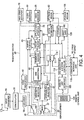
- FIG. 2 depicts an exemplary television signal receiving apparatus or system suitable for processing television program signals and/or for performing in accordance with the principles espoused herein.
- the television apparatus 1100 shown in FIG. 2 is particularly capable of processing digital television signals (e.g. ATSC television signals), but may be capable of processing both digital television signals and analog television signals (e.g. NTSC television signals).
- the television system 1100 has one or more television signal inputs represented by RF_IN and VIDEO_IN. Each one of the one or more inputs is operable to receive television signals.
- the input format is as known in the art.
- a television apparatus such as a television made by Thomson Inc. of Indianapolis, Indiana, is operable to receive guide data from Gemstar® or PSIP (Program and System Information Protocol) tables on ATSC (Advanced Television Systems Committee) streams.
- ATSC is a high definition television standards body.
- PSIP data is used in the following discussion, but something similar could be accomplished with data from Gemstar®.
- PSIP EIT Event Information Tables
- the television apparatus may display the new guide information (or next program data) to the user automatically.
- a television apparatus in accordance with the present principles, can detect that a current program is about to end in a predetermined time and pop the program information such as a channel banner with program title of a next program.
- the apparatus 1100 of FIG. 2 has a first input 1101 for receiving television signal RF_IN at RF frequencies and a second input 1102 for receiving baseband television signal VIDEO IN.
- Signal RF_IN may be supplied from a source such as am antenna, cable system, satellite system or the like, while signal VIDEO IN may be supplied, for example, by a video recorder (VCR).
- VCR video recorder
- the television apparatus 1100 may alternatively not have a VIDEO IN 1102 but may include more than one RF_IN 1101. Likewise, alternatively the apparatus 1100 may have other type of signal inputs as necessary and/or known in the art.
- a tuner 1105 and IF processor 1130 operate in a conventional manner for tuning and demodulating a particular digital or analog television signal that is included in the incoming RF_IN.
- IF (intermediate frequency) processor 1130 produces baseband video signal VIDEO representing the video program portion of the tuned television signal.
- IF processor 1130 also produces a baseband audio signal that is coupled to an audio processing section (not shown in FIG. 2 ) for further audio processing.
- FIG. 2 shows input 1102 as a baseband signal
- the television apparatus 1100 could include a second tuner and IF processor similar to units 1105 and 1130 for producing a second baseband video signal from either signal RF_IN or from a second RF signal source.
- the system shown in FIG. 2 also includes a main microprocessor or processor (mP or ⁇ P) 1110 for controlling components of the television apparatus 1100 such as the tuner 1105, picture-in-picture processing unit 1140, video signal processor 1155 and satellite (e.g. StarSight®) data processing module 1160 (other satellite data processing module or other television signal source data processing module).
- mP or ⁇ P main microprocessor or processor
- the term "microprocessor” represents various devices including, but not limited to, microprocessors, microcomputers, microcontrollers, controllers, digital signal processors/controllers and the like.
- Microprocessor 1110 controls the system by sending and receiving both commands and data via serial data bus I 2 C BUS that utilizes the well-known I 2 C serial data bus protocol.
- central processing unit (CPU) 1112 of the ⁇ P 1110 executes control programs contained within memory, such as EEPROM 1127 shown in FIG. 2 for operation of the television apparatus 1100 both as is typical for a television apparatus and/or particularly with respect to the principles of the subject invention, such as in response to commands provided by a user, e.g. via IR remote control 1125 and IR receiver 1122 or such as to enable/disable automatic banner display of a next television program in accordance with the present principles.
- IR remote control 1125 and IR receiver 1122 e.g. via IR remote control 1125 and IR receiver 1122 or such as to enable/disable automatic banner display of a next television program in accordance with the present principles.
- activation of a feature on remote control 1125 causes CPU 1112 to send a command along with any other necessary/appropriate data to television apparatus components.
- Software stored in EEPROM 1127 implements the operations described herein and/or as depicted in the figures.
- the received program information can be saved
- CPU 1112 controls functions included with in ⁇ P 1110 bus 1119 within the ⁇ P 1110.
- CPU 1112 controls auxiliary data processor 1115 and on-screen display (OSD) processor 1117.
- Auxiliary data processor 1115 extracts auxiliary data such as StarSight® data from video signal PIPV.
- Auxiliary data processor 1115 also extracts or obtains auxiliary data including program/programming, program/programming guide or electronic program guide (EPG) information from ATSC (American Television Systems Committee) PSIP (Program and System Information Protocol) data of one or more incoming ATSC television signals.
- EPG electronic program guide
- Auxiliary data processor 1115 may also extract or obtains auxiliary data including program/programming, program/programming guide or electronic program guide (EPG) information from NTSC (National Television Systems Committee) VBI (vertical blanking interval) data of one or more incoming NTSC television signals.
- EPG electronic program guide
- NTSC National Television Systems Committee
- VBI vertical blanking interval
- a particular television channel may carry program or programming data specific only to programs for the particular channel or the particular channel and any of its sub-channels.
- a particular television channel may carry program or programming data for programs with respect to a plurality of television channels or television channels and their sub-channels.
- the present invention utilizes the receipt of updated EPG data (e.g. an updated EPG) to trigger display of program data or information regarding a next program for the currently tuned television channel (television channel being viewed).
- the present invention provides automatic display of next program information for a currently tuned channel from EPG data within a predetermined time period before the end of the current program.
- the present invention may utilize any one or type of EPG information/data in order to provide an on-screen display of at least some program information for a next program of a currently tuned or viewed television channel.
- an EPG is an interactive, on-screen display feature that displays information analogous to TV listings found in local newspapers or other print media.
- an EPG also includes information necessary for collating and decoding programs.
- An EPG provides information about each program with the time frames cover by the EPG which typically ranges from the next hour up to several days.
- the information contained in the EPG includes programming characteristics such as channel number, program title, start time, end time, elapsed time, time remaining, rating (if available), topic, theme and a brief description of the program's content.
- EPGs are usually arranged in a two-dimensional table or grid format with time information on one axis and channel information on the other axis. An example of a program guide is shown in FIG. 3 .
- an OSD processor/generator is responsible for generating a program guide such as the exemplary program guide 500 depicted in FIG. 3 typically under control of an advanced RISC (reduced instruction set computer) processor such as is known in the art.
- the program guide 500 (reflecting received program guide data) shows a program schedule in a time-and-channel format.
- One dimension (e.g. horizontal) of the guide shows the time information while the other dimension (e.g. vertical) of the guide shows the channel information.
- the time information is conveyed to the user by having a time line 501 on the top portion of the guide and is demarked by half-hour intervals or increments.
- the channel information is conveyed to the user by channel numbers 510-516 and corresponding channel station names 520-526. Any one or more of the program guide data as depicted in the guide 500 may be used for display when the automatic next program data display is triggered or activated.
- EPGs allow viewers to select any channel at any time during some period into the future, e.g. up to seven days forward.
- Further EPG features include the ability to highlight individual cells of the grid containing program information. Once highlighted, the viewer can perform functions pertaining to that selected program. For instance, the viewer could instantly switch to that program if it is currently being aired. Viewers could also program one touch video cassette recording (VCR) or the like if the television is properly configured and connected to a recording device.
- VCR video cassette recording
- U.S. Patent No. 5,515,106 issued to Chaney et al., and assigned to the same assignee as the present invention describes in detail an exemplary embodiment including data packet structure necessary to implement an exemplary program guide system.
- the exemplary data packet structure is designed so that both the channel information (e.g., channel name, call letters, channel number, type, etc.) relating to a program description information (e.g. content, title, rating, star, etc.) relating to a program may be transmitted from a program guide database provider to a receiving apparatus efficiently.
- OSD processor 1117 operates in a conventional manner to produce R, G and B video signals that when provided on the display will produce a displayed image representing on-screen next program display data/information in accordance with the present principles.
- OSD processor 1117 also produces a control signal that is intended to control a fast switch for inserting signals in to the system's video output signal at times when an on-screen display is to be displayed. For example, when updated program guide information or program data is received for a currently tuned channel, either by active acquisition or by passive receipt thereof, CPU 1112 enables processor 1117. In response the processor 1117 produces signals representing the next program guide data information just extracted and stored in memory.
- Video signal processor (VSP) 1155 performs conventional video signal processing functions, such as luma and chroma processing. Output signals from VSP 1155 are suitable for coupling to a display device 7 for producing the image. VSP also include a fast switch for coupling signals produced the OSD processor 1117 to the output video signal path at times when graphics and/or text is to be included in the displayed image. The fast switch is controlled by control signal FSW which is generated by OSD processor 1117 in main microprocessor 1110 at times when text and/or graphics are to be displayed.
- FSW control signal
- the input signal for VSP 1155 is signal PIPV that is output by picture-in-picture (PIP) processor 1140.
- PIP processor 1140 provides PIP in a conventional manner using features included in unit 1140 such as a video switch, analog-to-digital converter (ADC), RAM and digital-to-analog converter (DAC).
- FIG. 4 shows another example of an electronic device capable of receiving television signals including auxiliary data such as program data and utilizing the auxiliary data to effect display of current and/or next program information for a tuned television channel in accordance with the principles of the subject invention.
- auxiliary data such as program data
- FIG. 4 is an MPEG compatible system for receiving MPEG encoded transport streams representing broadcast (over-the-air, satellite and/or cable) programs.
- the term 'program' is used to represent any form of packetized data.
- Data port 75 provides an interface for communication of the compresses data from system 25 to other devices such as a computer of High Definition Television (HDTV) receiver, for example.
- a carrier modulated with video and auxiliary data received by antenna 10 (or other source/input for the processing apparatus) is converted to digital form and processed by input processor 15.
- Processor 15 includes radio frequency (RF) tuner and intermediate frequency (IF) mixer and amplification stages for down-converting the input video signal to a lower frequency band suitable for further processing as necessary.
- the resultant digital output signal is demodulated by demodulator 20 and decoded by decoder 30.
- the output from decoder 30 is further processed by transport system 25.
- Multiplexer (mux) 37 of service detector 33 is provided, via selector 35, with either the output from decoder 30, or the decoder 30 output further processed by a descrambling unit 40 such as a smart card system.
- the data provided to mux 37 from selector 35 is in the form of an MPEG compliant packetized transport datastream as defined in MPEG systems standard section 2.4 and includes program/program guide data and the data content of one or more program channels.
- the individual packets that comprise particular program channels are identified by Packet Identifiers (PIDs).
- PIDs Packet Identifiers
- the transport stream contains Program Specific Information (PSI) for use in identifying the PIDs and assembling individual data packets to recover the content of all the program channels that comprise the packetized datastream.
- PSI Program Specific Information
- the received program guide data can be saved in a storage medium 105 via a storage interface 95 and a storage device 90.
- Transport system 25 under the control of the system controller 115, receives, acquires and collates program guide information from the input transport stream, storage device 90 or an internet service provider via the communication interface unit 116. This data may be stored for comparison by or with acquired or received new or next program guide data.
- the individual packets that comprise either particular program channel content or Program Guide Information, are identified by their Packet Identifiers (PIDs) contained within header information.
- the program data may include one of more data fields such as title, star, rating, etc. related to a program.
- the user interface incorporated in the video receiver shown in FIG. 4 enables a user to activate various features by selecting a desired feature from an on-screen display (OSD) menu.
- the OSD menu includes the ability for the user to disable and enable the automatic display of next program information.
- the OSD menu may also allow user selection of various options with respect to such display of next program information.
- Data representing information displayed in the OSD menu and the OSD next program information/next program information display is generated by system controller 115 in response to stored on-screen display (OSD) information representing text/graphics, stored program guide information, and/or program guide and text/graphics information received via the input signal as described herein and in accordance with exemplary control programs to be shown in FIGS. 6 and 7 and to be discussed below.
- the software control programs may be stored, for example, in embedded memory (not shown) of system controller 115.
- Units 45 and 47 employ PID detection filters that match the PIDs of incoming packets provided by mux 37 with PID values pre-loaded in control registers within units 45 and 47 by controller 115.
- the pre-loaded PIDs are used in units 45 and 47 to identify the data packets that are to be stored and the data packets that are to be decoded for use in providing a video image.
- the pre-loaded PIDs are store in look-up table in units 45 and 47.
- the packets provided by units 45 and 47 to unit 50 are encrypted using an encryption technique such as the Data Encryption Standard (DES) defined in Federal Information Standards (FIPS) Publications.
- Unit 50 decrypts the encrypted packets using corresponding encryption keys provided by units 45 and 47 by applying decryption techniques appropriate for the selected encryption algorithm.
- Unit 60 contains four packet buffers accessible by controller 115. One of the buffers is assigned to hold data destined for use by controller 115 and the other three buffers are assigned to hold packets that are destined for use by application devices 75, 80 and 85. Access to the packets stored in the four buffers within unit 60 by both controller 115 and by application interface 70 is controlled by buffer control unit 65.
- the non-encrypted and decrypted packets provided by units 45 and 50 by decoder 55 contain a transport header as defined in MPEG systems standards. Decoder 55 determines from the transport header whether the non-encrypted and decrypted packets contain an adaptation field (per the MPEG systems standard).
- Application control unit 70 sequentially retrieves the audio, video caption and other data from the designated buffers in buffer 60, which may provide the data to corresponding application devices 75, 80 and 85.
- Controller 115 reads the PSI from unit 60 and stores it in internal memory. Controller 115 also generates condensed PSI (CPSI) from the stored PSI and incorporates the CPSI in a packetized datastream suitable for storage on a selectable storage medium.
- CPSI condensed PSI
- FIG. 5 is a specific implementation of an electronic device generally shown in FIG. 2 .
- FIG. 5 represents a satellite receiver set-top box, designed and manufactured by Thomson Consumer Electronics, of Indianapolis, Indiana, USA, for receiving DirecTVTM satellite service provided by Hughes Electronics.
- the set-top box has a tuner 301 that receives and tunes applicable satellite RF signals from a satellite antenna 317.
- the tuned signals are outputted to a link module 302 for further processing.
- Link module 302 is responsible for further processing of the tuned signals I_out and Q_out from tuner 301, including filtering and conditioning of the signals, and conversion of the signals into a digital output signal, DATA.
- the link module 302 is implemented as an integrated circuit (IC).
- the digital output, DATA, from the link module 302 consists of a compliant packetized data stream recognized and processable by the transport unit 303.
- the datastream includes program guide data/information and the data content or one or more program channels of the satellite broadcast service from DirecTVTM.
- Program guide data contains information relating to the type of program.
- the function of the transport unit 303 is the same as the transport system 25 of FIG. 4 .
- the transport unit 303 processes the packetized data stream according to the Packet Identifiers (PID) contained in the header information.
- PID Packet Identifiers
- the processed data stream is then formatted into MPEG compatible, compressed audio and video packets and coupled to a MPEG decoder 304 for further processing.
- the transport unit 303 is controlled by an Advanced RISC Microprocessor (ARM) 315 which is a RISC based microprocessor.
- ARM Advanced RISC Microprocessor
- the ARM processor 315 executes control software residing in ROM 308 using DRAM 319 for storing intermediate results generated during control software execution.
- Exemplary components of the software may be, for example, control programs shown in FIGS. 6 and 7 for processing and/or using program guide data and displaying OSD information relative to next program data in accordance with the present principles.
- the transport unit 303 is typically implemented as an integrated circuit.
- a preferred embodiment is an IC manufactured by SGS-Thomson Microelectronics.
- the MPEG compatible, compressed audio and video packets from the transport unit 303 are delivered to an MPEG decoder 304.
- the MPEG decoder decodes the compressed MPEG datastream from the transport unit 303.
- the decoder 304 then outputs the applicable audio stream which can be further processed by the audio digital-to-analog converter (DAC) 305 to convert the digital audio data into analog sound.
- the decoder 304 also outputs application digital video data which represents image pixel information to a NTSC encoder 306.
- the NTSC encoder 306 then further processes this video data into NTSC compatible analog video signal so that video images may be displayed on a regular NTSC television screen.
- the MPEG decoder also provides the decoded program data.
- the MPEG decoder may be implemented as an integrated circuit.
- One exemplary embodiment may be an MPEG decoder IC manufactured by SGS-Thomson Microelectronics.
- the OSD processor 320 reads data from SDRAM 316 which contains stored OSD information. OSD information corresponds to bitmap OSD graphics/text images.
- the OSD processor is capable of varying the color and/or translucency of each pixel of an OSD image under the control of the ARM microprocessor 315 in a conventional manner.
- FIG. 6 shows an exemplary control program in flow chart form, generally designated 400, which may be executed by either the CPU 1112 of FIG. 2 , the controller 115 of FIG. 4 , or the ARM microprocessor 315 of FIG. 5 to implement the features according to the present invention.
- control programs when executed by any one of the systems described in the figures will provide the same features in accordance with the present invention.
- the program/flow chart 400 begins at block 402 wherein the television apparatus is tuned to a television channel. This may be in response to a user command or from an automatic or generated command by the television apparatus or an external component in communication with the television apparatus.
- program data or information is obtained for a current program provided on the particular tuned television channel.
- the program data may be provided in the television signal for the television channel or may be provided in another television channel signal.
- program information for the currently tuned television channel may be displayed as provided in block 406. This is typically accomplished automatically. Moreover, such information is typically displayed for only a particular time period.
- updated program information for programs on the currently tuned television channel is received.
- the television apparatus determines a next program on the currently tuned television channel.
- the receipt of updated program information may be either automatic (i.e. pushed to the television apparatus), or is obtained or acquired by the television apparatus such as within a time interval before the end of a current program on a currently tuned television channel.
- next program information for a next television program on the currently tuned television channel is displayed. Display of the next program information is provided for a default period of time, or for a user-selectable period of time via an on-screen menu. Other options such as how long before the end of a current program should the next program information start to be displayed, whether or not it should be displayed at all (enable/disable), and otherwise.
- FIG. 7 shows another exemplary control program in flow chart form, generally designated 600, which may be executed by either the CPU 1112 of FIG. 2 , the controller 115 of FIG. 4 , or the ARM microprocessor 315 of FIG. 5 to implement the features according to the present invention.
- the program/flow chart 600 provides a specific manner of implementation of the principles of the subject invention, particularly with respect to television signals for television programs/channels in the ATSC format.
- the program/flow chart 600 begins at block 602 wherein a user tunes to a program being provided on the program receiver.
- PSIP data for the current program (including EITs) is acquired.
- the PSIP data is used to provide current program information display and to determine whether updated program information has been received.
- updated program information or an updated program guide is sent to the television apparatus from the broadcaster. This is un-requested by the television apparatus.
- un-requested updated program information/guide data has been automatically received by the television apparatus.
- updated guide information is pushed to the television apparatus by the broadcaster.
- the television apparatus determines, in block 614, whether the program banner is currently being displayed (up). If the banner is currently being displayed (YES) then in block 616, the banner information currently being displayed is updated to reflect next program information for the particular television channel. If, in block 614, the banner is not currently being displayed (NO) then program flow proceeds to block 610 as described above.
Landscapes
- Engineering & Computer Science (AREA)
- Multimedia (AREA)
- Signal Processing (AREA)
- Human Computer Interaction (AREA)
- Business, Economics & Management (AREA)
- Marketing (AREA)
- Databases & Information Systems (AREA)
- Two-Way Televisions, Distribution Of Moving Picture Or The Like (AREA)
- Circuits Of Receivers In General (AREA)
Claims (10)
- Procédé d'affichage d'informations relatives à une émission ultérieure par un appareil de télévision, le procédé comprenant les étapes suivantes :la syntonisation (602) d'un canal ; caractérisée parla réception (612), par l'appareil de télévision, d'informations d'émission mises à jour provenant d'un diffuseur lorsque ledit canal est syntonisé, dans laquelle lesdites informations d'émission mises à jour sont fournies par ledit diffuseur sans être demandées par ledit appareil de télévision ;la détermination (614) de l'affichage ou non d'une bannière contenant des informations d'émission relatives à une émission ultérieure sur ledit canal lorsque ledit canal est syntonisé ;en réponse à la détermination de l'affichage actuel de ladite bannière lorsque ledit canal est syntonisé, la mise à jour (616) de ladite bannière actuellement affichée pour qu'elle reflète les informations d'émission mises à jour relatives à ladite émission ultérieure lorsque ledit canal est syntonisé ; eten réponse à la détermination du non-affichage actuel de ladite bannière lorsque ledit canal est syntonisé, l'affichage (610) d'une bannière incluant des informations d'émission relatives à l'émission ultérieure lorsque ledit canal est syntonisé.
- Procédé selon la revendication 1, dans lequel l'étape de réception d'informations d'émission mises à jour comprend la réception d'informations d'émission comprenant des données d'information relatives à l'émission et au système.
- Procédé selon la revendication 1, dans lequel l'étape de réception d'informations d'émission mises à jour comprend la réception d'informations d'émission comprenant des données de guide des programmes mises à jour.
- Procédé selon les revendications 1 à 3, dans lequel l'étape d'affichage d'informations relatives à l'émission ultérieure déterminée inclut l'affichage de ladite bannière comprenant le titre d'une ou de plusieurs émissions ultérieures, la durée d'une ou de plusieurs émissions ultérieures, l'heure de début et de fin d'une ou de plusieurs émissions ultérieures, l'évaluation d'une ou de plusieurs émissions ultérieures, un bref descriptif d'une ou de plusieurs émissions ultérieures et la description détaillée d'une ou de plusieurs émissions ultérieures.
- Procédé selon les revendications 1 à 4, dans lequel ladite bannière est affichée pendant une durée prédéterminée.
- Appareil de télévision comprenant :un moyen (1127, 105 ou 316) de stockage d'informations d'émission pour une pluralité d'émission de télévision ; etun moyen (1110, 115 et 315) de contrôle de l'affichage des informations d'émission relatives à une émission de télévision ultérieure d'un canal de télévision actuellement syntonisé en réponse à la réception par l'appareil de télévision d'une mise à jour des informations d'émission stockées, dans lequel ledit moyen de contrôle permet de déterminer si une bannière contenant des informations d'émission relatives à ladite émission ultérieure est actuellement affichée lorsque ledit canal est syntonisé ; en réponse à la détermination de l'affichage actuel de ladite bannière lorsque ledit canal est syntonisé, ledit moyen de contrôle permet de mettre à jour ladite bannière actuellement affichée pour qu'elle reflète les informations d'émission mises à jour relatives à ladite émission ultérieure lorsque ledit canal est syntonisé ; et en réponse à la détermination du non-affichage actuel de ladite bannière lorsque ledit canal est syntonisé, ledit moyen de contrôle permet d'afficher une bannière incluant des informations d'émission relatives à ladite émission ultérieure lorsque ledit canal est syntonisé
- Appareil de télévision selon la revendication 6, comprenant en outre un moyen (115, 315) d'obtenir des informations d'émission pour une pluralité d'émissions de télévision à partir d'une partie d'informations relatives aux émissions et au système d'un signal de télévision reçu.
- Appareil de télévision selon la revendication 6, comprenant en outre un moyen (1110, 115, 315) permettant d'obtenir des informations d'émission pour des émissions de télévision à partir d'une partie de données de guide d'un signal de télévision reçu.
- Appareil de télévision selon les revendications 6 à 8, dans lequel le moyen (1110, 115, 315) de contrôle de l'affichage inclut un moyen d'afficher des informations relatives à l'émission ultérieure comprenant le titre d'une ou de plusieurs émissions ultérieures, la durée d'une ou de plusieurs émissions ultérieures, l'heure de début et de fin d'une ou de plusieurs émissions ultérieures, l'évaluation d'une ou de plusieurs émissions ultérieures, un bref descriptif d'une ou de plusieurs émissions ultérieures et la description détaillée d'une ou de plusieurs émissions ultérieures.
- Appareil de télévision selon les revendications 6 à 9, dans lequel le moyen (1110, 115, 315) de contrôle de l'affichage inclut un moyen permettant d'afficher des informations relatives à l'émission ultérieure pour une durée prédéterminée.
Applications Claiming Priority (2)
| Application Number | Priority Date | Filing Date | Title |
|---|---|---|---|
| US51821803P | 2003-11-07 | 2003-11-07 | |
| PCT/US2004/036275 WO2005048589A2 (fr) | 2003-11-07 | 2004-11-01 | Affichage automatique d'informations relatives a une nouvelle emission pendant la visualisation d'une emission |
Publications (2)
| Publication Number | Publication Date |
|---|---|
| EP1683347A2 EP1683347A2 (fr) | 2006-07-26 |
| EP1683347B1 true EP1683347B1 (fr) | 2016-04-27 |
Family
ID=34590234
Family Applications (1)
| Application Number | Title | Priority Date | Filing Date |
|---|---|---|---|
| EP04800526.8A Expired - Lifetime EP1683347B1 (fr) | 2003-11-07 | 2004-11-01 | Affichage automatique d'informations relatives a une nouvelle emission pendant la visualisation d'une emission |
Country Status (8)
| Country | Link |
|---|---|
| US (1) | US8176517B2 (fr) |
| EP (1) | EP1683347B1 (fr) |
| JP (2) | JP5122140B2 (fr) |
| KR (1) | KR101106826B1 (fr) |
| CN (1) | CN1918905A (fr) |
| MX (1) | MXPA06005055A (fr) |
| MY (1) | MY139351A (fr) |
| WO (1) | WO2005048589A2 (fr) |
Families Citing this family (33)
| Publication number | Priority date | Publication date | Assignee | Title |
|---|---|---|---|---|
| US5986650A (en) | 1996-07-03 | 1999-11-16 | News America Publications, Inc. | Electronic television program guide schedule system and method with scan feature |
| KR20050093452A (ko) * | 2004-03-19 | 2005-09-23 | 엘지전자 주식회사 | 방송 수신기기의 프로그램 줄거리 표시방법 |
| US8640166B1 (en) | 2005-05-06 | 2014-01-28 | Rovi Guides, Inc. | Systems and methods for content surfing |
| US8095951B1 (en) | 2005-05-06 | 2012-01-10 | Rovi Guides, Inc. | Systems and methods for providing a scan |
| JP4103146B2 (ja) * | 2005-07-11 | 2008-06-18 | 船井電機株式会社 | デジタル放送受信装置 |
| US8799954B1 (en) | 2006-07-31 | 2014-08-05 | Rovi Guides, Inc. | Systems and methods for providing custom media content flipping |
| KR101328929B1 (ko) * | 2006-11-22 | 2013-11-14 | 엘지전자 주식회사 | 디지털 방송 신호를 처리하는 방법 및 장치 |
| JP5383975B2 (ja) * | 2006-12-27 | 2014-01-08 | 京セラ株式会社 | 放送受信装置および放送表示方法 |
| US8321449B2 (en) * | 2007-01-22 | 2012-11-27 | Jook Inc. | Media rating |
| US8407737B1 (en) | 2007-07-11 | 2013-03-26 | Rovi Guides, Inc. | Systems and methods for providing a scan transport bar |
| JP2009088977A (ja) * | 2007-09-28 | 2009-04-23 | Toshiba Corp | 番組情報表示システム、番組情報表示方法、及びテレビシステム |
| US8752121B2 (en) * | 2008-06-27 | 2014-06-10 | At&T Intellectual Property I, Lp | System and method for displaying television program information on a remote control device |
| FR2933213A1 (fr) * | 2008-06-30 | 2010-01-01 | Thomson Licensing | Methode d'affichage d'interface utilisateur et methode d'emission correspondante |
| KR20100022718A (ko) * | 2008-08-20 | 2010-03-03 | 삼성전자주식회사 | 영상표시장치에서 채널 및 소스 리스트를 제공하는 방법과 그 장치 |
| US9210369B2 (en) * | 2008-10-23 | 2015-12-08 | Cable Television Laboratories, Inc. | Automated run-time adjustment |
| KR20100110187A (ko) * | 2009-04-02 | 2010-10-12 | 엘지이노텍 주식회사 | 디스플레이 장치 및 그를 이용한 방송 채널의 다음 프로그램 안내 방법 |
| KR20110021105A (ko) * | 2009-08-25 | 2011-03-04 | 삼성전자주식회사 | 프로그램 정보 제공방법 및 이를 이용한 디스플레이 장치 |
| US10028004B1 (en) * | 2009-11-05 | 2018-07-17 | Cox Communications, Inc. | Live television program overrun management system |
| US8438592B2 (en) * | 2009-12-22 | 2013-05-07 | Qualcomm Incorporated | Dynamic live content promoter for digital broadcast TV |
| JP2014507849A (ja) * | 2011-01-06 | 2014-03-27 | トムソン ライセンシング | 受信装置においてデータベースを更新する方法および装置 |
| CN102547434A (zh) * | 2012-02-15 | 2012-07-04 | 深圳市同洲视讯传媒有限公司 | 一种节目信息的显示方法及装置 |
| CN102802051B (zh) * | 2012-08-08 | 2015-03-25 | 青岛海信宽带多媒体技术有限公司 | 一种基于云计算的节目管理方法和机顶盒节目更新方法 |
| CN103607631B (zh) * | 2013-11-25 | 2017-02-08 | 乐视致新电子科技(天津)有限公司 | 一种智能电视的轮播节目预告方法及装置 |
| WO2015070808A1 (fr) * | 2013-11-15 | 2015-05-21 | 乐视致新电子科技(天津)有限公司 | Procédé et appareil de guide de programmes pour téléviseur intelligent |
| CN103647988A (zh) * | 2013-11-15 | 2014-03-19 | 乐视致新电子科技(天津)有限公司 | 一种智能电视的信号源节目预告方法及装置 |
| ES2725461T3 (es) | 2014-02-14 | 2019-09-24 | Pluto Inc | Procedimientos y sistemas para generar y proporcionar guías de programas y contenido |
| CN107172454B (zh) * | 2017-06-30 | 2021-07-23 | 网易传媒科技(北京)有限公司 | 一种视频推荐方法、介质、装置和计算设备 |
| US10362354B2 (en) * | 2017-10-26 | 2019-07-23 | Rovi Guides, Inc. | Systems and methods for providing pause position recommendations |
| US11533527B2 (en) | 2018-05-09 | 2022-12-20 | Pluto Inc. | Methods and systems for generating and providing program guides and content |
| EP4343660A3 (fr) | 2018-05-09 | 2024-06-05 | Pluto Inc. | Procédés et systèmes de génération et de fourniture de guides de programme et de contenu |
| US20190373307A1 (en) * | 2018-05-29 | 2019-12-05 | Arris Enterprises Llc | Window displaying navigable program information |
| US11974024B2 (en) | 2020-09-11 | 2024-04-30 | Sling TV L.L.C. | Automated program promotion detection in a video streaming system |
| US12563273B1 (en) | 2024-10-30 | 2026-02-24 | Pluto Inc. | Methods and systems for managing streaming video sub-clips for frame accurate server side content insertion |
Citations (1)
| Publication number | Priority date | Publication date | Assignee | Title |
|---|---|---|---|---|
| US20020100048A1 (en) * | 2000-06-30 | 2002-07-25 | Hong Yang | Upcoming program information display |
Family Cites Families (57)
| Publication number | Priority date | Publication date | Assignee | Title |
|---|---|---|---|---|
| GB9006415D0 (en) * | 1990-03-22 | 1990-05-23 | Rca Licensing Corp | Providing tv program information |
| US5589892A (en) * | 1993-09-09 | 1996-12-31 | Knee; Robert A. | Electronic television program guide schedule system and method with data feed access |
| US6418556B1 (en) * | 1993-09-09 | 2002-07-09 | United Video Properties, Inc. | Electronic television program guide schedule system and method |
| US5841433A (en) * | 1994-12-23 | 1998-11-24 | Thomson Consumer Electronics, Inc. | Digital television system channel guide having a limited lifetime |
| US8850477B2 (en) * | 1995-10-02 | 2014-09-30 | Starsight Telecast, Inc. | Systems and methods for linking television viewers with advertisers and broadcasters |
| US5801785A (en) | 1996-02-13 | 1998-09-01 | International Business Machines Corporation | Method and system for processing two analog composite video signals |
| KR100188659B1 (ko) * | 1996-06-28 | 1999-06-01 | 윤종용 | 방송에약녹화 시스템의 방송 프로그램 안내 표시장치및그방법 |
| US5850218A (en) * | 1997-02-19 | 1998-12-15 | Time Warner Entertainment Company L.P. | Inter-active program guide with default selection control |
| US6208799B1 (en) * | 1997-04-29 | 2001-03-27 | Time Warner Entertainment Company L.P. | VCR recording timeslot adjustment |
| IL121230A (en) * | 1997-07-03 | 2004-05-12 | Nds Ltd | Intelligent electronic program guide |
| JPH11187324A (ja) * | 1997-12-19 | 1999-07-09 | Matsushita Electric Ind Co Ltd | 番組情報作成装置および方法と受信装置 |
| JPH11196342A (ja) * | 1997-12-26 | 1999-07-21 | Matsushita Electric Ind Co Ltd | 送出装置および端末 |
| US6396531B1 (en) * | 1997-12-31 | 2002-05-28 | At+T Corp. | Set top integrated visionphone user interface having multiple menu hierarchies |
| US20010042246A1 (en) * | 1999-08-04 | 2001-11-15 | Henry C. Yuen | Home entertainment system and method of its operation |
| US6492997B1 (en) * | 1998-02-04 | 2002-12-10 | Corporate Media Partners | Method and system for providing selectable programming in a multi-screen mode |
| US6564379B1 (en) | 1998-04-30 | 2003-05-13 | United Video Properties, Inc. | Program guide system with flip and browse advertisements |
| US6243145B1 (en) * | 1998-05-01 | 2001-06-05 | Scientific-Atlanta, Inc. | Method and apparatus for browsing television channel information by category |
| ATE225587T1 (de) * | 1998-06-11 | 2002-10-15 | United Video Properties Inc | Interaktive elektronische fernsehzeitschrift mit datenübermittlung auf anfrage |
| US6536041B1 (en) * | 1998-06-16 | 2003-03-18 | United Video Properties, Inc. | Program guide system with real-time data sources |
| US6763522B1 (en) * | 1998-06-30 | 2004-07-13 | Sony Corporation | System and method for a digital television electronic program guide |
| JP2003524307A (ja) * | 1998-07-23 | 2003-08-12 | ディバ システムズ コーポレイション | 双方向ユーザインターフェースを生成し、配信し、受信するシステム |
| JP3278618B2 (ja) * | 1998-11-25 | 2002-04-30 | エヌイーシーケーブルメディア株式会社 | 番組情報伝送装置及び番組情報伝送方法 |
| JP2000286733A (ja) | 1999-03-31 | 2000-10-13 | Sony Corp | 情報処理装置及び情報処理方法 |
| US6996627B1 (en) * | 1999-05-25 | 2006-02-07 | Realnetworks, Inc. | System and method for providing update information |
| US6701526B1 (en) * | 1999-07-01 | 2004-03-02 | Koninklijke Philips Electronics N.V. | Method and apparatus for capturing broadcast EPG data for program title display |
| JP2001024959A (ja) * | 1999-07-06 | 2001-01-26 | Hitachi Ltd | デジタル放送受信装置 |
| US6971118B1 (en) * | 1999-07-28 | 2005-11-29 | Sharp Laboratories Of America, Inc. | System for displaying programming guide information |
| US6591421B1 (en) * | 1999-08-25 | 2003-07-08 | Spotware Technologies, Inc. | System and method for automatically detecting and generating electronic program guide entries of future programming |
| TW504931B (en) * | 1999-11-22 | 2002-10-01 | Matsushita Electric Industrial Co Ltd | Program guide information generating/sending system |
| JP2001186436A (ja) * | 1999-12-27 | 2001-07-06 | Toshiba Corp | 電子番組表示装置 |
| JP2001257953A (ja) * | 2000-03-14 | 2001-09-21 | Alpine Electronics Inc | デジタル放送受信装置 |
| JP4235340B2 (ja) * | 2000-04-04 | 2009-03-11 | キヤノン株式会社 | 情報処理装置及び情報処理方法 |
| US20020040482A1 (en) * | 2000-04-08 | 2002-04-04 | Sextro Gary L. | Features for interactive television |
| US20040128317A1 (en) * | 2000-07-24 | 2004-07-01 | Sanghoon Sull | Methods and apparatuses for viewing, browsing, navigating and bookmarking videos and displaying images |
| JP2002044637A (ja) * | 2000-07-26 | 2002-02-08 | Sony Corp | 情報処理装置および方法、情報提供装置および方法、並びにプログラム格納媒体 |
| JP4254031B2 (ja) * | 2000-08-21 | 2009-04-15 | ソニー株式会社 | 記録装置、携帯端末、管理サーバ、情報処理方法、および記録媒体 |
| US6925650B1 (en) * | 2000-08-21 | 2005-08-02 | Hughes Electronics Corporation | Method and apparatus for automated creation of linking information |
| US7661119B1 (en) * | 2000-10-02 | 2010-02-09 | The Directv Group, Inc. | Method and apparatus for providing non-resident program guide information to a media subscriber |
| AU2002239297A1 (en) * | 2000-11-16 | 2002-06-03 | Mydtv, Inc. | System and methods for determining the desirability of video programming events |
| US8046799B2 (en) * | 2000-11-27 | 2011-10-25 | The Directv Group, Inc. | Daypart based navigation paradigm |
| US7284256B2 (en) * | 2000-12-04 | 2007-10-16 | Sony Corporation | Method and system to maintain relative statistics for creating automatically a list of favorites |
| US7197759B2 (en) * | 2001-05-14 | 2007-03-27 | Webtv Networks, Inc. | Electronic program guide displayed simultaneously with television programming |
| JP2002359795A (ja) * | 2001-06-01 | 2002-12-13 | Pioneer Electronic Corp | 予約装置と予約方法及び予約プログラム並びに予約機能を備えた記録再生装置 |
| GB0114583D0 (en) * | 2001-06-15 | 2001-08-08 | Pace Micro Tech Plc | Improvements to television program display information |
| JP2003032567A (ja) * | 2001-07-17 | 2003-01-31 | Matsushita Electric Ind Co Ltd | 電子番組表表示装置 |
| JP3918917B2 (ja) * | 2002-01-11 | 2007-05-23 | 船井電機株式会社 | Epg画面表示機能を備えたデジタル/アナログ放送受像機 |
| KR100441521B1 (ko) * | 2002-03-13 | 2004-07-23 | 삼성전자주식회사 | 디지털방송 수신장치 및 방법 |
| JP2005522112A (ja) * | 2002-04-02 | 2005-07-21 | コーニンクレッカ フィリップス エレクトロニクス エヌ ヴィ | 映像番組用の補足情報を提供するための方法及びシステム |
| US20040078817A1 (en) * | 2002-05-14 | 2004-04-22 | Steven Horowitz | Dynamic program events recording |
| US20050193415A1 (en) * | 2002-06-06 | 2005-09-01 | Fujitsu Limited | Digital broadcast receiver apparatus capable of automatic acquisition of electronic program guides for specific stations |
| US7237252B2 (en) * | 2002-06-27 | 2007-06-26 | Digeo, Inc. | Method and apparatus to invoke a shopping ticker |
| US7266835B2 (en) * | 2002-06-27 | 2007-09-04 | Digeo, Inc. | Method and apparatus for secure transactions in an interactive television ticker |
| US8028315B1 (en) * | 2002-08-30 | 2011-09-27 | United Video Properties, Inc. | Systems and methods for using an interactive television program guide to access fantasy sports contests |
| US20060053451A1 (en) * | 2002-09-05 | 2006-03-09 | Lockrige Terry W | Method and system for providing a cache guide |
| US20050015803A1 (en) * | 2002-11-18 | 2005-01-20 | Macrae Douglas B. | Systems and methods for providing real-time services in an interactive television program guide application |
| KR100615679B1 (ko) * | 2003-06-25 | 2006-08-25 | 주식회사 쇼테크 | 회원으로 등록된 다양한 정보제공자 중 사용자에 의해지정된 특정 정보제공자의 정보를 실시간으로 사용자에게제공하는 방법 |
| JP2005109567A (ja) * | 2003-09-26 | 2005-04-21 | Toshiba Corp | 情報処理装置及び情報処理方法 |
-
2004
- 2004-11-01 EP EP04800526.8A patent/EP1683347B1/fr not_active Expired - Lifetime
- 2004-11-01 CN CNA2004800397735A patent/CN1918905A/zh active Pending
- 2004-11-01 MX MXPA06005055A patent/MXPA06005055A/es active IP Right Grant
- 2004-11-01 WO PCT/US2004/036275 patent/WO2005048589A2/fr not_active Ceased
- 2004-11-01 KR KR1020067008765A patent/KR101106826B1/ko not_active Expired - Lifetime
- 2004-11-01 US US10/577,267 patent/US8176517B2/en not_active Expired - Lifetime
- 2004-11-01 JP JP2006538392A patent/JP5122140B2/ja not_active Expired - Lifetime
- 2004-11-05 MY MYPI20044592A patent/MY139351A/en unknown
-
2012
- 2012-01-12 JP JP2012004199A patent/JP5373125B2/ja not_active Expired - Lifetime
Patent Citations (1)
| Publication number | Priority date | Publication date | Assignee | Title |
|---|---|---|---|---|
| US20020100048A1 (en) * | 2000-06-30 | 2002-07-25 | Hong Yang | Upcoming program information display |
Also Published As
| Publication number | Publication date |
|---|---|
| JP5122140B2 (ja) | 2013-01-16 |
| WO2005048589A2 (fr) | 2005-05-26 |
| EP1683347A2 (fr) | 2006-07-26 |
| JP2012075194A (ja) | 2012-04-12 |
| US20070136749A1 (en) | 2007-06-14 |
| JP2007520916A (ja) | 2007-07-26 |
| CN1918905A (zh) | 2007-02-21 |
| JP5373125B2 (ja) | 2013-12-18 |
| KR20060107768A (ko) | 2006-10-16 |
| US8176517B2 (en) | 2012-05-08 |
| WO2005048589A3 (fr) | 2008-01-03 |
| MXPA06005055A (es) | 2006-07-06 |
| KR101106826B1 (ko) | 2012-01-19 |
| MY139351A (en) | 2009-09-30 |
Similar Documents
| Publication | Publication Date | Title |
|---|---|---|
| EP1683347B1 (fr) | Affichage automatique d'informations relatives a une nouvelle emission pendant la visualisation d'une emission | |
| CA2290984C (fr) | Systeme et procede de traitement d'emissions purement audio dans un recepteur de television | |
| EP1180305B1 (fr) | Procede d'acquisition et de traitement de programmes de diffusion, de guide de programmes et de donnees de determination de canal | |
| KR100755797B1 (ko) | 프로그램 가이드 정보 획득 방법 | |
| KR100746157B1 (ko) | 보조 정보를 데이터 처리 수단으로 송신하는 방법, 및 소프트웨어 애플리케이션을 인에이블링하는 방법 | |
| US20050076367A1 (en) | System and method for creating user profiles | |
| US8260676B2 (en) | Control spending based on time period | |
| KR100758643B1 (ko) | 프로그램 정보가 이용가능하지 않을 때 레코딩 기능을제공하기 위한 시스템 및 방법 | |
| EP1197076B1 (fr) | Traitement de guide de programme |
Legal Events
| Date | Code | Title | Description |
|---|---|---|---|
| PUAI | Public reference made under article 153(3) epc to a published international application that has entered the european phase |
Free format text: ORIGINAL CODE: 0009012 |
|
| 17P | Request for examination filed |
Effective date: 20060524 |
|
| AK | Designated contracting states |
Kind code of ref document: A2 Designated state(s): AT BE BG CH CY CZ DE DK EE ES FI FR GB GR HU IE IS IT LI LU MC NL PL PT RO SE SI SK TR |
|
| AX | Request for extension of the european patent |
Extension state: AL HR LT LV MK YU |
|
| DAX | Request for extension of the european patent (deleted) | ||
| RBV | Designated contracting states (corrected) |
Designated state(s): DE ES FR GB IT TR |
|
| PUAK | Availability of information related to the publication of the international search report |
Free format text: ORIGINAL CODE: 0009015 |
|
| RAP1 | Party data changed (applicant data changed or rights of an application transferred) |
Owner name: THOMSON LICENSING |
|
| 17Q | First examination report despatched |
Effective date: 20140422 |
|
| REG | Reference to a national code |
Ref country code: DE Ref legal event code: R079 Ref document number: 602004049209 Country of ref document: DE Free format text: PREVIOUS MAIN CLASS: H04N0005440000 Ipc: H04N0005445000 |
|
| GRAP | Despatch of communication of intention to grant a patent |
Free format text: ORIGINAL CODE: EPIDOSNIGR1 |
|
| RIC1 | Information provided on ipc code assigned before grant |
Ipc: H04N 21/431 20110101ALI20151117BHEP Ipc: H04N 5/445 20110101AFI20151117BHEP Ipc: H04N 21/434 20110101ALI20151117BHEP Ipc: H04N 21/488 20110101ALI20151117BHEP Ipc: H04N 21/482 20110101ALI20151117BHEP |
|
| INTG | Intention to grant announced |
Effective date: 20151222 |
|
| GRAS | Grant fee paid |
Free format text: ORIGINAL CODE: EPIDOSNIGR3 |
|
| GRAA | (expected) grant |
Free format text: ORIGINAL CODE: 0009210 |
|
| AK | Designated contracting states |
Kind code of ref document: B1 Designated state(s): DE ES FR GB IT TR |
|
| REG | Reference to a national code |
Ref country code: GB Ref legal event code: FG4D |
|
| REG | Reference to a national code |
Ref country code: DE Ref legal event code: R081 Ref document number: 602004049209 Country of ref document: DE Owner name: INTERDIGITAL MADISON PATENT HOLDINGS, FR Free format text: FORMER OWNER: THOMSON LICENSING, BOULOGNE-BILLANCOURT, FR |
|
| REG | Reference to a national code |
Ref country code: DE Ref legal event code: R096 Ref document number: 602004049209 Country of ref document: DE |
|
| REG | Reference to a national code |
Ref country code: FR Ref legal event code: PLFP Year of fee payment: 13 |
|
| PG25 | Lapsed in a contracting state [announced via postgrant information from national office to epo] |
Ref country code: ES Free format text: LAPSE BECAUSE OF FAILURE TO SUBMIT A TRANSLATION OF THE DESCRIPTION OR TO PAY THE FEE WITHIN THE PRESCRIBED TIME-LIMIT Effective date: 20160427 |
|
| REG | Reference to a national code |
Ref country code: DE Ref legal event code: R097 Ref document number: 602004049209 Country of ref document: DE |
|
| PLBE | No opposition filed within time limit |
Free format text: ORIGINAL CODE: 0009261 |
|
| STAA | Information on the status of an ep patent application or granted ep patent |
Free format text: STATUS: NO OPPOSITION FILED WITHIN TIME LIMIT |
|
| 26N | No opposition filed |
Effective date: 20170130 |
|
| REG | Reference to a national code |
Ref country code: FR Ref legal event code: PLFP Year of fee payment: 14 |
|
| PG25 | Lapsed in a contracting state [announced via postgrant information from national office to epo] |
Ref country code: TR Free format text: LAPSE BECAUSE OF FAILURE TO SUBMIT A TRANSLATION OF THE DESCRIPTION OR TO PAY THE FEE WITHIN THE PRESCRIBED TIME-LIMIT Effective date: 20160427 |
|
| REG | Reference to a national code |
Ref country code: FR Ref legal event code: TP Owner name: THOMSON LICENSING DTV, FR Effective date: 20180830 |
|
| REG | Reference to a national code |
Ref country code: GB Ref legal event code: 732E Free format text: REGISTERED BETWEEN 20180927 AND 20181005 Ref country code: FR Ref legal event code: PLFP Year of fee payment: 15 |
|
| REG | Reference to a national code |
Ref country code: DE Ref legal event code: R082 Ref document number: 602004049209 Country of ref document: DE Representative=s name: DEHNS, DE Ref country code: DE Ref legal event code: R081 Ref document number: 602004049209 Country of ref document: DE Owner name: INTERDIGITAL MADISON PATENT HOLDINGS, FR Free format text: FORMER OWNER: THOMSON LICENSING, ISSY-LES-MOULINEAUX, FR Ref country code: DE Ref legal event code: R082 Ref document number: 602004049209 Country of ref document: DE Representative=s name: DEHNS PATENT AND TRADEMARK ATTORNEYS, DE |
|
| P01 | Opt-out of the competence of the unified patent court (upc) registered |
Effective date: 20230514 |
|
| PGFP | Annual fee paid to national office [announced via postgrant information from national office to epo] |
Ref country code: GB Payment date: 20231121 Year of fee payment: 20 |
|
| PGFP | Annual fee paid to national office [announced via postgrant information from national office to epo] |
Ref country code: IT Payment date: 20231124 Year of fee payment: 20 Ref country code: FR Payment date: 20231123 Year of fee payment: 20 Ref country code: DE Payment date: 20231127 Year of fee payment: 20 |
|
| REG | Reference to a national code |
Ref country code: DE Ref legal event code: R071 Ref document number: 602004049209 Country of ref document: DE |
|
| REG | Reference to a national code |
Ref country code: GB Ref legal event code: PE20 Expiry date: 20241031 |
|
| PG25 | Lapsed in a contracting state [announced via postgrant information from national office to epo] |
Ref country code: GB Free format text: LAPSE BECAUSE OF EXPIRATION OF PROTECTION Effective date: 20241031 |
|
| PG25 | Lapsed in a contracting state [announced via postgrant information from national office to epo] |
Ref country code: GB Free format text: LAPSE BECAUSE OF EXPIRATION OF PROTECTION Effective date: 20241031 |