EP1684465A1 - Dispositif et procédé permettant la réglage de périodes des messages d'indication de trafic de transmission (DTIM) dans un réseau sans fil - Google Patents
Dispositif et procédé permettant la réglage de périodes des messages d'indication de trafic de transmission (DTIM) dans un réseau sans fil Download PDFInfo
- Publication number
- EP1684465A1 EP1684465A1 EP05100367A EP05100367A EP1684465A1 EP 1684465 A1 EP1684465 A1 EP 1684465A1 EP 05100367 A EP05100367 A EP 05100367A EP 05100367 A EP05100367 A EP 05100367A EP 1684465 A1 EP1684465 A1 EP 1684465A1
- Authority
- EP
- European Patent Office
- Prior art keywords
- client device
- access point
- wireless client
- dtim
- request
- Prior art date
- Legal status (The legal status is an assumption and is not a legal conclusion. Google has not performed a legal analysis and makes no representation as to the accuracy of the status listed.)
- Granted
Links
Images


Classifications
-
- H—ELECTRICITY
- H04—ELECTRIC COMMUNICATION TECHNIQUE
- H04W—WIRELESS COMMUNICATION NETWORKS
- H04W68/00—User notification, e.g. alerting and paging, for incoming communication, change of service or the like
- H04W68/02—Arrangements for increasing efficiency of notification or paging channel
- H04W68/025—Indirect paging
-
- H—ELECTRICITY
- H04—ELECTRIC COMMUNICATION TECHNIQUE
- H04L—TRANSMISSION OF DIGITAL INFORMATION, e.g. TELEGRAPHIC COMMUNICATION
- H04L12/00—Data switching networks
- H04L12/02—Details
- H04L12/12—Arrangements for remote connection or disconnection of substations or of equipment thereof
-
- H—ELECTRICITY
- H04—ELECTRIC COMMUNICATION TECHNIQUE
- H04W—WIRELESS COMMUNICATION NETWORKS
- H04W52/00—Power management, e.g. Transmission Power Control [TPC] or power classes
- H04W52/02—Power saving arrangements
- H04W52/0209—Power saving arrangements in terminal devices
- H04W52/0212—Power saving arrangements in terminal devices managed by the network, e.g. network or access point is leader and terminal is follower
- H04W52/0216—Power saving arrangements in terminal devices managed by the network, e.g. network or access point is leader and terminal is follower using a pre-established activity schedule, e.g. traffic indication frame
-
- Y—GENERAL TAGGING OF NEW TECHNOLOGICAL DEVELOPMENTS; GENERAL TAGGING OF CROSS-SECTIONAL TECHNOLOGIES SPANNING OVER SEVERAL SECTIONS OF THE IPC; TECHNICAL SUBJECTS COVERED BY FORMER USPC CROSS-REFERENCE ART COLLECTIONS [XRACs] AND DIGESTS
- Y02—TECHNOLOGIES OR APPLICATIONS FOR MITIGATION OR ADAPTATION AGAINST CLIMATE CHANGE
- Y02D—CLIMATE CHANGE MITIGATION TECHNOLOGIES IN INFORMATION AND COMMUNICATION TECHNOLOGIES [ICT], I.E. INFORMATION AND COMMUNICATION TECHNOLOGIES AIMING AT THE REDUCTION OF THEIR OWN ENERGY USE
- Y02D30/00—Reducing energy consumption in communication networks
- Y02D30/70—Reducing energy consumption in communication networks in wireless communication networks
Definitions
- the invention generally relates to wireless networks.
- embodiments of the invention relate to power saving for one or more client devices in a wireless network.
- a wireless access point is a device that "connects" wireless devices together to create a wireless network.
- the wireless devices also known as “client devices”, communicate with each other or with other networks through the AP.
- a client device may, or may not, be battery-powered.
- a client device such as a wireless-enabled laptop, a wireless-enabled cellphone, a wireless-enabled personal digital assistant (PDA), and the like, may sometimes be battery-powered, and at other times may receive power from an external source, such as a power outlet.
- Other client devices such as a desktop computer, may receive power from an external source, such as a power outlet, and may not have the option to be battery-powered.
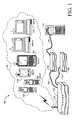
- FIG. 1 is an illustration of an exemplary communications system, according to some embodiments of the invention.
- FIG. 2 is an illustration of an exemplary sequence of beacon frames, helpful in understanding some embodiments of the invention.
- FIG. 3 is a block diagram of an exemplary access point, according to an embodiment of the invention.
- FIG. 4 is a block diagram of an exemplary wireless client device, according to an embodiment of the invention.
- FIG. 1 is an illustration of an exemplary communications system 100 according to embodiments of the invention.
- System 100 includes a wireless access point (AP) 102 and network gateways 104 and 106 coupled to AP 102 via wired connections 108 and 110, respectively.
- Network gateways 104 and 106, wired connections 108 and 110 may all be part of a "distribution system" for AP 102.
- Non-limiting examples for network gateways 104 and 106 are cable modems, Asymmetric Digital Subscriber Line (ADSL) modems, Asynchronous Transfer Mode (ATM) network gateways, dial-up modems, satellite modems, Integrated Services Digital Network (ISDN) gateways, T-carrier 1 (T1) modems, and the like. It is obvious that any other configuration of a distribution system for AP 102 is possible.
- System 100 also includes a desktop computer or server 112 coupled to gateway 104 via a wired connection 114.
- AP 102 has at least one antenna 116 and is configurable to support at least one wireless network name, for example, at least one service set identifier (SSID).
- SSID service set identifier
- a non-exhaustive list of examples for antenna 116 includes a dipole antenna, a monopole antenna, a multilayer ceramic antenna, a planar inverted-F antenna, a loop antenna, a shot antenna, a dual antenna, an omnidirectional antenna and any other suitable antenna.
- AP 102 may include a router.
- Exemplary communications system 100 includes wireless-enabled laptops 120 and 122, wireless-enabled cellphones 124 and 126 and wireless-enabled personal digital assistants (PDAs) 128 and 130.
- Each of wireless-enabled laptops 120 and 122, wireless-enabled cellphones 124 and 126 and wireless-enabled PDAs 128 and 130 is able to execute an initialization process to associate themselves in a wireless network with AP 102.
- wireless-enabled laptops 120 and 122, wireless-enabled cellphones 124 and 126 and wireless-enabled PDAs 128 and 130 may become associated with AP 102 over a wireless network 118.
- Wireless-enabled laptops 120 and 122, cellphones 124 and 126 and PDAs 128 and 130 are referred to as "client devices”.
- client devices shown in Figure 1 are just an example and other suitable client devices and groupings of client devices are also possible.
- a non-exhaustive list of examples for client devices includes work stations, server computers, notebook computers, laptop computers, desktop personal computers (PCs), personal digital assistant (PDA) computers, hand-held computers, wireless local area network (WLAN) stationary units, WLAN add-on cards, WLAN personal computer memory card international association (PCMCIA) cards, WLAN PC cards, WLAN switches, WLAN routers, WLAN servers, game consoles, digital cameras, digital video cameras, television sets, wireless Internet-Protocol (IP) phones and the like.
- PCs personal computer memory card international association
- AP 102 and the client devices are all "802.11-enabled", which means that wireless communications therebetween are in accordance with one or more of the following standards defined by the Institute of Electrical and Electronic Engineers (IEEE) for Wireless LAN MAC and Physical layer (PHY) specifications: Standard Published Maximum Speed Frequency Modulation 802.11 1997 2 Mbps 2.4 GHz Phase-Shift 802.11a 1999 54 Mbps 5.0 GHz Orthogonal Frequency Division Multiplexing 802.11b 1999 11 Mbps 2.4 GHz Complementary Code Keying 802.11g 2003 54 Mbps 2.4 GHz Orthogonal Frequency Division Multiplexing
- IEEE Institute of Electrical and Electronic Engineers
- PHY Physical layer
- the 1999 edition of the 802.11 standard (as reaffirmed June 12, 2003) distinguishes between infrastructure WLANs and ad-hoc WLANs.
- the following description is for infrastructure WLANs, involving the use of access points.
- the 802.11 standard explains that access points transmit beacon frames at substantially regular time periods to announce the existence of and to synchronize wireless networks.
- the number of time units between target beacon transmission times is referred to as a "beacon interval”.
- the format of beacon frames and their contents is explained in detail in the 802.11 standard.
- the beacon interval is included in each beacon frame.
- Each beacon frame also includes a timestamp which is the value of a clock internal to the access point at the actual transmission time of the beacon. Due to use of carrier sense multiple access/collision detection (CSMA/CD) techniques, the actual transmission time may be later than the target beacon transmission time. Consequently, the timestamp field of the beacon frame is not filled until the actual transmission occurs. A client device receiving the beacon frame will update its internal clock according to the timestamp in the received beacon frame.
- CSMA/CD carrier sense multiple access/collision detection
- Each beacon frame also includes a Traffic Indication Map (TIM) that identifies client devices for which unicast traffic is pending and buffered in the access point. This information is encoded in a partial virtual bitmap.
- the TIM also includes an indication whether broadcast or multicast traffic is pending.
- a TIM includes a "DTIM count” field that indicates how many beacon frames (including the current frame) appear before the next DTIM.
- a DTIM count of zero indicates that the current TIM is a DTIM.
- the "DTIM period” field indicates the number of beacon intervals between successive DTIMs. Every DTIM period, a TIM of type "DTIM" is transmitted within a beacon, rather than an ordinary TIM. After a DTIM, the access point sends out the buffered broadcast or multicast traffic using normal frame transmission rules, before transmitting any unicast frames.
- a client device may be in one of two different power states: “Awake” ⁇ the client device is fully powered; and “Doze” ⁇ the client device is unable to transmit or receive and consumes very low power.
- the manner in which a client device transitions between these two power states is determined by the power management mode of the client device.
- In “Active mode” the client device may receive frames at any time and is in the “Awake” state.
- “Power Save mode” the client device listens to selected beacon frames (based upon the client device's "Listen Interval” parameter) and sends "Power Save poll (PS-poll)” frames to the access point if the TIM element in the most recent beacon frame indicates buffered unicast traffic for that client device.
- PS-poll Power Save poll
- a client device In Power Save mode, a client device is in the Doze state and enters the Awake state to receive selected beacons, to receive broadcast and multicast transmissions following certain received beacons, to transmit, and to await responses to transmitted PS-poll frames or (for CF-pollable client devices) to receive contention-free transmissions of buffered traffic.
- An access point maintains a Power Management status for each currently associated client device that indicates in which Power Management mode the client device is currently operating. Depending on the Power Management mode of the station, the access point temporarily buffers traffic destined for the client device. The access point transmits buffered unicast traffic to a client device in Power Save mode only in response to a PS-poll from that client device or during the contention-free (CF) period in the case of a CF-pollable client device in Power Save mode.
- CF contention-free
- the "Listen Interval" parameter of a client device specifies the maximum number of beacon intervals that may pass before the client device awakens and listens for the next beacon frame.
- the client device informs the access point of its "Listen Interval" parameter during the association with the access point.
- the parameter may be determined, for example, by the desired power consumption/performance target of the client device.
- the access point has an aging function to delete buffered traffic when it has been buffered for an excessive period of time.
- the aging function is based on the "Listen Interval" parameter, so that buffered traffic is retained for a period that is at least as long as a product of the Beacon Interval and the "Listen Interval" parameter of the client device for which the traffic is buffered.
- the client device also has a Boolean parameter, entitled “Receive DTIMs”, which is set when the client device informs the access point of a change in the power management mode of the client device.
- a Boolean parameter entitled “Receive DTIMs”
- the client device awakens to receive all beacon frames that include a DTIM.
- the parameter is false, the client device is not required to awaken for every beacon frame that includes a DTIM.
- the "Listen Interval" parameter of a particular client device affects the particular client device's power save behavior regarding unicast traffic, and the "DTIM period" of the access point and the “Receive DTIMs” parameter of the client devices affect the power save behavior of all client devices in the wireless network regarding broadcast and multicast traffic.
- Client devices in a wireless network may have conflicting requirements for power consumption and communication throughput when in Power Save mode. Moreover, the need for power saving in a battery-powered client device may increase over time as the battery drains, overriding communication throughput considerations for the battery-powered client device.
- an access point is able to store only a single DTIM period. Consequently, different client devices in Power Save mode will all wake up for the same beacon frames according to the single DTIM period.
- a network manager may need to balance the conflicting requirements for power consumption and communication throughput when in Power Save mode of client devices in a wireless network when configuring the DTIM period of an access point.
- a client device that has its "Receive DTIMs" parameter set to true and is in Power Save mode will awaken according to the DTIM period of the access point with which it is associated in order to listen to DTIMs and determine whether to stay awake to receive broadcast or multicast traffic. That same client device will also awaken within a period determined by its "Listen Interval” parameter to listen to TIMs and determine whether to stay awake to issue a PS-poll frame for buffered unicast traffic.
- Each client device has a unique hardware address, for example a medium access control (MAC) address, and is assigned an Internet Protocol (IP) address by a dynamic host configuration protocol (DHCP) server, which may be embedded in the access point.
- IP Internet Protocol
- DHCP dynamic host configuration protocol
- IP address of a client device may be statically configured.
- an access point assigns an "association identifier (AID)" to client devices associated therewith and maintains a mapping of AIDs to MAC addresses.
- the access point identifies those client devices for which it has buffered unicast traffic by setting bits in the TIM's partial virtual bitmap that correspond to the appropriate AIDs.
- the access point maintains an Address Resolution Protocol (ARP) table that contains a mapping of Internet Protocol (IP) addresses to MAC addresses.
- ARP Address Resolution Protocol
- a network gateway may receive from an external network one or more information frames to forward to a network device associated with a particular IP address.
- the network gateway may have to resolve the MAC address of the network device associated with the particular IP address in order to include the MAC address in the information frames and to send the information frames to the network device.
- the network gateway may generate an ARP request and send it to the various network devices, including the access point, which will treat it as broadcast traffic.
- the network device (or client device associated with the access point) having the particular IP address may respond to the ARP request with its MAC address.
- AP 102 may be able to transmit DTIMs at different periods of beacon frames for different wireless client devices associated with AP 102.
- AP 102 may be able to maintain independent DTIM periods on a per wireless client device basis.
- a higher DTIM period may increase the potential savings in power consumption but may potentially reduce the communication throughput, and vice versa.
- AP 102 may store one-to-one or one-to-many mappings of indications of different DTIM periods with AIDs of the client devices. For example, AP 102 may store the following mapping of DTIM periods and AIDs: DTIM Period AID 8 1 (cellphone 126) 3 2 (PDA 130) 8 3 (PDA 128) 2 4 (laptop 122) 16 5 (cellphone 124) 1 6 (laptop 120)
- a client device in Power Save mode and having its "Receive DTIMs" parameter set to true will awaken from Power Save mode to listen to beacons at a period of beacon frames determined by the client device's DTIM period.
- different client devices associated with AP 102 may have different DTIM periods, and therefore a processor of AP 102 is able to transmit DTIMs at different DTIM periods for different client devices.
- AP 102 In the event that AP 102 has buffered broadcast data or buffered multicast data destined for some of the client devices that are in Power Save mode, AP 102 is to ensure that each of the client devices in Power Save mode has had an opportunity to listen to a DTIM indicating the presence of the buffered data.
- FIG. 2 is an illustration of an exemplary sequence of beacon frames transmitted by AP 102, according to some embodiments of the invention.
- Each beacon frame 200 includes a TIM, and in certain beacon frames, the TIM is a DTIM.
- laptop 122, cellphone 126 and PDAs 128 and 130 may be in Power Save mode, with DTIM periods of 2, 8, 8 and 3, respectively.
- Laptop 122 will awaken from Power Save mode to listen to DTIMs in every other beacon frame, as indicated by arrows 202.
- PDA 130 will awaken from Power Save mode to listen to DTIMs in every third beacon frame, as indicated by arrows 203.
- cellphone 126 and PDA 128 will awaken from Power Save mode to listen to DTIMs in every eighth beacon frame, as indicated by arrows 208.
- AP 102 will buffer the ARP request.
- AP 102 will include in the DTIM of beacon frame 204 an indication that broadcast data is buffered, and will transmit ARP request 205 following beacon frame 204.
- PDA 130 will awaken to listen to the DTIM of beacon frame 204, will identify that broadcast data is buffered, and will remain awake to receive ARP request 205 following beacon frame 204.
- Laptop 120 which is in the Awake state, will listen to the DTIM of beacon frame 204, will identify that broadcast is buffered, and will receive ARP request 205 following beacon frame 204.
- AP 102 will also include in the DTIM of beacon frame 206 an indication that broadcast data is buffered, and will transmit ARP request 205 following beacon frame 206.
- Laptop 122 will awaken to listen to the DTIM of beacon frame 206, will identify that broadcast data is buffered, and will remain awake to receive ARP request 205 following beacon frame 206.
- the DTIM of beacon frame 207 will not include an indication that broadcast data is buffered, since it will be listened to only by laptop 122 and PDA 130, both of which have already had an opportunity to listen to a DTIM indicating the presence of ARP request 205.
- AP 102 will buffer ARP request 210 for those client devices in Power Save mode, namely laptop 122, cellphone 126 and PDAs 128 and 130.
- AP 102 will include in the DTIM of beacon frame 209 an indication that broadcast data is buffered, and will transmit ARP requests 205 and 210 following beacon frame 209.
- Laptop 122, cellphone 126 and PDA 128 will awaken to listen to the DTIM of beacon frame 209, will identify that broadcast data is buffered, and will remain awake to receive ARP requests 205 and 210 following beacon frame 209.
- AP 102 may discard ARP request 205 after transmitting ARP request 205 following beacon frame 209.
- AP 102 will also include in the DTIM of beacon frame 211 an indication that broadcast data is buffered, and will transmit ARP request 210 following beacon frame 211.
- PDA 130 will awaken to listen to the DTIM of beacon frame 211, will identify that broadcast data is buffered, and will remain awake to receive ARP request 210 following beacon frame 211.
- AP 102 may discard ARP request 210 after transmitting ARP request 210 following beacon frame 211.
- FIG. 3 is a block diagram of an exemplary access point, according to some embodiments of the invention.
- AP 102 includes at least one antenna 116 coupled to a radio 302, which in turn is coupled to a processor 304 having baseband functionality.
- processor 304 includes a central processing unit (CPU), a microcontroller, a digital signal processor (DSP), a reduced instruction set computer (RISC), a complex instruction set computer (CISC) and the like.
- processor 304 may be part of an application specific integrated circuit (ASIC) or may be a part of an application specific standard product (ASSP).
- ASIC application specific integrated circuit
- ASSP application specific standard product
- AP 102 also includes a wired network interface 306 coupled to a wired network controller 308.
- the wired network(s) may be, for example, Ethernet network(s), token rings, Universal Serial Bus (USB), wired network(s) according to the IEEE 1394-1995, IEEE 1394a-2000, and IEEE 1394b standards (commonly known as "FireWire"), or any combination thereof.
- Wired network interface 306 is able to use wired connections 108 and 110.
- Radio 302 and processor 304 may be part of the same integrated circuit or in separate integrated circuits.
- processor 304 and wired network controller 308 may be part of the same integrated circuit or in separate integrated circuits.
- AP 102 also includes a memory 310, which may be fixed in or removable from AP 102.
- Memory 310 may be coupled to processor 304 or partly embedded in processor 304.
- a non-exhaustive list of examples for memory 310 includes any combination of the following:
- Processor 304 and wired network controller 308 may be coupled by signals 311 to coordinate their activities, for example access to memory 310.
- Memory 310 may store mappings 312 of MAC addresses of client devices associated with AP 102 to respective IP addresses, and mappings 314 of MAC addresses of client devices associated with AP 102 to respective AIDs. Memory 310 may also store one-to-one or one-to-many mappings 316 of indications of different DTIM periods with AIDs of the client devices. It should be understood that this is merely an example, and that other methods for mapping AIDs, MAC addresses and IP addresses are also possible. Alternatively, any or all of these mappings may be stored internally in processor 304.
- Memory 310 may also include a buffering system 318 to store incoming traffic destined for client devices. For example, data 320 of incoming traffic may be transferred to buffering system 318 under control signals 322 of wired network controller 308.
- AP 102 may maintain in buffering system 318 lists for each "active" DTIM period, i.e., for each DTIM period that is currently applicable to one or more client devices in Power Save mode. For example, as AP 102 receives ARP request 205 prior to beacon frame 204 ( Figure 2), AP 102 may allocate buffer A to store ARP request 205. AP 102 may set a counter 324 associated with buffer A to the value 3, which is the total number of DTIM periods that are currently "active". For example, figure 3 shows lists maintained for DTIM periods 2, 3 and 8. AP 102 will include a pointer to buffer A (or any other suitable indication of buffer A) in the lists for DTIM periods 2, 3 and 8.
- AP 102 may allocate buffer B to store ARP request 210.
- AP 102 may set a counter 326 associated with buffer B to the value 3.
- AP 102 will include a pointer to buffer B in the lists for DTIM periods 2, 3 and 8.
- Figure 3 shows the lists in buffering system 318 in the state after ARP request 210 has been received by AP 102, but before beacon frame 209.
- AP 102 may maintain in buffering system 318 lists for each client device in Power Save mode. Similar to the "list-per-DTIM-period" embodiment above, AP 102 may allocate a buffer upon receipt of broadcast or multicast data and may include a pointer to the allocated buffer (or any other suitable indication of the allocated buffer) in the lists for the client devices in Power Save mode. Each such allocated buffer is associated with a counter that is set to the total number of client devices in Power Save mode that are destined to receive the broadcast or multicast data.
- AP 102 removes the pointer from the lists of client devices that were supposed to awaken to listen to that DTTM and decreases the counter by the number of client devices that were supposed to awaken to listen to that DTIM. Once the counter is zero, AP 102 is free to deallocate the allocated buffer and discard the buffered data.
- processor 304 may handle the transmission of DTIMs at different DTIM periods for different wireless client devices by accessing buffering system 318 and the AID - DTIM period mapping through data signals 330 and control signals 332.
- FIG. 4 is a block diagram of an exemplary client device, according to some embodiments of the invention.
- a wireless client device 400 includes at least one antenna 401 coupled to a radio 402, which in turn is coupled to a processor 404 having baseband functionality.
- processor 404 includes a central processing unit (CPU), a digital signal processor (DSP), a reduced instruction set computer (RISC), a complex instruction set computer (CISC) and the like.
- processor 404 may be part of an application specific integrated circuit (ASIC) or may be a part of an application specific standard product (ASSP). Radio 402 and processor 404 may be part of the same integrated circuit in separate integrated circuits.
- ASIC application specific integrated circuit
- ASSP application specific standard product
- Client device 400 also includes a memory 410, which may be fixed in or removable from client device 400.
- Memory 410 may be coupled to processor 404 or partly embedded in processor 404.
- a non-exhaustive list of examples for memory 410 includes any combination of the following:
- Processor 404 may access data stored in memory 410 through data signals 430 and control signals 432.
- Memory 410 may store an indication of a preferred DTIM period to apply to client device 400 when in Power Save mode.
- Memory 410 may store a default hard-coded value for the preferred DTIM period.
- the preferred DTIM period may be configurable by a user of client device 400.
- Client device 400 may negotiate its DTIM period with AP 102 only once, or may negotiate its DTIM period with AP 102 on the fly as conditions change.
- processor 404 may adjust the preferred DTIM period of client device 400 according to predefined considerations.
- a non-exhaustive list of examples for such considerations includes:
- Client device 400 is to inform AP 102 of its preferred DTIM period.
- client 400 is to transmit a request to AP 102, where the request is a request to listen to DTIMs from AP 102 at the preferred DTIM period when in Power Save mode.
- the request may be generated by processor 404 and transmitted by radio 402.
- AP 102 may accept the preferred DTIM period and store the mapping of the preferred DTIM period to the AID of client device 400, or AP 102 may respond with an indication of a different, acceptable DTIM period that client device 400 is to use when in Power Save mode. This latter response may be suitable when AP 102 is unable to support the requested DTIM period due to memory constraints or other limitations.
- the access point may delay implementation of the newly negotiated period until after the longest already-negotiated DTIM period has passed.
- client device 400 may issue a new management frame announcing its preferred DTIM period.
- AP 102 may respond with a number. If the number is greater than or equal to 0, then the number represents when (in beacon intervals) the new DTIM period will be implemented by AP 102. If the number is negative, that indicates to the client device that AP 102 rejects the proposed DTIM period and the client device will have to send a new request.
- AP 102 may have a default DTIM period, say DTIM period 1, that is transmitted in the "DTIM period" field of the TIM element of each beacon frame.
- Buffered broadcast or multicast data may be transmitted by AP 102 following a DTIM identifying the presence of such buffered data.
Landscapes
- Engineering & Computer Science (AREA)
- Computer Networks & Wireless Communication (AREA)
- Signal Processing (AREA)
- Mobile Radio Communication Systems (AREA)
- Small-Scale Networks (AREA)
- Alarm Systems (AREA)
- Circuits Of Receivers In General (AREA)
Priority Applications (10)
| Application Number | Priority Date | Filing Date | Title |
|---|---|---|---|
| AT07124188T ATE445989T1 (de) | 2005-01-21 | 2005-01-21 | Mehrere ieee-802.11- zustellungsbenachrichtigungsperioden (dtim) |
| DE602005017201T DE602005017201D1 (de) | 2005-01-21 | 2005-01-21 | Mehrere IEEE-802.11-Zustellungsbenachrichtigungsperioden (DTIM) |
| EP05100367A EP1684465B1 (fr) | 2005-01-21 | 2005-01-21 | Utilisation d'une pluralité de périodes de messages d'indication de transmission de trafic IEEE 802.11 (IEEE 802.11 DTIM) dans un réseau sans fil |
| EP07124188A EP1903720B8 (fr) | 2005-01-21 | 2005-01-21 | Périodes de messages d'indication du trafic de livraison IEEE 802.11 multiple |
| AT05100367T ATE383007T1 (de) | 2005-01-21 | 2005-01-21 | Verwendung einer mehrzahl von ieee 802.11 verkehrsübertragungsanzeigenachrichten (ieee 802.11 dtim) perioden in einem drahtlosen netzwerk |
| DE602005004112T DE602005004112T2 (de) | 2005-01-21 | 2005-01-21 | Verwendung einer Mehrzahl von IEEE 802.11 Verkehrsübertragungsanzeigenachrichten (IEEE 802.11 DTIM) Perioden in einem drahtlosen Netzwerk |
| SG200508190A SG124340A1 (en) | 2005-01-21 | 2005-12-16 | Apparatus and methods for delivery traffic indication message (dtim) periods in a wireless network |
| CA2531395A CA2531395C (fr) | 2005-01-21 | 2005-12-22 | Periodes de messages d'indication de trafic distribue (dtim) dans un reseau sans fil |
| CN2005100487901A CN1809007B (zh) | 2005-01-21 | 2005-12-29 | 在无线网络中传递业务指示消息周期的设备和方法 |
| HK06108640.1A HK1089017B (en) | 2006-08-03 | Utilisation of a plurality of ieee 802.11 delivery traffic indication messages (ieee 802.11 dtim) periods in a wireless network |
Applications Claiming Priority (1)
| Application Number | Priority Date | Filing Date | Title |
|---|---|---|---|
| EP05100367A EP1684465B1 (fr) | 2005-01-21 | 2005-01-21 | Utilisation d'une pluralité de périodes de messages d'indication de transmission de trafic IEEE 802.11 (IEEE 802.11 DTIM) dans un réseau sans fil |
Related Child Applications (1)
| Application Number | Title | Priority Date | Filing Date |
|---|---|---|---|
| EP07124188A Division EP1903720B8 (fr) | 2005-01-21 | 2005-01-21 | Périodes de messages d'indication du trafic de livraison IEEE 802.11 multiple |
Publications (2)
| Publication Number | Publication Date |
|---|---|
| EP1684465A1 true EP1684465A1 (fr) | 2006-07-26 |
| EP1684465B1 EP1684465B1 (fr) | 2008-01-02 |
Family
ID=34938542
Family Applications (2)
| Application Number | Title | Priority Date | Filing Date |
|---|---|---|---|
| EP05100367A Expired - Lifetime EP1684465B1 (fr) | 2005-01-21 | 2005-01-21 | Utilisation d'une pluralité de périodes de messages d'indication de transmission de trafic IEEE 802.11 (IEEE 802.11 DTIM) dans un réseau sans fil |
| EP07124188A Expired - Lifetime EP1903720B8 (fr) | 2005-01-21 | 2005-01-21 | Périodes de messages d'indication du trafic de livraison IEEE 802.11 multiple |
Family Applications After (1)
| Application Number | Title | Priority Date | Filing Date |
|---|---|---|---|
| EP07124188A Expired - Lifetime EP1903720B8 (fr) | 2005-01-21 | 2005-01-21 | Périodes de messages d'indication du trafic de livraison IEEE 802.11 multiple |
Country Status (6)
| Country | Link |
|---|---|
| EP (2) | EP1684465B1 (fr) |
| CN (1) | CN1809007B (fr) |
| AT (2) | ATE383007T1 (fr) |
| CA (1) | CA2531395C (fr) |
| DE (2) | DE602005004112T2 (fr) |
| SG (1) | SG124340A1 (fr) |
Cited By (20)
| Publication number | Priority date | Publication date | Assignee | Title |
|---|---|---|---|---|
| GB2432754A (en) * | 2005-11-25 | 2007-05-30 | Lenovo | Method and apparatus for remote discovery of client and access point settings in a wireless lan |
| WO2008081277A3 (fr) * | 2006-12-21 | 2008-08-28 | Nokia Corp | Techniques d'émission de diffusion et de multidiffusion pour des dispositifs à économie d'énergie dans des réseaux sans fil |
| WO2011005351A3 (fr) * | 2009-06-24 | 2011-03-03 | Intel Corporation | Evitement de conflits de balises dans des plateformes multi-radio |
| WO2011055183A1 (fr) * | 2009-11-09 | 2011-05-12 | Research In Motion Limited | Gestion de consommation électrique de dispositif radio en périphérie de zone de couverture |
| WO2011058283A1 (fr) * | 2009-11-13 | 2011-05-19 | France Telecom | Procede de mise en sommeil d'au moins un composant d'une entite d'un reseau de communication, dispositif et programme d'ordinateur correspondants |
| WO2012003010A1 (fr) * | 2010-01-29 | 2012-01-05 | Qualcomm Incorporated | Liaison/regroupement de multiples interfaces au niveau d'une couche d'application |
| US8117299B2 (en) | 2005-01-18 | 2012-02-14 | Lenovo (Singapore) Pte. Ltd. | Method and apparatus for scheduling wireless LAN traffic |
| US8345647B2 (en) | 2005-11-04 | 2013-01-01 | Nokia Corporation | Flexible multicast and/or broadcast listening intervals |
| EP2079192A4 (fr) * | 2006-10-30 | 2013-07-31 | Panasonic Corp | Dispositif de communication de réseau local sans fil et procédé de transmission de balise |
| WO2013164516A1 (fr) * | 2012-05-02 | 2013-11-07 | Nokia Corporation | Procédé, appareil, et produit programme d'ordinateur pour compression et décodage de tim efficaces |
| US8665768B2 (en) | 2010-01-29 | 2014-03-04 | Qualcomm Incorporated | Femtocell one-to-many packet delivery |
| US20140112355A1 (en) * | 2012-01-11 | 2014-04-24 | Huawei Device Co., Ltd. | Method, Apparatus and System for Transmitting Traffic Indication Message |
| US20140161107A1 (en) * | 2009-03-03 | 2014-06-12 | Nokia Corporation | Beaconing mode for wireless communication |
| WO2014123799A1 (fr) * | 2013-02-07 | 2014-08-14 | Qualcomm Incorporated | Systèmes et procédés pour l'économie d'énergie avec des données de multidiffusion et de diffusion |
| TWI450532B (zh) * | 2012-08-01 | 2014-08-21 | Acer Inc | 設定無線網路的系統及其方法 |
| US20140269317A1 (en) * | 2011-11-09 | 2014-09-18 | Agency For Science, Technology And Research | Compression devices, decompression devices, compression methods, and decompression methods |
| US9451636B2 (en) | 2012-04-28 | 2016-09-20 | Lg Electronics Inc. | Method and apparatus for accessing channel in WLAN system |
| WO2017119990A1 (fr) * | 2016-01-07 | 2017-07-13 | Qualcomm Incorporated | Mises en œuvre de message d'indication de trafic de distribution dynamiques |
| CN110063072A (zh) * | 2017-01-11 | 2019-07-26 | 英特尔Ip公司 | 用于无线通信的功率管理的装置、系统和方法 |
| US11191021B2 (en) * | 2018-09-07 | 2021-11-30 | Brother Kogyo Kabushiki Kaisha | Computer-readable medium, communication terminal, and method for making appropriate selection between promptly receiving communication signal and reducing power consumption |
Families Citing this family (15)
| Publication number | Priority date | Publication date | Assignee | Title |
|---|---|---|---|---|
| ZA200900132B (en) * | 2006-08-04 | 2010-03-31 | Microsoft Corp | Synchronization between wireless devices while saving power |
| CN101969605B (zh) * | 2010-10-11 | 2014-07-23 | 杭州华三通信技术有限公司 | 无线接入点ap确定dtim间隔的方法及设备 |
| US9609520B2 (en) * | 2011-01-14 | 2017-03-28 | Qualcomm Incorporated | Methods and apparatuses for communicating in television white space (TVWS) based on TVWS enablement signal |
| CN102740354B (zh) * | 2011-04-15 | 2015-04-15 | 华为终端有限公司 | 通知、获取待接收数据指示信息的方法及装置 |
| US9485714B2 (en) * | 2011-11-09 | 2016-11-01 | Agency For Science, Technology And Research | Addressing multiple communication terminals in a wireless communication network |
| AU2012337487B2 (en) | 2011-11-17 | 2015-09-03 | Lg Electronics Inc. | Methods of transmitting and receiving frame by station operating in power save mode in wireless LAN system and apparatus for supporting same |
| US9538368B2 (en) | 2011-11-24 | 2017-01-03 | Lg Electronics Inc. | Method for transceiving data on basis of grouping in wireless LAN system, and device for supporting same |
| CN103200654B (zh) * | 2012-01-06 | 2016-08-17 | 华为技术有限公司 | 数据传输方法、接入点和站点 |
| US9398519B2 (en) * | 2012-06-22 | 2016-07-19 | Apple Inc. | Beacon frame monitoring |
| CN103906142B (zh) * | 2014-03-24 | 2017-12-15 | 魅族科技(中国)有限公司 | 一种无线通信方法、相关设备及系统 |
| TWI602459B (zh) * | 2017-02-22 | 2017-10-11 | 芯光飛股份有限公司 | 通訊系統及物聯網系統 |
| CN108282809A (zh) * | 2018-01-29 | 2018-07-13 | 上海康斐信息技术有限公司 | 一种无线路由器的广播间隔时间的测试方法和装置 |
| US12408183B2 (en) | 2020-04-17 | 2025-09-02 | Beijing Xiaomi Mobile Software Co., Ltd. | Buffered groupcast downlink data notification method, and terminal and access point device |
| CN113950104B (zh) * | 2021-08-26 | 2024-02-09 | 西安空间无线电技术研究所 | 一种基于动态周期映射的卫星网络业务确定性调度方法 |
| CN115361730B (zh) * | 2022-10-12 | 2023-01-10 | 深圳市欧瑞博科技股份有限公司 | 降低WiFi设备功耗的方法、WiFi设备及WiFi网络系统 |
Citations (2)
| Publication number | Priority date | Publication date | Assignee | Title |
|---|---|---|---|---|
| EP1206070A2 (fr) * | 2000-11-02 | 2002-05-15 | Sharp Kabushiki Kaisha | Méthode pour modifier dynamiquement tous les paramètres MIB d'un réseau de données sans fil |
| US20040072559A1 (en) * | 2002-10-03 | 2004-04-15 | Nec Corporation | Radio terminal and radio communication system using same |
Family Cites Families (2)
| Publication number | Priority date | Publication date | Assignee | Title |
|---|---|---|---|---|
| US20020159418A1 (en) | 2000-11-02 | 2002-10-31 | Sharp Laboratories Of America, Inc. | Quality of service using wireless lan |
| JP3691817B2 (ja) * | 2002-10-31 | 2005-09-07 | 株式会社バッファロー | 移動機器情報提供技術 |
-
2005
- 2005-01-21 DE DE602005004112T patent/DE602005004112T2/de not_active Expired - Lifetime
- 2005-01-21 DE DE602005017201T patent/DE602005017201D1/de not_active Expired - Lifetime
- 2005-01-21 EP EP05100367A patent/EP1684465B1/fr not_active Expired - Lifetime
- 2005-01-21 AT AT05100367T patent/ATE383007T1/de not_active IP Right Cessation
- 2005-01-21 AT AT07124188T patent/ATE445989T1/de not_active IP Right Cessation
- 2005-01-21 EP EP07124188A patent/EP1903720B8/fr not_active Expired - Lifetime
- 2005-12-16 SG SG200508190A patent/SG124340A1/en unknown
- 2005-12-22 CA CA2531395A patent/CA2531395C/fr not_active Expired - Lifetime
- 2005-12-29 CN CN2005100487901A patent/CN1809007B/zh not_active Expired - Lifetime
Patent Citations (2)
| Publication number | Priority date | Publication date | Assignee | Title |
|---|---|---|---|---|
| EP1206070A2 (fr) * | 2000-11-02 | 2002-05-15 | Sharp Kabushiki Kaisha | Méthode pour modifier dynamiquement tous les paramètres MIB d'un réseau de données sans fil |
| US20040072559A1 (en) * | 2002-10-03 | 2004-04-15 | Nec Corporation | Radio terminal and radio communication system using same |
Non-Patent Citations (3)
| Title |
|---|
| ETSI: "Broadband Radio Access Networks (BRAN); HIPERLAN Type 2; Data Link Control (DLC) Layer; Part 2: Radio Link Control (RLC) sublayer", ETSI TS 101 761-2 V1.3.1, January 2002 (2002-01-01), pages 1-13,92-97, XP002332268 * |
| IEEE: "Part 11: Wireless LAN Medium Access Control (MAC) and Physical Layer (PHY) Specifications", ANSI/IEEE 802.11, 1999 EDITION (R2003), 12 June 2003 (2003-06-12), pages I-8,34-58,98-137,469-474, XP002332266 * |
| IEEE: "Part 11: Wireless LAN Medium Access Control (MAC) and Physical Layer (PHY) specifications: Higher-Speed Physical Layer Extension in the 2.4GHz Band", IEEE STD 802.11B-1999, 16 September 1999 (1999-09-16), pages I,89, XP002332267 * |
Cited By (39)
| Publication number | Priority date | Publication date | Assignee | Title |
|---|---|---|---|---|
| US8117299B2 (en) | 2005-01-18 | 2012-02-14 | Lenovo (Singapore) Pte. Ltd. | Method and apparatus for scheduling wireless LAN traffic |
| US8345647B2 (en) | 2005-11-04 | 2013-01-01 | Nokia Corporation | Flexible multicast and/or broadcast listening intervals |
| GB2432754B (en) * | 2005-11-25 | 2009-01-14 | Lenovo | Method and apparatus for remote discovery of client and access point settings in a wireless LAN |
| US7558604B2 (en) | 2005-11-25 | 2009-07-07 | Lenovo (Singapore) Pte. Ltd. | Method and apparatus for remote discovery of client and access point settings in a wireless LAN |
| GB2432754A (en) * | 2005-11-25 | 2007-05-30 | Lenovo | Method and apparatus for remote discovery of client and access point settings in a wireless lan |
| EP2079192A4 (fr) * | 2006-10-30 | 2013-07-31 | Panasonic Corp | Dispositif de communication de réseau local sans fil et procédé de transmission de balise |
| WO2008081277A3 (fr) * | 2006-12-21 | 2008-08-28 | Nokia Corp | Techniques d'émission de diffusion et de multidiffusion pour des dispositifs à économie d'énergie dans des réseaux sans fil |
| US8295216B2 (en) | 2006-12-21 | 2012-10-23 | Nokia Corporation | Broadcast and multicast transmission techniques for powersave devices in wireless networks |
| US20140161107A1 (en) * | 2009-03-03 | 2014-06-12 | Nokia Corporation | Beaconing mode for wireless communication |
| US9148840B2 (en) | 2009-03-03 | 2015-09-29 | Nokia Technologies Oy | Beaconing mode for wireless communication |
| CN102804909B (zh) * | 2009-06-24 | 2016-06-01 | 英特尔公司 | 避免多无线电平台中的信标冲突 |
| CN102804909A (zh) * | 2009-06-24 | 2012-11-28 | 英特尔公司 | 避免多无线电平台中的信标冲突 |
| WO2011005351A3 (fr) * | 2009-06-24 | 2011-03-03 | Intel Corporation | Evitement de conflits de balises dans des plateformes multi-radio |
| US8411588B2 (en) | 2009-11-09 | 2013-04-02 | Research In Motion Limited | Methods and apparatus to manage wireless device power consumption |
| WO2011055183A1 (fr) * | 2009-11-09 | 2011-05-12 | Research In Motion Limited | Gestion de consommation électrique de dispositif radio en périphérie de zone de couverture |
| US9392546B2 (en) | 2009-11-13 | 2016-07-12 | Orange | Method for deactivating at least one component of an entity of a communications network, corresponding device and computer program |
| WO2011058283A1 (fr) * | 2009-11-13 | 2011-05-19 | France Telecom | Procede de mise en sommeil d'au moins un composant d'une entite d'un reseau de communication, dispositif et programme d'ordinateur correspondants |
| US8665768B2 (en) | 2010-01-29 | 2014-03-04 | Qualcomm Incorporated | Femtocell one-to-many packet delivery |
| US8711753B2 (en) | 2010-01-29 | 2014-04-29 | Qualcomm Incorporated | Femtocell one-to-many packet delivery |
| WO2012003010A1 (fr) * | 2010-01-29 | 2012-01-05 | Qualcomm Incorporated | Liaison/regroupement de multiples interfaces au niveau d'une couche d'application |
| US20140269317A1 (en) * | 2011-11-09 | 2014-09-18 | Agency For Science, Technology And Research | Compression devices, decompression devices, compression methods, and decompression methods |
| US9307444B2 (en) * | 2011-11-09 | 2016-04-05 | Agency For Science, Technology And Research | Signaling data compression/decompression devices and methods for wireless communication networks |
| EP2802098A4 (fr) * | 2012-01-11 | 2015-01-28 | Huawei Device Co Ltd | Procédé, dispositif et système de transmission destinés à un message d'indication de trafic |
| US20140112355A1 (en) * | 2012-01-11 | 2014-04-24 | Huawei Device Co., Ltd. | Method, Apparatus and System for Transmitting Traffic Indication Message |
| US9578655B2 (en) | 2012-04-28 | 2017-02-21 | Lg Electronics Inc. | Method and apparatus for accessing channel in WLAN system |
| US9781722B2 (en) | 2012-04-28 | 2017-10-03 | Lg Electronics Inc. | Method and apparatus for accessing channel in WLAN system |
| US9801208B2 (en) | 2012-04-28 | 2017-10-24 | Lg Electronics Inc. | Method and apparatus for accessing channel in WLAN system |
| US9756660B2 (en) | 2012-04-28 | 2017-09-05 | Lg Electronics Inc. | Method and apparatus for accessing channel in WLAN system |
| US9510367B2 (en) | 2012-04-28 | 2016-11-29 | Lg Electronics Inc. | Method and apparatus for accessing channel in WLAN system |
| US9451636B2 (en) | 2012-04-28 | 2016-09-20 | Lg Electronics Inc. | Method and apparatus for accessing channel in WLAN system |
| WO2013164516A1 (fr) * | 2012-05-02 | 2013-11-07 | Nokia Corporation | Procédé, appareil, et produit programme d'ordinateur pour compression et décodage de tim efficaces |
| US8824440B2 (en) | 2012-05-02 | 2014-09-02 | Nokia Corporation | Method, apparatus, and computer program product for efficient TIM compression and decoding |
| TWI450532B (zh) * | 2012-08-01 | 2014-08-21 | Acer Inc | 設定無線網路的系統及其方法 |
| US9078210B2 (en) | 2013-02-07 | 2015-07-07 | Qualcomm Incorporated | Systems and methods for power saving for multicast and broadcast data |
| WO2014123799A1 (fr) * | 2013-02-07 | 2014-08-14 | Qualcomm Incorporated | Systèmes et procédés pour l'économie d'énergie avec des données de multidiffusion et de diffusion |
| WO2017119990A1 (fr) * | 2016-01-07 | 2017-07-13 | Qualcomm Incorporated | Mises en œuvre de message d'indication de trafic de distribution dynamiques |
| CN110063072A (zh) * | 2017-01-11 | 2019-07-26 | 英特尔Ip公司 | 用于无线通信的功率管理的装置、系统和方法 |
| CN110063072B (zh) * | 2017-01-11 | 2022-03-08 | 英特尔公司 | 用于无线通信的功率管理的装置、系统和方法 |
| US11191021B2 (en) * | 2018-09-07 | 2021-11-30 | Brother Kogyo Kabushiki Kaisha | Computer-readable medium, communication terminal, and method for making appropriate selection between promptly receiving communication signal and reducing power consumption |
Also Published As
| Publication number | Publication date |
|---|---|
| CA2531395C (fr) | 2012-04-03 |
| CN1809007A (zh) | 2006-07-26 |
| DE602005017201D1 (de) | 2009-11-26 |
| CN1809007B (zh) | 2010-06-09 |
| DE602005004112T2 (de) | 2008-12-18 |
| ATE383007T1 (de) | 2008-01-15 |
| EP1903720B1 (fr) | 2009-10-14 |
| EP1684465B1 (fr) | 2008-01-02 |
| ATE445989T1 (de) | 2009-10-15 |
| EP1903720A1 (fr) | 2008-03-26 |
| SG124340A1 (en) | 2006-08-30 |
| EP1903720B8 (fr) | 2010-05-19 |
| DE602005004112D1 (de) | 2008-02-14 |
| HK1089017A1 (en) | 2006-11-17 |
| CA2531395A1 (fr) | 2006-07-21 |
Similar Documents
| Publication | Publication Date | Title |
|---|---|---|
| US8005032B2 (en) | Maintaining delivery traffic indication message (DTIM) periods on a per-wireless client device basis | |
| CA2531395C (fr) | Periodes de messages d'indication de trafic distribue (dtim) dans un reseau sans fil | |
| US7593417B2 (en) | Handling broadcast and multicast traffic as unicast traffic in a wireless network | |
| EP1684466B1 (fr) | Economie d'énergie et traitement du trafic de diffusion comme trafic monodiffusion dans un réseau local sans fil | |
| EP1670179B1 (fr) | Appareil et méthodes pour deux ou plusieurs périodes de "delivery traffic indication message (DTIM)" dans des réseaux sans fil | |
| US11343766B2 (en) | Method for indicating downlink service data and device | |
| EP1999888B1 (fr) | Améliorations du temps d'attente pour stations dans un réseau sans fil | |
| US20070291681A1 (en) | Method and apparatus for providing information about each group address that has data waiting for delivery in node, point or terminal in a WLAN | |
| WO2008086753A1 (fr) | Procédé et système permettant de déterminer si un point d'accès existe dans une trame tamponnée de diffusion/multidiffusion | |
| EP1503545A2 (fr) | Procèdè et dispositif pour le contrôle de la consommation de puissance de stations mobiles dans un réseau local sans fil du typ CSMA/CA | |
| HK1089017B (en) | Utilisation of a plurality of ieee 802.11 delivery traffic indication messages (ieee 802.11 dtim) periods in a wireless network | |
| HK1089018B (en) | Power saving and handling broadcast as unicast traffic in a wlan | |
| HK1087555B (en) | Power saving via variable listen intervals in a wlan | |
| DE602005001258T2 (de) | Energieeinsparung durch variable Hörzeit in einem WLAN | |
| HK1085069B (en) | Apparatus and methods for two or more delivery traffic indication message (dtim) periods in wireless networks |
Legal Events
| Date | Code | Title | Description |
|---|---|---|---|
| PUAI | Public reference made under article 153(3) epc to a published international application that has entered the european phase |
Free format text: ORIGINAL CODE: 0009012 |
|
| 17P | Request for examination filed |
Effective date: 20050202 |
|
| AK | Designated contracting states |
Kind code of ref document: A1 Designated state(s): AT BE BG CH CY CZ DE DK EE ES FI FR GB GR HU IE IS IT LI LT LU MC NL PL PT RO SE SI SK TR |
|
| AX | Request for extension of the european patent |
Extension state: AL BA HR LV MK YU |
|
| 17Q | First examination report despatched |
Effective date: 20061004 |
|
| REG | Reference to a national code |
Ref country code: HK Ref legal event code: DE Ref document number: 1089017 Country of ref document: HK |
|
| AKX | Designation fees paid |
Designated state(s): AT BE BG CH CY CZ DE DK EE ES FI FR GB GR HU IE IS IT LI LT LU MC NL PL PT RO SE SI SK TR |
|
| AXX | Extension fees paid |
Extension state: HR Payment date: 20050202 Extension state: YU Payment date: 20050202 Extension state: BA Payment date: 20050202 Extension state: MK Payment date: 20050202 Extension state: LV Payment date: 20050202 Extension state: AL Payment date: 20050202 |
|
| GRAP | Despatch of communication of intention to grant a patent |
Free format text: ORIGINAL CODE: EPIDOSNIGR1 |
|
| RIC1 | Information provided on ipc code assigned before grant |
Ipc: H04L 12/28 20060101ALI20070426BHEP Ipc: H04L 12/12 20060101AFI20070426BHEP |
|
| RTI1 | Title (correction) |
Free format text: UTILISATION OF A PLURALITY OF IEEE 802.11 DELIVERY TRAFFIC INDICATION MESSAGES (IEEE 802.11 DTIM) PERIODS IN A WIRELESS NETWORK |
|
| GRAS | Grant fee paid |
Free format text: ORIGINAL CODE: EPIDOSNIGR3 |
|
| GRAA | (expected) grant |
Free format text: ORIGINAL CODE: 0009210 |
|
| AK | Designated contracting states |
Kind code of ref document: B1 Designated state(s): AT BE BG CH CY CZ DE DK EE ES FI FR GB GR HU IE IS IT LI LT LU MC NL PL PT RO SE SI SK TR |
|
| AX | Request for extension of the european patent |
Extension state: AL BA HR LV MK YU |
|
| REG | Reference to a national code |
Ref country code: GB Ref legal event code: FG4D |
|
| REG | Reference to a national code |
Ref country code: IE Ref legal event code: FG4D |
|
| REG | Reference to a national code |
Ref country code: CH Ref legal event code: EP |
|
| REF | Corresponds to: |
Ref document number: 602005004112 Country of ref document: DE Date of ref document: 20080214 Kind code of ref document: P |
|
| PG25 | Lapsed in a contracting state [announced via postgrant information from national office to epo] |
Ref country code: NL Free format text: LAPSE BECAUSE OF FAILURE TO SUBMIT A TRANSLATION OF THE DESCRIPTION OR TO PAY THE FEE WITHIN THE PRESCRIBED TIME-LIMIT Effective date: 20080102 Ref country code: SI Free format text: LAPSE BECAUSE OF FAILURE TO SUBMIT A TRANSLATION OF THE DESCRIPTION OR TO PAY THE FEE WITHIN THE PRESCRIBED TIME-LIMIT Effective date: 20080102 |
|
| REG | Reference to a national code |
Ref country code: HK Ref legal event code: GR Ref document number: 1089017 Country of ref document: HK |
|
| NLV1 | Nl: lapsed or annulled due to failure to fulfill the requirements of art. 29p and 29m of the patents act | ||
| ET | Fr: translation filed | ||
| PG25 | Lapsed in a contracting state [announced via postgrant information from national office to epo] |
Ref country code: FI Free format text: LAPSE BECAUSE OF FAILURE TO SUBMIT A TRANSLATION OF THE DESCRIPTION OR TO PAY THE FEE WITHIN THE PRESCRIBED TIME-LIMIT Effective date: 20080102 Ref country code: IS Free format text: LAPSE BECAUSE OF FAILURE TO SUBMIT A TRANSLATION OF THE DESCRIPTION OR TO PAY THE FEE WITHIN THE PRESCRIBED TIME-LIMIT Effective date: 20080502 Ref country code: LT Free format text: LAPSE BECAUSE OF FAILURE TO SUBMIT A TRANSLATION OF THE DESCRIPTION OR TO PAY THE FEE WITHIN THE PRESCRIBED TIME-LIMIT Effective date: 20080102 Ref country code: ES Free format text: LAPSE BECAUSE OF FAILURE TO SUBMIT A TRANSLATION OF THE DESCRIPTION OR TO PAY THE FEE WITHIN THE PRESCRIBED TIME-LIMIT Effective date: 20080413 Ref country code: CH Free format text: LAPSE BECAUSE OF FAILURE TO SUBMIT A TRANSLATION OF THE DESCRIPTION OR TO PAY THE FEE WITHIN THE PRESCRIBED TIME-LIMIT Effective date: 20080102 Ref country code: LI Free format text: LAPSE BECAUSE OF FAILURE TO SUBMIT A TRANSLATION OF THE DESCRIPTION OR TO PAY THE FEE WITHIN THE PRESCRIBED TIME-LIMIT Effective date: 20080102 |
|
| REG | Reference to a national code |
Ref country code: CH Ref legal event code: PL |
|
| PG25 | Lapsed in a contracting state [announced via postgrant information from national office to epo] |
Ref country code: MC Free format text: LAPSE BECAUSE OF NON-PAYMENT OF DUE FEES Effective date: 20080131 Ref country code: AT Free format text: LAPSE BECAUSE OF FAILURE TO SUBMIT A TRANSLATION OF THE DESCRIPTION OR TO PAY THE FEE WITHIN THE PRESCRIBED TIME-LIMIT Effective date: 20080102 Ref country code: BG Free format text: LAPSE BECAUSE OF FAILURE TO SUBMIT A TRANSLATION OF THE DESCRIPTION OR TO PAY THE FEE WITHIN THE PRESCRIBED TIME-LIMIT Effective date: 20080402 |
|
| PG25 | Lapsed in a contracting state [announced via postgrant information from national office to epo] |
Ref country code: PL Free format text: LAPSE BECAUSE OF FAILURE TO SUBMIT A TRANSLATION OF THE DESCRIPTION OR TO PAY THE FEE WITHIN THE PRESCRIBED TIME-LIMIT Effective date: 20080102 Ref country code: PT Free format text: LAPSE BECAUSE OF FAILURE TO SUBMIT A TRANSLATION OF THE DESCRIPTION OR TO PAY THE FEE WITHIN THE PRESCRIBED TIME-LIMIT Effective date: 20080602 Ref country code: BE Free format text: LAPSE BECAUSE OF FAILURE TO SUBMIT A TRANSLATION OF THE DESCRIPTION OR TO PAY THE FEE WITHIN THE PRESCRIBED TIME-LIMIT Effective date: 20080102 |
|
| PG25 | Lapsed in a contracting state [announced via postgrant information from national office to epo] |
Ref country code: CZ Free format text: LAPSE BECAUSE OF FAILURE TO SUBMIT A TRANSLATION OF THE DESCRIPTION OR TO PAY THE FEE WITHIN THE PRESCRIBED TIME-LIMIT Effective date: 20080102 Ref country code: DK Free format text: LAPSE BECAUSE OF FAILURE TO SUBMIT A TRANSLATION OF THE DESCRIPTION OR TO PAY THE FEE WITHIN THE PRESCRIBED TIME-LIMIT Effective date: 20080102 Ref country code: SK Free format text: LAPSE BECAUSE OF FAILURE TO SUBMIT A TRANSLATION OF THE DESCRIPTION OR TO PAY THE FEE WITHIN THE PRESCRIBED TIME-LIMIT Effective date: 20080102 Ref country code: SE Free format text: LAPSE BECAUSE OF FAILURE TO SUBMIT A TRANSLATION OF THE DESCRIPTION OR TO PAY THE FEE WITHIN THE PRESCRIBED TIME-LIMIT Effective date: 20080402 |
|
| PLBE | No opposition filed within time limit |
Free format text: ORIGINAL CODE: 0009261 |
|
| STAA | Information on the status of an ep patent application or granted ep patent |
Free format text: STATUS: NO OPPOSITION FILED WITHIN TIME LIMIT |
|
| PG25 | Lapsed in a contracting state [announced via postgrant information from national office to epo] |
Ref country code: RO Free format text: LAPSE BECAUSE OF FAILURE TO SUBMIT A TRANSLATION OF THE DESCRIPTION OR TO PAY THE FEE WITHIN THE PRESCRIBED TIME-LIMIT Effective date: 20080102 |
|
| 26N | No opposition filed |
Effective date: 20081003 |
|
| PG25 | Lapsed in a contracting state [announced via postgrant information from national office to epo] |
Ref country code: IE Free format text: LAPSE BECAUSE OF NON-PAYMENT OF DUE FEES Effective date: 20080121 Ref country code: EE Free format text: LAPSE BECAUSE OF FAILURE TO SUBMIT A TRANSLATION OF THE DESCRIPTION OR TO PAY THE FEE WITHIN THE PRESCRIBED TIME-LIMIT Effective date: 20080102 |
|
| PG25 | Lapsed in a contracting state [announced via postgrant information from national office to epo] |
Ref country code: CY Free format text: LAPSE BECAUSE OF FAILURE TO SUBMIT A TRANSLATION OF THE DESCRIPTION OR TO PAY THE FEE WITHIN THE PRESCRIBED TIME-LIMIT Effective date: 20080102 |
|
| PG25 | Lapsed in a contracting state [announced via postgrant information from national office to epo] |
Ref country code: IT Free format text: LAPSE BECAUSE OF FAILURE TO SUBMIT A TRANSLATION OF THE DESCRIPTION OR TO PAY THE FEE WITHIN THE PRESCRIBED TIME-LIMIT Effective date: 20080102 |
|
| PG25 | Lapsed in a contracting state [announced via postgrant information from national office to epo] |
Ref country code: LU Free format text: LAPSE BECAUSE OF NON-PAYMENT OF DUE FEES Effective date: 20080121 Ref country code: HU Free format text: LAPSE BECAUSE OF FAILURE TO SUBMIT A TRANSLATION OF THE DESCRIPTION OR TO PAY THE FEE WITHIN THE PRESCRIBED TIME-LIMIT Effective date: 20080703 |
|
| PG25 | Lapsed in a contracting state [announced via postgrant information from national office to epo] |
Ref country code: TR Free format text: LAPSE BECAUSE OF FAILURE TO SUBMIT A TRANSLATION OF THE DESCRIPTION OR TO PAY THE FEE WITHIN THE PRESCRIBED TIME-LIMIT Effective date: 20080102 |
|
| PG25 | Lapsed in a contracting state [announced via postgrant information from national office to epo] |
Ref country code: GR Free format text: LAPSE BECAUSE OF FAILURE TO SUBMIT A TRANSLATION OF THE DESCRIPTION OR TO PAY THE FEE WITHIN THE PRESCRIBED TIME-LIMIT Effective date: 20080403 |
|
| REG | Reference to a national code |
Ref country code: DE Ref legal event code: R082 Ref document number: 602005004112 Country of ref document: DE Representative=s name: MERH-IP MATIAS ERNY REICHL HOFFMANN, DE |
|
| REG | Reference to a national code |
Ref country code: DE Ref legal event code: R082 Ref document number: 602005004112 Country of ref document: DE Representative=s name: MERH-IP MATIAS ERNY REICHL HOFFMANN, DE Effective date: 20140925 Ref country code: DE Ref legal event code: R081 Ref document number: 602005004112 Country of ref document: DE Owner name: BLACKBERRY LIMITED, WATERLOO, CA Free format text: FORMER OWNER: RESEARCH IN MOTION LTD., WATERLOO, ONTARIO, CA Effective date: 20140925 Ref country code: DE Ref legal event code: R082 Ref document number: 602005004112 Country of ref document: DE Representative=s name: MERH-IP MATIAS ERNY REICHL HOFFMANN PATENTANWA, DE Effective date: 20140925 |
|
| REG | Reference to a national code |
Ref country code: FR Ref legal event code: PLFP Year of fee payment: 12 |
|
| REG | Reference to a national code |
Ref country code: FR Ref legal event code: PLFP Year of fee payment: 13 |
|
| REG | Reference to a national code |
Ref country code: FR Ref legal event code: PLFP Year of fee payment: 14 |
|
| PGFP | Annual fee paid to national office [announced via postgrant information from national office to epo] |
Ref country code: DE Payment date: 20240129 Year of fee payment: 20 Ref country code: GB Payment date: 20240123 Year of fee payment: 20 |
|
| REG | Reference to a national code |
Ref country code: DE Ref legal event code: R082 Ref document number: 602005004112 Country of ref document: DE Ref country code: DE Ref legal event code: R081 Ref document number: 602005004112 Country of ref document: DE Owner name: MALIKIE INNOVATIONS LTD., IE Free format text: FORMER OWNER: BLACKBERRY LIMITED, WATERLOO, ONTARIO, CA |
|
| PGFP | Annual fee paid to national office [announced via postgrant information from national office to epo] |
Ref country code: FR Payment date: 20240125 Year of fee payment: 20 |
|
| REG | Reference to a national code |
Ref country code: DE Ref legal event code: R071 Ref document number: 602005004112 Country of ref document: DE |
|
| REG | Reference to a national code |
Ref country code: GB Ref legal event code: PE20 Expiry date: 20250120 |
|
| PG25 | Lapsed in a contracting state [announced via postgrant information from national office to epo] |
Ref country code: GB Free format text: LAPSE BECAUSE OF EXPIRATION OF PROTECTION Effective date: 20250120 |