EP1689183A2 - Kommunikationsverfahren zwischen Empfänger und Chipkarte und dafür verwendetes Schnittstellemodul - Google Patents
Kommunikationsverfahren zwischen Empfänger und Chipkarte und dafür verwendetes Schnittstellemodul Download PDFInfo
- Publication number
- EP1689183A2 EP1689183A2 EP05108168A EP05108168A EP1689183A2 EP 1689183 A2 EP1689183 A2 EP 1689183A2 EP 05108168 A EP05108168 A EP 05108168A EP 05108168 A EP05108168 A EP 05108168A EP 1689183 A2 EP1689183 A2 EP 1689183A2
- Authority
- EP
- European Patent Office
- Prior art keywords
- smart card
- stb
- signal
- power
- top box
- Prior art date
- Legal status (The legal status is an assumption and is not a legal conclusion. Google has not performed a legal analysis and makes no representation as to the accuracy of the status listed.)
- Withdrawn
Links
Images


Classifications
-
- H—ELECTRICITY
- H04—ELECTRIC COMMUNICATION TECHNIQUE
- H04N—PICTORIAL COMMUNICATION, e.g. TELEVISION
- H04N7/00—Television systems
- H04N7/16—Analogue secrecy systems; Analogue subscription systems
- H04N7/162—Authorising the user terminal, e.g. by paying; Registering the use of a subscription channel, e.g. billing
- H04N7/163—Authorising the user terminal, e.g. by paying; Registering the use of a subscription channel, e.g. billing by receiver means only
-
- G—PHYSICS
- G03—PHOTOGRAPHY; CINEMATOGRAPHY; ANALOGOUS TECHNIQUES USING WAVES OTHER THAN OPTICAL WAVES; ELECTROGRAPHY; HOLOGRAPHY
- G03B—APPARATUS OR ARRANGEMENTS FOR TAKING PHOTOGRAPHS OR FOR PROJECTING OR VIEWING THEM; APPARATUS OR ARRANGEMENTS EMPLOYING ANALOGOUS TECHNIQUES USING WAVES OTHER THAN OPTICAL WAVES; ACCESSORIES THEREFOR
- G03B21/00—Projectors or projection-type viewers; Accessories therefor
- G03B21/54—Accessories
- G03B21/56—Projection screens
- G03B21/60—Projection screens characterised by the nature of the surface
- G03B21/62—Translucent screens
-
- B—PERFORMING OPERATIONS; TRANSPORTING
- B29—WORKING OF PLASTICS; WORKING OF SUBSTANCES IN A PLASTIC STATE IN GENERAL
- B29D—PRODUCING PARTICULAR ARTICLES FROM PLASTICS OR FROM SUBSTANCES IN A PLASTIC STATE
- B29D11/00—Producing optical elements, e.g. lenses or prisms
- B29D11/00605—Production of reflex reflectors
- B29D11/00615—Production of reflex reflectors moulded by partially embedding reflective elements, e.g. glass beads, into the surface of a support, e.g. to make prefabricated road markings
-
- G—PHYSICS
- G02—OPTICS
- G02B—OPTICAL ELEMENTS, SYSTEMS OR APPARATUS
- G02B1/00—Optical elements characterised by the material of which they are made; Optical coatings for optical elements
- G02B1/04—Optical elements characterised by the material of which they are made; Optical coatings for optical elements made of organic materials, e.g. plastics
-
- G—PHYSICS
- G02—OPTICS
- G02B—OPTICAL ELEMENTS, SYSTEMS OR APPARATUS
- G02B5/00—Optical elements other than lenses
- G02B5/02—Diffusing elements; Afocal elements
- G02B5/0205—Diffusing elements; Afocal elements characterised by the diffusing properties
- G02B5/021—Diffusing elements; Afocal elements characterised by the diffusing properties the diffusion taking place at the element's surface, e.g. by means of surface roughening or microprismatic structures
-
- H—ELECTRICITY
- H04—ELECTRIC COMMUNICATION TECHNIQUE
- H04N—PICTORIAL COMMUNICATION, e.g. TELEVISION
- H04N21/00—Selective content distribution, e.g. interactive television or video on demand [VOD]
- H04N21/40—Client devices specifically adapted for the reception of or interaction with content, e.g. set-top-box [STB]; Operations thereof
- H04N21/41—Structure of client; Structure of client peripherals
- H04N21/418—External card to be used in combination with the client device, e.g. for conditional access
- H04N21/4181—External card to be used in combination with the client device, e.g. for conditional access for conditional access
-
- H—ELECTRICITY
- H04—ELECTRIC COMMUNICATION TECHNIQUE
- H04N—PICTORIAL COMMUNICATION, e.g. TELEVISION
- H04N21/00—Selective content distribution, e.g. interactive television or video on demand [VOD]
- H04N21/40—Client devices specifically adapted for the reception of or interaction with content, e.g. set-top-box [STB]; Operations thereof
- H04N21/43—Processing of content or additional data, e.g. demultiplexing additional data from a digital video stream; Elementary client operations, e.g. monitoring of home network or synchronising decoder's clock; Client middleware
- H04N21/436—Interfacing a local distribution network, e.g. communicating with another STB or one or more peripheral devices inside the home
- H04N21/4367—Establishing a secure communication between the client and a peripheral device or smart card
-
- H—ELECTRICITY
- H04—ELECTRIC COMMUNICATION TECHNIQUE
- H04N—PICTORIAL COMMUNICATION, e.g. TELEVISION
- H04N7/00—Television systems
- H04N7/16—Analogue secrecy systems; Analogue subscription systems
- H04N7/167—Systems rendering the television signal unintelligible and subsequently intelligible
-
- H—ELECTRICITY
- H04—ELECTRIC COMMUNICATION TECHNIQUE
- H04N—PICTORIAL COMMUNICATION, e.g. TELEVISION
- H04N7/00—Television systems
- H04N7/16—Analogue secrecy systems; Analogue subscription systems
- H04N7/167—Systems rendering the television signal unintelligible and subsequently intelligible
- H04N7/1675—Providing digital key or authorisation information for generation or regeneration of the scrambling sequence
Definitions
- the present invention relates, in general, to a communication method, which enables communication between a set-top box and an external device, such as a smart card, and to a smart card interface module, which is an interface unit for the communication method and is connected to the set-top box through an RS-232C interface.
- Set-top boxes for digital broadcast reception based on a Digital Video Broadcasting (DVB) standard are popularized in Europe.
- Such set-top boxes are classified into Free-to-Air (FTA) set-top boxes allowing a user to simply receive broadcasts, and Conditional Access System (CAS)-dedicated set-top boxes allowing a user to receive encrypted broadcasts as a paid service.
- FAA Free-to-Air
- CAS Conditional Access System
- a conditional access system uses a smart card, which decrypts important encrypted information.
- a set-top box for paid broadcasting includes a smart card interface capable of allowing a smart card to be inserted thereinto, and reading and writing required information from and to the smart card. All conventional smart cards interface with a set-top box according to International Standard Organization (ISO) 7816 standards, which are international standards.
- ISO International Standard Organization
- a smart card is required to watch paid broadcasts. Further, a dedicated set-top box having a smart card interface is required to use the smart card.
- DVB standards define the specification of a Common Interface (CI) set-top box, so that a conditional access system can only be constructed as a Personal Computer Memory Card International Association (PCMCIA) card-type card module and can be separated from the set-top box.
- CI Common Interface
- PCMCIA Personal Computer Memory Card International Association
- the CI module includes therein a smart card interface that meets ISO 7816 standards.
- an object of the present invention is to provide a communication method between a set-top box and an external device, such as a smart card.
- Another object of the present invention is to provide an environment, in which paid broadcasts can be watched through an FTA set-top box widely provided already, by attaching a simple and inexpensive device to the FTA set-top box.
- a further object of the present invention is to provide an environment in which paid broadcasts can be watched through a CI set-top box, by simply mounting a device cheaper than a CI module on the CI set-top box without mounting the CI module on the CI set-top box.
- the present invention provides a communication method between a Set-Top Box (STB) and a smart card, wherein the STB communicates with the smart card through a Recommended Standard (RS)-232C serial interface when providing information to the smart card and receiving an encryption key (Control Word: CW) from the smart card so as to descramble a scrambled Transport Stream (TS) after receiving the scrambled TS, in a case where the STB receives a broadcast using the STB.
- RS Recommended Standard
- CW encryption key
- the present invention provides an interface module between a Set-Top Box (STB) and a smart card, comprising a smart card connector for accommodating the smart card, and transmitting and receiving signals to and from the smart card, a signal converter for receiving a signal from the STB through an input terminal, transmitting the signal to the smart card through the smart card connector, receiving a signal from the smart card through the smart card connector, and transmitting the signal to the STB through an output terminal, thus performing half duplex communication, a clock provider for providing a clock signal to the smart card connector, and a power/reset unit for supplying power and a reset signal to the smart card connector.
- STB Set-Top Box
- the power/reset unit may be supplied with power using power of the STB, or using RS-232C serial signals provided by the STB. Further, the power/reset unit may be supplied with power using at least two of the RS-232C serial signals provided by the STB.
- the present invention provides a Set-Top Box (STB) for receiving a paid broadcast using the communication method and the interface module.
- STB Set-Top Box
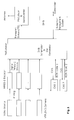
- FIG. 1 The entire construction of the digital broadcasting system is shown in FIG. 1. That is, most contents to be broadcasted are configured in an analog format, so that the contents are converted into digital-format contents and then encoded in MPEG-2 format. That is, an analog image received from a Video Tape Recorder (VTR), Digital Versatile Disk (DVD) or camera is converted into a digital MPEG-2 stream by an MPEG-2 encoder.
- VTR Video Tape Recorder
- DVD Digital Versatile Disk
- camera Digital MPEG-2 encoder
- a multiplexing process for integrating the MPEG-2 streams into a single stream is executed. While the process is executed, various pieces of information related to a system and to each broadcast (program) are added. Such pieces of information are designated as Program Specific Information/System Information (PSI/SI).
- PSI/SI Program Specific Information/System Information
- TS Transport Stream
- TS is modulated using Quadrature Phase Shift Keying (QPSK) and then up-converted, and the up-converted TS is transmitted to a satellite through an antenna.
- QPSK Quadrature Phase Shift Keying
- the above-described process is a typical transmission process in digital broadcasting.
- conditional access function can be used for each broadcast (program).
- the conditional access function is used by scrambling each program (broadcast) stream using an algorithm called common scrambling which is defined in the European digital broadcasting standard, that is, Digital Video Broadcasting (DVB).
- DVD Digital Video Broadcasting
- the scrambled stream is descrambled using a specific key (Control Word: CW) and then restored to an original stream by a set-top box, thus allowing a user to watch a corresponding broadcast.
- This key (CW) which is used for scrambling, is encrypted by each Conditional Access System (CAS) and transmitted to the set-top box through the TS using a specific protocol.
- CAS Conditional Access System
- the set-top box decrypts received information and detect a required CW, and descrambles the scrambled stream using the CW, thus allowing the user to watch a corresponding broadcast.
- the CAS In order to add the conditional access function, the CAS must be added and connected to a multiplexer, as shown in FIG. 1. Generally, CW is used at 10-second intervals, and an MPEG-2 stream is scrambled using the CW. The CW is also transmitted to the CAS. If the CAS encrypts the CW using a unique algorithm, configures the encrypted CW in a certain format (Entitlement Control Message: ECM) defined in DVB, and transmits the ECM format data to the multiplexer, the multiplexer adds the data to TS and transmits the TS with the data.
- ECM Entitlement Control Message
- a broadcast encrypted(scrambled) in this way is decrypted by a set-top box having the function of decrypting the encrypted broadcast(A broadcast scrambled in this way is descrambled by a set-top box having the function of descrambling), so that the user can watch the broadcast.
- the set-top box capable of decrypting(descrambling) the encrypted(scrambled) broadcast, decrypts an ECM table on the basis of the standard provided by the CAS, and descrambles a scrambled MPEG-2 stream using CW generated in the ECM table, so that the broadcast can be watched.
- operations of detecting the ECM table through total protocols are processed by software included in the set-top box.
- the decryption of the ECM table is processed by a smart card that is provided by a CAS company to a broadcasting service provider and is to be provided by the broadcasting service provider to a subscriber.
- FIG. 2 is a block diagram of a Set-Top Box (STB) for paid broadcast reception, including a smart card interface.
- NIM is a network interface module. That is, in order to watch a paid broadcast, a set-top box capable of interfacing with a smart card is required, as shown in FIG. 2.
- a key (CW) used to descramble a broadcast stream is calculated and provided by a smart card.
- the STB continuously provides required information to the smart card, acquires the CW, and decrypts(descrambles) the broadcast, thus allowing the user to watch the broadcast.
- the interface of the smart card is defined in ISO 7816 standards, which are international standards.
- the STB includes an interface chip that meets ISO 7816 standards, and a smart card interface that uses a smart card holder for physically supporting the smart card and connecting the smart card to the STB and is typically called a smart card slot.
- a typical set-top box for free broadcast reception does not include a smart card interface.
- OTA Over The Air
- All STBs include an RS-232C serial interface to update software or perform other functions.
- a method of connecting a smart card using a serial port is provided, so that the smart card can be used to watch paid broadcasts without replacing a set-top box.
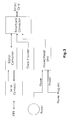
- FIG. 3 is a block diagram of a module for connecting a serial port to an ISO 7816 interface.
- the module includes a serial connector, a signal converter, a clock provider, a power/reset unit and a smart card connector.
- the serial port communicates using two signals Tx and Rx.
- the smart card exchanges data using a single I/O pin. Therefore, the signal converter analyzes and converts the difference between the two signals.
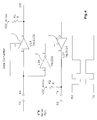
- the circuit of FIG. 4 can be used.
- an RS-232C interface has two signals Tx and Rx. That is, the RS-232C interface has a transmission terminal and a reception terminal.
- a smart card exchanges signals using a single I/O pin.
- Tx of the STB that is, the transmission terminal of the STB
- Rx of the signal converter is connected to the reception terminal Rx of the signal converter.
- the transmission signal of the STB is in a "1" (high) state in a normal condition, and falls to a "0" (low) state and starts an operation when a signal is sensed(a data is to be sent). Further, communication is performed in a half-duplex communication manner, so that transmission and reception do not simultaneously occur. Therefore, as shown in FIG. 4, the output of a buffer controller 1 is connected to the input of a buffer controller 2, so that signals Rx and Tx are converted to a single I/O signal.
- the buffer controller 2 is activated by an inverter 3 and is capable of transmitting a signal(data) from the smart card to the STB.
- the buffer controller 1 When the STB transmits a signal(data) to the smart card, the buffer controller 1 is activated only when the signal from the STB falls to a "0" state, so that the signal is provided to the I/O pin of the smart card. At this time, since the buffer controller 2 is deactivated, the signal transmitted to the I/O pin of the smart card is prevented from being transmitted to the STB.
- the smart card and the STB can communicate with each other.
- a clock signal must be provided to the smart card.
- a clock signal since a clock signal cannot be provided through the serial port of the STB, a clock signal must be generated and provided. The clock provider performs this function.
- the power/reset unit for supplying power to the smart card and providing a stable reset signal is required.
- a method of supplying power to the power/reset unit can be performed using a method of utilizing external power through a power plug (adapter), etc.
- a method of utilizing the power of the set-top box can be used so as to provide power to the power/reset unit.
- the power generated in the set-top box can be used without change. This case is depicted in FIG. 5.
- the power of the set-top box can be supplied through the serial port. This case is depicted in FIG 6. That is, a voltage of +5V can be generated using diodes and a regulator and then be supplied.
- An RS-232C interface can use signals, such as a Data Terminal Ready (DTR) signal, a Request to Send (RTS) signal, a Clear to Send (CTS) signal or a Data Communication Equipment Ready (DCR) signal, so as to perform more precise communication.
- DTR Data Terminal Ready
- RTS Request to Send
- CTS Clear to Send
- DCR Data Communication Equipment Ready
- each of the above signals typically has a voltage of -12V or +12V
- the signal is fixed to +12V, and then the module can be supplied with required power using the signal, as shown in FIG. 6.
- the signals DTR and RTS are provided by the STB
- required power is generated using the two signals and a 5V regulator.
- the reason for supplying power using two signals is to Supplement the signals from the STB because the signals are weak.
- the serial connector is a hardware connector connected to the serial port of the set-top box through a line.
- the smart card connector is a connector for allowing a smart card to be inserted thereinto and exchanging signals with the smart card.
- the module including the signal converter, the clock provider and the power/reset unit of FIG. 3 is used, so that the smart card can be used through the serial port of the STB.
- FIG. 4 illustrates an example of the usage of the module, which shows an example in which the module is inserted into the serial port of the STB, a smart card is inserted into the module, information about a key (CW), etc. is obtained from the smart card, and a stream is descrambled.
- CW key
- the module is connected to the serial port of a typical STB lacking a smart card interface, so that the smart card can be connected to the STB.
- the present invention uses the module that is connected to a serial port and allows a smart card to be connected to the STB, thus enabling a smart card to be used in an STB in which the smart card cannot be fundamentally used and a smart card interface circuit is not included.
- an embodiment in which the module is directly provided in an STB can also be considered. That is, the components of the module can be included in the STB, except components provided by the STB, such as a serial connector, power or clock provider, in the above module of the embodiment.
- the present invention provides a communication method between a set-top box and a smart card, in which the smart card can be connected to a typical FTA Set-Top Box (STB) or CI STB, lacking smart card interface hardware, using a typical serial port, thus enabling the watching of paid broadcasts through the FTA STB, which was fundamentally impossible in the
- the present invention is advantageous in that a paid broadcasting service provider can extend a potential market for increasing the number of subscribers, and provides an opportunity of extending markets to STB manufacturing companies that produce FTA STBs or CI STBs lacking a smart card interface.
- the present invention has an excellent advantage in that a consumer having a typical FTA STB or CI STB can watch paid broadcasts without purchasing an additional STB or replacing a previous STB.
Landscapes
- Engineering & Computer Science (AREA)
- Multimedia (AREA)
- Signal Processing (AREA)
- Physics & Mathematics (AREA)
- Computer Security & Cryptography (AREA)
- General Physics & Mathematics (AREA)
- Optics & Photonics (AREA)
- Health & Medical Sciences (AREA)
- Manufacturing & Machinery (AREA)
- Ophthalmology & Optometry (AREA)
- Mechanical Engineering (AREA)
- Two-Way Televisions, Distribution Of Moving Picture Or The Like (AREA)
Applications Claiming Priority (1)
| Application Number | Priority Date | Filing Date | Title |
|---|---|---|---|
| KR1020050009419A KR100779243B1 (ko) | 2005-02-02 | 2005-02-02 | 셋톱 박스와 스마트 카드 간의 통신방법 및 이에사용되는 인터페이스용 모듈 |
Publications (2)
| Publication Number | Publication Date |
|---|---|
| EP1689183A2 true EP1689183A2 (de) | 2006-08-09 |
| EP1689183A3 EP1689183A3 (de) | 2008-12-03 |
Family
ID=36283083
Family Applications (1)
| Application Number | Title | Priority Date | Filing Date |
|---|---|---|---|
| EP05108168A Withdrawn EP1689183A3 (de) | 2005-02-02 | 2005-09-06 | Kommunikationsverfahren zwischen Empfänger und Chipkarte und dafür verwendetes Schnittstellemodul |
Country Status (5)
| Country | Link |
|---|---|
| US (1) | US20060174259A1 (de) |
| EP (1) | EP1689183A3 (de) |
| KR (1) | KR100779243B1 (de) |
| CN (1) | CN1816104A (de) |
| CA (1) | CA2516602A1 (de) |
Cited By (1)
| Publication number | Priority date | Publication date | Assignee | Title |
|---|---|---|---|---|
| CN115460464A (zh) * | 2022-09-29 | 2022-12-09 | 成都长虹网络科技有限责任公司 | 一种实现机顶盒恢复出厂后快速接入的方法 |
Families Citing this family (8)
| Publication number | Priority date | Publication date | Assignee | Title |
|---|---|---|---|---|
| US7726579B2 (en) * | 2008-01-10 | 2010-06-01 | Sony Corporation | In-chassis TV chip with dynamic purse |
| WO2010119453A2 (en) * | 2009-04-13 | 2010-10-21 | Centre For Development Of Telematics (C-Dot) | Interoperability of set top box through smart card |
| EP2467799A1 (de) * | 2009-08-17 | 2012-06-27 | Cram, Inc. | Verwaltung und bereitstellung von digitalen inhalten |
| US9633391B2 (en) | 2011-03-30 | 2017-04-25 | Cram Worldwide, Llc | Secure pre-loaded drive management at kiosk |
| KR101920439B1 (ko) * | 2011-04-28 | 2019-02-14 | 삼성전자주식회사 | 공용 인터페이스를 통해 수신 제한 모듈로 암호화된 데이터를 전송하기 위한 데이터 전송 장치 및 그에 적용되는 방법, 수신 제한 모듈 그리고 시스템. |
| KR102057975B1 (ko) * | 2013-06-03 | 2019-12-20 | 삼성전자주식회사 | 디스플레이 장치의 기능 확장 키트 및 제어 방법 |
| CN110505178A (zh) * | 2018-05-16 | 2019-11-26 | 远程信息技术发展中心 | 通过反向otp实现的安全可互操作机顶盒 |
| CN112449215B (zh) * | 2019-08-27 | 2022-11-08 | 武汉佳世创科技有限公司 | 基于数字电视支持有卡和无卡条件接收的方法和系统 |
Family Cites Families (9)
| Publication number | Priority date | Publication date | Assignee | Title |
|---|---|---|---|---|
| US5396486A (en) * | 1992-12-17 | 1995-03-07 | At&T Corp. | Data communications equipment interface leads to signal half-duplex or full-duplex operation |
| US6694396B1 (en) * | 1999-06-18 | 2004-02-17 | Sony Corporation | Interfacing an NRSS-A smart card within an NRSS-B PCMCIA |
| US6792536B1 (en) * | 1999-10-20 | 2004-09-14 | Timecertain Llc | Smart card system and methods for proving dates in digital files |
| US6978335B2 (en) * | 2000-06-30 | 2005-12-20 | 02Micro International Limited | Smart card virtual hub |
| US6720801B2 (en) * | 2001-06-18 | 2004-04-13 | The United States Of America As Represented By The Secretary Of The Navy | RS-232 bus data tap apparatus |
| US20030093812A1 (en) * | 2001-11-09 | 2003-05-15 | Sony Corporation | System and method for delivering data to an information appliance using the ISO07816 |
| AU2003217459A1 (en) * | 2003-03-04 | 2004-09-28 | Regia S.R.L | Multimedia television apparatus |
| US7178724B2 (en) * | 2003-04-21 | 2007-02-20 | Stmicroelectronics, Inc. | Smart card device and method used for transmitting and receiving secure e-mails |
| KR200421593Y1 (ko) | 2006-04-13 | 2006-07-13 | 임창순 | 콤팩트형 멀티플레이어 |
-
2005
- 2005-02-02 KR KR1020050009419A patent/KR100779243B1/ko not_active Expired - Fee Related
- 2005-08-22 CA CA002516602A patent/CA2516602A1/en not_active Abandoned
- 2005-09-06 EP EP05108168A patent/EP1689183A3/de not_active Withdrawn
- 2005-09-08 CN CNA2005100981431A patent/CN1816104A/zh active Pending
- 2005-09-16 US US11/228,595 patent/US20060174259A1/en not_active Abandoned
Cited By (1)
| Publication number | Priority date | Publication date | Assignee | Title |
|---|---|---|---|---|
| CN115460464A (zh) * | 2022-09-29 | 2022-12-09 | 成都长虹网络科技有限责任公司 | 一种实现机顶盒恢复出厂后快速接入的方法 |
Also Published As
| Publication number | Publication date |
|---|---|
| US20060174259A1 (en) | 2006-08-03 |
| KR20060088927A (ko) | 2006-08-07 |
| CA2516602A1 (en) | 2006-08-02 |
| EP1689183A3 (de) | 2008-12-03 |
| KR100779243B1 (ko) | 2007-11-28 |
| CN1816104A (zh) | 2006-08-09 |
Similar Documents
| Publication | Publication Date | Title |
|---|---|---|
| US6975725B1 (en) | Method for standardizing the use of ISO 7816 smart cards in conditional access systems | |
| CN100574418C (zh) | 公用接口控制器和解扰传输流信道的方法 | |
| US6298400B1 (en) | Enhancing interface device to transport stream of parallel signals to serial signals with separate clock rate using a pin reassignment | |
| GB2487727A (en) | Module for extracting decryption seed, generating a key and providing a secure host channel | |
| WO2006016760A1 (en) | Apparatus and method for diagnosing cablecard-related status and performing proper processing, opencable host, and opencable reception apparatus | |
| US8610827B2 (en) | Direct IPTV distribution | |
| MX2012000981A (es) | Interfaz de tarjeta inteligente expandida. | |
| US20060174259A1 (en) | Communication method between set-top box and smart card and interface module used for the same | |
| CA2747414C (en) | Multi-vendor conditional access system | |
| CA2557824C (en) | Secure negotiation and encryption module | |
| US6694396B1 (en) | Interfacing an NRSS-A smart card within an NRSS-B PCMCIA | |
| EP1631072A1 (de) | Funktionsmodulkarte, host-einrichtung und steuerverfahren dafür | |
| EP1599045A1 (de) | Programmdatenkommunikationssystem | |
| CN102246519B (zh) | 传输流处理装置 | |
| KR200381867Y1 (ko) | 셋톱 박스 및 이에 사용되는 인터페이스용 모듈 | |
| CN100576903C (zh) | 条件接收模块的读取装置 | |
| KR100403236B1 (ko) | 디지털 위성방송 수신기의 수신제한장치 | |
| KR100747656B1 (ko) | 디지털 방송 수신기의 다중 암호 해독 시스템 및 방법 | |
| KR100837430B1 (ko) | 방송수신장치 및 그의 보안방법 | |
| KR20080065068A (ko) | 디지털 방송 수신기와 데이터 전송방법 | |
| KR20060103784A (ko) | Dmb 수신 제한 장치 인식 시스템 및 방법 | |
| KR20050070173A (ko) | 디지털 방송 수신기 | |
| JP2000308037A (ja) | 有料放送受信装置 | |
| JP2004056487A (ja) | カード型チューナー |
Legal Events
| Date | Code | Title | Description |
|---|---|---|---|
| PUAI | Public reference made under article 153(3) epc to a published international application that has entered the european phase |
Free format text: ORIGINAL CODE: 0009012 |
|
| AK | Designated contracting states |
Kind code of ref document: A2 Designated state(s): AT BE BG CH CY CZ DE DK EE ES FI FR GB GR HU IE IS IT LI LT LU LV MC NL PL PT RO SE SI SK TR |
|
| AX | Request for extension of the european patent |
Extension state: AL BA HR MK YU |
|
| PUAL | Search report despatched |
Free format text: ORIGINAL CODE: 0009013 |
|
| AK | Designated contracting states |
Kind code of ref document: A3 Designated state(s): AT BE BG CH CY CZ DE DK EE ES FI FR GB GR HU IE IS IT LI LT LU LV MC NL PL PT RO SE SI SK TR |
|
| AX | Request for extension of the european patent |
Extension state: AL BA HR MK YU |
|
| RIC1 | Information provided on ipc code assigned before grant |
Ipc: G06F 21/00 20060101ALI20081027BHEP Ipc: H04N 7/167 20060101ALI20081027BHEP Ipc: H04N 7/16 20060101AFI20081027BHEP |
|
| AKX | Designation fees paid | ||
| STAA | Information on the status of an ep patent application or granted ep patent |
Free format text: STATUS: THE APPLICATION IS DEEMED TO BE WITHDRAWN |
|
| 18D | Application deemed to be withdrawn |
Effective date: 20090604 |
|
| REG | Reference to a national code |
Ref country code: DE Ref legal event code: 8566 |