EP1694659B1 - Thiadiazole als cxc- und cc-chemokinrezeptorliganden - Google Patents
Thiadiazole als cxc- und cc-chemokinrezeptorliganden Download PDFInfo
- Publication number
- EP1694659B1 EP1694659B1 EP04814266A EP04814266A EP1694659B1 EP 1694659 B1 EP1694659 B1 EP 1694659B1 EP 04814266 A EP04814266 A EP 04814266A EP 04814266 A EP04814266 A EP 04814266A EP 1694659 B1 EP1694659 B1 EP 1694659B1
- Authority
- EP
- European Patent Office
- Prior art keywords
- group
- compound
- pharmaceutically acceptable
- solvate
- acceptable salt
- Prior art date
- Legal status (The legal status is an assumption and is not a legal conclusion. Google has not performed a legal analysis and makes no representation as to the accuracy of the status listed.)
- Expired - Lifetime
Links
- 0 CCc1c(*)c(C(N(C)CC2)=O)c2c(*)c1* Chemical compound CCc1c(*)c(C(N(C)CC2)=O)c2c(*)c1* 0.000 description 95
- WWWFHFGUOIQNJC-UHFFFAOYSA-N [O-][N+](c(cccc1C(O)=O)c1O)=O Chemical compound [O-][N+](c(cccc1C(O)=O)c1O)=O WWWFHFGUOIQNJC-UHFFFAOYSA-N 0.000 description 9
- NWYYWIJOWOLJNR-UHFFFAOYSA-N CC(C)C(CO)N Chemical compound CC(C)C(CO)N NWYYWIJOWOLJNR-UHFFFAOYSA-N 0.000 description 7
- WSQASCUSNKZRGM-UHFFFAOYSA-N CC(C)(C)C(c(cc1)cc2c1OCCO2)Nc1n[s]nc1Nc1cccc(C(N(C)C)=O)c1O Chemical compound CC(C)(C)C(c(cc1)cc2c1OCCO2)Nc1n[s]nc1Nc1cccc(C(N(C)C)=O)c1O WSQASCUSNKZRGM-UHFFFAOYSA-N 0.000 description 2
- HLDIUMKNPHFIQD-QMMMGPOBSA-N CC(C)(C)[C@H](c1cc(Cl)c[o]1)N Chemical compound CC(C)(C)[C@H](c1cc(Cl)c[o]1)N HLDIUMKNPHFIQD-QMMMGPOBSA-N 0.000 description 2
- XSNXHGMDUHPMNO-HNNXBMFYSA-N CC(C)(C)[C@H](c1ccc(C)[o]1)Nc1n[s]nc1Nc1cccc(C(N)=O)c1O Chemical compound CC(C)(C)[C@H](c1ccc(C)[o]1)Nc1n[s]nc1Nc1cccc(C(N)=O)c1O XSNXHGMDUHPMNO-HNNXBMFYSA-N 0.000 description 2
- NYWXESJJOJPWHD-MRXNPFEDSA-N CC(C)[C@H](c1cc(C)c(C)[o]1)NC(C(Nc1c[s]c(S(N(C)C2CC2)(=O)=O)c1O)=N)=N Chemical compound CC(C)[C@H](c1cc(C)c(C)[o]1)NC(C(Nc1c[s]c(S(N(C)C2CC2)(=O)=O)c1O)=N)=N NYWXESJJOJPWHD-MRXNPFEDSA-N 0.000 description 2
- HBFJBIYYAITEMP-UHFFFAOYSA-N CCc(cc1)c(C(N(C)C)=O)c(O)c1NC(C(Nc1ccccc1)=N)=N Chemical compound CCc(cc1)c(C(N(C)C)=O)c(O)c1NC(C(Nc1ccccc1)=N)=N HBFJBIYYAITEMP-UHFFFAOYSA-N 0.000 description 2
- SQKNJYHOMICQOI-UHFFFAOYSA-N CN(C)C(c(c(O)c(cc1)NC(C(Nc2cccc(Cl)c2Cl)=N)=N)c1Br)=O Chemical compound CN(C)C(c(c(O)c(cc1)NC(C(Nc2cccc(Cl)c2Cl)=N)=N)c1Br)=O SQKNJYHOMICQOI-UHFFFAOYSA-N 0.000 description 2
- VNLKRLACFMVPKD-UHFFFAOYSA-N CP(C)(c(cc(cc1)Cl)c1O)=O Chemical compound CP(C)(c(cc(cc1)Cl)c1O)=O VNLKRLACFMVPKD-UHFFFAOYSA-N 0.000 description 2
- OYDHPVAFBNEYPS-UHFFFAOYSA-N CP(C)(c(cccc1N)c1O)=O Chemical compound CP(C)(c(cccc1N)c1O)=O OYDHPVAFBNEYPS-UHFFFAOYSA-N 0.000 description 2
- QWRJJXBQRGPAAB-UHFFFAOYSA-N CP(C)(c1cc(Cl)cc([N+]([O-])=O)c1O)=O Chemical compound CP(C)(c1cc(Cl)cc([N+]([O-])=O)c1O)=O QWRJJXBQRGPAAB-UHFFFAOYSA-N 0.000 description 2
- RQEUFEKYXDPUSK-SSDOTTSWSA-N C[C@H](c1ccccc1)N Chemical compound C[C@H](c1ccccc1)N RQEUFEKYXDPUSK-SSDOTTSWSA-N 0.000 description 2
- OUDFNZMQXZILJD-UHFFFAOYSA-N Cc1ccc(C=O)[o]1 Chemical compound Cc1ccc(C=O)[o]1 OUDFNZMQXZILJD-UHFFFAOYSA-N 0.000 description 2
- VQKFNUFAXTZWDK-UHFFFAOYSA-N Cc1ccc[o]1 Chemical compound Cc1ccc[o]1 VQKFNUFAXTZWDK-UHFFFAOYSA-N 0.000 description 2
- DGNHHWLBKOCYCT-UHFFFAOYSA-N C(CCN1CCOCC1)Cc1c[o]cc1 Chemical compound C(CCN1CCOCC1)Cc1c[o]cc1 DGNHHWLBKOCYCT-UHFFFAOYSA-N 0.000 description 1
- GLUUGHFHXGJENI-UHFFFAOYSA-N C1NCCNC1 Chemical compound C1NCCNC1 GLUUGHFHXGJENI-UHFFFAOYSA-N 0.000 description 1
- VWAVZAMMNJMAEM-UHFFFAOYSA-N C=Cc(cc1)cc2c1OCO2 Chemical compound C=Cc(cc1)cc2c1OCO2 VWAVZAMMNJMAEM-UHFFFAOYSA-N 0.000 description 1
- GZQFLAZRKPDDFM-UHFFFAOYSA-N CC(C(F)(F)F)c1ccc(C)[o]1 Chemical compound CC(C(F)(F)F)c1ccc(C)[o]1 GZQFLAZRKPDDFM-UHFFFAOYSA-N 0.000 description 1
- GSEDZTGTZRYNET-UHFFFAOYSA-N CC(C(F)(F)F)c1ccc[o]1 Chemical compound CC(C(F)(F)F)c1ccc[o]1 GSEDZTGTZRYNET-UHFFFAOYSA-N 0.000 description 1
- IOFFSZHUEANECU-UHFFFAOYSA-N CC(C(N(C)OC)=O)(F)F Chemical compound CC(C(N(C)OC)=O)(F)F IOFFSZHUEANECU-UHFFFAOYSA-N 0.000 description 1
- UCBVPNZUYLJRAM-UHFFFAOYSA-N CC(C(c1c(C)cc[o]1)O)F Chemical compound CC(C(c1c(C)cc[o]1)O)F UCBVPNZUYLJRAM-UHFFFAOYSA-N 0.000 description 1
- FDZSYRXZBSGHET-UHFFFAOYSA-N CC(C)(C(c1ccc(C)[o]1)O)F Chemical compound CC(C)(C(c1ccc(C)[o]1)O)F FDZSYRXZBSGHET-UHFFFAOYSA-N 0.000 description 1
- ISRCWAHAHMBJBC-UHFFFAOYSA-N CC(C)(C)C(c([o]1)ccc1Br)N Chemical compound CC(C)(C)C(c([o]1)ccc1Br)N ISRCWAHAHMBJBC-UHFFFAOYSA-N 0.000 description 1
- LUFXLIHCASYHCX-UHFFFAOYSA-N CC(C)(C)C(c1cc(Cl)cc(Cl)c1)N Chemical compound CC(C)(C)C(c1cc(Cl)cc(Cl)c1)N LUFXLIHCASYHCX-UHFFFAOYSA-N 0.000 description 1
- DFYMUWWRAVHOAW-UHFFFAOYSA-N CC(C)(C)C(c1cc(OC(F)(F)F)ccc1)N Chemical compound CC(C)(C)C(c1cc(OC(F)(F)F)ccc1)N DFYMUWWRAVHOAW-UHFFFAOYSA-N 0.000 description 1
- NMIQQEBMVJKWLR-UHFFFAOYSA-N CC(C)(C)C(c1ccc(C)[o]1)Nc1n[s]nc1Nc1cccc(C#N)c1O Chemical compound CC(C)(C)C(c1ccc(C)[o]1)Nc1n[s]nc1Nc1cccc(C#N)c1O NMIQQEBMVJKWLR-UHFFFAOYSA-N 0.000 description 1
- LGRNRDUXALMYNB-UHFFFAOYSA-N CC(C)(C)C(c1ccc(C)[o]1)Nc1n[s]nc1Nc1cccc(C(N2C(CO)CCC2)=O)c1O Chemical compound CC(C)(C)C(c1ccc(C)[o]1)Nc1n[s]nc1Nc1cccc(C(N2C(CO)CCC2)=O)c1O LGRNRDUXALMYNB-UHFFFAOYSA-N 0.000 description 1
- LQOPHZVIWCGZTB-UHFFFAOYSA-O CC(C)(C)C(c1ccc(C)[o]1)[NH2+]c1n[s]nc1Nc1cccc(C(N(CC2)CCN2c2ccccn2)=O)c1O Chemical compound CC(C)(C)C(c1ccc(C)[o]1)[NH2+]c1n[s]nc1Nc1cccc(C(N(CC2)CCN2c2ccccn2)=O)c1O LQOPHZVIWCGZTB-UHFFFAOYSA-O 0.000 description 1
- WKBMVRZSANTMIZ-UHFFFAOYSA-N CC(C)(C)C(c1ccc(C)[s]1)Nc1n[s]nc1Nc(cccc1C#N)c1O Chemical compound CC(C)(C)C(c1ccc(C)[s]1)Nc1n[s]nc1Nc(cccc1C#N)c1O WKBMVRZSANTMIZ-UHFFFAOYSA-N 0.000 description 1
- ZNKBDCVVDIYBHU-UHFFFAOYSA-N CC(C)(C)C(c1ccc(C)[s]1)Nc1n[s]nc1Nc1cccc(C(N(C)C)=O)c1 Chemical compound CC(C)(C)C(c1ccc(C)[s]1)Nc1n[s]nc1Nc1cccc(C(N(C)C)=O)c1 ZNKBDCVVDIYBHU-UHFFFAOYSA-N 0.000 description 1
- QZHBRDPUNABGRE-FYXQCBMPSA-N CC(C)(C)C(c1ccc2OCOc2c1)NC(C(Nc1cccc(C(N(CC2)C[C@@H]2O)=O)c1O)=N1)=NS1=O Chemical compound CC(C)(C)C(c1ccc2OCOc2c1)NC(C(Nc1cccc(C(N(CC2)C[C@@H]2O)=O)c1O)=N1)=NS1=O QZHBRDPUNABGRE-FYXQCBMPSA-N 0.000 description 1
- GKVWXXZBIRYCGO-UHFFFAOYSA-N CC(C)(C)C(c1ccc2[o]ccc2c1)Nc1n[s]nc1Nc1cccc(C(N(C)C)=O)c1O Chemical compound CC(C)(C)C(c1ccc2[o]ccc2c1)Nc1n[s]nc1Nc1cccc(C(N(C)C)=O)c1O GKVWXXZBIRYCGO-UHFFFAOYSA-N 0.000 description 1
- HQOOLIZOJXQNOO-UHFFFAOYSA-N CC(C)(C)C(c1ccccc1)Nc1n[s]nc1Nc1cccc(C(N2C(CO)CCC2)=O)c1O Chemical compound CC(C)(C)C(c1ccccc1)Nc1n[s]nc1Nc1cccc(C(N2C(CO)CCC2)=O)c1O HQOOLIZOJXQNOO-UHFFFAOYSA-N 0.000 description 1
- MVIBWFGBIHNSHG-UHFFFAOYSA-N CC(C)(C)NS(c([s]cc1N)c1O)(=O)=O Chemical compound CC(C)(C)NS(c([s]cc1N)c1O)(=O)=O MVIBWFGBIHNSHG-UHFFFAOYSA-N 0.000 description 1
- YMHWIUJAAKMVEV-UHFFFAOYSA-N CC(C)(C)Nc1n[s]nc1Nc(cccc1C(N(C)C)=O)c1O Chemical compound CC(C)(C)Nc1n[s]nc1Nc(cccc1C(N(C)C)=O)c1O YMHWIUJAAKMVEV-UHFFFAOYSA-N 0.000 description 1
- LMEAOEKSFUTJKX-UHFFFAOYSA-N CC(C)(C)OC(CCNC(c1cccc(N)c1O)=O)=O Chemical compound CC(C)(C)OC(CCNC(c1cccc(N)c1O)=O)=O LMEAOEKSFUTJKX-UHFFFAOYSA-N 0.000 description 1
- MFNXWZGIFWJHMI-UHFFFAOYSA-N CC(C)(C)OC(NC(C)(C)C(O)=O)=O Chemical compound CC(C)(C)OC(NC(C)(C)C(O)=O)=O MFNXWZGIFWJHMI-UHFFFAOYSA-N 0.000 description 1
- RHZBIIJEVUIEBV-INIZCTEOSA-N CC(C)(C)[C@H](c([o]1)ccc1Cl)Nc1n[s]nc1Nc1cccc(C(N(C)C)=O)c1O Chemical compound CC(C)(C)[C@H](c([o]1)ccc1Cl)Nc1n[s]nc1Nc1cccc(C(N(C)C)=O)c1O RHZBIIJEVUIEBV-INIZCTEOSA-N 0.000 description 1
- IDQDNQMUIQXXGT-GKIKDSKJSA-O CC(C)(C)[C@H](c1c[o]cc1)NC(C(Nc1c[s]c(/S(/N(C)C)=C\C)c1O)=[NH2+])=N Chemical compound CC(C)(C)[C@H](c1c[o]cc1)NC(C(Nc1c[s]c(/S(/N(C)C)=C\C)c1O)=[NH2+])=N IDQDNQMUIQXXGT-GKIKDSKJSA-O 0.000 description 1
- HPWSNDLCQRREJQ-ZDUSSCGKSA-N CC(C)(C)[C@H](c1c[o]cc1)Nc1n[s]nc1Nc1c[s]c(S(N(C)C)(=O)=O)c1O Chemical compound CC(C)(C)[C@H](c1c[o]cc1)Nc1n[s]nc1Nc1c[s]c(S(N(C)C)(=O)=O)c1O HPWSNDLCQRREJQ-ZDUSSCGKSA-N 0.000 description 1
- DMVWSAPTFOLDBX-VWLOTQADSA-N CC(C)(C)[C@H](c1cc(CCCCN2CCN(C)CC2)c[o]1)N/C(/C(Nc1c[s]c(S(N)(=O)=O)c1O)=C(C)C)=N/S=[O]/C Chemical compound CC(C)(C)[C@H](c1cc(CCCCN2CCN(C)CC2)c[o]1)N/C(/C(Nc1c[s]c(S(N)(=O)=O)c1O)=C(C)C)=N/S=[O]/C DMVWSAPTFOLDBX-VWLOTQADSA-N 0.000 description 1
- SYMGNGCQJCSLIX-DEOSSOPVSA-N CC(C)(C)[C@H](c1cc(CCCCN2CCN(C)CC2)c[o]1)NC(C(Nc1c[s]c(S(N(C)C(C)(C)C)(=O)=O)c1O)=N)=N Chemical compound CC(C)(C)[C@H](c1cc(CCCCN2CCN(C)CC2)c[o]1)NC(C(Nc1c[s]c(S(N(C)C(C)(C)C)(=O)=O)c1O)=N)=N SYMGNGCQJCSLIX-DEOSSOPVSA-N 0.000 description 1
- SRPAPYFPOYNTPV-YDIHDLSKSA-N CC(C)(C)[C@H](c1cc(Cl)c[o]1)NC(C(Nc(cccc1S(N(C)C)(=O)=O)c1O)=N1)=NS1=O Chemical compound CC(C)(C)[C@H](c1cc(Cl)c[o]1)NC(C(Nc(cccc1S(N(C)C)(=O)=O)c1O)=N1)=NS1=O SRPAPYFPOYNTPV-YDIHDLSKSA-N 0.000 description 1
- CLVKAYCRRLIBPY-VIFPVBQESA-N CC(C)(C)[C@H](c1ccc(C)[o]1)N Chemical compound CC(C)(C)[C@H](c1ccc(C)[o]1)N CLVKAYCRRLIBPY-VIFPVBQESA-N 0.000 description 1
- LBDPMGADGYCMPS-DEOSSOPVSA-N CC(C)(C)[C@H](c1ccc(C)[o]1)NC(C(Nc(cccc1C(N(CC2)CCN2c2ccccn2)=O)c1O)=N)=N Chemical compound CC(C)(C)[C@H](c1ccc(C)[o]1)NC(C(Nc(cccc1C(N(CC2)CCN2c2ccccn2)=O)c1O)=N)=N LBDPMGADGYCMPS-DEOSSOPVSA-N 0.000 description 1
- PABKBUFOFCTPTF-QFIPXVFZSA-O CC(C)(C)[C@H](c1ccc(C)[o]1)NC(C(Nc(cccc1C(N(CC2)CCN2c2ncccn2)=O)c1O)=[NH2+])=N Chemical compound CC(C)(C)[C@H](c1ccc(C)[o]1)NC(C(Nc(cccc1C(N(CC2)CCN2c2ncccn2)=O)c1O)=[NH2+])=N PABKBUFOFCTPTF-QFIPXVFZSA-O 0.000 description 1
- IDOJZISSXGWPKS-NENZQZOMSA-N CC(C)(C)[C@H](c1ccc(C)[o]1)NC(C(Nc1c(C)[s]c(S(N(C)C)(=O)=O)c1O)=N1)=NS1=O Chemical compound CC(C)(C)[C@H](c1ccc(C)[o]1)NC(C(Nc1c(C)[s]c(S(N(C)C)(=O)=O)c1O)=N1)=NS1=O IDOJZISSXGWPKS-NENZQZOMSA-N 0.000 description 1
- LUPDXMQFTCJOGN-SFHVURJKSA-N CC(C)(C)[C@H](c1ccc(C)[o]1)NC(C(Nc1ccc(C)c(C(N(C)C)=O)c1O)=N)=N Chemical compound CC(C)(C)[C@H](c1ccc(C)[o]1)NC(C(Nc1ccc(C)c(C(N(C)C)=O)c1O)=N)=N LUPDXMQFTCJOGN-SFHVURJKSA-N 0.000 description 1
- LBDPMGADGYCMPS-DEOSSOPVSA-O CC(C)(C)[C@H](c1ccc(C)[o]1)NC(C(Nc1cccc(C(N(CC2)CCN2c2ccccn2)=O)c1O)=[NH2+])=N Chemical compound CC(C)(C)[C@H](c1ccc(C)[o]1)NC(C(Nc1cccc(C(N(CC2)CCN2c2ccccn2)=O)c1O)=[NH2+])=N LBDPMGADGYCMPS-DEOSSOPVSA-O 0.000 description 1
- IPIHEHMLPOBMPL-KRWDZBQOSA-N CC(C)(C)[C@H](c1ccc(C)[o]1)Nc1n[s]nc1Nc(ccc(Br)c1C(N(C)C)=O)c1O Chemical compound CC(C)(C)[C@H](c1ccc(C)[o]1)Nc1n[s]nc1Nc(ccc(Br)c1C(N(C)C)=O)c1O IPIHEHMLPOBMPL-KRWDZBQOSA-N 0.000 description 1
- NTRKBZLPYYDABX-NKWDDMGQSA-N CC(C)(C)[C@H](c1ccc(C)[o]1)Nc1n[s]nc1Nc(cccc1/C(/N(C)C)=N/C)c1O Chemical compound CC(C)(C)[C@H](c1ccc(C)[o]1)Nc1n[s]nc1Nc(cccc1/C(/N(C)C)=N/C)c1O NTRKBZLPYYDABX-NKWDDMGQSA-N 0.000 description 1
- BWJXDEOLLPPSME-INIZCTEOSA-N CC(C)(C)[C@H](c1ccc(C)[o]1)Nc1n[s]nc1Nc(cccc1C(NC)=O)c1N=O Chemical compound CC(C)(C)[C@H](c1ccc(C)[o]1)Nc1n[s]nc1Nc(cccc1C(NC)=O)c1N=O BWJXDEOLLPPSME-INIZCTEOSA-N 0.000 description 1
- NHVLPLVIWGTPQX-INIZCTEOSA-N CC(C)(C)[C@H](c1ccc(C)[o]1)Nc1n[s]nc1Nc(cccc1S(NC)(=O)=O)c1O Chemical compound CC(C)(C)[C@H](c1ccc(C)[o]1)Nc1n[s]nc1Nc(cccc1S(NC)(=O)=O)c1O NHVLPLVIWGTPQX-INIZCTEOSA-N 0.000 description 1
- OXOAJYLEUAAMCV-HNNXBMFYSA-N CC(C)(C)[C@H](c1ccc(C)[o]1)Nc1n[s]nc1Nc1c(C)[s]c(S(N(C)C)(=O)=O)c1O Chemical compound CC(C)(C)[C@H](c1ccc(C)[o]1)Nc1n[s]nc1Nc1c(C)[s]c(S(N(C)C)(=O)=O)c1O OXOAJYLEUAAMCV-HNNXBMFYSA-N 0.000 description 1
- LQOPHZVIWCGZTB-DEOSSOPVSA-N CC(C)(C)[C@H](c1ccc(C)[o]1)Nc1n[s]nc1Nc1cccc(C(N(CC2)CCN2c2ccccn2)=O)c1O Chemical compound CC(C)(C)[C@H](c1ccc(C)[o]1)Nc1n[s]nc1Nc1cccc(C(N(CC2)CCN2c2ccccn2)=O)c1O LQOPHZVIWCGZTB-DEOSSOPVSA-N 0.000 description 1
- NIUFWLRAJGPQGH-IBGZPJMESA-N CC(C)(C)[C@H](c1ccc(C)[o]1)Nc1n[s]nc1Nc1cccc(C(N2CCOCC2)=O)c1O Chemical compound CC(C)(C)[C@H](c1ccc(C)[o]1)Nc1n[s]nc1Nc1cccc(C(N2CCOCC2)=O)c1O NIUFWLRAJGPQGH-IBGZPJMESA-N 0.000 description 1
- NHVLPLVIWGTPQX-INIZCTEOSA-O CC(C)(C)[C@H](c1ccc(C)[o]1)Nc1n[s]nc1Nc1cccc(S(NC)(=O)=O)c1[OH2+] Chemical compound CC(C)(C)[C@H](c1ccc(C)[o]1)Nc1n[s]nc1Nc1cccc(S(NC)(=O)=O)c1[OH2+] NHVLPLVIWGTPQX-INIZCTEOSA-O 0.000 description 1
- OAEDAWJIVXMNMF-KUHUBIRLSA-N CC(C)(C)[C@H](c1ccc(C)[s]1)N/C(/C(Nc(cccc1C(N(CC2)C[C@@H]2O)=O)c1O)=N)=N/S Chemical compound CC(C)(C)[C@H](c1ccc(C)[s]1)N/C(/C(Nc(cccc1C(N(CC2)C[C@@H]2O)=O)c1O)=N)=N/S OAEDAWJIVXMNMF-KUHUBIRLSA-N 0.000 description 1
- RWUSKQVTDNLRHM-ZDUSSCGKSA-N CC(C)(C)[C@H](c1ccc(C)[s]1)N/C(/C(Nc1c[s]c([S](C)(N)(=O)=O)c1O)=N)=N/S=O Chemical compound CC(C)(C)[C@H](c1ccc(C)[s]1)N/C(/C(Nc1c[s]c([S](C)(N)(=O)=O)c1O)=N)=N/S=O RWUSKQVTDNLRHM-ZDUSSCGKSA-N 0.000 description 1
- WTYUGGYIKOASDW-KRWDZBQOSA-N CC(C)(C)[C@H](c1ccc(C)[s]1)NC(/C(/Nc(cccc1C(N(C)C)=O)c1O)=N\S)=N Chemical compound CC(C)(C)[C@H](c1ccc(C)[s]1)NC(/C(/Nc(cccc1C(N(C)C)=O)c1O)=N\S)=N WTYUGGYIKOASDW-KRWDZBQOSA-N 0.000 description 1
- FLYHZZNQHUAOBH-KRWDZBQOSA-O CC(C)(C)[C@H](c1ccc(C)[s]1)NC(C(Nc(c(O)c1C(N(C)C)=O)ccc1Br)=[NH2+])=N Chemical compound CC(C)(C)[C@H](c1ccc(C)[s]1)NC(C(Nc(c(O)c1C(N(C)C)=O)ccc1Br)=[NH2+])=N FLYHZZNQHUAOBH-KRWDZBQOSA-O 0.000 description 1
- UBYZDXMGOMWBRC-KRWDZBQOSA-N CC(C)(C)[C@H](c1ccc(C)[s]1)NC(C(Nc(ccc(C(F)(F)F)c1C(N(C)C)=O)c1O)=N)=N Chemical compound CC(C)(C)[C@H](c1ccc(C)[s]1)NC(C(Nc(ccc(C(F)(F)F)c1C(N(C)C)=O)c1O)=N)=N UBYZDXMGOMWBRC-KRWDZBQOSA-N 0.000 description 1
- SBDVSMMNSCSTKM-DVYMHAMMSA-N CC(C)(C)[C@H](c1ccc(C)[s]1)NC(C(Nc1c[s]c(/S(/N(C)C(C)(C)C)=C\C)c1O)=N)=N Chemical compound CC(C)(C)[C@H](c1ccc(C)[s]1)NC(C(Nc1c[s]c(/S(/N(C)C(C)(C)C)=C\C)c1O)=N)=N SBDVSMMNSCSTKM-DVYMHAMMSA-N 0.000 description 1
- PZLORYUKEIJIPG-RUINGEJQSA-N CC(C)(C)[C@H](c1ccc(C)[s]1)NC(C(Nc1c[s]c(S(N2C(CO)CCC2)(=O)=O)c1O)=N)=N Chemical compound CC(C)(C)[C@H](c1ccc(C)[s]1)NC(C(Nc1c[s]c(S(N2C(CO)CCC2)(=O)=O)c1O)=N)=N PZLORYUKEIJIPG-RUINGEJQSA-N 0.000 description 1
- WJLKYCDTNKSAKZ-MBABXSBOSA-N CC(C)(C)[C@H](c1ccc(C)[s]1)Nc1n[s]nc1Nc(cccc1C(N2C(CO)CCC2)=O)c1O Chemical compound CC(C)(C)[C@H](c1ccc(C)[s]1)Nc1n[s]nc1Nc(cccc1C(N2C(CO)CCC2)=O)c1O WJLKYCDTNKSAKZ-MBABXSBOSA-N 0.000 description 1
- ZVEWBFNMHGCLTF-SFHVURJKSA-N CC(C)(C)[C@H](c1ccc2OCOc2c1)Nc1n[s]nc1Nc(cccc1C#N)c1O Chemical compound CC(C)(C)[C@H](c1ccc2OCOc2c1)Nc1n[s]nc1Nc(cccc1C#N)c1O ZVEWBFNMHGCLTF-SFHVURJKSA-N 0.000 description 1
- OAVNAOXYKDPCIX-QFIPXVFZSA-N CC(C)(C)[C@H](c1ccc2OCOc2c1)Nc1n[s]nc1Nc1cccc(C(N2CCCCC2)=O)c1O Chemical compound CC(C)(C)[C@H](c1ccc2OCOc2c1)Nc1n[s]nc1Nc1cccc(C(N2CCCCC2)=O)c1O OAVNAOXYKDPCIX-QFIPXVFZSA-N 0.000 description 1
- LZHLXZWWAMKDPF-ZDUSSCGKSA-N CC(C)(C)[C@H](c1ccc[o]1)N/C(/C(Nc1c[s]c(S(N(C)C)(=O)=O)c1O)=N)=N/S=O Chemical compound CC(C)(C)[C@H](c1ccc[o]1)N/C(/C(Nc1c[s]c(S(N(C)C)(=O)=O)c1O)=N)=N/S=O LZHLXZWWAMKDPF-ZDUSSCGKSA-N 0.000 description 1
- FMSGHCWPBLXQML-IZPSYREMSA-N CC(C)(C)[C@H](c1ccccc1)N/C(/C(Nc1c[s]c(/S(/N(C)C(C)(C)C)=C\C)c1O)=N)=N/SO Chemical compound CC(C)(C)[C@H](c1ccccc1)N/C(/C(Nc1c[s]c(/S(/N(C)C(C)(C)C)=C\C)c1O)=N)=N/SO FMSGHCWPBLXQML-IZPSYREMSA-N 0.000 description 1
- MSHLODDGNINCTO-DEOSSOPVSA-N CC(C)(C)[C@H](c1ccccc1)NC(/C(/Nc1cccc(C(N(C)Cc2ccccc2)=O)c1O)=N\S)=N Chemical compound CC(C)(C)[C@H](c1ccccc1)NC(/C(/Nc1cccc(C(N(C)Cc2ccccc2)=O)c1O)=N\S)=N MSHLODDGNINCTO-DEOSSOPVSA-N 0.000 description 1
- BWXDYBMFADHKEG-IBGZPJMESA-N CC(C)(C)[C@H](c1ccccc1)NC(C(Nc(ccc(C)c1C(N(C)C)=O)c1O)=N)=N Chemical compound CC(C)(C)[C@H](c1ccccc1)NC(C(Nc(ccc(C)c1C(N(C)C)=O)c1O)=N)=N BWXDYBMFADHKEG-IBGZPJMESA-N 0.000 description 1
- AURQIRTYZBQPJN-KRWDZBQOSA-O CC(C)(C)[C@H](c1ccccc1)NC(C(Nc1c[s]c(S(N(C)C2CC2)(=O)=O)c1O)=[NH2+])=N Chemical compound CC(C)(C)[C@H](c1ccccc1)NC(C(Nc1c[s]c(S(N(C)C2CC2)(=O)=O)c1O)=[NH2+])=N AURQIRTYZBQPJN-KRWDZBQOSA-O 0.000 description 1
- VLKNMBHKLSJSPZ-KRWDZBQOSA-N CC(C)(C)[C@H](c1ccccc1)NC(C(Nc1c[s]c(S(N2CCCC2)(=O)=O)c1O)=N)=[N-] Chemical compound CC(C)(C)[C@H](c1ccccc1)NC(C(Nc1c[s]c(S(N2CCCC2)(=O)=O)c1O)=N)=[N-] VLKNMBHKLSJSPZ-KRWDZBQOSA-N 0.000 description 1
- ZCADESUVCTVXPP-SFHVURJKSA-N CC(C)(C)[C@H](c1ccccc1)NC1=NN=C1Nc1cccc(C(N(C)C)=O)c1O Chemical compound CC(C)(C)[C@H](c1ccccc1)NC1=NN=C1Nc1cccc(C(N(C)C)=O)c1O ZCADESUVCTVXPP-SFHVURJKSA-N 0.000 description 1
- SKJGIMJANWOQDC-SFHVURJKSA-N CC(C)(C)[C@H](c1ccccc1)Nc1n[s]nc1Nc(cccc1P(C)(C)=O)c1O Chemical compound CC(C)(C)[C@H](c1ccccc1)Nc1n[s]nc1Nc(cccc1P(C)(C)=O)c1O SKJGIMJANWOQDC-SFHVURJKSA-N 0.000 description 1
- ZCQJMHDXNUTBOQ-INIZCTEOSA-N CC(C)(C)[C@H](c1ccccc1)Nc1n[s]nc1Nc(cccc1P=O)c1O Chemical compound CC(C)(C)[C@H](c1ccccc1)Nc1n[s]nc1Nc(cccc1P=O)c1O ZCQJMHDXNUTBOQ-INIZCTEOSA-N 0.000 description 1
- NPDKZJXDIFPJEL-SFHVURJKSA-N CC(C)(C)[C@H](c1ccccc1)Nc1n[s]nc1Nc1cccc(C(N(C)C)=O)c1 Chemical compound CC(C)(C)[C@H](c1ccccc1)Nc1n[s]nc1Nc1cccc(C(N(C)C)=O)c1 NPDKZJXDIFPJEL-SFHVURJKSA-N 0.000 description 1
- WXQGTYOOEUQJET-SFHVURJKSA-N CC(C)(C)[C@H](c1ccccc1)Nc1n[s]nc1Nc1cccc(C(N(C)C)=O)c1O Chemical compound CC(C)(C)[C@H](c1ccccc1)Nc1n[s]nc1Nc1cccc(C(N(C)C)=O)c1O WXQGTYOOEUQJET-SFHVURJKSA-N 0.000 description 1
- FISGPVKUCXQAMS-FQEVSTJZSA-N CC(C)(C)[C@H](c1ccccc1)Nc1n[s]nc1Nc1cccc(C(N2CCCC2)=O)c1O Chemical compound CC(C)(C)[C@H](c1ccccc1)Nc1n[s]nc1Nc1cccc(C(N2CCCC2)=O)c1O FISGPVKUCXQAMS-FQEVSTJZSA-N 0.000 description 1
- DYNMXBQWQJUTJD-NRFANRHFSA-N CC(C)(C)[C@H](c1ccccc1)Nc1n[s]nc1Nc1cccc(C(N2CCCCC2)=O)c1O Chemical compound CC(C)(C)[C@H](c1ccccc1)Nc1n[s]nc1Nc1cccc(C(N2CCCCC2)=O)c1O DYNMXBQWQJUTJD-NRFANRHFSA-N 0.000 description 1
- NVMSUKWAYMCPKM-QMMMGPOBSA-N CC(C)([C@H](c1ccc(C)[o]1)N)F Chemical compound CC(C)([C@H](c1ccc(C)[o]1)N)F NVMSUKWAYMCPKM-QMMMGPOBSA-N 0.000 description 1
- KDFDOINBXBEOLZ-UHFFFAOYSA-N CC(C)(c1ccccc1)N Chemical compound CC(C)(c1ccccc1)N KDFDOINBXBEOLZ-UHFFFAOYSA-N 0.000 description 1
- FWBGHZQQESRYQN-UHFFFAOYSA-N CC(C)C(C(F)(F)F)c1ccccc1 Chemical compound CC(C)C(C(F)(F)F)c1ccccc1 FWBGHZQQESRYQN-UHFFFAOYSA-N 0.000 description 1
- ARCPVZGMLIVCFL-UHFFFAOYSA-O CC(C)C(C1=CC(C)C(C)O1)Nc1n[sH+]nc1NC(CC=CC1S(N(C)C)(=O)=O)C1O Chemical compound CC(C)C(C1=CC(C)C(C)O1)Nc1n[sH+]nc1NC(CC=CC1S(N(C)C)(=O)=O)C1O ARCPVZGMLIVCFL-UHFFFAOYSA-O 0.000 description 1
- RWPGDOKTHRGVMR-UHFFFAOYSA-N CC(C)C(c1cc(C)c(C)[o]1)NC(C(Nc1c[s]c(S(NC)(=O)=O)c1O)=N1)=NS1=O Chemical compound CC(C)C(c1cc(C)c(C)[o]1)NC(C(Nc1c[s]c(S(NC)(=O)=O)c1O)=N1)=NS1=O RWPGDOKTHRGVMR-UHFFFAOYSA-N 0.000 description 1
- IUDGLHUOEVBLRS-UHFFFAOYSA-N CC(C)C(c1ccc(C)[o]1)Nc1n[s]nc1Nc1cccc(C(N2C(CO)CCC2)=O)c1O Chemical compound CC(C)C(c1ccc(C)[o]1)Nc1n[s]nc1Nc1cccc(C(N2C(CO)CCC2)=O)c1O IUDGLHUOEVBLRS-UHFFFAOYSA-N 0.000 description 1
- IURBCXATWNDAKW-UHFFFAOYSA-N CC(C)COC(c1cccc(N)c1)=O Chemical compound CC(C)COC(c1cccc(N)c1)=O IURBCXATWNDAKW-UHFFFAOYSA-N 0.000 description 1
- HGCPQWFMGXOSMP-KPMSDPLLSA-O CC(C)[C@@H](CCC(C)C(C(Nc(cccc1C(N(C)C)=O)c1O)=[NH2+])=N)c1cc(C)c(C)[o]1 Chemical compound CC(C)[C@@H](CCC(C)C(C(Nc(cccc1C(N(C)C)=O)c1O)=[NH2+])=N)c1cc(C)c(C)[o]1 HGCPQWFMGXOSMP-KPMSDPLLSA-O 0.000 description 1
- ACEIVLAZNMBOKD-LLVKDONJSA-N CC(C)[C@H](C(NCc1cc(C(F)(F)F)ccc1)=O)N Chemical compound CC(C)[C@H](C(NCc1cc(C(F)(F)F)ccc1)=O)N ACEIVLAZNMBOKD-LLVKDONJSA-N 0.000 description 1
- OVQXACDDVLRVJX-SNVBAGLBSA-N CC(C)[C@H](C(Nc1ccccc1)=O)N Chemical compound CC(C)[C@H](C(Nc1ccccc1)=O)N OVQXACDDVLRVJX-SNVBAGLBSA-N 0.000 description 1
- XYJBKQZVJQPEQF-LJQANCHMSA-N CC(C)[C@H](c(cc1)cc2c1OCO2)Nc1n[s]nc1Nc(ccc(Cl)c1S(N2CCCC2)(=O)=O)c1O Chemical compound CC(C)[C@H](c(cc1)cc2c1OCO2)Nc1n[s]nc1Nc(ccc(Cl)c1S(N2CCCC2)(=O)=O)c1O XYJBKQZVJQPEQF-LJQANCHMSA-N 0.000 description 1
- ABPGJLVAKWQRPH-KPMSDPLLSA-O CC(C)[C@H](c1cc(C(C)C)c[o]1)NC(C(Nc1c[s]c(S(N2C(CO)CCC2)(=O)=O)c1O)=[NH2+])=N Chemical compound CC(C)[C@H](c1cc(C(C)C)c[o]1)NC(C(Nc1c[s]c(S(N2C(CO)CCC2)(=O)=O)c1O)=[NH2+])=N ABPGJLVAKWQRPH-KPMSDPLLSA-O 0.000 description 1
- NLYFVOGRFOHRHE-SZFQZUEASA-N CC(C)[C@H](c1cc(C(C)C)c[s]1)N/C(/C(Nc1c[s]c(/S(/N2CCCC2)=C\C)c1O)=N)=N/S Chemical compound CC(C)[C@H](c1cc(C(C)C)c[s]1)N/C(/C(Nc1c[s]c(/S(/N2CCCC2)=C\C)c1O)=N)=N/S NLYFVOGRFOHRHE-SZFQZUEASA-N 0.000 description 1
- JETGOHFEQPJLRY-GFCCVEGCSA-O CC(C)[C@H](c1cc(C)c(C)[o]1)N/C(/C(Nc1c[s]c(S(N)(=O)=O)c1O)=[NH2+])=N/S Chemical compound CC(C)[C@H](c1cc(C)c(C)[o]1)N/C(/C(Nc1c[s]c(S(N)(=O)=O)c1O)=[NH2+])=N/S JETGOHFEQPJLRY-GFCCVEGCSA-O 0.000 description 1
- LXDHLEBIUPPKDG-MRXNPFEDSA-N CC(C)[C@H](c1cc(C)c(C)[o]1)N/C(/C(Nc1c[s]c(S(N2CCCC2)(=O)=O)c1O)=N)=N/S=O Chemical compound CC(C)[C@H](c1cc(C)c(C)[o]1)N/C(/C(Nc1c[s]c(S(N2CCCC2)(=O)=O)c1O)=N)=N/S=O LXDHLEBIUPPKDG-MRXNPFEDSA-N 0.000 description 1
- JMKDXFYTSMUPTE-QGZVFWFLSA-O CC(C)[C@H](c1cc(C)c(C)[o]1)N/C(/C(Nc1cccc(C(N(C)C)=O)c1O)=[NH2+])=N/S Chemical compound CC(C)[C@H](c1cc(C)c(C)[o]1)N/C(/C(Nc1cccc(C(N(C)C)=O)c1O)=[NH2+])=N/S JMKDXFYTSMUPTE-QGZVFWFLSA-O 0.000 description 1
- USRLMZKXJDBDPS-XSMRMGSLSA-N CC(C)[C@H](c1cc(C)c(C)[o]1)NC(C(Nc(ccc(Cl)c1/S(/N(C)C)=C/C)c1O)=N1)=NS1=O Chemical compound CC(C)[C@H](c1cc(C)c(C)[o]1)NC(C(Nc(ccc(Cl)c1/S(/N(C)C)=C/C)c1O)=N1)=NS1=O USRLMZKXJDBDPS-XSMRMGSLSA-N 0.000 description 1
- NNKNOXXXZVAPSW-IRMGFGTQSA-N CC(C)[C@H](c1cc(C)c(C)[o]1)NC(C(Nc(ccc(Cl)c1/S(/N)=C/C)c1O)=N1)=NS1=O Chemical compound CC(C)[C@H](c1cc(C)c(C)[o]1)NC(C(Nc(ccc(Cl)c1/S(/N)=C/C)c1O)=N1)=NS1=O NNKNOXXXZVAPSW-IRMGFGTQSA-N 0.000 description 1
- IYQVMYMSSHWJBZ-GOSISDBHSA-N CC(C)[C@H](c1cc(C)c(C)[o]1)Nc1n[s]nc1Nc(c(O)c1S(N2CCCC2)(=O)=O)ccc1Cl Chemical compound CC(C)[C@H](c1cc(C)c(C)[o]1)Nc1n[s]nc1Nc(c(O)c1S(N2CCCC2)(=O)=O)ccc1Cl IYQVMYMSSHWJBZ-GOSISDBHSA-N 0.000 description 1
- YPUCEIWKEVYMQL-MRXNPFEDSA-N CC(C)[C@H](c1cc(C)c(C)[o]1)Nc1n[s]nc1Nc1cccc(C#N)c1O Chemical compound CC(C)[C@H](c1cc(C)c(C)[o]1)Nc1n[s]nc1Nc1cccc(C#N)c1O YPUCEIWKEVYMQL-MRXNPFEDSA-N 0.000 description 1
- QRPMSISJRDXQGU-LJQANCHMSA-N CC(C)[C@H](c1cc(C)c(C)[o]1)Nc1n[s]nc1Nc1cccc(C(N2CCCC2)=O)c1O Chemical compound CC(C)[C@H](c1cc(C)c(C)[o]1)Nc1n[s]nc1Nc1cccc(C(N2CCCC2)=O)c1O QRPMSISJRDXQGU-LJQANCHMSA-N 0.000 description 1
- RFSDSUPUFVBXJK-OXJNMPFZSA-N CC(C)[C@H](c1cc(C)c(C)[o]1)Nc1n[s]nc1Nc1cccc(C(N2[C@H](CO)CCC2)=O)c1O Chemical compound CC(C)[C@H](c1cc(C)c(C)[o]1)Nc1n[s]nc1Nc1cccc(C(N2[C@H](CO)CCC2)=O)c1O RFSDSUPUFVBXJK-OXJNMPFZSA-N 0.000 description 1
- YKZDJIJCGJLYGQ-MRXNPFEDSA-N CC(C)[C@H](c1cc(C)c(C)[o]1)Nc1n[s]nc1Nc1cccc(S(NC)(O)=O)c1O Chemical compound CC(C)[C@H](c1cc(C)c(C)[o]1)Nc1n[s]nc1Nc1cccc(S(NC)(O)=O)c1O YKZDJIJCGJLYGQ-MRXNPFEDSA-N 0.000 description 1
- HTHKLZWVOQNVFQ-MRXNPFEDSA-N CC(C)[C@H](c1cc(C)c(C)[s]1)NC(C(Nc1c[s]c(S(N(C)C2CC2)(=O)=O)c1O)=N)=N Chemical compound CC(C)[C@H](c1cc(C)c(C)[s]1)NC(C(Nc1c[s]c(S(N(C)C2CC2)(=O)=O)c1O)=N)=N HTHKLZWVOQNVFQ-MRXNPFEDSA-N 0.000 description 1
- RZNSRAXWDOYEDA-SECBINFHSA-N CC(C)[C@H](c1cc(C)c[s]1)N Chemical compound CC(C)[C@H](c1cc(C)c[s]1)N RZNSRAXWDOYEDA-SECBINFHSA-N 0.000 description 1
- FLTJKZQKZWYUKZ-UHFFFAOYSA-O CC(C)c1c[o]c(C(C(C)(C)C)Nc2n[s]nc2[NH2+]c(ccc(Cl)c2S(N3CCCC3)(=O)=O)c2O)c1 Chemical compound CC(C)c1c[o]c(C(C(C)(C)C)Nc2n[s]nc2[NH2+]c(ccc(Cl)c2S(N3CCCC3)(=O)=O)c2O)c1 FLTJKZQKZWYUKZ-UHFFFAOYSA-O 0.000 description 1
- HFACESXXXJAPOG-UHFFFAOYSA-O CC(C)c1c[o]c(C(C(C)(C)C)[NH2+]c2n[s]nc2Nc2c[s]c(S(N3CCN(C)CC3)(=O)=O)c2O)c1 Chemical compound CC(C)c1c[o]c(C(C(C)(C)C)[NH2+]c2n[s]nc2Nc2c[s]c(S(N3CCN(C)CC3)(=O)=O)c2O)c1 HFACESXXXJAPOG-UHFFFAOYSA-O 0.000 description 1
- RNFIHRJWAKWIEM-UHFFFAOYSA-N CC(C)c1c[o]c(C=O)c1 Chemical compound CC(C)c1c[o]c(C=O)c1 RNFIHRJWAKWIEM-UHFFFAOYSA-N 0.000 description 1
- FCYBPJNYJRPNQQ-UHFFFAOYSA-O CC(C)c1c[o]c(C[NH2+]C(C(Nc2ccc(C(F)(F)F)c(C(N(C)C)=O)c2O)=N2)=NS2=O)c1 Chemical compound CC(C)c1c[o]c(C[NH2+]C(C(Nc2ccc(C(F)(F)F)c(C(N(C)C)=O)c2O)=N2)=NS2=O)c1 FCYBPJNYJRPNQQ-UHFFFAOYSA-O 0.000 description 1
- JSVGURUZOXNGSU-SFHVURJKSA-N CC(C)c1c[o]c([C@@H](C(C)(C)C)Nc2n[s]nc2Nc2c[s]c(S(N3CCCC3)(=O)=O)c2O)c1 Chemical compound CC(C)c1c[o]c([C@@H](C(C)(C)C)Nc2n[s]nc2Nc2c[s]c(S(N3CCCC3)(=O)=O)c2O)c1 JSVGURUZOXNGSU-SFHVURJKSA-N 0.000 description 1
- ZLMRSEMZMODMON-ZETCQYMHSA-N CC(C)c1c[o]c([C@H](C)C(F)(F)F)c1 Chemical compound CC(C)c1c[o]c([C@H](C)C(F)(F)F)c1 ZLMRSEMZMODMON-ZETCQYMHSA-N 0.000 description 1
- XQJYJCWQRXGNMN-UHFFFAOYSA-N CC(C)c1c[s]c(C=O)c1 Chemical compound CC(C)c1c[s]c(C=O)c1 XQJYJCWQRXGNMN-UHFFFAOYSA-N 0.000 description 1
- MSABRGALHULWNC-UHFFFAOYSA-N CC(C1N)C=CC(C(N(CC2)CCN2S(c2ccccc2)(=O)=O)=O)=C1O Chemical compound CC(C1N)C=CC(C(N(CC2)CCN2S(c2ccccc2)(=O)=O)=O)=C1O MSABRGALHULWNC-UHFFFAOYSA-N 0.000 description 1
- DHJFZDUBGLQDTA-UHFFFAOYSA-N CC(C1SC(C)=CC1)C(F)(F)F Chemical compound CC(C1SC(C)=CC1)C(F)(F)F DHJFZDUBGLQDTA-UHFFFAOYSA-N 0.000 description 1
- CVCDGQVQQGSYMK-UHFFFAOYSA-N CC(CCNC)O Chemical compound CC(CCNC)O CVCDGQVQQGSYMK-UHFFFAOYSA-N 0.000 description 1
- MDBALTHKVQPXJV-UHFFFAOYSA-N CC(c1c[o]c(CNc2n[s]nc2Nc(ccc(C)c2S(N)(=O)=O)c2O)c1)=C Chemical compound CC(c1c[o]c(CNc2n[s]nc2Nc(ccc(C)c2S(N)(=O)=O)c2O)c1)=C MDBALTHKVQPXJV-UHFFFAOYSA-N 0.000 description 1
- HCRFPXJVGYUBQQ-UHFFFAOYSA-N CC1(CC1)C(c1c(C)cc[o]1)O Chemical compound CC1(CC1)C(c1c(C)cc[o]1)O HCRFPXJVGYUBQQ-UHFFFAOYSA-N 0.000 description 1
- HSBAOAHFCLIZNS-UHFFFAOYSA-N CC1(CC1)C(c1cc(C)c[o]1)O Chemical compound CC1(CC1)C(c1cc(C)c[o]1)O HSBAOAHFCLIZNS-UHFFFAOYSA-N 0.000 description 1
- AGLSBYVNORJDSC-UHFFFAOYSA-N CCC(C(C1)=CC=CC1F)N Chemical compound CCC(C(C1)=CC=CC1F)N AGLSBYVNORJDSC-UHFFFAOYSA-N 0.000 description 1
- WMOPSEIKCKPSPH-LSJNQWAISA-N CCC(C(C1)OC=C1C(C)C)Nc1n[s]nc1Nc1cccc(C(N(CC2)C[C@@H]2O)=O)c1O Chemical compound CCC(C(C1)OC=C1C(C)C)Nc1n[s]nc1Nc1cccc(C(N(CC2)C[C@@H]2O)=O)c1O WMOPSEIKCKPSPH-LSJNQWAISA-N 0.000 description 1
- RYPANLRHRSZWJN-UHFFFAOYSA-N CCC(C(C1)OC=C1C(C)C)Nc1n[s]nc1Nc1cccc(C(N2CCCCC2)=O)c1O Chemical compound CCC(C(C1)OC=C1C(C)C)Nc1n[s]nc1Nc1cccc(C(N2CCCCC2)=O)c1O RYPANLRHRSZWJN-UHFFFAOYSA-N 0.000 description 1
- VJEYJFQUNNZKPG-UHFFFAOYSA-N CCC(C)(C)C(c1ccc(C)[o]1)=O Chemical compound CCC(C)(C)C(c1ccc(C)[o]1)=O VJEYJFQUNNZKPG-UHFFFAOYSA-N 0.000 description 1
- LXBMVBLCODOBGZ-SNVBAGLBSA-N CCC(C)(C)[C@@H](c1ccc(C)[o]1)O Chemical compound CCC(C)(C)[C@@H](c1ccc(C)[o]1)O LXBMVBLCODOBGZ-SNVBAGLBSA-N 0.000 description 1
- OPVPJTBQQBXPNZ-LLVKDONJSA-N CCC(CC)c1c[o]c([C@@H](CC)N)c1 Chemical compound CCC(CC)c1c[o]c([C@@H](CC)N)c1 OPVPJTBQQBXPNZ-LLVKDONJSA-N 0.000 description 1
- DSVIGDPJWCJAHL-UHFFFAOYSA-N CCC(c(cccc1)c1Cl)N Chemical compound CCC(c(cccc1)c1Cl)N DSVIGDPJWCJAHL-UHFFFAOYSA-N 0.000 description 1
- QXKXIJNLCUQMNR-UHFFFAOYSA-N CCC(c1cc(C(C)C)c[o]1)NC(C(Nc(ccc(Cl)c1S(CC)N(C)C)c1O)=N)=NS Chemical compound CCC(c1cc(C(C)C)c[o]1)NC(C(Nc(ccc(Cl)c1S(CC)N(C)C)c1O)=N)=NS QXKXIJNLCUQMNR-UHFFFAOYSA-N 0.000 description 1
- PHNNJWQUYHFHCS-UHFFFAOYSA-O CCC(c1cc(C(C)C)c[o]1)NC(C(Nc(cccc1S([NH2+]C)(=O)=O)c1O)=N1)=NS1=O Chemical compound CCC(c1cc(C(C)C)c[o]1)NC(C(Nc(cccc1S([NH2+]C)(=O)=O)c1O)=N1)=NS1=O PHNNJWQUYHFHCS-UHFFFAOYSA-O 0.000 description 1
- CVMPABFJUHPKAS-UHFFFAOYSA-N CCC(c1cc(C(C)C)c[o]1)Nc1n[s]nc1NC(C1O)=CC=CC1C#N Chemical compound CCC(c1cc(C(C)C)c[o]1)Nc1n[s]nc1NC(C1O)=CC=CC1C#N CVMPABFJUHPKAS-UHFFFAOYSA-N 0.000 description 1
- IPELKUFLDHCVFQ-UHFFFAOYSA-N CCC(c1cc(C(C)C)c[o]1)Nc1n[s]nc1Nc1cccc(C#N)c1O Chemical compound CCC(c1cc(C(C)C)c[o]1)Nc1n[s]nc1Nc1cccc(C#N)c1O IPELKUFLDHCVFQ-UHFFFAOYSA-N 0.000 description 1
- ILVYNCBMSHFGNF-UHFFFAOYSA-P CCC(c1cc(C)c[O]1CC)[NH2+]C(C(Nc1c[s]c(S(NCC)(=O)=O)c1O)=[I+])=NS Chemical compound CCC(c1cc(C)c[O]1CC)[NH2+]C(C(Nc1c[s]c(S(NCC)(=O)=O)c1O)=[I+])=NS ILVYNCBMSHFGNF-UHFFFAOYSA-P 0.000 description 1
- UHZNUAIWHKUXFL-UHFFFAOYSA-N CCC(c1cc(C)c[o]1)Nc1n[s]nc1Nc(cccc1C(N2CCCC2)=O)c1O Chemical compound CCC(c1cc(C)c[o]1)Nc1n[s]nc1Nc(cccc1C(N2CCCC2)=O)c1O UHZNUAIWHKUXFL-UHFFFAOYSA-N 0.000 description 1
- PTKHRPQYADPIRS-UHFFFAOYSA-N CCC(c1ccc(-c2cc(C([F-2])(F)F)ccc2)[o]1)N Chemical compound CCC(c1ccc(-c2cc(C([F-2])(F)F)ccc2)[o]1)N PTKHRPQYADPIRS-UHFFFAOYSA-N 0.000 description 1
- DWTVVDNWGNCOET-UHFFFAOYSA-N CCC(c1ccc(C)[o]1)NC(C(Nc(cccc1C(N(C)CC(O)=O)=O)c1O)=N1)=NS1=O Chemical compound CCC(c1ccc(C)[o]1)NC(C(Nc(cccc1C(N(C)CC(O)=O)=O)c1O)=N1)=NS1=O DWTVVDNWGNCOET-UHFFFAOYSA-N 0.000 description 1
- JSTGZWHCNXVAPG-UHFFFAOYSA-N CCC(c1ccc(C)[o]1)Nc1n[s]nc1Nc1cccc(C(N(C)C)=O)c1 Chemical compound CCC(c1ccc(C)[o]1)Nc1n[s]nc1Nc1cccc(C(N(C)C)=O)c1 JSTGZWHCNXVAPG-UHFFFAOYSA-N 0.000 description 1
- UUNJAUASKIVDQJ-UHFFFAOYSA-N CCC(c1cccc(Oc2ccccc2)c1)N Chemical compound CCC(c1cccc(Oc2ccccc2)c1)N UUNJAUASKIVDQJ-UHFFFAOYSA-N 0.000 description 1
- JWALQYNAYIMNKA-UHFFFAOYSA-O CCC(c1ccccc1)Nc1n[s]nc1[NH2+]c(cccc1C(N2CCOCC2)=O)c1O Chemical compound CCC(c1ccccc1)Nc1n[s]nc1[NH2+]c(cccc1C(N2CCOCC2)=O)c1O JWALQYNAYIMNKA-UHFFFAOYSA-O 0.000 description 1
- HTTOWFIYAYYAQD-UHFFFAOYSA-N CCC(c1n[o]c(C)c1)=O Chemical compound CCC(c1n[o]c(C)c1)=O HTTOWFIYAYYAQD-UHFFFAOYSA-N 0.000 description 1
- RVUFZEBKIZZJJC-UHFFFAOYSA-N CCC(c1n[o]c(C)c1)N Chemical compound CCC(c1n[o]c(C)c1)N RVUFZEBKIZZJJC-UHFFFAOYSA-N 0.000 description 1
- BRHUFRGHNCRTJK-UHFFFAOYSA-N CCC(c1n[o]c(C)c1)O Chemical compound CCC(c1n[o]c(C)c1)O BRHUFRGHNCRTJK-UHFFFAOYSA-N 0.000 description 1
- AHRIUDUCMNVWHM-PKPIPKONSA-N CCC1C=C([C@H](C)C(F)(F)F)OC1 Chemical compound CCC1C=C([C@H](C)C(F)(F)F)OC1 AHRIUDUCMNVWHM-PKPIPKONSA-N 0.000 description 1
- JXINTQIBVAYREV-SZFQZUEASA-N CCN(CC)/S(/c([s]cc1NC(/C(/N[C@H](C(C)C)c2cc(C(C)C)c[o]2)=N\S)=N)c1O)=C/C Chemical compound CCN(CC)/S(/c([s]cc1NC(/C(/N[C@H](C(C)C)c2cc(C(C)C)c[o]2)=N\S)=N)c1O)=C/C JXINTQIBVAYREV-SZFQZUEASA-N 0.000 description 1
- MEVPKNDYNSZTMG-UHFFFAOYSA-N CCN(CC)S(c([s]c(C)c1N)c1O)(=O)=O Chemical compound CCN(CC)S(c([s]c(C)c1N)c1O)(=O)=O MEVPKNDYNSZTMG-UHFFFAOYSA-N 0.000 description 1
- ZYAHIEISXPERCL-KRWDZBQOSA-N CCN(CC)S(c([s]c(C)c1NC(C(N[C@H](C(C)(C)C)c2ccc(C)[s]2)=N)=N)c1O)(=O)=O Chemical compound CCN(CC)S(c([s]c(C)c1NC(C(N[C@H](C(C)(C)C)c2ccc(C)[s]2)=N)=N)c1O)(=O)=O ZYAHIEISXPERCL-KRWDZBQOSA-N 0.000 description 1
- MFVZQPZSVWFAFZ-KRWDZBQOSA-N CCN(CC)S(c([s]c(C)c1NC(C(N[C@H](C(C)(C)C)c2ccc(C)[s]2)=[N-])=N)c1O)(=O)=O Chemical compound CCN(CC)S(c([s]c(C)c1NC(C(N[C@H](C(C)(C)C)c2ccc(C)[s]2)=[N-])=N)c1O)(=O)=O MFVZQPZSVWFAFZ-KRWDZBQOSA-N 0.000 description 1
- QRWAOBGYRGBWDY-QGZVFWFLSA-N CCN(CC)S(c([s]c(C)c1Nc2n[s]nc2N[C@H](C(C)C)c2cc(C(C)C)c[s]2)c1O)(=O)=O Chemical compound CCN(CC)S(c([s]c(C)c1Nc2n[s]nc2N[C@H](C(C)C)c2cc(C(C)C)c[s]2)c1O)(=O)=O QRWAOBGYRGBWDY-QGZVFWFLSA-N 0.000 description 1
- HKLVJYFAVFQNIS-QGZVFWFLSA-O CCN(CC)S(c([s]cc1NC(C(N[C@H](C(C)C)c2cc(C(C)C)c[o]2)=N)=[NH2+])c1O)(=O)=O Chemical compound CCN(CC)S(c([s]cc1NC(C(N[C@H](C(C)C)c2cc(C(C)C)c[o]2)=N)=[NH2+])c1O)(=O)=O HKLVJYFAVFQNIS-QGZVFWFLSA-O 0.000 description 1
- VEPUEHSGBSINCB-SFHVURJKSA-N CCN(CC)S(c([s]cc1Nc2n[s]nc2N[C@H](C(C)(C)C)c2cc(C(C)C)c[o]2)c1O)(=O)=O Chemical compound CCN(CC)S(c([s]cc1Nc2n[s]nc2N[C@H](C(C)(C)C)c2cc(C(C)C)c[o]2)c1O)(=O)=O VEPUEHSGBSINCB-SFHVURJKSA-N 0.000 description 1
- RPBAMWSNSWGTLW-IZPSYREMSA-N CCN(CC1)CCN1/S(/c([s]cc1Nc2n[s]nc2N[C@H](C(C)(C)C)c2c[o]cc2)c1O)=C/C Chemical compound CCN(CC1)CCN1/S(/c([s]cc1Nc2n[s]nc2N[C@H](C(C)(C)C)c2c[o]cc2)c1O)=C/C RPBAMWSNSWGTLW-IZPSYREMSA-N 0.000 description 1
- WLNOBAYHIYUCJM-UHFFFAOYSA-N CCN(CC1)CCN1S(c([s]cc1N)c1O)(=O)=O Chemical compound CCN(CC1)CCN1S(c([s]cc1N)c1O)(=O)=O WLNOBAYHIYUCJM-UHFFFAOYSA-N 0.000 description 1
- LFNCENRMALKWQP-SANMLTNESA-N CCN(CC1)CCN1S(c([s]cc1NC(C(N[C@H](C(C)(C)C)c2cc(CCCCN3CCN(C)CC3)c[o]2)=N)=N)c1O)(=O)=O Chemical compound CCN(CC1)CCN1S(c([s]cc1NC(C(N[C@H](C(C)(C)C)c2cc(CCCCN3CCN(C)CC3)c[o]2)=N)=N)c1O)(=O)=O LFNCENRMALKWQP-SANMLTNESA-N 0.000 description 1
- BJSYXFUDGCRPPG-ZDUSSCGKSA-N CCNS(c([s]cc1NC(C(N[C@H](C(C)(C)C)c2c[o]cc2)=N)=N)c1O)(=O)=O Chemical compound CCNS(c([s]cc1NC(C(N[C@H](C(C)(C)C)c2c[o]cc2)=N)=N)c1O)(=O)=O BJSYXFUDGCRPPG-ZDUSSCGKSA-N 0.000 description 1
- MBHLGLMXNJSULU-ZDUSSCGKSA-O CCNS(c([s]cc1NC(C(N[C@H](C(C)(C)C)c2ccc[o]2)=N)=[NH2+])c1O)(=O)=O Chemical compound CCNS(c([s]cc1NC(C(N[C@H](C(C)(C)C)c2ccc[o]2)=N)=[NH2+])c1O)(=O)=O MBHLGLMXNJSULU-ZDUSSCGKSA-O 0.000 description 1
- CKHJPWWKHUGDTJ-AWEZNQCLSA-N CCNS(c([s]cc1Nc2n[s]nc2N[C@H](C(C)(C)C)c2ccc(C)[s]2)c1O)(=O)=O Chemical compound CCNS(c([s]cc1Nc2n[s]nc2N[C@H](C(C)(C)C)c2ccc(C)[s]2)c1O)(=O)=O CKHJPWWKHUGDTJ-AWEZNQCLSA-N 0.000 description 1
- IXKBGZHMTPSITL-UHFFFAOYSA-N CCOC(C(C1)NCCN1C(N(C)C)=O)=O Chemical compound CCOC(C(C1)NCCN1C(N(C)C)=O)=O IXKBGZHMTPSITL-UHFFFAOYSA-N 0.000 description 1
- JMTROCWJCVBOAI-UHFFFAOYSA-O CCOC(C(Nc(ccc(Br)c1C(N(C)C)=O)c1O)=[NH2+])=N Chemical compound CCOC(C(Nc(ccc(Br)c1C(N(C)C)=O)c1O)=[NH2+])=N JMTROCWJCVBOAI-UHFFFAOYSA-O 0.000 description 1
- RCSXJJZSMCPZKJ-UHFFFAOYSA-O CCOC(C(Nc(ccc(C(F)(F)F)c1C(N(C)C)=O)c1O)=N)=[NH2+] Chemical compound CCOC(C(Nc(ccc(C(F)(F)F)c1C(N(C)C)=O)c1O)=N)=[NH2+] RCSXJJZSMCPZKJ-UHFFFAOYSA-O 0.000 description 1
- AJDSVIDYCIYOHK-UHFFFAOYSA-N CCOC(C(Nc(cccc1C(N(C)Cc2ccccc2)=O)c1O)=N)=N Chemical compound CCOC(C(Nc(cccc1C(N(C)Cc2ccccc2)=O)c1O)=N)=N AJDSVIDYCIYOHK-UHFFFAOYSA-N 0.000 description 1
- IFGXSWQVXSXIMQ-UHFFFAOYSA-N CCOC(C(Nc1cccc(P(C)(C)=O)c1O)=N1)=NS1=O Chemical compound CCOC(C(Nc1cccc(P(C)(C)=O)c1O)=N1)=NS1=O IFGXSWQVXSXIMQ-UHFFFAOYSA-N 0.000 description 1
- JDIFWURHZLSFQU-UHFFFAOYSA-N CCOc1n[s]nc1Nc1c[s]c(S(N(C)C(C)(C)C)(=O)=O)c1O Chemical compound CCOc1n[s]nc1Nc1c[s]c(S(N(C)C(C)(C)C)(=O)=O)c1O JDIFWURHZLSFQU-UHFFFAOYSA-N 0.000 description 1
- VYTBXVRUNDYDOA-UHFFFAOYSA-N CCS(c([s]cc1NC(C(Nc(cccc2)c2Br)=N)=N)c1O)N(C)C Chemical compound CCS(c([s]cc1NC(C(Nc(cccc2)c2Br)=N)=N)c1O)N(C)C VYTBXVRUNDYDOA-UHFFFAOYSA-N 0.000 description 1
- MKSQLXYFWYXTSM-LURJTMIESA-N CC[C@@H](c1ccc[s]1)N Chemical compound CC[C@@H](c1ccc[s]1)N MKSQLXYFWYXTSM-LURJTMIESA-N 0.000 description 1
- TZWJYGOBRPTYBD-KRWDZBQOSA-N CC[C@@H](c1ccccc1)NC(/C(/Nc1cccc(C(N2CCCC2)=O)c1O)=N\S=O)=N Chemical compound CC[C@@H](c1ccccc1)NC(/C(/Nc1cccc(C(N2CCCC2)=O)c1O)=N\S=O)=N TZWJYGOBRPTYBD-KRWDZBQOSA-N 0.000 description 1
- KYXVZPFARZKSFM-KRWDZBQOSA-N CC[C@@H](c1ccccc1)Nc1n[s]nc1Nc(cccc1C(N2CCCC2)=O)c1O Chemical compound CC[C@@H](c1ccccc1)Nc1n[s]nc1Nc(cccc1C(N2CCCC2)=O)c1O KYXVZPFARZKSFM-KRWDZBQOSA-N 0.000 description 1
- IYQCGBGZLKTECG-AAFJCEBUSA-N CC[C@H](C1OC=C(C)C1)Nc1n[s]nc1Nc1cccc(C(N(C)C)=O)c1 Chemical compound CC[C@H](C1OC=C(C)C1)Nc1n[s]nc1Nc1cccc(C(N(C)C)=O)c1 IYQCGBGZLKTECG-AAFJCEBUSA-N 0.000 description 1
- XLWHURLTVLIXJR-CQSZACIVSA-P CC[C@H](c1cc(C(C)C)c[o]1)N/C(/C([N-]c1c[s]c(S(N(C)C2CC2)(=O)=O)c1O)=[NH2+])=N/[SH+]O Chemical compound CC[C@H](c1cc(C(C)C)c[o]1)N/C(/C([N-]c1c[s]c(S(N(C)C2CC2)(=O)=O)c1O)=[NH2+])=N/[SH+]O XLWHURLTVLIXJR-CQSZACIVSA-P 0.000 description 1
- XOJXHMNJWDBIIA-ZJGDTTMNSA-O CC[C@H](c1cc(C(C)C)c[o]1)NC(C(Nc1c[s]c(/S(/N)=C\C)c1O)=[NH2+])=N Chemical compound CC[C@H](c1cc(C(C)C)c[o]1)NC(C(Nc1c[s]c(/S(/N)=C\C)c1O)=[NH2+])=N XOJXHMNJWDBIIA-ZJGDTTMNSA-O 0.000 description 1
- QOLZTVBOVMQCSZ-CQSZACIVSA-O CC[C@H](c1cc(C(C)C)c[o]1)NC(C(Nc1c[s]c(S(N(CC)CC)(=O)=O)c1O)=[NH2+])=N Chemical compound CC[C@H](c1cc(C(C)C)c[o]1)NC(C(Nc1c[s]c(S(N(CC)CC)(=O)=O)c1O)=[NH2+])=N QOLZTVBOVMQCSZ-CQSZACIVSA-O 0.000 description 1
- SAYICFPTCPGSNE-HSAUOIESSA-O CC[C@H](c1cc(C(C)C)c[o]1)NC(C(Nc1c[s]c(S(N)=O)c1O)=N)=[NH2+] Chemical compound CC[C@H](c1cc(C(C)C)c[o]1)NC(C(Nc1c[s]c(S(N)=O)c1O)=N)=[NH2+] SAYICFPTCPGSNE-HSAUOIESSA-O 0.000 description 1
- DSQUASFHNRVBOC-CQSZACIVSA-N CC[C@H](c1cc(C(C)C)c[o]1)NC(C(Nc1c[s]c(S(N2CCCC2)(=O)=O)c1O)=N)=[N-] Chemical compound CC[C@H](c1cc(C(C)C)c[o]1)NC(C(Nc1c[s]c(S(N2CCCC2)(=O)=O)c1O)=N)=[N-] DSQUASFHNRVBOC-CQSZACIVSA-N 0.000 description 1
- SRHBFHWLINCQEX-CQSZACIVSA-N CC[C@H](c1cc(C(C)C)c[o]1)NC(C(Nc1ccc(C(F)(F)F)c(C(N(C)C)=O)c1O)=N)=N Chemical compound CC[C@H](c1cc(C(C)C)c[o]1)NC(C(Nc1ccc(C(F)(F)F)c(C(N(C)C)=O)c1O)=N)=N SRHBFHWLINCQEX-CQSZACIVSA-N 0.000 description 1
- OGOCGHWEHDRTPJ-OAQYLSRUSA-O CC[C@H](c1cc(C(C)C)c[o]1)NC(C(Nc1cccc(C(N(C)Cc2ccccc2)=O)c1O)=[NH2+])=N Chemical compound CC[C@H](c1cc(C(C)C)c[o]1)NC(C(Nc1cccc(C(N(C)Cc2ccccc2)=O)c1O)=[NH2+])=N OGOCGHWEHDRTPJ-OAQYLSRUSA-O 0.000 description 1
- JLOJDHTYYHWXKB-OAQYLSRUSA-N CC[C@H](c1cc(C(C)C)c[o]1)NC(C(Nc1cccc(C(N(CC2)CCN2c2ccccn2)=O)c1O)=N)=N Chemical compound CC[C@H](c1cc(C(C)C)c[o]1)NC(C(Nc1cccc(C(N(CC2)CCN2c2ccccn2)=O)c1O)=N)=N JLOJDHTYYHWXKB-OAQYLSRUSA-N 0.000 description 1
- JFICBCKUPRUMJC-GFCCVEGCSA-N CC[C@H](c1cc(C(C)C)c[o]1)Nc1n[s]nc1Nc(ccc(Cl)c1S(N)(=O)=O)c1O Chemical compound CC[C@H](c1cc(C(C)C)c[o]1)Nc1n[s]nc1Nc(ccc(Cl)c1S(N)(=O)=O)c1O JFICBCKUPRUMJC-GFCCVEGCSA-N 0.000 description 1
- DPYOKIFAWQQXLT-CYBMUJFWSA-N CC[C@H](c1cc(C)c[o]1)NC(/C(/Nc1c(C)[s]c(S(N(CC)CC)(=O)=O)c1O)=N\S)=N Chemical compound CC[C@H](c1cc(C)c[o]1)NC(/C(/Nc1c(C)[s]c(S(N(CC)CC)(=O)=O)c1O)=N\S)=N DPYOKIFAWQQXLT-CYBMUJFWSA-N 0.000 description 1
- KUPKZJVWZGMXDN-GFCCVEGCSA-O CC[C@H](c1cc(C)c[o]1)NC(/C(/Nc1c[s]c(S(N(C)C(C)(C)C)(=O)=O)c1O)=N\S)=[NH2+] Chemical compound CC[C@H](c1cc(C)c[o]1)NC(/C(/Nc1c[s]c(S(N(C)C(C)(C)C)(=O)=O)c1O)=N\S)=[NH2+] KUPKZJVWZGMXDN-GFCCVEGCSA-O 0.000 description 1
- JCADPAXTSBFXTB-FCBBPLNGSA-N CC[C@H](c1cc(C)c[o]1)NC(C(Nc1c[s]c(/S(/N2CCN(CC)CC2)=C\C)c1O)=N)=N Chemical compound CC[C@H](c1cc(C)c[o]1)NC(C(Nc1c[s]c(/S(/N2CCN(CC)CC2)=C\C)c1O)=N)=N JCADPAXTSBFXTB-FCBBPLNGSA-N 0.000 description 1
- GYRUKRKWPNKZKB-GFCCVEGCSA-N CC[C@H](c1cc(C)c[o]1)NC(C(Nc1c[s]c(S(N(C)C(C)(C)C)(=O)=O)c1O)=N)=N Chemical compound CC[C@H](c1cc(C)c[o]1)NC(C(Nc1c[s]c(S(N(C)C(C)(C)C)(=O)=O)c1O)=N)=N GYRUKRKWPNKZKB-GFCCVEGCSA-N 0.000 description 1
- YANJVBFTNJRBDG-LJQANCHMSA-N CC[C@H](c1cc(C)c[o]1)NC(C(Nc1cccc(C(N(C)Cc2ccccc2)=O)c1O)=N)=[N-] Chemical compound CC[C@H](c1cc(C)c[o]1)NC(C(Nc1cccc(C(N(C)Cc2ccccc2)=O)c1O)=N)=[N-] YANJVBFTNJRBDG-LJQANCHMSA-N 0.000 description 1
- XUBAORHNIKAVDW-HLTKIYAMSA-N CC[C@H](c1cc(C)c[o]1)NC(C(Nc1cccc(C(N(CCC2)CC2O)=O)c1O)=N1)=NS1=O Chemical compound CC[C@H](c1cc(C)c[o]1)NC(C(Nc1cccc(C(N(CCC2)CC2O)=O)c1O)=N1)=NS1=O XUBAORHNIKAVDW-HLTKIYAMSA-N 0.000 description 1
- MJPRWHQXMDLDCM-CYBMUJFWSA-N CC[C@H](c1cc(C)c[o]1)Nc1n[s]nc1Nc1cccc(C(N(C)C)=O)c1O Chemical compound CC[C@H](c1cc(C)c[o]1)Nc1n[s]nc1Nc1cccc(C(N(C)C)=O)c1O MJPRWHQXMDLDCM-CYBMUJFWSA-N 0.000 description 1
- UIOKPEWSCXNNBO-BZSJEYESSA-N CC[C@H](c1cc(C)c[o]1)Nc1n[s]nc1Nc1cccc(C(N2C(CO)CCC2)=O)c1O Chemical compound CC[C@H](c1cc(C)c[o]1)Nc1n[s]nc1Nc1cccc(C(N2C(CO)CCC2)=O)c1O UIOKPEWSCXNNBO-BZSJEYESSA-N 0.000 description 1
- OIPLMMAVPIYXEV-LXAPUOBYSA-O CC[C@H](c1ccc(C)[o]1)N/C(/C(Nc1c[s]c(/S(/N2CCN(CC)CC2)=C\C)c1O)=[NH2+])=N/S=[O-] Chemical compound CC[C@H](c1ccc(C)[o]1)N/C(/C(Nc1c[s]c(/S(/N2CCN(CC)CC2)=C\C)c1O)=[NH2+])=N/S=[O-] OIPLMMAVPIYXEV-LXAPUOBYSA-O 0.000 description 1
- ORBUEEFABPGSHZ-GFCCVEGCSA-N CC[C@H](c1ccc(C)[o]1)NC(C(Nc(ccc(Br)c1C(N(C)C)=O)c1O)=N)=N Chemical compound CC[C@H](c1ccc(C)[o]1)NC(C(Nc(ccc(Br)c1C(N(C)C)=O)c1O)=N)=N ORBUEEFABPGSHZ-GFCCVEGCSA-N 0.000 description 1
- ZVOQDCFVXLCUMG-CQSZACIVSA-N CC[C@H](c1ccc(C)[o]1)NC(C(Nc(ccc(CC)c1C(N(C)C)=O)c1O)=N)=N Chemical compound CC[C@H](c1ccc(C)[o]1)NC(C(Nc(ccc(CC)c1C(N(C)C)=O)c1O)=N)=N ZVOQDCFVXLCUMG-CQSZACIVSA-N 0.000 description 1
- QAZVLYYXWCCNFR-GFCCVEGCSA-N CC[C@H](c1ccc(C)[o]1)NC(C(Nc1c[s]c(S(N(C)C(C)(C)C)(=O)=O)c1O)=N)=N Chemical compound CC[C@H](c1ccc(C)[o]1)NC(C(Nc1c[s]c(S(N(C)C(C)(C)C)(=O)=O)c1O)=N)=N QAZVLYYXWCCNFR-GFCCVEGCSA-N 0.000 description 1
- IXWVFRMYTBDEKO-GFCCVEGCSA-N CC[C@H](c1ccc(C)[o]1)NC(C(Nc1c[s]c(S(N(C)C2CC2)(=O)=O)c1O)=N)=N Chemical compound CC[C@H](c1ccc(C)[o]1)NC(C(Nc1c[s]c(S(N(C)C2CC2)(=O)=O)c1O)=N)=N IXWVFRMYTBDEKO-GFCCVEGCSA-N 0.000 description 1
- PNISGRJCUVKGRY-GFCCVEGCSA-O CC[C@H](c1ccc(C)[o]1)NC(C(Nc1c[s]c(S(N2CCCC2)(=O)=O)c1O)=[NH2+])=N Chemical compound CC[C@H](c1ccc(C)[o]1)NC(C(Nc1c[s]c(S(N2CCCC2)(=O)=O)c1O)=[NH2+])=N PNISGRJCUVKGRY-GFCCVEGCSA-O 0.000 description 1
- GHPZQTHSMVNRFJ-CYBMUJFWSA-N CC[C@H](c1ccc(C)[o]1)NC(C(Nc1ccc(C)c(C(N(C)C)=O)c1O)=N)=N Chemical compound CC[C@H](c1ccc(C)[o]1)NC(C(Nc1ccc(C)c(C(N(C)C)=O)c1O)=N)=N GHPZQTHSMVNRFJ-CYBMUJFWSA-N 0.000 description 1
- CAUVYMCOPOEAAU-LJQANCHMSA-O CC[C@H](c1ccc(C)[o]1)NC(C(Nc1cccc(C(N(C)Cc2ccccc2)=O)c1O)=[NH2+])=N Chemical compound CC[C@H](c1ccc(C)[o]1)NC(C(Nc1cccc(C(N(C)Cc2ccccc2)=O)c1O)=[NH2+])=N CAUVYMCOPOEAAU-LJQANCHMSA-O 0.000 description 1
- YARDHBTXHZRJBP-KRTSWQEOSA-N CC[C@H](c1ccc(C)[o]1)NC(C(Nc1cccc(C(N(CC2)C[C@@H]2O)=O)c1O)=N1)=NS1=O Chemical compound CC[C@H](c1ccc(C)[o]1)NC(C(Nc1cccc(C(N(CC2)C[C@@H]2O)=O)c1O)=N1)=NS1=O YARDHBTXHZRJBP-KRTSWQEOSA-N 0.000 description 1
- PZZIUXGUQGISSE-GFCCVEGCSA-N CC[C@H](c1ccc(C)[o]1)Nc1n[s]nc1Nc(ccc(Cl)c1S(N(C)C)(O)=O)c1O Chemical compound CC[C@H](c1ccc(C)[o]1)Nc1n[s]nc1Nc(ccc(Cl)c1S(N(C)C)(O)=O)c1O PZZIUXGUQGISSE-GFCCVEGCSA-N 0.000 description 1
- UMFLPCYUOAZHRL-SNVBAGLBSA-N CC[C@H](c1ccc(C)[o]1)Nc1n[s]nc1Nc1c[s]c(S(N(C)C)(=O)=O)c1O Chemical compound CC[C@H](c1ccc(C)[o]1)Nc1n[s]nc1Nc1c[s]c(S(N(C)C)(=O)=O)c1O UMFLPCYUOAZHRL-SNVBAGLBSA-N 0.000 description 1
- QYGKQOHCHVWFET-OAHLLOKOSA-N CC[C@H](c1ccc(C)[o]1)Nc1n[s]nc1Nc1cccc(C(N2CCCC2)=O)c1O Chemical compound CC[C@H](c1ccc(C)[o]1)Nc1n[s]nc1Nc1cccc(C(N2CCCC2)=O)c1O QYGKQOHCHVWFET-OAHLLOKOSA-N 0.000 description 1
- ZHSRTTOPMWIRGT-CQSZACIVSA-O CC[C@H](c1ccccc1)NC(C(Nc(c(O)c1C(N(C)C)=O)ccc1Br)=[NH2+])=N Chemical compound CC[C@H](c1ccccc1)NC(C(Nc(c(O)c1C(N(C)C)=O)ccc1Br)=[NH2+])=N ZHSRTTOPMWIRGT-CQSZACIVSA-O 0.000 description 1
- BIKNKROBNQQGKU-OAHLLOKOSA-N CC[C@H](c1ccccc1)Nc1n[s]nc1Nc(cccc1C(N(C)C)=O)c1O Chemical compound CC[C@H](c1ccccc1)Nc1n[s]nc1Nc(cccc1C(N(C)C)=O)c1O BIKNKROBNQQGKU-OAHLLOKOSA-N 0.000 description 1
- SCVREVYRGRTYJK-UHFFFAOYSA-N CCc(cc1)c(C(N(C)C)=O)c(O)c1NC(C(Nc(cccc1Cl)c1Cl)=N)=N Chemical compound CCc(cc1)c(C(N(C)C)=O)c(O)c1NC(C(Nc(cccc1Cl)c1Cl)=N)=N SCVREVYRGRTYJK-UHFFFAOYSA-N 0.000 description 1
- KYOQLZOZPDVYCB-UHFFFAOYSA-N CCc1c[o]c(C=O)c1 Chemical compound CCc1c[o]c(C=O)c1 KYOQLZOZPDVYCB-UHFFFAOYSA-N 0.000 description 1
- OONYLYLJSZAGMS-UHFFFAOYSA-N CCc1c[o]c(CN)c1 Chemical compound CCc1c[o]c(CN)c1 OONYLYLJSZAGMS-UHFFFAOYSA-N 0.000 description 1
- BUONWZBHNKCHHK-UHFFFAOYSA-N CN(C)C(c(c(O)c(cc1)NC(C(Nc2ccccc2)=N)=N)c1Br)=O Chemical compound CN(C)C(c(c(O)c(cc1)NC(C(Nc2ccccc2)=N)=N)c1Br)=O BUONWZBHNKCHHK-UHFFFAOYSA-N 0.000 description 1
- XJGFWWDJVKBVCK-UHFFFAOYSA-N CN(C)C(c(c(O)c(cc1)NC(C(OC)=N2)=NS2=O)c1Br)=O Chemical compound CN(C)C(c(c(O)c(cc1)NC(C(OC)=N2)=NS2=O)c1Br)=O XJGFWWDJVKBVCK-UHFFFAOYSA-N 0.000 description 1
- IUQGLIGDLVBVBX-UHFFFAOYSA-N CN(C)C(c(c(O)c(cc1)S(C)C)c1Br)O Chemical compound CN(C)C(c(c(O)c(cc1)S(C)C)c1Br)O IUQGLIGDLVBVBX-UHFFFAOYSA-N 0.000 description 1
- VJKBRBLODOYXAW-UHFFFAOYSA-N CN(C)C(c1cccc(NC(C(Nc2ccccc2)=N2)=NS2=O)c1O)=O Chemical compound CN(C)C(c1cccc(NC(C(Nc2ccccc2)=N2)=NS2=O)c1O)=O VJKBRBLODOYXAW-UHFFFAOYSA-N 0.000 description 1
- GAUMKJNGSZGTST-UHFFFAOYSA-N CN(C)C(c1cccc(Nc2n[s]nc2Nc2ccccc2)c1)=O Chemical compound CN(C)C(c1cccc(Nc2n[s]nc2Nc2ccccc2)c1)=O GAUMKJNGSZGTST-UHFFFAOYSA-N 0.000 description 1
- NJZXTMFGNAYLDG-UHFFFAOYSA-N CN(C)C(c1cccc(Nc2n[s]nc2Nc2ccccc2)c1O)=O Chemical compound CN(C)C(c1cccc(Nc2n[s]nc2Nc2ccccc2)c1O)=O NJZXTMFGNAYLDG-UHFFFAOYSA-N 0.000 description 1
- BLDHSVHRXARCQR-UHFFFAOYSA-N CN(C)S(c([s]cc1N)c1O)(=O)=O Chemical compound CN(C)S(c([s]cc1N)c1O)(=O)=O BLDHSVHRXARCQR-UHFFFAOYSA-N 0.000 description 1
- QDLVXKNJJIJMJN-UHFFFAOYSA-N CN(C)S(c(c(Br)ccc1N)c1O)(=O)=O Chemical compound CN(C)S(c(c(Br)ccc1N)c1O)(=O)=O QDLVXKNJJIJMJN-UHFFFAOYSA-N 0.000 description 1
- RADVBUDQFGAXFY-UHFFFAOYSA-N CN(C)S(c(c(Cl)ccc1Nc2n[s]nc2Nc(cccc2Cl)c2Cl)c1O)(=O)=O Chemical compound CN(C)S(c(c(Cl)ccc1Nc2n[s]nc2Nc(cccc2Cl)c2Cl)c1O)(=O)=O RADVBUDQFGAXFY-UHFFFAOYSA-N 0.000 description 1
- LLPINGFWTZVPMA-UHFFFAOYSA-N CN(C)S(c(c(Cl)ccc1Nc2n[s]nc2Nc2ccccc2)c1O)(=O)=O Chemical compound CN(C)S(c(c(Cl)ccc1Nc2n[s]nc2Nc2ccccc2)c1O)(=O)=O LLPINGFWTZVPMA-UHFFFAOYSA-N 0.000 description 1
- VXEDYQXDESREIC-UHFFFAOYSA-N CN(C)S(c(c(O)c(cc1)N)c1Cl)(=O)=O Chemical compound CN(C)S(c(c(O)c(cc1)N)c1Cl)(=O)=O VXEDYQXDESREIC-UHFFFAOYSA-N 0.000 description 1
- PYIOZUWOCZZYHB-UHFFFAOYSA-N CN(C1CCN(C)CC1)C(c1c(C(F)(F)F)ccc(N)c1O)=O Chemical compound CN(C1CCN(C)CC1)C(c1c(C(F)(F)F)ccc(N)c1O)=O PYIOZUWOCZZYHB-UHFFFAOYSA-N 0.000 description 1
- OKAOMTSIVOWCDB-UHFFFAOYSA-N CN(CC(O)=O)C(c1cccc(Nc2n[s]nc2Nc2ccccc2)c1O)=O Chemical compound CN(CC(O)=O)C(c1cccc(Nc2n[s]nc2Nc2ccccc2)c1O)=O OKAOMTSIVOWCDB-UHFFFAOYSA-N 0.000 description 1
- APQMRUHKKGROHQ-UHFFFAOYSA-N CN(Cc1ccccc1)C(c(cccc1N)c1O)=O Chemical compound CN(Cc1ccccc1)C(c(cccc1N)c1O)=O APQMRUHKKGROHQ-UHFFFAOYSA-N 0.000 description 1
- FNQXTJZRDLDVMT-UHFFFAOYSA-N CN(Cc1cccnc1)C(c1cccc([N+]([O-])=O)c1O)=O Chemical compound CN(Cc1cccnc1)C(c1cccc([N+]([O-])=O)c1O)=O FNQXTJZRDLDVMT-UHFFFAOYSA-N 0.000 description 1
- XQUQNZQLHZJMFM-UHFFFAOYSA-N CNC(C(CCC1)N1C(c1cccc(N)c1O)=O)=O Chemical compound CNC(C(CCC1)N1C(c1cccc(N)c1O)=O)=O XQUQNZQLHZJMFM-UHFFFAOYSA-N 0.000 description 1
- IVQFNDVNQPCURJ-UHFFFAOYSA-N CNC(c(cccc1NC(C(Nc2ccccc2)=N)=N)c1O)=O Chemical compound CNC(c(cccc1NC(C(Nc2ccccc2)=N)=N)c1O)=O IVQFNDVNQPCURJ-UHFFFAOYSA-N 0.000 description 1
- VCRICGNOEDAIAO-UHFFFAOYSA-N CNC(c1cccc(NC(C(Nc2cccc(Cl)c2Cl)=N)=N)c1O)=O Chemical compound CNC(c1cccc(NC(C(Nc2cccc(Cl)c2Cl)=N)=N)c1O)=O VCRICGNOEDAIAO-UHFFFAOYSA-N 0.000 description 1
- VCRICGNOEDAIAO-UHFFFAOYSA-O CNC(c1cccc(NC(C(Nc2cccc(Cl)c2Cl)=N)=[NH2+])c1O)=O Chemical compound CNC(c1cccc(NC(C(Nc2cccc(Cl)c2Cl)=N)=[NH2+])c1O)=O VCRICGNOEDAIAO-UHFFFAOYSA-O 0.000 description 1
- QFLIKXKHASTYSU-UHFFFAOYSA-N CNCCNC(c1cccc(S(C)C)c1O)=O Chemical compound CNCCNC(c1cccc(S(C)C)c1O)=O QFLIKXKHASTYSU-UHFFFAOYSA-N 0.000 description 1
- MCSAQVGDZLPTBS-UHFFFAOYSA-N CNCc1cccnc1 Chemical compound CNCc1cccnc1 MCSAQVGDZLPTBS-UHFFFAOYSA-N 0.000 description 1
- ZUWOHQNBZLDQKA-UHFFFAOYSA-N CNS(c1cccc(N)c1O)(=O)=O Chemical compound CNS(c1cccc(N)c1O)(=O)=O ZUWOHQNBZLDQKA-UHFFFAOYSA-N 0.000 description 1
- HKWZPXOMKMKJRY-UHFFFAOYSA-N COC1C=CSC1S(Cl)(=O)=O Chemical compound COC1C=CSC1S(Cl)(=O)=O HKWZPXOMKMKJRY-UHFFFAOYSA-N 0.000 description 1
- MOHDXADXROVYGQ-UHFFFAOYSA-N COP(c1cc(Cl)ccc1O)(OC)=O Chemical compound COP(c1cc(Cl)ccc1O)(OC)=O MOHDXADXROVYGQ-UHFFFAOYSA-N 0.000 description 1
- FPARDWKCRGVXAJ-UHFFFAOYSA-N COc(c([N+]([O-])=O)cc(Cl)c1)c1S(Cl)(=O)=O Chemical compound COc(c([N+]([O-])=O)cc(Cl)c1)c1S(Cl)(=O)=O FPARDWKCRGVXAJ-UHFFFAOYSA-N 0.000 description 1
- OPAYERWEZXLSFC-UHFFFAOYSA-N COc(cc1)cc2c1[o]c(C=O)c2 Chemical compound COc(cc1)cc2c1[o]c(C=O)c2 OPAYERWEZXLSFC-UHFFFAOYSA-N 0.000 description 1
- XZELWEMGWISCTP-UHFFFAOYSA-N COc1ccc2[o]c(C(O)=O)cc2c1 Chemical compound COc1ccc2[o]c(C(O)=O)cc2c1 XZELWEMGWISCTP-UHFFFAOYSA-N 0.000 description 1
- IPIJITOQLGKVBI-UHFFFAOYSA-N CP(C)(Oc(c(Cl)c1)ccc1Cl)=O Chemical compound CP(C)(Oc(c(Cl)c1)ccc1Cl)=O IPIJITOQLGKVBI-UHFFFAOYSA-N 0.000 description 1
- STZZJEHODURTIM-LURJTMIESA-N C[C@H](C(F)(F)F)c1cc(C)c[o]1 Chemical compound C[C@H](C(F)(F)F)c1cc(C)c[o]1 STZZJEHODURTIM-LURJTMIESA-N 0.000 description 1
- JYXGCMLOKDKUAX-RXMQYKEDSA-N C[C@H](c1ccc[o]1)N Chemical compound C[C@H](c1ccc[o]1)N JYXGCMLOKDKUAX-RXMQYKEDSA-N 0.000 description 1
- XKPIXKCBBJVOGV-SNVBAGLBSA-N C[C@H](c1ccc[o]1)Nc1n[s]nc1Nc1cccc(C(N(C)C)=O)c1O Chemical compound C[C@H](c1ccc[o]1)Nc1n[s]nc1Nc1cccc(C(N(C)C)=O)c1O XKPIXKCBBJVOGV-SNVBAGLBSA-N 0.000 description 1
- NMDOIFPKNJOVOA-GFCCVEGCSA-N C[C@H](c1ccccc1)NC(C(Nc1cccc(C(N(C)C)=O)c1O)=N)=N Chemical compound C[C@H](c1ccccc1)NC(C(Nc1cccc(C(N(C)C)=O)c1O)=N)=N NMDOIFPKNJOVOA-GFCCVEGCSA-N 0.000 description 1
- QAGBBTKVDTYPTP-UHFFFAOYSA-N C[N](C)(C1)S1c1cccc(NC(C(Nc2ccccc2Br)=N2)=NS2=O)c1O Chemical compound C[N](C)(C1)S1c1cccc(NC(C(Nc2ccccc2Br)=N2)=NS2=O)c1O QAGBBTKVDTYPTP-UHFFFAOYSA-N 0.000 description 1
- VJIMNJPOYRFBHB-UHFFFAOYSA-N C[O]=S(c(c(Cl)ccc1Nc2n[S-2]nc2Nc2ccccc2)c1O)(N)=O Chemical compound C[O]=S(c(c(Cl)ccc1Nc2n[S-2]nc2Nc2ccccc2)c1O)(N)=O VJIMNJPOYRFBHB-UHFFFAOYSA-N 0.000 description 1
- ULDZUQSQQOEFRZ-UHFFFAOYSA-N Cc([o]c(C1OCCO1)c1)c1C(N(C)C)=O Chemical compound Cc([o]c(C1OCCO1)c1)c1C(N(C)C)=O ULDZUQSQQOEFRZ-UHFFFAOYSA-N 0.000 description 1
- ZAPVWABAGVDNTR-UHFFFAOYSA-N Cc([o]c(C1OCCO1)c1)c1C(O)=O Chemical compound Cc([o]c(C1OCCO1)c1)c1C(O)=O ZAPVWABAGVDNTR-UHFFFAOYSA-N 0.000 description 1
- ZZYBOFTZQKOKIR-UHFFFAOYSA-N Cc([o]c(C1OCCO1)c1)c1C(OC)=O Chemical compound Cc([o]c(C1OCCO1)c1)c1C(OC)=O ZZYBOFTZQKOKIR-UHFFFAOYSA-N 0.000 description 1
- XIACLSDCBNYMFA-UHFFFAOYSA-N Cc([o]c(C=O)c1)c1C(N(C)C)=O Chemical compound Cc([o]c(C=O)c1)c1C(N(C)C)=O XIACLSDCBNYMFA-UHFFFAOYSA-N 0.000 description 1
- WINMHOHYPKKTEM-UHFFFAOYSA-N Cc([o]c(C=O)c1)c1C(OC)=O Chemical compound Cc([o]c(C=O)c1)c1C(OC)=O WINMHOHYPKKTEM-UHFFFAOYSA-N 0.000 description 1
- UMFDLIXUUJMPSI-UHFFFAOYSA-N Cc(c(O)c1)ccc1[N+]([O-])=O Chemical compound Cc(c(O)c1)ccc1[N+]([O-])=O UMFDLIXUUJMPSI-UHFFFAOYSA-N 0.000 description 1
- CXNKHTINLVTTKI-UHFFFAOYSA-N Cc(cc1)c(C(N(C)C)=O)c(O)c1NC(/C(/Nc1ccccc1Br)=N\S)=N Chemical compound Cc(cc1)c(C(N(C)C)=O)c(O)c1NC(/C(/Nc1ccccc1Br)=N\S)=N CXNKHTINLVTTKI-UHFFFAOYSA-N 0.000 description 1
- PGQBTZRZBMZYBB-UHFFFAOYSA-N Cc(cc1)c(C(N(C)C)=O)c(O)c1NC(C(Nc(cccc1Cl)c1Cl)=N)=N Chemical compound Cc(cc1)c(C(N(C)C)=O)c(O)c1NC(C(Nc(cccc1Cl)c1Cl)=N)=N PGQBTZRZBMZYBB-UHFFFAOYSA-N 0.000 description 1
- PGQBTZRZBMZYBB-UHFFFAOYSA-O Cc(cc1)c(C(N(C)C)=O)c(O)c1NC(C(Nc(cccc1Cl)c1Cl)=[NH2+])=N Chemical compound Cc(cc1)c(C(N(C)C)=O)c(O)c1NC(C(Nc(cccc1Cl)c1Cl)=[NH2+])=N PGQBTZRZBMZYBB-UHFFFAOYSA-O 0.000 description 1
- QYOMOLMVHRAAFR-UHFFFAOYSA-O Cc(cc1)c(C(N(C)C)=O)c(O)c1NC(C(Nc1ccccc1)=N)=[NH2+] Chemical compound Cc(cc1)c(C(N(C)C)=O)c(O)c1NC(C(Nc1ccccc1)=N)=[NH2+] QYOMOLMVHRAAFR-UHFFFAOYSA-O 0.000 description 1
- HVXCGIPRXBJIRK-UHFFFAOYSA-N Cc1c[s]c(C=O)c1 Chemical compound Cc1c[s]c(C=O)c1 HVXCGIPRXBJIRK-UHFFFAOYSA-N 0.000 description 1
- HTBHHCWUGFRTMB-UHFFFAOYSA-N Cc1cc(C(N(C)OC)=O)n[o]1 Chemical compound Cc1cc(C(N(C)OC)=O)n[o]1 HTBHHCWUGFRTMB-UHFFFAOYSA-N 0.000 description 1
- MVHHQOCEOUNTID-UHFFFAOYSA-N Cc1cc(C(OC)=O)n[o]1 Chemical compound Cc1cc(C(OC)=O)n[o]1 MVHHQOCEOUNTID-UHFFFAOYSA-N 0.000 description 1
- RGXUCUWVGKLACF-UHFFFAOYSA-N Cc1cc(CN)ccc1 Chemical compound Cc1cc(CN)ccc1 RGXUCUWVGKLACF-UHFFFAOYSA-N 0.000 description 1
- DHMULSVCZKTRED-UHFFFAOYSA-N Cc1ccc(C(C2CCCC2)NC(C(Nc2cccc(C(N(C)C)=N)c2O)=N)=N)[o]1 Chemical compound Cc1ccc(C(C2CCCC2)NC(C(Nc2cccc(C(N(C)C)=N)c2O)=N)=N)[o]1 DHMULSVCZKTRED-UHFFFAOYSA-N 0.000 description 1
- RRCALLLTBKZEFA-UHFFFAOYSA-N Cc1ccc(C2N)[o]1=CC2(F)F Chemical compound Cc1ccc(C2N)[o]1=CC2(F)F RRCALLLTBKZEFA-UHFFFAOYSA-N 0.000 description 1
- VAUMDUIUEPIGHM-UHFFFAOYSA-N Cc1ccc(C=O)[s]1 Chemical compound Cc1ccc(C=O)[s]1 VAUMDUIUEPIGHM-UHFFFAOYSA-N 0.000 description 1
- DPEKRDQZHJMKQN-UHFFFAOYSA-N Cc1ccc(CNc2n[s]nc2Nc2cc(Cl)cc(S(N3CCCC3)(=O)=O)c2O)[o]1 Chemical compound Cc1ccc(CNc2n[s]nc2Nc2cc(Cl)cc(S(N3CCCC3)(=O)=O)c2O)[o]1 DPEKRDQZHJMKQN-UHFFFAOYSA-N 0.000 description 1
- IKRFOHKQVNNPDH-UHFFFAOYSA-O Cc1ccc(CNc2n[s]nc2[NH2+]c(ccc(C)c2S(N(C)C)(=O)=O)c2O)[o]1 Chemical compound Cc1ccc(CNc2n[s]nc2[NH2+]c(ccc(C)c2S(N(C)C)(=O)=O)c2O)[o]1 IKRFOHKQVNNPDH-UHFFFAOYSA-O 0.000 description 1
- PXFJLKKZSWWVRX-UHFFFAOYSA-N Clc(ccc(N1CCNCC1)c1)c1Cl Chemical compound Clc(ccc(N1CCNCC1)c1)c1Cl PXFJLKKZSWWVRX-UHFFFAOYSA-N 0.000 description 1
- VXUHWOOTOSJNLN-UHFFFAOYSA-N N#Cc(cccc1Nc2n[s]nc2Nc(cccc2)c2Br)c1O Chemical compound N#Cc(cccc1Nc2n[s]nc2Nc(cccc2)c2Br)c1O VXUHWOOTOSJNLN-UHFFFAOYSA-N 0.000 description 1
- USWYQBCUMBJJHM-UHFFFAOYSA-N N#Cc(cccc1Nc2n[s]nc2Nc(cccc2Cl)c2Cl)c1O Chemical compound N#Cc(cccc1Nc2n[s]nc2Nc(cccc2Cl)c2Cl)c1O USWYQBCUMBJJHM-UHFFFAOYSA-N 0.000 description 1
- LQIYLUPCDQZFLM-UHFFFAOYSA-N N#Cc(cccc1Nc2n[s]nc2Nc2ccccc2)c1O Chemical compound N#Cc(cccc1Nc2n[s]nc2Nc2ccccc2)c1O LQIYLUPCDQZFLM-UHFFFAOYSA-N 0.000 description 1
- JSZAFOSCGHDKFT-UHFFFAOYSA-N N=C(/C(/Nc(cccc1C(N(CC2)CCN2c2ncccc2)=O)c1O)=N\S)Nc(cccc1)c1Br Chemical compound N=C(/C(/Nc(cccc1C(N(CC2)CCN2c2ncccc2)=O)c1O)=N\S)Nc(cccc1)c1Br JSZAFOSCGHDKFT-UHFFFAOYSA-N 0.000 description 1
- LMHHFZAXSANGGM-UHFFFAOYSA-N NC(C1)Cc2c1cccc2 Chemical compound NC(C1)Cc2c1cccc2 LMHHFZAXSANGGM-UHFFFAOYSA-N 0.000 description 1
- ZCHIKYZGYJBXOU-UHFFFAOYSA-N NC(c1cccc(Nc2n[s]nc2Nc2ccccc2)c1O)=O Chemical compound NC(c1cccc(Nc2n[s]nc2Nc2ccccc2)c1O)=O ZCHIKYZGYJBXOU-UHFFFAOYSA-N 0.000 description 1
- ZBJSHMBQYSDTGK-UHFFFAOYSA-N NCCc1c[nH]cc1 Chemical compound NCCc1c[nH]cc1 ZBJSHMBQYSDTGK-UHFFFAOYSA-N 0.000 description 1
- WOXFMYVTSLAQMO-UHFFFAOYSA-N NCc1ccccn1 Chemical compound NCc1ccccn1 WOXFMYVTSLAQMO-UHFFFAOYSA-N 0.000 description 1
- UCRSQPUGEDLYSH-JTQLQIEISA-N N[C@H](C1CC1)c1ccccc1 Chemical compound N[C@H](C1CC1)c1ccccc1 UCRSQPUGEDLYSH-JTQLQIEISA-N 0.000 description 1
- XJEVHMGJSYVQBQ-SECBINFHSA-N N[C@H]1c2ccccc2CC1 Chemical compound N[C@H]1c2ccccc2CC1 XJEVHMGJSYVQBQ-SECBINFHSA-N 0.000 description 1
- LOPKSXMQWBYUOI-BDAKNGLRSA-N N[C@H]1c2ccccc2C[C@H]1O Chemical compound N[C@H]1c2ccccc2C[C@H]1O LOPKSXMQWBYUOI-BDAKNGLRSA-N 0.000 description 1
- AEYJGIJDMUPOMD-UHFFFAOYSA-N Nc(cccc1C(N(CC2)CCN2c2ccccn2)=O)c1O Chemical compound Nc(cccc1C(N(CC2)CCN2c2ccccn2)=O)c1O AEYJGIJDMUPOMD-UHFFFAOYSA-N 0.000 description 1
- GRINWTLRIMQPGZ-UHFFFAOYSA-N Nc(cccc1C(N(CCC2)C2C(O)=O)=O)c1O Chemical compound Nc(cccc1C(N(CCC2)C2C(O)=O)=O)c1O GRINWTLRIMQPGZ-UHFFFAOYSA-N 0.000 description 1
- CPYBXGKCENVSTL-UHFFFAOYSA-N Nc(cccc1C(N2CCCCC2)=O)c1O Chemical compound Nc(cccc1C(N2CCCCC2)=O)c1O CPYBXGKCENVSTL-UHFFFAOYSA-N 0.000 description 1
- OMHDYRNAHJDTNE-UHFFFAOYSA-N Nc1c[s]c(S(N)(=O)=O)c1O Chemical compound Nc1c[s]c(S(N)(=O)=O)c1O OMHDYRNAHJDTNE-UHFFFAOYSA-N 0.000 description 1
- PAYRUJLWNCNPSJ-UHFFFAOYSA-N Nc1ccccc1 Chemical compound Nc1ccccc1 PAYRUJLWNCNPSJ-UHFFFAOYSA-N 0.000 description 1
- UOQXIWFBQSVDPP-UHFFFAOYSA-N O=Cc(cc1)ccc1F Chemical compound O=Cc(cc1)ccc1F UOQXIWFBQSVDPP-UHFFFAOYSA-N 0.000 description 1
- CPHXLFKIUVVIOQ-UHFFFAOYSA-N O=Cc(cccc1)c1OC(F)(F)F Chemical compound O=Cc(cccc1)c1OC(F)(F)F CPHXLFKIUVVIOQ-UHFFFAOYSA-N 0.000 description 1
- AZVSIHIBYRHSLB-UHFFFAOYSA-N O=Cc1c[o]cc1 Chemical compound O=Cc1c[o]cc1 AZVSIHIBYRHSLB-UHFFFAOYSA-N 0.000 description 1
- MRGBBKQOSUHKPF-UHFFFAOYSA-N O=Cc1cc(Br)c[o]1 Chemical compound O=Cc1cc(Br)c[o]1 MRGBBKQOSUHKPF-UHFFFAOYSA-N 0.000 description 1
- VYGXFHVHQDEOIS-UHFFFAOYSA-N O=Cc1cc(CCCCN2CCOCC2)c[o]1 Chemical compound O=Cc1cc(CCCCN2CCOCC2)c[o]1 VYGXFHVHQDEOIS-UHFFFAOYSA-N 0.000 description 1
- LTVJHHMBKSDNBF-UHFFFAOYSA-N O=Cc1cc(Cl)c[o]1 Chemical compound O=Cc1cc(Cl)c[o]1 LTVJHHMBKSDNBF-UHFFFAOYSA-N 0.000 description 1
- ONQOZTFAOFZDFK-UHFFFAOYSA-N O=Cc1ccc(-c(cccc2)c2Cl)[o]1 Chemical compound O=Cc1ccc(-c(cccc2)c2Cl)[o]1 ONQOZTFAOFZDFK-UHFFFAOYSA-N 0.000 description 1
- KLVCIHFXPHKSPD-UHFFFAOYSA-N O=Cc1ccc(C(F)(F)F)[o]1 Chemical compound O=Cc1ccc(C(F)(F)F)[o]1 KLVCIHFXPHKSPD-UHFFFAOYSA-N 0.000 description 1
- ZGTFNNUASMWGTM-UHFFFAOYSA-N O=Cc1ncc[s]1 Chemical compound O=Cc1ncc[s]1 ZGTFNNUASMWGTM-UHFFFAOYSA-N 0.000 description 1
- CSKNSYBAZOQPLR-UHFFFAOYSA-N O=S(c1ccccc1)(Cl)=O Chemical compound O=S(c1ccccc1)(Cl)=O CSKNSYBAZOQPLR-UHFFFAOYSA-N 0.000 description 1
- NANQJUFFKXWVJR-UHFFFAOYSA-N O=S(c1ccccc1)(N1CCNCC1)=O Chemical compound O=S(c1ccccc1)(N1CCNCC1)=O NANQJUFFKXWVJR-UHFFFAOYSA-N 0.000 description 1
- RHPCYZLXNNRRMB-UHFFFAOYSA-N OC(C1(CCCC1)c1ccccc1)=O Chemical compound OC(C1(CCCC1)c1ccccc1)=O RHPCYZLXNNRRMB-UHFFFAOYSA-N 0.000 description 1
- FYCRNRZIEVLZDO-UHFFFAOYSA-N OC(C1OCCNC1)=O Chemical compound OC(C1OCCNC1)=O FYCRNRZIEVLZDO-UHFFFAOYSA-N 0.000 description 1
- AFPLAADYPOPMFD-UHFFFAOYSA-N OC(CCC1)CN1C(c1cccc(Nc2n[s]nc2Nc2ccccc2)c1O)=O Chemical compound OC(CCC1)CN1C(c1cccc(Nc2n[s]nc2Nc2ccccc2)c1O)=O AFPLAADYPOPMFD-UHFFFAOYSA-N 0.000 description 1
- CHJIMFVJPLDCTG-UHFFFAOYSA-N OCC(CCC1)N1C(c1cccc(Nc2n[s]nc2Nc2ccccc2)c1O)=O Chemical compound OCC(CCC1)N1C(c1cccc(Nc2n[s]nc2Nc2ccccc2)c1O)=O CHJIMFVJPLDCTG-UHFFFAOYSA-N 0.000 description 1
- VUNPWIPIOOMCPT-UHFFFAOYSA-N OCC1CNCCC1 Chemical compound OCC1CNCCC1 VUNPWIPIOOMCPT-UHFFFAOYSA-N 0.000 description 1
- CHJIMFVJPLDCTG-AWEZNQCLSA-N OC[C@H](CCC1)N1C(c(cccc1Nc2n[s]nc2Nc2ccccc2)c1O)=O Chemical compound OC[C@H](CCC1)N1C(c(cccc1Nc2n[s]nc2Nc2ccccc2)c1O)=O CHJIMFVJPLDCTG-AWEZNQCLSA-N 0.000 description 1
- STJIISDMSMJQQK-UHFFFAOYSA-N OCc1c[o]cc1 Chemical compound OCc1c[o]cc1 STJIISDMSMJQQK-UHFFFAOYSA-N 0.000 description 1
- NOEGNKMFWQHSLB-UHFFFAOYSA-N OCc1ccc(C=O)[o]1 Chemical compound OCc1ccc(C=O)[o]1 NOEGNKMFWQHSLB-UHFFFAOYSA-N 0.000 description 1
- PKRLJDCETBPFJY-LLVKDONJSA-N O[C@H](CC1)CN1C(c(cccc1Nc2n[s]nc2Nc(cccc2)c2Br)c1O)=O Chemical compound O[C@H](CC1)CN1C(c(cccc1Nc2n[s]nc2Nc(cccc2)c2Br)c1O)=O PKRLJDCETBPFJY-LLVKDONJSA-N 0.000 description 1
- QGVLBHHMBVPACO-CYBMUJFWSA-N O[C@H](CC1)CN1C(c1cccc(Nc2n[s]nc2Nc2ccccc2)c1O)=O Chemical compound O[C@H](CC1)CN1C(c1cccc(Nc2n[s]nc2Nc2ccccc2)c1O)=O QGVLBHHMBVPACO-CYBMUJFWSA-N 0.000 description 1
- HAFOAILSMXCDIN-UHFFFAOYSA-N Oc(c(C(N1CCCCC1)=O)ccc1)c1Nc1n[s]nc1Nc1ccccc1 Chemical compound Oc(c(C(N1CCCCC1)=O)ccc1)c1Nc1n[s]nc1Nc1ccccc1 HAFOAILSMXCDIN-UHFFFAOYSA-N 0.000 description 1
- HFZWRUODUSTPEG-UHFFFAOYSA-N Oc(c(Cl)c1)ccc1Cl Chemical compound Oc(c(Cl)c1)ccc1Cl HFZWRUODUSTPEG-UHFFFAOYSA-N 0.000 description 1
- IDNHIQYWHOWZBH-UHFFFAOYSA-N Oc(c(Nc1n[s]nc1Nc(cccc1)c1Br)ccc1)c1C(N1CCCCC1)=O Chemical compound Oc(c(Nc1n[s]nc1Nc(cccc1)c1Br)ccc1)c1C(N1CCCCC1)=O IDNHIQYWHOWZBH-UHFFFAOYSA-N 0.000 description 1
- NZKHNLWYHJCFSG-UHFFFAOYSA-N Oc(c(Nc1n[s]nc1Nc(cccc1)c1Br)ccc1)c1S(N1CCOCC1)(=O)=O Chemical compound Oc(c(Nc1n[s]nc1Nc(cccc1)c1Br)ccc1)c1S(N1CCOCC1)(=O)=O NZKHNLWYHJCFSG-UHFFFAOYSA-N 0.000 description 1
- DEIRNXKWPFRLFI-UHFFFAOYSA-N Oc(c(Nc1n[s]nc1Nc1ccccc1Br)ccc1)c1C(N1CCCC1)=O Chemical compound Oc(c(Nc1n[s]nc1Nc1ccccc1Br)ccc1)c1C(N1CCCC1)=O DEIRNXKWPFRLFI-UHFFFAOYSA-N 0.000 description 1
- ZKCWKWBOMZZALG-UHFFFAOYSA-N Oc(c(S(N1CCCC1)(=O)=O)ccc1)c1Nc1n[s]nc1N[IH]c1cc(F)cc(F)c1 Chemical compound Oc(c(S(N1CCCC1)(=O)=O)ccc1)c1Nc1n[s]nc1N[IH]c1cc(F)cc(F)c1 ZKCWKWBOMZZALG-UHFFFAOYSA-N 0.000 description 1
- WXNZTHHGJRFXKQ-UHFFFAOYSA-N Oc(cc1)ccc1Cl Chemical compound Oc(cc1)ccc1Cl WXNZTHHGJRFXKQ-UHFFFAOYSA-N 0.000 description 1
- OEINXZZLCXXEQH-UHFFFAOYSA-N Oc1c(C2NCC2=O)c(Cl)ccc1Nc1n[SH-]nc1Nc1ccccc1Br Chemical compound Oc1c(C2NCC2=O)c(Cl)ccc1Nc1n[SH-]nc1Nc1ccccc1Br OEINXZZLCXXEQH-UHFFFAOYSA-N 0.000 description 1
- BZUACWCSJYVNMZ-UHFFFAOYSA-N [NH-]C(c1cccc(NC(/C(/Nc2cccc(Cl)c2Cl)=N\S=O)=[NH2+])c1O)=O Chemical compound [NH-]C(c1cccc(NC(/C(/Nc2cccc(Cl)c2Cl)=N\S=O)=[NH2+])c1O)=O BZUACWCSJYVNMZ-UHFFFAOYSA-N 0.000 description 1
- TXQWFIVRZNOPCK-UHFFFAOYSA-O [NH3+]Cc1ccncc1 Chemical compound [NH3+]Cc1ccncc1 TXQWFIVRZNOPCK-UHFFFAOYSA-O 0.000 description 1
- MKINRXDRQWCKFY-UHFFFAOYSA-N [O-][N+](C(CC=C1)C(O)=C1C(O)=O)=O Chemical compound [O-][N+](C(CC=C1)C(O)=C1C(O)=O)=O MKINRXDRQWCKFY-UHFFFAOYSA-N 0.000 description 1
- AFPHTEQTJZKQAQ-UHFFFAOYSA-N [O-][N+](c1cccc(C(O)=O)c1)=O Chemical compound [O-][N+](c1cccc(C(O)=O)c1)=O AFPHTEQTJZKQAQ-UHFFFAOYSA-N 0.000 description 1
Classifications
-
- C—CHEMISTRY; METALLURGY
- C07—ORGANIC CHEMISTRY
- C07D—HETEROCYCLIC COMPOUNDS
- C07D285/00—Heterocyclic compounds containing rings having nitrogen and sulfur atoms as the only ring hetero atoms, not provided for by groups C07D275/00 - C07D283/00
- C07D285/01—Five-membered rings
- C07D285/02—Thiadiazoles; Hydrogenated thiadiazoles
- C07D285/04—Thiadiazoles; Hydrogenated thiadiazoles not condensed with other rings
- C07D285/10—1,2,5-Thiadiazoles; Hydrogenated 1,2,5-thiadiazoles
-
- A—HUMAN NECESSITIES
- A61—MEDICAL OR VETERINARY SCIENCE; HYGIENE
- A61P—SPECIFIC THERAPEUTIC ACTIVITY OF CHEMICAL COMPOUNDS OR MEDICINAL PREPARATIONS
- A61P1/00—Drugs for disorders of the alimentary tract or the digestive system
-
- A—HUMAN NECESSITIES
- A61—MEDICAL OR VETERINARY SCIENCE; HYGIENE
- A61P—SPECIFIC THERAPEUTIC ACTIVITY OF CHEMICAL COMPOUNDS OR MEDICINAL PREPARATIONS
- A61P1/00—Drugs for disorders of the alimentary tract or the digestive system
- A61P1/02—Stomatological preparations, e.g. drugs for caries, aphtae, periodontitis
-
- A—HUMAN NECESSITIES
- A61—MEDICAL OR VETERINARY SCIENCE; HYGIENE
- A61P—SPECIFIC THERAPEUTIC ACTIVITY OF CHEMICAL COMPOUNDS OR MEDICINAL PREPARATIONS
- A61P1/00—Drugs for disorders of the alimentary tract or the digestive system
- A61P1/04—Drugs for disorders of the alimentary tract or the digestive system for ulcers, gastritis or reflux esophagitis, e.g. antacids, inhibitors of acid secretion, mucosal protectants
-
- A—HUMAN NECESSITIES
- A61—MEDICAL OR VETERINARY SCIENCE; HYGIENE
- A61P—SPECIFIC THERAPEUTIC ACTIVITY OF CHEMICAL COMPOUNDS OR MEDICINAL PREPARATIONS
- A61P1/00—Drugs for disorders of the alimentary tract or the digestive system
- A61P1/16—Drugs for disorders of the alimentary tract or the digestive system for liver or gallbladder disorders, e.g. hepatoprotective agents, cholagogues, litholytics
-
- A—HUMAN NECESSITIES
- A61—MEDICAL OR VETERINARY SCIENCE; HYGIENE
- A61P—SPECIFIC THERAPEUTIC ACTIVITY OF CHEMICAL COMPOUNDS OR MEDICINAL PREPARATIONS
- A61P1/00—Drugs for disorders of the alimentary tract or the digestive system
- A61P1/18—Drugs for disorders of the alimentary tract or the digestive system for pancreatic disorders, e.g. pancreatic enzymes
-
- A—HUMAN NECESSITIES
- A61—MEDICAL OR VETERINARY SCIENCE; HYGIENE
- A61P—SPECIFIC THERAPEUTIC ACTIVITY OF CHEMICAL COMPOUNDS OR MEDICINAL PREPARATIONS
- A61P11/00—Drugs for disorders of the respiratory system
-
- A—HUMAN NECESSITIES
- A61—MEDICAL OR VETERINARY SCIENCE; HYGIENE
- A61P—SPECIFIC THERAPEUTIC ACTIVITY OF CHEMICAL COMPOUNDS OR MEDICINAL PREPARATIONS
- A61P11/00—Drugs for disorders of the respiratory system
- A61P11/02—Nasal agents, e.g. decongestants
-
- A—HUMAN NECESSITIES
- A61—MEDICAL OR VETERINARY SCIENCE; HYGIENE
- A61P—SPECIFIC THERAPEUTIC ACTIVITY OF CHEMICAL COMPOUNDS OR MEDICINAL PREPARATIONS
- A61P11/00—Drugs for disorders of the respiratory system
- A61P11/06—Antiasthmatics
-
- A—HUMAN NECESSITIES
- A61—MEDICAL OR VETERINARY SCIENCE; HYGIENE
- A61P—SPECIFIC THERAPEUTIC ACTIVITY OF CHEMICAL COMPOUNDS OR MEDICINAL PREPARATIONS
- A61P11/00—Drugs for disorders of the respiratory system
- A61P11/08—Bronchodilators
-
- A—HUMAN NECESSITIES
- A61—MEDICAL OR VETERINARY SCIENCE; HYGIENE
- A61P—SPECIFIC THERAPEUTIC ACTIVITY OF CHEMICAL COMPOUNDS OR MEDICINAL PREPARATIONS
- A61P11/00—Drugs for disorders of the respiratory system
- A61P11/14—Antitussive agents
-
- A—HUMAN NECESSITIES
- A61—MEDICAL OR VETERINARY SCIENCE; HYGIENE
- A61P—SPECIFIC THERAPEUTIC ACTIVITY OF CHEMICAL COMPOUNDS OR MEDICINAL PREPARATIONS
- A61P13/00—Drugs for disorders of the urinary system
- A61P13/02—Drugs for disorders of the urinary system of urine or of the urinary tract, e.g. urine acidifiers
-
- A—HUMAN NECESSITIES
- A61—MEDICAL OR VETERINARY SCIENCE; HYGIENE
- A61P—SPECIFIC THERAPEUTIC ACTIVITY OF CHEMICAL COMPOUNDS OR MEDICINAL PREPARATIONS
- A61P13/00—Drugs for disorders of the urinary system
- A61P13/10—Drugs for disorders of the urinary system of the bladder
-
- A—HUMAN NECESSITIES
- A61—MEDICAL OR VETERINARY SCIENCE; HYGIENE
- A61P—SPECIFIC THERAPEUTIC ACTIVITY OF CHEMICAL COMPOUNDS OR MEDICINAL PREPARATIONS
- A61P13/00—Drugs for disorders of the urinary system
- A61P13/12—Drugs for disorders of the urinary system of the kidneys
-
- A—HUMAN NECESSITIES
- A61—MEDICAL OR VETERINARY SCIENCE; HYGIENE
- A61P—SPECIFIC THERAPEUTIC ACTIVITY OF CHEMICAL COMPOUNDS OR MEDICINAL PREPARATIONS
- A61P15/00—Drugs for genital or sexual disorders; Contraceptives
-
- A—HUMAN NECESSITIES
- A61—MEDICAL OR VETERINARY SCIENCE; HYGIENE
- A61P—SPECIFIC THERAPEUTIC ACTIVITY OF CHEMICAL COMPOUNDS OR MEDICINAL PREPARATIONS
- A61P15/00—Drugs for genital or sexual disorders; Contraceptives
- A61P15/06—Antiabortive agents; Labour repressants
-
- A—HUMAN NECESSITIES
- A61—MEDICAL OR VETERINARY SCIENCE; HYGIENE
- A61P—SPECIFIC THERAPEUTIC ACTIVITY OF CHEMICAL COMPOUNDS OR MEDICINAL PREPARATIONS
- A61P17/00—Drugs for dermatological disorders
-
- A—HUMAN NECESSITIES
- A61—MEDICAL OR VETERINARY SCIENCE; HYGIENE
- A61P—SPECIFIC THERAPEUTIC ACTIVITY OF CHEMICAL COMPOUNDS OR MEDICINAL PREPARATIONS
- A61P17/00—Drugs for dermatological disorders
- A61P17/02—Drugs for dermatological disorders for treating wounds, ulcers, burns, scars, keloids, or the like
-
- A—HUMAN NECESSITIES
- A61—MEDICAL OR VETERINARY SCIENCE; HYGIENE
- A61P—SPECIFIC THERAPEUTIC ACTIVITY OF CHEMICAL COMPOUNDS OR MEDICINAL PREPARATIONS
- A61P17/00—Drugs for dermatological disorders
- A61P17/04—Antipruritics
-
- A—HUMAN NECESSITIES
- A61—MEDICAL OR VETERINARY SCIENCE; HYGIENE
- A61P—SPECIFIC THERAPEUTIC ACTIVITY OF CHEMICAL COMPOUNDS OR MEDICINAL PREPARATIONS
- A61P17/00—Drugs for dermatological disorders
- A61P17/06—Antipsoriatics
-
- A—HUMAN NECESSITIES
- A61—MEDICAL OR VETERINARY SCIENCE; HYGIENE
- A61P—SPECIFIC THERAPEUTIC ACTIVITY OF CHEMICAL COMPOUNDS OR MEDICINAL PREPARATIONS
- A61P17/00—Drugs for dermatological disorders
- A61P17/10—Anti-acne agents
-
- A—HUMAN NECESSITIES
- A61—MEDICAL OR VETERINARY SCIENCE; HYGIENE
- A61P—SPECIFIC THERAPEUTIC ACTIVITY OF CHEMICAL COMPOUNDS OR MEDICINAL PREPARATIONS
- A61P17/00—Drugs for dermatological disorders
- A61P17/14—Drugs for dermatological disorders for baldness or alopecia
-
- A—HUMAN NECESSITIES
- A61—MEDICAL OR VETERINARY SCIENCE; HYGIENE
- A61P—SPECIFIC THERAPEUTIC ACTIVITY OF CHEMICAL COMPOUNDS OR MEDICINAL PREPARATIONS
- A61P19/00—Drugs for skeletal disorders
-
- A—HUMAN NECESSITIES
- A61—MEDICAL OR VETERINARY SCIENCE; HYGIENE
- A61P—SPECIFIC THERAPEUTIC ACTIVITY OF CHEMICAL COMPOUNDS OR MEDICINAL PREPARATIONS
- A61P19/00—Drugs for skeletal disorders
- A61P19/02—Drugs for skeletal disorders for joint disorders, e.g. arthritis, arthrosis
-
- A—HUMAN NECESSITIES
- A61—MEDICAL OR VETERINARY SCIENCE; HYGIENE
- A61P—SPECIFIC THERAPEUTIC ACTIVITY OF CHEMICAL COMPOUNDS OR MEDICINAL PREPARATIONS
- A61P19/00—Drugs for skeletal disorders
- A61P19/06—Antigout agents, e.g. antihyperuricemic or uricosuric agents
-
- A—HUMAN NECESSITIES
- A61—MEDICAL OR VETERINARY SCIENCE; HYGIENE
- A61P—SPECIFIC THERAPEUTIC ACTIVITY OF CHEMICAL COMPOUNDS OR MEDICINAL PREPARATIONS
- A61P19/00—Drugs for skeletal disorders
- A61P19/08—Drugs for skeletal disorders for bone diseases, e.g. rachitism, Paget's disease
- A61P19/10—Drugs for skeletal disorders for bone diseases, e.g. rachitism, Paget's disease for osteoporosis
-
- A—HUMAN NECESSITIES
- A61—MEDICAL OR VETERINARY SCIENCE; HYGIENE
- A61P—SPECIFIC THERAPEUTIC ACTIVITY OF CHEMICAL COMPOUNDS OR MEDICINAL PREPARATIONS
- A61P21/00—Drugs for disorders of the muscular or neuromuscular system
-
- A—HUMAN NECESSITIES
- A61—MEDICAL OR VETERINARY SCIENCE; HYGIENE
- A61P—SPECIFIC THERAPEUTIC ACTIVITY OF CHEMICAL COMPOUNDS OR MEDICINAL PREPARATIONS
- A61P21/00—Drugs for disorders of the muscular or neuromuscular system
- A61P21/04—Drugs for disorders of the muscular or neuromuscular system for myasthenia gravis
-
- A—HUMAN NECESSITIES
- A61—MEDICAL OR VETERINARY SCIENCE; HYGIENE
- A61P—SPECIFIC THERAPEUTIC ACTIVITY OF CHEMICAL COMPOUNDS OR MEDICINAL PREPARATIONS
- A61P25/00—Drugs for disorders of the nervous system
-
- A—HUMAN NECESSITIES
- A61—MEDICAL OR VETERINARY SCIENCE; HYGIENE
- A61P—SPECIFIC THERAPEUTIC ACTIVITY OF CHEMICAL COMPOUNDS OR MEDICINAL PREPARATIONS
- A61P25/00—Drugs for disorders of the nervous system
- A61P25/02—Drugs for disorders of the nervous system for peripheral neuropathies
-
- A—HUMAN NECESSITIES
- A61—MEDICAL OR VETERINARY SCIENCE; HYGIENE
- A61P—SPECIFIC THERAPEUTIC ACTIVITY OF CHEMICAL COMPOUNDS OR MEDICINAL PREPARATIONS
- A61P25/00—Drugs for disorders of the nervous system
- A61P25/04—Centrally acting analgesics, e.g. opioids
-
- A—HUMAN NECESSITIES
- A61—MEDICAL OR VETERINARY SCIENCE; HYGIENE
- A61P—SPECIFIC THERAPEUTIC ACTIVITY OF CHEMICAL COMPOUNDS OR MEDICINAL PREPARATIONS
- A61P25/00—Drugs for disorders of the nervous system
- A61P25/06—Antimigraine agents
-
- A—HUMAN NECESSITIES
- A61—MEDICAL OR VETERINARY SCIENCE; HYGIENE
- A61P—SPECIFIC THERAPEUTIC ACTIVITY OF CHEMICAL COMPOUNDS OR MEDICINAL PREPARATIONS
- A61P25/00—Drugs for disorders of the nervous system
- A61P25/08—Antiepileptics; Anticonvulsants
-
- A—HUMAN NECESSITIES
- A61—MEDICAL OR VETERINARY SCIENCE; HYGIENE
- A61P—SPECIFIC THERAPEUTIC ACTIVITY OF CHEMICAL COMPOUNDS OR MEDICINAL PREPARATIONS
- A61P25/00—Drugs for disorders of the nervous system
- A61P25/24—Antidepressants
-
- A—HUMAN NECESSITIES
- A61—MEDICAL OR VETERINARY SCIENCE; HYGIENE
- A61P—SPECIFIC THERAPEUTIC ACTIVITY OF CHEMICAL COMPOUNDS OR MEDICINAL PREPARATIONS
- A61P25/00—Drugs for disorders of the nervous system
- A61P25/28—Drugs for disorders of the nervous system for treating neurodegenerative disorders of the central nervous system, e.g. nootropic agents, cognition enhancers, drugs for treating Alzheimer's disease or other forms of dementia
-
- A—HUMAN NECESSITIES
- A61—MEDICAL OR VETERINARY SCIENCE; HYGIENE
- A61P—SPECIFIC THERAPEUTIC ACTIVITY OF CHEMICAL COMPOUNDS OR MEDICINAL PREPARATIONS
- A61P27/00—Drugs for disorders of the senses
- A61P27/02—Ophthalmic agents
-
- A—HUMAN NECESSITIES
- A61—MEDICAL OR VETERINARY SCIENCE; HYGIENE
- A61P—SPECIFIC THERAPEUTIC ACTIVITY OF CHEMICAL COMPOUNDS OR MEDICINAL PREPARATIONS
- A61P27/00—Drugs for disorders of the senses
- A61P27/16—Otologicals
-
- A—HUMAN NECESSITIES
- A61—MEDICAL OR VETERINARY SCIENCE; HYGIENE
- A61P—SPECIFIC THERAPEUTIC ACTIVITY OF CHEMICAL COMPOUNDS OR MEDICINAL PREPARATIONS
- A61P29/00—Non-central analgesic, antipyretic or antiinflammatory agents, e.g. antirheumatic agents; Non-steroidal antiinflammatory drugs [NSAID]
-
- A—HUMAN NECESSITIES
- A61—MEDICAL OR VETERINARY SCIENCE; HYGIENE
- A61P—SPECIFIC THERAPEUTIC ACTIVITY OF CHEMICAL COMPOUNDS OR MEDICINAL PREPARATIONS
- A61P29/00—Non-central analgesic, antipyretic or antiinflammatory agents, e.g. antirheumatic agents; Non-steroidal antiinflammatory drugs [NSAID]
- A61P29/02—Non-central analgesic, antipyretic or antiinflammatory agents, e.g. antirheumatic agents; Non-steroidal antiinflammatory drugs [NSAID] without antiinflammatory effect
-
- A—HUMAN NECESSITIES
- A61—MEDICAL OR VETERINARY SCIENCE; HYGIENE
- A61P—SPECIFIC THERAPEUTIC ACTIVITY OF CHEMICAL COMPOUNDS OR MEDICINAL PREPARATIONS
- A61P3/00—Drugs for disorders of the metabolism
-
- A—HUMAN NECESSITIES
- A61—MEDICAL OR VETERINARY SCIENCE; HYGIENE
- A61P—SPECIFIC THERAPEUTIC ACTIVITY OF CHEMICAL COMPOUNDS OR MEDICINAL PREPARATIONS
- A61P3/00—Drugs for disorders of the metabolism
- A61P3/08—Drugs for disorders of the metabolism for glucose homeostasis
- A61P3/10—Drugs for disorders of the metabolism for glucose homeostasis for hyperglycaemia, e.g. antidiabetics
-
- A—HUMAN NECESSITIES
- A61—MEDICAL OR VETERINARY SCIENCE; HYGIENE
- A61P—SPECIFIC THERAPEUTIC ACTIVITY OF CHEMICAL COMPOUNDS OR MEDICINAL PREPARATIONS
- A61P31/00—Antiinfectives, i.e. antibiotics, antiseptics, chemotherapeutics
- A61P31/04—Antibacterial agents
-
- A—HUMAN NECESSITIES
- A61—MEDICAL OR VETERINARY SCIENCE; HYGIENE
- A61P—SPECIFIC THERAPEUTIC ACTIVITY OF CHEMICAL COMPOUNDS OR MEDICINAL PREPARATIONS
- A61P31/00—Antiinfectives, i.e. antibiotics, antiseptics, chemotherapeutics
- A61P31/12—Antivirals
-
- A—HUMAN NECESSITIES
- A61—MEDICAL OR VETERINARY SCIENCE; HYGIENE
- A61P—SPECIFIC THERAPEUTIC ACTIVITY OF CHEMICAL COMPOUNDS OR MEDICINAL PREPARATIONS
- A61P31/00—Antiinfectives, i.e. antibiotics, antiseptics, chemotherapeutics
- A61P31/12—Antivirals
- A61P31/14—Antivirals for RNA viruses
- A61P31/16—Antivirals for RNA viruses for influenza or rhinoviruses
-
- A—HUMAN NECESSITIES
- A61—MEDICAL OR VETERINARY SCIENCE; HYGIENE
- A61P—SPECIFIC THERAPEUTIC ACTIVITY OF CHEMICAL COMPOUNDS OR MEDICINAL PREPARATIONS
- A61P31/00—Antiinfectives, i.e. antibiotics, antiseptics, chemotherapeutics
- A61P31/12—Antivirals
- A61P31/14—Antivirals for RNA viruses
- A61P31/18—Antivirals for RNA viruses for HIV
-
- A—HUMAN NECESSITIES
- A61—MEDICAL OR VETERINARY SCIENCE; HYGIENE
- A61P—SPECIFIC THERAPEUTIC ACTIVITY OF CHEMICAL COMPOUNDS OR MEDICINAL PREPARATIONS
- A61P31/00—Antiinfectives, i.e. antibiotics, antiseptics, chemotherapeutics
- A61P31/12—Antivirals
- A61P31/20—Antivirals for DNA viruses
- A61P31/22—Antivirals for DNA viruses for herpes viruses
-
- A—HUMAN NECESSITIES
- A61—MEDICAL OR VETERINARY SCIENCE; HYGIENE
- A61P—SPECIFIC THERAPEUTIC ACTIVITY OF CHEMICAL COMPOUNDS OR MEDICINAL PREPARATIONS
- A61P33/00—Antiparasitic agents
- A61P33/02—Antiprotozoals, e.g. for leishmaniasis, trichomoniasis, toxoplasmosis
- A61P33/06—Antimalarials
-
- A—HUMAN NECESSITIES
- A61—MEDICAL OR VETERINARY SCIENCE; HYGIENE
- A61P—SPECIFIC THERAPEUTIC ACTIVITY OF CHEMICAL COMPOUNDS OR MEDICINAL PREPARATIONS
- A61P35/00—Antineoplastic agents
-
- A—HUMAN NECESSITIES
- A61—MEDICAL OR VETERINARY SCIENCE; HYGIENE
- A61P—SPECIFIC THERAPEUTIC ACTIVITY OF CHEMICAL COMPOUNDS OR MEDICINAL PREPARATIONS
- A61P37/00—Drugs for immunological or allergic disorders
-
- A—HUMAN NECESSITIES
- A61—MEDICAL OR VETERINARY SCIENCE; HYGIENE
- A61P—SPECIFIC THERAPEUTIC ACTIVITY OF CHEMICAL COMPOUNDS OR MEDICINAL PREPARATIONS
- A61P37/00—Drugs for immunological or allergic disorders
- A61P37/02—Immunomodulators
-
- A—HUMAN NECESSITIES
- A61—MEDICAL OR VETERINARY SCIENCE; HYGIENE
- A61P—SPECIFIC THERAPEUTIC ACTIVITY OF CHEMICAL COMPOUNDS OR MEDICINAL PREPARATIONS
- A61P37/00—Drugs for immunological or allergic disorders
- A61P37/02—Immunomodulators
- A61P37/04—Immunostimulants
-
- A—HUMAN NECESSITIES
- A61—MEDICAL OR VETERINARY SCIENCE; HYGIENE
- A61P—SPECIFIC THERAPEUTIC ACTIVITY OF CHEMICAL COMPOUNDS OR MEDICINAL PREPARATIONS
- A61P37/00—Drugs for immunological or allergic disorders
- A61P37/02—Immunomodulators
- A61P37/06—Immunosuppressants, e.g. drugs for graft rejection
-
- A—HUMAN NECESSITIES
- A61—MEDICAL OR VETERINARY SCIENCE; HYGIENE
- A61P—SPECIFIC THERAPEUTIC ACTIVITY OF CHEMICAL COMPOUNDS OR MEDICINAL PREPARATIONS
- A61P37/00—Drugs for immunological or allergic disorders
- A61P37/08—Antiallergic agents
-
- A—HUMAN NECESSITIES
- A61—MEDICAL OR VETERINARY SCIENCE; HYGIENE
- A61P—SPECIFIC THERAPEUTIC ACTIVITY OF CHEMICAL COMPOUNDS OR MEDICINAL PREPARATIONS
- A61P43/00—Drugs for specific purposes, not provided for in groups A61P1/00-A61P41/00
-
- A—HUMAN NECESSITIES
- A61—MEDICAL OR VETERINARY SCIENCE; HYGIENE
- A61P—SPECIFIC THERAPEUTIC ACTIVITY OF CHEMICAL COMPOUNDS OR MEDICINAL PREPARATIONS
- A61P5/00—Drugs for disorders of the endocrine system
- A61P5/14—Drugs for disorders of the endocrine system of the thyroid hormones, e.g. T3, T4
-
- A—HUMAN NECESSITIES
- A61—MEDICAL OR VETERINARY SCIENCE; HYGIENE
- A61P—SPECIFIC THERAPEUTIC ACTIVITY OF CHEMICAL COMPOUNDS OR MEDICINAL PREPARATIONS
- A61P7/00—Drugs for disorders of the blood or the extracellular fluid
-
- A—HUMAN NECESSITIES
- A61—MEDICAL OR VETERINARY SCIENCE; HYGIENE
- A61P—SPECIFIC THERAPEUTIC ACTIVITY OF CHEMICAL COMPOUNDS OR MEDICINAL PREPARATIONS
- A61P7/00—Drugs for disorders of the blood or the extracellular fluid
- A61P7/02—Antithrombotic agents; Anticoagulants; Platelet aggregation inhibitors
-
- A—HUMAN NECESSITIES
- A61—MEDICAL OR VETERINARY SCIENCE; HYGIENE
- A61P—SPECIFIC THERAPEUTIC ACTIVITY OF CHEMICAL COMPOUNDS OR MEDICINAL PREPARATIONS
- A61P7/00—Drugs for disorders of the blood or the extracellular fluid
- A61P7/04—Antihaemorrhagics; Procoagulants; Haemostatic agents; Antifibrinolytic agents
-
- A—HUMAN NECESSITIES
- A61—MEDICAL OR VETERINARY SCIENCE; HYGIENE
- A61P—SPECIFIC THERAPEUTIC ACTIVITY OF CHEMICAL COMPOUNDS OR MEDICINAL PREPARATIONS
- A61P7/00—Drugs for disorders of the blood or the extracellular fluid
- A61P7/06—Antianaemics
-
- A—HUMAN NECESSITIES
- A61—MEDICAL OR VETERINARY SCIENCE; HYGIENE
- A61P—SPECIFIC THERAPEUTIC ACTIVITY OF CHEMICAL COMPOUNDS OR MEDICINAL PREPARATIONS
- A61P9/00—Drugs for disorders of the cardiovascular system
-
- A—HUMAN NECESSITIES
- A61—MEDICAL OR VETERINARY SCIENCE; HYGIENE
- A61P—SPECIFIC THERAPEUTIC ACTIVITY OF CHEMICAL COMPOUNDS OR MEDICINAL PREPARATIONS
- A61P9/00—Drugs for disorders of the cardiovascular system
- A61P9/10—Drugs for disorders of the cardiovascular system for treating ischaemic or atherosclerotic diseases, e.g. antianginal drugs, coronary vasodilators, drugs for myocardial infarction, retinopathy, cerebrovascula insufficiency, renal arteriosclerosis
-
- A—HUMAN NECESSITIES
- A61—MEDICAL OR VETERINARY SCIENCE; HYGIENE
- A61P—SPECIFIC THERAPEUTIC ACTIVITY OF CHEMICAL COMPOUNDS OR MEDICINAL PREPARATIONS
- A61P9/00—Drugs for disorders of the cardiovascular system
- A61P9/12—Antihypertensives
-
- C—CHEMISTRY; METALLURGY
- C07—ORGANIC CHEMISTRY
- C07D—HETEROCYCLIC COMPOUNDS
- C07D285/00—Heterocyclic compounds containing rings having nitrogen and sulfur atoms as the only ring hetero atoms, not provided for by groups C07D275/00 - C07D283/00
- C07D285/01—Five-membered rings
- C07D285/02—Thiadiazoles; Hydrogenated thiadiazoles
- C07D285/04—Thiadiazoles; Hydrogenated thiadiazoles not condensed with other rings
- C07D285/06—1,2,3-Thiadiazoles; Hydrogenated 1,2,3-thiadiazoles
-
- C—CHEMISTRY; METALLURGY
- C07—ORGANIC CHEMISTRY
- C07D—HETEROCYCLIC COMPOUNDS
- C07D417/00—Heterocyclic compounds containing two or more hetero rings, at least one ring having nitrogen and sulfur atoms as the only ring hetero atoms, not provided for by group C07D415/00
- C07D417/02—Heterocyclic compounds containing two or more hetero rings, at least one ring having nitrogen and sulfur atoms as the only ring hetero atoms, not provided for by group C07D415/00 containing two hetero rings
- C07D417/12—Heterocyclic compounds containing two or more hetero rings, at least one ring having nitrogen and sulfur atoms as the only ring hetero atoms, not provided for by group C07D415/00 containing two hetero rings linked by a chain containing hetero atoms as chain links
-
- C—CHEMISTRY; METALLURGY
- C07—ORGANIC CHEMISTRY
- C07D—HETEROCYCLIC COMPOUNDS
- C07D417/00—Heterocyclic compounds containing two or more hetero rings, at least one ring having nitrogen and sulfur atoms as the only ring hetero atoms, not provided for by group C07D415/00
- C07D417/14—Heterocyclic compounds containing two or more hetero rings, at least one ring having nitrogen and sulfur atoms as the only ring hetero atoms, not provided for by group C07D415/00 containing three or more hetero rings
Definitions
- the present invention relates to novel substituted thiadiazole compounds, pharmaceutical compositions containing the compounds, and the use of the compounds and formulations in treating CXC and CC-chemokine-mediated diseases.
- Chemokines are chemotactic cytokines that are released by a wide variety of cells to attract macrophages, T-cells, eosinophils, basophils, neutrophils and endothelial cells to sites of inflammation and tumor growth.
- the class depends on whether the first two cysteines are separated by a single amino acid (CXC-chemokines) or are adjacent (CC-chemokines).
- the CXC-chemokines include, but are not limited to, interleukin-8 (IL-8), neutrophil-activating protein-1 (NAP-1), neutrophil-activating protein-2 (NAP-2), GRO ⁇ , GRO ⁇ , GRO ⁇ , ENA-78, GCP-2, IP-10, MIG and PF4.
- CC chemokines include, but are not limited to, RANTES, MIP -1 ⁇ , MIP-2 ⁇ , monocyte chemotactic protein-1 (MCP-1), MCP-2, MCP-3, CCL19, CCL21 and eotaxin.
- chemokine families are known to be bound by at least one chemokine receptor, with CXC-chemokines generally bound by members of the CXCR class of receptors, and CC-chemokines by members of the CCR class of receptors.
- CXC-chemokines generally bound by members of the CXCR class of receptors
- CC-chemokines by members of the CCR class of receptors.
- IL-8 is bound by the CXCR-1 and CXCR-2 receptors.
- CXC-chemokines promote the accumulation and activation of neutrophils, these chemokines have been implicated in a wide range of acute and chronic inflammatory disorders including psoriasis and rheumatoid arthritis. Baggiolini et al., FEBS Lett. 307, 97 (1992 ); Miller et al., Crit. Rev. Immunol. 12, 17 (1992 ); Oppenheim et al., Annu. Fev. Immunol. 9, 617 (1991 ); Seitz et al., J. Clin. Invest. 87, 463 (1991 ); Miller et al., Am. Rev. Respir. Dis. 146, 427 (1992 ); Donnely et al., Lancet 341,643(1993 ).
- ELRCXC chemokines including IL-8, GRO ⁇ , GRO ⁇ , GRO ⁇ , NAP-2, and ENA-78 ( Strieter et al. 1995 JBC 270 p. 27348-57 ) have also been implicated in the induction of tumor angiogenesis (new blood vessel growth). All of these chemokines are believed to exert their actions by binding to the 7 transmembrane G-protein coupled receptor CXCR2 (also known as IL-8RB), while IL-8 also binds CXCR1 (also known as IL-8RA). Thus, their angiogenic activity is due to their binding to and activation of CXCR2, and possible CXCR1 for IL-8, expressed on the surface of vascular endothelial cells (ECs) in surrounding vessels.
- CXCR2 also known as IL-8RB
- CXCR1 also known as IL-8RA
- Inhibitors of CXCR2 or dual inhibitors of CXCR2 and CXCR1 will inhibit the angiogenic activity of the ELRCXC chemokines and therefore block the growth of the tumor.
- This anti-tumor activity has been demonstrated for antibodies to IL-8 ( Arenberg et al. 1996 J Clin Invest 97 p. 2792-2802 ), ENA-78 ( Arenberg et al. 1998 J Clin Invest 102 p. 465-72 ), and GRO ⁇ ( Haghnegahdar et al. J. Leukoc Biology 2000 67 p. 53-62 ).
- tumor cells have also been shown to express CXCR2 and thus tumor cells may also stimulate their own growth when they secrete ELRCXC chemokines. Thus, along with decreasing angiogenesis, inhibitors of CXCR2 may directly inhibit the growth of tumor cells.
- the CXC-chemokine receptors represent promising targets for the development of novel anti-inflammatory and anti-tumor agents.
- This invention provides novel compounds of formula IA: and the pharmaceutically acceptable salts (e.g., sodium or calcium) thereof, wherein A and B are defined below.
- This invention also provides a pharmaceutical composition
- a pharmaceutical composition comprising at least one (e.g., 1-3, usually 1) compound of formula IA, or a pharmaceutically acceptable salt thereof, and a pharmaceutically acceptable carrier.
- This invention also provides a pharmaceutical composition
- a pharmaceutical composition comprising at least one (e.g., 1-3, usually 1) compound of formula IA, or a pharmaceutically acceptable salt thereof, and at least one (e.g., 1-3, usually 1) other agent, medicament, antibody and/or inhibitor disclosed above, and a pharmaceutically acceptable carrier.
- An effective amount means a therapeutically acceptable amount (i.e., that amount which provides the desired therapeutic effective).
- At least one means one or more (e.g., 1-3, 1-2, or 1).
- Composition includes a product comprising the specified ingredients in the specified amounts, as well as any product that results, directly or indirectly, from combination of the specified ingredients in the specified amounts.
- “In combination with” as used to describe the administration of a compound of formula IA with other medicaments in the methods of treatment of this invention means that the compounds of formula IA and the other medicaments are administered sequentially or concurrently in separate dosage forms, or are administered concurrently in the same dosage form.
- “Mammal” includes a human being, and preferably means a human being.
- Patient includes both human and other mammals, preferably human.
- Ph as used in the structures herein, represents phenyl
- Prodrug represents compounds that are rapidly transformed in vivo to the compound of formula IA, for example, by hydrolysis in blood.
- a thorough discussion is provided in T. Higuchi and V. Stella, Pro-drugs as Novel Delivery Systems, Vol. 14 of the A.C.S. Symposium Series , and in Edward B. Roche, ed., Bioreversible Carriers in Drug Design, American Pharmaceutical Association and Pergamon Press, 1987 , both of which are incorporated herein by reference.
- Alkyl means a straight or branched saturated hydrocarbon chain having 1 to 20 carbon atoms, preferably 1 to 12 carbon atoms, more preferably 1 to 6 carbon atoms.
- Alkoxy means an alkyl-O- group wherein alkyl is as defined above.
- alkoxy groups include: methoxy, ethoxy, n-propoxy, iso-propoxy and n-butoxy.
- the bond to the parent moiety is through the ether oxygen.
- Alkenyl means a straight or branched aliphatic hydrocarbon group having at least one carbon-carbon double bond, and 2 to 20 carbon atoms, preferably 2 to 12 carbon atoms, and more preferably 2 to 6 carbon atoms.
- alkenyl groups include: ethenyl, propenyl, n-butenyl, 3-methylbut-2-enyl, n-pentenyl, octenyl and decenyl.
- Alkynyl means a straight or branched aliphatic hydrocarbon group having at least one carbon-carbon triple bond, and 2 to 15 carbon atoms, preferably 2 to 12 carbon atoms, and more preferably 2 to 4 carbon atoms.
- alkynyl groups include ethynyl, propynyl, 2-butynyl, 3-methylbutynyl, n-pentynyl, and decynyl.
- Aryl means an aromatic monocyclic or multicyclic ring system, wherein at least one ring is aromatic, comprising about 6 to about 14 carbon atoms, and preferably about 6 to about 10 carbon atoms.
- suitable aryl groups include: phenyl, naphthyl, indenyl, tetrahydronaphthyl, indanyl, anthracenyl, and fluorenyl.
- Arylalkyl means an aryl group, as defined above, bound to an alkyl group, as defined above, wherein the alkyl group is bound to the parent moiety.
- suitable arylalkyl groups include benzyl, phenethyl and naphthleneylmethyl.
- Cycloalkyl means saturated carbocyclic rings having 3 to 10 (e.g., 3 to 7) carbon atoms, preferably 5 to 10 carbon atoms, and more preferably 5 to 7 carbon atoms, and having one to three rings.
- Non-limiting examples of cycloalkyl groups include: cyclopropyl, cyclopentyl, cyclohexyl, cycloheptyl, norbornyl, and adamantyl.
- Cycloalkylalkyl means a cycloalkyl group bound to the parent moiety through an alkyl group. Non-limiting examples include: cyclopropylmethyl and cyclohexylmethyl.
- Cycloalkenyl means a non-aromatic mono or multicyclic ring system comprising 3 to 10 carbon atoms, and preferably 5 to 10 carbon atoms, and having at least one carbon-carbon double bond. Preferred cycloalkenyl rings have 5 to 7 carbon atoms.
- Non-limiting examples of cycloalkyl groups include cyclopentenyl, cyclohexenyl, cycloheptenyl, and norbornenyl.
- Halo means fluoro, chloro, bromo, or iodo groups. Preferred are fluoro, chloro or bromo, and more preferred are fluoro and chloro.
- Halogen means fluorine, chlorine, bromine, or iodine. Preferred are fluorine, chlorine or bromine, and more preferred are fluorine and chlorine.
- Haloalkyl means an alkyl group as defined above wherein one or more hydrogen atoms on the alkyl is replaced by a halo group defined above.
- Heterocyclyl or “heterocyclic” or “heterocycloalkyl” means a non-aromatic saturated monocyclic or multicyclic ring system (i.e., a saturated carbocyclic ring or ring system) comprising 3 to 10 ring atoms (e.g., 3 to 7 ring atoms), preferably 5 to 10 ring atoms, in which one or more of the atoms in the ring system is an element other than carbon, for example nitrogen, oxygen or sulfur, alone or in combination. There are no adjacent oxygen and/or sulfur atoms present in the ring system.
- Preferred heterocyclyls have 5 to 6 ring atoms.
- the prefix aza, oxa or thia before the heterocyclyl root name means that at least a nitrogen, oxygen or sulfur atom, respectively, is present as a ring atom.
- the nitrogen or sulfur atom of the heterocyclyl can be optionally oxidized to the corresponding N-oxide, S-oxide or S,S-dioxide.
- Non-limiting examples of monocyclic heterocyclyl rings include: piperidyl, pyrrolidinyl, piperazinyl, morpholinyl, thiomorpholinyl, thiazolidinyl, 1,3-dioxolanyl, 1,4-dioxanyl, tetrahydrofuranyl, tetrahydrothiophenyl, and tetrahydrothiopyranyl.
- heterocyclic acidic functional group is intended to include groups such as, pyrrole, imidazole, triazole, tetrazole, and the like.
- Heteroaryl means an aromatic monocyclic or multicyclic ring system comprising 5 to 14 ring atoms, preferably 5 to 10 ring atoms, in which one or more of the ring atoms is an element other than carbon, for example nitrogen, oxygen or sulfur, alone or in combination.
- Preferred heteroaryls contain 5 to 6 ring atoms.
- the prefix aza, oxa or thia before the heteroaryl root name means that at least a nitrogen, oxygen or sulfur atom respectively, is present as a ring atom.
- a nitrogen atom of a heteroaryl can be optionally oxidized to the corresponding N-oxide.
- heteroaryls include: pyridyl, pyrazinyl, furanyl, thienyl, pyrimidinyl, isoxazolyl, isothiazolyl, oxazolyl, thiazolyl, pyrazolyl, furazanyl, pyrrolyl, pyrazolyl, triazolyl, 1,2,4-thiadiazolyl, pyrazinyl, pyridazinyl, quinoxalinyl, phthalazinyl, imidazo[1,2-a]pyridinyl, imidazo[2,1-b]thiazolyl, benzofurazanyl, indolyl, azaindolyl, benzimidazolyl, benzothienyl, quinolinyl, imidazolyl, thienopyridyl, quinazolinyl, thienopyrimidyl, pyrrolopyridyl, imid
- Heteroarylalkyl means a heteroaryl group, as defined above, bound to an alkyl group, as defined above, where the bond to the parent moiety is through the alkyl group.
- Solvate means a physical association of a compound of this invention with one or more solvent molecules; This physical association involves varying degrees of ionic and covalent bonding, including hydrogen bonding; In certain instances the solvate will be capable of isolation, for example when one or more solvent molecules are incorporated in the crystal lattice of the crystalline solid; “Solvate” encompasses both solution-phase and isolatable solvates; Non-limiting examples of suitable solvates include ethanolates, methanolates, and the like; "Hydrate” is a solvate wherein the solvent molecule is H 2 O.
- pharmaceutical composition is also intended to encompass both the bulk composition and individual dosage units comprised of more than one (e.g., two) pharmaceutically active agents such as, for example, a compound of the present invention and an additional agent selected from the lists of the additional agents described herein, along with any pharmaceutical inactive excipients.
- the bulk composition and each individual dosage unit can contain fixed amounts of the afore-said "more than one pharmaceutically active agents”.
- the bulk composition is material that has not yet been formed into individual dosage units.
- An illustrative dosage unit is an oral dosage unit such as tablets, pills and the like.
- the herein-described method of treating a patient by administering a pharmaceutical composition of the present invention is also intended to encompass the administration of the afore-said bulk composition and individual dosage units.
- a bond drawn from a particular atom wherein no moiety is depicted at the terminal end of the bond indicates a methyl group bound through that bond to the atom.
- the compounds of this invention are represented by formula IA: and the pharmaceutically acceptable salts (e.g., sodium or calcium salt) thereof, wherein:
- R 13 and R 14 are independently selected from the group consisting of: H and alkyl (e.g., methyl, ethyl, isopropyl and t-butyl). Examples include, but are not limited to (1) -SO 2 NH 2 and (2) -SO 2 NR 13 R 14 wherein R 13 and R 14 are the same or different alkyl group (e.g., methyl, ethyl, isopropyl and t-butyl), e.g., the same alkyl group, such as, for example -SO 2 N(CH 3 ) 2 .
- R 13 and R 14 are independently selected from the group consisting of: H and alkyl (e.g., methyl, ethyl, isopropyl and t-butyl). Examples include, but are not limited to -C(O)NR 13 R 14 wherein each R 13 and R 14 are the same or different alkyl group, e.g., the same alkyl group, such as, for example -C(O)N(CH 3 ) 2 .
- substituent A is preferably selected from the group consisting of:
- substituent A is most preferably: wherein the furan ring is unsubstituted or substituted with 1 or 2 alkyl groups (e.g., C 1 to C 3 alkyl groups) wherein each alkyl group is independently selected, R 7 is selected from the group consisting of: -CF 3 , alkyl (e.g., C 1 to C 4 alkyl) and cycloalkyl (e.g., cyclopropyl), and R 8 is H. More preferably the furan ring is substituted.
- 1 or 2 alkyl groups e.g., C 1 to C 3 alkyl groups
- R 7 is selected from the group consisting of: -CF 3 , alkyl (e.g., C 1 to C 4 alkyl) and cycloalkyl (e.g., cyclopropyl)
- R 8 is H. More preferably the furan ring is substituted.
- substituent A is even more preferably: wherein the furan ring is unsubstituted or substituted with 1 or 2 alkyl groups independently selected from the group consisting of methyl, ethyl and isoprpyl, R 7 is selected from the group consisting of: -CF 3 , ethyl, isopropyl, t-butyl and cyclopropyl, and R 8 is H. Still more preferably the furan ring is substituted.
- substituent A is even yet more preferably: wherein the furan ring is substituted with 1 or 2 alkyl groups independently selected from the group consisting of methyl, ethyl and isopropyl, R 7 is selected from the group consisting of: ethyl, isopropyl and t-butyl, and R 8 is H.
- substituent A in formula IA examples include, but are not limited to:
- Substituent A in formula IA is most preferably selected from the group consisting of:
- Substituent A in formula IA is more preferably selected from the group consisting of:
- Substituent A in formula IA is even more preferably selected from the group consisting of:
- Substituent B in formula IA is selected from the group consisting of: wherein all substituents are as defined for formula IA.
- Substituent B in formula IA is most preferably selected from the group consisting of:
- Substituent B in Formula IA is more preferably selected from the group consisting of: and
- Substituent B in Formula IA is even more preferably selected from the group consisting of:
- Substituent B in Formula IA is still even more preferably selected from the group consisting of:
- chemokine mediated diseases or conditions include but are not limited to: pain (e.g., acute pain, acute inflammatory pain, chronic inflammatory pain, and neuropathic pain), rheumatoid arthritis, acute inflammatory pain, chronic inflammatory pain, psoriasis, atopic dermatitis, asthma, COPD, adult respiratory disease, arthritis, inflammatory bowel disease, Crohn's disease, ulcerative colitis, septic shock, endotoxic shock, gram negative sepsis, toxic shock syndrome, stroke, ischemia reperfusion injury, renal reperfusion injury, glomerulonephritis, thrombosis, Alzheimer's disease, graft vs.
- pain e.g., acute pain, acute inflammatory pain, chronic inflammatory pain, and neuropathic pain
- rheumatoid arthritis acute inflammatory pain, chronic inflammatory pain, psoriasis, atopic dermatitis, asthma, COPD, adult respiratory disease, arthritis, inflammatory bowel disease,
- host reaction i.e., graft vs. host disease
- allograft rejections e.g., acute allograft rejection, and chronic allograft rejection
- malaria acute respiratory distress syndrome, delayed type hypersensitivity reaction, atherosclerosis, cerebral ischemia, cardiac ischemia, osteoarthritis, multiple sclerosis, restinosis, angiogenesis, osteoporosis, gingivitis, respiratory viruses, herpes viruses, hepatitis viruses, HIV, Kaposi's sarcoma associated virus (i.e., Kaposi's sarcoma), meningitis, cystic fibrosis, pre-term labor, cough, pruritis, multi-organ dysfunction, trauma, strains, sprains, contusions, psoriatic arthritis, herpes, encephalitis, CNS vasculitis, traumatic brain injury, CNS tumors, subarachnoid hemorrhage, post surgical trauma, interstitial pneumonitis, hypersensitivity, crystal induced
- CXCR1 and/or CXCR2 mediated diseases or conditions include but are not limited to: pain (e.g., acute pain, acute inflammatory pain, chronic inflammatory pain, and neuropathic pain), acute inflammation, chronic inflammation, rheumatoid arthritis, psoriasis, atopic dermatitis, asthma, COPD, adult respiratory disease, arthritis, inflammatory bowel disease, Crohn's disease, ulcerative colitis, septic shock, endotoxic shock, gram negative sepsis, toxic shock syndrome, stroke, ischemia reperfusion injury, renal reperfusion injury, glomerulonephritis, thrombosis, Alzheimer's disease, graft vs. host reaction (i.e., graft vs.
- allograft rejections e.g., acute allograft rejection, and chronic allograft rejection
- malaria acute respiratory distress syndrome, delayed type hypersensitivity reaction, atherosclerosis, cerebral ischemia, cardiac ischemia, osteoarthritis, multiple sclerosis, restinosis, angiogenesis, osteoporosis, gingivitis, respiratory viruses, herpes viruses, hepatitis viruses, HIV, Kaposi's sarcoma associated virus (i.e., Kaposi's sarcoma), meningitis, cystic fibrosis, pre-term labor, cough, pruritis, multi-organ dysfunction, trauma, strains, sprains, contusions, psoriatic arthritis, herpes, encephalitis, CNS vasculitis, traumatic brain injury, CNS tumors, subarachnoid hemorrhage, post surgical trauma, interstitial pneumonitis, hypersensitivity, crystal induced arthritis, acute pancreatitis, chronic pancreatitis, acute
- CCR7 mediated diseases or conditions include, but are not limited to: pain (e.g., acute pain, acute inflammatory pain, chronic inflammatory pain, and neuropathic pain), acute inflammation, chronic inflammation, acute allograft rejection, acute respiratory distress syndrome, adult respiratory disease, airway hyperreactivity, allergic contact dermatitis, allergic rhinitis, alopecia areata, alzheimer's disease, angiogenic ocular disease, antiphospholipid syndromes, aplastic anemia, asthma, atherosclerosis, atopic dermatitis, autoimmune deafness (including, for example, Meniere's disease), autoimmune hemolytic syndromes, autoimmune hepatitis, autoimmune neuropathy, autoimmune ovarian failure, autoimmune orchitis, autoimmune thrombocytopenia, bronchiolitis, bronchiolitis obliterans syndrome, bullous pemphigoid, burn therapy (i.e., the treatment of burns), cancer, cerebral ischemia, cardiac ischemia, chronic allo
- the compounds of this invention used to treat pain will have CXCR2 antagonistic activity.
- NSAIDs are well known to those skilled in the art and can be used in their known dosages and dosage regimens. Examples of NSAIDs include but are not limited to: piroxicam, ketoprofen, naproxen, indomethacin, and ibuprofen
- COXIB inhibitors are well known to those skilled in the art and can be used in their known dosages and dosage regimens.
- Examples of COXIB inhibitors include but are not limited to: rofecoxib and celecoxib.
- Anti-depressants are well known to those skilled in the art and can be used in their known dosages and dosage regimens. Examples of anti-depressants include but are not limited to: amitriptyline and nortriptyline.
- Anti-convulsants are well known to those skilled in the art and can be used in their known dosages and dosage regimens. Examples of Anti-convulsants include but are not limited to: gabapentin, carbamazepine, pregabalin, and lamotragine.
- At least one (e.g., 1-3, and usually one) compound of formula IA, or a pharmaceutically acceptable salt thereof, is administered in combination with at least one (e.g., 1 or 2, or 1) antineoplastic agent selected from the group consisting of: gemcitabine, paclitaxel (Taxol®), 5-Fluorouracil (5-FU), cyclophosphamide (Cytoxan®), temozolomide, taxotere and Vincristine.
- antineoplastic agent selected from the group consisting of: gemcitabine, paclitaxel (Taxol®), 5-Fluorouracil (5-FU), cyclophosphamide (Cytoxan®), temozolomide, taxotere and Vincristine.
- At least one (usually 1) compound of formula IA, or a pharmaceutically acceptable salt thereof is administered in combination with at least one compound selected from the group consisting of: glucocorticoids, 5-lipoxygenase inhibitors, ⁇ -2 adrenoceptor agonists, muscarinic M1 antagonists, muscarinic M3 antagonists, muscarinic M2 agonists, NK3 antagonists, LTB4 antagonists, cysteinyl leukotriene antagonists, bronchodilators, PDE4 inhibitors, PDE inhibitors, elastase inhibitors, MMP inhibitors, phospholipase A2 inhibitors, phospholipase D inhibitors, histamine H1 antagonists, histamine H3 antagonists; dopamine agonists, adenosine A2 agonists, NK1 and NK2 antagonists, GABA-b
- Agents that belong to these classes include, but are not limited to, beclomethasone, mometasone, ciclesonide, budesonide, fluticasone, albuterol, salmeterol, formoterol, loratadine, desloratadine, tiotropium bromide, MSI-ipratropium bromide, montelukast, theophilline, cilomilast, roflumilast, cromolyn, ZD-4407, talnetant, LTB-019, revatropate, pumafentrine, CP-955, AR-C-89855, BAY-19-8004, GW-328267, QAB-149, DNK-333, YM-40461 and TH-9506 or pharmaceutically acceptable formulations thereof.
- Embodiment No. 1 is directed to the novel compounds of formula IA wherein B is: and all other substitutents are as defined for of formula IA.
- Embodiment No. 7 is directed to the novel compounds of formula IA wherein B is: and all other substitutents are as defined for of formula IA.
- Embodiment No. 8 is directed to the novel compounds of formula IA wherein B is: and all other substitutents are as defined for of formula IA.
- Embodiment No. 19 is directed to compounds of formula IA wherein B is selected from the group consisting of:
- Embodiment No. 20 is directed to compounds of formula IA wherein B is: and all other substituents are as defined in formula IA.
- Embodiment No. 21 is directed to compounds of formula IA wherein B is R 13 and R 14 are independently selected from the group consisting of H and alkyl (e.g., methyl, ethyl, isopropyl and t-butyl), and all other substituents are as defined in formula IA.
- B is R 13 and R 14 are independently selected from the group consisting of H and alkyl (e.g., methyl, ethyl, isopropyl and t-butyl), and all other substituents are as defined in formula IA.
- Embodiment No. 22 is directed to compounds of formula IA wherein B is wherein:
- Embodiment No. 23 is directed to compounds of formula IA wherein B is R 3 is selected from the group consisting of: and all other substituents are as defined in formula IA.
- Embodiment No. 24 is directed to compounds of formula IA wherein B is R 3 is selected from the group consisting of: R 2 is -OH, and all other substituents are as defined in formula IA.
- Embodiment No. 25 is directed to compounds of formula IA wherein B is: and all other substituents are as defined in formula IA.
- Embodiment No. 26 is directed to compounds of formula IA wherein B is: R 2 is -OH, and all other substituents are as defined in formula IA.
- Embodiment No. 27 is directed to compounds of formula IA wherein B is: R 2 is as defined for compounds of formula IA, R 13 and R 14 are independently selected from the group consisting of H and alkyl (e.g., methyl, ethyl, isopropyl and t-butyl), and all other substituents areas defined for compounds of formula IA.
- R 13 and R 14 are the same or different alkyl group.
- R 13 and R 14 are the same alkyl group.
- R 13 and R 14 are methyl.
- Embodiment No. 28 is directed to the novel compounds of formula IA wherein B is: R 2 is -OH, R 13 and R 14 are independently selected from the group consisting of H and alkyl (e.g., methyl, ethyl, isopropyl and t-butyl), and all other substituents areas defined for compounds of formula IA.
- R 13 and R 14 are the same or different alkyl group.
- R 13 and R 14 are the same alkyl group.
- R 13 and R 14 are methyl.
- Embodiment No. 29 is directed to novel compounds of formula IA wherein B is as described in Embodiment No. 23, R 4 is H, R 5 is H, R 6 is H, and all other substituents are as defined for compounds of formula IA.
- Embodiment No. 30 is directed to novel compounds of formula IA wherein B is as described in Embodiment No. 24, R 4 is H, R 5 is H, R 6 is H, and all other substituents areas defined for compounds of formula IA.
- Embodiment No. 31 is directed to novel compounds of formula IA wherein B is as described in Embodiments Nos. 21, 22 , 25 and 26, except that R 13 and R 14 are each methyl, and all other substituents are as defined in formula IA.
- Embodiment No. 32 is directed to compounds of formula IA wherein B is: R 11 is H or methyl (preferably H), and all other substituents are as defined in formula IA.
- Embodiment No. 33 is directed to compounds of formula IA wherein B is: R 2 is -OH, and all other substituents are as defined in formula IA.
- Embodiment No. 34 is directed to compounds of formula IA wherein B is: R 3 is -C(O)NR 13 R 14 , and all other substituents are as defined in formula IA.
- Embodiment No. 35 is directed to compounds of formula IA wherein B is: R 3 is -S(O) t NR 13 R 14 (e.g., t is 2), and all other substituents are as defined in formula IA.
- Embodiment No. 36 is directed to compounds of formula IA wherein B is: R 2 is -OH, R 3 is -C(O)NR 13 R 14 , and all other substituents are as defined in formula IA.
- Embodiment No. 37 of this invention is directed to compounds of formula IA wherein B is: R 2 is -OH, and R 3 is -S(O) t NR 13 R 14 (e.g., t is 2), and all other substituents are as defined in formula IA.
- Embodiment No. 38 is directed to compounds of formula IA wherein B is: R 2 is -OH, R 3 is -C(O)NR 13 R 14 , R 11 is H or methyl (preferably H), and all other substituents are as defined in formula IA.
- Embodiment No. 39 is directed to compounds of formula IA wherein B is: R 2 is -OH, R 3 is -S(O) t NR 13 R 14 (e.g., t is 2), R 11 is H or methyl (preferably H), and all other substituents are as defined in formula IA.
- Embodiment No. 40 is directed to compounds of formula IA wherein B is: R 2 is -OH, R 3 is -C(O)NR 13 R 14 , R 11 is H or methyl (preferably H), and R 13 and R 14 are independently selected from the group consisting of: H, alkyl (e.g., methyl, ethyl, isopropyl and t-butyl), unsubstituted cycloalkyl, substituted cycloalkyl, unsubstituted heteroaryl and substituted heteroaryl, and all other substituents are as defined in formula IA.
- R 13 or R 14 is alkyl (e.g., methyl).
- An example of a substituted heteroaryl group is
- Embodiment No. 41 is directed to compounds of formula IA wherein B is: R 2 is -OH, R 3 is -S(O) t NR 13 R 14 (e.g., t is 2), R 11 is H or methyl (preferably H), and R 13 and R 14 are independently selected from the group consisting of:H, alkyl (e.g., methyl, ethyl, isopropyl, and t-butyl), unsubstituted cycloalkyl, and substituted cycloalkyl, and all other substituents are as defined in formula IA.
- B is: R 2 is -OH, R 3 is -S(O) t NR 13 R 14 (e.g., t is 2), R 11 is H or methyl (preferably H), and R 13 and R 14 are independently selected from the group consisting of:H, alkyl (e.g., methyl, ethyl, isopropyl, and t-butyl), unsub
- R 3 is (1) -SO 2 NH 2 or (2) -SO 2 NR 13 R 14 wherein R 13 and R 14 are the same or different alkyl group (e.g., methyl, ethyl, isopropyl and t-butyl), e.g., the same alkyl group, such as, for example -SO 2 N(CH 3 ) 2 .
- R 13 and R 14 are the same or different alkyl group (e.g., methyl, ethyl, isopropyl and t-butyl), e.g., the same alkyl group, such as, for example -SO 2 N(CH 3 ) 2 .
- Embodiment No. 52 is directed to compounds of formula IA wherein substituent B is selected from the group consisting of: wherein R 2 to R 6 and R 11 to R 14 are as defined above for the compounds of formula IA.
- Embodiment No. 53 is directed to compounds of formula IA wherein substituent B in formula is selected from the group consisting of: wherein
- Embodiment No. 54 is directed to compounds of formula IA wherein substituent B in formula selected from the group consisting of: wherein:
- Embodiment No. 55 is directed to compounds of formula IA wherein substituent B is selected from the group consisting of: wherein:
- Embodiment No. 56 is directed to compounds of formula IA wherein substituent B is selected from the group consisting of: wherein:
- Embodiment No. 57 is directed to compounds of formula IA wherein substituent B is selected from the group consisting of: wherein all substituents are as defined for formula IA.
- Embodiment No. 58 is directed to compounds of formula IA wherein substituent B is selected from the group consisting of:
- Embodiment No. 59 is directed to compounds of formula IA wherein substituent B is selected from the group consisting of: and
- Embodiment No. 60 is directed to compounds of formula IA wherein substituent B is selected from the group consisting of:
- Embodiment No. 61 is directed to compounds of formula IA wherein substituent B is selected from the group consisting of:
- Embodiment No. 62 is directed to compounds of formula IA wherein substituent B is:
- Embodiment No. 63 is directed to compounds of formula IA wherein substituent B is:
- Embodiment No. 64 is directed to compounds of formula IA wherein substituent B is:
- Embodiment No. 65 is directed to compounds of formula IA wherein: substituent A is selected from the group consisting of:
- Embodiment No. 66 is directed to compounds of formula IA wherein substituent A is selected from the group consisting of:
- Embodiment No. 67 is directed to the novel compounds of formula IA wherein substituent A is selected from the group consisting of:
- Embodiment No. 68 is directed to compounds of formula IA wherein substituent A is selected from the group consisting of:
- Embodiment No. 69 is directed compounds of formula IA wherein substituent A is selected from the group consisting of:
- Embodiment No. 70 is directed compounds of formula IA wherein substituent A is selected from the group consisting of:
- Embodiment No. 71 is directed to compounds of formula IA wherein substituent A is selected from the group consisting of: and
- Embodiment No. 72 is directed to compounds of formula IA wherein substituent A is selected from the group consisting of:
- Embodiment No. 73 is directed to compounds of formula IA wherein substituent A is selected from the group consisting of:
- Embodiment No. 74 is directed to compounds of formula IA wherein substituent A is selected from the group consisting of:
- Embodiment No. 75 is directed to compounds of formula IA wherein substituent A is selected from the group consisting of:
- Embodiment No. 76 is directed to compounds of formula IA wherein substituent A is:
- Embodiment No. 77 is directed to compounds of formula IA wherein substituent A is:
- Embodiment No. 78 is directed to compounds of formula IA wherein substituent A is:
- Embodiment No. 79 is directed to compounds of formula IA wherein substituent A is:
- Embodiment No. 80 is directed to compounds of formula IA wherein substituent A is selected from the group consisting of: and substituent B is selected from the group consisting of:
- Embodiment No. 81 is directed to compounds of formula IA wherein substituent A is selected from the group consisting of: and substituent B is selected from the group consisting of:
- Embodiment No. 82 is directed to novel compounds of formula IA wherein B is as described in any one of the Embodiment Nos. 1 to 64, and A is as defined in any one of the Embodiment Nos. 65 to 79.
- Embodiment No. 83 is directed to compounds of formula IA wherein B is as described in any one of the Embodiment Nos. 1 to 64, and A is: and all other substituents are as defined for formula IA.
- Embodiment No. 84 is directed to compounds of formula IA wherein B is as described in any one of the Embodiment Nos. 1 to 64, and A is: wherein R 7 is H, and R 8 is alkyl (e.g., methyl, ethyl, isopropyl, cyclopropyl and t-butyl), and all other substituents are as defined for formula IA.
- Embodiment No. 85 is directed to compounds of formula IA wherein B is as described in any one of the Embodiment Nos. 1 to 64, and A is: and all other substituents are as defined for formula IA.
- Embodiment No. 86 is directed to compounds of formula IA wherein B is as described in any one of the Embodiment Nos. 1 to 64, and A is: wherein the furan ring is unsubstituted or substituted as described in the definition of A for formula IA, and all other substituents are as defined for formula IA.
- Embodiment No. 87 is directed to compounds of formula IA wherein B is described in any one of the Embodiment Nos. 1 to 64, and A is wherein the furan ring is substituted and all other substituents are as defined for formula IA.
- Embodiment No. 88 is directed to compounds of formula IA wherein B is as described in any one of the Embodiment Nos. 1 to 64,and A is wherein the furan ring is substituted with at least one (e.g., 1 to 3, or 1 to 2) alkyl group and all other substituents are as defined for formula IA.
- B is as described in any one of the Embodiment Nos. 1 to 64,and A is wherein the furan ring is substituted with at least one (e.g., 1 to 3, or 1 to 2) alkyl group and all other substituents are as defined for formula IA.
- Embodiment No. 89 is directed to compounds of formula IA wherein B is as described in any one of the Embodiment Nos. 1 to 64, A is wherein the furan ring is substituted with one alkyl group and all other substituents are as defined for formula IA.
- Embodiment No. 90 is directed to compounds of formula IA wherein B is as described in any one of the Embodiment Nos. 1 to 64, and A is wherein the furan ring is substituted with one C 1 to C 3 alkyl group (e.g., methyl or isopropyl), and all other substituents are as defined for formula IA.
- B is as described in any one of the Embodiment Nos. 1 to 64
- A is wherein the furan ring is substituted with one C 1 to C 3 alkyl group (e.g., methyl or isopropyl), and all other substituents are as defined for formula IA.
- C 1 to C 3 alkyl group e.g., methyl or isopropyl
- Embodiment No. 91 is directed to novel compounds of formula IA wherein B is as described in any one of the Embodiment Nos. 1 to 64, and A is as defined in any one of the Embodiment Nos. 86 to 90, except that R 7 and R 8 are the same or different and each is selected from the group consisting of: H and alkyl.
- Embodiment No. 92 is directed to novel compounds of formula IA wherein B is as described in any one of the Embodiment Nos. 1 to 64, and A is as defined in any one of the Embodiment Nos. 86 to 90, except that R 7 is H, and R 8 is alkyl (e.g., ethyl or t-butyl).
- Embodiment No. 93 is directed to compounds of formula IA wherein:
- Embodiment No. 94 is directed to compounds of formula IA wherein:
- Embodiment No. 95 is directed to compounds of formula IA wherein substituent A in formula IA is even more preferably selected from the group consisting of:
- Embodiment No. 96 is directed to compounds of formula IA wherein:
- Embodiment No. 97 is directed to compounds of formula IA wherein:
- Embodiment No. 98 is directed to compounds of formula IA wherein:
- Embodiment No. 99 is directed to compounds of formula IA wherein substituent A is as defined in Embodiment No. 70 and substituent B is as defined in Embodiment No. 57.
- Embodiment No. 100 is directed to compounds of formula IA wherein substituent A is as defined in Embodiment No. 70 and substituent B is as defined in Embodiment No. 58.
- Embodiment No. 101 is directed to compounds of formula IA wherein substituent A is as defined in Embodiment No. 70 and substituent B is as defined in Embodiment No. 59.
- Embodiment No. 102 is directed to compounds of formula IA wherein substituent A is as defined in Embodiment No. 71 and substituent B is as defined in Embodiment No. 57.
- Embodiment No. 103 is directed to compounds of formula IA wherein substituent A is as defined in Embodiment No. 71 and substituent B is as defined in Embodiment No. 58.
- Embodiment No. 104 is directed to compounds of formula IA wherein substituent A is as defined in Embodiment No. 71 and substituent B is as defined in Embodiment No. 59.
- Embodiment No. 105 is directed to compounds of formula IA wherein substituent A is as defined in Embodiment No. 72 and substituent B is as defined in Embodiment No. 57.
- Embodiment No. 106 is directed to compounds of formula IA wherein substituent A is as defined in Embodiment No. 72 and substituent B is as defined in Embodiment No. 58.
- Embodiment No. 107 is directed to compounds of formula IA wherein substituent A is as defined in Embodiment No. 72 and substituent B is as defined in Embodiment No. 59.
- Embodiment No. 108 is directed to compounds of formula IA wherein substituent A is as defined in Embodiment No. 73 and substituent B is as defined in Embodiment No. 57.
- Embodiment No. 109 is directed to compounds of formula IA wherein substituent A is as defined in Embodiment No. 73 and substituent B is as defined in Embodiment No. 58.
- Embodiment No. 110 is directed to compounds of formula IA wherein substituent A is as defined in Embodiment No. 73 and substituent B is as defined in Embodiment No. 59.
- Embodiment No. 111 is directed to any one of the Embodiment Nos. 1 to 110 wherein the compound of formula IA is a pharmaceutically acceptable salt.
- Embodiment No. 112 is directed to any one of the Embodiment Nos. 1 to 110 wherein the compound of formula IA is a sodium salt.
- Embodiment No. 113 is directed to any one of the Embodiment Nos. 1 to 110 wherein the compound of formula IA is a calcium salt.
- Embodiment No. 114 is directed to a pharmaceutically acceptable salt of any one of the representative compounds of this invention that are described below.
- Embodiment No. 115 is directed to a sodium salt of any one of the representative compounds described below.
- Embodiment No. 116 is directed to a calcium salt of any one of the representative compounds described below.
- Embodiment No. 117 is directed to a pharmaceutical composition
- a pharmaceutical composition comprising at least one (e.g., 1 to 3, usually 1) compound of formula IA as described in any one of Embodiment Nos. 1 to 116 in combination with a pharmaceutically acceptable carrier (or diluent).
- a pharmaceutically acceptable carrier or diluent.
- each compound is independently selected from the group consisting of Embodiment Nos. 1 to 116.
- Representative compounds include the final compounds of Examples 1, 2-4, 6-35, 100, 101, 103-105, 107, 108, 110, 111, 112, 114-116, 118-132, 134-145, 148, 180, 182, 183, 185, 186, 188, 300-389, 500-639, 700-787, and 900-987, or the pharmaceutically acceptable salts thereof.
- Preferred compounds of the invention are the final compounds of Examples 1, 6, 8, 110, 111, 112, 114, 122, 120, 123, 124, 127, 128, 129, 130, 131, 139, 142, 144, 145, 300, 305, 306, 307, 313, 316, 317, 318, 323, 324, 327, 328, 329, 330, 334, 335, 338, 339, 340, 349, 350, 351, 359, 360, 361, 362, 364, 370, 372, 373, 374, 381, 544, 545, 546, 548, 558, 559, 560, 561, 562, 572, 573, 587,601,616, 708,718, 719, 721, 732, 754, 774, 784, 928, 930, 931, 939, 942, 941, 950, 952, or the pharmaceutically acceptable salts thereof.
- More preferred compounds of the invention are the final compounds of Examples 1, 6, 8, 110, 111, 112, 114, 122, 120, 123, 124, 129, 130, 131, 142, 144, 145, 300, 305, 306, 307, 313, 316, 317, 318, 323, 324, 327, 328, 329, 334, 335, 338, 339, 340, 349, 350, 351, 359, 360, 361, 362, 364, 370, 372, 373, 374, 381, 544, 545, 546, 548, 558, 559, 560, 561, 562, 572, 708,718, 719, 721, 732, 754, 774, 784, 928, 930, 931, 939, 942, 941, 950, 952, or the pharmaceutically acceptable salts thereof.
- Most preferred compounds of the invention are the final compounds of Examples 1, 6, 8, 114, 120, 123, 129, 131, 300, 305, 306, 307, 316, 317, 318, 323, 327, 328, 329, 334, 359, 360, 361, 370, 372, 373, 374, 544, 545, 546, 548, 558, 559, 560, 561, 562, 928, 930, 931, 939, 942, 941, 950, 952, or the pharmaceutically acceptable salts thereof.
- Certain compounds of the invention may exist in different stereoisomeric forms (e.g., enantiomers, diastereoisomers and atropisomers).
- the invention contemplates all such stereoisomers both in pure form and in admixture, including racemic mixtures. Isomers can be prepared using conventional methods.
- All stereoisomers for example, geometric isomers optical isomers and the like
- of the present compounds including those of the salts and solvates of the compounds, such as those which may exist due to asymmetric carbons on various substituents, including enantiomeric forms (which may exist even in the absence of asymmetric carbons), rotameric forms, atropisomers, and diastereomeric forms, are contemplated within the scope of this invention.
- Individual stereoisomers of the compounds of the invention may, for example, be substantially free of other isomers, or may be admixed, for example, as racemates or with all other, or other selected, stereoisomers.
- the chiral centers of the present invention can have the S or R configuration as defined by the IUPAC 1974 Recommendations.
- the use of the terms “salt”, “solvate” “prodrug” and the like, is intended to equally apply to the salt and solvate a of enantiomers, stereoisomers, rotamers, tautomers, racemates or prodrugs of the inventive compounds.
- Certain compounds will be acidic in nature, e.g. those compounds which possess a carboxyl or phenolic hydroxyl group. These compounds may form pharmaceutically acceptable salts. Examples of such salts may include sodium, potassium, calcium, aluminum, gold and silver salts. Also contemplated are salts formed with pharmaceutically acceptable amines such as ammonia, alkyl amines, hydroxyalkylamines, N-methylglucamine and the like.
- Certain basic compounds also form pharmaceutically acceptable salts, e.g., acid addition salts.
- the pyrido-nitrogen atoms may form salts with strong acid, while compounds having basic substituents such as amino groups also form salts with weaker acids.
- suitable acids for salt formation are hydrochloric, sulfuric, phosphoric, acetic, citric, oxalic, malonic, salicylic, malic, fumaric, succinic, ascorbic, maleic, methanesulfonic and other mineral and carboxylic acids well known to those skilled in the art.
- the salts are prepared by contacting the free base form with a sufficient amount of the desired acid to produce a salt in the conventional manner.
- the free base forms may be regenerated by treating the salt with a suitable dilute aqueous base solution such as dilute aqueous NaOH, potassium carbonate, ammonia and sodium bicarbonate.
- a suitable dilute aqueous base solution such as dilute aqueous NaOH, potassium carbonate, ammonia and sodium bicarbonate.
- the free base forms differ from their respective salt forms somewhat in certain physical properties, such as solubility in polar solvents, but the acid and base salts are otherwise equivalent to their respective free base forms for purposes of the invention.
- Compounds of formula IA can exist in unsolvated and solvated forms (or compounds of formula IA can optionally be converted to a solvate), including hydrated forms.
- the solvated forms with pharmaceutically acceptable solvents such as water, ethanol and the like, are equivalent to the unsolvated forms for the purposes of this invention.
- solvates Preparation of solvates is generally known.
- M. Caira et al, J. Pharmaceutical Sci., 93(3), 601-611 (2004 ) describe the preparation of the solvates of the antifungal fluconazole in ethyl acetate as well as from water.
- Similar preparations of solvates, hemisolvate, hydrates and the like are described by E. C. van Tonder et al, AAPS PharmSciTech., 5(1), article 12 (2004 ); and A. L. Bingham et al, Chem. Commun., 603-604 (2001 ).
- a typical, non-limiting, process involves dissolving the inventive compound in desired amounts of the desired solvent (organic or water or mixtures thereof) at a higher than ambient temperature, and cooling the solution at a rate sufficient to form crystals which are then isolated by standard methods.
- Analytical techniques such as, for example I. R. spectroscopy, show the presence of the solvent (or water) in the crystals as a solvate (or hydrate).
- This invention also includes the compounds of this invention in isolated and pure form.
- This invention also includes polymorphic forms of the compounds of this invention.
- the polymorphic forms of the compounds of formula IA, and of the salts, and solvates of the compounds of formula IA, are intended to be included in the present invention.
- inert, pharmaceutically acceptable carriers can be either solid or liquid.
- Solid form preparations include powders, tablets, dispersible granules, capsules, cachets and suppositories.
- the powders and tablets may be comprised of from about 5 to about 95 percent active ingredient.
- Suitable solid carriers are known in the art, e.g., magnesium carbonate, magnesium stearate, talc, sugar or lactose. Tablets, powders, cachets and capsules can be used as solid dosage forms suitable for oral administration. Examples of pharmaceutically acceptable carriers and methods of manufacture for various compositions may be found in A. Gennaro (ed.), Remington: The Science and Practice of Pharmacy, 20th Edition, (2000), Lippincott Williams & Wilkins, Baltimore, MD ..
- Liquid form preparations include solutions, suspensions and emulsions. As an example may be mentioned water or water-propylene glycol solutions for parenteral injection or addition of sweeteners and opacifiers for oral solutions, suspensions and emulsions. Liquid form preparations may also include solutions for intranasal administration.
- Aerosol preparations suitable for inhalation may include solutions and solids in powder form, which may be in combination with a pharmaceutically acceptable carrier, such as an inert compressed gas, e.g. nitrogen.
- a pharmaceutically acceptable carrier such as an inert compressed gas, e.g. nitrogen.
- solid form preparations that are intended to be converted, shortly before use, to liquid form preparations for either oral or parenteral administration.
- liquid forms include solutions, suspensions and emulsions.
- the compounds of the invention may also be deliverable transdermally.
- the transdermal composition can take the form of creams, lotions, aerosols and/or emulsions and can be included in a transdermal patch of the matrix or reservoir type as are conventional in the art for this purpose.
- the compound is administered orally.
- the pharmaceutical preparation is in a unit dosage form.
- the preparation is subdivided into suitably sized unit doses containing appropriate quantities of the active component, e.g., an effective amount to achieve the desired purpose.
- the quantity of active compound in a unit dose of preparation may be varied or adjusted from about 0.01 mg to about 1000 mg, preferably from about 0.01 mg to about 750 mg, more preferably from about 0.01 mg to about 500 mg, and most preferably from about 0.01 mg to about 250 mg, according to the particular application.
- the actual dosage employed may be varied depending upon the requirements of the patient and the severity of the condition being treated. Determination of the proper dosage regimen for a particular situation is within the skill of the art. For convenience, the total dosage may be divided and administered in portions during the day as required.
- a typical recommended daily dosage regimen for oral administration can range from about 0.04 mg/day to about 4000 mg/day, in two to four divided doses.
- chemotherapeutic agent examples include: alkylating agents, antimetabolites, natural products and their derivatives, hormones and steroids (including synthetic analogs), and synthetics. Examples of compounds within these classes are given below.
- Alkylating agents including nitrogen mustards, ethylenimine derivatives, alkyl sulfonates, nitrosoureas and triazenes: Uracil mustard, Chlormethine, Cyclophosphamide (Cytoxan ® ), Ifosfamide, Melphalan, Chlorambucil, Pipobroman, Triethylene-melamine, Triethylenethiophosphoramine, Busulfan, Carmustine, Lomustine, Streptozocin, dacarbazine, and Temozolomide.
- Antimetabolites including folic acid antagonists, pyrimidine analogs, purine analogs and adenosine deaminase inhibitors: Methotrexate, 5-Fluorouracil, Floxuridine, Cytarabine, 6-Mercaptopurine, 6-Thioguanine, Fludarabine phosphate, Pentostatine, and Gemcitabine.
- Natural products and their derivatives including vinca alkaloids, antitumor antibiotics, enzymes, lymphokines and epipodophyllotoxins: Vinblastine, Vincristine, Vindesine, Bleomycin, Dactinomycin, Daunorubicin, Doxorubicin, Epirubicin, ldarubicin, paclitaxel (paclitaxel is commercially available as Taxol ® and is described in more detail below in the subsection entitled "Microtubule Affecting Agents"), Mithramycin, Deoxyco-formycin, Mitomycin-C, L-Asparaginase, Interferons (especially IFN-a), Etoposide, and Teniposide.
- Hormones and steroids include synthetic analogs: 17 ⁇ -Ethinylestradiol, Diethylstilbestrol, Testosterone, Prednisone, Fluoxymesterone, Dromostanolone propionate, Testolactone, Megestrolacetate, Tamoxifen, Methylprednisolone, Methyltestosterone, Prednisolone, Triamcinolone, Chlorotrianisene, Hydroxyprogesterone, Aminoglutethimide, Estramustine, Medroxyprogesteroneacetate, Leuprolide, Flutamide, Toremifene, Zoladex.
- Synthetics including inorganic complexes such as platinum coordination complexes: Cisplatin, Carboplatin, Hydroxyurea, Amsacrine, Procarbazine, Mitotane, Mitoxantrone, Levamisole, and Hexamethylmelamine.
- a microtubule affecting agent is a compound that interferes with cellular mitosis, i.e ., having an anti-mitotic effect, by affecting microtubule formation and/or action.
- agents can be, for instance, microtubule stabilizing agents or agents that disrupt microtubule formation.
- Microtubule affecting agents useful in the invention are well known to those of skill in the art and include, but are not limited to allocolchicine (NSC 406042), Halichondrin B (NSC 609395), colchicine (NSC 757), colchicine derivatives (e.g., NSC 33410), dolastatin 10 (NSC 376128), maytansine (NSC 153858), rhizoxin (NSC 332598), paclitaxel (Taxol ® , NSC 125973), Taxol ® derivatives (e .g ., derivatives (e.g., NSC 608832), thiocolchicine (NSC 361792), trityl cysteine (NSC 83265), vinblastine sulfate (NSC 49842), vincristine sulfate (NSC 67574), epothilone A, epothilone, and discodermolide (see Service, (1996) Science, 274:
- Particularly preferred agents are compounds with paclitaxel-like activity. These include, but are not limited to paclitaxel and paclitaxel derivatives (paclitaxel-like compounds) and analogues. Paclitaxel and its derivatives are available commercially. In addition, methods of making paclitaxel and paclitaxel derivatives and analogues are well known to those of skill in the art (see, e.g ., U.S.
- paclitaxel refers to the drug commercially available as Taxol ® (NSC number: 125973). Taxol ® inhibits eukaryotic cell replication by enhancing polymerization of tubulin moieties into stabilized microtubule bundles that are unable to reorganize into the proper structures for mitosis.
- Taxol ® inhibits eukaryotic cell replication by enhancing polymerization of tubulin moieties into stabilized microtubule bundles that are unable to reorganize into the proper structures for mitosis.
- chemotherapeutic drugs paclitaxel has generated interest because of its efficacy in clinical trials against drug-refractory tumors, including ovarian and mammary gland tumors ( Hawkins (1992) Oncology, 6: 17-23 , Horwitz (1992) Trends Pharmacol. Sci. 13: 134-146 , Rowinsky (1990) J. Natl. Canc. Inst. 82: 1247-1259 ).
- microtubule affecting agents can be assessed using one of many such assays known in the art, e.g ., a semiautomated assay which measures the tubulin-polymerizing activity of paclitaxel analogs in combination with a cellular assay to measure the potential of these compounds to block cells in mitosis (see Lopes (1997) Cancer Chemother. Pharmacol. 41:37-47 ).
- activity of a test compound is determined by contacting a cell with that compound and determining whether or not the cell cycle is disrupted, in particular, through the inhibition of a mitotic event.
- Such inhibition may be mediated by disruption of the mitotic apparatus, e.g ., disruption of normal spindle formation.
- Cells in which mitosis is interrupted may be characterized by altered morphology (e.g ., microtubule compaction, increased chromosome number, etc.).
- Compounds with possible tubulin polymerization activity can be screened in vitro .
- the compounds are screened against cultured WR21 cells (derived from line 69-2 wap-ras mice) for inhibition of proliferation and/or for altered cellular morphology, in particular for microtubule compaction.
- In vivo screening of positive-testing compounds can then be performed using nude mice bearing the WR21 tumor cells. Detailed protocols for this screening method are described by Porter (1995) Lab. Anim. Sci., 45(2):145-150 .
- a dosage regimen of the compound of formula IA can be oral administration of from 10 mg to 2000 mg/day, preferably 10 to 1000 mg/day, more preferably 50 to 600 mg/day, in two to four (preferably two) divided doses, to block tumor growth. Intermittant therapy (e.g., one week out of three weeks or three out of four weeks) may also be used.
- the chemotherapeutic agent and/or radiation therapy can be administered according to therapeutic protocols well known in the art. It will be apparent to those skilled in the art that the administration of the chemotherapeutic agent and/or radiation therapy can be varied depending on the disease being treated and the known effects of the chemotherapeutic agent and/or radiation therapy on that disease. Also, in accordance with the knowledge of the skilled clinician, the therapeutic protocols (e.g., dosage amounts and times of administration) can be varied in view of the observed effects of the administered therapeutic agents (i.e., antineoplastic agent or radiation) on the patient, and in view of the observed responses of the disease to the administered therapeutic agents.
- the administered therapeutic agents i.e., antineoplastic agent or radiation
- a compound of formula IA is administered concurrently or sequentially with a chemotherapeutic agent and/or radiation.
- a chemotherapeutic agent and the compound of formula IA, or the radiation and the compound of formula IA should be administered simultaneously or essentially simultaneously.
- the advantage of a simultaneous or essentially simultaneous administration is well within the determination of the skilled clinician.
- the compound of formula IA and the chemotherapeutic agent do not have to be administered in the same pharmaceutical composition, and may, because of different physical and chemical characteristics, have to be administered by different routes.
- the compound of formula IA may be administered orally to generate and maintain good blood levels thereof, while the chemotherapeutic agent may be administered intravenously.
- the determination of the mode of administration and the advisability of administration, where possible, in the same pharmaceutical composition, is well within the knowledge of the skilled clinician.
- the initial administration can be made according to established protocols known in the art, and then, based upon the observed effects, the dosage, modes of administration and times of administration can be modified by the skilled clinician .
- the compound of formula IA, and chemotherapeutic agent and/or radiation may be administered concurrently (e.g., simultaneously, essentially simultaneously or within the same treatment protocol) or sequentially, depending upon the nature of the proliferative disease, the condition of the patient, and the actual choice of chemotherapeutic agent and/or radiation to be administered in conjunction (i.e., within a single treatment protocol) with the compound of formula or IA.
- the initial order of administration of the compound of formula IA, and the chemotherapeutic agent and/or radiation may not be important.
- the compound of formula IA may be administered first, followed by the administration of the chemotherapeutic agent and/or radiation; or the chemo-therapeutic agent and/or radiation may be administered first, followed by the administration of the compound of formula IA.
- This alternate administration may be repeated during a single treatment protocol. The determination of the order of administration, and the number of repetitions of administration of each therapeutic agent during a treatment protocol, is well within the knowledge of the skilled physician after evaluation of the disease being treated and the condition of the patient.
- the chemotherapeutic agent and/or radiation may be administered first, especially if it is a cytotoxic agent, and then the treatment continued with the administration of the compound of formula IA followed, where determined advantageous, by the administration of the chemotherapeutic agent and/or radiation, and so on until the treatment protocol is complete.
- the practicing physician can modify each protocol for the administration of a component (therapeutic agent- i.e ., the compound of formula IA, chemotherapeutic agent or radiation) of the treatment according to the individual patient's needs, as the treatment proceeds.
- a component therapeutic agent- i.e ., the compound of formula IA, chemotherapeutic agent or radiation
- the attending clinician in judging whether treatment is effective at the dosage administered, will consider the general well-being of the patient as well as more definite signs such as relief of disease-related symptoms, inhibition of tumor growth, actual shrinkage of the tumor, or inhibition of metastasis. Size of the tumor can be measured by standard methods such as radio-logical studies, e.g., CAT or MRI scan, and successive measurements can be used to judge whether or not growth of the tumor has been retarded or even reversed. Relief of disease-related symptoms such as pain, and improvement in overall condition can also be used to help judge effectiveness of treatment.
- the compounds of the present invention are useful in the treatment of CXC-chemokine mediated conditions and diseases. This utility is manifested in their ability to inhibit IL-8 and GRO- ⁇ chemokine as demonstrated by the following in vitro assays.
- a reaction mixture of 10 ⁇ g hCXCR1-CHO overexpressing membranes (Biosignal) and 200 ⁇ g/well WGA-SPA beads (Amersham) in 100 ⁇ l was prepared in CXCR1 assay buffer (25 mM HEPES, pH 7.8, 2 mM CaCl 2 , 1mM MgCl 2 , 125 mM NaCl, 0.1% BSA) (Sigma).
- CXCR1 assay buffer 25 mM HEPES, pH 7.8, 2 mM CaCl 2 , 1mM MgCl 2 , 125 mM NaCl, 0.1% BSA
- a 0.4 nM stock of ligand, [125I]-IL-8 (NEN) was prepared in the CXCR1 assay buffer.
- 20X stock solutions of test compounds were prepared in DMSO (Sigma).
- a 6 X stock solution of IL-8 (R&D) was prepared in CXCR2 assay buffer.
- the assay plates were shaken for 5 minutes on plate shaker, then incubated for 8 hours before cpm/well were determined in Microbeta Trilux counter (PerkinElmer). % Inhibition of Total binding-NSB (250 nM IL-8) was determined for IC 50 values.
- a working stock of 0.25 ⁇ g/ ⁇ l hCXCR1-CHO overexpressing membranes with a specific activity of 0.05 pmol/mg (Biosignal Packard) and 25 ⁇ g/ ⁇ l WGA-SPA beads (Perkin Elmer Life Sciences) was prepared in CXCR1 assay buffer (25 mM HEPES, pH 7.8, 0.1 mM CaCl 2 , 1mM MgCl 2 , 100 mM NaCl) (Sigma). This mixture was incubated on ice for 30 minutes and then centrifuged at 2500 rpm for 5 minutes. The beads and membranes were resuspended in CXCR1 assay buffer to the same concentrations as in the original mixture.
- a working stock of 0.025 ⁇ g/ ⁇ l hCXCR1-CHO overexpressing membranes with a specific activity of 3.47 pmol/mg (Euroscreen) and 5 ⁇ g/ ⁇ l WGA-SPA beads (Perkin Elmer Life Sciences) was prepared in CXCR1 assay buffer (25 mM HEPES, pH 7.8, 2.0 mM CaCl 2 , 1 mM MgCl 2 , 125 mM NaCl) (Sigma). This mixture was incubated on ice for 5 minutes. A 0.125 nM stock of ligand, [ 125 I]-IL-8 (Perkin Elmer Life Sciences), was prepared in the CXCR1 assay buffer.
- Test compounds were first serially diluted by half-logs in DMSO (Sigma) and then diluted 13.3-fold in CXCR1 assay buffer.
- the assay plates were incubated for 4 hours before cpm/well were determined in a Microbeta Trilux counter (Perkin Elmer Life Sciences). IC 50 values were quantified using nonlinear regression analysis in GraphPad Prism.
- the compounds of Examples 1 to 35 had a K i within the range of 91 nM to 23,000 nM.
- the compound of Example 6 had a K i of 91 nM, and the compound of Example 1 had a K i of 808 nM.
- a reaction mixture of 4 ⁇ g hCXCR2-CHO overexpressing membranes (Biosignal) and 200 ⁇ g/well WGA-SPA beads (Amersham) in 100 ⁇ l was prepared in CXCR2 assay buffer (25 mM HEPES, pH 7.4, 2 mM CaCl 2 , 1mM MgCl 2 ).
- a 0.4 nM stock of ligand, [125I]-IL-8 (NEN) was prepared in the CXCR2 assay buffer.
- 20X stock solutions of test compounds were prepared in DMSO (Sigma).
- a 6 X stock solution of GRO- ⁇ (R&D) was prepared in CXCR2 assay buffer.
- a working stock of 0.031 ⁇ g/ ⁇ l hCXCR2-CHO overexpressing membranes with a specific activity of 0.4 pmol/mg (Biosignal Packard) and 2.5 ⁇ g/ ⁇ l WGA-SPA beads (Perkin Elmer Life Sciences) was prepared in CXCR2 assay buffer (25 mM HEPES, pH 7.4, 2.0 mM CaCl 2 , 1 mM MgCl 2 ) (Sigma). This mixture was incubated on ice for 5 minutes. A 0.50 nM stock of ligand, [ 125 I]-IL-8 (Perkin Elmer Life Sciences), was prepared in the CXCR2 assay buffer.
- a working stock of 0.02 ⁇ g/ ⁇ l hCXCR2-CHO overexpressing membranes with a specific activity of 0.6 pmol/mg (Biosignal Packard) and 2 ⁇ g/ ⁇ l WGA-SPA beads (Perkin Elmer Life Sciences) was prepared in CXCR2 assay buffer (25 mM HEPES, pH 7.4, 2.0 mM CaCl 2 , 1 mM MgCl 2 ) (Sigma). This mixture was incubated on ice for 5 minutes. A 0.40 nM stock of ligand, [ 125 I]-IL-8 (Perkin Elmer Life Sciences), was prepared in the CXCR2 assay buffer.
- the compounds of Examples 1 to 35 had a K i within the range of 7.5 nM to 1,900 nM.
- the compound of Example 6 had a K i of 14 nM, and the compound of Example 1 had a K i of 28 nM.
- HEK 293 cells stably transfected with hCXCR2 and G ⁇ /q were plated at 10,000 cells per well in a Poly-D-Lysine Black/Clear plate (Becton Dickinson) and incubated 48 hours at 5% CO 2 , 37°C. The cultures were then incubated with 4 mM fluo-4, AM (Molecular Probes) in Dye Loading Buffer (1% FBS, HBSS w. Ca & Mg, 20 mM HEPES (Cellgro), 2.5 mM Probenicid (Sigma) for 1 hour. The cultures were washed with wash buffer (HBSS w Ca, & Mg, 20 mM HEPES, Probenicid (2.5 mM)) three times, then 100 ⁇ l/well wash buffer was added.
- wash buffer HBSS w Ca, & Mg, 20 mM HEPES, Probenicid (2.5 mM)
- a chemotaxis assay is setup using Fluorblok inserts (Falcon) for 293-CXCR2 cells (HEK-293 cells overexpressing human CXCR2).
- Falcon Fluorblok inserts
- a cytotoxicity assay for CXCR2 compounds is conducted on 293-CXCR2 cells. Concentrations of compounds are tested for toxicity at high concentrations to determine if they may be used for further evaluation in binding and cell based assays.
- the protocol is as follows:
- Ba/F3-CCR7 membranes were prepared as previously described ( Hipkin et al., J. Biol. Chem., 272, 1997, 13869-76 ). Cells were pelleted by centrifugation, incubated in homogenization buffer (10 mM Tris-HCl, 5 mM EDTA, 3 mM EGTA, pH 7.6) and 1 ⁇ M PMSF for 30 min. on ice. The cells were then lysed with a Dounce homogenizer using stirrer type RZR3 polytron homogenizer (Caframo, Wiarton, Ont.) with 12 strokes at 900 RPM. The intact cells and nuclei were removed by centrifugation at 500Xg for 5 min.
- the cell membranes in the supernatant were then pelleted by centrifugation at 100,000Xg for 30 min.
- the membranes were then resuspended in glygly buffer (20 mM glycylglycine, 1 mM MgCl 2 , 250 mM sucrose; pH 7.2), aliquoted, quick frozen and stored at -80°C.
- ⁇ g of membrane was preincubated for 30 min at room temperature with 200 ⁇ g wheat germ agglutinin-coated SPA beads (WGA-SPA; Amersham, Arlington Heights, IL) in SPA binding buffer (50 mM HEPES, 10 mM MgCl 2 , 1 mM EDTA, 100 mM NaCl, 0.1% BSA, pH 7.6).
- SPA binding buffer 50 mM HEPES, 10 mM MgCl 2 , 1 mM EDTA, 100 mM NaCl, 0.1% BSA, pH 7.6.
- the beads and membranes were transferred to a 96-well Isoplate (Wallac, Gaithersburg, MD) and incubated with 10 ⁇ M guanosine 5'-diphosphate (GDP) in the presence or absence of 2 nM MIP-3 ⁇ and/or compounds for 60 min at room temperature.
- GDP guanosine 5'-diphosphate
- the compounds of Examples 1 to 35 had an EC 50 within the range of 22 nM to 120 ⁇ M.
- the compound of Example 6 had an EC 50 of 22 nM, and the compound of Example 3 had an EC 50 of 880 nM.
- mice Male Sprague-Dawley rats (Charles River Laboratories; 150-200gm) can be maintained under normal housing and lighting conditions, with food and water supplied ad libitum .
- Each animal can be tested for its baseline paw withdrawal response to a heat source by placement of the animal into a plantar testing unit (Ugo Basile, Italy), in which a light source is moved under its paw and the time of withdrawal is measured.
- the animals can then be dosed orally with a compound of this invention, and then can be injected intraplantarly with 2-3 mg lambda carrageenan (FMC Colloids) in 100 ul of saline while under isofurane anesthesia. Three hours later, the animals can be re-measured for their withdrawal response to the heat source.
- Plantar tissue can also be analyzed for myeloperoxidase levels as a surrogate for neutrophil infiltration.
- Compounds of this invention are prepared by condensing an amine (either A-NH2 or B-NH 2 ) with the known diethoxy thiadiazole mono-oxide prepared according to the literature to give the monoethoxy thiadizoleoxide intermediate. Subsequent condensation of this intermediate with the commercially available or prepared amine (either A-NH 2 or B-NH 2 ) provides the desired 3,4-diamino mono oxide intermediate, which is reduced with triphenylphosphine and carbon tetrachloride in dichloromethane to produce the final thiadiazole chemokine antagonist.
- Step A Following a similar procedure as Preparative Example 2.8, Step A except using 3-nitrobenzoic acid, the desired compound was obtained and used directly in Step B.
- step A To the material from step A diluted in dichloromethane (50 mL) and cooled to 0° C was added dimethyl amine in THF (2 N solution, 24.6 mL) and triethylamine (4 eq.). After stirring for 24 hours at room temperature the mixture was concentrated in vacuo, diluted with 1 M sodium hydroxide (30 mL) and after a half hour was washed with dichloromethane. The aqueous phase was acidified with 6M HCl (aq), extracted with dichloromethane and the organic phase was washed with water, dried over Na 2 SO 4 and concentrated to give the title compound (3.2 g, 93%).
- Nitric acid (10ml) in AcOH (100ml) was added to the product from Step A above (2g) and the mixture was stirred for 20 min.
- Nitric acid (10ml) in AcOH (100ml) was added to the product from Step A above (2g) and the mixture was stirred for 20 min.
- step C The product from step C (56mg) was stirred with 10% Pd/C (20mg) in EtOH/MeOH (15ml) under a hydrogen gas atmosphere overnight.
- the amine was prepared following the procedure disclosed in WO 01/68570 , the disclosure of which is incorporated herein by reference thereto.
- the amine was prepared following the procedure disclosed in WO 01/68570 , the disclosure of which is incorporated herein by reference thereto.
- CsF 60mg was added to a mixture of furfuraldehyde (1.3ml) and TMS-CF 3 (2.5g) and stirred at room temperature (24 h) and refluxed for another 12h.
- 3N HCl 40ml was added and after 4hr, the mixture was extracted with ether, washed with brine, dried over MgSO 4, and concentrated in vacuo to give the product (2.6g, 100%).
- Methyl-3-hydroxy-4-bromo-2-thiophenecarboxylate (10.0 g, 42.2 mmol) was dissolved in 250 mL of acetone. Potassium carbonate (30.0 g, 217.4 mmol) was added followed by a solution of iodomethane (14.5 mL, 233.0 mmol). The mixture was heated to reflux and continued for 6 h. After cooled to room temperature, the mixture was filtered, the solid material was rinsed with acetone ( ⁇ 200 mL).
- Methyl-3-methoxy-4-bromo-2-thiophenecarboxylate (13.7 g), available from step A, was dissolved in 75 mL of THF, and added with a 1.0 M sodium hydroxide aqueous solution (65 mL, 65.0 mmol). The mixture was stirred at room temperature for 24 h. A 1.0 M hydrogen chloride aqueous solution was added dropwise to the mixture until pH was approximately 2. The acidic mixture was extracted with CH 2 Cl 2 (100 mL x 2, 50 mL).
- the aqueous layer and aqueous extracts were combined, washed with CH 2 Cl 2 (30 mL), and adjusted to pH - 8 using a saturated NaHCO 3 aqueous solution.
- the neutralized aqueous solution was extracted with CH 2 Cl 2 (100 mL x 3), the extracts were washed with brine, dried with Na 2 SO 4 , and concentrated under reduced pressure to a light yellow solid, 1.49 g of N, N '-dimethyl-3-hydroxy-4-amino-2-thiophenecarboxamide (first crop).
- the previous separated organic layer A and organic washing were combined, stirred with 30 mL of a 1.0 M HCl aqueous solution for 1 h.
- Step D To the product from Preparative Example 13.19 Step D (1.56g) in CH 2 Cl 2 (55ml) was added potassium carbonate (1.8g) followed by dropwise addition of bromine (0.45ml). After 5hr of mixing, water (100ml) was added to the reaction and the layers were separated. The aqueous layer was extracted with CH 2 Cl 2 , which was then washed with brine, saturated sodium bicarbonate, and brine again. The organic layer was dried with Na 2 SO 4 , and concentrated in vacuo. The residue was purified via flash column chromatography (CH 2 Cl 2 ) to yield 1.6g of product (83%).
- the azide was prepared using the procedure from Preparative Example 75.75, Step B and the alcohol (1 g) from above and carried on crude to Step C below.
- the amine was prepared using the procedure from Preparative Example 75.75, Step C to yield 400mg of an oil (53%).
- the ketone (1.19g) from Step B was dissolved in THF (9.5ml) and cooled to 0 °C.
- a solution of S-methyl oxazoborolidine (1M in toluene, 1ml) followed by a solution of borane complexed with dimethylsulfide (9.5ml, 2M in THF) was added to the solution.
- the mixture was stirred at 0 °C for 30min and continued at room temperature for 5hr.
- the mixture was cooled back down to 0 °C and methanol (15ml) was added dropwise to the mixture. After 30min, the mixture was concentrated in vacuo to give an oily residue.
- step E To the product from step E (310mg) in dimethoxyethane (12ml) was added dropwise a solution of LAH (1 M in ether, 3.8ml). The mixture was heated to reflux overnight. The reaction was cooled to room temperature, SiO 2 was added as well as water (1 ml) dropwise and let stir for 15min. The mixture was filtered and the filtrate was concentratred in vacuo. The crude product was purified by preparative plate chromatography (MeOH/ CH 2 Cl 2 , 15:1) to give the amine product (40mg, 14%).
- step C above The product from step C above (3.96 g) was dissolved in 125 mL of dichloromethane, and added with potassium carbonate (6.6 g) followed by bromine (2 mL). The mixture was stirred for 5 h at room temperature, quenched with 100 mL of H 2 O. The aqueous mixture was addjusted to pH ⁇ 5 using a 0.5N hydrogen chloride aqueous solution, and extracted with dichloromethane. The extracts were washed with a 10 % Na 2 S 2 O 3 aqueous solution and brine, dried over sodium sulfate, and filtered through a celite pad. The filtrate was concentrated in vacuo to afford 4.2 g of the desired bromo-compound.
- Step D The product from Step D (4.2 g) was dissolved in 100 mL of acetone and added with potassium carbonate (10 g) followed by iodomethane (9 mL). The mixture was heated to reflux and continued for 3.5 h. After cooled to room temperature, the mixture was filtered through a Celite pad. The filtrate was concentrated in vacuo to a dark brown residue, which was purified by flash column chromatography eluting with dichloromethane-hexanes (1:1, v/v) to give 2.7 g of the desired product.
- step E The product from step E (2.7 g) was converted to the desired imine compound (3 g), following the similar procedure to that of Preparative Example 13.19 step D.
- the imine product from step F (3 g) was dissolved in 80 mL of dichloromethane and cooled in a -78°C bath. A solution of boron tribromide (1.0 M in dichloromethane, 9.2 mL) was added dropwise. The mixture was stirred for 4.25 h from -78°C to 5°C. H 2 O (50 mL) was added, and the layers were separated. The aqueous layer was extracted with dichloromethane. The organic layer and extracts were combined, washed with brine, and concentrated to an oily residue.
- the imine product obtained from Step F above (0.29 g, 0.61 mmol) was demethylated using the procedure set forth in Step C above to give the corresponding alcohol as a dark yellow oil, which was dissolved in 5 mL methanol and added with sodium acetate (0.12 g, 1.46 mmol) and hydroxyamine hydrochloride (0.075 g, 1.08 mmol). The resulting mixture was stirred at room temperature for 3 h, and poured into 10 mL of 1.0 M NaOH aqueous solution. 30 mL of H 2 O was used as rinsing and combined to the aqueous layer.
- the aqueous mixture was washed with diethyl ether (40 mL x 3), adjusted to pH - 6 using a 1.0 M HCl aqueous solution, and extracted with ethyl acetate (40 mL x 3).
- step B alcohol was obtained following a similar procedure set forth in the preparative example 13.35 Step B.
- the imine was prepared following the procedure set forth in the preparative example 13.19 from the known bromoester (1.0g) as a yellow solid, Step A to yield 1.1 g (79%).
- Step A product (0.6g) was reacted following the procedure set forth in the preparative example 13.19 to give the amine product 0.19g (64%).
- Step B product (1.0g) was reacted following the procedure set forth in the preparative example 13.19 to give the acid as yellow solid 0.9g (94%)
- Step C product (0.35g) was reacted following the procedure set forth in the preparative example 13.19 to give the amino acid as yellow solid 0.167g (93%).
- N-methyl-4-bromopyrazole-3-carboxylic acid was prepared according to known methods, see: Yu. A. M.; Andreeva, M. A.; Perevalov, V. P.; Stepanov, V.I.; Dubrovskaya, V. A.; and Seraya, V. I. in Zh. Obs. Khim, (Journal of General Chemistry of the USSR) 1982, 52, 2592 (and the references cited therein) the disclosure of whichis incorporated hereinby reference thereto.
- N-methyl-4-bromopyrazole-3-carboxylic acid (2.0 g), available from step A, in 65 mL of anhydrous DMF was added bromotripyrrolidinophosphonium hexafluorophosphate (PyBrop, 4.60 g), dimethyl amine (10 mL, 2.0 M in THF) and diisopropylethyl amine (5.2 mL) at 25 °C.
- the mixture was stirred for 26 h, and concentrated under reduced pressure to an oily residue. This residue was treated with a 1.0 M NaOH aqueous solution, and extracted with ethyl acetate (50 mL x 4).
- step C The product (61 mg) obtained from step C was dissolved in 3 mL of THF. To this solution at - 78 °C was added dropwise along the inside wall of the flask a 1.6 M solution of n-butyl lithium in hexane. After 45 min, a solution of methyl borate (0.1 mL) in THF (1.0 mL) was added. After 1.5 h, a solution of acetic acid in THF (0.25 mL, 1:10 v/v) was added to the cold mixture. Stirring was continued for 10 min, and a 30 wt % aqueous hydrogen peroxide solution (0.1 mL) was added.
- Step A Following a similar procedure used in Preparative Example 11, Step A except using the known 4-hydroxynicotinic acid, the product can be prepared.
- the amine was prepared following WO 01/68570 , the disclosure of whichis incorporated herein by reference thereto.
- the amine was prepared following WO 01/68570 , the disclosure of which is incorporated herein by reference thereto.
- step A The product from step A (1.2g) was stirred with AcOH (3ml) and Pd/C (10%, 300mg) in EtOH (40ml) under a hydrogen atmosphere overnight. The reaction mixture was filtered through celite and the filtrate was concentrated in vacuo. The crude material dissolved in ether and washed with 2N NaOH, organic washed with brine, dried with Na 2 SO 4 , and concentrated in vacuo to give product (960mg, 86%).
- Step B The product from Step B (1.43g) was dissolved in acetone (50ml) and treated with a catalytic amount of p-toluene sulfonic acid (80mg). The mixture was heated to reflux for 2hr. The reaction was cooled down and solid potassium carbonate was added. The mixture was filtered through a silica gel pad and the filtrate was concentrated in vacuo to give 1.246g of crude product.
- step A To the product from step A (3.3g) in EtOH (50ml) was added 10% Pd/C (1.7g) under a hydrogen atmosphere at 55psi and let stir overnight. The reaction was filtered through celite and concentrated in vacuo to give 3.2g of product.
- 3-Ethylfuran was prepared from 3-hydroxymethylfuran according to literature procedure: J. Org. Chem., 1983, 48, 1106-1107 (the disclosure of which is incorporated herein by reference thereto).
- the desired compound was prepared according to methods previously described in J. Med. Chem. 1996, 39, 3319-3323 (the disclosure of which is incorporated herein by reference thereto).
- Step B To the product from Step B (325g) was added 4M HCl in dioxane (1.31 ml) and let stir for 1 hr. The reaction was concentrated in vacuo and taken up in CH 2 Cl 2 and concentrated in vacuo again. This procedure was repeated 5 times to afford a semisolid (89%).
- the desired compound was prepared as in Preparative Example 76.10, but using the R-2-methyloxazaborolidine in step B.
- the desired compound was prepared according to methods previously described in J. Med. Chem. 1996, 39, 3319-3323 (the disclosure of which is incorporated herein by reference thereto).
- the desired compound was prepared according to methods previously described in Chem. Pharm. Bull. 1991, 39, 181-183 (the disclosure of which is incorporated herein by reference thereto).
- the desired compound was prepared according to methods previously described in J. Organometallic Chem. 1998, 567, 31-37 (the disclosure of which is incorporated herein by reference thereto).
- the desired compound was prepared according to methods previously described in Chem. Pharm. Bull. 1991, 39, 181-183 (the disclosure of which is incorporated herein by reference thereto).
Landscapes
- Health & Medical Sciences (AREA)
- Chemical & Material Sciences (AREA)
- Organic Chemistry (AREA)
- Life Sciences & Earth Sciences (AREA)
- Veterinary Medicine (AREA)
- Medicinal Chemistry (AREA)
- Public Health (AREA)
- General Chemical & Material Sciences (AREA)
- Chemical Kinetics & Catalysis (AREA)
- Nuclear Medicine, Radiotherapy & Molecular Imaging (AREA)
- General Health & Medical Sciences (AREA)
- Pharmacology & Pharmacy (AREA)
- Animal Behavior & Ethology (AREA)
- Engineering & Computer Science (AREA)
- Bioinformatics & Cheminformatics (AREA)
- Immunology (AREA)
- Neurology (AREA)
- Virology (AREA)
- Diabetes (AREA)
- Biomedical Technology (AREA)
- Physical Education & Sports Medicine (AREA)
- Pulmonology (AREA)
- Neurosurgery (AREA)
- Pain & Pain Management (AREA)
- Hematology (AREA)
- Dermatology (AREA)
- Rheumatology (AREA)
- Communicable Diseases (AREA)
- Orthopedic Medicine & Surgery (AREA)
- Oncology (AREA)
- Urology & Nephrology (AREA)
- Endocrinology (AREA)
- Heart & Thoracic Surgery (AREA)
- Molecular Biology (AREA)
- Tropical Medicine & Parasitology (AREA)
- Cardiology (AREA)
- Obesity (AREA)
- Psychiatry (AREA)
- Reproductive Health (AREA)
- Otolaryngology (AREA)
Claims (85)
- Verbindung mit der Formel:
 A ausgewählt ist aus der Gruppe bestehend aus:(1)


 (2)
(2)
 (3)
(3) (4)
(4) (5)
(5) B ausgewählt ist aus der Gruppe bestehend aus:
 n 0 bis 6 ist,p 1 bis 5 ist,R2 ausgewählt ist aus der Gruppe bestehend aus: Wasserstoff, OH, -C(O)OH, -SH, -SO2NR13R14, -NHC(O)R13, -NHSO2NR13R14, -NHSO2R13, -NR13R14, -C(O)NR13R14, -C(O)NHOR13, -C(O)NR13OH, -S(O2)OH, -OC(O)R13, einer unsubstituierten heterocyclischen sauren funktionalen Gruppe und einer substituierten heterocyclischen sauren funktionalen Gruppe, wobei sich an der substituierten heterocyclischen sauren funktionalen Gruppe 1 bis 6 Substituenten befinden, wobei jeder Substituent unabhängig ausgewählt ist aus der Gruppe bestehend aus: R9-Gruppen;jedes R3 und R4 unabhängig ausgewählt ist aus der Gruppe bestehend aus: Wasserstoff, Cyano, Halogen, Alkyl, Alkoxy, Cycloalkyl, das mit 1 bis 4 Alkylgruppen substituiert ist, wobei jede Alkylgruppe unabhängig ausgewählt ist, unsubstituiertem Cycloalkyl, Cycloalkyl, das mit 1 bis 4 Alkylgruppen substituiert ist, -OH, -CF3, -OCF3, -NO2, -C(O)R13, -C(O)OR13, -C (O)NHR17, -C(O)NR13R14, - SO(t)NR13R14, -SO(t)R13, -C(O)NR13OR14, unsubstituiertem oder substituiertem Aryl, unsubstituiertem oder substituiertem Heteroaryl,
wobei sich an der substituierten Heteroarylgruppe 1 bis 6 Substituenten befinden und jeder Substituent unabhängig ausgewählt ist aus der Gruppe bestehend aus: R9-Gruppen; oderR3 und R4 zusammen mit den Kohlenstoffatomen, an die sie in dem Phenyl-B-Substituenten
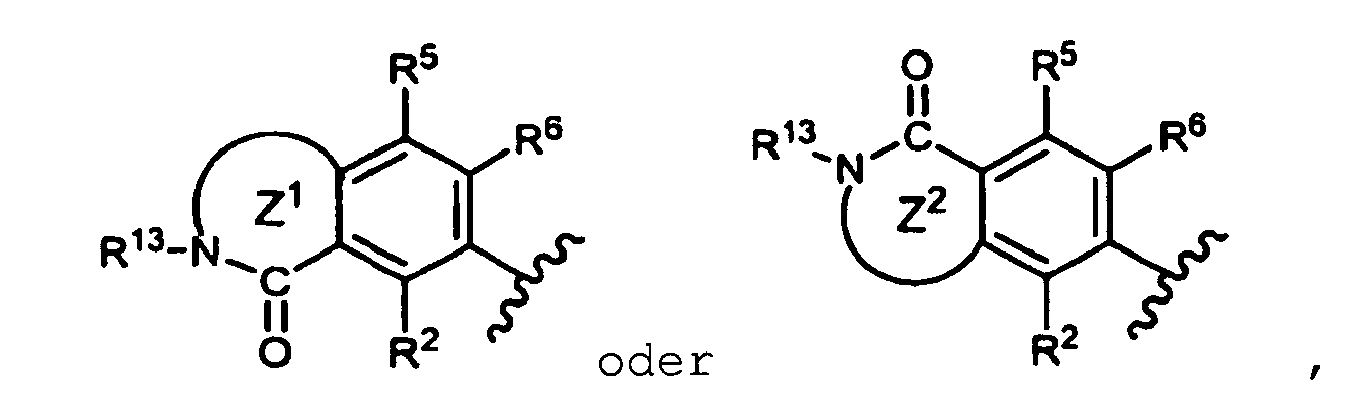 jedes R5 und R6 gleich oder unterschiedlich ist, und sie unabhängig ausgewählt sind aus der Gruppe bestehend aus Wasserstoff, Halogen, Alkyl, Alkoxy, -CF3, -OCF3, -NO2, -C(O)R13, -C(O)OR13, -C(O)NR13R14, -SO(t)NR13R14, -C(O)NR13OR14, Cyano, unsubstituierter oder substituierter Aryl- und unsubstituierter oder substituierter Heteroarylgruppe, wobei sich an der substituierten Arylgruppe 1 bis 6 Substituenten befinden und jeder Substituent unabhängig ausgewählt ist aus der Gruppe bestehend aus: R9-Gruppen, und wobei sich an der substituierten Heteroarylgruppe 1 bis 6 Substituenten befinden und jeder Substituent unabhängig ausgewählt ist aus der Gruppe bestehend aus: R9-Gruppen;jedes R7 und R8 unabhängig ausgewählt ist aus der Gruppe bestehend aus: H, unsubstituiertem oder substituiertem Alkyl, unsubstituiertem oder substituiertem Aryl, unsubstituiertem oder substituiertem Heteroaryl, unsubstituiertem oder substituiertem Arylalkyl, unsubstituiertem oder substituiertem Heteroarylalkyl, unsubstituiertem oder substituiertem Cycloalkyl, unsubstituiertem oder substituiertem Cycloalkylalkyl, -CO2R13, -CONR13R14, Al-kinyl, Alkenyl und Cycloalkenyl, und wobei sich an den substituierten R7 - und R8-Gruppen ein oder mehrere Substituenten befinden, wobei jeder Substituent unabhängig ausgewählt ist aus der Gruppe bestehend aus:a) Halogen,b) -CF3,c) -COR13,d) -OR13,e) -NR13R14,f) -NO2,g) -CN,h) -SO2OR13,i) -Si(alkyl)3, wobei jedes Alkyl unabhängig ausgewählt ist,j) -Si(aryl)3, wobei jedes Aryl unabhängig ausgewählt ist,k) -(R13)2R14Si, wobei jedes R13 unabhängig ausgewählt ist,l) -CO2R13,m) -C(O)NR13R14,n) -SO2NR13R14,o) -SO2R13,p) -OC(O)R13,q) -OC(O)NR13R14,r) -NR13C(O)R14 unds) -NR13CO2R14;R8a ausgewählt ist aus der Gruppe bestehend aus: Wasserstoff, Alkyl, Cycloalkyl und Cycloalkylalkyl;jedes R9 unabhängig ausgewählt ist aus der Gruppe bestehend aus:a) -R13,b) Halogen,c) -CF3,d) -COR13,e) -OR13,f) -NR13R14,g) -NO2,h) -CN,i) -SO2R13,j) -SO2NR13R14,k) -NR13COR14,l) -CONR13R14,m) -NR13CO2R14,n) -CO2R13,o)
 p) Alkyl, das mit einer oder mehreren -OH Gruppen substituiert ist,q) Alkyl, das mit einer oder mehreren -NR13R14 Gruppen substituiert ist,r) -N(R13)SO2R14;jedes R11 unabhängig ausgewählt ist aus der Gruppe bestehend aus R13, Halogen, -CF3, -OCF3, -NR13R14, -NR13C(O)NR13R14, -OH, -C(O)OR13, -SH, -SO(t)NR13R14, -SO2R13, -NHC(O)R13, -NHSO2NR13R14, -NHSO2R13, -C(O)NR13R14, -C(O)NR13OR14, -OC(O)R13 und Cyano;R12 ausgewählt ist aus der Gruppe bestehend aus: Wasserstoff, -C(O)OR13, unsubstituierter oder substituierter Aryl-, unsubstituierter oder substituierter Heteroaryl-, unsubstituierter oder substituierter Arylalkyl-, unsubstituierter oder substituierter Cycloalkyl-, unsubstituierter oder substituierter Alkyl-, unsubstituierter oder substituierter Cycloalkylalkyl- und unsubstituierter oder substituierter Heteroarylalkylgruppe, wobei sich an den substituierten R12-Grupen 1 bis 6 Substituenten befinden und jeder Substituent unabhängig ausgewählt ist aus der Gruppe bestehend aus: R9-Gruppen;jedes von R13 und R14 unabhängig ausgewählt ist aus der Gruppe bestehend aus: H, unsubstituiertem oder substituiertem Alkyl, unsubstituiertem oder substituiertem Cyanoalkyl, unsubstituiertem oder substituiertem Aryl, unsubstituiertem oder substituiertem Heteroaryl, unsubstituiertem oder substituiertem Arylalkyl, unsubstituiertem oder substituiertem Heteroarylalkyl, unsubstituiertem oder substituiertem Cycloalkyl, unsubstituiertem oder substituiertem Cyanocycloalkyl, unsubstituiertem oder substituiertem Cycloalkylalkyl, unsubstituiertem oder substituiertem Heterocyclus, unsubstituiertem oder substituiertem Fluoralkyl und unsubstituiertem oder substituiertem Heterocycloalkylalkyl (wobei "Heterocycloalkyl" Heterocyclus bedeutet), wobei sich 1 bis 6 Substituenten an den substituierten R13- und R14-Gruppen befinden und jeder Substituent unabhängig ausgewählt ist aus der Gruppe bestehend aus: Alkyl, -CF3, -OH, Alkoxy, Aryl, Arylalkyl, Fluoralkyl, Cycloalkyl, Cycloalkylalkyl, Heteroaryl, Heteroarylalkyl, -N(R40)2, -C(O)OR15, -C(O)NR15R16, -S(O)tNR15R16, -C(O)R15, Halogen, -NHC(O)NR15R16 und -SO2R15 mit der Maßgabe, dass R15 nicht H ist; und mit der Maßgabe, dass bei den substituierten Cyanoalkyl- und den substituierten Cyanocycloalkyleinheiten das Kohlenstoffatom, an das die Cyanogruppe gebunden ist, nicht auch an dem Kohlenstoffatom, an dem die Cyanogruppe gebunden ist, einen Substituenten ausgewählt aus der Gruppe bestehend aus -OH, Alkoxy, -N(R40)2, Halogen und -NHC(O)NR15R16 aufweist; oderR13 und R14 zusammen mit dem Stickstoff, an den sie in den Gruppe -C(O)NR13R14 und -SO2NR13R14 gebunden sind, einen unsubstituierten oder substituierten gesättigten heterocyclischen Ring bilden, wobei der Ring gegebenenfalls ein weiteres Heteroatom ausgewählt aus der Gruppe bestehend aus O, S und NR18 enthält, wobei sich an den substituierten cyclisierten R13- und R14-Gruppen 1 bis 3 Substituenten befinden und jeder Substituent unabhängig ausgewählt ist aus der Gruppe bestehend aus: CN, Alkyl-, Cyanoalkyl-, Aryl-, Hydroxy-, Hydroxyalkyl-, Alkoxy-, Alkoxyalkyl-, Arylalkyl-, Fluoralkyl-, Cycloalkyl-, Cyanocycloalkyl-, Cycloalkylalkyl-, Heteroaryl-, Heteroarylalkyl-, Amino-, -C(O)OR15, -C(O)NR15R16, -SO(t)NR15R16, -C(O)R15, -SO2R15 (mit der Maßgabe, dass R15 nicht H ist), -NHC(O)NR15R16, -NHC(O)OR15, Halogen und einer Heterocycloalkenylgruppe; und mit der Maßgabe, dass das Kohlenstoffatom, an das die Cyanogruppe gebunden ist, an diesem Kohlenstoff nicht auch einen Substituenten trägt, der ausgewählt ist aus der Gruppe bestehend aus: Hydroxy, Alkoxy, Amino, Halogen, -NHC(O)NR15R16 und -NHC(O)OR15;jedes R15 und R16 unabhängig ausgewählt ist aus der Gruppe bestehend aus: H, Alkyl, Aryl, Arylalkyl, Cycloalkyl und Heteroaryl;R17 ausgewählt ist aus der Gruppe bestehend aus: - SO2alkyl, -SO2aryl, -SO2cycloalkyl und -SO2heteroaryl;R18 ausgewählt ist aus der Gruppe bestehend aus: H, Alkyl, Aryl, Heteroaryl, -C(O)R19, -SO2R19 und -C(O)NR19R20;jedes R19 und R20 unabhängig ausgewählt ist aus der Gruppe bestehend aus: Alkyl, Aryl und Heteroaryl;R30 ausgewählt ist aus der Gruppe bestehend aus: Alkyl, Cycloalkyl, -CN, -NO2 oder -SO2R15 mit der Maßgabe, dass R15 nicht H ist;jedes R31 unabhängig ausgewählt ist aus der Gruppe bestehend aus: unsubstituiertem Alkyl, unsubstituiertem oder substituiertem Aryl, unsubstituiertem oder substituiertem Heteroaryl und unsubstituiertem oder substituiertem Cycloalkyl, wobei 1 bis 6 Substituenten an den substituierten R31-Gruppen vorhanden sind und jeder Substituent unabhängig ausgewählt ist aus: Alkyl, Halogen und -CF3; jedes R40 unabhängig ausgewählt ist aus der Gruppe bestehend aus: H, Alkyl und Cycloalkyl, undt 0, 1 oder 2 ist.
 - Verbindung nach Anspruch 1 oder ein pharmazeutisch annehmbares Salz oder Solvat davon, wobei A ausgewählt ist aus der Gruppe bestehend aus:(1) unsubstituiertem oder substituiertem

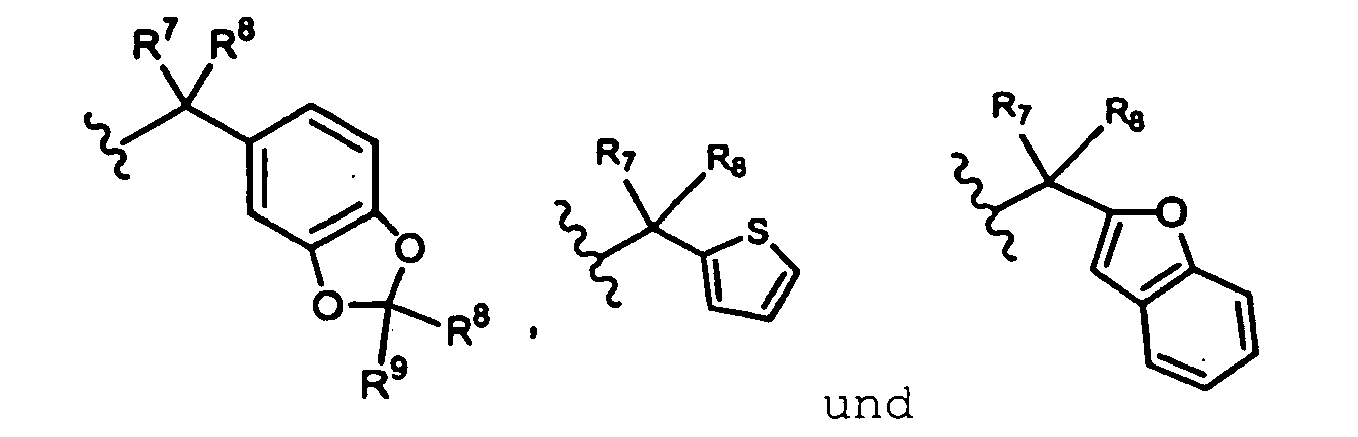 (2)
(2)
- Verbindung nach Anspruch 1 oder ein pharmazeutisch annehmbares Salz oder Solvat davon, wobei der Substituent A wie folgt ist:

- Verbindung nach Anspruch 1 oder ein pharmazeutisch annehmbares Salz oder Solvat davon, wobei der Substituent A wie folgt ist:

- Verbindung nach Anspruch 1 oder ein pharmazeutisch annehmbares Salz oder Solvat davon, wobei A ausgewählt ist aus der Gruppe bestehend aus:


- Verbindung nach Anspruch 1 oder ein pharmazeutisch annehmbares Salz oder Solvat davon, wobei A ausgewählt ist aus der Gruppe bestehend aus:


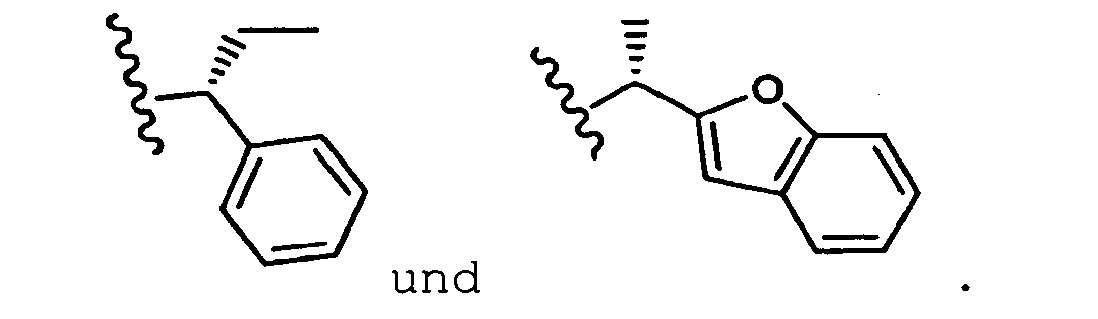
- Verbindung nach Anspruch 1 oder ein pharmazeutisch annehmbares Salz oder Solvat davon, wobei der Substituent A ausgewählt ist aus der Gruppe bestehend aus:

- Verbindung nach Anspruch 1 oder ein pharmazeutisch annehmbares Salz oder Solvat davon, wobei B ausgewählt ist aus der Gruppe bestehend aus:



- Verbindung nach Anspruch 1 oder ein pharmazeutisch annehmbares Salz oder Solvat davon, wobei B ausgewählt ist aus der Gruppe bestehend aus:

- Verbindung nach Anspruch 1 oder ein pharmazeutisch annehmbares Salz oder Solvat davon, wobei B ausgewählt ist aus der Gruppe bestehend aus:

- Verbindung nach Anspruch 1 oder ein pharmazeutisch annehmbares Salz oder Solvat davon, wobei B wie folgt ist:

- Verbindung nach Anspruch 1 oder ein pharmazeutisch annehmbares Salz oder Solvat davon, wobei B wie folgt ist:

- Verbindung nach Anspruch 1 oder ein pharmazeutisch annehmbares Salz oder Solvat davon, wobei B wie folgt ist:
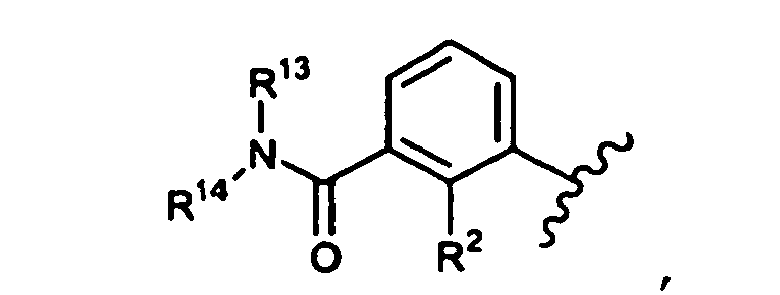
- Verbindung nach Anspruch 1 oder ein pharmazeutisch annehmbares Salz oder Solvat davon, wobei B wie folgt ist:

- Verbindung nach Anspruch 14 oder ein pharmazeutisch annehmbares Salz oder Solvat davon, wobei R11 H ist.
- Verbindung nach Anspruch 15 oder ein pharmazeutisch annehmbares Salz oder Solvat davon, wobei R2 -OH ist.
- Verbindung nach Anspruch 16 oder ein pharmazeutisch annehmbares Salz oder Solvat davon, wobei R3 -C(O)NR13R14 ist.
- Verbindung nach Anspruch 16 oder ein pharmazeutisch annehmbares Salz oder Solvat davon, wobei R3 -S(O)tNR13R14 ist.
- Verbindung nach Anspruch 1 oder ein pharmazeutisch annehmbares Salz oder Solvat davon, wobei B wie folgt ist:

- Verbindung nach Anspruch 1 oder ein pharmazeutisch annehmbares Salz oder Solvat davon, wobei B wie folgt ist:

- Verbindung nach Anspruch 1 oder ein pharmazeutisch annehmbares Salz oder Solvat davon, worin(1) Substituent A in Formel IA ausgewählt ist aus der Gruppe bestehend aus:(a)

 (b)
(b)
wobei R7 ausgewählt ist aus der Gruppe bestehend aus: H, -CF3, -CF2CH3, Methyl, Ethyl, Isopropyl, Cyclopropyl und t-Butyl; und R8 H ist, und R8a wie in Anspruch 1 definiert ist;(2) Substituent B in Formel IA ausgewählt ist aus der Gruppe bestehend aus:worin: R2 ausgewählt ist aus der Gruppe bestehend aus: H, OH, -NHC(O)R13 und -NHSO2R13;R3 ausgewählt ist aus der Gruppe bestehend aus: - C(O)NR13R14 -SO2NR13R14, -NO2, Cyano und -SO2R13;R4 ausgewählt ist aus der Gruppe bestehend aus: H, -NO2, Cyano, Alkyl, Halogen und -CF3;R5 ausgewählt ist aus der Gruppe bestehend aus: H, -CF3, -NO2, Halogen oder Cyano;,R6 ausgewählt ist aus der Gruppe bestehend aus: H, Alkyl und -CF3;R11 ausgewählt ist aus der Gruppe bestehend aus: H, Halogen und Alkyl, undjedes R13 und R14 unabhängig ausgewählt ist aus der Gruppe bestehend aus: H, unsubstituiertem Alkyl.
 - Verbindung nach Anspruch 1 oder ein pharmazeutisch annehmbares Salz oder Solvat davon, worin(1) Substituent A in Formel IA ausgewählt ist aus der Gruppe bestehend aus:


 (2) Substituent B in Formel IA ausgewählt ist aus der Gruppe bestehend aus:worin:
 R2 -OH ist;R3 ausgewählt ist aus der Gruppe bestehend aus: -SO2NR13R14 und -CONR13R14;R4 ausgewählt ist aus der Gruppe bestehend aus: H, Br, -CH3, Ethyl und -CF3;R5 ausgewählt ist aus der Gruppe bestehend aus: H und Cyano;R6 ausgewählt ist aus der Gruppe bestehend aus: H, -CH3 und -CF3;R11 H ist, undR13 und R14 unabhängig ausgewählt sind aus der Gruppe bestehend aus H und Methyl.
 - Verbindung nach Anspruch 1 oder ein pharmazeutisch annehmbares Salz oder Solvat davon, wobei der Substituent A ausgewählt ist aus der Gruppe bestehend aus:


- Verbindung nach Anspruch 1 oder ein pharmazeutisch annehmbares Salz oder Solvat davon, wobei der Substituent A ausgewählt ist aus der Gruppe bestehend aus:


- Verbindung nach einem der Ansprüche 1 bis 24, die in Form eines Natriumsalzes vorliegt.
- Verbindung nach einem der Ansprüche 1 bis 24, die in Form eines Calciumsalzes vorliegt.
- Verbindung nach Anspruch 1 ausgewählt aus der Gruppe bestehend aus den Verbindungen 1, 2-4, 6-35, 100, 101, 103-105, 107, 108, 110, 111, 112, 114-116, 118-132, 134-145, 148, 180, 182, 183, 185, 186, 188, 300-389, 500-639, 700-787 und 900-987, wie in der folgenden Liste wiedergegeben wird:
Nr. Verbindung 1 
2 
3 
4 
6 
7 
8 
9 
10 
11 
12 
13 
14 
15 
16 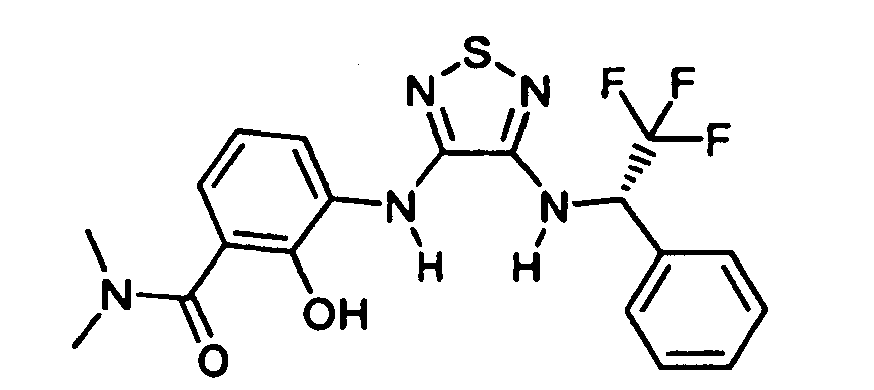
17 
18 
19 
20 
21 
22 
23 
24 
25 
26 
27 
28 
29 
30 
31 
32 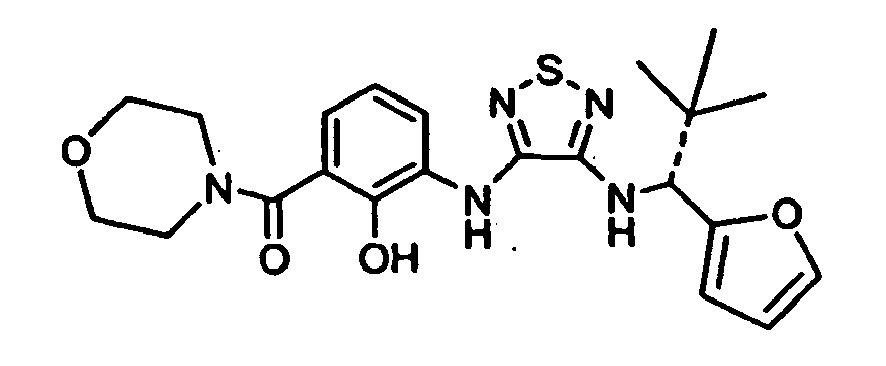
33 
34 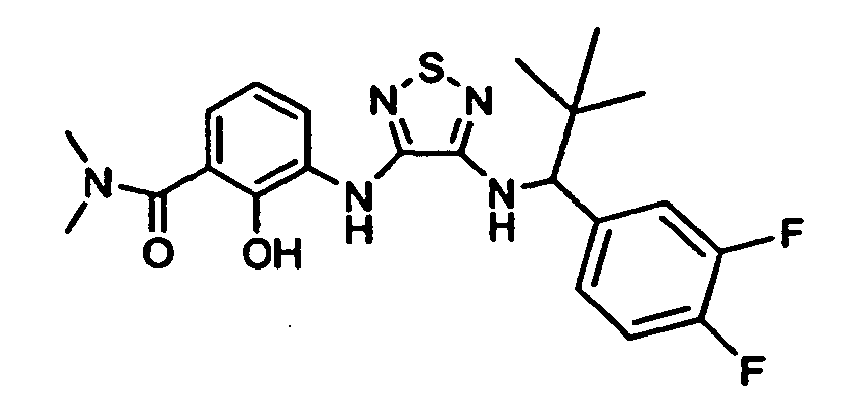
35 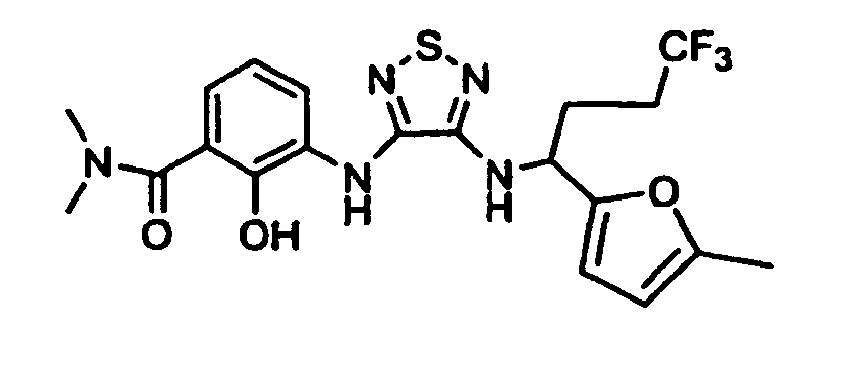
100 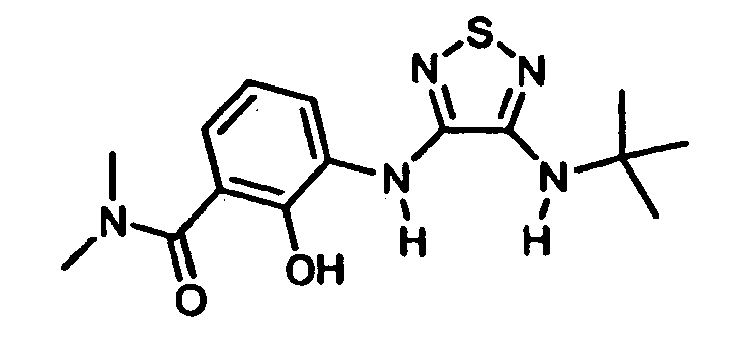
101 
103 
104 
105 
107 
108 
110 
111 
112 
114 
115 
116 
118 
119 
120 
121 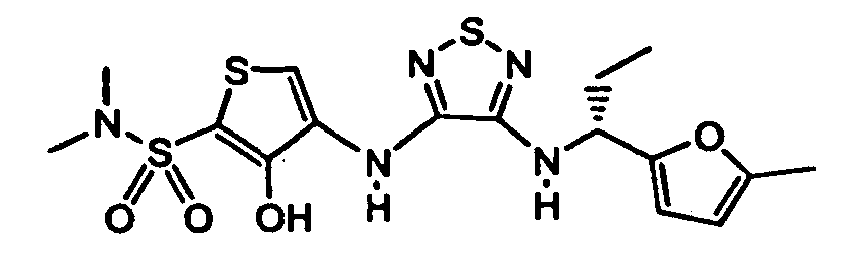
122 
123 
124 
125 
126 
127 
128 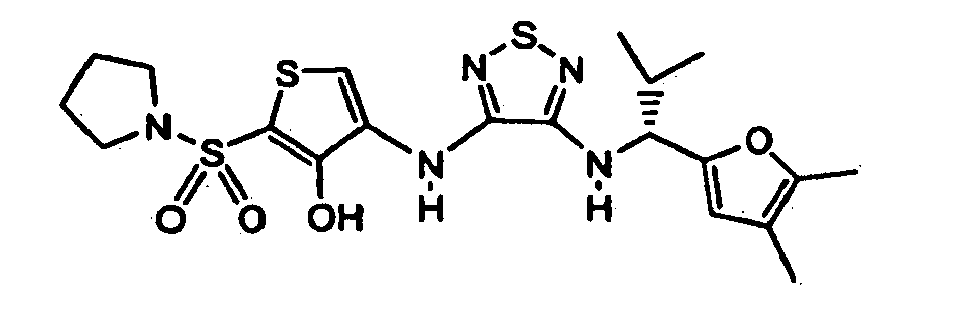
129 
130 
131 
132 
134 
135 
136 
137 
138 
139 
140 
141 
142 
143 
144 
145 
148 
180 
182 
183 
185 
186 
188 
300 
301 
302 
303 
304 
305 
306 
307 
308 
309 
310 
311 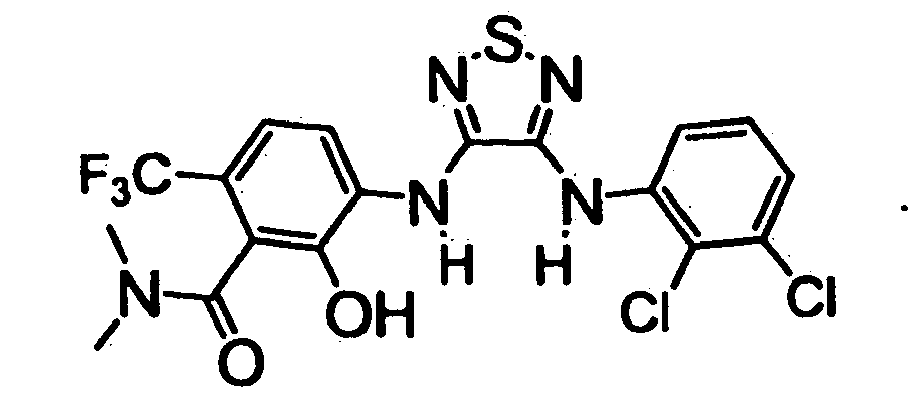
312 
313 
314 
315 
316 
317 
318 
319 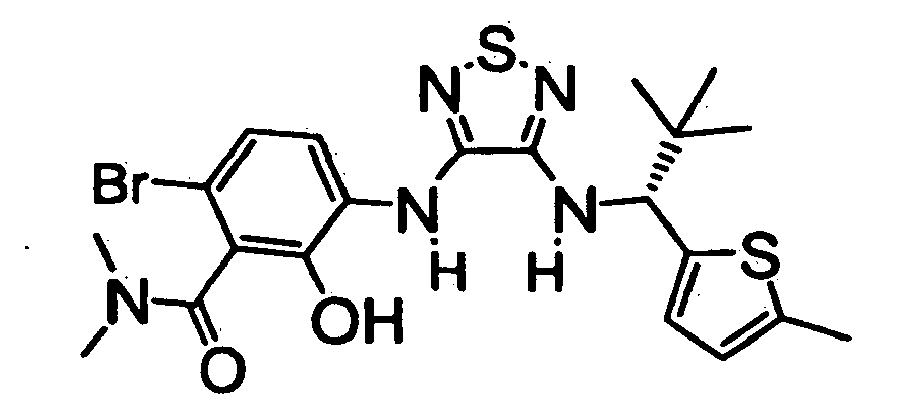
320 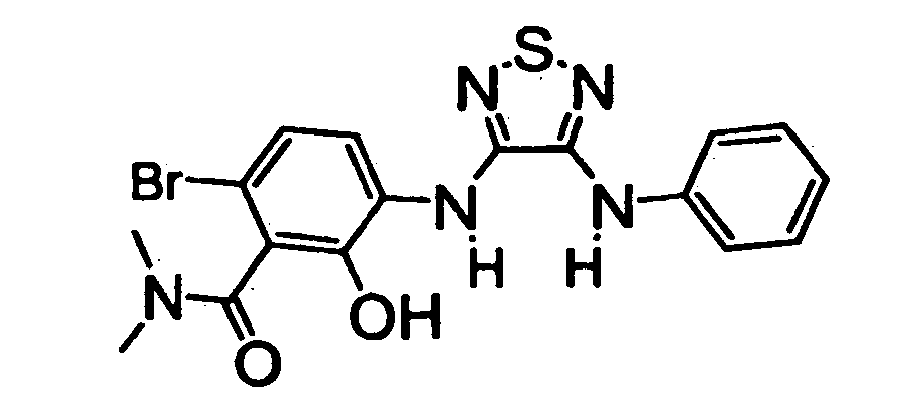
321 
322 
323 
324 
325 
326 
327 
328 
329 
330 
331 
332 
333 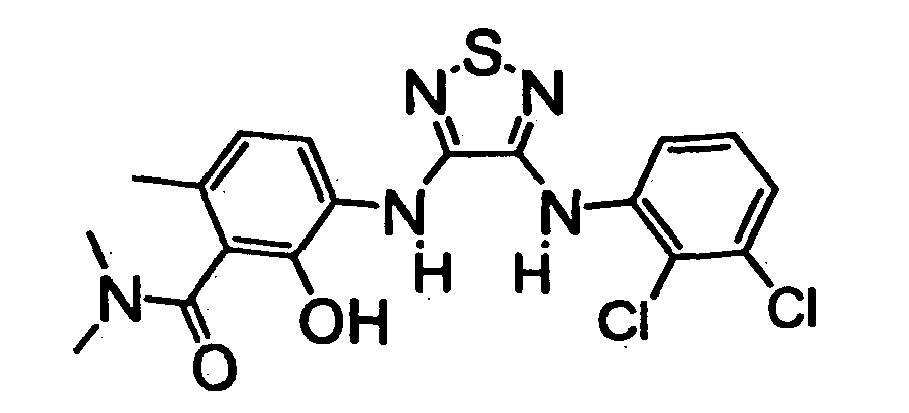
334 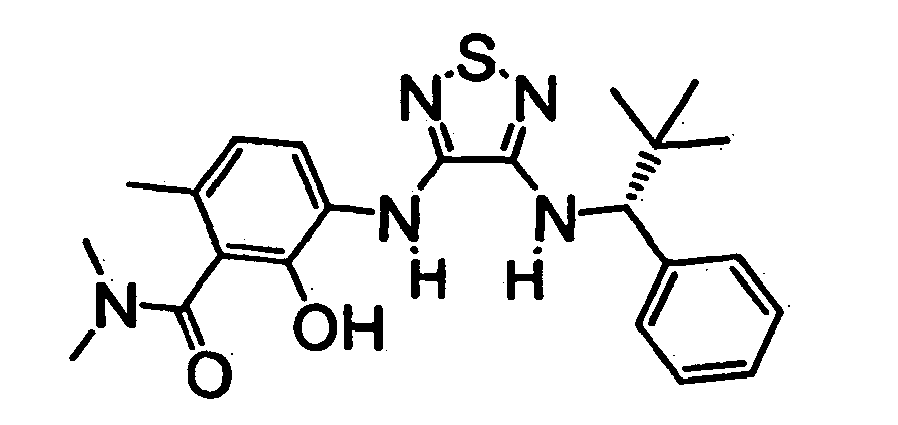
335 
336 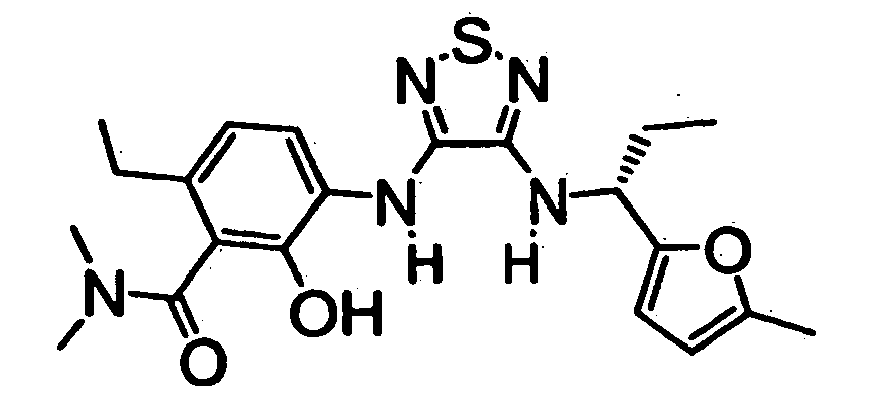
337 
338 
339 
340 
341 
342 
343 
344 
345 
346 
347 
348 
349 
350 
351 
352 
353 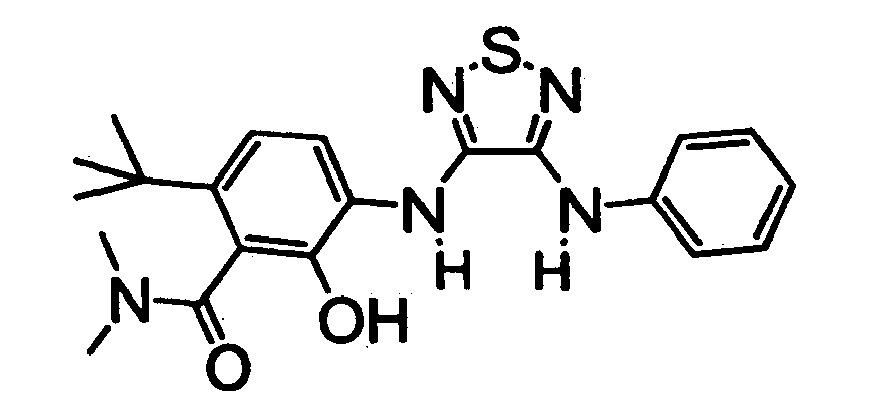
354 
355 
356 
357 
358 
359 
360 
361 
362 
363 
364 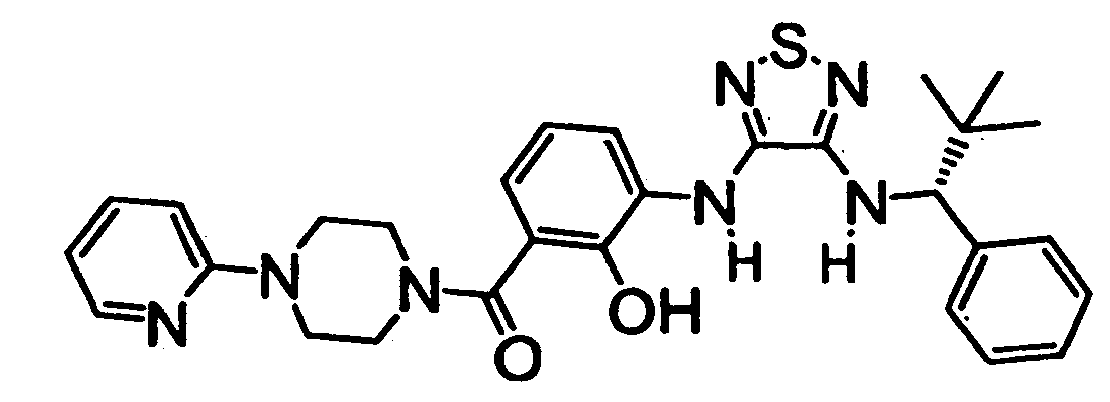
365 
366 
367 
368 
369 
370 
371 
372 
373 
374 
375 
376 
377 
378 
379 
380 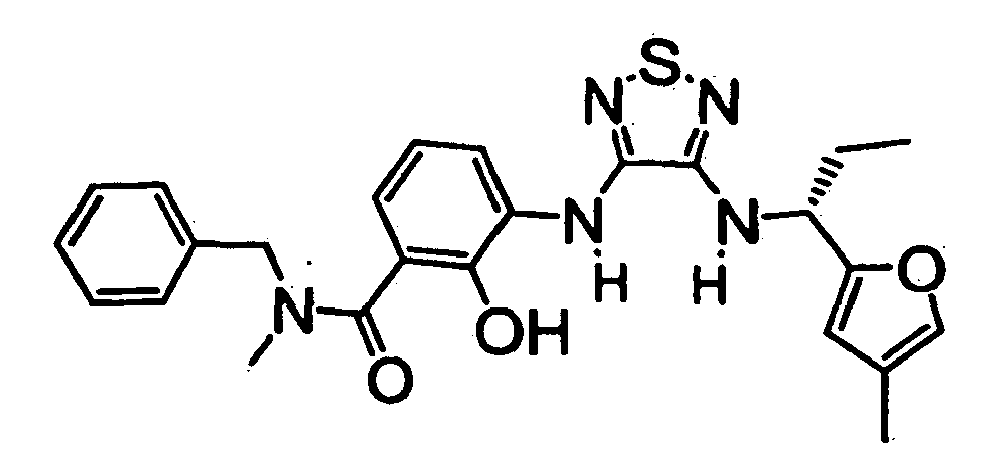
381 
382 
383 
384 
385 
386 
387 
388 
389 
500 
501 
502 
503 
504 
505 
506 
507 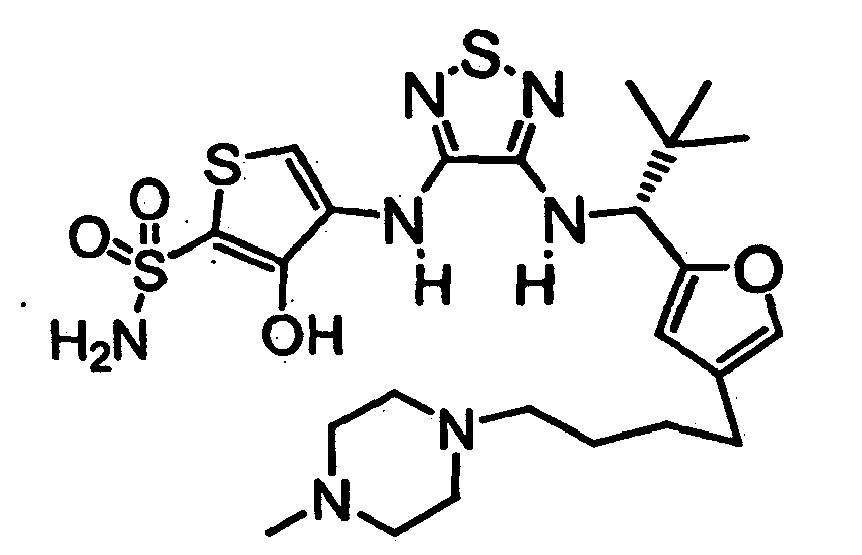
508 
509 
510 
511 
512 
513 
514 
515 
516 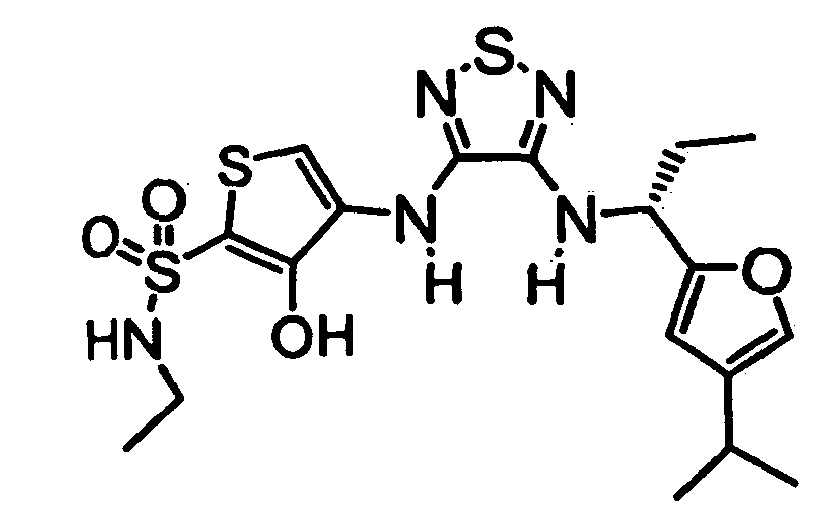
517 
518 
519 
520 
521 
522 
523 
524 
525 
526 
527 
528 
529 
530 
531 
532 
533 
534 
535 
536 
537 
538 
539 
540 
541 
542 
543 
544 
545 
546 
547 
548 
549 
550 
551 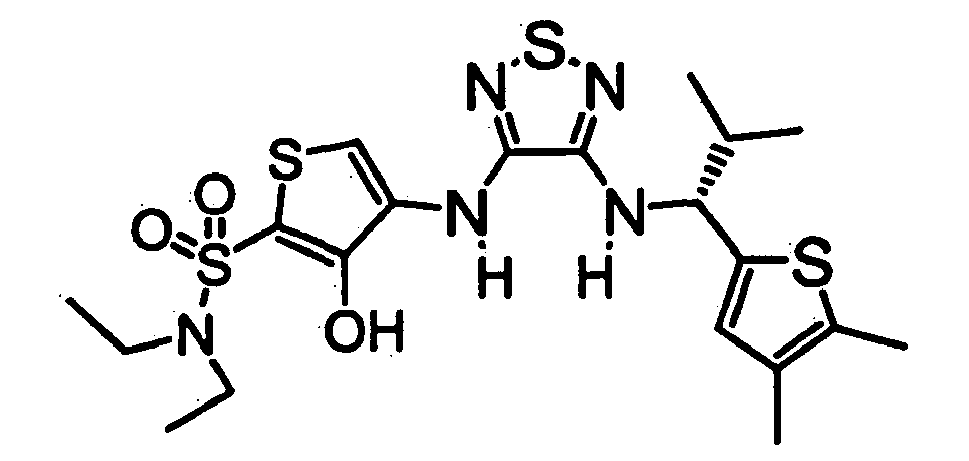
552 
553 
554 
555 
556 
557 
558 
559 
560 
561 
562 
563 
564 
565 
566 
567 
568 
569 
570 
571 
572 
573 
574 
575 
576 
577 
578 
579 
580 
581 
582 
583 
584 
585 
586 
587 
588 
589 
590 
591 
592 
593 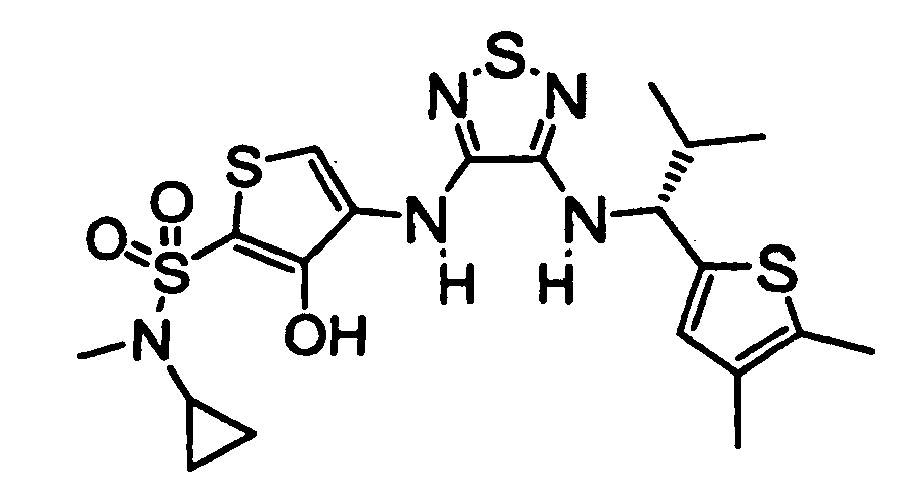
594 
595 
596 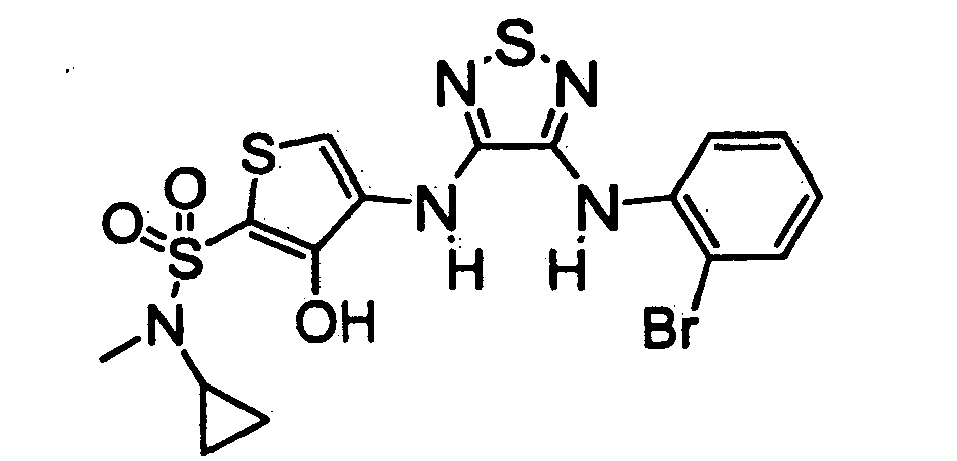
597 
598 
599 
600 
601 
602 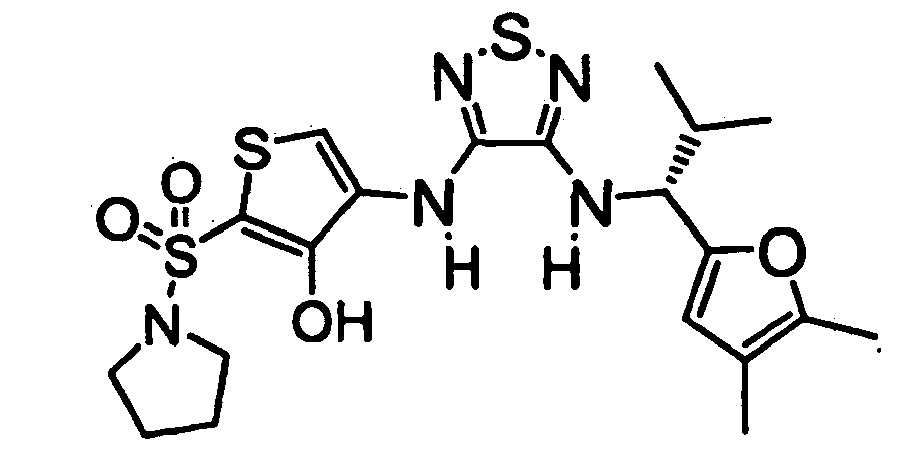
603 
604 
605 
606 
607 
608 
609 
610 
611 
612 
613 
614 
615 
616 
617 
618 
619 
620 
621 
622 
623 
624 
625 
626 
627 
628 
629 
630 
631 
632 
633 
634 
635 
636 
637 
638 
639 
700 
701 
702 
703 
704 
705 
706 
707 
708 
709 
710 
711 
712 
713 
714 
715 
716 
717 
718 
719 
720 
721 
722 
723 
724 
725 
726 
727 
728 
729 
730 
731 
732 
733 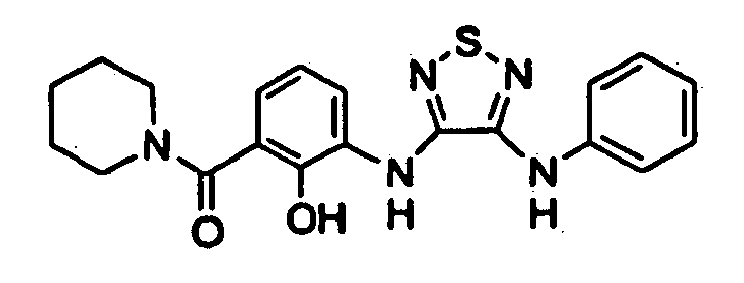
734 
735 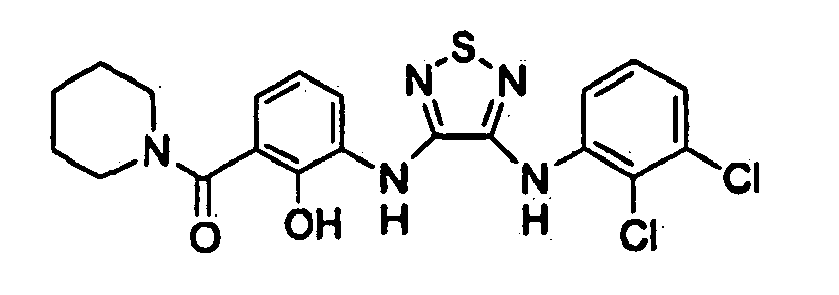
736 
737 
738 
739 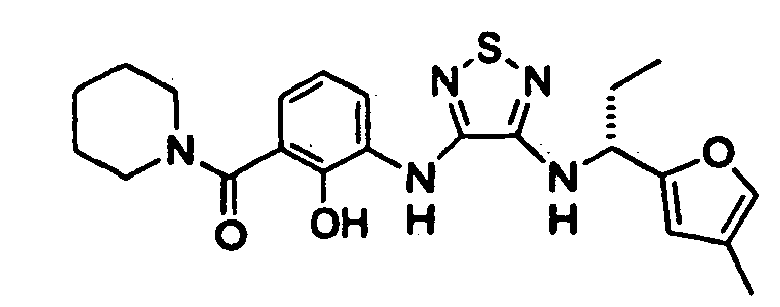
740 
741 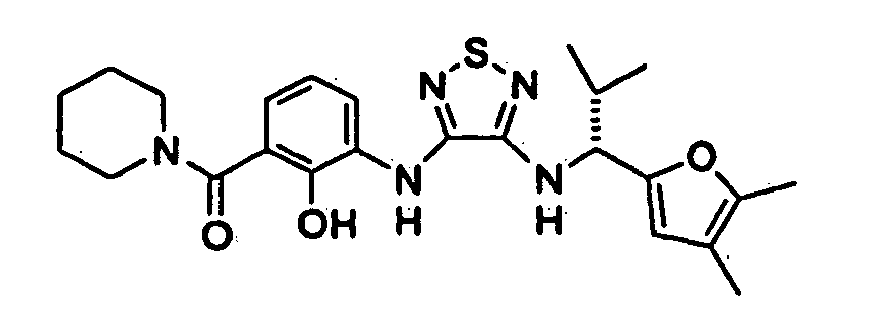
742 
743 
744 
745 
746 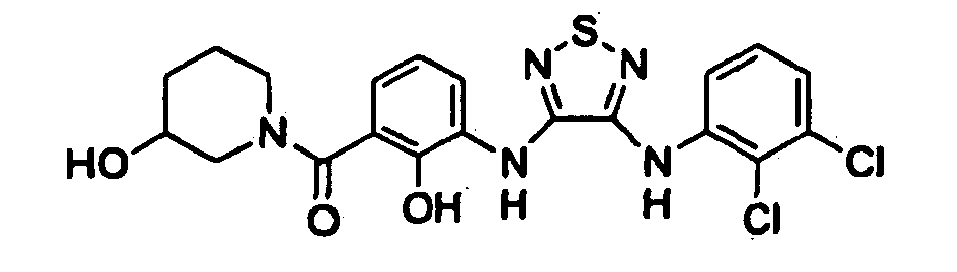
747 
748 
749 
750 
751 
752 
753 
754 
755 
756 
757 
758 
759 
760 
761 
762 
763 
764 
765 
766 
767 
768 
769 
770 
771 
772 
773 
774 
775 
776 
777 
778 
779 
780 
781 
782 
783 
784 
785 
786 
787 
900 
901 
902 
903 
904 
905 
906 
907 
908 
909 
910 
911 
912 
913 
914 
915 
916 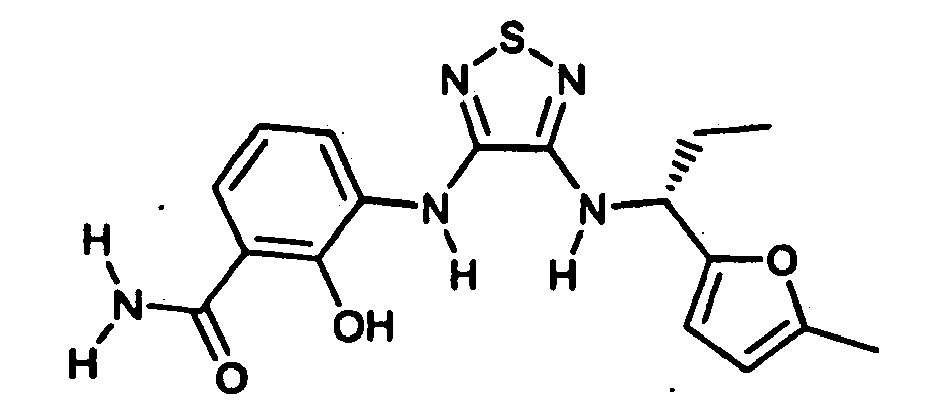
917 
918 
919 
920 
921 
922 
923 
924 
925 
926 
927 
928 
929 
930 
931 
932 
933 
934 
935 
936 
937 
938 
939 
940 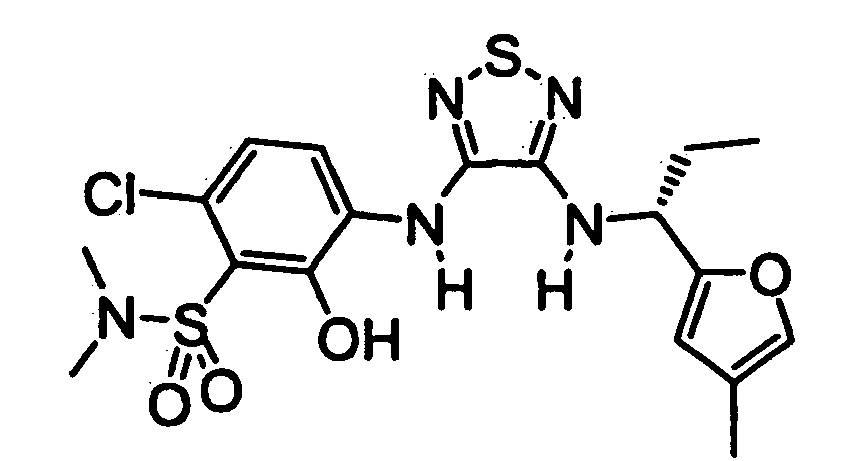
941 
942 
943 
944 
945 
946 
947 
948 
949 
950 
951 
952 
953 
954 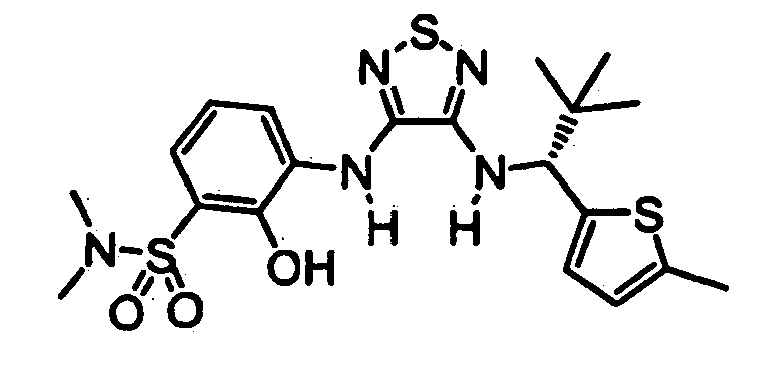
955 
956 
957 
958 
959 
960 
961 
962 
963 
964 
965 
966 
967 
968 
969 
970 
971 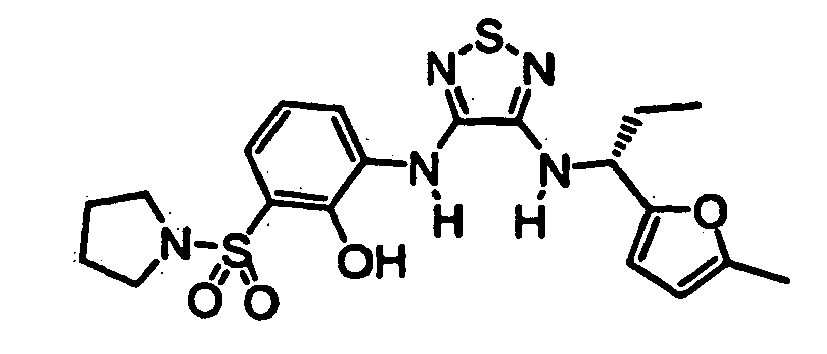
972 
973 
974 
975 
976 
977 
978 
979 
980 
981 
982 
983 
984 
985 
986 
987 
- Verbindung nach Anspruch 27 ausgewählt aus der Gruppe der Verbindungen 1, 6, 8, 110, 111, 112, 114, 122, 120, 123, 124, 129, 130, 131, 142, 144, 145, 300, 305, 306, 307, 313, 316, 317, 318, 323, 324, 327, 328, 329, 334, 335, 338, 339, 340, 349, 350, 351, 359, 360, 361, 362, 364, 370, 372, 373, 374, 381, 544, 545, 546, 548, 558, 559, 560, 561, 562, 572, 708, 718, 719, 721, 732, 754, 774, 784, 928, 930, 931, 939, 942, 941, 950, 952 oder ein pharmazeutisch annehmbares Salz oder Solvat davon.
- Verbindung nach Anspruch 28 ausgewählt aus der Gruppe bestehend aus den Verbindungen 1, 6, 8, 114, 120, 123, 129, 131, 300, 305, 306, 307, 316, 317, 318, 323, 327, 328, 329, 334, 359, 360, 361, 370, 372, 373, 374, 544, 545, 546, 548, 558, 559, 560, 561, 562, 928, 930, 931, 939, 942, 941, 950, 952, oder ein pharmazeutisch annehmbares Salz oder Solvat davon.
- Verbindung nach Anspruch 29, wobei die Verbindung Verbindung 1 ist, oder ein pharmazeutisch annehmbares Salz oder Solvat davon.
- Verbindung nach Anspruch 29, wobei die Verbindung Verbindung 6 ist, oder ein pharmazeutisch annehmbares Salz oder Solvat davon.
- Verbindung nach Anspruch 29, wobei die Verbindung Verbindung 8 ist, oder ein pharmazeutisch annehmbares Salz oder Solvat davon.
- Verbindung nach Anspruch 29, wobei die Verbindung Verbindung 120 ist, oder ein pharmazeutisch annehmbares Salz oder Solvat davon.
- Verbindung nach Anspruch 29, wobei die Verbindung Verbindung 131 ist, oder ein pharmazeutisch annehmbares Salz oder Solvat davon.
- Verbindung nach Anspruch 29, wobei die Verbindung Verbindung 545 ist, oder ein pharmazeutisch annehmbares Salz oder Solvat davon.
- Verbindung nach Anspruch 29, wobei die Verbindung Verbindung 561 ist, oder ein pharmazeutisch annehmbares Salz oder Solvat davon.
- Verbindung nach Anspruch 29, wobei die Verbindung Verbindung 928 ist, oder ein pharmazeutisch annehmbares Salz oder Solvat davon.
- Verbindung nach Anspruch 29, wobei die Verbindung Verbindung 930 ist, oder ein pharmazeutisch annehmbares Salz oder Solvat davon.
- Verbindung nach Anspruch 29, wobei die Verbindung Verbindung 931 ist, oder ein pharmazeutisch annehmbares Salz oder Solvat davon.
- Pharmazeutische Zusammensetzung, die mindestens eine Verbindung nach einem der Ansprüche 1 bis 39 oder ein pharmazeutisch annehmbares Salz oder Solvat davon in Kombination mit einem pharmazeutisch annehmbaren Träger enthält.
- Pharmazeutische Zusammensetzung nach Anspruch 40, die ferner mindestens ein anderes Mittel, Medikament, einen anderen Antikörper und/oder Inhibitor zur Behandlung einer Chemokin-vermittelten Erkrankung enthält.
- Verbindung nach einem der Ansprüche 1 bis 39 oder ein pharmazeutisch annehmbares Salz oder Solvat davon zur Verwendung als Medikament.
- Verwendung von mindestens einer Verbindung nach einem der Ansprüche 1 bis 39 oder eines pharmazeutisch annehmbaren Salzes oder Solvats davon zur Herstellung eines Medikaments zur Behandlung einer Chemokin-vermittelten Erkrankung.
- Verwendung von mindestens einer Verbindung nach einem der Ansprüche 1 bis 39 oder eines pharmazeutisch annehmbaren Salzes oder Solvats davon zur Herstellung eines Medikaments zur Behandlung von Krebs.
- Verwendung von mindestens einer Verbindung nach einem der Ansprüche 1 bis 39 oder eines pharmazeutisch annehmbaren Salzes oder Solvats davon zur Herstellung eines Medikaments zur Verwendung mit mindestens einem anderen Antikrebsmittel ausgewählt aus der Gruppe bestehend aus: (a) Mikrotubuli beeinflussenden Mitteln, (b) antineoplastischen Mitteln, (c) Antiangionesemitteln oder (d) VEGF-Rezeptorkinaseinhibitoren, (e) Antikörpern gegen den VEGF-Rezeptor, (f) Interferon und (g) Strahlung zur Behandlung von Krebs.
- Verwendung von mindestens einer Verbindung nach einem der Ansprüche 1 bis 39 oder eines pharmazeutisch annehmbaren Salzes oder Solvats davon zur Herstellung eines Medikaments zur Verwendung mit mindestens einem antineoplastischen Mittel ausgewählt aus der Gruppe bestehend aus:Gemcitabin, Paclitaxel, 5-Fluoruracil, Cyclophosphamid, Temozolomid und Vincristin zur Behandlung von Krebs.
- Verwendung von mindestens einer Verbindung nach einem der Ansprüche 1 bis 39 oder eines pharmazeutisch annehmbaren Salzes oder Solvats davon zur Herstellung eines Medikaments zur gleichzeitigen oder sequentiellen Verwendung mit einem Mikrotubuli beeinflussenden Mittel zur Behandlung von Krebs.
- Verwendung von mindestens einer Verbindung nach einem der Ansprüche 1 bis 39 oder eines pharmazeutisch annehmbaren Salzes oder Solvats davon zur Herstellung eines Medikaments zur gleichzeitigen oder sequentiellen Verwendung mit (b) mindestens einem Mittel ausgewählt aus der Gruppe bestehend aus: (1) antineoplastischen Mitteln, (2) Mikrotubuli beeinflussenden Mitteln und (3) Antiangiogenesemitteln zur Behandlung von Krebs.
- Verwendung von mindestens einer Verbindung nach einem der Ansprüche 1 bis 39 oder eines pharmazeutisch annehmbaren Salzes oder Solvats davon zur Herstellung eines Medikaments zur Inhibierung der Angiogenese.
- Verwendung von mindestens einer Verbindung nach einem der Ansprüche 1 bis 39 oder eines pharmazeutisch annehmbaren Salzes oder Solvats davon zur Herstellung eines Medikaments zur Behandlung von angiogener Augenerkrankung.
- Verwendung von mindestens einer Verbindung nach einem der Ansprüche 1 bis 39 oder eines pharmazeutisch annehmbaren Salzes oder Solvats davon zur Herstellung eines Medikaments zur Behandlung einer Erkrankung oder eines Zustands ausgewählt aus der Gruppe bestehend aus: Schmerz, akuter Entzündung, chronischer Entzündung, rheumatoider Arthritis, Psoriasis, atopischer Dermatitis, Asthma, COPD, Atemwegserkrankung des Erwachsenen, Arthritis, entzündlicher Darmerkrankung, Morbus Crohn, Colitis ulcerosa, septischem Schock, Endotoxinschock, gramnegativer Sepsis, toxischem Schocksyndrom, Schlaganfall, Ischämie-Reperfusions-Verletzung, renaler Reperfusionsverletzung, Glomerulonephritis, Thrombose, Morbus Alzheimer, Graft vs. Host-Reaktion, Abstoßung von homologen Transplantaten, Malaria, akutem Atemnotsyndrom, Überempfindlichkeitsreaktion vom Spättyp, Atherosklerose, zerebraler Ischämie, Herz-Ischämie, Osteoarthritis, multipler Sklerose, Restenose, Angiogenese, Osteoporose, Gingivitis, Viren der Atemwege, Herpes-Viren, Hepatitis-Viren, HIV, mit Kaposi-Sarkoma assoziiertem Virus, Meningitis, zystischer Fibrose, vorzeitigen Wehen, Husten, Pruritis, Multiorganversagen, Trauma, Verspannungen, Verrenkung/Verstauchung, Prellungen, Psoriasis-Arthritis, Herpes, Enzephalitis, ZNS-Vaskulitis, traumatischer Hirnverletzung, ZNS-Tumoren, Subarachnoidalblutung, postchirurgischem Trauma, interstitieller Pneumonie, Überempfindlichkeit, kristallindizierter Arthritis, akuter Pankreatitis, akuter alkoholbedingter Hepatitis, nekrotisierender Enterokolitis, chronischer Sinusitis, angiogener Augenerkrankung, Augenentzündung, Frühgeborenen-Retinopathie, diabetischer Retinopathie, Makuladegeneration vorzugsweise des feuchten Typs, Neovaskularisierung der Hornhaut, Polymyositis, Vaskulitis, Akne, Magengeschwüren, Zwölffingerdarmgeschwüren, Zöliakie, Ösophagigis, Glossitis, Obstruktion der Luftwege, Hyperreaktivität der Luftwege, Bronchiektasien, Bronchiolitis, Bronchiolitis obliterans, chronische Bronchitis, Cor pulmonae, Dyspnoe, Emphysem, Hyperkapnie, Hyperinflation, Hypoxämie, Hyperoxie-induzierten Entzündungen, Hypoxie, chirurgischer Verkleinerung des Lungenvolumens, Lungenfibrose, Lungenhochdruck, Hypertrophie des rechten Ventrikels, mit kontinuierlicher ambulanter Peritonealdialyse (CAPD) assoziierter Peritonitis, Granulozyten-Ehrlichiose, Sarkoidose, Erkrankung der kleinen Luftwege, Ventilation-Perfusions-Störung, Keuchen, Erkältungen, Gicht, alkoholbedingter Lebererkrankung, Lupus, Therapie von Verbrennungen, Periodontitis, Krebs, Transplantat-Reperfusions-Verletzung, früher Transplantatabstoßung, Hyperreaktivität der Luftwege, allergischer Kontaktdermatitis, allergischer Rhinitis, Alopecia areata, Antiphospholipid-Syndromen, aplastischer Anämie, Autoimmun-Taubheit, autoimmun-hämolytischen Syndromen, Autoimmun-Hepatitis, Autoimmun-Neuropathie, Autoimmun-Eierstockversagen, Autoimmun-Orchitis, Autoimmun-Thrombozytopenie, bullösem Pemphigoid, chronischer homologer Transplantat-Vaskulopathie, chronisch-entzündlicher demyelinierender Polyneuropathie, Zirrhose, Cor pneumoniae, Kryoglobulinämie, Dermatomyositis, Diabetes, arzneimittelinduzierter Autoimmunität, Epidermolysis bullosa acquisita, Endometriose, fibrosierenden Erkrankungen, Gastritis, Goodpasture's Syndrom, Morbus Graves, Gullain-Barre-Syndrom, Thyroiditis Hashimoto, Hepatitis-assoziierte Autoimmunität, mit HIV zusammenhängenden Autoimmunsyndromen und hämatolytischen Erkrankungen, Hypophysitis, idiopathischer Thrombozyten-Purpura, interstitieller Zystitis, juveniler Arthritis, Histiozytitis der Langerhans'schen Zellen, Lichen planus, metallinduzierter Autoimmunität, Myasthenia gravis, myelodysplastischen Syndromen, Myokarditis, Myositis, Neuropathien, nephritischem Syndrom, Optikus-Neuritis, Pankreatitis, paroxysmaler nächtlicher Hämoglobinurie, Pemphigus, Polymyalgie, postinfektiöser Autoimmunität, primärer biliärer Zirrhose, reaktiver Arthritis, ankylosierender Spondylitis, Morbus Raynaud, Reiter-Syndrom, Reperfusionsverletzung, Skleritis, Sklerodermie, sekundärer hämatologischer Manifestation von Autoimmunerkrankungen, mit Silikonimplantat zusammenhängender Autoimmunerkrankung, Sjögren-Syndrom, systemischem Lupus erythematosus, Thrombozytopenie, Querschnittsmyelitis, tubulointerstitielle Nephritis, Uveitis, Vaskulitis-Syndromen und Vitiligo.
- Verwendung von mindestens einer Verbindung nach einem der Ansprüche 1 bis 39 oder eines pharmazeutisch annehmbaren Salzes oder Solvats davon zur Herstellung eines Medikaments zur Behandlung einer Chemokin-vermittelten Erkrankung oder eines Chemokin-vermittelten Zustands zur Verwendung mit mindestens einem anderen Medikament, das zur Behandlung von Chemokin-vermittelten Erkrankungen brauchbar ist.
- Verwendung von mindestens einer Verbindung nach einem der Ansprüche 1 bis 39 oder eines pharmazeutisch annehmbaren Salzes oder Solvats davon zur Herstellung eines Medikaments zur Verwendung mit mindestens einem anderen Medikament ausgewählt aus der Gruppe bestehend aus:a) erkrankungsmodifizierenden antirheumatischen Arzneimitteln;b) nicht-steroidalen antientzündlichen Arzneimitteln;c) COX-2-selektiven Inhibitoren;d) COX-1-Inhibitoren;e) Immunsuppressiva;f) Steroiden;g) biologischen Reaktionsmodifizierungsmitteln undh) anderen antientzündlichen Mitteln oder Therapeutika, die für die Behandlung von Chemokin-vermittelte Erkrankungen brauchbar sind, zur Behandlung einer Chemokin-vermittelten Erkrankung oder eines Chemokin-vermittelten Zustands.
- Verwendung von mindestens einer Verbindung nach einem der Ansprüche 1 bis 39 oder eines pharmazeutisch annehmbaren Salzes oder Solvats davon zur Herstellung eines Medikaments zur Verwendung mit mindestens einer Verbindung ausgewählt aus der Gruppe bestehend aus: Glucokortikoiden, 5-Lipoxygenase-Inhibitoren, β-2-Adrenozeptoragonisten, muskarinischen M1-Antagonisten, muskarinischen M3-Antagonisten, muskarinischen M2 Agonisten, NK3-Antagonisten, LTB4-Antagonisten, Cysteinyl-Leukotrien-Antagonists, Bronchodilatoren, PDE4-Inhibitoren, PDE-Inhibitoren, Elastase-Inhibitoren, MMP-Inhibitoren, Phospholipase A2-Inhibitoren, Phospholipase D-Inhibitoren, Histamin H1-Antagonisten, Histamin-H3-Antagonisten, Dopamin-Agonisten, Adenosin A2-Agonists, NK1- und NK2-Antagonisten, GABA-b-Agonisten, Nociceptin-Agonisten, Expektorantien, Mukolytika, Abschwellmitteln, Antioxidantien, Anti-IL-8-Antikörpern, Anti-IL-5-Antikörpern, Anti-IgE-Antikörpern, Anti-TNF-Antikörpern, IL-10, Adhäsionsmolekül-Inhibitoren und Wachstumshormonen zur Behandlung einer pulmonaren Erkrankung.
- Verwendung von mindestens einer Verbindung nach einem der Ansprüche 1 bis 39 oder eines pharmazeutisch annehmbaren Salzes oder Solvats davon zur Herstellung eines Medikaments zur Verwendung mit mindestens einer Verbindung ausgewählt aus der Gruppe bestehend aus Glatirameracetat, Glucokortikoiden, Methotrexat, Azothioprin, Mitoxantron, Chemokin-Inhibitoren und CB2-selektiven Mitteln zur Behandlung von multipler Sklerose.
- Verwendung von mindestens einer Verbindung nach einem der Ansprüche 1 bis 39 oder eines pharmazeutisch annehmbaren Salzes oder Solvats davon zur Herstellung eines Medikaments zur Verwendung mit mindestens einer Verbindung ausgewählt aus der Gruppe bestehend aus: Methotrexat, Cyclosporin, Leflunimid, Sulfasalazin, β-Methason, β-Interferon, Glatirameracetat und Prednison zur Behandlung der multiplen Sklerose.
- Verwendung von mindestens einer Verbindung nach einem der Ansprüche 1 bis 39 oder eines pharmazeutisch annehmbaren Salzes oder Solvats davon zur Herstellung eines Medikaments zur Behandlung von rheumatoider Arthritis.
- Verwendung von mindestens einer Verbindung nach einem der Ansprüche 1 bis 39 oder eines pharmazeutisch annehmbaren Salz oder Solvats davon zur Herstellung eines Medikaments zur Verwendung mit mindestens einer Verbindung ausgewählt aus der Gruppe bestehend aus COX-2 Inhibitoren, COX-Inhibitoren, Immunsuppressiva, Steroiden, PDE IV-Inhibitoren, Anti-TNF-α-Verbindungen, MMP-Inhibitoren, Glucokortikoiden, Chemokin-Inhibitoren, CB2-selektiven Inhibitoren und anderen Verbindungsklassen, die für die Behandlung von rheumatoider Arthritis indiziert sind, zur Behandlung von rheumatoider Arthritis.
- Verwendung von mindestens einer Verbindung nach einem der Ansprüche 1 bis 39 oder eines pharmazeutisch annehmbaren Salzes oder Solvats davon zur Herstellung eines Medikaments zur Verwendung mit mindestens einer Verbindung ausgewählt aus der Gruppe bestehend aus Thrombolytika, Antithrombozytenmittel, Antagonisten, Antikoagulantien und anderen Verbindungen, die für die Behandlung der rheumatoiden Arthritis indiziert sind, zur Behandlung der rheumatoiden Arthritis.
- Verwendung von mindestens einer Verbindung nach einem der Ansprüche 1 bis 39 oder eines pharmazeutisch annehmbaren Salzes oder Solvats davon zur Herstellung eines Medikaments zur Verwendung mit mindestens einer Verbindung ausgewählt aus der Gruppe bestehend aus Tenecteplase, TPA, Alteplase, Abciximab, Eftiifbatid und Heparin zur Behandlung von Schlaganfall und Herz-Reperfusions-Verletzung.
- Verwendung von mindestens einer Verbindung nach einem der Ansprüche 1 bis 39 oder eines pharmazeutisch annehmbaren Salzes oder Solvats davon zur Herstellung eines Medikaments zur Verwendung mit mindestens einer Verbindung ausgewählt aus der Gruppe bestehend aus Immunsuppressiva, Steroiden und Anti-TNF-α-Verbindungen zur Behandlung von Psoriasis.
- Verwendung von mindestens einer Verbindung nach einem der Ansprüche 1 bis 39 oder eines pharmazeutisch annehmbaren Salzes oder Solvats davon zur Herstellung eines Medikaments zur Behandlung von COPD.
- Verwendung von mindestens einer Verbindung nach einem der Ansprüche 1 bis 39 oder eines pharmazeutisch annehmbaren Salzes oder Solvats davon zur Herstellung eines Medikaments zur Behandlung von Schmerz.
- Verwendung nach Anspruch 63, bei der der Schmerz im Zusammenhang steht mit Allodynie, ankylosierender Spondylitis, Appendizitis, Autoimmunerkrankungen, bakteriellen Infektionen, Morbus Behçet, Knochenbrüchen, Bronchitis, Verbrennungen, Bursitis, Krebs einschließlich metastasierendem Krebs, Candidiasis, kardiovaskulären Erkrankungen, Unfällen, Chemikalienverletzung, Geburt von Kindern, chronischen regionalen Neuropathien, Morbus Crohn, Kolorektalkrebs, Verletzungen der Bindegewebe, Konjunktivitis, COPD, herabgesetztem intrakranialem Druck, Zahneingriffen, Dermatitis, Diabetes, diabetischer Neuropathie, Dysästhesie, Dysmenorrhoe, Ekzem, Emphysem, Fieber, Fibromyalgie, Magengeschwür, Gastritis, Riesenzell-Arteritis, Gingivitis, Gicht, Gichtarthritis, Kopfschmerz, Kopfschmerz infolge von Lumbalpunktion, Kopfschmerzen einschließlich Migränekopfschmerz, Herpes simplex-Virusinfektionen, HIV, Morbus Hodgkin, Hyperalgesie, Hypersensitivität, entzündlicher Darmerkrankung, erhöhtem intrakranialem Druck, Reizdarmsyndrom, Ischämie, juveniler Arthritis, Nierensteinen, Lumbarspondylarthrose, Erkrankungen des unteren Rückens, des oberen Rückens und des Lumbosakralbereichs, Lumbalspondylarthrose, Menstruationskrämpfen, Migräne, geringfügigen Verletzungen, multipler Sklerose, Myasthenia gravis, Myokarditis, Muskelverspannungen, Erkrankungen von Muskeln und Skelett, Myokard-Ischämie, nephritischem Syndrom, Nervwurzelausreißung, Neuritis, Nährstoffmangelzuständen, Augen- und Hornhauterkrankungen, okularer Photophobie, Augenerkrankungen, Osteoarthritis, Ohrenchirurgie, Otitis externa, Otitis media, Periarteritis nodosa, peripheren Neuropathien, Phantomschmerz, Polymyositis, post-Herpes-Neuralgie, Erholung nach Operationen/chirurgischen Eingriffen, Post-Thorakotomie, Psoriasis-Arthritis, Lungenfibrose, Lungenödem, Radikulopathie, reaktiver Arthritis, reflex-sympathetischer Dystrophie, Retinitis, Retinopathien, rheumatischem Fieber, rheumatoider Arthritis, Sarkoidose, Ischias, Skleroderma, Sichelzellenanämie, Sinus-Kopfschmerz, Sinusitis, Verletzung des Rückenmarks, Spondyloarthropathien, Verrenkungen/Verstauchungen, Schlaganfall, Schwimmer-Ohr, Tendonitis, Spannungskopfschmerzen, Thalamussyndrom, Thrombose, Thyroiditis, Toxinen, traumatischer Verletzung, Trigeminusneuralgie, Colitis ulcerosa, Urogenitalerkrankungen, Uveitis, Vaginitis, Gefäßerkrankungen, Vaskulitis, Virusinfektionen und/oder Wundheilung.
- Verwendung von mindestens einer Verbindung nach einem der Ansprüche 1 bis 39 oder eines pharmazeutisch annehmbaren Salzes oder Solvats davon zur Herstellung eines Medikaments zur Verwendung mit mindestens einem Medikament ausgewählt aus der Gruppe bestehend aus: NSAIDs, COX IB-Inhibitoren, Antidepressiva und Antikonvulsiva zur Behandlung von Schmerz.
- Verwendung von mindestens einer Verbindung nach einem der Ansprüche 1 bis 39 oder eines pharmazeutisch annehmbaren Salzes oder Solvats davon zur Herstellung eines Medikaments zur Verwendung mit mindestens einem NSAID zur Behandlung von Schmerz.
- Verwendung von mindestens einer Verbindung nach einem der Ansprüche 1 bis 39 oder eines pharmazeutisch annehmbaren Salzes oder Solvats davon zur Herstellung eines Medikaments zur Verwendung mit mindestens einem COX IB-Inhibitor zur Behandlung von Schmerz.
- Verwendung von mindestens einer Verbindung nach einem der Ansprüche 1 bis 39 oder eines pharmazeutisch annehmbaren Salzes oder Solvats davon zur Herstellung eines Medikaments zur Verwendung mit mindestens einem Antidepressivum zur Behandlung von Schmerz.
- Verwendung von mindestens einer Verbindung nach einem der Ansprüche 1 bis 39 oder eines pharmazeutisch annehmbaren Salzes oder Solvats davon zur Herstellung eines Medikaments zur Verwendung mit mindestens einem Antikonvulsivum zur Behandlung von Schmerz.
- Verwendung nach Anspruch 66, bei der das NSAID ausgewählt ist aus der Gruppe bestehend aus: Piroxicam, Ketoprofen, Naproxen, Indomethacin und Ibuprofen.
- Verwendung nach Anspruch 67, bei der der COX IB Inhibitor ausgewählt ist aus der Gruppe bestehend aus: Rofecoxib und Celecoxib.
- Verbindung nach Anspruch 68, bei der das Antidepressivum ausgewählt ist aus der Gruppe bestehend aus: Amitriptylin und Nortriptylin.
- Verbindung nach Anspruch 69, bei der das Antikonvulsivum ausgewählt ist aus der Gruppe bestehend aus: Gabapentin, Carbamazepin, Pregabalin und Lamotrigin.
- Verwendung von mindestens einer Verbindung nach einem der Ansprüche 1 bis 39 oder eines pharmazeutisch annehmbaren Salzes oder Solvats davon zur Herstellung eines Medikaments zur Behandlung von akutem Schmerz.
- Verwendung von mindestens einer Verbindung nach einem der Ansprüche 1 bis 39 oder eines pharmazeutisch annehmbaren Salzes oder Solvats davon zur Herstellung eines Medikaments zur Behandlung von akutem entzündlichem Schmerz.
- Verwendung von mindestens einer Verbindung nach einem der Ansprüche 1 bis 39 oder eines pharmazeutisch annehmbaren Salzes oder Solvats davon zur Herstellung eines Medikaments zur Behandlung von chronischem entzündlichen Schmerz.
- Verwendung von mindestens einer Verbindung nach einem der Ansprüche 1 bis 39 oder eines pharmazeutisch annehmbaren Salzes oder Solvats davon zur Herstellung eines Medikaments zur Behandlung von neuropatischem Schmerz.
- Verwendung von mindestens einer Verbindung nach einem der Ansprüche 1 bis 39 oder eines pharmazeutisch annehmbaren Salzes oder Solvats davon zur Herstellung eines Medikaments zur Behandlung von Arthritis.
- Verwendung von mindestens einer Verbindung nach einem der Ansprüche 1 bis 39 oder eines pharmazeutisch annehmbaren Salzes oder Solvats davon zur Herstellung eines Medikaments zur Behandlung von Osteoarthritis.
- Verwendung nach Anspruch 51, bei der(a) homologe Transplantatabstoßungen ausgewählt sind aus der Gruppe bestehend aus akuten homologen Transplantatabstoßungen und chronischen homologen Transplantatabstoßungen,(b) frühe homologe Transplantatabstoßung eine akute homologe Transplantatabstoßung ist,(c) Autoimmun-Taubheit Morbus Meniere ist,(d) Myokardidis virale Myokarditis ist,(e) Neuropathien ausgewählt sind aus der Gruppe bestehend aus IgA-Neuropathie, membranöser Neuropathie und idiopathischer Neuropathie,(f) Autoimmunerkrankungen Anämien sind,(g) Vaskulitis-Syndrome ausgewählt sind aus der Gruppe bestehend aus Riesenzell-Artheritis, Morbus Behçet und Wegener-Granulomatose, und(h) der Schmerz ausgewählt ist aus der Gruppe bestehend aus: akutem Schmerz, akutem entzündlichem Schmerz, chronischem entzündlichem Schmerz und neuropathischem Schmerz.
- Verwendung von mindestens einer Verbindung nach einem der Ansprüche 1 bis 39 oder eines pharmazeutisch annehmbaren Salzes oder Solvats davon zur Herstellung eines Medikaments zur Behandlung einer CXCR1- und/oder CSCR2-vermittelten Erkrankung oder eines CXCR1- und/oder CSCR2-vermittelten Zustands ausgewählt aus der Gruppe bestehend aus: Schmerz, akuter Entzündung, chronischer Entzündung, rheumatoider Arthritis, Psoriasis, atopischer Dermatitis, Asthma, COPD, Atemwegserkrankung des Erwachsenen, Arthritis, entzündlicher Darmerkrankung, Morbus Crohn, Colitis ulcerosa, septischem Schock, Endotoxinschock, gramnegativer Sepsis, toxischem Schocksyndrom, Schlaganfall, Ischämie-Reperfusions-Verletzung, renaler Reperfusionsverletzung, Glomerulonephritis, Thrombose, Morbus Alzheimer, Graft vs. Host-Reaktion, homologe Transplantatabstoßungen, Malaria, akutes Atemnotsyndrom, Überempfindlichkeitsreaktionen vom Spättyp, Atherosklerosis, zerebraler Ischämie, Herz-Ischämie, Osteoarthritis, multiple Sklerose, Restenose, Angiogenese, Osteoporose, Gingivitis, Viren der Atemwege, Herpes-Viren, Hepatitis-Viren, HIV, mit Kaposi-Sarkom zusammenhängendem Virus, Meningitis, zystischer Fibrose, vorzeitigen Wehen, Husten, Pruritis, Multiorganversagen, Trauma, Verspannungen, Verstauchungen/Verrenkungen, Prellungen, Psoriasis-Arthritis, Herpes, Enzephalitis, ZNS-Vaskulitis, traumatischer Hirnverletzung, ZNS-Tumoren, Subarachnoidalblutung, Trauma nach chirurgischem Eingriff, interstitieller Pneumonitis, Hypersensitivität, kristallindizierter Arthritis, akuter Pankreatitis, chronischer Pankreatitis, akuter alkoholbedingter Hepatitis, nekrosierender Enterokolitis, chronischer Sinusitis, angiogener Augenerkrankung, Augenentzündung, Frühgeborenen-Retinopathie, diabetischer Retinopathie, Makuladegeneration vorzugsweise vom feuchten Typ, Neovaskularisierung der Hornhaut, Polymyositis, Vaskulitis, Akne, Magengeschwüren, Zwölffingerdarmgeschwüren Zöliakie, Ösophagitis, Glossitis, Obstruktion der Luftwege, Hyperreaktivität der Luftwege, Bronchiektasien, Bronchiolitis, Bronchiolitis obliterans, chronischer Bronchitis, Cor pulmonae, Dyspnoe, Emphysem, Hyperkapnie, Hyperinflation, Hypoxämie, Hyperoxie-induzierten Entzündungen, Hypoxie, chirurgischer Herabsetzung des Lungenvolumens, Lungenfibrose, Lungenhochdruck, Hypertrophie des rechten Ventrikels, Peritonitis im Zusammenhang mit kontinuierlicher ambulanter Peritonealdialyse (CAPD), Granulozyten-Ehrlichiose, Sarkoidose, Erkrankung der kleinen Luftwege, Ventilations-Perfusions-Störung, Keuchen, Erkältungen, Gicht, alkoholbedingter Lebererkrankung, Lupus, Verbrennungstherapie, Periodontitis, Krebs, Transplantat-Reperfusions-Verletzung und früher Transplantatabstoßung.
- Verwendung von mindestens einer Verbindung nach einem der Ansprüche 1 bis 39 oder eines pharmazeutisch annehmbaren Salzes oder Solvats davon zur Herstellung eines Medikaments zur Behandlung einer CCR7-vermittelten Erkrankung oder eines CCR7-vermittelten Zustands ausgewählt aus der Gruppe bestehend aus: Schmerz, akuter Entzündung, chronischer Entzündung, akuter homologer Transplantatabstoßung, akutem Atemnotsyndrom, Atemwegserkrankung der Erwachsenen, Hyperreaktivität der Luftwege, allergischer Kontaktdermatitis, allergischer Rhinitis, Alopezia areata, Morbus Alzheimer, angiogener Augenerkrankung, Antiphospholipidsyndromen, aplastischer Anämie, Asthma, Atherosklerose, atopischer Dermatitis, Autoimmun-Taubheit, Autoimmun-hämolytischen Syndromen, Autoimmun-Hepatitis, Autoimmun-Neuropathie, Autoimmun-Eierstockversagen, Autoimmun-Orchitis, Autoimmun-Thrombozytopenie, Bronchiolitis, Bronchiolitis obliterans-Syndrom, bullösem Pemphigoid, Verbrennungstherapie, Krebs, zerebraler Ischämie, Herz-Ischämie, chronischer homologer Transplantatabstoßung, chronischer homologer Transplantationsvaskulopathie, chronischer Bronchitis, chronischer entzündlicher demyelinierender Polyneuropathie, chronischer Sinusitis, Zirrhose, ZNS-Vaskulitis, COPD, Cor pneumoniae, Morbus Crohn, Kryoglobulinämie, kristallinduzierter Arthritis, Hypersensitivitätsreaktionen vom Spättyp, Dermatomyositis, Diabetes, diabetischer Retinopathie, arzneimittelinduzierter Autoimmunität, Dyspnoe, Emphysem, Epidermolysis bullosa acquisita, Endometriose, fibrosierenden Erkrankungen, Gastritis, Glomerulonephritis, Goodpasture-Syndrom, Graft vs. Host-Erkrankung, Morbus Graves, Gullain-Barre-Syndrom, Thyroiditis Hashimoto, mit Hepatitis zusammenhängender Autoimmunität, mit HIV zusammenhängenden Autoimmunsyndromen und hämatologischen Erkrankungen, Hyperoxie-induzierter Entzündung, Hyperkapnie, Hyperinflation, Hypophysitis, Hypoxie, idiopathischen Thrombozyten purpura, entzündlichen Darmerkrankungen, interstitieller Zystitis, interstitieller Pneumonitis, juveniler Arthritis, Histiozytitis der Langerhans'schen Zellen, Lichen planus, metallinduzierter Autoimmunität, multipler Sklerose, Myasthenia gravis, myelodysplastischen Syndromen, Myokarditis einschließlich viraler Myokarditis, Myositis, Neuropathien, nephritischem Syndrom, Augenentzündung, Optikusneuritis, Osteoarthritis, Pankreatitis, paroxysmaler nächtlicher Hämoglobulinämie, Pemphigus, Polymyalgie, Polymyositis, postinfektiöser Autoimmunität, Lungenfibrose, primärer biliärer Zirrhose, Psoriasis, Pruritis, rheumatoider Arthritis, reaktiver Arthritis, ankylosierender Spondylitis, Psoriasis-Arthritis, Morbus Raynaud, Reiter-Syndrom, Reperfusionsverletzung, Restenose, Sarkoidose, Skleritis, Skleroderma, sekundärer hämatologischer Manifestation von Autoimmunerkrankungen, mit Silikonimplantaten assoziierter Autoimmunerkrankung, Sjögren-Syndrom, systemischem Lupus erythematosus, Thrombozytopenie, Thrombose, Querschnittmyelitis, tubulointerstitieller Nephritis, Colitis ulcerosa, Uveitis, Vaskulitis und Vaskulitissyndromen und Vitiligo.
- Verwendung nach Anspruch 81, bei der(a) homologe Transplantatabstoßungen ausgewählt sind aus der Gruppe bestehend aus akuten homologen Transplantatabstoßungen und chronischen homologen Transplantatabstoßungen,(b) frühe homologe Transplantatabstoßung eine akute homologe Transplantatabstoßung ist,(c) Autoimmun-Taubheit Morbus Menière ist,(d) Myokarditis virale Myokarditis ist,(e) Neuropathien ausgewählt sind aus der Gruppe bestehend aus IgA-Neuropathie, membranöser Neuropathie und idiopathischer Neuropathie,(f) Autoimmunerkrankungen Anämien sind,(g) Vaskulitis-Syndrome ausgewählt sind aus der Gruppe bestehend aus Riesenzell-Arteritis, Morbus Behçet und Wegener-Granulomatose, und(h) der Schmerz ausgewählt ist aus der Gruppe bestehend aus: akutem Schmerz, akutem entzündlichem Schmerz, chronischem entzündlichem Schmerz und neuropathischem Schmerz.
- Verwendung nach Anspruch 82, bei der(a) homologe Transplantatabstoßungen ausgewählt sind aus der Gruppe bestehend aus akuten homologen Transplantatabstoßungen und chronischen homologen Transplantatabstoßungen,(b) frühe homologe Transplantatabstoßung eine akute homologe Transplantatabstoßung ist,(c) Autoimmun-Taubheit Morbus Meniere ist,(d) Myokarditis virale Myokarditis ist,(e) Neuropathien ausgewählt sind aus der Gruppe bestehend aus IgA-Neuropathie, membranöser Neuropathie und idiopathischer Neuropathie,(f) Autoimmunerkrankungen Anämien sind,(g) Vaskulitis-Syndrome ausgewählt sind aus der Gruppe bestehend aus Riesenzell-Artheritis, Morbus Behçet und Wegener-Granulomatose, und(h) der Schmerz ausgewählt ist aus der Gruppe bestehend aus: akutem Schmerz, akutem entzündlichem Schmerz, chronischem entzündlichem Schmerz und neuropathischem Schmerz.
- Verwendung von mindestens einer Verbindung nach einem der Ansprüche 1 bis 39 oder eines pharmazeutisch annehmbaren Salzes oder Solvats davon zur Herstellung eines Medikaments zur Behandlung von Angina.
Applications Claiming Priority (3)
| Application Number | Priority Date | Filing Date | Title |
|---|---|---|---|
| US53131103P | 2003-12-19 | 2003-12-19 | |
| US53171303P | 2003-12-22 | 2003-12-22 | |
| PCT/US2004/042060 WO2005066147A1 (en) | 2003-12-19 | 2004-12-16 | Thiadiazoles as cxc- and cc- chemokine receptor ligands |
Publications (3)
| Publication Number | Publication Date |
|---|---|
| EP1694659A1 EP1694659A1 (de) | 2006-08-30 |
| EP1694659B1 true EP1694659B1 (de) | 2008-08-27 |
| EP1694659B8 EP1694659B8 (de) | 2008-10-08 |
Family
ID=34752970
Family Applications (1)
| Application Number | Title | Priority Date | Filing Date |
|---|---|---|---|
| EP04814266A Expired - Lifetime EP1694659B8 (de) | 2003-12-19 | 2004-12-16 | Thiadiazole als cxc- und cc-chemokinrezeptorliganden |
Country Status (13)
| Country | Link |
|---|---|
| US (2) | US7338968B2 (de) |
| EP (1) | EP1694659B8 (de) |
| JP (2) | JP4939229B2 (de) |
| CN (1) | CN1918138B (de) |
| AR (1) | AR046791A1 (de) |
| AT (1) | ATE406356T1 (de) |
| CA (1) | CA2550189A1 (de) |
| DE (1) | DE602004016211D1 (de) |
| ES (1) | ES2308299T3 (de) |
| MX (1) | MXPA06007076A (de) |
| MY (1) | MY139808A (de) |
| TW (1) | TW200528450A (de) |
| WO (1) | WO2005066147A1 (de) |
Families Citing this family (34)
| Publication number | Priority date | Publication date | Assignee | Title |
|---|---|---|---|---|
| PE20040570A1 (es) * | 2002-10-09 | 2004-08-30 | Pharmacopeia Drug Discovery | Tiadiazoldioxidos y tiadiazoloxidos como ligandos del receptor de cxc- y cc-quimiocina |
| CA2550540A1 (en) * | 2003-12-22 | 2005-07-28 | Schering Corporation | Isothiazole dioxides as cxc- and cc- chemokine receptor ligands |
| WO2005113534A2 (en) | 2004-05-12 | 2005-12-01 | Schering Corporation | Cxcr1 and cxcr2 chemokine antagonists |
| MX2008000366A (es) * | 2005-06-29 | 2008-03-07 | Schering Corp | Oxadiazoles di-sustituidos como ligandos del receptor cxc-quimiocina. |
| WO2007005403A1 (en) * | 2005-06-29 | 2007-01-11 | Schering Corporation | 5,6-di-substituted oxadiazolopyrazines and thiadiazolopyrazines as cxc-chemokine receptor ligands |
| CN103214484B (zh) | 2005-12-13 | 2016-07-06 | 因塞特控股公司 | 作为两面神激酶抑制剂的杂芳基取代的吡咯并[2,3-b]吡啶和吡咯并[2,3-b]嘧啶 |
| HUE029236T2 (en) | 2007-06-13 | 2017-02-28 | Incyte Holdings Corp | (R) -3- (4- (7H-Pyrrolo [2,3-d] pyrimidin-4-yl) -1H-pyrazol-1-yl) -3-cyclopentylpropanenitrile Crystalline salts of Janus kinase inhibitor |
| BRPI0814975A2 (pt) | 2007-08-08 | 2015-02-03 | Merck Serono Sa | Derivados de 6-amino-pirimidina-4-carboxamida e compostos relacionados que se ligam ao receptor de 1-fosfato de esfingosina (s1p) para o tratamento de esclerose múltipla |
| SG176464A1 (en) | 2008-05-09 | 2011-12-29 | Agency Science Tech & Res | Diagnosis and treatment of kawasaki disease |
| CL2009001884A1 (es) * | 2008-10-02 | 2010-05-14 | Incyte Holdings Corp | Uso de 3-ciclopentil-3-[4-(7h-pirrolo[2,3-d]pirimidin-4-il)-1h-pirazol-1-il)propanonitrilo, inhibidor de janus quinasa, y uso de una composición que lo comprende para el tratamiento del ojo seco. |
| JP5535931B2 (ja) * | 2008-10-27 | 2014-07-02 | 武田薬品工業株式会社 | 二環性化合物 |
| MY156727A (en) | 2009-05-22 | 2016-03-15 | Incyte Corp | N-(hetero)aryl-pyrrolidine derivatives of pyrazol-4-yl-pyrrolo[2,3-d]pyrimidines and pyrrol-3-yl-pyrrolo[2,3-d]pyrimidines as janus kinase inhibitors |
| EP2432472B1 (de) | 2009-05-22 | 2019-10-02 | Incyte Holdings Corporation | 3-[4-(7h-pyrrolo[2,3-d]pyrimidin-4-yl)-1h-pyrazol-1-yl]octan- oder heptannitril als jak-inhibitoren |
| TW201113285A (en) | 2009-09-01 | 2011-04-16 | Incyte Corp | Heterocyclic derivatives of pyrazol-4-yl-pyrrolo[2,3-d]pyrimidines as janus kinase inhibitors |
| EP2509596B1 (de) | 2009-12-08 | 2019-08-28 | Case Western Reserve University | Gamma aminosäure zur behandlung von augenerkrankungen |
| WO2011097607A1 (en) * | 2010-02-08 | 2011-08-11 | Southern Research Institute | Anti-viral treatment and assay to screen for anti-viral agent |
| EP3354652B1 (de) | 2010-03-10 | 2020-05-06 | Incyte Holdings Corporation | Piperidin-4-yl azetidin-derivate als jak1-inhibitoren |
| AR084691A1 (es) | 2010-05-21 | 2013-06-05 | Incyte Corp | Formulacion de uso topico para un inhibidor de jak y metodo para tratar trastorno de la piel |
| WO2012068440A1 (en) | 2010-11-19 | 2012-05-24 | Incyte Corporation | Heterocyclic-substituted pyrrolopyridines and pyrrolopyrimidines as jak inhibitors |
| CA2818542A1 (en) | 2010-11-19 | 2012-05-24 | Incyte Corporation | Cyclobutyl substituted pyrrolopyridine and pyrrolopyrimidine derivatives as jak inhibitors |
| MY165963A (en) | 2011-06-20 | 2018-05-18 | Incyte Holdings Corp | Azetidinyl phenyl, pyridyl or pyrazinyl carboxamide derivatives as jak inhibitors |
| TW201313721A (zh) | 2011-08-18 | 2013-04-01 | Incyte Corp | 作為jak抑制劑之環己基氮雜環丁烷衍生物 |
| UA111854C2 (uk) | 2011-09-07 | 2016-06-24 | Інсайт Холдінгс Корпорейшн | Способи і проміжні сполуки для отримання інгібіторів jak |
| TW201406761A (zh) | 2012-05-18 | 2014-02-16 | Incyte Corp | 做爲jak抑制劑之哌啶基環丁基取代之吡咯并吡啶及吡咯并嘧啶衍生物 |
| US8865723B2 (en) | 2012-10-25 | 2014-10-21 | Tetra Discovery Partners Llc | Selective PDE4 B inhibition and improvement in cognition in subjects with brain injury |
| TWI761825B (zh) | 2012-11-15 | 2022-04-21 | 美商英塞特控股公司 | 盧梭利替尼之緩釋性劑型 |
| MX384910B (es) | 2013-03-06 | 2025-03-14 | Incyte Holdings Corp | Procesos e intermedios para hacer un inhibidor de jak. |
| SG11201600815WA (en) | 2013-08-07 | 2016-03-30 | Incyte Corp | Sustained release dosage forms for a jak1 inhibitor |
| US9763992B2 (en) | 2014-02-13 | 2017-09-19 | Father Flanagan's Boys' Home | Treatment of noise induced hearing loss |
| WO2015184305A1 (en) | 2014-05-30 | 2015-12-03 | Incyte Corporation | TREATMENT OF CHRONIC NEUTROPHILIC LEUKEMIA (CNL) AND ATYPICAL CHRONIC MYELOID LEUKEMIA (aCML) BY INHIBITORS OF JAK1 |
| US10596161B2 (en) | 2017-12-08 | 2020-03-24 | Incyte Corporation | Low dose combination therapy for treatment of myeloproliferative neoplasms |
| JP7393348B2 (ja) | 2018-01-30 | 2023-12-06 | インサイト・コーポレイション | (1-(3-フルオロ-2(トリフルオロメチル)イソニコチニル)ピぺリジン―4-オン)を作製するためのプロセス及び中間体 |
| CN113768934A (zh) | 2018-03-30 | 2021-12-10 | 因赛特公司 | 使用jak抑制剂治疗化脓性汗腺炎 |
| US11833155B2 (en) | 2020-06-03 | 2023-12-05 | Incyte Corporation | Combination therapy for treatment of myeloproliferative neoplasms |
Family Cites Families (64)
| Publication number | Priority date | Publication date | Assignee | Title |
|---|---|---|---|---|
| US3115496A (en) | 1963-05-13 | 1963-12-24 | Upjohn Co | Certain 3, 4-disubstituted-1, 2, 5-thiadiazole-1, 1-dioxides and their preparation |
| US3115495A (en) | 1963-05-13 | 1963-12-24 | Upjohn Co | Certain 3, 4-diaryl-delta2-1, 2, 5-thiadiazoline-1, 1-dioxides and their preparation |
| BE698156A (de) | 1966-05-11 | 1967-10-16 | ||
| DE1669798A1 (de) | 1966-07-28 | 1971-08-26 | Huels Chemische Werke Ag | Verfahren zum Stabilisieren markomolekularer Polyacetale |
| CS214745B2 (en) | 1976-08-28 | 1982-05-28 | Huels Chemische Werke Ag | Shaped and non-shaped products from plastic materials |
| DK160611C (da) | 1979-09-04 | 1991-09-16 | Bristol Myers Squibb Co | Analogifremgangsmaade til fremstilling af 3,4-disubstituerede 1,2,5-thiadiazol-1-oxider og -1,1-dioxider |
| DE3175201D1 (en) | 1980-04-30 | 1986-10-02 | Merck & Co Inc | Aminothiadiazoles as gastric secretion inhibitors |
| US4394508A (en) | 1980-06-07 | 1983-07-19 | Bristol-Myers Company | Chemical compounds |
| US4510309A (en) | 1981-03-03 | 1985-04-09 | Bristol-Myers Company | Histamine H2 -antagonists |
| IE53068B1 (en) | 1981-06-15 | 1988-05-25 | Merck & Co Inc | Diamino isothiazole-1-oxides and -1,1-dioxides as gastic secretion inhibitors |
| DE3324771A1 (de) | 1982-07-08 | 1984-01-12 | Glaxo Group Ltd., London | Heterocyclische verbindungen, verfahren zu ihrer herstellung und diese verbindungen enthaltende arzneimittel |
| FI832519L (fi) * | 1982-07-12 | 1984-01-13 | Bristol Myers Co | Farmaceutiska foerfaranden och sammansaettningar |
| AU2222083A (en) | 1982-12-14 | 1984-06-21 | Smith Kline & French Laboratories Limited | Pyridine derivatives |
| US4863936A (en) | 1982-12-14 | 1989-09-05 | Smith Kline & French Laboratories Limited | 3,5-Substituted-2-pyridyl-alkylaminocyclobutenediones having histamine h1 -antagonist activity |
| DE3374007D1 (en) | 1982-12-23 | 1987-11-12 | Smith Kline French Lab | Pyridine derivatives |
| DE3309655A1 (de) * | 1983-03-17 | 1984-09-20 | Bayer Ag, 5090 Leverkusen | 1,2,5-thiadiazol-1-oxide und 1,1-dioxide, verfahren zu ihrer herstellung und ihre verwendung als arzneimittel |
| US4497810A (en) | 1983-10-14 | 1985-02-05 | Merck & Co., Inc. | Thiatriazine dioxides as gastric anti-secretory agents |
| US4562184A (en) | 1984-04-02 | 1985-12-31 | Merck & Co., Inc. | Substituted-aminohydroxypropoxy-thiadiazoles, β-blocking compositions and use |
| JPS60255756A (ja) | 1984-06-01 | 1985-12-17 | Ikeda Mohandou:Kk | アミノアルキルフエノキシ誘導体 |
| GB8501535D0 (en) | 1985-01-22 | 1985-02-20 | Smith Kline French Lab | Chemical compounds |
| HU198696B (en) | 1987-01-20 | 1989-11-28 | Nissan Chemical Ind Ltd | Process for producing 3/2h/-pyridazinon derivatives and pharmaceutical compositions containing them as active components |
| JPH02256668A (ja) | 1988-12-20 | 1990-10-17 | Nissan Chem Ind Ltd | ピリダジノン誘導体 |
| US5206252A (en) | 1992-05-08 | 1993-04-27 | American Home Products Corporation | Thiadiazolyl-amino derivatives of benzopyrans and indanes |
| GB9312210D0 (en) | 1993-06-14 | 1993-07-28 | Smithkline Beecham Plc | Chemical compounds |
| US5354763A (en) | 1993-11-17 | 1994-10-11 | American Home Products Corporation | Substituted N-heteroaryl and N-aryl-1,2-diaminocyclobutene-3,4-diones |
| US5506252A (en) | 1993-11-17 | 1996-04-09 | American Home Products Corporation | Substituted N-heteroaryl and N-aryl-1,2-diaminocyclobutene-3,4-diones |
| ES2171432T3 (es) * | 1993-12-10 | 2002-09-16 | Ricoh Kk | Aparato y metodos para reconocer una imagen especifica a partir de una señal de imagen de entrada. |
| US5550139A (en) | 1994-01-03 | 1996-08-27 | The Wichita State University | Serine protease inhibitors |
| US5466712A (en) | 1994-11-04 | 1995-11-14 | American Home Products Corporation | Substituted n-aryl-1,2-diaminocyclobutene-3,4-diones |
| AU686896B2 (en) | 1994-11-16 | 1998-02-12 | American Home Products Corporation | Diaminocyclobutene-3,4-diones |
| US5494925A (en) | 1994-12-02 | 1996-02-27 | Sterling Winthrop Inc. | 2-heterocyclyloxymethyl and 2-heterocyclylthiomethyl-1,2,5-thiadiazolidin-3-one 1,1-dioxides and compositions and method of use thereof |
| US5958957A (en) | 1996-04-19 | 1999-09-28 | Novo Nordisk A/S | Modulators of molecules with phosphotyrosine recognition units |
| US5962535A (en) * | 1997-01-17 | 1999-10-05 | Takeda Chemical Industries, Ltd. | Composition for alzheimer's disease |
| BR9807083A (pt) | 1997-01-23 | 2000-04-18 | Smithkline Beckman Corp | Antagonistas ao receptor de il-8 |
| US5840764A (en) | 1997-01-30 | 1998-11-24 | American Home Products Corporation | Substituted hydroxy-anilino derivatives of cyclobutene-3,4-diones |
| WO1998033763A1 (en) | 1997-01-30 | 1998-08-06 | American Home Products Corporation | Substituted hydroxy-anilino derivatives of cyclobutene-3,4-diones |
| AR015425A1 (es) | 1997-09-05 | 2001-05-02 | Smithkline Beecham Corp | Compuestos de benzotiazol, composicion farmaceutica que los contiene, su uso en la manufactura de un medicamento, procedimiento para su preparacion,compuestos intermediarios y procedimiento para su preparacion |
| AU5727899A (en) | 1998-10-02 | 2000-04-26 | Neurosearch A/S | Diaminocyclobutene-3,4-dione derivatives, their preparation and use |
| JP2002527419A (ja) | 1998-10-08 | 2002-08-27 | スミスクライン・ビーチャム・パブリック・リミテッド・カンパニー | Gsk−3阻害物質としてのピロール−2,5−ジオン類 |
| US6376555B1 (en) | 1998-12-04 | 2002-04-23 | American Home Products Corporation | 4-substituted-3-substituted-amino-cyclobut-3-ene-1,2-diones and analogs thereof as novel potassium channel openers |
| WO2000035855A1 (en) | 1998-12-14 | 2000-06-22 | American Home Products Corporation | 3,4-diamino-3-cyclobutene-1,2-dione derivatives which inhibit leukocyte adhesion mediated by vla-4 |
| NZ512339A (en) | 1998-12-16 | 2003-03-28 | Bayer Ag | New biphenyl and biphenyl-analogous compounds as integrin antagonists |
| US6420396B1 (en) | 1998-12-16 | 2002-07-16 | Beiersdorf Ag | Biphenyl and biphenyl-analogous compounds as integrin antagonists |
| US6498161B1 (en) * | 1999-04-06 | 2002-12-24 | Merck & Co., Inc. | Pyrrolidine modulators of chemokine receptor activity |
| US6518283B1 (en) | 1999-05-28 | 2003-02-11 | Celltech R&D Limited | Squaric acid derivatives |
| CO5190696A1 (es) | 1999-06-16 | 2002-08-29 | Smithkline Beecham Corp | Antagonistas de los receptores il-8 |
| US6608227B1 (en) * | 1999-10-15 | 2003-08-19 | Bristol-Myers Squibb Pharma | Benzylcycloalkyl amines as modulators of chemokine receptor activity |
| JP2003512355A (ja) | 1999-10-15 | 2003-04-02 | デュポン ファーマシューティカルズ カンパニー | ケモカイン受容体活性のモジュレータとしての二環式および三環式アミン |
| AR033803A1 (es) | 2000-03-01 | 2004-01-07 | Smithkline Beecham Corp | Compuestos de dianilino escuarano, composiciones farmaceuticas que los comprenden, y el uso de los mismos en la fabricacion de medicamentos para tratar enfermedades mediadas por quimioquinas |
| EP1265905A4 (de) | 2000-03-01 | 2003-03-12 | Smithkline Beecham Corp | Il-2 receptor antagonisten |
| JP2003527360A (ja) | 2000-03-14 | 2003-09-16 | スミスクライン・ビーチャム・コーポレイション | Il−8受容体アンタゴニスト |
| CN1454204A (zh) | 2000-05-30 | 2003-11-05 | 史密丝克莱恩比彻姆公司 | Il-8受体拮抗剂 |
| WO2002067919A1 (en) | 2001-01-16 | 2002-09-06 | Smithkline Beecham Corporation | Il-8 receptor antagonists |
| AR032398A1 (es) | 2001-01-16 | 2003-11-05 | Smithkline Beecham Corp | Compuesto de escuaramida de sulfonamida, composicion farmaceutica que lo comprende y uso de dicho compuesto para preparar dicha composicion |
| IL156793A0 (en) * | 2001-02-02 | 2004-02-08 | Schering Corp | 3,4-di-substituted cyclobutene-1,2-diones as cxc chemokine receptor antagonists |
| US20030204085A1 (en) | 2001-02-02 | 2003-10-30 | Taveras Arthur G. | 3, 4-Di-substituted cyclobutene-1,2-diones as CXC-chemokine receptor antagonists |
| US7132445B2 (en) | 2001-04-16 | 2006-11-07 | Schering Corporation | 3,4-Di-substituted cyclobutene-1,2-diones as CXC-chemokine receptor ligands |
| RU2344123C9 (ru) | 2001-04-16 | 2009-05-20 | Шеринг Корпорейшн | 3,4-дизамещенные циклобутен-1,2-дионы как лиганды схс-хемокинового рецептора |
| MXPA04003439A (es) | 2001-10-12 | 2004-07-08 | Schering Corp | Compuestos de maleimida 3,4 disustituidos como antagonistas de receptor de quimiocina cxc. |
| US6878709B2 (en) | 2002-01-04 | 2005-04-12 | Schering Corporation | 3,4-di-substituted pyridazinediones as CXC chemokine receptor antagonists |
| EP1485089B1 (de) | 2002-03-18 | 2013-04-17 | Merck Sharp & Dohme Corp. | Kombinationsbehandlungen für chemokine-bedingte erkrankungen |
| PE20040570A1 (es) | 2002-10-09 | 2004-08-30 | Pharmacopeia Drug Discovery | Tiadiazoldioxidos y tiadiazoloxidos como ligandos del receptor de cxc- y cc-quimiocina |
| CA2550540A1 (en) | 2003-12-22 | 2005-07-28 | Schering Corporation | Isothiazole dioxides as cxc- and cc- chemokine receptor ligands |
| MX2008000366A (es) | 2005-06-29 | 2008-03-07 | Schering Corp | Oxadiazoles di-sustituidos como ligandos del receptor cxc-quimiocina. |
-
2004
- 2004-12-16 EP EP04814266A patent/EP1694659B8/de not_active Expired - Lifetime
- 2004-12-16 CN CN2004800416952A patent/CN1918138B/zh not_active Expired - Fee Related
- 2004-12-16 TW TW093139212A patent/TW200528450A/zh unknown
- 2004-12-16 MY MYPI20045183A patent/MY139808A/en unknown
- 2004-12-16 ES ES04814266T patent/ES2308299T3/es not_active Expired - Lifetime
- 2004-12-16 DE DE602004016211T patent/DE602004016211D1/de not_active Expired - Lifetime
- 2004-12-16 MX MXPA06007076A patent/MXPA06007076A/es active IP Right Grant
- 2004-12-16 US US11/013,753 patent/US7338968B2/en not_active Expired - Fee Related
- 2004-12-16 CA CA002550189A patent/CA2550189A1/en not_active Abandoned
- 2004-12-16 WO PCT/US2004/042060 patent/WO2005066147A1/en not_active Ceased
- 2004-12-16 AT AT04814266T patent/ATE406356T1/de not_active IP Right Cessation
- 2004-12-16 JP JP2006545364A patent/JP4939229B2/ja not_active Expired - Fee Related
- 2004-12-17 AR ARP040104753A patent/AR046791A1/es not_active Application Discontinuation
-
2007
- 2007-09-26 US US11/861,870 patent/US7786149B2/en not_active Expired - Fee Related
-
2011
- 2011-02-15 JP JP2011030301A patent/JP2011093943A/ja not_active Withdrawn
Also Published As
| Publication number | Publication date |
|---|---|
| WO2005066147A1 (en) | 2005-07-21 |
| US20080090823A1 (en) | 2008-04-17 |
| EP1694659B8 (de) | 2008-10-08 |
| HK1087711A1 (en) | 2006-10-20 |
| JP4939229B2 (ja) | 2012-05-23 |
| CN1918138B (zh) | 2011-05-04 |
| JP2007514746A (ja) | 2007-06-07 |
| TW200528450A (en) | 2005-09-01 |
| AR046791A1 (es) | 2005-12-21 |
| US7338968B2 (en) | 2008-03-04 |
| ATE406356T1 (de) | 2008-09-15 |
| MXPA06007076A (es) | 2006-08-31 |
| CA2550189A1 (en) | 2005-07-21 |
| ES2308299T3 (es) | 2008-12-01 |
| CN1918138A (zh) | 2007-02-21 |
| DE602004016211D1 (en) | 2008-10-09 |
| EP1694659A1 (de) | 2006-08-30 |
| MY139808A (en) | 2009-10-30 |
| US20060223864A1 (en) | 2006-10-05 |
| JP2011093943A (ja) | 2011-05-12 |
| US7786149B2 (en) | 2010-08-31 |
Similar Documents
| Publication | Publication Date | Title |
|---|---|---|
| EP1551818B1 (de) | Thiadiazoldioxide und thiadiazoloxide als cxc- und cc-chemokinrezeptor liganden | |
| US7786149B2 (en) | Thiadiazoles as CXC- and CC- chemokine receptor ligands | |
| EP1381590B1 (de) | 3,4-disubstituierte cyclobuten-1,2-dione als cxc-chemokinrezeptorliganden | |
| EP1697354B1 (de) | Isothiazoldioxide als cxc- und cc-chemokinrezeptorliganden | |
| JP2006508079A5 (de) | ||
| CA2462862A1 (en) | 3,4-di-substituted maleimide compounds as cxc-chemokine receptor antagonists | |
| HK1087711B (en) | Thiadiazoles as cxc- and cc- chemokine receptor ligands | |
| HK1072432B (en) | Thiadiazoledioxides and thiadiazoleoxides as cxc- and cc-chemokine receptor ligands | |
| HK1057538B (en) | 3,4-di-substituted cyclobutene-1,2-diones as cxc-chemokine receptor ligands | |
| HK1107818B (en) | 3,4-di-substituted cyclobutene-1,2-diones as cxc-chemokine receptor ligands |
Legal Events
| Date | Code | Title | Description |
|---|---|---|---|
| PUAI | Public reference made under article 153(3) epc to a published international application that has entered the european phase |
Free format text: ORIGINAL CODE: 0009012 |
|
| 17P | Request for examination filed |
Effective date: 20060607 |
|
| AK | Designated contracting states |
Kind code of ref document: A1 Designated state(s): AT BE BG CH CY CZ DE DK EE ES FI FR GB GR HU IE IS IT LI LT LU MC NL PL PT RO SE SI SK TR |
|
| AX | Request for extension of the european patent |
Extension state: AL BA HR LV MK YU |
|
| REG | Reference to a national code |
Ref country code: HK Ref legal event code: DE Ref document number: 1087711 Country of ref document: HK |
|
| 17Q | First examination report despatched |
Effective date: 20070108 |
|
| 17Q | First examination report despatched |
Effective date: 20070108 |
|
| GRAP | Despatch of communication of intention to grant a patent |
Free format text: ORIGINAL CODE: EPIDOSNIGR1 |
|
| GRAS | Grant fee paid |
Free format text: ORIGINAL CODE: EPIDOSNIGR3 |
|
| GRAA | (expected) grant |
Free format text: ORIGINAL CODE: 0009210 |
|
| AK | Designated contracting states |
Kind code of ref document: B1 Designated state(s): AT BE BG CH CY CZ DE DK EE ES FI FR GB GR HU IE IS IT LI LT LU MC NL PL PT RO SE SI SK TR |
|
| AX | Request for extension of the european patent |
Extension state: AL BA HR LV MK YU |
|
| REG | Reference to a national code |
Ref country code: GB Ref legal event code: FG4D |
|
| REG | Reference to a national code |
Ref country code: CH Ref legal event code: EP |
|
| RAP2 | Party data changed (patent owner data changed or rights of a patent transferred) |
Owner name: SCHERING CORPORATION Owner name: PHARMACOPEIA, INC. |
|
| REG | Reference to a national code |
Ref country code: IE Ref legal event code: FG4D |
|
| REF | Corresponds to: |
Ref document number: 602004016211 Country of ref document: DE Date of ref document: 20081009 Kind code of ref document: P |
|
| REG | Reference to a national code |
Ref country code: HK Ref legal event code: GR Ref document number: 1087711 Country of ref document: HK |
|
| NLT2 | Nl: modifications (of names), taken from the european patent patent bulletin |
Owner name: SCHERING CORPORATION EN PHARMACOPEIA, INC. Effective date: 20080924 |
|
| REG | Reference to a national code |
Ref country code: ES Ref legal event code: FG2A Ref document number: 2308299 Country of ref document: ES Kind code of ref document: T3 |
|
| PG25 | Lapsed in a contracting state [announced via postgrant information from national office to epo] |
Ref country code: LT Free format text: LAPSE BECAUSE OF FAILURE TO SUBMIT A TRANSLATION OF THE DESCRIPTION OR TO PAY THE FEE WITHIN THE PRESCRIBED TIME-LIMIT Effective date: 20080827 Ref country code: IS Free format text: LAPSE BECAUSE OF FAILURE TO SUBMIT A TRANSLATION OF THE DESCRIPTION OR TO PAY THE FEE WITHIN THE PRESCRIBED TIME-LIMIT Effective date: 20081227 Ref country code: NL Free format text: LAPSE BECAUSE OF FAILURE TO SUBMIT A TRANSLATION OF THE DESCRIPTION OR TO PAY THE FEE WITHIN THE PRESCRIBED TIME-LIMIT Effective date: 20080827 |
|
| PG25 | Lapsed in a contracting state [announced via postgrant information from national office to epo] |
Ref country code: SI Free format text: LAPSE BECAUSE OF FAILURE TO SUBMIT A TRANSLATION OF THE DESCRIPTION OR TO PAY THE FEE WITHIN THE PRESCRIBED TIME-LIMIT Effective date: 20080827 Ref country code: FI Free format text: LAPSE BECAUSE OF FAILURE TO SUBMIT A TRANSLATION OF THE DESCRIPTION OR TO PAY THE FEE WITHIN THE PRESCRIBED TIME-LIMIT Effective date: 20080827 Ref country code: AT Free format text: LAPSE BECAUSE OF FAILURE TO SUBMIT A TRANSLATION OF THE DESCRIPTION OR TO PAY THE FEE WITHIN THE PRESCRIBED TIME-LIMIT Effective date: 20080827 |
|
| PG25 | Lapsed in a contracting state [announced via postgrant information from national office to epo] |
Ref country code: BE Free format text: LAPSE BECAUSE OF FAILURE TO SUBMIT A TRANSLATION OF THE DESCRIPTION OR TO PAY THE FEE WITHIN THE PRESCRIBED TIME-LIMIT Effective date: 20080827 |
|
| PG25 | Lapsed in a contracting state [announced via postgrant information from national office to epo] |
Ref country code: BG Free format text: LAPSE BECAUSE OF FAILURE TO SUBMIT A TRANSLATION OF THE DESCRIPTION OR TO PAY THE FEE WITHIN THE PRESCRIBED TIME-LIMIT Effective date: 20081127 Ref country code: DK Free format text: LAPSE BECAUSE OF FAILURE TO SUBMIT A TRANSLATION OF THE DESCRIPTION OR TO PAY THE FEE WITHIN THE PRESCRIBED TIME-LIMIT Effective date: 20080827 |
|
| PG25 | Lapsed in a contracting state [announced via postgrant information from national office to epo] |
Ref country code: SK Free format text: LAPSE BECAUSE OF FAILURE TO SUBMIT A TRANSLATION OF THE DESCRIPTION OR TO PAY THE FEE WITHIN THE PRESCRIBED TIME-LIMIT Effective date: 20080827 Ref country code: PT Free format text: LAPSE BECAUSE OF FAILURE TO SUBMIT A TRANSLATION OF THE DESCRIPTION OR TO PAY THE FEE WITHIN THE PRESCRIBED TIME-LIMIT Effective date: 20090127 Ref country code: CZ Free format text: LAPSE BECAUSE OF FAILURE TO SUBMIT A TRANSLATION OF THE DESCRIPTION OR TO PAY THE FEE WITHIN THE PRESCRIBED TIME-LIMIT Effective date: 20080827 Ref country code: RO Free format text: LAPSE BECAUSE OF FAILURE TO SUBMIT A TRANSLATION OF THE DESCRIPTION OR TO PAY THE FEE WITHIN THE PRESCRIBED TIME-LIMIT Effective date: 20080827 |
|
| PLBE | No opposition filed within time limit |
Free format text: ORIGINAL CODE: 0009261 |
|
| STAA | Information on the status of an ep patent application or granted ep patent |
Free format text: STATUS: NO OPPOSITION FILED WITHIN TIME LIMIT |
|
| PG25 | Lapsed in a contracting state [announced via postgrant information from national office to epo] |
Ref country code: MC Free format text: LAPSE BECAUSE OF NON-PAYMENT OF DUE FEES Effective date: 20081231 Ref country code: EE Free format text: LAPSE BECAUSE OF FAILURE TO SUBMIT A TRANSLATION OF THE DESCRIPTION OR TO PAY THE FEE WITHIN THE PRESCRIBED TIME-LIMIT Effective date: 20080827 |
|
| REG | Reference to a national code |
Ref country code: CH Ref legal event code: PL |
|
| 26N | No opposition filed |
Effective date: 20090528 |
|
| REG | Reference to a national code |
Ref country code: IE Ref legal event code: MM4A |
|
| PG25 | Lapsed in a contracting state [announced via postgrant information from national office to epo] |
Ref country code: CH Free format text: LAPSE BECAUSE OF NON-PAYMENT OF DUE FEES Effective date: 20081231 Ref country code: IE Free format text: LAPSE BECAUSE OF NON-PAYMENT OF DUE FEES Effective date: 20081216 Ref country code: LI Free format text: LAPSE BECAUSE OF NON-PAYMENT OF DUE FEES Effective date: 20081231 |
|
| PG25 | Lapsed in a contracting state [announced via postgrant information from national office to epo] |
Ref country code: SE Free format text: LAPSE BECAUSE OF FAILURE TO SUBMIT A TRANSLATION OF THE DESCRIPTION OR TO PAY THE FEE WITHIN THE PRESCRIBED TIME-LIMIT Effective date: 20081127 |
|
| PG25 | Lapsed in a contracting state [announced via postgrant information from national office to epo] |
Ref country code: PL Free format text: LAPSE BECAUSE OF FAILURE TO SUBMIT A TRANSLATION OF THE DESCRIPTION OR TO PAY THE FEE WITHIN THE PRESCRIBED TIME-LIMIT Effective date: 20080827 |
|
| PG25 | Lapsed in a contracting state [announced via postgrant information from national office to epo] |
Ref country code: LU Free format text: LAPSE BECAUSE OF NON-PAYMENT OF DUE FEES Effective date: 20081216 Ref country code: HU Free format text: LAPSE BECAUSE OF FAILURE TO SUBMIT A TRANSLATION OF THE DESCRIPTION OR TO PAY THE FEE WITHIN THE PRESCRIBED TIME-LIMIT Effective date: 20090228 Ref country code: CY Free format text: LAPSE BECAUSE OF FAILURE TO SUBMIT A TRANSLATION OF THE DESCRIPTION OR TO PAY THE FEE WITHIN THE PRESCRIBED TIME-LIMIT Effective date: 20080827 |
|
| PG25 | Lapsed in a contracting state [announced via postgrant information from national office to epo] |
Ref country code: TR Free format text: LAPSE BECAUSE OF FAILURE TO SUBMIT A TRANSLATION OF THE DESCRIPTION OR TO PAY THE FEE WITHIN THE PRESCRIBED TIME-LIMIT Effective date: 20080827 |
|
| REG | Reference to a national code |
Ref country code: GB Ref legal event code: 732E Free format text: REGISTERED BETWEEN 20100923 AND 20100929 |
|
| PG25 | Lapsed in a contracting state [announced via postgrant information from national office to epo] |
Ref country code: GR Free format text: LAPSE BECAUSE OF FAILURE TO SUBMIT A TRANSLATION OF THE DESCRIPTION OR TO PAY THE FEE WITHIN THE PRESCRIBED TIME-LIMIT Effective date: 20081128 |
|
| REG | Reference to a national code |
Ref country code: FR Ref legal event code: TQ |
|
| PGFP | Annual fee paid to national office [announced via postgrant information from national office to epo] |
Ref country code: IT Payment date: 20101213 Year of fee payment: 7 |
|
| PGFP | Annual fee paid to national office [announced via postgrant information from national office to epo] |
Ref country code: ES Payment date: 20101220 Year of fee payment: 7 |
|
| PG25 | Lapsed in a contracting state [announced via postgrant information from national office to epo] |
Ref country code: IT Free format text: LAPSE BECAUSE OF NON-PAYMENT OF DUE FEES Effective date: 20111216 |
|
| PGFP | Annual fee paid to national office [announced via postgrant information from national office to epo] |
Ref country code: GB Payment date: 20121128 Year of fee payment: 9 |
|
| PGFP | Annual fee paid to national office [announced via postgrant information from national office to epo] |
Ref country code: FR Payment date: 20121219 Year of fee payment: 9 |
|
| REG | Reference to a national code |
Ref country code: FR Ref legal event code: CD Owner name: SCHERING CORPORATION, US Effective date: 20130319 Ref country code: FR Ref legal event code: CD Owner name: PHARMACOPEIA LLC, US Effective date: 20130319 |
|
| PGFP | Annual fee paid to national office [announced via postgrant information from national office to epo] |
Ref country code: DE Payment date: 20121221 Year of fee payment: 9 |
|
| REG | Reference to a national code |
Ref country code: ES Ref legal event code: FD2A Effective date: 20130704 |
|
| REG | Reference to a national code |
Ref country code: DE Ref legal event code: R081 Ref document number: 602004016211 Country of ref document: DE Owner name: MERCK SHARP & DOHME CORP., US Free format text: FORMER OWNER: PHARMACOPEIA, LLC (N.D.GES.D. S, SCHERING CORP., , US Effective date: 20130516 Ref country code: DE Ref legal event code: R081 Ref document number: 602004016211 Country of ref document: DE Owner name: PHARMACOPEIA, LLC (N.D.GES.D. STAATES DELAWARE, US Free format text: FORMER OWNER: PHARMACOPEIA, LLC (N.D.GES.D. S, SCHERING CORP., , US Effective date: 20130516 Ref country code: DE Ref legal event code: R082 Ref document number: 602004016211 Country of ref document: DE Representative=s name: UEXKUELL & STOLBERG, DE Effective date: 20130516 Ref country code: DE Ref legal event code: R081 Ref document number: 602004016211 Country of ref document: DE Owner name: MERCK SHARP & DOHME CORP., RAHWAY, US Free format text: FORMER OWNER: PHARMACOPEIA, LLC (N.D.GES.D. S, SCHERING CORP., , US Effective date: 20130516 Ref country code: DE Ref legal event code: R081 Ref document number: 602004016211 Country of ref document: DE Owner name: MERCK SHARP & DOHME CORP., RAHWAY, US Free format text: FORMER OWNERS: PHARMACOPEIA, LLC (N.D.GES.D. STAATES DELAWARE), SAN DIEGO, CALIF., US; SCHERING CORP., 07033-0530 KENILWORTH, NEW JERSEY, US Effective date: 20130516 Ref country code: DE Ref legal event code: R081 Ref document number: 602004016211 Country of ref document: DE Owner name: PHARMACOPEIA, LLC (N.D.GES.D. STAATES DELAWARE, US Free format text: FORMER OWNERS: PHARMACOPEIA, LLC (N.D.GES.D. STAATES DELAWARE), SAN DIEGO, CALIF., US; SCHERING CORP., 07033-0530 KENILWORTH, NEW JERSEY, US Effective date: 20130516 |
|
| PG25 | Lapsed in a contracting state [announced via postgrant information from national office to epo] |
Ref country code: ES Free format text: LAPSE BECAUSE OF NON-PAYMENT OF DUE FEES Effective date: 20111217 |
|
| REG | Reference to a national code |
Ref country code: DE Ref legal event code: R119 Ref document number: 602004016211 Country of ref document: DE |
|
| GBPC | Gb: european patent ceased through non-payment of renewal fee |
Effective date: 20131216 |
|
| REG | Reference to a national code |
Ref country code: FR Ref legal event code: ST Effective date: 20140829 |
|
| REG | Reference to a national code |
Ref country code: DE Ref legal event code: R119 Ref document number: 602004016211 Country of ref document: DE Effective date: 20140701 |
|
| PG25 | Lapsed in a contracting state [announced via postgrant information from national office to epo] |
Ref country code: DE Free format text: LAPSE BECAUSE OF NON-PAYMENT OF DUE FEES Effective date: 20140701 |
|
| PG25 | Lapsed in a contracting state [announced via postgrant information from national office to epo] |
Ref country code: GB Free format text: LAPSE BECAUSE OF NON-PAYMENT OF DUE FEES Effective date: 20131216 Ref country code: FR Free format text: LAPSE BECAUSE OF NON-PAYMENT OF DUE FEES Effective date: 20131231 |