EP1695663A2 - Verfahren zur Auswertung des Potentials der Haut zur Deaktivierung von freien Radikalen - Google Patents
Verfahren zur Auswertung des Potentials der Haut zur Deaktivierung von freien Radikalen Download PDFInfo
- Publication number
- EP1695663A2 EP1695663A2 EP06300162A EP06300162A EP1695663A2 EP 1695663 A2 EP1695663 A2 EP 1695663A2 EP 06300162 A EP06300162 A EP 06300162A EP 06300162 A EP06300162 A EP 06300162A EP 1695663 A2 EP1695663 A2 EP 1695663A2
- Authority
- EP
- European Patent Office
- Prior art keywords
- skin
- substrate
- process according
- reagent
- analyte
- Prior art date
- Legal status (The legal status is an assumption and is not a legal conclusion. Google has not performed a legal analysis and makes no representation as to the accuracy of the status listed.)
- Granted
Links
Images


Classifications
-
- G—PHYSICS
- G01—MEASURING; TESTING
- G01N—INVESTIGATING OR ANALYSING MATERIALS BY DETERMINING THEIR CHEMICAL OR PHYSICAL PROPERTIES
- G01N33/00—Investigating or analysing materials by specific methods not covered by groups G01N1/00 - G01N31/00
- G01N33/48—Biological material, e.g. blood, urine; Haemocytometers
- G01N33/50—Chemical analysis of biological material, e.g. blood, urine; Testing involving biospecific ligand binding methods; Immunological testing
-
- A—HUMAN NECESSITIES
- A61—MEDICAL OR VETERINARY SCIENCE; HYGIENE
- A61B—DIAGNOSIS; SURGERY; IDENTIFICATION
- A61B5/00—Measuring for diagnostic purposes; Identification of persons
- A61B5/103—Measuring devices for testing the shape, pattern, colour, size or movement of the body or parts thereof, for diagnostic purposes
- A61B5/1032—Determining colour of tissue for diagnostic purposes
- A61B5/1034—Determining colour of tissue for diagnostic purposes by means of colour cards
-
- A—HUMAN NECESSITIES
- A61—MEDICAL OR VETERINARY SCIENCE; HYGIENE
- A61B—DIAGNOSIS; SURGERY; IDENTIFICATION
- A61B5/00—Measuring for diagnostic purposes; Identification of persons
- A61B5/44—Detecting, measuring or recording for evaluating the integumentary system, e.g. skin, hair or nails
- A61B5/441—Skin evaluation, e.g. for skin disorder diagnosis
-
- A—HUMAN NECESSITIES
- A61—MEDICAL OR VETERINARY SCIENCE; HYGIENE
- A61B—DIAGNOSIS; SURGERY; IDENTIFICATION
- A61B10/00—Instruments for taking body samples for diagnostic purposes; Other methods or instruments for diagnosis, e.g. for vaccination diagnosis, sex determination or ovulation-period determination; Throat striking implements
- A61B10/0045—Devices for taking samples of body liquids
- A61B10/0064—Devices for taking samples of body liquids for taking sweat or sebum samples
Definitions
- the present invention relates to methods and devices for evaluating the potential for deactivation of free radicals in the skin, including mucous membranes, this potential being further referred to as an antioxidant potential.
- Harmful free radicals are molecules with a very short half-life, of the order of nanoseconds to milliseconds, and therefore very unstable and highly reactive.
- the ability of the skin to protect itself from external aggressions may depend in particular on its epidermal content in non-enzymatic antioxidant substances capable of deactivating the skin. free radicals.
- vitamin E is an antioxidant substance known to protect the skin and prevent its aging, which is frequently found in cosmetic formulations.
- the concentration in the skin of antioxidant substances such as molecules with SH function, ascorbate, tocopherol, tocotrienol, uric acid, vitamin A, ubiquinone 10, spermine, etc. may vary, for example due to age, nature of skin, diet, degree of UV exposure, etc.
- DPPH is a stable free radical which, in the presence of one or more radical scavengers, loses its free radical character with a decrease in its color.
- DPPH has also been used in EPR techniques to measure the free radical-scavenging activity of the human epidermis, as described in the article HPLC analysis of vitamin E isoforms in human epidermis: Correlation with minimal erythema dose and free radical scavenger activity: Fuchs J, Weber S, Podda M, Groth N, Herrling T, Packer L, Kaufmann R, Free radic. Biol. Med. 2003 Feb. 1; 34 (3): 330-6.
- EP 1262559 describes a patch for detecting the presence of lactate on the skin via a first reaction with an enzyme on the patch leading to the formation of pyruvate or other by-product. These products can be detected by reacting with another reagent also present on the patch.
- US Patent 4595011 discloses a transdermal dosimeter in the form of a patch collecting the substances contained in the sweat and reacting the latter on reagents present on the patch producing a change in patch color.
- the invention aims in particular to meet this need.
- the invention promotes a relatively high concentration of analytes and reagent because they can be present on small thicknesses when brought into contact, which facilitates the detection of a color change.
- Sampling can be done directly by applying the substrate to the area of the skin containing the analyte to be taken.
- This color change can be detected visually and / or by means of an apparatus, for example a chromameter or otherwise, in particular by means of a scanner.
- a color scale may be used to facilitate visual detection of the color change.
- the invention thus makes it possible to benefit from a simple means to be used to evaluate the potential for deactivation of free radicals in the skin.
- the sample comprises for example the solubilization of one or more free radical scavenging analytes present on the surface of the skin with a sample liquid in which the reagent is preferably soluble, for example a liquid comprising an alcohol, especially a solution of d ethanol.
- the liquid used for sampling can impregnate at least at the time of sampling a porous support, which can simplify the sampling operation and, where appropriate, the conditioning of this liquid.
- the porous support is for example a support comprising fibers, for example being padded.
- the support is for example mounted at the end of a tube.
- the latter may, if necessary, be hollow and contain the sampling liquid.
- the aforementioned substrate carrying the reagent may be different from the porous support.
- the substrate may in particular be a membrane, which may be porous, with a porosity of preferably between 0.4 and 0.5 ⁇ m, for example of the order of 0.45 ⁇ m.
- the substrate loaded with the reagent is dry.
- the substrate loaded with the reagent is conditioned in the wet state, the substrate being for example impregnated with the sampling liquid.
- the substrate material is, for example, chosen from polyamide, cellulose, cellulose acetate, polytetrafluoroethylene, polycarbonate, polyether sulphone and polyvinylidene fluoride.
- the concentration of the reagent on the substrate is, for example, from 0.2 mg to 20 mg per 100 cm 2 , preferably around 2 mg / 100 cm 2 , especially when the substrate is a porous membrane.
- the reagent may comprise, for example, DPPH or any other suitable reagent, in particular a reagent having a stable free radical character and capable of producing an optically observable reaction in the presence of a free radical scavenging substance.
- the substrate is preferably positively charged.
- the reagent may have been deposited on the substrate by spraying, screen printing, inkjet or impregnation, and have undergone if necessary a more or less pronounced drying.
- the contour of the region on which the sample is taken is for example defined by applying a mask to the skin, in particular an adhesive mask, this mask being for example a sheet of paper coated on one side with an adhesive allowing repositioning.
- Such a mask comprises for example a window of predefined dimensions.
- the sample liquid When the sample liquid is contained in a tube, it may have a breakable end, which is broken at the time of use so as to allow the flow of the sample liquid to the porous support, present at the other end of the tube.
- the porous support is used to collect the analyte (s) on the surface of the skin, in particular by being brought impregnated with the sample liquid in contact with it, then the support is brought into contact with the substrate loaded with the reagent.
- the sample liquid is deposited on the skin, in particular by spraying, and the substrate loaded with the reagent is brought into contact with it.
- the substrate loaded with the reagent and impregnated with the sample liquid is brought into contact with the skin.
- the subject of the invention is a substrate loaded with a reagent having a stable free radical character, capable of producing an optically observable reaction in the presence of at least one skin-deactivating analyte. free radicals.
- the substrate may comprise a membrane, in particular a porous membrane, and the reagent may be initially colored.
- the reagent comprises for example DPPH.
- the substrate may be a polymeric material, especially chosen from polyamide, cellulose, cellulose acetate, polytetrafluoroethylene, polycarbonate, polyether sulphone and polyvinylidene fluoride.
- the substrate advantageously has a resistance to solvents such as ethanol.
- the porosity of the substrate can facilitate the attachment of biological macromolecules.
- the substrate may comprise a fibrous matrix of a nonwoven material, for example polyester fibers, which gives it an improved mechanical strength. This fibrous matrix can be embedded in NYLON® 6.6, as in the case of BIODYNE membranes from the company PALL.
- the substrate can be dry.
- the substrate can be loaded only superficially with reagent or, alternatively, more deeply with reagent, for example following a complete impregnation with the reagent.
- the invention also relates to a kit for evaluating the potential for deactivation of free radicals of the skin, this kit comprising at least one substrate as defined above.
- the kit advantageously comprises a sampling element for non-invasively collecting at least one free-radical scavenging analyte present on the surface of the skin, for the purpose of reacting it with the reagent.
- the sampling element may be arranged to allow the conditioning of a liquid for sampling, before use.
- the sampling element is thus for example in the form of a hollow tube filled with the sampling fluid, provided with a breakable end and at the other end with a porous support in which the sampling fluid can be used. flow after rupture of the breakable end.
- the kit may include a color scale and a means for defining a skin region on which the sample must take place, for example a mask, including an adhesive mask.
- the latter comprises for example the application to the skin of a product and / or the ingestion of at least one dietary supplement, or exposure to a particular environment, for example the sun.
- the effect of ultraviolet radiation on the potential for deactivation of free radicals of the skin can thus be highlighted, and the results can be used for example in a campaign to sensitize people to the effects of the sun and / or to promote the sale of products aimed at reducing sun-related skin stress.
- the aforementioned kit may further include, where appropriate, a product to be applied to the skin, for example a sunscreen product or to delay skin aging.
- a product to be applied to the skin for example a sunscreen product or to delay skin aging.
- the potential for deactivation of free radicals in the skin is evaluated before and after exposure to a source of skin stress, for example the sun, in a case where the skin is not exposed. protected and in another case where the skin is protected, and the results are compared to highlight the protective effect of the product applied to the skin.
- a source of skin stress for example the sun
- the subject of the invention is also a method in which the potential for deactivation of free radicals of the skin is evaluated by implementing an evaluation method as defined above and in which a product advice is then delivered. and / or treatment intended to have an effect on this potential, depending on the outcome of the evaluation.
- the subject of the invention is also a process for the formulation of a personalized cosmetic or dermatological composition, in which the potential for deactivation of free radicals in the skin of a person is evaluated and the content of the person is determined for that person.
- composition of at least one antioxidant substance according to the potential thus determined is for example chosen from: vitamin E, (alpha tocopherols and isomers), ascorbic acid, coenzyme Q, uric acid, carotenoids, flavonoids and polyphenols, aminoindoles and melatonin, dihydrolipoic acid, etc.
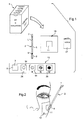
- the kit 1 shown in Figure 1 comprises a sampling element 2 for taking one or more analytes on the surface of the skin and a reagent 3 for producing in the presence of this or these analytes an optically observable reaction.
- sampling elements examples are described in patent application US 2004/0158188 and may be manufactured by the American company SWAB PLUS.
- the sampling element 2 may comprise in the tube 5 above the support 6 a plug 9 of a liquid immiscible with the sample liquid, so as to isolate the sample liquid L from the outside.
- This plug 9 is for example a meniscus of a silicone oil, capable of evacuating with the sample liquid L when the latter leaves the tube 5.
- the support 6 is for example a padded tip.
- the sample liquid L is, for example, a 10% ethanol solution.
- the reagent 3 is for example DPPH deposited on a substrate 8 chosen so as not to affect its reactivity and preferably porous so as to facilitate its impregnation with the reagent
- the substrate 8 is a membrane resistant to organic solvents such as ethanol and containing no trace of peroxides, capable of reducing the sensitivity of the reagent to antioxidant substances and containing no antioxidant substances which could reduce the reagent and affect the detection.
- the substrate 8 is for example a polyamide membrane, for example a positively charged NYLON® 6.6 membrane.
- the membrane has a porous surface with a pore size of, for example, 0.2, 0.45 or 1.2 ⁇ m, preferably 0.45 ⁇ m.
- the thickness of the membrane is for example 6.0 mils plus or minus 0.5 mils.
- Membranes that may be suitable are marketed by the American company PALL CORPORATION under the trade references BIODYNE B or C.
- the membrane 8 may for example be in the form of an independent pellet or be, as in the example illustrated, arranged next to colored indicators 14 within a color scale 13 making it easier to evaluate a change in color. color of it.
- Colored indicators 14 are for example associated with alphanumeric identifiers 26 or other, to distinguish them.
- the kit 1 may include a note 27 informing the user of the kit 1 on how to conduct the test and on the analysis that should be made of the results of the evaluation, based for example on the corresponding identifier 26 at the color change observed.
- the membrane 8 is in the form of a square pellet of 2 cm square, made from a 10 cm side sheet of BIODYNE B or C, previously charged with reagent 3 by depositing 2 ml of a DPPH solution of the German company SIGMA ALDRICH CHEMIE, STEINHEIN, at a concentration of 100 mg / 100 ml of ethanol at 96 °, then stirring and drying in a hood at ordinary temperature during two hours.
- the concentration of DPPH on the membrane is for example between 0.2 mg and 20 mg per 100 cm 2 , preferably of the order of 2 mg / 100 cm 2 .
- the kit 1 further comprises, in the example in question, a mask 10, for example made of paper of the POST IT® type, one face of which is coated with a pressure-sensitive adhesive. This mask 10 is traversed by a window 11.
- the mask 10 is applied to the region on which the sample is to be taken, for example the face in the example of FIG. 2.
- the breakable end 7 is broken and the sample liquid L flows into the support 6.
- the latter is brought into contact with the skin region delimited by the window 11 and the analytes present on the surface thereof are removed. , for example by making the support 6 a horizontal and vertical scanning of the sampling region.
- the support 6 is brought into contact, for example for 10 seconds, with the substrate 8 loaded with the reagent 3, as illustrated in FIG.
- the substrate 8 is for example red / pink.
- a lipophilic antioxidant such as for example vitamin E
- discoloration is observed, this being proportional to the amount of vitamin E.
- the observed discoloration can be evaluated by comparison with the colored controls 14, after a predefined waiting period. for example from 60 to 120 seconds.
- the kit 1 is for example used at a point of sale or in a beauty institute or a dermatologist to advise a consumer or a patient on the possible need for treatment. In this case, it may be proposed, in view of the evaluation result, one or more products to be applied to the skin or to ingest.
- the product (s) to be ingested may, for example, contain more than 50 mg of vitamin C, more than 5 mg of vitamin E, more than 100 mg of grape or tea polyphenols, more than 1 ⁇ g of selenium and / or more than 1 mg beta-carotene.
- the kit can still be used at the consumer's home. In this case, the consumer can himself proceed to the sampling and then to the detection of a color change of the reagent.
- a device can be used to help detect a color change in the reagent.
- a measurement of the absorption at a predefined wavelength may for example make it possible to detect a variation in the color of the reagent.
- a chromameter can still be used.
- the comparison of the color of the substrate 8 with that of the colored controls 14 is carried out with the aid of a color scanner 20, this scanner being for example integrated in a multifunction color printer. , as shown in Figure 4.
- This printer can be connected to a microcomputer or unrepresented mobile terminal, responsible for analyzing the image thus digitized to detect the color change.
- the scanner can still be connected, directly or not, to a computer network 21, for example the Internet, and have downloaded through this network 21 a program for performing this comparison, as shown in Figure 5.
- a computer network 21 for example the Internet
- the data processing can be performed by a remote server 22, to which for example the digitized image is transmitted.
- This server 22 can then transmit information to the consumer, in particular an analysis result, which can be accompanied by the prescription of a product, or even by the provision of a personalized product, the server 22 having for example communicated, for example through network 2, information to a manufacturing center 23.
- the personalized product comprises for example an antioxidant substance whose concentration is a function of the free radical deactivation potential of the skin previously evaluated.
- This substance is for example chosen from vitamin E, vitamin C, NDGA, thiols and its derivatives (glutathione, N-acetylcysteine), procyanidolic oligomers (OPC), flavonoids, catechins, epi catechins and its derivatives gallic, polyphenols such as tyrosol, hydroxytyrosol, sesamol, camosol, gamma orizanol, acids such as ferulic, caffeine, rosemarinic, camosic, etc ...
- the invention can also be implemented to evaluate the effect of a treatment on the skin.
- the kit 1 is for example proposed in conjunction with a product P to be applied to the skin, for example being marketed with this product, as illustrated in FIG.
- the user can for example evaluate the potential for deactivation of free radicals of the skin before using the product and then after it and comparing the results determine the effect of the treatment on this potential.
- the evaluation kit can still be used to determine a dosage of a product having an effect on the antioxidant potential of the skin, for example a number of applications of the product per time interval or an amount to be applied.
- the evaluation kit 1 can still be used to determine regions of the body to be treated, for example by showing that certain regions of the body have a higher free radical deactivation potential than others, the latter therefore having a need more treatment.
- the invention may also be useful for demonstrating the effect of an environment on the skin, for example to evaluate skin stress induced by exposure to the sun.
- Two evaluations of areas of the body, respectively exposed and not exposed to the sun, can be performed and the results compared. Such a comparison can highlight the more or less important cutaneous stress according to the individuals generated by the sun.
- An identifier determined during the assessment of the potential for deactivation of free radicals in the skin or evaluation of the skin's resistance to skin stress may appear on products or in correlation tables associated with products, in order to allow the user knowing the antioxidant potential of his skin or the resistance thereof to free radical-generating stress, to choose suitable products.
- the support 6 of the sampling element 2 can also be used as a substrate for the reagent, as shown in FIG.
- the sampling element 2 can then be used in the following manner.
- the breakable end 7 is broken, which allows the sample liquid to soak the support 6, then it is brought into contact with the skin to collect analytes capable of reacting with the reagent 3.
- the latter may be different from a padded tip if necessary, so as to facilitate the visual detection of the color change.
- the reagent 3 can also be present, as illustrated in FIG. 8, on a wipe, tablet or patch, such a substrate being preimpregnated by the sampling liquid and sealed in a bag 30.
- the user pulls out the substrate, which is also the support of the sample liquid, from the bag 30, and then applies the substrate to the skin so as to collect the analytes which are on its surface.
- the color reaction is observed on the substrate.
- sample liquid may be sprayed or otherwise deposited on the skin, and then the substrate loaded with reagent, for example dry, is brought into contact with it.
- reagent for example dry
- the DPPH can be replaced by other suitable reagents, in particular markers having a color-changing radical by a pairing effect of a free electron and whose half-life time is for example of the order of that of the DPPH.
Landscapes
- Health & Medical Sciences (AREA)
- Life Sciences & Earth Sciences (AREA)
- Engineering & Computer Science (AREA)
- Biomedical Technology (AREA)
- Molecular Biology (AREA)
- Pathology (AREA)
- General Health & Medical Sciences (AREA)
- Physics & Mathematics (AREA)
- Veterinary Medicine (AREA)
- Immunology (AREA)
- Urology & Nephrology (AREA)
- Chemical & Material Sciences (AREA)
- Animal Behavior & Ethology (AREA)
- Surgery (AREA)
- Hematology (AREA)
- Medical Informatics (AREA)
- Heart & Thoracic Surgery (AREA)
- Public Health (AREA)
- Biophysics (AREA)
- Microbiology (AREA)
- Dentistry (AREA)
- Oral & Maxillofacial Surgery (AREA)
- General Physics & Mathematics (AREA)
- Biochemistry (AREA)
- Analytical Chemistry (AREA)
- Medicinal Chemistry (AREA)
- Food Science & Technology (AREA)
- Cell Biology (AREA)
- Biotechnology (AREA)
- Dermatology (AREA)
- Investigating Or Analysing Biological Materials (AREA)
- Measuring Or Testing Involving Enzymes Or Micro-Organisms (AREA)
Applications Claiming Priority (1)
| Application Number | Priority Date | Filing Date | Title |
|---|---|---|---|
| FR0550525A FR2882595B1 (fr) | 2005-02-25 | 2005-02-25 | Procede pour evaluer le potentiel de desactivation de radicaux libres de la peau |
Publications (3)
| Publication Number | Publication Date |
|---|---|
| EP1695663A2 true EP1695663A2 (de) | 2006-08-30 |
| EP1695663A3 EP1695663A3 (de) | 2008-06-04 |
| EP1695663B1 EP1695663B1 (de) | 2016-12-07 |
Family
ID=34955331
Family Applications (1)
| Application Number | Title | Priority Date | Filing Date |
|---|---|---|---|
| EP06300162.2A Expired - Lifetime EP1695663B1 (de) | 2005-02-25 | 2006-02-24 | Verfahren zur Auswertung des Potentials der Haut zur Deaktivierung von freien Radikalen |
Country Status (3)
| Country | Link |
|---|---|
| EP (1) | EP1695663B1 (de) |
| ES (1) | ES2614749T3 (de) |
| FR (1) | FR2882595B1 (de) |
Family Cites Families (7)
| Publication number | Priority date | Publication date | Assignee | Title |
|---|---|---|---|---|
| DK8601218A (de) * | 1984-07-18 | 1986-03-17 | ||
| FR2695034B1 (fr) * | 1992-09-01 | 1994-10-07 | Oreal | Composition cosmétique ou pharmaceutique comprenant en association une peroxydase et un agent anti-oxygène singulet. |
| GB9225581D0 (en) * | 1992-12-08 | 1993-01-27 | Courtaulds Plc | Wound dressings |
| US6108570A (en) * | 1995-10-10 | 2000-08-22 | Yissum Research Development Company Of The Hebrew University Of Jerusalem | Non-invasive device and method for quantitative determination of oxidants and/or antioxidants in the skin |
| FR2751536B1 (fr) * | 1996-07-25 | 1998-11-06 | Oreal | Nouveaux derives de le melatonine anti-radicaux libres et compositions les comprenant |
| EP1262559A1 (de) * | 2001-06-01 | 2002-12-04 | SIRS-Lab GmbH | Hautpflaster zum Nachweis von Laktat |
| FR2844986A1 (fr) * | 2002-10-01 | 2004-04-02 | Oreal | Dispositif de prelevement |
-
2005
- 2005-02-25 FR FR0550525A patent/FR2882595B1/fr not_active Expired - Fee Related
-
2006
- 2006-02-24 EP EP06300162.2A patent/EP1695663B1/de not_active Expired - Lifetime
- 2006-02-24 ES ES06300162.2T patent/ES2614749T3/es not_active Expired - Lifetime
Also Published As
| Publication number | Publication date |
|---|---|
| EP1695663B1 (de) | 2016-12-07 |
| FR2882595A1 (fr) | 2006-09-01 |
| ES2614749T3 (es) | 2017-06-01 |
| EP1695663A3 (de) | 2008-06-04 |
| FR2882595B1 (fr) | 2007-05-25 |
Similar Documents
| Publication | Publication Date | Title |
|---|---|---|
| Sarveiya et al. | Liquid chromatographic assay for common sunscreen agents: application to in vivo assessment of skin penetration and systemic absorption in human volunteers | |
| EP1310212A1 (de) | Verfahren und Vorrichtung insbesondere zur Bestimmung der Hauttrockenheit | |
| US20100224211A1 (en) | Apparatus and methods for modifying keratinous surfaces | |
| EP3028040B1 (de) | Verfahren zur erfassung und quantifizierung von melanin in der haut | |
| Darvin et al. | Confocal Raman microscopy combined with optical clearing for identification of inks in multicolored tattooed skin in vivo | |
| US11385181B2 (en) | Evaluating the efficacy of leave-on cosmetic compositions to protect skin from pollutants | |
| Ali et al. | The impact of airborne pollution and exposure to solar ultraviolet radiation on skin: mechanistic and physiological insight | |
| EP3458836B1 (de) | Nichtinvasive blutanalyse | |
| FR2771002A1 (fr) | Compositions a usage cosmetique ou dermopharmaceutique contenant un extrait vegetal obtenu a partir des racines de kava piper methysticum | |
| FR2710517A1 (fr) | Procédé d'évaluation de l'état d'hydratation de la peau et appareil destiné à sa mise en Óoeuvre. | |
| JP5275898B2 (ja) | 皮膚状態の評価方法 | |
| US6918883B2 (en) | Sock for detection of pressure points on feet | |
| Yarovaya et al. | Chemical and mechanical accelerated and long‐term stability evaluation of sunscreen formulation containing grape seed extract | |
| EP1695663B1 (de) | Verfahren zur Auswertung des Potentials der Haut zur Deaktivierung von freien Radikalen | |
| JP4235014B2 (ja) | 皮膚反応試験パッチとその試験方法 | |
| US8084268B2 (en) | Method of evaluating the potential of the skin for scavenging free radicals | |
| EP3522772B1 (de) | System zur analyse der physikalisch-chemischen eigenschaften einer hautoberfläche | |
| Fullerton et al. | Skin irritation typing and grading based on laser Doppler perfusion imaging | |
| FR2939198B1 (fr) | Procede d'evaluation de l'etat de la chevelure | |
| Haag et al. | Stabilization of reactive nitroxides using invasomes to allow prolonged electron paramagnetic resonance measurements | |
| JP7125341B2 (ja) | 紫外線感受性の判定方法 | |
| Iannuccelli et al. | In vivo and in vitro skin permeation of butyl methoxydibenzoylmethane from lipospheres | |
| Evans et al. | Human axillary skin condition is improved following incorporation of glycerol into the stratum corneum from an antiperspirant formulation | |
| CN107773275B (zh) | 一种皮肤检测采样包及其应用 | |
| Matsunaga et al. | Contact dermatitis: Principles, mechanisms, and allergies related to cosmetics |
Legal Events
| Date | Code | Title | Description |
|---|---|---|---|
| PUAI | Public reference made under article 153(3) epc to a published international application that has entered the european phase |
Free format text: ORIGINAL CODE: 0009012 |
|
| 17P | Request for examination filed |
Effective date: 20060228 |
|
| AK | Designated contracting states |
Kind code of ref document: A2 Designated state(s): AT BE BG CH CY CZ DE DK EE ES FI FR GB GR HU IE IS IT LI LT LU LV MC NL PL PT RO SE SI SK TR |
|
| AX | Request for extension of the european patent |
Extension state: AL BA HR MK YU |
|
| PUAL | Search report despatched |
Free format text: ORIGINAL CODE: 0009013 |
|
| AK | Designated contracting states |
Kind code of ref document: A3 Designated state(s): AT BE BG CH CY CZ DE DK EE ES FI FR GB GR HU IE IS IT LI LT LU LV MC NL PL PT RO SE SI SK TR |
|
| AX | Request for extension of the european patent |
Extension state: AL BA HR MK YU |
|
| 17Q | First examination report despatched |
Effective date: 20080814 |
|
| AKX | Designation fees paid |
Designated state(s): AT BE BG CH CY CZ DE DK EE ES FI FR GB GR HU IE IS IT LI LT LU LV MC NL PL PT RO SE SI SK TR |
|
| GRAP | Despatch of communication of intention to grant a patent |
Free format text: ORIGINAL CODE: EPIDOSNIGR1 |
|
| INTG | Intention to grant announced |
Effective date: 20160627 |
|
| GRAS | Grant fee paid |
Free format text: ORIGINAL CODE: EPIDOSNIGR3 |
|
| GRAA | (expected) grant |
Free format text: ORIGINAL CODE: 0009210 |
|
| STAA | Information on the status of an ep patent application or granted ep patent |
Free format text: STATUS: THE PATENT HAS BEEN GRANTED |
|
| AK | Designated contracting states |
Kind code of ref document: B1 Designated state(s): AT BE BG CH CY CZ DE DK EE ES FI FR GB GR HU IE IS IT LI LT LU LV MC NL PL PT RO SE SI SK TR |
|
| REG | Reference to a national code |
Ref country code: GB Ref legal event code: FG4D Free format text: NOT ENGLISH |
|
| REG | Reference to a national code |
Ref country code: CH Ref legal event code: EP Ref country code: AT Ref legal event code: REF Ref document number: 851001 Country of ref document: AT Kind code of ref document: T Effective date: 20161215 |
|
| REG | Reference to a national code |
Ref country code: IE Ref legal event code: FG4D Free format text: LANGUAGE OF EP DOCUMENT: FRENCH |
|
| REG | Reference to a national code |
Ref country code: DE Ref legal event code: R096 Ref document number: 602006051136 Country of ref document: DE Ref country code: FR Ref legal event code: PLFP Year of fee payment: 12 |
|
| PG25 | Lapsed in a contracting state [announced via postgrant information from national office to epo] |
Ref country code: LV Free format text: LAPSE BECAUSE OF FAILURE TO SUBMIT A TRANSLATION OF THE DESCRIPTION OR TO PAY THE FEE WITHIN THE PRESCRIBED TIME-LIMIT Effective date: 20161207 |
|
| REG | Reference to a national code |
Ref country code: LT Ref legal event code: MG4D |
|
| REG | Reference to a national code |
Ref country code: NL Ref legal event code: MP Effective date: 20161207 |
|
| PG25 | Lapsed in a contracting state [announced via postgrant information from national office to epo] |
Ref country code: GR Free format text: LAPSE BECAUSE OF FAILURE TO SUBMIT A TRANSLATION OF THE DESCRIPTION OR TO PAY THE FEE WITHIN THE PRESCRIBED TIME-LIMIT Effective date: 20170308 Ref country code: LT Free format text: LAPSE BECAUSE OF FAILURE TO SUBMIT A TRANSLATION OF THE DESCRIPTION OR TO PAY THE FEE WITHIN THE PRESCRIBED TIME-LIMIT Effective date: 20161207 Ref country code: SE Free format text: LAPSE BECAUSE OF FAILURE TO SUBMIT A TRANSLATION OF THE DESCRIPTION OR TO PAY THE FEE WITHIN THE PRESCRIBED TIME-LIMIT Effective date: 20161207 |
|
| REG | Reference to a national code |
Ref country code: AT Ref legal event code: MK05 Ref document number: 851001 Country of ref document: AT Kind code of ref document: T Effective date: 20161207 |
|
| PG25 | Lapsed in a contracting state [announced via postgrant information from national office to epo] |
Ref country code: FI Free format text: LAPSE BECAUSE OF FAILURE TO SUBMIT A TRANSLATION OF THE DESCRIPTION OR TO PAY THE FEE WITHIN THE PRESCRIBED TIME-LIMIT Effective date: 20161207 Ref country code: BE Free format text: LAPSE BECAUSE OF NON-PAYMENT OF DUE FEES Effective date: 20170228 |
|
| REG | Reference to a national code |
Ref country code: ES Ref legal event code: FG2A Ref document number: 2614749 Country of ref document: ES Kind code of ref document: T3 Effective date: 20170601 |
|
| PG25 | Lapsed in a contracting state [announced via postgrant information from national office to epo] |
Ref country code: NL Free format text: LAPSE BECAUSE OF FAILURE TO SUBMIT A TRANSLATION OF THE DESCRIPTION OR TO PAY THE FEE WITHIN THE PRESCRIBED TIME-LIMIT Effective date: 20161207 |
|
| PG25 | Lapsed in a contracting state [announced via postgrant information from national office to epo] |
Ref country code: SK Free format text: LAPSE BECAUSE OF FAILURE TO SUBMIT A TRANSLATION OF THE DESCRIPTION OR TO PAY THE FEE WITHIN THE PRESCRIBED TIME-LIMIT Effective date: 20161207 Ref country code: EE Free format text: LAPSE BECAUSE OF FAILURE TO SUBMIT A TRANSLATION OF THE DESCRIPTION OR TO PAY THE FEE WITHIN THE PRESCRIBED TIME-LIMIT Effective date: 20161207 Ref country code: RO Free format text: LAPSE BECAUSE OF FAILURE TO SUBMIT A TRANSLATION OF THE DESCRIPTION OR TO PAY THE FEE WITHIN THE PRESCRIBED TIME-LIMIT Effective date: 20161207 Ref country code: IS Free format text: LAPSE BECAUSE OF FAILURE TO SUBMIT A TRANSLATION OF THE DESCRIPTION OR TO PAY THE FEE WITHIN THE PRESCRIBED TIME-LIMIT Effective date: 20170407 Ref country code: CZ Free format text: LAPSE BECAUSE OF FAILURE TO SUBMIT A TRANSLATION OF THE DESCRIPTION OR TO PAY THE FEE WITHIN THE PRESCRIBED TIME-LIMIT Effective date: 20161207 |
|
| PG25 | Lapsed in a contracting state [announced via postgrant information from national office to epo] |
Ref country code: PL Free format text: LAPSE BECAUSE OF FAILURE TO SUBMIT A TRANSLATION OF THE DESCRIPTION OR TO PAY THE FEE WITHIN THE PRESCRIBED TIME-LIMIT Effective date: 20161207 Ref country code: BG Free format text: LAPSE BECAUSE OF FAILURE TO SUBMIT A TRANSLATION OF THE DESCRIPTION OR TO PAY THE FEE WITHIN THE PRESCRIBED TIME-LIMIT Effective date: 20170307 Ref country code: AT Free format text: LAPSE BECAUSE OF FAILURE TO SUBMIT A TRANSLATION OF THE DESCRIPTION OR TO PAY THE FEE WITHIN THE PRESCRIBED TIME-LIMIT Effective date: 20161207 Ref country code: PT Free format text: LAPSE BECAUSE OF FAILURE TO SUBMIT A TRANSLATION OF THE DESCRIPTION OR TO PAY THE FEE WITHIN THE PRESCRIBED TIME-LIMIT Effective date: 20170407 |
|
| REG | Reference to a national code |
Ref country code: DE Ref legal event code: R097 Ref document number: 602006051136 Country of ref document: DE |
|
| PG25 | Lapsed in a contracting state [announced via postgrant information from national office to epo] |
Ref country code: MC Free format text: LAPSE BECAUSE OF FAILURE TO SUBMIT A TRANSLATION OF THE DESCRIPTION OR TO PAY THE FEE WITHIN THE PRESCRIBED TIME-LIMIT Effective date: 20161207 |
|
| REG | Reference to a national code |
Ref country code: CH Ref legal event code: PL |
|
| PLBE | No opposition filed within time limit |
Free format text: ORIGINAL CODE: 0009261 |
|
| STAA | Information on the status of an ep patent application or granted ep patent |
Free format text: STATUS: NO OPPOSITION FILED WITHIN TIME LIMIT |
|
| PG25 | Lapsed in a contracting state [announced via postgrant information from national office to epo] |
Ref country code: LI Free format text: LAPSE BECAUSE OF NON-PAYMENT OF DUE FEES Effective date: 20170228 Ref country code: CH Free format text: LAPSE BECAUSE OF NON-PAYMENT OF DUE FEES Effective date: 20170228 |
|
| 26N | No opposition filed |
Effective date: 20170908 |
|
| REG | Reference to a national code |
Ref country code: IE Ref legal event code: MM4A |
|
| PG25 | Lapsed in a contracting state [announced via postgrant information from national office to epo] |
Ref country code: SI Free format text: LAPSE BECAUSE OF FAILURE TO SUBMIT A TRANSLATION OF THE DESCRIPTION OR TO PAY THE FEE WITHIN THE PRESCRIBED TIME-LIMIT Effective date: 20161207 Ref country code: DK Free format text: LAPSE BECAUSE OF FAILURE TO SUBMIT A TRANSLATION OF THE DESCRIPTION OR TO PAY THE FEE WITHIN THE PRESCRIBED TIME-LIMIT Effective date: 20161207 |
|
| PG25 | Lapsed in a contracting state [announced via postgrant information from national office to epo] |
Ref country code: LU Free format text: LAPSE BECAUSE OF NON-PAYMENT OF DUE FEES Effective date: 20170224 |
|
| REG | Reference to a national code |
Ref country code: FR Ref legal event code: PLFP Year of fee payment: 13 |
|
| REG | Reference to a national code |
Ref country code: BE Ref legal event code: MM Effective date: 20170228 |
|
| PG25 | Lapsed in a contracting state [announced via postgrant information from national office to epo] |
Ref country code: IE Free format text: LAPSE BECAUSE OF NON-PAYMENT OF DUE FEES Effective date: 20170224 |
|
| PG25 | Lapsed in a contracting state [announced via postgrant information from national office to epo] |
Ref country code: HU Free format text: LAPSE BECAUSE OF FAILURE TO SUBMIT A TRANSLATION OF THE DESCRIPTION OR TO PAY THE FEE WITHIN THE PRESCRIBED TIME-LIMIT; INVALID AB INITIO Effective date: 20060224 |
|
| PG25 | Lapsed in a contracting state [announced via postgrant information from national office to epo] |
Ref country code: CY Free format text: LAPSE BECAUSE OF NON-PAYMENT OF DUE FEES Effective date: 20161207 |
|
| PG25 | Lapsed in a contracting state [announced via postgrant information from national office to epo] |
Ref country code: TR Free format text: LAPSE BECAUSE OF FAILURE TO SUBMIT A TRANSLATION OF THE DESCRIPTION OR TO PAY THE FEE WITHIN THE PRESCRIBED TIME-LIMIT Effective date: 20161207 |
|
| PGFP | Annual fee paid to national office [announced via postgrant information from national office to epo] |
Ref country code: GB Payment date: 20200212 Year of fee payment: 15 Ref country code: ES Payment date: 20200302 Year of fee payment: 15 Ref country code: DE Payment date: 20200211 Year of fee payment: 15 Ref country code: IT Payment date: 20200128 Year of fee payment: 15 |
|
| PGFP | Annual fee paid to national office [announced via postgrant information from national office to epo] |
Ref country code: FR Payment date: 20200113 Year of fee payment: 15 |
|
| REG | Reference to a national code |
Ref country code: DE Ref legal event code: R119 Ref document number: 602006051136 Country of ref document: DE |
|
| GBPC | Gb: european patent ceased through non-payment of renewal fee |
Effective date: 20210224 |
|
| PG25 | Lapsed in a contracting state [announced via postgrant information from national office to epo] |
Ref country code: DE Free format text: LAPSE BECAUSE OF NON-PAYMENT OF DUE FEES Effective date: 20210901 Ref country code: GB Free format text: LAPSE BECAUSE OF NON-PAYMENT OF DUE FEES Effective date: 20210224 Ref country code: FR Free format text: LAPSE BECAUSE OF NON-PAYMENT OF DUE FEES Effective date: 20210228 |
|
| PG25 | Lapsed in a contracting state [announced via postgrant information from national office to epo] |
Ref country code: IT Free format text: LAPSE BECAUSE OF NON-PAYMENT OF DUE FEES Effective date: 20210224 |
|
| REG | Reference to a national code |
Ref country code: ES Ref legal event code: FD2A Effective date: 20220513 |
|
| PG25 | Lapsed in a contracting state [announced via postgrant information from national office to epo] |
Ref country code: ES Free format text: LAPSE BECAUSE OF NON-PAYMENT OF DUE FEES Effective date: 20210225 |