EP1701563A2 - Mobilfunkendgerät mit deaktivierbarer Sendeeinheit und Netzleitestelle zum Steuern des Mobilfunkendgerätes - Google Patents
Mobilfunkendgerät mit deaktivierbarer Sendeeinheit und Netzleitestelle zum Steuern des Mobilfunkendgerätes Download PDFInfo
- Publication number
- EP1701563A2 EP1701563A2 EP06110514A EP06110514A EP1701563A2 EP 1701563 A2 EP1701563 A2 EP 1701563A2 EP 06110514 A EP06110514 A EP 06110514A EP 06110514 A EP06110514 A EP 06110514A EP 1701563 A2 EP1701563 A2 EP 1701563A2
- Authority
- EP
- European Patent Office
- Prior art keywords
- mobile
- mobile radio
- network
- radio terminal
- transmitting unit
- Prior art date
- Legal status (The legal status is an assumption and is not a legal conclusion. Google has not performed a legal analysis and makes no representation as to the accuracy of the status listed.)
- Granted
Links
Images
Classifications
-
- H—ELECTRICITY
- H04—ELECTRIC COMMUNICATION TECHNIQUE
- H04W—WIRELESS COMMUNICATION NETWORKS
- H04W88/00—Devices specially adapted for wireless communication networks, e.g. terminals, base stations or access point devices
- H04W88/02—Terminal devices
-
- H—ELECTRICITY
- H04—ELECTRIC COMMUNICATION TECHNIQUE
- H04W—WIRELESS COMMUNICATION NETWORKS
- H04W48/00—Access restriction; Network selection; Access point selection
- H04W48/16—Discovering, processing access restriction or access information
Definitions
- the invention relates to a network control center which is coupled via a mobile radio network, in particular according to the GSM or UMTS standard, with at least one mobile radio terminal of a group of mobile radio subscribers, comprising at least one communication server with a processor and a main memory.
- Mobile terminals allow mobile subscribers to communicate via a mobile network, for example according to the GSM or UMTS standard, with other communication partners who also have a mobile terminal or a fixed network device. The communication takes place via the radio interface.
- the mobile terminal has a receiving and transmitting unit, with which it establishes a connection to the radio masts of the mobile network. Incoming radio signals are received by the receiving part, outgoing radio signals are forwarded by the transmitting unit. The operators of the mobile network ensure that the connection to the desired other communication partner is established.
- BS Base Stations
- MSC Mobile Switching Center
- the mobile device in the form of mobile phones is often used by doctors, firefighters, police and the like. Under certain circumstances, these groups of people must always remain accessible in these sensitive areas. Police or even the fire brigade, ie people who often have to stay in sensitive areas, are currently unable to receive instruction from a control center with the mobile radio terminal.
- the object of the invention is therefore to overcome the known disadvantages of the prior art and to provide a mobile terminal, which is also usable in radio-sensitive areas. It is a further object of the invention to be able to transmit information to subscribers of a group of mobile subscribers in these sensitive areas as well.
- a network control center which is achieved via a mobile radio network of the type mentioned above, in the means for synchronously transmitting information to the mobile devices of the group of mobile subscribers.
- the invention is based on the principle of designing the mobile radio terminals such that their transmitting unit can be switched off separately. By this measure, it is avoided that the mobile station, although it is turned on, sends radio signals and interfering with other particular electronic apparatus and instruments by its electromagnetic radiation. In order for a mobile subscriber can still be achieved because only the transmitting unit is disabled. A complete switching off of the mobile station in radio-sensitive areas is omitted in the present invention.
- the transmitter unit can be switched on again without disturbing other devices.
- One aspect of the invention is that now means for monitoring the strength of a received signal are provided.
- the mobile subscriber can determine whether his received signal is sufficiently strong to still receive information, such as a control center.
- the mobile radio subscriber leaves the reception area, it is signaled on the mobile radio terminal in a preferred embodiment of the invention that the received signal is too weak.
- a signaling unit is provided to signal a low and / or missing received signal.
- the strength of the received signal can be displayed, for example, on a display of the mobile station or be made clear to the user by a beep or vibration alarm.
- means for generating identification and / or location information and for transmitting this identification and / or location information to a network control center upon deactivation of the transmitting unit are provided.
- the transmitting unit of the mobile station therefore sends quasi as a last action to the network control center, in which radio network cell of the mobile network to the mobile terminal to the switch-off occurs and its whose mobile terminal is. This captures the last data regarding the mobile station.
- the network control center thus knows the last location of the subscriber.
- a preferred embodiment of the invention results from the fact that signaling means for informing the user of a call request are provided. This measure signals to the subscriber in the radio-sensitive area that he should leave this area, for example, and contact the control center. This allows a control center to contact the participants.
- a switch for deactivating and activating the transmitting unit is provided.
- the mobile subscriber can natively deactivate or activate his transmitting unit.
- An advantageous embodiment of the network control center according to the invention results from the fact that detection and storage means are provided for detecting and storing information regarding the location and / or the identification of mobile subscribers of the group in the communication server when switching off the transmitting unit of the mobile station.
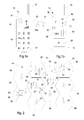
- a mobile station 10 is shown schematically in the closed state.
- the mobile radio terminal 10 has a housing 12, a display 14 and a control panel 16. From the housing 12 protrudes an antenna 18 and a switch button 20 for manually deactivating and activating the transmitting unit 22 (see Fig. 1b) of the mobile terminal 10.
- a hand 24 actuates this button 20.
- bar chart 26 On the display 14 of the mobile station 10 is shown with bar chart 26, how strong the respective received radio signal. The higher the bar 26a rises, the stronger the received signal. If the received signal is too low or even absent, a flashing signal 27 is generated on the display 14, for example.
- Fig. 1b shows schematically the mobile station 10 according to the Fig. 1a, however, with the housing 12 open in the housing 12 of the opened mobile station 10, in particular a processor 28, a memory 30, a receiving unit 32 and the transmitting unit 22 are arranged.
- the components of the mobile terminal 10 are usually connected to one another on a printed circuit board, not shown, in a suitable manner.
- the processor 28 essentially serves to control the mobile radio terminal 10 and to coordinate workflows in particular between the individual components of the mobile radio terminal 10. In this case, data and programs are stored in the working memory 30, which can be accessed by the processor 28.
- the receiving unit 32 ensures that radio signals which are transmitted via a mobile radio network are received via the antenna 18, decoded and forwarded to the processor 28 for processing. Accordingly, the transmitting unit 22 sends data to and over the mobile network.
- switching mechanism 34 can be deactivated or activated in the transmitting unit 22.
- the actuation of the switching mechanism 34 takes place via the switching knob 20.
- an identification generator 36 generates data relating to the identity and the residence of the user These are before the transmitting unit 22 actually turns off to a network control center 38 (see Fig. 2) transmitted.
- a monitoring unit 40 is further provided, which monitors the signal strength of the received radio signals.
- the strength of the receive signals is displayed on the display 14 in the form of the bar graph 26 as described above. If the monitoring unit 40 determines that the received signal is too low or absent, the display 14, for example, generates the flashing signal 18 and / or an alarm tone.
- This call request unit 42 denotes a call request unit.
- This call request unit 42 determines whether the user of the mobile station 10, e.g. is requested by the network control center 38, turn on its transmitting unit 22 again and connect to the network control center 38 connection.
- the call request unit 42 can generate, for example, an alarm signal to which the user can respond.
- the mobile radio network 44 is composed of numerous radio network cells 48.
- the radio network cells 48 are represented symbolically as hexagons.
- Each radio network cell 48 has a base station 50, which in the present illustration is represented by a radio mast. In reality, the size of each radio network cell 48 is defined by the coverage area of the base station 50.
- Base station 50 is coordinated via base station controllers (BSC), not shown, such as switches (MSCs), not shown.
- BSC base station controllers
- MSCs switches
- the radio-sensitive area 46 is a hospital.
- the invention should not be limited to hospitals.
- the hospital is in a single radio network cell 54.
- data relating to the time and location, as well as further identification data regarding the mobile radio terminal 10 are sent to the network control center 38.
- the operating personnel 56 of the network control center 38 is therefore informed about the last location of the mobile radio subscriber 52, ie radio network cell 54 with the radio-sensitive area 46.
- the network control center 38 has a communication server 39, which coordinates the communication of a group 41.
- the mobile subscriber 52 can now actively establish no connection with third parties, in particular with the network control center 38. However, the mobile station 10 of the mobile radio subscriber 52 can still receive data with the transmitter unit 22 deactivated. By switched off transmission unit 22 now no electromagnetic radiation from the mobile station 10 are emitted. A disturbance of radio-sensitive devices can now be avoided.
- the mobile radio subscriber 52 is a member of the group 41 of mobile radio subscribers 55.
- the mobile radio subscribers 52, 55 of the group 41 are shown hatched.
- Each member of the group 41 can thus also be achieved with the transmission unit 22 switched off by the network control center 38.
- the network control center 38 can transmit information to the group members 52, 55 without other mobile subscribers 57 having the opportunity to be aware of it. It is provided in the invention that the network control center 38 can reach the group members 52, 55 synchronously.
Landscapes
- Engineering & Computer Science (AREA)
- Computer Networks & Wireless Communication (AREA)
- Signal Processing (AREA)
- Mobile Radio Communication Systems (AREA)
Abstract
Description
- Die Erfindung betrifft ein Mobilfunkendgerät für ein Mobilfunknetz, insbesondere nach dem GSM-, UMTS- und OFDM-Standard, enthaltend
- a) eine Empfangs- und Sendeeinheit,
- b) einen Mikroprozessor und einen Arbeitsspeicher,
- c) sowie eine Bedieneinheit zum Bedienen des Mobilfunkendgeräts.
- Ferner betrifft die Erfindung eine Netzleitstelle, welche über ein Mobilfunknetz, insbesondere nach dem GSM- oder UMTS-Standard, mit wenigstens einem Mobilfunkendgerät einer Gruppe von Mobilfunkteilnehmern gekoppelt ist, enthaltend wenigstens einen Kommunikationsserver mit einem Prozessor und einem Arbeitsspeicher.
- Mobilfunkendgeräte erlauben es Mobilfunkteilnehmern, über ein Mobilfunknetz, beispielsweise nach dem GSM- oder UMTS-Standard, mit anderen Kommunikationspartnern, die ebenfalls über ein Mobilfunkendgerät oder auch ein Festnetzgerät verfügen, zu kommunizieren. Die Kommunikation erfolgt dabei über die Funkschnittstelle.
- Das Mobilfunkendgerät verfügt über eine Empfangs- und Sendeeinheit, mit denen es eine Verbindung zu den Funkmasten des Mobilfunknetzes aufbaut. Ankommende Funksignale werden durch das Empfangsteil aufgenommen, abgehende Funksignale werden durch die Sendeeinheit weitergeleitet. Die Betreiber des Mobilfunknetzes tragen Sorge dafür, dass die Verbindung zu dem gewünschten anderen Kommunikationspartner hergestellt wird.
- In das Mobilfunknetz verfügt über zahlreiche Funkmasten, so genannte "Base Stations" (BS). Der Abdeckungsbereich von solchen Funkmasten wird als Funknetzzelle bezeichnet. Die Koordination von Kommunikationsanfragen und Herstellung einer Verbindung erfolgt über einen Base Station Controller (BSC) und eine Vermittlungsstelle, dem so genannten Mobile Switching Center (MSC).
- Es gibt sensible Bereiche, wie bspw. Krankenhäuser oder Flugzeuge, in denen die Sendeleistung der Mobilfunkendgeräte andere elektronische Apparate und Instrumente beeinflussen. Dies hat in der Vergangenheit dazu geführt, dass diese elektronischen Geräte ganz oder teilweise ausgefallen sind. Es wird daher im Eingangsbereich dieser sensiblen Bereiche darauf hingewiesen, dass die Mobilfunkendgeräte auszuschalten sind. In Flugzeugen wurde sogar vom Gesetzgeber untersagt, Mobilfunkendgeräte einzuschalten.
- Mittlerweile wird das Mobilfunkendgerät in Form von Handys vielfach von Ärzten, Feuerwehrleuten, Polizei und dergleichen benutzt. Diese Personenkreise müssen unter Umständen auch in diesen sensiblen Bereichen immer erreichbar bleiben. Polizei oder auch die Feuerwehr, also Personen, die sich oft in sensiblen Bereichen aufhalten müssen, sind derzeit nicht in der Lage mit dem Mobilfunkendgerät Anweisung von einer Leitstelle in Empfang zu nehmen.
- Aufgabe der Erfindung ist es daher, die bekannten Nachteile des Standes der Technik zu überwinden und ein Mobilfunkendgerät zu schaffen, welches auch in funksensiblen Bereichen benutzbar ist. Es ist ferner Aufgabe der Erfindung, Teilnehmer einer Gruppe von Mobilfunkteilnehmern auch in diesen sensiblen Bereichen Informationen übermitteln zu können.
- Erfindungsgemäß wird die Aufgabe dadurch gelöst, daß bei Mobilfunkendgerät für ein Mobilfunknetz, insbesondere nach dem GSM- und UMTS-Standard der eingangs genannten Art,
- d)
- Mittel zum Aktivieren und/oder Deaktivieren der Sendeeinheit vorgesehen sind.
- Weiterhin wird die Aufgabe durch eine Netzleitstelle, welche über ein Mobilfunknetz der eingangs genannten Art gelöst, bei der Mittel zum synchronen Übermitteln von Information an die Mobilfunkendgeräte der Gruppe von Mobilfunkteilnehmern vorgesehen sind.
- Die Erfindung beruht auf dem Prinzip, die Mobilfunkendgeräte derart auszugestalten, dass ihre Sendeeinheit separat ausschaltbar ist. Durch diese Maßnahme wird vermieden, dass das Mobilfunkendgerät, obwohl es eingeschaltet ist, Funksignale sendet und andere insbesondere elektronischen Apparate und Instrumente durch seine elektromagnetischen Strahlen störend beeinflusst. Damit kann ein Mobilfunkteilnehmer weiterhin erreicht werden, da lediglich die Sendeeinheit deaktiviert ist. Ein vollständiges Ausschalten des Mobilfunkendgeräts in funksensiblen Bereichen entfällt bei der vorliegenden Erfindung.
- Wenn der funksensible Bereich verlassen wird, kann die Sendeeinheit ohne andere Geräte zu stören wieder eingeschaltet werden.
- Bei einer Gruppe von Mobilfunkteilnehmern, vorzugsweise mit jeweils ausgeschalteter Sendeeinheit, können nunmehr mit einer erfindungsgemäßen Netzleitstelle Informationen synchron übermittelt werden. Allen Mitgliedern dieser Gruppe kann gleichzeitig Information zukommen, obwohl sie selbst unter Umständen nicht agieren können.
- Ein Aspekt der Erfindung ist, daß nunmehr Mittel zur Überwachung der Stärke eines Empfangssignals vorgesehen sind. Damit kann der Mobilfunkteilnehmer feststellen, ob sein Empfangssignal ausreichend stark ist, um noch Informationen, beispielsweise einer Leitstelle, zu erhalten. Sobald sich der Mobilfunkteilnehmer aus dem Empfangsbereich begibt, wird auf dem Mobilfunkendgerät in einer bevorzugten Ausführung der Erfindung signalisiert, dass das Empfangssignal zu schwach ist. Eine Signalisierungseinheit ist dafür vorgesehen, ein geringes und/oder fehlendes Empfangssignals zu signalisieren. Die Stärke des Empfangssignals kann beispielsweise auf einer Anzeige des Mobilfunkendgeräts dargestellt werden oder auch durch einen Signalton oder Vibrationsalarm dem Anwender verdeutlicht werden.
- In einer vorteilhaften Ausgestaltung des erfindungsgemäßen Mobilfunkendgeräts sind Mittel zur Generierung von Identifikations- und/oder Lokalisierungsinformationen und zur Übermittlung dieser Identifikations- und/oder Lokalisierungsinformationen an eine Netzleitstelle bei Deaktivierung der Sendeeinheit vorgesehen. In dem Moment, wo die Sendeeinheit deaktiviert wird, können keine Signale mehr von dem Mobilfunkendgerät ausgehen. Die Sendeeinheit des Mobilfunkendgeräts sendet daher quasi als letzte Aktion an die Netzleitstelle, in welcher Funknetzzelle des auf Mobilfunknetzes sich das Mobilfunkendgerät zu dem Ausschaltzeitpunkt auffällt und um wessen Mobilfunkendgeräts es sich handelt. Damit werden die letzten Daten bezüglich des Mobilfunkendgeräts erfasst. Die Netzleitstelle kennt somit den letzten Aufenthaltsort des Teilnehmers.
- Eine bevorzugte Ausbildung der Erfindung ergibt sich dadurch, dass Signalisierungsmittel zum Informieren des Anwenders über eine Rufaufforderung vorgesehen sind. Durch diese Maßnahme wird dem Teilnehmer in dem funksensiblen Bereich signalisiert, dass er beispielsweise diesen Bereich verlassen und die Leitstelle kontaktieren soll. Damit kann auch eine Leitstelle Kontakt mit den Teilnehmern aufnehmen.
- In einer weiteren vorteilhaften Ausgestaltung des erfindungsgemäßen Mobilfunkendgeräts ist ein Schalter zum Deaktivieren- und Aktivieren der Sendeeinheit vorgesehen. Dadurch kann der Mobilfunkteilnehmer nanuell seine Sendeeinheit deaktivieren bzw. aktivieren.
- Eine vorteilhafte Ausgestaltung der erfindungsgemäßen Netzleitstelle ergibt sich dadurch, dass Erfassungs- und Speichermittel vorgesehen sind, zum Erfassen und Speichern von Informationen bezüglich des Aufenthaltsortes und/oder der Identifikation von Mobilfunkteilnehmern der Gruppe in dem Kommunikationsserver beim Abschalten der Sendeeinheit des Mobilfunkendgeräts.
- Weitere Vorteile ergeben sich aus dem Gegenstand der Unteransprüche.
-
- Fig. 1a
- zeigt schematisch ein Mobilfunkendgerät mit geschlossenem Gehäuse und einer abschaltbaren Sendeeinheit.
- Fig. 1b
- zeigt schematisch ein Mobilfunkendgerät mit geöffnetem Gehäuse und einer abschaltbaren Sendeeinheit.
- Fig. 2
- zeigt in einer Prinzipskizze ein Mobilfunknetz mit einem funksensiblen Bereich und einer Leitstelle.
- In Fig. 1a wird schematisch ein Mobilfunkendgerät 10 im geschlossenen Zustand dargestellt. Das Mobilfunkendgerät 10 verfügt über ein Gehäuse 12, einer Anzeige 14 und ein Bedienungsfeld 16. Aus dem Gehäuse 12 ragt eine Antenne 18 und ein Schaltknopf 20 zum manuellen Deaktivieren und Aktivieren der Sendeeinheit 22 (vgl. Fig. 1b) des Mobilfunkendgeräts 10. Eine Hand 24 betätigt diesen Schaltknopf 20. Auf der Anzeige 14 des Mobilfunkendgeräts 10 wird mit Balkendiagramm 26 dargestellt, wie stark das jeweils empfangene Funksignal ist. Je höher der Balken 26a steigt, desto stärker ist das Empfangssignal. Sollte das Empfangssignal zu gering oder sogar nicht vorhanden sein, so wird auf der Anzeige 14 beispielsweise ein Blinksignal 27 erzeugt.
- Fig. 1b zeigt schematisch das Mobilfunkendgerät 10 entsprechend der Fig. 1a jedoch mit geöffnetem Gehäuse 12. in dem Gehäuse 12 des geöffneten Mobilfunkendgeräts 10 sind insbesondere ein Prozessor 28, ein Arbeitsspeicher 30, eine Empfangseinheit 32 und die Sendeeinheit 22 angeordnet. Die Bauelemente des Mobilfunkendgeräts 10 sind dazu üblicherweise auf einer nicht dargestellten Leiterplatine in geeigneter Weise miteinander verschaltet. Der Prozessor 28 dient im Wesentlichen dazu, das Mobilfunkendgerät 10 zu steuern und Arbeitsabläufe insbesondere zwischen den einzelnen Bauelementen des Mobilfunkendgeräts 10 zu koordinieren. Dabei werden Daten und Programme in dem Arbeitsspeicher 30, auf die der Prozessor 28 zugreifen kann, abgelegt. Die Empfangseinheit 32 sorgt dafür, dass Funksignale, welche über ein Mobilfunknetz übermittelt werden, über die Antenne 18 empfangen, decodiert und dem Prozessor 28 zur Verarbeitung weitergeleitet werden. Entsprechend sendet die Sendeeinheit 22 Daten an und über das Mobilfunknetz.
- Mit Schaltmechanismus 34 kann in die Sendeeinheit 22 deaktiviert bzw. aktiviert werden. Die Betätigung des Schaltmechanismusses 34 erfolgt über den Schaltknopf 20. Sobald der Schaltmechanismus 34 die Sendeeinheit 22 deaktiviert hat, erzeugt ein Identifikationsgenerator 36 Daten bezüglich der Identität und des Aufenthaltes des Mobilfunkendgeräts 10. Diese werden bevor die Sendeeinheit 22 tatsächlich abschaltet an eine Netzleitstelle 38 (vgl. Fig. 2) übermittelt.
- In dem Mobilfunkendgerät 10 ist ferner eine Überwachungseinheit 40 vorgesehenen, welche die Signalstärke der empfangenen Funksignale überwacht. Die Stärke der Empfangsignale wird auf der Anzeige 14 in Form des Balkendiagramms 26, wie oben beschriebenen, dargestellt. Sollte die Überwachungseinheit 40 feststellen, dass das Empfangssignal zu gering oder nicht vorhanden ist, so wird auf der Anzeige 14 beispielsweise das Blinksignal 18 und/oder ein Alarmton erzeugt.
- Mit 42 wird eine Rufaufforderungseinheit bezeichnet. Diese Rufaufforderungseinheit 42 stellt fest, ob der Nutzer des Mobilfunkendgeräts 10, z.B. von der Netzleitstelle 38 aufgefordert wird, seine Sendeeinheit 22 wieder einzuschalten und mit der Netzleitstelle 38 Verbindung aufzunehmen. Dazu kann die Rufaufforderungseinheit 42 beispielsweise ein Alarmsignal erzeugen, auf welches der Nutzer reagieren kann.
- Fig. 2 zeigt in einer Prinzipskizze einen beispielhaften Ausschnitt eines Mobilfunknetzes 44 mit einem funksensiblen Bereich 46. Das Mobilfunknetz 44 setzt sich aus zahlreichen Funknetzzellen 48 zusammen. Die Funknetzzellen 48 werden symbolisch als Sechsecke dargestellt. Jede Funknetzzelle 48 verfügt über eine Base Station 50, welche in vorliegender Abbildung durch einen Funkmast repräsentiert wird. In der Realität wird die Größe einer jeden Funknetzzelle 48 durch den Abdeckungsbereich der Base Station 50 definiert. Die Base Station 50 werden über nicht dargestellte Base Station Controller (BSC), so wie nicht dargestellte Vermittlungsstellen, (MSC) koordiniert. Im Zusammenspiel ermöglichen die Mobilfunknetzkomponenten ein Roaming eines Mobilfunkteilnehmers 52, d.h. ein Bewegen zwischen den Funknetzzellen 48.
- Im vorliegenden Ausführungsbeispiel ist der funksensible Bereich 46 ein Krankenhaus. Die Erfindung soll aber sich nicht nur auf Krankenhäuser beschränken. Das Krankenhaus steht in einer einzelnen Funknetzzelle 54. Der Mobilfunkteilnehmer 52 der nun in das Krankenhaus, also den funksensiblen Bereich 46, geht, schaltet wie oben beschrieben die Sendeeinheit 22 seines Mobilfunkendgeräts 10 mit dem Schaltknopf 20 aus. Beim Deaktivierungsvorgang werden noch Daten bezüglich der Zeit, des Aufenthaltsortes, so wie weitere Identifikationsdaten bezüglich des Mobilfunkendgeräts 10 an die Netzleitstelle 38 gesendet. Das Bedienungspersonal 56 der Netzleitstelle 38 ist also über den letzten Aufenthaltsort des Mobilfunkteilnehmers 52, d.h. Funknetzzelle 54 mit dem funksensiblen Bereich 46, informiert. Die Netzleitstelle 38 verfügt über einen Kommunikationsserver 39, der die Kommunikation einer Gruppe 41 koordiniert.
- Der Mobilfunkteilnehmer 52 kann aktiv nun keine Verbindung mit Dritten, insbesondere mit der Netzleitstelle 38 herstellen. Das Mobilfunkendgerät 10 des Mobilfunkteilnehmers 52 kann mit deaktivierter Sendeeinheit 22 jedoch noch Daten empfangen. Durch die abgeschaltete Sendeeinheit 22 werden nunmehr keine elektromagnetischen Strahlen von dem Mobilfunkendgerät 10 ausgesandt. Eine Störung funksensibler Geräte kann nunmehr vermieden werden.
- Der Mobilfunkteilnehmer 52 ist Mitglied der Gruppe 41 von Mobilfunkteilnehmern 55. Die Mobilfunkteilnehmer 52, 55 der Gruppe 41 sind schraffiert dargestellt. Jedes Mitglied der Gruppe 41 kann somit auch mit ausgeschalteter Sendeeinheit 22 durch die Netzleitstelle 38 erreicht werden. Indem ein verschlüsselter Funkkanal für die Gruppe 41 durch das Mobilfunknetz 44 reserviert wird, kann die Netzleitstelle 38 Informationen an die Gruppenmitglieder 52, 55 übermitteln, ohne dass andere Mobilfunkteilnehmer 57 die Möglichkeit haben, davon Kenntnis nehmen zu können. Es ist in der Erfindung vorgesehen, dass die Netzleitstelle 38 die Gruppenmitglieder 52, 55 synchron erreichen kann.
Claims (9)
- Mobilfunkendgerät (10) für ein Mobilfunknetz (44), insbesondere nach dem GSM-UMTS- und OFDM-Standard, enthaltenda) eine Empfangs- (32) und Sendeeinheit (22),b) einen Mikroprozessor (28) und einen Arbeitsspeicher (30),c) sowie eine Bedieneinheit (16) zum Bedienen des Mobilfunkendgeräts (10),
gekennzeichnet durchd) Mittel (20, 34) zum Aktivieren und/oder Deaktivieren der Sendeeinheit (22). - Mobilfunkendgerät (10) für ein Mobilfunknetz (44) nach Anspruch 1, dadurch gekennzeichnet, dass Mittel (26, 40) zur Überwachung der Stärke eines Empfangssignals vorgesehen sind.
- Mobilfunkendgerät (10) für ein Mobilfunknetz (44) nach einem der Ansprüche 1 oder 2, gekennzeichnet durch eine Signalisierungseinheit (27) zum Signalisieren eines geringen und/oder fehlenden Empfangssignals.
- Mobilfunkendgerät (10) für ein Mobilfunknetz (44) nach einem der Ansprüche 1 bis 3, dadurch gekennzeichnet, dass Mittel (36) zur Generierung von Identifikations- und/oder Lokalisierungsinformationen und zur Übermittlung dieser Identifikations- und/oder Lokalisierungsinformationen an eine Netzleitstelle (38) bei Deaktivierung der Sendeeinheit (22) vorgesehen sind.
- Mobilfunkendgerät (10) für ein Mobilfunknetz (44) nach einem der Ansprüche 1 bis 4, gekennzeichnet durch Signalisierungsmittel (42) zum Informieren des Anwenders (52) über eine Rufaufforderung.
- Mobilfunkendgerät (10) für ein Mobilfunknetz (44) nach einem der Ansprüche 1 bis 5, gekennzeichnet durch einen Schalter (20) zum Deaktivieren- und Aktivieren der Sendeeinheit (22) des Mobilfunkendgeräts (10).
- Netzleitstelle (38), welche über ein Mobilfunknetz (44), insbesondere nach dem GSM-, UMTS- oder OFDM-Standard, mit wenigstens einem Mobilfunkendgerät (10) einer Gruppe (41) von Mobilfunkteilnehmern (52, 55) gekoppelt ist, enthaltend wenigstens einen Kommunikationsserver (39) mit einem Prozessor und einem Arbeitsspeicher, gekennzeichnet durch Mittel zum synchronen Übermitteln von Information an die Mobilfunkendgeräte (10) der Gruppe (41) von Mobilfunkteilnehmern (52, 55).
- Netzleitstelle (38), welche über ein Mobilfunknetz (44) mit wenigstens einem Mobilfunkendgerät (10) einer Gruppe (41) von Mobilfunkteilnehmern (52, 55) gekoppelt ist nach Anspruch 7, dadurch gekennzeichnet, dass die Sendeeinheit (22) des Mobilfunkendgeräts (10) ausschaltbar ausgebildet ist.
- Netzleitstelle (38), welche über ein Mobilfunknetz (44) mit wenigstens einem Mobilfunkendgerät (10) einer Gruppe (41) von Mobilfunkteilnehmern (52, 55) gekoppelt ist nach einem der Ansprüche 7 oder 8, dadurch gekennzeichnet, dass Erfassungs- und Speichermittel vorgesehen sind, zum Erfassen und Speichern von Informationen bezüglich des Aufenthaltsortes und/oder der Identifikation von Mobilfunkteilnehmern (52, 55) der Gruppe (41) in dem Kommunikationsserver (39) beim Abschalten der Sendeeinheit (22) des Mobilfunkendgeräts (10).
Applications Claiming Priority (1)
| Application Number | Priority Date | Filing Date | Title |
|---|---|---|---|
| DE200510011073 DE102005011073A1 (de) | 2005-03-08 | 2005-03-08 | Deaktivierbare Sendeeinheit eines Mobilfunkendgeräts |
Publications (3)
| Publication Number | Publication Date |
|---|---|
| EP1701563A2 true EP1701563A2 (de) | 2006-09-13 |
| EP1701563A3 EP1701563A3 (de) | 2010-10-20 |
| EP1701563B1 EP1701563B1 (de) | 2013-09-04 |
Family
ID=36591296
Family Applications (1)
| Application Number | Title | Priority Date | Filing Date |
|---|---|---|---|
| EP06110514.4A Expired - Lifetime EP1701563B1 (de) | 2005-03-08 | 2006-02-28 | Mobilfunkendgerät mit deaktivierbarer Sendeeinheit und Netzleitestelle zum Steuern des Mobilfunkendgerätes |
Country Status (3)
| Country | Link |
|---|---|
| EP (1) | EP1701563B1 (de) |
| DE (1) | DE102005011073A1 (de) |
| ES (1) | ES2438016T3 (de) |
Citations (2)
| Publication number | Priority date | Publication date | Assignee | Title |
|---|---|---|---|---|
| US20020065070A1 (en) | 2000-07-10 | 2002-05-30 | Takashi Naiki | Portable information apparatus having communications tools, a control system for controlling such portable information apparatus, and an apparatus having such control system |
| EP1484937A2 (de) | 2003-06-02 | 2004-12-08 | Lucent Technologies Inc. | Benutzerprofil-basierte Inbetriebnahme von einer mobilen Einheit für einen ankommenden Anruf |
Family Cites Families (5)
| Publication number | Priority date | Publication date | Assignee | Title |
|---|---|---|---|---|
| FI112567B (fi) * | 1998-10-23 | 2003-12-15 | Nokia Corp | Radiolinkkijärjestelmän terminaalien synkronointi |
| EP1069705A1 (de) * | 1999-05-28 | 2001-01-17 | Alcatel | CDMA-Kommunikationssystem und zugehörige Sende-Einheit mit Regelung der Sendeleistung im Fehlfunktionsfall |
| JP2002077993A (ja) * | 2000-06-16 | 2002-03-15 | Ofaa Sekkei Jimusho:Kk | 移動体通信機の自動切り替えシステム及び移動体通信機、並びに制御信号発信装置。 |
| US7310532B2 (en) * | 2001-12-05 | 2007-12-18 | Intel Corporation | Method of automatically updating presence information |
| AU2002339530A1 (en) * | 2002-09-07 | 2004-03-29 | Telefonaktiebolaget Lm Ericsson (Publ) | Method and devices for efficient data transmission link control in mobile multicast communication systems |
-
2005
- 2005-03-08 DE DE200510011073 patent/DE102005011073A1/de not_active Withdrawn
-
2006
- 2006-02-28 EP EP06110514.4A patent/EP1701563B1/de not_active Expired - Lifetime
- 2006-02-28 ES ES06110514T patent/ES2438016T3/es not_active Expired - Lifetime
Patent Citations (2)
| Publication number | Priority date | Publication date | Assignee | Title |
|---|---|---|---|---|
| US20020065070A1 (en) | 2000-07-10 | 2002-05-30 | Takashi Naiki | Portable information apparatus having communications tools, a control system for controlling such portable information apparatus, and an apparatus having such control system |
| EP1484937A2 (de) | 2003-06-02 | 2004-12-08 | Lucent Technologies Inc. | Benutzerprofil-basierte Inbetriebnahme von einer mobilen Einheit für einen ankommenden Anruf |
Also Published As
| Publication number | Publication date |
|---|---|
| DE102005011073A1 (de) | 2006-09-14 |
| EP1701563B1 (de) | 2013-09-04 |
| ES2438016T3 (es) | 2014-01-15 |
| EP1701563A3 (de) | 2010-10-20 |
Similar Documents
| Publication | Publication Date | Title |
|---|---|---|
| EP3058427B1 (de) | Verfahren und system zum fernbedienen einer werkzeugmaschine mittels eines mobilen kommunikationsgeräts | |
| DE102015004784B4 (de) | Verfahren und Vorrichtung zum Antworten auf ein potentielles Massen-Zufallszugriff-Ereignis | |
| EP1013130B1 (de) | Verfahren zum schutz eines beschränkten örtlichen bereiches vor durch mobilfunkendgeräte ausgesendeter elektromagneticsher strahlung, sowie entsprechende funkstation | |
| DE102011082066A1 (de) | Verfahren und Kommunikationsanordnung zum Herstellen einer Kommunikationsverbindung | |
| DE112017001933B4 (de) | Aufzugsystem | |
| EP3459813A1 (de) | Zugwarnsystem | |
| EP1701563B1 (de) | Mobilfunkendgerät mit deaktivierbarer Sendeeinheit und Netzleitestelle zum Steuern des Mobilfunkendgerätes | |
| WO2004006604A1 (de) | Automatisches umschalten zwischen mobilfunkgeräten | |
| DE102014207027B4 (de) | Überwachungssystem | |
| DE60111479T2 (de) | Automatische Alarminformationsübertragung | |
| DE69614409T2 (de) | Schnittstelle für verbraucherverwaltung für ein elektronisches warenüberwachungssystem | |
| EP2817791B1 (de) | Automatische wartungserkennung in einer prozesseinrichtung | |
| DE102004043211A1 (de) | Vorrichtung und Verfahren zum Betreiben eines mobilen Kommunikationsgerätes | |
| DE10221179A1 (de) | Medizinisches Diagnose- und/oder Therapiegerät mit Verfahren zur fehlergeschützten Kommunikation mit diesem Gerät | |
| WO2003049058A1 (de) | Mobilfunk-kommunikationsvorrichtung | |
| WO2005069592A1 (de) | Mobiles kommunikationsendgerät mit externer signalisierung eines eingehenden rufs und überwachungsvorrichtung dafür | |
| DE102017217128B4 (de) | Erweiterungseinheit für ein mobiles Endgerät | |
| EP1494191A2 (de) | Verfahren zur Anmeldung eines neuen Teilnehmers in einem Funksystem einer Gefahrenmeldeanlage | |
| EP2740876A1 (de) | Katzenklappe | |
| DE60319490T2 (de) | System und Verfahren zur Identifizierung von einem Benutzer in einem TETRA Netz | |
| DE60210171T2 (de) | Kommunikationssysteme und Mobilstationen und Installationen zur Verwendung darin | |
| EP1231799A1 (de) | Verfahren und Vorrichtung zum erstmaligen Einbuchen eines DECT/GAP-Handsets oder eines -Systemterminals in eine DECT-Telekommunikationsanlage | |
| EP1371046B1 (de) | Verfahren zum erzeugen von verkehrsinformationen | |
| DE3920584C1 (en) | Location detector for set number of people or objects - uses wideband signal transmitting and receiving arrangement in star configuration within building or complex | |
| WO2005096649A1 (de) | Telekommunikationssystem für den mobilfunk, verfahren zum betrieb eines telekommunikationssystems für den mobilfunk sowie teilnehmerkarte zum einsatz in mobilen endgeräten für mobilfunk |
Legal Events
| Date | Code | Title | Description |
|---|---|---|---|
| PUAI | Public reference made under article 153(3) epc to a published international application that has entered the european phase |
Free format text: ORIGINAL CODE: 0009012 |
|
| AK | Designated contracting states |
Kind code of ref document: A2 Designated state(s): AT BE BG CH CY CZ DE DK EE ES FI FR GB GR HU IE IS IT LI LT LU LV MC NL PL PT RO SE SI SK TR |
|
| AX | Request for extension of the european patent |
Extension state: AL BA HR MK YU |
|
| PUAL | Search report despatched |
Free format text: ORIGINAL CODE: 0009013 |
|
| AK | Designated contracting states |
Kind code of ref document: A3 Designated state(s): AT BE BG CH CY CZ DE DK EE ES FI FR GB GR HU IE IS IT LI LT LU LV MC NL PL PT RO SE SI SK TR |
|
| AX | Request for extension of the european patent |
Extension state: AL BA HR MK YU |
|
| 17P | Request for examination filed |
Effective date: 20110419 |
|
| AKX | Designation fees paid |
Designated state(s): AT BE BG CH CY CZ DE DK EE ES FI FR GB GR HU IE IS IT LI LT LU LV MC NL PL PT RO SE SI SK TR |
|
| 17Q | First examination report despatched |
Effective date: 20111215 |
|
| REG | Reference to a national code |
Ref country code: DE Ref legal event code: R079 Ref document number: 502006013176 Country of ref document: DE Free format text: PREVIOUS MAIN CLASS: H04Q0007320000 Ipc: H04W0076040000 |
|
| GRAP | Despatch of communication of intention to grant a patent |
Free format text: ORIGINAL CODE: EPIDOSNIGR1 |
|
| RIC1 | Information provided on ipc code assigned before grant |
Ipc: H04W 76/04 20090101AFI20130222BHEP Ipc: H04W 88/02 20090101ALN20130222BHEP |
|
| RIN1 | Information on inventor provided before grant (corrected) |
Inventor name: SCHMITZ, PETER Inventor name: HOLZER, HARALD |
|
| GRAS | Grant fee paid |
Free format text: ORIGINAL CODE: EPIDOSNIGR3 |
|
| GRAA | (expected) grant |
Free format text: ORIGINAL CODE: 0009210 |
|
| AK | Designated contracting states |
Kind code of ref document: B1 Designated state(s): AT BE BG CH CY CZ DE DK EE ES FI FR GB GR HU IE IS IT LI LT LU LV MC NL PL PT RO SE SI SK TR |
|
| REG | Reference to a national code |
Ref country code: GB Ref legal event code: FG4D Free format text: NOT ENGLISH |
|
| REG | Reference to a national code |
Ref country code: CH Ref legal event code: EP |
|
| REG | Reference to a national code |
Ref country code: AT Ref legal event code: REF Ref document number: 631077 Country of ref document: AT Kind code of ref document: T Effective date: 20130915 |
|
| REG | Reference to a national code |
Ref country code: IE Ref legal event code: FG4D Free format text: LANGUAGE OF EP DOCUMENT: GERMAN |
|
| REG | Reference to a national code |
Ref country code: DE Ref legal event code: R096 Ref document number: 502006013176 Country of ref document: DE Effective date: 20131031 |
|
| REG | Reference to a national code |
Ref country code: ES Ref legal event code: FG2A Ref document number: 2438016 Country of ref document: ES Kind code of ref document: T3 Effective date: 20140115 |
|
| REG | Reference to a national code |
Ref country code: NL Ref legal event code: VDEP Effective date: 20130904 |
|
| PG25 | Lapsed in a contracting state [announced via postgrant information from national office to epo] |
Ref country code: SE Free format text: LAPSE BECAUSE OF FAILURE TO SUBMIT A TRANSLATION OF THE DESCRIPTION OR TO PAY THE FEE WITHIN THE PRESCRIBED TIME-LIMIT Effective date: 20130904 Ref country code: CY Free format text: LAPSE BECAUSE OF FAILURE TO SUBMIT A TRANSLATION OF THE DESCRIPTION OR TO PAY THE FEE WITHIN THE PRESCRIBED TIME-LIMIT Effective date: 20130710 Ref country code: LT Free format text: LAPSE BECAUSE OF FAILURE TO SUBMIT A TRANSLATION OF THE DESCRIPTION OR TO PAY THE FEE WITHIN THE PRESCRIBED TIME-LIMIT Effective date: 20130904 |
|
| REG | Reference to a national code |
Ref country code: NL Ref legal event code: VDEP Effective date: 20130904 |
|
| REG | Reference to a national code |
Ref country code: LT Ref legal event code: MG4D |
|
| PG25 | Lapsed in a contracting state [announced via postgrant information from national office to epo] |
Ref country code: LV Free format text: LAPSE BECAUSE OF FAILURE TO SUBMIT A TRANSLATION OF THE DESCRIPTION OR TO PAY THE FEE WITHIN THE PRESCRIBED TIME-LIMIT Effective date: 20130904 Ref country code: SI Free format text: LAPSE BECAUSE OF FAILURE TO SUBMIT A TRANSLATION OF THE DESCRIPTION OR TO PAY THE FEE WITHIN THE PRESCRIBED TIME-LIMIT Effective date: 20130904 Ref country code: PL Free format text: LAPSE BECAUSE OF FAILURE TO SUBMIT A TRANSLATION OF THE DESCRIPTION OR TO PAY THE FEE WITHIN THE PRESCRIBED TIME-LIMIT Effective date: 20130904 Ref country code: FI Free format text: LAPSE BECAUSE OF FAILURE TO SUBMIT A TRANSLATION OF THE DESCRIPTION OR TO PAY THE FEE WITHIN THE PRESCRIBED TIME-LIMIT Effective date: 20130904 Ref country code: GR Free format text: LAPSE BECAUSE OF FAILURE TO SUBMIT A TRANSLATION OF THE DESCRIPTION OR TO PAY THE FEE WITHIN THE PRESCRIBED TIME-LIMIT Effective date: 20131205 |
|
| PG25 | Lapsed in a contracting state [announced via postgrant information from national office to epo] |
Ref country code: CY Free format text: LAPSE BECAUSE OF FAILURE TO SUBMIT A TRANSLATION OF THE DESCRIPTION OR TO PAY THE FEE WITHIN THE PRESCRIBED TIME-LIMIT Effective date: 20130904 |
|
| PG25 | Lapsed in a contracting state [announced via postgrant information from national office to epo] |
Ref country code: NL Free format text: LAPSE BECAUSE OF FAILURE TO SUBMIT A TRANSLATION OF THE DESCRIPTION OR TO PAY THE FEE WITHIN THE PRESCRIBED TIME-LIMIT Effective date: 20130904 Ref country code: EE Free format text: LAPSE BECAUSE OF FAILURE TO SUBMIT A TRANSLATION OF THE DESCRIPTION OR TO PAY THE FEE WITHIN THE PRESCRIBED TIME-LIMIT Effective date: 20130904 Ref country code: IS Free format text: LAPSE BECAUSE OF FAILURE TO SUBMIT A TRANSLATION OF THE DESCRIPTION OR TO PAY THE FEE WITHIN THE PRESCRIBED TIME-LIMIT Effective date: 20140104 Ref country code: RO Free format text: LAPSE BECAUSE OF FAILURE TO SUBMIT A TRANSLATION OF THE DESCRIPTION OR TO PAY THE FEE WITHIN THE PRESCRIBED TIME-LIMIT Effective date: 20130904 Ref country code: SK Free format text: LAPSE BECAUSE OF FAILURE TO SUBMIT A TRANSLATION OF THE DESCRIPTION OR TO PAY THE FEE WITHIN THE PRESCRIBED TIME-LIMIT Effective date: 20130904 Ref country code: CZ Free format text: LAPSE BECAUSE OF FAILURE TO SUBMIT A TRANSLATION OF THE DESCRIPTION OR TO PAY THE FEE WITHIN THE PRESCRIBED TIME-LIMIT Effective date: 20130904 |
|
| REG | Reference to a national code |
Ref country code: DE Ref legal event code: R097 Ref document number: 502006013176 Country of ref document: DE |
|
| PG25 | Lapsed in a contracting state [announced via postgrant information from national office to epo] |
Ref country code: PT Free format text: LAPSE BECAUSE OF FAILURE TO SUBMIT A TRANSLATION OF THE DESCRIPTION OR TO PAY THE FEE WITHIN THE PRESCRIBED TIME-LIMIT Effective date: 20140106 |
|
| PLBE | No opposition filed within time limit |
Free format text: ORIGINAL CODE: 0009261 |
|
| STAA | Information on the status of an ep patent application or granted ep patent |
Free format text: STATUS: NO OPPOSITION FILED WITHIN TIME LIMIT |
|
| 26N | No opposition filed |
Effective date: 20140605 |
|
| BERE | Be: lapsed |
Owner name: VODAFONE HOLDING G.M.B.H. Effective date: 20140228 |
|
| REG | Reference to a national code |
Ref country code: DE Ref legal event code: R097 Ref document number: 502006013176 Country of ref document: DE Effective date: 20140605 |
|
| PG25 | Lapsed in a contracting state [announced via postgrant information from national office to epo] |
Ref country code: DK Free format text: LAPSE BECAUSE OF FAILURE TO SUBMIT A TRANSLATION OF THE DESCRIPTION OR TO PAY THE FEE WITHIN THE PRESCRIBED TIME-LIMIT Effective date: 20130904 Ref country code: LU Free format text: LAPSE BECAUSE OF FAILURE TO SUBMIT A TRANSLATION OF THE DESCRIPTION OR TO PAY THE FEE WITHIN THE PRESCRIBED TIME-LIMIT Effective date: 20140228 Ref country code: MC Free format text: LAPSE BECAUSE OF FAILURE TO SUBMIT A TRANSLATION OF THE DESCRIPTION OR TO PAY THE FEE WITHIN THE PRESCRIBED TIME-LIMIT Effective date: 20130904 |
|
| REG | Reference to a national code |
Ref country code: CH Ref legal event code: PL |
|
| PG25 | Lapsed in a contracting state [announced via postgrant information from national office to epo] |
Ref country code: CH Free format text: LAPSE BECAUSE OF NON-PAYMENT OF DUE FEES Effective date: 20140228 Ref country code: LI Free format text: LAPSE BECAUSE OF NON-PAYMENT OF DUE FEES Effective date: 20140228 |
|
| REG | Reference to a national code |
Ref country code: IE Ref legal event code: MM4A |
|
| PG25 | Lapsed in a contracting state [announced via postgrant information from national office to epo] |
Ref country code: BE Free format text: LAPSE BECAUSE OF NON-PAYMENT OF DUE FEES Effective date: 20140228 Ref country code: IE Free format text: LAPSE BECAUSE OF NON-PAYMENT OF DUE FEES Effective date: 20140228 |
|
| REG | Reference to a national code |
Ref country code: AT Ref legal event code: MM01 Ref document number: 631077 Country of ref document: AT Kind code of ref document: T Effective date: 20140228 |
|
| PG25 | Lapsed in a contracting state [announced via postgrant information from national office to epo] |
Ref country code: AT Free format text: LAPSE BECAUSE OF NON-PAYMENT OF DUE FEES Effective date: 20140228 |
|
| REG | Reference to a national code |
Ref country code: FR Ref legal event code: PLFP Year of fee payment: 11 |
|
| PGFP | Annual fee paid to national office [announced via postgrant information from national office to epo] |
Ref country code: ES Payment date: 20160210 Year of fee payment: 11 Ref country code: IT Payment date: 20160223 Year of fee payment: 11 |
|
| PG25 | Lapsed in a contracting state [announced via postgrant information from national office to epo] |
Ref country code: BG Free format text: LAPSE BECAUSE OF FAILURE TO SUBMIT A TRANSLATION OF THE DESCRIPTION OR TO PAY THE FEE WITHIN THE PRESCRIBED TIME-LIMIT Effective date: 20130904 |
|
| PGFP | Annual fee paid to national office [announced via postgrant information from national office to epo] |
Ref country code: FR Payment date: 20160218 Year of fee payment: 11 |
|
| PG25 | Lapsed in a contracting state [announced via postgrant information from national office to epo] |
Ref country code: HU Free format text: LAPSE BECAUSE OF FAILURE TO SUBMIT A TRANSLATION OF THE DESCRIPTION OR TO PAY THE FEE WITHIN THE PRESCRIBED TIME-LIMIT; INVALID AB INITIO Effective date: 20060228 Ref country code: TR Free format text: LAPSE BECAUSE OF FAILURE TO SUBMIT A TRANSLATION OF THE DESCRIPTION OR TO PAY THE FEE WITHIN THE PRESCRIBED TIME-LIMIT Effective date: 20130904 |
|
| PGFP | Annual fee paid to national office [announced via postgrant information from national office to epo] |
Ref country code: GB Payment date: 20170216 Year of fee payment: 12 |
|
| REG | Reference to a national code |
Ref country code: DE Ref legal event code: R079 Ref document number: 502006013176 Country of ref document: DE Free format text: PREVIOUS MAIN CLASS: H04W0076040000 Ipc: H04W0076200000 |
|
| REG | Reference to a national code |
Ref country code: FR Ref legal event code: ST Effective date: 20171031 |
|
| PG25 | Lapsed in a contracting state [announced via postgrant information from national office to epo] |
Ref country code: FR Free format text: LAPSE BECAUSE OF NON-PAYMENT OF DUE FEES Effective date: 20170228 |
|
| PG25 | Lapsed in a contracting state [announced via postgrant information from national office to epo] |
Ref country code: IT Free format text: LAPSE BECAUSE OF NON-PAYMENT OF DUE FEES Effective date: 20170228 |
|
| REG | Reference to a national code |
Ref country code: ES Ref legal event code: FD2A Effective date: 20180705 |
|
| PG25 | Lapsed in a contracting state [announced via postgrant information from national office to epo] |
Ref country code: ES Free format text: LAPSE BECAUSE OF NON-PAYMENT OF DUE FEES Effective date: 20170301 |
|
| GBPC | Gb: european patent ceased through non-payment of renewal fee |
Effective date: 20180228 |
|
| PG25 | Lapsed in a contracting state [announced via postgrant information from national office to epo] |
Ref country code: GB Free format text: LAPSE BECAUSE OF NON-PAYMENT OF DUE FEES Effective date: 20180228 |
|
| PGFP | Annual fee paid to national office [announced via postgrant information from national office to epo] |
Ref country code: DE Payment date: 20240219 Year of fee payment: 19 |
|
| REG | Reference to a national code |
Ref country code: DE Ref legal event code: R119 Ref document number: 502006013176 Country of ref document: DE |
|
| PG25 | Lapsed in a contracting state [announced via postgrant information from national office to epo] |
Ref country code: DE Free format text: LAPSE BECAUSE OF NON-PAYMENT OF DUE FEES Effective date: 20250902 |