EP1702479B1 - Verfahren, Zugangspunkt und integrierte Schaltung zum Kanalwechsel - Google Patents
Verfahren, Zugangspunkt und integrierte Schaltung zum Kanalwechsel Download PDFInfo
- Publication number
- EP1702479B1 EP1702479B1 EP05704892A EP05704892A EP1702479B1 EP 1702479 B1 EP1702479 B1 EP 1702479B1 EP 05704892 A EP05704892 A EP 05704892A EP 05704892 A EP05704892 A EP 05704892A EP 1702479 B1 EP1702479 B1 EP 1702479B1
- Authority
- EP
- European Patent Office
- Prior art keywords
- channel
- selected channel
- interference level
- utilization
- interference
- Prior art date
- Legal status (The legal status is an assumption and is not a legal conclusion. Google has not performed a legal analysis and makes no representation as to the accuracy of the status listed.)
- Expired - Lifetime
Links
- 238000000034 method Methods 0.000 title claims description 57
- 230000005540 biological transmission Effects 0.000 claims description 8
- 230000004913 activation Effects 0.000 claims 3
- 238000005259 measurement Methods 0.000 description 39
- GEIYZNFNTVEVJJ-KQYNXXCUSA-N 9-[(2r,3r,4s,5r)-5-(dihydroxyphosphinothioyloxymethyl)-3,4-dihydroxyoxolan-2-yl]-3h-purin-6-one Chemical compound O[C@@H]1[C@H](O)[C@@H](COP(O)(O)=S)O[C@H]1N1C(NC=NC2=O)=C2N=C1 GEIYZNFNTVEVJJ-KQYNXXCUSA-N 0.000 description 7
- 238000005457 optimization Methods 0.000 description 5
- 238000004891 communication Methods 0.000 description 4
- 230000000694 effects Effects 0.000 description 3
- 238000012986 modification Methods 0.000 description 3
- 230000004048 modification Effects 0.000 description 3
- 230000002688 persistence Effects 0.000 description 3
- 238000012935 Averaging Methods 0.000 description 2
- 230000009286 beneficial effect Effects 0.000 description 2
- VYLDEYYOISNGST-UHFFFAOYSA-N bissulfosuccinimidyl suberate Chemical compound O=C1C(S(=O)(=O)O)CC(=O)N1OC(=O)CCCCCCC(=O)ON1C(=O)C(S(O)(=O)=O)CC1=O VYLDEYYOISNGST-UHFFFAOYSA-N 0.000 description 2
- 238000004364 calculation method Methods 0.000 description 2
- 230000015556 catabolic process Effects 0.000 description 1
- 238000006731 degradation reaction Methods 0.000 description 1
- 230000001934 delay Effects 0.000 description 1
- 239000012634 fragment Substances 0.000 description 1
- 238000013467 fragmentation Methods 0.000 description 1
- 238000006062 fragmentation reaction Methods 0.000 description 1
- YEHCICAEULNIGD-MZMPZRCHSA-N pergolide Chemical compound C1=CC([C@H]2C[C@@H](CSC)CN([C@@H]2C2)CCC)=C3C2=CNC3=C1 YEHCICAEULNIGD-MZMPZRCHSA-N 0.000 description 1
- 230000002028 premature Effects 0.000 description 1
- 230000001960 triggered effect Effects 0.000 description 1
Images

Classifications
-
- H—ELECTRICITY
- H04—ELECTRIC COMMUNICATION TECHNIQUE
- H04W—WIRELESS COMMUNICATION NETWORKS
- H04W16/00—Network planning, e.g. coverage or traffic planning tools; Network deployment, e.g. resource partitioning or cells structures
- H04W16/02—Resource partitioning among network components, e.g. reuse partitioning
- H04W16/10—Dynamic resource partitioning
-
- H—ELECTRICITY
- H04—ELECTRIC COMMUNICATION TECHNIQUE
- H04B—TRANSMISSION
- H04B17/00—Monitoring; Testing
- H04B17/30—Monitoring; Testing of propagation channels
- H04B17/309—Measuring or estimating channel quality parameters
- H04B17/345—Interference values
-
- H—ELECTRICITY
- H04—ELECTRIC COMMUNICATION TECHNIQUE
- H04W—WIRELESS COMMUNICATION NETWORKS
- H04W24/00—Supervisory, monitoring or testing arrangements
- H04W24/08—Testing, supervising or monitoring using real traffic
-
- H—ELECTRICITY
- H04—ELECTRIC COMMUNICATION TECHNIQUE
- H04W—WIRELESS COMMUNICATION NETWORKS
- H04W84/00—Network topologies
- H04W84/02—Hierarchically pre-organised networks, e.g. paging networks, cellular networks, WLAN [Wireless Local Area Network] or WLL [Wireless Local Loop]
- H04W84/10—Small scale networks; Flat hierarchical networks
- H04W84/12—WLAN [Wireless Local Area Networks]
-
- H—ELECTRICITY
- H04—ELECTRIC COMMUNICATION TECHNIQUE
- H04W—WIRELESS COMMUNICATION NETWORKS
- H04W36/00—Hand-off or reselection arrangements
- H04W36/06—Reselecting a communication resource in the serving access point
Definitions
- the present invention relates to wireless local area networks (WLANs) and, more particularly, to a method for alleviating congestion and interference levels in a WLAN by changing the channel currently in use.
- WLANs wireless local area networks
- Frequency selection is typically composed of three distinct processes: initial FS, optimization FS, and escape FS.
- initial FS process determines the best operating channel upon AP startup.
- optimization FS process dynamically determines the optimal operating channel during system operation, without service disruption to associated wireless terminals (stations) in the basic service set (BSS). The process waits until there is no activity in the BSS for a certain period of time before changing the operating channel to a less loaded one.
- the escape FS process is used to alleviate extreme congestion situations or intolerable interference levels.
- the escape FS process will only be invoked if the service degradation due to congestion or interference is worse than the harm resulting from service disruption to all associated stations, because all associated stations must first be disassociated from the AP prior to escaping to a different channel.
- the present invention relates to the escape FS process.
- An example is described in US-A-5 963 848 .
- a method for changing a channel in a wireless local area network (WLAN) to alleviate congestion and high interference levels, the WLAN having an access point (AP) and at least one station begins by determining a list of candidate channels.
- a channel is selected from the candidate list and is evaluated against predetermined criteria. If the selected channel meets the predetermined criteria, then all of the stations communicating with the AP are disassociated and the AP is changed to the selected channel. If the selected channel does not meet the predetermined criteria, then the selected channel is removed from the candidate list and the selecting step is repeated if there are additional candidate channels.
- An access point (AP) for changing a channel in a WLAN to alleviate congestion and high interference levels the WLAN having at least one station, the AP including determining means for determining a list of candidate channels; selecting means for selecting a channel from the candidate list; evaluating means for evaluating the selected channel against predetermined criteria; disassociating means for disassociating all of the stations communicating with the AP if the selected channel meets the predetermined criteria; changing means for changing the AP to the selected channel if the selected channel meets the predetermined criteria; and removing means for removing the selected channel from the candidate list if the selected channel does not meet the predetermined criteria.
- An integrated circuit for changing a channel in a WLAN to alleviate congestion and high interference levels having an access point (AP) and at least one station, the integrated circuit including determining means for determining a list of candidate channels; selecting means for selecting a channel from the candidate list; evaluating means for evaluating the selected channel against predetermined criteria; disassociating means for disassociating all of the stations communicating with the AP if the selected channel meets the predetermined criteria; changing means for changing the AP to the selected channel if the selected channel meets the predetermined criteria; and removing means for removing the selected channel from the candidate list if the selected channel does not meet the predetermined criteria.
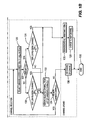
- Figures 1A and 1B show a flowchart of a method for an escape FS process in accordance with the present invention.
- Table 1 Inputs and parameters of the escape FS process Symbol Description Type Default Value ACS Allowable channel set. Configuration parameter ⁇ 1,6,11 ⁇ op _ chan Index of the current operating channel within the ACS. Internal parameter NA T Last The minimum elapsed time since the last invocation of any of the FS algorithms for triggering escape FS. Configuration parameter 300 seconds BO MIN The lower bound on the random persistence timer for triggering escape FS. Configuration parameter 10 seconds BO MAX The upper bound on the random persistence timer for triggering escape FS. Configuration parameter 100 seconds DR MAX Deferral Rate triggering threshold. Configuration parameter 30% PER MAX Transmitted packet error rate triggering threshold.
- Configuration parameter 6% CU MAX Out-of-BSS channel utilization triggering threshold.
- Configuration parameter 40% DR Deferral rate This is a measurement that represents the percentage of time that the AP is carrier locked (i.e., is not receiving any packets) and has at least one packet to transmit. The DR measurement is calculated as the total amount of time that the AP deferred transmission over the last T MEAS seconds, divided by T MEAS seconds. DR is calculated every T MEAS seconds.
- Measurement NA PER Transmitted Packet Error Rate This measurement is a ratio of the number of transmission failures (i.e., transmitted packets for which an ACK is not received) to the total number of transmitted packets including retransmissions, calculated over T MEAS seconds.
- PER is calculated every T MEAS seconds.
- Measurement NA C ( k ) The average channel utilization of channel k .
- C ( k ) is a moving average of the latest channel utilization measurement on each channel.
- the channel utilization measurement corresponds to the percentage of time that the receiver is carrier locked.
- the channel utilization estimates can be obtained by intermittently listening to these frequency channels for short periods of time (referred to as Silent Measurement Periods (SMP)), so that normal communications associated with the AP are not substantially disrupted.
- SMP Silent Measurement Periods
- C ( k ) consists of an average over N SMP SMP measurements.
- Measurement NA I [ ] The set of external interference measurements recorded during a given measurement period of T MEAS .
- the external interference measurement consists of the received signal power in the absence of "carver lock" by the receiver.
- Measurement NA I SMP ( k ) The average external interference level measured on the channel k .
- I SMP ( k ) is measured as the average received signal power in the absence of "carrier lock" by the receiver (i.e., the receiver is not receiving any packets).
- I SMP ( k ) consists of an average over N SMP SMP measurements.
- Measurement NA L L represents the own-BSS load, observed over a measurement period of T MEAS seconds.
- the own BSS load consists of the sum of the medium usage time of successfully transmitted packets and successfully received packets from associated stations (own BSS). L is calculated every T MEAS seconds.
- Configuration parameter 1 second N SMP Number of SMPs over which C ( k ) is averaged.
- Configuration parameter 5 RNG base Baseline Range (set by the Path Loss Discovery process).
- Internal parameter NA RNG adj Range Adjustment (set by the Load Balancing process).
- Internal parameter NA ( C / I ) req_high Minimum required carrier power to interference ratio to support the planned data rate at the coverage bound.
- Configuration parameter 20 dBm I MAX The maximum allowed interference on any given channel determined based on baseline range.
- the transmit packet error rate, PER is calculated over all medium access control (MAC) protocol data units (MPDUs) containing data, i.e., all fragments in the case of fragmentation, and all retransmissions. Moreover, a request to send (RTS) message for which a clear to send (CTS) message is not received should be included in the calculation of the transmitted packet error rate. In the event that zero packets were transmitted during the T MEAS measurement period, the PER is set to zero.
- MAC medium access control
- MPDUs protocol data units
- RTS request to send
- CTS clear to send
- the escape FS process is executed only during excessively high congestion situations or when interference is intolerable. Either one of the following triggering criteria, evaluated every T MEAS seconds, must be satisfied to invoke the escape FS process.
- the first triggering criterion is a channel congestion criterion, in which the following three conditions are satisfied:
- the out-off-BSS channel utilization measurement, the AP deferral rate, and the transmitted packet error rate must exceed their respective triggering thresholds. It is noted that the out-of-BSS channel utilization measurements can be obtained by intermittently listening to the different frequency channels for short periods of time, i.e., Silent Measurement Periods (SMP), so that normal communications associated with the AP are not substantially disrupted.
- SMP Silent Measurement Periods
- the out-of-BSS channel utilization metric is used to ensure that the channel congestion is caused, at least in part, by out-of-BSS WLAN traffic. If the congestion were caused only by in-BSS traffic, a change of channel would not alleviate the congestion situation because all of the traffic would be moved to the new channel.
- the deferral rate measurement is considered to ensure that the AP effectively perceives the congestion; a high deferral rate indicates that the AP has a significant amount of data to transmit and is experiencing significant delays for channel access.
- the packet error rate must exceed its triggering threshold.
- the second triggering criterion corresponds to an intolerable interference level.
- Many external interference sources such as a microwave oven, exhibit intermittent interference patterns. As a result, the effect of the interference source depends on the proportion of time that the intolerable interference persists, as well as the traffic load of the AP.
- Equation (2) (1- CU ( op _ chan )) ⁇ (1 -PI ), effectively represents the "good bandwidth" that is available for own-BSS transmission, whereas the right-hand side represents the BSS load.
- the escape FS algorithm will only trigger if the intolerable interference occupies so much bandwidth that there is not enough interference-free bandwidth for the AP to serve its load.
- T Last seconds must have elapsed since the last execution of either initial FS, optimization FS, or escape FS; otherwise, the triggering condition is ignored.
- the value of T Last is the same as for the optimization FS algorithm. Once T Last has expired since a channel change, the two triggering conditions are evaluated periodically over T MEAS .
- T Trigger The duration of the required persistence time, T Trigger , is generated as a random variable that is uniformly distributed between BO MIN and BO MAX , in discrete steps of T MEAS .
- the use of a random timer results in a back-off procedure, which ensures that two competing BSSs on the same channel do not escape at the same time.
- BO MAX should be set high enough to yield a small probability of having multiple APs simultaneously escaping, and low enough to ensure a quick response by the escape FS process.
- the escape FS process 100 can be performed by an AP.
- the components of the AP performing the escape FS process 100 can be an integrated circuit (IC), such as an application specific IC (ASIC), multiple ICs, discrete components, or a combination of discrete components and IC(s).
- IC integrated circuit
- ASIC application specific IC
- Upon triggering the escape FS process a set of candidate channels is first determined, followed by channel selection and channel update (if required).
- the set of candidate channels does not consist of all channels in the allowable channel set (ACS). Only channels for which the interference measurement, I , lies below the maximum allowed interference level, I MAX , are considered; those with interference levels above I MAX are ignored.
- the escape FS process 100 begins by retrieving data from power control and then calculating the value I MAX (step 102).
- a margin, M I is subtracted to eliminate channels with interference levels too close to the actual maximum allowed level:
- the current channel is removed from the ACS (step 104), because the process is looking to escape from the current channel.
- the first channel from the ACS is selected (step 106).
- the interference measured on the selected channel is compared to the maximum allowed interference (step 108). If the interference on the current channel is less than the maximum interference, then the current channel is recorded in the candidate channel list (step 110).
- step 108 If the interference on the current channel exceeds the maximum interference (step 108) or if the channel is recorded in the candidate list (step 110), a determination is then made whether there are more channels in the ACS (step 112). If there are more channels in the ACS, then the next channel is selected (step 114) and is evaluated at step 108 as described above.
- step 116 If there are channels in the candidate list (step 116), then the process continues with the channel selection and channel update stages.
- the channel with the lowest average channel utilization C ( k ) is selected (step 120).
- Channel selection amongst candidate channels is primarily based on recent channel utilization measurements.
- the channel utilization of channel k , C ( k ) is an average of the latest channel utilization measurements on each channel.
- Channel utilization measurements are performed during the silent measurement periods (SMPs) and correspond to the percentage of time that the receiver is carrier locked. Since channel utilization is observed during SMPs, all packets that cause the AP to carrier lock originate from neighboring BSSs.
- the channel utilization measurement represents the out-of-BSS channel usage.
- the channel utilization of the new channel must be lower than the channel utilization of the current channel by at least H C Esc If this condition is met, then the BSS channel is updated with the new channel. All of the stations associated with the AP are disassociated (step 126). The AP first sends a Disassociation message to each associated station, and then changes its frequency to the new frequency. In the case where a Disassociation message is sent to a station and no ACK is received, the AP will retransmit the message up to N RTx times before abandoning the disassociation of this particular station. It is noted that the likelihood of transmission failure of a Disassociation message should be high given the severity of conditions under which the escape FS process is triggered.
- the AP changes to the new channel (step 128), and the process terminates (step 130).
- the disassociated stations will then reassociate with the AP, per known procedures.
- step 124 If the channel utilization of the selected channel is not lower than the channel utilization of the current channel by a predetermined amount (step 124), then the selected channel is removed from the list of candidate channels (step 132). Next, a determination is made whether there are any more channels in the candidate list (step 134). If there are more candidate channels, then the process continues with step 120 as described above. If there are no more candidate channels (step 134), then no change of channel is made (step 136) and the process terminates (step 130). This process continues until a candidate channel that satisfies the hysteresis criterion is found or there are no retaining candidate channels.
- step 122 If the escape FS algorithm 100 was activated by trigger (2; intolerable interference) (step 122), then a determination is made whether the interference on the selected channel is lower than the interference on the current channel by a predetermined amount (step 138).
- the hysteresis criterion is defined as: I op_chan - I new_channel > H I Esc
- the interference level of the new channel must be lower than the interference level of the current channel by at least H I Esc dB.
- the hysteresis criterion is used to ensure that change of channel will be beneficial enough to justify the service interruption to associated stations.
- step 126 the process 100 continues with step 126, as described above. If this condition is not met, then the process 100 continues with step 132, as described above.
- Transmitted packet error rate measurement with configurable averaging window size.
- the AP can provide an indication for each successful and failed packet transmission.
- Received packet error rate measurement with configuration averaging window size can be provided.
- the AP can provide an indication for each successful and failed packet reception.
- the Deferral Rate measurement which corresponds to the percentage of time that the AP is carrier locked by an out-of-BSS packet and has at least one packet to transmit.
- additional modifications could be made to the present invention to better alleviate congestion and high interference levels in the WLAN.
- the AP can inform stations of a change of operating frequency to eliminate the need for disassociating them.
- the optimization FS process can thus run periodically, without any concern for activity on the channel, eliminating the need for a separate escape FS process.
- Another modification would be to employ a centralized scheme, where channel assignment is determined on a network basis rather than independently for each BSS, which improves overall system performance.
- inter-AP communication would allow APs to share load information and notification of a change in frequency. In some WLAN settings, such as a MESA setting, the WLAN does not support inter-AP communication.
Landscapes
- Engineering & Computer Science (AREA)
- Computer Networks & Wireless Communication (AREA)
- Signal Processing (AREA)
- Quality & Reliability (AREA)
- Physics & Mathematics (AREA)
- Electromagnetism (AREA)
- Mobile Radio Communication Systems (AREA)
- Small-Scale Networks (AREA)
Claims (27)
- Verfahren zum Wechseln eines Kanals, wobei das Verfahren aufweist:Bestimmen (104 - 118) einer Liste von Kandidatenkanälen; undAuswählen (120) eines Kanals aus der Kandidatenliste;wobei das Verfahren gekennzeichnet ist durch:Bewerten (124, 138) des ausgewählten Kanals nach vorgegebenen Kriterien, die aus der Gruppe ausgewählt sind, die aus der Kanalnutzung und dem gemessenen Interferenzpegel besteht;wenn der ausgewählte Kanal die vorgegebenen Kriterien erfüllt, dannTrennen eines Zugangspunkts AP (126) von allen Stationen, die mit dem AP kommunizieren; undWechseln (128) des AP auf den ausgewählten Kanal; wenn der ausgewählte Kanal die vorgegebenen Kriterien (124) nicht erfüllt, dannEntfernen (132) des ausgewählten Kanals aus der Kandidatenliste; undWiederholen (134) des Auswählens eines Kanals, wenn es weitere Kandidatenkanäle gibt.
- Verfahren nach Anspruch 1, das ferner aufweist:erneutes Verbinden der Stationen mit dem AP nach dem Wechseln des AP auf den ausgewählten Kanal.
- Verfahren nach Anspruch 1, wobei das Bestimmen umfaßt:Auswählen (106) eines Kanals aus einem zulässigen Kanalsatz ACS;Messen (108) eines Interferenzpegels des ausgewählten Kanals;Vergleichen (108) des Interferenzpegels des ausgewählten Kanals mit einem maximalen Interferenzwert; undHinzufügen (110) des ausgewählten Kanals zu der Liste von Kandidatenkanälen, wenn die Interferenz des ausgewählten Kanals geringer als der maximale Interferenzwert ist.
- Verfahren nach Anspruch 3, wobei der ACS keinen aktuellen Kanal umfaßt.
- Verfahren nach Anspruch 3, wobei, wenn alle Kanäle in dem ACS geprüft wurden und die Kandidatenliste leer ist (112, 116), dann
der maximale Interferenzwert um einen vorgegebenen Betrag erhöht wird (118); und
das Bestimmen einer Liste von Kandidatenkanälen wiederholt wird. - Verfahren nach Anspruch 1, wobei das Auswählen das Auswählen (120) des Kanals mit der geringsten mittleren Kanalnutzung umfaßt.
- Verfahren nach Anspruch 1, wobei das Bewerten umfaßt:
Messen einer Kanalnutzung des ausgewählten Kanals; und
Vergleichen der Kanalnutzung des ausgewählten Kanals mit einer Kanalnutzung des aktuellen Kanals;
wobei der ausgewählte Kanal die Kriterien erfüllt, wenn die Kanalnutzung des ausgewählten Kanals um einen vorgegebenen Betrag (124) geringer als die Kanalnutzung des aktuellen Kanals ist. - Verfahren nach Anspruch 1, wobei das Bewerten umfaßt:
Messen eines Interferenzpegels des ausgewählten Kanals; und
Vergleichen des Interferenzpegels des ausgewählten Kanals mit einem Interferenzpegel des aktuellen Kanals;
wobei der ausgewählte Kanal die Kriterien erfüllt, wenn der Interferenzpegel des ausgewählten Kanals um einen vorgegebenen Betrag niedriger als der Interferenzpegel des aktuellen Kanals ist. - Verfahren nach Anspruch 1, das ferner aufweist:Empfangen eines Aktivierungsauslösers vor der Bestimmung.
- Verfahren nach Anspruch 9, wobei der Aktivierungsauslöser gesendet wird, wenn ein Kanalüberlastungszustand vorhanden ist.
- Verfahren nach Anspruch 10, wobei ein Kanalüberlastungszustand vorhanden ist, wenn
eine mittlere Kanalnutzung des aktuellen Kanals eine maximale Kanalnutzungsschwelle überschreitet;
eine Paketverschiebungsrate eine maximale Verschiebungsrate überschreitet; und
eine Übertragungsfehlerrate eine maximale Paketfehlerrate überschreitet. - Verfahren nach Anspruch 9, wobei der Aktivierungsauslöser gesendet wird, wenn ein untragbarer Interferenzpegel vorhanden ist.
- Verfahren nach Anspruch 12, wobei ein untragbarer Interferenzpegel vorhanden ist, wenn ein äußerer Interferenzpegel einen maximalen Interferenzpegel für eine vorgegebene Zeitspanne überschreitet.
- Zugangspunkt AP zum Wechseln eines Kanals, wobei der AP aufweist:eine Bestimmungseinrichtung zum Bestimmen einer Liste von Kandidatenkanälen; undeine Auswahleinrichtung zum Auswählen eines Kanals aus der Kandidatenliste;wobei der AP dadurch gekennzeichnet ist, daß er ferner aufweist:eine Bewertungseinrichtung zum Bewerten des ausgewählten Kanals nach vorgegebenen Kriterien, die aus der Gruppe ausgewählt sind, die aus der Kanalnutzung und dem gemessenen Interferenzpegel besteht;eine Trennungseinrichtung zum Trennen des AP von allen Stationen, die mit dem AP kommunizieren, wenn der ausgewählte Kanal die vorgegebenen Kriterien erfüllt;eine Wechseleinrichtung zum Wechseln des AP auf den ausgewählten Kanal, wenn der ausgewählte Kanal die vorgegebenen Kriterien erfüllt; undeine Entfernungseinrichtung zum Entfernen des ausgewählten Kanals aus der Kandidatenliste, wenn der ausgewählte Kanal die vorgegeben Kriterien nicht erfüllt.
- AP nach Anspruch 14, der ferner aufweist:eine Wiederverbindungseinrichtung zum erneuten Verbinden der Stationen mit dem AP, nachdem die Stationen von dem AP getrennt wurden und der Kanal an dem AP gewechselt wurde.
- AP nach Anspruch 14, wobei die Bestimmungseinrichtung umfaßt:eine Auswahleinrichtung zum Auswählen eines Kanals aus einem zulässigen Kanalsatz ACS;eine Meßeinrichtung zum Messen eines Interferenzpegels des ausgewählten Kanals;eine Vergleichseinrichtung zum Vergleichen der Interferenz des ausgewählten Kanals mit einem maximalen Interferenzwert; undeine Hinzufügungseinrichtung zum Hinzufügen des ausgewählten Kanals zu der Liste von Kandidatenkanälen, wenn die Interferenz des ausgewählten Kanals geringer als der maximale Interferenzwert ist.
- AP nach Anspruch 16, wobei der ACS den aktuellen Kanal nicht umfaßt.
- AP nach Anspruch 16, wobei der AP den maximalen Interferenzpegel um einen vorgegebenen Betrag erhöht, wenn alle Kanäle in dem ACS geprüft wurden und die Kandidatenliste leer ist.
- AP nach Anspruch 14, wobei die Auswahleinrichtung das Auswählen des Kanals mit der geringsten mittleren Kanalnutzung umfaßt.
- Anspruch nach Anspruch 14, wobei die Bewertungseinrichtung umfaßt:eine Meßeinrichtung zum Messen einer Kanalnutzung des ausgewählten Kanals; undeine Vergleichseinrichtung zum Vergleichen der Kanalnutzung des ausgewählten Kanals mit einer Kanalnutzung des aktuellen Kanals, wobei der ausgewählte Kanal die Kriterien erfüllt, wenn die Kanalnutzung des ausgewählten Kanals um einen vorgegebenen Betrag geringer als die Kanalnutzung des aktuellen Kanals ist.
- Anspruch nach Anspruch 14, wobei die Bewertungseinrichtung umfaßt:eine Meßeinrichtung zum Messen eines Interferenzpegels des ausgewählten Kanals; undeine Vergleichseinrichtung zum Vergleichen des Interferenzpegels des ausgewählten Kanals mit einem Interferenzpegel des aktuellen Kanals, wobei der ausgewählte Kanal die Kriterien erfüllt, wenn der Interferenzpegel des ausgewählten Kanals um einen vorgegebenen Betrag niedriger als der Interferenzpegel des aktuellen Kanals ist.
- AP nach Anspruch 14, der ferner aufweist:eine Auslöseeinrichtung zum Auslösen der Bestimmungseinrichtung.
- AP nach Anspruch 22, wobei die Auslöseeinrichtung arbeitet, wenn ein Kanalüberlastungszustand vorhanden ist.
- AP nach Anspruch 23, wobei ein Kanalüberlastungszustand vorhanden ist, wenn
eine mittlere Kanalnutzung des aktuellen Kanals eine maximale Kanalnutzungsschwelle überschreitet;
eine Paketverschiebungsrate eine maximale Verschiebungsrate überschreitet; und
eine Übertragungsfehlerrate eine maximale Paketfehlerrate überschreitet. - AP nach Anspruch 22, wobei die Auslöseeinrichtung arbeitet, wenn ein untragbarer Interferenzpegel vorhanden ist.
- AP nach Anspruch 25, wobei ein untragbarer Interferenzpegel vorhanden ist, wenn ein äußerer Interferenzpegel einen maximalen Interferenzpegel für eine vorgegebene Zeitspanne überschreitet.
- Integrierte Schaltung zum Wechseln eines Kanals,
wobei die integrierte Schaltung IC aufweist:eine Bestimmungseinrichtung zum Bestimmen einer Liste von Kandidatenkanälen; undeine Auswahleinrichtung zum Auswählen eines Kanals aus der Kandidatenliste;wobei die IC dadurch gekennzeichnet ist, daß die IC ferner aufweist:eine Bewertungseinrichtung zum Bewerten des ausgewählten Kanals nach vorgegebenen Kriterien, die aus der Gruppe ausgewählt sind, die aus der Kanalnutzung und dem gemessenen Interferenzpegel besteht;eine Trennungseinrichtung zum Trennen eines Zugangspunkts AP von allen Stationen, die mit dem AP kommunizieren, wenn der ausgewählte Kanal die vorgegebenen Kriterien erfüllt;eine Wechseleinrichtung zum Wechseln des AP auf den ausgewählten Kanal, wenn der ausgewählte Kanal die vorgegebenen Kriterien erfüllt; undeine Entfernungseinrichtung zum Entfernen des ausgewählten Kanals aus der Kandidatenliste, wenn der Kanal die vorgegebenen Kriterien nicht erfüllt.
Priority Applications (1)
| Application Number | Priority Date | Filing Date | Title |
|---|---|---|---|
| EP09010914A EP2151927A1 (de) | 2004-01-08 | 2005-01-03 | Fluchtmechanismus für ein drahtloses lokales Netzwerk |
Applications Claiming Priority (3)
| Application Number | Priority Date | Filing Date | Title |
|---|---|---|---|
| US53542904P | 2004-01-08 | 2004-01-08 | |
| US10/942,576 US7450904B2 (en) | 2004-01-08 | 2004-09-16 | Escape mechanism for a wireless local area network |
| PCT/US2005/000046 WO2005070074A2 (en) | 2004-01-08 | 2005-01-03 | Escape mechanism for a wireless local area network |
Related Child Applications (1)
| Application Number | Title | Priority Date | Filing Date |
|---|---|---|---|
| EP09010914A Division EP2151927A1 (de) | 2004-01-08 | 2005-01-03 | Fluchtmechanismus für ein drahtloses lokales Netzwerk |
Publications (3)
| Publication Number | Publication Date |
|---|---|
| EP1702479A2 EP1702479A2 (de) | 2006-09-20 |
| EP1702479A4 EP1702479A4 (de) | 2007-11-21 |
| EP1702479B1 true EP1702479B1 (de) | 2009-08-26 |
Family
ID=34681697
Family Applications (2)
| Application Number | Title | Priority Date | Filing Date |
|---|---|---|---|
| EP09010914A Withdrawn EP2151927A1 (de) | 2004-01-08 | 2005-01-03 | Fluchtmechanismus für ein drahtloses lokales Netzwerk |
| EP05704892A Expired - Lifetime EP1702479B1 (de) | 2004-01-08 | 2005-01-03 | Verfahren, Zugangspunkt und integrierte Schaltung zum Kanalwechsel |
Family Applications Before (1)
| Application Number | Title | Priority Date | Filing Date |
|---|---|---|---|
| EP09010914A Withdrawn EP2151927A1 (de) | 2004-01-08 | 2005-01-03 | Fluchtmechanismus für ein drahtloses lokales Netzwerk |
Country Status (11)
| Country | Link |
|---|---|
| US (2) | US7450904B2 (de) |
| EP (2) | EP2151927A1 (de) |
| JP (2) | JP2007520124A (de) |
| KR (2) | KR100776613B1 (de) |
| AR (1) | AR047371A1 (de) |
| AT (1) | ATE441252T1 (de) |
| CA (1) | CA2552771A1 (de) |
| DE (2) | DE602005016215D1 (de) |
| NO (1) | NO20063550L (de) |
| TW (4) | TW200947250A (de) |
| WO (1) | WO2005070074A2 (de) |
Cited By (1)
| Publication number | Priority date | Publication date | Assignee | Title |
|---|---|---|---|---|
| US9083491B2 (en) | 2010-09-28 | 2015-07-14 | Snu R&Db Foundation | Method for transmitting a signal while avoiding the influences of an interference signal existing in the same channel in a communication system having a main communication device and a plurality of terminal communication devices |
Families Citing this family (38)
| Publication number | Priority date | Publication date | Assignee | Title |
|---|---|---|---|---|
| US7450904B2 (en) * | 2004-01-08 | 2008-11-11 | Interdigital Technology Corporation | Escape mechanism for a wireless local area network |
| KR100728356B1 (ko) * | 2005-12-30 | 2007-06-13 | 한국과학기술원 | 무선개인지역망에서 같은 대역을 사용하는 이종통신시스템의 공존을 위한 간섭 판단 및 회피 방법 및 장치 |
| US8254977B2 (en) * | 2006-01-27 | 2012-08-28 | Qualcomm Incorporated | Centralized medium access control algorithm for CDMA reverse link |
| US20070201416A1 (en) * | 2006-02-27 | 2007-08-30 | Ajay Malik | Methods and apparatus for a self-healing WLAN |
| US8355715B2 (en) * | 2006-04-21 | 2013-01-15 | Vixs Systems, Inc. | Client module, multimedia server and methods for use therewith |
| KR101330632B1 (ko) | 2006-06-08 | 2014-01-15 | 삼성전자주식회사 | 새로운 링크 최적화 매커니즘에서의 전송 패킷의 구조 및이를 이용한 송수신 장치 및 방법 |
| JP4800143B2 (ja) * | 2006-08-07 | 2011-10-26 | 株式会社エヌ・ティ・ティ・ドコモ | 無線通信制御装置、無線通信制御システムおよび無線通信制御方法 |
| US20080107071A1 (en) * | 2006-11-06 | 2008-05-08 | Tsigler Andrey L | Channel selection in a wireless network |
| US8750248B2 (en) * | 2007-03-21 | 2014-06-10 | Qualcomm Incorporated | Methods and apparatus for RF handoff in a multi-frequency network |
| US8718561B2 (en) * | 2007-11-20 | 2014-05-06 | Aruba Networks, Inc. | Method and apparatus for detecting and avoiding interference in a communications network |
| KR101484535B1 (ko) * | 2007-12-28 | 2015-01-20 | 엘지전자 주식회사 | 광대역 무선 접속 장치 및 그의 주파수간섭 회피 방법 |
| US7769002B2 (en) * | 2008-02-15 | 2010-08-03 | Intel Corporation | Constrained dynamic path selection among multiple communication interfaces |
| JP5102319B2 (ja) * | 2008-02-21 | 2012-12-19 | 日本電信電話株式会社 | 無線基地局探索方法、無線基地局探索装置および無線基地局探索プログラム |
| KR101136641B1 (ko) * | 2008-09-09 | 2012-04-18 | 주식회사 케이티 | 클러스터 헤드를 위한 주파수 채널 할당 방법 |
| KR101521095B1 (ko) * | 2009-01-12 | 2015-05-20 | 삼성전자주식회사 | 무선 통신 채널 제어 방법 및 시스템 |
| US8639243B2 (en) * | 2009-08-21 | 2014-01-28 | Qualcomm Incorporated | Systems, methods and apparatus configured to manage neighbor cell lists |
| EP2497219A1 (de) * | 2009-11-02 | 2012-09-12 | Telefonaktiebolaget L M Ericsson (PUBL) | Verfahren zur auswahl von komponententrägern und vorrichtung für direktzugriffsversuche in einem kommunikationsnetz |
| US20110228687A1 (en) * | 2010-03-16 | 2011-09-22 | Qualcomm Incorporated | Methods and apparatus for establishing reciprocal inter-radio access technology neighbor relations |
| US9155019B2 (en) | 2010-08-11 | 2015-10-06 | Thomson Licensing | Combining bandwidth aware routing with channel selection and switching in a multi-hop wireless home network |
| AU2010241416B1 (en) * | 2010-11-12 | 2012-05-24 | Northern Sydney Local Health District | Cancer biomarkers |
| US9113368B2 (en) | 2011-03-25 | 2015-08-18 | Qualcomm Incorporated | Maintaining neighbor cell list |
| CN102724727B (zh) * | 2012-06-18 | 2017-04-12 | 华为技术有限公司 | 一种动态切换信道的方法和装置 |
| KR101427101B1 (ko) | 2013-08-06 | 2014-08-07 | 에스케이텔레콤 주식회사 | 무선랜 통신을 제어하기 위한 장치, 이를 위한 방법 및 이 방법이 기록된 컴퓨터 판독 가능한 기록매체 |
| KR101588195B1 (ko) * | 2013-11-20 | 2016-01-25 | (주)에이텍티앤 | 운전자 단말기의 채널 혼잡 회피장치 및 그 방법 |
| JP6101221B2 (ja) * | 2014-02-03 | 2017-03-22 | 日本電信電話株式会社 | 複数基地局無線通信システム、制御方法 |
| US9433008B2 (en) * | 2014-05-12 | 2016-08-30 | Qualcomm Incorporated | Methods and apparatus for channel selection in a wireless local area network |
| KR102343961B1 (ko) | 2015-01-16 | 2021-12-24 | 주식회사 케이티 | 무선자원관리방법 및 이를 이용하는 액세스 포인트 |
| US20180300190A1 (en) | 2015-06-24 | 2018-10-18 | Relay2, Inc. | Mobile application service engine (mase) |
| US20170111821A1 (en) * | 2015-10-19 | 2017-04-20 | Relay2, Inc. | Distributed load balancing for access points |
| US9936400B2 (en) * | 2015-09-12 | 2018-04-03 | Qualcomm Incorporated | Channel selection in a shared communication medium |
| EP3439349B1 (de) * | 2017-07-31 | 2021-08-25 | Nokia Solutions and Networks Oy | Verfahren, system und computerprogrammprodukt zur überwachung des betriebs eines drahtlosen zugangspunkts |
| EP3448081B1 (de) * | 2017-08-21 | 2020-06-17 | Nokia Solutions and Networks Oy | Vorrichtung und verfahren zur automatischen abstimmung von automatischer kanalauswahl in drahtlosen netzwerken |
| US10721752B2 (en) * | 2017-09-10 | 2020-07-21 | Hewlett Packard Enterprise Development Lp | Channel plan determination |
| EP4037363A1 (de) * | 2017-12-22 | 2022-08-03 | AirTies Belgium SPRL | Verfahren zum identifizieren mindestens einer drahtlosen verbindung, die störungen auf anderen drahtlosen verbindungen verursacht |
| US11510104B2 (en) | 2018-06-28 | 2022-11-22 | Lg Electronics Inc. | Method of transmitting data and apparatus thereof |
| EP3827611A4 (de) | 2018-07-26 | 2021-08-04 | Razer (Asia-Pacific) Pte Ltd. | Intelligenter adaptiver kanalumschaltender spielrouter |
| EP4362522A1 (de) * | 2022-10-30 | 2024-05-01 | Avago Technologies International Sales Pte. Limited | System und verfahren zur entauthentifizierung oder trennung für eine verbindung |
| EP4503825A1 (de) * | 2023-07-31 | 2025-02-05 | Haltian Oy | Adaptiver mehrkanalbetrieb |
Family Cites Families (12)
| Publication number | Priority date | Publication date | Assignee | Title |
|---|---|---|---|---|
| JP2518156B2 (ja) * | 1993-07-19 | 1996-07-24 | 日本電気株式会社 | 無線通信システムのチャネル割当方式 |
| US5963848A (en) * | 1996-04-24 | 1999-10-05 | Motorola, Inc. | Method and apparatus for assigning a channel to a mobile unit in a wireless communication system |
| JP3149928B2 (ja) * | 1999-02-12 | 2001-03-26 | 日本電気株式会社 | 無線パケット通信システムのチャネル選択方法及びチャネル選択装置 |
| US6985465B2 (en) * | 2000-07-07 | 2006-01-10 | Koninklijke Philips Electronics N.V. | Dynamic channel selection scheme for IEEE 802.11 WLANs |
| JP4654507B2 (ja) * | 2000-11-17 | 2011-03-23 | パナソニック株式会社 | アクセスポイント |
| EP1257090B1 (de) | 2001-05-08 | 2004-11-17 | Lucent Technologies Inc. | Drahtloses lokales Netz mit dynamischer Frequenzwahl |
| US7206840B2 (en) * | 2001-05-11 | 2007-04-17 | Koninklike Philips Electronics N.V. | Dynamic frequency selection scheme for IEEE 802.11 WLANs |
| JP3600568B2 (ja) * | 2001-09-28 | 2004-12-15 | 株式会社東芝 | 無線lanアクセスポイント |
| JP3896824B2 (ja) * | 2001-11-14 | 2007-03-22 | 松下電工株式会社 | 無線チャンネル設定装置及び方法、並びにプログラム、無線通信装置 |
| US6870815B2 (en) * | 2003-01-30 | 2005-03-22 | Atheros Communications, Inc. | Methods for implementing a dynamic frequency selection (DFS) and a temporary channel selection feature for WLAN devices |
| KR200326817Y1 (ko) | 2003-06-23 | 2003-09-13 | 진진수 | 자동차의 배선 연결 장치 |
| US7450904B2 (en) * | 2004-01-08 | 2008-11-11 | Interdigital Technology Corporation | Escape mechanism for a wireless local area network |
-
2004
- 2004-09-16 US US10/942,576 patent/US7450904B2/en not_active Expired - Fee Related
-
2005
- 2005-01-03 JP JP2006549333A patent/JP2007520124A/ja not_active Ceased
- 2005-01-03 EP EP09010914A patent/EP2151927A1/de not_active Withdrawn
- 2005-01-03 CA CA002552771A patent/CA2552771A1/en not_active Abandoned
- 2005-01-03 DE DE602005016215T patent/DE602005016215D1/de not_active Expired - Fee Related
- 2005-01-03 EP EP05704892A patent/EP1702479B1/de not_active Expired - Lifetime
- 2005-01-03 AT AT05704892T patent/ATE441252T1/de not_active IP Right Cessation
- 2005-01-03 WO PCT/US2005/000046 patent/WO2005070074A2/en not_active Ceased
- 2005-01-04 TW TW098101126A patent/TW200947250A/zh unknown
- 2005-01-04 TW TW094123817A patent/TWI368860B/zh not_active IP Right Cessation
- 2005-01-04 TW TW094100192A patent/TWI271636B/zh not_active IP Right Cessation
- 2005-01-07 AR ARP050100051A patent/AR047371A1/es active IP Right Grant
- 2005-01-07 TW TW094200435U patent/TWM274723U/zh not_active IP Right Cessation
- 2005-01-07 KR KR1020050001868A patent/KR100776613B1/ko not_active Expired - Fee Related
- 2005-01-10 DE DE200520000285 patent/DE202005000285U1/de not_active Expired - Lifetime
- 2005-10-31 KR KR1020050102870A patent/KR101170847B1/ko not_active Expired - Fee Related
-
2006
- 2006-08-04 NO NO20063550A patent/NO20063550L/no not_active Application Discontinuation
-
2008
- 2008-07-22 US US12/177,396 patent/US7796988B2/en not_active Expired - Fee Related
-
2009
- 2009-06-10 JP JP2009139362A patent/JP4908551B2/ja not_active Expired - Fee Related
Cited By (1)
| Publication number | Priority date | Publication date | Assignee | Title |
|---|---|---|---|---|
| US9083491B2 (en) | 2010-09-28 | 2015-07-14 | Snu R&Db Foundation | Method for transmitting a signal while avoiding the influences of an interference signal existing in the same channel in a communication system having a main communication device and a plurality of terminal communication devices |
Also Published As
| Publication number | Publication date |
|---|---|
| EP2151927A1 (de) | 2010-02-10 |
| KR101170847B1 (ko) | 2012-08-02 |
| TWM274723U (en) | 2005-09-01 |
| TW200523785A (en) | 2005-07-16 |
| JP2007520124A (ja) | 2007-07-19 |
| WO2005070074A2 (en) | 2005-08-04 |
| EP1702479A2 (de) | 2006-09-20 |
| DE202005000285U1 (de) | 2005-06-09 |
| NO20063550L (no) | 2006-08-04 |
| US20050153667A1 (en) | 2005-07-14 |
| JP4908551B2 (ja) | 2012-04-04 |
| KR20050110589A (ko) | 2005-11-23 |
| WO2005070074A3 (en) | 2007-02-08 |
| AR047371A1 (es) | 2006-01-18 |
| TWI271636B (en) | 2007-01-21 |
| TW200622804A (en) | 2006-07-01 |
| EP1702479A4 (de) | 2007-11-21 |
| CA2552771A1 (en) | 2005-08-04 |
| JP2009201165A (ja) | 2009-09-03 |
| TW200947250A (en) | 2009-11-16 |
| KR20050073430A (ko) | 2005-07-13 |
| US7450904B2 (en) | 2008-11-11 |
| TWI368860B (en) | 2012-07-21 |
| ATE441252T1 (de) | 2009-09-15 |
| US20080279146A1 (en) | 2008-11-13 |
| US7796988B2 (en) | 2010-09-14 |
| DE602005016215D1 (de) | 2009-10-08 |
| KR100776613B1 (ko) | 2007-11-21 |
Similar Documents
| Publication | Publication Date | Title |
|---|---|---|
| US7796988B2 (en) | Escape mechanism for a wireless local area network | |
| EP1895714B1 (de) | Vorrichtung für die Regelung der Sendeleistung eines Basic Service Sets in einem drahtlosen lokalen Netzwerk | |
| JP3847536B2 (ja) | 通信システムにおいて過負荷状況を防ぐための方法 | |
| JP4616339B2 (ja) | 直交多重化を利用する無線通信システムの電力制御 | |
| US11751111B2 (en) | Wireless terminal roaming | |
| JP2008536353A (ja) | 通信システムにおける出力制御及びサービスの品質(qos)の導入 | |
| WO2004086649A1 (en) | Method and system for power control during the traffic channel initialization period in a cdma network | |
| CN112470411B (zh) | 用于在拥塞和等待时间约束下进行速率适配的技术 | |
| US12200499B2 (en) | Intelligent radio band reconfiguration for access points of a wireless network | |
| KR100914562B1 (ko) | 직교 멀티플렉싱을 사용하는 무선 통신 시스템의 전력 제어 | |
| KR200380699Y1 (ko) | 무선 근거리 통신망을 위한 회피 메커니즘 장치 | |
| JPWO2009047971A1 (ja) | 無線通信システム、通信方法、通信装置、制御装置、及びプログラム | |
| HK1108774A (en) | Escape mechanism for a wireless local area network | |
| MXPA06007740A (es) | Mecanismo de escape para una red inalambrica de area local | |
| CN101103539A (zh) | 无线局域网跳脱机制 | |
| KR20060135906A (ko) | Hsdpa 서비스와 관련한 무선 통신을 위한 방법,사용자국 및 네트워크 장치 | |
| HK1112669A (en) | Seamless channel change in a wireless local area network |
Legal Events
| Date | Code | Title | Description |
|---|---|---|---|
| PUAI | Public reference made under article 153(3) epc to a published international application that has entered the european phase |
Free format text: ORIGINAL CODE: 0009012 |
|
| 17P | Request for examination filed |
Effective date: 20060621 |
|
| AK | Designated contracting states |
Kind code of ref document: A2 Designated state(s): AT BE BG CH CY CZ DE DK EE ES FI FR GB GR HU IE IS IT LI LT LU MC NL PL PT RO SE SI SK TR |
|
| AX | Request for extension of the european patent |
Extension state: AL BA HR LV MK YU |
|
| PUAK | Availability of information related to the publication of the international search report |
Free format text: ORIGINAL CODE: 0009015 |
|
| DAX | Request for extension of the european patent (deleted) | ||
| RIC1 | Information provided on ipc code assigned before grant |
Ipc: H04L 12/26 20060101ALI20070917BHEP Ipc: H04Q 7/20 20060101ALI20070917BHEP Ipc: H04L 12/28 20060101ALI20070917BHEP Ipc: H04L 12/24 20060101ALI20070917BHEP Ipc: H04B 1/38 20060101AFI20070917BHEP Ipc: H04L 29/04 20060101ALI20070917BHEP |
|
| A4 | Supplementary search report drawn up and despatched |
Effective date: 20071022 |
|
| 17Q | First examination report despatched |
Effective date: 20080201 |
|
| RTI1 | Title (correction) |
Free format text: METHOD, ACCESS POINT AND INTEGRATED CIRCUIT FOR CHANGING A CHANNEL |
|
| GRAP | Despatch of communication of intention to grant a patent |
Free format text: ORIGINAL CODE: EPIDOSNIGR1 |
|
| GRAC | Information related to communication of intention to grant a patent modified |
Free format text: ORIGINAL CODE: EPIDOSCIGR1 |
|
| RIC1 | Information provided on ipc code assigned before grant |
Ipc: H04B 1/38 20060101AFI20090213BHEP Ipc: H04L 12/24 20060101ALI20090213BHEP Ipc: H04L 12/26 20060101ALI20090213BHEP Ipc: H04W 84/00 20090101ALI20090213BHEP Ipc: H04L 12/28 20060101ALI20090213BHEP Ipc: H04L 29/04 20060101ALI20090213BHEP |
|
| GRAS | Grant fee paid |
Free format text: ORIGINAL CODE: EPIDOSNIGR3 |
|
| GRAA | (expected) grant |
Free format text: ORIGINAL CODE: 0009210 |
|
| AK | Designated contracting states |
Kind code of ref document: B1 Designated state(s): AT BE BG CH CY CZ DE DK EE ES FI FR GB GR HU IE IS IT LI LT LU MC NL PL PT RO SE SI SK TR |
|
| REG | Reference to a national code |
Ref country code: GB Ref legal event code: FG4D |
|
| REG | Reference to a national code |
Ref country code: CH Ref legal event code: EP |
|
| REG | Reference to a national code |
Ref country code: IE Ref legal event code: FG4D |
|
| REF | Corresponds to: |
Ref document number: 602005016215 Country of ref document: DE Date of ref document: 20091008 Kind code of ref document: P |
|
| LTIE | Lt: invalidation of european patent or patent extension |
Effective date: 20090826 |
|
| PG25 | Lapsed in a contracting state [announced via postgrant information from national office to epo] |
Ref country code: AT Free format text: LAPSE BECAUSE OF FAILURE TO SUBMIT A TRANSLATION OF THE DESCRIPTION OR TO PAY THE FEE WITHIN THE PRESCRIBED TIME-LIMIT Effective date: 20090826 Ref country code: IS Free format text: LAPSE BECAUSE OF FAILURE TO SUBMIT A TRANSLATION OF THE DESCRIPTION OR TO PAY THE FEE WITHIN THE PRESCRIBED TIME-LIMIT Effective date: 20091226 Ref country code: FI Free format text: LAPSE BECAUSE OF FAILURE TO SUBMIT A TRANSLATION OF THE DESCRIPTION OR TO PAY THE FEE WITHIN THE PRESCRIBED TIME-LIMIT Effective date: 20090826 Ref country code: LT Free format text: LAPSE BECAUSE OF FAILURE TO SUBMIT A TRANSLATION OF THE DESCRIPTION OR TO PAY THE FEE WITHIN THE PRESCRIBED TIME-LIMIT Effective date: 20090826 Ref country code: SE Free format text: LAPSE BECAUSE OF FAILURE TO SUBMIT A TRANSLATION OF THE DESCRIPTION OR TO PAY THE FEE WITHIN THE PRESCRIBED TIME-LIMIT Effective date: 20090826 |
|
| PG25 | Lapsed in a contracting state [announced via postgrant information from national office to epo] |
Ref country code: SI Free format text: LAPSE BECAUSE OF FAILURE TO SUBMIT A TRANSLATION OF THE DESCRIPTION OR TO PAY THE FEE WITHIN THE PRESCRIBED TIME-LIMIT Effective date: 20090826 Ref country code: PL Free format text: LAPSE BECAUSE OF FAILURE TO SUBMIT A TRANSLATION OF THE DESCRIPTION OR TO PAY THE FEE WITHIN THE PRESCRIBED TIME-LIMIT Effective date: 20090826 |
|
| PG25 | Lapsed in a contracting state [announced via postgrant information from national office to epo] |
Ref country code: BG Free format text: LAPSE BECAUSE OF FAILURE TO SUBMIT A TRANSLATION OF THE DESCRIPTION OR TO PAY THE FEE WITHIN THE PRESCRIBED TIME-LIMIT Effective date: 20091126 Ref country code: PT Free format text: LAPSE BECAUSE OF FAILURE TO SUBMIT A TRANSLATION OF THE DESCRIPTION OR TO PAY THE FEE WITHIN THE PRESCRIBED TIME-LIMIT Effective date: 20091228 Ref country code: CY Free format text: LAPSE BECAUSE OF FAILURE TO SUBMIT A TRANSLATION OF THE DESCRIPTION OR TO PAY THE FEE WITHIN THE PRESCRIBED TIME-LIMIT Effective date: 20090826 |
|
| PG25 | Lapsed in a contracting state [announced via postgrant information from national office to epo] |
Ref country code: CZ Free format text: LAPSE BECAUSE OF FAILURE TO SUBMIT A TRANSLATION OF THE DESCRIPTION OR TO PAY THE FEE WITHIN THE PRESCRIBED TIME-LIMIT Effective date: 20090826 Ref country code: EE Free format text: LAPSE BECAUSE OF FAILURE TO SUBMIT A TRANSLATION OF THE DESCRIPTION OR TO PAY THE FEE WITHIN THE PRESCRIBED TIME-LIMIT Effective date: 20090826 Ref country code: ES Free format text: LAPSE BECAUSE OF FAILURE TO SUBMIT A TRANSLATION OF THE DESCRIPTION OR TO PAY THE FEE WITHIN THE PRESCRIBED TIME-LIMIT Effective date: 20091207 Ref country code: DK Free format text: LAPSE BECAUSE OF FAILURE TO SUBMIT A TRANSLATION OF THE DESCRIPTION OR TO PAY THE FEE WITHIN THE PRESCRIBED TIME-LIMIT Effective date: 20090826 Ref country code: RO Free format text: LAPSE BECAUSE OF FAILURE TO SUBMIT A TRANSLATION OF THE DESCRIPTION OR TO PAY THE FEE WITHIN THE PRESCRIBED TIME-LIMIT Effective date: 20090826 |
|
| PG25 | Lapsed in a contracting state [announced via postgrant information from national office to epo] |
Ref country code: SK Free format text: LAPSE BECAUSE OF FAILURE TO SUBMIT A TRANSLATION OF THE DESCRIPTION OR TO PAY THE FEE WITHIN THE PRESCRIBED TIME-LIMIT Effective date: 20090826 |
|
| PG25 | Lapsed in a contracting state [announced via postgrant information from national office to epo] |
Ref country code: BE Free format text: LAPSE BECAUSE OF FAILURE TO SUBMIT A TRANSLATION OF THE DESCRIPTION OR TO PAY THE FEE WITHIN THE PRESCRIBED TIME-LIMIT Effective date: 20090826 |
|
| PLBE | No opposition filed within time limit |
Free format text: ORIGINAL CODE: 0009261 |
|
| STAA | Information on the status of an ep patent application or granted ep patent |
Free format text: STATUS: NO OPPOSITION FILED WITHIN TIME LIMIT |
|
| 26N | No opposition filed |
Effective date: 20100527 |
|
| REG | Reference to a national code |
Ref country code: NL Ref legal event code: V1 Effective date: 20100801 |
|
| PG25 | Lapsed in a contracting state [announced via postgrant information from national office to epo] |
Ref country code: MC Free format text: LAPSE BECAUSE OF NON-PAYMENT OF DUE FEES Effective date: 20100131 |
|
| REG | Reference to a national code |
Ref country code: CH Ref legal event code: PL |
|
| GBPC | Gb: european patent ceased through non-payment of renewal fee |
Effective date: 20100103 |
|
| REG | Reference to a national code |
Ref country code: FR Ref legal event code: ST Effective date: 20100930 |
|
| PG25 | Lapsed in a contracting state [announced via postgrant information from national office to epo] |
Ref country code: LI Free format text: LAPSE BECAUSE OF NON-PAYMENT OF DUE FEES Effective date: 20100131 Ref country code: NL Free format text: LAPSE BECAUSE OF NON-PAYMENT OF DUE FEES Effective date: 20100801 Ref country code: GR Free format text: LAPSE BECAUSE OF FAILURE TO SUBMIT A TRANSLATION OF THE DESCRIPTION OR TO PAY THE FEE WITHIN THE PRESCRIBED TIME-LIMIT Effective date: 20091127 Ref country code: CH Free format text: LAPSE BECAUSE OF NON-PAYMENT OF DUE FEES Effective date: 20100131 Ref country code: FR Free format text: LAPSE BECAUSE OF NON-PAYMENT OF DUE FEES Effective date: 20100201 |
|
| PG25 | Lapsed in a contracting state [announced via postgrant information from national office to epo] |
Ref country code: DE Free format text: LAPSE BECAUSE OF NON-PAYMENT OF DUE FEES Effective date: 20100803 |
|
| PG25 | Lapsed in a contracting state [announced via postgrant information from national office to epo] |
Ref country code: GB Free format text: LAPSE BECAUSE OF NON-PAYMENT OF DUE FEES Effective date: 20100103 |
|
| PG25 | Lapsed in a contracting state [announced via postgrant information from national office to epo] |
Ref country code: IE Free format text: LAPSE BECAUSE OF NON-PAYMENT OF DUE FEES Effective date: 20100103 |
|
| PG25 | Lapsed in a contracting state [announced via postgrant information from national office to epo] |
Ref country code: IT Free format text: LAPSE BECAUSE OF FAILURE TO SUBMIT A TRANSLATION OF THE DESCRIPTION OR TO PAY THE FEE WITHIN THE PRESCRIBED TIME-LIMIT Effective date: 20090826 |
|
| PG25 | Lapsed in a contracting state [announced via postgrant information from national office to epo] |
Ref country code: HU Free format text: LAPSE BECAUSE OF FAILURE TO SUBMIT A TRANSLATION OF THE DESCRIPTION OR TO PAY THE FEE WITHIN THE PRESCRIBED TIME-LIMIT Effective date: 20100227 Ref country code: LU Free format text: LAPSE BECAUSE OF NON-PAYMENT OF DUE FEES Effective date: 20100103 |
|
| PG25 | Lapsed in a contracting state [announced via postgrant information from national office to epo] |
Ref country code: TR Free format text: LAPSE BECAUSE OF FAILURE TO SUBMIT A TRANSLATION OF THE DESCRIPTION OR TO PAY THE FEE WITHIN THE PRESCRIBED TIME-LIMIT Effective date: 20090826 |