EP1703678A1 - Registrierung und Wiederverbindung eines Paketdatendienstes in einer Mobilstation - Google Patents
Registrierung und Wiederverbindung eines Paketdatendienstes in einer Mobilstation Download PDFInfo
- Publication number
- EP1703678A1 EP1703678A1 EP05102048A EP05102048A EP1703678A1 EP 1703678 A1 EP1703678 A1 EP 1703678A1 EP 05102048 A EP05102048 A EP 05102048A EP 05102048 A EP05102048 A EP 05102048A EP 1703678 A1 EP1703678 A1 EP 1703678A1
- Authority
- EP
- European Patent Office
- Prior art keywords
- registration
- zone
- reconnect
- packet data
- mobile station
- Prior art date
- Legal status (The legal status is an assumption and is not a legal conclusion. Google has not performed a legal analysis and makes no representation as to the accuracy of the status listed.)
- Granted
Links
Images





Classifications
-
- H—ELECTRICITY
- H04—ELECTRIC COMMUNICATION TECHNIQUE
- H04W—WIRELESS COMMUNICATION NETWORKS
- H04W60/00—Affiliation to network, e.g. registration; Terminating affiliation with the network, e.g. de-registration
- H04W60/04—Affiliation to network, e.g. registration; Terminating affiliation with the network, e.g. de-registration using triggered events
-
- H—ELECTRICITY
- H04—ELECTRIC COMMUNICATION TECHNIQUE
- H04W—WIRELESS COMMUNICATION NETWORKS
- H04W76/00—Connection management
- H04W76/20—Manipulation of established connections
Definitions
- the application relates to wireless systems and more particularly to registration and packet data connect.
- 3GPP2 C.S0017-012-A v1.0: Data Service Options for Spread Spectrum Systems: Service Options 33 and 66" also known as TIA-707.12-B
- a mobile station with a dormant packet data session is required to "reconnect" its packet data service whenever it detects a change in System ID (SID), Network ID (NID) or Packet Zone ID (PZID) parameter associated with the wireless network.
- SID System ID
- NID Network ID
- PZID Packet Zone ID
- the reconnect process is required to maintain PPP (point-to-point protocol) connectivity in case the wireless network needs to move the so-called "R-P" interface (also known as A10 and A11) between the Radio Access Network (RAN) and the Packet Data Servicing Node (PDSN) associated with the packet data service or in some cases needs to assign a new IP address to the mobile station.
- R-P Radio Access Network
- PDSN Packet Data Servicing Node
- the reconnect process requires the mobile station to send an Origination message with Packet Data Service option and Data Ready to Send (DRS) bit set to 0.
- DRS Data Ready to Send
- a feature called "packet zone hysteresis" is included in 3GPP2 C.S0017-012-A v1.0 in order to minimize the number of reconnect attempts when the mobile station moves back and forth between two systems (such a SID/NID/PZID boundary).
- a mobile station keeps track of visited systems in a list which is called "Packet Zone List" in 3GPP2 C.S0017-012-A - each entry except the most recently added entry has an expiry timer. If a mobile station revisits a system whose timer has not expired yet and it does not have any data to send, then it refrains from reconnecting its data service until the hysteresis timer has expired.
- 3GPP2 C.S0005-Upper Layer (Layer 3) Signaling Standard for cdma2000 Spread Spectrum Systems” also known as TIA2000.5
- a mobile station may be required to perform different types of access network registration.
- An example of a registration method which is common to all revisions of 3GPP2 C.S0005 is called "zone-based registration” in which the mobile station performs registration whenever it enters a zone that is not in the mobile station's zone list. Zones are uniquely identified by a zone number (REG_ZONE) in addition to the SID and NID of the zone.
- zone number REG_ZONE
- One broad aspect provides a method in a mobile station comprising: observing network infrastructure behaviour of a defined type and recording the behaviour; upon occurrence of an event triggering network registration with a network infrastructure, as a function of previously recorded network infrastructure behaviour selecting between performing a registration and performing a reconnect with implicit registration.
- a CDMA air-interface standard registration zone boundary may also coincide with a SID/NID/PZID boundary.
- the mobile station will perform a zone-based registration after moving from a first registration zone to a second registration zone, but that the mobile station will not initiate packet data reconnect due to the fact that the new SID/NID/PZID was visited earlier and the associated hysteresis timer has not yet expired.
- Some networks may even terminate the existing R-P interface after the reception of the registration message in the new registration zone in order to handle potential dangling R-P resource issues.
- the removal of the R-P interface prior to establishment of the new R-P interface due to the lack of co-ordination between the registration process and the packet data service reconnect process may result in making the mobile station unreachable from the packet data perspective until the mobile station re-establishes the packet data connectivity.
- the mobile station may not be aware of the fact that the network has torn down an existing R-P interface. More particularly, if the mobile moves from the first zone to the second zone, a packet data reconnect will not occur until at least the hysteresis timer of the second zone expires.
- the network shows a first PDSN (packet data service node) connected to two BSCs (base station controllers) 10,12.
- PCF Packet Control Function
- Each BSC supports a respective wireless network. The details of this are not shown with the exception of a single BTS (base station transceiver) 30 shown under the control of BSC 10.
- the coverage area of BSC 10 has network identifier NID 1 ; the coverage area served by BSC 12 has network identifier NID 2 .
- the coverage area of BSC 10 also has registration zone ID REGZONE 1 and the coverage area of BSC 12 has REGZONE 2 .
- the overall area 29 through which packet service is provided by PDSN 14 has packet zone ID PZID 1 . In the illustrated example, this area also has system ID SID 1 26.
- the network ID happens to be mapped one-to-one to the BSCs, but this may not necessarily be the case.
- the PZID 1 is one-to-one with the SID 1 . More generally, this is not necessarily the case.
- a system ID will usually relate to multiple network IDs and the packet zone IDs will be independently mapped.
- a second PDSN 20 connected to a BSC 18 that operates within coverage areas having network ID NID 3 , system ID SID 2 and packet zone ID PZID 2 27.
- a single mobile station MOBILE STATION 32 is shown within the coverage area of BTS 30. This mobile station has mobility and can move within different coverage areas and zones.
- the R-P interface transports user packet data from/to the mobile station and carries signalling messages. For example, it enables the mobile station 32 to be paged while it has a dormant packet data service.
- a mobile station will automatically register when it changes registration zones, for example when mobile station 32 moves from REGZONE 1 to REGZONE 2 . If the change in registration zone coincides with a change in a SID/NID/PZID, then the change in registration zone will trigger the access network registration (i.e. the mobile station sends the C.S0005 Registration Message), and the change in the SID/NID/PZID will trigger a packet data service reconnect (i.e.
- the mobile station initiates the packet data reconnect by sending the C.S0005 Origination Message with the DRS field set to '0'), assuming that there is not an outstanding hysteresis timer for the new SID/NID/PZID.
- the mobile station is always reachable. This is the case for the movement of mobile station 32 from REGZONE 1 , to REGZONE 2 because the network identifier also changes from NID 1 to NID 2 .
- a second problem is created due to the 3GPP2 C.S0017-012-A packet zone hysteresis.
- a mobile station moves from the first registration zone REGZONE 1 to a second registration zone REGZONE 2 that is not on the registration zone list and simultaneously from a first SID/NID/PZID to a second SID/NID/PZID, an access network registration may be triggered that will tear down the R-P interface 28 within the first SID/NID/PZID.
- the mobile station will wait until the expiry of the hysteresis timer associated with the new SID/NID/PZID before issuing a packet data service reconnect by sending the C .
- S0005 Origination Message with the DRS field set to '0'. If, before the expiry of that hysteresis timer, the mobile station returns to the original SID/NID/PZID, then until the expiry of the hysteresis timer for that SID/NID/PZID, there will not be a packet data service reconnect.
- FIG. 1 An embodiment of the application will now be described with reference to an example network depicted in Figure 1.
- the network is the same as that shown in Figure 1.
- FIG. 2 shows a mobile station 33 equipped with a co-ordinated registration and reconnect function 35.
- the behaviour of the coordinated registration and reconnect function 35 will be described in detail below with various examples.
- This function can be implemented as part of the software residing on the mobile station 33; it can be implemented in hardware or firmware; alternatively it can be implemented as an appropriate combination of software, hardware and firmware.
- a discrete functional element 35 it is to be understood that it can also be implemented by making a series of modifications to software that is compliant with existing standards.
- existing mobile stations have the capability to comply with 3GPP2 C.S0005 for the air-interface and 3GPP2 C.SO017-012-A for packet data services.
- the co-ordinated registration and reconnect function 35 can be embodied through of series of one or more changes to the otherwise standard compliant functionality.
- the network depicted in Figure 2 is for the purpose of example and explanation only. An arbitrary arrangement of components is contemplated.
- the BSC/PCF, BTS hierarchy within a given network is but one example of a method of providing the air-interface through to a mobile station. Other hierarchies may alternatively be implemented.
- any event triggers an access network registration (see for example 2.6.5.1 of 3GPP2 C.S0005-D) of the following types (timer-based, zone-based, parameter-change, distance-based, or user zone-based) the mobile station will check to see if there is a system entry in its packet zone list with an unexpired hysteresis timer that matches the SID/NID/PZID of the current zone.
- an access network registration see for example 2.6.5.1 of 3GPP2 C.S0005-D
- the mobile station will check to see if there is a system entry in its packet zone list with an unexpired hysteresis timer that matches the SID/NID/PZID of the current zone.
- the mobile station performs a reconnect procedure instead of registration and resets the associated hysteresis timer.
- the reconnect process constitutes sending an Origination Message which is considered as an "implicit" registration as per the 3GPP2 C.S0005 standard.
- the mobile station In the event the mobile station is required to register and reconnect (e.g. entry to a new zone that is not on mobile station's zone list or packet zone list), the mobile station only performs the reconnect procedure.
- BCMC Broadcast Multicast
- BCMC_FREQ_INFO_INCL BCMC Band Class
- BCMC_BAND_CLASS BCMC Band Class
- BCMC Frequency BCMC_CDMA_FREQ
- the mobile could send only the Origination Message used for packet data reconnect when the registration is an encryption re-sync required registration.
- the Origination Message were modified to include fields for the new BCMC frequency (BCMC frequency information included indicator, BCMC Band Class, and BCMC Frequency, or their equivalents) the mobile could send only the Origination Message used for packet data reconnect when the registration is a BCMC frequency change registration.
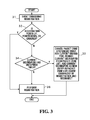
- the new behaviour is shown from the perspective of registration with the assumption that a conventional packet zone hysteresis-based reconnect is running in the background.
- an event triggering registration occurs.
- a check is made to see if the registration is a power-up registration, a power-down registration, or an ordered registration. If the registration was any of these types, yes path step 3-2, then at step 3-5, an access network registration is performed by sending a Registration Message. Alternatively, if the registration is not one of these types, no path step 3-2, processing continues at step 3-4.
- step 3-4 a check is made to see if there is an active hysteresis timer for the current SID/NID/PZID. If there is not an active hysteresis timer for the current SID/NID/PZID, no path step 3-4, then at step 3-5 an access network registration is performed by sending a Registration Message. Alternatively, if there is an active hysteresis timer for the current SID/NID/PZID, yes path step 3-4, then at step 3-3, the mobile station causes the equivalent of an access network registration and a packet data service registration to be performed. This can take the form of an explicit registration (i.e.
- the mobile station sends a Registration Message) followed by a packet data reconnect; a packet data reconnect only with an implicit registration, or a registration modified to include an indication that a reconnect is also to be performed.
- the choice of whether to send only the Origination Message used for packet data reconnect or to send both the Registration Message and the Origination Message used for packet data reconnect can be based upon the Registration type. For example if the registration type is either encryption re-sync registration or BCMC registration then both the Registration Message and the Origination Message used for packet data reconnect are sent; otherwise only the Origination Message used for packet data reconnect is sent.
- packet zone list maintenance functions are also performed consisting of cancelling the hysteresis timer for the current SID/NID/PZID, removing the current SID/NID/PZID from the packet zone list, and adding the current SID/NID/PZID as the newest entry in the packet zone list without a timer. More generally, the mobile station modifies the packet zone list to reflect that the current zone is the most recent zone.
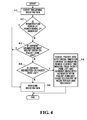
- the new behaviour can be shown from the perspective of the entries in the Packet Zone list when hysteresis is active. This is shown in Figure 4.
- an event triggering registration occurs.
- a check is made to see if the registration is a power-up registration, a power-down registration, or an ordered registration. If the registration was any of these types, yes path step 4-2, then at step 4-6, an access network registration is performed by sending a Registration Message. Alternatively, if the registration is not one of these types, no path step 4-2, processing continues at step 4-3.
- a check is made to see if the current SID/NID/PZID corresponds to the most recent entry on the packet zone list.
- step 4-3 If the current SID/NID/PZID corresponds to the most recent entry on the packet zone list, yes path step 4-3, this means that the mobile station already has a packet data connection for the current SID/NID/PZID and thus packet reconnect is not required, so processing continues at step 4-6 where an access network registration is performed by sending a Registration Message. If the current SID/NID/PZID does not correspond to the most recent entry on the packet zone list, no path step 4-3, processing continues at step 4-4. At step 4-4, a check is made to see if the current SID/NID/PZID is on the packet zone list.
- an access network registration is performed by sending a Registration Message.
- the mobile station causes the equivalent of an access network registration and a packet data service registration to be performed. This can take the form of an explicit registration (i.e. the mobile station sends a Registration Message) followed by a packet data reconnect; a packet data reconnect only with an implicit registration, or a registration modified to include an indication that a reconnect is also to be performed.
- the choice of whether to send only the Origination Message used for packet data reconnect or to send both the Registration Message and the Origination Message used for packet data reconnect can be based upon the Registration type. For example if the registration type is either encryption re-sync registration or BCMC registration then both the Registration Message and the Origination Message used for packet data reconnect are sent; otherwise only the Origination Message used for packet data reconnect is sent.
- packet zone list maintenance functions are also performed consisting of cancelling the hysteresis timer for the current SID/NID/PZID, removing the current SID/NID/PZID from the packet zone list, and adding the current SID/NID/PZID as the newest entry in the packet zone list without a timer.
- Figure 5 is a flowchart of a new integrated reconnect/registration method. The method starts with one of three events, namely an event triggering one registration in step 5-2, a change in SID/NID/PZID not requiring registration in step 5-9, or the expiry of a hysteresis timer in step 5-13.
- step 5-3 a check is made to see if the registration is a power-up registration, a power-down registration, or an ordered registration. If the registration was any of these types, yes path step 5-3, then at step 5-7, a registration is performed by sending a Registration Message. Alternatively, if the registration is not one of these types, no path step 5-3, processing continues at step 5-4. At step 5-4, a check is made to see if the current SID/NID/PZID corresponds to the most recent entry on the packet zone list.
- step 5-4 this means that the mobile station already has a packet data connection for the current SID/NID/PZID and thus packet reconnect is not required, so processing continues at step 5-7 where a registration is performed by sending a Registration Message. If the current SID/NID/PZID does not correspond to the most recent entry on the packet zone list, no path step 5-4, processing continues at step 5-5. At step 5-5, a check is made to see if the current SID/NID/PZID is on the packet zone list.
- step 5-5 If the current SID/NID/PZID is not on the packet zone list, no path step 5-5, then at step 5-7 a reconnect is performed (consistent with normal packet zone reconnection behaviour since there has been a change in SID/NID/PZID) and a registration is performed at step 5-8 by sending a Registration Message. Alternatively, if the current SID/NID/PZID is on the packet zone list, yes path step 5-5, then processing continues at step 5-6.
- the hysteresis timer for the current SID/NID/PZID is cancelled, the current SID/NID/PZID is removed from the packet zone list, and the current SID/NID/PZID is added as a new entry to the packet zone list.
- the mobile station sets the packet zone hysteresis timer for the most recently added entry in the list as described in C.S0017-012-A v1.0 section 2.2.5.
- the mobile station causes the equivalent of an access network registration and a packet data service registration to be performed. This can take the form of an explicit registration (i.e.
- the mobile station sends a Registration Message) followed by a packet data reconnect; a packet data reconnect only with an implicit registration, or a registration modified to include an indication that a reconnect is also to be performed.
- the choice of whether to send only the Origination Message used for packet data reconnect or to send both the Registration Message and the Origination Message used for packet data reconnect can be based upon the Registration type. For example if the registration type is either encryption re-sync registration or BCMC registration then both the Registration Message and the Origination Message used for packet data reconnect are sent; otherwise only the Origination Message used for packet data reconnect is sent.
- steps 5-7 and 5-8 can be combined in any manner that results in the equivalent of both a registration and a reconnect being performed. As outlined previously, this might consist of a reconnect with implicit registration.
- step 5-9 packet zone list processing continues at step 5-11.
- step 5-11 if the new SID/NID/PZID is on the packet zone list, yes path step 5-11, then nothing is done as either the mobile station is already connected to the current SID/NID/PZID (i.e. the current SID/NID/PZID is the most recent entry on the list) or the hysteresis timer is being counted down for that SID/NID/PZID and a reconnect will not occur until that timer expires.
- the packet zone hysteresis timer for the most recently added entry in the packet zone list is activated as described in C.S0017-012-A v1.0 section 2.2.5, the new SID/NID/PZID is added to the packet zone list, and reconnect is performed at step 5-12.
- the SID/NID/PZID is removed from the packet zone list at step 5-13.
- a reconnect is performed at step 5-14 if the timer of the current SID/NID/PZID expired.
- FIG. 6 An example of a packet zone list used when hysteresis is active is shown in Figure 6 where various SID/NID/PZID entries are shown with respective hysteresis timers T 1 ,... T N .
- the entries in the list are ordered from the newest on the top to the oldest on the bottom.
- the newest entry in the packet zone list (the topmost entry) does not have an active hysteresis timer.
- a hysteresis timer is activated for the newest entry currently in the list and then the new entry is added without an active hysteresis timer.
- the list shown is a very specific example.
- the point of hysteresis is to not immediately reconnect after changing packet zones to a zone that was previously visited within some time interval. There are many logically equivalent ways of achieving this function without necessarily implementing a list, or implementing timers.
- any of the four previously introduced behaviours can be executed. These include performing a registration and then a reconnect; performing a reconnect and also an implicit registration; performing a registration using a new version of the registration message that includes one or more parameters that indicate reconnect is to also be performed; performing a reconnect that includes one or more parameters for use in registration.
- a change will also need to be implemented on the network side.
- the base station controller will need to be modified to understand this message and act accordingly.
- the base station controller will also need to be modified to understand the new parameters and to act accordingly.
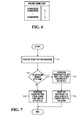
- the network receives a registration message.
- the network checks to see if the message was received from an always-on mobile station at step 7-2.
- an attribute may be retrieved from the AAA and maintained in the radio access network, for example in the BSC/PCF, for each mobile station to indicate whether or not it is an always-on mobile station.
- step 7-3 is performed which consists of performing a normal registration and this may involve tearing down the existing R-P interface.
- step 7-4 is executed. This consists of performing registration, but in so doing not tearing down the existing R-P interface.
- step 7-5 can be performed. This consists of performing registration and moving the R-P interface to the new zone if the IP connectivity is the same.
- the functionality of Figure 7 is preferably implemented in software in the base station controller. However, other implementations such as hardware, software, firmware are also contemplated. Also, this functionality could be implemented in a component other than a base station controller.
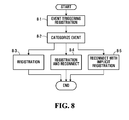
- a method implemented in the mobile station involves first the occurrence of an event triggering registration at step 8-1.
- the event is categorized at step 8-2.
- Three different categorizations are shown, these including a first category for which only registration is performed at step 8-3; a second category for which registration and reconnect are performed at step 8-4, and a third category for which reconnect with implicit registration is performed.
- the reconnect is performed with additional parameters to support particular registration types.
- the types are: timer-based, zone-based, parameter-change, distance-based, or user zone-based.
- the types are: encryption re-sync required, or BCMC Registration.
- the application has provided several examples of combining an access network registration with a packet data service reconnect when performing a registration in a packet data service reconnect zone having an active hysteresis timer.
- network infrastructures have a mechanism for handling access network registrations and packet data service reconnects when they are not combined. For example, some network infrastructures wait for a certain time duration after an access network registration for a packet data service reconnect before tearing down an R-P interface. Nonetheless, there are many situations in which it may be preferred to combine an access network registration with a packet data service reconnect. For example, combining the reconnect and registration into one message is always more efficient when the network infrastructure does not set up a traffic channel upon a packet data reconnect.
- the network infrastructure sends a channel assignment message on a control channel to the mobile station in order to inform the mobile station that a traffic channel is being established.
- the network infrastructure sends a release message on the control channel to the mobile station. Upon receipt of the release message, the mobile station can stop continuously monitoring the control channel for receipt of the channel assignment message.
- An embodiment of the application provides methods by which a mobile station performs registrations and reconnects in a co-ordinated manner as a function of the behaviour of the network infrastructure.
- Shown in Figures 9 through 10 are flowcharts of another method of performing registration and reconnect in a coordinated manner in accordance with an embodiment of the application.
- One or more, preferably all, of these methods may be implemented in a mobile station, for example, by the co-ordinated registration and reconnect function 35 of the mobile station 33 shown in Figure 2.
- the mobile station observe can observe whether or not a traffic channel is to be set up at step 9-2.
- the mobile station can monitor a control channel for receipt of a channel assignment message or a release message.
- the mobile determines that a traffic channel will not be set up if it receives a release message or sometimes a service status order in TIA-2000-D.
- the mobile determines that a traffic channel is to be set up if it receives a channel assignment message.
- the initial default behaviour assumes that the network infrastructure establishes a traffic channel and sends a channel assignment message. In other embodiments, the initial default behaviour assumes that the network infrastructure does not establish a traffic channel and instead sends a release message.
- the mobile station can record the behaviour at step 9-3.
- any appropriate data structure can be implemented for recording the behaviour.
- the mobile station can record the behaviour in a modified packet zone list.
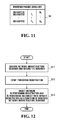
- a table of an example modified packet zone list in accordance with an embodiment of the application is shown.
- the modified packet zone list preferably has all of the features seen in the packet zone list shown in Figure 6.
- These entries are shown as binary entries B 0 through B N in the illustrated example.
- an entry is removed from the modified packet zone list whenever its respective hysteresis timer expires.
- the entry is not removed and instead an identification that its respective hysteresis timer has expired is maintained.
- the modified packet zone list can maintain an identification of network infrastructure behaviour in an entry even after its respective hysteresis timer has expired. However, preferably the behaviour is deleted at the same time the hysteresis timer expires. If the hysteresis timer expires, then the mobile station will have to perform a packet data service reconnect anyway if it returns to that zone and it will therefore have a chance to store the behaviour. Storing the behaviour after expiry of the hysteresis timer unnecessarily consumes memory in the mobile station.
- the number of packet data service reconnect zones that the mobile station maintains a record of network infrastructure behaviour is implementation specific. In some embodiments, this number may be greater than the number of packet data service reconnect zones that the mobile station maintains an identification of being previously visited for the purposes of hysteresis.
- Step 10-1 through 10-3 and 10-6 are substantially identical to steps 4-1 through 4-3 and 4-6 in Figure 4. Therefore, their descriptions will not be repeated.
- step 10-4 a check is made to see if the current SID/NID/PZID is on the packet zone list. If the current SID/NID/PZID is not on the packet zone list, no path step 10-4, then at step 10-6 an access network registration is performed by sending a registration message. If the mobile station is in a new SID/NID/PZID, then a packet data reconnect would also be performed in accordance with conventional behavior.
- the mobile station determines that the current network infrastructure does not assign a traffic channel under these circumstances, then the mobile station will perform a packet data service reconnect with implicit registration at step 10-5. However, if the mobile station determines that under these circumstances, the current network infrastructure does assign a traffic channel, then the mobile station may decide to perform only an access network registration at step 10-6. In particular, the mobile station determines at step 10-8 whether or not the current packet data service reconnect zone has an active hysteresis timer that is close to expiring, or more generally whether a packet data service reconnect for the current packet data service reconnect zone may be required shortly.
- the mobile station will perform a packet data service reconnect with implicit registration at step 10-5 since the mobile station may have to perform a packet data reconnect shortly if it performs only an access network registration.
- the mobile station determines that the current packet data service reconnect zone does not have an active hysteresis timer that is close to expiring, more generally does not need to perform a packet data service reconnect zone shortly, then the mobile station will perform only an access network registration at step 10-6.
- the mobile station can determine that an active hysteresis timer is close to expiry. As a specific example, the mobile station can consider an active hysteresis timer to be close to expiry when expiry is expected within 5 seconds. As another specific example, the mobile station can consider an active hysteresis timer to be close to expiry when expiry is expected within 10 seconds.
- the first condition is that the network infrastructure is known from previous behavior to not set up a traffic channel upon a packet data service reconnect when there is no data to send.
- the second condition is that the network infrastructure is known from previous behavior to set up a traffic channel, and the mobile station is in a packet data service reconnect zone for which the mobile station is maintaining an active hysteresis timer that is near expiry. If neither of these two conditions are satisfied, then an access network registration is performed at step 10-6.
- both additional steps 10-7 and 10-8 are implemented so as to check both conditions. However, it is to be understood that it is possible to implement step 10-7 without implementing step 10-8.
- a method is provided that involves first observing network infrastructure behaviour and recording the behaviour at step 12-1. This is at some time later an event triggering registration occurs at step 12-2.
- the mobile station selects, as a function of observed network infrastructure behaviour, between a) performing registration and b) performing reconnect with implicit registration. It is noted that not necessarily all events triggering registration need trigger the behaviour of Figure 12 in a given mobile station. Numerous modifications and variations of the present application are possible in light of the above teachings. It is therefore to be understood that within the scope of the appended claims, the application may be practised otherwise than as specifically described herein.
Landscapes
- Engineering & Computer Science (AREA)
- Computer Networks & Wireless Communication (AREA)
- Signal Processing (AREA)
- Mobile Radio Communication Systems (AREA)
Priority Applications (6)
| Application Number | Priority Date | Filing Date | Title |
|---|---|---|---|
| AT05102048T ATE383017T1 (de) | 2005-03-15 | 2005-03-15 | Registrierung und wiederverbindung eines paketdatendienstes in einer mobilstation |
| DE602005004117T DE602005004117T2 (de) | 2005-03-15 | 2005-03-15 | Registrierung und Wiederverbindung eines Paketdatendienstes in einer Mobilstation |
| EP05102048A EP1703678B1 (de) | 2005-03-15 | 2005-03-15 | Registrierung und Wiederverbindung eines Paketdatendienstes in einer Mobilstation |
| ES05102048T ES2298936T3 (es) | 2005-03-15 | 2005-03-15 | Registro y reconexion de servicios de paquetes de datos en una estacion movil. |
| CA2539669A CA2539669C (en) | 2005-03-15 | 2006-03-14 | System and method for registration and packet data reconnect |
| HK07101515.7A HK1094491B (en) | 2007-02-08 | Mobile station registration and packet data service reconnect |
Applications Claiming Priority (1)
| Application Number | Priority Date | Filing Date | Title |
|---|---|---|---|
| EP05102048A EP1703678B1 (de) | 2005-03-15 | 2005-03-15 | Registrierung und Wiederverbindung eines Paketdatendienstes in einer Mobilstation |
Publications (2)
| Publication Number | Publication Date |
|---|---|
| EP1703678A1 true EP1703678A1 (de) | 2006-09-20 |
| EP1703678B1 EP1703678B1 (de) | 2008-01-02 |
Family
ID=34938987
Family Applications (1)
| Application Number | Title | Priority Date | Filing Date |
|---|---|---|---|
| EP05102048A Expired - Lifetime EP1703678B1 (de) | 2005-03-15 | 2005-03-15 | Registrierung und Wiederverbindung eines Paketdatendienstes in einer Mobilstation |
Country Status (5)
| Country | Link |
|---|---|
| EP (1) | EP1703678B1 (de) |
| AT (1) | ATE383017T1 (de) |
| CA (1) | CA2539669C (de) |
| DE (1) | DE602005004117T2 (de) |
| ES (1) | ES2298936T3 (de) |
Cited By (1)
| Publication number | Priority date | Publication date | Assignee | Title |
|---|---|---|---|---|
| US12382533B2 (en) * | 2019-02-15 | 2025-08-05 | Huawei Technologies Co., Ltd. | Method for controlling wireless backhaul link and apparatus |
Citations (4)
| Publication number | Priority date | Publication date | Assignee | Title |
|---|---|---|---|---|
| US20030099219A1 (en) * | 2001-11-26 | 2003-05-29 | Qualcomm Incorporated | Maintaining packet data connectivity in a wireless communications network |
| US20040063431A1 (en) * | 2002-09-26 | 2004-04-01 | Vibhor Julka | Method and apparatus for efficient dormant handoff of mobile stations having multiple packet data service instances |
| US20040071112A1 (en) * | 2002-10-10 | 2004-04-15 | Hsu Raymond T. | Dormant handoff in a packet data network |
| US20040184436A1 (en) * | 2003-03-17 | 2004-09-23 | Nischal Abrol | Avoiding data loss and reducing registration overhead in packet networks |
-
2005
- 2005-03-15 AT AT05102048T patent/ATE383017T1/de not_active IP Right Cessation
- 2005-03-15 EP EP05102048A patent/EP1703678B1/de not_active Expired - Lifetime
- 2005-03-15 ES ES05102048T patent/ES2298936T3/es not_active Expired - Lifetime
- 2005-03-15 DE DE602005004117T patent/DE602005004117T2/de not_active Expired - Lifetime
-
2006
- 2006-03-14 CA CA2539669A patent/CA2539669C/en not_active Expired - Lifetime
Patent Citations (4)
| Publication number | Priority date | Publication date | Assignee | Title |
|---|---|---|---|---|
| US20030099219A1 (en) * | 2001-11-26 | 2003-05-29 | Qualcomm Incorporated | Maintaining packet data connectivity in a wireless communications network |
| US20040063431A1 (en) * | 2002-09-26 | 2004-04-01 | Vibhor Julka | Method and apparatus for efficient dormant handoff of mobile stations having multiple packet data service instances |
| US20040071112A1 (en) * | 2002-10-10 | 2004-04-15 | Hsu Raymond T. | Dormant handoff in a packet data network |
| US20040184436A1 (en) * | 2003-03-17 | 2004-09-23 | Nischal Abrol | Avoiding data loss and reducing registration overhead in packet networks |
Non-Patent Citations (1)
| Title |
|---|
| 3RD GENERATION PARTNERSHIP PROJECT 2 "3GPP2": "Upper Layer (Layer 3) Signaling Standard for cdma2000 Spread Spectrum Systems", 3GPP2 C.S0005-A, 1 June 1999 (1999-06-01), XP002345602, Retrieved from the Internet <URL:http://www.3gpp2.org/Public_html/specs/C.S0005-A.pdf> [retrieved on 20050919] * |
Cited By (1)
| Publication number | Priority date | Publication date | Assignee | Title |
|---|---|---|---|---|
| US12382533B2 (en) * | 2019-02-15 | 2025-08-05 | Huawei Technologies Co., Ltd. | Method for controlling wireless backhaul link and apparatus |
Also Published As
| Publication number | Publication date |
|---|---|
| CA2539669A1 (en) | 2006-09-15 |
| DE602005004117T2 (de) | 2009-01-02 |
| DE602005004117D1 (de) | 2008-02-14 |
| ES2298936T3 (es) | 2008-05-16 |
| HK1094491A1 (en) | 2007-03-30 |
| CA2539669C (en) | 2011-07-26 |
| EP1703678B1 (de) | 2008-01-02 |
| ATE383017T1 (de) | 2008-01-15 |
Similar Documents
| Publication | Publication Date | Title |
|---|---|---|
| US20030128676A1 (en) | Method of keeping-alive session and packet control function for the same | |
| US8767618B2 (en) | System and method for registration and packet data reconnect | |
| WO2002032170A1 (en) | Address de-registration in ip multimedia networks | |
| CN107211482A (zh) | 用于sim或者usim改变的增强定时器处理方法 | |
| US20150085673A1 (en) | System and Method for Managing State Transitions in a Wireless Communications Network | |
| US20070153750A1 (en) | Reactivating a communication session for a dormant mobile station | |
| JP2004254316A (ja) | 移動通信システムのコンテキスト同期化方法 | |
| EP1703678B1 (de) | Registrierung und Wiederverbindung eines Paketdatendienstes in einer Mobilstation | |
| US20060183475A1 (en) | System and method for registration and packet data reconnect | |
| US7924797B2 (en) | Packet zone reconnect control for an always-on mobile station | |
| EP1696610B1 (de) | System und Verfahren zur Registrierung und Paketdatenwiederaufbau | |
| HK1094491B (en) | Mobile station registration and packet data service reconnect | |
| US7400602B2 (en) | Hysteresis methods for an always-on mobile station | |
| HK1094747B (en) | System and method for registration and packet data reconnect | |
| EP1713295B1 (de) | Neustellung eines Zeitgebers für Paketzonen-Hysterese in einer mobilen Station | |
| KR100779375B1 (ko) | 1xEV-DO 시스템에서 비정상적인 세션의 삭제 방법 및장치 | |
| HK1096526B (en) | Reset of a packet zone hysteresis timer in a mobile station | |
| EP1327366B1 (de) | Deregistrierung von adressen in ip-multimedia-netzen |
Legal Events
| Date | Code | Title | Description |
|---|---|---|---|
| PUAI | Public reference made under article 153(3) epc to a published international application that has entered the european phase |
Free format text: ORIGINAL CODE: 0009012 |
|
| 17P | Request for examination filed |
Effective date: 20050405 |
|
| AK | Designated contracting states |
Kind code of ref document: A1 Designated state(s): AT BE BG CH CY CZ DE DK EE ES FI FR GB GR HU IE IS IT LI LT LU MC NL PL PT RO SE SI SK TR |
|
| AX | Request for extension of the european patent |
Extension state: AL BA HR LV MK YU |
|
| GRAP | Despatch of communication of intention to grant a patent |
Free format text: ORIGINAL CODE: EPIDOSNIGR1 |
|
| GRAS | Grant fee paid |
Free format text: ORIGINAL CODE: EPIDOSNIGR3 |
|
| REG | Reference to a national code |
Ref country code: HK Ref legal event code: DE Ref document number: 1094491 Country of ref document: HK |
|
| AKX | Designation fees paid |
Designated state(s): AT BE BG CH CY CZ DE DK EE ES FI FR GB GR HU IE IS IT LI LT LU MC NL PL PT RO SE SI SK TR |
|
| AXX | Extension fees paid |
Extension state: MK Payment date: 20050405 Extension state: YU Payment date: 20050405 Extension state: AL Payment date: 20050405 Extension state: LV Payment date: 20050405 Extension state: HR Payment date: 20050405 Extension state: BA Payment date: 20050405 |
|
| GRAA | (expected) grant |
Free format text: ORIGINAL CODE: 0009210 |
|
| AK | Designated contracting states |
Kind code of ref document: B1 Designated state(s): AT BE BG CH CY CZ DE DK EE ES FI FR GB GR HU IE IS IT LI LT LU MC NL PL PT RO SE SI SK TR |
|
| AX | Request for extension of the european patent |
Extension state: AL BA HR LV MK YU |
|
| REG | Reference to a national code |
Ref country code: GB Ref legal event code: FG4D |
|
| REG | Reference to a national code |
Ref country code: IE Ref legal event code: FG4D |
|
| REG | Reference to a national code |
Ref country code: CH Ref legal event code: EP |
|
| REF | Corresponds to: |
Ref document number: 602005004117 Country of ref document: DE Date of ref document: 20080214 Kind code of ref document: P |
|
| REG | Reference to a national code |
Ref country code: SE Ref legal event code: TRGR |
|
| REG | Reference to a national code |
Ref country code: HK Ref legal event code: GR Ref document number: 1094491 Country of ref document: HK Ref country code: ES Ref legal event code: FG2A Ref document number: 2298936 Country of ref document: ES Kind code of ref document: T3 |
|
| PG25 | Lapsed in a contracting state [announced via postgrant information from national office to epo] |
Ref country code: SI Free format text: LAPSE BECAUSE OF FAILURE TO SUBMIT A TRANSLATION OF THE DESCRIPTION OR TO PAY THE FEE WITHIN THE PRESCRIBED TIME-LIMIT Effective date: 20080102 Ref country code: NL Free format text: LAPSE BECAUSE OF FAILURE TO SUBMIT A TRANSLATION OF THE DESCRIPTION OR TO PAY THE FEE WITHIN THE PRESCRIBED TIME-LIMIT Effective date: 20080102 |
|
| NLV1 | Nl: lapsed or annulled due to failure to fulfill the requirements of art. 29p and 29m of the patents act | ||
| ET | Fr: translation filed | ||
| PG25 | Lapsed in a contracting state [announced via postgrant information from national office to epo] |
Ref country code: LI Free format text: LAPSE BECAUSE OF FAILURE TO SUBMIT A TRANSLATION OF THE DESCRIPTION OR TO PAY THE FEE WITHIN THE PRESCRIBED TIME-LIMIT Effective date: 20080102 Ref country code: LT Free format text: LAPSE BECAUSE OF FAILURE TO SUBMIT A TRANSLATION OF THE DESCRIPTION OR TO PAY THE FEE WITHIN THE PRESCRIBED TIME-LIMIT Effective date: 20080102 Ref country code: IS Free format text: LAPSE BECAUSE OF FAILURE TO SUBMIT A TRANSLATION OF THE DESCRIPTION OR TO PAY THE FEE WITHIN THE PRESCRIBED TIME-LIMIT Effective date: 20080502 Ref country code: CH Free format text: LAPSE BECAUSE OF FAILURE TO SUBMIT A TRANSLATION OF THE DESCRIPTION OR TO PAY THE FEE WITHIN THE PRESCRIBED TIME-LIMIT Effective date: 20080102 |
|
| REG | Reference to a national code |
Ref country code: CH Ref legal event code: PL |
|
| PG25 | Lapsed in a contracting state [announced via postgrant information from national office to epo] |
Ref country code: BG Free format text: LAPSE BECAUSE OF FAILURE TO SUBMIT A TRANSLATION OF THE DESCRIPTION OR TO PAY THE FEE WITHIN THE PRESCRIBED TIME-LIMIT Effective date: 20080402 Ref country code: AT Free format text: LAPSE BECAUSE OF FAILURE TO SUBMIT A TRANSLATION OF THE DESCRIPTION OR TO PAY THE FEE WITHIN THE PRESCRIBED TIME-LIMIT Effective date: 20080102 |
|
| PG25 | Lapsed in a contracting state [announced via postgrant information from national office to epo] |
Ref country code: PT Free format text: LAPSE BECAUSE OF FAILURE TO SUBMIT A TRANSLATION OF THE DESCRIPTION OR TO PAY THE FEE WITHIN THE PRESCRIBED TIME-LIMIT Effective date: 20080602 Ref country code: PL Free format text: LAPSE BECAUSE OF FAILURE TO SUBMIT A TRANSLATION OF THE DESCRIPTION OR TO PAY THE FEE WITHIN THE PRESCRIBED TIME-LIMIT Effective date: 20080102 |
|
| PG25 | Lapsed in a contracting state [announced via postgrant information from national office to epo] |
Ref country code: CZ Free format text: LAPSE BECAUSE OF FAILURE TO SUBMIT A TRANSLATION OF THE DESCRIPTION OR TO PAY THE FEE WITHIN THE PRESCRIBED TIME-LIMIT Effective date: 20080102 Ref country code: DK Free format text: LAPSE BECAUSE OF FAILURE TO SUBMIT A TRANSLATION OF THE DESCRIPTION OR TO PAY THE FEE WITHIN THE PRESCRIBED TIME-LIMIT Effective date: 20080102 Ref country code: MC Free format text: LAPSE BECAUSE OF NON-PAYMENT OF DUE FEES Effective date: 20080331 Ref country code: SK Free format text: LAPSE BECAUSE OF FAILURE TO SUBMIT A TRANSLATION OF THE DESCRIPTION OR TO PAY THE FEE WITHIN THE PRESCRIBED TIME-LIMIT Effective date: 20080102 |
|
| PLBE | No opposition filed within time limit |
Free format text: ORIGINAL CODE: 0009261 |
|
| STAA | Information on the status of an ep patent application or granted ep patent |
Free format text: STATUS: NO OPPOSITION FILED WITHIN TIME LIMIT |
|
| PG25 | Lapsed in a contracting state [announced via postgrant information from national office to epo] |
Ref country code: RO Free format text: LAPSE BECAUSE OF FAILURE TO SUBMIT A TRANSLATION OF THE DESCRIPTION OR TO PAY THE FEE WITHIN THE PRESCRIBED TIME-LIMIT Effective date: 20080102 |
|
| 26N | No opposition filed |
Effective date: 20081003 |
|
| PG25 | Lapsed in a contracting state [announced via postgrant information from national office to epo] |
Ref country code: IE Free format text: LAPSE BECAUSE OF NON-PAYMENT OF DUE FEES Effective date: 20080317 Ref country code: EE Free format text: LAPSE BECAUSE OF FAILURE TO SUBMIT A TRANSLATION OF THE DESCRIPTION OR TO PAY THE FEE WITHIN THE PRESCRIBED TIME-LIMIT Effective date: 20080102 |
|
| PG25 | Lapsed in a contracting state [announced via postgrant information from national office to epo] |
Ref country code: CY Free format text: LAPSE BECAUSE OF FAILURE TO SUBMIT A TRANSLATION OF THE DESCRIPTION OR TO PAY THE FEE WITHIN THE PRESCRIBED TIME-LIMIT Effective date: 20080102 |
|
| PG25 | Lapsed in a contracting state [announced via postgrant information from national office to epo] |
Ref country code: LU Free format text: LAPSE BECAUSE OF NON-PAYMENT OF DUE FEES Effective date: 20080315 Ref country code: HU Free format text: LAPSE BECAUSE OF FAILURE TO SUBMIT A TRANSLATION OF THE DESCRIPTION OR TO PAY THE FEE WITHIN THE PRESCRIBED TIME-LIMIT Effective date: 20080703 |
|
| PG25 | Lapsed in a contracting state [announced via postgrant information from national office to epo] |
Ref country code: TR Free format text: LAPSE BECAUSE OF FAILURE TO SUBMIT A TRANSLATION OF THE DESCRIPTION OR TO PAY THE FEE WITHIN THE PRESCRIBED TIME-LIMIT Effective date: 20080102 |
|
| PG25 | Lapsed in a contracting state [announced via postgrant information from national office to epo] |
Ref country code: GR Free format text: LAPSE BECAUSE OF FAILURE TO SUBMIT A TRANSLATION OF THE DESCRIPTION OR TO PAY THE FEE WITHIN THE PRESCRIBED TIME-LIMIT Effective date: 20080403 |
|
| REG | Reference to a national code |
Ref country code: DE Ref legal event code: R082 Ref document number: 602005004117 Country of ref document: DE Representative=s name: MERH-IP MATIAS ERNY REICHL HOFFMANN, DE |
|
| REG | Reference to a national code |
Ref country code: DE Ref legal event code: R079 Ref document number: 602005004117 Country of ref document: DE Free format text: PREVIOUS MAIN CLASS: H04L0012560000 Ipc: H04L0012700000 |
|
| REG | Reference to a national code |
Ref country code: ES Ref legal event code: PC2A Owner name: BLACKBERRY LIMITED Effective date: 20141016 |
|
| REG | Reference to a national code |
Ref country code: DE Ref legal event code: R081 Ref document number: 602005004117 Country of ref document: DE Owner name: BLACKBERRY LIMITED, WATERLOO, CA Free format text: FORMER OWNER: RESEARCH IN MOTION LTD., WATERLOO, ONTARIO, CA Effective date: 20140925 Ref country code: DE Ref legal event code: R082 Ref document number: 602005004117 Country of ref document: DE Representative=s name: MERH-IP MATIAS ERNY REICHL HOFFMANN, DE Effective date: 20140925 Ref country code: DE Ref legal event code: R079 Ref document number: 602005004117 Country of ref document: DE Free format text: PREVIOUS MAIN CLASS: H04L0012560000 Ipc: H04L0012700000 Effective date: 20140926 Ref country code: DE Ref legal event code: R082 Ref document number: 602005004117 Country of ref document: DE Representative=s name: MERH-IP MATIAS ERNY REICHL HOFFMANN PATENTANWA, DE Effective date: 20140925 |
|
| REG | Reference to a national code |
Ref country code: FR Ref legal event code: PLFP Year of fee payment: 12 |
|
| REG | Reference to a national code |
Ref country code: FR Ref legal event code: PLFP Year of fee payment: 13 |
|
| REG | Reference to a national code |
Ref country code: BE Ref legal event code: HC Owner name: BLACKBERRY LIMITED; CA Free format text: DETAILS ASSIGNMENT: CHANGE OF OWNER(S), CHANGEMENT NOM PROPRIETAIRE; FORMER OWNER NAME: RESEARCH IN MOTION LIMITED Effective date: 20170809 |
|
| REG | Reference to a national code |
Ref country code: FR Ref legal event code: CD Owner name: BLACKBERRY LIMITED Effective date: 20171215 |
|
| REG | Reference to a national code |
Ref country code: FR Ref legal event code: PLFP Year of fee payment: 14 |
|
| PGFP | Annual fee paid to national office [announced via postgrant information from national office to epo] |
Ref country code: FI Payment date: 20231228 Year of fee payment: 20 |
|
| PGFP | Annual fee paid to national office [announced via postgrant information from national office to epo] |
Ref country code: DE Payment date: 20240328 Year of fee payment: 20 Ref country code: GB Payment date: 20240319 Year of fee payment: 20 |
|
| REG | Reference to a national code |
Ref country code: DE Ref legal event code: R082 Ref document number: 602005004117 Country of ref document: DE Ref country code: DE Ref legal event code: R081 Ref document number: 602005004117 Country of ref document: DE Owner name: MALIKIE INNOVATIONS LTD., IE Free format text: FORMER OWNER: BLACKBERRY LIMITED, WATERLOO, ONTARIO, CA |
|
| PGFP | Annual fee paid to national office [announced via postgrant information from national office to epo] |
Ref country code: SE Payment date: 20240326 Year of fee payment: 20 Ref country code: IT Payment date: 20240321 Year of fee payment: 20 Ref country code: FR Payment date: 20240327 Year of fee payment: 20 Ref country code: BE Payment date: 20240326 Year of fee payment: 20 |
|
| REG | Reference to a national code |
Ref country code: GB Ref legal event code: 732E Free format text: REGISTERED BETWEEN 20240530 AND 20240605 |
|
| PGFP | Annual fee paid to national office [announced via postgrant information from national office to epo] |
Ref country code: ES Payment date: 20240412 Year of fee payment: 20 |
|
| REG | Reference to a national code |
Ref country code: DE Ref legal event code: R071 Ref document number: 602005004117 Country of ref document: DE |
|
| REG | Reference to a national code |
Ref country code: ES Ref legal event code: FD2A Effective date: 20250331 |
|
| REG | Reference to a national code |
Ref country code: GB Ref legal event code: PE20 Expiry date: 20250314 |
|
| PG25 | Lapsed in a contracting state [announced via postgrant information from national office to epo] |
Ref country code: ES Free format text: LAPSE BECAUSE OF EXPIRATION OF PROTECTION Effective date: 20250316 |
|
| PG25 | Lapsed in a contracting state [announced via postgrant information from national office to epo] |
Ref country code: GB Free format text: LAPSE BECAUSE OF EXPIRATION OF PROTECTION Effective date: 20250314 |
|
| REG | Reference to a national code |
Ref country code: SE Ref legal event code: EUG |
|
| REG | Reference to a national code |
Ref country code: BE Ref legal event code: MK Effective date: 20250315 |