EP1705966A2 - Leiterplatte und deren Herstellungsverfahren - Google Patents
Leiterplatte und deren Herstellungsverfahren Download PDFInfo
- Publication number
- EP1705966A2 EP1705966A2 EP06111653A EP06111653A EP1705966A2 EP 1705966 A2 EP1705966 A2 EP 1705966A2 EP 06111653 A EP06111653 A EP 06111653A EP 06111653 A EP06111653 A EP 06111653A EP 1705966 A2 EP1705966 A2 EP 1705966A2
- Authority
- EP
- European Patent Office
- Prior art keywords
- base plate
- circuit board
- insulating layer
- board according
- circuit portion
- Prior art date
- Legal status (The legal status is an assumption and is not a legal conclusion. Google has not performed a legal analysis and makes no representation as to the accuracy of the status listed.)
- Withdrawn
Links
Images

Classifications
-
- H—ELECTRICITY
- H05—ELECTRIC TECHNIQUES NOT OTHERWISE PROVIDED FOR
- H05K—PRINTED CIRCUITS; CASINGS OR CONSTRUCTIONAL DETAILS OF ELECTRIC APPARATUS; MANUFACTURE OF ASSEMBLAGES OF ELECTRICAL COMPONENTS
- H05K1/00—Printed circuits
- H05K1/02—Details
- H05K1/03—Use of materials for the substrate
- H05K1/05—Insulated conductive substrates, e.g. insulated metal substrate
- H05K1/056—Insulated conductive substrates, e.g. insulated metal substrate the metal substrate being covered by an organic insulating layer
-
- H—ELECTRICITY
- H05—ELECTRIC TECHNIQUES NOT OTHERWISE PROVIDED FOR
- H05K—PRINTED CIRCUITS; CASINGS OR CONSTRUCTIONAL DETAILS OF ELECTRIC APPARATUS; MANUFACTURE OF ASSEMBLAGES OF ELECTRICAL COMPONENTS
- H05K1/00—Printed circuits
- H05K1/02—Details
- H05K1/03—Use of materials for the substrate
- H05K1/05—Insulated conductive substrates, e.g. insulated metal substrate
- H05K1/053—Insulated conductive substrates, e.g. insulated metal substrate the metal substrate being covered by an inorganic insulating layer
-
- H—ELECTRICITY
- H05—ELECTRIC TECHNIQUES NOT OTHERWISE PROVIDED FOR
- H05K—PRINTED CIRCUITS; CASINGS OR CONSTRUCTIONAL DETAILS OF ELECTRIC APPARATUS; MANUFACTURE OF ASSEMBLAGES OF ELECTRICAL COMPONENTS
- H05K2201/00—Indexing scheme relating to printed circuits covered by H05K1/00
- H05K2201/01—Dielectrics
- H05K2201/0137—Materials
- H05K2201/0175—Inorganic, non-metallic layer, e.g. resist or dielectric for printed capacitor
-
- H—ELECTRICITY
- H05—ELECTRIC TECHNIQUES NOT OTHERWISE PROVIDED FOR
- H05K—PRINTED CIRCUITS; CASINGS OR CONSTRUCTIONAL DETAILS OF ELECTRIC APPARATUS; MANUFACTURE OF ASSEMBLAGES OF ELECTRICAL COMPONENTS
- H05K2201/00—Indexing scheme relating to printed circuits covered by H05K1/00
- H05K2201/01—Dielectrics
- H05K2201/0137—Materials
- H05K2201/0179—Thin film deposited insulating layer, e.g. inorganic layer for printed capacitor
-
- H—ELECTRICITY
- H05—ELECTRIC TECHNIQUES NOT OTHERWISE PROVIDED FOR
- H05K—PRINTED CIRCUITS; CASINGS OR CONSTRUCTIONAL DETAILS OF ELECTRIC APPARATUS; MANUFACTURE OF ASSEMBLAGES OF ELECTRICAL COMPONENTS
- H05K2201/00—Indexing scheme relating to printed circuits covered by H05K1/00
- H05K2201/02—Fillers; Particles; Fibers; Reinforcement materials
- H05K2201/0203—Fillers and particles
- H05K2201/0206—Materials
- H05K2201/0209—Inorganic, non-metallic particles
-
- H—ELECTRICITY
- H05—ELECTRIC TECHNIQUES NOT OTHERWISE PROVIDED FOR
- H05K—PRINTED CIRCUITS; CASINGS OR CONSTRUCTIONAL DETAILS OF ELECTRIC APPARATUS; MANUFACTURE OF ASSEMBLAGES OF ELECTRICAL COMPONENTS
- H05K2201/00—Indexing scheme relating to printed circuits covered by H05K1/00
- H05K2201/06—Thermal details
- H05K2201/068—Thermal details wherein the coefficient of thermal expansion is important
Definitions
- the present invention relates to a circuit board used for various electronic instruments, such as an inverter and a power supply circuit.
- a power circuit uses such a circuit board that a conductive circuit pattern is formed on a high thermal conductive metal base plate through an insulating layer.
- circuit board made of a combination of materials with a low coefficient of linear expansion.
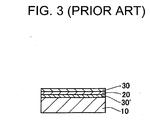
- the circuit board shown in FIG. 3 is disclosed in the unexamined Japanese patent application publication No. 2004-24156 .
- This circuit board is formed so that 0.5 mm thick Al is brazed on the both sides of 0.6 mm thick AIN ceramic insulating layer 20 to form a circuit portion 30 and an insert layer 30' and the insert layer 30' is then brazed onto a 5 mm thick Cu-Mo base plate 10.
- this circuit board uses Cu-Mo having a low coefficient of expansion in addition to the structure of AI/AIN/AI having a low coefficient of expansion.
- AIN for the insulating layer and Mo for the base plate are expensive and are not economical.
- the present invention is directed to providing a circuit board that reduces the board warpage due to thermal stress without using an expensive material having a low coefficient of linear expansion.
- a circuit board has a base plate, an insulating layer and a conductive circuit portion.
- the insulating layer is fixed to the base plate.
- the insulating layer can include a resin layer.
- the conductive circuit portion is fixed to the insulating layer on a side opposite to the base plate.
- the base plate and the conductive circuit portion have substantially the same coefficient of linear expansion and thickness.
- one component having substantially the same coefficient of linear expansion as the other means that one component may have up to 5 % above or below the coefficient of linear expansion of the other.
- one component having substantially the same thickness as the other means that one component may have up to 5 % above or below the thickness of the other.
- FIG. 1 illustrates the cross-sectional view of the circuit board according to the first preferred embodiment.
- the reference numerals 1, 2, 3 and 4 indicate a base plate, an insulating layer, a circuit portion and a heat spreader.
- the base plate 1 desirably has a high thermal conductivity for improving heat dissipation.
- the base plate 1 may be made of alloy or composite material including metal. However, it is preferably made of simple metal, such as Cu and Al, which are inexpensive. Not taking cost into consideration, the base plate 1 may be made of Ag or Au.
- the base plate 1 should be thick for higher heat dissipation. However, the base plate 1 having a thickness of 10 mm or less is preferable for saving weight and lowering cost.
- the circuit portion 3 is made of material having a low electric resistivity and the same coefficient of linear expansion as the base plate 1. For this reason, when the base plate 1 is made of Cu, the circuit portion 3 is desirably made of Cu.
- the circuit portion 3 has substantially the same thickness as the base plate 1. If the base plate 1 has a thickness of 2.5 mm, the circuit portion 3 should have a thickness of 2.375 to 2.625 mm.
- the insulating layer 2 is preferably made of resin.
- the resin desirably has high insulation properties and high thermal conductivity.
- epoxy resin mixed with inorganic filler, such as Al 2 O 3 powder and AIN power, is preferable for the resin.
- the insulating layer 2 should have a smaller thickness in view of thermal conductivity but have a greater thickness in view of insulation properties.
- the insulating layer 2, for example, can have a thickness of 100 to 200 ⁇ m.
- the heat spreader 4 desirably has a low electric resistivity and low coefficient of linear expansion.
- the heat spreader 4 is, for example, made of composite material of Cu and Invar as expanded metal.
- Invar is a nickel/iron alloy, for example, with 36 % nickel.
- the term of "expanded metal" in this composite material means that a metal plate is alternately slit and expanded to form a mesh, which is, for example, disclosed in the unexamined Japanese patent application publication No. 2003-152144 .
- This composite material has a coefficient of linear expansion of 5 X 10 -6 /°C. This relatively small coefficient is due to the coefficient of linear expansion of Invar, which is 1 X 10 -6 /°C.
- This composite material has an electric resistivity of 2.5 ⁇ ohm-cm, which is as small as that of Al. This relatively small resistivity is due to the electric resistivity of Cu, which is 1.7 ⁇ ⁇ -cm.
- the heat spreader 4, for example, has a thickness of 0.5 mm.
- the base plate 1, the insulating layer 2 and the circuit portion 3 are fixed, for example, by hot pressing.
- hot pressing the base plate 1, the insulating layer 2 and the circuit portion 3 are superimposed and then pressed while being heated in vacuo, thereby fixing them.
- the insulating layer 2 is made of epoxy resin, they may be fixed by pressing under a pressure of 4 MPa at a temperature of 170 °C for 1 hour.
- the heat spreader 4 may be fixed to the circuit portion 3 on the side opposite to the insulating layer 2 by soldering, brazing or diffusion bonding.
- FIG. 2 illustrates the cross-sectional view of a circuit board according to the second preferred embodiment.
- the insulating layer 2 only includes a resin layer.
- the circuit board in the second preferred embodiment depicted in FIG. 2 differs from that of the first preferred embodiment in that the insulating layer 2' includes a resin layer 21 and an inorganic insulating film 22.
- the same reference numerals denote the same or similar components to the first preferred embodiment, and the description is omitted.
- the resin layer 21 is, for example, made of epoxy resin mixed with inorganic filler, such as Al 2 O 3 powder or AIN powder. It can have a thickness of several dozen ⁇ m. In this case, insulation properties are provided not by the resin layer 21 but by the inorganic insulating film 22, so that the resin layer 21 is preferably made as thin as possible.
- the inorganic insulating film 22 is made of AIN, Si 3 N 4 , Al 2 O 3 , or the like. It can have a thickness of 100 to 200 ⁇ m.
- the inorganic insulating film 22 is formed on the base plate 1 by sputtering, chemical vapor deposition (CVD), physical vapor deposition (PVD), or the like.
- resin is applied between the inorganic insulating film 22 and the circuit portion 3 as an adhesive to form the resin layer 21.
- the inorganic insulating film 22 and this resin layer cooperate to form the insulating layer 2'.
- the inorganic insulating film 22 may be formed on the bottom of the circuit portion 3.
- Resin generally has a lower thermal conductivity than ceramic or metal, so that the resin layer 21 has a lower thermal conductivity than ceramic or metal.
- the insulating layer 2' includes not only the resin layer 21 but also the inorganic insulating film 22, the resin layer 21, which is environmentally degradable and low in thermal conductivity, may be thinner and the insulation layer 2' as a whole has insulation properties.
- the circuit board is resistant to environmental degradation.
- the base plate 1 is a Cu plate with a coefficient of linear expansion of 17.6 X 10 -6 /°C. It has a thickness of 2.5 mm.
- the insulating layer 2 is made of epoxy resin containing Al 2 O 3 powder. It has a thickness of 150 ⁇ m.
- the circuit portion 3 is a Cu plate with a coefficient of linear expansion of 16.8 X 10 -6 /°C. It has a thickness of 2.5 mm.
- the heat spreader 4 is a composite material that includes Invar and Cu. It has a coefficient of linear expansion of 5 X 10 -6 /°C and a thickness of 0.5 mm.
- This example 2 describes the circuit board according to the second preferred embodiment shown in FIG. 2.
- the base plate 1, the circuit portion 3, the heat spreader 4 are the same as those of the Example 1.
- the resin layer 21 is made of epoxy resin containing Al 2 O 3 powder. It has a thickness of 50 ⁇ m, which is a third as thick as the insulating layer 2 of the Example 1.
- the inorganic insulating film 22 is made of Si 3 N 4 with a thickness of 100 ⁇ m.
- This comparative example 1 describes the circuit board according to the prior art shown in FIG. 3.
- the base plate 10 is made of Cu-Mo with a thickness of 5 mm.
- the insulating layer 20 is made of AIN with a thickness of 0.6 mm.
- the circuit portion 30 and the insert 30' are made of Al with a thickness of 0.5 mm.
- the comparative example 2 differs from the comparative example 1 in that the base plate 10 was made of Cu.
- a semiconductor chip (transistor) is soldered onto the heat spreader 4 of the examples 1 and 2 and onto the circuit portions 30 of the comparative examples 1 and 2, respectively, and the thermal resistances of these chips are then measured. The results of the measurements are shown in TABLE 1. Thermal resistances are calculated from the measured current magnitude and temperature difference between the chip and the base plate during energization of the chip. TABLE 1 Example 1 Example 2 Comparative Example 1 Comparative Example 2 Thermal Resistance (°C/W) 0.62 0.58 0.65 0.63
- a circuit board has a base plate, an insulating layer and a conductive circuit portion.
- the insulating layer is fixed to the base plate.
- the insulating layer includes a resin layer.
- the conductive circuit portion is fixed to the insulating layer on a side opposite to the base plate.
- the base plate and the conductive circuit portion have substantially the same coefficient of linear expansion and thickness.
Landscapes
- Engineering & Computer Science (AREA)
- Microelectronics & Electronic Packaging (AREA)
- Chemical & Material Sciences (AREA)
- Inorganic Chemistry (AREA)
- Insulated Metal Substrates For Printed Circuits (AREA)
- Cooling Or The Like Of Semiconductors Or Solid State Devices (AREA)
- Structure Of Printed Boards (AREA)
Applications Claiming Priority (1)
| Application Number | Priority Date | Filing Date | Title |
|---|---|---|---|
| JP2005089337A JP2006269966A (ja) | 2005-03-25 | 2005-03-25 | 配線基板およびその製造方法 |
Publications (1)
| Publication Number | Publication Date |
|---|---|
| EP1705966A2 true EP1705966A2 (de) | 2006-09-27 |
Family
ID=36609351
Family Applications (1)
| Application Number | Title | Priority Date | Filing Date |
|---|---|---|---|
| EP06111653A Withdrawn EP1705966A2 (de) | 2005-03-25 | 2006-03-23 | Leiterplatte und deren Herstellungsverfahren |
Country Status (3)
| Country | Link |
|---|---|
| US (1) | US20060214295A1 (de) |
| EP (1) | EP1705966A2 (de) |
| JP (1) | JP2006269966A (de) |
Cited By (2)
| Publication number | Priority date | Publication date | Assignee | Title |
|---|---|---|---|---|
| EP1909321A4 (de) * | 2005-06-06 | 2009-09-23 | Dowa Electronics Materials Co Ltd | Metall-keramik-verbundsubstrat und verfahren zu seiner herstellung |
| EP2230889A4 (de) * | 2007-08-08 | 2013-06-12 | Ain Co Ltd | Verfahren zur herstellung einer leiterplatte und leiterplatte |
Families Citing this family (8)
| Publication number | Priority date | Publication date | Assignee | Title |
|---|---|---|---|---|
| US8381990B2 (en) * | 2007-03-30 | 2013-02-26 | Sony Corporation | Antenna module |
| US7687923B2 (en) * | 2007-08-08 | 2010-03-30 | Advanced Chip Engineering Technology Inc. | Semiconductor device package having a back side protective scheme |
| EP2487710B1 (de) | 2009-10-09 | 2015-11-25 | Toyota Jidosha Kabushiki Kaisha | Verfahren zur herstellung eines halbleiterbauelements |
| JP2015207667A (ja) * | 2014-04-21 | 2015-11-19 | 住友ベークライト株式会社 | 金属ベース基板、金属ベース基板の製造方法、金属ベース回路基板および電子装置 |
| JP6417834B2 (ja) * | 2014-10-02 | 2018-11-07 | 三菱マテリアル株式会社 | 冷却器付パワーモジュール用基板及び冷却器付パワーモジュール用基板の製造方法 |
| US10689137B2 (en) | 2017-05-22 | 2020-06-23 | Triangle Package Machinery Company | Continuous vertical form, fill and seal machine and method for making reclosable packages |
| EP4495991A4 (de) * | 2022-03-18 | 2025-06-25 | NOF Corporation | Wärmeableitungssubstrat, wärmeableitungsleiterplatte, wärmeableitungselement und verfahren zur herstellung eines wärmeableitungssubstrats |
| DE112023002401T5 (de) * | 2022-07-22 | 2025-03-06 | Ngk Insulators, Ltd. | Wellenleiterelement |
-
2005
- 2005-03-25 JP JP2005089337A patent/JP2006269966A/ja active Pending
-
2006
- 2006-03-22 US US11/387,228 patent/US20060214295A1/en not_active Abandoned
- 2006-03-23 EP EP06111653A patent/EP1705966A2/de not_active Withdrawn
Cited By (2)
| Publication number | Priority date | Publication date | Assignee | Title |
|---|---|---|---|---|
| EP1909321A4 (de) * | 2005-06-06 | 2009-09-23 | Dowa Electronics Materials Co Ltd | Metall-keramik-verbundsubstrat und verfahren zu seiner herstellung |
| EP2230889A4 (de) * | 2007-08-08 | 2013-06-12 | Ain Co Ltd | Verfahren zur herstellung einer leiterplatte und leiterplatte |
Also Published As
| Publication number | Publication date |
|---|---|
| US20060214295A1 (en) | 2006-09-28 |
| JP2006269966A (ja) | 2006-10-05 |
Similar Documents
| Publication | Publication Date | Title |
|---|---|---|
| KR100565139B1 (ko) | 전자 회로용 부재 및 그 제조 방법과 전자 부품 | |
| US4556899A (en) | Insulated type semiconductor devices | |
| US4810563A (en) | Thermally conductive, electrically insulative laminate | |
| US5672848A (en) | Ceramic circuit board | |
| US6426154B1 (en) | Ceramic circuit board | |
| EP2224479B1 (de) | Metall-Keramik-Verbundsubstrat und Verfahren zu seiner Herstellung | |
| JP2003273289A (ja) | セラミックス回路基板およびパワーモジュール | |
| EP3595003A1 (de) | Leistungsmodulsubstrat mit kühlkörper | |
| JP2002043482A (ja) | 電子回路用部材及びその製造方法並びに電子部品 | |
| JP2008041752A (ja) | 半導体モジュールおよび半導体モジュール用放熱板 | |
| US20060214295A1 (en) | Circuit board and manufacturing method thereof | |
| JP2566341B2 (ja) | 半導体装置 | |
| JPH05347469A (ja) | セラミックス回路基板 | |
| EP3761351B1 (de) | Isolierte leiterplatte | |
| JP4893095B2 (ja) | 回路基板およびこれを用いた半導体モジュール | |
| EP3761764A1 (de) | Isolierende leiterplatte | |
| US20250239557A1 (en) | Clip | |
| JPH08102570A (ja) | セラミックス回路基板 | |
| JP2002084046A (ja) | セラミックス回路基板 | |
| JP2004343035A (ja) | 放熱部品、回路基板および半導体装置 | |
| CN115720683A (zh) | 电路基板 | |
| JP2001135753A (ja) | 半導体モジュール用基板及びその製造方法 | |
| JP2521624Y2 (ja) | 半導体装置 | |
| JPS61121489A (ja) | 基板製造用Cu配線シ−ト | |
| JP2740976B2 (ja) | 電子部品塔載用基板 |
Legal Events
| Date | Code | Title | Description |
|---|---|---|---|
| PUAI | Public reference made under article 153(3) epc to a published international application that has entered the european phase |
Free format text: ORIGINAL CODE: 0009012 |
|
| 17P | Request for examination filed |
Effective date: 20060323 |
|
| AK | Designated contracting states |
Kind code of ref document: A2 Designated state(s): AT BE BG CH CY CZ DE DK EE ES FI FR GB GR HU IE IS IT LI LT LU LV MC NL PL PT RO SE SI SK TR |
|
| AX | Request for extension of the european patent |
Extension state: AL BA HR MK YU |
|
| STAA | Information on the status of an ep patent application or granted ep patent |
Free format text: STATUS: THE APPLICATION HAS BEEN WITHDRAWN |
|
| 18W | Application withdrawn |
Effective date: 20070110 |