EP1706825B1 - Evitement de stockage d'etat client sur un serveur - Google Patents
Evitement de stockage d'etat client sur un serveur Download PDFInfo
- Publication number
- EP1706825B1 EP1706825B1 EP05705486.8A EP05705486A EP1706825B1 EP 1706825 B1 EP1706825 B1 EP 1706825B1 EP 05705486 A EP05705486 A EP 05705486A EP 1706825 B1 EP1706825 B1 EP 1706825B1
- Authority
- EP
- European Patent Office
- Prior art keywords
- client
- information
- server
- encrypted
- state information
- Prior art date
- Legal status (The legal status is an assumption and is not a legal conclusion. Google has not performed a legal analysis and makes no representation as to the accuracy of the status listed.)
- Expired - Lifetime
Links
- 238000013475 authorization Methods 0.000 claims description 47
- 238000000034 method Methods 0.000 claims description 41
- 238000004590 computer program Methods 0.000 claims description 3
- 238000004891 communication Methods 0.000 description 20
- 238000010586 diagram Methods 0.000 description 19
- 238000013459 approach Methods 0.000 description 12
- 230000006870 function Effects 0.000 description 12
- 230000007246 mechanism Effects 0.000 description 7
- 235000014510 cooky Nutrition 0.000 description 5
- 230000003287 optical effect Effects 0.000 description 5
- 230000004044 response Effects 0.000 description 4
- 230000005540 biological transmission Effects 0.000 description 3
- 238000012545 processing Methods 0.000 description 3
- 230000003068 static effect Effects 0.000 description 2
- RYGMFSIKBFXOCR-UHFFFAOYSA-N Copper Chemical compound [Cu] RYGMFSIKBFXOCR-UHFFFAOYSA-N 0.000 description 1
- 230000008859 change Effects 0.000 description 1
- 150000001875 compounds Chemical class 0.000 description 1
- 230000008878 coupling Effects 0.000 description 1
- 238000010168 coupling process Methods 0.000 description 1
- 238000005859 coupling reaction Methods 0.000 description 1
- 230000001419 dependent effect Effects 0.000 description 1
- 230000000694 effects Effects 0.000 description 1
- 239000000835 fiber Substances 0.000 description 1
- 230000008569 process Effects 0.000 description 1
- 230000004224 protection Effects 0.000 description 1
- 230000003362 replicative effect Effects 0.000 description 1
- 230000001360 synchronised effect Effects 0.000 description 1
Images




Classifications
-
- H—ELECTRICITY
- H04—ELECTRIC COMMUNICATION TECHNIQUE
- H04L—TRANSMISSION OF DIGITAL INFORMATION, e.g. TELEGRAPHIC COMMUNICATION
- H04L63/00—Network architectures or network communication protocols for network security
- H04L63/04—Network architectures or network communication protocols for network security for providing a confidential data exchange among entities communicating through data packet networks
- H04L63/0428—Network architectures or network communication protocols for network security for providing a confidential data exchange among entities communicating through data packet networks wherein the data content is protected, e.g. by encrypting or encapsulating the payload
- H04L63/0435—Network architectures or network communication protocols for network security for providing a confidential data exchange among entities communicating through data packet networks wherein the data content is protected, e.g. by encrypting or encapsulating the payload wherein the sending and receiving network entities apply symmetric encryption, i.e. same key used for encryption and decryption
-
- H—ELECTRICITY
- H04—ELECTRIC COMMUNICATION TECHNIQUE
- H04L—TRANSMISSION OF DIGITAL INFORMATION, e.g. TELEGRAPHIC COMMUNICATION
- H04L67/00—Network arrangements or protocols for supporting network services or applications
- H04L67/01—Protocols
- H04L67/02—Protocols based on web technology, e.g. hypertext transfer protocol [HTTP]
-
- H—ELECTRICITY
- H04—ELECTRIC COMMUNICATION TECHNIQUE
- H04L—TRANSMISSION OF DIGITAL INFORMATION, e.g. TELEGRAPHIC COMMUNICATION
- H04L67/00—Network arrangements or protocols for supporting network services or applications
- H04L67/14—Session management
- H04L67/142—Managing session states for stateless protocols; Signalling session states; State transitions; Keeping-state mechanisms
-
- H—ELECTRICITY
- H04—ELECTRIC COMMUNICATION TECHNIQUE
- H04L—TRANSMISSION OF DIGITAL INFORMATION, e.g. TELEGRAPHIC COMMUNICATION
- H04L9/00—Cryptographic mechanisms or cryptographic arrangements for secret or secure communications; Network security protocols
- H04L9/08—Key distribution or management, e.g. generation, sharing or updating, of cryptographic keys or passwords
- H04L9/0816—Key establishment, i.e. cryptographic processes or cryptographic protocols whereby a shared secret becomes available to two or more parties, for subsequent use
- H04L9/0838—Key agreement, i.e. key establishment technique in which a shared key is derived by parties as a function of information contributed by, or associated with, each of these
-
- H—ELECTRICITY
- H04—ELECTRIC COMMUNICATION TECHNIQUE
- H04L—TRANSMISSION OF DIGITAL INFORMATION, e.g. TELEGRAPHIC COMMUNICATION
- H04L9/00—Cryptographic mechanisms or cryptographic arrangements for secret or secure communications; Network security protocols
- H04L9/14—Cryptographic mechanisms or cryptographic arrangements for secret or secure communications; Network security protocols using a plurality of keys or algorithms
-
- H—ELECTRICITY
- H04—ELECTRIC COMMUNICATION TECHNIQUE
- H04L—TRANSMISSION OF DIGITAL INFORMATION, e.g. TELEGRAPHIC COMMUNICATION
- H04L9/00—Cryptographic mechanisms or cryptographic arrangements for secret or secure communications; Network security protocols
- H04L9/32—Cryptographic mechanisms or cryptographic arrangements for secret or secure communications; Network security protocols including means for verifying the identity or authority of a user of the system or for message authentication, e.g. authorization, entity authentication, data integrity or data verification, non-repudiation, key authentication or verification of credentials
- H04L9/3226—Cryptographic mechanisms or cryptographic arrangements for secret or secure communications; Network security protocols including means for verifying the identity or authority of a user of the system or for message authentication, e.g. authorization, entity authentication, data integrity or data verification, non-repudiation, key authentication or verification of credentials using a predetermined code, e.g. password, passphrase or PIN
-
- H—ELECTRICITY
- H04—ELECTRIC COMMUNICATION TECHNIQUE
- H04L—TRANSMISSION OF DIGITAL INFORMATION, e.g. TELEGRAPHIC COMMUNICATION
- H04L2209/00—Additional information or applications relating to cryptographic mechanisms or cryptographic arrangements for secret or secure communication H04L9/00
- H04L2209/80—Wireless
-
- H—ELECTRICITY
- H04—ELECTRIC COMMUNICATION TECHNIQUE
- H04L—TRANSMISSION OF DIGITAL INFORMATION, e.g. TELEGRAPHIC COMMUNICATION
- H04L2463/00—Additional details relating to network architectures or network communication protocols for network security covered by H04L63/00
- H04L2463/121—Timestamp
-
- H—ELECTRICITY
- H04—ELECTRIC COMMUNICATION TECHNIQUE
- H04L—TRANSMISSION OF DIGITAL INFORMATION, e.g. TELEGRAPHIC COMMUNICATION
- H04L63/00—Network architectures or network communication protocols for network security
- H04L63/08—Network architectures or network communication protocols for network security for authentication of entities
- H04L63/0807—Network architectures or network communication protocols for network security for authentication of entities using tickets, e.g. Kerberos
-
- Y—GENERAL TAGGING OF NEW TECHNOLOGICAL DEVELOPMENTS; GENERAL TAGGING OF CROSS-SECTIONAL TECHNOLOGIES SPANNING OVER SEVERAL SECTIONS OF THE IPC; TECHNICAL SUBJECTS COVERED BY FORMER USPC CROSS-REFERENCE ART COLLECTIONS [XRACs] AND DIGESTS
- Y10—TECHNICAL SUBJECTS COVERED BY FORMER USPC
- Y10S—TECHNICAL SUBJECTS COVERED BY FORMER USPC CROSS-REFERENCE ART COLLECTIONS [XRACs] AND DIGESTS
- Y10S707/00—Data processing: database and file management or data structures
- Y10S707/99941—Database schema or data structure
- Y10S707/99942—Manipulating data structure, e.g. compression, compaction, compilation
-
- Y—GENERAL TAGGING OF NEW TECHNOLOGICAL DEVELOPMENTS; GENERAL TAGGING OF CROSS-SECTIONAL TECHNOLOGIES SPANNING OVER SEVERAL SECTIONS OF THE IPC; TECHNICAL SUBJECTS COVERED BY FORMER USPC CROSS-REFERENCE ART COLLECTIONS [XRACs] AND DIGESTS
- Y10—TECHNICAL SUBJECTS COVERED BY FORMER USPC
- Y10S—TECHNICAL SUBJECTS COVERED BY FORMER USPC CROSS-REFERENCE ART COLLECTIONS [XRACs] AND DIGESTS
- Y10S707/00—Data processing: database and file management or data structures
- Y10S707/99941—Database schema or data structure
- Y10S707/99943—Generating database or data structure, e.g. via user interface
Definitions
- the present invention generally relates to authentication, authorization, and security mechanisms for computer networks.
- the invention relates more specifically to a method and apparatus for avoiding the storage of client state on a server.
- a client computer may be required to access the network through a server computer (“server”) that acts as an access point to the network.
- server may require the client to supply authentication credentials to the server so that the server can be certain that the client actually is the entity that the client purports to be.
- the client's authentication credentials indicate the client's identity. If the client's authentication credentials do not match authentication credentials that are stored on the server, then the server refuses the client access to the network.
- the server may restrict, based on authorization characteristics that are associated with the client and stored on the server, the client's access to network resources and/or the operations that the client can perform relative to the network resources.
- a client and a server may employ an encryption mechanism to protect information that will be communicated between the client and the server.
- the client and the server both derive one or more session keys from a shared secret key that only the client and the server possess.
- the client and the server encrypt the messages using the session keys.
- the client and the server can decrypt the encrypted messages that they receive from each other.
- Computers that do not have the shared secret key cannot derive the session keys, and, consequently, cannot decrypt the encrypted messages communicated between the client and the server.
- Multiple clients may access a private network through the same server.
- different clients typically are associated with different authentication credentials.
- Different clients may be associated with different authorization characteristics.
- different clients typically are provided with different shared secret keys. Collectively, a client's authentication credentials, authorization characteristics, and shared secret key are referred to as that client's state information.
- a server stores, for each client, separate client state information. Where there are many clients, storing separate client state information for each client uses a large amount of memory. A server's expense is proportionate to the amount of memory that the server requires to store client state information.
- a wireless client may roam from one location to another. As a wireless client leaves one location and enters another, the wireless client may seek to access the same private network through a different server. If the server through which the client seeks access does not have the client's state information, then the server will not be able to encrypt messages to and decrypt messages from the client.
- One possible approach to solving the problem described above might be to manage a set of servers in such a way that client state information stored on one server is replicated on every server in a domain.
- replicating all client state information on every server is a daunting task, especially if new clients are continuously added to the client pool.
- each server in a domain needs to be equipped with a very large amount of memory to store all of the client state information for all of the clients, then the expense to the administrators of the domain may be unbearable. Indeed, if the number of clients increases at a sufficiently rapid pace, the administrators may find it impossible to keep up with the growth.
- the use of cryptography to protect information in hidden fields, compound URLs and cookies is described in Garfinkel et al.
- WO 01/77780 discloses a system in which a server provides an encrypted cookie to a client. The server retains the key, but deletes the encrypted cookie and any non-encrypted information from its database.
- US 2002/010776 discloses a distributed shared services system which integrates web based applications with each other and with other centralized applications to provide a single sign-on approach for authentication and authorization services for distributed web sites. Aspects of the invention are set out in the independent claims. Certain preferred features are set out in the dependent claims.
- FIG. 1 is a block diagram that illustrates an overview of a system in which client state information is stored mainly on a client instead of a server;
- FIG. 2 is a flow diagram that illustrates a high level overview of one embodiment of a method for avoiding the storage of client state information on a server;
- FIG. 3A and 3B are flow diagrams that illustrates one embodiment of a method for avoiding the storage of client authorization characteristics on a server
- FIG. 4A and 4B are flow diagrams that illustrate one embodiment of a method for replacing encrypted client state information that is stored on a client;
- FIG. 5A and 5B are flow diagrams that illustrate one embodiment of a method for amending encrypted client state information that is stored on a client;
- FIG. 6 is a flow diagram that illustrates one embodiment of a method for eliminating the redundant storage of identical client state information
- FIG. 7A and 7B are flow diagrams that illustrate one embodiment of a method for avoiding the storage of shared secret keys on a server.
- FIG. 8 is a block diagram that illustrates a computer system upon which an embodiment may be implemented.
- a server Based on a local key that is not known to a client, a server encrypts the client's state information.
- the client's state information may include, for example, the client's authentication credentials, the client's authorization characteristics, and a shared secret key that the client uses to derive session keys.
- the encrypted client state information is provided to the client.
- the server may send the encrypted state information to the client over a network. Because the client does not have the local key, the client cannot decrypt the encrypted state information. The encrypted information is, therefore, "opaque" to the client.
- the client stores the client's encrypted state information. After the client has stored the encrypted client state information, the server no longer needs to store the client's state information. Therefore, the server may free memory that stored the client's state information. The server may use the memory for other purposes.
- the server may request the client's encrypted state information from the client.
- the client may send, to the server, the encrypted state information that the client stored before.
- the client may send the client's encrypted state information to the server when the client initiates communication with the server, even in the absence of a request from the server.
- the server After receiving the encrypted client state information from the client, the server decrypts the client state information using the local key, and verifies the authenticity of the message using the message authentication code provided in the opaque data. After the server has decrypted the client state information, the server may use the client state information for whatever purposes the server would normally use the client state information. When the server is finished with the client state information, the server may, once again, free the memory that stored the client state information. Because each client stores that client's own state information in encrypted form, the server does not need to store any client's state information permanently.
- the invention encompasses a computer apparatus and a computer-readable medium configured to carry out the foregoing steps.
- FIG. 1 is a block diagram that illustrates an overview of a system 100 in which client state information is stored mainly on a client instead of a server.
- System 100 comprises a private network 102, servers 104A-N, servers 106A-N, a public network 108, clients 110A-N, and clients 112A-N.
- Private network 102 may be a computer network such as a local area network (LAN) or a wide area network (WAN). Access to private network 102 from outside private network 102 is obtained only through servers 104A-N and servers 106A-N.
- LAN local area network
- WAN wide area network
- Servers 104A-N and servers 106A-N may be network elements such as network routers, network switches, or network bridges. Servers 104A-N are coupled communicatively to private network 102. Servers 104A-N also may be coupled communicatively to public network 108.
- Public network 108 may be a computer network such as a LAN or a WAN. Public network 108 may comprise the Internet. Public network 108 may be a network that is not trusted by servers 104A-N or clients 110A-N. Alternatively, one or more of servers 104A-N may be coupled directly to one or more of clients 110A-N.
- Servers 106A-N are coupled communicatively to private network 102. Servers 106A-N may communicate through a wireless medium with clients 112A-N. Similarly, clients 112A-N may communicate through a wireless medium with servers 106A-N.
- Clients 110A-N and clients 112A-N may be personal computers or diskless workstations. Clients 110A-N and clients 112A-N may be mobile devices such as laptop computers. Clients 110A-N may be coupled communicatively to public network 108. Alternatively, one or more of clients 110A-N may be coupled directly to one or more of servers 104A-N.
- Each of clients 110A-N and clients 112A-N corresponds to different client state information.
- a client's state information may include, for example, the client's authentication credentials, the client's authorization characteristics, and a shared secret key that the client uses to derive session keys.
- a client's authentication credentials may indicate the client's unique identity.
- a client's authentication credentials may comprise a usemame and a password.
- a client's authorization characteristics may indicate the resources that the client is allowed to access within private network 102.
- a client's authorization characteristics may indicate the operations that the client is allowed to perform relative to resources within private network 102.
- Servers 104A-N and servers 106A-N each store a local key that is not known to any of clients 110A-N and clients 112A-N.
- each server's local key is different from every other server's local key.
- each server's local key is the same.
- servers 104A-N and servers 106A-N encrypt client state information that corresponds to clients 110A-N and clients 112A-N.
- each client's encrypted client state information is provided to that client.
- Each of clients 110A-N and clients 112A-N stores that client's encrypted state information.
- clients 110A-N and clients 112A-N establish associations between encrypted client state information and the servers that encrypted that client state information.
- server 104A and server 104B may encrypt the client state information of client 110A.
- Client 110A may store, separately, the encrypted client state information that was encrypted by server 104A, and the encrypted client state information that was encrypted by server 104B.
- Client 110A may establish, separately, an association between server 104A and the encrypted state information that was encrypted by server 104A, and an association between server 104B and the encrypted state information that was encrypted by server 104B.
- servers 104A-N and servers 106A-N do not need to store client state information permanently. Servers 104A-N and servers 106A-N may free, for other purposes, memory that stored client state information.
- the server may request the client's encrypted state information from the client.
- the client may send, to the server, the encrypted state information that is associated with the server.
- any one of clients 110A-N or clients 112A-N may send the client's encrypted state information to a server when the client initiates communication with the server, even in the absence of a request from the server.
- servers 104A-N or servers 106A-N When any one of servers 104A-N or servers 106A-N receives encrypted client state information from a client, the server decrypts the client state information using the server's local key. After the server has decrypted the client state information, the server may use the client state information for whatever purposes the server would normally use the client state information. When the server is finished with the client state information, the server may free the memory that stored the client state information. Thus, with a relatively small amount of memory, servers 104A-N and servers 106A-N may perform authentication and authorization functions even when there are many different clients.
- FIG. 2 is a flow diagram 200 that illustrates a high level overview of one embodiment of a method for avoiding the storage of client state information on a server.
- a server encrypts a client's state information using the server's local key.
- the client does not have access to the server's local key.
- server 104A may encrypt the client state information of client 110A using the local key of server 104A.
- server 104A may encrypt the client state information of client 110B using the local key of server 104A.
- the encrypted client state information of clients 110A and 110B may be provided to clients 110A and 110B, respectively. Upon receiving encrypted client state information, clients 110A and 110B may store the encrypted client state information.
- the server receives, from the client, the client's encrypted state information.
- server 104A may receive, from client 110A, the encrypted client state information of client 110A. Additionally, server 104A may receive, from client 110B, the encrypted client state information of client 110B.
- the server decrypts the client's encrypted state information using the server's local key.
- server 104A may decrypt the encrypted client state information received from client 110A.
- server 104A may decrypt the encrypted client state information received from client 110B.
- Server 104A may use the decrypted client state information of clients 110A and 110B in the same manner that server 104A would have used the client state information if server 104A had stored the client state information locally and continuously. However, server 104A does not need to store any client state information on a continuous basis.
- any one of clients 110A-N or clients 112A-N sends a request to any one of servers 104A-N or servers 106A-N
- the client sends the client's encrypted state information to the server along with the request.
- the server may determine, from authorization characteristics included in the client's encrypted state information, whether the client's request should be satisfied or denied.
- Each of clients 110A-N and clients 112A-N may be associated with different authorization characteristics.
- FIG. 3A and 3B depict a flow diagram 300 that illustrates one embodiment of a method for avoiding the storage of client authorization characteristics on a server.
- each of servers 104A-N and servers 106A-N stores a different set of local keys.
- a server may encrypt client state information using any local key in the server's set of local keys. By using different local keys at different times, security is increased.
- Each local key is associated with a different index value called a Security Parameter Index (SPI).
- SPI Security Parameter Index
- a server selects a particular local key from among the server's set of local keys.
- the server may be one of servers 104A-N or servers 106A-N.
- the server calculates an authentication code based on both a client's state information and the particular local key.
- the client's state information includes the client's authorization characteristics.
- the client's state information also indicates the client's unique identity.
- the authentication code is a function of a combination of the client's state information and the particular local key. The function may be implemented so that no two different combinations cause the function to yield the same authentication code.
- the server encrypts a combination of the authentication code, the client's state information, and a time value.
- the time value indicates a future time at which the server should deem the client's state information to be expired.
- the time value may be calculated, for example, by adding a constant value to the current value of the server's clock.
- the server's clock does not need to be set to the correct time value, nor synchronized to any other particular clock, since the time value in the client's state information is set by the server and is, in one embodiment, checked only by the server.
- the result of the encryption is referred to herein as the encrypted information.
- the server sends, to the client, both the encrypted information and the SPI that is associated with the particular local key.
- the client may be one of clients 110A-N or clients 112A-N.
- the client stores the encrypted information and the SPI, and establishes associations between the server and the encrypted information, and between the encrypted information and the SPI.
- the server may free the server's memory that stored the client's state information, both in plain and in encrypted forms.
- the client sends a request to the server
- the client also sends the encrypted information that is associated with the server, and the SPI that is associated with the encrypted information.
- the server receives, from the client, the encrypted information, the SPI, and a request.
- the server decrypts the encrypted information that was received from the client.
- the result of the decryption is referred to herein as the decrypted information.
- the decrypted information contains at least an authentication code, client state information, and a time value.
- the server calculates a new authentication code using the same function that the server used in block 304.
- the new authentication code is a function of a combination of the particular local key and the client state information that is contained in the decrypted information.
- the server determines whether the new authentication code matches the authentication code that is contained in the decrypted information. If the authentication codes match, then control passes to block 318. If the authentication codes do not match, then control passes to block 324. In this manner, the server authenticates the information contained in the decrypted information.
- the server determines whether the client state information contained in the decrypted information has expired. If the current time value is less than the time value contained in the decrypted information, then control passes to block 320. If the current time value is not less than the time value contained in the decrypted information, then control passes to block 324.
- the server determines, based on authorization characteristics that are contained in the decrypted information, whether the request received in block 310 is authorized. If the request is authorized, then control passes to block 322. If the request is not authorized, then control passes to block 324.
- the server satisfies the request.
- the server denies the request.
- the server may free the server's memory that stored the client's state information, both in plain and in encrypted forms.
- the server may avoid storing client state information, including authorization characteristics, on more than a merely temporary, non-continuous basis.
- a server may, according to the technique described above, encrypt separate client state information for each of a plurality of clients, and receive, from each of those clients, separate encrypted state information.
- server 104A may encrypt client state information for client 110A and send that encrypted information to client 110A
- server 104A may encrypt client state information for client 110B and send that encrypted information to client 110B.
- Server 104A may receive, from client 110A, encrypted information sent to client 110A, and use the client state information contained therein when communicating with client 110A.
- server 104A may receive, from client 110B, encrypted information sent to client 110B, and use the client state information contained therein when communicating with client 110B.
- each of clients 110A-N and clients 112A-N is configured to obey the following rules regarding encrypted client state information.
- the client receives encrypted client state information from a server, the client stores the encrypted client state information.
- the client may store the value in the client's random access memory (RAM) and/or on the client's hard disk drive.
- RAM random access memory
- a client When a client receives updated encrypted client state information from a server, the client stores the updated encrypted client state information.
- the client may replace previously stored encrypted client state information that is associated with the server with encrypted client state information later received from the server. This rule permits a server to change a client's authorization characteristics.
- a client When a client receives additional encrypted client state information from a server, the client appends the additional encrypted client state information to the previously stored encrypted client state information that is associated with the server.
- This rule permits a server to add authorization characteristics to a client's existing authorization characteristics without requiring the client to send the previously stored encrypted client state information to the server.
- a server indicates to a client whether the client should replace currently stored encrypted client state information with newly received encrypted client state information, or append newly received encrypted client state information to currently stored encrypted client state information.
- FIG. 4A and 4B depict a flow diagram 400 that illustrates one embodiment of a method for replacing encrypted client state information that is stored on a client.
- a server encrypts a client's state information.
- the server may be one of servers 104A-N or servers 106A-N.
- the result of the encryption is referred to below as the first encrypted information.
- the server sends the first encrypted information to the client.
- the client may be one of clients 110A-N or clients 112A-N.
- the client stores the first encrypted information, and establishes an association between the server and the first encrypted information.
- the client sends, to the server, both a first request and the first encrypted information.
- the server receives, from the client, both the first request and the first encrypted information.
- the server decrypts the encrypted information that was received from the client in block 406.
- the result of the decryption is referred to below as the first decrypted information.
- the server determines, based on authorization characteristics that are contained in the first decrypted information, whether the first request is authorized. If the first request is authorized, then control passes to block 412. If the first request is not authorized, then control passes to block 414.
- the server denies the first request.
- the server may deny all subsequent requests from the client.
- the server encrypts updated client state information for the client.
- the result of the encryption is referred to below as the second encrypted information.
- the server sends the second encrypted information to the client.
- the client stores the second encrypted information, and establishes an association between the server and the second encrypted information.
- the client's receipt of the second encrypted information renders the first encrypted information invalid.
- the client may replace the first encrypted information with the second encrypted information.
- the client sends, to the server, both a second request and the second encrypted information.
- the server receives, from the client, both the second request and the second encrypted information.
- the server decrypts the encrypted information that was received from the client in block 420.
- the result of the decryption is referred to below as the second decrypted information.
- the server determines, based on authorization characteristics that are contained in the second decrypted information, whether the second request is authorized. If the second request is authorized, then control passes to block 426. If the second request is not authorized, then control passes to block 428.
- the server satisfies the second request.
- the server denies the second request.
- the server may deny all subsequent requests from the client.
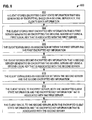
- FIG. 5A and 5B depict a flow diagram 500 that illustrates one embodiment of a method for amending encrypted client state information that is stored on a client.
- a server encrypts a client's state information.
- the server may be one of servers 104A-N or servers 106A-N.
- the result of the encryption is referred to below as the first encrypted information.
- the server sends the first encrypted information to the client.
- the client may be one of clients 110A-N or clients 112A-N.
- the client stores the first encrypted information, and establishes an association between the server and the first encrypted information.
- the client sends, to the server, both a first request and the first encrypted information.
- the server receives, from the client, both the first request and the first encrypted information.
- the server decrypts the encrypted information that was received from the client in block 506.
- the result of the decryption is referred to below as the first decrypted information.
- the server determines, based on authorization characteristics that are contained in the first decrypted information, whether the first request is authorized. If the first request is authorized, then control passes to block 512. If the first request is not authorized, then control passes to block 514.
- the server denies the first request.
- the server may deny all subsequent requests from the client.
- the server encrypts additional client state information for the client.
- the result of the encryption is referred to below as the second encrypted information.
- the server sends the second encrypted information to the client.
- the client stores the second encrypted information, and establishes an association between the server and the second encrypted information.
- the client's receipt of the second encrypted information does not render the first encrypted information invalid.
- the client does not replace the first encrypted information with the second encrypted information.
- the client sends, to the server, a second request, the first encrypted information, and the second encrypted information.
- the server receives, from the client, the second request, the first encrypted information, and the second encrypted information.
- the server decrypts the first encrypted information that was received from the client in block 520.
- the result of the decryption is referred to below as the second decrypted information.
- the server decrypts the second encrypted information that was received from the client in block 520.
- the result of the decryption is referred to below as the third decrypted information.
- the server determines, based on both authorization characteristics that are contained in the second decrypted information and authorization characteristics that are contained in the third decrypted information, whether the second request is authorized. If the second request is authorized, then control passes to block 528. If the second request is not authorized, then control passes to block 530.
- the server satisfies the second request.
- the server denies the second request.
- the server may deny all subsequent requests from the client.
- a server may issue new authorization characteristics to a client or revoke a client's existing authorization characteristics.
- Each of a plurality of clients may send, to a given server, encrypted information that contains authorization characteristics for that client.
- Each client's authorization characteristics may differ from each other client's authorization characteristics.
- multiple servers may provide authentication and authorization services to a client. If each server issued separate encrypted state information to a client, then the client might store multiple copies of the same client state information; each copy encrypted under a different server's local key. If the client state information is large, then this redundancy wastes significant storage resources of the client.
- client state information can be encrypted using a general server key that is accessible to all of the servers but none of the clients.
- Each server may encrypt the general server key using that server's local key.
- the server also sends the general server key that has been encrypted using the server's local key.
- the client may store multiple encrypted general server keys (one for each server) and just one copy of the encrypted client state information.
- the client may establish an association between the server, that server's encrypted general server key, and the encrypted client state information. Because each encrypted general server key is substantially smaller than the encrypted client state information, this storage approach preserves the client's storage resources. This technique avoids the need for multiple servers to share a single value of the local key. This property limits the effects of the compromise of a single server; an attacker who subverts one server will, at most, uncover only the data encrypted with the local keys of that server.
- the client When a client sends a request to a server, the client also sends the encrypted general server key that is associated with that server, and the encrypted client state information that is associated with the encrypted general server key.
- a server that receives the encrypted general server key can decrypt the encrypted general server key to obtain the decrypted general server key. Using the decrypted general server key, the server can decrypt the encrypted client state information.
- FIG. 6 is a flow diagram 600 that illustrates one embodiment of a method for eliminating the redundant storage of identical client state information.
- a client stores encrypted client state information that was generated by encrypting, based on a general server key, the client's state information.
- client 110A may store encrypted client state information that server 104A encrypted using a general server key that is not accessible to client 110A.
- the client stores first encrypted key information that a first server generated by encrypting the general server key using a first local key that is associated with the first server.
- server 104A may encrypt the general server key to produce first encrypted key information.
- Server 104A may send the first encrypted key information to client 110A.
- Client 110A may receive the first encrypted key information and store the first encrypted key information.
- the client establishes an association between the first server and the first encrypted key information.
- client 110A may establish an association between the first encrypted key information and server 104A.
- the client stores second encrypted key information that a second server generated by encrypting the general server key using a second local key that is associated with the second server.
- server 104B may encrypt the general server key to produce second encrypted key information.
- Server 104B may send the second encrypted key information to client 110A.
- Client 110A may receive the second encrypted key information and store the second encrypted key information.
- the client establishes an association between the second server and the second encrypted key information.
- client 110A may establish an association between the second encrypted key information and server 104B.
- the first local key may differ from the second local key.
- the first local key may be inaccessible to all except the first server.
- the second local key may be inaccessible to all except the second server.
- server 104A may be incapable of decrypting the second encrypted key information
- server 104B may be incapable of decrypting the first encrypted key information.
- the client sends, to the first server, both the encrypted client state information and the encrypted key information that is associated with the first server.
- client 110A may send the encrypted client state information and the first encrypted key information to server 104A.
- server 104A may decrypt the first encrypted key information to obtain the general server key.
- server 104A may decrypt the encrypted client state information.
- the client sends, to the second server, both the encrypted client state information and the encrypted key information that is associated with the second server.
- client 110A may send the encrypted client state information and the second encrypted key information to server 104B.
- server 104B may decrypt the first encrypted key information to obtain the general server key.
- server 104B may decrypt the encrypted client state information.
- client 110A may store just one copy of the encrypted client state information pertaining to client 110A. This conserves the storage resources of client 110A.
- responder is a device that responds to a first device's request to participate in a session with a second device.
- a responder is the "introducer device" described in US Patent 7,451,305 , entitled “METHOD AND APPARATUS FOR SECURELY EXCHANGING CRYPTOGRAPHIC IDENTITIES THROUGH A MUTUALLY TRUSTED INTERMEDIARY".
- the introducer device facilitates the secure exchange of cryptographic identities between a "petitioner device” and an “authority device,” both of which already trust the introducer device.
- session state information may be encrypted.
- the responder may forward the encrypted session state information along with other information that the first and second devices send to each other through the responder.
- the first and second devices may send the encrypted session state information to the responder along with other information that the responder is expected to process.
- the first and second devices may return, to the responder, whatever encrypted session state information the first and second devices receive from the responder.
- the encrypted session state information may be called an "echo.”
- the responder may check the protections on the echo.
- the echo may include a time value that indicates when an associated session has expired.
- the responder may compare the time value with the current value of the responder's clock to determine whether the session has expired.
- a responder may issue a random nonce, and then store the nonce for use in processing messages that the responder will receive in the future. For example, a responder may issue a random nonce when participating in a challenge/response protocol. In order to avoid storing the nonce on the responder, the nonce may be included in an echo. Other information, such as identifiers, network addresses, and data for selecting protocol options, also may be included in the echo.
- Each of clients 110A-N and clients 112A-N may be associated with a different shared secret key.
- Clients 110A-N and clients 112A-N may use their shared secret keys to derive session keys that the clients may use to encrypt and decrypt messages that the clients send to and receive from servers 104A-N and servers 106A-N. In this manner, a secure "tunnel" may be established between clients and server.
- servers 104A-N and servers 106A-N to establish these secure tunnels, servers 104A-N and servers 104A-N also need to have access to the shared secret keys so that the servers also can derive the session keys.
- storing a different shared secret key for each separate client can require amounts of memory that no network element realistically may possess.
- the client when any one of clients 110A-N or clients 112A-N initiates communication with any one of servers 104A-N or servers 106A-N, the client sends the client's encrypted state information to the server. In response, the client sends the client's encrypted state information to the server.
- the client's encrypted state information contains the client's shared secret key.
- the server may use the server's local key to decrypt the client's encrypted state information, thereby obtaining the client's shared secret key.
- the server may derive one or more session keys from the client's shared secret key. Using the one or more session keys, the server may encrypt and decrypt messages sent to and received from the client.
- the server may free, for other purposes, the server's memory that was used to store the client's shared secret key and any corresponding session keys. Therefore, the server is not required to concurrently store different shared secret keys for every client that has access private network 102.
- FIG. 7A and 7B depict a flow diagram 700 that illustrates one embodiment of a method for avoiding the storage of shared secret keys on a server.
- each of servers 104A-N and servers 106A-N stores a different set of local keys.
- a server may encrypt client state information using any local key in the server's set of local keys. By using different local keys at different times, security is increased.
- Each local key is associated with a different SPI.
- a server selects a particular local key from among the server's set of local keys.
- the server may be one of servers 104A-N or servers 106A-N.
- the server calculates an authentication code based on both a client's state information and the particular local key.
- the client's state information includes the client's shared secret key.
- the client's state information also indicates the client's unique identity.
- the authentication code is a function of a combination of the client's state information and the particular local key. The function may be implemented so that no two different combinations cause the function to yield the same authentication code.
- the server encrypts a combination of the authentication code, the client's state information, and a time value.
- the time value indicates a future time at which the server should deem the client's state information to be expired.
- the time value may be calculated, for example, by adding a constant value to the current value of the server's clock.
- the result of the encryption is referred to herein as the encrypted information.
- the server sends, to the client, both the encrypted information and the SPI that is associated with the particular local key.
- the client may be one of clients 110A-N or clients 112A-N.
- the client stores the encrypted information and the SPI, and establishes associations between the server and the encrypted information, and between the encrypted information and the SPI.
- the server may free the server's memory that stored the client's state information, both in plain and in encrypted forms.
- the client may send both the encrypted information and the associated SPI to the server.
- the server receives, from the client, both encrypted information and the SPI.
- the server decrypts the encrypted information that was received from the client.
- the result of the decryption is referred to herein as the decrypted information.
- the decrypted information contains at least an authentication code, client state information, and a time value.
- the server calculates a new authentication code using the same function that the server used in block 704.
- the new authentication code is a function of a combination of the particular local key and the client state information that is contained in the decrypted information.
- the server determines whether the new authentication code matches the authentication code that is contained in the decrypted information. If the authentication codes match, then control passes to block 718. If the authentication codes do not match, then control passes to block 720. In this manner, the server authenticates the information contained in the decrypted information.
- the server determines whether the client state information contained in the decrypted information has expired. If the current time value is less than the time value contained in the decrypted information, then control passes to block 722. If the current time value is not less than the time value contained in the decrypted information, then control passes to block 724.
- the server rejects the encrypted information that was received from the client.
- the server may reject all subsequent data sent from the client.
- the client may derive one or more session keys from the shared secret key. Using such a session key, the client may encrypt a message and send the encrypted message to the server.
- the server receives, from the client, a message that has been encrypted using a derived key that was derived from the shared secret key.
- the client state information that is contained in the decrypted information includes the shared secret key.
- the server derives, from the shared secret key, one or more session keys.
- the server decrypts the encrypted message that was sent from the client.
- the server may encrypt another message and send that encrypted message back to the client.
- the client and the server may encrypt and decrypt messages that they communicate to each other, thereby establishing a secure "tunnel.”
- the server may free the server's memory that stored the client's state information, both in plain and in encrypted forms.
- the server may avoid storing client state information, including shared secret keys, on more than a merely temporary, non-continuous basis.
- Each of a plurality of clients may send, to a given server, encrypted information that contains a shared secret key for that client.
- Each client's shared secret key differs from each other client's shared secret key.
- FIG. 8 is a block diagram that illustrates a computer system 800 upon which an embodiment of the invention may be implemented.
- the preferred embodiment is implemented using one or more computer programs running on a network element such as a router device.
- the computer system 800 is a router.
- Computer system 800 includes a bus 802 or other communication mechanism for communicating information, and a processor 804 coupled with bus 802 for processing information.
- Computer system 800 also includes a main memory 806, such as a random access memory (RAM), flash memory, or other dynamic storage device, coupled to bus 802 for storing information and instructions to be executed by processor 804.
- Main memory 806 also may be used for storing temporary variables or other intermediate information during execution of instructions to be executed by processor 804.
- Computer system 800 further includes a read only memory (ROM) 808 or other static storage device coupled to bus 802 for storing static information and instructions for processor 804.
- ROM read only memory
- a storage device 810 such as a magnetic disk, flash memory or optical disk, is provided and coupled to bus 802 for storing information and instructions.
- a communication interface 818 may be coupled to bus 802 for communicating information and command selections to processor 804.
- Interface 818 is a conventional serial interface such as an RS-232 or RS-422 interface.
- An external terminal 812 or other computer system connects to the computer system 800 and provides commands to it using the interface 814.
- Firmware or software running in the computer system 800 provides a terminal interface or character-based command interface so that external commands can be given to the computer system.
- a switching system 816 is coupled to bus 802 and has an input interface 814 and an output interface 819 to one or more external network elements.
- the external network elements may include a local network 822 coupled to one or more hosts 824, or a global network such as Internet 828 having one or more servers 830.
- the switching system 816 switches information traffic arriving on input interface 814 to output interface 819 according to pre-determined protocols and conventions that are well known. For example, switching system 816, in cooperation with processor 804, can determine a destination of a packet of data arriving on input interface 814 and send it to the correct destination using output interface 819.
- the destinations may include host 824, server 830, other end stations, or other routing and switching devices in local network 822 or Internet 828.
- the invention is related to the use of computer system 800 for avoiding the storage of client state on computer system 800.
- computer system 800 provides for such updating in response to processor 804 executing one or more sequences of one or more instructions contained in main memory 806.
- Such instructions may be read into main memory 806 from another computer-readable medium, such as storage device 810.
- Execution of the sequences of instructions contained in main memory 806 causes processor 804 to perform the process steps described herein.
- processors in a multi-processing arrangement may also be employed to execute the sequences of instructions contained in main memory 806.
- hard-wired circuitry may be used in place of or in combination with software instructions to implement the invention.
- embodiments of the invention are not limited to any specific combination of hardware circuitry and software.
- Non-volatile media includes, for example, optical or magnetic disks, such as storage device 810.
- Volatile media includes dynamic memory, such as main memory 806.
- Transmission media includes coaxial cables, copper wire and fiber optics, including the wires that comprise bus 802. Transmission media can also take the form of acoustic or light waves, such as those generated during radio wave and infrared data communications.
- Computer-readable media include, for example, a floppy disk, a flexible disk, hard disk, magnetic tape, or any other magnetic medium, a CD-ROM, any other optical medium, punch cards, paper tape, any other physical medium with patterns of holes, a RAM, a PROM, and EPROM, a FLASH-EPROM, any other memory chip or cartridge, a carrier wave as described hereinafter, or any other medium from which a computer can read.
- Various forms of computer readable media may be involved in carrying one or more sequences of one or more instructions to processor 804 for execution.
- the instructions may initially be carried on a magnetic disk of a remote computer.
- the remote computer can load the instructions into its dynamic memory and send the instructions over a telephone line using a modem.
- a modem local to computer system 800 can receive the data on the telephone line and use an infrared transmitter to convert the data to an infrared signal.
- An infrared detector coupled to bus 802 can receive the data carried in the infrared signal and place the data on bus 802.
- Bus 802 carries the data to main memory 806, from which processor 804 retrieves and executes the instructions.
- the instructions received by main memory 806 may optionally be stored on storage device 810 either before or after execution by processor 804.
- Communication interface 818 also provides a two-way data communication coupling to a network link 820 that is connected to a local network 822.
- communication interface 818 may be an integrated services digital network (ISDN) card or a modem to provide a data communication connection to a corresponding type of telephone line.
- ISDN integrated services digital network
- communication interface 818 may be a local area network (LAN) card to provide a data communication connection to a compatible LAN.
- LAN local area network
- Wireless links may also be implemented.
- communication interface 818 sends and receives electrical, electromagnetic or optical signals that carry digital data streams representing various types of information.
- Network link 820 typically provides data communication through one or more networks to other data devices.
- network link 820 may provide a connection through local network 822 to a host computer 824 or to data equipment operated by an Internet Service Provider (ISP) 826.
- ISP 826 in turn provides data communication services through the worldwide packet data communication network now commonly referred to as the "Internet" 828.
- Internet 828 uses electrical, electromagnetic or optical signals that carry digital data streams.
- the signals through the various networks and the signals on network link 820 and through communication interface 818, which carry the digital data to and from computer system 800, are exemplary forms of carrier waves transporting the information.
- Computer system 800 can send messages and receive data, including program code, through the network(s), network link 820 and communication interface 818.
- a server 830 might transmit a requested code for an application program through Internet 828, ISP 826, local network 822 and communication interface 818.
- one such downloaded application provides for avoiding the storage of client state on a server as described herein.
- Processor 804 may execute the received code as it is received and/or stored in storage device 810 or other non-volatile storage for later execution. In this manner, computer system 800 may obtain application code in the form of a carrier wave.
Landscapes
- Engineering & Computer Science (AREA)
- Computer Security & Cryptography (AREA)
- Computer Networks & Wireless Communication (AREA)
- Signal Processing (AREA)
- Computer Hardware Design (AREA)
- Computing Systems (AREA)
- General Engineering & Computer Science (AREA)
- Storage Device Security (AREA)
- Computer And Data Communications (AREA)
Claims (16)
- Procédé permettant d'éviter le stockage d'un état client sur un serveur (104A-104N, 106A-106N), le procédé comprenant les étapes mises en oeuvre par ordinateur de :sur la base d'une clé locale qui n'est pas connue d'un client (110A-110N, 112A-112N), le cryptage d'informations d'état client pour produire des informations cryptées, dans lequel les informations d'état client comprennent une clé secrète connue uniquement du client et du serveur ;la réception des informations cryptées en provenance du client ;sur la base de la clé locale, le décryptage des informations cryptées qui ont été reçues en provenance du client, en produisant de ce fait des informations décryptées ;la dérivation d'une ou plusieurs clés de session à partir de la clé secrète, qui a été incluse dans les informations décryptées ; etl'établissement d'un tunnel sécurisé entre le serveur et le client en utilisant l'une ou plusieurs clés de session pour crypter et décrypter des messages envoyés au client et reçus de celui-ci.
- Procédé selon la revendication 1, dans lequel les informations d'état client et les informations décryptées comprennent des informations d'autorisation ; le procédé comprenant :la réception, à un premier temps, en provenance du client, des informations cryptées et d'une première demande ;la détermination, sur la base des informations d'autorisation qui ont été incluses dans les informations décryptées, si la première demande est autorisée ; etla réponse à la première demande uniquement si la première demande est autorisée.
- Procédé selon la revendication 2, comprenant en outre les étapes de :la suppression des informations d'état client de la mémoire avant le premier temps ; etla suppression des informations cryptées de la mémoire avant le premier temps.
- Procédé selon la revendication 2, comprenant en outre les étapes de :sur la base de la clé locale, le cryptage de deuxièmes informations d'état client pour produire des deuxièmes informations cryptées, dans lequel les deuxièmes informations d'état client comprennent des informations d'autorisation qui diffèrent des informations d'autorisation qui ont été incluses dans les informations d'état client ;l'envoi des deuxièmes informations cryptées au client ;la réception, en provenance du client, des deuxièmes informations cryptées et d'une deuxième demande ;sur la base de la clé locale, le décryptage des deuxièmes informations cryptées qui ont été reçues du client, en produisant de ce fait des deuxièmes informations décryptées ;la détermination, sur la base des informations d'autorisation qui ont été incluses dans les deuxièmes informations décryptées, si la deuxième demande est autorisée ; etla réponse à la deuxième demande uniquement si la deuxième demande est autorisée.
- Procédé selon la revendication 2, comprenant en outre les étapes de :sur la base de la clé locale, le cryptage de deuxièmes informations d'état client pour produire des deuxièmes informations cryptées, dans lequel les deuxièmes informations d'état client comprennent des informations d'autorisation qui diffèrent des informations d'autorisation qui ont été incluses dans les informations d'état client ;l'envoi des deuxièmes informations cryptées au client ;la réception, à un deuxième temps, en provenance du client, des informations cryptées, des deuxièmes informations cryptées et d'une deuxième demande ;sur la base de la clé locale, le décryptage des deuxièmes informations cryptées qui ont été reçues du client, en produisant de ce fait des deuxièmes informations décryptées ;sur la base de la clé locale, le décryptage des informations cryptées qui ont été reçues du client au deuxième temps, en produisant de ce fait des troisièmes informations décryptées ;la détermination, sur la base des informations d'autorisation qui ont été incluses dans les deuxièmes informations décryptées et des informations d'autorisation qui ont été incluses dans les troisièmes informations décryptées, si la deuxième demande est autorisée ; etla réponse à la deuxième demande uniquement si la deuxième demande est autorisée.
- Procédé selon la revendication 2, comprenant en outre les étapes de :avant l'envoi des informations cryptées au client, le calcul d'un premier code d'authentification sur la base de la clé locale et des informations d'état client ; etl'envoi des informations cryptées et du premier code d'authentification au client.
- Procédé selon la revendication 6, comprenant en outre les étapes de :après le décryptage des informations cryptées qui ont été reçues du client, le calcul d'un deuxième code d'authentification sur la base de la clé locale et des informations d'état client qui ont été incluses dans les informations décryptées ; etla détermination si le deuxième code d'authentification correspond à un code d'authentification qui a été inclus dans les informations décryptées.
- Procédé selon la revendication 7, dans lequel les informations d'état client comprennent une valeur identifiant le client de manière unique.
- Procédé selon la revendication 2, comprenant en outre les étapes de :avant l'envoi des informations cryptées au client, le cryptage d'une première valeur de temps avec les informations d'état client pour produire les informations cryptées.
- Procédé selon la revendication 9, comprenant en outre les étapes de :après le décryptage des informations cryptées qui ont été reçues du client, la détermination, sur la base d'une deuxième valeur de temps et d'une valeur de temps qui a été incluse dans les informations décryptées, si les informations d'état client ont expiré.
- Procédé selon la revendication 1, comprenant en outre les étapes de :la sélection de la clé locale parmi une pluralité de clés, dans lequel chaque clé parmi la pluralité de clés est associée à une valeur d'indice différente ; etl'envoi, au client, d'une valeur d'indice qui est associée à la clé locale.
- Procédé selon la revendication 11, comprenant en outre les étapes de :la réception, en provenance du client, de la valeur d'indice qui est associée à la clé locale ;dans lequel l'étape du décryptage des informations cryptées comprend l'étape du décryptage des informations cryptées sur la base d'une clé qui est associée à une valeur d'indice qui a été reçue du client.
- Procédé selon la revendication 2, comprenant en outre les étapes de :sur la base de la clé locale, le cryptage de deuxièmes informations d'état client pour produire des deuxièmes informations cryptées, dans lequel les deuxièmes informations d'état client comprennent des informations d'autorisation qui diffèrent des informations d'autorisation incluses dans les informations d'état client, et dans lequel la clé locale n'est pas connue d'un deuxième client qui est différent du client ;l'envoi des deuxièmes informations cryptées au deuxième client ;la réception, en provenance du deuxième client, des deuxièmes informations cryptées et d'une deuxième demande ;sur la base de la clé locale, le décryptage des deuxièmes informations cryptées qui ont été reçues du deuxième client, en produisant de ce fait des deuxièmes informations décryptées ;la détermination, sur la base des informations d'autorisation qui ont été incluses dans les deuxièmes informations décryptées, si la deuxième demande est autorisée ; etla réponse à la deuxième demande uniquement si la deuxième demande est autorisée.
- Programme informatique ou produit de programme informatique ou support lisible par ordinateur portant une ou plusieurs séquences d'instructions pour effectuer un procédé selon l'une quelconque des revendications précédentes.
- Système permettant d'éviter le stockage d'un état client sur un serveur (104A-104N, 106A-106N), comprenant :un moyen pour effectuer le cryptage d'informations d'état client sur la base d'une clé locale qui n'est pas connue d'un client (110A-110N, 112A-112N), pour produire des informations cryptées, dans lequel les informations d'état client comprennent une clé secrète connue uniquement du client et du serveur ;un moyen pour effectuer la réception des informations cryptées du client ;un moyen pour effectuer le décryptage des informations cryptées qui ont été reçues du client, sur la base de la clé locale, en produisant de ce fait des informations décryptées ;un moyen pour effectuer la dérivation d'une ou plusieurs clés de session à partir de la clé secrète qui a été incluse dans les informations décryptées ; etun moyen pour effectuer l'établissement d'un tunnel sécurisé entre le serveur et le client en utilisant l'une ou plusieurs clés de session pour crypter et décrypter des messages envoyés au client et reçus de celui-ci.
- Système selon la revendication 15, agencé pour effectuer un procédé selon l'une quelconque des revendications 2 à 13.
Applications Claiming Priority (2)
| Application Number | Priority Date | Filing Date | Title |
|---|---|---|---|
| US10/756,633 US7373502B2 (en) | 2004-01-12 | 2004-01-12 | Avoiding server storage of client state |
| PCT/US2005/000854 WO2005070155A2 (fr) | 2004-01-12 | 2005-01-10 | Evitement de stockage d'etat client sur un serveur |
Publications (3)
| Publication Number | Publication Date |
|---|---|
| EP1706825A2 EP1706825A2 (fr) | 2006-10-04 |
| EP1706825A4 EP1706825A4 (fr) | 2012-01-25 |
| EP1706825B1 true EP1706825B1 (fr) | 2013-05-22 |
Family
ID=34739878
Family Applications (1)
| Application Number | Title | Priority Date | Filing Date |
|---|---|---|---|
| EP05705486.8A Expired - Lifetime EP1706825B1 (fr) | 2004-01-12 | 2005-01-10 | Evitement de stockage d'etat client sur un serveur |
Country Status (6)
| Country | Link |
|---|---|
| US (2) | US7373502B2 (fr) |
| EP (1) | EP1706825B1 (fr) |
| CN (1) | CN101421970B (fr) |
| AU (1) | AU2005206813B2 (fr) |
| CA (1) | CA2548356C (fr) |
| WO (1) | WO2005070155A2 (fr) |
Families Citing this family (32)
| Publication number | Priority date | Publication date | Assignee | Title |
|---|---|---|---|---|
| EP1599009A1 (fr) * | 2004-05-17 | 2005-11-23 | Hewlett-Packard Development Company, L.P. | Améliorations dans des communications basées sur des messages |
| US7784089B2 (en) * | 2004-10-29 | 2010-08-24 | Qualcomm Incorporated | System and method for providing a multi-credential authentication protocol |
| US20060107323A1 (en) * | 2004-11-16 | 2006-05-18 | Mclean Ivan H | System and method for using a dynamic credential to identify a cloned device |
| US9438683B2 (en) * | 2005-04-04 | 2016-09-06 | Aol Inc. | Router-host logging |
| US7741970B2 (en) | 2006-12-31 | 2010-06-22 | At&T Intellectual Property Ii, L.P. | Method and apparatus for a radio frequency identification repeater |
| US20080162728A1 (en) * | 2007-01-03 | 2008-07-03 | Microsoft Corporation | Synchronization protocol for loosely coupled devices |
| US7899917B2 (en) * | 2007-02-01 | 2011-03-01 | Microsoft Corporation | Synchronization framework for occasionally connected applications |
| US7998536B2 (en) * | 2007-07-12 | 2011-08-16 | Applied Materials, Inc. | Silicon precursors to make ultra low-K films of K<2.2 with high mechanical properties by plasma enhanced chemical vapor deposition |
| US8391487B2 (en) | 2007-07-24 | 2013-03-05 | Cisco Technology, Inc. | Secure remote configuration of device capabilities |
| EP2020797B1 (fr) * | 2007-08-02 | 2016-06-15 | Apple Inc. | Appareil et procédé de passage de jetons opaques pour le serveur client |
| US8325914B2 (en) * | 2007-11-27 | 2012-12-04 | Cisco Technology, Inc. | Providing secure communications for active RFID tags |
| CN102480474A (zh) * | 2010-11-30 | 2012-05-30 | 金蝶软件(中国)有限公司 | 一种验证用户登录状态的方法、装置及企业系统 |
| US9042281B2 (en) * | 2010-12-08 | 2015-05-26 | At&T Intellectual Property I, L.P. | Method and apparatus for initializing an RFID tag via an optical display |
| EP2634956B1 (fr) * | 2012-02-29 | 2016-11-02 | BlackBerry Limited | Communication d'une identité à un serveur |
| US9116971B2 (en) | 2012-05-08 | 2015-08-25 | Softframe, Inc. | Data synchronization using a composite change clock |
| US9614932B2 (en) | 2013-03-14 | 2017-04-04 | Microsoft Technology Licensing, Llc | Managing and implementing web application data snapshots |
| US9729520B2 (en) * | 2014-05-05 | 2017-08-08 | Citrix Systems, Inc. | Facilitating communication between mobile applications |
| CN105338525B (zh) * | 2014-05-29 | 2019-02-15 | 广州爱九游信息技术有限公司 | 登陆访问处理方法、装置及系统 |
| US10019718B2 (en) | 2015-05-12 | 2018-07-10 | Bank Of America Corporation | Customer-based associate interfaces |
| US10158487B2 (en) | 2015-07-16 | 2018-12-18 | Cisco Technology, Inc. | Dynamic second factor authentication for cookie-based authentication |
| US11232453B2 (en) * | 2015-09-30 | 2022-01-25 | Mastercard International Incorporated | Method and system for authentication data collection and reporting |
| US10303660B2 (en) | 2015-11-12 | 2019-05-28 | Microsoft Technology Licensing, Llc | File system with distributed entity state |
| US10372926B1 (en) * | 2015-12-21 | 2019-08-06 | Amazon Technologies, Inc. | Passive distribution of encryption keys for distributed data stores |
| US9876783B2 (en) | 2015-12-22 | 2018-01-23 | International Business Machines Corporation | Distributed password verification |
| CN107465506A (zh) * | 2017-09-19 | 2017-12-12 | 北京知道创宇信息技术有限公司 | 用于加密传输数据的客户端、服务器、网络系统及方法 |
| CN107817979A (zh) * | 2017-10-13 | 2018-03-20 | 西安钛克韦尔信息科技有限公司 | 一种移动终端的控制方法和移动终端 |
| US10581948B2 (en) | 2017-12-07 | 2020-03-03 | Akamai Technologies, Inc. | Client side cache visibility with TLS session tickets |
| US12238076B2 (en) * | 2018-10-02 | 2025-02-25 | Arista Networks, Inc. | In-line encryption of network data |
| US11019034B2 (en) | 2018-11-16 | 2021-05-25 | Akamai Technologies, Inc. | Systems and methods for proxying encrypted traffic to protect origin servers from internet threats |
| CN112995322B (zh) * | 2021-03-04 | 2023-07-21 | Oppo广东移动通信有限公司 | 信息传输通道建立方法、装置、存储介质以及终端 |
| TWI827237B (zh) * | 2022-09-06 | 2023-12-21 | 新唐科技股份有限公司 | 密碼加速器以及加解密運算防篡改方法 |
| US12547301B2 (en) * | 2023-09-06 | 2026-02-10 | Sap Se | Maintaining state between web applications |
Family Cites Families (13)
| Publication number | Priority date | Publication date | Assignee | Title |
|---|---|---|---|---|
| US5268962A (en) * | 1992-07-21 | 1993-12-07 | Digital Equipment Corporation | Computer network with modified host-to-host encryption keys |
| US5774670A (en) * | 1995-10-06 | 1998-06-30 | Netscape Communications Corporation | Persistent client state in a hypertext transfer protocol based client-server system |
| US5961601A (en) * | 1996-06-07 | 1999-10-05 | International Business Machines Corporation | Preserving state information in a continuing conversation between a client and server networked via a stateless protocol |
| US6389535B1 (en) * | 1997-06-30 | 2002-05-14 | Microsoft Corporation | Cryptographic protection of core data secrets |
| US6226750B1 (en) * | 1998-01-20 | 2001-05-01 | Proact Technologies Corp. | Secure session tracking method and system for client-server environment |
| US6253326B1 (en) | 1998-05-29 | 2001-06-26 | Palm, Inc. | Method and system for secure communications |
| US6550012B1 (en) * | 1998-12-11 | 2003-04-15 | Network Associates, Inc. | Active firewall system and methodology |
| US6954799B2 (en) * | 2000-02-01 | 2005-10-11 | Charles Schwab & Co., Inc. | Method and apparatus for integrating distributed shared services system |
| EP1290524A2 (fr) * | 2000-04-06 | 2003-03-12 | Freerun Technologies, Inc. | Systemes et procedes de protection d'informations transportees sur un reseau de donnees |
| HK1049750B (en) * | 2001-04-19 | 2006-08-04 | Ntt Docomo, Inc. | Terminal communication system |
| US20030188188A1 (en) * | 2002-03-15 | 2003-10-02 | Microsoft Corporation | Time-window-constrained multicast for future delivery multicast |
| US7360096B2 (en) * | 2002-11-20 | 2008-04-15 | Microsoft Corporation | Securely processing client credentials used for Web-based access to resources |
| US7346773B2 (en) * | 2004-01-12 | 2008-03-18 | Cisco Technology, Inc. | Enabling stateless server-based pre-shared secrets |
-
2004
- 2004-01-12 US US10/756,633 patent/US7373502B2/en not_active Expired - Lifetime
-
2005
- 2005-01-10 CA CA2548356A patent/CA2548356C/fr not_active Expired - Lifetime
- 2005-01-10 CN CN200580001314.2A patent/CN101421970B/zh not_active Expired - Lifetime
- 2005-01-10 AU AU2005206813A patent/AU2005206813B2/en not_active Expired
- 2005-01-10 EP EP05705486.8A patent/EP1706825B1/fr not_active Expired - Lifetime
- 2005-01-10 WO PCT/US2005/000854 patent/WO2005070155A2/fr not_active Ceased
-
2007
- 2007-03-21 US US11/726,671 patent/US7493331B2/en not_active Expired - Fee Related
Also Published As
| Publication number | Publication date |
|---|---|
| EP1706825A4 (fr) | 2012-01-25 |
| WO2005070155A3 (fr) | 2009-04-16 |
| US20050154872A1 (en) | 2005-07-14 |
| US20070198829A1 (en) | 2007-08-23 |
| CA2548356A1 (fr) | 2005-08-04 |
| CN101421970B (zh) | 2011-04-06 |
| EP1706825A2 (fr) | 2006-10-04 |
| AU2005206813B2 (en) | 2009-12-10 |
| AU2005206813A1 (en) | 2005-08-04 |
| WO2005070155A2 (fr) | 2005-08-04 |
| CN101421970A (zh) | 2009-04-29 |
| US7373502B2 (en) | 2008-05-13 |
| US7493331B2 (en) | 2009-02-17 |
| CA2548356C (fr) | 2011-11-15 |
Similar Documents
| Publication | Publication Date | Title |
|---|---|---|
| EP1706825B1 (fr) | Evitement de stockage d'etat client sur un serveur | |
| EP1706956B1 (fr) | Méthodes, appareils et logiciel d'activation de secrets prepartages basés sur un serveur sans etat | |
| US8239933B2 (en) | Network protecting authentication proxy | |
| US7231526B2 (en) | System and method for validating a network session | |
| US20100195824A1 (en) | Method and Apparatus for Dynamic Generation of Symmetric Encryption Keys and Exchange of Dynamic Symmetric Key Infrastructure | |
| US20040064706A1 (en) | System and method for controlling access to multiple public networks and for controlling access to multiple private networks | |
| KR20140127303A (ko) | 다중 팩터 인증 기관 | |
| IL189131A (en) | Distributed single sign-on service | |
| KR20070032885A (ko) | 유비쿼터스 망의 보안 시스템 및 방법 | |
| US7266705B2 (en) | Secure transmission of data within a distributed computer system | |
| US7975293B2 (en) | Authentication system, authentication method and terminal device | |
| US7571311B2 (en) | Scheme for sub-realms within an authentication protocol | |
| US20060206616A1 (en) | Decentralized secure network login | |
| JP2023163173A (ja) | 秘密鍵の安全な回復 | |
| CN118233193A (zh) | 物联网设备的身份认证方法、密钥存储方法及装置 | |
| US7526560B1 (en) | Method and apparatus for sharing a secure connection between a client and multiple server nodes | |
| KR100853448B1 (ko) | 도메인 기반 이동에이전트 인증 시스템 및 그 인증 방법 | |
| KR20250020647A (ko) | 가입자 id 모듈을 가명 인증 기관(pca)으로 사용하는 시스템 및 방법 | |
| Oh et al. | A peer mutual authentication method on super peer based peer-to-peer network | |
| Stevan | The Kerberos Authentication Service | |
| Shinde et al. | Security in WLAN using Kerberos |
Legal Events
| Date | Code | Title | Description |
|---|---|---|---|
| PUAI | Public reference made under article 153(3) epc to a published international application that has entered the european phase |
Free format text: ORIGINAL CODE: 0009012 |
|
| 17P | Request for examination filed |
Effective date: 20060606 |
|
| AK | Designated contracting states |
Kind code of ref document: A2 Designated state(s): AT BE BG CH CY CZ DE DK EE ES FI FR GB GR HU IE IS IT LI LT LU MC NL PL PT RO SE SI SK TR |
|
| AX | Request for extension of the european patent |
Extension state: AL BA HR LV MK YU |
|
| DAX | Request for extension of the european patent (deleted) | ||
| PUAK | Availability of information related to the publication of the international search report |
Free format text: ORIGINAL CODE: 0009015 |
|
| RIC1 | Information provided on ipc code assigned before grant |
Ipc: H04L 5/00 20060101AFI20090423BHEP |
|
| REG | Reference to a national code |
Ref country code: DE Ref legal event code: R079 Ref document number: 602005039681 Country of ref document: DE Free format text: PREVIOUS MAIN CLASS: G06F0015160000 Ipc: H04L0029060000 |
|
| A4 | Supplementary search report drawn up and despatched |
Effective date: 20111229 |
|
| RIC1 | Information provided on ipc code assigned before grant |
Ipc: H04L 29/06 20060101AFI20111222BHEP |
|
| 17Q | First examination report despatched |
Effective date: 20120417 |
|
| GRAP | Despatch of communication of intention to grant a patent |
Free format text: ORIGINAL CODE: EPIDOSNIGR1 |
|
| GRAS | Grant fee paid |
Free format text: ORIGINAL CODE: EPIDOSNIGR3 |
|
| GRAA | (expected) grant |
Free format text: ORIGINAL CODE: 0009210 |
|
| AK | Designated contracting states |
Kind code of ref document: B1 Designated state(s): AT BE BG CH CY CZ DE DK EE ES FI FR GB GR HU IE IS IT LI LT LU MC NL PL PT RO SE SI SK TR |
|
| REG | Reference to a national code |
Ref country code: GB Ref legal event code: FG4D |
|
| REG | Reference to a national code |
Ref country code: CH Ref legal event code: EP |
|
| REG | Reference to a national code |
Ref country code: AT Ref legal event code: REF Ref document number: 613715 Country of ref document: AT Kind code of ref document: T Effective date: 20130615 |
|
| REG | Reference to a national code |
Ref country code: IE Ref legal event code: FG4D |
|
| REG | Reference to a national code |
Ref country code: DE Ref legal event code: R096 Ref document number: 602005039681 Country of ref document: DE Effective date: 20130718 |
|
| REG | Reference to a national code |
Ref country code: AT Ref legal event code: MK05 Ref document number: 613715 Country of ref document: AT Kind code of ref document: T Effective date: 20130522 |
|
| REG | Reference to a national code |
Ref country code: LT Ref legal event code: MG4D |
|
| PG25 | Lapsed in a contracting state [announced via postgrant information from national office to epo] |
Ref country code: GR Free format text: LAPSE BECAUSE OF FAILURE TO SUBMIT A TRANSLATION OF THE DESCRIPTION OR TO PAY THE FEE WITHIN THE PRESCRIBED TIME-LIMIT Effective date: 20130823 Ref country code: AT Free format text: LAPSE BECAUSE OF FAILURE TO SUBMIT A TRANSLATION OF THE DESCRIPTION OR TO PAY THE FEE WITHIN THE PRESCRIBED TIME-LIMIT Effective date: 20130522 Ref country code: FI Free format text: LAPSE BECAUSE OF FAILURE TO SUBMIT A TRANSLATION OF THE DESCRIPTION OR TO PAY THE FEE WITHIN THE PRESCRIBED TIME-LIMIT Effective date: 20130522 Ref country code: SI Free format text: LAPSE BECAUSE OF FAILURE TO SUBMIT A TRANSLATION OF THE DESCRIPTION OR TO PAY THE FEE WITHIN THE PRESCRIBED TIME-LIMIT Effective date: 20130522 Ref country code: PT Free format text: LAPSE BECAUSE OF FAILURE TO SUBMIT A TRANSLATION OF THE DESCRIPTION OR TO PAY THE FEE WITHIN THE PRESCRIBED TIME-LIMIT Effective date: 20130923 Ref country code: ES Free format text: LAPSE BECAUSE OF FAILURE TO SUBMIT A TRANSLATION OF THE DESCRIPTION OR TO PAY THE FEE WITHIN THE PRESCRIBED TIME-LIMIT Effective date: 20130902 Ref country code: LT Free format text: LAPSE BECAUSE OF FAILURE TO SUBMIT A TRANSLATION OF THE DESCRIPTION OR TO PAY THE FEE WITHIN THE PRESCRIBED TIME-LIMIT Effective date: 20130522 Ref country code: IS Free format text: LAPSE BECAUSE OF FAILURE TO SUBMIT A TRANSLATION OF THE DESCRIPTION OR TO PAY THE FEE WITHIN THE PRESCRIBED TIME-LIMIT Effective date: 20130922 Ref country code: SE Free format text: LAPSE BECAUSE OF FAILURE TO SUBMIT A TRANSLATION OF THE DESCRIPTION OR TO PAY THE FEE WITHIN THE PRESCRIBED TIME-LIMIT Effective date: 20130522 |
|
| REG | Reference to a national code |
Ref country code: NL Ref legal event code: VDEP Effective date: 20130522 |
|
| PG25 | Lapsed in a contracting state [announced via postgrant information from national office to epo] |
Ref country code: PL Free format text: LAPSE BECAUSE OF FAILURE TO SUBMIT A TRANSLATION OF THE DESCRIPTION OR TO PAY THE FEE WITHIN THE PRESCRIBED TIME-LIMIT Effective date: 20130522 Ref country code: BG Free format text: LAPSE BECAUSE OF FAILURE TO SUBMIT A TRANSLATION OF THE DESCRIPTION OR TO PAY THE FEE WITHIN THE PRESCRIBED TIME-LIMIT Effective date: 20130822 |
|
| PG25 | Lapsed in a contracting state [announced via postgrant information from national office to epo] |
Ref country code: CZ Free format text: LAPSE BECAUSE OF FAILURE TO SUBMIT A TRANSLATION OF THE DESCRIPTION OR TO PAY THE FEE WITHIN THE PRESCRIBED TIME-LIMIT Effective date: 20130522 Ref country code: EE Free format text: LAPSE BECAUSE OF FAILURE TO SUBMIT A TRANSLATION OF THE DESCRIPTION OR TO PAY THE FEE WITHIN THE PRESCRIBED TIME-LIMIT Effective date: 20130522 Ref country code: SK Free format text: LAPSE BECAUSE OF FAILURE TO SUBMIT A TRANSLATION OF THE DESCRIPTION OR TO PAY THE FEE WITHIN THE PRESCRIBED TIME-LIMIT Effective date: 20130522 Ref country code: DK Free format text: LAPSE BECAUSE OF FAILURE TO SUBMIT A TRANSLATION OF THE DESCRIPTION OR TO PAY THE FEE WITHIN THE PRESCRIBED TIME-LIMIT Effective date: 20130522 Ref country code: BE Free format text: LAPSE BECAUSE OF FAILURE TO SUBMIT A TRANSLATION OF THE DESCRIPTION OR TO PAY THE FEE WITHIN THE PRESCRIBED TIME-LIMIT Effective date: 20130522 |
|
| PG25 | Lapsed in a contracting state [announced via postgrant information from national office to epo] |
Ref country code: NL Free format text: LAPSE BECAUSE OF FAILURE TO SUBMIT A TRANSLATION OF THE DESCRIPTION OR TO PAY THE FEE WITHIN THE PRESCRIBED TIME-LIMIT Effective date: 20130522 Ref country code: RO Free format text: LAPSE BECAUSE OF FAILURE TO SUBMIT A TRANSLATION OF THE DESCRIPTION OR TO PAY THE FEE WITHIN THE PRESCRIBED TIME-LIMIT Effective date: 20130522 Ref country code: IT Free format text: LAPSE BECAUSE OF FAILURE TO SUBMIT A TRANSLATION OF THE DESCRIPTION OR TO PAY THE FEE WITHIN THE PRESCRIBED TIME-LIMIT Effective date: 20130522 |
|
| PLBE | No opposition filed within time limit |
Free format text: ORIGINAL CODE: 0009261 |
|
| STAA | Information on the status of an ep patent application or granted ep patent |
Free format text: STATUS: NO OPPOSITION FILED WITHIN TIME LIMIT |
|
| 26N | No opposition filed |
Effective date: 20140225 |
|
| REG | Reference to a national code |
Ref country code: DE Ref legal event code: R097 Ref document number: 602005039681 Country of ref document: DE Effective date: 20140225 |
|
| PG25 | Lapsed in a contracting state [announced via postgrant information from national office to epo] |
Ref country code: MC Free format text: LAPSE BECAUSE OF FAILURE TO SUBMIT A TRANSLATION OF THE DESCRIPTION OR TO PAY THE FEE WITHIN THE PRESCRIBED TIME-LIMIT Effective date: 20130522 Ref country code: LU Free format text: LAPSE BECAUSE OF FAILURE TO SUBMIT A TRANSLATION OF THE DESCRIPTION OR TO PAY THE FEE WITHIN THE PRESCRIBED TIME-LIMIT Effective date: 20140110 |
|
| REG | Reference to a national code |
Ref country code: CH Ref legal event code: PL |
|
| PG25 | Lapsed in a contracting state [announced via postgrant information from national office to epo] |
Ref country code: LI Free format text: LAPSE BECAUSE OF NON-PAYMENT OF DUE FEES Effective date: 20140131 Ref country code: CH Free format text: LAPSE BECAUSE OF NON-PAYMENT OF DUE FEES Effective date: 20140131 |
|
| REG | Reference to a national code |
Ref country code: IE Ref legal event code: MM4A |
|
| REG | Reference to a national code |
Ref country code: FR Ref legal event code: PLFP Year of fee payment: 11 |
|
| PG25 | Lapsed in a contracting state [announced via postgrant information from national office to epo] |
Ref country code: IE Free format text: LAPSE BECAUSE OF NON-PAYMENT OF DUE FEES Effective date: 20140110 |
|
| REG | Reference to a national code |
Ref country code: FR Ref legal event code: PLFP Year of fee payment: 12 |
|
| PG25 | Lapsed in a contracting state [announced via postgrant information from national office to epo] |
Ref country code: CY Free format text: LAPSE BECAUSE OF FAILURE TO SUBMIT A TRANSLATION OF THE DESCRIPTION OR TO PAY THE FEE WITHIN THE PRESCRIBED TIME-LIMIT Effective date: 20130522 |
|
| PG25 | Lapsed in a contracting state [announced via postgrant information from national office to epo] |
Ref country code: HU Free format text: LAPSE BECAUSE OF FAILURE TO SUBMIT A TRANSLATION OF THE DESCRIPTION OR TO PAY THE FEE WITHIN THE PRESCRIBED TIME-LIMIT; INVALID AB INITIO Effective date: 20050110 Ref country code: TR Free format text: LAPSE BECAUSE OF FAILURE TO SUBMIT A TRANSLATION OF THE DESCRIPTION OR TO PAY THE FEE WITHIN THE PRESCRIBED TIME-LIMIT Effective date: 20130522 |
|
| REG | Reference to a national code |
Ref country code: FR Ref legal event code: PLFP Year of fee payment: 13 |
|
| REG | Reference to a national code |
Ref country code: FR Ref legal event code: PLFP Year of fee payment: 14 |
|
| REG | Reference to a national code |
Ref country code: DE Ref legal event code: R079 Ref document number: 602005039681 Country of ref document: DE Free format text: PREVIOUS MAIN CLASS: H04L0029060000 Ipc: H04L0065000000 |
|
| P01 | Opt-out of the competence of the unified patent court (upc) registered |
Effective date: 20230525 |
|
| PGFP | Annual fee paid to national office [announced via postgrant information from national office to epo] |
Ref country code: DE Payment date: 20240112 Year of fee payment: 20 Ref country code: GB Payment date: 20240122 Year of fee payment: 20 |
|
| PGFP | Annual fee paid to national office [announced via postgrant information from national office to epo] |
Ref country code: FR Payment date: 20240129 Year of fee payment: 20 |
|
| REG | Reference to a national code |
Ref country code: DE Ref legal event code: R071 Ref document number: 602005039681 Country of ref document: DE |
|
| REG | Reference to a national code |
Ref country code: GB Ref legal event code: PE20 Expiry date: 20250109 |
|
| PG25 | Lapsed in a contracting state [announced via postgrant information from national office to epo] |
Ref country code: GB Free format text: LAPSE BECAUSE OF EXPIRATION OF PROTECTION Effective date: 20250109 |