EP1707576A1 - Methyllysin erkennende antikörper, verfahren zu deren herstellung und deren anwendung - Google Patents
Methyllysin erkennende antikörper, verfahren zu deren herstellung und deren anwendung Download PDFInfo
- Publication number
- EP1707576A1 EP1707576A1 EP04819907A EP04819907A EP1707576A1 EP 1707576 A1 EP1707576 A1 EP 1707576A1 EP 04819907 A EP04819907 A EP 04819907A EP 04819907 A EP04819907 A EP 04819907A EP 1707576 A1 EP1707576 A1 EP 1707576A1
- Authority
- EP
- European Patent Office
- Prior art keywords
- antibody
- methyllysine
- protein
- methylated
- antibodies
- Prior art date
- Legal status (The legal status is an assumption and is not a legal conclusion. Google has not performed a legal analysis and makes no representation as to the accuracy of the status listed.)
- Withdrawn
Links
Images






Classifications
-
- G—PHYSICS
- G01—MEASURING; TESTING
- G01N—INVESTIGATING OR ANALYSING MATERIALS BY DETERMINING THEIR CHEMICAL OR PHYSICAL PROPERTIES
- G01N33/00—Investigating or analysing materials by specific methods not covered by groups G01N1/00 - G01N31/00
- G01N33/48—Biological material, e.g. blood, urine; Haemocytometers
- G01N33/50—Chemical analysis of biological material, e.g. blood, urine; Testing involving biospecific ligand binding methods; Immunological testing
- G01N33/53—Immunoassay; Biospecific binding assay; Materials therefor
- G01N33/577—Immunoassay; Biospecific binding assay; Materials therefor involving monoclonal antibodies binding reaction mechanisms characterised by the use of monoclonal antibodies
-
- C—CHEMISTRY; METALLURGY
- C07—ORGANIC CHEMISTRY
- C07K—PEPTIDES
- C07K16/00—Immunoglobulins [IG], e.g. monoclonal or polyclonal antibodies
- C07K16/44—Immunoglobulins [IG], e.g. monoclonal or polyclonal antibodies against material not provided for elsewhere, e.g. haptens, metals, DNA, RNA, amino acids
Definitions
- the present invention relates to an antibody which can be used in detection of methyllysine as one of post-translational protein modifications, a process for producing the same, and a method of detecting a methylated protein by using the antibody.
- proteins after translation do not exhibit their functions in a translated form and undergo various post-translational modifications.
- the phosphorylation of proteins is important as a signal cascade for transmission of extracellular signals to nuclei or as a regulatory factor for progress of normal cell cycle, and the acetylation of histone is important for efficient progress of transcription.
- Proteins when conjugated with ubiquitin are transferred to proteasome and degraded to loose their activity.
- signal peptides are cut off with signal peptidases present in endoplasmic reticulum membrane to make many proteins active. In this way, proteins undergo various post-translational modifications thereby exhibiting their respective functions at a suitable time in a suitable place.
- HBHA heparin-binding hemagglutinin
- anti-methylated histone antibodies International Publication No. 02/18418
- antibodies are developed and commercially available (available from Santa Cruz, etc.), but as a matter of course, these antibodies are not those recognizing various kinds of methyllysine-containing proteins.
- An anti-methyllysine antibody (rabbit polyclonal antibody) obtained by using a chemically methylated histone H1 molecule as immunogen is also developed and commercially available (abcamLtd.), but this antibody can recognize only dimethyllysine and is poor in an ability to recognize methylated proteins other than histone.
- a monoclonal antibody mAb 4057D2 having an ability to prevent tubercle bacillus from spreading from the lung by recognizing an HBHA molecule in the tubercle bacillus recognizes a methylated HBHA molecule, but does not recognize a non-methylated HBHA molecule and can also recognize a methylated version of a laminin-binding protein which similar to HBHA, has a lysine-rich domain. Accordingly, this antibody is considered to recognize a methyllysine cluster present in the protein. However, the ability of this antibody to recognize othermethylated proteins not having a lysine-rich domain is considered not to be so strong ( K. Pethe, et al., Proc. Natl.
- the object of this study is to acquire a method which can recognize methyllysine residues in a protein, without being so influenced by the type of the protein or the type of surrounding amino acids.
- a main object of the present invention is to acquire an anti-methyllysine antibody which can be used as a probe molecule for the method.
- a further object of the present invention is to provide means of obtaining an antibody having such properties.
- the present inventors made a wholehearted endeavor based on the hypothesis that antibodies induced to be produced by immunizing an animal with a chemically methylated protein as an immunogen contain an antibody which can, without being influenced by surrounding amino acid residues, can recognize a methyllysine residue, and as a result, they succeeded in purifying an antibody having such properties or in producing the antibody as a monoclonal antibody.
- the anti-methyllysine monoclonal antibody and polyclonal antibody provided according to the present invention are useful in searching for a new methyllysine-containing protein which can serve as a cause of disease or as a diagnostic marker. Further, the anti-methyllysine monoclonal antibody and polyclonal antibody provided according to the present invention are also useful in regulating the functions of a biological molecule wherein the methylation of a lysine residue plays an important role, or in diagnosing a disease by detecting a methyllysine-containing protein.
- the process for producing an anti-methyllysine antibody provided according to the present invention is useful in obtaining an anti-methyllysine antibody having an activity stronger than conventional ones and having a broader allowable range of amino acid sequences surrounding a methyllysine residue.
- Antibody capable of recognizing methyllysine in a protein, without being influenced by surrounding amino acids
- An animal is immunized with a chemically methylated protein as an immunogen, and then a hybridoma producing a monoclonal antibody is produced in a usual manner.
- a hybridoma producing a monoclonal antibody recognizing a methyllysine residue is screened by measuring reactivity to a protein obtained by methylating a protein different from the protein used as immunogen. By screening with a methylated protein different from the methylated protein used as immunogen, antibodies recognizing methyllysine residues in various proteins not limited to a specific protein can be obtained.
- the method of chemically methylating a protein includes, but is not limited to, a method of allowing formaldehyde to act in the presence of sodium borohydride under the condition of pH 7 or more.
- the protein used as immunogen includes, but is not limited to, experimentally generally used proteins such as keyhole limpet hemocyanin, bovine serum albumin, ovalbumin, human serum albumin, transferrin, and thyroglobulin. Unlike the histone protein, these proteins are desirably those free of a lysine-rich domain.
- the histone protein has a large amount of lysine residues as a cause of its strong basicity, and many lysine-rich domains occur in every histone protein. Accordingly, it is considered that when chemically methylated histone is used as immunogen, antibodies to methyllysine-rich domains are predominantly produced.
- a rabbit anti-methyllysine antibody (Abcam Ltd.) obtained by using an antigen prepared by chemically methylating histone H1 is excellent in reactivity to histone, but is not always excellent in reactivity to other methylated proteins. Accordingly, a protein having strong basicity with many lysine-rich domains should not be used as the protein methylated for use as immunogen .
- a protein different from the protein used in immunization can be similarly chemically methylated and used.
- the titer value can be checked by using any of proteins obtained by chemically methylating proteins which include, but are not limited to, bovine serum albumin, ovoalbumin, human serum albumin, transferrin, and thyroglobulin.
- a protein obtained by binding methyllysine by various methods to a protein other than the protein used in immunization, an ELISA plate having methyllysine bound directly thereon, or a methyllysine-containing synthetic peptide, natural peptide or natural protein can be used.
- An animal is immunized with a chemically methylated protein as immunogen to give an antiserum.
- the resulting antiserum is purified by an affinity column having a methylated protein immobilized thereon, whereby an antibody specifically recognizing the methylated protein can be obtained.
- an affinity column having a methylated protein immobilized thereon, whereby an antibody specifically recognizing the methylated protein can be obtained.
- serum derived from an animal immunized with methylated KLH is purified by an affinity column having methylated BSA immobilized thereon, whereby antibodies specifically recognizing a methylated site can be obtained.
- an affinity column a column having methyllysine bound directly to gel or a column containing a methyllysine-containing synthetic peptide, natural peptide or natural protein bound to gel can also be used.
- antibodies binding to non-methylated materials are removed by an affinity column on which a non-methylated version of the protein used as immunogen is immobilized, whereby the specificity for the methylated protein can be improved.
- immune measurement methods or immune detection methods using the antibody of the present invention a wide variety of methylated proteins can be measured and detected. These methods include enzyme immunoassay (EIA), radioimmunoassay (RIA), fluoroimmunoassay (FIA), and a latex aggregation method with polystyrene particles sensitized with the antibody.
- EIA enzyme immunoassay
- RIA radioimmunoassay
- FIA fluoroimmunoassay
- latex aggregation method with polystyrene particles sensitized with the antibody The present antibody can also be used in Western blotting or in staining of various tissues.
- the antibodies of the present invention can, without being influenced by surrounding amino acid residues, recognize methyllysine residues, these antibodies can be used to provide a method capable of detecting larger kinds of methylated proteins than by conventional methods. Further, these antibodies can be used to regulate functions of biological molecules wherein the methylation of lysine residues plays an important role or to diagnose diseases by detection of methyllysine-containing proteins.
- KLH keyhole limpet hemocyanin
- Chemically methylated KLH can be prepared for example by the following method. 10 mg KLH is dissolved in 1 ml borate buffer (20 mM Na 2 B 4 O 7 , pH 9.3), and 0.5 mg sodium borohydride is added thereto. 0.5 ⁇ l formalin is added 5 times at 5-minute intervals, and the mixture is further reacted at room temperature for 30 minutes. After the reaction is finished, the solvent in the reaction solution is exchanged with PBS in a gel filtration column.
- a method of immunizing an animal is described on rabbit and mouse as examples.
- the methylated KLH solution and an adjuvant such as Freund complete adjuvant or TiterMax Gold (CytRx Ltd.) are mixed at a ratio of 1 : 1 and then formed into an emulsion by sonication or by passing the mixture repeatedly through an interchange joint connecting two injection tubes with each other.
- the prepared antigen-containing emulsion is injected subcutaneously, intradermally, intramuscularly or intraperitoneally at one site or a plurality of sites.
- One to four weeks after the first immunization, second immunization is carried out in the same manner.
- Freund complete adjuvant When Freund complete adjuvant is used in the first immunization, Freund incomplete adjuvant is desirably used in second and subsequent immunization. The immunization is continued in the same manner until the antibody titer of the anti-methyllysine antibody in blood increases.
- Measurement of the antibody titer can be carried out in the following manner.
- Bovine serum albumin methylated in the same manner as for KLH is dissolved at a concentration of 10 ⁇ g/ml in PBS, then added to each well of a 96-well ELISA plate in a volume of 50 ⁇ l/well, and adsorbed onto each well overnight at 4°C.
- Each well is washed with PBS containing 0.05% Tween 20 (PBST) and then used in assay. Before assay, each well may be blocked with PBST containing 1% BSA or the like.
- each well is washed with PBST, and a horseradish peroxidase(HRP)-labeled anti-mouseIgGsolution diluted suitably with PBST is added to each well in a volume of 50 ⁇ l/well.
- HRP substrate such as o-phenylenediamine is added for coloration.
- mouse monoclonal antibody When the mouse monoclonal antibody is to be prepared, a sufficient increase in titer is confirmed, then the spleen is removed, and spleen cells are isolated.
- the cells are fused with separately cultured mouse myeloma (for example, SP2/0-Ag14 etc.) by using polyethylene glycol etc.
- the successfully fused cells are cultured and selected in HAT (hypoxanthine/aminopterin/thymidine) medium. While the cells are cultured for about 7 to 14 days, half of the medium is exchanged with a fresh medium every several days, and then the antibody titer of the culture supernatant is measured.
- HAT hyperxanthine/aminopterin/thymidine
- the cells in the positive wells are cloned by the limiting dilution method to give the objective antibody-producing hybridoma.
- the hybridoma clones obtained by the method described above can include those exemplified by MEK3D7 (Accession No. FERM P-19595), MEK4E10 (Accession No. FERM P-19596), MEK5F7 (AccessionNo. FERM P-19597), MEK2-5A11 (Accession No. FERM P-19593) and MEK2-5B11 (Accession No. FERM P-19594).
- rabbit polyclonal antibody For obtaining the rabbit polyclonal antibody, a sufficient increase in titer is confirmed, then blood is collected, and an anti-methyllysine antibody-containing serum is prepared.
- the purified antibody can be obtained by the following procedure.
- a culture solution wherein the hybridoma was cultured can be used as a source subjected to antibody purification.
- the hybridoma is transplanted intraperitoneally in a mouse to produce ascitic fluid, whereby a sample containing the anti-methyllysine antibody at high concentration can be obtained in the ascitic fluid, so the ascitic fluid can be used as a starting material to be purified.
- serum containing the antibody is used.
- the antibody can be purified with an affinity column on which a methylated protein different from the antigen used in immunization has been immobilized.
- the affinity column having the methylated protein immobilized thereon can be obtained for example by the following method.
- a protein such as bovine serum albumin, different from the protein used in immunization, is immobilized on a carrier such as agarose or Sepharose activated with aldehyde or N-hydroxysuccinimide. Then, the immobilized protein is methylated by using formalin and sodium borohydride. By this procedure, an affinity column having the methylated protein immobilized thereon can be obtained.
- methyllysine itself may be immobilized on gel, or a methyllysine-containing peptide may be immobilized.
- a solution containing the antibody is passed through the affinity column prepared by the above method, and the column is washed sufficiently with a buffer such as PBS and then subjected to elution under acid conditions to give the purified antibody.
- the antibody Before or after the affinity purification, the antibody may be purified with a column having an antibody-binding protein such as protein G, protein A or protein L immobilized thereon.
- an antibody-binding protein such as protein G, protein A or protein L immobilized thereon.
- the recognition of methyllysine residues by the antibody can be confirmed by the fact that the reactivity of the antibody to the immobilized methylated protein is inhibited by monomethyllysine, dimethyllysine or trimethyllysine added from the outside, but not inhibited by lysine.
- the recognition of methyllysine residues without significantly depending on surrounding amino acid sequences can be confirmed by examining the strong activity of the antibody in binding to any proteins obtained by immobilizing different chemically methylated proteins.
- this can be revealed by the fact that a plurality of proteins can be stained by electrophoresing an animal cell lysate, then transferring it onto a PVDF membrane or nitrocellulose membrane, and staining it by Western blotting with the antibody.
- this can be revealed by the fact that methylated proteins (e. g. , EF-1 ⁇ ) other than the protein used in immunization are contained in an immuno-precipitate formed upon immuno-precipitation of an animal cell lysate with the anti-methyllysine antibody, or that bands stained with the anti-methyllysine antibody can be detected in an immuno-precipitate with an antibody against EF-1 ⁇ known to be methylated.
- methylated proteins e. g. , EF-1 ⁇
- the antibody provided by the present invention is useful in searching for a methyllysine-containing protein as a new target molecule useful in diagnosis and therapy of disease, and upon finding a promising target molecule, can be used for the purpose of regulating its functions or for diagnostic purposes.
- Anti-methyllysine mouse monoclonal antibody-producing hybridomas exemplified by MEK3D7, MEK4E10, MEK5F7, MEK2-5A11 and MEK2-5B11 were prepared by the following method.
- hybridomas have been deposited with International Patent Organisms Depository, National Institute of Advanced Industrial Science and Technology, Japan under Accession Nos. FERM P-19595, FERM P-19596, FERM P-19597, FERM P-19593 and FERM P-19594 respectively since November 21, 2003, then applied for transfer to international deposition and has been deposited under FERM ABP-10168, FERMABP-10169, FERMABP-10170, FERMABP-10166 and FERM ABP-10167 respectively since December 1, 2004.
- Mouse immunization was carried out in the following manner.
- a methylated KLH solution and TiterMax Gold (CytRx Ltd.) were mixed at a ratio of 1 : 1 and then formed into an emulsion by passing the mixture repeatedly through an interchange joint for connecting two injection tubes with each other.
- the prepared antigen-containing emulsion was used to immunize mice subcutaneously or intraperitoneally 3 or 4 times with 1- to 4-week intervals.
- the methylated KLH was used as antigen in an amount of 50 to 100 ⁇ g per immunization.
- Bovine serumalbumin (abbreviated hereinafter as BSA) which had been methylated in the same manner as for KLH was immobilized onto an ELISA plate, and when an increase in the antibody titer in blood was confirmed by the following method, the methylated KLH dissolved in PBS was administered intraperitoneally and into a tail vein respectively 4 and 3 days before fusion with myeloma (amount of the methylated KLH administered was 100 ⁇ g/mouse).
- BSA Bovine serumalbumin
- the resulting supernatant was used to prepare serial dilutions with PBST, and each dilution was added to each well of the methylated BSA-coated ELISA plate in a volume of 50 ⁇ l/well. After incubation at room temperature for 30 minutes, each well was washed with PBST, and a horseradish peroxidase (HRP)-labeled anti-mouse IgG solution diluted suitably with PBST was added in a volume of 50 ⁇ l/well. After further incubation at room temperature for 30 minutes, o-phenylenediamine was used as substrate and the absorbance at 492 nm was measured to evaluate the activity.
- HRP horseradish peroxidase
- Fusion of the antibody-producing cell with myeloma was carried out in the following manner. Three days after intravenous administration of the antigen, the spleen was removed and spleen cells were isolated. The 5 ⁇ 10 7 cells were fused with 1 ⁇ 10 7 cells of separately cultured mouse myeloma SP2/0-Ag14 by using polyethylene glycol. The successfully fused cells were cultured and selected in HAT (hypoxanthine/aminopterin/thymidine) medium. While the cells were cultured for 11 days, half of the medium was exchanged with a fresh medium every several days, and then the antibody titer of the culture supernatant was measured. The cells in the positive wells were cloned by the limiting dilution method to give the objective antibody-producing hybridomas.
- HAT hyperxanthine/aminopterin/thymidine
- the isotypes of the respective antibodies derived from the resulting hybridoma clones MEK3D2, MEK3D7, MEK4E10, MEK5F5, MEK5F7, MEK2-1A3, MEK2-1H9, MEK2-5A11, MEK2-5B11 and MEK2-5G1 were IgG2a ⁇ , IgGl ⁇ , IgGl ⁇ , IgG2a ⁇ , IgG2a ⁇ , IgG3 ⁇ , IgG2b ⁇ , IgG2a ⁇ and IgG2a ⁇ , respectively.
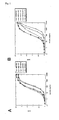
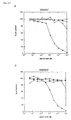
- Fig. 1 The results of the reactivity, examined by ELISA, of antibodies purified by protein G column from culture supernatants of the hybridomas obtained in this manner are shown in Fig. 1.
- the method is the same as the method of measuring the antibody titer in blood.
- antibodies reacting with the immobilized methylated BSA were contained in any of the culture supernatants.
- the anti-methyllysine rabbit polyclonal antibodies were prepared in the following procedure. Two rabbits (Japanese female white species) were immunized with the methylated KLH in a dose of 0.15mg/rabbit in first immunization and in a dose of 0.3mg/rabbit in second to fifth immunization. The back of the rabbit was administered subcutaneously with the methylated KLH as an emulsion with Freund complete adjuvant in the first immunization and as an emulsion with Freund incomplete adjuvant in the second and subsequent immunization. The immunization was conducted at 2-week intervals, and 1 week after the final immunization, whole blood was collected to prepare antiserum. 118 ml antiserum was obtained in total from the two rabbits.
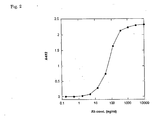
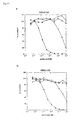
- Fig. 2 shows the results of the reactivity, determined by ELISA, of the purified anti-methyllysine rabbit polyclonal antibodies to the immobilized methylated BSA.
- the antibodies certainly having reactivity could be obtained according to this method.
- the polyclonal antibody-containing antiserum was purified by an affinity column having a methylated protein immobilized thereon.
- the affinity column having a methylated protein immobilized thereon was prepared by the following method. First, a carrier having BSA immobilized thereon was prepared in a first step. For immobilization, an Aminolink Immobilization kit available from Pierce was used. 2 ml agarose carrier activated with aldehyde was equilibrated with 5 ml coupling buffer, and then 10 mg BSA dissolved in 2 ml coupling buffer was added. 200 ⁇ l reductant solution was added and the BSA was bound to the carrier at room temperature for 6 hours.
- an Aminolink Immobilization kit available from Pierce was used. 2 ml agarose carrier activated with aldehyde was equilibrated with 5 ml coupling buffer, and then 10 mg BSA dissolved in 2 ml coupling buffer was added. 200 ⁇ l reductant solution was added and the BSA was bound to the carrier at room temperature for 6 hours.
- the carrier was washed with 5 ml coupling buffer, then 5 ml of 1 M ethanolamine was added thereto, and after 200 ⁇ l reductant solution was added, the mixture was reacted at room temperature for 30 minutes . After the reaction was finished, the carrier was washed 4 times with 5 ml wash solution and then equilibrated with 0.5 M borate buffer (pH 9.4) . After draining, 2 mg NaBH 4 dissolved in 2 ml borate buffer was added, and 2 ⁇ l formalin was added 5 times at 5-minute intervals. The reaction was continued at room temperature for 30 minutes and then the carrier was washed with PBS.
- the above affinity column can also be used in purification of monoclonal antibody.
- One example of the anti-methyllysine mouse monoclonal antibody is shown below.
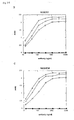
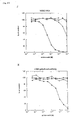
- Fig. 3 shows the results of examining, by ELISA, how each monoclonal antibody or rabbit polyclonal antibody established this time reacts with proteins BSA, KLH and ovalbumin (OVA) and with immobilized, chemically methylated versions thereof (referred to as MeK-BSA, MeK-KLH and MeK-OVA, respectively) obtained by the above-described method.
- Both the monoclonal antibodies and polyclonal antibodies exhibited strong reactivity to any of MeK-BSA, MeK-KLH and MeK-OVA, but hardly showed reactivity to the non-methylated proteins except for some cases.
- MEK5F7 and MEK2-5B11 at high concentrations exhibited weak reactivity to non-methylated OVA and slightly strong reactivity to the 3 non-methylated proteins, respectively, but the concentration of the antibodies exhibiting such reactivity should be at least 1000 times as high as the concentration of the antibodies exhibiting equivalent reactivity to the methylated proteins, and thus any of these antibodies can be said to be methylated site-specific antibodies.
- the rabbit polyclonal antibodies showed significantly strong reactivity to non-methylated KLH. The reason for this phenomenon is not evident, but from the viewpoint of the necessary concentration of the antibodies, they can still be said to be methylated site-specific antibodies. If it is desired to remove the antibodies showing such unspecific reaction, they may be absorbed onto a column having non-methylated KLH immobilized thereon.
- lysine methylated at s-amino group there are 3 kinds of lysines, that is, monomethyllysine, dimethyllysine and trimethyllysine.
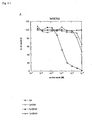
- a competitive experiment was carried out using each of the modified amino acids in order to confirm which of these lysines the antibody has stronger reactivity to or how specific for methyllysine the antibody is.
- any mouse monoclonal antibodies shown therein have detected bands considered as a plurality of methylated proteins and revealed to be useful in detecting intracellular methylated proteins.
- the band between the molecular weights of 14.4 k and 21.5 k is a band of histone, and from comparison of the intensity of this band, it appears that the anti-methyllysine antibodies established this time, regardless of whether they are monoclonal or polyclonal antibodies, are superior to the commercial antibodies.
- Elongation factor 1 ⁇ is a protein having a molecular weight of about 50 kD, known to be methylated at several sites in the molecule thereof, and this protein corresponds highly probably to a band at a position of a molecular weight in the vicinity of 50 kD in Fig. 5.
- MOLT-4F cells were lysed with a lysis buffer (120 mM NaCl, 1 mM CaCl 2 , 0.5% Nonidet P-40, 50 mM Tris-HCl, pH 8.0) containing a protease inhibitor mixture (Complete Mini EDTA-free, Roche) and then immune-precipitatedwith the anti-methyllysine antibody MEK2-5B11 or a commercial anti-EF-1 ⁇ antibody (clone CBP-KK1, Upstate Ltd.). The immune precipitate was developed with SDS polyacrylamide electrophoresis, then transferred onto a PVDF membrane and detected with HRP-labeled anti-methyllysine antibody MEK3D7 or anti-EF-1 ⁇ antibody.
- a lysis buffer 120 mM NaCl, 1 mM CaCl 2 , 0.5% Nonidet P-40, 50 mM Tris-HCl, pH 8.0
- a protease inhibitor mixture Complete Mini EDTA-free, Roche
- the immune precipitate was developed
- MOLT-4F cells were lysed with 9.8 M urea, 0.5% CHAPS, 10 mM DTT, and then 50 ⁇ g proteins were subjected to isoelectric focusing in one-dimensional development in the range of pH 3 to 10 and further separated by the electrophoresis on 12% SDS polyacrylamide gel. After transfer to a PVDF membrane, the proteins were detected with HRP-labeled anti-methyllysine antibody MEK3D7. The results are shown in Fig. 7. As can be seen from the figure, spots of a plurality of methyllysine-containing proteins can be detected with this antibody.
Landscapes
- Health & Medical Sciences (AREA)
- Chemical & Material Sciences (AREA)
- Immunology (AREA)
- Life Sciences & Earth Sciences (AREA)
- Molecular Biology (AREA)
- Engineering & Computer Science (AREA)
- Urology & Nephrology (AREA)
- General Health & Medical Sciences (AREA)
- Biochemistry (AREA)
- Medicinal Chemistry (AREA)
- Hematology (AREA)
- Organic Chemistry (AREA)
- Biomedical Technology (AREA)
- Genetics & Genomics (AREA)
- Food Science & Technology (AREA)
- Biotechnology (AREA)
- Cell Biology (AREA)
- Proteomics, Peptides & Aminoacids (AREA)
- Microbiology (AREA)
- Biophysics (AREA)
- Chemical Kinetics & Catalysis (AREA)
- Physics & Mathematics (AREA)
- Analytical Chemistry (AREA)
- General Physics & Mathematics (AREA)
- Pathology (AREA)
- Preparation Of Compounds By Using Micro-Organisms (AREA)
- Peptides Or Proteins (AREA)
- Micro-Organisms Or Cultivation Processes Thereof (AREA)
Applications Claiming Priority (2)
| Application Number | Priority Date | Filing Date | Title |
|---|---|---|---|
| JP2003403313 | 2003-12-02 | ||
| PCT/JP2004/017959 WO2005054296A1 (ja) | 2003-12-02 | 2004-12-02 | メチルリジンを認識する抗体及びその製造方法並びにその利用 |
Publications (1)
| Publication Number | Publication Date |
|---|---|
| EP1707576A1 true EP1707576A1 (de) | 2006-10-04 |
Family
ID=34650067
Family Applications (1)
| Application Number | Title | Priority Date | Filing Date |
|---|---|---|---|
| EP04819907A Withdrawn EP1707576A1 (de) | 2003-12-02 | 2004-12-02 | Methyllysin erkennende antikörper, verfahren zu deren herstellung und deren anwendung |
Country Status (4)
| Country | Link |
|---|---|
| US (1) | US20070111255A1 (de) |
| EP (1) | EP1707576A1 (de) |
| JP (1) | JPWO2005054296A1 (de) |
| WO (1) | WO2005054296A1 (de) |
Cited By (1)
| Publication number | Priority date | Publication date | Assignee | Title |
|---|---|---|---|---|
| CN108084047A (zh) * | 2014-07-25 | 2018-05-29 | 杭州景杰生物科技有限公司 | 一种制备特异性的丙酰甲基化赖氨酸泛抗体方法 |
Families Citing this family (3)
| Publication number | Priority date | Publication date | Assignee | Title |
|---|---|---|---|---|
| JP2007176872A (ja) * | 2005-12-28 | 2007-07-12 | Sentan Seimei Kagaku Kenkyusho:Kk | アシンメトリックジメチルアルギニンを認識する抗体及びその製造方法並びに翻訳後修飾アミノ酸含有タンパク質の検出方法 |
| EP2785870B1 (de) * | 2011-12-02 | 2017-05-03 | OncoTherapy Science, Inc. | Smyd2 als zielgen für krebstherapie und -diagnose |
| US10551390B2 (en) | 2014-07-25 | 2020-02-04 | PMT Biolabs Inc. | Lysine monomethylated derivative and corresponding antibody and use thereof |
Family Cites Families (1)
| Publication number | Priority date | Publication date | Assignee | Title |
|---|---|---|---|---|
| EP1313756A4 (de) * | 2000-08-25 | 2004-12-22 | Univ Virginia | Antikörper, die spezifisch für methylierte lysine in histonen sind |
-
2004
- 2004-12-02 US US10/581,811 patent/US20070111255A1/en not_active Abandoned
- 2004-12-02 WO PCT/JP2004/017959 patent/WO2005054296A1/ja not_active Ceased
- 2004-12-02 JP JP2005515969A patent/JPWO2005054296A1/ja not_active Withdrawn
- 2004-12-02 EP EP04819907A patent/EP1707576A1/de not_active Withdrawn
Non-Patent Citations (1)
| Title |
|---|
| See references of WO2005054296A1 * |
Cited By (1)
| Publication number | Priority date | Publication date | Assignee | Title |
|---|---|---|---|---|
| CN108084047A (zh) * | 2014-07-25 | 2018-05-29 | 杭州景杰生物科技有限公司 | 一种制备特异性的丙酰甲基化赖氨酸泛抗体方法 |
Also Published As
| Publication number | Publication date |
|---|---|
| JPWO2005054296A1 (ja) | 2008-02-28 |
| US20070111255A1 (en) | 2007-05-17 |
| WO2005054296A1 (ja) | 2005-06-16 |
Similar Documents
| Publication | Publication Date | Title |
|---|---|---|
| JP6715770B2 (ja) | モノクローナル抗tk1抗体 | |
| US9408922B2 (en) | Anti-tofacitinib antibodies and uses thereof for drug monitoring | |
| JPWO2005080435A1 (ja) | モノクローナル抗体およびその利用 | |
| WO2020253187A1 (zh) | 瘦素免疫原、杂交瘤细胞、单克隆抗体、多克隆抗体及应用 | |
| US9116152B2 (en) | Monoclonal antibodies which specifically recognize human liver-carboxylesterase 1, hybridoma cell lines which produce monoclonal antibodies, and uses thereof | |
| EP1707576A1 (de) | Methyllysin erkennende antikörper, verfahren zu deren herstellung und deren anwendung | |
| JPWO2009044561A1 (ja) | 抗proNT/NMNモノクローナル抗体 | |
| JP5770092B2 (ja) | ヒトhig1ポリペプチドに対するモノクローナル抗体 | |
| KR20210131045A (ko) | 소나무재선충 분비 항원 pwn-sa571 특이적 항체 및 이의 용도 | |
| US20110281284A1 (en) | Novel liver cancer marker | |
| KR20200099421A (ko) | 대칭적 디메틸아르기닌과 특이적으로 결합하는 항체 및 이의 용도 | |
| JPH1175839A (ja) | モノクローナル抗体、細胞株及びn1,n12−ジアセチルスペルミンの測定法 | |
| JP3623271B2 (ja) | 抗チロシナーゼモノクローナル抗体Fabフラグメント | |
| EP1261874B1 (de) | Specific monoclonal antibody against terbinafine | |
| US9017959B2 (en) | 5.9 kDa peptide immunoassay method | |
| CN117063070A (zh) | 恶性胰腺囊性肿瘤的判定辅助方法和判定辅助用试剂盒 | |
| JP2012070648A (ja) | マウスhig1ポリペプチドに対するモノクローナル抗体 | |
| EP1783142A1 (de) | Acetyllysin erkennender monoklonaler antikörper von der maus, markierter antikörper und dessen verwendung | |
| JP2001048900A (ja) | 抗体及びこれを使用した測定法 | |
| JPH11222500A (ja) | モノクローナル抗体、この抗体を産生するハイブリドーマ、この抗体を用いたd−3−メトキシ−4−ヒドロキシフェニルグリコールの測定方法及び測定用試薬 | |
| JP2005143504A (ja) | 抗体およびその用途 | |
| JP2000065829A (ja) | スタニオカルシンに対する抗体 | |
| JP2558956C (de) |
Legal Events
| Date | Code | Title | Description |
|---|---|---|---|
| PUAI | Public reference made under article 153(3) epc to a published international application that has entered the european phase |
Free format text: ORIGINAL CODE: 0009012 |
|
| 17P | Request for examination filed |
Effective date: 20060627 |
|
| AK | Designated contracting states |
Kind code of ref document: A1 Designated state(s): AT BE BG CH CY CZ DE DK EE ES FI FR GB GR HU IE IS IT LI LT LU MC NL PL PT RO SE SI SK TR |
|
| DAX | Request for extension of the european patent (deleted) | ||
| STAA | Information on the status of an ep patent application or granted ep patent |
Free format text: STATUS: THE APPLICATION HAS BEEN WITHDRAWN |
|
| 18W | Application withdrawn |
Effective date: 20070705 |