EP1708497A2 - Rundfunkempfänger - Google Patents
Rundfunkempfänger Download PDFInfo
- Publication number
- EP1708497A2 EP1708497A2 EP05112377A EP05112377A EP1708497A2 EP 1708497 A2 EP1708497 A2 EP 1708497A2 EP 05112377 A EP05112377 A EP 05112377A EP 05112377 A EP05112377 A EP 05112377A EP 1708497 A2 EP1708497 A2 EP 1708497A2
- Authority
- EP
- European Patent Office
- Prior art keywords
- display
- broadcast receiver
- output volume
- broadcast
- subtitle
- Prior art date
- Legal status (The legal status is an assumption and is not a legal conclusion. Google has not performed a legal analysis and makes no representation as to the accuracy of the status listed.)
- Withdrawn
Links
- 230000005236 sound signal Effects 0.000 claims description 18
- 230000007423 decrease Effects 0.000 claims description 10
- 230000002401 inhibitory effect Effects 0.000 claims description 3
- 238000000034 method Methods 0.000 description 41
- 230000002238 attenuated effect Effects 0.000 description 9
- 235000015220 hamburgers Nutrition 0.000 description 5
- 230000004075 alteration Effects 0.000 description 4
- 238000006243 chemical reaction Methods 0.000 description 4
- 230000005540 biological transmission Effects 0.000 description 2
- 230000003247 decreasing effect Effects 0.000 description 2
- 238000010586 diagram Methods 0.000 description 2
- 238000004891 communication Methods 0.000 description 1
- 239000000284 extract Substances 0.000 description 1
- 238000010295 mobile communication Methods 0.000 description 1
- 230000004048 modification Effects 0.000 description 1
- 238000012986 modification Methods 0.000 description 1
Images



Classifications
-
- H—ELECTRICITY
- H04—ELECTRIC COMMUNICATION TECHNIQUE
- H04N—PICTORIAL COMMUNICATION, e.g. TELEVISION
- H04N5/00—Details of television systems
- H04N5/44—Receiver circuitry for the reception of television signals according to analogue transmission standards
- H04N5/60—Receiver circuitry for the reception of television signals according to analogue transmission standards for the sound signals
-
- H—ELECTRICITY
- H04—ELECTRIC COMMUNICATION TECHNIQUE
- H04N—PICTORIAL COMMUNICATION, e.g. TELEVISION
- H04N21/00—Selective content distribution, e.g. interactive television or video on demand [VOD]
- H04N21/40—Client devices specifically adapted for the reception of or interaction with content, e.g. set-top-box [STB]; Operations thereof
- H04N21/41—Structure of client; Structure of client peripherals
- H04N21/4104—Peripherals receiving signals from specially adapted client devices
- H04N21/4126—The peripheral being portable, e.g. PDAs or mobile phones
- H04N21/41265—The peripheral being portable, e.g. PDAs or mobile phones having a remote control device for bidirectional communication between the remote control device and client device
-
- H—ELECTRICITY
- H04—ELECTRIC COMMUNICATION TECHNIQUE
- H04N—PICTORIAL COMMUNICATION, e.g. TELEVISION
- H04N21/00—Selective content distribution, e.g. interactive television or video on demand [VOD]
- H04N21/40—Client devices specifically adapted for the reception of or interaction with content, e.g. set-top-box [STB]; Operations thereof
- H04N21/41—Structure of client; Structure of client peripherals
- H04N21/422—Input-only peripherals, i.e. input devices connected to specially adapted client devices, e.g. global positioning system [GPS]
- H04N21/42203—Input-only peripherals, i.e. input devices connected to specially adapted client devices, e.g. global positioning system [GPS] sound input device, e.g. microphone
-
- H—ELECTRICITY
- H04—ELECTRIC COMMUNICATION TECHNIQUE
- H04N—PICTORIAL COMMUNICATION, e.g. TELEVISION
- H04N21/00—Selective content distribution, e.g. interactive television or video on demand [VOD]
- H04N21/40—Client devices specifically adapted for the reception of or interaction with content, e.g. set-top-box [STB]; Operations thereof
- H04N21/43—Processing of content or additional data, e.g. demultiplexing additional data from a digital video stream; Elementary client operations, e.g. monitoring of home network or synchronising decoder's clock; Client middleware
- H04N21/439—Processing of audio elementary streams
- H04N21/4394—Processing of audio elementary streams involving operations for analysing the audio stream, e.g. detecting features or characteristics in audio streams
-
- H—ELECTRICITY
- H04—ELECTRIC COMMUNICATION TECHNIQUE
- H04N—PICTORIAL COMMUNICATION, e.g. TELEVISION
- H04N21/00—Selective content distribution, e.g. interactive television or video on demand [VOD]
- H04N21/40—Client devices specifically adapted for the reception of or interaction with content, e.g. set-top-box [STB]; Operations thereof
- H04N21/47—End-user applications
-
- H—ELECTRICITY
- H04—ELECTRIC COMMUNICATION TECHNIQUE
- H04N—PICTORIAL COMMUNICATION, e.g. TELEVISION
- H04N21/00—Selective content distribution, e.g. interactive television or video on demand [VOD]
- H04N21/40—Client devices specifically adapted for the reception of or interaction with content, e.g. set-top-box [STB]; Operations thereof
- H04N21/47—End-user applications
- H04N21/478—Supplemental services, e.g. displaying phone caller identification, shopping application
-
- H—ELECTRICITY
- H04—ELECTRIC COMMUNICATION TECHNIQUE
- H04N—PICTORIAL COMMUNICATION, e.g. TELEVISION
- H04N21/00—Selective content distribution, e.g. interactive television or video on demand [VOD]
- H04N21/40—Client devices specifically adapted for the reception of or interaction with content, e.g. set-top-box [STB]; Operations thereof
- H04N21/47—End-user applications
- H04N21/485—End-user interface for client configuration
- H04N21/4852—End-user interface for client configuration for modifying audio parameters, e.g. switching between mono and stereo
-
- H—ELECTRICITY
- H04—ELECTRIC COMMUNICATION TECHNIQUE
- H04N—PICTORIAL COMMUNICATION, e.g. TELEVISION
- H04N21/00—Selective content distribution, e.g. interactive television or video on demand [VOD]
- H04N21/40—Client devices specifically adapted for the reception of or interaction with content, e.g. set-top-box [STB]; Operations thereof
- H04N21/47—End-user applications
- H04N21/488—Data services, e.g. news ticker
- H04N21/4884—Data services, e.g. news ticker for displaying subtitles
-
- H—ELECTRICITY
- H04—ELECTRIC COMMUNICATION TECHNIQUE
- H04N—PICTORIAL COMMUNICATION, e.g. TELEVISION
- H04N21/00—Selective content distribution, e.g. interactive television or video on demand [VOD]
- H04N21/40—Client devices specifically adapted for the reception of or interaction with content, e.g. set-top-box [STB]; Operations thereof
- H04N21/41—Structure of client; Structure of client peripherals
- H04N21/426—Internal components of the client ; Characteristics thereof
Definitions
- the present invention relates to a broadcast receiver such as a digital broadcast receiver that outputs broadcast audio.
- subtitle information In digital broadcast, there is a case where video information is accompanied with subtitle information.
- the display/non-display of the subtitle information can arbitrarily be set by the viewer/listener.
- the subtitle in this context, refers to displayed characters representing contents of, e.g. conversations in programs.
- the display of subtitles is always set in the ON state, it is possible to understand the content of broadcast audio from the displayed subtitles, even if the output of broadcast audio is temporarily attenuated, as mentioned above.
- the subtitles are laid over a picture and make the picture a little difficult to view.
- the display of subtitles is set in the OFF state.
- a broadcast receiver comprising: a varying unit which varies an output volume of broadcast audio, which is broadcast; a display unit which displays a subtitle, which represents content of the broadcast audio; and a control unit which controls the display unit to display the subtitle when the broadcast receiver is in an operation mode inhibiting displaying subtitles and when the output volume is less than a predetermined value.
- a broadcast receiver which includes an internal display or is connectable to an external display, comprising: a varying unit which varies an output volume of broadcast audio; a first control unit which controls the internal display or the external display such that a subtitle representative of content of the audio is displayed only at a time of an operation mode in which subtitles are displayed; and a second control unit which controls the internal display or the external display such that the subtitle is displayed when the broadcast receiver is in an operation mode in which subtitles are not displayed and when the output volume is less than a predetermined value.
- FIG. 1 is a block diagram that shows the structure of a broadcast receiver 1 according to the embodiment.
- a vehicle-mount-type digital broadcast receiver is assumed.
- An antenna 2, a TV monitor 3, a speaker 4 and a hands-free control device 7 are connected to the broadcast receiver 1.
- a mobile phone 5 and a microphone 6 are connected to the hands-free control device 7.
- the broadcast receiver 1 includes a tuner/demodulator circuit 1a, an MPEG-TS decoder 1b, a video decoder 1c, a subtitle/superimposed-character decoder 1d, a presenting process unit 1e, an audio decoder 1f, a D/A converter 1g, a volume control unit 1h, a remote controller 1i, a CPU 1j, a switch 1k, a ROM/RAM 1m and a CPU In.
- a reception signal that is received by the antenna 2 is delivered to the tuner/demodulator circuit 1a.
- the tuner/demodulator circuit 1a selects an arbitrary radio transmission channel, and demodulates a transport stream that is transmitted over the selected channel.
- the transport stream conforms to, e.g. MPEG-2.
- the radio channel to be selected is told from the CPU In to the tuner/demodulator circuit 1a.
- the MPEG-TS decoder 1b separates/extracts, from the transport stream, a video/audio stream, a data broadcast stream and subtitle/superimposed-character data, which relate to an arbitrary program.
- the program to be extracted is told from the CPU 1n to the MPEG-TS decoder 1b.
- the video recorder 1c decodes the video stream that is extracted by the MPEG-TS decoder 1b, and obtains video data.
- the subtitle/superimposed character decoder 1d decodes the subtitle/superimposed-character data that is extracted by the MPEG-TS decoder 1b, and obtains video data that is representative of subtitles or superimposed characters.
- the subtitle refers to a character string that represents, in usual cases, content of broadcast audio such as spoken lines, which accompanies a broadcast program.
- the superimposed character refers to a character string such as earthquake information, which is not related to the broadcast program.
- the presenting process unit 1e generates a video signal that represents video for display.
- the video for display refers to a picture that is produced by combining, where necessary, video represented by video data output from the subtitle/superimposed character decoder 1d, with video represented by video data output from the video decoder 1c.
- the TV monitor 3 displays a picture on the basis of the video signal output from the presenting process unit 1e.
- the CPU 1j instructs whether the subtitle/superimposed character is to be displayed or not.
- the audio decoder 1f decodes the audio stream that is extracted by the MPEG-TS decoder 1b, and obtains audio data.
- the D/A converter 1g subjects the audio data to D/A conversion, thereby obtaining an audio signal.
- the audio signal, which is obtained by the D/A converter 1g is referred to as "broadcast audio signal”.
- the volume control unit 1h adjusts the signal level of the broadcast audio signal under the control of the CPU 1j.
- the broadcast audio signal with the adjusted signal level is input to one input terminal of the switch 1k.
- an audio signal (hereinafter referred to as "reception-call audio signal”) that is received by the mobile phone 5 is input via the hands-free control device 7.
- the switch 1k selects one of the broadcast audio signal and the reception-call audio signal under the control of the CPU 1j.
- the speaker 4 reproduces the broadcast audio or the reception-call audio, on the basis of the broadcast audio signal or the reception-call audio signal, which is selected by the switch 1k.
- the volume control unit 1h adjusts an output volume in connection with the broadcast audio.
- the remote controller 1i inputs an instruction to vary the output volume relating to the broadcast audio.
- the CPU 1j controls the volume control unit 1h so as to vary the output volume of the broadcast audio in accordance with the volume-varying instruction that is input from the remote controller 1i.
- the CPU 1j controls the switch 1k in accordance with the operation state of the mobile phone 5.
- the CPU 1j controls the presenting process unit 1e in accordance with the output volume of the broadcast audio or the operation state of the mobile phone 5.
- the ROM/RAM 1m stores, e.g. a control program for the CPU In.
- the CPU 1n controls the tuner/demodulator circuit 1a, MPEG-TS decoder 1b, video decoder 1c, subtitle/superimposed-character decoder 1d and audio decoder 1f so as to receive an arbitrary program.
- the mobile phone 5 executes telephone communication over a mobile communication network.
- the microphone 6 receives a transmission-call voice and generates a corresponding transmission-call audio signal.
- the hands-free control device 7 monitors the operation state of the mobile phone 5 and informs the CPU 1j of the monitored operation state.
- the hands-free control device 7 sends the reception-call audio signal, which is received by the mobile phone 5, to the switch 1k.
- the hands-free control device 7 sends the transmission-call audio signal, which is output from the microphone 6, to the mobile phone 5.
- One of many broadcast programs which is designated by, e.g. the user, is extracted by the tuner/demodulator circuit 1a and MPEG-TS decoder 1b. If the program includes a video stream, a picture represented by the video stream is displayed on the TV monitor 3 by the video decoder 1c and presenting process unit 1e. If the program includes an audio stream, broadcast audio that is represented by the audio stream is reproduced from the speaker 4 by the audio decoder 1f, D/A converter 1g and volume control unit 1h. If the program includes subtitle/superimposed-character data, subtitles or superimposed characters represented by the subtitle/superimposed-character data can be displayed on the TV monitor 3 by the subtitle/superimposed-character decoder 1d and presenting process unit 1e.
- the subtitle/superimposed-character data is not always displayed but is displayed only where necessary in accordance with the subtitle display setting by the presenting process unit 1e under the control of the CPU 1j.
- the subtitle display setting is one of setting items of the broadcast receiver 1, which is set by the user.
- the CPU 1j manages the subtitle display setting in accordance with an instruction that is input by the user through the remote controller 1i.
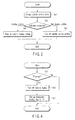
- FIG. 2 is a flow chart that illustrates a process procedure of the CPU 1j, which relates to a change of the subtitle display setting.
- step Sa1 the CPU 1j controls the presenting process unit 1e to cause the TV monitor 3 to display a subtitle control menu.
- the subtitle control menu is a menu showing items that can be designated by the user in connection with subtitles.
- the subtitle control menu includes selection items of "display subtitles" and “not display subtitles”. Based on the subtitle control menu, the user designates “display subtitles” or “not display subtitles” by means of the remote controller 1i.
- step Sa2 the CPU 1j confirms whether a selection operation for designating "display subtitles" and "not display subtitles" has been executed by the remote controller 1i. If “display subtitles” is designated, the CPU 1j advances from step Sa2 to step Sa3. In step Sa3, the CPU 1j sets the subtitle display setting in the ON state. On the other hand, if "not display subtitles” is designated, the CPU 1j advances from step Sa2 to step Sa4. In step Sa4, the CPU 1j sets the subtitle display setting in the OFF state.
- the mobile phone 5 informs the CPU 1j via the hands-free control device 7 of the call reception/transmission. Responding to the information, the CPU 1j operates the switch 1k so as to select the hands-free control device 7. If the telephone call is finished by the mobile phone 5, the mobile phone 5 informs the CPU 1j via the hands-free control device 7 of the end of the telephone call. Responding to this, the CPU 1j operates the switch 1k so as to select the volume control unit 1h. In the description below, the state in which the switch 1k selects the hands-free control device is referred to as "call-ON state".
- the CPU 1j executes a process, as shown in FIG. 3, at a predetermined timing, e.g. at predetermined time intervals.
- step Sb1 the CPU 1j confirms whether the present state is the call-ON state or not. If the present state is the call-ON state, the CPU 1j advances from step Sb1 to step Sb2. In step Sb2, the CPU 1j confirms the subtitle display setting. If the subtitle display setting is in the OFF state, the CPU 1j advances from step Sb2 to step Sb3. In step Sb3, the CPU 1j confirms a temporary display flag. The temporary display flag is initialized to "0" when the broadcast receiver 1 is powered on. If the temporary display flag is "0", the CPU 1j advances from step Sb3 to step Sb4.
- step Sb4 the CPU 1j instructs the presenting process unit 1e to turn on the subtitle display.
- the presenting process section 1e causes the TV monitor 3 to display a subtitle that is represented by the subtitle data output from the subtitle/superimposed-character decoder 1d.
- step Sb5 the CPU 1j changes the temporary display flag to "1", and completes the process of FIG. 3.
- the broadcast audio is muted, and the call voice is output from the speaker 4.
- the subtitle is displayed even if the subtitle display setting is in the OFF state.
- the display of subtitles in this state is referred to as "temporary display". While the temporary display is being executed, the temporary display flag is changed to "1".
- step Sb2 or step Sb3 the display of subtitles is already effected. Accordingly, the CPU 1j advances from step Sb2 or step Sb3 and completes the process of FIG. 3. Thus, the current operation state is maintained.
- step Sb6 the CPU 1j confirms the temporary display flag. Immediately after the end of the call that caused the temporary display to begin, the temporary display flag is "1". If the temporary display flag is "1", the CPU 1j advances from step Sb6 to step Sb7. In step Sb7, the CPU 1j activates a timer and then completes the process of FIG. 3.
- the timer is realized by the process of another routine, which is executed by the CPU 1j.
- the timer measures a preset time (e.g. 3 seconds). The time to be measured by the timer may be fixed or may arbitrarily be set by the user.
- step Sb6 the CPU 1j advances from step Sb6 and completes the process of FIG. 3. Thus, the current operation state is maintained.
- the CPU 1j executes a process of FIG. 4 at a predetermined timing, e.g. at predetermined time intervals.
- step Sc1 the CPU 1j confirms whether time-out occurs in the timer. If time-out occurs in the timer, the CPU 1j advances from step Sc1 to step Sc2. In step Sc2, the CPU 1j instructs the presenting process unit 1e to turn off the subtitle display. Upon receiving the instruction, the presenting process unit 1e stops the display of subtitles. Thereby, the temporary display is set in the OFF state. In step Sc3, the CPU 1j changes the temporary display flag to "0" and completes the process of FIG. 4.
- step Sc1 If time-out does not occur in the timer, the CPU 1j advances from step Sc1 and completes the process of FIG. 4. Thus, the current operation state is maintained.
- the temporary display After the end of the call that caused temporary display to begin, the temporary display is continued for the time being. Upon time-out of the timer, the temporary display is stopped.
- the user can instruct an increase or a decrease in output volume of broadcast audio, using the remote controller 1i. If this operation is started, the CPU 1j executes a process as illustrated in FIG. 5.
- step Sd1 the CPU 1j confirms the content of the volume operation. If a decrease in volume is instructed, the CPU 1j advances from step Sd1 to step Sd2. In step Sd2, the CPU 1j confirms whether the current volume is a minimum value. If it is not the minimum value, the CPU 1j advances from step Sd2 to step Sd3. In step Sd3, the CPU 1j instructs the volume control unit 1h to attenuate the volume by one step. Upon receiving the instruction, the volume control unit 1h decreases the signal level of the broadcast audio signal at a predetermined rate.
- step Sd4 the CPU 1j confirms the subtitle display setting. If the subtitle display setting is in the OFF state, the CPU 1j advances from step Sd4 to step Sd5. In step Sd5, the CPU 1j determines whether the attenuated volume agrees with a threshold value. If the attenuated volume agrees with the threshold value, the CPU 1j advances from step Sd5 to step Sd6. In step Sd6, the CPU 1j instructs the presenting process unit 1e to set the subtitle display in the ON state. Upon receiving the instruction, the presenting process unit 1e causes the TV monitor 3 to display a subtitle that is represented by the subtitle data output from the subtitle/superimposed-character decoder 1d.
- step Sd7 the CPU 1j changes the temporary display flag to "1", and completes the process of FIG. 5.
- the output volume of broadcast audio is decreased by the instruction from the user. If the volume decreases to the threshold value, the subtitle is displayed even if the subtitle display setting is in the OFF state. Then, the temporary flag is set at "1".
- the CPU 1j advances from step Sd2, Sd4 or Sd5 and completes the process of FIG. 5. Thus, the current operation state is maintained.
- step Sd8 the CPU 1j determines whether the current volume is a maximum value. If the current volume is not the maximum value, the CPU 1j advances from step Sd8 to step Sd9.
- step Sd9 the CPU 1j instructs the volume control unit 1h to increase the volume by one step. Upon receiving the instruction, the volume control unit 1h increases the signal level of the broadcast audio signal at a predetermined rate.
- step Sd10 the CPU 1j determines whether the increased volume agrees with a threshold value. If the increased volume agrees with the threshold value, the CPU 1j advances from step Sd10 to step Sd11. In step Sd11, the CPU 1j confirms the temporary display flag. In the case where the temporary display is effected by the decrease in volume, as mentioned above, the temporary display flag is "1". If the temporary display flag is "1", the CPU 1j advances from step Sd11 to step Sd12. In step Sd12, the CPU 1j activates the timer and completes the process of FIG. 5. This timer is the same as the timer that is activated in the process of FIG. 3.
- the CPU 1j advances from step Sd8, Sd10 or Sd11 and completes the process of FIG. 5. Thus, the current operation state is maintained.
- the subtitle is displayed even if the subtitle display setting is in the OFF state.
- the output volume of broadcast audio is decreased to the threshold value or less
- the subtitle is displayed even if the subtitle display setting is in the OFF state.
- it is difficult to hear the content of broadcast audio but it is possible to visually confirm the content of broadcast audio by subtitles.
- these users do not need to turn on/off the subtitle display setting.
- Subtitles on digital broadcast are, as much as possible, consistent with the content of conversations in the actual broadcast.
- a broadcast program contains a conversion: "Mother, I want to have hamburger for supper. It's a great favorite of mine”.
- subtitles, “Mother, I want to have hamburger for supper. It's a great favorite of mine.” are prepared for display during this time. Accordingly, the subtitles, "Mother, I want to have hamburger for supper. It's a great favorite of mine.”, are displayed even if the display of subtitles is turned on at a timing during the conversation, for example, at a timing when the beginning word "Mother" is uttered in the conversation.
- the display of subtitles is started when broadcast audio is muted or the output volume of broadcast audio is attenuated, the user has no unnatural feeling.
- the display of subtitles is turned off at a timing when the muting of broadcast audio is released or when the output volume of broadcast audio is increased, the user may have unnatural feeling or the user may be unable to exactly understand the content of broadcast audio.
- the subtitles "Mother, I want to have hamburger for supper. It's a great favorite of mine.”
- the display of subtitles is turned off at a timing when the beginning word "Mother” is uttered in the conversation, the above subtitles are displayed only for a moment, and then the audio, "I want to have hamburger for supper. It's a great favorite of mine.”, is output.
- the temporary display of subtitles is continued during the time that is measured by the timer. During this time, the user can exactly understand the content of the broadcast audio from both the broadcast audio and subtitles.
- the temporary display of subtitles in the present invention can be executed regardless of an event that is a trigger for the muting or attenuation. For example, a signal indicative of the on-hook/off-hook state of the phone may be input. When the phone is in the off-hook state, the broadcast audio may be muted or the output volume of broadcast audio may be attenuated, and the temporary display of subtitles may be effected. This modification is effective in such a case that a reception-call voice is not output from the speaker of the broadcast receiver, but the broadcast receiver and the telephone are operated in cooperation so as to prevent the output of broadcast audio from hindering the telephone conversation.
- the present invention is applicable to a portable-type or a stationary-type broadcast receiver.
- the phone to be connected may be another type of phone such as a wired phone.
- the present invention is applicable to a broadcast receiver that receives analog broadcast.
- One or more of, or all of, the antenna 2, TV monitor 3, speaker 4, mobile phone 5, microphone 6 and hands-free control device 7 may be incorporated in the broadcast receiver 1.
- Subtitles may be generated by the broadcast receiver 1 on the basis of a result of speech recognition of broadcast audio.
Landscapes
- Engineering & Computer Science (AREA)
- Multimedia (AREA)
- Signal Processing (AREA)
- Human Computer Interaction (AREA)
- Television Receiver Circuits (AREA)
- Two-Way Televisions, Distribution Of Moving Picture Or The Like (AREA)
- Circuits Of Receivers In General (AREA)
Applications Claiming Priority (1)
| Application Number | Priority Date | Filing Date | Title |
|---|---|---|---|
| JP2005096391A JP2006279592A (ja) | 2005-03-29 | 2005-03-29 | 放送受信機 |
Publications (2)
| Publication Number | Publication Date |
|---|---|
| EP1708497A2 true EP1708497A2 (de) | 2006-10-04 |
| EP1708497A3 EP1708497A3 (de) | 2007-08-22 |
Family
ID=36569967
Family Applications (1)
| Application Number | Title | Priority Date | Filing Date |
|---|---|---|---|
| EP05112377A Withdrawn EP1708497A3 (de) | 2005-03-29 | 2005-12-19 | Rundfunkempfänger |
Country Status (3)
| Country | Link |
|---|---|
| US (1) | US7659942B2 (de) |
| EP (1) | EP1708497A3 (de) |
| JP (1) | JP2006279592A (de) |
Cited By (2)
| Publication number | Priority date | Publication date | Assignee | Title |
|---|---|---|---|---|
| EP2663085A3 (de) * | 2012-05-09 | 2013-12-11 | Lg Electronics Inc. | Mobiles Endgerät und Steuerungsverfahren dafür |
| WO2017211400A1 (en) * | 2016-06-08 | 2017-12-14 | Arcelik Anonim Sirketi | Image display device with conditional volume level adjustment function |
Families Citing this family (14)
| Publication number | Priority date | Publication date | Assignee | Title |
|---|---|---|---|---|
| US7444388B1 (en) * | 2006-04-13 | 2008-10-28 | Concert Technology Corporation | System and method for obtaining media content for a portable media player |
| US8307092B2 (en) * | 2007-02-21 | 2012-11-06 | Napo Enterprises, Llc | Method and system for collecting information about a user's media collections from multiple login points |
| JP5372916B2 (ja) * | 2008-10-10 | 2013-12-18 | パナソニック株式会社 | 映像出力装置及び映像出力方法 |
| JP5735269B2 (ja) * | 2010-12-24 | 2015-06-17 | 京セラ株式会社 | 受信装置、携帯通信端末、字幕表示制御プログラムおよび字幕表示制御方法 |
| JP5685969B2 (ja) * | 2011-02-15 | 2015-03-18 | ソニー株式会社 | 表示制御方法、表示制御装置 |
| KR101830656B1 (ko) * | 2011-12-02 | 2018-02-21 | 엘지전자 주식회사 | 이동 단말기 및 이의 제어방법 |
| JP6029341B2 (ja) * | 2012-06-15 | 2016-11-24 | アルパイン株式会社 | 車載用デジタル放送受信装置および字幕表示制御方法 |
| US9210360B2 (en) * | 2012-12-28 | 2015-12-08 | Echostar Uk Holdings Limited | Volume level-based closed-captioning control |
| US10466955B1 (en) * | 2014-06-24 | 2019-11-05 | A9.Com, Inc. | Crowdsourced audio normalization for presenting media content |
| US9596429B2 (en) * | 2015-05-08 | 2017-03-14 | Echostar Technologies L.L.C. | Apparatus, systems and methods for providing content when loud background noise is present |
| CN105828118A (zh) * | 2016-03-22 | 2016-08-03 | 乐视网信息技术(北京)股份有限公司 | 视频推送方法及装置 |
| JP6800052B2 (ja) * | 2017-03-06 | 2020-12-16 | 三菱電機株式会社 | 映像表示装置 |
| US10917687B2 (en) * | 2017-12-13 | 2021-02-09 | Google Llc | Methods, systems, and media for presenting caption information based on volume setting adjustments |
| US11290786B2 (en) | 2019-09-13 | 2022-03-29 | Dish Network L.L.C. | Systems and methods for controlling closed captioning |
Citations (2)
| Publication number | Priority date | Publication date | Assignee | Title |
|---|---|---|---|---|
| JPH10320892A (ja) | 1997-05-14 | 1998-12-04 | Daihatsu Motor Co Ltd | 車載用オーディオ装置の制御方法 |
| JP2003263872A (ja) | 2002-03-11 | 2003-09-19 | Alpine Electronics Inc | オーディオ出力装置 |
Family Cites Families (10)
| Publication number | Priority date | Publication date | Assignee | Title |
|---|---|---|---|---|
| JP2964777B2 (ja) * | 1992-06-08 | 1999-10-18 | 松下電器産業株式会社 | ミュート回路 |
| US5327176A (en) | 1993-03-01 | 1994-07-05 | Thomson Consumer Electronics, Inc. | Automatic display of closed caption information during audio muting |
| GB9823615D0 (en) | 1998-10-29 | 1998-12-23 | Video Tech Designs Plc | Video signal processing device and method |
| US6760415B2 (en) * | 2000-03-17 | 2004-07-06 | Qwest Communications International Inc. | Voice telephony system |
| US20020154246A1 (en) | 2001-04-19 | 2002-10-24 | Hawkins Bret David | Method and apparatus for control of auxiliary video information display |
| TWI238016B (en) * | 2001-08-30 | 2005-08-11 | Primax Electronics Ltd | Audio system with automatic mute control triggered by wireless communication of mobile phones |
| US7502386B2 (en) * | 2002-03-27 | 2009-03-10 | Mitsubishi Denki Kabushiki Kaisha | Communication apparatus and communication method |
| DE60213569T2 (de) | 2002-06-05 | 2006-11-30 | Alcatel | Freisprechkommunikationssystem für Mobiltelefon wie auch ein Mobiltelefon und ein Audiosystem dafür |
| JP4128916B2 (ja) | 2003-08-15 | 2008-07-30 | 株式会社東芝 | 字幕制御装置および方法ならびにプログラム |
| KR101041810B1 (ko) * | 2004-08-27 | 2011-06-17 | 엘지전자 주식회사 | 영상기기 및 그의 자동 캡션 수행 방법 |
-
2005
- 2005-03-29 JP JP2005096391A patent/JP2006279592A/ja active Pending
- 2005-12-16 US US11/303,540 patent/US7659942B2/en not_active Expired - Fee Related
- 2005-12-19 EP EP05112377A patent/EP1708497A3/de not_active Withdrawn
Patent Citations (2)
| Publication number | Priority date | Publication date | Assignee | Title |
|---|---|---|---|---|
| JPH10320892A (ja) | 1997-05-14 | 1998-12-04 | Daihatsu Motor Co Ltd | 車載用オーディオ装置の制御方法 |
| JP2003263872A (ja) | 2002-03-11 | 2003-09-19 | Alpine Electronics Inc | オーディオ出力装置 |
Cited By (3)
| Publication number | Priority date | Publication date | Assignee | Title |
|---|---|---|---|---|
| EP2663085A3 (de) * | 2012-05-09 | 2013-12-11 | Lg Electronics Inc. | Mobiles Endgerät und Steuerungsverfahren dafür |
| US9225957B2 (en) | 2012-05-09 | 2015-12-29 | Lg Electronics Inc. | Mobile terminal and controlling method thereof |
| WO2017211400A1 (en) * | 2016-06-08 | 2017-12-14 | Arcelik Anonim Sirketi | Image display device with conditional volume level adjustment function |
Also Published As
| Publication number | Publication date |
|---|---|
| US7659942B2 (en) | 2010-02-09 |
| US20060221257A1 (en) | 2006-10-05 |
| JP2006279592A (ja) | 2006-10-12 |
| EP1708497A3 (de) | 2007-08-22 |
Similar Documents
| Publication | Publication Date | Title |
|---|---|---|
| EP1708497A2 (de) | Rundfunkempfänger | |
| JP3905509B2 (ja) | デジタルマルチメディア放送受信用移動端末における音声通話時のオーディオ信号を処理する装置及び方法 | |
| US6731727B2 (en) | Methods for displaying caller identification information on an integrated display/telephone system capable of displaying images | |
| KR100574733B1 (ko) | 통신 장치 및 통신 방법 | |
| JP4402677B2 (ja) | 通信装置 | |
| US6487422B1 (en) | Wireless telephone having remote controller function | |
| US6243448B1 (en) | Video caller identification systems and methods | |
| JP2005117630A (ja) | デジタルマルチメディア放送受信用の移動通信端末機のオーディオ送出装置及び方法 | |
| JPH07123376A (ja) | 文字多重放送受信装置 | |
| JP2006333238A (ja) | 音声信号処理装置 | |
| KR100662867B1 (ko) | 아날로그 오디오의 디지털 변환장치 | |
| JP2000278628A (ja) | 受信装置 | |
| KR100698643B1 (ko) | 이종(異種)음 동시 출력이 가능한 이동 통신 단말기와이종음 동시 출력방법 | |
| JP2006211431A (ja) | ストリ−ム受信機能付き電話機およびストリーム受信機能付き電話機におけるストリーム再生方法 | |
| KR101276833B1 (ko) | 수신기 및 이 수신기에서 데이터 방송을 시청하는 방법 | |
| KR100896417B1 (ko) | 인간 청각 특성을 이용한 복수 채널 오디오 동시 제공 장치및 방법 | |
| JP4988022B2 (ja) | 映像表示装置及び音声出力制御方法 | |
| JP4799182B2 (ja) | 放送受信機能付き携帯通信端末 | |
| KR100746084B1 (ko) | 영상/음성 부분출력 차단 장치 및 방법 | |
| KR100338215B1 (ko) | 전화기기능을갖는디지털방송수신기 | |
| KR930003759A (ko) | Tv 수상기를 이용한 비디오 인터폰 및 전화기 장치와 통신 제어 방법 | |
| JP2008182461A (ja) | 映像表示システム | |
| JP2010098522A (ja) | デジタル放送受信機 | |
| KR20030072535A (ko) | 디지털방송수신기의 자동 녹화 방법 | |
| KR20060063455A (ko) | 티브이 시스템의 음향 출력 제어 방법 |
Legal Events
| Date | Code | Title | Description |
|---|---|---|---|
| PUAI | Public reference made under article 153(3) epc to a published international application that has entered the european phase |
Free format text: ORIGINAL CODE: 0009012 |
|
| 17P | Request for examination filed |
Effective date: 20051220 |
|
| AK | Designated contracting states |
Kind code of ref document: A2 Designated state(s): AT BE BG CH CY CZ DE DK EE ES FI FR GB GR HU IE IS IT LI LT LU LV MC NL PL PT RO SE SI SK TR |
|
| AX | Request for extension of the european patent |
Extension state: AL BA HR MK YU |
|
| PUAL | Search report despatched |
Free format text: ORIGINAL CODE: 0009013 |
|
| AK | Designated contracting states |
Kind code of ref document: A3 Designated state(s): AT BE BG CH CY CZ DE DK EE ES FI FR GB GR HU IE IS IT LI LT LU LV MC NL PL PT RO SE SI SK TR |
|
| AX | Request for extension of the european patent |
Extension state: AL BA HR MK YU |
|
| 17Q | First examination report despatched |
Effective date: 20070921 |
|
| AKX | Designation fees paid |
Designated state(s): DE FR GB |
|
| STAA | Information on the status of an ep patent application or granted ep patent |
Free format text: STATUS: THE APPLICATION IS DEEMED TO BE WITHDRAWN |
|
| 18D | Application deemed to be withdrawn |
Effective date: 20110615 |