EP1710309A2 - Verwendung des gens ncsag4 zur diagnose und prävention von neosporose und als marker für die analyse der pathogenese - Google Patents
Verwendung des gens ncsag4 zur diagnose und prävention von neosporose und als marker für die analyse der pathogenese Download PDFInfo
- Publication number
- EP1710309A2 EP1710309A2 EP04805072A EP04805072A EP1710309A2 EP 1710309 A2 EP1710309 A2 EP 1710309A2 EP 04805072 A EP04805072 A EP 04805072A EP 04805072 A EP04805072 A EP 04805072A EP 1710309 A2 EP1710309 A2 EP 1710309A2
- Authority
- EP
- European Patent Office
- Prior art keywords
- caninum
- sag4
- gene
- seq
- pcr
- Prior art date
- Legal status (The legal status is an assumption and is not a legal conclusion. Google has not performed a legal analysis and makes no representation as to the accuracy of the status listed.)
- Granted
Links
- 108090000623 proteins and genes Proteins 0.000 title claims abstract description 116
- 238000003745 diagnosis Methods 0.000 title claims abstract description 23
- 238000004458 analytical method Methods 0.000 title abstract description 8
- 239000003550 marker Substances 0.000 title abstract description 7
- 230000008506 pathogenesis Effects 0.000 title abstract description 7
- 230000002265 prevention Effects 0.000 title abstract description 7
- 241001147662 Neospora caninum Species 0.000 claims abstract description 65
- 102000004169 proteins and genes Human genes 0.000 claims abstract description 42
- 108091034117 Oligonucleotide Proteins 0.000 claims abstract description 34
- JLCPHMBAVCMARE-UHFFFAOYSA-N [3-[[3-[[3-[[3-[[3-[[3-[[3-[[3-[[3-[[3-[[3-[[5-(2-amino-6-oxo-1H-purin-9-yl)-3-[[3-[[3-[[3-[[3-[[3-[[5-(2-amino-6-oxo-1H-purin-9-yl)-3-[[5-(2-amino-6-oxo-1H-purin-9-yl)-3-hydroxyoxolan-2-yl]methoxy-hydroxyphosphoryl]oxyoxolan-2-yl]methoxy-hydroxyphosphoryl]oxy-5-(5-methyl-2,4-dioxopyrimidin-1-yl)oxolan-2-yl]methoxy-hydroxyphosphoryl]oxy-5-(6-aminopurin-9-yl)oxolan-2-yl]methoxy-hydroxyphosphoryl]oxy-5-(6-aminopurin-9-yl)oxolan-2-yl]methoxy-hydroxyphosphoryl]oxy-5-(6-aminopurin-9-yl)oxolan-2-yl]methoxy-hydroxyphosphoryl]oxy-5-(6-aminopurin-9-yl)oxolan-2-yl]methoxy-hydroxyphosphoryl]oxyoxolan-2-yl]methoxy-hydroxyphosphoryl]oxy-5-(5-methyl-2,4-dioxopyrimidin-1-yl)oxolan-2-yl]methoxy-hydroxyphosphoryl]oxy-5-(4-amino-2-oxopyrimidin-1-yl)oxolan-2-yl]methoxy-hydroxyphosphoryl]oxy-5-(5-methyl-2,4-dioxopyrimidin-1-yl)oxolan-2-yl]methoxy-hydroxyphosphoryl]oxy-5-(5-methyl-2,4-dioxopyrimidin-1-yl)oxolan-2-yl]methoxy-hydroxyphosphoryl]oxy-5-(6-aminopurin-9-yl)oxolan-2-yl]methoxy-hydroxyphosphoryl]oxy-5-(6-aminopurin-9-yl)oxolan-2-yl]methoxy-hydroxyphosphoryl]oxy-5-(4-amino-2-oxopyrimidin-1-yl)oxolan-2-yl]methoxy-hydroxyphosphoryl]oxy-5-(4-amino-2-oxopyrimidin-1-yl)oxolan-2-yl]methoxy-hydroxyphosphoryl]oxy-5-(4-amino-2-oxopyrimidin-1-yl)oxolan-2-yl]methoxy-hydroxyphosphoryl]oxy-5-(6-aminopurin-9-yl)oxolan-2-yl]methoxy-hydroxyphosphoryl]oxy-5-(4-amino-2-oxopyrimidin-1-yl)oxolan-2-yl]methyl [5-(6-aminopurin-9-yl)-2-(hydroxymethyl)oxolan-3-yl] hydrogen phosphate Polymers Cc1cn(C2CC(OP(O)(=O)OCC3OC(CC3OP(O)(=O)OCC3OC(CC3O)n3cnc4c3nc(N)[nH]c4=O)n3cnc4c3nc(N)[nH]c4=O)C(COP(O)(=O)OC3CC(OC3COP(O)(=O)OC3CC(OC3COP(O)(=O)OC3CC(OC3COP(O)(=O)OC3CC(OC3COP(O)(=O)OC3CC(OC3COP(O)(=O)OC3CC(OC3COP(O)(=O)OC3CC(OC3COP(O)(=O)OC3CC(OC3COP(O)(=O)OC3CC(OC3COP(O)(=O)OC3CC(OC3COP(O)(=O)OC3CC(OC3COP(O)(=O)OC3CC(OC3COP(O)(=O)OC3CC(OC3COP(O)(=O)OC3CC(OC3COP(O)(=O)OC3CC(OC3COP(O)(=O)OC3CC(OC3COP(O)(=O)OC3CC(OC3CO)n3cnc4c(N)ncnc34)n3ccc(N)nc3=O)n3cnc4c(N)ncnc34)n3ccc(N)nc3=O)n3ccc(N)nc3=O)n3ccc(N)nc3=O)n3cnc4c(N)ncnc34)n3cnc4c(N)ncnc34)n3cc(C)c(=O)[nH]c3=O)n3cc(C)c(=O)[nH]c3=O)n3ccc(N)nc3=O)n3cc(C)c(=O)[nH]c3=O)n3cnc4c3nc(N)[nH]c4=O)n3cnc4c(N)ncnc34)n3cnc4c(N)ncnc34)n3cnc4c(N)ncnc34)n3cnc4c(N)ncnc34)O2)c(=O)[nH]c1=O JLCPHMBAVCMARE-UHFFFAOYSA-N 0.000 claims abstract description 26
- 229960005486 vaccine Drugs 0.000 claims abstract description 20
- 208000037581 Persistent Infection Diseases 0.000 claims abstract description 17
- 239000012634 fragment Substances 0.000 claims abstract description 17
- 239000002773 nucleotide Substances 0.000 claims abstract description 12
- 125000003729 nucleotide group Chemical group 0.000 claims abstract description 12
- 239000013604 expression vector Substances 0.000 claims abstract description 6
- 238000002255 vaccination Methods 0.000 claims abstract description 5
- 239000013612 plasmid Substances 0.000 claims description 31
- 108010008281 Recombinant Fusion Proteins Proteins 0.000 claims description 26
- 102000007056 Recombinant Fusion Proteins Human genes 0.000 claims description 26
- 238000000034 method Methods 0.000 claims description 26
- 241001465754 Metazoa Species 0.000 claims description 18
- 241000894006 Bacteria Species 0.000 claims description 13
- 244000045947 parasite Species 0.000 claims description 13
- 108090000765 processed proteins & peptides Proteins 0.000 claims description 13
- 229920001184 polypeptide Polymers 0.000 claims description 12
- 102000004196 processed proteins & peptides Human genes 0.000 claims description 12
- 238000003757 reverse transcription PCR Methods 0.000 claims description 12
- 150000001413 amino acids Chemical class 0.000 claims description 11
- 238000001514 detection method Methods 0.000 claims description 11
- 239000013598 vector Substances 0.000 claims description 10
- 238000002965 ELISA Methods 0.000 claims description 8
- 239000000203 mixture Substances 0.000 claims description 8
- 108091033319 polynucleotide Proteins 0.000 claims description 8
- 102000040430 polynucleotide Human genes 0.000 claims description 8
- 239000002157 polynucleotide Substances 0.000 claims description 8
- 102000004190 Enzymes Human genes 0.000 claims description 7
- 108090000790 Enzymes Proteins 0.000 claims description 7
- 238000003780 insertion Methods 0.000 claims description 5
- 230000037431 insertion Effects 0.000 claims description 5
- 210000002966 serum Anatomy 0.000 claims description 5
- 230000003321 amplification Effects 0.000 claims description 4
- 239000012530 fluid Substances 0.000 claims description 4
- 238000003199 nucleic acid amplification method Methods 0.000 claims description 4
- 238000003127 radioimmunoassay Methods 0.000 claims description 4
- 230000000405 serological effect Effects 0.000 claims description 4
- FWMNVWWHGCHHJJ-SKKKGAJSSA-N 4-amino-1-[(2r)-6-amino-2-[[(2r)-2-[[(2r)-2-[[(2r)-2-amino-3-phenylpropanoyl]amino]-3-phenylpropanoyl]amino]-4-methylpentanoyl]amino]hexanoyl]piperidine-4-carboxylic acid Chemical compound C([C@H](C(=O)N[C@H](CC(C)C)C(=O)N[C@H](CCCCN)C(=O)N1CCC(N)(CC1)C(O)=O)NC(=O)[C@H](N)CC=1C=CC=CC=1)C1=CC=CC=C1 FWMNVWWHGCHHJJ-SKKKGAJSSA-N 0.000 claims description 3
- 239000003298 DNA probe Substances 0.000 claims description 3
- 241000206602 Eukaryota Species 0.000 claims description 3
- 241000124008 Mammalia Species 0.000 claims description 3
- 238000010166 immunofluorescence Methods 0.000 claims description 3
- 239000002671 adjuvant Substances 0.000 claims description 2
- 238000010276 construction Methods 0.000 claims description 2
- 238000009396 hybridization Methods 0.000 claims description 2
- 238000003364 immunohistochemistry Methods 0.000 claims description 2
- 238000011065 in-situ storage Methods 0.000 claims description 2
- 108020004707 nucleic acids Proteins 0.000 claims description 2
- 102000039446 nucleic acids Human genes 0.000 claims description 2
- 150000007523 nucleic acids Chemical class 0.000 claims description 2
- 238000002360 preparation method Methods 0.000 claims description 2
- 230000002163 immunogen Effects 0.000 claims 4
- 230000000890 antigenic effect Effects 0.000 claims 2
- 239000000126 substance Substances 0.000 claims 2
- 102000004127 Cytokines Human genes 0.000 claims 1
- 108090000695 Cytokines Proteins 0.000 claims 1
- 238000003018 immunoassay Methods 0.000 claims 1
- 238000003119 immunoblot Methods 0.000 claims 1
- 238000012986 modification Methods 0.000 claims 1
- 230000004048 modification Effects 0.000 claims 1
- 210000000061 bradyzoite Anatomy 0.000 abstract description 31
- 210000004027 cell Anatomy 0.000 abstract description 18
- 235000018102 proteins Nutrition 0.000 description 37
- 210000000059 tachyzoite Anatomy 0.000 description 31
- 241000223997 Toxoplasma gondii Species 0.000 description 26
- 239000000427 antigen Substances 0.000 description 26
- 102000036639 antigens Human genes 0.000 description 26
- 108091007433 antigens Proteins 0.000 description 26
- 108020004414 DNA Proteins 0.000 description 24
- 208000015181 infectious disease Diseases 0.000 description 24
- 241000283690 Bos taurus Species 0.000 description 17
- 201000010099 disease Diseases 0.000 description 14
- 208000037265 diseases, disorders, signs and symptoms Diseases 0.000 description 14
- 108700026244 Open Reading Frames Proteins 0.000 description 12
- 230000004044 response Effects 0.000 description 10
- 206010000210 abortion Diseases 0.000 description 9
- 231100000176 abortion Toxicity 0.000 description 9
- 239000011543 agarose gel Substances 0.000 description 9
- 239000000872 buffer Substances 0.000 description 9
- 238000011161 development Methods 0.000 description 9
- 230000018109 developmental process Effects 0.000 description 9
- 235000001014 amino acid Nutrition 0.000 description 8
- 238000006243 chemical reaction Methods 0.000 description 8
- 238000002955 isolation Methods 0.000 description 8
- 210000001519 tissue Anatomy 0.000 description 8
- 108091032973 (ribonucleotides)n+m Proteins 0.000 description 7
- 230000029087 digestion Effects 0.000 description 7
- 239000002609 medium Substances 0.000 description 7
- 230000007420 reactivation Effects 0.000 description 7
- OKKJLVBELUTLKV-UHFFFAOYSA-N Methanol Chemical compound OC OKKJLVBELUTLKV-UHFFFAOYSA-N 0.000 description 6
- 230000008901 benefit Effects 0.000 description 6
- 230000028993 immune response Effects 0.000 description 6
- 108091008146 restriction endonucleases Proteins 0.000 description 6
- 239000013049 sediment Substances 0.000 description 6
- 238000003756 stirring Methods 0.000 description 6
- 238000005406 washing Methods 0.000 description 6
- 108010041986 DNA Vaccines Proteins 0.000 description 5
- 229940021995 DNA vaccine Drugs 0.000 description 5
- 102000018697 Membrane Proteins Human genes 0.000 description 5
- 108010052285 Membrane Proteins Proteins 0.000 description 5
- 244000309466 calf Species 0.000 description 5
- 238000012512 characterization method Methods 0.000 description 5
- 238000001962 electrophoresis Methods 0.000 description 5
- 210000003000 inclusion body Anatomy 0.000 description 5
- 239000012528 membrane Substances 0.000 description 5
- 239000000047 product Substances 0.000 description 5
- 230000002441 reversible effect Effects 0.000 description 5
- 238000013518 transcription Methods 0.000 description 5
- 230000035897 transcription Effects 0.000 description 5
- 238000001262 western blot Methods 0.000 description 5
- 241000588724 Escherichia coli Species 0.000 description 4
- 108010076504 Protein Sorting Signals Proteins 0.000 description 4
- 230000001154 acute effect Effects 0.000 description 4
- 230000001684 chronic effect Effects 0.000 description 4
- 239000000284 extract Substances 0.000 description 4
- 238000000338 in vitro Methods 0.000 description 4
- 238000010172 mouse model Methods 0.000 description 4
- 230000035935 pregnancy Effects 0.000 description 4
- 125000002924 primary amino group Chemical group [H]N([H])* 0.000 description 4
- 239000000243 solution Substances 0.000 description 4
- 230000005570 vertical transmission Effects 0.000 description 4
- OSBLTNPMIGYQGY-UHFFFAOYSA-N 2-amino-2-(hydroxymethyl)propane-1,3-diol;2-[2-[bis(carboxymethyl)amino]ethyl-(carboxymethyl)amino]acetic acid;boric acid Chemical compound OB(O)O.OCC(N)(CO)CO.OC(=O)CN(CC(O)=O)CCN(CC(O)=O)CC(O)=O OSBLTNPMIGYQGY-UHFFFAOYSA-N 0.000 description 3
- 102000016928 DNA-directed DNA polymerase Human genes 0.000 description 3
- 108010014303 DNA-directed DNA polymerase Proteins 0.000 description 3
- 239000008049 TAE buffer Substances 0.000 description 3
- 239000008051 TBE buffer Substances 0.000 description 3
- HGEVZDLYZYVYHD-UHFFFAOYSA-N acetic acid;2-amino-2-(hydroxymethyl)propane-1,3-diol;2-[2-[bis(carboxymethyl)amino]ethyl-(carboxymethyl)amino]acetic acid Chemical compound CC(O)=O.OCC(N)(CO)CO.OC(=O)CN(CC(O)=O)CCN(CC(O)=O)CC(O)=O HGEVZDLYZYVYHD-UHFFFAOYSA-N 0.000 description 3
- 229960000723 ampicillin Drugs 0.000 description 3
- AVKUERGKIZMTKX-NJBDSQKTSA-N ampicillin Chemical compound C1([C@@H](N)C(=O)N[C@H]2[C@H]3SC([C@@H](N3C2=O)C(O)=O)(C)C)=CC=CC=C1 AVKUERGKIZMTKX-NJBDSQKTSA-N 0.000 description 3
- 238000004113 cell culture Methods 0.000 description 3
- 238000005119 centrifugation Methods 0.000 description 3
- 238000010367 cloning Methods 0.000 description 3
- 230000000295 complement effect Effects 0.000 description 3
- 208000031513 cyst Diseases 0.000 description 3
- 238000010790 dilution Methods 0.000 description 3
- 239000012895 dilution Substances 0.000 description 3
- 238000004520 electroporation Methods 0.000 description 3
- 239000013613 expression plasmid Substances 0.000 description 3
- 239000000499 gel Substances 0.000 description 3
- 239000001963 growth medium Substances 0.000 description 3
- 244000144980 herd Species 0.000 description 3
- 230000005847 immunogenicity Effects 0.000 description 3
- 108020004999 messenger RNA Proteins 0.000 description 3
- 239000013642 negative control Substances 0.000 description 3
- 230000001681 protective effect Effects 0.000 description 3
- 229940031626 subunit vaccine Drugs 0.000 description 3
- 241000224482 Apicomplexa Species 0.000 description 2
- 241000282472 Canis lupus familiaris Species 0.000 description 2
- 108091026890 Coding region Proteins 0.000 description 2
- 206010062343 Congenital infection Diseases 0.000 description 2
- 102000004163 DNA-directed RNA polymerases Human genes 0.000 description 2
- 108090000626 DNA-directed RNA polymerases Proteins 0.000 description 2
- 241000701867 Enterobacteria phage T7 Species 0.000 description 2
- DHMQDGOQFOQNFH-UHFFFAOYSA-N Glycine Chemical compound NCC(O)=O DHMQDGOQFOQNFH-UHFFFAOYSA-N 0.000 description 2
- MHAJPDPJQMAIIY-UHFFFAOYSA-N Hydrogen peroxide Chemical compound OO MHAJPDPJQMAIIY-UHFFFAOYSA-N 0.000 description 2
- 239000006142 Luria-Bertani Agar Substances 0.000 description 2
- TWRXJAOTZQYOKJ-UHFFFAOYSA-L Magnesium chloride Chemical compound [Mg+2].[Cl-].[Cl-] TWRXJAOTZQYOKJ-UHFFFAOYSA-L 0.000 description 2
- CSNNHWWHGAXBCP-UHFFFAOYSA-L Magnesium sulfate Chemical compound [Mg+2].[O-][S+2]([O-])([O-])[O-] CSNNHWWHGAXBCP-UHFFFAOYSA-L 0.000 description 2
- 241001147660 Neospora Species 0.000 description 2
- FAPWRFPIFSIZLT-UHFFFAOYSA-M Sodium chloride Chemical compound [Na+].[Cl-] FAPWRFPIFSIZLT-UHFFFAOYSA-M 0.000 description 2
- 239000007983 Tris buffer Substances 0.000 description 2
- 230000003187 abdominal effect Effects 0.000 description 2
- 238000001042 affinity chromatography Methods 0.000 description 2
- 230000005540 biological transmission Effects 0.000 description 2
- 210000004899 c-terminal region Anatomy 0.000 description 2
- 239000003153 chemical reaction reagent Substances 0.000 description 2
- 239000003795 chemical substances by application Substances 0.000 description 2
- 230000009352 congenital transmission Effects 0.000 description 2
- 230000009089 cytolysis Effects 0.000 description 2
- 238000012631 diagnostic technique Methods 0.000 description 2
- 238000003748 differential diagnosis Methods 0.000 description 2
- 238000009826 distribution Methods 0.000 description 2
- ZMMJGEGLRURXTF-UHFFFAOYSA-N ethidium bromide Chemical compound [Br-].C12=CC(N)=CC=C2C2=CC=C(N)C=C2[N+](CC)=C1C1=CC=CC=C1 ZMMJGEGLRURXTF-UHFFFAOYSA-N 0.000 description 2
- 229960005542 ethidium bromide Drugs 0.000 description 2
- 210000003754 fetus Anatomy 0.000 description 2
- 239000008187 granular material Substances 0.000 description 2
- 230000012010 growth Effects 0.000 description 2
- 230000036541 health Effects 0.000 description 2
- 235000014304 histidine Nutrition 0.000 description 2
- 150000002411 histidines Chemical class 0.000 description 2
- 230000036039 immunity Effects 0.000 description 2
- 238000002649 immunization Methods 0.000 description 2
- 230000003053 immunization Effects 0.000 description 2
- 238000001727 in vivo Methods 0.000 description 2
- 230000006698 induction Effects 0.000 description 2
- BPHPUYQFMNQIOC-NXRLNHOXSA-N isopropyl beta-D-thiogalactopyranoside Chemical compound CC(C)S[C@@H]1O[C@H](CO)[C@H](O)[C@H](O)[C@H]1O BPHPUYQFMNQIOC-NXRLNHOXSA-N 0.000 description 2
- 238000003771 laboratory diagnosis Methods 0.000 description 2
- 238000011031 large-scale manufacturing process Methods 0.000 description 2
- 239000007788 liquid Substances 0.000 description 2
- 238000004519 manufacturing process Methods 0.000 description 2
- 230000007246 mechanism Effects 0.000 description 2
- 238000002844 melting Methods 0.000 description 2
- 230000008018 melting Effects 0.000 description 2
- 230000009456 molecular mechanism Effects 0.000 description 2
- 230000003071 parasitic effect Effects 0.000 description 2
- 239000013641 positive control Substances 0.000 description 2
- 244000000040 protozoan parasite Species 0.000 description 2
- 238000000746 purification Methods 0.000 description 2
- 230000010076 replication Effects 0.000 description 2
- 239000000523 sample Substances 0.000 description 2
- UCSJYZPVAKXKNQ-HZYVHMACSA-N streptomycin Chemical compound CN[C@H]1[C@H](O)[C@@H](O)[C@H](CO)O[C@H]1O[C@@H]1[C@](C=O)(O)[C@H](C)O[C@H]1O[C@@H]1[C@@H](NC(N)=N)[C@H](O)[C@@H](NC(N)=N)[C@H](O)[C@H]1O UCSJYZPVAKXKNQ-HZYVHMACSA-N 0.000 description 2
- 239000006228 supernatant Substances 0.000 description 2
- LENZDBCJOHFCAS-UHFFFAOYSA-N tris Chemical compound OCC(N)(CO)CO LENZDBCJOHFCAS-UHFFFAOYSA-N 0.000 description 2
- XLYOFNOQVPJJNP-UHFFFAOYSA-N water Substances O XLYOFNOQVPJJNP-UHFFFAOYSA-N 0.000 description 2
- JKMHFZQWWAIEOD-UHFFFAOYSA-N 2-[4-(2-hydroxyethyl)piperazin-1-yl]ethanesulfonic acid Chemical compound OCC[NH+]1CCN(CCS([O-])(=O)=O)CC1 JKMHFZQWWAIEOD-UHFFFAOYSA-N 0.000 description 1
- TYYIOZHLPIBQCJ-UHFFFAOYSA-N 4-[1-(4-aminophenyl)-2,2,2-trichloroethyl]aniline Chemical compound C1=CC(N)=CC=C1C(C(Cl)(Cl)Cl)C1=CC=C(N)C=C1 TYYIOZHLPIBQCJ-UHFFFAOYSA-N 0.000 description 1
- -1 6 histidines Chemical class 0.000 description 1
- 208000030507 AIDS Diseases 0.000 description 1
- HRPVXLWXLXDGHG-UHFFFAOYSA-N Acrylamide Chemical compound NC(=O)C=C HRPVXLWXLXDGHG-UHFFFAOYSA-N 0.000 description 1
- 102000002260 Alkaline Phosphatase Human genes 0.000 description 1
- 108020004774 Alkaline Phosphatase Proteins 0.000 description 1
- 208000014644 Brain disease Diseases 0.000 description 1
- 102000053602 DNA Human genes 0.000 description 1
- 102000012410 DNA Ligases Human genes 0.000 description 1
- 108010061982 DNA Ligases Proteins 0.000 description 1
- 238000007399 DNA isolation Methods 0.000 description 1
- 241000238557 Decapoda Species 0.000 description 1
- 108010054576 Deoxyribonuclease EcoRI Proteins 0.000 description 1
- 239000006144 Dulbecco’s modified Eagle's medium Substances 0.000 description 1
- KCXVZYZYPLLWCC-UHFFFAOYSA-N EDTA Chemical compound OC(=O)CN(CC(O)=O)CCN(CC(O)=O)CC(O)=O KCXVZYZYPLLWCC-UHFFFAOYSA-N 0.000 description 1
- 208000032274 Encephalopathy Diseases 0.000 description 1
- 102100029727 Enteropeptidase Human genes 0.000 description 1
- 108010013369 Enteropeptidase Proteins 0.000 description 1
- WQZGKKKJIJFFOK-GASJEMHNSA-N Glucose Natural products OC[C@H]1OC(O)[C@H](O)[C@@H](O)[C@@H]1O WQZGKKKJIJFFOK-GASJEMHNSA-N 0.000 description 1
- 239000004471 Glycine Substances 0.000 description 1
- DGAQECJNVWCQMB-PUAWFVPOSA-M Ilexoside XXIX Chemical compound C[C@@H]1CC[C@@]2(CC[C@@]3(C(=CC[C@H]4[C@]3(CC[C@@H]5[C@@]4(CC[C@@H](C5(C)C)OS(=O)(=O)[O-])C)C)[C@@H]2[C@]1(C)O)C)C(=O)O[C@H]6[C@@H]([C@H]([C@@H]([C@H](O6)CO)O)O)O.[Na+] DGAQECJNVWCQMB-PUAWFVPOSA-M 0.000 description 1
- 241000699670 Mus sp. Species 0.000 description 1
- 239000000020 Nitrocellulose Substances 0.000 description 1
- 238000009004 PCR Kit Methods 0.000 description 1
- 206010033799 Paralysis Diseases 0.000 description 1
- 208000030852 Parasitic disease Diseases 0.000 description 1
- 229930182555 Penicillin Natural products 0.000 description 1
- JGSARLDLIJGVTE-MBNYWOFBSA-N Penicillin G Chemical compound N([C@H]1[C@H]2SC([C@@H](N2C1=O)C(O)=O)(C)C)C(=O)CC1=CC=CC=C1 JGSARLDLIJGVTE-MBNYWOFBSA-N 0.000 description 1
- 102000003992 Peroxidases Human genes 0.000 description 1
- 229920001213 Polysorbate 20 Polymers 0.000 description 1
- 239000004365 Protease Substances 0.000 description 1
- 229910004444 SUB1 Inorganic materials 0.000 description 1
- 108010034546 Serratia marcescens nuclease Proteins 0.000 description 1
- 108020005038 Terminator Codon Proteins 0.000 description 1
- APKFDSVGJQXUKY-INPOYWNPSA-N amphotericin B Chemical compound O[C@H]1[C@@H](N)[C@H](O)[C@@H](C)O[C@H]1O[C@H]1/C=C/C=C/C=C/C=C/C=C/C=C/C=C/[C@H](C)[C@@H](O)[C@@H](C)[C@H](C)OC(=O)C[C@H](O)C[C@H](O)CC[C@@H](O)[C@H](O)C[C@H](O)C[C@](O)(C[C@H](O)[C@H]2C(O)=O)O[C@H]2C1 APKFDSVGJQXUKY-INPOYWNPSA-N 0.000 description 1
- 230000003698 anagen phase Effects 0.000 description 1
- 238000010171 animal model Methods 0.000 description 1
- 238000000137 annealing Methods 0.000 description 1
- 230000003115 biocidal effect Effects 0.000 description 1
- 230000015572 biosynthetic process Effects 0.000 description 1
- 210000001124 body fluid Anatomy 0.000 description 1
- 239000010839 body fluid Substances 0.000 description 1
- 229940041514 candida albicans extract Drugs 0.000 description 1
- 239000013553 cell monolayer Substances 0.000 description 1
- 239000006285 cell suspension Substances 0.000 description 1
- 230000002490 cerebral effect Effects 0.000 description 1
- 210000001175 cerebrospinal fluid Anatomy 0.000 description 1
- 238000002512 chemotherapy Methods 0.000 description 1
- 229960005091 chloramphenicol Drugs 0.000 description 1
- WIIZWVCIJKGZOK-RKDXNWHRSA-N chloramphenicol Chemical compound ClC(Cl)C(=O)N[C@H](CO)[C@H](O)C1=CC=C([N+]([O-])=O)C=C1 WIIZWVCIJKGZOK-RKDXNWHRSA-N 0.000 description 1
- 230000034994 death Effects 0.000 description 1
- 230000003111 delayed effect Effects 0.000 description 1
- 238000002405 diagnostic procedure Methods 0.000 description 1
- 206010014599 encephalitis Diseases 0.000 description 1
- 238000005516 engineering process Methods 0.000 description 1
- 230000008029 eradication Effects 0.000 description 1
- 238000000605 extraction Methods 0.000 description 1
- 230000001605 fetal effect Effects 0.000 description 1
- 102000037865 fusion proteins Human genes 0.000 description 1
- 108020001507 fusion proteins Proteins 0.000 description 1
- 239000008103 glucose Substances 0.000 description 1
- ZDXPYRJPNDTMRX-UHFFFAOYSA-N glutamine Natural products OC(=O)C(N)CCC(N)=O ZDXPYRJPNDTMRX-UHFFFAOYSA-N 0.000 description 1
- 230000005484 gravity Effects 0.000 description 1
- 230000001939 inductive effect Effects 0.000 description 1
- 230000002458 infectious effect Effects 0.000 description 1
- 230000003834 intracellular effect Effects 0.000 description 1
- 238000011835 investigation Methods 0.000 description 1
- 239000012160 loading buffer Substances 0.000 description 1
- 229910001629 magnesium chloride Inorganic materials 0.000 description 1
- 229910052943 magnesium sulfate Inorganic materials 0.000 description 1
- 238000012423 maintenance Methods 0.000 description 1
- 235000013372 meat Nutrition 0.000 description 1
- 235000013336 milk Nutrition 0.000 description 1
- 239000008267 milk Substances 0.000 description 1
- 210000004080 milk Anatomy 0.000 description 1
- 229940126619 mouse monoclonal antibody Drugs 0.000 description 1
- 230000002232 neuromuscular Effects 0.000 description 1
- 229920001220 nitrocellulos Polymers 0.000 description 1
- 238000001821 nucleic acid purification Methods 0.000 description 1
- 210000003250 oocyst Anatomy 0.000 description 1
- 244000052769 pathogen Species 0.000 description 1
- 229940049954 penicillin Drugs 0.000 description 1
- 108040007629 peroxidase activity proteins Proteins 0.000 description 1
- 230000002688 persistence Effects 0.000 description 1
- 230000000144 pharmacologic effect Effects 0.000 description 1
- 238000011458 pharmacological treatment Methods 0.000 description 1
- 150000003905 phosphatidylinositols Chemical class 0.000 description 1
- 239000013600 plasmid vector Substances 0.000 description 1
- 208000005987 polymyositis Diseases 0.000 description 1
- 239000000256 polyoxyethylene sorbitan monolaurate Substances 0.000 description 1
- 235000010486 polyoxyethylene sorbitan monolaurate Nutrition 0.000 description 1
- 230000008569 process Effects 0.000 description 1
- 230000012846 protein folding Effects 0.000 description 1
- 238000011160 research Methods 0.000 description 1
- 238000007790 scraping Methods 0.000 description 1
- 238000012163 sequencing technique Methods 0.000 description 1
- 210000002027 skeletal muscle Anatomy 0.000 description 1
- 229910052708 sodium Inorganic materials 0.000 description 1
- 239000011734 sodium Substances 0.000 description 1
- 239000011780 sodium chloride Substances 0.000 description 1
- 241000894007 species Species 0.000 description 1
- 210000003046 sporozoite Anatomy 0.000 description 1
- 230000004936 stimulating effect Effects 0.000 description 1
- 229960005322 streptomycin Drugs 0.000 description 1
- 239000000758 substrate Substances 0.000 description 1
- 239000000725 suspension Substances 0.000 description 1
- 238000012360 testing method Methods 0.000 description 1
- 238000012546 transfer Methods 0.000 description 1
- 230000009466 transformation Effects 0.000 description 1
- 230000001131 transforming effect Effects 0.000 description 1
- 238000011282 treatment Methods 0.000 description 1
- 229910021642 ultra pure water Inorganic materials 0.000 description 1
- 239000012498 ultrapure water Substances 0.000 description 1
- 230000003612 virological effect Effects 0.000 description 1
- 239000012138 yeast extract Substances 0.000 description 1
Images

Classifications
-
- G—PHYSICS
- G01—MEASURING; TESTING
- G01N—INVESTIGATING OR ANALYSING MATERIALS BY DETERMINING THEIR CHEMICAL OR PHYSICAL PROPERTIES
- G01N33/00—Investigating or analysing materials by specific methods not covered by groups G01N1/00 - G01N31/00
- G01N33/48—Biological material, e.g. blood, urine; Haemocytometers
- G01N33/50—Chemical analysis of biological material, e.g. blood, urine; Testing involving biospecific ligand binding methods; Immunological testing
- G01N33/53—Immunoassay; Biospecific binding assay; Materials therefor
- G01N33/569—Immunoassay; Biospecific binding assay; Materials therefor for microorganisms, e.g. protozoa, bacteria, viruses
- G01N33/56905—Protozoa
-
- A—HUMAN NECESSITIES
- A61—MEDICAL OR VETERINARY SCIENCE; HYGIENE
- A61P—SPECIFIC THERAPEUTIC ACTIVITY OF CHEMICAL COMPOUNDS OR MEDICINAL PREPARATIONS
- A61P33/00—Antiparasitic agents
- A61P33/02—Antiprotozoals, e.g. for leishmaniasis, trichomoniasis, toxoplasmosis
-
- C—CHEMISTRY; METALLURGY
- C07—ORGANIC CHEMISTRY
- C07K—PEPTIDES
- C07K14/00—Peptides having more than 20 amino acids; Gastrins; Somatostatins; Melanotropins; Derivatives thereof
- C07K14/435—Peptides having more than 20 amino acids; Gastrins; Somatostatins; Melanotropins; Derivatives thereof from animals; from humans
- C07K14/44—Peptides having more than 20 amino acids; Gastrins; Somatostatins; Melanotropins; Derivatives thereof from animals; from humans from protozoa
-
- A—HUMAN NECESSITIES
- A61—MEDICAL OR VETERINARY SCIENCE; HYGIENE
- A61K—PREPARATIONS FOR MEDICAL, DENTAL OR TOILETRY PURPOSES
- A61K39/00—Medicinal preparations containing antigens or antibodies
- A61K2039/51—Medicinal preparations containing antigens or antibodies comprising whole cells, viruses or DNA/RNA
- A61K2039/53—DNA (RNA) vaccination
-
- A—HUMAN NECESSITIES
- A61—MEDICAL OR VETERINARY SCIENCE; HYGIENE
- A61K—PREPARATIONS FOR MEDICAL, DENTAL OR TOILETRY PURPOSES
- A61K39/00—Medicinal preparations containing antigens or antibodies
-
- Y—GENERAL TAGGING OF NEW TECHNOLOGICAL DEVELOPMENTS; GENERAL TAGGING OF CROSS-SECTIONAL TECHNOLOGIES SPANNING OVER SEVERAL SECTIONS OF THE IPC; TECHNICAL SUBJECTS COVERED BY FORMER USPC CROSS-REFERENCE ART COLLECTIONS [XRACs] AND DIGESTS
- Y10—TECHNICAL SUBJECTS COVERED BY FORMER USPC
- Y10S—TECHNICAL SUBJECTS COVERED BY FORMER USPC CROSS-REFERENCE ART COLLECTIONS [XRACs] AND DIGESTS
- Y10S435/00—Chemistry: molecular biology and microbiology
- Y10S435/975—Kit
Definitions
- the invention is established in the field of animal health and relates, as expressed in the heading of this descriptive report, to the diagnosis, analysis of the pathogenesis and prevention of the disease caused by the protozoan parasite Neospora caninum.
- the invention is more specifically related to the polynucleotide molecule corresponding to gene Nc SAG4 of N.
- NcSAG4 which is a specific protein of the bradyzoite stage as well as oligonucleotides, recombinant vectors, transformed host cells, and proteins expressed recombinantly, the use of same as reagents for the diagnosis of the disease, its application to the development of molecular techniques that allow for studying the pathogenesis of the disease, in addition to its value for producing vaccines.
- N. caninum is a protozoan parasite belonging to the phylum Apicomplexa that includes other significant parasitic pathogens such as Toxoplasma gondii which is closely related to it.
- N. caninum has been described since 1989 as an agent causing abortion and neonatal mortality in cattle ( Thilsted and Dubey. 1989. J. Vet. Diagn. Invest. 1, 205-209 ), though it can infect a wide range of mammal species ( Buxton et al. 2002, Trends Parasitol. 18, 546-552 ).
- Bovine neosporosis is considered to be a parasitic disease of worldwide distribution and one of the most common causes of reproduction failure in the various countries where it was studied ( Trees et al. 1999. Int. J. Parasitol. 29, 1195-1200 ; Anderson et al. 2000, Anim. Reprod. Sci. 60-61, 417-431 ), including Spain ( González et al. 1999. Vet. Rec. 144, 145-150 ; Pereira-Bueno et al. 2003. Vet. Parasitol. 111, 143-152 ). The most important clinical manifestation of the infection in pregnant females is abortion that generally occurs between the third and ninth month of pregnancy, and most commonly around 5-6 months.
- Calves affected that are born alive can show neuromuscular problems, with the first clinical signs appearing at 4-5 days post-delivery, though they can be delayed for up to two weeks. However, most commonly, healthy calves are born, though chronically infected ( Dubey and Lindsay, 1999. Vet. Parasitol. 67, 1-59 ). Furthermore, neosporosis can affect dogs, their definitive host, where it causes polymyositis, encephalitis, paralysis and can cause death ( Lindsay and Dubey, 1989. J. Parasitol. 75, 163-165 ; Buxton et al. 2002. Trends Parasitol. 18, 546-552 ).
- N. caninum Like T. gondii, the life cycle of N. caninum encompasses three stages. Sporozoites, which infect the intermediate host by intake of the oocysts eliminated by the definitive host. On the other hand, tachyzoites, the fast replication form, responsible for the acute stage of the infection, with the role of dissemination through the host tissues. This process ends when the host develops immunity and a chronic phase is then established, with slow multiplication of the parasite, and formation of tissue cysts with bradyzoites inside, that have been observed in both nervous tissue of several species with natural and experimental infections ( Dubey et al., 1988, J. Am. Vet. Med. Assoc. 193, 1259-1263 ; Dubey et al. 1990. J.
- N. caninum antigens include two surface proteins, NcSAG1 ( Hemphill et al.
- Nc MIC10 and Nc MIC11 Two sequences of Neospora called Nc MIC10 and Nc MIC11 have been included in the gene bank, that could code two proteins of microneme, as their sequences are highly comparable to sequences coding the proteins of T. gondii TgMIC10 and TgMIC11, respectively.
- Other genes that have been cloned are Nc GRA6 and Nc GRA7, which code proteins of dense granules of the tachyzoite of N.
- NcNTPase-I Asai et al. 1998 Exp. Parasitol. 90, 277-285
- NcGRA2 Ellis et al. 2000. Parasitology 120 (Pt 4), 383-390 )
- protein NcMIC3 located in the micronemes of intracellular tachyzoites ( Naguleswaran et al. 2001.
- Nc SUB1 is the only cloned gene of N. caninum, that expresses an enzyme.
- NcSUB1 is a serin-protease of 65 kDa ( Louie and Conrad. 1999. Mol. Biochem. Parasitol. 103, 211-223 ; Louie et al. 2002. J. Parasitol. 88, 1113-1119 ), located in the micronemes of the tachyzoite, which shows a high amino acid identity with the T. gondii protein called TgSUB1.
- T. gondii specific bradyzoite antigens including a surface antigen (SAG4/p18) which is recognized by a monoclonal antibody (T83B1) directed against a protein of 18 kDa ( Tomavo et al. 1991. Infect. Immun. 59, 3750-3753 ).
- T83B1 monoclonal antibody
- Tg SAG4 encoding this protein in T. gondii has been cloned and characterised by ⁇ dberg-Ferragut et al. (1996, Mol. Biochem. Parasitol. 83, 237-244 ).
- the antigen TgSAG4 T. gondii is a membrane protein anchored by phosphatidylinositol glycans (PI-G).
- PI-G phosphatidylinositol glycans
- the etiological diagnosis of abortion in cattle is complex and laborious. In cases where an etiological diagnosis is reached, more than 90% correspond to infectious and parasitic agents where N. caninum currently plays a major role. With regard to the diagnosis of infection by N. caninum, it is essential to perform a laboratory diagnosis to confirm the etiology of the abortion, where serological diagnosis techniques play a major role and provide initial information about the significance of the problem.
- the vaccines of subunits show a number of advantages over traditional vaccines ( Jenkins, 2001. Vet. Parasitol. 101, 291-310 ), including the safety and relative stability of recombinant proteins, compared to live parasites, the flexibility of including only antigens inducing a protective immune response, and the ability to establish large-scale production.
- the development of subunit vaccines for the prevention of infection, abortion or vertical transmission of the infection, based on N. caninum antigens provides a new tool for the control of the same.
- tachyzoite antigens or shared by both stages have been used, such as recombinant proteins expressed and purified from a prokaryote system, including NcMIC3, that induced protective immunity against cerebral neosporosis in a murine model ( Cannas et al. 2003. J. Parasitol. 89(1), 44-50 ), as well as NcSAG1 and NcSRS2, two surface proteins of tachyzoite, inoculated in the same model combined as recombinant antigens and DNA vaccines ( Cannas et al. 2003. Parasitology 126, 303-312 ), obtaining good results.
- NcGRA7 protein or NcsHSP33 protein have been recently used as DNA vaccines in a murine model, obtaining a partial protection against congenital transmission of the infection ( Liddell et al. 2003. J. Parasitol. 89(3), 496-500 ).
- the development of these vaccines has not been based on specific antigens of the bradyzoite stage, because the first described in N. caninum is that produced by the gene Nc SAG4 as shown in the description of the invention of this report.
- the isolation of genes expressed specifically in each stage is highly relevant for the study of this disease and the molecular mechanisms determining the establishment of the chronic infection, and the reactivation of the infection, improving the understanding and control of the disease.
- gondii its cloning and the expression of stage specific antigen NcSAG4 as recombinant protein, as set out in the description of the invention hereof, provides a highly valuable solution for the diagnosis of neosporosis, and for the analysis of the pathogenesis of the disease, and its use as a vaccine is an alternative for the control of the same.
- the aim of the invention is to provide a useful reagent for use in diagnostic and vaccination purposes against N. caninum.
- it provides a marker for the analysis of the pathogenesis of neosporosis, mainly for the study of the establishment of the chronic phase of the infection, and for the reactivation of the same. Therefore, a molecular technology is described, that has allowed for the identification, isolation and characterisation of the gene Nc SAG4 of N. caninum, the first specific gene of the bradyzoite stage described in this parasite.
- Nc SAG4 DNA fragments of the gene Nc SAG4 are amplified by PCR, using a combination of four degenerated oligonucleotides, designed on the basis of the sequence of amino acids of the protein TgSAG4 of T. gondii, one of which (SEQ ID NO: 1) is described by Odberg-Ferragut et al. (1996, Mol. Biochem. Parasitol. 82, 237-244 ).
- SAG4-2, SAG4-3 and SAG4-4 are identified in the list of sequences as SEQ ID NO: 2, SEQ ID NO: 3, and SEQ ID NO: 4, respectively.
- oligonucleotides 1R5SAG4 SEQ ID NO: 5
- 2R5SAG4 SEQ ID NO: 6
- the oligonucleotides 1F3SAG4 SEQ ID NO: 7
- 2F3SAG4 SEQ ID NO: 8
- This invention describes a method of cloning of the Nc SAG4 gene by amplification by PCR, using oligonucleotides specially designed for it and their subsequent digestion with restriction enzymes.
- This cloning is performed in two types of plasmids, pRSET and pcDNA3.1/His (both of Invitrogen), for the expression in a prokaryote and eukaryote system, respectively.
- Nc SAG4 A part of the Nc SAG4 gene is inserted in plasmid pRSET, coding from amino acid 29 to 148, both included, corresponding to the sequence of mature protein NcSAG4, excluding the regions of the signal peptide of the amino terminus of the protein, and of possible signal peptide of the carboxy terminus thereof.
- the corresponding region of gene NcSAG4 is amplified by PCR from genomic DNA of N. caninum, using the oligonucleotides designed for it, called F85NcSAG4 (SEQ ID NO: 13) and Re444NcSAG4 (SEQ ID NO: 14).
- recombinant protein pRNcSAG4 is expressed under the control of the RNA polymerase promoter of phage T7, as fusion protein, bound in its amino end to a tag of histidines that allows purification by affinity chromatography.
- rosetta DE3 pLysS cell strain from E. coli (Novagen) are used, that express on an induced basis the RNA polymerase of phage T7, by addition of IPTG to the culture medium, permitting the expression of recombinant proteins.
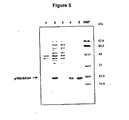
- this recombinant protein for serologic diagnosis of neosporosis provides a highly valuable novel tool for the differential diagnosis of the different stages, acute and chronic, of the infection, by ELISA, radioimmunoassay (RIA) or any other method based on the antigenicity of these polypeptides, as shown in the development of this invention, by the Western blot technique described. Therefore, antibodies against the protein pRNcSAG4, separated by electrophoresis under denaturing conditions in 15% acrylamide-DATD gels, in sera from foetus and calves congenitally infected on nature by N. caninum, are detected. This suggests the value of this protein from both the viewpoint of differential diagnosis of acute and chronic infection by N. caninum and also from the viewpoint of the prevention, by its use as vaccine.
- An objective of this invention is to provide vaccines against neosporosis, vertical transmission and establishment of chronic infection.
- the expression system of heterologous genes in prokaryotes offers the advantage of large-scale production of the recombinant antigen, using it as vaccine of subunits.
- These vaccines have another advantage, namely that they are used as labeled vaccines, and the immune response they produce can be easily distinguished from that caused by the parasite in infected animals, which is critical in programs for disease eradication.
- these vaccines are safe, which offers an advantage over the vaccines based on recombinant vectors such as viral ones. However, the latter offer the advantage of replication which allows for immunization with low doses.
- This invention describes a DNA vaccine based on NcSAG4 protein, that is used or not in combination with the recombinant protein pRNcSAG4, produced in the abovementioned prokaryote system.
- NcSAG4 oligonucleotides designed for that purpose, called FNcSAG4 (SEQ ID NO: 11) and ReNcSAG4 (SEQ ID NO: 12) and is inserted in an expression vector for mammal cells, the plasmid pcDNA3.1/His, at the sites of restriction Bam HI and Eco RI, obtaining the recombinant plasmid called pCDA10, that is used as DNA vaccine.
- this invention describes the use of the gene Nc SAG4 as marker of the bradyzoite phase of N. caninum, associated with chronic infection.
- This gene is used as marker by the use of the nucleotide molecules described herein for the diagnosis of chronic infection by N. caninum by PCR or RT-PCR, hybridization in situ with DNA probes, or any other detection method based on nucleic acids of the parasite from tissues or fluids of animals infected.
- a method of detection of expression of the gene NcSAG4 in the parasite, by RT-PCR, based on oligonucleotides designed for the isolation of the gene called 1F3SAG4 (SEQ ID NO: 7) and 1R5SAG4 (SEQ ID NO: 5) is detailed.
- This RT-PCR allows the use of the Nc SAG4 gene as a marker of stage conversion of N. caninum, in the intermediate host, and is a tool necessary for the analysis of the mechanisms determining the establishment of chronic infection and those involved in the reactivation of the infection, in animals persistently infected, and of factors influencing these conditions, and to establish the efficiency of vaccine products against N. caninum, in terms of protection against the establishment of chronic infection and reactivation.
- the use of the promoter of the gene Nc SAG4 to express heterologous genes in N. caninum cells transfected thanks to gene constructions built with the above promoter allows the analysis of molecular mechanisms determining the conversion of the tachyzoite to the bradyzoite stage and vice versa, both in expression systems in vitro and in vivo, in cell cultures or experimental animals.
- genome walking For the isolation of gene Nc SAG4 of N. caninum, the method called genome walking was used, which allows the amplification by PCR fragments of DNA of unknown sequence, but flanking known DNA regions.
- oligo 1a SEQ ID NO 1
- PLK PLK
- Prugniaud AF340225.1
- CEP CEP
- SAG4-2 (SEQ ID NO: 2) and two reverse oligonucleotides called SAG-3 (SEQ ID NO: 3) and SAG4-4 (SEQ ID NO: 4).
- genomic DNA isolated from N. caninum tachyzoites.
- genomic DNA isolated from N. caninum tachyzoites.
- a commercial kit was used, following the instructions of use (GenomicPrep Cells and Tissue DNA Isolation kit, Amersham Biosciences).
- the positive control used was genomic DNA of T. gondii isolated by the same method.
- the DNA polymerase used was the enzyme EcoTaq (Ecogen) at 2.5 U per reaction, in the corresponding buffer, in the presence of Cl 2 Mg (4 mM), dNTPs (200 ⁇ M) and 40 pmol of each degenerated oligonucleotide.
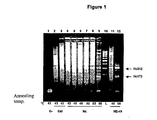
- the PCR conditions were: 5 minutes of denaturalisation at 94°C, followed by 40 cycles of 1 minute at 94°C, 1 minute annealing where a temperature gradient was performed, from 43°C to 56°C (figure 1, lanes 4-9), 1 minute at 72°C, increasing the elongation one second every cycle, and finally an elongation of 10 minutes at 72°C.
- the negative control used was the mixture of a reaction without DNA (Figure 1, lane 1) or genomic DNA from non-infected MARC-145 cells ( Figure 1, lanes 2 and 3).
- DNA fragments were purified from a 2% agarose gel in TBE buffer 1x, using a commercial kit (GenomeGENECLEAN®Turbo nucleic acid purification kit, Q-BIOgene) following the indications of the manufacturer and sequenced with oligonucleotide 1a (Sequencing Service of the Institute of Biomedical Research "Alberto Sols", CSIC-UAM).
- the resulting nucleotide sequence was compared to those existing in the databases (BLASTN-nr, www.ncbi.nlm.nih.gob/blast) with a similarity of 82% with the sequence of gene Tg SAG4 of three strains of T. gondii in 64 pb of the fragment.
- T. gondii database TgGl: TIGR Toxoplasma gondii gene index, www.tigr.org/tdb/tgi/tggi
- TC2754 a group of sequences described as surface protein
- TC2754 proteins encoded by the sequences of gene TgSAG4 of the above strains (RH, PKL, Prugniaud and CEP) and with a EST described from a gene library of bradyzoites of the strain ME49 ( Toxoplasma gondii v3, Parasite Consensus EST Data bases).
- sequence Nc175 was compared to the database of N. caninum (NcGI: TIGR Nespora caninum gene index, www.tigr.org/tdb/tgi) and had no similarity with the sequences described to date.
- the gene Nc SAG4 was identified using the genome walking method in 5' and 3' sense from the sequence Nc175, from the genomic DNA of N. caninum, using a commercial kit (Universal Genome Walker® kit, BD Biosciences Clontech).
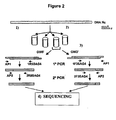
- the first step to perform this technique is digestion (Figure 2, step 1) of genomic DNA with four different restriction enzymes that produce blunt edges: Eco RB (1), Dra I (2), Pvu II (3) and Stu I (4) and subsequent binding to adapters ( Figure 2, step 2), following the manufacturer's instructions.
- a double PCR is performed using the oligonucleotides binding to the adapter (AP1 and AP2) and the specific oligonucleotides of the gene, designed on the basis of the known genomic sequence ( Figure 2, step 3).
- the oligonucleotides designed from the sequence Nc175 for performing genome walking in the 5' sense were called 1R5SAG4 (SEQ ID NO: 5) and 2R5SAG4 (SEQ ID NO: 6) and those designed for performing genome walking in the 3' sense were called 1F3SAG3 (SEQ ID NO: 7) and 2F3SAG4 (SEQ ID NO: 8).
- the first PCR was performed with each genomic DNA gene library using oligonucleotides AP1 and 1R5SAG4 or 1F3SAG4 for performing the genome walking in the 5' or 3' sense respectively, following the instructions of the manufacturer, using a long-distance thermostable DNA polymerase (Advantage® Genomic PCR kit, BD Biosciences Clontech).
- the PCR conditions were 7 cycles of 25 seconds at 94° and 3 minutes at 68°C followed by 32 cycles of 25 seconds at 94°C and 3 minutes at 64°C, with a final elongation at 64°C for 7 minutes.
- the second PCR was performed from a 1:50 dilution of the products of the first PCR and was performed with oligonucleotides AP2 and 2R5SAG4 or 2F3SAG4 for performing the genome walking in the 5' or 3' sense respectively.
- the conditions of the second PCR were: 5 cycles of 25 seconds at 94°C and 6 minutes at 68°C, followed by 20 cycles of 25 seconds at 94°C and 6 minutes at 64°C, with a final elongation at 64°C for 10 minutes.
- the DNA fragments obtained by genome walking were purified as described above and sequenced ( Figure 2, step 4).
- sequences of the different amplified fragments could be established.
- This sequence was called Nc SAG4, for its homology with that of gene Tg SAG4 of T. gondii, which encodes a specific protein of the bradyzoite stage.
- ORF open reading frame
- Example 2 expression of antigen Nc SAG4 as recombinant protein
- the coding region was inserted in expression vectors to produce the antigen NcSAG4 as recombinant protein in a heterologous system.
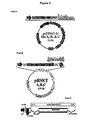
- the expression plasmid pcDNA3.1/His®-C (Invitrogen) was chosen ( Figure 3, panel A) and for the prokaryote system, the expression plasmid pRSET-C (Invitrogen) ( Figure 3, panel B).
- the complete coding region of gene Nc SAG4 was inserted at the sites Bam HI and Eco RI. For this, a PCR was performed from the genomic DNA of N.
- oligonucleotides designed for it caninum, using oligonucleotides designed for it (OIigoANALYZER 1.0.2.).
- the forward oligonucleotide was called FNcSAG4 (SEQ ID NO: 11), including in its 5' edge a specific site of recognition for Bam HI, followed by a Nco I site, before an identical sequence to the 5' edge of ORF of gene Nc SAG4.
- the reverse oligonucleotide was called ReNcSAG4 (SEQ ID NO: 12), including in its 5' edge a specific recognition site for Eco RI, followed by a complementary reverse sequence to the 3' edge for ORF of gene Nc SAG4.
- a part of gene Nc SAG4 was inserted, that codes a truncated form of the protein, from amino acid 29 to 148, both included, at sites Bam HI and Eco RI of the plasmid pRSET-C.
- two oligonucleotides were designed using the software (OligoANALYZER 1.0.2.).
- the forward oligonucleotide was called F85NcSAG4 (SEQ ID NO: 13), including in its 5' edge a specific recognition site for Bam HI, followed by an identical sequence of the ORF of gene Nc SAG4 from nucleotide 83 to 100.
- the reverse nucleotide was called Re444NcSAG4 (SEQ ID NO: 14), inserting in its 5' edge a specific recognition site for Eco RI, followed by a termination codon (TAA) and then the complementary reverse sequence of the ORF of gene Nc SAG4, from nucleotide 328 to 444.
- genomic DNA were used by reaction, isolated from N. caninum tachyzoites.
- the DNA polymerase used was EcoStart (Ecogen), 1.25 U per reaction, in a final volume of 25 ⁇ l in the corresponding buffer, in the presence of 2.5 mM of Cl 2 Mg, dNTPs (200 ⁇ M) and 40 pmol of each oligonucleotide.
- the pCR conditions were 7 minutes of denaturalisation at 95°C, followed by 40 cycles of 30 seconds at 95°C, 1 minute at 53°C, 4 minutes at 72°C, increasing the elongation one second every cycle, and finally one elongation of 10 minutes at 72°C.
- PCR products were viewed in a 1.5 % agarose gel in TAE buffer 1 x, stained with ethidium bromide (BrEt), observing a size of 542 pb, corresponding to that expected for the ORF of gene Nc SAG4, and of 385 pb for the truncated gene. Then, these DNA fragments were purified and digested with the restriction enzymes Bam HI (5U) and Eco RI (6U) in the appropriate buffer (buffer B, Roche) in a final volume of 50 ⁇ L, during four hours at 37°C in a water bath. At the same time and under identical conditions, each plasmid vector was digested.
- Bam HI 5U
- Eco RI Eco RI
- ligation was used to transform frozen competent cells of E-coli DH5 ⁇ strain by electroporation.
- the instructions of the manufacturer of the electroporator (GenePulser TM, Bio-rad) were basically followed.
- Two mm electroporation trays (Equibio) previously chilled on ice were used.
- the competent bacteria were unfrozen and kept in ice until adding 5 ⁇ L of the ligation. After one minute in ice, they were subject to a pulse of 2.5 kV at 25 ⁇ FD and 200 Ohm, for 4-5 seconds.
- the transformed bacteria were immediately resuspended in 500 ⁇ L of SOC medium (MgSO 4 10 mM, MgCl 2 10 mM and glucose 20 mM added to SOB medium: bactotryptone 2%, yeast extract 0.5%, NaCl 10 mM and KCI 2.5 mM) and grown for one hour at 37°C and then 200 ⁇ L of a cell suspension were plated in LB-agar medium (1.5% noble gar) in the presence of 100 ⁇ g/mL of ampicillin, antibiotic against which the plasmids used were resistant. The transformed bacteria with the plasmids were selected after growth in plaques with the appropriate medium for 18 hours at 37°C.
- SOC medium MgSO 4 10 mM, MgCl 2 10 mM and glucose 20 mM added to SOB medium: bactotryptone 2%, yeast extract 0.5%, NaCl 10 mM and KCI 2.5 mM
- the plasmid obtained by insertion of the truncated form of gene Nc SAG4 of nucleotide 83 to 444 in pRSET-C (3,235 pb) was called pRC, from 1 to 10, depending on the clone. Based on the size observed, four clones were chosen from each for characterisation by restriction enzymes ( Figure 4). Therefore, the plasmids obtained were digested with the restriction enzymes Bam HI (5U) and Eco RI (6U) in the appropriate buffer (buffer B, Roche) in a final volume of 20 ⁇ L for two hours at 37°C in a water bath.
- the digested plasmid DNA was separated in a 0.8% agarose gel in 0.5% TBE buffer, observing the release of a fragment of the appropriate size in each plasmid built. Therefore, the plasmids pCDA5, pCDA6, pCDA9 and pCDA10 released a fragment of 528 pb ( Figure 4, panel A, lanes 1 to 4 respectively), and the fragment of 371 pb in plasmids pRC6, pRC7, pRC9 and pRC10 ( Figure 4, panel B, lanes 3 to 6 respectively), In addition, vectors pcDNA3.1/His ⁇ -C ( Figure 4, panel A, lanes 5 and 6) and pRSET-C ( Figure 4, panel B, lane 1) were cut and used as controls of digestion.
- Plasmids pCDA10 and pRC10 were sequenced using the commercial oligonucleotide T7, confirming the insertion of the fragments in the expression vectors adequately.
- the recombinant protein pRNcSAG4 (SEQ ID NO: 15) covers from amino acid 29 to 148, encoded by the ORF of gene Nc SAG4, described herein and corresponds to the amino acid sequence of the possible mature protein NcSAG4, lacking the signal peptide of the amino terminus and the possible signal peptide of the carboxy terminus, following the criteria revised by Gerber et al. (1992. JBC 267. 12168-12173) bound in the amino terminus to a tag of amino acids including 6 histidines, which allows purification by affinity chromatography, peptide T7-tag and an enterokinase recognition area.
- Figure 3, panel C shows a chart of recombinant protein pRNcSAG4.
- Rosetta DE3pLysS cell strain of E. coli (Novagen) were transformed with the plasmid pRC10, following the indications of the manufacturer.
- the transformed cells with plasmid pRC10 were plated in LB-agar medium with ampicillin (100 ⁇ g/mL) and chloramphenicol (34 ⁇ g/mL) and grown overnight at 37°C.
- the day after six colonies of the plaques were selected and grown overnight at 37°C in 3 mL of the same selection liquid medium.
- the day after the culture was diluted 1:10 in the same growth medium and kept under identical conditions until reaching A 600 of 0.9 OD.
- cell sediments previously collected were lysed in a commercial lysis solution called BugBuster (Novagen) at 1x in Tris 20 mM pH 7.98 at a concentration of 5 mUg of cell sediment. They were incubated under gentle stirring and room temperature in the presence of the enzyme Benzonase (Novagen, IU/mL of Bugbuster 1x) for 40 min. Then the soluble fraction was separated from the sediment, where the inclusion bodies are located, by centrifugation at 20,000 xg for 15 minutes for establishing the location of the relevant protein. The inclusion bodies were then washed according to the indications of the manufacturer.
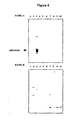
- the immunogenicity of recombinant protein pRNcSAG4 was determined by Western blot ( Figure 6) using sera of bovine origin from animals naturally infected by N. caninum. The infection of these sera had been previously diagnosed by the ELISA technique and indirect immunofluorescence (IFAT), with high specific antibody titres. Three washings were performed of the inclusion bodies where protein pRNcSAG4 is located, using a 0.1x BugBuster solution, as instructed by the manufacturer.
- the proteins were then separated in 15% acrylamide-DATD gels by electrophoresis under denaturalising conditions, and finally electrotransfer was performed to a 0.2 ⁇ m nitrocellulose membrane (Bio.rad), at 400 mA for one hour sank in transfer buffer previously cooled (Tris 25 mM, glycine 192 mM pH 8.5 and 20% methanol).
- the bovine sera used were from different sources. In that sense, sera were from animals in which chronic infection was likely to be establishing, and where bradyzoites were developing such as those from animals born with congenital infection, which show precolostral seropositivity, or body fluids from foetuses aborted during the last term of pregnancy.
- Example 4 determination of the transcription of the Nc SAG4 gene in the bradyzoite phase of N. caninum by RT-PCR
- Nc SAG4 gene of N. caninum To establish the stage specificity of the transcription of Nc SAG4 gene of N. caninum, an RT-PCR performed from total RNA extracted from bradyzoites cultured in vitro has been developed. For the production of bradyzoites in cell cultures, the method described by Risco-Castillo et al. (2003) J. Parasitol , submitted for publication) was followed. For this, tachyzoites of N . caninum were used ( Barber et al. 1995. Parasitol. 111, 563-568 ) to infect monolayers of MARC-145 cells ( Kim et al. 1993. Arch. Virol. 133, 477-483 ) at a host-parasite ratio of 2:1.
- the infected cell cultures were kept in DMEM supplemented with 10% bovine fetal serum in the presence of Hepes (pH 7.2) 15 mM, glutamine (2 mM), penicillin (10 U/mL), streptomycin (10 ⁇ g/mL), fungizone (25 ng/mL) and incubated at 37°C and 5% CO 2 .
- the infected cultures were treated with sodium nitroprusiate (SNP) at a concentration of 70 ⁇ M in culture medium for 7 days after infection, and was replaced every two days.
- SNP sodium nitroprusiate
- the infected cultures untreated with SNP were maintained, for the production of tachyzoites.
- a mixture of tachyzoites and bradyzoites was collected by scraping the infected cell monolayer and treated with SNP, centrifuging at 1350 xg for 15 min at 4°C.
- the tachyzoites produced in the infected cultures untreated with SNP were collected by the same procedure.
- the zoites were resuspended using a 25 G needle and purified using sephadexTM columns (PD-10, Amersham Biosciences) to remove cell debris. For this, after balancing the column with 5 mL of PBS, the suspension of zoites was allowed to flow by gravity in 5 mL of PBS. After two washings with the same volume of PBS, the zoites were collected by centrifugation at 1350 xg for 15 min at 4°C. The zoites collected were kept frozen at -80°C until used.
- RNA For extraction of total RNA, sediments of 10 7 tachyzoites or a mixture of tachyzoites and bradyzoites were used, produced as above described. For this, the commercial kit NucleoSpin RNA II (BD Biosciences Clontech) was used, following the instructions of the manufacturer. The total RNA obtained was separated by electrophoresis in a 0.8% agarose gel in TAE1x buffer, for checking its quality.
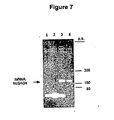
- RNA of each origin 100 ng of the total RNA of each origin, tachyzoite or bradyzoite, were used, and a commercial kit called "Quiagen® One-step RT-PCR kit" (Qiagen) was used, following the indications of the manufacturer ( Figure 7).
- Qiagen the oligonucleotides called IR5SAG4 (SEQ ID NO: 5) and 1F3SAG4 (SEQ ID NO: 7) were used.
- the RT was performed at 50°C for 30 minutes.
- PCR conditions were 15 minutes of denaturalisation at 95°C, followed by 40 cycles of 30 seconds at 94°C, 1 minute at 61°C, 1 minute at 72°C, and finally an elongation of 10 minutes at 72°C.
- the PCR products were viewed in a 3% high resolution agarose gel in TBE buffer 0.5x stained with ethidium bromide (BrEt).
- PrEt ethidium bromide
Landscapes
- Health & Medical Sciences (AREA)
- Life Sciences & Earth Sciences (AREA)
- Chemical & Material Sciences (AREA)
- Molecular Biology (AREA)
- Engineering & Computer Science (AREA)
- Immunology (AREA)
- Medicinal Chemistry (AREA)
- General Health & Medical Sciences (AREA)
- Organic Chemistry (AREA)
- Hematology (AREA)
- Biomedical Technology (AREA)
- Biochemistry (AREA)
- Urology & Nephrology (AREA)
- Tropical Medicine & Parasitology (AREA)
- Food Science & Technology (AREA)
- Biophysics (AREA)
- Proteomics, Peptides & Aminoacids (AREA)
- Virology (AREA)
- Biotechnology (AREA)
- Cell Biology (AREA)
- Genetics & Genomics (AREA)
- Microbiology (AREA)
- Gastroenterology & Hepatology (AREA)
- Zoology (AREA)
- Toxicology (AREA)
- Physics & Mathematics (AREA)
- Analytical Chemistry (AREA)
- Pathology (AREA)
- General Physics & Mathematics (AREA)
- Veterinary Medicine (AREA)
- Animal Behavior & Ethology (AREA)
- Pharmacology & Pharmacy (AREA)
- Nuclear Medicine, Radiotherapy & Molecular Imaging (AREA)
- Public Health (AREA)
- General Chemical & Material Sciences (AREA)
- Chemical Kinetics & Catalysis (AREA)
- Medicines Containing Antibodies Or Antigens For Use As Internal Diagnostic Agents (AREA)
- Peptides Or Proteins (AREA)
- Micro-Organisms Or Cultivation Processes Thereof (AREA)
- Measuring Or Testing Involving Enzymes Or Micro-Organisms (AREA)
Applications Claiming Priority (2)
| Application Number | Priority Date | Filing Date | Title |
|---|---|---|---|
| ES200302869A ES2263317B2 (es) | 2003-12-04 | 2003-12-04 | Uso del gen ncsag4 para el diagnostico y prevencion de la neosporosis, y como marcador para el analisis de la patogenia. |
| PCT/ES2004/000529 WO2005053505A2 (es) | 2003-12-04 | 2004-11-26 | Uso del gen ncsag4 para el diagnóstico y prevención de la neosporosis, y como marcador para el análisis de la patogenia |
Publications (2)
| Publication Number | Publication Date |
|---|---|
| EP1710309A2 true EP1710309A2 (de) | 2006-10-11 |
| EP1710309B1 EP1710309B1 (de) | 2012-07-04 |
Family
ID=34639545
Family Applications (1)
| Application Number | Title | Priority Date | Filing Date |
|---|---|---|---|
| EP04805072A Expired - Lifetime EP1710309B1 (de) | 2003-12-04 | 2004-11-26 | Verwendung des gens ncsag4 zur diagnose und prävention von neosporose und als marker für die analyse der pathogenese |
Country Status (12)
| Country | Link |
|---|---|
| US (1) | US7579438B2 (de) |
| EP (1) | EP1710309B1 (de) |
| JP (1) | JP2007516705A (de) |
| CN (1) | CN1902314A (de) |
| AU (1) | AU2004294741B2 (de) |
| BR (1) | BRPI0417237A (de) |
| CA (1) | CA2548582A1 (de) |
| ES (2) | ES2263317B2 (de) |
| MX (1) | MXPA06006381A (de) |
| NZ (1) | NZ547735A (de) |
| RU (1) | RU2006123551A (de) |
| WO (1) | WO2005053505A2 (de) |
Cited By (1)
| Publication number | Priority date | Publication date | Assignee | Title |
|---|---|---|---|---|
| EP2196532A4 (de) * | 2007-07-13 | 2011-03-02 | Univ Madrid Complutense | Verwendung eines neues isolats aus neospora caninum zur entwicklung diagnostischer tests und zur herstellung von produkten zur behandlung und prävention von neospora-infektionen |
Families Citing this family (3)
| Publication number | Priority date | Publication date | Assignee | Title |
|---|---|---|---|---|
| CN101831495B (zh) * | 2010-04-30 | 2013-06-19 | 新疆出入境检验检疫局检验检疫技术中心 | 一种牛新孢子虫病的检测方法及应用 |
| CN102888412B (zh) * | 2012-09-21 | 2018-02-09 | 吉林大学 | 一种新孢子虫特异pcr检测试剂盒及制备方法 |
| CN111197100B (zh) * | 2020-01-14 | 2021-09-14 | 中国农业大学 | 犬新孢子虫特异pcr检测试剂盒及制备方法和应用 |
Family Cites Families (4)
| Publication number | Priority date | Publication date | Assignee | Title |
|---|---|---|---|---|
| KR20010024245A (ko) * | 1997-10-20 | 2001-03-26 | 조지 제이. 리코스 | 네오스포라 백신 |
| EP0924295A3 (de) * | 1997-12-04 | 2001-05-16 | Pfizer Products Inc. | DNS kodierend für Neospora Dihydrofolatreductase-Thymidylate Synthase |
| EP0953641A3 (de) * | 1998-03-26 | 2002-03-13 | Pfizer Products Inc. | Für Neospora Proteine kodierende polynukleotid Moleküle |
| EP1033405A3 (de) * | 1999-02-25 | 2001-08-01 | Ceres Incorporated | DNS-fragmente mit bestimmter Sequenz und die dadurch kodierte Polypeptide |
-
2003
- 2003-12-04 ES ES200302869A patent/ES2263317B2/es not_active Expired - Fee Related
-
2004
- 2004-11-26 CN CNA2004800399923A patent/CN1902314A/zh active Pending
- 2004-11-26 CA CA002548582A patent/CA2548582A1/en not_active Abandoned
- 2004-11-26 BR BRPI0417237-0A patent/BRPI0417237A/pt not_active IP Right Cessation
- 2004-11-26 MX MXPA06006381A patent/MXPA06006381A/es active IP Right Grant
- 2004-11-26 NZ NZ547735A patent/NZ547735A/en not_active IP Right Cessation
- 2004-11-26 WO PCT/ES2004/000529 patent/WO2005053505A2/es not_active Ceased
- 2004-11-26 RU RU2006123551/13A patent/RU2006123551A/ru not_active Application Discontinuation
- 2004-11-26 EP EP04805072A patent/EP1710309B1/de not_active Expired - Lifetime
- 2004-11-26 ES ES04805072T patent/ES2390775T3/es not_active Expired - Lifetime
- 2004-11-26 JP JP2006541962A patent/JP2007516705A/ja active Pending
- 2004-11-26 US US10/581,810 patent/US7579438B2/en not_active Expired - Fee Related
- 2004-11-26 AU AU2004294741A patent/AU2004294741B2/en not_active Ceased
Non-Patent Citations (1)
| Title |
|---|
| See references of WO2005053505A2 * |
Cited By (1)
| Publication number | Priority date | Publication date | Assignee | Title |
|---|---|---|---|---|
| EP2196532A4 (de) * | 2007-07-13 | 2011-03-02 | Univ Madrid Complutense | Verwendung eines neues isolats aus neospora caninum zur entwicklung diagnostischer tests und zur herstellung von produkten zur behandlung und prävention von neospora-infektionen |
Also Published As
| Publication number | Publication date |
|---|---|
| US20070275018A1 (en) | 2007-11-29 |
| US7579438B2 (en) | 2009-08-25 |
| WO2005053505A8 (es) | 2007-03-29 |
| AU2004294741A1 (en) | 2005-06-16 |
| WO2005053505A3 (es) | 2005-07-14 |
| AU2004294741B2 (en) | 2011-10-06 |
| CN1902314A (zh) | 2007-01-24 |
| MXPA06006381A (es) | 2006-08-25 |
| NZ547735A (en) | 2009-09-25 |
| ES2390775T3 (es) | 2012-11-16 |
| RU2006123551A (ru) | 2008-01-10 |
| CA2548582A1 (en) | 2005-06-16 |
| EP1710309B1 (de) | 2012-07-04 |
| BRPI0417237A (pt) | 2007-03-06 |
| ES2263317B2 (es) | 2007-10-01 |
| WO2005053505A2 (es) | 2005-06-16 |
| JP2007516705A (ja) | 2007-06-28 |
| ES2263317A1 (es) | 2006-12-01 |
Similar Documents
| Publication | Publication Date | Title |
|---|---|---|
| EP1219711B1 (de) | Lawsonia intracellularis Impfstoff | |
| JP2009077713A (ja) | アイメリア・マキシマ(Eimeriamaxima)の配偶子母細胞由来の組換え56及び82kDa各抗原をコードする核酸及びその使用 | |
| CA2135547A1 (en) | Coccidiosis poultry vaccine | |
| CN113748203B (zh) | 重组经典猪瘟病毒 | |
| US7662390B2 (en) | Lawsonia intracellularis subunit vaccine | |
| Ellison et al. | Molecular characterisation of a major 29 kDa surface antigen of Sarcocystis neurona | |
| EP1710309B1 (de) | Verwendung des gens ncsag4 zur diagnose und prävention von neosporose und als marker für die analyse der pathogenese | |
| US20080107645A1 (en) | Neospora caninum isolate | |
| EP0995799B1 (de) | Impstoffe gegen Coccidiosis | |
| JP4887144B2 (ja) | バベシアワクチン | |
| EP0479866A1 (de) | Nukleotidsequenzen und polypeptide von pestivirus | |
| US5422428A (en) | Immunization against babesiosis using purified surface antigens of Babesia bigemina and similar immunogens | |
| ES2325701B1 (es) | Uso del gen ncbsr4 para el diagnostico y prevencion de la neosporosis y como marcador para el analisis de la patogenia. | |
| JP2007527707A (ja) | ピロプラスミドワクチン | |
| AU2001277390B2 (en) | Neospora caninum isolate. | |
| JP2007537715A (ja) | ローソニア・イントラセルラーリスの26kDサブユニットワクチン | |
| AU2001277390A1 (en) | Neospora caninum isolate. |
Legal Events
| Date | Code | Title | Description |
|---|---|---|---|
| PUAI | Public reference made under article 153(3) epc to a published international application that has entered the european phase |
Free format text: ORIGINAL CODE: 0009012 |
|
| 17P | Request for examination filed |
Effective date: 20060620 |
|
| AK | Designated contracting states |
Kind code of ref document: A2 Designated state(s): AT BE BG CH CY CZ DE DK EE ES FI FR GB GR HU IE IS IT LI LU MC NL PL PT RO SE SI SK TR |
|
| DAX | Request for extension of the european patent (deleted) | ||
| R17D | Deferred search report published (corrected) |
Effective date: 20070329 |
|
| 17Q | First examination report despatched |
Effective date: 20080704 |
|
| GRAJ | Information related to disapproval of communication of intention to grant by the applicant or resumption of examination proceedings by the epo deleted |
Free format text: ORIGINAL CODE: EPIDOSDIGR1 |
|
| GRAP | Despatch of communication of intention to grant a patent |
Free format text: ORIGINAL CODE: EPIDOSNIGR1 |
|
| GRAC | Information related to communication of intention to grant a patent modified |
Free format text: ORIGINAL CODE: EPIDOSCIGR1 |
|
| RIN1 | Information on inventor provided before grant (corrected) |
Inventor name: FERNANDEZ GARCIA, AURORA Inventor name: ORTEGA MORA, LUIS MIGUEL |
|
| GRAS | Grant fee paid |
Free format text: ORIGINAL CODE: EPIDOSNIGR3 |
|
| GRAA | (expected) grant |
Free format text: ORIGINAL CODE: 0009210 |
|
| AK | Designated contracting states |
Kind code of ref document: B1 Designated state(s): AT BE BG CH CY CZ DE DK EE ES FI FR GB GR HU IE IS IT LI LU MC NL PL PT RO SE SI SK TR |
|
| REG | Reference to a national code |
Ref country code: GB Ref legal event code: FG4D |
|
| REG | Reference to a national code |
Ref country code: CH Ref legal event code: EP |
|
| REG | Reference to a national code |
Ref country code: AT Ref legal event code: REF Ref document number: 565199 Country of ref document: AT Kind code of ref document: T Effective date: 20120715 |
|
| REG | Reference to a national code |
Ref country code: IE Ref legal event code: FG4D |
|
| REG | Reference to a national code |
Ref country code: DE Ref legal event code: R096 Ref document number: 602004038463 Country of ref document: DE Effective date: 20120830 |
|
| REG | Reference to a national code |
Ref country code: AT Ref legal event code: MK05 Ref document number: 565199 Country of ref document: AT Kind code of ref document: T Effective date: 20120704 |
|
| REG | Reference to a national code |
Ref country code: ES Ref legal event code: FG2A Ref document number: 2390775 Country of ref document: ES Kind code of ref document: T3 Effective date: 20121116 |
|
| REG | Reference to a national code |
Ref country code: NL Ref legal event code: VDEP Effective date: 20120704 |
|
| PG25 | Lapsed in a contracting state [announced via postgrant information from national office to epo] |
Ref country code: SI Free format text: LAPSE BECAUSE OF FAILURE TO SUBMIT A TRANSLATION OF THE DESCRIPTION OR TO PAY THE FEE WITHIN THE PRESCRIBED TIME-LIMIT Effective date: 20120704 |
|
| PG25 | Lapsed in a contracting state [announced via postgrant information from national office to epo] |
Ref country code: CY Free format text: LAPSE BECAUSE OF FAILURE TO SUBMIT A TRANSLATION OF THE DESCRIPTION OR TO PAY THE FEE WITHIN THE PRESCRIBED TIME-LIMIT Effective date: 20120704 Ref country code: FI Free format text: LAPSE BECAUSE OF FAILURE TO SUBMIT A TRANSLATION OF THE DESCRIPTION OR TO PAY THE FEE WITHIN THE PRESCRIBED TIME-LIMIT Effective date: 20120704 Ref country code: IS Free format text: LAPSE BECAUSE OF FAILURE TO SUBMIT A TRANSLATION OF THE DESCRIPTION OR TO PAY THE FEE WITHIN THE PRESCRIBED TIME-LIMIT Effective date: 20121104 Ref country code: BE Free format text: LAPSE BECAUSE OF FAILURE TO SUBMIT A TRANSLATION OF THE DESCRIPTION OR TO PAY THE FEE WITHIN THE PRESCRIBED TIME-LIMIT Effective date: 20120704 Ref country code: AT Free format text: LAPSE BECAUSE OF FAILURE TO SUBMIT A TRANSLATION OF THE DESCRIPTION OR TO PAY THE FEE WITHIN THE PRESCRIBED TIME-LIMIT Effective date: 20120704 |
|
| PG25 | Lapsed in a contracting state [announced via postgrant information from national office to epo] |
Ref country code: SE Free format text: LAPSE BECAUSE OF FAILURE TO SUBMIT A TRANSLATION OF THE DESCRIPTION OR TO PAY THE FEE WITHIN THE PRESCRIBED TIME-LIMIT Effective date: 20120704 Ref country code: PL Free format text: LAPSE BECAUSE OF FAILURE TO SUBMIT A TRANSLATION OF THE DESCRIPTION OR TO PAY THE FEE WITHIN THE PRESCRIBED TIME-LIMIT Effective date: 20120704 Ref country code: GR Free format text: LAPSE BECAUSE OF FAILURE TO SUBMIT A TRANSLATION OF THE DESCRIPTION OR TO PAY THE FEE WITHIN THE PRESCRIBED TIME-LIMIT Effective date: 20121005 Ref country code: PT Free format text: LAPSE BECAUSE OF FAILURE TO SUBMIT A TRANSLATION OF THE DESCRIPTION OR TO PAY THE FEE WITHIN THE PRESCRIBED TIME-LIMIT Effective date: 20121105 |
|
| PG25 | Lapsed in a contracting state [announced via postgrant information from national office to epo] |
Ref country code: NL Free format text: LAPSE BECAUSE OF FAILURE TO SUBMIT A TRANSLATION OF THE DESCRIPTION OR TO PAY THE FEE WITHIN THE PRESCRIBED TIME-LIMIT Effective date: 20120704 |
|
| PG25 | Lapsed in a contracting state [announced via postgrant information from national office to epo] |
Ref country code: CZ Free format text: LAPSE BECAUSE OF FAILURE TO SUBMIT A TRANSLATION OF THE DESCRIPTION OR TO PAY THE FEE WITHIN THE PRESCRIBED TIME-LIMIT Effective date: 20120704 Ref country code: RO Free format text: LAPSE BECAUSE OF FAILURE TO SUBMIT A TRANSLATION OF THE DESCRIPTION OR TO PAY THE FEE WITHIN THE PRESCRIBED TIME-LIMIT Effective date: 20120704 Ref country code: EE Free format text: LAPSE BECAUSE OF FAILURE TO SUBMIT A TRANSLATION OF THE DESCRIPTION OR TO PAY THE FEE WITHIN THE PRESCRIBED TIME-LIMIT Effective date: 20120704 Ref country code: DK Free format text: LAPSE BECAUSE OF FAILURE TO SUBMIT A TRANSLATION OF THE DESCRIPTION OR TO PAY THE FEE WITHIN THE PRESCRIBED TIME-LIMIT Effective date: 20120704 |
|
| PLBE | No opposition filed within time limit |
Free format text: ORIGINAL CODE: 0009261 |
|
| STAA | Information on the status of an ep patent application or granted ep patent |
Free format text: STATUS: NO OPPOSITION FILED WITHIN TIME LIMIT |
|
| PG25 | Lapsed in a contracting state [announced via postgrant information from national office to epo] |
Ref country code: SK Free format text: LAPSE BECAUSE OF FAILURE TO SUBMIT A TRANSLATION OF THE DESCRIPTION OR TO PAY THE FEE WITHIN THE PRESCRIBED TIME-LIMIT Effective date: 20120704 Ref country code: IT Free format text: LAPSE BECAUSE OF FAILURE TO SUBMIT A TRANSLATION OF THE DESCRIPTION OR TO PAY THE FEE WITHIN THE PRESCRIBED TIME-LIMIT Effective date: 20120704 |
|
| REG | Reference to a national code |
Ref country code: DE Ref legal event code: R119 Ref document number: 602004038463 Country of ref document: DE |
|
| 26N | No opposition filed |
Effective date: 20130405 |
|
| REG | Reference to a national code |
Ref country code: CH Ref legal event code: PL |
|
| GBPC | Gb: european patent ceased through non-payment of renewal fee |
Effective date: 20121126 |
|
| PG25 | Lapsed in a contracting state [announced via postgrant information from national office to epo] |
Ref country code: BG Free format text: LAPSE BECAUSE OF FAILURE TO SUBMIT A TRANSLATION OF THE DESCRIPTION OR TO PAY THE FEE WITHIN THE PRESCRIBED TIME-LIMIT Effective date: 20121004 Ref country code: LI Free format text: LAPSE BECAUSE OF NON-PAYMENT OF DUE FEES Effective date: 20121130 Ref country code: CH Free format text: LAPSE BECAUSE OF NON-PAYMENT OF DUE FEES Effective date: 20121130 |
|
| REG | Reference to a national code |
Ref country code: DE Ref legal event code: R097 Ref document number: 602004038463 Country of ref document: DE Effective date: 20130405 |
|
| REG | Reference to a national code |
Ref country code: FR Ref legal event code: ST Effective date: 20130731 |
|
| REG | Reference to a national code |
Ref country code: IE Ref legal event code: MM4A |
|
| REG | Reference to a national code |
Ref country code: DE Ref legal event code: R119 Ref document number: 602004038463 Country of ref document: DE Effective date: 20130601 |
|
| PG25 | Lapsed in a contracting state [announced via postgrant information from national office to epo] |
Ref country code: DE Free format text: LAPSE BECAUSE OF NON-PAYMENT OF DUE FEES Effective date: 20130601 Ref country code: IE Free format text: LAPSE BECAUSE OF NON-PAYMENT OF DUE FEES Effective date: 20121126 |
|
| PG25 | Lapsed in a contracting state [announced via postgrant information from national office to epo] |
Ref country code: GB Free format text: LAPSE BECAUSE OF NON-PAYMENT OF DUE FEES Effective date: 20121126 Ref country code: FR Free format text: LAPSE BECAUSE OF NON-PAYMENT OF DUE FEES Effective date: 20121130 |
|
| PG25 | Lapsed in a contracting state [announced via postgrant information from national office to epo] |
Ref country code: MC Free format text: LAPSE BECAUSE OF NON-PAYMENT OF DUE FEES Effective date: 20121130 Ref country code: TR Free format text: LAPSE BECAUSE OF FAILURE TO SUBMIT A TRANSLATION OF THE DESCRIPTION OR TO PAY THE FEE WITHIN THE PRESCRIBED TIME-LIMIT Effective date: 20120704 |
|
| PG25 | Lapsed in a contracting state [announced via postgrant information from national office to epo] |
Ref country code: LU Free format text: LAPSE BECAUSE OF NON-PAYMENT OF DUE FEES Effective date: 20121126 |
|
| PG25 | Lapsed in a contracting state [announced via postgrant information from national office to epo] |
Ref country code: HU Free format text: LAPSE BECAUSE OF FAILURE TO SUBMIT A TRANSLATION OF THE DESCRIPTION OR TO PAY THE FEE WITHIN THE PRESCRIBED TIME-LIMIT Effective date: 20041126 |
|
| PGFP | Annual fee paid to national office [announced via postgrant information from national office to epo] |
Ref country code: ES Payment date: 20231130 Year of fee payment: 20 |
|
| REG | Reference to a national code |
Ref country code: ES Ref legal event code: FD2A Effective date: 20241203 |
|
| PG25 | Lapsed in a contracting state [announced via postgrant information from national office to epo] |
Ref country code: ES Free format text: LAPSE BECAUSE OF EXPIRATION OF PROTECTION Effective date: 20241127 |
|
| PG25 | Lapsed in a contracting state [announced via postgrant information from national office to epo] |
Ref country code: ES Free format text: LAPSE BECAUSE OF EXPIRATION OF PROTECTION Effective date: 20241127 |