EP1710574A1 - Procede de balayage de compose innoffensif pour la muqueuse gastrique - Google Patents
Procede de balayage de compose innoffensif pour la muqueuse gastrique Download PDFInfo
- Publication number
- EP1710574A1 EP1710574A1 EP04807081A EP04807081A EP1710574A1 EP 1710574 A1 EP1710574 A1 EP 1710574A1 EP 04807081 A EP04807081 A EP 04807081A EP 04807081 A EP04807081 A EP 04807081A EP 1710574 A1 EP1710574 A1 EP 1710574A1
- Authority
- EP
- European Patent Office
- Prior art keywords
- liposome
- gastric mucosa
- fluorescent dye
- nsaids
- calcein
- Prior art date
- Legal status (The legal status is an assumption and is not a legal conclusion. Google has not performed a legal analysis and makes no representation as to the accuracy of the status listed.)
- Withdrawn
Links
Images
Classifications
-
- G—PHYSICS
- G01—MEASURING; TESTING
- G01N—INVESTIGATING OR ANALYSING MATERIALS BY DETERMINING THEIR CHEMICAL OR PHYSICAL PROPERTIES
- G01N33/00—Investigating or analysing materials by specific methods not covered by groups G01N1/00 - G01N31/00
- G01N33/48—Biological material, e.g. blood, urine; Haemocytometers
- G01N33/50—Chemical analysis of biological material, e.g. blood, urine; Testing involving biospecific ligand binding methods; Immunological testing
- G01N33/5005—Chemical analysis of biological material, e.g. blood, urine; Testing involving biospecific ligand binding methods; Immunological testing involving human or animal cells
- G01N33/5008—Chemical analysis of biological material, e.g. blood, urine; Testing involving biospecific ligand binding methods; Immunological testing involving human or animal cells for testing or evaluating the effect of chemical or biological compounds, e.g. drugs, cosmetics
- G01N33/5076—Chemical analysis of biological material, e.g. blood, urine; Testing involving biospecific ligand binding methods; Immunological testing involving human or animal cells for testing or evaluating the effect of chemical or biological compounds, e.g. drugs, cosmetics involving cell organelles, e.g. Golgi complex, endoplasmic reticulum
-
- A—HUMAN NECESSITIES
- A61—MEDICAL OR VETERINARY SCIENCE; HYGIENE
- A61P—SPECIFIC THERAPEUTIC ACTIVITY OF CHEMICAL COMPOUNDS OR MEDICINAL PREPARATIONS
- A61P1/00—Drugs for disorders of the alimentary tract or the digestive system
- A61P1/04—Drugs for disorders of the alimentary tract or the digestive system for ulcers, gastritis or reflux esophagitis, e.g. antacids, inhibitors of acid secretion, mucosal protectants
-
- A—HUMAN NECESSITIES
- A61—MEDICAL OR VETERINARY SCIENCE; HYGIENE
- A61P—SPECIFIC THERAPEUTIC ACTIVITY OF CHEMICAL COMPOUNDS OR MEDICINAL PREPARATIONS
- A61P29/00—Non-central analgesic, antipyretic or antiinflammatory agents, e.g. antirheumatic agents; Non-steroidal antiinflammatory drugs [NSAID]
-
- G—PHYSICS
- G01—MEASURING; TESTING
- G01N—INVESTIGATING OR ANALYSING MATERIALS BY DETERMINING THEIR CHEMICAL OR PHYSICAL PROPERTIES
- G01N33/00—Investigating or analysing materials by specific methods not covered by groups G01N1/00 - G01N31/00
- G01N33/48—Biological material, e.g. blood, urine; Haemocytometers
- G01N33/50—Chemical analysis of biological material, e.g. blood, urine; Testing involving biospecific ligand binding methods; Immunological testing
- G01N33/5005—Chemical analysis of biological material, e.g. blood, urine; Testing involving biospecific ligand binding methods; Immunological testing involving human or animal cells
- G01N33/5008—Chemical analysis of biological material, e.g. blood, urine; Testing involving biospecific ligand binding methods; Immunological testing involving human or animal cells for testing or evaluating the effect of chemical or biological compounds, e.g. drugs, cosmetics
- G01N33/5014—Chemical analysis of biological material, e.g. blood, urine; Testing involving biospecific ligand binding methods; Immunological testing involving human or animal cells for testing or evaluating the effect of chemical or biological compounds, e.g. drugs, cosmetics for testing toxicity
-
- G—PHYSICS
- G01—MEASURING; TESTING
- G01N—INVESTIGATING OR ANALYSING MATERIALS BY DETERMINING THEIR CHEMICAL OR PHYSICAL PROPERTIES
- G01N33/00—Investigating or analysing materials by specific methods not covered by groups G01N1/00 - G01N31/00
- G01N33/48—Biological material, e.g. blood, urine; Haemocytometers
- G01N33/50—Chemical analysis of biological material, e.g. blood, urine; Testing involving biospecific ligand binding methods; Immunological testing
- G01N33/53—Immunoassay; Biospecific binding assay; Materials therefor
- G01N33/543—Immunoassay; Biospecific binding assay; Materials therefor with an insoluble carrier for immobilising immunochemicals
- G01N33/54313—Immunoassay; Biospecific binding assay; Materials therefor with an insoluble carrier for immobilising immunochemicals the carrier being characterised by its particulate form
- G01N33/5432—Liposomes or microcapsules
-
- G—PHYSICS
- G01—MEASURING; TESTING
- G01N—INVESTIGATING OR ANALYSING MATERIALS BY DETERMINING THEIR CHEMICAL OR PHYSICAL PROPERTIES
- G01N33/00—Investigating or analysing materials by specific methods not covered by groups G01N1/00 - G01N31/00
- G01N33/48—Biological material, e.g. blood, urine; Haemocytometers
- G01N33/50—Chemical analysis of biological material, e.g. blood, urine; Testing involving biospecific ligand binding methods; Immunological testing
- G01N33/58—Chemical analysis of biological material, e.g. blood, urine; Testing involving biospecific ligand binding methods; Immunological testing involving labelled substances
- G01N33/582—Chemical analysis of biological material, e.g. blood, urine; Testing involving biospecific ligand binding methods; Immunological testing involving labelled substances with fluorescent label
-
- G—PHYSICS
- G01—MEASURING; TESTING
- G01N—INVESTIGATING OR ANALYSING MATERIALS BY DETERMINING THEIR CHEMICAL OR PHYSICAL PROPERTIES
- G01N33/00—Investigating or analysing materials by specific methods not covered by groups G01N1/00 - G01N31/00
- G01N33/48—Biological material, e.g. blood, urine; Haemocytometers
- G01N33/50—Chemical analysis of biological material, e.g. blood, urine; Testing involving biospecific ligand binding methods; Immunological testing
- G01N33/58—Chemical analysis of biological material, e.g. blood, urine; Testing involving biospecific ligand binding methods; Immunological testing involving labelled substances
- G01N33/585—Chemical analysis of biological material, e.g. blood, urine; Testing involving biospecific ligand binding methods; Immunological testing involving labelled substances with a particulate label, e.g. coloured latex
- G01N33/586—Liposomes, microcapsules or cells
-
- G—PHYSICS
- G01—MEASURING; TESTING
- G01N—INVESTIGATING OR ANALYSING MATERIALS BY DETERMINING THEIR CHEMICAL OR PHYSICAL PROPERTIES
- G01N2500/00—Screening for compounds of potential therapeutic value
Definitions
- the present invention relates to a method for screening for compounds or salts thereof that are safe for gastric mucosa and causes little gastrointestinal side effects. More particularly, the present invention relates to a method for screening for anti-inflammatory compounds or salts thereof, as well as to a screening method for evaluating/selecting compounds that can protect gastric mucosa.
- nonsteroidal anti-inflammatory drugs are known to be particularly effective in reducing inflammation.
- NSAIDs nonsteroidal anti-inflammatory drugs
- the ability of these drugs to cause gastrointestinal damage and other serious side effects, in particular, stomach ulcers poses a problem to the clinical use of these drugs.
- the use of nonsteroidal anti-inflammatory drugs is considered the primary cause of stomach gastritis, the currently most prevalent type of stomach ulcer.
- NSAIDs More patients are expected to use NSAIDs with the progress of aging society. In fact, as the population ages, NSAIDs have become more widely used to alleviate the symptoms of lumbago, osteoporosis, rheumatoid arthritis, and other diseases. Thus, the development of NSAIDs that cause no gastrointestinal side effects is an important task. Such NSAIDS are safe for gastric mucosa and have less risk of inducing stomach ulcers.
- Patent Document 1 Japanese Patent Laid-Open Publication No. 2003-207507
- NSAIDs act by inhibiting cyclooxygenase activity in the cell membrane, thereby decreasing prostaglandins that protect gastric mucosa. Also, there have been reports suggesting that some NSAIDs exhibit direct cytotoxicity by inducing necrosis and/or apoptosis. In consideration of these observations, we hypothesized that NSAIDs that inhibit cyclooxygenase activity and do not exhibit direct cytotoxicity can serve as anti-inflammatory drugs that do not cause side effects including stomach ulcers. Based on this hypothesis, we have proposed a screening method that is based on the cytotoxicity to gastric mucosal cells and the inhibition of cyclooxygenase in gastric mucosa.
- one essential aspect of the present invention comprises the following:
- Another aspect of the present invention comprises the following:
- Still another aspect of the present invention comprises the following:
- Another aspect of the present invention provides a liposome that serves as a cell membrane model for use in the screening method of the present invention. Specifically, this aspect comprises the following:
- the screening method of the present invention relies on a simple cell membrane model to detect membrane toxicity of a given drug.
- the screening method of the present invention can be used to easily determine if a test compound, in particular a nonsteroidal anti-inflammatory drug (NSAID), has membrane toxicity.
- NSAIDs can be obtained that are safe for gastric mucosa and cause no gastrointestinal side effects.
- Such NSAIDs are of significant clinical importance.
- the cell membrane model for use in the present invention comprises liposome formed of a phospholipid and encapsulating a fluorescent dye that permeates the cell membrane. Since the membrane toxicity of NSAIDs is believed to be largely attributed to the disrupted barrier function of the lipid bilayer of cell membrane, by preparing a liposome formed of a phospholipid, encapsulating a fluorescent dye in the liposome, and allowing NSAIDs to react with the liposome, it is possible to determine the membrane toxicity of a given NSAID by measuring the leakage of the fluorescent dye from the liposome in the presence of the NSAID.
- Examples of the fluorescent dye to be encapsulated include calcein, rhodamine, and fluorescein derivatives. Of these, calcein is particularly preferred. Calcein is a fluorescent dye widely used in the determination of cytotoxicity. The dye can stain living cells and has no cytotoxicity itself.
- Examples of the phospholipids to form liposome membrane include phosphatidylcholine, phosphatidylglycerol, phosphatidylserine, phosphatidylinositol, phosphatidylethanolamine, and cardiolipin.
- phosphatidylcholine phosphatidylglycerol
- phosphatidylserine phosphatidylinositol
- phosphatidylethanolamine phosphatidylethanolamine
- cardiolipin phosphatidylcholine
- phosphatidylglycerol phosphatidylserine
- phosphatidylinositol phosphatidylethanolamine
- cardiolipin cardiolipin.
- One or more of these phospholipids may be used to form liposome membrane.
- the present invention uses the means for determining the degree of damage of phospholipid liposome membrane when it is allowed to react with a given test compound, and in other words, uses the phospholipid liposome membrane as an analogue of gastric mucosa. Therefore, an important issue herein is if there is a certain correlation between the phospholipid liposome membrane and gastric mucosa.
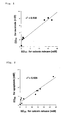
- the present inventors have demonstrated that the cytotoxicity of NSAIDs due to necrosis/apoptosis as measured by the decrease in cell viability is well-correlated with the membrane toxicity determined by the liposome model.
- cytotoxicity of NSAIDs is responsible for the direct cytotoxicity of NSAIDs.
- the cytotoxicity of 10 clinically used NSAIDs as measured by the decrease in cell viability i.e., cytotoxicity due to necrosis/apoptosis as measured by the decrease in cell viability
- Figs. 1 and 2 revealed a high consistency between the cytotoxicity and the membrane toxicity, indicating the direct cytotoxicity of NSAIDs is attributed to their membrane toxicity.
- NSAIDs with strong cytotoxicity show strong membrane toxicity
- the cell membrane model of the present invention using liposome allows the determination of membrane toxicity, and thus the cytotoxicity, of NSAIDs.
- the present inventors have previously discovered that the ability of NSAIDs to induce stomach ulcers is caused by their direct cytotoxicity and have hypothesized that if a given NSAID is proven to lack direct cytotoxicity in the cell membrane model, that NSAID must be safe for gastric mucosa. Since the direct cytotoxicity of NSAIDs results from their membrane toxicity, it is deduced that NSAIDs can be screened for the inability to damage the gastric mucosa by measuring their membrane toxicity in the cell membrane model provided by the present invention.
- the screening method of the present invention that screens for NSAIDs that are safe for gastric mucosa by means of the cell membrane model is specifically carried out in the following manner.
- liposome is prepared that is formed of a phospholipid and encapsulates a fluorescent dye such as calcein.
- NSAIDs to be screened are then allowed to react with the liposome at different concentrations and the leakage of calcein from the liposome (due to the damage to the liposome membrane) is monitored by measuring the fluorescence at 520 nm.
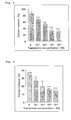
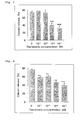
- the calcein-encapsulating, phospholipid liposome of the present invention when the calcein-encapsulating, phospholipid liposome of the present invention is mixed with one of known membrane-toxic NSAIDs, such as indomethacin, diclofenac, celecoxib and ibuprofen, and teprenone, an antiulcer agent that protects gastric mucosa (product name, Selbex (registered trademark)), the calcein leakage from the liposome is reduced as the amount of teprenone is increased.
- membrane-toxic NSAIDs such as indomethacin, diclofenac, celecoxib and ibuprofen, and teprenone
- an antiulcer agent that protects gastric mucosa product name, Selbex (registered trademark)
- gastric mucosa-protecting teprenone acts to mitigate the membrane toxicity of NSAIDs, demonstrating that compounds, in particular NSAIDs, can be screened for the inability to damage gastric mucosa by measuring their membrane toxicity in the cell membrane model of the present invention.
- the screening method of the present invention has been described primarily in relation to NSAIDs, it should be appreciated that the method can be used to screen not only for NSAIDs, but also for a wide range of compounds that are safe for gastric mucosa and thus have no membrane toxicity.
- Phosphatidylcholine (10 ⁇ mol, 7.7 mg) obtained from egg yolk was dissolved in a 1:2 mixture of chloroform/methanol and the solution was dried. The resulting residue was dissolved in 1.5 mL diethylether and the solution was mixed with 1 mL of a 100mM aqueous solution of calcein-sodium hydroxide (pH 7.4). Diethylether was removed to obtain a solution of liposome encapsulating calcein.
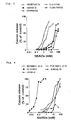
- NSAIDs indomethacin, ibuprofen, ketoprofen, diclofenac, flurbiprofen, mefenamic acid, flufenamic acid, celecoxib, etodolac, and nimesulide.
- Each NSAID was added at different concentrations to the liposome solution obtained in Example 1 and the mixture was incubated at 30°C for 10 min. Subsequently, the fluorescence at 520 nm was measured to determine the calcein leakage from the liposome as a measure of membrane toxicity. The results are shown together in Fig.
- Fig. 4 for mefenamic acid, flufenamic acid, celecoxib, etodolac, and nimesulide.
- ibuprofen, ketoprofen, diclofenac, and flurbiprofen to serve as NSAIDs shown in Fig. 3, the cytotoxicity to gastric mucosal cells decreases in the order of indomethacin > diclofenac > flurbiprofen > ibuprofen > ketoprofen.
- the calcein leakage from the liposome decreased in the same order. This supports the hypothesis that nonsteroidal anti-inflammatory compounds that are safe for gastric mucosa can be effectively selected by measuring the calcein leakage from the liposome ( i.e., membrane toxicity) observed for the compounds.
- Example 3 Calcein leakage from liposome in the presence of different known NSAIDs and gastric mucosa-protecting agent
- NSAIDs indomethacin, diclofenac, celecoxib, and ibuprofen.
- the calcein leakage from the liposome was examined in the presence of one of the NSAIDs and an agent that acts to protect gastric mucosa.
- Fig. 6 shows the calcein leakage in the presence of 4 mM diclofenac and varying concentrations of teprenone.
- Fig. 7 shows the calcein leakage in the presence of 0.08 mM celecoxib and varying concentrations of teprenone.
- Fig. 8 shows the calcein leakage in the presence of 20 mM ibuprofen and varying concentrations of teprenone. As can be seen from each figure, the calcein leakage decreases as the amount of teprenone is increased.
- the simple cell membrane model used in the screening method of the present invention enables detection of the membrane toxicity of test compounds, in particular nonsteroidal anti-inflammatory drugs (NSAIDs).
- NSAIDs nonsteroidal anti-inflammatory drugs
- the screening method of the present invention has a significant advantage in that it allows the development of NSAIDs and other clinically useful compounds that exhibit little membrane toxicity and are safe for gastric mucosa.
Landscapes
- Health & Medical Sciences (AREA)
- Life Sciences & Earth Sciences (AREA)
- Engineering & Computer Science (AREA)
- Immunology (AREA)
- Biomedical Technology (AREA)
- Chemical & Material Sciences (AREA)
- Urology & Nephrology (AREA)
- Molecular Biology (AREA)
- Hematology (AREA)
- General Health & Medical Sciences (AREA)
- Medicinal Chemistry (AREA)
- Cell Biology (AREA)
- Analytical Chemistry (AREA)
- Microbiology (AREA)
- Pathology (AREA)
- General Physics & Mathematics (AREA)
- Biochemistry (AREA)
- Physics & Mathematics (AREA)
- Biotechnology (AREA)
- Food Science & Technology (AREA)
- Toxicology (AREA)
- Bioinformatics & Cheminformatics (AREA)
- Tropical Medicine & Parasitology (AREA)
- Animal Behavior & Ethology (AREA)
- Public Health (AREA)
- Organic Chemistry (AREA)
- Pharmacology & Pharmacy (AREA)
- Nuclear Medicine, Radiotherapy & Molecular Imaging (AREA)
- Chemical Kinetics & Catalysis (AREA)
- General Chemical & Material Sciences (AREA)
- Veterinary Medicine (AREA)
- Pain & Pain Management (AREA)
- Rheumatology (AREA)
- Investigating Or Analysing Biological Materials (AREA)
- Medicinal Preparation (AREA)
- Medicines That Contain Protein Lipid Enzymes And Other Medicines (AREA)
- Investigating, Analyzing Materials By Fluorescence Or Luminescence (AREA)
Applications Claiming Priority (2)
| Application Number | Priority Date | Filing Date | Title |
|---|---|---|---|
| JP2004019439 | 2004-01-28 | ||
| PCT/JP2004/018722 WO2005073718A1 (fr) | 2004-01-28 | 2004-12-15 | PROCEDE DE BALAYAGE DE COMPOSE INNOFFENSIF POUR LA MUQUEuSE GASTRIQUE |
Publications (2)
| Publication Number | Publication Date |
|---|---|
| EP1710574A1 true EP1710574A1 (fr) | 2006-10-11 |
| EP1710574A4 EP1710574A4 (fr) | 2008-09-17 |
Family
ID=34823717
Family Applications (1)
| Application Number | Title | Priority Date | Filing Date |
|---|---|---|---|
| EP04807081A Withdrawn EP1710574A4 (fr) | 2004-01-28 | 2004-12-15 | Procede de balayage de compose inoffensif pour la muqueuse gastrique |
Country Status (4)
| Country | Link |
|---|---|
| US (1) | US20080113014A1 (fr) |
| EP (1) | EP1710574A4 (fr) |
| JP (1) | JPWO2005073718A1 (fr) |
| WO (1) | WO2005073718A1 (fr) |
Families Citing this family (1)
| Publication number | Priority date | Publication date | Assignee | Title |
|---|---|---|---|---|
| JP4877782B2 (ja) * | 2006-11-21 | 2012-02-15 | 株式会社 資生堂 | 皮膚バリア機能回復剤評価方法及び評価キット |
Family Cites Families (7)
| Publication number | Priority date | Publication date | Assignee | Title |
|---|---|---|---|---|
| ATE75052T1 (de) * | 1986-09-24 | 1992-05-15 | Wako Pure Chem Ind Ltd | Verfahren zur bestimmung von antistreptolysin-o und anwendungssatz dafuer. |
| US4912208A (en) * | 1987-06-29 | 1990-03-27 | Abbott Laboratories | Fluorophores for encapsulation into liposomes |
| WO1992007959A1 (fr) * | 1990-11-05 | 1992-05-14 | Biowhittaker Inc. | Procede de dosage immunologique lytique homogene sur membrane utilisant des formulations de liposomes sensibles au contact |
| JPH07191033A (ja) * | 1993-12-27 | 1995-07-28 | Hitachi Electron Eng Co Ltd | リポソームを用いた免疫測定法 |
| JPH11171796A (ja) * | 1997-12-08 | 1999-06-29 | Ohta Pharmaceut Co Ltd | テプレノン経口投与用製剤およびその製造方法 |
| DK1272160T3 (da) * | 2000-04-12 | 2007-05-21 | Liplasome Pharma As | Lipidbaseret lægemiddelleveringssystem til topisk applikation |
| JP2003207507A (ja) * | 2001-10-29 | 2003-07-25 | Takeda Chem Ind Ltd | スクリーニング方法 |
-
2004
- 2004-12-15 JP JP2005517386A patent/JPWO2005073718A1/ja active Pending
- 2004-12-15 WO PCT/JP2004/018722 patent/WO2005073718A1/fr not_active Ceased
- 2004-12-15 EP EP04807081A patent/EP1710574A4/fr not_active Withdrawn
- 2004-12-15 US US10/597,483 patent/US20080113014A1/en not_active Abandoned
Also Published As
| Publication number | Publication date |
|---|---|
| EP1710574A4 (fr) | 2008-09-17 |
| JPWO2005073718A1 (ja) | 2008-01-10 |
| US20080113014A1 (en) | 2008-05-15 |
| WO2005073718A1 (fr) | 2005-08-11 |
Similar Documents
| Publication | Publication Date | Title |
|---|---|---|
| Mikhalyov et al. | Electronic ground and excited state properties of dipyrrometheneboron difluoride (BODIPY): Dimers with application to biosciences | |
| Ellens et al. | Destabilization of phosphatidylethanolamine liposomes at the hexagonal phase transition temperature | |
| Maherani et al. | Calcein release behavior from liposomal bilayer; influence of physicochemical/mechanical/structural properties of lipids | |
| Suwalsky et al. | Acetylsalicylic acid (aspirin) and salicylic acid interaction with the human erythrocyte membrane bilayer induce in vitro changes in the morphology of erythrocytes | |
| Kraayenhof et al. | Probing biomembrane interfacial potential and pH profiles with a new type of float-like fluorophores positioned at varying distance from the membrane surface | |
| Han et al. | Oleanolic acid and ursolic acid stabilize liposomal membranes | |
| JP2019536003A (ja) | ヒト挙動のリアルタイムバイオセンシングのための触媒基質としてのナノ粒子ならびに診断および治療方法 | |
| Rojas-Aguirre et al. | Effects of an antimalarial quinazoline derivative on human erythrocytes and on cell membrane molecular models | |
| CN113105892B (zh) | 铜掺杂碳量子点及其制备方法和作为探针的应用及试纸和检测液体pH的方法 | |
| Mohapatra et al. | Excited state proton transfer based fluorescent molecular probes and their application in studying lipid bilayer membranes | |
| Cheng et al. | Nanometre-sized molecular oxygen sensors prepared from polymer stabilized phospholipid vesicles | |
| Rosenberg et al. | Comparison of two liposome fusion assays monitoring the intermixing of aqueous contents and of membrane components | |
| Suwalsky et al. | Structural effects in vitro of the anti-inflammatory drug diclofenac on human erythrocytes and molecular models of cell membranes | |
| Vitha et al. | Comparison of excitation and emission ratiometric fluorescence methods for quantifying the membrane dipole potential | |
| Zhou et al. | The anti-inflammatory drug indomethacin alters nanoclustering in synthetic and cell plasma membranes | |
| Schwamborn et al. | Monitoring ATPase induced pH changes in single proteoliposomes with the lipid-coupled fluorophore Oregon Green 488 | |
| Li et al. | Visualized time-temperature monitoring by triplet-sensitized ratiometric fluorescent nanosensors | |
| Hincha | Effects of calcium-induced aggregation on the physical stability of liposomes containing plant glycolipids | |
| Katsu et al. | Simultaneous measurements of K+ and calcein release from liposomes and the determination of pore size formed in a membrane | |
| Ahn et al. | Phorbol ester inhibition of Na-H exchange in rabbit proximal colon | |
| US20080113014A1 (en) | Method for Screening for Compounds Safe for Gastric Mucosa | |
| Agafonov et al. | Ca2+-induced phase separation in the membrane of palmitate-containing liposomes and its possible relation to membrane permeabilization | |
| Pereira et al. | Interbilayer lipid mixing induced by the human immunodeficiency virus type-1 fusion peptide on large unilamellar vesicles: the nature of the nonlamellar intermediates | |
| Kinnunen et al. | Pyrene-labelled lipids as fluorescent probes in studies on biomembranes and membrane models | |
| Mukherjee et al. | Monitoring the organization and dynamics of bovine hippocampal membranes utilizing Laurdan generalized polarization |
Legal Events
| Date | Code | Title | Description |
|---|---|---|---|
| PUAI | Public reference made under article 153(3) epc to a published international application that has entered the european phase |
Free format text: ORIGINAL CODE: 0009012 |
|
| 17P | Request for examination filed |
Effective date: 20060713 |
|
| AK | Designated contracting states |
Kind code of ref document: A1 Designated state(s): AT BE BG CH CY CZ DE DK EE ES FI FR GB GR HU IE IS IT LI LT LU MC NL PL PT RO SE SI SK TR |
|
| DAX | Request for extension of the european patent (deleted) | ||
| RIC1 | Information provided on ipc code assigned before grant |
Ipc: G01N 33/483 20060101ALI20080807BHEP Ipc: G01N 33/15 20060101ALI20080807BHEP Ipc: G01N 33/58 20060101AFI20080807BHEP Ipc: A61P 29/00 20060101ALI20080807BHEP |
|
| A4 | Supplementary search report drawn up and despatched |
Effective date: 20080820 |
|
| 17Q | First examination report despatched |
Effective date: 20081114 |
|
| GRAP | Despatch of communication of intention to grant a patent |
Free format text: ORIGINAL CODE: EPIDOSNIGR1 |
|
| RTI1 | Title (correction) |
Free format text: METHOD OF DETERMINING DIRECT CYTOTOXICITY OF COMPOUNDS TO GASTRIC MUCOSA |
|
| STAA | Information on the status of an ep patent application or granted ep patent |
Free format text: STATUS: THE APPLICATION IS DEEMED TO BE WITHDRAWN |
|
| 18D | Application deemed to be withdrawn |
Effective date: 20091125 |