EP1715035A2 - Für lysyl oxidase kodierende synthetische polynukleotide - Google Patents
Für lysyl oxidase kodierende synthetische polynukleotide Download PDFInfo
- Publication number
- EP1715035A2 EP1715035A2 EP05024276A EP05024276A EP1715035A2 EP 1715035 A2 EP1715035 A2 EP 1715035A2 EP 05024276 A EP05024276 A EP 05024276A EP 05024276 A EP05024276 A EP 05024276A EP 1715035 A2 EP1715035 A2 EP 1715035A2
- Authority
- EP
- European Patent Office
- Prior art keywords
- lysyl oxidase
- expression product
- synthetic polynucleotide
- molecules
- protein
- Prior art date
- Legal status (The legal status is an assumption and is not a legal conclusion. Google has not performed a legal analysis and makes no representation as to the accuracy of the status listed.)
- Withdrawn
Links
- 108010003894 Protein-Lysine 6-Oxidase Proteins 0.000 title claims abstract description 183
- 102000004669 Protein-Lysine 6-Oxidase Human genes 0.000 title claims abstract description 181
- 108091033319 polynucleotide Proteins 0.000 title claims abstract description 108
- 102000040430 polynucleotide Human genes 0.000 title claims abstract description 108
- 239000002157 polynucleotide Substances 0.000 title claims abstract description 108
- 230000014509 gene expression Effects 0.000 claims abstract description 154
- 108020004511 Recombinant DNA Proteins 0.000 claims abstract description 12
- 108090000623 proteins and genes Proteins 0.000 claims description 165
- 102000004169 proteins and genes Human genes 0.000 claims description 139
- 238000000034 method Methods 0.000 claims description 86
- 239000002773 nucleotide Substances 0.000 claims description 78
- 125000003729 nucleotide group Chemical group 0.000 claims description 78
- 125000003588 lysine group Chemical group [H]N([H])C([H])([H])C([H])([H])C([H])([H])C([H])([H])C([H])(N([H])[H])C(*)=O 0.000 claims description 73
- 150000003141 primary amines Chemical class 0.000 claims description 72
- 210000004027 cell Anatomy 0.000 claims description 66
- 108010014258 Elastin Proteins 0.000 claims description 53
- 108020004705 Codon Proteins 0.000 claims description 46
- 108090000765 processed proteins & peptides Proteins 0.000 claims description 46
- 102100033167 Elastin Human genes 0.000 claims description 45
- 125000003275 alpha amino acid group Chemical group 0.000 claims description 42
- 241000588724 Escherichia coli Species 0.000 claims description 40
- 230000000694 effects Effects 0.000 claims description 35
- 238000007254 oxidation reaction Methods 0.000 claims description 34
- 239000013598 vector Substances 0.000 claims description 34
- 230000003647 oxidation Effects 0.000 claims description 33
- 150000001413 amino acids Chemical class 0.000 claims description 31
- 239000000758 substrate Substances 0.000 claims description 25
- 239000012634 fragment Substances 0.000 claims description 24
- 102000008186 Collagen Human genes 0.000 claims description 23
- 108010035532 Collagen Proteins 0.000 claims description 23
- 229920001436 collagen Polymers 0.000 claims description 23
- 238000004519 manufacturing process Methods 0.000 claims description 23
- 230000035772 mutation Effects 0.000 claims description 23
- 230000029663 wound healing Effects 0.000 claims description 23
- 238000004132 cross linking Methods 0.000 claims description 22
- 206010052428 Wound Diseases 0.000 claims description 20
- 208000027418 Wounds and injury Diseases 0.000 claims description 20
- 102000004196 processed proteins & peptides Human genes 0.000 claims description 20
- 108020004414 DNA Proteins 0.000 claims description 19
- 229920001184 polypeptide Polymers 0.000 claims description 19
- 206010016654 Fibrosis Diseases 0.000 claims description 16
- 230000004761 fibrosis Effects 0.000 claims description 16
- KDXKERNSBIXSRK-UHFFFAOYSA-N Lysine Natural products NCCCCC(N)C(O)=O KDXKERNSBIXSRK-UHFFFAOYSA-N 0.000 claims description 15
- 239000004472 Lysine Substances 0.000 claims description 15
- 108700010070 Codon Usage Proteins 0.000 claims description 11
- 240000004808 Saccharomyces cerevisiae Species 0.000 claims description 11
- 235000014680 Saccharomyces cerevisiae Nutrition 0.000 claims description 11
- 239000000203 mixture Substances 0.000 claims description 11
- 102000053602 DNA Human genes 0.000 claims description 10
- 108010076504 Protein Sorting Signals Proteins 0.000 claims description 10
- 238000011282 treatment Methods 0.000 claims description 10
- 125000000539 amino acid group Chemical group 0.000 claims description 9
- 239000003153 chemical reaction reagent Substances 0.000 claims description 9
- 239000003795 chemical substances by application Substances 0.000 claims description 9
- 102000016942 Elastin Human genes 0.000 claims description 8
- 239000013626 chemical specie Substances 0.000 claims description 8
- 229920002549 elastin Polymers 0.000 claims description 8
- 239000011159 matrix material Substances 0.000 claims description 8
- 241000894007 species Species 0.000 claims description 8
- 230000003834 intracellular effect Effects 0.000 claims description 7
- 108091026898 Leader sequence (mRNA) Proteins 0.000 claims description 6
- 108091036066 Three prime untranslated region Proteins 0.000 claims description 6
- 239000003085 diluting agent Substances 0.000 claims description 6
- 239000003937 drug carrier Substances 0.000 claims description 6
- 238000009472 formulation Methods 0.000 claims description 5
- 238000000338 in vitro Methods 0.000 claims description 5
- 239000000546 pharmaceutical excipient Substances 0.000 claims description 5
- 108700026244 Open Reading Frames Proteins 0.000 claims description 4
- 241000235648 Pichia Species 0.000 claims description 4
- 241000251539 Vertebrata <Metazoa> Species 0.000 claims description 4
- 230000002401 inhibitory effect Effects 0.000 claims description 4
- 239000008194 pharmaceutical composition Substances 0.000 claims description 4
- 230000001737 promoting effect Effects 0.000 claims description 4
- 238000012216 screening Methods 0.000 claims description 4
- 241000271566 Aves Species 0.000 claims description 3
- 241000894006 Bacteria Species 0.000 claims description 3
- 102000005720 Glutathione transferase Human genes 0.000 claims description 3
- 108010070675 Glutathione transferase Proteins 0.000 claims description 3
- 230000010261 cell growth Effects 0.000 claims description 3
- 210000003527 eukaryotic cell Anatomy 0.000 claims description 3
- 238000011275 oncology therapy Methods 0.000 claims description 3
- 210000001236 prokaryotic cell Anatomy 0.000 claims description 3
- 230000001105 regulatory effect Effects 0.000 claims description 3
- 239000003106 tissue adhesive Substances 0.000 claims description 3
- 210000000170 cell membrane Anatomy 0.000 claims description 2
- 241000235070 Saccharomyces Species 0.000 claims 1
- 210000001322 periplasm Anatomy 0.000 claims 1
- 230000021014 regulation of cell growth Effects 0.000 claims 1
- 235000018102 proteins Nutrition 0.000 description 120
- 239000000047 product Substances 0.000 description 87
- 235000001014 amino acid Nutrition 0.000 description 27
- 229940024606 amino acid Drugs 0.000 description 26
- 238000003556 assay Methods 0.000 description 25
- 102000004190 Enzymes Human genes 0.000 description 22
- 108090000790 Enzymes Proteins 0.000 description 22
- 229940088598 enzyme Drugs 0.000 description 22
- 239000010949 copper Substances 0.000 description 21
- 108091034117 Oligonucleotide Proteins 0.000 description 20
- 239000000872 buffer Substances 0.000 description 20
- XSQUKJJJFZCRTK-UHFFFAOYSA-N Urea Chemical compound NC(N)=O XSQUKJJJFZCRTK-UHFFFAOYSA-N 0.000 description 18
- WGQKYBSKWIADBV-UHFFFAOYSA-N benzylamine Chemical compound NCC1=CC=CC=C1 WGQKYBSKWIADBV-UHFFFAOYSA-N 0.000 description 18
- 239000013612 plasmid Substances 0.000 description 17
- 235000018977 lysine Nutrition 0.000 description 16
- RYGMFSIKBFXOCR-UHFFFAOYSA-N Copper Chemical compound [Cu] RYGMFSIKBFXOCR-UHFFFAOYSA-N 0.000 description 15
- 229910052802 copper Inorganic materials 0.000 description 15
- 239000008188 pellet Substances 0.000 description 15
- 238000004458 analytical method Methods 0.000 description 13
- 210000003000 inclusion body Anatomy 0.000 description 13
- 101001054867 Homo sapiens Protein-lysine 6-oxidase Proteins 0.000 description 12
- 108091028043 Nucleic acid sequence Proteins 0.000 description 12
- 238000006243 chemical reaction Methods 0.000 description 12
- 102000051318 human LOX Human genes 0.000 description 12
- 150000001412 amines Chemical class 0.000 description 11
- 238000000502 dialysis Methods 0.000 description 11
- 239000000243 solution Substances 0.000 description 11
- 239000000126 substance Substances 0.000 description 11
- 102000004316 Oxidoreductases Human genes 0.000 description 10
- 108090000854 Oxidoreductases Proteins 0.000 description 10
- FAPWRFPIFSIZLT-UHFFFAOYSA-M Sodium chloride Chemical compound [Na+].[Cl-] FAPWRFPIFSIZLT-UHFFFAOYSA-M 0.000 description 10
- 239000004202 carbamide Substances 0.000 description 9
- 239000006228 supernatant Substances 0.000 description 9
- TWRXJAOTZQYOKJ-UHFFFAOYSA-L Magnesium chloride Chemical compound [Mg+2].[Cl-].[Cl-] TWRXJAOTZQYOKJ-UHFFFAOYSA-L 0.000 description 8
- 108700005078 Synthetic Genes Proteins 0.000 description 8
- JLCPHMBAVCMARE-UHFFFAOYSA-N [3-[[3-[[3-[[3-[[3-[[3-[[3-[[3-[[3-[[3-[[3-[[5-(2-amino-6-oxo-1H-purin-9-yl)-3-[[3-[[3-[[3-[[3-[[3-[[5-(2-amino-6-oxo-1H-purin-9-yl)-3-[[5-(2-amino-6-oxo-1H-purin-9-yl)-3-hydroxyoxolan-2-yl]methoxy-hydroxyphosphoryl]oxyoxolan-2-yl]methoxy-hydroxyphosphoryl]oxy-5-(5-methyl-2,4-dioxopyrimidin-1-yl)oxolan-2-yl]methoxy-hydroxyphosphoryl]oxy-5-(6-aminopurin-9-yl)oxolan-2-yl]methoxy-hydroxyphosphoryl]oxy-5-(6-aminopurin-9-yl)oxolan-2-yl]methoxy-hydroxyphosphoryl]oxy-5-(6-aminopurin-9-yl)oxolan-2-yl]methoxy-hydroxyphosphoryl]oxy-5-(6-aminopurin-9-yl)oxolan-2-yl]methoxy-hydroxyphosphoryl]oxyoxolan-2-yl]methoxy-hydroxyphosphoryl]oxy-5-(5-methyl-2,4-dioxopyrimidin-1-yl)oxolan-2-yl]methoxy-hydroxyphosphoryl]oxy-5-(4-amino-2-oxopyrimidin-1-yl)oxolan-2-yl]methoxy-hydroxyphosphoryl]oxy-5-(5-methyl-2,4-dioxopyrimidin-1-yl)oxolan-2-yl]methoxy-hydroxyphosphoryl]oxy-5-(5-methyl-2,4-dioxopyrimidin-1-yl)oxolan-2-yl]methoxy-hydroxyphosphoryl]oxy-5-(6-aminopurin-9-yl)oxolan-2-yl]methoxy-hydroxyphosphoryl]oxy-5-(6-aminopurin-9-yl)oxolan-2-yl]methoxy-hydroxyphosphoryl]oxy-5-(4-amino-2-oxopyrimidin-1-yl)oxolan-2-yl]methoxy-hydroxyphosphoryl]oxy-5-(4-amino-2-oxopyrimidin-1-yl)oxolan-2-yl]methoxy-hydroxyphosphoryl]oxy-5-(4-amino-2-oxopyrimidin-1-yl)oxolan-2-yl]methoxy-hydroxyphosphoryl]oxy-5-(6-aminopurin-9-yl)oxolan-2-yl]methoxy-hydroxyphosphoryl]oxy-5-(4-amino-2-oxopyrimidin-1-yl)oxolan-2-yl]methyl [5-(6-aminopurin-9-yl)-2-(hydroxymethyl)oxolan-3-yl] hydrogen phosphate Polymers Cc1cn(C2CC(OP(O)(=O)OCC3OC(CC3OP(O)(=O)OCC3OC(CC3O)n3cnc4c3nc(N)[nH]c4=O)n3cnc4c3nc(N)[nH]c4=O)C(COP(O)(=O)OC3CC(OC3COP(O)(=O)OC3CC(OC3COP(O)(=O)OC3CC(OC3COP(O)(=O)OC3CC(OC3COP(O)(=O)OC3CC(OC3COP(O)(=O)OC3CC(OC3COP(O)(=O)OC3CC(OC3COP(O)(=O)OC3CC(OC3COP(O)(=O)OC3CC(OC3COP(O)(=O)OC3CC(OC3COP(O)(=O)OC3CC(OC3COP(O)(=O)OC3CC(OC3COP(O)(=O)OC3CC(OC3COP(O)(=O)OC3CC(OC3COP(O)(=O)OC3CC(OC3COP(O)(=O)OC3CC(OC3COP(O)(=O)OC3CC(OC3CO)n3cnc4c(N)ncnc34)n3ccc(N)nc3=O)n3cnc4c(N)ncnc34)n3ccc(N)nc3=O)n3ccc(N)nc3=O)n3ccc(N)nc3=O)n3cnc4c(N)ncnc34)n3cnc4c(N)ncnc34)n3cc(C)c(=O)[nH]c3=O)n3cc(C)c(=O)[nH]c3=O)n3ccc(N)nc3=O)n3cc(C)c(=O)[nH]c3=O)n3cnc4c3nc(N)[nH]c4=O)n3cnc4c(N)ncnc34)n3cnc4c(N)ncnc34)n3cnc4c(N)ncnc34)n3cnc4c(N)ncnc34)O2)c(=O)[nH]c1=O JLCPHMBAVCMARE-UHFFFAOYSA-N 0.000 description 8
- 238000005119 centrifugation Methods 0.000 description 8
- 238000012163 sequencing technique Methods 0.000 description 8
- 239000011543 agarose gel Substances 0.000 description 7
- 230000015572 biosynthetic process Effects 0.000 description 7
- 238000010367 cloning Methods 0.000 description 7
- 238000010276 construction Methods 0.000 description 7
- 230000029087 digestion Effects 0.000 description 7
- 238000001727 in vivo Methods 0.000 description 7
- 239000000463 material Substances 0.000 description 7
- 230000004048 modification Effects 0.000 description 7
- 238000012986 modification Methods 0.000 description 7
- 238000000746 purification Methods 0.000 description 7
- 108091008146 restriction endonucleases Proteins 0.000 description 7
- LFQSCWFLJHTTHZ-UHFFFAOYSA-N Ethanol Chemical compound CCO LFQSCWFLJHTTHZ-UHFFFAOYSA-N 0.000 description 6
- CKLJMWTZIZZHCS-REOHCLBHSA-N L-aspartic acid Chemical compound OC(=O)[C@@H](N)CC(O)=O CKLJMWTZIZZHCS-REOHCLBHSA-N 0.000 description 6
- 108010045649 agarase Proteins 0.000 description 6
- AVKUERGKIZMTKX-NJBDSQKTSA-N ampicillin Chemical compound C1([C@@H](N)C(=O)N[C@H]2[C@H]3SC([C@@H](N3C2=O)C(O)=O)(C)C)=CC=CC=C1 AVKUERGKIZMTKX-NJBDSQKTSA-N 0.000 description 6
- 229960000723 ampicillin Drugs 0.000 description 6
- AGSPXMVUFBBBMO-UHFFFAOYSA-N beta-aminopropionitrile Chemical compound NCCC#N AGSPXMVUFBBBMO-UHFFFAOYSA-N 0.000 description 6
- 230000006870 function Effects 0.000 description 6
- 230000001404 mediated effect Effects 0.000 description 6
- 235000006109 methionine Nutrition 0.000 description 6
- 238000002156 mixing Methods 0.000 description 6
- 238000002415 sodium dodecyl sulfate polyacrylamide gel electrophoresis Methods 0.000 description 6
- MTCFGRXMJLQNBG-REOHCLBHSA-N (2S)-2-Amino-3-hydroxypropansäure Chemical compound OC[C@H](N)C(O)=O MTCFGRXMJLQNBG-REOHCLBHSA-N 0.000 description 5
- 102000012410 DNA Ligases Human genes 0.000 description 5
- 108010061982 DNA Ligases Proteins 0.000 description 5
- 238000007792 addition Methods 0.000 description 5
- 125000003277 amino group Chemical group 0.000 description 5
- 230000001580 bacterial effect Effects 0.000 description 5
- 238000000605 extraction Methods 0.000 description 5
- 239000000499 gel Substances 0.000 description 5
- 239000003292 glue Substances 0.000 description 5
- BPHPUYQFMNQIOC-NXRLNHOXSA-N isopropyl beta-D-thiogalactopyranoside Chemical compound CC(C)S[C@@H]1O[C@H](CO)[C@H](O)[C@H](O)[C@H]1O BPHPUYQFMNQIOC-NXRLNHOXSA-N 0.000 description 5
- 229930182817 methionine Natural products 0.000 description 5
- 125000001360 methionine group Chemical class N[C@@H](CCSC)C(=O)* 0.000 description 5
- 238000002360 preparation method Methods 0.000 description 5
- 230000008569 process Effects 0.000 description 5
- 239000011780 sodium chloride Substances 0.000 description 5
- 210000001519 tissue Anatomy 0.000 description 5
- XLYOFNOQVPJJNP-UHFFFAOYSA-N water Chemical compound O XLYOFNOQVPJJNP-UHFFFAOYSA-N 0.000 description 5
- AZQWKYJCGOJGHM-UHFFFAOYSA-N 1,4-benzoquinone Chemical compound O=C1C=CC(=O)C=C1 AZQWKYJCGOJGHM-UHFFFAOYSA-N 0.000 description 4
- QKNYBSVHEMOAJP-UHFFFAOYSA-N 2-amino-2-(hydroxymethyl)propane-1,3-diol;hydron;chloride Chemical compound Cl.OCC(N)(CO)CO QKNYBSVHEMOAJP-UHFFFAOYSA-N 0.000 description 4
- 102000003960 Ligases Human genes 0.000 description 4
- 108090000364 Ligases Proteins 0.000 description 4
- 241000700159 Rattus Species 0.000 description 4
- XLYOFNOQVPJJNP-PWCQTSIFSA-N Tritiated water Chemical compound [3H]O[3H] XLYOFNOQVPJJNP-PWCQTSIFSA-N 0.000 description 4
- 239000002585 base Substances 0.000 description 4
- HUMNYLRZRPPJDN-UHFFFAOYSA-N benzaldehyde Chemical compound O=CC1=CC=CC=C1 HUMNYLRZRPPJDN-UHFFFAOYSA-N 0.000 description 4
- 239000013043 chemical agent Substances 0.000 description 4
- 238000003776 cleavage reaction Methods 0.000 description 4
- 230000000295 complement effect Effects 0.000 description 4
- 239000002299 complementary DNA Substances 0.000 description 4
- 230000004927 fusion Effects 0.000 description 4
- 230000002068 genetic effect Effects 0.000 description 4
- 238000011534 incubation Methods 0.000 description 4
- 229910001629 magnesium chloride Inorganic materials 0.000 description 4
- 238000002135 phase contrast microscopy Methods 0.000 description 4
- 239000008363 phosphate buffer Substances 0.000 description 4
- 230000007017 scission Effects 0.000 description 4
- 230000037432 silent mutation Effects 0.000 description 4
- 238000003786 synthesis reaction Methods 0.000 description 4
- 108010006591 Apoenzymes Proteins 0.000 description 3
- 241000283690 Bos taurus Species 0.000 description 3
- 108091026890 Coding region Proteins 0.000 description 3
- 229910021592 Copper(II) chloride Inorganic materials 0.000 description 3
- PEDCQBHIVMGVHV-UHFFFAOYSA-N Glycerine Chemical compound OCC(O)CO PEDCQBHIVMGVHV-UHFFFAOYSA-N 0.000 description 3
- 235000003332 Ilex aquifolium Nutrition 0.000 description 3
- 241000209027 Ilex aquifolium Species 0.000 description 3
- XUJNEKJLAYXESH-REOHCLBHSA-N L-Cysteine Chemical compound SC[C@H](N)C(O)=O XUJNEKJLAYXESH-REOHCLBHSA-N 0.000 description 3
- FFEARJCKVFRZRR-BYPYZUCNSA-N L-methionine Chemical compound CSCC[C@H](N)C(O)=O FFEARJCKVFRZRR-BYPYZUCNSA-N 0.000 description 3
- 241000699666 Mus <mouse, genus> Species 0.000 description 3
- -1 P.Q.Q. Chemical class 0.000 description 3
- 108091005804 Peptidases Proteins 0.000 description 3
- 239000004365 Protease Substances 0.000 description 3
- 102100037486 Reverse transcriptase/ribonuclease H Human genes 0.000 description 3
- 230000002159 abnormal effect Effects 0.000 description 3
- 238000002835 absorbance Methods 0.000 description 3
- 244000309466 calf Species 0.000 description 3
- 239000000969 carrier Substances 0.000 description 3
- 238000012790 confirmation Methods 0.000 description 3
- ORTQZVOHEJQUHG-UHFFFAOYSA-L copper(II) chloride Chemical compound Cl[Cu]Cl ORTQZVOHEJQUHG-UHFFFAOYSA-L 0.000 description 3
- 230000009089 cytolysis Effects 0.000 description 3
- 238000012217 deletion Methods 0.000 description 3
- 230000037430 deletion Effects 0.000 description 3
- 238000002474 experimental method Methods 0.000 description 3
- 210000005260 human cell Anatomy 0.000 description 3
- 230000001965 increasing effect Effects 0.000 description 3
- 239000003112 inhibitor Substances 0.000 description 3
- 239000006166 lysate Substances 0.000 description 3
- 239000012139 lysis buffer Substances 0.000 description 3
- 239000002609 medium Substances 0.000 description 3
- 102000039446 nucleic acids Human genes 0.000 description 3
- 108020004707 nucleic acids Proteins 0.000 description 3
- 150000007523 nucleic acids Chemical class 0.000 description 3
- 239000008057 potassium phosphate buffer Substances 0.000 description 3
- 230000008439 repair process Effects 0.000 description 3
- 230000028327 secretion Effects 0.000 description 3
- 238000002741 site-directed mutagenesis Methods 0.000 description 3
- 239000007787 solid Substances 0.000 description 3
- 238000000527 sonication Methods 0.000 description 3
- 238000003860 storage Methods 0.000 description 3
- RQJDUEKERVZLLU-UHFFFAOYSA-N 4-Hydroxybenzylamine Chemical compound NCC1=CC=C(O)C=C1 RQJDUEKERVZLLU-UHFFFAOYSA-N 0.000 description 2
- OPIFSICVWOWJMJ-AEOCFKNESA-N 5-bromo-4-chloro-3-indolyl beta-D-galactoside Chemical compound O[C@@H]1[C@@H](O)[C@@H](O)[C@@H](CO)O[C@H]1OC1=CNC2=CC=C(Br)C(Cl)=C12 OPIFSICVWOWJMJ-AEOCFKNESA-N 0.000 description 2
- HRPVXLWXLXDGHG-UHFFFAOYSA-N Acrylamide Chemical compound NC(=O)C=C HRPVXLWXLXDGHG-UHFFFAOYSA-N 0.000 description 2
- 229920001817 Agar Polymers 0.000 description 2
- 229920000936 Agarose Polymers 0.000 description 2
- 239000004475 Arginine Substances 0.000 description 2
- 238000009010 Bradford assay Methods 0.000 description 2
- ZTQSAGDEMFDKMZ-UHFFFAOYSA-N Butyraldehyde Chemical compound CCCC=O ZTQSAGDEMFDKMZ-UHFFFAOYSA-N 0.000 description 2
- HEDRZPFGACZZDS-UHFFFAOYSA-N Chloroform Chemical compound ClC(Cl)Cl HEDRZPFGACZZDS-UHFFFAOYSA-N 0.000 description 2
- 238000001712 DNA sequencing Methods 0.000 description 2
- 102000010834 Extracellular Matrix Proteins Human genes 0.000 description 2
- 108010037362 Extracellular Matrix Proteins Proteins 0.000 description 2
- ZHNUHDYFZUAESO-UHFFFAOYSA-N Formamide Chemical compound NC=O ZHNUHDYFZUAESO-UHFFFAOYSA-N 0.000 description 2
- WHUUTDBJXJRKMK-UHFFFAOYSA-N Glutamic acid Natural products OC(=O)C(N)CCC(O)=O WHUUTDBJXJRKMK-UHFFFAOYSA-N 0.000 description 2
- 241000238631 Hexapoda Species 0.000 description 2
- SAEWJTCJQVZQNZ-IUKAMOBKSA-N Ile-Thr-Asn Chemical compound CC[C@H](C)[C@@H](C(=O)N[C@@H]([C@@H](C)O)C(=O)N[C@@H](CC(=O)N)C(=O)O)N SAEWJTCJQVZQNZ-IUKAMOBKSA-N 0.000 description 2
- 102100024319 Intestinal-type alkaline phosphatase Human genes 0.000 description 2
- 101710184243 Intestinal-type alkaline phosphatase Proteins 0.000 description 2
- WHUUTDBJXJRKMK-VKHMYHEASA-N L-glutamic acid Chemical compound OC(=O)[C@@H](N)CCC(O)=O WHUUTDBJXJRKMK-VKHMYHEASA-N 0.000 description 2
- AYFVYJQAPQTCCC-GBXIJSLDSA-N L-threonine Chemical compound C[C@@H](O)[C@H](N)C(O)=O AYFVYJQAPQTCCC-GBXIJSLDSA-N 0.000 description 2
- XWEVVRRSIOBJOO-SRVKXCTJSA-N Leu-Pro-Gln Chemical compound [H]N[C@@H](CC(C)C)C(=O)N1CCC[C@H]1C(=O)N[C@@H](CCC(N)=O)C(O)=O XWEVVRRSIOBJOO-SRVKXCTJSA-N 0.000 description 2
- MUCIDQMDOYQYBR-IHRRRGAJSA-N Leu-Pro-His Chemical compound CC(C)C[C@@H](C(=O)N1CCC[C@H]1C(=O)N[C@@H](CC2=CN=CN2)C(=O)O)N MUCIDQMDOYQYBR-IHRRRGAJSA-N 0.000 description 2
- XGDCYUQSFDQISZ-BQBZGAKWSA-N Leu-Ser Chemical compound CC(C)C[C@H](N)C(=O)N[C@@H](CO)C(O)=O XGDCYUQSFDQISZ-BQBZGAKWSA-N 0.000 description 2
- 101001054866 Mus musculus Protein-lysine 6-oxidase Proteins 0.000 description 2
- LRHPLDYGYMQRHN-UHFFFAOYSA-N N-Butanol Chemical compound CCCCO LRHPLDYGYMQRHN-UHFFFAOYSA-N 0.000 description 2
- 108010038807 Oligopeptides Proteins 0.000 description 2
- 102000015636 Oligopeptides Human genes 0.000 description 2
- XNMYNGDKJNOKHH-BZSNNMDCSA-N Phe-Ser-Tyr Chemical compound [H]N[C@@H](CC1=CC=CC=C1)C(=O)N[C@@H](CO)C(=O)N[C@@H](CC1=CC=C(O)C=C1)C(O)=O XNMYNGDKJNOKHH-BZSNNMDCSA-N 0.000 description 2
- ISWSIDIOOBJBQZ-UHFFFAOYSA-N Phenol Chemical compound OC1=CC=CC=C1 ISWSIDIOOBJBQZ-UHFFFAOYSA-N 0.000 description 2
- 239000004743 Polypropylene Substances 0.000 description 2
- 101001054860 Rattus norvegicus Protein-lysine 6-oxidase Proteins 0.000 description 2
- 102000007056 Recombinant Fusion Proteins Human genes 0.000 description 2
- 108010008281 Recombinant Fusion Proteins Proteins 0.000 description 2
- MTCFGRXMJLQNBG-UHFFFAOYSA-N Serine Natural products OCC(N)C(O)=O MTCFGRXMJLQNBG-UHFFFAOYSA-N 0.000 description 2
- VMHLLURERBWHNL-UHFFFAOYSA-M Sodium acetate Chemical compound [Na+].CC([O-])=O VMHLLURERBWHNL-UHFFFAOYSA-M 0.000 description 2
- FZSPNKUFROZBSG-ZKWXMUAHSA-N Val-Ala-Asp Chemical compound CC(C)[C@H](N)C(=O)N[C@@H](C)C(=O)N[C@H](C(O)=O)CC(O)=O FZSPNKUFROZBSG-ZKWXMUAHSA-N 0.000 description 2
- YFOCMOVJBQDBCE-NRPADANISA-N Val-Ala-Glu Chemical compound C[C@@H](C(=O)N[C@@H](CCC(=O)O)C(=O)O)NC(=O)[C@H](C(C)C)N YFOCMOVJBQDBCE-NRPADANISA-N 0.000 description 2
- 239000008272 agar Substances 0.000 description 2
- 238000000246 agarose gel electrophoresis Methods 0.000 description 2
- ODKSFYDXXFIFQN-UHFFFAOYSA-N arginine Natural products OC(=O)C(N)CCCNC(N)=N ODKSFYDXXFIFQN-UHFFFAOYSA-N 0.000 description 2
- 230000003115 biocidal effect Effects 0.000 description 2
- HQABUPZFAYXKJW-UHFFFAOYSA-N butan-1-amine Chemical compound CCCCN HQABUPZFAYXKJW-UHFFFAOYSA-N 0.000 description 2
- 230000003197 catalytic effect Effects 0.000 description 2
- 238000006555 catalytic reaction Methods 0.000 description 2
- 238000004113 cell culture Methods 0.000 description 2
- 230000008859 change Effects 0.000 description 2
- 210000002808 connective tissue Anatomy 0.000 description 2
- 238000005520 cutting process Methods 0.000 description 2
- 230000007547 defect Effects 0.000 description 2
- 238000000432 density-gradient centrifugation Methods 0.000 description 2
- 230000001419 dependent effect Effects 0.000 description 2
- 238000001962 electrophoresis Methods 0.000 description 2
- 239000012149 elution buffer Substances 0.000 description 2
- 238000005516 engineering process Methods 0.000 description 2
- 230000002255 enzymatic effect Effects 0.000 description 2
- 229960005542 ethidium bromide Drugs 0.000 description 2
- 210000002744 extracellular matrix Anatomy 0.000 description 2
- 230000002349 favourable effect Effects 0.000 description 2
- 238000001502 gel electrophoresis Methods 0.000 description 2
- 238000001415 gene therapy Methods 0.000 description 2
- 230000013595 glycosylation Effects 0.000 description 2
- 238000006206 glycosylation reaction Methods 0.000 description 2
- 230000012010 growth Effects 0.000 description 2
- 239000003102 growth factor Substances 0.000 description 2
- 230000001900 immune effect Effects 0.000 description 2
- 230000006698 induction Effects 0.000 description 2
- 230000005764 inhibitory process Effects 0.000 description 2
- 238000003780 insertion Methods 0.000 description 2
- 230000037431 insertion Effects 0.000 description 2
- 230000003993 interaction Effects 0.000 description 2
- 230000002452 interceptive effect Effects 0.000 description 2
- 230000002101 lytic effect Effects 0.000 description 2
- 210000004962 mammalian cell Anatomy 0.000 description 2
- 108020004999 messenger RNA Proteins 0.000 description 2
- 238000002703 mutagenesis Methods 0.000 description 2
- 231100000350 mutagenesis Toxicity 0.000 description 2
- YBYRMVIVWMBXKQ-UHFFFAOYSA-N phenylmethanesulfonyl fluoride Chemical compound FS(=O)(=O)CC1=CC=CC=C1 YBYRMVIVWMBXKQ-UHFFFAOYSA-N 0.000 description 2
- 238000002264 polyacrylamide gel electrophoresis Methods 0.000 description 2
- 229920001155 polypropylene Polymers 0.000 description 2
- 230000004481 post-translational protein modification Effects 0.000 description 2
- 125000002924 primary amino group Chemical group [H]N([H])* 0.000 description 2
- 230000009465 prokaryotic expression Effects 0.000 description 2
- 238000009163 protein therapy Methods 0.000 description 2
- 238000003259 recombinant expression Methods 0.000 description 2
- 230000002829 reductive effect Effects 0.000 description 2
- 230000010076 replication Effects 0.000 description 2
- 125000003607 serino group Chemical group [H]N([H])[C@]([H])(C(=O)[*])C(O[H])([H])[H] 0.000 description 2
- 239000001632 sodium acetate Substances 0.000 description 2
- 235000017281 sodium acetate Nutrition 0.000 description 2
- YWRFBISQAMHSIX-YFKPBYRVSA-N topaquinone Chemical compound OC(=O)[C@@H](N)CC1=CC(=O)C(=O)C=C1O YWRFBISQAMHSIX-YFKPBYRVSA-N 0.000 description 2
- 230000009466 transformation Effects 0.000 description 2
- DZGWFCGJZKJUFP-UHFFFAOYSA-N tyramine Chemical compound NCCC1=CC=C(O)C=C1 DZGWFCGJZKJUFP-UHFFFAOYSA-N 0.000 description 2
- 238000011144 upstream manufacturing Methods 0.000 description 2
- 210000005253 yeast cell Anatomy 0.000 description 2
- AELCINSCMGFISI-DTWKUNHWSA-N (1R,2S)-tranylcypromine Chemical compound N[C@@H]1C[C@H]1C1=CC=CC=C1 AELCINSCMGFISI-DTWKUNHWSA-N 0.000 description 1
- FBZAAMONQBDWHA-UHFFFAOYSA-N 2-amino-3-[2-[3-(2-carboxyethyl)-6,7-dihydroxy-2-iminoindol-4-yl]-1H-indol-3-yl]propanoic acid Chemical compound NC(Cc1c([nH]c2ccccc12)-c1cc(O)c(O)c2=NC(=N)C(CCC(O)=O)=c12)C(O)=O FBZAAMONQBDWHA-UHFFFAOYSA-N 0.000 description 1
- VADKRMSMGWJZCF-UHFFFAOYSA-N 2-bromophenol Chemical compound OC1=CC=CC=C1Br VADKRMSMGWJZCF-UHFFFAOYSA-N 0.000 description 1
- 206010067484 Adverse reaction Diseases 0.000 description 1
- SKQTXVZTCGSRJS-SRVKXCTJSA-N Asn-Tyr-Asp Chemical compound C1=CC(=CC=C1C[C@@H](C(=O)N[C@@H](CC(=O)O)C(=O)O)NC(=O)[C@H](CC(=O)N)N)O SKQTXVZTCGSRJS-SRVKXCTJSA-N 0.000 description 1
- 238000012935 Averaging Methods 0.000 description 1
- YOZSEGPJAXTSFZ-ZETCQYMHSA-N Azatyrosine Chemical compound OC(=O)[C@@H](N)CC1=CC=C(O)C=N1 YOZSEGPJAXTSFZ-ZETCQYMHSA-N 0.000 description 1
- 108010077805 Bacterial Proteins Proteins 0.000 description 1
- 102100028728 Bone morphogenetic protein 1 Human genes 0.000 description 1
- 108090000654 Bone morphogenetic protein 1 Proteins 0.000 description 1
- 108091035707 Consensus sequence Proteins 0.000 description 1
- 102000004127 Cytokines Human genes 0.000 description 1
- 108090000695 Cytokines Proteins 0.000 description 1
- 108010014303 DNA-directed DNA polymerase Proteins 0.000 description 1
- 102000016928 DNA-directed DNA polymerase Human genes 0.000 description 1
- 108010053770 Deoxyribonucleases Proteins 0.000 description 1
- 102000016911 Deoxyribonucleases Human genes 0.000 description 1
- KCXVZYZYPLLWCC-UHFFFAOYSA-N EDTA Chemical compound OC(=O)CN(CC(O)=O)CCN(CC(O)=O)CC(O)=O KCXVZYZYPLLWCC-UHFFFAOYSA-N 0.000 description 1
- 241000196324 Embryophyta Species 0.000 description 1
- 241001522878 Escherichia coli B Species 0.000 description 1
- 241001646716 Escherichia coli K-12 Species 0.000 description 1
- 101710089384 Extracellular protease Proteins 0.000 description 1
- 241000287828 Gallus gallus Species 0.000 description 1
- 241000282412 Homo Species 0.000 description 1
- 101001043321 Homo sapiens Lysyl oxidase homolog 1 Proteins 0.000 description 1
- QGXQHJQPAPMACW-PPCPHDFISA-N Ile-Thr-Lys Chemical compound CC[C@H](C)[C@@H](C(=O)N[C@@H]([C@@H](C)O)C(=O)N[C@@H](CCCCN)C(=O)O)N QGXQHJQPAPMACW-PPCPHDFISA-N 0.000 description 1
- 239000007836 KH2PO4 Substances 0.000 description 1
- GFXYTQPNNXGICT-YFKPBYRVSA-N L-allysine Chemical compound OC(=O)[C@@H](N)CCCC=O GFXYTQPNNXGICT-YFKPBYRVSA-N 0.000 description 1
- ODKSFYDXXFIFQN-BYPYZUCNSA-P L-argininium(2+) Chemical compound NC(=[NH2+])NCCC[C@H]([NH3+])C(O)=O ODKSFYDXXFIFQN-BYPYZUCNSA-P 0.000 description 1
- ZDXPYRJPNDTMRX-VKHMYHEASA-N L-glutamine Chemical compound OC(=O)[C@@H](N)CCC(N)=O ZDXPYRJPNDTMRX-VKHMYHEASA-N 0.000 description 1
- AGPKZVBTJJNPAG-WHFBIAKZSA-N L-isoleucine Chemical compound CC[C@H](C)[C@H](N)C(O)=O AGPKZVBTJJNPAG-WHFBIAKZSA-N 0.000 description 1
- ROHFNLRQFUQHCH-YFKPBYRVSA-N L-leucine Chemical compound CC(C)C[C@H](N)C(O)=O ROHFNLRQFUQHCH-YFKPBYRVSA-N 0.000 description 1
- KZSNJWFQEVHDMF-BYPYZUCNSA-N L-valine Chemical compound CC(C)[C@H](N)C(O)=O KZSNJWFQEVHDMF-BYPYZUCNSA-N 0.000 description 1
- 208000001393 Lathyrism Diseases 0.000 description 1
- ROHFNLRQFUQHCH-UHFFFAOYSA-N Leucine Natural products CC(C)CC(N)C(O)=O ROHFNLRQFUQHCH-UHFFFAOYSA-N 0.000 description 1
- 239000006137 Luria-Bertani broth Substances 0.000 description 1
- 241000124008 Mammalia Species 0.000 description 1
- 102000018697 Membrane Proteins Human genes 0.000 description 1
- 108010052285 Membrane Proteins Proteins 0.000 description 1
- IHRFZLQEQVHXFA-RHYQMDGZSA-N Met-Thr-Lys Chemical compound CSCC[C@H](N)C(=O)N[C@@H]([C@@H](C)O)C(=O)N[C@H](C(O)=O)CCCCN IHRFZLQEQVHXFA-RHYQMDGZSA-N 0.000 description 1
- 239000012901 Milli-Q water Substances 0.000 description 1
- 101710159910 Movement protein Proteins 0.000 description 1
- 108010014251 Muramidase Proteins 0.000 description 1
- 102000016943 Muramidase Human genes 0.000 description 1
- 108010062010 N-Acetylmuramoyl-L-alanine Amidase Proteins 0.000 description 1
- PYUSHNKNPOHWEZ-YFKPBYRVSA-N N-formyl-L-methionine Chemical group CSCC[C@@H](C(O)=O)NC=O PYUSHNKNPOHWEZ-YFKPBYRVSA-N 0.000 description 1
- 125000000729 N-terminal amino-acid group Chemical group 0.000 description 1
- 101800000135 N-terminal protein Proteins 0.000 description 1
- 229910004835 Na2B4O7 Inorganic materials 0.000 description 1
- 206010028980 Neoplasm Diseases 0.000 description 1
- 101800001452 P1 proteinase Proteins 0.000 description 1
- 229910019142 PO4 Inorganic materials 0.000 description 1
- 239000005662 Paraffin oil Substances 0.000 description 1
- 108010090127 Periplasmic Proteins Proteins 0.000 description 1
- 102000004160 Phosphoric Monoester Hydrolases Human genes 0.000 description 1
- 108090000608 Phosphoric Monoester Hydrolases Proteins 0.000 description 1
- ZLMJMSJWJFRBEC-UHFFFAOYSA-N Potassium Chemical compound [K] ZLMJMSJWJFRBEC-UHFFFAOYSA-N 0.000 description 1
- 241000288906 Primates Species 0.000 description 1
- 108010029485 Protein Isoforms Proteins 0.000 description 1
- 102000001708 Protein Isoforms Human genes 0.000 description 1
- 238000001069 Raman spectroscopy Methods 0.000 description 1
- 102000002278 Ribosomal Proteins Human genes 0.000 description 1
- 108010000605 Ribosomal Proteins Proteins 0.000 description 1
- 229920005654 Sephadex Polymers 0.000 description 1
- 239000012507 Sephadex™ Substances 0.000 description 1
- 238000012300 Sequence Analysis Methods 0.000 description 1
- 241000255588 Tephritidae Species 0.000 description 1
- AYFVYJQAPQTCCC-UHFFFAOYSA-N Threonine Natural products CC(O)C(N)C(O)=O AYFVYJQAPQTCCC-UHFFFAOYSA-N 0.000 description 1
- 239000004473 Threonine Substances 0.000 description 1
- 108090000190 Thrombin Proteins 0.000 description 1
- 239000007984 Tris EDTA buffer Substances 0.000 description 1
- 229920004890 Triton X-100 Polymers 0.000 description 1
- KZSNJWFQEVHDMF-UHFFFAOYSA-N Valine Natural products CC(C)C(N)C(O)=O KZSNJWFQEVHDMF-UHFFFAOYSA-N 0.000 description 1
- 230000001594 aberrant effect Effects 0.000 description 1
- 239000004480 active ingredient Substances 0.000 description 1
- 230000006978 adaptation Effects 0.000 description 1
- 230000006838 adverse reaction Effects 0.000 description 1
- 230000002776 aggregation Effects 0.000 description 1
- 238000004220 aggregation Methods 0.000 description 1
- 239000003513 alkali Substances 0.000 description 1
- 230000003321 amplification Effects 0.000 description 1
- 230000003872 anastomosis Effects 0.000 description 1
- 230000001093 anti-cancer Effects 0.000 description 1
- 238000013459 approach Methods 0.000 description 1
- 125000000637 arginyl group Chemical group N[C@@H](CCCNC(N)=N)C(=O)* 0.000 description 1
- 238000000149 argon plasma sintering Methods 0.000 description 1
- 239000012237 artificial material Substances 0.000 description 1
- 235000003704 aspartic acid Nutrition 0.000 description 1
- 239000012131 assay buffer Substances 0.000 description 1
- 238000001479 atomic absorption spectroscopy Methods 0.000 description 1
- QVGXLLKOCUKJST-UHFFFAOYSA-N atomic oxygen Chemical group [O] QVGXLLKOCUKJST-UHFFFAOYSA-N 0.000 description 1
- 108010058966 bacteriophage T7 induced DNA polymerase Proteins 0.000 description 1
- 239000011324 bead Substances 0.000 description 1
- 230000009286 beneficial effect Effects 0.000 description 1
- 230000008901 benefit Effects 0.000 description 1
- OQFSQFPPLPISGP-UHFFFAOYSA-N beta-carboxyaspartic acid Natural products OC(=O)C(N)C(C(O)=O)C(O)=O OQFSQFPPLPISGP-UHFFFAOYSA-N 0.000 description 1
- 238000012742 biochemical analysis Methods 0.000 description 1
- 230000004071 biological effect Effects 0.000 description 1
- 210000004204 blood vessel Anatomy 0.000 description 1
- UDSAIICHUKSCKT-UHFFFAOYSA-N bromophenol blue Chemical compound C1=C(Br)C(O)=C(Br)C=C1C1(C=2C=C(Br)C(O)=C(Br)C=2)C2=CC=CC=C2S(=O)(=O)O1 UDSAIICHUKSCKT-UHFFFAOYSA-N 0.000 description 1
- 244000309464 bull Species 0.000 description 1
- 201000011510 cancer Diseases 0.000 description 1
- 238000012219 cassette mutagenesis Methods 0.000 description 1
- 239000013592 cell lysate Substances 0.000 description 1
- 239000002738 chelating agent Substances 0.000 description 1
- 239000013611 chromosomal DNA Substances 0.000 description 1
- 230000015271 coagulation Effects 0.000 description 1
- 238000005345 coagulation Methods 0.000 description 1
- 238000000576 coating method Methods 0.000 description 1
- 238000004440 column chromatography Methods 0.000 description 1
- 230000000052 comparative effect Effects 0.000 description 1
- 239000002131 composite material Substances 0.000 description 1
- 239000007859 condensation product Substances 0.000 description 1
- 238000001816 cooling Methods 0.000 description 1
- 238000012937 correction Methods 0.000 description 1
- 239000011243 crosslinked material Substances 0.000 description 1
- 235000018417 cysteine Nutrition 0.000 description 1
- XUJNEKJLAYXESH-UHFFFAOYSA-N cysteine Natural products SCC(N)C(O)=O XUJNEKJLAYXESH-UHFFFAOYSA-N 0.000 description 1
- 210000000172 cytosol Anatomy 0.000 description 1
- 230000007423 decrease Effects 0.000 description 1
- 230000007812 deficiency Effects 0.000 description 1
- 238000009795 derivation Methods 0.000 description 1
- 238000013461 design Methods 0.000 description 1
- VEVRNHHLCPGNDU-MUGJNUQGSA-O desmosine Chemical compound OC(=O)[C@@H](N)CCCC[N+]1=CC(CC[C@H](N)C(O)=O)=C(CCC[C@H](N)C(O)=O)C(CC[C@H](N)C(O)=O)=C1 VEVRNHHLCPGNDU-MUGJNUQGSA-O 0.000 description 1
- 125000000798 desmosine group Chemical group 0.000 description 1
- 238000011161 development Methods 0.000 description 1
- 230000004069 differentiation Effects 0.000 description 1
- ZPWVASYFFYYZEW-UHFFFAOYSA-L dipotassium hydrogen phosphate Chemical compound [K+].[K+].OP([O-])([O-])=O ZPWVASYFFYYZEW-UHFFFAOYSA-L 0.000 description 1
- 229910000396 dipotassium phosphate Inorganic materials 0.000 description 1
- UQGFMSUEHSUPRD-UHFFFAOYSA-N disodium;3,7-dioxido-2,4,6,8,9-pentaoxa-1,3,5,7-tetraborabicyclo[3.3.1]nonane Chemical compound [Na+].[Na+].O1B([O-])OB2OB([O-])OB1O2 UQGFMSUEHSUPRD-UHFFFAOYSA-N 0.000 description 1
- 239000012153 distilled water Substances 0.000 description 1
- 238000009826 distribution Methods 0.000 description 1
- 229940079593 drug Drugs 0.000 description 1
- 239000003814 drug Substances 0.000 description 1
- 238000004520 electroporation Methods 0.000 description 1
- 238000002330 electrospray ionisation mass spectrometry Methods 0.000 description 1
- 108010021310 endodeoxyribonuclease NcoI Proteins 0.000 description 1
- 108010022192 endodeoxyribonuclease NdeI Proteins 0.000 description 1
- 230000002708 enhancing effect Effects 0.000 description 1
- 238000001976 enzyme digestion Methods 0.000 description 1
- DNJIEGIFACGWOD-UHFFFAOYSA-N ethyl mercaptane Natural products CCS DNJIEGIFACGWOD-UHFFFAOYSA-N 0.000 description 1
- 210000001723 extracellular space Anatomy 0.000 description 1
- 230000003176 fibrotic effect Effects 0.000 description 1
- 235000013922 glutamic acid Nutrition 0.000 description 1
- 239000004220 glutamic acid Substances 0.000 description 1
- ZDXPYRJPNDTMRX-UHFFFAOYSA-N glutamine Natural products OC(=O)C(N)CCC(N)=O ZDXPYRJPNDTMRX-UHFFFAOYSA-N 0.000 description 1
- 239000001963 growth medium Substances 0.000 description 1
- 238000003306 harvesting Methods 0.000 description 1
- 238000010438 heat treatment Methods 0.000 description 1
- HNDVDQJCIGZPNO-UHFFFAOYSA-N histidine Natural products OC(=O)C(N)CC1=CN=CN1 HNDVDQJCIGZPNO-UHFFFAOYSA-N 0.000 description 1
- 102000043816 human LOXL1 Human genes 0.000 description 1
- 238000005286 illumination Methods 0.000 description 1
- 230000002519 immonomodulatory effect Effects 0.000 description 1
- 238000010348 incorporation Methods 0.000 description 1
- 230000028709 inflammatory response Effects 0.000 description 1
- 239000004615 ingredient Substances 0.000 description 1
- 230000000977 initiatory effect Effects 0.000 description 1
- 239000002198 insoluble material Substances 0.000 description 1
- 230000010354 integration Effects 0.000 description 1
- 230000000968 intestinal effect Effects 0.000 description 1
- 238000011835 investigation Methods 0.000 description 1
- 238000004255 ion exchange chromatography Methods 0.000 description 1
- RGXCTRIQQODGIZ-UHFFFAOYSA-O isodesmosine Chemical compound OC(=O)C(N)CCCC[N+]1=CC(CCC(N)C(O)=O)=CC(CCC(N)C(O)=O)=C1CCCC(N)C(O)=O RGXCTRIQQODGIZ-UHFFFAOYSA-O 0.000 description 1
- 238000002955 isolation Methods 0.000 description 1
- AGPKZVBTJJNPAG-UHFFFAOYSA-N isoleucine Natural products CCC(C)C(N)C(O)=O AGPKZVBTJJNPAG-UHFFFAOYSA-N 0.000 description 1
- 229960000310 isoleucine Drugs 0.000 description 1
- 101150109249 lacI gene Proteins 0.000 description 1
- 239000007788 liquid Substances 0.000 description 1
- 210000004185 liver Anatomy 0.000 description 1
- 238000011068 loading method Methods 0.000 description 1
- 229960000274 lysozyme Drugs 0.000 description 1
- 239000004325 lysozyme Substances 0.000 description 1
- 235000010335 lysozyme Nutrition 0.000 description 1
- 102000040974 lysyl oxidase family Human genes 0.000 description 1
- 108091077171 lysyl oxidase family Proteins 0.000 description 1
- 108010056929 lyticase Proteins 0.000 description 1
- 238000012423 maintenance Methods 0.000 description 1
- 239000003550 marker Substances 0.000 description 1
- 230000035800 maturation Effects 0.000 description 1
- 229910052751 metal Inorganic materials 0.000 description 1
- 239000002184 metal Substances 0.000 description 1
- 230000000813 microbial effect Effects 0.000 description 1
- 230000003278 mimic effect Effects 0.000 description 1
- 229910000402 monopotassium phosphate Inorganic materials 0.000 description 1
- 231100000219 mutagenic Toxicity 0.000 description 1
- 230000003505 mutagenic effect Effects 0.000 description 1
- ZIUHHBKFKCYYJD-UHFFFAOYSA-N n,n'-methylenebisacrylamide Chemical compound C=CC(=O)NCNC(=O)C=C ZIUHHBKFKCYYJD-UHFFFAOYSA-N 0.000 description 1
- 231100000957 no side effect Toxicity 0.000 description 1
- 230000001473 noxious effect Effects 0.000 description 1
- 238000003199 nucleic acid amplification method Methods 0.000 description 1
- 231100000590 oncogenic Toxicity 0.000 description 1
- 230000002246 oncogenic effect Effects 0.000 description 1
- 239000001301 oxygen Substances 0.000 description 1
- 229910052760 oxygen Inorganic materials 0.000 description 1
- QNGNSVIICDLXHT-UHFFFAOYSA-N para-ethylbenzaldehyde Natural products CCC1=CC=C(C=O)C=C1 QNGNSVIICDLXHT-UHFFFAOYSA-N 0.000 description 1
- 230000036961 partial effect Effects 0.000 description 1
- NBIIXXVUZAFLBC-UHFFFAOYSA-K phosphate Chemical compound [O-]P([O-])([O-])=O NBIIXXVUZAFLBC-UHFFFAOYSA-K 0.000 description 1
- 239000010452 phosphate Substances 0.000 description 1
- 239000013600 plasmid vector Substances 0.000 description 1
- 239000004033 plastic Substances 0.000 description 1
- 229920003023 plastic Polymers 0.000 description 1
- 229920000642 polymer Polymers 0.000 description 1
- 229910052700 potassium Inorganic materials 0.000 description 1
- 239000011591 potassium Substances 0.000 description 1
- GNSKLFRGEWLPPA-UHFFFAOYSA-M potassium dihydrogen phosphate Chemical compound [K+].OP(O)([O-])=O GNSKLFRGEWLPPA-UHFFFAOYSA-M 0.000 description 1
- 238000011533 pre-incubation Methods 0.000 description 1
- 239000002244 precipitate Substances 0.000 description 1
- 239000002243 precursor Substances 0.000 description 1
- 230000002265 prevention Effects 0.000 description 1
- 238000012545 processing Methods 0.000 description 1
- 230000004845 protein aggregation Effects 0.000 description 1
- 230000006318 protein oxidation Effects 0.000 description 1
- 238000000734 protein sequencing Methods 0.000 description 1
- 230000017854 proteolysis Effects 0.000 description 1
- 239000013014 purified material Substances 0.000 description 1
- 150000004059 quinone derivatives Chemical class 0.000 description 1
- 150000004053 quinones Chemical class 0.000 description 1
- 238000002708 random mutagenesis Methods 0.000 description 1
- 230000009257 reactivity Effects 0.000 description 1
- 230000002787 reinforcement Effects 0.000 description 1
- 230000003252 repetitive effect Effects 0.000 description 1
- 238000011160 research Methods 0.000 description 1
- 230000004044 response Effects 0.000 description 1
- 230000000717 retained effect Effects 0.000 description 1
- 239000012465 retentate Substances 0.000 description 1
- 239000012146 running buffer Substances 0.000 description 1
- 238000007423 screening assay Methods 0.000 description 1
- DUIOPKIIICUYRZ-UHFFFAOYSA-N semicarbazide Chemical compound NNC(N)=O DUIOPKIIICUYRZ-UHFFFAOYSA-N 0.000 description 1
- 238000002864 sequence alignment Methods 0.000 description 1
- 210000003491 skin Anatomy 0.000 description 1
- VVLFAAMTGMGYBS-UHFFFAOYSA-M sodium;4-[[4-(ethylamino)-3-methylphenyl]-(4-ethylimino-3-methylcyclohexa-2,5-dien-1-ylidene)methyl]-3-sulfobenzenesulfonate Chemical compound [Na+].C1=C(C)C(NCC)=CC=C1C(C=1C(=CC(=CC=1)S([O-])(=O)=O)S(O)(=O)=O)=C1C=C(C)C(=NCC)C=C1 VVLFAAMTGMGYBS-UHFFFAOYSA-M 0.000 description 1
- 238000000638 solvent extraction Methods 0.000 description 1
- 238000002798 spectrophotometry method Methods 0.000 description 1
- 238000004611 spectroscopical analysis Methods 0.000 description 1
- 239000012798 spherical particle Substances 0.000 description 1
- 238000010186 staining Methods 0.000 description 1
- 238000006467 substitution reaction Methods 0.000 description 1
- 238000001356 surgical procedure Methods 0.000 description 1
- 229920002994 synthetic fiber Polymers 0.000 description 1
- 229960004072 thrombin Drugs 0.000 description 1
- 230000036962 time dependent Effects 0.000 description 1
- 238000012546 transfer Methods 0.000 description 1
- 239000001226 triphosphate Substances 0.000 description 1
- 235000011178 triphosphate Nutrition 0.000 description 1
- 125000002264 triphosphate group Chemical class [H]OP(=O)(O[H])OP(=O)(O[H])OP(=O)(O[H])O* 0.000 description 1
- 229910052722 tritium Inorganic materials 0.000 description 1
- 125000000430 tryptophan group Chemical group [H]N([H])C(C(=O)O*)C([H])([H])C1=C([H])N([H])C2=C([H])C([H])=C([H])C([H])=C12 0.000 description 1
- 229960003732 tyramine Drugs 0.000 description 1
- 238000000108 ultra-filtration Methods 0.000 description 1
- 210000003708 urethra Anatomy 0.000 description 1
- HGBOYTHUEUWSSQ-UHFFFAOYSA-N valeric aldehyde Natural products CCCCC=O HGBOYTHUEUWSSQ-UHFFFAOYSA-N 0.000 description 1
- 239000004474 valine Substances 0.000 description 1
- 238000012795 verification Methods 0.000 description 1
- 230000035899 viability Effects 0.000 description 1
- 230000004393 visual impairment Effects 0.000 description 1
- DGVVWUTYPXICAM-UHFFFAOYSA-N β‐Mercaptoethanol Chemical compound OCCS DGVVWUTYPXICAM-UHFFFAOYSA-N 0.000 description 1
Images





Classifications
-
- C—CHEMISTRY; METALLURGY
- C12—BIOCHEMISTRY; BEER; SPIRITS; WINE; VINEGAR; MICROBIOLOGY; ENZYMOLOGY; MUTATION OR GENETIC ENGINEERING
- C12N—MICROORGANISMS OR ENZYMES; COMPOSITIONS THEREOF; PROPAGATING, PRESERVING, OR MAINTAINING MICROORGANISMS; MUTATION OR GENETIC ENGINEERING; CULTURE MEDIA
- C12N9/00—Enzymes; Proenzymes; Compositions thereof; Processes for preparing, activating, inhibiting, separating or purifying enzymes
- C12N9/0004—Oxidoreductases (1.)
-
- C—CHEMISTRY; METALLURGY
- C12—BIOCHEMISTRY; BEER; SPIRITS; WINE; VINEGAR; MICROBIOLOGY; ENZYMOLOGY; MUTATION OR GENETIC ENGINEERING
- C12N—MICROORGANISMS OR ENZYMES; COMPOSITIONS THEREOF; PROPAGATING, PRESERVING, OR MAINTAINING MICROORGANISMS; MUTATION OR GENETIC ENGINEERING; CULTURE MEDIA
- C12N9/00—Enzymes; Proenzymes; Compositions thereof; Processes for preparing, activating, inhibiting, separating or purifying enzymes
- C12N9/0004—Oxidoreductases (1.)
- C12N9/0012—Oxidoreductases (1.) acting on nitrogen containing compounds as donors (1.4, 1.5, 1.6, 1.7)
- C12N9/0014—Oxidoreductases (1.) acting on nitrogen containing compounds as donors (1.4, 1.5, 1.6, 1.7) acting on the CH-NH2 group of donors (1.4)
- C12N9/0022—Oxidoreductases (1.) acting on nitrogen containing compounds as donors (1.4, 1.5, 1.6, 1.7) acting on the CH-NH2 group of donors (1.4) with oxygen as acceptor (1.4.3)
-
- A—HUMAN NECESSITIES
- A61—MEDICAL OR VETERINARY SCIENCE; HYGIENE
- A61P—SPECIFIC THERAPEUTIC ACTIVITY OF CHEMICAL COMPOUNDS OR MEDICINAL PREPARATIONS
- A61P17/00—Drugs for dermatological disorders
- A61P17/02—Drugs for dermatological disorders for treating wounds, ulcers, burns, scars, keloids, or the like
-
- A—HUMAN NECESSITIES
- A61—MEDICAL OR VETERINARY SCIENCE; HYGIENE
- A61P—SPECIFIC THERAPEUTIC ACTIVITY OF CHEMICAL COMPOUNDS OR MEDICINAL PREPARATIONS
- A61P35/00—Antineoplastic agents
-
- A—HUMAN NECESSITIES
- A61—MEDICAL OR VETERINARY SCIENCE; HYGIENE
- A61P—SPECIFIC THERAPEUTIC ACTIVITY OF CHEMICAL COMPOUNDS OR MEDICINAL PREPARATIONS
- A61P43/00—Drugs for specific purposes, not provided for in groups A61P1/00-A61P41/00
-
- A—HUMAN NECESSITIES
- A61—MEDICAL OR VETERINARY SCIENCE; HYGIENE
- A61K—PREPARATIONS FOR MEDICAL, DENTAL OR TOILETRY PURPOSES
- A61K38/00—Medicinal preparations containing peptides
-
- A—HUMAN NECESSITIES
- A61—MEDICAL OR VETERINARY SCIENCE; HYGIENE
- A61K—PREPARATIONS FOR MEDICAL, DENTAL OR TOILETRY PURPOSES
- A61K48/00—Medicinal preparations containing genetic material which is inserted into cells of the living body to treat genetic diseases; Gene therapy
-
- C—CHEMISTRY; METALLURGY
- C07—ORGANIC CHEMISTRY
- C07K—PEPTIDES
- C07K2319/00—Fusion polypeptide
Definitions
- the present invention relates to synthetic polynucleotides encoding proteins and polypeptides selected from the group consisting of lysyl oxidases, lysyl oxidase-like proteins and variants thereof; to use of the synthetic polynucleotides to provide high yields of those proteins and polypeptides; and to uses of the proteins and polypeptides produced from the synthetic polynucleotides.
- Lysyl oxidase is a copper dependent amine oxidase that catalyses the oxidation of amines, including but not limited to primary amines and, in particular, the amine side chain of lysine. Lysine oxidation catalysed by lysyl oxidase has been observed in the oligopeptide and polypeptide chains of collagen and tropoelastin. Lysyl oxidase activity has been observed with other amine containing substrates, such as oligopeptides where the efficiency of catalyzed oxidation is dependent on adjacent sequences (Kagan et al ., 1995a) such as vicinal dicarboxylic amino acid residues (Nagan and Kagan, 1994).
- lysyl oxidases can oxidise other substrates, such as butylamine and p-hydroxybenzylamine, for example, to form butyraldehyde and p-hydroxybenzylaldehyde respectively.
- Non-peptide reactivity is also displayed with, for example, semicarbazide(s) and oxidation of tyramine (Palcic et al ., 1995).
- Lysyl oxidase activity has also been observed with other amine containing molecules including inhibitors and unnatural substrates such as trans-2-phenylcyclopropylamine (Shah et al ., 1993).
- lysyl oxidases The majority of the work done to date in characterising lysyl oxidase has been with respect to non-human mammalian lysyl oxidases. The level of amino acid homology between lysyl oxidases from different species is of the order of 90%.
- Lysyl oxidase-like proteins have also been identified by the analysis of nucleotide and predicted amino acid sequence alignments of DNA and protein molecules which are expressed in a particular mammalian species including humans. The level of homology between these proteins and lysyl oxidases is of the order of 75%, which is a highly significant degree of homology. Evidence indicates that these molecules may function as enzymes in the extracelluar space as members of a lysyl oxidase family of molecules, and in the cell to provide lysyl oxidase activities (Kim, Y. et al . 1995).
- the lysyl oxidase gene encodes a single polypeptide species and there has been no observation of lysyl oxidase mRNA splice variants or isoforms of the lysyl oxidase polypeptide in vivo (Boyd et al ., 1995).
- lysine oxidation in tropoelastin is a necessary step in the formation of allysine, desmosine and isodesmosine condensation products.
- Crosslinked molecules including elastin and collagen, are significant components of fully functional connective tissue.
- deficiencies in lysyl oxidase such as that found in lathyrism, lead to marked phenotypic changes that can compromise the viability of an individual.
- Lysyl oxidase exists in at least two forms: an intracellular protein and the more thoroughly characterised extracellular form.
- intracellular form its roles include a ras recission function, and the encoding gene has been classified in this context as a ras-recission gene or rrg (Contente et al ., 1990; Kenyon et al ., 1991).
- rrg ras-recission gene
- Lysyl oxidase levels also change during differentiation and development (Dimaculangan et al ., 1994) and in response to growth factors (Green et al , 1995). Lysyl oxidase is also a secreted protein, available in the extracellular matrix of some connective tissues in very low concentrations.
- Extracellular lysyl oxidase is typically made as a larger protein, which includes a collection of amino acid residues at the amino terminus of the protein.
- This form termed preprolysyl oxidase is secreted from the cell in a process contemporaneous with cleavage of the amino-terminal region to generate prolysyl oxidase which in turn is cleaved outside the cell to generate the mature form of the protein.
- the extracellular (and possibly intracellular) lysyl oxidase enzyme additionally contains copper and at least one organic cofactor which is postulated to be a quinone-like component.
- the organic cofactor has variously been considered to be covalently or non-covalently bound to the enzyme (Williamson et al ., 1986; Kagan and Trackman, 1991).
- Examples of organic cofactors, which have been found to be associated with oxidases, include quinones such as P.Q.Q., topa quinone (2,4,5 trihydroxyphenylalanine quinone) and tryptophan tryptophylquinone (Tanizawa, 1995).
- the organic cofactor for lysyl oxidase is now known to be a quinone.
- the cofactor can be supplied, generated by interaction of a quinone derivative with the depleted apo-form of the enzyme, and/or generated by protein oxidation such as that mediated by the participation of copper.
- a quinone derivative with the depleted apo-form of the enzyme
- protein oxidation such as that mediated by the participation of copper.
- copper there is at least one atom of copper tightly bound per one molecule of functional enzyme.
- Isolation of endogenous lysyl oxidase from, for example, mammalian tissue typically uses chemical agents which interfere with protein association, such as urea. Modest amounts of lysyl oxidase can be recovered in this way from skin (Shackleton and Hulmes, 1990).
- the purified material is typically maintained in solutions containing chemical agent(s), in part to minimise protein aggregation and loss of catalytic function.
- the enzyme displays sluggish activity, which has led to the assertion that the enzyme (or a macromolecular complex) (Cronshaw et al .,1993) is altered during the relatively harsh extraction procedure (Shackleton and Hulmes, 1990).
- the present inventor has reasoned that expression of mammalian lysyl oxidase in non-mammalian host cells might be achieved using a synthetic polynucleotide which encodes lysyl oxidase but which has been specifically designed for use in non-mammalian host cells such as (but not limited to) Escherichia coli, Saccharomyces cerevisiae and Pichia .
- the inventor proposed the hypothesis that non-mammalian host cells have difficulty expressing from nucleotide sequences encoding mammalian lysyl oxidase because of the presence of 'rare' codons in those sequences which are used infrequently in the non-mammalian host cell.
- CAI codon adaptation index
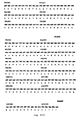
- the inventor calculated the CAI of a nucleotide sequence encoding a secreted form of human lysyl oxidase for a number of non-mammalian hosts by considering the usage of codons in the nucleotide sequence shown in Figure 1.
- the CAI is calculated to be 0.24 for E. coli and 0.11 for Saccharomyces cerevisiae .
- the inventor identified codons in the nucleotide sequence encoding human lysyl oxidase which are infrequently used in host cells such as E. coli including: an AGGAGA cluster encoding adjacent arginine residues at positions 937 to 942 which has the capacity to limit expression and generate translational pausing and frameshifting in E.
- the inventor further reasoned that verterbrate lysyl oxidase and lysyl oxidase-like molecules might be expressed in alternative host cells if the nucleotide sequences encoding those molecules were able to be specifically designed so as to favour higher levels of expression of lysyl oxidase in a particular alternative host cell.
- nucleotide sequences which encode verterbrate lysyl oxidase or lysyl oxidase-like proteins and which have been specifically designed for high level expression in a particular host may also be suitable for expression in other host cells provided that the specifically designed nucleotide sequence contained codons which were frequently used by the other host cells.
- nucleotide sequences encoding human lysyl oxidase and lysyl oxidase-like proteins in human cells.
- the present invention provides high level expression of nucleotide sequences encoding lysyl oxidases and lysyl oxidase-like proteins in recombinant expression systems.
- the inventor has recognised that lysyl oxidases, lysyl oxidase-like proteins and variants thereof can be used in a variety of, for instance, pharmaceutical applications, but these uses require significant quantities of lysyl oxidase, lysyl oxidase-like proteins or variants thereof in a native conformation.
- the realisation of the potential application of lysyl oxidase, lysyl oxidase-like expression products and variants thereof first requires a system which allows high level production of those products in native conformation.
- the benefits of being able to produce significant amounts of expression product in a functional conformation include specific oxidation, rather than random oxidation, so as to produce cross-linked complexes including cross- linked elastin or cross-linked collagen which are structurally and functionally similar to normal physiological complexes.
- the expression product which exists in a functional or native conformation is unlikely to cause an adverse reaction in vivo , whether the expression product is directly administered in vivo or in the situation where residual expression product remains in a cross-linked complex after catalysis, wherein that complex is intended for in vivo use.
- the invention provides for high level expression of vertebrate nucleotide sequences encoding lysyl oxidase and lysyl oxidase-like proteins by generating synthetic polynucleotides which encode lysyl oxidase or lysyl oxidase-like proteins.
- Synthetic polynucleotides are nucleotide sequences which have been specifically designed for high level expression of lysyl oxidase or lysyl oxidase-like proteins in particular host cells.
- Synthetic polynucleotides of the invention are generated by introducing specific nucleotide mutations at specific positions with respect to a particular codon, so as to replace codons which are rarely used, with codons which are frequently used by the particular host. Typically the mutation will not encode an amino acid mutation. To this extent, the nucleotide mutations within the synthetic polynucleotide are silent mutations. The number of codons corresponding to each amino acid residue is shown in Table 2. As a result of the degeneracy of the genetic code it is recognised that for some amino acid residues, silent mutations may be introduced at any one of nucleotide positions 1, 2 or 3 of a particular codon.
- the codon (5')AUG(3') on mRNA specifies methionine
- CAU specifies histidine
- UAA, UAG and UGA are termination signals.
- AUG is part of the initiation signal, and it codes for internal methionines as well.
- the present invention also relates to synthetic polynucleotides encoding lysyl oxidase or lysyl oxidase-like proteins wherein the nucleotide sequence of the synthetic polynucleotide comprises mutations which encode amino acid mutations.
- the lysyl oxidase and lysyl oxidase-like proteins which contain amino acid sequence mutations are variants of lysyl oxidase or lysyl oxidase-like proteins and are also described herein as variants of the invention.
- variants of the invention retain the functional properties of lysyl oxidase and lysyl oxidase-like proteins, namely that they catalyse oxidation of amine groups including lysine.
- the amino acid sequence of lysyl oxidase or lysyl oxidase-like proteins may be mutated by addition, deletion, substitution or combinations thereof of the encoding nucleotide sequence and such altered molecules are variants of the invention provided they retain the required activity.
- the inventor has recognised that the amino acid sequence of lysyl oxidase or lysyl oxidase-like proteins may be altered without significantly changing the specificity or efficacy of the enzyme, so that the enzyme containing the amino acid mutation is substantially the same as the enzyme comprising the native amino acid sequence.
- the inventor also recognises that the specific activity and substrate specificity may be altered by mutation of lysyl oxidase or lysyl oxidase-like protein amino acid sequence.
- the present invention further provides amino acid sequence variants of lysyl oxidase and lysyl oxidase-like proteins.
- Variants of the invention retain the functional properties of lysyl oxidase and lysyl oxidase-like proteins, namely that they catalyse oxidation of amine groups including lysine.
- Variants of the invention have amino acid sequences which are homologous with the amino acid sequence of lysyl oxidase or lysyl oxidase-like proteins.
- amino acid sequence is homologous to that of a lysyl oxidase or lysyl oxidase-like protein if the alignment of that amino acid sequence with the sequence of a lysyl oxidase or a lysyl oxidase-like protein reveals a similarity of about 65% over any 20 amino acid stretch or over any repetitive element of the molecules shorter than 20 amino acids in length.
- sequence comparison can be performed via known algorithims such as the one described by Lipman and Pearson (1985), which are readily implemented by computer. Similarity is observed between amino acids where those amino acids have a side chain which confers a similar chemical property in the same chemical environment. For example, threonine and serine are similar amino acids; aspartic acid and glutamic acid are similar amino acids; valine, leucine and isoleucine are similar amino acids etc.
- amino acid sequence may be considered homologous with the amino acid sequence of a lysyl oxidase or a lysyl oxidase-like protein because the alignment of those sequences reveals a similarity of 65%, although at each amino acid position in the aligned sequences, none of the residues are identical.
- a synthetic polynucleotide encoding an amino acid sequence selected from the group consisting of lysyl oxidases, lysyl oxidase-like proteins and variants thereof.
- the lysyl oxidase may be a vertebrate including human, bovine, porcine, rat or mouse lysyl oxidase, or avian lysyl oxidase including chick lysyl oxidase.
- the lysyl oxidase is a human lysyl oxidase.
- the nucleotide sequences of rat and mouse lysyl oxidase are reported in Trackman et al . (1991), porcine in Cronshaw et al . (1993), mouse in Contente et al . (1993), and chick in Wu et al . (1992).
- the lysyl oxidase-like proteins of the present invention are proteins which exhibit an amine oxidation catalysing function.
- variants of lysyl oxidases and lysyl oxidase-like proteins in accordance with the present invention may be truncated forms of the lysyl oxidase or lysyl oxidase-like proteins wherein the truncated forms retain the functional properties of lysyl oxidase and lysyl oxidase-like proteins, in particular the ability to catalyse the oxidation of amine groups, including lysine.
- the truncated forms are typically greater than 20 amino acids in length.
- variants of the invention also include molecules that comprise a particular sequence of amino acids or a particular domain of a lysyl oxidase or lysyl oxidase-like protein wherein the sequence of amino acids or domain retain the functional properties of lysyl oxidase and lysyl oxidase-like proteins, in particular the ability to catalyse the oxidation of amine groups, including lysine.
- Synthetic polynucleotides according to the invention are generated by mutating the native nucleotide sequence encoding a lysyl oxidase or lysyl oxidase-like protein or variant so that:
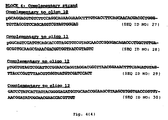
- the synthetic polynucleotide comprises a nucleotide sequence which encodes lysyl oxidase wherein the nucleotide sequence has a CAI score of at least 0.3 in a particular host cell. More preferably the synthetic polynucleotide comprises a nucleotide sequence which encodes human lysyl oxidase, wherein the synthetic polynucleotide has a CAI of at least 0.3 in E. coli. Most preferably the synthetic polynucleotide comprises all or part of the nucleotide sequence shown in Figure 2 (SEQ ID NO:3), starting at residue 141 (Met) or 144(Asp).
- the first 21 amino acids of the sequence shown in Figure 1 are amino acids of the pre-sequence.
- the residues from this position and up to and including residue 143 comprise the pro-sequence.
- the mature form of the lysyl oxidase commences at residue 144.
- At least 50% of codons in a particular nucleotide sequence which may be altered so as to reflect frequent codon usage in a particular host are selected and altered. More preferably at least 60% are altered. Most preferably at least 70% are altered.
- At least 50% of codons which encode a particular amino acid are altered, so as to reflect frequent codon usage in a particualar host. More preferably at least 60% are altered. Most preferably at least 70% are altered.
- all or part of the 5' or 3' untranslated region, or intronic regions of the synthetic nucleotide sequence encoding the lysyl oxidase or lysyl oxidase-like protein or variant thereof, are deleted.
- all or part of the regions encoding the signal peptide, or regions encoding the pro-peptide, of the synthetic nucleotide sequence encoding the lysyl oxidase or lysyl oxidase-like protein or variant thereof, are deleted.
- all or part, of the 5' or 3' untranslated region, and/or intronic regions, and regions encoding the signal peptide, and/or regions encoding the pro-peptide, of the synthetic polynucleotide encoding the lysyl oxidase or lysyl oxidase-like protein or variant thereof are deleted.
- the synthetic polynucleotide comprises a nucleotide sequence encoding lysyl oxidase, lysyl oxidase-like protein or a variant thereof and a further nucleotide sequence, wherein the nucleotide sequence encoding lysyl oxidase, lysyl oxidase-like protein or a variant thereof and the further nucleotide sequence are chemically linked so as to encode a single open reading frame.
- the further nucleotide sequence is preferably chemically linked to the 5' end of the nucleotide sequence encoding lyayl oxidase, lysyl oxidase-like protein or a variant thereof.
- the further nucleotide sequence encodes all of part of a polypeptide which causes the lysyl oxidase, lysyl oxidase-like protein or variant thereof to be either secreted to the extracellular environment, expressed as a cell surface periplasmic protein, or expressed in the intracellular environment.
- the further nucleotide sequence encodes all or part of glutathione S -transferase.
- the further nucleotide sequence encodes additional residues such as an N-terminal methionine or formyl-methionine.
- the synthetic polynucleotide is unfused.
- the synthetic polynucleotide comprises a fragment of the nucleotide sequence shown in Figure 2, wherein the fragment of the nucleotide sequence encodes a protein which retains the enzymatic activity of lysyl oxidase, lysyl oxidase-like protein or a variant thereof.
- the synthetic polynucleotide comprises the sequence shown in Figure 2 and commencing at the codon encoding residue 141.
- the synthetic polynucleotide comprises the sequence shown in Figure 2 and commences at or near the codon encoding residue 144.
- the synthetic polynucleotide comprises the nucleotide sequence shown in Figure 2 (SEQ ID NO:3), or a fragment thereof, in which only some of the nucleotide mutations have been introduced.
- the synthetic polynucleotide comprises the nucleotide sequence shown in Figure 2 (SEQ ID NO:3), or a fragment thereof, and at least 50% of the nucleotide mutations have been introduced.
- the synthetic polynucleotide comprises the nucleotide sequence shown in Figure 2 (SEQ ID NO:3) in which the number of nucleotide mutations which have been introduced produce a CAI score for the synthetic polynucleotide in E. coli of at least 0.30.
- the production of the synthetic polynucleotides of the invention can be via the techniques of organic synthesis or recombinant DNA technology, or a combination of both techniques.
- the synthetic polynucleotide is prepared from assembled oligonucleotides it is preferred to incorporate restriction sites in the sequence to facilitate assembly of the polynucleotide.
- the synthetic polynucleotides encoding the variants of the invention can be produced by the techniques of site-directed mutagenesis or random mutagenesis. These techniques allow one to determine the effect of mutation at particular positions in the synthetic polynucleotide sequence on the amine oxidation catalysing properties of the encoded variant of the invention.
- the variants of the invention are produced by the technique of site-directed mutagenesis using oligonucleotides, which comprises the following steps:
- a recombinant nucleic acid molecule comprising a synthetic polynucleotide of the first aspect.
- the recombinant nucleic acid molecule comprises vector nucleic acid.
- the vectors of the invention include plasmids, phages, and phagemids.
- the vectors of the invention can be used in integrative expression systems or lytic or comparable expression systems.
- Suitable vectors will generally contain origins of replication and control sequences which are derived from species compatible with the intended expression host. Typically these vectors include a promoter located upstream from the synthetic polynucleotide, together with a ribosome binding site if intended for prokaryotic expression, and a phenotypic selection gene such as one conferring antibiotic resistance or supplying an auxotrophic requirement. For production vectors, vectors which provide for enhanced stability through partitioning may be chosen. Where integrative vectors are used it is not necessary for the vector to have an origin of replication. Lytic and other comparable expression systems do not need to have those functions required for maintenance of vectors in hosts.
- typical vectors include pBR322, pBluescript II SK + , pGEX-2T, pTrc99A, pET series vectors, particularly pET3d, (Studier et al . 1990) and derivatives of these vectors.
- the vector comprises a synthetic polynucleotide of the first aspect, wherein the synthetic polynucleotide has a CAI score of at least 0.30 in a particular host cell.
- the vector comprises all or part of a synthetic polynucleotide sequence shown in Figure 2 (SEQ ID NO:3).
- the vector comprises a synthetic polynucleotide of the first aspect wherein at least 50% of codons in a particular nucleotide sequence which may be altered so as to reflect frequent codon usage in a particular host, are selected and altered. More preferably at least 60% are altered. Most preferably at least 70% are altered.
- the vector comprises a synthetic polynucleotide of the first aspect wherein at least 50% of codons which encode a particular amino acid are altered, so as to reflect frequent codon usage in a particular host. More preferably at least 60% are altered. Most preferably at least 70% are altered.
- the vector comprises a synthetic polynucleotide of the first aspect wherein all or part of the 5' or 3' untranslated region, and/or intronic regions is deleted.
- the vector comprises a synthetic polynucleotide of the first aspect wherein all or part of the regions encoding the signal peptide, and/or regions encoding the pro-peptide is deleted.
- the vector comprises a synthetic polynucleotide of the first aspect wherein all or part, of the 5' or 3' untranslated region, and/or intronic regions, and/or all or part of the regions encoding the signal peptide, and or regions encoding the pro-peptide is deleted.
- the recombinant DNA molecule comprises a synthetic polynucleotide of the first aspect, wherein the synthetic polynucleotide sequence is chemically linked to a further nucleotide sequence so as to encode a single open reading frame for the synthetic polynucleotide and the further nucleotide sequence.
- the recombinant DNA molecule comprises a synthetic polynucleotide and the further nucleotide sequence wherein the further nucleotide sequence is chemically linked to the 5' end of the synthetic polynucleotide.
- the recombinant DNA molecule comprises a synthetic polynucleotide, wherein the synthetic polynucleotide comprises all or part of the nucleotide sequence shown in Figure 2 (SEQ ID NO:2).
- the recombinant DNA molecule comprises a synthetic polynucleotide sequence having all or part of the sequence shown in Figure 2 (SEQ ID NO:3) wherein only some of the indicated nucleotide mutations have been introduced.
- a host cell transformed with a recombinant DNA molecule of the second aspect of the invention.
- the host cells may be prokaryotic cells including bacteria, and may also include yeasts, insect cells and other eukaryotic cells or whole organisms.
- the host is an E. coli strain including E. coli B strain derivatives (Studier et al . 1990), and E. coli K12 derivatives such as NM522 (Gough and Murray, 1983) and XL1-Blue (Bullock et al . 1987).
- the host is S. cerivisiae or Pichia .
- an expression product wherein the expression product is derived from a host cell of the third aspect, the expression product comprising an amino acid sequence selected from the group consisting of lysyl oxidase, lysyl oxidase-like proteins and variants thereof.
- the expression product comprises the amino acid sequence shown in Figure 2 (SEQ ID NO:4) and is encoded by a synthetic polynucleotide which comprises the nucleotide sequence shown in (SEQ ID NO:3).
- the expression product comprises a fragment of the amino acid sequence shown in Figure 2 (SEQ ID NO:4) which retains amine oxidation catalysing properties, and is encoded by a synthetic polynucleotide comprising the corresponding nucleotide sequence shown in Figure 2 (SEQ ID NO:3).
- the expression product comprises an amino acid sequence having an N-terminus at amino acid residue position 141 (Met) of Figure 2 (SEQ ID NO:4) or results in an N-terminal amino acid residue position 144 (Asp) of Figure 2, (SEQ ID NO:4) and is encoded by a synthetic polynucleotide comprising the corresponding nucleotide sequence shown in Figure 2 (SEQ ID NO:3).
- the expression product is encoded by a synthetic polynucleotide comprising the nucleotide sequence shown in Figure 2 (SEQ ID NO : 3) in which only some of the nucleotide mutations have been introduced.
- the expression product is encoded by a synthetic polynucleotide comprising all or part of the nucleotide sequence shown in Figure 2 (SEQ ID NO:3) and at least 50% of the nucleotide mutations relative to Figure 1 have been introduced.
- the expression product is encoded by a synthetic polynucleotide comprising all or part of the nucleotide sequence shown in Figure 2 (SEQ ID NO:3) in which the number of nucleotide mutations which have been introduced produce a CAI score for the synthetic polynucleotide in E. coli of at least 0.30.
- the expression products of the fourth aspect may be fused expression products which include all or part of a protein encoded by the vector in peptide linkage with the expression product. They may also include, for example, an N-terminal methionine or other additional residues which do not permanently impair the catalytic properties of the product.
- the expression products of the invention are fusion products which comprise an amino acid sequence selected from the group consisting of lysyl oxidase, lysyl oxidase-like proteins and variants thereof which are encoded by a synthetic polynucleotide, wherein the amino acid sequence is chemically linked to a further amino acid sequence.
- the further amino acid sequence is chemically linked to the N-terminus of the expression product.
- the further amino acid sequence allows purification of the fusion product.
- the further amino acid sequence comprises an amino acid sequence encoding glutathione S - transferase.
- the further amino acid sequence may be chosen in order to cause the fusion product to be secreted to the extracellular evironment, expressed as a cell membrane protein or expressed in the intracellular environment.
- the expressed fusion products may subsequently be treated to remove the further amino acid sequence from the amino acid sequence selected from the group consisting of lysyl oxidase, lysyl oxidase-like proteins and variants thereof.
- the treatment is via chemical cleavage.
- the treatment is via protease digestion.
- the treatment is effected by endogenous host cell secretion machinery, for example yeast cell secretion machinery.
- Non-fused systems include the introduction of or use of a pre-existing methionine codon.
- An example of this is the use of pET3a and pET3d in E. coli .
- the invention provides a pharmaceutical composition
- a pharmaceutical composition comprising an expression product of the invention and a pharmaceutically acceptable carrier, excipient or diluent.
- the pharmaceutical compositions are prepared and tested according to standard pharmaceutical practise. The support for their efficacy is provided by the assays in the Examples.
- the expression product is produced by expression of the synthetic polynucleotide in E. coli .
- the invention extends to the use of other host cells which are capable of producing the expression product by expression of the synthetic polynucleotides designed for use in E. coli .
- the expression product is produced by expression of a synthetic polynucleotide of the invention in other microbial expression systems including prokaryotic expression systems such as bacterial expression systems, and also including insect cell expression systems, and expression systems involving other eukaryotic cells or whole organisms.
- prokaryotic expression systems such as bacterial expression systems
- insect cell expression systems such as bacterial expression systems
- expression systems involving other eukaryotic cells or whole organisms can also be used in other cells which provide high expression of that sequence.
- the inventor has determined that it is useful to add Cu to the expression product which has been purified from the inclusion bodies of E. coli or similar organisms, so that the expression product can fold into a functional conformation which has the enzymatic activity of lysyl oxidase or lysyl oxidase-like proteins.
- the role of Cu in solubilising lysyl oxidase protein was not apparent until the present invention was carried out. Indeed based on earlier reported results which show that inactive apoenzyme can be reactivated by the addition of Cu it would have been expected that re-folding could occur without Cu.
- the present inventor initially attempted to refold protein in the absence of Cu and failed to generate soluble protein. It was only in subsequent experiments where Cu was added that refolding in this environment succeeded.
- the expression product may be exposed to chemical agents to enhance the stability and activity of the molecule.
- the chemical agents include various concentrations of urea or glycerol combined with storage at -20°C.
- the expression product is produced in the form of inclusion bodies which are harvested from the transformed host.
- the inventor recognised a variety of uses for lysyl oxidase, lysyl oxidase-like proteins and variants thereof although these uses require significant amounts of protein in functional conformation.
- the inventor has for the first time produce significant amounts of enzyme in functional conformation, the following uses, as described below can now be realised.
- the invention provides a method of cross-linking molecules that contain primary amines, wherein the molecules are associated with a cell membrane or extracellular environment, comprising contacting the primary amine with an expression product of the invention.
- the inventor now recognises that the expression products of the invention have specific activity for primary amine groups in peptide and non-peptide substrates. Furthermore, as described in the Examples, as the present inventor has, for the first time, observed cross-linking of both peptide and non-peptide substrates in vitro , using the expression product of the invention, the inventor envisages that the expression products of the invention will be useful for cross-linking a wide range of molecules such as peptides and polypeptides, non-peptide chemical polymers which contain primary amine groups and combinations thereof. In particular, the present inventor envisages that the expression product of the invention will be widely applicable to methods of treatment in vivo , in particular where those methods of treatment require cross-linking of elastin or collagen. For this purpose the expression product can be formulated in suitable carriers, buffers and other conventional delivery systems.
- the invention provides a method of cross-linking molecules that contain primary amines, wherein the molecule is a peptide or polypeptide molecule and the primary amine is associated with an amino acid side chain.
- the method comprises contacting the peptide or polypeptide molecule with an expression product of the invention under conditions suitable to cross-link the molecules.
- the peptide or polypeptide comprises the amino acid sequence of tropoelastin or a fragment thereof.
- the peptide or polypeptide comprises the amino acid sequence of collagen or a fragment thereof. It can also comprise both.
- the invention provides a method of cross-linking molecules that contain primary amines, wherein the the molecule is a non-peptide molecule.
- the method comprises contacting the non-peptide molecule with an expression product of the invention under conditions suitable to cross-link the molecules.
- the present inventor also recognises that the expression products of the invention would find wide application in accelerating the rate of wound healing.
- lysyl oxidase, lysyl oxidase-like proteins and variants thereof may be used to accelerate wound healing.
- Wound healing may be accelerated by administering an expression product of the invention to the wound.
- an expression product of the invention may be included in a matrix including an elastin, tropoelastin and/or collagen based or amine containing matrix which is itself applied to the wound.
- wound healing is accelerated by cross-linking of molecules which contain primary amines, and the cross-linking is mediated by the expression product of the invention.
- the expression product can be formulated in suitable carriers, buffers and other conventional delivery systems.
- the invention provides a method of accelerating the rate of wound healing, the method comprising the step of administering an expression product of the invention to a wound under conditions which are suitable for cross-linking of molecules containing primary amines.
- an expression product of the invention is administered to the wound by direct application of the product to the wound. More preferably the product is administered to the wound by first including the product in a matrix which is itself administered to the wound. Most preferably, the product is administered to the wound by application of a pharmaceutical formulation comprising the expression product of the invention and a pharmaceutically acceptable carrier, diluent or excipient.
- the invention in another preferred embodiment, relates to a method of deccelerating the rate of wound healing.
- the inventor recognises that there are particular surgical procedures which require a delay in wound healing so as to achieve a desirable outcome.
- a lysyl oxidase-mediated delay in wound healing is based on the ability to inhibit the oxidation of primary amines and therefore the ability to inhibit the cross-linking of particular molecules, where that cross-linking is essential to wound healing.
- Lysyl oxidase inhibitors are known, for example BAPN, although these reagents are typically noxious and therefor unsuitable for use in methods of treatment.
- the inventor envisages that a delay in wound healing which is mediated by the inhibition of oxidation of primary amines can be achieved by developing novel reagents which have specific anti-lysyl oxidase acitvities and which have no side-effects.
- Particularly suitable inhibitors of lysyl oxidase activities are anti-lysyl oxidase antibodies.
- These immunological reagents may be generated by raising antibodies to the expression products of the invention. The methods for the production of monoclonal antibodies or polyclonal antibodies are within the knowledge of the skilled addressee and are described in detail in standard immunological texts.
- the skilled addressee can readily determine those antibodies with anti-lysyl oxidase activities, in particular the ability to inhibit the oxidation of primary amines by performing screening of those antibodies according to the benzylamine substrate assay, tropoelastin substrate assay or tritiated tropoelastin substrate assay, as described in the accompanying Examples.
- the invention provides a method of deccelerating the rate of wound healing, the method comprising the step of administering antibodies which are raised against the expression product of the invention, to a wound under conditions which allow the antibodies to substantially inhibit the oxidation of primary amines.
- the invention relates to novel reagents for modifying the rate of wound healing.
- the expression products of the invention can be used to link chemical species to heterologous surfaces to substantially promote or substantially inhibit the rate of wound healing.
- the chemical species of interest generally include those species which contain a primary amine and which can be linked by oxidation of the primary amine to a heterologous surface, but more specifically comprise those chemical species selected from the group consisting of immunomodulatory substances including growth factors and cytokines, and substances which modify inflammatory responses or the coagulation cascade and also antibiotic substances.
- the heterologous surface may be a matrix comprising a complex of biomolecules, in particular elastin or tropoelastin, or a complex of non-peptide molecules.
- the expression product of the invention may be used to form a linkage between two chemical species which contain primary amine groups.
- the invention has particular application to the attachment of an active ingredient to a carrier molecule.
- the invention provides novel reagents and formulations thereof for use in modifying the rate of wound healing, wherein the reagents are generated by oxidising a primary amine contained in a chemical species so as to link the chemical species to a heterologous surface.
- the invention relates to the use of an expression product of the invention in the treatment or prevention of abnormal fibrosis.
- Lysyl oxidase has an important functional role in fibrosis and is also believed to be involved in the abnormal process of fibrosis, in particular in the fibrotic liver (Kagan H. M. 1994).
- the present inventor envisages the use of the expression products of the invention in promoting fibrosis so as to achieve a normal physiological outcome and inhibiting fibrosis where an abnormal outcome is to be avoided. Fibrosis may be promoted by increasing the levels of available lysyl oxidase or by increasing the specific activity of the enzyme.
- fibrosis may be promoted by administering an expression product of the invention to a particular site so as to promote fibrosis at that site.
- Fibrosis may also be promoted by administering anti-lysyl oxidase antibodies which augment or enhance the specific activity of the enzyme, for example by interfering with aggregation of the protein.
- Fibrosis may be inhibited by inhibiting or reducing the ability of the lysyl oxidase to oxidise primary amine residues.
- the inventor envisages that fibrosis, as mediated through the role of lysyl oxidase in the oxidation of primary amines, could be inhibited by the use of antibodies which inhibit the oxidation reaction.
- the methods for the production of monoclonal antibodies or polyclonal antibodies are within the knowledge of the skilled addressee.
- the skilled addressee can readily determine those antibodies with anti-lysyl oxidase activities which either inhibit or enhance lysyl oxidase activity, in particular the ability to inhibit or enhance the oxidation of primary amines by performing screening assays according to the benzylamine substrate assay, tropoelastin substrate assay or tritiated tropoelastin substrate assay, as described in the accompanying Examples.
- the invention provides a method for screening agents which substantially enhance or substantially inhibit the specific activity of lysyl oxidase or lysyl oxidase-like proteins, the method comprising the step of contacting the agent with an expression product of the invention and measuring the specific activity of the expression product.
- the expression products of the invention are useful in assays for detecting substrates which contain primary amines.
- the expression products of the invention are also useful to quantify amounts of protein or non-protein substrates wherein those substrates contain a known number of primary amine moieties.
- the expression products of the invention are particularly suited to such an assay as the expression product is derived from a pure source and will therefore specifically detect primary amine groups.
- the expression products of the invention may be variants of lysyl oxidase or a lysyl oxidase-like protein
- the inventor recognises that molecules associated with a particular primary amine (for example a primary amine group displayed in a specific manner) may be specifically detected over other molecules in the sample which contain a primary amine group.
- the assay could be performed according to any of the three substrate assays detailed in the accompanying Examples.
- the invention relates to a method for detecting a protein or non-protein substrate in a sample, the method comprising contacting the sample with an expression product of the invention and detecting oxidation of any primary amine moieties in the sample.
- the invention in another preferred embodiment, relates to a method for quantifying the amount of a protein or non-protein substrate in a sample, wherein the number of primary amine moieties per substrate molecule is known, the method comprising contacting the sample with an expression product of the invention and detecting the amount of oxidation of any primary amine moieties in the sample.
- the lysyl oxidase, lysyl oxidase-like proteins and variants thereof may be used to cross-link a primary amine containing molecule such as tropoelastin or collagen to the surface, wherein the solid surface has primary amine groups which are available for cross-linking.
- the invention provides the use of lysyl oxidase, lysyl oxidase-like proteins and variants thereof as an agents for forming coatings on solid surfaces.
- the present inventor envisages that those surfaces which have primary amine groups available for cross-linking will be useful for the manufacture of synthetic tissues for example, blood vessels.
- surface or devices could be dipped into solutions of tropoelastin and/or collagen in the presence of a lysyl oxidase, lysyl oxidase-like protein or variant of the invention.
- a cross-linked material could be preformed and then cross-linked to available primary amine groups on a surface, using a lysyl oxidase, lysyl oxidase-like protein or variant of the invention.
- the cross-linked molecule may comprise collagen and/or tropoelastin and/or other cross-linkable primary amine containing molecules.
- the invention provides a tissue glue, which is of use in assisting wound healing.
- This glue can be used as a replacement for sutures.
- the glue comprises an expression product of the invention and may additionally comprise at least one cross-linkable primary amine material, for example, tropoelastin and/or collagen.
- the glue may also be used to repair incisions in for instance, surgical applications and other body tissue defects.
- the glue may be applied by mixing the primary amine containing material and expression product and applying to the site.
- the expression products of the invention include the preparation of sheets or films where the product can be used as a reinforcement as well as for its biological properties. Applications could include repair of anastomoses, repair of defects in the heart.
- the expression products can also be used to prepare solid structures such as beads which may find application in tissue bulking applications such as in the urethra, oesaphagus or in dermatological applications where primary amine containing substances are desirably deposited in cross-linked form.
- the expression products of the invention are also useful as agents for:
- Human lysyl oxidase is typically made in human cells as a longer form, which is proteolytically processed to generate a shorter protein secreted into the extracellular space.
- the amino acid sequence has been compiled from data from different sources: complete sequence data which was available for cDNA encoding human lysyl oxidase (Hamalainen et al ., 1991; Mariani et al ., 1992), as well as partial human genome sequence (Svinarich et al ., 1992).
- the synthetic gene was designed with strategically placed restriction sites to facilitate conversion to novel derivatives and counterparts of lysyl oxidase and lysyl oxidase-related forms (Kim et al ., 1995).
- the synthetic gene was designed with a codon usage pattern favourable to high level expression in E. coli ( Figure 2).
- lysyl oxidase is a secreted protein its cDNA derived sequence encodes a region for a signal peptide, which would not be useful for generating a functional enzyme in E. coli but rather for directing eventual transfer of the newly translated protein from inside the cell into the extracellular matrix. Furthermore the secreted pro-lysyl oxidase was thought to be cleaved by extracellular protease(s) to process the mature protein, yet it was not known if the pre-cleaved protein was active. There were doubts regarding the precise boundaries of the presumably removed signal peptide and propeptide ("leading peptide").
- the likely leading peptide sequence in the N-terminal part of the lysyl oxidase sequence was determined by computer analysis and from the definitions provided by others (Trackman et al ., 1990; Hamalainen et al ., 1991) and was excluded from gene synthesis. Subsequent to this, further modifications were made to adjust for varied N-terminal sequences, various candidate signal sequences and eventually a better estimate of the leading peptide sequence, to generate derivatives of SHLOX, as detailed below.
- Each section was subdivided into pairs of complementary oligonucleotides. Internal junctions between oligonucleotide pairs were delineated by nucleotide overlaps, whilst the external junctions fall at the restriction enzyme cleavage points.
- the codon-optimized sequence and restriction sites are shown in Figure 2, together with the encoded amino acid sequence. Oligonucleotide sequences and designations are shown in Figure 4.
- Oligonucleotide pairs 2 to 6 were made by the Sydney University Macromolecular Analysis Centre, Australia and subsequently purified by denaturing polyacrylamide gel electrophoresis (PAGE) as follows. Oligonucleotides (>85-mers) were run on PAGE containing 7M urea and 8% to 10% acrylamide (acrylamide:bisacrylamide 19:1). Samples were heated to 75°C for 3 minutes before loading. Tracking dye (0.05% bromphenol blue, 0.05% xylene cyanole FF in deionized formamide) was loaded into an adjacent lane and electrophoresis conducted at constant power of 25 W (ca. 300 V) until the bromphenol marker was within lcm of the base of the gel.
- PAGE denaturing polyacrylamide gel electrophoresis
- Complementary oligonucleotide pairs (1 ⁇ g each, approximately 30pmol for 95-mer) were annealed in 10 ⁇ l buffer containing 50mM Tris.HCl pH7.5, 10mM MgCl 2 .
- the mixture was overlaid with 12 ⁇ l paraffin oil, heated to 95°C and cooled to 16°C over 16h in a microprocessor-controlled heating block (Perkin Elmer Cetus Thermal Cycler). Annealed samples were transferred to clean microcentrifuge tubes and a small aliquot (1 ⁇ l) withdrawn for analysis by agarose gel electrophoresis.
- each block comprising three complementary oligonucleotide pairs (blocks 1-3).
- four separate reactions were set up (A+B, A+C, B+C and A+B+C).
- Each reaction contained 50mM Tris.HCl, 10mM MgCl 2 , 1mM ATP, 3mM DTT, 3 ⁇ l each of the appropriate annealed oligonucleotide pairs, 0.5 ⁇ l (0.5U) T4 DNA ligase and Milli-Q water to a total volume of 10 ⁇ l. All ingredients except ATP, DTT and T4 ligase (Boehringer Mannheim, Germany) were mixed and heated to 45°C for 5 minutes to denature cohesive termini and then cooled to room temperature before addition of the remaining components.
- Ligation reactions were incubated overnight at 16°C and analysed on 2% LMT agarose gels, and ligated blocks were purified on preparative 2% LMT agarose gels with TAE running buffer. Product bands were identified under long-wave UV illumination with reference to known DNA size-standards (pBSIISK+ digested with either Hae III or Alu I) (Statagene, USA) and excised in the minimum possible volume of gel. DNA was recovered from LMT agarose fragments using GELase or agarase. Block 4 was constructed similarly, except that four instead of three complementary oligonucleotide pairs participated in the ligation reaction. Purity and yield of recovered SHLOX blocks was assessed by analytical agarose electrophoresis alongside known DNA standards.
- Plasmid DNA was isolated from agarose gels (Prep-A-Gene, Bio-Rad). Approximately 100ng (ca. 0.05pmol) purified plasmid fragment was added to 50ng (ca. 0.3pmol) synthetic block in 17 ⁇ l buffer containing 50 mM Tris.HCl pH 7.5, 10mM MgCl 2 and the solution heated at 45°C for 5 minutes to denature cohesive termini.
- Electroporated cells were diluted with 1ml LB media immediately after the procedure, incubated 1 hour at 37°C and 100 ⁇ l of this was spread on agar plates containing 100 ⁇ g/ml ampicillin (LB plus ampicillin), 0.1mM IPTG and 80 ⁇ g/ml X-gal. Recombinants were selected on the basis of a white bacterial colony phenotype, although some blue colonies were used as controls. Plasmid DNA was screened by restriction digestion and confirmed by sequencing. Plasmids containing the four lysyl oxidase blocks were designated pSHLOX1-4.
- Plasmids bearing correct sequences were grown in E.coli XL1Blue cells (Bullock et al 1987), purified by CsCl-ethidium bromide density gradient centrifugation and confirmed by sequencing in both directions.
- pSHLOX ⁇ and pSHLOX ⁇ plasmids were cut and the appropriate fragments containing ⁇ and ⁇ subassemblies of the intact gene of lysyl oxidase were purified from an agarose gel and ligated. Transformants were selected from LB plus ampicillin plates containing IPTG and X-gal. Correct constructs were confirmed by sequencing. The intact 1188bp synthetic gene encoding lysyl oxidase (SHLOX) was used for all further manipulations. The construct containing full length SHLOX (Figure 2) in pBSIISK+ was designated pSHLOXB.
- SHLOX The construction of SHLOX is exemplary of the methods used with other genes.
- the full length SHLOX gene was excised from pSHLOXB with Bam HI and purified by gel electrophoresis and GELase (Epicentre Technologies, USA). Purified fragment (100ng) was ligated with 50ng pGEX-2T (Medos Co Pty Ltd) in 20 ⁇ l total volume of ligase buffer using 1U of T4 DNA ligase.
- the vector DNA had been previously linearised with Bam HI and treated with calf intestinal phosphatase (CIP; Boehringer Mannheim, Germany). Transformants were selected on LB+ampicillin plates, screened by restriction digestion and confirmed by DNA sequencing.
- the SHLOX gene cloned into pGEX-2T was designated pGEXLOX-2T.
- Sal I and Xho I mutations were introduced (Clontech Transformer mutagenesis kit) into pGEXLOX-2T at positions -13 to +23 and 421 to 442 of the SHLOX gene using two mutagenic primers ( Xho I: CTG GTT CCG CGT GGA TCC CTC GAG CAG CCG CCG CGT; Sal I: ATG GTT GGT GTC GAC CCG TAC A) (Beckman Oligofax Service, Sydney).
- the 424 bp DNA fragment between the introduced Sal I and Xho I sites was excised from the 5'-terminal region of SHLOX of pGEXLOX-2T by cutting with Sal I and Xho I and the remaining plasmid DNA was gel-purified.
- pGEXLOX m1 was treated with Bam HI to release the coding sequence SHLOX m1 (the truncated form of SHLOX). This was ligated, in each case, into the Bam HI site of pET3a and pET12a plasmid vectors (Novagen Inc. USA) and the resulting constructs, p3aL m1 and p12aL m1 were transformed into E.coli HMS174 (Studier et al 1990). Transformants were plated and screened. Orientation of inserts was confirmed by restriction digestion and the regions around the cloning sites by sequencing.
- Full length SHLOX was gel-purified from pSHLOXS after Bam HI digestion.
- pET3d vector was linearised with Bam HI and dephosphorylated with CIP.
- Ligation of 100ng treated vector and 50ng purified SHLOX gene with T4 DNA ligase was conducted in 20 ⁇ l volume at 16°C for 20h, and the ligation mixture was used to electroporate E.coli HMS174.
- the recombinant bearing a SHLOX insert in the correct orientation was treated with Nco I to release the 842bp fragment consisting of 39 bp of pET3d and 813bp SHLOX.
- the resulting linear plasmid was recircularised and cloned in E.coli HMS174.
- the verified construct (designated p3DLox) contained the 297bp SHLOX 3'-terminal region encoding a 13,653 Da polypeptide (designated Dlox) corresponding to a carboxyterminal sequence of human lysyl oxidase.
- Nco I primer was designed (CCC GTG TTG ACG CCA TGG TTG GTG) which generated two nucleotide changes to transform the GGT ATG GTT target sequence into GCC ATG GTT.
- the resulting construct had two Nco I sites; the second (downstream) site was already in the SHLOX sequence. This offered a simple clone construction scheme. After screening, the mutant clone was used to prepare purified plasmid by CsCl-ethidium bromide density gradient centrifugation.
- the Asp 144 form can be generated by, for example, treatment of any of the pGEXLOXm1 or p3aLm1 or p12aLm1 forms with an appropriate protease, for example procollagen C-proteinase.
- pCNNinv Carlsberg Research Laboratories
- pYEX-BX pYEX-BX
- Pichia was chosen as an alternative expression host.
- pCNNinv a form of the synthetic gene corresponding to mature secreted lysyl oxidase was generated by PCR from p12aL m1 , using primers which included at their 5' termini Eag I sites. The amplification product was purified from an agarose gel using agarase, ligated to pGEM-T and transformed into E. coli XL1-Blue cells. Nine colonies from 16 candidate clones generated DNA that upon cutting with Eag I contained bands of approx.
- the vector was cleaved with Bam HI and dephosphorylated using calf intestinal alkaline phosphatase.
- pGEXLOX-2T was treated with restriction enzymes Not I and Bam HI and the SHLOX fragment was purified from an agarose gel. This fragment was ligated to the linearised vector, after which ends were filled using deoxynucleoside triphosphates and Sequenase v2.0 (Amersham). Blunt end ligation was then carried out. Correct constructs were identified by restriction enzyme digestion followed by complete sequencing of the fragment and adjacent vector sequences.
- a single colony from an agar plate was grown overnight with gyrotary shaking in 3ml LB + ampicillin media, and the entire culture was used to inoculate 250ml 2TY medium containing 70 ⁇ gml -1 ampicillin in a 1L conical flask.
- the inoculated medium was grown at 37°C with vigorous shaking (280-290rpm) until OD 600 ⁇ 0.6-0.8 (about 2h) upon which expression was induced by the addition of IPTG (usually 0.4mM IPTG for DLox, 3aL m1 and 3dL m2 ; 0.1mM IPTG for GST-SHLOX).
- the culture 250 ml, 4°C was divided into 50 ml aliquots in polypropylene tubes and cells were harvested by centrifugation (10 minutes, 5,000 rpm, 4°C). The supernatant was thoroughly removed and the wet pellets were weighed. A typical yield was 0.5 to 1g packed wet cells per 50 ml culture. Pellets were either stored at -80°C for several months, or used immediately for inclusion body purification.
- lysis buffer 50mM TrisHCL pH8.0, 1mM EDTA, 100mM NaCl (usually 5 to 7 ml per tube) and lysed at 4°C with 1mg/ml lysozyme (added in the form of a 10-times solution in lysis buffer) for 30 minutes with constant mixing.
- lysis buffer 50mM TrisHCL pH8.0, 1mM EDTA, 100mM NaCl (usually 5 to 7 ml per tube) and lysed at 4°C with 1mg/ml lysozyme (added in the form of a 10-times solution in lysis buffer) for 30 minutes with constant mixing.
- PMSF was then added to 0.5 mM. Quantitative cell disruption was achieved by incubation with 1% Triton-X100 (4°C, constant mixing, 30 minutes).
- Solubilisation was achieved immediately after purification using ice-cold U6KP (6M urea in 10 mM potassium phosphate buffer, pH 8.2). The solution was autoclaved and stored at room temperature prior to use. The amount of U6KP used for solubilisation determined the eventual concentration of recombinant lysyl oxidase. Typically 5 ml U6KP was used to solubilise the pellet derived from 50 ml bacterial culture, to yield 2 to 3mg/ml total protein. Mercaptoethanol was added to 2 to 3 mM. To help solubilisation mechanical disruption with a plastic Gilson tip was initially tried but this often led to loss of material which adhered to the inside and outside of the tip. Instead, the mixture was usually mechanically mixed by continuous mechanical inversion on a vertical platform at 30 to 40 rpm overnight, or until there was no sign of clumps. At all times the temperature was kept -0° to 4°C.
- dialysis tubing For dialysis against phosphate buffer 10 mm and 32 mm dialysis tubing (Selby, Australia) was usually used. Cut tubing was boiled in MilliQ water for 10 minutes and briefly soaked in dialysis buffer prior to use. 10mM or 16 mM phosphate buffer was prepared from 1M KH 2 PO 4 and 1M K 2 HPO 4 solution stocks and chemical grade distilled water, with the occasionally pH adjusted with 1M KOH.
- Dialysis of 2 or 3 ml of a 6M urea solution of recombinant protein was routinely performed against 2 L urea-free buffer, with buffer changes after each dialysis.
- Copper-containing samples were first dialysed against buffer containing an approximately equimolar concentration of CuCl 2 (usually 10-50 ⁇ M), in the expectation that removal of urea would be accompanied by integration of copper and bias towards a conformationally relevant form of the protein. Excess of copper was then removed in the following dialysis. After two consecutive dialyses (one against a copper-containing buffer, and the other against a copper-free buffer at pH 9.6) the dialysed material was transferred into polypropylene tubes on ice.
- Soluble and insoluble fractions were separated by centrifugation and analysed by SDS-PAGE.
- the pellet and the supernatant obtained after dialysis was stored at 4°C without obvious protein degradation for at least 3 weeks, but some solubility changes were noticed during storage.
- lysyl oxidase in yeast cell pellets and lysates a colony was grown in CSM-leu for 48 hours.
- cells were separated from growth media by centrifugation, and the supernatant was dialysed against ice-cold U6KP.
- Cells were washed in 5mM KPB (retained) then resuspended in 5mM KPB plus lyticase. After incubation for 1 hour at 30°C, cells were sonicated until apparent lysis as detected by phase contrast microscopy. The pellet and lysate were separated by centrifugation. The pellet and lysates were washed with U6KP and dialysed separately against ice-cold U6KP then against KPB, pH 9.6.
- yeast expression product studied characteristics 2 and 5 have been verified indicating that functional protein is being produced while all 5 characteristics have been verified for E.coli expression particularly with respect to the p3dL m2 construct.
- Levels of expression obtained have been approximately 30% of total cell protein in E. coli and 10% of total cell protein in yeast.
- the assay was performed according to the method of Trackman et al . 1979.
- the assay monitors at 250nm the production of benzylaldehyde from benzylamine in potassium phosphate buffer at 37°C. Lysyl oxidase activity is measured spectrophotometrically at 37°C by the conversion of benzylamine to benzaldehyde at 250nm.
- lysyl oxidase was derived from the plasmid p3dL m2 .
- Controls including boiled lysyl oxidase and benzylamine, benzylamine and dialysis buffer (no enzyme) and lysyl oxidase and KPB (no substrate) showed no increase in absorbance at 250nm.
- Tropoelastin resuspended in either KPB (10mM,pH8) or PBS (10mM PB 150mM NaCl) was mixed at a final concentration of 10mg/mL, with lysyl oxidase and placed at 37°C for 2 hrs.
- the lysyl oxidase was derived from the p3dL m2 plasmid.
- Controls included tropoelastin + lysyl oxidase + BAPN, tropoelastin + boiled lysyl oxidase, tropoelastion + dialysis buffer, tropoelastin + buffer.
- Tropoelastin + buffer contained 6% lysine, tropoelastin + lysyl oxidase 2.5% lysine and tropoelastin + lysyl oxidase + BAPN 2.2% lysine. This is consistent with the removal of lysine residues to form cross-links such as desmosines. Bedell- Hogan et al reports the presence of 5.6% lysine residues in recombinant tropoelastin compared to 2.4% in alkali insoluble recombinant tropoelastin.
- the results show a lowering of the percentage of lysine in tropoelastin, as determined by the amino acid analysis. Furthermore, an insoluble protein was produced, consistent with the production of an elastin or elastin-like product.
- Recombinant tropoelastin was prepared essentially as described Martin et al . 1995, except that BL21 cells containing pSHELF ( WO 94/14958 ) were grown in "complete synthetic medium without lysine" (CSM-Lys), and supplemented with L-[4,5-tritium] lysine monochloride (Amersham) at 83 Ci/mmol. Accordingly, the resulting tropoelastin was radiolabelled to approximately 40,000,000 cpm/mg protein. This was lyophilised, then redissolved in assay buffer (0.1M Na 2 B 4 O 7 , 0.15M NaCl, pH8) and centrifuged through Millipore Ultrafree MC for 1 hour at 7500 rpm at 4°C.
- assay buffer 0.1M Na 2 B 4 O 7 , 0.15M NaCl, pH8
- the retentate was used for subsequent assays. Assays were then performed by incubation with lysyl oxidase, and assessed according to the protocol of Shackelton and Hulmes, 1990. In this assay, the lysyl oxidase was derived from the p3dL m2 plasmid. Tritiated tropoelastin was mixed with lysyl oxidase and left at 37°C for 16 hours. Tritiated water formed during the incubation, an indication of lysyl oxidase activity, was isolated by ultrafiltration and radioactivity quantified by liquid scintillation spectrometry. A control for endogenous lysyl oxidase-like activity in E.
- coli was generated by taking an E. coli strain containing the pET3d plasmid through the same purification procedure as that used to produce lysyl oxidase. A sample of this pET3d control was also mixed with tritiated tropoelastin. Preliminary results are consistent with some lysyl oxidase-like activity. In all cases samples containing lysyl oxidase produced more tritiated water than those containing pET3d ( Figure 5).
- the genetic constructs of the present invention are useful in the preparation of high yields of biocompatible biospecific lysyl oxidase useful in vivo applications and other situations where catalysis of amine oxidation is required.
- the expression products of the invention are useful as agents for crosslinking of (but not confined to) tropoelastin and collagen both in vitro and in vivo , to join primary-amine materials e.g. in surgical or veterinary applications including natural and artificial materials, regulating cell growth, interfering with/promoting fibrosis, oxidising accessible lysines (and other amines) to modify behaviour of those molecular components and as components of assay systems designed to detect/quantify amines.
- the genetic constructs and expression products of the invention have potential in cancer therapy.
- TRAMP tyrosine rich acidic matrix protein
- Retinoic acid prevents downregulation of ras recision gene/lysyl oxidase early in adipocyte differentiation. Differentiation. 58, 47-52 .
- Nonpeptidyl amine inhibitors are substrates of lysyl oxidase. J. Biol. Chem. 254, 7831-7836 .
Landscapes
- Health & Medical Sciences (AREA)
- Chemical & Material Sciences (AREA)
- Life Sciences & Earth Sciences (AREA)
- Organic Chemistry (AREA)
- Bioinformatics & Cheminformatics (AREA)
- Engineering & Computer Science (AREA)
- Medicinal Chemistry (AREA)
- General Health & Medical Sciences (AREA)
- Genetics & Genomics (AREA)
- Zoology (AREA)
- Wood Science & Technology (AREA)
- Pharmacology & Pharmacy (AREA)
- Nuclear Medicine, Radiotherapy & Molecular Imaging (AREA)
- Animal Behavior & Ethology (AREA)
- Public Health (AREA)
- Veterinary Medicine (AREA)
- General Chemical & Material Sciences (AREA)
- Chemical Kinetics & Catalysis (AREA)
- Molecular Biology (AREA)
- Microbiology (AREA)
- Biomedical Technology (AREA)
- Biochemistry (AREA)
- General Engineering & Computer Science (AREA)
- Biotechnology (AREA)
- Dermatology (AREA)
- Micro-Organisms Or Cultivation Processes Thereof (AREA)
- Enzymes And Modification Thereof (AREA)
- Saccharide Compounds (AREA)
- Medicinal Preparation (AREA)
- Medicines That Contain Protein Lipid Enzymes And Other Medicines (AREA)
- Medicines Containing Antibodies Or Antigens For Use As Internal Diagnostic Agents (AREA)
- Peptides Or Proteins (AREA)
Applications Claiming Priority (2)
| Application Number | Priority Date | Filing Date | Title |
|---|---|---|---|
| AUPO1565A AUPO156596A0 (en) | 1996-08-09 | 1996-08-09 | Synthetic polynucleotides |
| EP97933592A EP0960192B1 (de) | 1996-08-09 | 1997-08-11 | Synthetische polynukleotide |
Related Parent Applications (1)
| Application Number | Title | Priority Date | Filing Date |
|---|---|---|---|
| EP97933592A Division EP0960192B1 (de) | 1996-08-09 | 1997-08-11 | Synthetische polynukleotide |
Publications (2)
| Publication Number | Publication Date |
|---|---|
| EP1715035A2 true EP1715035A2 (de) | 2006-10-25 |
| EP1715035A3 EP1715035A3 (de) | 2007-10-17 |
Family
ID=3795879
Family Applications (2)
| Application Number | Title | Priority Date | Filing Date |
|---|---|---|---|
| EP05024276A Withdrawn EP1715035A3 (de) | 1996-08-09 | 1997-08-11 | Für lysyl oxidase kodierende synthetische polynukleotide |
| EP97933592A Expired - Lifetime EP0960192B1 (de) | 1996-08-09 | 1997-08-11 | Synthetische polynukleotide |
Family Applications After (1)
| Application Number | Title | Priority Date | Filing Date |
|---|---|---|---|
| EP97933592A Expired - Lifetime EP0960192B1 (de) | 1996-08-09 | 1997-08-11 | Synthetische polynukleotide |
Country Status (10)
| Country | Link |
|---|---|
| EP (2) | EP1715035A3 (de) |
| JP (1) | JP2000517172A (de) |
| KR (1) | KR20000029606A (de) |
| AT (1) | ATE309333T1 (de) |
| AU (1) | AUPO156596A0 (de) |
| CA (1) | CA2261572A1 (de) |
| DE (1) | DE69734604T2 (de) |
| DK (1) | DK0960192T3 (de) |
| NZ (1) | NZ333577A (de) |
| WO (1) | WO1998006830A1 (de) |
Cited By (2)
| Publication number | Priority date | Publication date | Assignee | Title |
|---|---|---|---|---|
| WO2009017833A3 (en) * | 2007-08-02 | 2009-06-25 | Arresto Biosciences | Methods and compositions for treatment and diagnosis of fibrosis, tumor invasion, angiogenesis, and metastasis |
| US8163494B2 (en) | 2002-11-27 | 2012-04-24 | Technion Research & Development Foundation Ltd. | Method for assessing metastatic properties of breast cancer |
Families Citing this family (18)
| Publication number | Priority date | Publication date | Assignee | Title |
|---|---|---|---|---|
| DE19834909A1 (de) * | 1998-08-03 | 2000-02-17 | Mpb Cologne Gmbh Molecular Pla | Faserproteine und ihre Herstellung |
| US6808707B2 (en) | 2000-02-04 | 2004-10-26 | Matrix Design | Wound healing compositions and methods using tropoelastin and lysyl oxidase |
| US6872552B2 (en) | 2000-02-29 | 2005-03-29 | Burt D. Ensley | Method of reconstituting nucleic acid molecules |
| US20020068322A1 (en) * | 2000-05-26 | 2002-06-06 | Rachel Meyers | 47765, a novel human lysyl oxidase and uses thereof |
| JP2004518407A (ja) * | 2000-08-04 | 2004-06-24 | インサイト・ゲノミックス・インコーポレイテッド | 薬物代謝酵素 |
| US8119599B2 (en) * | 2001-08-31 | 2012-02-21 | Orthopeutics, L.P. | Direct application of non-toxic crosslinking reagents to resist progressive spinal degeneration and deformity |
| FR2855968B1 (fr) | 2003-06-13 | 2012-11-30 | Coletica | Stimulation de la synthese et de l'activite d'une isoforme de la lysyl oxydase-like loxl pour stimuler la formation de fibres elastiques |
| DE602005003929T2 (de) * | 2004-03-03 | 2008-12-04 | F. Hoffmann-La Roche Ag | Verfahren zur aufreinigung eines n-terminalen fragments des hepatozytenwachstumsfaktors |
| AU2006316079B2 (en) | 2005-11-15 | 2012-03-29 | Otsuka Pharmaceutical Co., Ltd. | Oxazole compound and pharmaceutical composition |
| US10278947B2 (en) | 2007-02-28 | 2019-05-07 | Orthopeutics, L.P. | Crosslinker enhanced repair of connective tissues |
| IL184627A0 (en) | 2007-07-15 | 2008-12-29 | Technion Res & Dev Foundation | Agents for diagnosing and modulating metastasis and fibrosis as well as inflammation in a mammalian tissue |
| US9107935B2 (en) | 2009-01-06 | 2015-08-18 | Gilead Biologics, Inc. | Chemotherapeutic methods and compositions |
| RU2012110585A (ru) | 2009-08-21 | 2013-09-27 | Джилид Байолоджикс, Инк. | Каталичические домены лизилоксидазы и loxl2 |
| JP6059859B2 (ja) * | 2009-11-16 | 2017-01-11 | ビーエーエスエフ ビューティ ケア ソリューションズ フランス エスエーエスBASF Beauty Care Solutions France S.A.S. | 弾性繊維の形成を刺激するための、loxl(リシルオキシダーゼ類似)アイソフォームの合成及び活性の刺激 |
| US8680246B2 (en) | 2010-02-04 | 2014-03-25 | Gilead Biologics, Inc. | Antibodies that bind to lysyl oxidase-like 2 (LOXL2) |
| ES2860023T3 (es) | 2012-12-10 | 2021-10-04 | Allergan Pharmaceuticals Int Ltd | Fabricación de constructos elásticos tridimensionales escalables |
| EP4316537A3 (de) * | 2013-08-13 | 2024-04-10 | Allergan Pharmaceuticals International Limited | Regenerierung von geschädigtem gewebe |
| JP2015147798A (ja) * | 2015-04-20 | 2015-08-20 | ビーエーエスエフ ビューティ ケア ソリューションズ フランス エスエーエス | 弾性繊維の形成を刺激するための、loxl(リシルオキシダーゼ類似)アイソフォームの合成及び活性の刺激 |
Family Cites Families (1)
| Publication number | Priority date | Publication date | Assignee | Title |
|---|---|---|---|---|
| JPH0421700A (ja) * | 1990-05-16 | 1992-01-24 | Nippon Kayaku Co Ltd | 新規マトリックス蛋白質 |
-
1996
- 1996-08-09 AU AUPO1565A patent/AUPO156596A0/en not_active Abandoned
-
1997
- 1997-08-11 AT AT97933592T patent/ATE309333T1/de not_active IP Right Cessation
- 1997-08-11 DE DE69734604T patent/DE69734604T2/de not_active Expired - Fee Related
- 1997-08-11 CA CA002261572A patent/CA2261572A1/en not_active Abandoned
- 1997-08-11 KR KR1019997000670A patent/KR20000029606A/ko not_active Withdrawn
- 1997-08-11 EP EP05024276A patent/EP1715035A3/de not_active Withdrawn
- 1997-08-11 NZ NZ333577A patent/NZ333577A/xx unknown
- 1997-08-11 DK DK97933592T patent/DK0960192T3/da active
- 1997-08-11 EP EP97933592A patent/EP0960192B1/de not_active Expired - Lifetime
- 1997-08-11 WO PCT/AU1997/000505 patent/WO1998006830A1/en not_active Ceased
- 1997-08-11 JP JP10509229A patent/JP2000517172A/ja active Pending
Non-Patent Citations (5)
| Title |
|---|
| DATABASE EMBL [Online] EBI; 16 May 1992 (1992-05-16), MARIANI T.J. ET AL.: "Human lysyl oxidase (LOX) mRNA, complete cds." XP002229126 Database accession no. M94054 * |
| DATABASE EMBL [Online] EBI; 26 November 1993 (1993-11-26), HAMALAINEN E.R. ET AL.: "lysyl oxidase [human, mRNA, 1780 nt.]" XP002229127 Database accession no. S78694 * |
| DATABASE SWISSPROT [Online] 1 December 1992 (1992-12-01), MARIANI T.J. ET AL.: "Protein-lysine 6-oxidase precursor (EC 1.4.3.13) (Lysyl oxidase)." XP002229125 Database accession no. P28300 * |
| HERNAN R A ET AL: "Human hemoglobin expression in Escherichia coli: importance of optimal codon usage." BIOCHEMISTRY. UNITED STATES 15 SEP 1992, vol. 31, no. 36, 15 September 1992 (1992-09-15), pages 8619-8628, XP001122353 ISSN: 0006-2960 * |
| SHARP P M ET AL: "The codon Adaptation Index--a measure of directional synonymous codon usage bias, and its potential applications." NUCLEIC ACIDS RESEARCH. ENGLAND 11 FEB 1987, vol. 15, no. 3, 11 February 1987 (1987-02-11), pages 1281-1295, XP001122356 ISSN: 0305-1048 * |
Cited By (7)
| Publication number | Priority date | Publication date | Assignee | Title |
|---|---|---|---|---|
| US8163494B2 (en) | 2002-11-27 | 2012-04-24 | Technion Research & Development Foundation Ltd. | Method for assessing metastatic properties of breast cancer |
| US8168180B2 (en) | 2002-11-27 | 2012-05-01 | Technion Research & Development Foundation Ltd. | Methods and compositions for modulating angiogenesis |
| WO2009017833A3 (en) * | 2007-08-02 | 2009-06-25 | Arresto Biosciences | Methods and compositions for treatment and diagnosis of fibrosis, tumor invasion, angiogenesis, and metastasis |
| US8461303B2 (en) | 2007-08-02 | 2013-06-11 | Gilead Biologics, Inc. | LOX and LOXL2 inhibitors and uses thereof |
| US8658167B2 (en) | 2007-08-02 | 2014-02-25 | Gilead Biologics, Inc. | Methods and compositions for treatment and diagnosis of fibrosis, tumor invasion, angiogenesis, and metastasis |
| US8679485B2 (en) | 2007-08-02 | 2014-03-25 | Gilead Biologics, Inc. | Methods and compositions for treatment and diagnosis of fibrosis, tumor invasion, angiogenesis, and metastasis |
| US10494443B2 (en) | 2007-08-02 | 2019-12-03 | Gilead Biologics, Inc. | LOX and LOXL2 inhibitors and uses thereof |
Also Published As
| Publication number | Publication date |
|---|---|
| NZ333577A (en) | 2000-10-27 |
| EP0960192A4 (de) | 2003-05-14 |
| EP0960192B1 (de) | 2005-11-09 |
| KR20000029606A (ko) | 2000-05-25 |
| DK0960192T3 (da) | 2006-03-27 |
| DE69734604D1 (de) | 2005-12-15 |
| EP1715035A3 (de) | 2007-10-17 |
| JP2000517172A (ja) | 2000-12-26 |
| ATE309333T1 (de) | 2005-11-15 |
| DE69734604T2 (de) | 2006-08-10 |
| AUPO156596A0 (en) | 1996-09-05 |
| WO1998006830A1 (en) | 1998-02-19 |
| EP0960192A1 (de) | 1999-12-01 |
| CA2261572A1 (en) | 1998-02-19 |
Similar Documents
| Publication | Publication Date | Title |
|---|---|---|
| EP0960192B1 (de) | Synthetische polynukleotide | |
| US6277622B1 (en) | Synthetic polynucleotides | |
| EP0746612B1 (de) | Synthetische polynukleotide | |
| FI114398B (fi) | Kasvain-nekroositekijän (TNF) inhibiittoria koodittava yhdistelmä-nukleiinihapposekvenssi, menetelmä yhdistelmä-kasvainnekroositekijä-(TNF)-inhibiittorin valmistamiseksi, menetelmässä käyttökelpoinenvektori ja yhdistelmäisäntäsolu | |
| JP3468778B2 (ja) | ヒトdnアーゼi過反応性変異体 | |
| JP2803089B2 (ja) | ポリペプチドおよびその製造法 | |
| WO1997035989A2 (en) | Cyclic nucleotide phosphodiesterase | |
| US12410393B2 (en) | E. coli strains having an oxidative cytoplasm | |
| Becker et al. | Identification of glutamate-169 as the third zinc-binding residue in proteinase III, a member of the family of insulin-degrading enzymes | |
| WO1998007872A1 (en) | Homocysteine desulphurase from the protozoan trichomonas vaginalis | |
| JP2967557B2 (ja) | ヒトマンガンスーパーオキシドジスムターゼcDNA、その細菌中での発現及び酵素活性ヒトマンガンスーパーオキシドジスムターゼの回収方法 | |
| US12351850B2 (en) | Methods of producing full-length antibodies using E. coli | |
| JP4472870B2 (ja) | 分子内シャペロン様配列を含有するキメラタンパク質およびインスリン製造へのその適用 | |
| AU733946B2 (en) | Synthetic polynucleotides | |
| HK1096997A (en) | Synthetic polynucleotides encoding lysyl oxidase | |
| JP2007518396A (ja) | 増加した活性を有する修飾されたヒト酸性スフィンゴミエリナーゼおよびその製造方法 | |
| Smith et al. | Effects of cysteine-to-serine mutations on structural and functional properties of prostaglandin endoperoxide synthase | |
| EP1375510B1 (de) | Modifikation von Kollagen Material und Medizinische Behandlung, Diagnose, und Monitoring von Fibrotischen Konditionen | |
| JP3355368B2 (ja) | 植物由来のエポキシド水解酵素をコードするcDNAを含むプラスミドベクターおよび形質転換体 | |
| JPH11510697A (ja) | 組換え体c−プロテイナーゼ、ならびにそのプロセス、方法および使用 | |
| JP4475707B2 (ja) | N末端メチオニンの除去方法 | |
| US20050143472A1 (en) | Novel treatment for pathologies associated with oxidative damage | |
| Ford-Hutchinson et al. | Enzymes involved in the production of leukotrienes and related molecules | |
| CN1256312A (zh) | 新的人谷胱苷肽过氧化酶、其编码序列及制法和用途 | |
| HK40060526B (en) | E coli strains having an oxidative cytoplasm |
Legal Events
| Date | Code | Title | Description |
|---|---|---|---|
| PUAI | Public reference made under article 153(3) epc to a published international application that has entered the european phase |
Free format text: ORIGINAL CODE: 0009012 |
|
| 17P | Request for examination filed |
Effective date: 20051108 |
|
| AC | Divisional application: reference to earlier application |
Ref document number: 0960192 Country of ref document: EP Kind code of ref document: P |
|
| AK | Designated contracting states |
Kind code of ref document: A2 Designated state(s): AT BE CH DE DK ES FI FR GB GR IE IT LI LU MC NL PT SE |
|
| RIC1 | Information provided on ipc code assigned before grant |
Ipc: C12N 15/53 20060101ALI20060922BHEP Ipc: C12N 9/02 20060101AFI20060921BHEP Ipc: A61K 38/43 20060101ALI20060922BHEP Ipc: C12N 9/06 20060101ALI20060922BHEP |
|
| REG | Reference to a national code |
Ref country code: HK Ref legal event code: DE Ref document number: 1096997 Country of ref document: HK |
|
| PUAL | Search report despatched |
Free format text: ORIGINAL CODE: 0009013 |
|
| AK | Designated contracting states |
Kind code of ref document: A3 Designated state(s): AT BE CH DE DK ES FI FR GB GR IE IT LI LU MC NL PT SE |
|
| 17Q | First examination report despatched |
Effective date: 20080110 |
|
| AKX | Designation fees paid |
Designated state(s): AT BE CH DE DK ES FI FR GB GR IE IT LI LU MC NL PT SE |
|
| STAA | Information on the status of an ep patent application or granted ep patent |
Free format text: STATUS: THE APPLICATION IS DEEMED TO BE WITHDRAWN |
|
| 18D | Application deemed to be withdrawn |
Effective date: 20080923 |
|
| REG | Reference to a national code |
Ref country code: HK Ref legal event code: WD Ref document number: 1096997 Country of ref document: HK |