EP1715422A1 - Système et méthode pour convertir un service synchrone fondé sur schéma en un service asynchrone fondé sur schéma - Google Patents
Système et méthode pour convertir un service synchrone fondé sur schéma en un service asynchrone fondé sur schéma Download PDFInfo
- Publication number
- EP1715422A1 EP1715422A1 EP05103084A EP05103084A EP1715422A1 EP 1715422 A1 EP1715422 A1 EP 1715422A1 EP 05103084 A EP05103084 A EP 05103084A EP 05103084 A EP05103084 A EP 05103084A EP 1715422 A1 EP1715422 A1 EP 1715422A1
- Authority
- EP
- European Patent Office
- Prior art keywords
- service
- notification
- asynchronous
- description
- communication
- Prior art date
- Legal status (The legal status is an assumption and is not a legal conclusion. Google has not performed a legal analysis and makes no representation as to the accuracy of the status listed.)
- Ceased
Links
Images

Classifications
-
- G—PHYSICS
- G06—COMPUTING OR CALCULATING; COUNTING
- G06F—ELECTRIC DIGITAL DATA PROCESSING
- G06F9/00—Arrangements for program control, e.g. control units
- G06F9/06—Arrangements for program control, e.g. control units using stored programs, i.e. using an internal store of processing equipment to receive or retain programs
- G06F9/46—Multiprogramming arrangements
- G06F9/54—Interprogram communication
- G06F9/541—Interprogram communication via adapters, e.g. between incompatible applications
-
- G—PHYSICS
- G06—COMPUTING OR CALCULATING; COUNTING
- G06F—ELECTRIC DIGITAL DATA PROCESSING
- G06F9/00—Arrangements for program control, e.g. control units
- G06F9/06—Arrangements for program control, e.g. control units using stored programs, i.e. using an internal store of processing equipment to receive or retain programs
- G06F9/46—Multiprogramming arrangements
- G06F9/54—Interprogram communication
- G06F9/542—Event management; Broadcasting; Multicasting; Notifications
-
- H—ELECTRICITY
- H04—ELECTRIC COMMUNICATION TECHNIQUE
- H04L—TRANSMISSION OF DIGITAL INFORMATION, e.g. TELEGRAPHIC COMMUNICATION
- H04L67/00—Network arrangements or protocols for supporting network services or applications
- H04L67/01—Protocols
- H04L67/02—Protocols based on web technology, e.g. hypertext transfer protocol [HTTP]
-
- G—PHYSICS
- G06—COMPUTING OR CALCULATING; COUNTING
- G06F—ELECTRIC DIGITAL DATA PROCESSING
- G06F2209/00—Indexing scheme relating to G06F9/00
- G06F2209/54—Indexing scheme relating to G06F9/54
- G06F2209/544—Remote
Definitions
- the present invention relates to notification based communications of schema based services.
- a push notification can be a Boolean value which informs the client device that a detailed response is available for retrieval from the web service.
- the push notification can return the updated data in response to an earlier submitted request message from the client device.
- Web Services have become a ubiquitous standard for access to content resources as well as communicating to back-end servers. Their number and complexity have increased considerably in recent years. However, invoking Web Service operations from a wireless device using synchronous communication methods exclusively is considered expensive and impractical. Most Web Services employ protocols with a large footprint (e.g. SOAP) and are designed mostly for synchronous communication ("request/response" or "pull") on wired networks. In a synchronous scenario, the client initiates the communication by sending a request to the server and waits to receive the response on the same connection. However, in the wireless space, where resources and bandwidth can be limited and data traffic cost can be high, synchronous communication is undesirable.
- SOAP synchronous communication
- a common technique to deliver content to the wireless device is when the user of the device requests or "pulls" the content from the network. In other words, the content is constantly present in the network, but the user needs to issue retrieval request to access the information (e.g. using a browser on the mobile device).
- Current wireless systems operate by the wireless device repeatedly polling the server for data to satisfy the request. From a practical point of view, wireless communications can have higher cost than wired communications and usually are characterized by higher latency times, making a 'pull' from a wireless device inherently expensive. Slow connection times sometimes might be critical to the user's experience, such as extended wait times to process the request, including periodic loss of services connection during the wait time.
- the present invention provides a system and method for transforming a standard request/response style web-service definition into an asynchronous based web-service definition to obviate or mitigate at least some of the above presented disadvantages.
- Web Services have become a ubiquitous standard for access to content resources as well as communicating to back-end servers. Their number and complexity have increased considerably in recent years. However, invoking Web Service operations from a wireless device using synchronous communication methods exclusively is considered expensive and impractical. However, in the wireless space, where resources and bandwidth can be limited and data traffic cost can be high, synchronous communication is undesirable. Contrary to present communication systems there is provided a system and method for converting a schema based synchronous service to a schema based asynchronous service. The asynchronous service for implementing on a server configured for communication with a respective client over a network.
- the system and method comprising a subscription module for identifying a port type with each notification method added to a description of the synchronous service and for associating a subscription operation with the identified port type.
- the system and method can also include an artifact module for generating at least one conversion artifact related to the added notification method, the conversion artifact configured for use by a developer to assist in developing the supporting clients of the asynchronous service as well as the asynchronous service itself.
- the system and method can also include an integration module for combining the notification methods and subscription operations and conversion artifacts to produce a description of the asynchronous service.
- the developer uses the asynchronous service description for generating a service implementation of the schema based asynchronous service to include appropriate business logic for subsequent installation in the server as an asynchronous service interface.
- a system for converting a schema based synchronous service description to a schema based asynchronous service description for implementing on a server configured for communication with a respective client over a network
- the system comprising: a subscription module for defining a port type for a notification method associated with the synchronous service description and for assigning a subscription operation to the defined port type; an artifact module for generating at least one conversion artifact related to the notification method, the conversion artifact configured for use by a developer to assist in developing a deployable service implementation of the asynchronous service description; and an integration module for combining the notification method and the subscription operation and the conversion artifact to produce the asynchronous service description; wherein the asynchronous service description is configured for subsequent use by the developer for generating the deployable service implementation to include appropriate business logic for subsequent installation in the server as an asynchronous service interface.
- a method for converting a schema based synchronous service to a schema based asynchronous service comprising the steps of: defining a port type for a notification method associated with the synchronous service description; assigning a subscription operation to the defined port type; generating at least one conversion artifact related to the notification method, the conversion artifact configured for use by a developer to assist in developing a deployable service implementation of the asynchronous service description; and combining the notification method and the subscription operation and the conversion artifact to produce the asynchronous service description; wherein the asynchronous service description is configured for subsequent use by the developer for generating the deployable service implementation to include appropriate business logic for subsequent installation in the server as an asynchronous service interface.
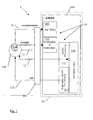
- a communication system 8 has a plurality of clients 100, such as but not limited to wireless devices and desktop computers, communicating via query/request 10 and response 12 communications through a gateway server 104 (which can be wireless based) and ultimately with one or more generic schema defined services 102 (e.g. web services).
- the communications between the gateway 104 and the clients 100, and between the gateway 104 and the services 102, are done over a network (not shown) such as but not limited to intranets and extranets (e.g. the Internet).
- a network such as but not limited to intranets and extranets (e.g. the Internet).
- the clients 100 can communicate directly (not shown) with the services 102 without the interaction of the gateway 104, as desired.
- operation of the system 8 will be hereafter described using the gateway 104.
- the service 102 can operate using requests 10 and responses 12 delivered as synchronous communications, in combination with asynchronous 115 communications, as further described below.
- the generic services provided by the service 102 can be Web Services and/or other generic services such as but not limited to SQL Databases, IDL-based CORBA and RMI/IIOP systems, Legacy Databases, J2EE, SAP RFCs, and COM/DCOM components.
- the service 102 is described by a service interface 110 including a service definition 103 representing a source schema definition of the service 102, and subscription, unsubscription and notification objects/elements 105 descriptions.
- the service 102 is connected to the gateway 104 by a web server 106. It is recognised that the functionality of the server 106 could be hosted on one server or on a distributed network of servers, as desired. Further, it is recognised that the server 106 could be provided as part of, or separate to, the service 102.
- the web services 102 are services (usually including some combination of programming and data, but possibly including human resources as well) that are made available from a business's web server 106 for Web users or other web-connected programs of the clients 100.
- web services 102 can range from such major services as storage management and customer relationship management (CRM) down to much more limited services such as the furnishing of a stock quote and the checking of bids for an auction item.
- CRM customer relationship management
- Business logic 108 of the service 102 is exposed to the clients 100 over the network via the communication interfaces 110, which can support both synchronous and asynchronous communication, as further described below.
- the interfaces 110 include a SOAP processing module 112 for providing synchronous response communications 12 to the client 100, and a SOAP processing module 114 for providing notification based (i.e. asynchronous) communications 115.
- the web server 106 can be a program that, using the client/server model and the Internet's Hypertext Transfer Protocol (HTTP), serves files that form Web pages (or other application data as XML fragments) to the clients 100 (whose computers contain HTTP clients that forward their request 10 and subscription 11 communications to the service 102). Examples of web servers 106 can include such as but not limited to Tomcat, Apache, Microsoft's Internet Information Server (IIS), Novell's Web Server and IBM's family of Lotus Domino servers. It is recognized that the interfaces 110 can be based on communication protocols other than SOAP and HTTP, as desired.
- IIS Internet Information Server
- the web service 102 provides information communications 12,115 which can be used by client applications 124 provisioned on the clients 100.
- the client applications 124 are configured to communicate with the service 102 (e.g. the application 124 can formulate request communication 10 expected by the service 102 as well as can process response communications 12,115 expected from the service 102).
- the configuration of the client applications 124 is based on knowledge of the service definition 103 and objects/elements 105 of the service 102, as further described below.
- the web service 102 may receive and use the communications 10, 11 provided by the client applications 124 executed on the clients 100, or perform tasks on behalf of client applications 124 executed on the clients 100.
- the web service 102 can be defined as a software service of the server 106, which can implement the communication interfaces 110 expressed using for example, such as but not limited to, Web Services Description Language (WSDL) registered in a Universal Discovery Description and Integration (UDDI) Registry (not shown) and can communicate through communications 12,115 with the clients 100 by being exposed over the gateway 104 through the Simple Object Access Protocol (SOAP).
- WSDL Web Services Description Language
- UDDI Universal Discovery Description and Integration
- SOAP Simple Object Access Protocol
- the Web Services Description Language is an XML-based language used to describe the services (i.e. exemplified by the business logic 108) a business offers and to provide a way for individuals and other businesses to access those services electronically.
- WSDL is the cornerstone of the Universal Description, Discovery, and Integration (UDDI) initiative spearheaded by Microsoft, IBM, and Ariba.
- UDDI is an XML-based registry for businesses worldwide, which enables businesses to list themselves and their services on the Internet.
- WSDL is the language used to do this.
- WSDL is derived from Microsoft's Simple Object Access Protocol (SOAP) and IBM's Network Accessible Service Specification Language (NASSL).
- SOAP Simple Object Access Protocol
- NASSL IBM's Network Accessible Service Specification Language
- WSDL replaces both NASSL and SOAP as the means of expressing business services in the UDDI registry.
- SOAP is a specification that defines the XML format for the communications 10, 11, 12, 115, including a well-formed XML fragment enclosed in SOAP elements. Other parts of SOAP specify how to represent program data as XML and how to use SOAP to do Remote Procedure Calls (RPC). These optional parts of SOAP are used to implement RPC-style applications where the SOAP request communication 10,11 contains a callable function, and the parameters to pass to the function, is sent from the client 100, and the service 102 returns the response communication 12,115 with the results of the executed function. SOAP also supports document style applications where the SOAP communication 10, 11, 12, 115 is a wrapper around an XML document. A further optional part of SOAP defines the HTTP binding (i.e.
- the web service 102 may use other known communication protocols, message formats, and the interfaces 110 may be expressed in other web services languages than described above.
- web services 102 come as a replacement for legacy Browser-based and Client-Server TCP/IP connected infrastructure and applications.
- M2M machine-to-machine
- web services 102 are becoming a standard for any service-to-service (S2S) or service to consumer (S2C) communications.
- S2S service-to-service
- S2C service to consumer
- WSDL platform neutral communication pipe
- SOAP SOAP
- UDDI service to consumer
- the system 8 of Figure 1 can relate to the S2C model and deals with the consumer of the web service operating from some generic client 100. Accordingly, the services supplied by the server 106 are utilized by the user of the clients 100 over the gateway 104. It is recognised that schema definitions other than WSDL can be used to describe the service description 102 and associated objects/elements 105.
- the user through the means of the client application 124 itself will send a command or registration communication 11 to the web service 102 to identify data format and specific rules and conditions for the asynchronous communications 115, including a message ID number/label for inclusion with the asynchronous communication 11,115 so as to identify which notification communication 115 corresponds with which subscription request communication 11.
- external entities can also send the registration communication 11 to the service 102 on behalf of the client 100.
- the WS-EVENTING standard provides both the language (i.e. schema) and the contract to which notification based web-services 102 must adhere.
- the WS-EVENTING constructs can be specified as elements/objects 105 in conjunction with the service definition 103. Accordingly, DOCUMENT style definitions are utilized to incorporate the WS-EVENTING schema.
- a Document Type Definition is a specification (e.g. HTML based) defining and constraining definition or set of statements that follow the rules of the Standard Generalized Markup Language (SGML) or of the Extensible Markup Language (XML), a subset of SGML.
- the DTD specification is shared knowledge between the client 100 and the server 106, and can accompany a document included in the communications 10, 11, 12, 115 (or otherwise hosted at the client 100 and server 106 sides).
- the DTD identifies what the codes (i.e. markup tags) are that, in the case of a text document, separate paragraphs, identify topic headings, and so forth and how each is to be processed.
- any client 100 that has a DTD "reader” or "SGML compiler” will be able to process the document in the communications 10, 11, 12, 115 and process the document as intended (e.g. display, store, print).
- the "compiler” or document handler can be a Web browser which is designed to handle the text documents of the communications 10, 11, 12, 115 encoded with HTML tags, which are interpreted using the HTML DTD specification. It is recognized that the elements 105 can be combined or in addition to the basic service definition 103.
- WS-EVENTING uses the communications 11 to set up Subscription & Notification Contracts.
- a subscription object is sent from the Event Sink (e.g. Application Gateway104 or directly from the client 100) to the web service 102 to indicate interest to receive a particular notification communication 115.
- the subscription communication 11 contains a FILTER that specifies information on what data is of interest to the subscribing client 100 (typically the client application 124). This information can include such as but not limited to:
- the web-service 102 provides an Unsubscribe method for each notification type.
- the unsubscribe method accepts a WS-EVENTING Unsubscribe object.
- the web-service 102 For sending notification communications 115, the web-service 102 (e.g. Event Source) generates the proper SOAP message containing a header field that specifies the subscription-id to which the notification communication 115 applies.
- the SOAP message is generated by the SOAP notification module 112 (see Figure 1).
- the Application Gateway 105 can formulate the Subscription and Unsubscription messages, process SubscriptionResponse messages and consume Notifications, all on behalf of the client 100. All of these interactions can be done via SOAP according to the language and contract specified in the WS-EVENTING standard in support of asynchronous communications 115.
- asynchronous/notification based web services 102 can be defined as services 102 that are invoked (via the communication 11) over existing web protocols by the client 100 that does not wait for the response communication 115 on the same connection/channel, but does expect the response communication 115 at a later time on a different connection/channel. Therefore, the sender (e.g. client 100) can submit the initial communication 11, and then go about its work. If the response communication 115 does come, then the original sender can pick it up when it wants. E-mail is one example where asynchronous communication between the client 100 and the service 102 is desired.
- a further example of asynchronous communication 115 is the performing of long-running transactions where the transaction might have multiple steps, for example, company A submitting a purchase order to company B, who fulfills the order and then submits the invoice to company A, who pays it. Such a transaction might take weeks, and thus should be handled asynchronously.
- the client device 100 can initiate subscriptions/notifications with the service 102 by sending the initial communication 11 to the server 106 via the gateway 104, on a connection, and expect to receive the appropriate response as the asynchronous response communication 115 on a different connection.
- the push notification is used to send the appropriate data to the client 100 as soon as the data is available and/or the predefined response conditions have been met to trigger the data transmission as the communication 115.
- the communication 115 may be a compilation of numerous data instances sent by the service 102 to the server 106, meant to be transmitted to the device 100 as aggregated or individual notifications contained in the notification communication(s) 115, in response to the original communication 11 and/or internal service 102 message generation (i.e. not specifically related to any external communication 11).
- the communication protocol and client 100 addressing are device-specific and the server 106 is aware of the protocol and addressing, for example via the request communication 11. It is recognized that the request communication 11 could be manipulated by the server 106, if desired, as well as being an internal command (no interaction with the server 106) generated by the service 102 using known addressing information of the client 100 (e.g.
- the push communication 115 can be a Boolean value which informs the client 100 that the detailed communication 115 is available for retrieval from the web service 102. Alternatively, the push communication 115 can return the updated data in the communication 115 in response to the communication 11 of the client 100 or as a result of internal service 102 commands or third party requests.
- the client 100 initiates the synchronous request communication 10 with the service 102 by sending the initial request to the server 106 via the gateway 104, on a connection, and expects to receive the appropriate response as the synchronous response communication 12 on the same connection.
- the delivery of synchronous content to the client 100 is when the user of the client 100 requests or "pulls" the content from a network (not shown). In other words, the content is constantly accessible by the network, but the user needs to issue the request communication 10 to ultimately access the information (e.g. using a browser on the client 100).
- synchronous Web services 102 can be defined as services that are invoked over existing Web protocols by the client 100 that blocks/waits for the response.
- synchronous communications 10,12 require that each end (i.e. the client 100 and the service 102) respond in turn without initiating a new connection.
- a typical activity that might use a synchronous protocol would be a transmission of files from one point to another.
- the synchronous response communication 12 is returned indicating success or the need to resend regarding the previous synchronous request communication 10.
- Each successive transmission of data on the same synchronous connection requires the response communication 12 to the previous request communication 10 before a new request communication 10 can be initiated between the client 100 and the service 102. Therefore, the synchronous communications 10,12 consist of round-trip communications in which the sender (for example the client 100 or the service 102) waits for the appropriate reply.
- the synchronous communications 10,12 could be other than shown in Figure 1, in which the service 102 initiates the synchronous request communication 10 with the client 100 and expects to receive the corresponding synchronous response communication 12 from the client 100.
- Examples of synchronous communications 10,12 are submitting a Web page form and waiting for a confirmation page, as well as typical transactions -- say, transferring money from checking to savings. These example transactions must take place very quickly and reliably, because the various systems involved must wait to make sure the transaction was successful before they go about their business. Accordingly, it is recognized that the synchronous communications 10,12 involve transmitted and received signals over the same connection/channel established between the client 100 and the service 102.
- the clients 100 can be configured to transmit and receive both asynchronous and synchronous communications 10,11,12,115 when in communication with the server 106 of the web service 102, or just configured for asynchronous communication 11,115, as desired.
- the client 100 can operate as a web client of the web service 102 by using the communications 10,11,12,115 in the form of message header information and associated data content, for example requesting and receiving product pricing and availability from an on-line merchant.
- the web service 102 is an example of a system with which client application programs 124 on the clients 100 interact via the wireless gateway 104 in order to provide utility to users of the client 100.
- the communications 10,11,12,115 sent between the client 100 and the web service 102 could traverse a message-map service (not shown) which converts the communications 10,11,12,115 between differing formats used by the clients 100 and the web services 102.
- the web service 102 can communicate with the application 124 through various protocols (such as but not limited to HTTP and component API) for exposing relevant business logic 108 (methods) to the client application 124 once provisioned on the client 100.
- the application programs 124 of the client 100 can use the business logic 108 of the service 102 similarly to calling a method on an object (or a function).
- the client application programs 124 can be downloaded/uploaded in relation to the service 102, through the communications 10,11,12,115 via the gateway 104, directly to the client 100. It is further recognized that the client 100 can communicate with one or more web services 102 and associated servers 106 via the gateway 104.
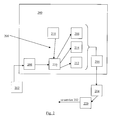
- a conversion tool 200 for facilitating the automated transformation of a standard web service description 202 (i.e. request/response) into a WS-EVENTING style service description 204 (i.e. notification based).
- Use of the conversion tool 200 allows a developer to construct an automated build environment for the notification service 204 based on Ant scripts, scripts used by way of example only.
- the tool 200 contains a series of build modules 206 based on Ant, for example, which is an open source software for putting together all the pieces of a program (e.g. service 204) from the Apache Software Foundation.
- Some of the modules 206 perform the transformation and incorporate standard asynchronous based elements such as subscriptions and other modules 206 produce server 106 artifacts (skeleton and stub classes described below - embodied in objects/elements 105 of Figure 1) that can be utilized to deliver the soap-based notification through standard tools (e.g. AXIS).
- the Ant based modules 206 can be independent of both platform and development environment. However, it is noted that other options for the build modules 206 can be based on Make, which uses a particular shell or command interface, and for that reason are limited to the type of operating system that uses that shell. In the preferred embodiment, the Ant based modules 206 use Java classes rather than shell-based commands.
- XML is used to describe the modules 206 in the conversion tool 200, what those modules 206 should do, and any dependencies between the modules 206 and other parts of the conversion tool 200.
- Ant determines the parts of the program that have been changed since the last compilation, as well as any parts of the program (e.g. interface service description 204) that are dependent on those components, and then compiles only those parts that require it, in the proper order.
- the input to the tool 200 can be regular Java interface class(es) that the developer would normally provide to define their ultimate service interface 110 (see Figure 1).
- the output is the interface service description 204 with artifacts required to support the interfaces 110 (skeleton & notification stubs - for example objects/elements 105 - see Figure 1).
- the conversion tool 200 may not build the complete web service 102.
- the deployed service definition 103 is represented by the generated interface service description 204 (generated by the tool 200) when deployed.
- the conversion tool 200 outputs the transformation artifacts as objects/elements 105 for use by the web-service developer or by an application development tool 402 to generate supporting client applications 124 for the web service 102.
- the artifacts include the deployed service definition 103 and objects/elements 105 such as but not limited to:
- the classes of the class frameworks 302,310 can be a template definition of the methods and variables in a particular kind of object.
- an object is a specific instance of the class; and the object contains real values instead of variables.
- the class is one of the defining ideas of object-oriented programming. Among the important ideas about classes are such as but not limited to:
- a stub can be defined as a smaller program routine/interface that substitutes for a longer program, possibly to be loaded later or that is located remotely.
- a program that uses Remote Procedure Calls (RPC) is compiled with stubs that substitute or otherwise act as the interface for the program that provides a requested procedure.
- the stub routine/interface accepts the request and then forwards it (through another program) to the actual remote procedure of the business logic 108. When that procedure has completed its service, it returns the results or other status to the stub routine/interface, which then passes it back to the program that made the request.
- modules 206 of the conversion tool 200 include such as but not limited to:
- a deployment tool 220 which can be separate from the conversion tool 200.
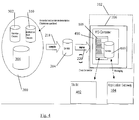
- the deployment tool 220 prepares the service description 204 for deployment into AXIS, for example, in a web service container 400 (see Figure 4) of the web server 10 as interfaces 110.
- the deployment tool 220 updates the AXIS generated server WSDD file for proper service deployment at a web server 106 (see Figure 4).
- the tool 402 is used by a developer to generate the client application 124, based on the service interfaces 110 exposed by the web server 106.
- the above described modules 206 were designed to work with AXIS web-services 102 (see Figure 1), however other web service 102 types can be used, as desired.
- the service descriptions 103,105 included in the interfaces 110 can be part of a UDDI registry (not shown) for publication purposes.
- the subscription module 210 transforms an existing request/response WSDL description 312 (for example as provided by the WSDL module 208) into a WSDL description 304 that supports WS-EVENTING style subscription, i.e. subscriptions and notification elements 105 representing the operations 314 and the subscriptions 320/unsubscriptions 324 (see Figures 1 and 3).
- WSDL description 304 that supports WS-EVENTING style subscription, i.e. subscriptions and notification elements 105 representing the operations 314 and the subscriptions 320/unsubscriptions 324 (see Figures 1 and 3).
- the following is a list of example parameters for the module 210.
- notificationmethodnames Comma separated list of methods/operations 314 on input WSDL description 312 that are to be made as notifications Inputwsdl
- the WSDL description 312 produced by the module 208 (for example) that is to be transformed Outputwsdl
- the target WSDL description 304 produced Verbose Turn on verbose running (true/false) Subscribetoken
- Unsubscribetoken The name that will be pre-pended to notification operation 314 names to create the unsubscribe operation 322 (default "unsubscribe").
- the notification module 212 produces a dynamic stub as conversion artifacts suitable for working with Application Gateway 104 style notification communications 115. Using this module 212 helps to alleviate the need to understand SOAP and AXIS invocation details by the developer. The following is a list of example parameters for the module 212.
- Parameter Meaning notificationmethodnames Comma separated list of method on input WSDL 312 that are to be made as notification operations 314 Inputwsdl
- the WSDL description 312 that is to be transformed Verbose Turn on verbose running (true/false)
- Packagename The package into which classes of the class framework 310 will be generated (file relative to output folder)
- Outputfolder The folder into which generated package will go
- the client module 214 transforms the subscription WSDL description 304 into the WSDL description 300 form recognized by the application development tool 402 for building notification clients as applications 124 for execution on the devices 100, using conversion artifacts.
- the recognition of the notification operations 314 and related subscription/unsubscribe operation 320,322 can be done by providing indicia 324 (see Figure 3) in the WSDL description 304, so as to flag the developer of any present operations 314,320,322 in the development of the application 124 (using the application development tool 402).
- the following is a list of example parameters for the module 214.
- the deployment tool 220 (see Figure 4), either separate to or part of the conversion tool 200, provides a convenience task for updating the deployment descriptor contained in the WSDL description 304.
- the default (empty) server skeleton implementation class framework 310 is supplanted by the custom implementation identified by the developer. The following is a list of example parameters for the module 214. Parameter Meaning Inputwsdd The input WSDD file associated with the WSDL description 304.
- the target WSDD file notificationmethodnames The names of the notification operations/methods 314 (comma separated), service port names 308 are determined as ⁇ notificationmethodname>Port Serviceclasses
- the names of the implementation classes of the framework 310 (comma separated) matching the notification ports 308 Maininterfaceport
- the service class framework 302 that implements the main interface port
- a standard class can be included in the conversion tool 200 that is used by the automatically generated client stubs (SubsData.java) of the class framework 302.
- This object contains the information illustrated above, and is instantiated to work with automatically generated notification stubs of the class framework 310.
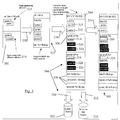
- this section details the main steps in transforming the existing servicedescription 312 (e.g. WSDL) into a notification-based description 304 (e.g. WSDL).
- the procedure is built on ant modules 206, for example, the ant modules 206 used to do the transformation are identified at each step.
- the prerequisites used are as follows, by way of example only:
- the first step in the transformation process 500 is to provide 502 a package 202 of classes that define the proposed interfaces 110 (see Figure 1).
- This package 202 can contain such as but not limited to:
- This step 504 compiles the service definitions of the package 202 and generates the first set of WSDL description 312 that represents the eventual web service 102.
- the AXIS ant module 208 can be used to do the transformation.
- the inputs to the module 208 to accomplish this transformation are such as but not limited to:
- This step 506 in the process 500 transforms the first WSDL description 312 into the subscription style WSDL description 304 which supports WS-EVENTING (i.e. notification based communications 115):
- the step 506 does the following:
- the module 210 is used to do the transformation of this step 506.
- Inputs to the module 210 are such as but not limited to:
- the next step 508 transforms the subscription style WSDL description 304 into the service classes framework 302 (i.e. conversion artifacts).
- the service classes framework 302 is a set of runtime artifacts that are deployed on the server 106 to handle interface/messaging/protocol conversions.
- the service classes framework 302 may contain no business logic, just the raw framework for marshalling and unmarshalling request communications 10,11 in the language of the web service 102 (i.e. SOAP over HTTP for standard web services 102).
- the service classes framework 302 provides the framework for exposing the developer supplied business methods that will handle SOAP messaging between the client device 100 and the web service 102. In our given example, this messaging is mediated by the application gateway 104.
- the AXIS ant module 216 is employed to do the generation of service classes framework 302. This module 216 produces some default code and descriptors that will be replaced by the developer, such as but not limited to:
- the next step 510 takes as input the subscription WSDL description 304 and produces class(es) of the class framework 310 (i.e. conversion artifacts) that will deliver the notification communications 115 to the Application Gateway 104.
- class(es) of the class framework 310 i.e. conversion artifacts
- One such class is generated for each notification method 314 identified.
- the ant module 212 does this class framework 310 generation taking the following input such as but not limited to:
- the naming of the generated stub classes of the class framework 310 can be derived from the notification method 314 identified in the subscription WSDL description 304, such as but not limited to: public class ⁇ notification_method_name>PortEventSink.
- a single method 314 is generated onto the notification class framework 310.
- This method 314 takes parameters as identified in the WSDL description 304 message parts for the identified operation2, such as but not limited to:
- the first parameter is a SubsData object. This is preferred so that required information for generating the Application Gateway 104 compliant notification communication 115 is adhered to.
- the details of how this notification SOAP is generated by the SOAP module 114 is typically of no interest to the web-service 102 developer. If the developer chooses not to go this route, the developer can write the invocation codes manually using AXIS classes, for example.
- This step 512 is where the web service 102 implementation is developed, being the actual heart of the web service 102.
- the developer takes the WSDL description 304 and the class frameworks 302,310 (in total representing the interface service description 204) and adds the business logic 108 to provide the deployed service definition 103. This falls broadly into two areas, such as but not limited to:
- the service implementation is typically a manual process done by the web service 102 developer and provides the implementation classes for each of the port type stub classes of the class framework 302 generated from step 508.
- the server implementation represents where the main development effort for the eventual web service 102 is concentrated. This includes the business logic 108 driving the service implementation.
- the service developer provides the logic 108 that analyzes and supports the types of filters they provide. Matching filter criteria is used to determine when the notification communication 115 is to be sent to the device 110, for example via the gateway 104.
- the Subscribe object of the service definitions 103,105 captures this filter along with other required information (as described above with reference to subscription and notification contracts of web Service 102 Eventing) which is recorded.
- Asynchronous Notification communications 115 are configured for sending asynchronously when a set of conditions matches the filter criteria. This implies that part of the service implementation will be threaded to support spontaneous delivery of the notification communication 115.
- the notification communication 115 itself can be delivered by using the appropriate notification stub classes of the class framework 310 generated from step 510. To do so the required information collected from the subscription operation 320 (encapsulated into the SubsData object) is provided.
- This step 514 takes all of the generated classes of the frameworks 302,310 and combines them with the real web-service implementation provided in step 512 to provide for the deployable service definition 103. It is recognised that the class frameworks 302,310 (i.e. conversion artifacts) and the web service WSDL description 304 could be combined for presentation to the developer in order to allow the developer to implement step 512 for development of the business logic 108 and eventual service definitions 103,105.
- the class frameworks 302,310 i.e. conversion artifacts
- the web service WSDL description 304 could be combined for presentation to the developer in order to allow the developer to implement step 512 for development of the business logic 108 and eventual service definitions 103,105.
- This step 516 compiles the product of step 514 in order to generate the interface service description 204 (a combination of components 304, 302, 310) for deployment as shown in Figure 4 by the deployment module 220.
- This step 518 transforms the subscription WSDL description 304 into a WSDL description 300 format that will be recognized by a notification builder (not shown) of the application development tool 402.
- the ant module 214 is used to do this transformation, including such as but not limited to:
- WSDL descriptions 300 are typically published (at step 522) with the service 103,105 as a simple document. Doing so makes it available (i.e. discoverable) to the application development tool 420, which uses the WSDL definitions 300 information to generate subscription filters and notification messages appropriate for the application 124 (executed on the device 100) to communicate with the web service 102 using the defined communications 10,11,12,115 as described above.
- the final step 520 in preparing the notification interface service definition 204 is deployment into AXIS (typically running inside Tomcat), i.e. deployment of the service description 204 outputted from the tool 200 as the service interfaces 103,105 for provisioning in the service container 400 of the server 106 (see Figure 4).
- the deployment tool 220 transforms the default WSDD generated in step 508 to include the correct service implementation class for each port 308.
- the use of the deployment tool 220 is nothing more than a convenience for deployment purposes so that the descriptors of the service descriptions 103,105 need not be edited by hand every time the process is repeated.
- Use of the tool 220 can be an optional part of the transformation procedure 500.
- the inputs to the tool 220 are such as but not limited to:
- FIG. 4 illustrated is how components 304, 302, 310 are integrated together along with the business logic 108 and deployed to the web-service container 400 as the service interfaces 103,105.
- the Application Gateway 104 exchanges messages 10,11,12,115 (1.e. notifications, subscriptions, request/responses etc) with the web service 102.
- the application development tool 420 builds the client application 124 based on the deployed web service 103 definition.
Landscapes
- Engineering & Computer Science (AREA)
- Software Systems (AREA)
- Theoretical Computer Science (AREA)
- Physics & Mathematics (AREA)
- General Engineering & Computer Science (AREA)
- General Physics & Mathematics (AREA)
- Computer Networks & Wireless Communication (AREA)
- Signal Processing (AREA)
- Multimedia (AREA)
- Computer And Data Communications (AREA)
Priority Applications (2)
| Application Number | Priority Date | Filing Date | Title |
|---|---|---|---|
| EP05103084A EP1715422A1 (fr) | 2005-04-18 | 2005-04-18 | Système et méthode pour convertir un service synchrone fondé sur schéma en un service asynchrone fondé sur schéma |
| CA2543557A CA2543557C (fr) | 2005-04-18 | 2006-04-13 | Systeme et methode de production de services web bases sur les notifications |
Applications Claiming Priority (1)
| Application Number | Priority Date | Filing Date | Title |
|---|---|---|---|
| EP05103084A EP1715422A1 (fr) | 2005-04-18 | 2005-04-18 | Système et méthode pour convertir un service synchrone fondé sur schéma en un service asynchrone fondé sur schéma |
Publications (1)
| Publication Number | Publication Date |
|---|---|
| EP1715422A1 true EP1715422A1 (fr) | 2006-10-25 |
Family
ID=34980110
Family Applications (1)
| Application Number | Title | Priority Date | Filing Date |
|---|---|---|---|
| EP05103084A Ceased EP1715422A1 (fr) | 2005-04-18 | 2005-04-18 | Système et méthode pour convertir un service synchrone fondé sur schéma en un service asynchrone fondé sur schéma |
Country Status (2)
| Country | Link |
|---|---|
| EP (1) | EP1715422A1 (fr) |
| CA (1) | CA2543557C (fr) |
Cited By (6)
| Publication number | Priority date | Publication date | Assignee | Title |
|---|---|---|---|---|
| EP2075967A2 (fr) | 2007-12-31 | 2009-07-01 | Accenture Global Services GmbH | Architecture de réseau fédérateur de messagerie de fret |
| WO2009111118A1 (fr) * | 2008-03-04 | 2009-09-11 | Microsoft Corporation | Support déclaratif pour des procédés asynchrones |
| US8990410B1 (en) | 2007-02-06 | 2015-03-24 | Ibm International Group Bv | Devices, systems, and/or methods for processing transactions |
| KR102127591B1 (ko) * | 2019-01-14 | 2020-06-26 | 건국대학교 산학협력단 | 이벤트 기반 비동기식 통신 프레임워크에서의 동기식 통신 방법 및 장치 |
| KR20210154525A (ko) * | 2020-06-12 | 2021-12-21 | 건국대학교 산학협력단 | 이벤트 기반 비동기식 통신 미들웨어에서의 직접 및 간접 동기식 통신 방법 및 장치 |
| CN114553891A (zh) * | 2022-01-27 | 2022-05-27 | 深圳金融电子结算中心有限公司 | 同步请求转异步处理的方法、系统、终端设备及存储介质 |
Families Citing this family (1)
| Publication number | Priority date | Publication date | Assignee | Title |
|---|---|---|---|---|
| US10467066B2 (en) * | 2018-03-06 | 2019-11-05 | Visa International Service Association | System and method for establishing common request processing |
Citations (1)
| Publication number | Priority date | Publication date | Assignee | Title |
|---|---|---|---|---|
| WO2005027455A1 (fr) * | 2003-09-17 | 2005-03-24 | Research In Motion Ltd. | Systeme et procede de services sans fil asynchrones au moyen d'une generation de schemas de services inverses |
-
2005
- 2005-04-18 EP EP05103084A patent/EP1715422A1/fr not_active Ceased
-
2006
- 2006-04-13 CA CA2543557A patent/CA2543557C/fr not_active Expired - Lifetime
Patent Citations (1)
| Publication number | Priority date | Publication date | Assignee | Title |
|---|---|---|---|---|
| WO2005027455A1 (fr) * | 2003-09-17 | 2005-03-24 | Research In Motion Ltd. | Systeme et procede de services sans fil asynchrones au moyen d'une generation de schemas de services inverses |
Non-Patent Citations (2)
| Title |
|---|
| IBM ET AL: "Web Services Eventing", 1 August 2004 (2004-08-01), XP002347494, Retrieved from the Internet <URL:ftp://www6.software.ibm.com/software/developer/library/ws-eventing/WS-Eventing.pdf> [retrieved on 20050930] * |
| TCHEREVIK D: "A publish/subscribe mechanism for Web services: extending an existing brokerWSJ Feature", WEB SERVICES JOURNAL, SYS-CON MEDIA, MONTVALE, NJ, US, vol. 3, no. 2, February 2003 (2003-02-01), pages 1 - 8, XP002306218, ISSN: 1535-6906 * |
Cited By (10)
| Publication number | Priority date | Publication date | Assignee | Title |
|---|---|---|---|---|
| US8990410B1 (en) | 2007-02-06 | 2015-03-24 | Ibm International Group Bv | Devices, systems, and/or methods for processing transactions |
| US9112808B2 (en) | 2007-02-06 | 2015-08-18 | At&T Intellectual Property Ii, L.P. | Devices, systems, and methods for providing data |
| EP2075967A2 (fr) | 2007-12-31 | 2009-07-01 | Accenture Global Services GmbH | Architecture de réseau fédérateur de messagerie de fret |
| EP2075967A3 (fr) * | 2007-12-31 | 2012-12-05 | Accenture Global Services Limited | Architecture de réseau fédérateur de messagerie de fret |
| WO2009111118A1 (fr) * | 2008-03-04 | 2009-09-11 | Microsoft Corporation | Support déclaratif pour des procédés asynchrones |
| KR102127591B1 (ko) * | 2019-01-14 | 2020-06-26 | 건국대학교 산학협력단 | 이벤트 기반 비동기식 통신 프레임워크에서의 동기식 통신 방법 및 장치 |
| KR20210154525A (ko) * | 2020-06-12 | 2021-12-21 | 건국대학교 산학협력단 | 이벤트 기반 비동기식 통신 미들웨어에서의 직접 및 간접 동기식 통신 방법 및 장치 |
| KR102388083B1 (ko) | 2020-06-12 | 2022-04-18 | 건국대학교 산학협력단 | 이벤트 기반 비동기식 통신 미들웨어에서의 직접 및 간접 동기식 통신 방법 및 장치 |
| CN114553891A (zh) * | 2022-01-27 | 2022-05-27 | 深圳金融电子结算中心有限公司 | 同步请求转异步处理的方法、系统、终端设备及存储介质 |
| CN114553891B (zh) * | 2022-01-27 | 2024-03-15 | 深圳金融电子结算中心有限公司 | 同步请求转异步处理的方法、系统、终端设备及存储介质 |
Also Published As
| Publication number | Publication date |
|---|---|
| CA2543557A1 (fr) | 2006-10-18 |
| CA2543557C (fr) | 2012-11-06 |
Similar Documents
| Publication | Publication Date | Title |
|---|---|---|
| US7983209B2 (en) | System and method for producing notification based web services | |
| EP1665711B1 (fr) | Systeme et procede de services sans fil asynchrones au moyen d'une generation de schemas de services inverses | |
| US7506072B2 (en) | Web browser as web service server in interaction with business process engine | |
| US8065657B2 (en) | Exchange infrastructure system and method | |
| US7607136B2 (en) | Method and apparatus for interfacing with a distributed computing service | |
| US7343554B2 (en) | Mechanisms for supporting back button function of web browser as web service server in interaction with business process engine | |
| US20060031750A1 (en) | Web browser as web service server | |
| JP2002215486A (ja) | Wsdlに基づいたコントローラ装置用通信システム | |
| US20040221001A1 (en) | Web service architecture and methods | |
| US20060235970A1 (en) | System and method for exposing synchronous web services as notification style web services | |
| CA2543557C (fr) | Systeme et methode de production de services web bases sur les notifications | |
| JP2005532635A (ja) | 構成の妥当性確認ウェブサービスのアーキテクチャおよび方法 | |
| Myerson | Web services architectures | |
| CA2481099C (fr) | Procede et systeme d'infrastructure d'echange | |
| US20050198394A1 (en) | Data conversion from HTML to XML in a tree structure | |
| Kao | Developer's Guide to Building XML-based Web Services | |
| US20060136600A1 (en) | A Method, System and Computer Program for Addressing a Web Service | |
| US20040006516A1 (en) | Architecture and method for order placement web service | |
| EP1715432A1 (fr) | Système et procédé pour exposer des services Web synchrones en tant que services Web de notification | |
| JP2006514347A (ja) | 製品カタログウェブサービスのアーキテクチャおよび方法 | |
| EP2101474A1 (fr) | Liaisons de services pour services Web | |
| JP5548433B2 (ja) | Webサービス基盤システム | |
| WO2005038620A2 (fr) | Navigateur web comme serveur de service web | |
| JP2006526189A (ja) | ウエブサービスブローカー | |
| Yao et al. | A Java-based Middleware for Enterprise Application Integration |
Legal Events
| Date | Code | Title | Description |
|---|---|---|---|
| PUAI | Public reference made under article 153(3) epc to a published international application that has entered the european phase |
Free format text: ORIGINAL CODE: 0009012 |
|
| 17P | Request for examination filed |
Effective date: 20050428 |
|
| AK | Designated contracting states |
Kind code of ref document: A1 Designated state(s): AT BE BG CH CY CZ DE DK EE ES FI FR GB GR HU IE IS IT LI LT LU MC NL PL PT RO SE SI SK TR |
|
| AX | Request for extension of the european patent |
Extension state: AL BA HR LV MK YU |
|
| 17Q | First examination report despatched |
Effective date: 20070502 |
|
| AKX | Designation fees paid |
Designated state(s): AT BE BG CH CY CZ DE DK EE ES FI FR GB GR HU IE IS IT LI LT LU MC NL PL PT RO SE SI SK TR |
|
| AXX | Extension fees paid |
Extension state: YU Payment date: 20050428 Extension state: MK Payment date: 20050428 Extension state: LV Payment date: 20050428 Extension state: HR Payment date: 20050428 Extension state: BA Payment date: 20050428 Extension state: AL Payment date: 20050428 |
|
| R17C | First examination report despatched (corrected) |
Effective date: 20070502 |
|
| STAA | Information on the status of an ep patent application or granted ep patent |
Free format text: STATUS: THE APPLICATION HAS BEEN REFUSED |
|
| 18R | Application refused |
Effective date: 20110604 |