EP1717057A2 - Collegeblock - Google Patents
Collegeblock Download PDFInfo
- Publication number
- EP1717057A2 EP1717057A2 EP06450063A EP06450063A EP1717057A2 EP 1717057 A2 EP1717057 A2 EP 1717057A2 EP 06450063 A EP06450063 A EP 06450063A EP 06450063 A EP06450063 A EP 06450063A EP 1717057 A2 EP1717057 A2 EP 1717057A2
- Authority
- EP
- European Patent Office
- Prior art keywords
- binder
- sheet
- edge
- block
- perforation
- Prior art date
- Legal status (The legal status is an assumption and is not a legal conclusion. Google has not performed a legal analysis and makes no representation as to the accuracy of the status listed.)
- Granted
Links
- 239000011230 binding agent Substances 0.000 claims abstract description 33
- 238000004080 punching Methods 0.000 claims description 6
- 239000002184 metal Substances 0.000 claims description 3
- 238000000926 separation method Methods 0.000 description 6
- OKTJSMMVPCPJKN-UHFFFAOYSA-N Carbon Chemical compound [C] OKTJSMMVPCPJKN-UHFFFAOYSA-N 0.000 description 2
- 229910052799 carbon Inorganic materials 0.000 description 2
- 230000007306 turnover Effects 0.000 description 2
- 238000009825 accumulation Methods 0.000 description 1
- 238000000151 deposition Methods 0.000 description 1
- 230000000694 effects Effects 0.000 description 1
- 210000005224 forefinger Anatomy 0.000 description 1
- 230000001846 repelling effect Effects 0.000 description 1
- 210000003813 thumb Anatomy 0.000 description 1
Images


Classifications
-
- B—PERFORMING OPERATIONS; TRANSPORTING
- B42—BOOKBINDING; ALBUMS; FILES; SPECIAL PRINTED MATTER
- B42D—BOOKS; BOOK COVERS; LOOSE LEAVES; PRINTED MATTER CHARACTERISED BY IDENTIFICATION OR SECURITY FEATURES; PRINTED MATTER OF SPECIAL FORMAT OR STYLE NOT OTHERWISE PROVIDED FOR; DEVICES FOR USE THEREWITH AND NOT OTHERWISE PROVIDED FOR; MOVABLE-STRIP WRITING OR READING APPARATUS
- B42D5/00—Sheets united without binding to form pads or blocks
- B42D5/003—Note-pads
Definitions
- the invention relates to a college block or the like. With a stack of sheets whose leaves in the region of the sheet back have an edge perforations through which they are connected by means of the pierced holes ring loops of a binder, wherein the sheets have a sheet back parallel to the perforation line.
- the shape of the leaves may also differ from the square or rectangular shape.
- U1 From the DE 200 14 935 U1 is a college block with a lower lid, an upper lid and an interposed sheet stack known.
- the individual sheets are connected together at the edge with a spiral, wherein at a distance from the spiral perforations a longitudinally extending micro-perforation is provided which serves to separate individual sheets from the college block.
- the additional sheets have L-shaped extensions on a sheet edge, wherein one leg of the L can engage behind a ring loop.
- the two legs of the roof of the T each engage behind adjacent ring loops.
- the disadvantage here is the fact that when removing such an additional sheet provided with a T- or L-shaped extensions sheet edge remains, which acts disturbing in the filing of the sheet in a ring binder.
- FR 530 488 A shows punch holes in the area of a perforation line, but which do not simultaneously serve for receiving ring loops of a binder. After separation of the leaves, the edge of the sheet has on the perforation line-shaped recesses.
- the object of the invention is, starting from a college block or the like.
- a solution that facilitates the removal of sheets from a college block with a smooth turning over and repelling of remaining pages of the block should be ensured even after removing several sheets ,
- the severed sheet should have a substantially smooth sheet edge.
- the punch holes of the edge holes have a side facing away from the sheet back side, which coincides with the perforation. Due to the fact that the perforation line cuts the punch holes of the pierced holes ensures that the leaves are back after removing the sheets from the college block or calendar is no longer held by its binder, such as a spiral, and can be easily pulled out of the spiral without tools , Furthermore, when the sheet is removed, a substantially smooth sheet edge is produced by the guide according to the invention along the perforation line along the side of the punching holes facing away from the sheet back.
- the punched holes of the edge perforations may be substantially triangular in shape, the base side of the punched holes remote from the sheet back coinciding with the perforation line.
- the punched holes can be designed as flat ellipses, semicircles, squares or rectangles whose sides facing away from the leaf back coincide with the perforation line.
- a notch or cut-out on the sheet edge may be provided on at least one end region, preferably on both end regions of the perforation line, which facilitates the separation of the sheet from the block.
- the length of the binder can be made shorter in comparison to the sheet height, so that a writing means introduced into the binder does not project beyond the sheet edge.
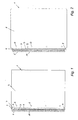
- Fig. 1 shows a college block according to the prior art with a sheet stack 1, the leaves 2 have in the region of the sheet back 3 an edge perforation 4, via which they are connected by means of the edge perforation 4 passing through ring loops 10 of a running as a spiral binding agent 5.
- a perforation 6 for receiving the sheets 2 in a ring binder and the edge perforations 4 a perforation line 7 is parallel to the sheet back 3, which emanates from a notch 8 on the sheet edge and facilitates the separation of the sheet 2 from the college block.
- the individual sheet backs 3 remain after the separation of the sheets 2 in the spiral and are held there by the closed punch holes 9 of the edge perforations 4, so that the removal of the individual sheet backs 3 can be performed only with great effort.
- After the accumulation of several leaf spines 3 in the spiral it is practically impossible to turn over or turn over a sheet 2 by 360 ° to the back of the college block.
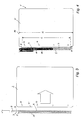
- the perforation line 7 runs on the individual sheets 2 of the sheet stack 1 in such a way that the punched holes 9 of the edge perforations 4 are tangled or cut by the perforation line 7.
- the punching holes 9 are open, so that the sheet back 3, as shown in Fig. 3, easily from the inside of the ring loops 10 of the binder 5 can be removed.
- the sheet back 3 is grasped at one of its protruding from the binder 5 ends with thumb and forefinger and pulled out of the binder 5.
- the dimensions of the sheet back 3 received by the binder 5 for example, the width b and the thickness of the sheet stack
- the inner diameter of the ring loops 10 of the binder 5 can be coordinated such that a writing means 15 in the binder 5 is insertable.
- the length L of the binder 5 can be shortened compared to the blade height H, so that a writing means 15 introduced into the binder 5 does not project beyond the blade edge 16.
- a punch or notch 8 at one or both ends of the perforation line 7 facilitates the separation of a sheet 2 from the college block.
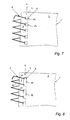
- FIG. 5 shows a detailed view of a variant in which the punched holes 9 of the edge perforations 4 are essentially circular or in the form of a semicircle and the perforation line 7 delimits the punched holes 9 in the form of a circular section line 11.
- FIG. 6 shows a detailed view of the variant according to FIG. 2 to FIG. 4, in which the punching holes 9 of the edge perforation 4 are substantially triangular in shape, the base side 12 of the punching holes 9 facing away from the blade back 3 coinciding with the perforation line 7.
- the corner of the triangle can be rounded to avoid a notch effect on the ring loops.
- the punched holes 9 of the edge perforation 4 are in the form of squares or rectangles whose side 13 (FIG. 7) or longitudinal side 14 (FIG. 8) facing away from the sheet back 3 coincides with the perforation line 7 , Furthermore, any other cross sections of the punch holes 9 are conceivable, for example, flat ellipses or semicircles, as long as the perforation 7 intersects the punch holes 9 on one side.
- the punch holes 9 may also receive two or more ring loops 10 of the binder 5, which facilitates the removal of the sheet backs 3 from the binder 5, e.g. a spiral, facilitated (see Fig. 8).
- the binder 5 can be made of plastic or metal as a spiral (FIG. 9), as a twin-wire spiral (FIG. 10) or flat ring binder (FIG. 11). Furthermore, it is possible to use as a binder a variety of individual rings made of plastic or metal.
Landscapes
- Sheet Holders (AREA)
- Perforating, Stamping-Out Or Severing By Means Other Than Cutting (AREA)
- Hydraulic Motors (AREA)
- Materials For Photolithography (AREA)
- Wire Bonding (AREA)
- Bipolar Transistors (AREA)
- Mechanical Treatment Of Semiconductor (AREA)
- Transition And Organic Metals Composition Catalysts For Addition Polymerization (AREA)
- Purses, Travelling Bags, Baskets, Or Suitcases (AREA)
- Folding Of Thin Sheet-Like Materials, Special Discharging Devices, And Others (AREA)
Abstract
Description
- Die Erfindung betrifft einen Collegeblock oder dgl. mit einem Blattstapel, dessen Blätter im Bereich des Blattrückens eine Randlochung aufweisen, über welche sie mittels die Randlochung durchsetzende Ringschlaufen eines Bindemittels miteinander verbunden sind, wobei die Blätter eine zum Blattrücken parallel verlaufende Perforationslinie aufweisen.
- Unter Collegeblock werden im Folgenden auch Spiralblöcke, Schreibblöcke, Kalender, Timer bzw. alle Blöcke mit einer Lochung am Blattrücken verstanden. Weiters kann die Form der Blätter auch von der quadratischen oder rechteckigen Form abweichen.
- Aus der
DE 200 14 935 U1 ist ein Collegeblock mit einem unteren Deckel, einem oberen Deckel und einem dazwischen angeordneten Blattstapel bekannt. Die einzelnen Blätter sind am Rand mit einer Spirale miteinander verbunden, wobei mit einem Abstand zur Spirallochung eine sich in Längsrichtung erstreckende Mikroperforierung vorgesehen ist, die dazu dient, einzelne Blätter vom Collegeblock abzutrennen. - Bei der Verwendung des Collegeblockes kann dieser wie ein Heft bis zu der zu beschreibenden Seite, bei einem Kalender bis zum aktuellen Datum, aufgeschlagen werden, wobei die einzelnen Seiten auch um 360° bis auf die Rückseite des Blockes umgeschlagen werden können. Schwierigkeiten entstehen dann, wenn schon mehrere Blätter aus den Collegeblock entnommen bzw. vom Kalender abgerissen wurden und die in der Spirale verbleibenden Blattrücken das Umblättern einzelner Seiten bzw. das Umschlagen der Seiten um 360° erschweren bzw. die Blätter dabei verknittert werden. Meist müssen dann die in der Spirale verbliebenen Blattrücken mühsam entfernt werden.
- Das oben beschriebene Problem bleibt auch bei einer Ausführung gemäß
DE 20 2004 011 668 U1 erhalten, in welcher ein Schreib- oder Zeichenblock beschrieben ist, bei welchem die Spirallochung und die diese durchsetzende Spirale, sowie die Mikroperforationslinie am oberen Querrand des Blockes angeordnet sind, während eine Mehrfachlochung zur Ablage der Blätter in einem Ordner am linken Längsrand des Blockes vorgesehen ist. Auch bei einem derartigen Block wird das Umblättern einzelner Blockseiten erschwert, sobald mehrere Seiten aus dem Block entfernt wurden und die verbleibenden Blattrücken in der Spirale ein Umblättern behindern. - Schließlich ist es aus der
EP 1 135 766 bekannt, Zusatzblätter für einen Schreibblock derart auszubilden, dass diese reversibel an den Ringschlaufen befestigbar sind. Dazu weisen die Zusatzblätter L-förmige Fortsätze an einem Blattrand auf, wobei ein Schenkel des L eine Ringschlaufe hintergreifen kann. Weiters ist es bekannt, am Blattrand T-förmige Fortsätze anzubringen, wobei die beiden Schenkel des Daches des T jeweils benachbarte Ringschlaufen hintergreifen. Nachteilig dabei ist die Tatsache, dass bei der Entnahme eines derartigen Zusatzblattes ein mit T- oder L-förmigen Fortsätzen versehener Blattrand verbleibt, welcher bei der Ablage des Blattes in einem Ringordner störend wirkt. - Weiters ist aus der
DE 540 590 C ein Durchschreibblock aus abwechselnd geschichteten, miteinander gehefteten und perforierten Schreib- und Kohleblättern bekannt, bei welchen nur die Kohleblätter längs einer Perforationslinie Durchbrechungen aufweisen, um diese leichter abtrennen und aus dem Schreibblock entfernen zu können. Auch dieFR 530 488 A - Aufgabe der Erfindung ist es, ausgehend von einem Collegeblock oder dgl. der eingangs genannten Art eine Lösung vorzuschlagen, die die Entnahme von Blättern aus einem Collegeblock erleichtert, wobei auch nach der Entnahme mehrerer Blätter ein problemloses Umblättern und Zurückschlagen von Restseiten des Blockes gewährleistet sein soll. Weiters soll das abgetrennte Blatt einen im Wesentlichen glatten Blattrand aufweisen.
- Diese Aufgabe wird erfindungsgemäß dadurch gelöst, dass die Stanzlöcher der Randlochung eine vom Blattrücken abgewandte Seite aufweisen, die mit der Perforationslinie zusammenfällt. Aufgrund der Tatsache, dass die Perforationslinie die Stanzlöcher der Randlochung anschneidet ist gewährleistet, dass die Blattrücken nach der Entnahme der Blätter aus dem Collegeblock oder Kalender nicht mehr durch dessen Bindemittel, beispielsweise eine Spirale, festgehalten werden und einfach ohne Werkzeug aus der Spirale herausgezogen werden können. Weiters entsteht beim entnommenen Blatt durch die erfindungsgemäße Führung der Perforationslinie entlang der vom Blattrücken abgewandte Seite der Stanzlöcher ein im Wesentlicher glatter Blattrand.
- Bei den bekannten Ausführungsvarianten gemäß Stand der Technik ist es nicht möglich gleichzeitig eine saubere Abrisslinie bzw. einen glatten Blattrand zu produzieren und einen verbleibenden Randstreifen zu erzeugen, der ohne Schwierigkeiten aus der Spirale entfernt werden kann.
- Erfindungsgemäß können die Stanzlöcher der Randlochung im Wesentlichen dreieckförmig ausgeführt sein, wobei die vom Blattrücken abgewandte Basisseite der Stanzlöcher mit der Perforationslinie zusammenfällt. Weiters können die Stanzlöcher als flache Ellipsen, Halbkreise, Quadrate oder Rechtecke ausgeführt sein, deren vom Blattrücken abgewandte Seiten mit der Perforationslinie zusammenfallen.
- Wie bei den bekannten Ausführungsvarianten kann an zumindest einem Endbereich, bevorzugt an beiden Endbereichen der Perforationslinie, eine Einkerbung oder Ausstanzung am Blattrand vorgesehen sein, welche das Abtrennen des Blattes aus dem Block erleichtert.
- Gemäß einer Ausführungsvariante der Erfindung kann die Länge des Bindemittels im Vergleich zur Blatthöhe verkürzt ausgeführt sein, so dass ein in das Bindemittel eingeführtes Schreibmittel den Blattrand nicht überragt.
- Im Folgenden wird die Erfindung anhand von Ausführungsbeispielen näher erläutert. Es zeigen:
- Fig. 1
- einen Collegeblock gemäß Stand der Technik;
- Fig. 2
- einen erfindungsgemäßen Collegeblock;
- Fig. 3
- den Collegeblock gemäß Fig. 2 mit abgetrenntem Blatt beim Entfernen des Blattrückens;
- Fig. 4
- den erfindungsgemäßen Collegeblock mit in das Bindemittel eingelegtem Schreibmittel;
- Fig. 5
- bis Fig. 8 unterschiedliche Ausführungsvarianten der Randlochung eines Collegeblockes gemäß Fig. 2 bis Fig. 4; sowie
- Fig. 9
- bis Fig. 11 unterschiedliche Bindemittel eines erfindungsgemäßen Collegeblockes.
- Fig. 1 zeigt einen Collegeblock gemäß Stand der Technik mit einem Blattstapel 1, dessen Blätter 2 im Bereich des Blattrückens 3 eine Randlochung 4 aufweisen, über welche sie mittels die Randlochung 4 durchsetzende Ringschlaufen 10 eines als Spirale ausgeführten Bindemittels 5 miteinander verbunden sind. Zwischen einer Lochung 6 für eine Aufnahme der Blätter 2 in eine Ringmappe und der Randlochung 4 ist parallel zum Blattrücken 3 eine Perforationslinie 7 angeordnet, welche von einer Einkerbung 8 am Blattrand ausgeht und das Abtrennen des Blattes 2 aus dem Collegeblock erleichtert. Die einzelnen Blattrücken 3 verbleiben nach dem Abtrennen der Blätter 2 in der Spirale und werden dort durch die geschlossenen Stanzlöcher 9 der Randlochung 4 festgehalten, so dass das Entfernen der einzelnen Blattrücken 3 nur mit großem Aufwand durchgeführt werden kann. Nach der Ansammlung mehrerer Blattrücken 3 in der Spirale ist es praktisch nicht mehr möglich umzublättern bzw. ein Blatt 2 um 360° bis auf die Rückseite des Collegeblockes umzuschlagen.
- Dies wird bei dem in den Fig. 2 und Fig. 3 dargestellten, erfindungsgemäßen Collegeblock wesentlich erleichtert. Erfindungsgemäß verläuft hier die Perforationslinie 7 auf den einzelnen Blättern 2 des Blattstapels 1 derart, dass die Stanzlöcher 9 der Randlochung 4 von der Perforationslinie 7 tangiert bzw. angeschnitten werden. Nach der Abtrennung eines Blattes 2 (siehe Fig. 3) verbleibt ein im Wesentlichen glatter Blattrand einerseits, sowie ein Blattrücken 3, dessen Stanzlöcher 9 offen sind, so dass der Blattrücken 3, wie in Fig. 3 dargestellt, leicht aus dem Inneren der Ringschlaufen 10 des Bindemittels 5 entfernt werden kann. Dabei wird der Blattrücken 3 an einem seiner aus dem Bindemittel 5 herausstehenden Enden mit Daumen und Zeigefinger ergriffen und aus dem Bindemittel 5 herausgezogen.
- Die anhand eines Collegeblockes beschriebenen Vorteile gelten in gleicher Weise auch für Spiralblöcke, Schreibblöcke, Kalender, Timer bzw. alle Blöcke mit einer Lochung am Blattrücken.
- Wie in der Ausführungsvariante gemäß Fig. 4 dargestellt, können die Abmessungen der vom Bindemittel 5 aufgenommen Blattrücken 3 (beispielsweise deren Breite b und die Dicke des Blattstapels) und der Innendurchmesser der Ringschlaufen 10 des Bindemittels 5 derart aufeinander abgestimmt sein, dass ein Schreibmittel 15 in das Bindemittel 5 einführbar ist.
- Weiters kann die Länge L des Bindemittels 5 im Vergleich zur Blatthöhe H verkürzt ausgeführt sein, so dass ein in das Bindemittel 5 eingeführtes Schreibmittel 15 den Blattrand 16 nicht überragt. Eine Ausstanzung oder Einkerbung 8 an einem oder an beiden Enden der Perforationslinie 7 erleichtert das Abtrennen eines Blattes 2 aus dem Collegeblock.
- Fig. 5 zeigt die Detailansicht einer Variante, bei welcher die Stanzlöcher 9 der Randlochung 4 im Wesentlichen kreisförmig bzw. als Halbkreis ausgeführt sind und die Perforationslinie 7 die Stanzlöcher 9 in Form einer Kreisabschnittslinie 11 begrenzt.
- Fig. 6 zeigt eine Detailansicht der Variante gemäß Fig. 2 bis Fig. 4, bei welcher die Stanzlöcher 9 der Randlochung 4 im Wesentlichen dreieckförmig ausgeführt sind, wobei die vom Blattrücken 3 abgewandte Basisseite 12 der Stanzlöcher 9 mit der Perforationslinie 7 zusammenfällt. Im Unterschied zur Variante nach Fig. 5 - wo ein leicht welliger linker Rand des abgetrennten Blattes 2 entsteht - ergibt sich hier ein völlig glatter Blattrand. Im Bereich der Ringschlaufen 10 kann die Ecke des Dreiecks gerundet ausgeführt sein, um eine Kerbwirkung bei den Ringschlaufen zu vermeiden.
- Bei den Varianten gemäß Fig. 7 und Fig. 8 sind die Stanzlöcher 9 der Randlochung 4 als Quadrate oder Rechtecke ausgeführt, deren vom Blattrücken 3 abgewandte Seite 13 (Fig. 7) bzw. Längsseite 14 (Fig. 8) mit der Perforationslinie 7 zusammenfällt. Weiters sind auch beliebige andere Querschnitte der Stanzlöcher 9 denkbar, beispielsweise flache Ellipsen oder Halbkreise, solange die Perforationslinie 7 die Stanzlöcher 9 an einer Seite anschneidet.
- Die Stanzlöcher 9 können auch zwei oder mehrere Ringschlaufen 10 des Bindemittels 5 aufnehmen, was das Entfernen der Blattrücken 3 aus dem Bindemittel 5, z.B. einer Spirale, erleichtert (siehe Fig. 8).
- Wie in den Fig. 9 bis Fig. 11 dargestellt, kann das Bindemittel 5 als Spirale (Fig. 9), als Twin-Wire-Spirale (Fig. 10) oder Flachringbinder (Fig. 11) aus Kunststoff oder Metall ausgeführt sein. Weiters ist es möglich als Bindemittel eine Vielzahl von Einzelringen aus Kunststoff oder Metall zu verwenden.
Claims (8)
- Collegeblock oder dgl. mit einem Blattstapel (1), dessen Blätter (2) im Bereich des Blattrückens (3) eine Randlochung (4) aufweisen, über welche sie mittels die Randlochung (4) durchsetzende Ringschlaufen (10) eines Bindemittels (5) miteinander verbunden sind, wobei die Blätter (2) eine zum Blattrücken (3) parallel verlaufende Perforationslinie (7) aufweisen, dadurch gekennzeichnet, dass die Stanzlöcher (9) der Randlochung (4) eine vom Blattrücken (3) abgewandte Seite (11, 12, 13, 14) aufweisen, die mit der Perforationslinie (7) zusammenfällt.
- Collegeblock oder dgl. nach Anspruch 1, dadurch gekennzeichnet, dass die Stanzlöcher (9) der Randlochung (4) im Wesentlichen dreieckförmig ausgeführt sind, wobei die vom Blattrücken (3) abgewandte Basisseite (12) der Stanzlöcher (9) mit der Perforationslinie (7) zusammenfällt.
- Collegeblock oder dgl. nach Anspruch 1, dadurch gekennzeichnet, dass die Stanzlöcher (9) der Randlochung (4) als flache Ellipsen, Halbkreise, Quadrate oder Rechtecke ausgeführt sind, deren vom Blattrücken (3) abgewandte Seiten (11, 13, 14) mit der Perforationslinie (7) zusammenfallen.
- Collegeblock oder dgl. nach Anspruch 3, dadurch gekennzeichnet, dass jedes Stanzloch (9) zwei oder mehrere Ringschlaufen (10) des Bindemittels (5) aufnimmt.
- Collegeblock oder dgl. nach einem der Ansprüche 1 bis 4, dadurch gekennzeichnet, dass an zumindest einem Endbereich der Perforationslinie (7) eine Einkerbung oder Ausstanzung (8) am Blattrand vorgesehen ist.
- Collegeblock oder dgl. nach einem der Ansprüche 1 bis 5, dadurch gekennzeichnet, dass das Bindemittel (5) als Spirale, Twin-Wire-Spirale oder Flachringbinder aus Kunststoff oder Metall ausgeführt ist.
- Collegeblock oder dgl. nach einem der Ansprüche 1 bis 6, dadurch gekennzeichnet, dass die Abmessungen der vom Bindemittel (5) aufgenommen Blattrücken (3) und der Innendurchmesser der Ringschlaufen (10) des Bindemittels (5) derart aufeinander abgestimmt sind, dass ein Schreibmittel (15) in das Bindemittel (5) einführbar ist.
- Collegeblock oder dgl. nach einem der Ansprüche 1 bis 7, dadurch gekennzeichnet, dass die Länge (L) des Bindemittels (5) im Vergleich zur Blatthöhe (H) verkürzt ausgeführt ist, so dass ein in das Bindemittel (5) eingeführtes Schreibmittel (15) den Blattrand (16) nicht überragt.
Applications Claiming Priority (1)
| Application Number | Priority Date | Filing Date | Title |
|---|---|---|---|
| AT0072505A AT504364B8 (de) | 2005-04-28 | 2005-04-28 | Collegeblock |
Publications (4)
| Publication Number | Publication Date |
|---|---|
| EP1717057A2 true EP1717057A2 (de) | 2006-11-02 |
| EP1717057A3 EP1717057A3 (de) | 2007-08-08 |
| EP1717057B1 EP1717057B1 (de) | 2008-06-04 |
| EP1717057B8 EP1717057B8 (de) | 2009-02-18 |
Family
ID=36691709
Family Applications (1)
| Application Number | Title | Priority Date | Filing Date |
|---|---|---|---|
| EP06450063A Expired - Lifetime EP1717057B8 (de) | 2005-04-28 | 2006-04-28 | Collegeblock |
Country Status (4)
| Country | Link |
|---|---|
| EP (1) | EP1717057B8 (de) |
| AT (2) | AT504364B8 (de) |
| DE (1) | DE502006000859D1 (de) |
| ES (1) | ES2308712T3 (de) |
Cited By (1)
| Publication number | Priority date | Publication date | Assignee | Title |
|---|---|---|---|---|
| USD930743S1 (en) * | 2019-02-07 | 2021-09-14 | Davis W. Jaspers | Journal |
Families Citing this family (1)
| Publication number | Priority date | Publication date | Assignee | Title |
|---|---|---|---|---|
| DE102014113029A1 (de) * | 2014-09-10 | 2016-03-10 | Drahtwerk Friedr. Lötters Gmbh & Co. Kg | Bindespirale |
Citations (4)
| Publication number | Priority date | Publication date | Assignee | Title |
|---|---|---|---|---|
| FR530488A (fr) | 1921-02-03 | 1921-12-23 | Imprimerie Vve H Mommens | Moyen pour faciliter le détachement par arrachement des feuillets assemblés en blocs |
| DE540590C (de) | 1930-11-01 | 1931-12-16 | Thyssendruck Rudolf Thyssen So | Durchschreibblock |
| EP1135766A1 (de) | 1998-11-30 | 2001-09-26 | Pica-Sound International | Akustischer resonator mit offenem durchlöchertem volumen |
| DE202004011668U1 (de) | 2004-07-24 | 2004-09-30 | Venceremos Handel Mit Umweltschutzprodukten Gmbh | Schreib- oder Zeichenblock |
Family Cites Families (4)
| Publication number | Priority date | Publication date | Assignee | Title |
|---|---|---|---|---|
| GB366850A (en) * | 1931-06-15 | 1932-02-11 | Gustav Thyssen | Duplicating block |
| US4342167A (en) * | 1980-11-25 | 1982-08-03 | Michael Stanard | Self-mounting display calendar |
| US4533160A (en) * | 1982-12-06 | 1985-08-06 | Malone Harold H | General journal form |
| DE20014935U1 (de) * | 2000-08-15 | 2001-01-11 | Bacher Und Demmler Gmbh & Co. Kg, 78573 Wurmlingen | Kollegblock |
-
2005
- 2005-04-28 AT AT0072505A patent/AT504364B8/de not_active IP Right Cessation
-
2006
- 2006-04-28 AT AT06450063T patent/ATE397532T1/de not_active IP Right Cessation
- 2006-04-28 ES ES06450063T patent/ES2308712T3/es not_active Expired - Lifetime
- 2006-04-28 EP EP06450063A patent/EP1717057B8/de not_active Expired - Lifetime
- 2006-04-28 DE DE502006000859T patent/DE502006000859D1/de not_active Expired - Lifetime
Patent Citations (4)
| Publication number | Priority date | Publication date | Assignee | Title |
|---|---|---|---|---|
| FR530488A (fr) | 1921-02-03 | 1921-12-23 | Imprimerie Vve H Mommens | Moyen pour faciliter le détachement par arrachement des feuillets assemblés en blocs |
| DE540590C (de) | 1930-11-01 | 1931-12-16 | Thyssendruck Rudolf Thyssen So | Durchschreibblock |
| EP1135766A1 (de) | 1998-11-30 | 2001-09-26 | Pica-Sound International | Akustischer resonator mit offenem durchlöchertem volumen |
| DE202004011668U1 (de) | 2004-07-24 | 2004-09-30 | Venceremos Handel Mit Umweltschutzprodukten Gmbh | Schreib- oder Zeichenblock |
Cited By (1)
| Publication number | Priority date | Publication date | Assignee | Title |
|---|---|---|---|---|
| USD930743S1 (en) * | 2019-02-07 | 2021-09-14 | Davis W. Jaspers | Journal |
Also Published As
| Publication number | Publication date |
|---|---|
| AT504364B1 (de) | 2008-05-15 |
| EP1717057B1 (de) | 2008-06-04 |
| AT504364A4 (de) | 2008-05-15 |
| EP1717057A3 (de) | 2007-08-08 |
| EP1717057B8 (de) | 2009-02-18 |
| DE502006000859D1 (de) | 2008-07-17 |
| ES2308712T3 (es) | 2008-12-01 |
| ATE397532T1 (de) | 2008-06-15 |
| AT504364B8 (de) | 2008-09-15 |
Similar Documents
| Publication | Publication Date | Title |
|---|---|---|
| EP1717057B1 (de) | Collegeblock | |
| EP0304411A2 (de) | Heftmappe | |
| EP1939009A2 (de) | Buch und Verfahren zum Herstellen eines Buchs | |
| DE29513501U1 (de) | Schreibeinheit mit Einstanzung | |
| DE3227301C2 (de) | Einrichtung zum Lochen | |
| DE955136C (de) | Kalender mit einer durch U-foermige Schienen auf einer pultartigen Unterlage gehaltenn Unterseite und einem von Kalenderblock getrennten Notizblattstapel | |
| DE1907040U (de) | In aktenordner, schnellhefter od. dgl. einfuegbarer heftstreifen. | |
| DE19629801C2 (de) | Heftstreifen | |
| EP2576235B1 (de) | Vorrichtung zum zusammenhalten von gelochten lose-blattsammlungen | |
| DE102011121160A1 (de) | Flächiger Informationsträger | |
| DE130532C (de) | ||
| DE102019105248A1 (de) | Lösbare Aufnahme für wenigstens ein Blatt | |
| DE559430C (de) | Einrichtung zum Zusammenhalten von gelochten Blaettern mittels zwei oder mehr Aufreihringen | |
| DE10352249A1 (de) | Visitenkarte | |
| DE19941219C1 (de) | Klammer | |
| EP3294563B1 (de) | Buchblock mit klammerelement für ein buchartiges dokument sowie buchartiges dokument | |
| DE20007028U1 (de) | Mal-, Zeichen- oder Collegeblock und Deckblatt hierfür | |
| DE8103970U1 (de) | Vorrichtung zur einstanzung von mindestens zwei lochungen in ein oder mehrere blaetter | |
| DE8107809U1 (de) | Heftstreifen | |
| DE1192620B (de) | Kalenderblock fuer Abreisskalender und Verfahren zu seiner Herstellung | |
| DE202011001779U1 (de) | Mehrzweckkalender | |
| DE202007004743U1 (de) | Zeitplaner, insbesondere Jahreskalender | |
| DE20014935U1 (de) | Kollegblock | |
| DE1125886B (de) | Vorrichtung zum Einordnen von ungelochtem Schriftgut, z.B. Dokumente, Broschueren od. dgl., in Sammelmappen mit einer Aufreihvorrichtung | |
| CH657325A5 (de) | Sammelmappe. |
Legal Events
| Date | Code | Title | Description |
|---|---|---|---|
| PUAI | Public reference made under article 153(3) epc to a published international application that has entered the european phase |
Free format text: ORIGINAL CODE: 0009012 |
|
| AK | Designated contracting states |
Kind code of ref document: A2 Designated state(s): AT BE BG CH CY CZ DE DK EE ES FI FR GB GR HU IE IS IT LI LT LU LV MC NL PL PT RO SE SI SK TR |
|
| AX | Request for extension of the european patent |
Extension state: AL BA HR MK YU |
|
| PUAL | Search report despatched |
Free format text: ORIGINAL CODE: 0009013 |
|
| AK | Designated contracting states |
Kind code of ref document: A3 Designated state(s): AT BE BG CH CY CZ DE DK EE ES FI FR GB GR HU IE IS IT LI LT LU LV MC NL PL PT RO SE SI SK TR |
|
| AX | Request for extension of the european patent |
Extension state: AL BA HR MK YU |
|
| 17P | Request for examination filed |
Effective date: 20070807 |
|
| GRAP | Despatch of communication of intention to grant a patent |
Free format text: ORIGINAL CODE: EPIDOSNIGR1 |
|
| AKX | Designation fees paid |
Designated state(s): AT BE BG CH CY CZ DE DK EE ES FI FR GB GR HU IE IS IT LI LT LU LV MC NL PL PT RO SE SI SK TR |
|
| GRAS | Grant fee paid |
Free format text: ORIGINAL CODE: EPIDOSNIGR3 |
|
| GRAA | (expected) grant |
Free format text: ORIGINAL CODE: 0009210 |
|
| AK | Designated contracting states |
Kind code of ref document: B1 Designated state(s): AT BE BG CH CY CZ DE DK EE ES FI FR GB GR HU IE IS IT LI LT LU LV MC NL PL PT RO SE SI SK TR |
|
| REG | Reference to a national code |
Ref country code: GB Ref legal event code: FG4D Free format text: NOT ENGLISH |
|
| REG | Reference to a national code |
Ref country code: CH Ref legal event code: EP |
|
| REF | Corresponds to: |
Ref document number: 502006000859 Country of ref document: DE Date of ref document: 20080717 Kind code of ref document: P |
|
| REG | Reference to a national code |
Ref country code: IE Ref legal event code: FG4D Free format text: LANGUAGE OF EP DOCUMENT: GERMAN |
|
| RAP2 | Party data changed (patent owner data changed or rights of a patent transferred) |
Owner name: ZEPPETZAUER, MARIO Owner name: DEGN, STEFAN |
|
| RIN2 | Information on inventor provided after grant (corrected) |
Inventor name: ZEPPETZAUER, MARIO Inventor name: DEGN, STEFAN |
|
| PG25 | Lapsed in a contracting state [announced via postgrant information from national office to epo] |
Ref country code: SI Free format text: LAPSE BECAUSE OF FAILURE TO SUBMIT A TRANSLATION OF THE DESCRIPTION OR TO PAY THE FEE WITHIN THE PRESCRIBED TIME-LIMIT Effective date: 20080604 Ref country code: FI Free format text: LAPSE BECAUSE OF FAILURE TO SUBMIT A TRANSLATION OF THE DESCRIPTION OR TO PAY THE FEE WITHIN THE PRESCRIBED TIME-LIMIT Effective date: 20080604 |
|
| NLT2 | Nl: modifications (of names), taken from the european patent patent bulletin |
Owner name: DEGN, STEFAN EN ZEPPETZAUER, MARIO Effective date: 20080903 |
|
| PG25 | Lapsed in a contracting state [announced via postgrant information from national office to epo] |
Ref country code: PL Free format text: LAPSE BECAUSE OF FAILURE TO SUBMIT A TRANSLATION OF THE DESCRIPTION OR TO PAY THE FEE WITHIN THE PRESCRIBED TIME-LIMIT Effective date: 20080604 Ref country code: NL Free format text: LAPSE BECAUSE OF FAILURE TO SUBMIT A TRANSLATION OF THE DESCRIPTION OR TO PAY THE FEE WITHIN THE PRESCRIBED TIME-LIMIT Effective date: 20080604 Ref country code: LV Free format text: LAPSE BECAUSE OF FAILURE TO SUBMIT A TRANSLATION OF THE DESCRIPTION OR TO PAY THE FEE WITHIN THE PRESCRIBED TIME-LIMIT Effective date: 20080604 |
|
| NLV1 | Nl: lapsed or annulled due to failure to fulfill the requirements of art. 29p and 29m of the patents act | ||
| REG | Reference to a national code |
Ref country code: ES Ref legal event code: FG2A Ref document number: 2308712 Country of ref document: ES Kind code of ref document: T3 |
|
| REG | Reference to a national code |
Ref country code: IE Ref legal event code: FD4D |
|
| PG25 | Lapsed in a contracting state [announced via postgrant information from national office to epo] |
Ref country code: LT Free format text: LAPSE BECAUSE OF FAILURE TO SUBMIT A TRANSLATION OF THE DESCRIPTION OR TO PAY THE FEE WITHIN THE PRESCRIBED TIME-LIMIT Effective date: 20080604 Ref country code: CZ Free format text: LAPSE BECAUSE OF FAILURE TO SUBMIT A TRANSLATION OF THE DESCRIPTION OR TO PAY THE FEE WITHIN THE PRESCRIBED TIME-LIMIT Effective date: 20080604 Ref country code: SE Free format text: LAPSE BECAUSE OF FAILURE TO SUBMIT A TRANSLATION OF THE DESCRIPTION OR TO PAY THE FEE WITHIN THE PRESCRIBED TIME-LIMIT Effective date: 20080904 Ref country code: IS Free format text: LAPSE BECAUSE OF FAILURE TO SUBMIT A TRANSLATION OF THE DESCRIPTION OR TO PAY THE FEE WITHIN THE PRESCRIBED TIME-LIMIT Effective date: 20081004 Ref country code: IE Free format text: LAPSE BECAUSE OF FAILURE TO SUBMIT A TRANSLATION OF THE DESCRIPTION OR TO PAY THE FEE WITHIN THE PRESCRIBED TIME-LIMIT Effective date: 20080604 |
|
| PG25 | Lapsed in a contracting state [announced via postgrant information from national office to epo] |
Ref country code: SK Free format text: LAPSE BECAUSE OF FAILURE TO SUBMIT A TRANSLATION OF THE DESCRIPTION OR TO PAY THE FEE WITHIN THE PRESCRIBED TIME-LIMIT Effective date: 20080604 Ref country code: PT Free format text: LAPSE BECAUSE OF FAILURE TO SUBMIT A TRANSLATION OF THE DESCRIPTION OR TO PAY THE FEE WITHIN THE PRESCRIBED TIME-LIMIT Effective date: 20081104 Ref country code: RO Free format text: LAPSE BECAUSE OF FAILURE TO SUBMIT A TRANSLATION OF THE DESCRIPTION OR TO PAY THE FEE WITHIN THE PRESCRIBED TIME-LIMIT Effective date: 20080604 |
|
| PLBE | No opposition filed within time limit |
Free format text: ORIGINAL CODE: 0009261 |
|
| STAA | Information on the status of an ep patent application or granted ep patent |
Free format text: STATUS: NO OPPOSITION FILED WITHIN TIME LIMIT |
|
| PG25 | Lapsed in a contracting state [announced via postgrant information from national office to epo] |
Ref country code: BG Free format text: LAPSE BECAUSE OF FAILURE TO SUBMIT A TRANSLATION OF THE DESCRIPTION OR TO PAY THE FEE WITHIN THE PRESCRIBED TIME-LIMIT Effective date: 20080904 Ref country code: DK Free format text: LAPSE BECAUSE OF FAILURE TO SUBMIT A TRANSLATION OF THE DESCRIPTION OR TO PAY THE FEE WITHIN THE PRESCRIBED TIME-LIMIT Effective date: 20080604 Ref country code: EE Free format text: LAPSE BECAUSE OF FAILURE TO SUBMIT A TRANSLATION OF THE DESCRIPTION OR TO PAY THE FEE WITHIN THE PRESCRIBED TIME-LIMIT Effective date: 20080604 |
|
| 26N | No opposition filed |
Effective date: 20090305 |
|
| BERE | Be: lapsed |
Owner name: ZEPPETZAUER MARIO Effective date: 20090430 Owner name: DEGN STEFAN Effective date: 20090430 |
|
| PG25 | Lapsed in a contracting state [announced via postgrant information from national office to epo] |
Ref country code: MC Free format text: LAPSE BECAUSE OF NON-PAYMENT OF DUE FEES Effective date: 20090430 |
|
| PG25 | Lapsed in a contracting state [announced via postgrant information from national office to epo] |
Ref country code: BE Free format text: LAPSE BECAUSE OF NON-PAYMENT OF DUE FEES Effective date: 20090430 |
|
| PG25 | Lapsed in a contracting state [announced via postgrant information from national office to epo] |
Ref country code: AT Free format text: LAPSE BECAUSE OF NON-PAYMENT OF DUE FEES Effective date: 20090428 |
|
| PG25 | Lapsed in a contracting state [announced via postgrant information from national office to epo] |
Ref country code: GR Free format text: LAPSE BECAUSE OF FAILURE TO SUBMIT A TRANSLATION OF THE DESCRIPTION OR TO PAY THE FEE WITHIN THE PRESCRIBED TIME-LIMIT Effective date: 20080905 |
|
| REG | Reference to a national code |
Ref country code: CH Ref legal event code: PL |
|
| PG25 | Lapsed in a contracting state [announced via postgrant information from national office to epo] |
Ref country code: LI Free format text: LAPSE BECAUSE OF NON-PAYMENT OF DUE FEES Effective date: 20100430 Ref country code: CH Free format text: LAPSE BECAUSE OF NON-PAYMENT OF DUE FEES Effective date: 20100430 |
|
| PG25 | Lapsed in a contracting state [announced via postgrant information from national office to epo] |
Ref country code: LU Free format text: LAPSE BECAUSE OF NON-PAYMENT OF DUE FEES Effective date: 20090428 |
|
| PG25 | Lapsed in a contracting state [announced via postgrant information from national office to epo] |
Ref country code: HU Free format text: LAPSE BECAUSE OF FAILURE TO SUBMIT A TRANSLATION OF THE DESCRIPTION OR TO PAY THE FEE WITHIN THE PRESCRIBED TIME-LIMIT Effective date: 20081205 |
|
| PG25 | Lapsed in a contracting state [announced via postgrant information from national office to epo] |
Ref country code: TR Free format text: LAPSE BECAUSE OF FAILURE TO SUBMIT A TRANSLATION OF THE DESCRIPTION OR TO PAY THE FEE WITHIN THE PRESCRIBED TIME-LIMIT Effective date: 20080604 |
|
| PG25 | Lapsed in a contracting state [announced via postgrant information from national office to epo] |
Ref country code: CY Free format text: LAPSE BECAUSE OF FAILURE TO SUBMIT A TRANSLATION OF THE DESCRIPTION OR TO PAY THE FEE WITHIN THE PRESCRIBED TIME-LIMIT Effective date: 20080604 |
|
| PGFP | Annual fee paid to national office [announced via postgrant information from national office to epo] |
Ref country code: DE Payment date: 20120419 Year of fee payment: 7 |
|
| PGFP | Annual fee paid to national office [announced via postgrant information from national office to epo] |
Ref country code: FR Payment date: 20120529 Year of fee payment: 7 Ref country code: GB Payment date: 20120430 Year of fee payment: 7 |
|
| PGFP | Annual fee paid to national office [announced via postgrant information from national office to epo] |
Ref country code: IT Payment date: 20120426 Year of fee payment: 7 |
|
| PGFP | Annual fee paid to national office [announced via postgrant information from national office to epo] |
Ref country code: ES Payment date: 20120427 Year of fee payment: 7 |
|
| GBPC | Gb: european patent ceased through non-payment of renewal fee |
Effective date: 20130428 |
|
| PG25 | Lapsed in a contracting state [announced via postgrant information from national office to epo] |
Ref country code: GB Free format text: LAPSE BECAUSE OF NON-PAYMENT OF DUE FEES Effective date: 20130428 Ref country code: DE Free format text: LAPSE BECAUSE OF NON-PAYMENT OF DUE FEES Effective date: 20131101 |
|
| REG | Reference to a national code |
Ref country code: FR Ref legal event code: ST Effective date: 20131231 |
|
| REG | Reference to a national code |
Ref country code: DE Ref legal event code: R119 Ref document number: 502006000859 Country of ref document: DE Effective date: 20131101 |
|
| PG25 | Lapsed in a contracting state [announced via postgrant information from national office to epo] |
Ref country code: IT Free format text: LAPSE BECAUSE OF NON-PAYMENT OF DUE FEES Effective date: 20130428 Ref country code: FR Free format text: LAPSE BECAUSE OF NON-PAYMENT OF DUE FEES Effective date: 20130430 |
|
| REG | Reference to a national code |
Ref country code: ES Ref legal event code: FD2A Effective date: 20140606 |
|
| PG25 | Lapsed in a contracting state [announced via postgrant information from national office to epo] |
Ref country code: ES Free format text: LAPSE BECAUSE OF NON-PAYMENT OF DUE FEES Effective date: 20130429 |