EP1718010B1 - Verfahren zur Anfrage nach Resourcen in der Aufwärtsstrecke für erweiterten Echtzeitpollingdienst in einem drahtlosen Kommunikationssystem - Google Patents
Verfahren zur Anfrage nach Resourcen in der Aufwärtsstrecke für erweiterten Echtzeitpollingdienst in einem drahtlosen Kommunikationssystem Download PDFInfo
- Publication number
- EP1718010B1 EP1718010B1 EP20060008947 EP06008947A EP1718010B1 EP 1718010 B1 EP1718010 B1 EP 1718010B1 EP 20060008947 EP20060008947 EP 20060008947 EP 06008947 A EP06008947 A EP 06008947A EP 1718010 B1 EP1718010 B1 EP 1718010B1
- Authority
- EP
- European Patent Office
- Prior art keywords
- bandwidth
- rate
- allocation
- data
- resources
- Prior art date
- Legal status (The legal status is an assumption and is not a legal conclusion. Google has not performed a legal analysis and makes no representation as to the accuracy of the status listed.)
- Expired - Lifetime
Links
Images




Classifications
-
- H—ELECTRICITY
- H04—ELECTRIC COMMUNICATION TECHNIQUE
- H04W—WIRELESS COMMUNICATION NETWORKS
- H04W72/00—Local resource management
- H04W72/20—Control channels or signalling for resource management
- H04W72/21—Control channels or signalling for resource management in the uplink direction of a wireless link, i.e. towards the network
-
- H—ELECTRICITY
- H04—ELECTRIC COMMUNICATION TECHNIQUE
- H04L—TRANSMISSION OF DIGITAL INFORMATION, e.g. TELEGRAPHIC COMMUNICATION
- H04L1/00—Arrangements for detecting or preventing errors in the information received
- H04L1/0001—Systems modifying transmission characteristics according to link quality, e.g. power backoff
- H04L1/0002—Systems modifying transmission characteristics according to link quality, e.g. power backoff by adapting the transmission rate
-
- H—ELECTRICITY
- H04—ELECTRIC COMMUNICATION TECHNIQUE
- H04L—TRANSMISSION OF DIGITAL INFORMATION, e.g. TELEGRAPHIC COMMUNICATION
- H04L1/00—Arrangements for detecting or preventing errors in the information received
- H04L1/0001—Systems modifying transmission characteristics according to link quality, e.g. power backoff
- H04L1/0023—Systems modifying transmission characteristics according to link quality, e.g. power backoff characterised by the signalling
- H04L1/0025—Transmission of mode-switching indication
-
- H—ELECTRICITY
- H04—ELECTRIC COMMUNICATION TECHNIQUE
- H04L—TRANSMISSION OF DIGITAL INFORMATION, e.g. TELEGRAPHIC COMMUNICATION
- H04L1/00—Arrangements for detecting or preventing errors in the information received
- H04L1/0001—Systems modifying transmission characteristics according to link quality, e.g. power backoff
- H04L1/0023—Systems modifying transmission characteristics according to link quality, e.g. power backoff characterised by the signalling
- H04L1/0028—Formatting
-
- H—ELECTRICITY
- H04—ELECTRIC COMMUNICATION TECHNIQUE
- H04W—WIRELESS COMMUNICATION NETWORKS
- H04W72/00—Local resource management
- H04W72/04—Wireless resource allocation
- H04W72/044—Wireless resource allocation based on the type of the allocated resource
- H04W72/0453—Resources in frequency domain, e.g. a carrier in FDMA
-
- H—ELECTRICITY
- H04—ELECTRIC COMMUNICATION TECHNIQUE
- H04W—WIRELESS COMMUNICATION NETWORKS
- H04W28/00—Network traffic management; Network resource management
- H04W28/16—Central resource management; Negotiation of resources or communication parameters, e.g. negotiating bandwidth or QoS [Quality of Service]
- H04W28/18—Negotiating wireless communication parameters
- H04W28/22—Negotiating communication rate
Definitions
- the present invention relates generally to an uplink scheduling method in a wireless communication system, and in particular, to a method of scheduling uplink resources for Extended Real-Time Polling Service (ertPS) supporting Voice over Internet Protocol (VoIP).
- ertPS Extended Real-Time Polling Service
- VoIP Voice over Internet Protocol
- a scheduling scheme is needed to efficiently use resources in a wireless communication system which provides a variety of services with limited resources. It is ideal that unnecessarily allocated resources are rapidly returned and re-allocated to necessary services. Also, it is necessary to reduce the amount of information sent with wireless resources and use the extra resources for other purposes.
- UMS Unsolicited Grant Service
- rtPS Real-Time Polling Service
- ertPS ertPS
- UGS a fixed amount of uplink resources are allocated upon user request. Hence, a user transmits data with the allocated uplink resources.
- rtPS allocates required resources in response to a periodic uplink resource allocation request from the user. The user transmits data with resources appropriately allocated according to the amount of the data.
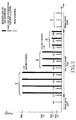
- FIG. 1 illustrates a conventional uplink resource scheduling for UGS.
- the status of a Mobile Station is divided into a talk-spurt period and a silence period on the time axis.
- the talk-spurt period is an on-period with transmission of data packets from the MS, while the silence period is an off-period without any transmission of data packet.
- the same resources are allocated to the MS during both periods. In the illustrated case of FIG. 1 , resources supporting a full rate, Rate 1 are constantly allocated.
- the MS does not use all the allocated resources in transmitting data.
- the MS uses only minimum resources required to maintain the service (e.g. Rate 1/8).
- the MS transmits data packets using the whole or part of the resources during the talk-spurt period. For instance, the MS transmits data packets at Rate 1, that is, using the entire allocated resources during a talk-spurt period 112. Yet, it uses Rate 1/2 (i.e. half of the resources) during a talk-spurt period 114. As the amount of transmission data is further reduced, the MS transmits the data packets at Rate 1/4 (i.e. 1/4 of the resources) during a talk-spurt period 116. During a silence period 118, the MS uses the minimum resources supporting the minimum rate, Rate 1/8.
- the constantly allocated resources are not fully utilized during the periods 114, 116 and 118.
- the existence of the resulting extra resources implies inefficient uplink scheduling. Therefore, uplink resources are wasted during the talk-spurt periods as well as during the silence periods.
- FIG. 2 illustrates a conventional uplink resource scheduling for rtPS.
- the status of an MS is divided into a talk-spurt period and a silence period on the time axis.
- the talk-spurt period is an on-period with transmission of data packets to be sent from the MS, while the silence period is an off-period without any transmission of data packet.
- the MS requests uplink resource allocation to a base station (BS) in steps 212 to 236.
- the requested resources are decided based on the amount of packet data to be transmitted from the MS.
- the BS allocates the requested uplink resources to the MS.
- the MS then transmits the data packets using the allocated resources during periods 210, 220 and 230.
- the MS transmits data at Rate 1 during the first talk-spurt period 210, at Rate 1/2 during the second talk-spurt period 220, and at Rate 1/4 during the third talk-spurt period 230. Therefore, the MS uses different amounts of resources during the periods.
- the talk-spurt periods change from 210 to 230 due to the decrease of data rate.
- the MS upon generation of data packets to be transmitted, the MS requests resource allocation in step 212.
- the BS then allocates maximum resources to support a maximum rate (e.g. Rate 1).
- the MS transmits the data packets at Rate 1 using the allocated resources.
- the transmission of data packets at Rate 1 is repeated during the talk-spurt period 210.
- the MS requests resource allocation supporting the decreased data rate (e.g. Rate 1/2) in step 222.
- the MS then transmits the data packets using allocated resources.
- the transmission of data packets at Rate 1/2 is repeated during the talk-spurt period 220.
- the MS When the data rate is further decreased during the talk-spurt period 230, the MS requests allocation of resources supporting the further decreased data rate (e.g. Rate 1/4) in step 232. The MS then transmits data packets at Rate 1/4. The transmission of data packets at Rate 1/4 is repeated during the talk-spurt period 230.
- resources supporting the further decreased data rate e.g. Rate 1/4
- the MS After completing the data packet transmission, the MS operates using the minimum resources (e.g. Rate 1/8) during a silence period 240.
- the minimum resources e.g. Rate 1/8
- rtPS requires periodic polling (i.e. uplink resource request, steps 212 to 218, steps 222 to 226, and steps 232 to 236). Even within a period requiring the same amount of resources 210, 220 or 230, periodic polling takes place (in steps 214 to 218, steps 224 and 226, or steps 234 and 236). The unnecessary polling leads to a waste of uplink resources.
- Extended-real time Polling Service (ertPS) allocates resources upon a MS request and enables transmission of data packets using the allocated resources without polling until the resources are changed.
- the MS expects to receive the same resources from the BS without any further polling in ertPS.
- the MS transmits data packets at the decreased data rate. Simultaneously, the MS notifies the BS of the change of resources due to the decrease of the data rate. Therefore, the BS can use the extra resources saved from the MS for other purposes.
- the MS uses the Extended PiggyBack Request (PBR) field of a Grant Management subheader to notify the BS of the change of the data rate.
- MSB Most Significant Bit
- LSBs Least Significant Bits
- the MS can request allocation of a bandwidth corresponding to a requested data rate by the Bandwidth Request (BR) field of a BR and Uplink (UL) transmit power report header which is formatted as follows.
- Table 2 HT 1 (1)
- EC 0 (1)
- Type(3) 0b011 BR(11) UL TX Power (8)
- CID MSB (8)
- CID LSB (8)
- HCS (8)
- one MSB of BR is used as an indicator indicating the change of data rate. If the MSB is set to 1, it implies that the data rate is changed. The 10 LSBs of BR indicate the changed data rate. If the MSB is set to 0, it implies that BR and UL transmit power report header is a typical header requesting a bandwidth for resource allocation.
- FIG. 3 illustrates a conventional uplink scheduling for ertPS.
- the status of an MS is divided into a talk-spurt period and a silence period on the time axis.
- the talk-spurt period is an on-period with transmission of data packets to be sent from the MS, while the silence period is an off-period without any transmission of data packet.
- the MS When transitioning from the silence period to the talk-spurt period, the MS requests resource allocation to the BS by a BR header in step 310.
- Table 2 above showing the bandwidth request and uplink transmit power report header is an example of the BR header.
- the BR header carries bandwidth request information requesting allocation of the same resources without any further polling.
- the BS Upon receipt of the BR header, the BS allocates resources corresponding to a maximum data rate periodically to the MS during the talk-spurt period 312. The MS transmits data at the maximum data rate.
- the MS transmits data at the changed data rate during the next talk-spurt period.
- the changed data rate is lower than the previous data rate.
- Rate 1 decreases to Rate 1/2.
- the MS notifies the BS of the change of data rate by a Grant Management subheader. Then the MS transmits data at the changed data rate periodically during the talk-spurt period 314.
- the BS Upon receipt of the Grant Management subheader, the BS allocates as minimum resources as supporting Rate 1/2. The BS then allocates the extra resources saved from the MS for other purposes.
- the MS transmits data at Rate 1/4 during the next talk-spurt period 316. Meanwhile, the MS notifies the BS of the change of data rate by a Grant Management subheader. Then the MS transmits data at the changed data rate periodically during the talk-spurt period 316.
- the BS allocates as minimum resources as supporting Rate 1/4.
- the MS changes the data rate to Rate 1/8 for the next talk-spurt period. Meanwhile, the MS notifies the BS of the change of data rate by a Grant Management subheader. The BS then allocates as minimum resources as supporting Rate 1/8.
- the MS transmits information about the changed data rate to the BS by the Grant Management subheader, and the BS allocates resources to the MS according to the changed data rate.
- the MS wants to increase the decreased data rate during the talk-spurt period.
- the MS In order to transmit uplink data at the increased data rate, the MS needs as much as possible uplink resources.
- the BS periodically allocates resources supporting the minimum data rate to the MS during the silence period, and the MS, when transitioning from the silence period to the talk-spurt period, requests a bandwidth using the minimum resources.
- the BS periodically allocates the MS uplink resources supporting transmission of a 6-byte BR header or uplink resources supporting transmission of a BR subheader in the form of a piggy back request as illustrated in Table 1, that is, a 6-byte Generic Medium Access Control (MAC) header and a 2-byte Grant Management subheader. While these minimum resources are needed for the MS to request a bandwidth for transitioning from the silence period to the talk-spurt period, the periodic resource allocation may not be needed because the MS does not know when to transition to the talk-spurt period.
- MAC Medium Access Control
- the document WO 03/107694 A1 discloses a two threshold uplink rate control to enable uplink scheduling in a wireless communications network, wherein a terminal sends a rate request to a base station requesting that the data rate on the wireless uplink be changed, and the base station sends a rate grant to the terminal indicating whether or not the terminal may change the data rate.
- IEEE C802.16e-04/522 Extended rtPS for VoIP services discloses a method of requesting allocation of uplink resources for extended real-time polling service in a wireless communication system, wherein a mobile station is requesting allocation of a bandwidth by transmitting piggyback request bits or bandwidth request bits of a grant management subheader to a base station, when the mobile station determines that an uplink bandwidth allocation is required due to a changed size of voice data packets.
- An object of the present invention is to substantially solve at least the above problems and/or disadvantages and to provide at least the advantages below. Accordingly, the present invention provides a method of requesting resource allocation to a BS when an MS is to increase data rate for ertPS in a wireless communication system.
- the present invention provides a method of requesting allocation of uplink resources for extended real-time polling service performed by a mobile station in a wireless communication system according to claim 1, a method of allocating uplink resources for extended real-time polling service performed by a base station in a wireless communication system according to claim 4, an apparatus for requesting allocation of uplink resources for extended real-time polling service in a wireless communication system according to claim 7, and an apparatus for allocating uplink resources for extended real-time polling service in a wireless communication system according to claim 10.
- the present invention provides a method of increasing the data rate of an Mobile Station (MS) in Extended-real time Polling Service (ertPS) uplink scheduling. It is assumed that the MS is transmitting data packets at a lower rate than a maximum rate. For this purpose, a method of transmitting rate increase information requesting a rate increase to a BS (Base Station) by the MS is provided.
- MS Mobile Station
- ertPS Extended-real time Polling Service
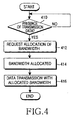
- FIGs. 4 and 5 are flowchart diagrams illustrating an operation for uplink scheduling for ertPS in the MS according to the present invention. Specifically, FIG. 4 is a flowchart diagram illustrating an MS operation when the MS is not transmitting data and FIG. 5 is a flowchart diagram illustrating an MS operation when the MS is transmitting data.
- the MS monitors the presence or absence of transmission data in step 410. In the absence of transmission data, the MS is kept in an off state. In the presence of transmission data, the MS requests bandwidth allocation in step 412.
- the present invention is based on the premise that resources are not allocated to the MS in an initial state, i.e. in an off state. Therefore, a novel technique must be developed for the MS in the off state to request bandwidth allocation, which will be described later in detail.
- the MS is allocated a bandwidth from the BS.
- the bandwidth is one requested by the MS or a bandwidth supporting a predetermined maximum rate. In the present invention, the latter case is assumed.
- the MS starts data transmission at a data rate corresponding to the bandwidth in step 416.
- the MS which has initiated the data transmission in the procedure of FIG 4 , continues its operation in an on state according to the procedure of FIG. 5 .
- the MS transmits data at the data rate corresponding to the bandwidth in step 510.
- the MS determines whether the data rate needs to be changed (i.e. increase or decrease in steps 512 and 520). If neither a rate increase nor a rate decrease is required, the MS continues data transmission at the current data rate in step 510.
- the MS requests a rate decrease in step 514.
- the MS determines whether the requested data rate is a minimum rate in step 516.
- the MS transitions to the off state, considering that the allocated bandwidth has been released in step 518 because resources are not allocated to the MS in an off-state in the present invention.
- the MS then operates in the procedure of FIG. 4 .
- the minimum rate is a data rate that does not affect the quality of communication even though the MS transmits no data.
- the minimum rate is Rate 1/8 or lower.
- the MS sets the MSB of the Extended PiggyBack Request (PBR) field of the Grant Management subheader to 1 and sets the 10 LSBs to Rate 1/8 or lower in order to request a rate decrease. Consequently, the BS does not need to allocate a bandwidth to the following frames any more.
- PBR Extended PiggyBack Request
- the MS is allocated a reduced bandwidth in step 524.
- the MS then continues data transmission at a data rate corresponding to the allocated bandwidth in step 510.
- the MS requests a rate increase in step 522.
- an extra bandwidth must be available. Therefore, the present invention provides a method of allocating an additional bandwidth for a rate increase request, which will be described later in detail.
- step 524 the MS is allocated an increased bandwidth.
- the MS then returns to step 510 in which it continues data transmission at a data rate corresponding to the allocated bandwidth.
- bandwidth allocation request step 412 and the rate increase request step 522 will be described in detail below.
- Requesting a bandwidth allocation and a rate increase can be considered in two ways: by a general bandwidth request (BR) header according to the prior art or by a codeword over a Channel Quality Information CHannel (CQICH) (i.e. CQICH codeword) according to the invention.
- BR bandwidth request
- CQICH Channel Quality Information CHannel
- the rate increase request is applied when a lower rate than a maximum rate negotiated during an initial service setup is used.
- the MS can use the BR field and UL transmit power report header as the bandwidth request header. Besides, the MS can use any header that can carry a bandwidth request, such as a PBR. Meanwhile, when increasing a data rate, the MS transmits a bandwidth request header containing a requested bandwidth. The BS then allocates uplink resources corresponding to the requested bandwidth to the MS. For example, the BS allocates a predetermined maximum bandwidth in case of a bandwidth allocation request or the requested bandwidth in case of a rate increase request.
- the MS To transmit the bandwidth request header, the MS needs to be allocated uplink resources. Thus, the MS transmits a bandwidth request code to request allocation of uplink resources for transmission of the bandwidth request header.
- the MS can transmit the bandwidth request code in an uplink slot allocated for use in requesting a bandwidth (bandwidth request slot).
- the uplink bandwidth request slot is a slot used for ranging in an existing wireless network. Hence, the uplink bandwidth request slot is available without allocation of additional resources.
- L of 255 codes are pre-defmed as bandwidth request codes for allocation of uplink resources. L is the positive integer.
- the MS selects one of the L bandwidth request codes and transmits the selected bandwidth request code in the bandwidth request slot.
- the bandwidth request then allocates uplink resources required for transmission of the bandwidth request header.
- the MS requests uplink resources for transmission of a bandwidth request header by transmitting a bandwidth request code.
- the MS can transmit the bandwidth request header using resources allocated by the BS.
- the bandwidth request field of the bandwidth request header contains information about uplink resources supporting a requested data rate.
- the MS generally delivers feedback information or anchor BS switching information in a Fast Base Station Switching (FBSS) operation on the CQICH.
- FBSS Fast Base Station Switching
- a CQICH codeword is predetermined.
- the MS transmits a CQICH codeword corresponding to an intended operation on the CQICH channel.
- one of predetermined CQICH codewords is used to increase a decreased data rate or request bandwidth allocation in an off state, for ertPS.
- the MS which supports ertPS, transmits a CQICH codeword predetermined for using a high data rate or a CQICH codeword predetermined for bandwidth allocation on the CQICH.
- the transmitted CQICH codeword is predefined to request uplink resources to the BS.
- the BS Upon receipt of the CQICH codeword, the BS recognizes that the MS requests a rate increase or bandwidth allocation. The BS then allocates uplink resources supporting the maximum rate or uplink resources supporting a requested rate increase to the MS. The maximum rate is determined by an initial service negotiation procedure between the MS and the BS.
- FIG. 6 is a flowchart diagram illustrating an operation for uplink scheduling for ertPS in the BS according to the present invention.
- the BS monitors reception of a bandwidth allocation request from the MS in an off state in step 610.
- the bandwidth allocation is requested by a bandwidth request header, a bandwidth request code according to the prior art or a CQICH codeword from the MS according to the invention.
- the BS Upon receipt of the bandwidth allocation request, the BS allocates a requested bandwidth by the MS or a bandwidth supporting a maximum rate decided during an initial service negotiation with the MS in step 612 and receives data from the MS at a rate corresponding to the allocated bandwidth.
- step 616 the BS determines whether a Grant Management subheader requesting a decrease of the current bandwidth is piggybacked in the received data. In the absence of the bandwidth decrease request, the BS monitors reception of a rate increase request in step 622.
- the BS receives data by re-allocating the current bandwidth in step 614, considering that there is no change in the data rate of the MS.
- the BS upon receipt of the rate increase request, allocates the requested bandwidth in step 620. If the rate increase request does not provide information about the requested data rate, the BS can allocate the bandwidth supporting the maximum rate.
- the rate increase request is also made by one of a bandwidth request header, a bandwidth request code and a CQICH codeword.
- the BS determines whether the requested rate is a minimum rate in step 618.
- the minimum rate is a non-zero data rate that does not affect communication quality even though the MS transmits no data.
- the BS allocates a bandwidth based on the data rate set in the Grant Management subheader in step 620.
- the BS receives data using the newly allocated bandwidth.
- the BS determines that the MS will not transmit any more data. Thus, the BS determines whether the MS requests bandwidth allocation, without allocating any further bandwidth, in step 610. Also, when the 10 LSBs of the Extended PBR of the Grant Management subheader are 0, the BS does not allocate a bandwidth from the next frame on.
- FIG. 7 is a diagram illustrating a signal flow between the MS and the BS for uplink scheduling in ertPS according to the present invention.
- an MS 740 has no data to transmit to a BS 750 and thus stays in an off period in step 701.
- the MS 740 transmits to the BS 750 a codeword requesting bandwidth allocation for data transmission on a CQICH in step 705.
- the BS 750 determines that the MS 740 needs uplink resources supporting a maximum rate.
- the BS then allocates the uplink resources corresponding to the maximum rate to the MS 740 in step 709.
- the MS transmits data to the BS 750 using the allocated uplink resources.
- the BS 750 periodically allocates the uplink resources in step 713.
- the MS 740 and the BS 750 repeat steps 711 and 713 until the data rate of the MS 740 is changed.
- the periodic uplink resources allocated by the BS have been decided in step 707.
- the MS 740 When the MS 740 is to decrease the data rate in step 715, it transmits data piggybacked with a Grant Management subheader to the BS 750 in step 717.
- the Grant Management subheader contains information indicating a decreased requested rate.
- the BS 750 recognizes from the Grant Management subheader that the MS 740 is to decrease the data rate in step 719 and allocates uplink resources corresponding to the requested data rate to the MS 740 in step 721.
- the MS 740 transmits data using the allocated uplink resources.
- the BS 750 allocates the same uplink resources for the next data. If the data rate is maintained, the MS 740 and the BS 750 repeat steps 723 and 725. The uplink resources allocated to the MS 740 during these steps have been decided in step 719.
- the MS 740 When the MS 740 is to increase the data rate in step 727, it transmits a codeword requesting a bandwidth increase data to the BS 750 on the CQICH in step 729.
- the BS 750 increases uplink resources so as to support the maximum rate in step 731 and allocates them to the MS 740 in step 733.
- the MS 740 transmits data using the allocated uplink resources.
- the present invention is directed to a method of requesting allocation of requested uplink resources to a BS according to a change in data rate by an MS in uplink resource scheduling for ertPS in a wireless communication system.
- the MS when increasing its data rate, notifies the BS of the rate increase.
- the MS has no data to transmit and thus transitions to an off period in ertPS for which the BS periodically allocates resources to the MS, the BS does not allocate uplink resources to the MS, thereby reducing overhead from resource allocation. Therefore, the extra uplink resources which might otherwise be allocated to the MS in the off period can be efficiently used for other purposes.
Landscapes
- Engineering & Computer Science (AREA)
- Computer Networks & Wireless Communication (AREA)
- Signal Processing (AREA)
- Quality & Reliability (AREA)
- Mobile Radio Communication Systems (AREA)
- Small-Scale Networks (AREA)
Claims (12)
- Verfahren zum Anfordern von Uplink-Ressourcen für extended real-time Polling Service (ertPS), das von einer Mobilstation in einem Drahtlos-Kommunikationssystem durchgeführt wird, wobei es umfasst:Anfordern (412) von Zuweisung einer Bandbreite durch Senden (705) eines Codeworts über einen CQICH (channel quality information channel) zu einer Basisstation, wenn die Mobilstation feststellt (703, 727), dass eine Zuweisung von Uplink-Bandbreite erforderlich ist; undEmpfangen (414, 709) einer Bandbreite, die eine maximale Rate unterstützt, von der Basisstation.
- Verfahren nach Anspruch 1, das des Weiteren umfasst, dass ein Bandbreitenanforderungs-Code zum Anfordern der Zuweisung einer größeren Bandbreite gesendet wird (522, 729).
- Verfahren nach Anspruch 1, wobei die Bandbreite, die die maximale Rate unterstützt, während einer anfänglichen Dienst-Aushandlung (412) vorgegeben wird.
- Verfahren zum Zuweisen von Uplink-Ressourcen für extended real-time Polling Service (ertPS), das von einer Basisstation in einem Drahtlos-Kommunikationssystem durchgeführt wird, wobei das Verfahren umfasst:Empfangen (705) eines CQICH-Codeworts (channel quality information channel code word), das Zuweisung einer Bandbreite anfordert (610), von einer Mobilstation; undZuweisen (612, 709) einer Bandbreite, die eine maximale Rate unterstützt, zu der Basisstation,wobei das CQICH-Codewort gesendet wird, wenn die Mobilstation feststellt (703, 727), das eine Zuweisung von Uplink-Bandbreite erforderlich ist.
- Verfahren nach Anspruch 4, das des Weiteren den Schritt des Empfangenes (622, 729) eines Bandbreitenanforderungs-Codes umfasst, der die Zuweisung einer größeren Bandbreite anfordert.
- Verfahren nach Anspruch 4, wobei die Bandbreite, die die maximale Rate unterstützt, während einer anfänglichen Dienst-Aushandlung (612) vorgegeben wird.
- Vorrichtung zum Anfordern von Zuweisung von Uplink-Ressourcen für extended real-time Polling Service (ertPS) in einem Drahtlos-Kommunikationssystem, die umfasst:eine Mobilstation zum Anfordern (412) von Zuweisung einer Bandbreite, indem ein Codewort über einen CQICH (channel quality information channel) zu einer Basisstation gesendet wird (705), wenn die Mobilstation feststellt (703, 727), dass eine Zuweisung von Uplink-Bandbreite erforderlich ist, und Empfangen (414, 709) einer Bandbreite, die eine maximale Rate unterstützt, von der Basisstation.
- Vorrichtung nach Anspruch 7, wobei die Mobilstation einen Bandbreitenanforderungs-Code zum Anfordern der Zuweisung einer größeren Bandbreite sendet (522, 729).
- Vorrichtung nach Anspruch 7, wobei die Bandbreite, die die maximale Rate unterstützt, während einer anfänglichen Dienst-Aushandlung (412) vorgegeben wird.
- Vorrichtung zum Zuweisen von Uplink-Ressourcen für extended real-time Polling Service (ertPS) in einem Drahtlos-Kommunikationssystem, die umfasst:eine Basisstation zum Empfangen (705) eines CQICH-Codeworts (channel quality information channel code word), das Zuweisung einer Uplink-Bandbreite anfordert (610), von einer Mobilstation, und Zuweisen (612, 709) einer Bandbreite, die eine maximale Rate unterstützt, an die Mobilstation,wobei das CQICH-Codewort gesendet wird, wenn die Mobilstation feststellt (703, 727), dass eine Zuweisung von Uplink-Bandbreite erforderlich ist.
- Vorrichtung nach Anspruch 10, wobei die Basisstation einen Bandbreitenanforderungs-Code empfängt (622, 729), der die Zuweisung einer größeren Bandbreite anfordert.
- Vorrichtung nach Anspruch 10, wobei die Bandbreite, die die maximale Rate unterstützt, während einer anfänglichen Dienst-Aushandlung (612) vorgegeben wird.
Priority Applications (1)
| Application Number | Priority Date | Filing Date | Title |
|---|---|---|---|
| EP20110187653 EP2416615B1 (de) | 2005-04-28 | 2006-04-28 | Verfahren zur Anfrage nach Resourcen in der Aufwärtsstrecke für erweiterten Echtzeitpollingdienst in einem drahtlosen Kommunikationssystem |
Applications Claiming Priority (1)
| Application Number | Priority Date | Filing Date | Title |
|---|---|---|---|
| KR20050035774A KR100703303B1 (ko) | 2005-04-28 | 2005-04-28 | 무선 통신 시스템에서 확장 실시간 폴링 서비스의 상향링크 자원 할당 요청 방법 |
Related Child Applications (2)
| Application Number | Title | Priority Date | Filing Date |
|---|---|---|---|
| EP20110187653 Division EP2416615B1 (de) | 2005-04-28 | 2006-04-28 | Verfahren zur Anfrage nach Resourcen in der Aufwärtsstrecke für erweiterten Echtzeitpollingdienst in einem drahtlosen Kommunikationssystem |
| EP11187653.8 Division-Into | 2011-11-03 |
Publications (3)
| Publication Number | Publication Date |
|---|---|
| EP1718010A2 EP1718010A2 (de) | 2006-11-02 |
| EP1718010A3 EP1718010A3 (de) | 2011-05-11 |
| EP1718010B1 true EP1718010B1 (de) | 2013-12-25 |
Family
ID=36702701
Family Applications (2)
| Application Number | Title | Priority Date | Filing Date |
|---|---|---|---|
| EP20110187653 Expired - Lifetime EP2416615B1 (de) | 2005-04-28 | 2006-04-28 | Verfahren zur Anfrage nach Resourcen in der Aufwärtsstrecke für erweiterten Echtzeitpollingdienst in einem drahtlosen Kommunikationssystem |
| EP20060008947 Expired - Lifetime EP1718010B1 (de) | 2005-04-28 | 2006-04-28 | Verfahren zur Anfrage nach Resourcen in der Aufwärtsstrecke für erweiterten Echtzeitpollingdienst in einem drahtlosen Kommunikationssystem |
Family Applications Before (1)
| Application Number | Title | Priority Date | Filing Date |
|---|---|---|---|
| EP20110187653 Expired - Lifetime EP2416615B1 (de) | 2005-04-28 | 2006-04-28 | Verfahren zur Anfrage nach Resourcen in der Aufwärtsstrecke für erweiterten Echtzeitpollingdienst in einem drahtlosen Kommunikationssystem |
Country Status (11)
| Country | Link |
|---|---|
| US (2) | US8254314B2 (de) |
| EP (2) | EP2416615B1 (de) |
| JP (1) | JP4672766B2 (de) |
| KR (1) | KR100703303B1 (de) |
| CN (2) | CN101790203B (de) |
| AU (1) | AU2006241043C1 (de) |
| BR (1) | BRPI0610331A2 (de) |
| CA (1) | CA2599341C (de) |
| RU (1) | RU2354052C1 (de) |
| TW (1) | TWI317235B (de) |
| WO (1) | WO2006115391A1 (de) |
Families Citing this family (57)
| Publication number | Priority date | Publication date | Assignee | Title |
|---|---|---|---|---|
| KR100853422B1 (ko) * | 2006-01-03 | 2008-08-21 | 삼성전자주식회사 | 다중 홉 릴레이 방식을 사용하는 광대역 무선 접속 통신시스템에서 상향대역폭 요청 및 할당 방법 |
| DK2381728T3 (da) | 2006-08-21 | 2013-10-07 | Interdigital Tech Corp | Planlægning og signalering af dynamisk ressourceallokering for en variabel datahastighedstjeneste i LTE |
| KR101347404B1 (ko) * | 2006-10-05 | 2014-01-02 | 엘지전자 주식회사 | 무선통신 시스템에서 음성 패킷의 전송 방법 |
| GB2442782A (en) * | 2006-10-13 | 2008-04-16 | Fujitsu Ltd | Wireless communication systems |
| KR100795565B1 (ko) * | 2006-12-01 | 2008-01-21 | 한국전자통신연구원 | 이동통신 시스템에서 폴링리스트 관리 방법 및 장치 |
| KR100853697B1 (ko) | 2006-12-07 | 2008-08-25 | 한국전자통신연구원 | 이동통신 시스템에서 대역폭 요청 레인징을 이용한 자원요청 방법, 할당 방법 및 그를 위한 장치 |
| US8825065B2 (en) * | 2007-01-19 | 2014-09-02 | Wi-Lan, Inc. | Transmit power dependent reduced emissions from a wireless transceiver |
| US8290447B2 (en) * | 2007-01-19 | 2012-10-16 | Wi-Lan Inc. | Wireless transceiver with reduced transmit emissions |
| KR101395975B1 (ko) * | 2007-01-31 | 2014-05-30 | 한국과학기술원 | 무선 통신 시스템에서 자원 스케줄링 방법 |
| EP2117243B1 (de) * | 2007-02-02 | 2018-05-09 | Mitsubishi Electric Corporation | Kommunikationsverfahren, basisstation, kommunikationssystem und mobiles endgerät |
| US7899024B2 (en) * | 2007-02-28 | 2011-03-01 | Intel Corporation | Method and apparatus to support VoIP calls in an IEEE 802.16 interface |
| KR101364926B1 (ko) | 2007-03-23 | 2014-02-21 | 삼성전자주식회사 | 이동통신시스템의 스케줄링 방법 및 장치 |
| TWI370656B (en) | 2007-03-27 | 2012-08-11 | Ind Tech Res Inst | Resource allocation method of subscriber of service negotiation system |
| US20080253285A1 (en) * | 2007-04-12 | 2008-10-16 | Nokia Corporation | Apparatus, method, and computer program product providing improved silence suppression detection |
| US8249608B2 (en) | 2007-05-02 | 2012-08-21 | Samsung Electronics Co., Ltd. | Apparatus and method for allocating resources in a mobile communication system |
| KR101395079B1 (ko) * | 2007-06-22 | 2014-05-15 | 삼성전자주식회사 | 통신 시스템에서 대역폭 할당 요청 및 대역폭 할당 장치 및 방법 |
| US20090010243A1 (en) * | 2007-07-03 | 2009-01-08 | Motorola, Inc. | EXTENDED REAL-TIME POLLING SERVICE (ertPS) SCHEDULING SERVICE |
| WO2009013386A1 (en) | 2007-07-26 | 2009-01-29 | Nokia Corporation | Scheduling of voice over ip data |
| CN101360025A (zh) * | 2007-07-31 | 2009-02-04 | 华为技术有限公司 | 一种上行系统资源分配的方法、系统和装置 |
| US20100142485A1 (en) * | 2007-08-13 | 2010-06-10 | Eun Jong Lee | Method for performing handover in wireless communication system |
| KR101473008B1 (ko) * | 2007-08-13 | 2014-12-17 | 엘지전자 주식회사 | VoIP 패킷을 전송하는 방법 |
| AU2007358152B2 (en) * | 2007-08-24 | 2013-01-31 | Alcatel Lucent | Method for scheduling resource, network element and user equipment |
| EP2191676B1 (de) * | 2007-08-24 | 2016-02-24 | Alcatel Lucent | Verfahren zum Scheduling von Uplink-VoIP-Packeten, Netzwerkelement und Benutzergerät |
| KR101406458B1 (ko) * | 2007-08-31 | 2014-06-13 | 삼성전자주식회사 | 통신 시스템에서 대역폭 할당 요청 및 대역폭 할당 시스템및 방법 |
| CN101394586B (zh) * | 2007-09-20 | 2012-11-21 | 华为技术有限公司 | 一种上行链路资源共享的方法、装置及系统 |
| JP5056858B2 (ja) * | 2007-10-31 | 2012-10-24 | 日本電気株式会社 | 通信システムにおけるリソース割当方法及びリソース割当システム並びにそれに用いる基地局 |
| US8244265B2 (en) | 2007-11-28 | 2012-08-14 | Motorola Mobility Llc | Techniques for aligning application output and uplink resource allocation in wireless communication systems |
| JP2011505742A (ja) * | 2007-12-03 | 2011-02-24 | テレフオンアクチーボラゲット エル エム エリクソン(パブル) | 拡張アップリンクユーザエンティティレート制限シグナリング |
| KR101433840B1 (ko) * | 2008-01-25 | 2014-09-25 | 삼성전자주식회사 | 광대역 무선통신 시스템에서 확장 실시간 폴링 서비스의재개 요청 장치 및 방법 |
| JP5076992B2 (ja) * | 2008-03-18 | 2012-11-21 | 富士通株式会社 | 無線通信システムにおける上り無線リソースの割当て方法、無線基地局および無線端末 |
| JP4511622B2 (ja) * | 2008-04-22 | 2010-07-28 | 株式会社エヌ・ティ・ティ・ドコモ | 移動通信方法、移動局及び無線基地局 |
| US8422469B2 (en) * | 2008-08-29 | 2013-04-16 | Ntt Docomo, Inc. | Method for interference-minimizing resource block-size selection at a macrocell, a microcell and a femtocell |
| JP2012501612A (ja) * | 2008-09-02 | 2012-01-19 | アルカテル−ルーセント | 無線アクセスネットワーク内でアップリンクリソース割振りを要求して、処理するための方法および装置 |
| WO2010028106A2 (en) * | 2008-09-03 | 2010-03-11 | Nokia Siemens Networks Oy | Resource allocation during silence period for a wireless network |
| KR20100089728A (ko) * | 2009-02-03 | 2010-08-12 | 엘지전자 주식회사 | 무선 통신 시스템에서 확인 응답 전송 및 수신 방법 |
| US8310921B2 (en) | 2008-09-04 | 2012-11-13 | Lg Electronics Inc. | Method of random access in a wireless system |
| KR101036482B1 (ko) | 2009-02-03 | 2011-05-24 | 엘지전자 주식회사 | 무선 통신 시스템에서 임의 접속 방법 |
| US8570960B2 (en) * | 2009-01-30 | 2013-10-29 | Samsung Electronics Co., Ltd. | Apparatus and method for uplink scheduling in wireless communication system |
| CN102349285B (zh) | 2009-03-19 | 2014-04-16 | 富士通株式会社 | 接收装置、发送装置、接收方法、发送方法、通信系统及通信方法 |
| WO2010117206A2 (ko) | 2009-04-07 | 2010-10-14 | 엘지전자 주식회사 | 광대역 무선 접속 시스템에서의 자원할당 방법 |
| KR101638899B1 (ko) | 2009-04-08 | 2016-07-12 | 엘지전자 주식회사 | 무선 통신 시스템에서 확인 응답 전송 및 수신 방법 |
| US9584416B2 (en) * | 2009-06-08 | 2017-02-28 | Qualcomm Incorporated | Systems and methods to provide flow control for mobile devices |
| CN102014508B (zh) * | 2009-09-04 | 2013-08-07 | 中兴通讯股份有限公司 | 一种半静态调度重激活的方法及基站 |
| US8811299B2 (en) | 2009-09-15 | 2014-08-19 | Intel Corporation | Techniques for requesting bandwidth allocation |
| JP5344044B2 (ja) * | 2009-10-02 | 2013-11-20 | 富士通株式会社 | 無線通信システム、基地局装置、端末装置、及び無線通信システムにおける無線通信方法 |
| US8918563B2 (en) * | 2010-06-01 | 2014-12-23 | Qualcomm Incorporated | Uplink data throttling by buffer status report (BSR) scaling |
| EP2582175A4 (de) * | 2011-01-12 | 2013-07-31 | Huawei Tech Co Ltd | Verfahren, vorrichtung und system zur einstellung einer maximalen bandbreite |
| US9019880B2 (en) | 2011-08-11 | 2015-04-28 | Qualcomm Incorporated | Methods and apparatus for overload mitigation using uplink transmit power backoff |
| WO2013073976A1 (en) | 2011-11-16 | 2013-05-23 | Motorola Solutions, Inc. | Method and apparatus for frequency allocation in a trunked radio communication system |
| JP2014229985A (ja) * | 2013-05-20 | 2014-12-08 | 富士通株式会社 | 通信システム、通信制御方法、移動局、及び、制御装置 |
| CN104507173B (zh) * | 2015-01-19 | 2019-05-14 | 中国人民解放军国防科学技术大学 | 一种面向3g/4g移动通信网络的语音业务上行资源半持续调度方法及装置 |
| CN106922022A (zh) * | 2015-12-25 | 2017-07-04 | 华为技术有限公司 | 上行业务资源调度方法、设备和系统 |
| WO2017132995A1 (zh) | 2016-02-05 | 2017-08-10 | 广东欧珀移动通信有限公司 | 业务传输的方法和装置 |
| ES2867227T3 (es) * | 2016-05-13 | 2021-10-20 | Ericsson Telefon Ab L M | Sistemas y métodos de recomendación de una tasa de datos en un sistema de comunicaciones inalámbricas |
| ES3064167T3 (en) * | 2016-10-10 | 2026-04-22 | Ericsson Telefon Ab L M | Method and apparatus for adaptive bandwidth usage in a wireless communication network |
| WO2018082078A1 (en) * | 2016-11-05 | 2018-05-11 | Apple Inc. | Asymmetric bandwidth support and dynamic bandwidth adjustment |
| CN115988451B (zh) * | 2022-12-22 | 2023-08-29 | 深圳市昂星科技有限公司 | 一种行车数据传输方法及系统 |
Family Cites Families (26)
| Publication number | Priority date | Publication date | Assignee | Title |
|---|---|---|---|---|
| DE4136740A1 (de) | 1991-11-05 | 1993-05-06 | Schering Ag Berlin Und Bergkamen, 1000 Berlin, De | Herbizide mittel mit synergistischer wirkung |
| US5734646A (en) | 1995-10-05 | 1998-03-31 | Lucent Technologies Inc. | Code division multiple access system providing load and interference based demand assignment service to users |
| TW459463B (en) | 1998-12-18 | 2001-10-11 | Ericsson Telefon Ab L M | Method and apparatus for resource reservation in a mobile radio communications system |
| US6735188B1 (en) * | 1999-08-27 | 2004-05-11 | Tachyon, Inc. | Channel encoding and decoding method and apparatus |
| KR100459551B1 (ko) * | 1999-11-16 | 2004-12-03 | 삼성전자주식회사 | 이동통신시스템의 전력제어장치 및 방법 |
| KR100547851B1 (ko) | 1999-12-29 | 2006-02-01 | 삼성전자주식회사 | 부호분할 다중접속 시스템에서 데이터 전송 방법 |
| US6898195B1 (en) | 2000-05-09 | 2005-05-24 | Telefonaktiebolaget Lm Ericsson (Publ) | Method and apparatus for sustaining conversational services in a packet switched radio access network |
| US6807160B1 (en) * | 2000-06-19 | 2004-10-19 | Lucent Technologies Inc. | Transmission of mobile requests in wireless uplink system |
| US6950399B1 (en) | 2000-07-06 | 2005-09-27 | Matsushita Electric Industrial Co., Ltd. | System and associated method for scheduling transport of variable bit-rate data over a network |
| US7315744B2 (en) | 2001-01-24 | 2008-01-01 | Qualcomm Incorporated | System and method for minimizing hardware and maximizing capacity in a wireless communications system |
| KR100800884B1 (ko) | 2001-03-29 | 2008-02-04 | 삼성전자주식회사 | 이동통신 시스템에서 역방향 링크의 송신 제어 방법 |
| WO2002082108A1 (en) * | 2001-04-03 | 2002-10-17 | Nokia Corporation | Reverse link handoff mechanism with hybrid-arq and cell site selection in cdma2000 1xev-dv systems |
| US7042856B2 (en) | 2001-05-03 | 2006-05-09 | Qualcomm, Incorporation | Method and apparatus for controlling uplink transmissions of a wireless communication system |
| US7539165B2 (en) * | 2002-05-24 | 2009-05-26 | Antti Toskala | Method and apparatus for distributed signaling for uplink rate control |
| US6782269B2 (en) * | 2002-06-17 | 2004-08-24 | Nokia Corporation | Two threshold uplink rate control to enable uplink scheduling |
| US7551546B2 (en) * | 2002-06-27 | 2009-06-23 | Nortel Networks Limited | Dual-mode shared OFDM methods/transmitters, receivers and systems |
| CA2392574A1 (en) * | 2002-07-08 | 2004-01-08 | Anthony Gerkis | System, apparatus and method for uplink resource allocation |
| JP4119721B2 (ja) * | 2002-10-04 | 2008-07-16 | 松下電器産業株式会社 | 無線通信システム、通信端末装置、基地局装置及び制御情報通知方法 |
| JP4084639B2 (ja) | 2002-11-19 | 2008-04-30 | 株式会社エヌ・ティ・ティ・ドコモ | 移動通信における受付制御方法、移動通信システム、移動局、受付制御装置及び受付制御用プログラム |
| KR100484305B1 (ko) | 2002-11-26 | 2005-04-20 | 한국전자통신연구원 | 이중 링에서의 부하 분산과 공평성 제공을 고려한 자원할당 방법 |
| CN100596042C (zh) | 2003-04-07 | 2010-03-24 | 华为技术有限公司 | 一种上行码分和时分资源的分配方法 |
| FI20030892A0 (fi) | 2003-06-13 | 2003-06-13 | Nokia Corp | Menetelmä nousevan siirtotien radioresurssien hallinnoimiseksi CDMA televiestinjärjestelmässä, ja järjestely |
| KR100987286B1 (ko) * | 2003-07-31 | 2010-10-12 | 삼성전자주식회사 | 무선 통신 시스템에서 다중접속 방법 및 그 제어 시스템 |
| KR100856248B1 (ko) * | 2004-08-17 | 2008-09-03 | 삼성전자주식회사 | 아이피 망을 기반으로 하는 음성 서비스에서 상향링크스케줄링 방법 |
| KR101433840B1 (ko) * | 2008-01-25 | 2014-09-25 | 삼성전자주식회사 | 광대역 무선통신 시스템에서 확장 실시간 폴링 서비스의재개 요청 장치 및 방법 |
| US20120113949A1 (en) * | 2009-07-14 | 2012-05-10 | Jeong Ki Kim | Method for efficiently allocating a resource in voip communication |
-
2005
- 2005-04-28 KR KR20050035774A patent/KR100703303B1/ko not_active Expired - Fee Related
-
2006
- 2006-04-28 EP EP20110187653 patent/EP2416615B1/de not_active Expired - Lifetime
- 2006-04-28 JP JP2008500644A patent/JP4672766B2/ja not_active Expired - Fee Related
- 2006-04-28 RU RU2007139710A patent/RU2354052C1/ru active
- 2006-04-28 CN CN2010101252976A patent/CN101790203B/zh not_active Expired - Lifetime
- 2006-04-28 BR BRPI0610331-6A patent/BRPI0610331A2/pt not_active Application Discontinuation
- 2006-04-28 WO PCT/KR2006/001615 patent/WO2006115391A1/en not_active Ceased
- 2006-04-28 EP EP20060008947 patent/EP1718010B1/de not_active Expired - Lifetime
- 2006-04-28 TW TW95115228A patent/TWI317235B/zh not_active IP Right Cessation
- 2006-04-28 AU AU2006241043A patent/AU2006241043C1/en not_active Ceased
- 2006-04-28 US US11/414,286 patent/US8254314B2/en active Active
- 2006-04-28 CN CN2006800145748A patent/CN101167270B/zh not_active Expired - Fee Related
- 2006-04-28 CA CA 2599341 patent/CA2599341C/en not_active Expired - Fee Related
-
2012
- 2012-07-26 US US13/559,119 patent/US9113493B2/en active Active
Also Published As
| Publication number | Publication date |
|---|---|
| WO2006115391A1 (en) | 2006-11-02 |
| CN101790203B (zh) | 2012-11-14 |
| CN101167270B (zh) | 2012-11-14 |
| US9113493B2 (en) | 2015-08-18 |
| AU2006241043C1 (en) | 2010-03-04 |
| US20120287896A1 (en) | 2012-11-15 |
| EP2416615B1 (de) | 2014-05-07 |
| JP2008533805A (ja) | 2008-08-21 |
| EP1718010A3 (de) | 2011-05-11 |
| TWI317235B (en) | 2009-11-11 |
| EP1718010A2 (de) | 2006-11-02 |
| EP2416615A3 (de) | 2012-02-22 |
| CN101167270A (zh) | 2008-04-23 |
| KR20060112999A (ko) | 2006-11-02 |
| TW200644658A (en) | 2006-12-16 |
| AU2006241043A1 (en) | 2006-11-02 |
| BRPI0610331A2 (pt) | 2010-06-15 |
| CN101790203A (zh) | 2010-07-28 |
| EP2416615A2 (de) | 2012-02-08 |
| AU2006241043B2 (en) | 2009-10-01 |
| KR100703303B1 (ko) | 2007-04-03 |
| RU2354052C1 (ru) | 2009-04-27 |
| US20060245352A1 (en) | 2006-11-02 |
| JP4672766B2 (ja) | 2011-04-20 |
| US8254314B2 (en) | 2012-08-28 |
| CA2599341A1 (en) | 2006-11-02 |
| CA2599341C (en) | 2013-02-05 |
Similar Documents
| Publication | Publication Date | Title |
|---|---|---|
| EP1718010B1 (de) | Verfahren zur Anfrage nach Resourcen in der Aufwärtsstrecke für erweiterten Echtzeitpollingdienst in einem drahtlosen Kommunikationssystem | |
| US9686803B2 (en) | Dynamic channel quality measurement procedure implemented in a wireless digital communication system to prioritize the forwarding of downlink data | |
| KR100856248B1 (ko) | 아이피 망을 기반으로 하는 음성 서비스에서 상향링크스케줄링 방법 | |
| US6122291A (en) | Communication system and operating method thereof | |
| JP2004533731A (ja) | 無線システムにおけるデータトラフィックに基づくアップリンク・スケジュリング・パケット用システム | |
| US20080176576A1 (en) | Fast Indication of Uplink Voice Activity | |
| US8369273B2 (en) | Method and apparatus for discriminating between control messages and speech payload | |
| US8976743B2 (en) | Method and apparatus for transmitting and receiving resource allocation scheme information in a wireless communication system | |
| CN101138166A (zh) | 输出功率加权 | |
| US20060182021A1 (en) | Output power control in multislot uplinks | |
| WO2005101884A1 (en) | A method of enhancing uplink transmissions | |
| HK1134178B (en) | Method of determining signaling overhead and radio resource utilization, base station and user equipment mobile terminal |
Legal Events
| Date | Code | Title | Description |
|---|---|---|---|
| PUAI | Public reference made under article 153(3) epc to a published international application that has entered the european phase |
Free format text: ORIGINAL CODE: 0009012 |
|
| 17P | Request for examination filed |
Effective date: 20060428 |
|
| AK | Designated contracting states |
Kind code of ref document: A2 Designated state(s): AT BE BG CH CY CZ DE DK EE ES FI FR GB GR HU IE IS IT LI LT LU LV MC NL PL PT RO SE SI SK TR |
|
| AX | Request for extension of the european patent |
Extension state: AL BA HR MK YU |
|
| PUAL | Search report despatched |
Free format text: ORIGINAL CODE: 0009013 |
|
| AK | Designated contracting states |
Kind code of ref document: A3 Designated state(s): AT BE BG CH CY CZ DE DK EE ES FI FR GB GR HU IE IS IT LI LT LU LV MC NL PL PT RO SE SI SK TR |
|
| AX | Request for extension of the european patent |
Extension state: AL BA HR MK YU |
|
| 17Q | First examination report despatched |
Effective date: 20111201 |
|
| AKX | Designation fees paid |
Designated state(s): AT BE BG CH CY CZ DE DK EE ES FI FR GB GR HU IE IS IT LI LT LU LV MC NL PL PT RO SE SI SK TR |
|
| RAP1 | Party data changed (applicant data changed or rights of an application transferred) |
Owner name: SAMSUNG ELECTRONICS CO., LTD. |
|
| REG | Reference to a national code |
Ref country code: DE Ref legal event code: R079 Ref document number: 602006039738 Country of ref document: DE Free format text: PREVIOUS MAIN CLASS: H04L0012560000 Ipc: H04W0072120000 |
|
| GRAP | Despatch of communication of intention to grant a patent |
Free format text: ORIGINAL CODE: EPIDOSNIGR1 |
|
| RIC1 | Information provided on ipc code assigned before grant |
Ipc: H04L 1/00 20060101ALI20130606BHEP Ipc: H04W 72/12 20090101AFI20130606BHEP Ipc: H04W 28/22 20090101ALN20130606BHEP |
|
| INTG | Intention to grant announced |
Effective date: 20130628 |
|
| RIN1 | Information on inventor provided before grant (corrected) |
Inventor name: KANG, HYUN-WON, C/O SAMSUNG ELEC. CO., LTD. Inventor name: LEE, SUNG-JIN, C/O SAMSUNG ELEC. CO., LTD. Inventor name: KIM, YOUNG-HO, C/O SAMSUNG ELEC. CO., LTD. Inventor name: KOO, CHANG-HOI, C/O SAMSUNG ELEC. CO., LTD. Inventor name: KIM, JUNG-WON, C/O SAMSUNG ELEC. CO., LTD. Inventor name: SON, JUNG-JE, C/O SAMSUNG ELEC. CO., LTD. Inventor name: LIM, HYOUNG-KYU, C/O SAMSUNG ELEC. CO., LTD. Inventor name: SON, YEONG-MOON, C/O SAMSUNG ELEC. CO., LTD. Inventor name: JOO, PAN-YUH, C/O SAMSUNG ELEC. CO., LTD. |
|
| GRAS | Grant fee paid |
Free format text: ORIGINAL CODE: EPIDOSNIGR3 |
|
| GRAA | (expected) grant |
Free format text: ORIGINAL CODE: 0009210 |
|
| AK | Designated contracting states |
Kind code of ref document: B1 Designated state(s): AT BE BG CH CY CZ DE DK EE ES FI FR GB GR HU IE IS IT LI LT LU LV MC NL PL PT RO SE SI SK TR |
|
| REG | Reference to a national code |
Ref country code: GB Ref legal event code: FG4D |
|
| REG | Reference to a national code |
Ref country code: CH Ref legal event code: EP |
|
| REG | Reference to a national code |
Ref country code: AT Ref legal event code: REF Ref document number: 647154 Country of ref document: AT Kind code of ref document: T Effective date: 20140115 |
|
| REG | Reference to a national code |
Ref country code: IE Ref legal event code: FG4D |
|
| REG | Reference to a national code |
Ref country code: DE Ref legal event code: R096 Ref document number: 602006039738 Country of ref document: DE Effective date: 20140213 |
|
| REG | Reference to a national code |
Ref country code: NL Ref legal event code: T3 |
|
| PG25 | Lapsed in a contracting state [announced via postgrant information from national office to epo] |
Ref country code: LT Free format text: LAPSE BECAUSE OF FAILURE TO SUBMIT A TRANSLATION OF THE DESCRIPTION OR TO PAY THE FEE WITHIN THE PRESCRIBED TIME-LIMIT Effective date: 20131225 Ref country code: FI Free format text: LAPSE BECAUSE OF FAILURE TO SUBMIT A TRANSLATION OF THE DESCRIPTION OR TO PAY THE FEE WITHIN THE PRESCRIBED TIME-LIMIT Effective date: 20131225 Ref country code: SE Free format text: LAPSE BECAUSE OF FAILURE TO SUBMIT A TRANSLATION OF THE DESCRIPTION OR TO PAY THE FEE WITHIN THE PRESCRIBED TIME-LIMIT Effective date: 20131225 |
|
| REG | Reference to a national code |
Ref country code: AT Ref legal event code: MK05 Ref document number: 647154 Country of ref document: AT Kind code of ref document: T Effective date: 20131225 |
|
| REG | Reference to a national code |
Ref country code: LT Ref legal event code: MG4D |
|
| PG25 | Lapsed in a contracting state [announced via postgrant information from national office to epo] |
Ref country code: LV Free format text: LAPSE BECAUSE OF FAILURE TO SUBMIT A TRANSLATION OF THE DESCRIPTION OR TO PAY THE FEE WITHIN THE PRESCRIBED TIME-LIMIT Effective date: 20131225 |
|
| PG25 | Lapsed in a contracting state [announced via postgrant information from national office to epo] |
Ref country code: BE Free format text: LAPSE BECAUSE OF FAILURE TO SUBMIT A TRANSLATION OF THE DESCRIPTION OR TO PAY THE FEE WITHIN THE PRESCRIBED TIME-LIMIT Effective date: 20131225 Ref country code: EE Free format text: LAPSE BECAUSE OF FAILURE TO SUBMIT A TRANSLATION OF THE DESCRIPTION OR TO PAY THE FEE WITHIN THE PRESCRIBED TIME-LIMIT Effective date: 20131225 Ref country code: IS Free format text: LAPSE BECAUSE OF FAILURE TO SUBMIT A TRANSLATION OF THE DESCRIPTION OR TO PAY THE FEE WITHIN THE PRESCRIBED TIME-LIMIT Effective date: 20140425 |
|
| PG25 | Lapsed in a contracting state [announced via postgrant information from national office to epo] |
Ref country code: AT Free format text: LAPSE BECAUSE OF FAILURE TO SUBMIT A TRANSLATION OF THE DESCRIPTION OR TO PAY THE FEE WITHIN THE PRESCRIBED TIME-LIMIT Effective date: 20131225 Ref country code: SK Free format text: LAPSE BECAUSE OF FAILURE TO SUBMIT A TRANSLATION OF THE DESCRIPTION OR TO PAY THE FEE WITHIN THE PRESCRIBED TIME-LIMIT Effective date: 20131225 Ref country code: PT Free format text: LAPSE BECAUSE OF FAILURE TO SUBMIT A TRANSLATION OF THE DESCRIPTION OR TO PAY THE FEE WITHIN THE PRESCRIBED TIME-LIMIT Effective date: 20140428 Ref country code: PL Free format text: LAPSE BECAUSE OF FAILURE TO SUBMIT A TRANSLATION OF THE DESCRIPTION OR TO PAY THE FEE WITHIN THE PRESCRIBED TIME-LIMIT Effective date: 20131225 Ref country code: CZ Free format text: LAPSE BECAUSE OF FAILURE TO SUBMIT A TRANSLATION OF THE DESCRIPTION OR TO PAY THE FEE WITHIN THE PRESCRIBED TIME-LIMIT Effective date: 20131225 Ref country code: CY Free format text: LAPSE BECAUSE OF FAILURE TO SUBMIT A TRANSLATION OF THE DESCRIPTION OR TO PAY THE FEE WITHIN THE PRESCRIBED TIME-LIMIT Effective date: 20131225 Ref country code: RO Free format text: LAPSE BECAUSE OF FAILURE TO SUBMIT A TRANSLATION OF THE DESCRIPTION OR TO PAY THE FEE WITHIN THE PRESCRIBED TIME-LIMIT Effective date: 20131225 Ref country code: ES Free format text: LAPSE BECAUSE OF FAILURE TO SUBMIT A TRANSLATION OF THE DESCRIPTION OR TO PAY THE FEE WITHIN THE PRESCRIBED TIME-LIMIT Effective date: 20131225 |
|
| REG | Reference to a national code |
Ref country code: DE Ref legal event code: R097 Ref document number: 602006039738 Country of ref document: DE |
|
| PG25 | Lapsed in a contracting state [announced via postgrant information from national office to epo] |
Ref country code: DK Free format text: LAPSE BECAUSE OF FAILURE TO SUBMIT A TRANSLATION OF THE DESCRIPTION OR TO PAY THE FEE WITHIN THE PRESCRIBED TIME-LIMIT Effective date: 20131225 |
|
| PLBE | No opposition filed within time limit |
Free format text: ORIGINAL CODE: 0009261 |
|
| STAA | Information on the status of an ep patent application or granted ep patent |
Free format text: STATUS: NO OPPOSITION FILED WITHIN TIME LIMIT |
|
| PG25 | Lapsed in a contracting state [announced via postgrant information from national office to epo] |
Ref country code: LU Free format text: LAPSE BECAUSE OF FAILURE TO SUBMIT A TRANSLATION OF THE DESCRIPTION OR TO PAY THE FEE WITHIN THE PRESCRIBED TIME-LIMIT Effective date: 20140428 Ref country code: MC Free format text: LAPSE BECAUSE OF FAILURE TO SUBMIT A TRANSLATION OF THE DESCRIPTION OR TO PAY THE FEE WITHIN THE PRESCRIBED TIME-LIMIT Effective date: 20131225 |
|
| REG | Reference to a national code |
Ref country code: CH Ref legal event code: PL |
|
| 26N | No opposition filed |
Effective date: 20140926 |
|
| REG | Reference to a national code |
Ref country code: DE Ref legal event code: R097 Ref document number: 602006039738 Country of ref document: DE Effective date: 20140926 |
|
| REG | Reference to a national code |
Ref country code: IE Ref legal event code: MM4A |
|
| PG25 | Lapsed in a contracting state [announced via postgrant information from national office to epo] |
Ref country code: CH Free format text: LAPSE BECAUSE OF NON-PAYMENT OF DUE FEES Effective date: 20140430 Ref country code: LI Free format text: LAPSE BECAUSE OF NON-PAYMENT OF DUE FEES Effective date: 20140430 |
|
| PG25 | Lapsed in a contracting state [announced via postgrant information from national office to epo] |
Ref country code: IE Free format text: LAPSE BECAUSE OF NON-PAYMENT OF DUE FEES Effective date: 20140428 |
|
| PG25 | Lapsed in a contracting state [announced via postgrant information from national office to epo] |
Ref country code: SI Free format text: LAPSE BECAUSE OF FAILURE TO SUBMIT A TRANSLATION OF THE DESCRIPTION OR TO PAY THE FEE WITHIN THE PRESCRIBED TIME-LIMIT Effective date: 20131225 |
|
| REG | Reference to a national code |
Ref country code: FR Ref legal event code: PLFP Year of fee payment: 11 |
|
| PG25 | Lapsed in a contracting state [announced via postgrant information from national office to epo] |
Ref country code: BG Free format text: LAPSE BECAUSE OF FAILURE TO SUBMIT A TRANSLATION OF THE DESCRIPTION OR TO PAY THE FEE WITHIN THE PRESCRIBED TIME-LIMIT Effective date: 20131225 |
|
| PG25 | Lapsed in a contracting state [announced via postgrant information from national office to epo] |
Ref country code: GR Free format text: LAPSE BECAUSE OF FAILURE TO SUBMIT A TRANSLATION OF THE DESCRIPTION OR TO PAY THE FEE WITHIN THE PRESCRIBED TIME-LIMIT Effective date: 20140326 |
|
| PG25 | Lapsed in a contracting state [announced via postgrant information from national office to epo] |
Ref country code: TR Free format text: LAPSE BECAUSE OF FAILURE TO SUBMIT A TRANSLATION OF THE DESCRIPTION OR TO PAY THE FEE WITHIN THE PRESCRIBED TIME-LIMIT Effective date: 20131225 Ref country code: HU Free format text: LAPSE BECAUSE OF FAILURE TO SUBMIT A TRANSLATION OF THE DESCRIPTION OR TO PAY THE FEE WITHIN THE PRESCRIBED TIME-LIMIT; INVALID AB INITIO Effective date: 20060428 |
|
| REG | Reference to a national code |
Ref country code: FR Ref legal event code: PLFP Year of fee payment: 12 |
|
| REG | Reference to a national code |
Ref country code: FR Ref legal event code: PLFP Year of fee payment: 13 |
|
| PGFP | Annual fee paid to national office [announced via postgrant information from national office to epo] |
Ref country code: FR Payment date: 20210324 Year of fee payment: 16 |
|
| PGFP | Annual fee paid to national office [announced via postgrant information from national office to epo] |
Ref country code: IT Payment date: 20210412 Year of fee payment: 16 |
|
| PG25 | Lapsed in a contracting state [announced via postgrant information from national office to epo] |
Ref country code: FR Free format text: LAPSE BECAUSE OF NON-PAYMENT OF DUE FEES Effective date: 20220430 |
|
| PG25 | Lapsed in a contracting state [announced via postgrant information from national office to epo] |
Ref country code: IT Free format text: LAPSE BECAUSE OF NON-PAYMENT OF DUE FEES Effective date: 20220428 |
|
| PGFP | Annual fee paid to national office [announced via postgrant information from national office to epo] |
Ref country code: GB Payment date: 20230320 Year of fee payment: 18 |
|
| PGFP | Annual fee paid to national office [announced via postgrant information from national office to epo] |
Ref country code: NL Payment date: 20230321 Year of fee payment: 18 |
|
| PGFP | Annual fee paid to national office [announced via postgrant information from national office to epo] |
Ref country code: DE Payment date: 20230320 Year of fee payment: 18 |
|
| REG | Reference to a national code |
Ref country code: DE Ref legal event code: R119 Ref document number: 602006039738 Country of ref document: DE |
|
| REG | Reference to a national code |
Ref country code: NL Ref legal event code: MM Effective date: 20240501 |
|
| GBPC | Gb: european patent ceased through non-payment of renewal fee |
Effective date: 20240428 |
|
| PG25 | Lapsed in a contracting state [announced via postgrant information from national office to epo] |
Ref country code: DE Free format text: LAPSE BECAUSE OF NON-PAYMENT OF DUE FEES Effective date: 20241105 |
|
| PG25 | Lapsed in a contracting state [announced via postgrant information from national office to epo] |
Ref country code: NL Free format text: LAPSE BECAUSE OF NON-PAYMENT OF DUE FEES Effective date: 20240501 |
|
| PG25 | Lapsed in a contracting state [announced via postgrant information from national office to epo] |
Ref country code: GB Free format text: LAPSE BECAUSE OF NON-PAYMENT OF DUE FEES Effective date: 20240428 |
|
| PG25 | Lapsed in a contracting state [announced via postgrant information from national office to epo] |
Ref country code: NL Free format text: LAPSE BECAUSE OF NON-PAYMENT OF DUE FEES Effective date: 20240501 Ref country code: GB Free format text: LAPSE BECAUSE OF NON-PAYMENT OF DUE FEES Effective date: 20240428 Ref country code: DE Free format text: LAPSE BECAUSE OF NON-PAYMENT OF DUE FEES Effective date: 20241105 |